Flooded Basement Chicago: What to Do First and Who to Call
If your basement is flooded in Chicago, stay out of standing water until the power is dealt with, stop the source only if it is safe, photograph everything, and call for help. Water from a floor drain or toilet is contaminated and needs professional handling. Call (773) 570-9869 to talk it through.
Request a call back
Four fields. We call the number you give us.
What to Do When Your Basement Floods: The First Hour
First make the space safe: stay out of water that may be near live power, leave if you smell gas, and stop the source only if you can do it safely. Then photograph the damage before moving anything, report the flooding to 3-1-1, and call a professional to remove the water and begin drying.
Work through these eight steps in order, and skip any step that is not safe.
Stay out if the power may be live. Standing water and electricity are a dangerous mix. If water is touching outlets, appliances or the electrical panel, do not wade in. Switch off power at the breaker only if you can reach it from a dry spot; otherwise call your electric utility or an electrician.
Leave if you smell gas. If you smell natural gas, get everyone out of the building and call your gas utility or 911 from outside. Do not flip light switches.
Stop the source if it is safe. A burst pipe, a failed washing-machine hose or a leaking water heater can be stopped at the shut-off valve. Rain water, seepage and a sewer backup cannot be stopped from inside the house.
Keep people and pets out. Water that came up through a floor drain, toilet or tub can carry bacteria. Keep children and pets away, and wear boots and gloves if you must go in.
Photograph before you move anything. Take wide photos and close-ups of the water line, the source, damaged belongings and equipment such as the furnace, water heater and panel. FEMA’s guidance also says to document damage before cleanup.
Move valuables and documents up. Lift documents, medicines, electronics and photos to a dry floor. Furniture can wait.
Report it to the City. In Chicago, call 3-1-1 or use the CHI311 app to report seepage, basement backups or overland flooding. Suburban Cook County residents should call their local public works department.
Call for help with the water. Call (773) 570-9869. Tell us where the water came from, how deep it is, which rooms are wet and whether power or gas is involved.
Where Is the Water Coming From?
The source decides who to call, how dirty the water is, and how insurance treats the loss. MWRD, the agency that runs the larger sewers in Cook County, describes the common sources this way.
| Source | What it usually looks like | What to do first |
|---|---|---|
| Seepage | Usually clear water coming through cracks in basement walls and floors. | Photograph it, keep power away from the water, and start drying. Check the sump pump. |
| Sewer backup | Water coming up through floor drains and plumbing fixtures in the basement. | Treat it as contaminated. Stay out and call a professional. |
| Overland flooding | Heavy rain raises local flood water, which enters through windows and doors. | Do not wade in. Report it to 3-1-1 and document the water line. |
| Plumbing leak, roof leak or failed sump pump | Water from a pipe, a ceiling or a pit that is not pumping. | Shut off the source if safe. A plumber fixes the line; a crew removes the water. |
Rain Water or Sewage? Use the Safe Assumption
If the water came up from a floor drain, toilet or tub, smells like sewage or looks dark, treat it as contaminated. If you cannot tell, treat it as contaminated until a professional says otherwise. For sewage jobs, see our sewage cleanup page.
Who to Call for a Flooded Basement
Call a restoration company to remove the water and dry the structure, a plumber if a pipe, drain or sewer line is involved, and an electrician or your utility if power or gas is a concern. Call your insurer to start a claim, and in Chicago report the flooding to 3-1-1.
| Situation | Who to call | Why |
|---|---|---|
| Water is still flowing from a pipe or appliance | A plumber, after you shut off the valve | The line has to be fixed before drying means anything. |
| Sewage or a drain backup | A plumber for the line and a restoration crew for cleanup | Contaminated water needs protective gear and safe disposal. |
| Wet outlets, a wet panel or wet appliances | An electrician or your electric utility | Electrical risk. Stay out of the water. |
| You smell gas | Your gas utility or 911, from outside | Leave first. |
| Standing water, soaked carpet, drywall or insulation | A restoration company, such as us | Extraction, drying and monitoring with moisture meters. |
| Flooding after heavy rain | 3-1-1 in Chicago; your local public works department elsewhere in Cook County | The municipality coordinates flood response (MWRD). |
| You want the loss covered | Your insurance agent or insurer | Start the claim early and document first. |
| You rent | Your landlord, in writing | Who does what depends on the cause and your lease. |
A plumber fixes the pipe or drain. A restoration crew removes the water, dries the structure and cleans what the water touched. A repair contractor rebuilds after drying is confirmed. Building over a wet structure locks the problem in. Our water damage restoration in Chicago page explains the whole job for other kinds of water damage.
Standing water in your basement?
Tell us where it came from and which rooms are wet. We will explain what happens next.
How to Dry Out a Flooded Basement
Drying a flooded basement means removing standing water first, taking out materials that cannot be dried, then running air movers and dehumidifiers until moisture readings reach the dry standard. Readings, not the calendar, decide when drying is finished.
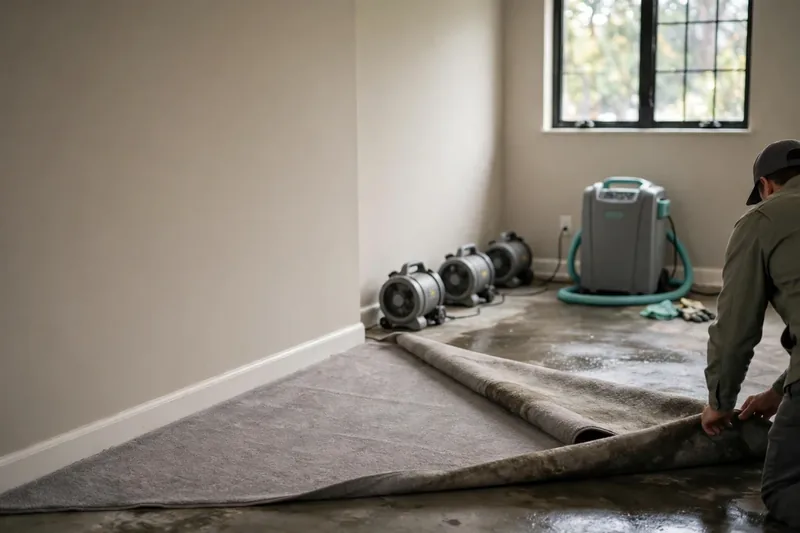
Step by Step
Make it safe. Power, gas and contaminated water come first. Wear boots, gloves and eye protection.
Remove standing water. A pump or a professional extraction unit is the safe choice for anything deeper than a thin layer. Never use a household vacuum or extension cords in standing water.
Take out what cannot be dried. Soaked carpet padding, soaked insulation and drywall that is sagging or contaminated usually come out. Photograph first.
Dry the structure. Air movers move air across wet surfaces and dehumidifiers pull water vapor out of the air so the walls and floor can keep releasing moisture.
Measure. A moisture meter compares wet areas with a dry reading from an unaffected part of the same building. Drying ends when the readings match.
Clean and sanitize. Hard surfaces are washed and disinfected once they are dry enough to treat.
Repair last. Rebuild drywall, flooring and trim only after the structure is confirmed dry.
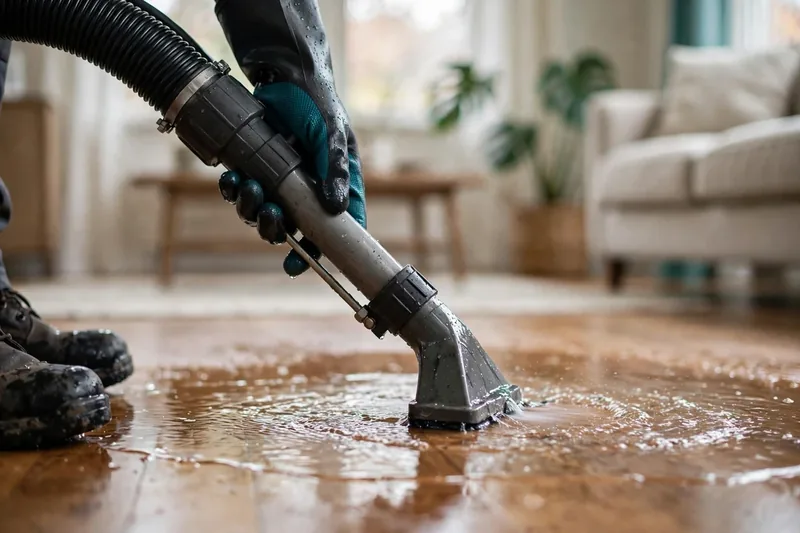
How Long Does It Take to Dry a Flooded Basement?
No honest company can promise a date before reading moisture levels. These are the things that change the time.
| What is wet | Effect on drying time |
|---|---|
| A thin layer of clean water on a hard floor | Shortest. Extraction and a few days of air movement and dehumidifying often cover it. |
| Carpet, padding and the bottom of drywall walls | Longer, and some of it is removed rather than dried. |
| Deep or long-standing water, or a finished basement | Longer: more material, more hidden moisture inside walls. |
| Concrete slab and block walls | Slow. They hold moisture and release it gradually. |
| Sewage or contaminated water | More material is removed and disinfected before drying even starts. |
How Do You Know It Is Dry?
By measurement. A moisture meter compares wet areas with a reading from an unaffected part of the same building, and drying is finished when they match. A dry surface can still hold water behind it, so do not rebuild or cover anything until the readings agree.
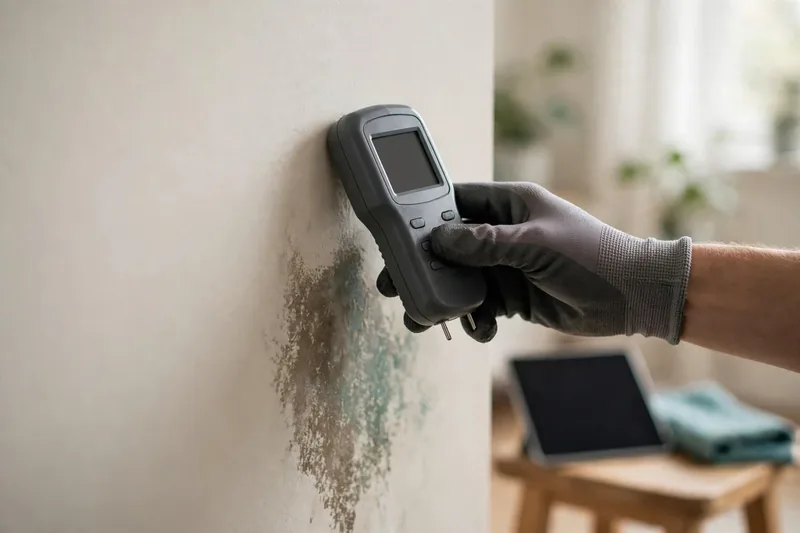
Do I Have to Tear Out the Drywall?
| Condition | Usual decision |
|---|---|
| Briefly damp from clean water, firm, readings fall | It can often be dried in place. |
| Soaked, sagging, crumbling or stained from below | Cut it out and replace it. |
| Wet with sewage or other contaminated water | Remove it. |
| Readings that will not fall after drying | Open the wall to find the hidden moisture. |
What to Throw Away and What You Can Keep
Photograph first. FEMA’s guidance says that after taking photos, flooded items that pose a health risk, such as perishable food, clothing, cushions and pillows, should be thrown away right away (FloodSmart). Use this table as a general guide.
| Item | Usually | Why |
|---|---|---|
| Carpet padding and soaked insulation | Throw away | They soak up water, hold it, and are hard to dry. |
| Carpet | Depends | Clean water that is dried fast can sometimes be saved. Sewage or long soaking means discard. |
| Drywall and paneling | Remove if soaked or contaminated | See the drywall table above. |
| Cardboard, paper and books | Discard if contaminated | Porous and quick to grow mold. |
| Mattresses and upholstered furniture | Discard if contaminated | They cannot be disinfected deep inside. |
| Food and perishable items | Throw away | They pose a health risk after contact with flood water. |
| Glass, metal and hard plastic | Clean and disinfect | Non-porous items can usually be saved. |
| Electronics, furnace and water heater | Do not power on | Have them checked by a qualified technician first. |
Cleaning and Disinfecting
- Wear boots, gloves and eye protection, and ventilate if it is safe to do so.
- Remove debris and mud first, then wash hard surfaces with detergent and water.
- Disinfect only after washing, and never mix cleaning products.
- Let everything dry completely. Damp, closed-up spaces invite mold.
- For sewage, leave the cleanup to professionals.
Mold can begin to grow on wet materials within a day or two. If you smell it or see dark growth after drying, see our mold remediation page.
Does Insurance Cover a Flooded Basement?
It depends on how the water got in. Many homeowners policies cover sudden plumbing or appliance leaks but exclude sewer or drain backup and seepage unless you added a water-backup endorsement, and rising surface water is usually a separate flood-insurance matter. Read your policy and call your agent early.
The Center for Neighborhood Technology (CNT) explains the insurance difference this way: “flooding” means surface water such as an overland or river flood, while “water backup” means sewage or seepage backing into a basement. Water backup damage is covered through a rider on a homeowners policy; surface flooding is normally the National Flood Insurance Program’s territory. Check the exact wording of your own policy.
| How the water got in | Usually |
|---|---|
| Burst pipe or failed appliance | Often covered when sudden and accidental. |
| Sewer or drain backup | Often excluded unless you have a water-backup endorsement. |
| Seepage through walls or floor | Often excluded or limited. Check the endorsement wording. |
| Rising surface water (overland flooding) | Usually needs a flood policy. |
| Sump pump failure or overflow | Often an endorsement item. Ask your agent. |
Document Everything Before You Clean Up
Photograph and video first. Record the water line, every wet room and the source.
List damaged belongings. Write down the brand, age and value of each item.
Keep damaged items until your adjuster has seen them or approved disposal, unless they are unsafe.
Keep every receipt for emergency repairs, equipment and temporary housing.
Report promptly and keep a log of every call with the date, the name and what was said.
Sources: FEMA FloodSmart and FEMA’s “Starting Your Recovery After a Flood”, listed below.
What Affects the Cost of Flooded Basement Cleanup?
Prices for flooded basement Chicago homeowners see vary too much for an honest page to quote one number. These are the factors that move the price, and what a fair quote should show.
| Factor | How it changes the price |
|---|---|
| Depth and volume of water | More water means more extraction time and more equipment. |
| Type of water | Sewage and floodwater need disinfecting and safe disposal of materials. |
| Finished or unfinished | Finished walls, flooring and trim add materials to remove and rebuild. |
| Time before drying started | The longer water sits, the more material has to come out. |
| Hidden moisture | Water inside walls or under floors means opening up and drying more. |
| Equipment days | Air movers and dehumidifiers are priced per day on site. |
| Utilities affected | A furnace, water heater or panel that was in water needs a specialist. |
| Repairs after drying | Rebuilding is a separate scope from the drying. |
A Fair Written Quote Lists
- The rooms and materials included.
- The equipment and how many days it will run.
- Which materials will be removed, and why.
- Which moisture readings you will receive.
- Which repairs are included and which are not.
Why Chicago Basements Flood
Chicago’s own Department of Water Management says a new kind of storm is hitting the city: heavy, very localized rain that can drop two inches or more in an hour on a single neighborhood. The sewer system was designed decades ago, when storm patterns were different, so in an intense storm the sewer mains fill and push water back into basements through private sewer drains.
Swipe to see more
Overwhelmed Catch Basins
Catch basins are the grates at the curb that let street water into the sewer. When a lot of water arrives in a short time they cannot keep up, and water can back up into nearby basements.
Downspouts and Roof Water
The City says a heavy storm can put hundreds of gallons of water on an average roof. Old City code connected gutter downspouts to the home’s private sewer drain, so a full sewer sends that water into the basement. The City recommends disconnecting downspouts and directing the water onto the lawn.
Streets That Flood on Purpose
The City places “Rain Blockers” in catch basins to slow water entering the sewer, which can leave streets flooded for a few hours. The City says that is better than the water going into your basement.
Private Property
Much of the water that floods basements travels across private property, such as roofs and yards, and the City cannot do work there. Owners have to make the changes. The City is also clear that nobody can guarantee a basement will never flood.
Seepage and Sump Pumps
After heavy rain, water pressure in the soil can push water through cracks in walls and floors. A sump pump that fails in a storm or a power outage can leave water to rise.
Basement Flooding in Cook County by the Numbers
Source: Center for Neighborhood Technology, The Prevalence and Cost of Urban Flooding, revised May 2014. These are claims paid, so CNT says they understate the real damage. CNT also found no correlation between where claims were paid and federally designated floodplains. The data is more than a decade old and covers Cook County, not only Chicago. The basement figure is from the Cook County Assessor (2010), as cited by CNT.
Flooded basement Chicago residents can report to the City: call 3-1-1 or use the CHI311 app, and read the City’s Basement Flooding page and MWRD’s flooding guide.
How to Reduce the Chance of the Next Flooded Basement
No step can promise a dry basement, but these lower the risk of a flooded basement Chicago storms can cause.
- Disconnect downspouts from the private sewer drain and direct the water away from the house, as the City recommends.
- Test your sump pump before storm season and ask a plumber about a battery backup for power outages.
- Ask a qualified plumber whether a backwater valve makes sense for your sewer line.
- Keep floor drains and cleanouts accessible, and store valuables off the floor.
- Check your policy for a water-backup endorsement before the next storm.
- Talk to neighbors. The City points out that all flooding is local, because homes share one network of underground pipes.
An honest caution: in CNT’s survey of Cook County flood victims, most had invested in prevention such as downspout disconnection and pumps, but only a small share believed it had solved their problem. The survey was self-selecting, so treat it as a warning, not a statistic. Prevention lowers risk; it does not remove it.
Renting a Basement Unit in Chicago? Who Does What
A flooded basement Chicago tenants find in a garden unit raises extra questions about who does what.
- Tell your landlord in writing right away and keep a copy.
- Photograph the water, your belongings and the damage before you move anything.
- Report the flooding to 3-1-1.
- Renters insurance usually covers your belongings, not the building. Read your policy.
- Who must pay for repairs depends on the cause, your lease and the law. A tenant-rights organization can help you read yours.
Furnace, Water Heater and Electrical After a Flood
Do not restart a furnace, water heater or appliance that was in water. Have a qualified technician inspect them, and have an electrician check outlets and the panel before power is restored. If you smell gas, leave and call your gas utility or 911 from outside.
What Happens When You Call (773) 570-9869
You describe the situation. Where the water came from, how deep it is, which rooms are wet, and whether power or gas is involved.
Safety comes first. You get clear instructions about power, gas and contaminated water before anything else.
You hear what a visit involves. Extraction, removal of soaked materials, a drying plan and moisture readings.
You decide. A written scope comes before the work grows.
Have your photos ready, and the name of your insurer if you have one.
Flooded Basement Questions Answered
Last reviewed: November 3, 2026.
Does insurance cover a flooded basement?
It depends on how the water got in. Many homeowners policies cover sudden plumbing or appliance leaks but exclude sewer or drain backup and seepage unless you added a water-backup endorsement, and surface flooding is usually a separate flood-insurance matter. Read your policy and call your agent early.
Is it safe to stay in a house with a flooded basement?
Not always. Electrical hazards, gas, contaminated water and mold are the main risks. Stay out of the water, do not use equipment that was wet, and leave if you smell gas or the water came from a sewer. Ask a professional to say plainly whether the rest of the house is safe.
How long can a basement stay flooded?
As short a time as possible. Wet materials can start growing mold within a day or two, and carpet, padding and drywall absorb water the longer it stays. Remove standing water and start drying as soon as it is safe, and do not wait for the rain to stop if the water is rising.
How long does it take to dry a flooded basement?
It depends on how much was wet, what the materials are, and whether the water was clean or contaminated. Concrete and block walls hold moisture, so drying can run longer than people expect. Moisture readings decide when drying is finished, not a fixed number of days.
How fast does mold grow after a basement flood?
Mold can begin to grow on wet materials within a day or two, which is why standing water should come out and materials should be dried or removed quickly. Musty smell, dark spots and materials that never dry are signs to have it checked.
Can I use a wet vac for a flooded basement?
Only if it is safe. Never use a vacuum or plug in extension cords where there is standing water or live power, and do not use household vacuums on contaminated water. A pump or a professional extraction unit is safer for anything deeper than a thin layer.
What should I do if the water is sewage?
Treat it as contaminated: stay out, keep children and pets away, do not touch it, and call a professional. Report it to 3-1-1 in Chicago. Porous materials that touched sewage, such as carpet and drywall, usually cannot be saved.
Who pays for a flooded basement in a rental?
It depends on the cause, your lease and Illinois law. Tell your landlord in writing right away, photograph everything and keep copies. Renters insurance usually covers your belongings, not the building. If you are unsure, ask a tenant-rights organization.
How much does it cost to clean up a flooded basement?
It depends on how much water there is, what kind it is, how long it sat, and which materials were soaked. This page does not quote prices because they cannot be honest without an inspection. A reliable quote follows a visit and arrives as a written scope before work begins.
Sources and Further Reading
- City of Chicago, Department of Water Management: Basement Flooding
- Metropolitan Water Reclamation District of Greater Chicago (MWRD): What You Should Do During Flooding
- Center for Neighborhood Technology: The Prevalence and Cost of Urban Flooding, a Case Study of Cook County, IL (revised May 2014; claims data 2007 to 2011)
- FEMA FloodSmart: How to Document Damage and Start Clean Up
- FEMA: Starting Your Recovery After a Flood
Links were opened on November 3, 2026. Official pages change, so check the current version before relying on a detail. The CNT figures are from claims paid between 2007 and 2011.
Related Pages
Basement flooded in Chicago?
Call and tell us where the water is coming from. We will tell you what happens next.
(773) 570-9869Call now