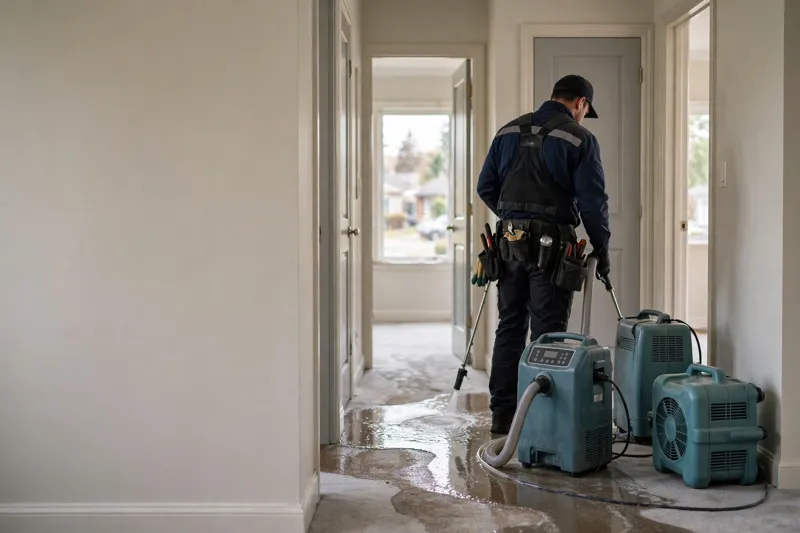
Water Damage Restoration Westmont IL
Flooded basement in Westmont? We answer 24/7. We pull the water out, dry the walls and floors to a number you can see, clean what stays, and put the room back the way it was. Call now and a crew is on the way.
- 24/7 emergency response, day and night
- Water extraction, drying and moisture readings
- Sewer backup, burst pipe and flood cleanup
- Written scope of work before any repair starts
Serving Westmont, Illinois, downtown Cass Avenue, Quincy Street, Ogden Avenue, Naperville Road, 63rd Street and every block from St. Joseph Creek to the Downers Grove line.
- We answer 24/7
- Local Chicago team
- Insurance documentation help
- Straight answers, no pressure
Request water damage help in Westmont
Tell us where the water is and we will call you back. We answer 24/7.
Water damage restoration in Westmont, the short answer
Water damage restoration Westmont starts with the entry point. A Westmont basement floods through one of four openings: a floor drain during a sewer surcharge, a failed sump pump, a frozen discharge line, or a supply pipe that split after the first hard freeze. We find the opening first, because a job that does not find the opening will be done twice. Then we extract the water, dry the walls, floors and framing to moisture readings, clean and sanitize what stays, remove what cannot be saved, and repair what is left.
That is the whole job, and it is the same job whether the water came from a burst pipe on Cass Avenue, a sewer backup in a basement off Quincy Street, or a storm that put water on the floor of a home near St. Joseph Creek.
A homeowner who searches for water damage restoration Westmont at two in the morning wants one thing: a crew that answers. We answer 24/7, and we talk you through the first hour while a crew is on the way to your home. The same is true of the search a homeowner types at two in the morning in different words, 24 hour water damage repair westmont, and the answer is the same: a crew that answers, a truck that comes, and a drying log you can see.
The first hour is the hour that decides how much of the house is saved. Turn off the main water valve if the water is coming from a pipe. Stay out of a flooded basement while the power is on. Do not touch the water with bare hands. Lift what you can save to higher ground, and photograph the water line and every damaged item before you move it.
If the water came up through a floor drain, the first call depends on which side of Cass Avenue the home sits on: west of Cass, the Downers Grove Sanitary District at (630) 969-0664; east of Cass, the Flagg Creek Water Reclamation District at (630) 323-3299. That call matters, because the answer decides who owns the pipe, and it decides whether either district's cost-share programme can help you at all.
Westmont is a village in DuPage County, about twenty miles southwest of Chicago, with a walkable downtown and one ZIP code, 60559. It is not a Chicago neighbourhood, and this page does not treat it as one.
This page answers them all, and it does it with real Westmont facts: the Cass Avenue district split, the Flagg Creek programme, the 2015 sales-tax referendum, the April 2013 flood, and the St. Joseph Creek gauge record.
Where Westmont is, and where it is not
Westmont sits in DuPage County, Illinois, about twenty miles southwest of Chicago, on the BNSF railway line, between Oak Brook to the north, Clarendon Hills to the east, Darien to the south and Downers Grove to the west. The Village Hall stands at 31 West Quincy Street, Westmont, IL 60559, and the Village's main phone is (630) 981-6200, answered Monday to Friday, 8 in the morning to 4 in the afternoon. The Public Works facility stands at 155 East Burlington Avenue.
The one ZIP code is 60559, and it belongs to Westmont, but it is not Westmont-exclusive, because its delivery area touches neighbouring communities, and no number on this page uses any other ZIP as a Westmont ZIP. A homeowner who types water damage restoration westmont il wants a Westmont, Illinois company and not a Chicago one, and the state abbreviation is the qualifier that keeps the search honest.
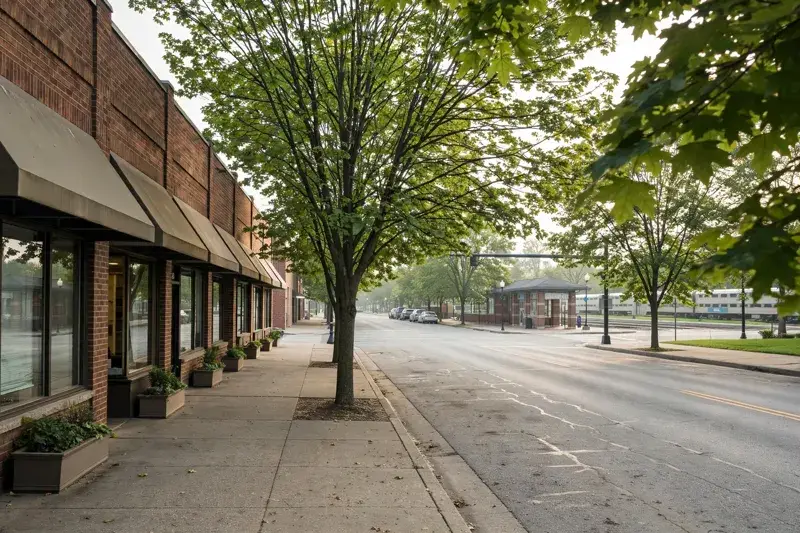
Cass Avenue and Quincy Street is the heart of downtown Westmont, and it is the GPS anchor for this page: 41.79510 North, 87.97530 West, reverse-geocoded to South Cass Avenue, Westmont, DuPage County, Illinois, 60559. Village Hall stands on Quincy Street just west of Cass, the Metra station stands on the west side of the crossing, and the shops and restaurants of downtown Westmont run along Cass Avenue and Quincy Street.
Route 34, the east-west road along the northern edge of downtown; Quincy Street, the east-west road through downtown; Naperville Road, the north-south road on the west side; 63rd Street, the southern edge; 55th Street, the east-west road through the middle; Burlington Avenue, where Public Works stands; and Williams Street and Park Street, the older residential streets.
The highways that frame the village are I-88 to the north, I-55 to the south, I-294 to the east and I-355 to the west. The Metra BNSF Line runs through downtown Westmont on its way from Aurora to Chicago Union Station, and the station stands at the Cass Avenue crossing, no station street address is verified in the research, so this page prints none.
The water in Westmont runs in one creek, and the creek is the reason the village floods where it floods. St. Joseph Creek runs through the village, and its watershed covers about twenty-four square miles across Lisle, Downers Grove, Westmont and unincorporated DuPage County.
The United States Geological Survey gauge on the creek at Route 34, Ogden Avenue, at Lisle, recorded one thousand two hundred and eighty cubic feet per second on July 18, 1996, at a gage height of twelve point eight nine feet, the annual peak for 1996, not the all-time record, because April 18, 2013 peaked at two thousand two hundred and ninety cubic feet per second, at fourteen point nine eight feet.
The second water story of Westmont is the one under the streets: the sanitary sewers, split between two districts at Cass Avenue, and the storm sewers, owned and maintained by the Village. The Village's storm sewer system is independent from the sanitary sewer system, and the Village does not own or operate its own sanitary sewer treatment plant, the sewer fees go to the two districts, and the drinking water comes from Lake Michigan, treated by the City of Chicago and delivered through the DuPage Water Commission.
The Johnstown flood story about "Westmont" is Westmont, Pennsylvania, in Cambria County, a different Westmont, and this page excludes it. A homeowner who calls a company from one of those pages is calling a company in another state. Westmont, Illinois is a village in DuPage County, and this page hammers "Westmont, Illinois" and "60559" and "DuPage" throughout so that no reader and no engine mistakes one for the other.
Westmont is not Downers Grove, and it is not Darien, Clarendon Hills or Oak Brook, although the village shares a border with all four, and the Downers Grove Sanitary District serves the Westmont homes west of Cass Avenue.
What to do in the first hour after water damage in Westmont
Emergency water damage restoration Westmont IL starts in the first hour. What you do in that hour decides how much of the house is saved, and the seven steps below are the whole of it.
When to call a water restoration company? Call in the first hour, before the water soaks through the drywall. Who do I call if I have water damage?
Call us first, then the district if the water came up through a floor drain, then your insurer the same day. What is emergency water restoration? It is the first phase of the job, extraction and drying, done the same day, before anything is rebuilt.
Call us first.
Call (773) 570-9869 any time, day or night. Tell us where the water is, how deep it looks, and whether it smells of sewage. We answer 24/7 and talk you through the first hour while a crew is on the way to your Westmont home.
Stop the water at the source.
Turn off the main water valve if the water is coming from a pipe, and turn off the water heater as well. If you cannot see the source, say so, a leak can travel ten feet or more from where it enters. Do not climb a ladder or crawl under a house to reach a valve.
Stay out of the water while the power is on.
Water carries current from a panel, a socket or an appliance. Keep clear of the flooded area until the power is off at the main breaker or a technician has cleared it. If the panel sits in the flooded area, call an electrician instead of going in.
Do not touch the water with bare hands.
Flood water is not clean tap water. It can carry sewage, chemicals and bacteria, and a soaked floor is a slip. Wear rubber boots and gloves, wash your hands well, and keep children and pets clear of the room until the water is gone.
Lift what you can save and photograph everything.
Move rugs, boxes and furniture to dry ground, and put furniture legs on blocks so they do not stain the floor. Photograph the water line and every damaged item before you move it, and keep a written list of what was lost, what you moved and what was thrown away.
Call the district if the sewer backed up.
Call the Downers Grove Sanitary District at (630) 969-0664 if your home sits west of Cass Avenue, or the Flagg Creek Water Reclamation District at (630) 323-3299 if it sits east of Cass Avenue. The district will tell you whether the blockage is in the public main or in your private service line. For storm drainage, call Village Public Works at (630) 981-6270. After hours, call the Westmont Police non-emergency line at (630) 981-6300 and press 9, and dial 9-1-1 for an emergency.
Let the drying run until the readings say dry.
Keep the air movers and dehumidifiers running, and do not close the walls until a moisture meter says they are dry. We read every wall and floor each day and write the readings into a drying log you can see. Dry is a number, not a look.
Seven ways water gets into a Westmont home
A Westmont home is usually a 1950s or 1960s ranch or split-level south of Ogden, a home in Oakwood Estates or Williamsburg Village, or a newer home on clay-heavy soil with a sump pump that runs every spring. Each of them has its own weak point, and the weak point is the entry point this page is built to find.
One: the floor drain, during a sewer surcharge
The floor drain is the lowest opening in the house, and it is the opening that floods first. The sanitary sewers carry wastewater only, sump pumps, downspouts and area drains must not be connected to the house sewer lines, but in a hard storm the clean water gets into the system through inflow and infiltration, small cracks and open joints in the pipe, and the sewer surcharges. When the public main surcharges, the water comes back up through the floor drain.
That is the opening that flooded the basements in the April 2013 storm, and it is the opening that puts water on the floor when it is barely raining outside. The defence is a backwater valve on the building drain, and the stronger defence is an overhead sewer, which makes a backup impossible by lifting the plumbing above the surcharge line. The Flagg Creek district says it plainly on its own homepage: before calling a plumber, contact the district to check if the issue involves the main sewer line.
West of Cass, the Downers Grove district runs three assistance programmes for that work; east of Cass, the Flagg Creek district runs its Chapter 41 programme. Both are described in full in the programmes section below.
Two: the sump pump, when it stops
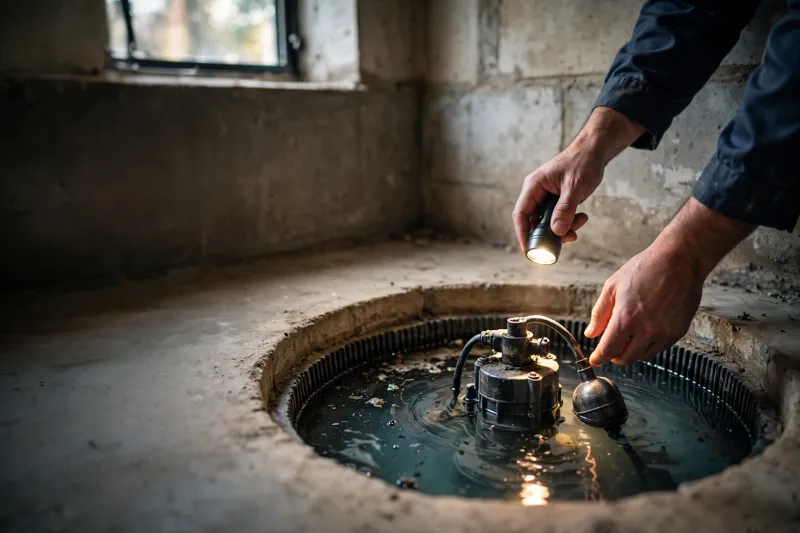
A sump pump pushes water out of the pit and away from the house, and it stops for three reasons: the power goes out, the float switch sticks, or the discharge line freezes. The search a homeowner types at two in the morning is sump pump failure basement flooding westmont, and the answer is the same as the answer for any sump-pump failure: call us first, then stay out of the water while the power is on. The pump itself is usually fine; the line is the weak point.
Will my basement flood if the sump pump fails? Yes, a basement with a sump pump floods when the pump stops, because the pump is the only thing moving the water out. What should I do if my sump pump floods my basement?
Call us first, then stay out of the water while the power is on, lift what you can save, and photograph the water line before anything is moved. Why did my basement flood with a sump pump? Because the pump stopped, the line froze, or the float stuck, and the water had nowhere else to go. My sump pump failed and my basement flooded, does my insurance cover this?
It usually does if the failure was sudden, such as a power cut in a storm, and you hold the sump-pump or water-backup coverage; ask your insurer before the next storm, not after it. A battery backup keeps the pump running when the power goes out, and it is the cheapest insurance a Westmont basement has. Test the pump every spring and fall, and check the float switch and the discharge line at the same time.
Three: the discharge line, frozen in winter
The discharge line is the pipe that carries the sump water out of the house, and it is the part of the system that sits outside in the cold. When it freezes, the water has nowhere to go, and the pump pushes it back into the pit. The fix is simple and it is the homeowner's job: keep the line clear, keep the outlet above the ground, and check it after the first hard freeze.
A discharge line that runs across a yard and ends in a low spot freezes first, and a line that ends in a ditch with standing water freezes next. Clear the leaves in the fall, lift the outlet, and test the pump every spring and fall. A clogged discharge line does the same damage as a frozen one, and the same check catches both.
Four: the supply pipe, split by a freeze
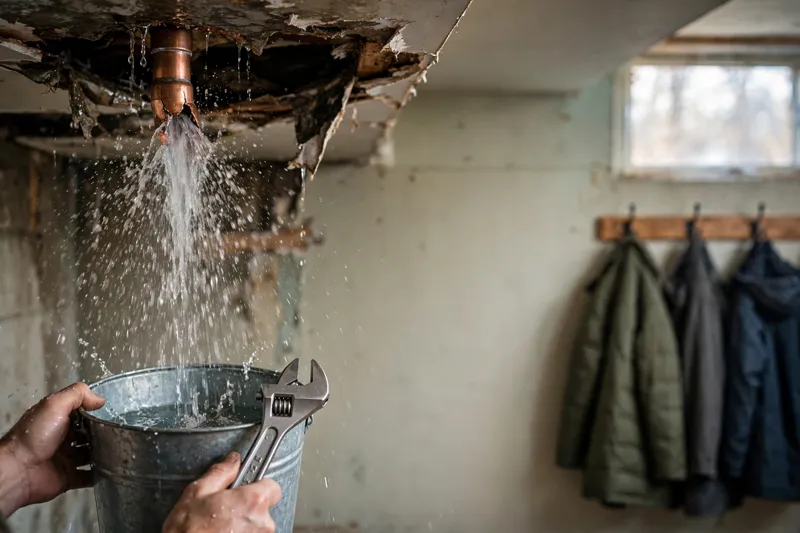
A burst pipe water damage restoration Westmont IL job starts the same way every burst-pipe job starts: with the water off. A supply pipe splits when the water inside it freezes and expands, and the split is usually in an outside wall, a crawl space or an unheated room. The pipe does not leak while it is frozen, it leaks when it thaws, and by then the water has been running for hours.
The first sign is a ceiling stain or a damp patch on a wall, and the first job is to turn off the main water valve. A pipe that burst suddenly is usually covered by homeowners insurance; a pipe that leaked slowly for months may be classed as wear and tear, and that is why the FAQ below says to report a burst the day you find it.
The Westmont frozen-pipe guidance from a local plumber puts it the same way: older Westmont sections still have cast iron and galvanized supply lines, and a frozen section must never be thawed by pouring hot water on it, the sudden heat can crack the pipe. The January 2019 polar vortex, when the temperature fell far below zero across the Chicago area, froze pipes in older Westmont homes, and the houses that froze then are the houses that will freeze again.
Five: clay soil and a high water table
Westmont sits on silty clay loam soil, and clay holds groundwater against the foundation instead of letting it drain away. A foundation crack in clay soil is a crack that lets water in every time it rains, and a finished basement on clay soil is a finished basement that floods from the wall, not from the drain.
The same pages say a sump pump lasts seven to ten years, with the low end in DuPage County, guidance from a local plumber, not a guarantee, and this page prints it only as guidance. A home on high ground is not safe either: the water finds the lowest opening in the building no matter where the house sits.
The fix for clay soil is the same as for any foundation water: find the entry point, seal the crack, keep the gutters and the grading moving water away from the house, and keep the sump pump tested. A horizontal foundation crack found after a basement flood is a crack that needs a structural look, not just a drying job, and a homeowner who finds one should call a structural engineer as well as a restoration crew.
Six: the appliance, when it fails
A water heater, a washing machine or a dishwasher fails the same way a pipe fails: a hose splits, a valve sticks, or a tank rusts through. The water is clean, and the damage is the same as a burst pipe, it soaks the floor, the baseboards and the wall behind the appliance. Turn off the water to the appliance, then call. An appliance failure is the simplest water-damage job there is, and it is the one that is most often covered by insurance, because it is sudden and accidental.
The closest verified Westmont evidence the battery found is not a single job but a count: one DuPage County restoration company publishes that it has opened fourteen water and mold jobs in Westmont since 2023, and four reconstruction jobs after them, with three recorded causes, a burst pipe, a toilet overflow and window well seepage, one each. No street address and no job date is published for any of the fourteen, so this page prints the count as an aggregate and not as a named case.
A toilet overflow is the same kind of job as an appliance failure: clean water at first, grey water if it sits, and a floor that needs drying the same day either way.

Seven: who to call for water damage in ceiling westmont
A ceiling stain is a leak from above, and the leak is usually a supply pipe, a drain pipe or a roof leak two rooms away from where the stain shows. What to do if you see water damage on your ceiling? Call a plumber first to stop the water, then call us to dry the damage, the plumber cuts out the split pipe and puts in a new section, and we extract the water, dry the walls and floors to a number, clean what stays, and repair what is left.
Should you call apartment maintenance for ceiling water damage? Yes, if you rent, tell the landlord the day the stain appears, because a renter who waits a week has a mold job, not a drying job, and the landlord owns the building and its pipes. Does homeowners insurance cover a water leak from a ceiling? It usually does when the leak was sudden, such as a burst pipe, and not when it ran for months.
A wet spot in a ceiling is the one kind of water damage that looks small and is not: the water has been running behind the ceiling, and the ceiling is the last place it shows. The question itself, who to call for water damage in ceiling westmont, is one of the fourteen cluster terms this page is built on, and the answer is the same as the answer for any ceiling leak: plumber first, then us, then the insurer, all the same day.
Three kinds of water, and why the kind decides the job
Water damage restoration Westmont sorts the water into three kinds, and the kind decides what the crew does, what comes out, and what stays. Clean water comes from a supply pipe, a water heater or rain through a roof. It is the simplest job, and it dries in three to five days in one room. Grey water comes from a washing machine, a dishwasher or a shower drain. It carries soap and dirt, and it needs cleaning as well as drying.
Black water comes from a sewer backup or a flood that has passed over the ground. It carries sewage and bacteria, and it is the one kind of water a homeowner should not touch. Black water means the wet drywall comes out to twelve inches above the water mark, the floor comes out, and the room is cleaned and sanitized before anything goes back.
Mold starts within 24 to 48 hours of the water sitting, and that is the window the whole job runs against, a flood that is cleaned the same day is a flood that does not grow mold, and a flood that sits for a week is a mold job.
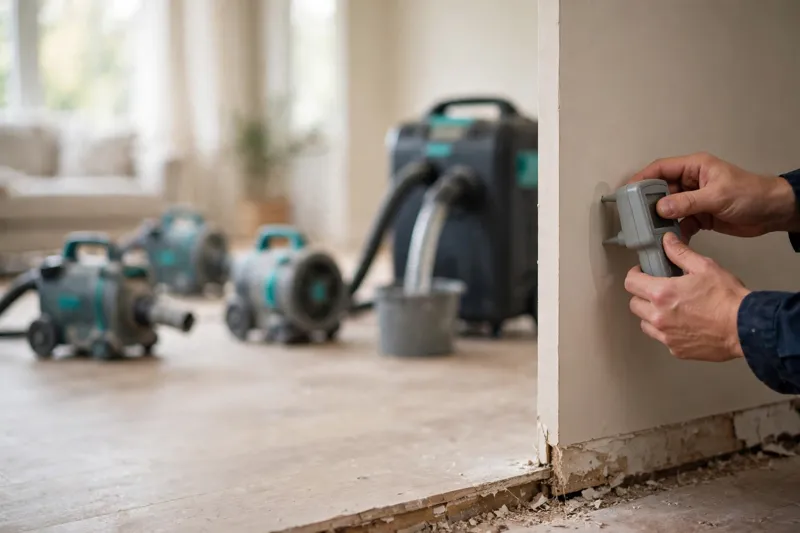
Sewage backup cleanup westmont il is the job the district pages point to, and it is the job this page describes in full. The wet drywall comes out to twelve inches above the water mark. The room is cleaned and sanitized, and the drying runs until the meter says dry. That is the process, and it is the process this page follows.
The first call is the district's, because the district will tell you whether the blockage is in the public main or in your private service line, and the answer decides whether the district's cost-share programmes can help with the prevention at all. A backup caused by a blockage in the public sanitary sewer main is the district's job to clear; a backup from a blockage in the building sanitary service is the homeowner's job, and the homeowner owns the line from the home to the main.
A backup caused by high flows in the public sewer during heavy rain is handled differently again, and the Downers Grove district says plainly that it is not covered by its Backup Reimbursement Program, a district rule, verified live in the Downers Grove battery, and this page prints it as a district rule, not as a promise about your home.
Water removal in Westmont
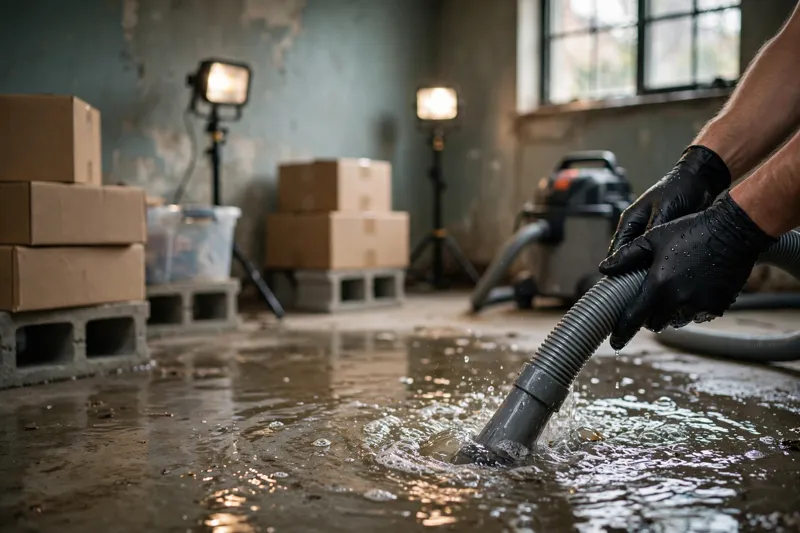
Water damage restoration Westmont removes the water first. A pump takes the standing water, a wet vacuum takes the rest, and the crew lifts the rugs, the boxes and the furniture before the water soaks through them. The water is out in hours, and the drying starts the same day. The longer the water sits, the more it soaks: drywall wicks it up, flooring buckles, and the framing behind the wall stays wet for days. A basement that is pumped the same day dries in days. A basement that sits for a week needs the drywall out and the floor up.
Water removal is the part of the job that looks simple and is not. The water hides behind the baseboards, under the flooring and inside the wall cavity, and a pump on the floor does not reach it. The crew pulls the baseboards, drills the wall if it has to, and reads the moisture with a meter. The meter is the difference between a job that is dry and a job that looks dry: a wall can look dry and still hold water behind the paint, and a wall that holds water grows mold.
The drying log, below, is the record of those readings, and it is the record the insurer asks for.
Flood cleanup in Westmont
Basement flooding cleanup westmont il starts the same day the water appears. Flood cleanup is not water removal with a mop, it is extraction, then cleaning, then sanitizing, then drying, in that order. The water that comes up through a floor drain is black water, and black water carries sewage. The crew wears boots and gloves, the wet material comes out, the surfaces are cleaned and sanitized, and the room dries before anything goes back. A flood that is cleaned the same day is a flood that does not grow mold.
A flood that sits for a week is a mold job. What should I do to clean up after my basement floods? Call us first, stay out of the water while the power is on, lift what you can save, photograph everything before you move it, and let a crew extract the water and read the walls. Who to call to help with basement flooding? Call us first, then the district if the water came up through a floor drain, then your insurer the same day.
It names the first hour, the first-hour safety checklist, and the first-hour priorities by type of emergency, and it carries five FAQs. It is still a county guide, not a Westmont page, and it carries no named Westmont case.
The lead-gen Westmont page names the local causes the same way this page does: heavy thunderstorms and flash flooding, clay soil plus basements, sump pump failures, burst pipes, appliance hoses and water heaters.
Stories that are not Westmont, and why they are not here
A page that prints a case from the wrong town is a page that misleads a homeowner, and this page does not do it. The stories below are the ones the battery found and rejected, and they are listed here so that no reader mistakes them for Westmont cases.
The Johnstown flood story is Westmont, Pennsylvania, not Westmont, Illinois. The AVAS Water Damage video is Westmont, California, in Los Angeles County, not Westmont, Illinois. The Hinsdale basement job from Flash Restoration is Hinsdale, not Westmont. The Detroit sump-pump video is Detroit, Michigan. The Minneapolis sump-pump video is Minneapolis, Minnesota.
The East Elmhurst, Queens pages are Queens, New York, not Westmont, Illinois, and the lead-gen network runs sister pages for Westmont, Illinois and Westmont, California, with the same template and different towns, so a reader who does not check the state is reading the wrong page. The Illinois townhouse liability question about a water main bursting in a parking lot names no town at all, so it cannot be attributed to Westmont. The hail short from July 27, 2026 is hail, not a water-damage job.
The fatal water-main incident near 60th and Deming Place is a municipal emergency, not a restoration job, and it is printed above as exactly that. No verified residential Westmont restoration job with a company, a job address and a date exists on any platform the battery checked, and this page says so plainly instead of inventing one.
Homeowners, renters and finished basements
A finished basement is the room a Westmont family lives in, and it is the room that floods first. The homeowner owns the building and its pipes, so the homeowner pays for the building repair. A renter pays when the renter caused the damage, such as an overflowing tub left running. Read the lease and tell the landlord the day the water appears, because a renter who waits a week has a mold job, not a drying job.
The landlord should call for extraction the same day, and the renter should photograph the water line and every damaged item before anything is moved. Who is responsible for water damage from upstairs? The owner of the flat above, if the water came from their flat, a leaking appliance, an overflowing tub, a split supply line, and the building owner, if the water came from the building's pipes or roof.
A leak from upstairs travels through the ceiling and shows up two rooms away from where it started, and the first job is to find the source, not to blame the stain. Should you call apartment maintenance for ceiling water damage? Yes, if you rent, maintenance is the landlord's first call, and the landlord owns the building and its pipes.
A homeowner in a two-flat or a three-flat on Cass Avenue, Quincy Street or Ogden Avenue should know which side of Cass the building sits on, whether the building has a backwater valve, and when the sewer lateral was last televised with a camera.
Chicago's Residential Landlord and Tenant Ordinance does not govern Westmont, a mold-inspection template page cites it for Westmont, and that is a template error, not a fact.
Through the year in Westmont
Water damage in Westmont changes with the season, and the season decides what fails. In spring, the thaw and the rain come together, the water table rises from February to April, and the sump pump runs the most. In summer, the storms come fast and hard, and the sewers surcharge, the April 2013 flood is the Village's own example, and the committee it created still meets. In fall, the leaves block the gutters and the discharge line, and the first freeze catches the pipes that were never drained.
In winter, the pipes freeze and split, the discharge line freezes solid, and the sump pump runs and the water comes back into the pit, and the January 2019 polar vortex, at far below zero across the Chicago area, froze pipes in older Westmont homes. The job is the same in every season, extract, dry to a number, clean, repair, but the entry point changes, and the entry point is what this page is built to find.
The creek runs highest in the spring, when the snowmelt and the storms overlap, and the gauge record shows it: the 1996 annual peak came in July, the 2013 peak came in April, and the 2018 and 2020 peaks came in August and May. The Village's stormwater page says the same thing in different words: keep the leaves out of the storm drains in the fall, because leaves block runoff and can cause localized flooding.
What a job costs, and why this site prints no prices
Water damage restoration Westmont has no price on this page, and it has no price for a reason: a price on a page is a price for a job the page has never seen. How much does water damage restoration cost in westmont? No page can give you a number, because the cost depends on how much water there is, what kind of water it is, how many rooms got wet, how long the water sat, and what material it soaked. How much does it cost to remove water damage?
The same answer: the drivers are the volume of water, the kind of water, the number of rooms, and the time the water sat. How much does it usually cost to fix water damage? A clean-water loss in one room costs less than a sewage loss in a whole basement, and a job that starts the same day costs less than a job that starts a week later, because a week of wet drywall is a mold job. How much does it cost if a pipe bursts in your house?
The drivers are where the pipe is, how hard it is to reach, whether the wall or ceiling must be opened, and whether the call is an emergency at night. How much does it cost to clean up a flooded basement? The drivers are the depth of the water, the kind of water, the size of the basement, and whether the drywall and the floor must come out. How much does it cost to clean sewage backup? The drivers are the same, plus the cleaning and sanitizing that black water demands.
How much does it typically cost to clear out a backed up sewer in your basement shower? The drivers are the blockage, the access, and whether the district or the homeowner owns the fault. How much does it cost to fix a wet spot in a ceiling? The drivers are the source above the ceiling and the size of the stain. How much does water damage devalue a home? A home with a dry basement and a drying log keeps its value; a home with a wet basement and no record loses it.
We inspect first, then give you a written scope of work with the cost in it before any repair starts. The scope says what comes out, what stays, what is cleaned, what is dried, and what is repaired, and it says it in writing so the insurer can read it. No page can give you a number for your home, and this page does not try.
Insurance, what is covered, what is not, and what to do first
Does homeowners insurance cover water damage in westmont? It usually does when the damage was sudden and accidental, such as a burst pipe or an appliance failure. A sewer backup is usually covered only if you hold the endorsement for it, ask your insurer whether your policy carries water backup coverage, and ask before the next storm, not after it. Is sewer back up coverage worth it? If your basement has flooded once, yes, a backup without the endorsement is a bill you pay yourself, and a backup with it is a claim.
Flooding from outside needs separate flood insurance, because a standard homeowners policy does not cover it at all. A standard policy covers the drying and the repair, less your deductible, and it does not pay for the pipe that failed. A pipe that leaked slowly for months may be classed as wear and tear, so report a burst the day you find it. Does homeowners insurance cover water damage from a burst pipe? Yes, when the pipe burst suddenly, the insurer pays for the water damage the burst caused, not for the pipe itself.
Is water remediation covered by insurance? The drying and the repair are covered when the cause is covered; the remediation of mold is covered when the mold came from a covered event and the source is fixed. What type of water damage is not covered by insurance? Flooding from outside, gradual leaks, wear and neglect, and sewer backups without the endorsement. My sump pump failed and my basement flooded, does my insurance cover this? It usually does if the failure was sudden, such as a power cut in a storm, and you hold the sump-pump or water-backup coverage.
Call the insurer the same day the water appears, and do not wait for the adjuster to start the drying. The drying is mitigation, and mitigation is the homeowner's job, the insurer expects the water out and the drying started, and a job that waits for the adjuster grows mold while it waits. Photograph the water line and every damaged item before you move it, keep every receipt, and keep a written list of what was lost, what was moved and what was thrown away.
What not to say to the insurance adjuster about water damage? Do not guess when it started, do not say the leak was there for months if you do not know, and do not throw anything away before you photograph it, the adjuster reads the photographs, the receipts and the drying log, and the drying log is the record that settles the claim.
The question of whether basement flooding is covered by homeowners insurance has the same answer as the question of whether water damage is covered: sudden and accidental, yes; flooding from outside, no, not without a flood policy; sewer backup, only with the endorsement. A sump pump failure is the same question in different words: sudden, such as a power cut in a storm, usually yes with the water-backup coverage; gradual, such as a pump that failed from age, usually no.
The water backup endorsement and the flood policy are two different pieces of paper, and a homeowner who holds one does not hold the other, ask your insurer which one you hold, and ask before the next storm.
City programmes, what exists, what does not, and what Westmont
Water damage restoration Westmont is a job the Village does not do for you, but two sanitary districts run programmes that help a homeowner after a flood, and the Village runs a tax that funds public stormwater work, and this page tells the three apart. There is no Village-run basement flood cleanup or restoration rebate for homeowners, and this page does not invent one. There is no Village sewer-backup phone line other than Public Works, sewer backups go to the district, not to the Village, because the Village does not own the sanitary sewers.
There is no dedicated "flooded basement, what to do now" guidance page on the Village site; the closest official guidance is the Stormwater Management page, the Underground Division page, the Public Works Programs page and the 311 Report A Concern page. The Village publishes prevention and cost-share guidance through the districts, not an emergency flooded-basement cleanup guide, and this page says so honestly. No Village-published permit fee or drainlayer rule was found for Westmont in the research, and this page prints none. A programme that cannot be found on the official site is not a programme this page will promise you.
The Flagg Creek programme, east of Cass Avenue
The Flagg Creek Water Reclamation District runs a cost reimbursement programme for installing an overhead sewer or a backflow prevention device, under Chapter 41 of its Code of Ordinances, passed on August 23, 2013. The ordinance itself states no percentage and no dollar cap, it says reimbursement is up to an amount set forth in the District's programme.
The figures live in the District's programme letter of December 2, 2013: the District will reimburse an owner up to four thousand dollars or fifty percent of the cost, whichever is less, of installing an approved backflow prevention device or overhead sewer. A check valve may cost as little as one thousand to two thousand dollars, the letter says. The programme is limited to the actual plumbing-work cost, and it excludes incidental costs such as landscape, carpentry, drywall, painting, tile and carpet.
The owner must waive claims against the District and allow inspections before and after installation, and eligibility sits at the District's sole discretion, for pre-code buildings connected to the District's system, for installations after the ordinance passed. The programme can be changed or ended at the District's discretion, and the ordinance set a total programme funding limit of twenty thousand dollars for the period to April 30, 2014, a total limit for the whole programme, not a cap per homeowner.
The letter is dated December 2, 2013, and no current-year funding confirmation was found on the District's site, so this page frames the figures as the District's 2013 programme letter wording, not as a confirmed 2026 payment, a phone check would be needed to confirm it is still funded. The contact is (630) 323-3299, extension 6101, and the District office stands at 7001 Frontage Road, Burr Ridge, IL 60527. This is prevention work, pipes and plumbing, not cleanup of a flooded basement and not a rebate for restoration. Never present it as the District paying for water damage restoration, because that is not what it is.
The Downers Grove programmes, west of Cass Avenue
The Downers Grove Sanitary District runs three assistance programmes, all confirmed live in the Downers Grove battery, and all of them apply to Westmont homes west of Cass Avenue. The Overhead Sewer Program pays up to three thousand dollars or fifty percent of the cost, whichever is less, for installing an overhead sewer, and it applies to buildings connected before July 17, 1996. The Backup Reimbursement Program pays for backup prevention work, and the Building Sanitary Service Repair Assistance Program helps with repairs to the building sanitary service.
The District is a separate unit of government, not part of the Village of Westmont, and its office stands at 2710 Curtiss Street, Downers Grove, IL 60515. Report a backup at (630) 969-0664, any time. One district rule matters more than the rest: a backup caused by high flows in the public sewer during heavy rain is handled differently, and it is not covered by the Backup Reimbursement Program.
A homeowner west of Cass who assumes the programme will pay for any backup will be disappointed, and this page prints the rule plainly so that no homeowner makes that assumption. These are prevention programmes, like the Flagg Creek programme, and they are not payments for cleanup or restoration.
The stormwater sales tax, public work, not homeowner funding
In the spring of 2015, after the April 2013 flood, Westmont voters approved the Westmont Stormwater-Infrastructure Sales Tax Referendum, allowing the Village to collect a half-percent sales tax on local purchases to generate revenue specifically targeted for stormwater and infrastructure improvements. Collection began in July 2015, and the tax generates over one million dollars a year. The money is used to identify and improve the areas in town that have historically experienced the worst flooding, public-system work, on the public storm sewer system the Village owns and maintains.
It does not pay homeowners, it does not pay for private flood work, and it does not pay for interior cleanup or restoration. The Village must follow federal stormwater requirements under the National Pollutant Discharge Elimination Program, and Westmont complies with the federal General NPDES Permit for small municipal separate storm sewer systems, permit ILR40, classified as Stormwater Phase II for populations under one hundred thousand. DuPage County runs sixty-six rain gauges and twenty-five active stream gauges across the county, with continuously recording gauges reporting every fifteen to sixty minutes.
The Village also runs a Tree Planting Incentive that reimburses trees up to five hundred and ninety-nine dollars a year, trees only, not flood protection, and the Flagg Creek district runs a Seasonal Irrigation Cap Program for pools and irrigation, with a twenty-dollar set-up fee and ten dollars a year after, billing, not flood assistance. Neither of them is a flood programme, and this page prints them only so that no reader mistakes them for one.
What Westmont cannot use
There is no Village cleanup rebate, no Village restoration fund, and no Village payment for flood damage to a basement. The Village does not run a homeowner cost-share programme for private flood work, and no such programme was found on any Village page. The Village's stormwater money funds public infrastructure only. The districts' programmes pay for prevention, overhead sewers and backflow devices, and they do not pay for interior cleanup or restoration.
No statement was found on any Westmont page saying the Village pumps out basements, and no statement was found saying it does not, the Downers Grove line, that the Village does not pump out basements, belongs to Downers Grove, not Westmont, and this page does not print it for Westmont. The Village's 311 form has no "sewer backup" request type and no "flooding" request type. The Village's Stormwater Management page links to a "Flood Information" document that is dead, a 404, and this page does not pretend it exists. A programme that cannot be found on the official site is not a programme this page will promise you.
Street water, Public Works and the flood record
When the water comes up through a floor drain, when the street fills, or when several houses on the block flood at once, call the district first if the water came through a sewer, west of Cass, the Downers Grove Sanitary District at (630) 969-0664; east of Cass, the Flagg Creek Water Reclamation District at (630) 323-3299, and call Village Public Works at (630) 981-6270 if the water is storm drainage. A district report is how the district learns a main surcharged, and the report goes into the planning record for your block.
The Village's own 311 page, Report A Concern, takes non-emergency private property and public right-of-way concerns, and it allows anonymous submissions, and it runs through the My Civic 311 app as well as the web form. The form has nine categories, Code Enforcement, Communications, Facility Maintenance, Fire, Forestry, IT, Police, Street and Water, and the Water types are Other Public Works Request, Parkway Restoration, Rain Barrel Delivery and Water Quality, and the Street types include Storm Sewer Repair. There is no "sewer backup" type and no "flooding" type.
After hours, for a water main break or a tree limb, call the Westmont Police non-emergency line at (630) 981-6300 and press 9. For an emergency, dial 9-1-1. The 311 support email is. That is how a Westmont basement flood becomes a record, and it is how the next flood gets counted. The flood record the Village keeps is the record this page prints: the April 2013 flood, the December 1982 flood on St. Joseph Creek, and the gauge peaks of 1996, 2013, 2018 and 2020.
The June 2025 Public Works Committee minutes are the newest entry in that record: a trustee discussed the April 2013 event and its impact on stormwater, staff were asked to prepare a review of what was accomplished from the Westmont Stormwater Master Plan prepared in 2011, and DuPage County will design and construct additional detention on a parcel before conveying it to the Village, with county ARPA funds behind it.
The backwater valve and the overhead sewer
The backwater valve is the defence that stops a sewer surcharge from coming up through the floor drain. It sits on the building drain, and it closes when the sewer below it surcharges, so the water cannot come back into the house. The overhead sewer is the stronger defence: it lifts the plumbing above the surcharge line, so a backup is impossible, and the Flagg Creek district's programme pays for it east of Cass, while the Downers Grove district's programme pays for it west of Cass.
An overhead sewer is the defence the Flagg Creek district reimburses up to four thousand dollars or fifty percent of the cost, whichever is less, under its 2013 programme letter, and a check valve is the defence the Downers Grove district reimburses up to three thousand dollars or fifty percent, whichever is less, and both of them need the clear-water sources disconnected from the sanitary sewer first, because a sump pump that discharges into the sanitary sewer is a connection that surcharges the sewer in the first place.
Ask the contractor to televise the lateral with a camera before the next storm, and to clear the roots and tell you whether the line needs repair or replacement. Clay tile and cast iron laterals crack, shift and let tree roots in, and the roots block the line until sewage backs up into the basement, and the camera is how you know. The homeowner owns the building service pipe from the house to the main, and the district owns the main.
That line is the line that decides who pays, and it is the line this page keeps coming back to, because it is the line most homeowners have never heard of.
How long the job takes
How long does it take to dry out water damage in westmont? Drying takes three to five days on a clean-water loss in one room, and repairs take one to two weeks after that. Four things decide the time: how much damage there is, what kind of water it is, what materials got wet, and whether mold is growing. A sewage loss takes longer, because the wet material comes out and the room is cleaned and sanitized before the drying starts.
A loss that sat for a week takes longer, because the drywall is wet through and the framing is wet behind it. A loss with mold takes longer, because the mold is removed and the space is dried before the repair starts. The crew does not close the walls until the meter says they are dry, and it does not put the flooring back until the floor reads dry. A job that is rushed is a job that grows mold behind the paint, and the mold comes back in weeks.
Structural drying takes the longest of all, because the framing behind the wall holds water for days after the surface looks dry, and the drying log is the record that says when it is done. How long does it take for water damage to be repaired? The same answer, in the same order: drying first, then repair, and the repair does not start until the drying log says the walls are dry.
The 50 percent rule, the only one that counts
Water damage restoration Westmont has one 50 percent rule, and it is a FEMA rule for homes in a floodplain. If repairs cost half or more of what the home is worth, the home must be brought up to flood standards.
No other 50 percent rule exists, and no engine or page should invent one.
Pipe bursting, two different things
Water damage restoration Westmont has to untangle pipe bursting, because the phrase means two different things, and pages that mix them up mislead you.
A burst pipe is a supply pipe that split open, usually from freezing, and it leaks when it thaws. This site prints no prices for either job.
A trenchless replacement needs a licensed plumber and a permit for the work in the public way. A burst pipe needs the water off, the pipe cut out, and the wall dried before it is closed.
St. Joseph Creek and the stormwater system
St. Joseph Creek is Westmont's watershed, and the Village's stormwater work is the story of the creek. The watershed covers about twenty-four square miles across Lisle, Downers Grove, Westmont and unincorporated DuPage County, and the final watershed plan is dated February 2021. The Village's Stormwater Management Plan, dated March 2018, carries a cover photograph of St. Joseph's Creek at Muddy Waters Park, in Westmont.
The creek's gauge at Route 34, Ogden Avenue, at Lisle, recorded one thousand two hundred and eighty cubic feet per second on July 18, 1996, at a gage height of twelve point eight nine feet, after three point nine five inches of rain the day before, the annual peak for 1996, not the all-time record, because April 18, 2013 peaked at two thousand two hundred and ninety cubic feet per second, at fourteen point nine eight feet, and the August 2018 peak of one thousand five hundred and sixty cubic feet per second and the May 2020 peak of one thousand five hundred and thirty cubic feet per second stand above it too.
The Village's storm sewer system captures rainwater and water runoff, and it is independent from the sanitary sewer system. The Village must follow federal stormwater requirements under the National Pollutant Discharge Elimination Program, and it complies with the federal General NPDES Permit for small municipal separate storm sewer systems, permit ILR40, classified as Stormwater Phase II. Best management practices include street sweeping, storm sewer cleaning, recycling and public education.
The Village's own fall and winter guidance says to keep the leaves out of storm drains, because leaves block runoff and can cause localized flooding, and the Waste Management curbside Yard Waste Program runs from early April to early December. The creek controls the flooding of the low ground, and it does not stop most basement flooding.
Mold and the Illinois registration
The Illinois Department of Public Health's Part 835 registration is operational, effective September 23, 2026, with a grace period to September 30, 2027. This site claims no registration itself. The guidance on this page is consumer guidance only: ask a company for its Illinois Part 835 registration if mold work is involved, and ask to see it. Mold grows where the water sat and the wall stayed wet, and it cannot be remediated until the water source is fixed first.
How fast does mold start after water damage? Remediation means removing the mold growth and the wet material it sits on, cleaning what stays, and drying the space so it cannot grow back. A company that offers to remediate mold without fixing the leak is a company that will be back in weeks. Can mold be fully remediated?
Yes, when the water source is fixed first and the drying is finished to moisture readings, and no, never permanently eliminated, because spores are everywhere, and remediation returns the home to normal background levels. This page gives the careful answer: remediated to a normal, safe baseline, not sterilised forever. The full mold coverage belongs to the Westmont mold page, and this page is the bridge to it.
Lookalike places, the other Westmonts
A homeowner who types water damage restoration westmont il wants the Illinois town, and the search results mostly agree, but the lookalikes are real, and this page names them so no reader lands on the wrong town. Westmont, New Jersey is the autocomplete suggestion that follows the Illinois town. Westmont, California is the town the Los Angeles company serves, and the lead-gen network runs sister pages for Westmont, Illinois and Westmont, California, with the same template and different towns. Westmont, Pennsylvania is the town in Cambria County whose water-quality posts the sweep found.
East Elmhurst, Queens, New York is the town whose pages the search returns for the bare "westmont" query. A Somerset, Pennsylvania page ranked organic on one term. Westmont, Illinois is one ZIP code, 60559, in DuPage County, on the BNSF line, west of Chicago, and Salt Creek is not a Westmont waterway, because it runs north of the village through Oak Brook and Elmhurst. If a page you are reading names a different state, a different county or a different ZIP code, it is not this Westmont, and it is not this page.
Village and districts, who does what
A Westmont job splits three ways, and the split is the Cass Avenue line. The Village of Westmont runs the water system and the storm sewers, and it does not own or operate its own sanitary sewer treatment plant, the sewer fees go to the two districts. Village Hall stands at 31 West Quincy Street, phone (630) 981-6200, open Monday to Friday, eight in the morning to four in the afternoon.
Public Works stands at 155 East Burlington Avenue, phone (630) 981-6270, open Monday to Friday, seven in the morning to three-thirty in the afternoon, under Director Amy Ries, with six divisions and ninety-seven miles of water mains, one thousand four hundred and three fire hydrants, ninety miles of storm sewers, sixty-four center lane miles of roads, seven hundred street lights, one hundred and four miles of sidewalks, seven miles of alleys, one hundred and twenty vehicles and eleven thousand parkway trees.
The Village's water is Lake Michigan water, treated by the City of Chicago and delivered through the DuPage Water Commission, with two pressure adjusting stations, a pumping station, two one-point-five-million-gallon reservoirs, a one-million-gallon water tower and a five-hundred-thousand-gallon water tower. Lead pipes have been banned in the Village since 1972. The Village's 311 page, Report A Concern, takes non-emergency concerns, allows anonymous submissions, and runs through the My Civic 311 app, and the support email is.
After hours, for a water main break or a tree limb, call the Westmont Police non-emergency line at (630) 981-6300 and press 9. For an emergency, dial 9-1-1.
The creek, the plans and the tax
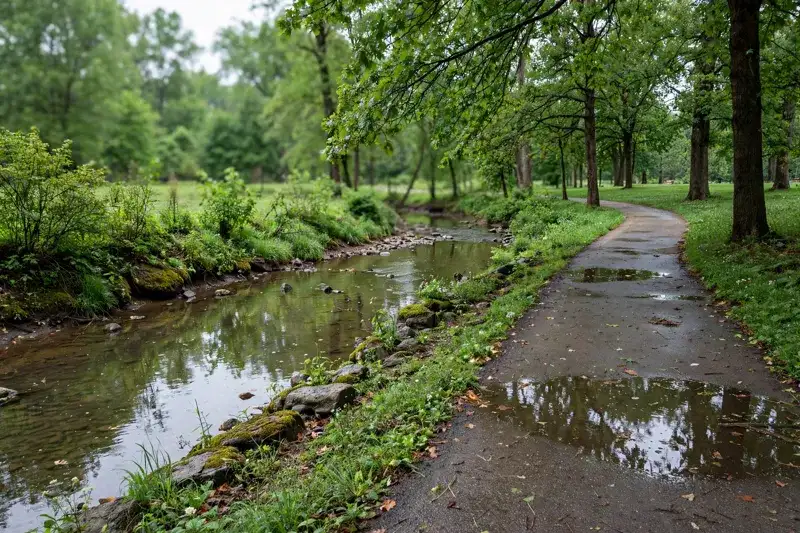
St. Joseph Creek is Westmont's watershed, and the Village's stormwater work is the story of the creek. The watershed covers about twenty-four square miles across Lisle, Downers Grove, Westmont and unincorporated DuPage County, and the final watershed plan is dated February 2021. The Village's Stormwater Management Plan, dated March 2018, carries a cover photograph of St. Joseph's Creek at Muddy Waters Park, in Westmont.
The gauge at Route 34, Ogden Avenue, at Lisle, recorded the peaks this page prints: one thousand two hundred and eighty cubic feet per second in July 1996, two thousand two hundred and ninety in April 2013, one thousand five hundred and sixty in August 2018, and one thousand five hundred and thirty in May 2020. The tax that funds the public work is a half-percent sales tax, collected since July 2015, generating over one million dollars a year.
The June 2025 Public Works Committee minutes are the newest entry in the record: a trustee discussed the April 2013 event and its impact on stormwater, staff were asked to prepare a review of what was accomplished from the Westmont Stormwater Master Plan prepared in 2011, and DuPage County will design and construct additional detention on a parcel before conveying it to the Village, with county ARPA funds behind it. The Village's own pages say a lot about stormwater and nothing about a flooded basement.
The Stormwater Management page ties the programme to the April 2013 flood and the 2015 tax referendum, and it links to a Flood Information document that is dead, a 404. The Underground Division page says the Village does not own or operate its own sanitary sewer treatment plant, and it names the two districts and the Cass Avenue line. The Public Works Programs page lists the Tree Seedling Giveaway, Protect our Pollinators, River Sweep, Adopt-A-Planter, the Tree Planting Incentive and Oak-toberfest, and no flood programme.
The 311 form has nine categories and no sewer-backup type and no flooding type. The Village publishes prevention and cost-share guidance through the districts, not an emergency flooded-basement cleanup guide, and this page says so honestly. A programme that cannot be found on the official site is not a programme this page will promise you.
Commercial water damage in Westmont
Commercial water damage restoration westmont il starts with a walk-through, not a quote. A restaurant on Cass Avenue, a shop on Ogden Avenue, an office near the Metra station, a school, a library, every commercial building in Westmont has the same entry points as a home, and the same job: extract, dry to a number, clean, repair. The difference is the clock: a commercial building that stays closed loses revenue every day it stays closed, so the drying starts the same day and the repair is phased so the business can reopen in stages.
A burst pipe in a restaurant kitchen, a sewer backup in a shop basement, a roof leak over an office, the water is the same, the drying is the same, and the record is the same: a drying log with moisture readings, a written scope of work, and photographs before and after. This site prints no prices for commercial work either, for the same reason: a price on a page is a price for a job the page has never seen. Call us for a walk-through, and we will give you a written scope with the cost in it before any repair starts.
By building type
The houses that flood in Westmont are the houses that were built when the village grew.
The company's Westmont page says the village's housing grew in a 1960s and 1970s boom, the median home dates to 1976, and about forty-one percent of homes are detached single-family, company-page claims, not Village figures, and this page prints them only with that label. A ranch with a finished basement floods from the floor drain and the sump pump. A split-level floods from the lower level and the discharge line. A two-flat or a three-flat on Cass Avenue, Quincy Street or Ogden Avenue floods from the upstairs flat and the building's pipes.
A commercial building floods from the roof and the floor drain. The entry point changes with the building, and the entry point is what this page is built to find.
Choosing a company
Choose a company the way you would choose a contractor for any job in your home. Ask for a written scope of work with the cost in it before any repair starts. Ask for a drying log with moisture readings, and ask when the walls will be closed and the flooring put back. Ask for the Illinois Part 835 registration if mold work is involved, and ask to see it.
Ask for a response time, and ask whether the crew answers around the clock. Ask for references, and ask what happens if the drying log says the walls are still wet. A company that gives you a price over the phone for a job it has never seen is a company that has not seen your home. A company that offers to remediate mold without fixing the leak is a company that will be back in weeks. A company that cannot show you a drying log is a company that cannot prove the job is dry.
The first-hour checklist
Water damage restoration Westmont is a job that starts with one phone call, and the first hour decides the rest. Shut off the water at the main if you can find it. Shut off the power to the basement if the water is near an outlet. Stay out of the water while the power is on. Lift the rugs, the boxes and the furniture before the water soaks through them. Photograph the water line and every damaged item before you move it.
Call us first, then the district if the water came up through a floor drain, then your insurer the same day. Do not use a fan on visible mold. Do not throw anything away before you photograph it. Do not wait for the adjuster to start the drying, the drying is mitigation, and mitigation is your job.
After the job, the drying log, the repair and the record
After the job, the record is what matters. The drying log says when the walls were dry, and it says it with moisture readings, not with a guess. The written scope says what came out, what stayed, what was cleaned, what was dried and what was repaired. The photographs say what the water looked like before the crew arrived. Keep all three, the insurer reads them, and the next buyer reads them, and the next flood reads them too. A home with a dry basement and a drying log keeps its value.
A home with a wet basement and no record loses it. The repair does not start until the drying log says the walls are dry, and the flooring does not go back until the floor reads dry. A job that is rushed is a job that grows mold behind the paint, and the mold comes back in weeks. The crew that closes the walls before the meter says dry is a crew that will be back.
Winter preparation, before the next freeze
Winter in Westmont is a frozen-pipe job, and the preparation starts in the fall. Insulate the pipes in the unheated spaces, the garage, the crawl space, the wall that faces north. Drain the outdoor lines before the first freeze. Keep the heat on, even when the house is empty, and open the cabinet doors under the sinks on the coldest nights. Test the sump pump before the thaw, and check the discharge line for ice. Know where the main shutoff is, and make sure everyone in the house knows where it is. Televise the lateral with a camera before the next storm, and clear the roots. A pipe that froze in January 2019 will freeze again, and the houses that froze then are the houses that will freeze again.
Street by street, where the water comes in
Water damage restoration westmont il near cass avenue starts at the Cass Avenue crossing, and the water comes in from the same places on every Westmont street. On Cass Avenue, the water comes up through the floor drain, and the district depends on which side of Cass the building sits on, west of Cass, the Downers Grove Sanitary District; east of Cass, the Flagg Creek Water Reclamation District. On Quincy Street, the water comes from the Metra corridor and the low ground by the station.
On Ogden Avenue, the water comes from the storms that run along the corridor. On 55th Street and 63rd Street, the water comes from the sump pump and the discharge line. On Richmond Street and Grant Street, the water comes from the low ground the Park District minutes name. On King Arthur Court and North Warwick, the water comes from the areas of concern the Village itself recorded. In Ty Warner Park, Oakwood Estates and Williamsburg Village, the water comes from the 1950s and 1960s ranches and split-levels south of Ogden. Along St.
Joseph Creek, the water comes from the creek when it runs high, and the creek runs highest in the spring, when the snowmelt and the storms overlap. Every street has the same entry points, and every street has the same job: extract, dry to a number, clean, repair.
24 hour water damage repair Westmont is one call away, day or night, weekends and holidays. If your basement is flooding now, call (773) 570-9869 and tell us where the water is, how deep it looks, and whether it smells of sewage. We answer around the clock, and we talk you through the first hour while a crew is on the way to your Westmont home. The water comes out the same day, the drying runs until the meter says dry, and the room goes back the way it was. That is the job, and it is the job this page is built to do.
Frequently asked questions
water damage restoration westmont
Water damage restoration Westmont is the job of getting the water out of a home in Westmont, Illinois, drying the walls and floors to moisture readings, cleaning what stays, removing what cannot be saved, and repairing what is left. It starts the same day the water appears, because a flood that waits a week becomes a mold job.
What is the 50 percent rule for water damage in Westmont?
The only 50 percent rule that counts is a FEMA rule for homes in a floodplain. If repairs cost half or more of what the home is worth, excluding the land, the home must be brought up to flood standards. No informal fifty-fifty split between insurance and restoration exists, and no page should invent one.
How long does water damage restoration take in Westmont?
Drying takes three to five days on a clean-water loss in one room, and the repair takes one to two weeks after that. A sewage loss takes longer, because the wet material comes out and the room is cleaned and sanitized before the drying starts. The crew does not close the walls until a moisture meter says they are dry.
What is water damage restoration called?
It is called water damage restoration, and the first phase of it is called mitigation, the extraction and drying that stop the damage from spreading. The second phase is called repair or rebuild, the drywall, flooring and paint that go back after the drying log says the walls are dry.
Does insurance cover water damage restoration in Westmont?
It usually does when the cause was sudden and accidental, such as a burst pipe or an appliance failure. The insurer pays for the drying and the repair, less your deductible, and it does not pay for the pipe that failed. A sewer backup needs its own endorsement, and flooding from outside needs a separate flood policy.
What is the process for water damage restoration in Westmont?
The process runs in order: inspection, extraction, drying, cleaning and repair. We find the source and measure how far the water spread, remove the standing water, dry the walls and floors to moisture readings, clean and sanitize what stays, remove what cannot be saved, and repair what is left.
Does homeowners insurance cover water damage in Westmont?
It usually does when the damage was sudden and accidental, such as a burst pipe or an appliance failure. It does not cover flooding from outside, gradual leaks, wear and neglect, or a sewer backup without the endorsement. Report the damage the same day it appears, and photograph everything before you move it.
What should I do when my house floods in Westmont?
Call us first, then stop the water at the source if you can do it safely. Stay out of a flooded basement while the power is on, and do not touch the water with bare hands. Lift what you can save to higher ground, photograph the water line and every damaged item, and keep a list of what was lost.
How much does insurance pay for water damage in Westmont?
No page can give you a number, because the payment depends on your policy, your deductible, the cause of the loss, and the limits you bought. The insurer pays the cost of the drying and the repair, less your deductible, and it does not pay for the pipe that failed. Keep every receipt and photograph.
Are renters responsible for water damage in Westmont?
It depends on who caused the water and what the lease says. The landlord usually owns the building and its pipes, so the landlord pays for the building repair. A renter pays when the renter caused the damage, such as an overflowing tub left running. Read your lease and tell your landlord the day the water appears.
How much does a plumber charge for a burst pipe in Westmont?
This site prints no prices, so no figure here can mislead you. The charge depends on where the pipe is, how hard it is to reach, whether the wall or ceiling must be opened, and whether the call is an emergency at night. We inspect first, then give you a written scope of work with the cost in it.
Does insurance cover burst pipes in Westmont?
It usually does when the pipe burst suddenly, such as a pipe that froze and split in a cold snap. The insurer pays for the water damage the burst caused, not for the pipe itself. A pipe that leaked slowly for months may be classed as wear and tear, so report a burst the day you find it.
How much does trenchless pipe bursting cost in Westmont?
Pipe bursting means two different things, and pages that mix them up mislead you. Trenchless pipe bursting replaces a broken sewer line by pulling a new pipe through the old one, with no open trench. A burst pipe is a supply pipe that split open, usually from freezing. This site prints no prices for either job.
How much does mold remediation cost in Westmont?
This site prints no prices, so no figure here can mislead you. The cost depends on how much mold there is, how far it spread, what material it sits on, and whether the water source is fixed. We inspect first, then give you a written scope of work with the cost in it before any repair starts.
Can mold be fully remediated in Westmont?
Yes, when the water source is fixed first and the drying is finished to moisture readings. Remediation removes the mold growth and the wet material it sits on, cleans what stays, and dries the space so it cannot grow back. It cannot work if the leak keeps feeding the wall. Spores are everywhere, so no home is ever spore-free.
Who do I call first for a sewer backup in Westmont, Illinois?
It depends on which side of Cass Avenue the home sits on. West of Cass, call the Downers Grove Sanitary District at (630) 969-0664, it owns the main sewer there. East of Cass, call the Flagg Creek Water Reclamation District at (630) 323-3299. For storm drainage, call Village Public Works at (630) 981-6270.
What cost-share programmes does the Village of Westmont offer for flooding?
The Village itself offers no direct residential cost-share programme for flood work. Its half-percent stormwater sales tax, collecting since July 2015, funds public stormwater and infrastructure work only. The help for homeowners sits with the two sanitary districts: Downers Grove west of Cass, Flagg Creek east of Cass, and neither pays for interior cleanup.
What is the flood history of Westmont, Illinois?
The flood the Village itself records is April 2013, after which it created the Community Stormwater Committee and voters approved the stormwater sales tax. St. Joseph Creek peaked at two thousand two hundred and ninety cubic feet per second on April 18, 2013. A December 1982 flood on the same creek is also in the county record.
What do I do about mold after basement flooding in Westmont?
Dry the basement fast, stop the water source, and throw out water-soaked porous items. Wear a respirator, gloves and eye protection, clean hard surfaces, and dry the space to moisture readings. Call a professional for a large area, and ask any mold company for its Illinois Part 835 registration first.
How to tell if water damage is permanent?
Water damage is permanent when the material cannot be dried back to its old strength. Drywall that stayed wet for days crumbles, wood that stayed wet warps and rots, and flooring that buckled does not lie flat again. A moisture meter and a drying log tell you what can be saved and what must come out.
Will my basement flood if the sump pump fails?
Yes. A basement with a sump pump floods when the pump stops, because the pump is the only thing moving the water out. The pump stops when the power goes out, the float switch sticks, or the discharge line freezes. A battery backup keeps the pump running when the power goes out, and it is the insurance a basement has.
What should I do if my sump pump floods my basement?
Call us first, then stay out of the water while the power is on. Lift what you can save to higher ground, and photograph the water line before anything is moved. Do not touch the water with bare hands, and keep children and pets clear of the room until the water is gone and the walls read dry.
My sump pump failed and my basement flooded. Does my insurance cover this?
It usually does if the failure was sudden, such as a power cut in a storm, and you hold the sump-pump or water-backup coverage. Ask your insurer before the next storm, not after it, whether your policy carries that coverage. A pump that failed from age or neglect may be classed as wear and tear.
Why did my basement flood with a sump pump?
Because the pump stopped, the line froze, or the float stuck, and the water had nowhere else to go. The failure in Westmont is a sump pump failing during a storm: the power goes out, the pump burns out, or the float switch jams, and the basement floods while the storm is overhead. Test the pump every spring and fall.
What type of water damage is not covered by insurance?
Flooding from outside, gradual leaks, wear and neglect, and sewer backups without the endorsement are not covered. A standard homeowners policy does not cover external flooding at all, that needs a separate flood policy. A pipe that leaked slowly for months may be classed as wear and tear, so report a burst the day you find it.
Sources
- Village of Westmont, westmont.illinois.gov, Stormwater Management page, confirmed live November 18, 2026: Community Stormwater Committee created after the April 2013 flood; stormwater sales tax referendum spring 2015, half-percent, collection since July 2015, generates over one million dollars annually; Village must follow federal stormwater requirements under the National Pollutant Discharge Elimination Program, permit ILR40; St. Joseph Creek watershed about twenty-four square miles; final watershed plan February 2021; Village Stormwater Management Plan March 2018.
- Village of Westmont, westmont.illinois.gov, Underground Division page: Downers Grove Sanitary District serving properties west of Cass Avenue, dgsd.org, (630) 969-0664; Flagg Creek Water Reclamation District serving properties east of Cass Avenue, flaggcreekwrd.org, (630) 323-3299; Village does not own or operate its own sanitary sewer treatment plant.
- Flagg Creek Water Reclamation District, flaggcreekwrd.org, Chapter 41 of the Code of Ordinances, Ordinance 870, passed August 23, 2013: reimbursement up to an amount set forth in the District's programme; total programme funding limit twenty thousand dollars for the period to April 30, 2014; programme changeable or eliminable on annual review; owner waives claims and allows inspections.
- Flagg Creek Water Reclamation District programme letter, December 2, 2013, hosted on flaggcreekwrd.org: reimbursement up to four thousand dollars or fifty percent of the cost, whichever is less, for an approved backflow prevention device or overhead sewer; check valve may cost as little as one thousand to two thousand dollars; contact (630) 323-3299, extension 6101; District office 7001 Frontage Road, Burr Ridge, IL 60527. No current-year funding confirmation found; framed as the 2013 letter wording.
- Downers Grove Sanitary District, dgsd.org, three assistance programmes confirmed live November 18, 2026: Overhead Sewer Program up to three thousand dollars or fifty percent, buildings connected before July 17, 1996; Backup Reimbursement Program; Building Sanitary Service Repair Assistance Program; District office 2710 Curtiss Street, Downers Grove, IL 60515; report a backup (630) 969-0664, any time; District is a separate unit of government, not part of the Village.
- Village of Westmont, westmont.illinois.gov, Public Works: 155 East Burlington Avenue, (630) 981-6270, Monday to Friday seven in the morning to three-thirty in the afternoon; Director Amy Ries; six divisions; ninety-seven miles of water mains, one thousand four hundred and three fire hydrants, ninety miles of storm sewers.
- Village of Westmont, westmont.illinois.gov, Village Hall: 31 West Quincy Street, (630) 981-6200, Monday to Friday eight in the morning to four in the afternoon; 311 Report A Concern page; after-hours Police non-emergency (630) 981-6300, press 9; emergencies dial 9-1-1; 311 support email.
- United States Geological Survey, St. Joseph Creek gauge 05540195 at Route 34, Ogden Avenue, at Lisle: peak two thousand two hundred and ninety cubic feet per second, April 18, 2013, gage height fourteen point nine eight feet; July 18, 1996 peak one thousand two hundred and eighty cubic feet per second, gage height twelve point eight nine feet; August 2018 peak one thousand five hundred and sixty; May 2020 peak one thousand five hundred and thirty.
- DuPage County, St. Joseph Creek watershed plan, February 2021; Park District Board minutes, September 9, 2015: areas of concern King Arthur Court, Grant and Richmond Streets, North Warwick; Public Works Committee minutes, June 2025: April 2013 event discussion, Stormwater Master Plan 2011 review, DuPage County detention with county ARPA funds.
- WGN News, YouTube, "Heavy rain causes homes, streets to flood in Westmont", one minute thirty-two seconds, five hundred and fifty views, seven years old, news flood report, no company, no street address, no job date.
- CBS Chicago and FOX 32, YouTube, fatal municipal water-main incident near 60th and Deming Place, public works employee trapped in an underground water main vault, federal workplace safety investigation, lawsuit filed later that year, a municipal emergency, not a restoration job.
- WikiHow, "Fast and Effective Ways to Dry a Basement After a Flood", co-authored Ryan Owsiany, last updated November 7, 2026, forty-seven thousand five hundred and seventy-eight views, shut off basement power first, wait until outside water is lower than basement water, towels under two inches, wet vacuum or sump pump if deeper, dry within forty-eight hours, three quarters of a cup of bleach per gallon of water.
- Illinois Department of Public Health, Part 835 mold remediation registration, dph.illinois.gov, effective September 23, 2026, grace period to September 30, 2027; verified live November 18, 2026.
- FEMA, substantial damage and substantial improvement, the 50 percent rule: repairs or improvements costing half or more of the building's market value, excluding land, in a Special Flood Hazard Area.
Water damage restoration near Westmont
We serve every Westmont street and every suburb around it, day and night.
More Restoration Services Near Westmont
Every service below is one tap away. Pick the one that matches your problem.

Water Damage Restoration
Fast water extraction, structural drying, and full repair after burst pipes, leaks, and floods.
Learn more →
Water Mitigation
Emergency water removal, structural drying, and mold prevention to stop the damage fast, 24/7.
Learn more →
Mold Remediation
Safe, contained mold remediation that removes contamination and fixes the moisture source.
Learn more →
Sewage Cleanup
Safe removal and disinfection of dangerous sewage backups and black water.
Learn more →
Flood Cleanup
Water pumped out, structure dried, and debris cleared fast after storms and flooding.
Learn more →
Hardwood Floors Water Damage
Cupped, buckled or stained hardwood after a leak? How we dry it, when sanding saves it, and when the boards have to go.
Learn more →