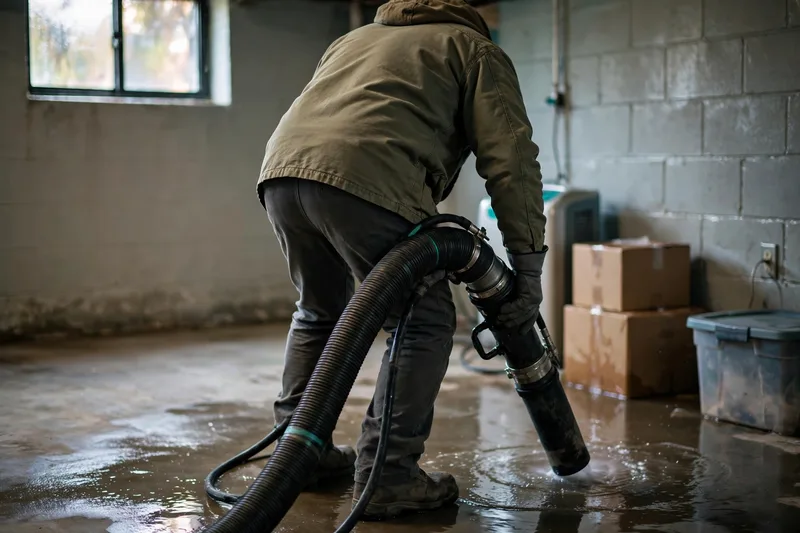
Chicago Water Damage Service, West Rogers Park, Chicago, IL 60645
Water Damage Restoration West Rogers Park IL
Flooded basement in West Rogers Park, Chicago? We answer 24/7, arrive fast, extract the water, dry the structure, and help you file the claim.
Call (773) 570-9869What to do first
- We answer 24/7
- Local Chicago team
- Insurance documentation help
- Straight answers, no pressure
Request water damage help in West Rogers Park
If your basement is wet now, call (773) 570-9869 first. If you can wait for a call back, send the form below and we will call you. Tell us where the water is, how deep it is, and when it started.
Home › Service Areas › Water Damage Restoration West Rogers Park IL | 24/7 Help
Short answer
Water damage restoration west rogers park crews answer 24/7. Call (773) 570-9869 now and tell us where the water is. We talk you through the first hour while a crew is on the way, and we dry the house to readings you can see.
Your first hour in West Rogers Park: what to do now
Water damage restoration west rogers park jobs are won or lost in the first hour. Water soaks into drywall and flooring in minutes, and mold can start to grow within 24 to 48 hours. The work you do before we arrive decides how much of your home survives.
- Call us first at (773) 570-9869. We answer 24/7 and talk you through the first hour while a crew is on the way.
- Stop the water at the source. If a pipe burst, shut off the main water valve. If you suspect a water main break, call 311.
- Stay out of a flooded basement while the power is on. Water and electricity together can kill. If the water is near the electrical panel, call us and stay out until we tell you it is safe.
- Do not touch the water with bare hands. Assume all floodwater is contaminated, especially water that came from a sewer. Wear rubber boots and gloves if you must walk through it.
- Lift what you can save and photograph everything. Move dry boxes, papers and electronics to higher ground. Photograph the water line on the walls and each damaged item before you move it. These photos are the start of your insurance claim.
West Rogers Park is a neighbourhood on the Far North Side of Chicago, Illinois, one of the city's 77 community areas, with the main ZIP code 60645 and 60659 covering the western part of the neighbourhood. It sits between Howard Street to the north and Devon Avenue to the south, with Ridge Boulevard to the east and Kedzie Avenue to the west. The main streets are Devon Avenue, Peterson Avenue, Touhy Avenue, Howard Street, Ridge Boulevard, Western Avenue, California Avenue, Kedzie Avenue, Pratt Boulevard, Morse Avenue, Lunt Avenue and Greenleaf Avenue.
Indian Boundary Park sits at 2500 West Lunt Avenue, and Warren Park sits at 6601 North Western Avenue, with its field house, tennis courts and golf course. Devon Avenue is the neighbourhood's main commercial street, known for its South Asian shops and restaurants between Western Avenue and California Avenue, and West Rogers Park is also home to a large Orthodox Jewish community along Devon Avenue and Pratt Boulevard.
The homes here are mostly brick two-flats, vintage 1920s courtyard apartment buildings, bungalows and single-family homes, with brick masonry, poured concrete basements and flat roofs, and the streets run on the grid of Devon, Peterson, Ridge and Western. That mix is why West Rogers Park basements flood the way they do: a heavy rain falls faster than the drains can take it, a sump pump fails in a power cut, a frozen discharge line backs up in January, or a sewer surcharge pushes water up through a basement floor drain.
Your basement may be dry for years, then one storm pushes too much rain through the neighbourhood at once, or one sump pump fails, and the water is in before you know it. We work in West Rogers Park every week, and we know the homes, the sewers and the streets.
One thing to get straight before anything else: this page is about West Rogers Park, Chicago, IL, not Rogers Park, the lakefront neighbourhood east of Ridge Boulevard, and not West Ridge, the neighbourhood north of Howard Street. The three names sound alike and the streets run into each other, so search engines mix them up constantly. Google does not even autocomplete West Rogers Park: type the name and it steers you to West Palm Beach and West Chester instead.
The deepest restoration page in the area is written for Rogers Park, not West Rogers Park, and it says so itself. The page that ranks first for West Rogers Park is a short franchise page with no streets, no ZIP codes, no dates and no named local cases. This page is for West Rogers Park, Chicago, IL 60645, on the Far North Side, between Howard Street and Devon Avenue, and every fact on it is about that West Rogers Park.
CBS News reported on 29 December 2022 that a burst pipe at 2415 West Peterson Avenue sent water pouring out of a window on the North Side, and that is the one dated, named-address incident we could verify for this neighbourhood.
If the water came from the street or a sewer backup, call 311 as well, or file a report at 311.Chicago.gov, so the City of Chicago Department of Water Management knows the sewer backed up on your street. If you are outside Chicago, call 312-744-5000 instead of 311. Then call your insurer and start the claim. For any emergency, call 911. After hours, call us first and we will tell you what to do.
What water damage restoration in West Rogers Park IL includes
Water damage restoration west rogers park work is one job with five parts. We extract the water, we dry the structure to readings you can see, we clean and disinfect, we remove what cannot be saved, and we rebuild what was removed. No step is skipped, and no step is started before the one before it is done. A crew doing water damage restoration West Rogers Park work starts with the moisture map, because the map decides what comes out and what can stay.
| Step | What happens | What you get |
|---|---|---|
| 1. Water extraction | We pump and vacuum the standing water out of the basement, rooms and floors. | The water is out of the house, usually the same day. |
| 2. Structural drying | We set air movers and a dehumidifier and take moisture readings every day. | A drying log with readings that show when the house is dry. |
| 3. Cleaning and disinfection | We clean and disinfect the hard surfaces and remove anything the water ruined. | A clean, safe space ready for repair. |
| 4. Damage removal | We cut out wet drywall and remove ruined carpet pad, flooring and insulation. | A list of what was removed, photographed for your claim. |
| 5. Repair and rebuild | We replace the drywall, flooring and trim that was removed, and repaint. | Your rooms back the way they were, dry to the readings. |
Every step is photographed and written into a log. Your insurer will ask for the photos, the drying log and the scope of work, and we give you all three. That is what water damage restoration means on this page: the water out, the house dry to readings, the damage documented, and the rooms rebuilt.
How water removal works in West Rogers Park: seven steps
Water damage restoration west rogers park work follows the same seven steps on every job, whether the water came from a burst pipe or a flooded basement. Do them in order, and do not skip one.
Call us first.
Call (773) 570-9869. We answer 24/7. Tell us what happened, where the water is and how deep it is. We talk you through the first hour while a crew is on the way.
Stop the water at the source.
If a pipe burst, shut off the main water valve. If an appliance failed, turn off the water to that appliance. If you suspect a water main break, call 311. If the water came from the sewer or the street, do not try to stop it yourself.
Stay out of the water while the power is on.
Do not enter a flooded basement while the power is on. Water and electricity together can kill. If the water is near the electrical panel, call us and stay out until we tell you it is safe.
Do not touch the water with bare hands.
Assume all floodwater is contaminated, especially water that came from a sewer. Wear rubber boots and gloves if you must walk through it, and wash your hands and any skin that touched the water.
Lift what you can save and photograph everything.
Move dry boxes, papers and electronics to higher ground. Photograph the water line on the walls, the wet floor and each damaged item before you move it. These photos are the start of your insurance claim.
Call 311 if the sewer or street flooded.
If the water came from the street or a sewer backup, call 311, or file a report at 311.Chicago.gov, so the City of Chicago Department of Water Management knows the sewer backed up on your street. If you are outside Chicago, call 312-744-5000 instead of 311. Then call your insurer and start the claim.
Let the drying run until the readings say dry.
We extract the water, set air movers and a dehumidifier, and take moisture readings every day. We stop the drying only when the readings are back to dry, and we show you the numbers. Do not switch the equipment off early, because the walls will stay wet inside.
Six ways water gets into a West Rogers Park home
Water damage restoration west rogers park crews see the same six entry points again and again. Find which one let the water in, because the fix depends on it. Drying a basement without fixing the entry point is a repair that will be needed again in the next storm.
Burst pipe
A pipe that froze in a cold snap, or an old pipe that split at a joint. The water is clean, but there is a lot of it, and it fills a basement fast. Shut off the main water valve and call us.
Sewer backup
Heavy rain fills the sewer and the water comes back through a floor drain or a toilet. The water is contaminated. Do not touch it with bare hands, and call 311 as well as us, so the City of Chicago Department of Water Management knows the sewer backed up on your street.
Sump pump failure
The pump stopped, the float switch stuck, or the power went out in the storm. The pit overflows and the basement floods from the floor up. A battery backup would have kept it running.
Roof leak
Wind-driven rain or ice dams push water under the shingles and down through the ceiling. The stain on the ceiling is usually far from the leak, so we trace it with a moisture meter before we repair anything. Flat roofs, common on West Rogers Park two-flats and courtyard buildings, pond water where the drain is blocked, and the leak shows up far from the blockage.
Appliance leak
A washing machine hose, a dishwasher supply line or a water heater that split. The water is clean to start with, but a slow leak behind a wall can soak a floor for weeks before anyone notices.
Storm flooding
Heavy rain falls faster than the ground and the drains can take it, and the water runs to the lowest point and finds your basement window or door. A heavy rain in West Rogers Park can flood a basement even when nothing in the house is broken, because the City's combined sewer surcharges and the water pushes back through a basement floor drain. The homes on the low streets take water first, and the garden units take it before anyone else.
West Rogers Park streets and buildings: where the risk sits
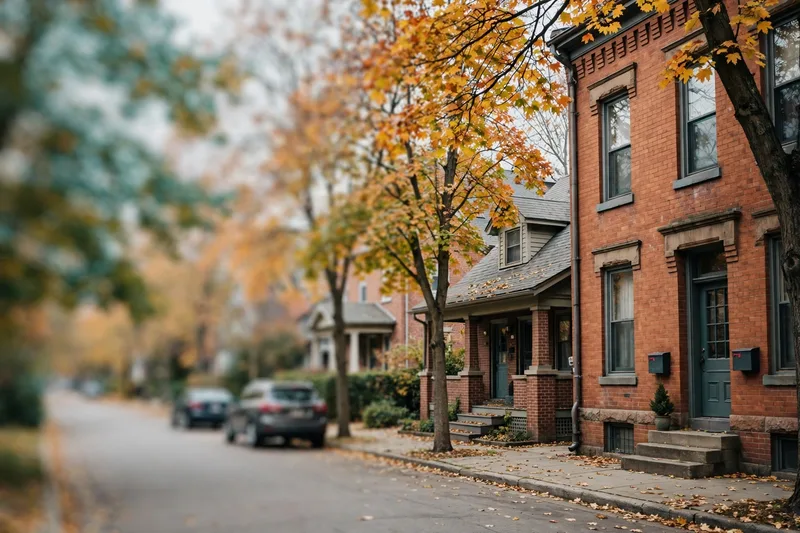
Water damage risk in West Rogers Park is not the same on every block. West Rogers Park runs between Howard Street to the north and Devon Avenue to the south, with Ridge Boulevard to the east and Kedzie Avenue to the west. The streets off the grid, Western Avenue, California Avenue, Pratt Boulevard, Morse Avenue, Lunt Avenue, Greenleaf Avenue, Fargo Avenue, Jarvis Avenue and Touhy Avenue, are where the homes sit. Indian Boundary Park sits at 2500 West Lunt Avenue, and Warren Park sits at 6601 North Western Avenue.
The neighbourhood borders Rogers Park to the east, West Ridge to the north, North Park to the south, and Budlong Woods across Kedzie Avenue to the southwest, and Devon Avenue runs the whole southern edge, with its shops and restaurants between Western Avenue and California Avenue.
The homes here are mostly brick two-flats, vintage 1920s courtyard apartment buildings, bungalows and single-family homes, with brick masonry, poured concrete basements and flat roofs, and newer brick and frame buildings from later decades. The courtyard buildings are the neighbourhood's signature: two and three storey brick buildings around a shared courtyard, built in the 1920s, with shared walls, shared plumbing risers and shared drains. A burst riser in a courtyard building can soak several units at once, because the water runs down the riser and through the floors.
Brick two-flats have the same shared-wall problem on a smaller scale: a burst pipe on the second floor can soak the first floor and the garden unit below it. Bungalows have full basements under a single storey, and the basement is where the water goes first. Flat roofs pond water where the drain is blocked, and the leak shows up far from the blockage. The older homes sit on brick and rubble footings, with vitrified clay laterals, cast iron stacks and copper supply lines, and solid oak and maple hardwood floors.
Old clay sewer laterals crack and shift, and tree roots find the cracks. If your lateral is old clay, ask a licensed sewer contractor to televise it before the next storm, not after it.
Garden units are the first to take water, because they sit below street level and their windows are at grade. A heavy rain fills the window wells, and the water comes through the window or the wall. Poured concrete full basements are the next most exposed, because the water finds the joint where the wall meets the floor. Condo and HOA buildings add one more problem: the water may come from a common element, such as a roof, a riser or a shared drain, and the association and the unit owner will need to agree on who pays for what. That is why the landlord, tenant and condo section on this page matters, and why we document the source of the water in writing.
The streets matter too. A basement on a low side street will take water before a basement on a higher street. If your street has flooded before, it will flood again, and the fix is to find the entry point and close it, not to hope the next storm is smaller. The main ZIP code for West Rogers Park is 60645, and 60659 covers the western part of the neighbourhood. If your address is in either ZIP code, we serve you from the same number, (773) 570-9869. We answer 24/7.
Sump pumps in West Rogers Park: the one machine that has to work
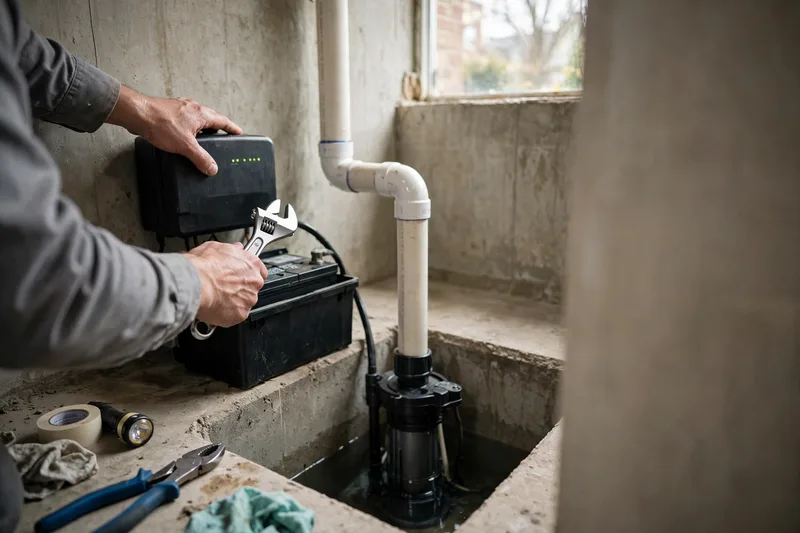
Most West Rogers Park basements have a sump pump, and most West Rogers Park basement floods start with a sump pump that stopped. The pump is a simple machine, and it fails in simple ways: the float switch sticks, the discharge line freezes, the check valve wears out, or the power goes out in the very storm that fills the pit. A pump that has not been tested in a year is a pump you do not know about.
Test the pump every few months. Pour a bucket of water into the pit and watch the pump run. If it does not run, call us before the next storm, not after it. A battery backup is the cheapest insurance a basement has. It keeps the pump running through a power cut, and it is the one upgrade we recommend to every West Rogers Park homeowner we meet. A second pump in the same pit is the next step up, and it covers the day the first pump dies.
Watch the discharge line in winter. A discharge line that freezes shut will back the water into the pit and flood the basement, even with a working pump. Make sure the line drains to a place where the water will not freeze and run back. If the pump runs constantly in dry weather, the check valve may be bad, and the water is running back into the pit as fast as the pump pushes it out. Garden units are the most exposed, because the pump is the only thing between the garden unit and the street water, so a garden unit without a working pump and a battery backup is a flood waiting for a storm.
Three kinds of water, three kinds of cleanup
Not all water is the same. Clean water from a burst pipe is safe to touch. Grey water from a washing machine or a dishwasher is dirty but not sewage. Black water from a sewer is contaminated and dangerous. The kind of water decides what we clean, what we throw out, and how we protect your family.
| Category | Where it comes from | What it means for your home |
|---|---|---|
| Category 1: clean water | A burst pipe, a supply line, a water main break, rain through a roof leak. | Safe to touch. Dry fast and most materials can be saved. |
| Category 2: grey water | A washing machine, a dishwasher, a toilet overflow without solids, a sump pump overflow. | Dirty, and it can carry bacteria. Carpet pad and soft goods usually have to go. |
| Category 3: black water | A sewer backup, a toilet backup with solids, flood water from the street. | Contaminated. Do not touch it with bare hands. Porous materials usually have to go. |
The category can change while the water sits. Clean water left for two days becomes grey water, because bacteria grow in it. Grey water left for two days becomes black water. That is why the first day matters so much, and why we extract fast and dry fast on every job.
Flooded basement in West Rogers Park? Why it floods here
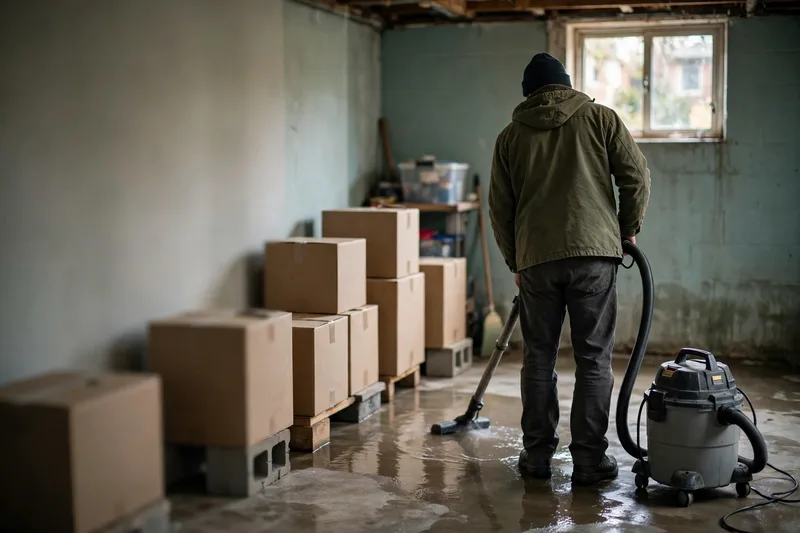
Water damage restoration west rogers park calls about flooded basements usually have one of four causes, and each one needs a different fix. First, the sump pump failed, the float switch stuck, or the power went out in the storm. Second, the sewer backed up through a floor drain or a toilet. Third, heavy rain fell faster than the ground and the drains could take it, and the water found the basement windows, the door, or a crack in the wall. Fourth, a burst pipe or a failed appliance filled the basement from the inside.
There is no named West Rogers Park flood event with a date, street or damage figure on the City of Chicago's own site, so this page names none from the City. What the record does show is that West Rogers Park basements flood the same way the rest of the Far North Side floods: a heavy rain falls faster than the drains can take it, the combined sewer surcharges, and the water comes back through a basement floor drain, or the sump pump stops in the power cut that comes with the storm.
In the next neighbourhood east, Rogers Park, a garden-unit apartment flooded with about three to four feet of water on 11 September 2022, with the water bursting open the front door, according to a resident's post that morning. That is Rogers Park, not West Rogers Park, and it is labelled as such, but the homes are the same age and the same build, the sewers are the same combined system, and the storm sat over both neighbourhoods, so the same risk sits here.
In West Rogers Park itself, a storm on the evening of 10 August 2021 split a tree in half on the 6600 block of North Holman, and the tree fell and just missed a house, according to WGN News. That is storm damage, not a water damage job, and it is labelled as such. If your basement is wet now, call us at (773) 570-9869. Do not wait to see if it dries on its own, because a wet basement does not dry on its own.
The water soaks into the drywall, the flooring and the framing, and the moisture left inside is what grows mold. We extract the water the same day, set the drying equipment, and take moisture readings every day until the house is dry.
One more thing to know about a flooded basement in West Rogers Park: the water that came from the sewer is not the same as the water that came from a burst pipe. Sewer water is contaminated, and anything porous it touched usually has to be thrown out. Clean water caught fast can often be dried in place. If you are not sure which kind of water you are standing in, stay out of it and call us. We test before we touch, and we tell you what we find before we start.
Water removal in West Rogers Park: fast, complete and documented
Water damage restoration west rogers park removal is the first step, and it is the step that decides how much of your home survives. We pump the standing water out with a truck-mounted extractor, then we vacuum the floors and pull the water out of the carpet and the pad. On a sewer backup we use sealed equipment, because the water is contaminated and we do not want it in the air of your house.
We photograph the water line on the walls, the wet floor and each damaged item before we move it. These photos are the start of your insurance claim, and they are the proof your adjuster will ask for. We also write down what we found, where the water came from, and how deep it was. The written record is part of the job, not an extra.
Do not try to remove a deep flood yourself with a household wet vacuum. A household vacuum cannot move the volume of water in a flooded basement, and it cannot lift the water out of the carpet pad or the subfloor. Call us, and let the truck-mounted equipment do the work. If the basement is still taking on water, do not wait for it to stop: call us while the water is still coming in, and we will tell you what to shut off and what to stay away from.
Flood cleanup in West Rogers Park: what we clean
Flood cleanup starts with the water out, and then it splits into two lists: what we clean and what we throw out. Hard surfaces can usually be cleaned and disinfected. Porous materials usually cannot, once the water was sewage or sat for more than a day or two.
We clean and disinfect the floors, the lower walls, and any hard surface the water touched. We remove the carpet pad, the insulation, and any drywall that stayed wet. We bag the waste and take it out of the house, so it does not sit in your garage and grow mold. We do not throw anything away before we photograph it, because your insurer needs the photos and you need the list.
If the water came from the sewer, the cleanup is different. We extract with sealed equipment, wash the hard surfaces with a disinfectant, and remove anything porous the water touched. Call 311 as well, or file a report at 311.Chicago.gov, so the City of Chicago Department of Water Management knows the sewer backed up on your street. The City is the right call for a sewer backup, because the Department of Water Management handles all water service requests through the 311 system, including flooding, broken pipes outside your home and water on the street.
Drying by readings: how we know the house is dry
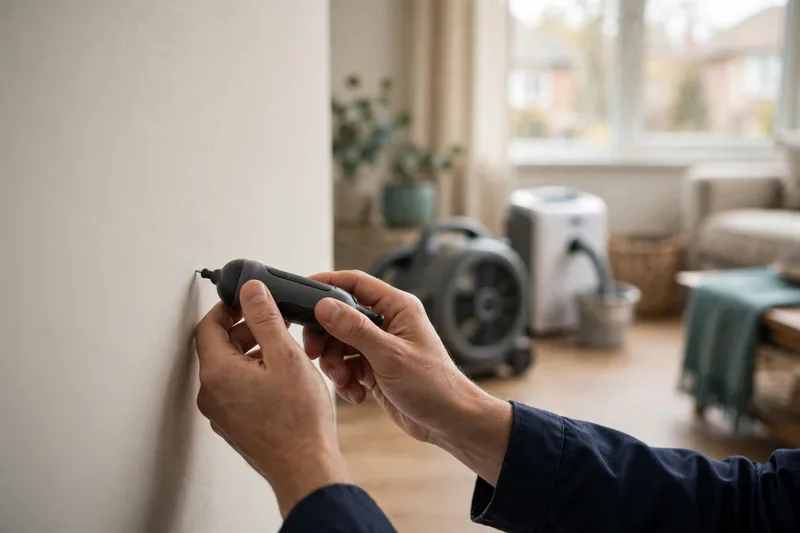
Water damage restoration west rogers park drying is done by readings, not by feeling. We set air movers to push dry air across the wet surfaces, and a dehumidifier to pull the moisture out of the air. Then we take moisture readings every day with a meter, and we write the numbers into a drying log. We stop the drying only when the readings are back to dry, and we show you the numbers.
As a general guide, most homes dry in three to seven days once the water is out and the equipment is running. A deep soak into hardwood, plaster or a finished basement can take a week or more. Plaster walls need the same care as drywall: plaster can feel dry on the face while the lath behind it is still wet, so the meter decides, not your hand. Brick two-flats, courtyard buildings and old bungalows have plaster and lath walls, and the plaster holds water longer than new drywall, so the drying takes longer and the readings matter more. Do not switch the equipment off early, because the walls look dry long before they are dry inside, and the moisture left inside is what grows mold.
| Material | General guide | What the meter tells us |
|---|---|---|
| Carpet and pad, clean water | Two to four days | The pad is dry through, not just the carpet face. |
| Drywall, clean water | Three to five days | The wall cavity is dry, not just the surface. |
| Plaster and lath, clean water | Five to seven days | The lath behind the plaster is dry. |
| Hardwood floor, clean water | Five to ten days | The boards are flat again and the subfloor is dry. |
| Finished basement, any water | One week or more | Every wall and floor is dry to the readings. |
| Sewage water, any material | Longer, and the porous material is removed first | The hard surfaces are clean and the readings are dry. |
These are general guides, not promises. The meter decides on your house, and the drying log is the proof. Your insurer will ask for the log, and we give you a copy.
Water mitigation in West Rogers Park: stop the damage from spreading
Water mitigation means stopping the damage from spreading while the drying runs. We stop the water at the source, we extract the water, we move the wet materials out of the way, and we set the drying equipment. The goal is simple: nothing that is dry now should be wet tomorrow.
Mitigation starts in the first hour. We shut off the main water valve if a pipe burst. We lift the furniture, the boxes and the electronics to dry ground. We pull the wet carpet pad and the wet insulation out of the house, so they do not feed mold. We set the air movers and the dehumidifier, and we take the first moisture readings, so the drying log starts on day one.
Mitigation is not the repair. The repair comes after the drying, when the readings say dry. A repair started on wet walls will fail, and the paint will peel, the flooring will buckle, and the mold will come back. We do not start the repair until the meter says the house is dry.
Water damage repair in West Rogers Park: what gets fixed
Water damage repair starts only when the drying is done. We replace the drywall that was cut out, we replace the flooring that could not be saved, we replace the trim and the baseboards, and we repaint. The rooms go back the way they were, dry to the readings.
Some materials can be saved, and some cannot. Drywall that stayed wet for more than a day or two usually has to be cut out above the water line. Carpet that was wet with clean water can often be dried in place, but carpet pad that was wet with sewage usually has to go. Hardwood floors that cupped may need sanding and refinishing, or they may need to be replaced. We test with a moisture meter before we cut anything, and we show you the readings so you can see why.
Every repair is photographed and written into the log. Your insurer will want the photos, the drying log and the scope of work, and we give you all three. If the repair needs a permit, we tell you before the work starts. Sewer work in Chicago needs a permit, and the permit is only issued to a licensed drainlayer licensed with the Department of Buildings. Plumbing contractors may obtain a courtesy drainlayer licence, in force since the first of January 2022. All of the work is inspected by the Department of Water Management, and you can ask the Department of Buildings about the permit before the work starts, at 312-744-3449.
Burst pipe in West Rogers Park: what to do in the first hour
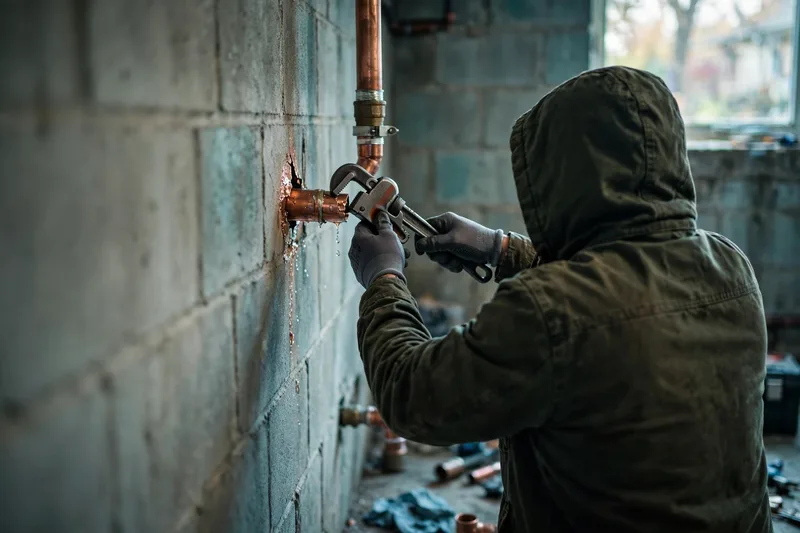
A burst pipe can fill a basement in an hour. Shut off the main water valve first, then turn off the power to any room with standing water. Call us at (773) 570-9869. Move what you can save to dry ground and photograph everything before you move it. Do not wait for the water to stop on its own.
When do pipes burst in West Rogers Park? In a hard freeze, when the cold lasts for days and the pipes sit in an unheated wall, a cold basement or a crawl space. Old cast iron and galvanized pipes split at the joints first, and the joints are the first place to check in a freeze.
You can tell a pipe burst by the sound of running water when no tap is open, by water coming through a ceiling or a wall, by a sudden drop in water pressure, or by a puddle where there was none. A pipe that froze once will freeze again in the next cold snap unless the pipe is insulated or the cold air is stopped. Pipes can freeze in three to eight hours of sub-freezing temperatures, and they can burst within hours of freezing, or later, when the ice thaws and the pressure spikes.
The one burst pipe case we could verify anywhere near West Rogers Park is the one CBS News reported on 29 December 2022, when a burst pipe at 2415 West Peterson Avenue sent water pouring out of a window on the North Side. No named West Rogers Park burst pipe video, thread or job with a street address and a company could be verified on any platform, so this page names no other.
Prevent the next one. In a hard freeze, leave the taps on a slow drip and keep the heat on, even in rooms you do not use. Open the cabinet doors under the sinks on outside walls so warm air can reach the pipes. Insulate the exposed pipes in the basement and the crawl space. If you leave the house empty in winter, shut off the main and drain the pipes, or have someone check the house.
Do you call a plumber for a burst pipe? A plumber can fix the pipe, and we can dry the house and repair the damage. Call us first if the water is already in the house, because the drying has to start in the first hours, and the pipe fix alone will not dry the walls. A plumber fixes the pipe and charges for the pipe repair; we dry the house and repair the damage, and we work with your insurer on the claim. If the water is near the electrical panel, turn off the power to that room and stay out until we tell you it is safe. For any emergency, call 911.
Sewage cleanup in West Rogers Park: the City
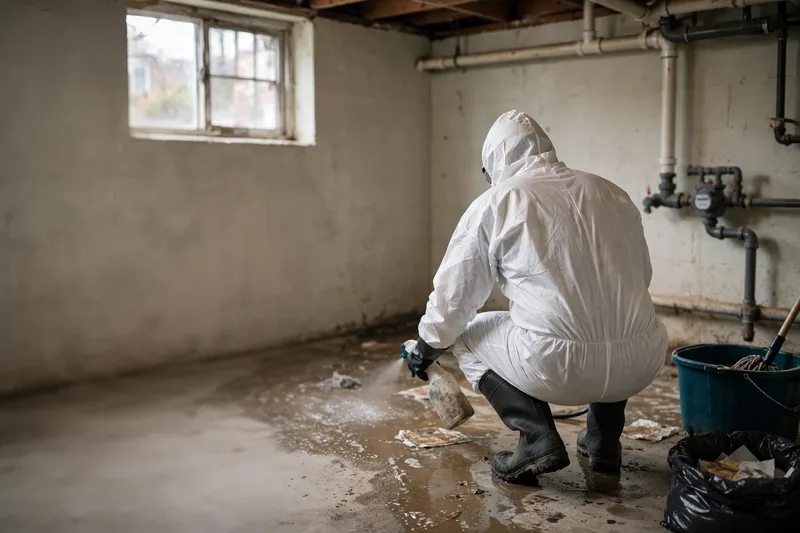
A sewer backup in West Rogers Park is sewage water, and sewage water is contaminated. Do not touch it with bare hands. Call us at (773) 570-9869, and call 311 as well, or file a report at 311.Chicago.gov, so the City of Chicago Department of Water Management knows the sewer backed up on your street. The Department handles all water service requests through the 311 system, including flooding, broken pipes outside your home and water on the street.
We extract the sewage with sealed equipment, wash the hard surfaces with a disinfectant, and remove anything porous the water touched, including the carpet pad and any drywall it soaked. We bag the waste and take it out of the house. We dry the space with the same readings we use on every job, and we do not stop until the readings say dry.
If the water is in your basement when it rains, or your toilets back up, the City runs a Private Sewer Drain Program that can repair a break in the public way if the guidelines are met. The route starts with a Water in Basement service request through 311 or 311.Chicago.gov, which goes to the Department of Water Management.
When you file it, the City asks for the address, whether the water is dirty or clean, the source of the water, how many inches there are, and whether it is the basement, the crawl space or the ground floor. Do not use that service request if the water came in through a window, a wall, a doorway, a roof or another opening that is not a sewer or drain backup. A City crew checks the street main first.
If the main is fine, the homeowner hires a licensed sewer contractor to rod and televise the line, with a Department of Water Management inspector present. If the break is on private property, the homeowner pays a licensed contractor, including the full restoration. If the break is in the public way and the guidelines are met, the Department of Water Management schedules and pays for the repair. The programme is for private residences with up to four units, and the City oversees it through the Department of Water Management. Ask the City for the current terms before you start work.
Emergency water damage in West Rogers Park: your first hour
Water damage restoration west rogers park jobs start the same way, day or night: you call, we talk you through the first hour, and a crew comes to you. The first hour is when the water is shallowest, the walls are driest, and the most can be saved. The second hour is already harder, and the third day is when the mold starts. Call us first at (773) 570-9869, any hour of the day or night, and tell us where the water is and how deep it is.
If a pipe burst, shut off the main water valve. If the water came from the street or a sewer backup, call 311 as well, or file a report at 311.Chicago.gov, so the City of Chicago Department of Water Management knows the sewer backed up on your street. If you are outside Chicago, call 312-744-5000 instead of 311. If the water is near the electrical panel, turn off the power to that room and stay out until we tell you it is safe. For any emergency, call 911. There is no separate after-hours water or sewer emergency number published by the City, so after hours call us first and we will tell you what to do.
We answer 24/7. When you call at night, you get a person, not a machine, and the person you get will talk you through the first hour while a crew is on the way. We do not ask you to wait until morning, because the water does not wait until morning either. We do not promise an arrival time in minutes on this page, because no honest company can promise one before it knows where the crew is and what the streets are like. What we promise is that we answer, we talk you through the first hour, and we send a crew.
Every service we provide in West Rogers Park
One number covers every water problem in West Rogers Park: (773) 570-9869. The table below lists each service we provide in the neighbourhood, and what it covers.
| Service | What it covers |
|---|---|
| Water damage west rogers park | Emergency help for any water loss in a West Rogers Park home, day or night. |
| Flooded basement west rogers park | Water extraction, drying and cleanup for a flooded basement or garden unit. |
| Burst pipe west rogers park | Water extraction and drying after a burst or frozen pipe, and repair of the damage. |
| Mold remediation west rogers park | Inspection, containment, removal and drying after mold follows water damage. |
| Sewage cleanup west rogers park | Sealed extraction, disinfection and removal after a sewer backup. |
| Water removal west rogers park | Truck-mounted extraction of standing water from basements, rooms and floors. |
| Flood damage west rogers park | Cleanup, drying and repair after storm flooding or a sewer surcharge. |
| Water damage company west rogers park | A local crew that answers 24/7, dries by readings, and documents for insurance. |
| Water damage repair west rogers park | Drywall, flooring, trim and paint after the drying is done and the readings say dry. |
| Emergency water damage west rogers park | The first-hour response: the call, the shutoff advice, and the crew on the way. |
| Basement flooding west rogers park | The cause found first, then the water out, then the drying, then the fix. |
| Flood cleanup west rogers park | What we clean, what we throw out, and the photos and log for your claim. |
What caused it? A decision tree for West Rogers Park water damage
Four causes bring water into a West Rogers Park home, and each one needs a different first call. Work through the questions in order, and you will know who to call first, who pays, and what to do differently.
| What you see | Likely cause | Who to call first | Who usually pays |
|---|---|---|---|
| Water coming up through a floor drain or a toilet, with a bad smell, when it rains | Sewer backup, from the combined sewer surcharging in wet weather | Us at (773) 570-9869, and 311 for the City record | Your insurer if you hold sewer backup cover; the City only if the break is in the public way and the programme guidelines are met |
| Water on the street and in the basement after a heavy rain, no smell | Storm flooding, rain falling faster than the drains can take it | Us at (773) 570-9869, and 311 if the street flooded | Usually you, unless you hold separate flood insurance; standard homeowners insurance does not cover flooding from outside the house |
| A sudden flood of clean water, a hissing pipe, water through a ceiling | Burst pipe or split supply line | Us at (773) 570-9869, after you shut off the main water valve | Your homeowners insurance, if the burst was sudden and accidental |
| A slow damp patch, a stain growing over weeks, a musty smell | Appliance leak or slow pipe leak behind a wall | Us at (773) 570-9869, for the drying and the moisture readings | Your insurer may pay for the damage but not for the worn hose or pipe itself; gradual damage is usually not covered |
If you are not sure which cause it is, call us and describe what you see. We test with a moisture meter before we open a wall, and we tell you what we find before we start. Do not guess the cause and start the wrong fix. A backflow valve will not fix a burst pipe, and a new sump pump will not fix a sewer backup.
Landlord, tenant or condo: who pays in West Rogers Park
West Rogers Park has two-flats, three-flats, six-flats and courtyard buildings, and in a multi-unit building the water may cross the line between one home and another. Who pays depends on who owns the pipe and who caused the damage.
If you are a landlord, you are responsible for fixing the physical pipe and the structural damage. If a pipe bursts because of age, rust or normal wear, the property owner must cover the repair. If a tenant turned off the heat in a freeze, or left the windows open in a cold snap, the tenant can be held liable. Landlords are not responsible for replacing a renter's damaged personal property, such as furniture, electronics or clothing.
If you are a tenant, your landlord must fix the building, and your renters insurance is what covers your belongings and any temporary living costs. If you rent in West Rogers Park and a pipe bursts, call your landlord at once, photograph the damage, and call us at (773) 570-9869 for the drying. We document the loss, and we give the drying log to whoever needs it, landlord or tenant. Renters insurance usually does not cover flooding from outside the house: that needs separate water backup cover, and it does not cover water that came in from outside through a wall, a window or a door. Ask your insurer what your policy covers before the next storm, not after it.
If you own a condo, pipes that serve only one unit and sit inside the walls are usually the responsibility of that unit owner. Pipes that serve more than one unit, such as vertical risers and horizontal mains, are usually common elements that the association maintains. The exact split depends on the association's declarations and bylaws, so read them before you argue about it. We document the source of the water in writing, so the association and the insurer can see where the water came from and what it damaged.
If the leak came from an upstairs flat, liability depends on what caused the leak and who owns and controls the source: a careless upstairs tenant or owner is liable for a leak caused by carelessness, while a building fault is usually the association's or the landlord's problem.
Winter in West Rogers Park: the freeze and burst pipe calendar
Most West Rogers Park burst pipes happen in the cold months, and most of them could have been prevented in the autumn. Work through this calendar before the first hard freeze, and again in the spring.
October: before the cold
Insulate the exposed pipes in the basement and the crawl space. Check the sump pump discharge line and make sure it drains to a place where the water will not freeze and run back. Test the sump pump by pouring a bucket of water into the pit and watching it run. Drain the outdoor taps and put the hoses away.
November to December: the first freeze
Keep the heat on in every room, even rooms you do not use. Open the cabinet doors under the sinks on outside walls so warm air can reach the pipes. Leave the taps on a slow drip on the coldest nights. Check the basement windows and the window wells, and keep the wells clear. The pipes in West Rogers Park are the same age and the same build as the pipes in the rest of the Far North Side, so the same risk sits here: old cast iron and galvanized pipes, split at the joints in a cold snap, and clay laterals that crack and shift.
January to February: the hard freeze
This is when pipes burst in West Rogers Park. Pipes can freeze in three to eight hours of sub-freezing temperatures, and they can burst within hours of freezing, or later, when the ice thaws and the pressure spikes. If you leave the house empty in winter, shut off the main and drain the pipes, or have someone check the house. If a pipe freezes, do not try to thaw it with an open flame. Call us at (773) 570-9869 and we will tell you what to do.
March to April: the thaw
Thawing is when the burst shows up. A pipe that froze in January may not leak until the ice melts in March. Walk the basement, the kitchen and the bathrooms after the first warm week, and look for a damp patch, a stain, or a musty smell. Test the sump pump again, because the spring rain is coming, and the pump has to work.
What water damage restoration costs in West Rogers Park: the factors
We never quote a price before we see the loss, and we never print prices on this site. The price of a job depends on four things: how much water there is, what kind of water it is, how far it spread, and how long it sat. A small clean-water leak in one room costs far less to fix than a sewer backup across a finished basement. A loss caught in the first hour costs far less than the same loss found three days later, because the drying is shorter and less material has to be removed.
After the first visit you get a written scope of the work and a drying plan, and we work with your insurer on the claim. If a company quotes you a price over the phone before it has seen the water, be careful. That company is guessing, and the guess will change when it arrives. The scope of work is the document that matters: it says what will be extracted, what will be dried, what will be removed and what will be rebuilt, and it is the document your adjuster will ask for.
There is no City rebate, grant or cost-share for water damage restoration, flood proofing, backflow valves or sump pumps in West Rogers Park that we could find on the City's own site, and this page prints none. The City of Chicago Private Sewer Drain Program is a repair programme, not a rebate or a grant, and it only pays for a break in the public way that meets the programme guidelines. We could not find any such programme on chicago.gov, so this page does not print it as a City fact. Ask the City through 311 for the current terms before you start work.
Insurance after water damage in West Rogers Park: what usually pays
Water damage restoration in West Rogers Park claims usually start with three calls: to us, to 311 if the sewer or street flooded, and to your insurer. Call your insurer in the first hour, not the first week, because the claim needs the photos, the drying log and the scope of work, and all three are made in the first days.
Sudden and accidental water damage, such as a burst pipe or a failed appliance hose, is usually covered. Flooding from outside the house, such as street flooding or heavy rain, usually needs separate flood insurance. Sewer backup is often a separate add-on with its own limit. Waterproofing and flood proofing are usually seen as maintenance, and most policies do not pay for them. Read your policy, call your insurer early, and keep every photo and receipt. We document the loss the way adjusters ask for it, with photos, moisture readings and a drying log, and we give you a copy you can hand to your adjuster.
If your insurer asks for a second opinion, or if the claim is disputed, the drying log is the document that settles it. The log shows the readings day by day, and it shows when the house was dry. A claim without a drying log is a claim without proof, and a claim with a drying log is a claim with a record. We write the log on every job, and we give you a copy.
How long does water damage restoration take in West Rogers Park?
Water damage restoration west rogers park jobs follow the same order on every loss: extract, dry, document, then repair. As a general guide, most homes dry in three to seven days once the water is out and the equipment is running. A deep soak into hardwood, plaster or a finished basement can take a week or more. Brick two-flats, courtyard buildings and old bungalows have plaster and lath walls, and the plaster holds water longer than new drywall, so the drying takes longer and the readings matter more. The repair starts only when the moisture readings say dry, and a repair started on wet walls will fail.
The claim runs on its own clock too. Your insurer will want the photos, the drying log and the scope of work, and we give you all three. The repair can take one to four weeks after the drying, depending on how much material was removed and how much has to be rebuilt. A small job in one room can be repaired in a few days. A finished basement with a sewer backup can take a month or more from the first call to the last coat of paint. Call your insurer in the first hour, not the first week, because the claim starts when the loss starts.
Mold remediation in West Rogers Park: the 24 to 48 hour rule
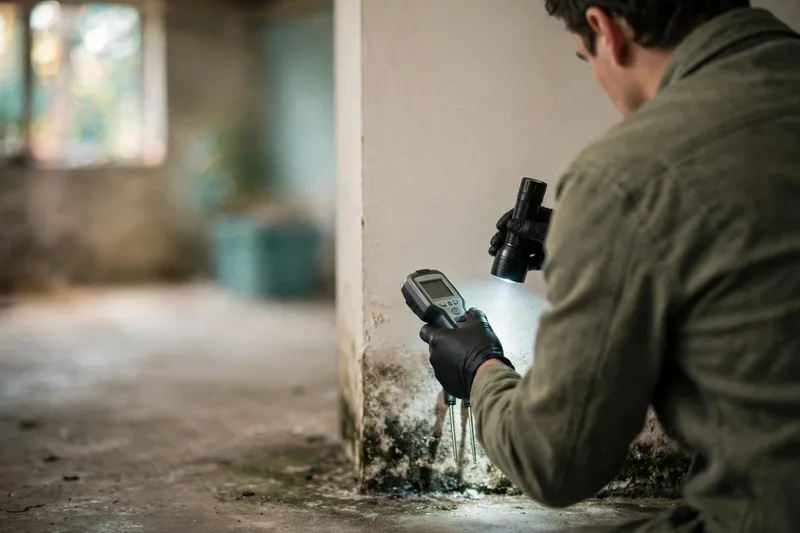
As a general guide, mold can start to grow within 24 to 48 hours on a wet surface, and it can become visible within 48 to 72 hours. That is why the first day matters more than any other. The US EPA guidance is to dry water-damaged materials within 24 to 48 hours. If the water sat for more than two days, or if the room smells musty, we look for mold during the drying and tell you what we find.
If you see mold, do not scrub it dry and do not bleach it and call it done. Bleach does not fix mold in drywall or wood, and dry scrubbing spreads the spores through the house. Mold hides behind drywall, wallpaper and panelling, on top of ceiling tiles, beneath carpet and padding, around water pipes, on walls behind furniture, in ductwork condensation, and in roofing from leaks or poor insulation. Removing wallpaper can release a massive amount of spores.
Even dead mold may cause allergic reactions, and it is not enough to kill mold: it must be removed. In Illinois, mold remediators register with the Illinois Department of Public Health under Part 835, in force since 23 September 2026, with a grace period to 30 September 2027, and you can ask any company for its registration before you hire it. We do not claim a registration for ourselves. Ask us and we will tell you plainly. The City of Chicago publishes no mold guidance page that we could verify on its own site, so this page prints none.
Mold after water damage is usually found in the same places the water went: behind the baseboards, under the flooring, in the wall cavity, and in the insulation. We test with a moisture meter before we open a wall, and we show you the readings so you can see why. If mold is found, the affected material is removed, the area is cleaned, and the drying continues until the readings say dry. The mold job and the water job are one job, and they are done together, not one after the other.
Flood damage in West Rogers Park: the record
There is no named West Rogers Park flood event with a date, street or damage figure on the City of Chicago's own site, so this page names none from the City. What follows is the record we could verify, with each fact labelled by its source.
| Date | What happened | Source |
|---|---|---|
| 29 December 2022 | A burst pipe at 2415 West Peterson Avenue sent water pouring out of a window on the North Side. This is the one dated, named-address incident we could verify for this neighbourhood. | CBS News |
| 10 August 2021 | A storm in the evening split a tree in half on the 6600 block of North Holman in West Rogers Park, and the tree fell and just missed a house. This is storm and tree damage, not a water damage job, and it is labelled as such. | WGN News |
| 2 September 2018 | A video shows a flooded-basement cleanout said to be in West Rogers Park, with a company named but no street address given. It is not printed here as a verified job, because the address could not be verified. | YouTube, Extreme Cleanout Solutions |
| Not found | No named West Rogers Park flood event with a date, street or damage figure on the City of Chicago's own site. | City of Chicago site, chicago.gov, checked 16 November 2026 |
If your basement flooded, call us at (773) 570-9869 and we will add your loss to the drying log, not to this page. We do not name addresses, homeowners or companies on this page, because we could not verify any of them.
Found it late? What to do when the water sat for days
If you found the water late, the first day is already gone, and the job is different. The water has soaked into the drywall, the flooring and the framing, and mold may already be growing. Do not try to fix it yourself with a household fan and a bucket. Call us at (773) 570-9869 and tell us how long the water sat.
We extract what is left, we test with a moisture meter, and we open the walls where the meter says the water went. We look for mold, and we tell you what we find. We photograph everything before we remove it, because your insurer needs the photos and you need the list. The drying takes longer when the water sat, because the materials are soaked through, and the repair takes longer too, because more material has to be removed. That is the cost of finding it late, and it is why we say call in the first hour, not the first week.
If the water sat for more than two days, do not scrub the mold dry and do not bleach it and call it done. Bleach does not fix mold in drywall or wood, and dry scrubbing spreads the spores through the house. Let us look first, and we will tell you what needs to be removed and what can be saved.
Preventing the next flood in West Rogers Park: five habits
Water damage restoration in West Rogers Park crews see the same five habits in the homes that do not flood, and the same five missing habits in the homes that do. None of them cost much, and all of them are worth more than the repair they prevent.
- Test the sump pump every few months. Pour a bucket of water into the pit and watch it run. If it does not run, fix it before the next storm, not after it.
- Fit a battery backup. The power goes out in the very storm that fills the pit, and a battery backup keeps the pump running through the cut. It is the cheapest insurance a basement has.
- Keep the gutters and the downspouts clear. A blocked gutter dumps the roof water at the wall, and the wall leaks. A downspout that discharges at the foundation fills the window wells. Keep the gutters clear, and discharge the downspouts away from the house.
- Seal the basement windows and the window wells. A window well that fills in a heavy rain will push the water through the window. Keep the wells clear and the seals tight.
- Know where the main water valve is, and know who to call. If a pipe bursts, you need to shut off the main in minutes, not look for it for an hour. Find the valve today, and put our number on the fridge: (773) 570-9869.
One more habit that costs nothing: walk the basement after every heavy rain. A damp patch caught in the first day is a small job. The same patch found three weeks later is a mold job and a rebuild. The five minutes you spend walking the basement after a storm are the cheapest five minutes in home ownership.
How to choose a water damage company in West Rogers Park
Water damage restoration in West Rogers Park work is a job where the wrong company costs more than the right one. Ask these five questions before you hire anyone.
- Do you answer 24/7? Water does not wait for office hours, and a company that does not answer at night is not a company for a flooded basement.
- Do you dry by readings? Ask to see the moisture readings and the drying log. A company that dries by feeling, not by readings, will stop too early and the mold will come back.
- Do you photograph and document? Your insurer will ask for the photos, the drying log and the scope of work. A company that does not document is a company that will leave you to fight the claim alone.
- Do you work with my insurer? Ask if the company will give the scope of work to your adjuster and answer the adjuster's questions. A company that will not talk to your insurer is a company that does not want to be checked.
- Can I ask about your Illinois registration? In Illinois, mold remediators register with the Illinois Department of Public Health under Part 835, and you can ask any company for its registration before you hire it. We do not claim a registration for ourselves. Ask us and we will tell you plainly.
If a company quotes you a price over the phone before it has seen the water, be careful. That company is guessing, and the guess will change when it arrives. If a company promises to be on site in minutes before it knows where its crew is, be careful too. That company is promising what it cannot know. We answer 24/7, we dry by readings, we photograph and document, and we work with your insurer. Call (773) 570-9869 and ask us the same five questions.
Why West Rogers Park homeowners call us
We answer 24/7. When you call at night, you get a person, not a machine, and the person you get will talk you through the first hour while a crew is on the way. We do not ask you to wait until morning, because the water does not wait until morning either.
We dry by readings, not by feeling. We take moisture readings every day with a meter, and we write the numbers into a drying log. We stop the drying only when the readings are back to dry, and we show you the numbers. Your insurer will ask for the log, and we give you a copy.
We document the loss the way adjusters ask for it, with photos, moisture readings and a drying log. We give you all three, and we give the scope of work to your adjuster. We do not start the repair until the meter says the house is dry, because a repair started on wet walls will fail.
We know West Rogers Park. We know the brick two-flats and the 1920s courtyard buildings, the combined sewer, the sump pumps and the garden units. We know the streets, Devon, Peterson, Ridge, Western, California, Kedzie, Pratt and Howard, and we know the garden units take water first. Call (773) 570-9869 any hour of the day or night, and tell us where the water is.
The City playbook: 311, permits and the Private Sewer Drain Program
Here is the City playbook for a West Rogers Park water loss, in the order you need it. First, call us at (773) 570-9869 and tell us where the water is. Second, if the water came from the street or a sewer backup, call 311, or file a report at 311.Chicago.gov, so the City of Chicago Department of Water Management knows the sewer backed up on your street. If you are outside Chicago, call 312-744-5000 instead of 311. Third, call your insurer and start the claim. For any emergency, call 911.
The Department of Water Management handles all water service requests through the 311 system, including flooding, broken pipes outside your home and water on the street. The Department is led by Commissioner Randy Conner, and its administrative offices are at the James W. Jardine Water Purification Plant, 1000 East Ohio Street, Chicago, Illinois 60611, by appointment only.
The Department of Buildings handles sewer permits at 312-744-3449, and the sewer permitting office is at 312-744-3155, or by email at. Sewer work in Chicago needs a permit, and the permit is only issued to a licensed drainlayer licensed with the Department of Buildings.
Plumbing contractors may obtain a courtesy drainlayer licence, in force since the first of January 2022. All of the work is inspected by the Department of Water Management. The Department's sewer inspections line is 312-744-5503 for pipes up to six inches in diameter, and 312-744-5502 for pipes eight inches and larger. A drain layer licence is required to construct, repair, adjust, rod, clean, line, or use a camera to inspect a sewer or stormwater system outside a building.
Class A covers any drain layer work, Class B covers only repair of private drains, and Class C covers only videotaping, cleaning, lining, sealing of sewers and pumping water out of basements. A fifty thousand dollar performance bond is required, and the licence fee is one hundred fifty dollars for 2026.
The City of Chicago Private Sewer Drain Program can repair a break in the public way if the guidelines are met. It is a repair programme, not a rebate or a grant. It is for private residences with up to four units, and the break must be under the public way, the area from the city sidewalk to the center of the street. The route starts with a Water in Basement service request through 311 or 311.Chicago.gov. A City crew checks the street main first.
If the main is fine, the homeowner hires a licensed sewer contractor to rod and televise the line, with a Department of Water Management inspector present. If the break is on private property, the homeowner pays a licensed contractor, including the full restoration. If the break is in the public way and the guidelines are met, the Department of Water Management schedules and pays for the repair. Ask the City for the current terms before you start work.
We could not find any such programme on chicago.gov, so this page does not print it as a City fact. There is no City rebate, grant or cost-share for water damage restoration, flood proofing, backflow valves or sump pumps in West Rogers Park that we could find on the City's own site, and this page prints none. Ask the City through 311 for the current terms before you start work.
The City's flood preparedness guidance says to avoid building in a floodplain unless you raise and reinforce your home, and it recommends check valves in sewer traps, raising the furnace, water heater and electric panel, and sealing basement walls. Six inches of moving water can knock you down, and you should never drive over a flooded road. The City's combined sewer system covers most of Chicago, and the Department of Water Management's system includes four thousand four hundred fifty miles of sewer main and more than four thousand three hundred miles of water main.
The City's stormwater rules say a Regulated Development is one that disturbs fifteen thousand square feet of land or more, or creates seven thousand five hundred square feet of at-grade impervious surface or more, and every Regulated Development must control the one hundred year storm event. Those rules do not apply to a residential subdivision of detached single-family or two-family homes.
West Rogers Park by the numbers: the home, the parks and the sewer
West Rogers Park is one of the 77 community areas of Chicago, on the Far North Side, between Howard Street to the north and Devon Avenue to the south. The main ZIP code is 60645, and 60659 covers the western part of the neighbourhood. Indian Boundary Park sits at 2500 West Lunt Avenue, and Warren Park sits at 6601 North Western Avenue. Devon Avenue runs the whole southern edge of the neighbourhood, with its shops and restaurants between Western Avenue and California Avenue, and Ridge Boulevard runs the eastern edge, with Rogers Park on the other side of it.
The City of Chicago Department of Water Management's system includes four thousand four hundred fifty miles of sewer main and more than four thousand three hundred miles of water main, and it delivers water to more than forty two percent of Illinois residents every day, with about two thousand one hundred employees. The City's combined sewer system covers most of Chicago, which means that the same pipe carries the sewage and the rainwater, and in a heavy rain the combined sewer can surcharge and push water back through a basement floor drain.
In wet weather the flow is diverted into the Metropolitan Water Reclamation District Tunnel and Reservoir Plan, and when that fills, combined sewage can be discharged into local waterways through combined sewer overflows. Those are City figures, from the City's own site, and they are the reason West Rogers Park basements flood the way they do: a heavy rain falls faster than the drains can take it, the combined sewer surcharges, and the water comes back through a basement floor drain, or the sump pump stops in the power cut that comes with the storm.
The homes here are mostly brick two-flats, vintage 1920s courtyard apartment buildings, bungalows and single-family homes, with brick masonry, poured concrete basements and flat roofs. The older homes sit on brick and rubble footings, with vitrified clay laterals, cast iron stacks and copper supply lines, and solid oak and maple hardwood floors. Old clay sewer laterals crack and shift, and tree roots find the cracks. If your lateral is old clay, ask a licensed sewer contractor to televise it before the next storm, not after it. Garden units are the first to take water, because they sit below street level and their windows are at grade.
Devon Avenue and the courtyard buildings
Devon Avenue is the main street of West Rogers Park, and it is the first thing to understand about the neighbourhood. The avenue runs the whole southern edge, with its shops and restaurants between Western Avenue and California Avenue, including the South Asian shops and restaurants that make the street known across Chicago, and the Orthodox Jewish shops and synagogues along Devon Avenue and Pratt Boulevard. The avenue is busy all day, and the buildings along it are a mix of storefronts with flats above, courtyard buildings, and two-flats on the side streets.
The water problems on Devon Avenue are the same as the water problems on the side streets: a heavy rain falls faster than the drains can take it, the combined sewer surcharges, and the water comes back through a basement floor drain, or the sump pump stops in the power cut that comes with the storm.
The courtyard buildings are the neighbourhood's signature. Built in the 1920s, they are two and three storey brick buildings around a shared courtyard, with shared walls, shared plumbing risers and shared drains. A burst riser in a courtyard building can soak several units at once, because the water runs down the riser and through the floors before anyone sees it. A leak in a shared drain can show up as a backup in the lower units while the upper units are dry.
That is why we trace a leak with a moisture meter before we open a wall, and why we do not cut into a wall until the meter tells us where the water is. A hole cut in the wrong wall is a hole that has to be repaired, and it is a hole that did not need to be cut.
Indian Boundary Park, at 2500 West Lunt Avenue, and Warren Park, at 6601 North Western Avenue, are the neighbourhood's two big parks, and they sit on high ground compared with the garden units and the low side streets. The parks themselves do not flood basements, but the streets around them do, because the rain runs to the lowest point, and the lowest point in West Rogers Park is the ground near a garden unit window, a basement door, or a crack in a foundation wall.
If you live near a park, walk the basement after every heavy rain, and keep a short log of what you find. A damp patch caught in the first day is a small job. The same patch found three weeks later is a mold job and a rebuild.
The City's floodplain maps are at illinoisfloodmaps.org. Check the map for your address before you buy, before you finish a basement, and before you decide whether to carry flood insurance. A standard homeowners policy does not cover flooding from outside the house, and you would need a separate flood insurance policy for that. The map will not tell you whether your basement will flood, but it will tell you whether your house sits in a mapped floodplain, and that is a fact your insurer will ask about.
The Federal Emergency Management Agency has declared two recent major disasters in Illinois that cover Chicago flooding, DR-4749-IL for the storms of 13 to 16 July 2024, and DR-4819-IL, and the City runs a Disaster Relief Application Portal for residents who need help after a declared disaster.
West Rogers Park two-flats and courtyard buildings: shared walls
Most West Rogers Park homes are brick two-flats and courtyard apartment buildings, and the courtyard building is the building type that causes the most confusion when water gets in. A courtyard building has many homes in one building, with shared walls and shared plumbing, and a burst pipe on an upper floor can soak the units below it. The water does not respect the line between one flat and the other, and the repair does not either.
The shared plumbing is the first thing to check. The vertical risers and the horizontal mains serve more than one unit, and they sit inside the walls and the floors between the flats. A leak in a riser can show up as a stain on a ceiling two rooms away from the pipe, because the water runs along the joists before it finds a place to drip. A leak in a shared drain can show up as a backup in the lower flat while the upper flat is dry.
That is why we trace a leak with a moisture meter before we open a wall, and why we do not cut into a wall until the meter tells us where the water is. A hole cut in the wrong wall is a hole that has to be repaired, and it is a hole that did not need to be cut.
The garden unit is the most exposed part of a two-flat or a courtyard building, because it sits below street level and its windows are at grade. A heavy rain fills the window wells, and the water comes through the window or the wall. A sump pump failure hits the garden unit first, because the pump is the only thing between the garden unit and the street water. A garden unit without a working pump and a battery backup is a flood waiting for a storm, and the owner of that unit needs to test the pump every few months, pour a bucket of water into the pit and watch it run, and fit a battery backup before the next storm.
Condo and HOA buildings add one more problem: the water may come from a common element, such as a roof, a riser or a shared drain, and the association and the unit owner will need to agree on who pays for what. Pipes that serve only one unit and sit inside the walls are usually the responsibility of that unit owner. Pipes that serve more than one unit, such as vertical risers and horizontal mains, are usually common elements that the association maintains.
The exact split depends on the association's declarations and bylaws, so read them before you argue about it. We document the source of the water in writing, so the association and the insurer can see where the water came from and what it damaged. If the leak came from an upstairs flat, liability depends on what caused the leak and who owns and controls the source: a careless upstairs tenant or owner is liable for a leak caused by carelessness, while a building fault is usually the association's or the landlord's problem.
The older two-flats and courtyard buildings sit on brick and rubble footings, with vitrified clay laterals, cast iron stacks and copper supply lines, and solid oak and maple hardwood floors. Old clay sewer laterals crack and shift, and tree roots find the cracks. If your lateral is old clay, ask a licensed sewer contractor to televise it before the next storm, not after it. The television camera will show the cracks, the roots and the joints, and it will tell you whether the lateral needs a repair or a replacement. A lateral repaired before the storm is a lateral that does not fail in the storm.
What your adjuster asks for: the drying log, the photos and the scope
Your insurance claim is decided on paper, not on promises. The adjuster will ask for three things: the photos, the drying log and the scope of work. We make all three on every job, and we give you a copy you can hand to your adjuster. If your insurer asks for a second opinion, or if the claim is disputed, the drying log is the document that settles it. The log shows the readings day by day, and it shows when the house was dry. A claim without a drying log is a claim without proof, and a claim with a drying log is a claim with a record.
The photos come first. Photograph the water line on the walls, the wet floor and each damaged item before you move it. Photograph the source of the water, if you can see it, and photograph the room before we start the extraction. These photos are the start of your insurance claim, and they are the proof your adjuster will ask for. Do not throw anything away before we photograph it, because your insurer needs the photos and you need the list. We photograph everything again as we work, so the record shows the water, the extraction, the drying and the repair, in order.
The drying log comes next. We take moisture readings every day with a meter, and we write the numbers into a log. The log shows the readings for each wall, each floor and each room, day by day, until the readings are back to dry. We stop the drying only when the readings say dry, and we show you the numbers. Your insurer will ask for the log, and we give you a copy. The log is also the document that tells you whether the repair can start, because a repair started on wet walls will fail, and the paint will peel, the flooring will buckle, and the mold will come back.
The scope of work comes last. The scope says what will be extracted, what will be dried, what will be removed and what will be rebuilt, and it is the document your adjuster will ask for. After the first visit you get a written scope of the work and a drying plan, and we work with your insurer on the claim. If a company quotes you a price over the phone before it has seen the water, be careful. That company is guessing, and the guess will change when it arrives. The scope of work is the document that matters, and it is the document that is written after we have seen the water, measured it and photographed it.
Keep every receipt, and keep a short log of who you called and when. Call your insurer in the first hour, not the first week, because the claim starts when the loss starts. Tell the insurer what you saw, when you saw it, and what you did, and do not guess or speculate. Do not use words that imply long-term or neglected maintenance, because standard policies often exclude gradual damage, wear and tear and external flooding, so stick to verified facts.
Avoid phrases such as the leak has been going on for a while, or it has been slow for a few weeks, because words like gradual, slow and for a while can cause an adjuster to classify the loss as long-term wear and tear. Say what you saw, when you saw it, and what you did.
After the drying: the repair checklist
The repair starts only when the moisture readings say dry. Before the repair starts, walk the rooms with us and check the list below. A repair started on wet walls will fail, and the paint will peel, the flooring will buckle, and the mold will come back. We do not start the repair until the meter says the house is dry, and we show you the readings so you can see why.
- Check the drying log. The log should show the readings day by day, for each wall, each floor and each room, until the readings are back to dry. If the log is missing, or if the readings stop before the house is dry, the drying is not done.
- Check the walls. The drywall that was cut out should be replaced, and the new drywall should be dry to the touch and flat against the studs. The plaster should be dry behind the face, not just on the surface, because plaster can feel dry on the face while the lath behind it is still wet.
- Check the floors. The hardwood should be flat again, not cupped or buckled, and the subfloor should be dry. The carpet should be dry through, not just on the face, and the pad should be new if the old pad was wet with sewage.
- Check the trim and the baseboards. The baseboards should be new where the old ones were removed, and they should sit flat against the wall. The trim should be painted, and the paint should be dry and even.
- Check the smell. A dry house does not smell musty. If the room still smells musty after the drying, the water is still in the walls, and the drying is not done. Tell us, and we will take the readings again.
- Check the scope of work. The scope should list what was extracted, what was dried, what was removed and what was rebuilt, and the work should match the list. If something on the list was not done, ask why before you sign off.
- Check the photos. The photos should show the water, the extraction, the drying and the repair, in order, and you should have a copy of all of them. The photos are the record of the loss, and they are the proof your adjuster will ask for.
If the repair needs a permit, we tell you before the work starts. Sewer work in Chicago needs a permit, and the permit is only issued to a licensed drainlayer licensed with the Department of Buildings. Plumbing contractors may obtain a courtesy drainlayer licence, in force since the first of January 2022. All of the work is inspected by the Department of Water Management, and you can ask the Department of Buildings about the permit before the work starts, at 312-744-3449.
Frozen discharge lines and ice dams: West Rogers Park winter, part two
Most West Rogers Park burst pipes happen in the cold months, and most of them could have been prevented in the autumn. The two winter problems that catch West Rogers Park homeowners by surprise are the frozen discharge line and the ice dam, and both of them are easy to prevent once you know what they are.
A sump pump discharge line that freezes shut will back the water into the pit and flood the basement, even with a working pump. The pump pushes the water out, the water freezes in the line, and the line blocks, so the water has nowhere to go but back into the pit and over the floor. Make sure the line drains to a place where the water will not freeze and run back, and check the line in the autumn before the first hard freeze.
If the line discharges onto a walkway or a driveway, the water will freeze there and the line will block, so move the discharge to a place where the water can drain away. If the pump runs constantly in dry weather, the check valve may be bad, and the water is running back into the pit as fast as the pump pushes it out.
An ice dam is a ridge of ice that forms at the edge of a roof and stops the melt water from draining off. The water backs up under the shingles and down through the ceiling, and the stain on the ceiling is usually far from the leak, so we trace it with a moisture meter before we repair anything. Flat roofs, common on West Rogers Park two-flats and courtyard buildings, pond water where the drain is blocked, and the leak shows up far from the blockage.
Keep the gutters clear, and keep the roof drains clear, so the melt water has somewhere to go. If the roof has an ice dam, do not try to chip it off with a hammer or an axe, because you will damage the shingles and make the leak worse. Call us at (773) 570-9869 and we will tell you what to do.
In a hard freeze, leave the taps on a slow drip and keep the heat on, even in rooms you do not use. Open the cabinet doors under the sinks on outside walls so warm air can reach the pipes. Insulate the exposed pipes in the basement and the crawl space. If you leave the house empty in winter, shut off the main and drain the pipes, or have someone check the house. Pipes can freeze in three to eight hours of sub-freezing temperatures, and they can burst within hours of freezing, or later, when the ice thaws and the pressure spikes. A pipe that froze once will freeze again in the next cold snap unless the pipe is insulated or the cold air is stopped.
West Rogers Park street by street: where the water goes
Water damage risk in West Rogers Park is not the same on every block. The neighbourhood runs between Howard Street to the north and Devon Avenue to the south, with Ridge Boulevard to the east and Kedzie Avenue to the west, and the risk changes with the ground, the building and the age of the pipes. A garden unit on a low side street takes water first. A second-floor flat on a higher street may never see a drop.
Walk your own street after every heavy rain, and keep a short log of what you find. A damp patch caught in the first day is a small job. The same patch found three weeks later is a mold job and a rebuild. The five minutes you spend walking the basement after a storm are the cheapest five minutes in home ownership, and they are worth more on a low street than anywhere else in the neighbourhood.
Devon Avenue runs the whole southern edge of the neighbourhood, and it is the busiest street here. The shops and restaurants between Western Avenue and California Avenue sit at street level, with flats above them, and the buildings along the avenue are a mix of storefronts, courtyard buildings and two-flats on the side streets. The avenue itself is wide and well drained, but the side streets that run off it to the north slope down from the avenue, and the water runs down those streets and into the basements and garden units at the bottom.
If you live on a side street off Devon Avenue, walk the basement after every heavy rain, and check the window wells, because a window well that fills in a heavy rain will push the water through the window. The shops on Devon Avenue have their own water problems too: a burst pipe above a shop can soak the stock below it, and a sewer backup under a restaurant can close it for days.
If you run a shop on Devon Avenue, know where the main water valve is, and put our number on the wall by the phone: (773) 570-9869.
Peterson Avenue runs east to west across the middle of the neighbourhood, and it is the street with the one dated, named-address incident we could verify for this neighbourhood: a burst pipe at 2415 West Peterson Avenue on 29 December 2022 sent water pouring out of a window. Peterson Avenue is a wide street with two-flats, bungalows and courtyard buildings on both sides, and the pipes in those buildings are the same age and the same build as the pipes in the rest of the Far North Side.
Old cast iron and galvanized pipes split at the joints in a cold snap, and clay laterals crack and shift. If you live on Peterson Avenue, insulate the exposed pipes in the basement before the first hard freeze, and keep the heat on in every room, even rooms you do not use. If a pipe freezes, do not try to thaw it with an open flame. Call us at (773) 570-9869 and we will tell you what to do.
Howard Street is the northern edge of the neighbourhood, and the boundary with West Ridge. Howard Street is a busy commercial street, with shops, restaurants and the Howard Street station at the eastern end, and the homes on the side streets off Howard are mostly two-flats and courtyard buildings. Touhy Avenue runs east to west just south of Howard Street, and it is a wide commercial street with shops and offices on both sides.
The homes on the side streets between Howard and Touhy sit on the same ground as the homes further south, and they take water the same way: a heavy rain falls faster than the drains can take it, the combined sewer surcharges, and the water comes back through a basement floor drain, or the sump pump stops in the power cut that comes with the storm.
If you live near Howard Street or Touhy Avenue, test the sump pump every few months, pour a bucket of water into the pit and watch it run, and fit a battery backup before the next storm.
Ridge Boulevard runs the eastern edge of the neighbourhood, and it sits on a low ridge of ground, which is how it got its name. The homes on Ridge Boulevard itself sit higher than the homes on the streets to the west of it, and the water runs off the ridge to the streets on either side. Rogers Park sits on the other side of Ridge Boulevard, to the east, and it is a different neighbourhood, with its own streets, its own buildings and its own water problems.
If you live west of Ridge Boulevard, on Lunt Avenue, Greenleaf Avenue, Fargo Avenue or Jarvis Avenue, your street sits lower than the ridge, and the water runs to the lowest point, which is the ground near a garden unit window, a basement door, or a crack in a foundation wall. Walk the basement after every heavy rain, and keep the gutters and the downspouts clear, because a blocked gutter dumps the roof water at the wall, and the wall leaks.
Western Avenue, California Avenue and Kedzie Avenue run north to south through the neighbourhood, and they are the three main north to south streets. Western Avenue runs down the middle, with Warren Park at 6601 North Western Avenue, and the homes on the side streets off Western are mostly two-flats and courtyard buildings. California Avenue runs a few blocks west of Western, with shops and restaurants at the Devon Avenue end, and the homes on the side streets off California are mostly bungalows and single-family homes.
Kedzie Avenue runs along the western edge of the neighbourhood, and it is the boundary with the next neighbourhood to the west. The homes on all three avenues take water the same way: a heavy rain, a sewer surcharge, a sump pump failure, or a burst pipe in a cold snap. The avenue you live on does not change the risk. The building you live in does, and the age of the pipes does, and the ground your home sits on does.
If your lateral is old clay, ask a licensed sewer contractor to televise it before the next storm, not after it. The television camera will show the cracks, the roots and the joints, and it will tell you whether the lateral needs a repair or a replacement.
The side streets are where most West Rogers Park homeowners live, and they are where most of the water damage happens. Pratt Boulevard, Morse Avenue, Lunt Avenue, Greenleaf Avenue, Fargo Avenue and Jarvis Avenue run east to west across the neighbourhood, and they are lined with two-flats, courtyard buildings, bungalows and single-family homes. Indian Boundary Park sits at 2500 West Lunt Avenue, and it is the neighbourhood's park, with a field house, a playground and a pond.
The park itself sits on high ground compared with the garden units and the low side streets, and the park does not flood basements, but the streets around it do, because the rain runs to the lowest point. If you live on Lunt Avenue near the park, walk the basement after every heavy rain, and check the window wells, because a window well that fills in a heavy rain will push the water through the window.
If you live on Pratt Boulevard, Morse Avenue, Greenleaf Avenue, Fargo Avenue or Jarvis Avenue, the same advice holds: test the sump pump, keep the gutters clear, seal the basement windows, and know where the main water valve is.
The garden unit is the most exposed home on any of these streets, because it sits below street level and its windows are at grade. A heavy rain fills the window wells, and the water comes through the window or the wall. A sump pump failure hits the garden unit first, because the pump is the only thing between the garden unit and the street water.
A garden unit without a working pump and a battery backup is a flood waiting for a storm, and the owner of that unit needs to test the pump every few months, pour a bucket of water into the pit and watch it run, and fit a battery backup before the next storm. The courtyard building is the next most exposed, because it has many homes in one building, with shared walls and shared plumbing, and a burst riser can soak several units at once.
A leak in a shared drain can show up as a backup in the lower units while the upper units are dry. That is why we trace a leak with a moisture meter before we open a wall, and why we do not cut into a wall until the meter tells us where the water is.
Before you buy, before you finish a basement, and before you decide whether to carry flood insurance, check the City's floodplain maps at illinoisfloodmaps.org for your address. A standard homeowners policy does not cover flooding from outside the house, and you would need a separate flood insurance policy for that. The map will not tell you whether your basement will flood, but it will tell you whether your house sits in a mapped floodplain, and that is a fact your insurer will ask about.
The Federal Emergency Management Agency has declared two recent major disasters in Illinois that cover Chicago flooding, DR-4749-IL for the storms of 13 to 16 July 2024, and DR-4819-IL, and the City runs a Disaster Relief Application Portal for residents who need help after a declared disaster. If your street has flooded before, it will flood again, and the fix is to find the entry point and close it, not to hope the next storm is smaller.
The entry point is usually the sump pump, the floor drain, a basement window, or a crack in the wall, and we find it with a moisture meter before we open anything. Call (773) 570-9869 any hour of the day or night, and tell us where the water is. If you want a crew that knows these streets, water damage restoration west rogers park starts with one call to (773) 570-9869, and we stay with the job until the meter says dry.
Frequently asked questions about water damage in West Rogers Park
Short answers first, then the detail. Every question below is answered in plain words.
How long does water damage restoration take in West Rogers Park?
Restoration in West Rogers Park takes a few days to several weeks. Drying takes three to five days on a clean-water loss in one room, and repairs take one to two weeks after that. Four things decide the time: how much damage there is, what kind of water it is, what materials got wet, and whether mold is growing.
What does water damage restoration include in West Rogers Park?
Water damage restoration in West Rogers Park usually includes five parts, done in order. First, inspection: we find the source and measure how far the water spread. Second, extraction: standing water is removed with pumps and vacuums. Third, drying: air movers and dehumidifiers dry the walls, floors and framing. Fourth, cleaning and sanitizing. Fifth, restoration and repairs.
When should I call a water restoration company?
Call as soon as you see the water, not after you have tried to fix it yourself. Call at once if a pipe burst, if sewage is in the water, if the water is near the electrical panel, or if the basement is filling fast. Call in the first hour even for a small leak, because the drying starts then.
What is water damage restoration called?
It is called water damage restoration, and the first part of the job is often called water mitigation. Mitigation is the emergency response: stop the water, extract it, and dry the house. Remediation is the longer work after that: cleaning, sanitizing, removing ruined material, and rebuilding. On a West Rogers Park job we do both, in that order.
How expensive is water damage?
It depends on how much water there is, what kind of water it is, how far it spread and how long it sat. A small clean-water leak in one room costs far less to fix than a sewer backup across a basement. We never quote a price before we see the loss, and we never print prices on this site.
Can I file a claim if my basement is flooded in West Rogers Park?
Yes, you can file a claim if your basement is flooded, but whether your insurance will cover the damage depends on the cause and your policy. Sudden and accidental damage, such as a burst pipe or an appliance failure, is usually covered. Flooding from outside the house is usually not covered by a standard homeowners policy.
What is the most common reason for a basement to flood?
The most common reason is a sump pump failure, followed by sewer backups and heavy rain. In West Rogers Park the combined sewer can surcharge in wet weather and push water back through a basement floor drain. A frozen discharge line in January and a burst pipe in a cold snap are close behind.
Who do I contact if my basement is flooded?
If someone is hurt, or if live electricity is touching the water, call 911 at once. Otherwise, call us first at (773) 570-9869. We answer 24/7 and talk you through the first hour while a crew is on the way. If the water came from the street or a sewer backup, call 311 as well.
Is Chicago tap water safe to drink in 2026?
The City of Chicago treats and delivers drinking water through the Department of Water Management, and tap water in a normal home is drinking water. After a flood, do not drink water that may be contaminated, and do not drink from a tap in a flooded basement. If your water looks, smells or tastes wrong, call 311.
Why did the water just turn off?
Usually a water main break on your street, planned repair work, or a frozen pipe in a cold snap. First, ask a neighbour if their water is off too. If the whole street is off, call 311 so the Department of Water Management knows. If only your home is off, check the main shutoff valve.
What is the average price for mold remediation?
There is no single average price that means anything for your home, because the price depends on how much mold there is, where it is, and what has to be removed. We never quote a price before we inspect the loss, and we never print prices on this site. After the first visit you get a scope of the work.
How much does it cost to have mold remediated?
It depends on the size of the affected area, the kind of mold, and how much material has to be removed and rebuilt. A small patch behind a baseboard costs far less than mold through a whole finished basement. We never quote a price over the phone before we have seen the mold.
What is the difference between mold removal and mold remediation?
Mold removal means taking the mold out. Mold remediation is the full job: find the moisture that fed the mold, contain the area so spores do not spread, remove the mold and the ruined material, clean and dry the space, and fix the moisture so it does not come back. Ask the company for its Illinois registration.
What is considered Stage 4 mold contamination?
Stage 4 is the highest level in the four-stage scale many assessors use, and it means extensive mold across a large area or several rooms, often with structural material damaged. It needs professional containment, removal and drying, not a household cleaner. Assessors use different scales, so ask yours which scale they use.
Does insurance pay for water damage in West Rogers Park?
Yes, homeowners insurance usually pays for water damage restoration if the damage was sudden and accidental, such as a burst pipe or a broken appliance hose. Gradual damage, such as a slow leak or poor maintenance over months, is usually not covered. Flooding from outside the house is not covered by a standard homeowners policy.
What not to say to an insurance adjuster about water damage?
Do not guess or speculate, and do not use words that imply long-term or neglected maintenance. Standard policies often exclude gradual damage and wear and tear, so stick to verified facts. Avoid phrases such as the leak has been going on for a while, because words like gradual can cause an adjuster to classify the loss as wear and tear.
How to find a good restoration company in West Rogers Park?
Look for verified credentials, proper insurance and a local physical address. Check that the company is insured, ask for its Illinois Department of Public Health registration under Part 835 if mold work is needed, and ask for the drying log. A good company answers the phone 24/7, dries the house to readings you can see, and photographs everything.
How long can a basement stay flooded?
Ideally never. Remove the water within 24 hours to prevent severe structural damage and mold growth. Within one hour, water saturates drywall, wood, insulation and carpet. Within four hours, wood furniture swells and a musty odour develops. Mold can begin to grow within 24 to 48 hours. If your basement is flooded, call us at (773) 570-9869 at once.
Can you live in a house with a flooded basement?
It depends on the severity, the source and the location of the water. In most clean-water jobs, yes. The air movers and dehumidifiers are loud, but the house is safe to live in while they run. If the water was sewage, or if mold is growing, stay out until the space is safe.
How long does it take to dry out a basement after a flood?
Three to five days to be structurally dry for a typical minor or moderate flood, once the water is out and the equipment is running. Severe cases take one to two weeks, and deep concrete can take longer. The meter decides: we take moisture readings every day and stop the drying only when the readings are back to dry.
Can you fix a basement that floods every time it rains?
Yes. Start with the entry point, because the fix depends on it. Improve the drainage around the foundation, grade the soil away from the house, keep the gutters clean and the downspouts clear, and seal the foundation cracks. Install a sump pump with a battery backup. If the water comes back through the sewer, a backflow valve is the fix.
Can water come up through a basement floor?
Yes, because of hydrostatic pressure. When the water table rises, pressure forces water up through cracks in the slab or the cove joint where the wall meets the floor. There is a second cause in West Rogers Park: the City of Chicago has a combined sewer system, and in wet weather the flow can push back through a floor drain.
Can a flooded basement cause mold?
Yes, within 24 to 48 hours if the water is not removed and the area is not dried properly. Mold grows on damp organic materials such as drywall, wood and carpet. That is why the first day matters more than any other. The US EPA guidance is to dry water-damaged materials within 24 to 48 hours.
What is the difference between water mitigation and remediation?
Water mitigation is the immediate, emergency response to stop water damage from spreading, while water remediation is the longer-term process of cleaning, sanitizing and restoring the property to the way it was before the loss. Mitigation is about stopping the source, removing the standing water, drying the areas, and preventing further damage like mold growth.
Where is West Rogers Park, Chicago?
West Rogers Park is a neighbourhood on the Far North Side of Chicago, Illinois, one of the city's 77 community areas. Its main ZIP code is 60645, and 60659 covers the western part of the neighbourhood. It sits between Howard Street to the north and Devon Avenue to the south, with Ridge Boulevard to the east and Kedzie Avenue.
My basement just flooded. What should I do?
First, stay safe: turn off the electricity if water is near outlets, and do not walk in standing water. Second, stop the water at the source: shut off the main water supply. Third, call us at (773) 570-9869 and we will extract it fast. Fourth, document the damage with photos.
Sources
City of Chicago Department of Water Management, Private Sewer Drain Program, Water in Basement service request, Rainblocker programme, Flood Preparedness, FEMA floodplain maps, and the 311 service directory, chicago.gov. City of Chicago Department of Buildings, Sewer Permitting and Drain Layer Licence, chicago.gov. US EPA, Mold guidance and drying water-damaged materials within 24 to 48 hours. Illinois Department of Public Health, Part 835, mold remediator registration. CBS News, burst pipe at 2415 West Peterson Avenue, West Rogers Park, 29 December 2022.
YouTube, Extreme Cleanout Solutions flooded-basement cleanout, 2 September 2018. WikiHow, Fast and Effective Ways to Dry a Basement After a Flood, Ryan Owsiany, updated 7 November 2026. FEMA, disaster declarations DR-4749-IL and DR-4819-IL. FEMA National Flood Insurance Program, floodplain maps at illinoisfloodmaps.org.
More Restoration Services Near West Rogers Park
Every service below is one tap away. Pick the one that matches your problem.

Water Damage Restoration
Fast water extraction, structural drying, and full repair after burst pipes, leaks, and floods.
Learn more →
Water Mitigation
Emergency water removal, structural drying, and mold prevention to stop the damage fast, 24/7.
Learn more →
Mold Remediation
Safe, contained mold remediation that removes contamination and fixes the moisture source.
Learn more →
Sewage Cleanup
Safe removal and disinfection of dangerous sewage backups and black water.
Learn more →
Flood Cleanup
Water pumped out, structure dried, and debris cleared fast after storms and flooding.
Learn more →
Hardwood Floors Water Damage
Cupped, buckled or stained hardwood after a leak? How we dry it, when sanding saves it, and when the boards have to go.
Learn more →