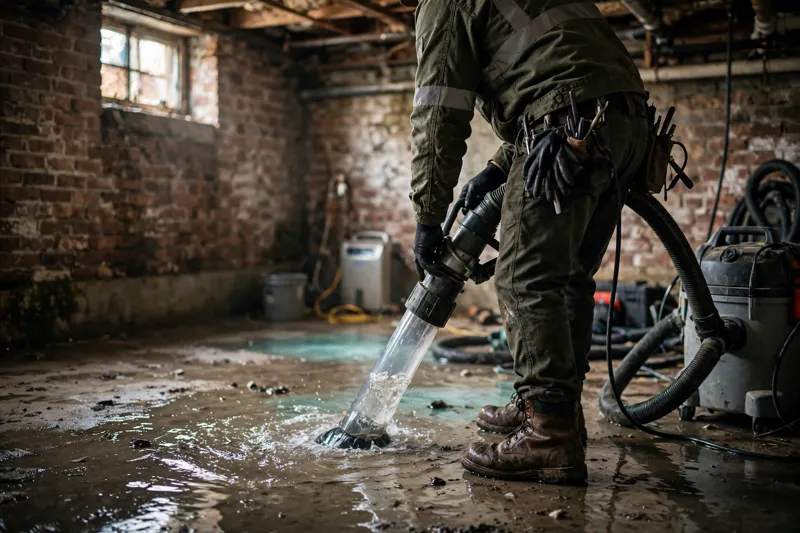
Water Damage Restoration Uptown Chicago
Flooded basement in Uptown, Chicago? We answer 24/7. We pull the water out, dry the walls and floors to a number you can see, clean what stays, and put the room back the way it was. Call now and a crew is on the way.
- 24/7 emergency response, day and night
- Water extraction, drying and moisture readings
- Sewer backup, burst pipe and flood cleanup
- Written scope of work before any repair starts
Serving Uptown, Chicago, Broadway and Lawrence, Argyle Street, Buena Park, Sheridan Park, Margate Park and every block from Foster Avenue to Irving Park Road.
- We answer 24/7
- Local Chicago team
- Insurance documentation help
- Straight answers, no pressure
Request water damage help in Uptown
Tell us where the water is and we will call you back. We answer 24/7.
Water damage restoration Uptown, Chicago, the short answer
Water damage restoration Uptown starts with the entry point. An Uptown basement floods through one of four openings: a floor drain during a sewer surcharge, a failed sump pump, a frozen discharge line, or a supply pipe that split after the first hard freeze. We find the opening first, because a job that does not find the opening will be done twice. Then we extract the water, dry the walls, floors and framing to moisture readings, clean and sanitize what stays, remove what cannot be saved, and repair what is left.
That is the whole job, and it is the same job whether the water came from a burst pipe on Broadway, a sewer backup in a garden flat on Argyle Street, or a storm that put up to six inches of water in Uptown basements on September 11, 2022.
Uptown is Community Area 03, one of Chicago's 77 community areas, and it covers the far north side between Foster Avenue, 5200 North, and Irving Park Road, 3600 North, from Ravenswood Avenue, 1800 West, to Lake Michigan. It is not one neighbourhood. Inside the community area sit Andersonville along Clark Street, Argyle Street and its Little Saigon, Buena Park, Margate Park and Sheridan Park, and each of them has its own streets, its own buildings and its own weak points. The Andersonville strip already has its own page on this site.
This page is the Uptown page, written for the whole of Community Area 03, and it keeps the two angles distinct: Andersonville is the Clark Street strip, and Uptown is the whole community area, including Buena Park, Sheridan Park, Margate Park and Argyle.
The people of Uptown are 56,344 strong in the community area, counted in 2024, in 32,895 households, with a median household income of seventy thousand and sixty-seven dollars and a renter-occupied share of seventy point seven percent. That is a community-area figure, and it is the only population figure this page prints, there is no official figure for a smaller Uptown neighbourhood, and this page prints none.
The area is served by two wards: the 46th Ward, Alderman Angela Clay, whose office sits at 4544 North Broadway, and the 48th Ward, Alderman Leni Manaa-Hoppenworth, whose office sits at 1129 West Bryn Mawr Avenue in Edgewater, north of Foster Avenue, and therefore not in Uptown at all. The 46th Ward is the ward that answers when an Uptown basement floods and the resident calls 311.
This page answers them all, and it does it with real Uptown facts: the September 11, 2022 storm, the Glenwood Avenue water-line break, the Uptown Theatre basement, the combined sewer, the lakefront humidity, and the backwater valve that stops the next flood.
Where Uptown is, and where it is not
Uptown sits on the far north side of Chicago, between Edgewater to the north, Andersonville and Edgewater to the north-east, Lakeview to the south, Ravenswood and Lincoln Square to the west, and Lake Michigan to the east. The community area covers two point three three square miles by one count and two point three two by another, the two figures conflict, and this page prints both, because neither can be settled from the sources. The centroid sits at 41.9700 degrees north, 87.6600 degrees west.
The stepped community-area bounds are the bounds this page works to: north, Foster Avenue, 5200 North; east, Lake Michigan, including Lincoln Park and Montrose Harbor; south, Irving Park Road, 3600 North, to Clark Street, then Montrose Avenue, 4400 North; west, Ravenswood Avenue, 1800 West. Montrose Avenue is 4400 North, never 4800 North, which is Lawrence Avenue. There is no separate official set of bounds for a smaller Uptown neighbourhood, and this page prints none.
Uptown is 60640, and parts of 60613 only. The 60640 ZIP is the main Uptown ZIP, and the badge on this page is 60640, and it comes from the GPS anchor at Broadway and Lawrence Avenue, which reverse-geocodes to 4801 North Broadway, Uptown Square, Uptown, Chicago, 60640. The 60660 ZIP is not an Uptown ZIP at all; it belongs to Edgewater, and several real-estate listings that carry it for Uptown addresses are wrong.
The 60625 ZIP is North Park and Budlong Woods ground, and it does not touch Uptown. The 60613 ZIP reaches into the southern edge of the community area, around Buena Park and Graceland Cemetery. No number on this page uses 60660 or 60625 as Uptown ZIPs, and no number on this page uses them at all except to say they are not Uptown.
The Ravenswood station on the Union Pacific North line, at 4800 North Ravenswood Avenue, 60640, just south of Lawrence Avenue, sits on the western boundary of the community area, on Ravenswood Avenue itself, and this page describes it as on the boundary, never as inside Uptown. It is the third busiest non-downtown Metra station, with about one thousand six hundred and fifty weekday boardings in October 2025.
The Peterson and Ridge station, at 1780 West Peterson Avenue, 60660, opened on May 20, 2024, and it is in Edgewater, not Uptown. The 'L' is a different story: three Red Line stations sit inside Uptown, and the Red Line runs twenty-four hours. Lawrence, at 1120 West Lawrence Avenue, 60640, opened in 1923, was rebuilt from 2021 to 2025, and reopened on July 20, 2025. Wilson, at 4620 North Broadway, and Argyle, at 1118 West Argyle Street, are the other two. Berwyn, at 5300 North, is Edgewater. Sheridan, at 3900 North, is Lakeview.
The buses that are verified for Uptown are the CTA 36 Broadway, which runs from Clark and Devon south to LaSalle Metra Station, the CTA 81 Lawrence, which runs from Jefferson Park to Wilson and Marine, and the CTA 151 Sheridan, which runs from Union Station to Clark and Arthur.
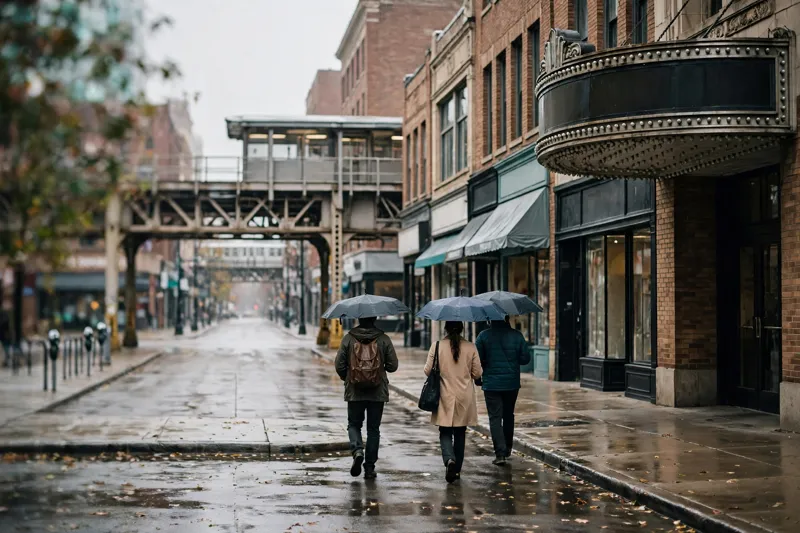
Broadway and Lawrence is the heart of Uptown, and it is where the water story starts.
The corner sits in Uptown Square, and the buildings around it are the buildings that flood: the Uptown Theatre at 4816 North Broadway, closed since 1981, a Chicago Landmark since October 2, 1991, with four thousand three hundred and eighty-one seats, built in 1924 and 1925 by Rapp and Rapp; the Aragon Ballroom at 1106 West Lawrence Avenue, 60640, opened on July 15, 1926, with a capacity of five thousand, run by Live Nation since 2017; the Riviera Theatre at 4746 North Racine Avenue, 60640, in Sheridan Park; and the Green Mill Cocktail Lounge at 4802 North Broadway, 60640, whose opening year is given as 1898 in one source and 1907 in another, so this page prints neither as settled, in a building from 1935, under new ownership since June 19, 2026, and cash-only.
Graceland Cemetery, at 4001 North Clark Street, 60613, was established in 1860 and entered on the National Register of Historic Places on January 18, 2001, and its grounds lie north of Irving Park Road, inside the Uptown community area by the stepped bounds, its acreage is given as one hundred and nineteen in one place and one hundred and twenty-one in another, so this page prints neither as settled.
Montrose Beach, at 4400 North Lake Shore Drive, 60640, is Chicago's largest beach, and the Chicago Park District calls it "near the Uptown neighborhood", so this page calls it near Uptown, never flatly in Uptown. Clarendon Park, at 4501 North Clarendon Avenue, 60640, has a field house built in 1916 by C.W. Kallal, renovated for thirteen million dollars and reopened in June 2025, and its acreage is given as over eight in one place and twelve point five in another, so this page prints neither as settled. Truman College sits at 1145 West Wilson Avenue, one ward newsletter printed 1445, and that is a typo.
What to do in the first hour after water damage in Uptown, Chicago
Water damage restoration Uptown begins in the first hour. What you do in that hour decides how much of the house is saved, and the seven steps below are the whole of it.
Call us first.
Call (773) 570-9869 any time, day or night. Tell us where the water is, how deep it looks, and whether it smells of sewage. We answer 24/7 and talk you through the first hour while a crew is on the way to your Uptown home.
Stop the water at the source.
Turn off the main water valve if the water is coming from a pipe, and turn off the water heater as well. If you cannot see the source, say so, a leak can travel ten feet or more from where it enters. Do not climb a ladder or crawl under a house to reach a valve.
Stay out of the water while the power is on.
Water carries current from a panel, a socket or an appliance. Keep clear of the flooded area until the power is off at the main breaker or a technician has cleared it. If the panel sits in the flooded area, call an electrician instead of going in.
Do not touch the water with bare hands.
Flood water is not clean tap water. It can carry sewage, chemicals and bacteria, and a soaked floor is a slip. Wear rubber boots and gloves, wash your hands well, and keep children and pets clear of the room until the water is gone.
Lift what you can save and photograph everything.
Move rugs, boxes and furniture to dry ground, and put furniture legs on blocks so they do not stain the floor. Photograph the water line and every damaged item before you move it, and keep a written list of what was lost, what you moved and what was thrown away.
Call 311 if the sewer or street flooded.
Call 311 when the water came up through a floor drain, when the street filled, or when several houses on the block flooded at once. A 311 report is how the city learns a sewer surcharged, and the report goes into the planning record for your block. From outside Chicago, the CHI311 site footer lists the number in dotted form, 312.744.5000.
Let the drying run until the readings say dry.
Keep the air movers and dehumidifiers running, and do not close the walls until a moisture meter says they are dry. We read every wall and floor each day and write the readings into a drying log you can see. Dry is a number, not a look.
Six ways water gets into an Uptown home
Water damage restoration Uptown fails when the sump pump fails, and the sump pump is only one of six ways water gets in. An Uptown home is usually a vintage brick flat, a two-family or three-family building, a garden apartment that sits below grade, or a condo in a shared-wall building, and each of them has its own weak point.
One: the floor drain, during a sewer surcharge
Chicago has a combined sewer system, and one pipe carries both sewage and stormwater. In a hard storm the combined sewer surcharges, and the water comes back up through the lowest opening in the building, which is usually the floor drain. That is the opening that flooded the garden flat in the September 11, 2022 storm, and it is the opening that puts water on the floor when it is barely raining outside.
The defence is a backwater valve on the building drain, and the stronger defence is an overhead sewer, which makes a backup impossible by lifting the plumbing above the surcharge line.
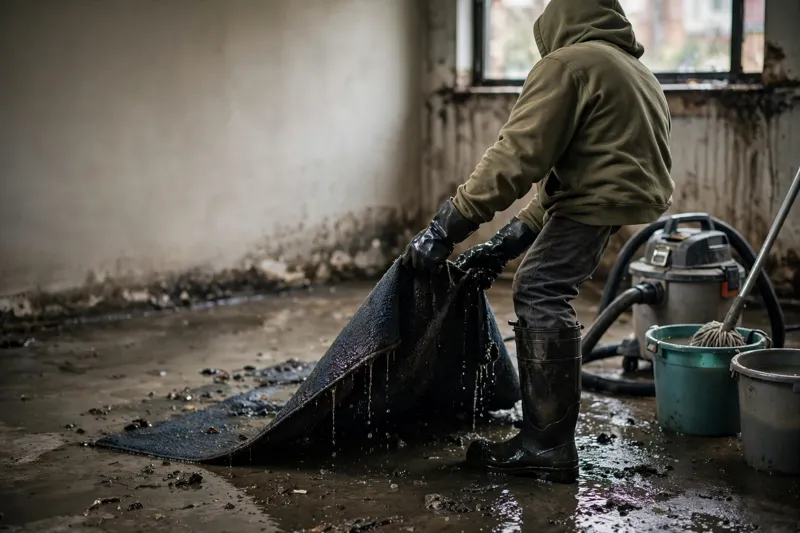
Two: the sump pump, when it stops
A sump pump pushes water out of the pit and away from the house, and it stops for three reasons: the power goes out, the float switch sticks, or the discharge line freezes. The pump itself is usually fine; the line is the weak point. In a cold snap the water in the discharge line freezes solid, the pump runs and the water comes back into the pit, and the basement floods while the pump is still running. Keep the line clear of leaves and ice, keep the outlet above the ground so it does not freeze shut, and test the pump every spring and fall. A battery backup keeps the pump running when the power goes out, and it is the cheapest insurance an Uptown basement has.
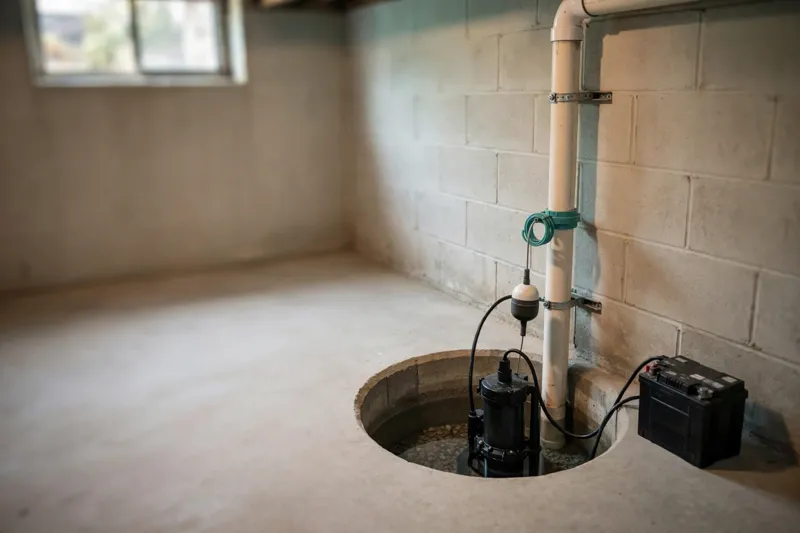
Three: the discharge line, frozen in winter
The discharge line is the pipe that carries the sump water out of the house, and it is the part of the system that sits outside in the cold. When it freezes, the water has nowhere to go, and the pump pushes it back into the pit. The fix is simple and it is the homeowner's job: keep the line clear, keep the outlet above the ground, and check it after the first hard freeze.
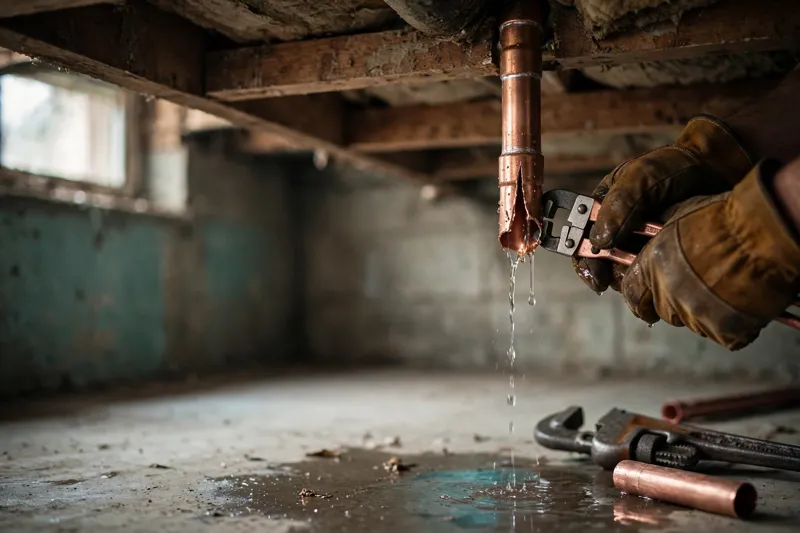
Four: the supply pipe, split by a freeze
A supply pipe splits when the water inside it freezes and expands, and the split is usually in an outside wall, a crawl space or an unheated room. The pipe does not leak while it is frozen, it leaks when it thaws, and by then the water has been running for hours. The first sign is a ceiling stain or a damp patch on a wall, and the first job is to turn off the main water valve. A pipe that burst suddenly is usually covered by homeowners insurance; a pipe that leaked slowly for months may be classed as wear and tear, and that is why the FAQ below says to report a burst the day you find it.
Five: lakefront humidity and aging building systems
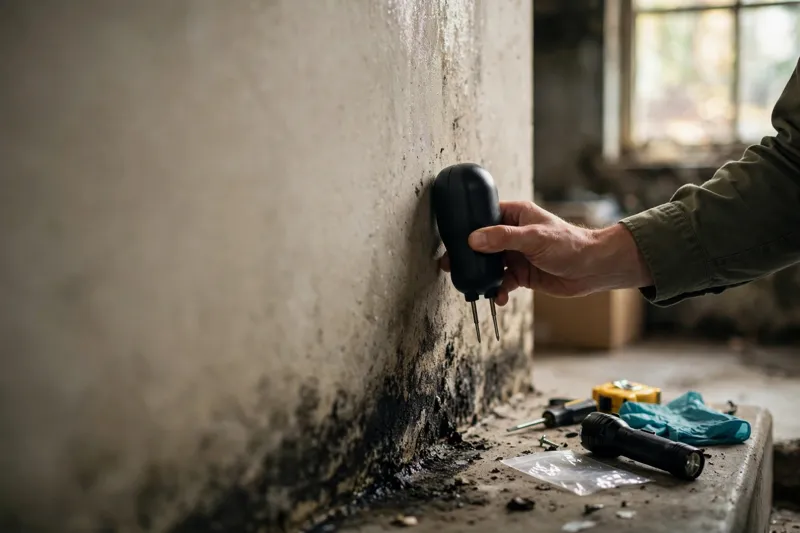
Lakefront humidity feeds condensation on cold walls and windows, and in an old building the condensation never quite dries. The building systems are old too: shared-wall and condo leaks travel through a wall from the flat next door, a riser leaks behind the plaster, and the water shows up two rooms away from where it started. A leak in a shared-wall building is the hardest leak to find, because the water belongs to the building, not to one flat.
The fix is the same as for any leak: find the source, stop it, dry the wall to a number, and repair what is left. And the humidity is the reason the mold question matters here more than in most neighbourhoods, mold grows where the water sat and the wall stayed wet, and a lakefront wall stays wet longer than a dry one.
Six: the appliance, when it fails
A water heater, a washing machine or a dishwasher fails the same way a pipe fails: a hose splits, a valve sticks, or a tank rusts through. The water is clean, and the damage is the same as a burst pipe, it soaks the floor, the baseboards and the wall behind the appliance. Turn off the water to the appliance, then call. An appliance failure is the simplest water-damage job there is, and it is the one that is most often covered by insurance, because it is sudden and accidental.
The water main break, and can you still shower?
A water main break is not a basement flood, and this page does not treat it as one. The Glenwood Avenue break of January 31 and February 1, 2023, put several inches of water in the street on the 4900 block of North Glenwood, and the water started to freeze. The Department of Water Management crews were on the street repairing it the same day. A break in the street main means the water to the building may be shut off, or it may run brown, or it may run at low pressure.
Can you still shower with a water main break? Do not, until the water runs clear and the pressure is back. Brown water carries rust and sediment, and a shower in it is a shower in dirt. Wait for the city to clear the main, run the cold tap until the water runs clear, and then shower. If the water is off altogether, the building has no water to shower with, and the answer is the same: wait.
Three kinds of water, and why the kind decides the job
Water damage restoration Uptown sorts the water into three kinds, and the kind decides what the crew does, what comes out, and what stays. Clean water comes from a supply pipe, a water heater or rain through a roof. It is the simplest job, and it dries in three to five days in one room. Grey water comes from a washing machine, a dishwasher or a shower drain. It carries soap and dirt, and it needs cleaning as well as drying.
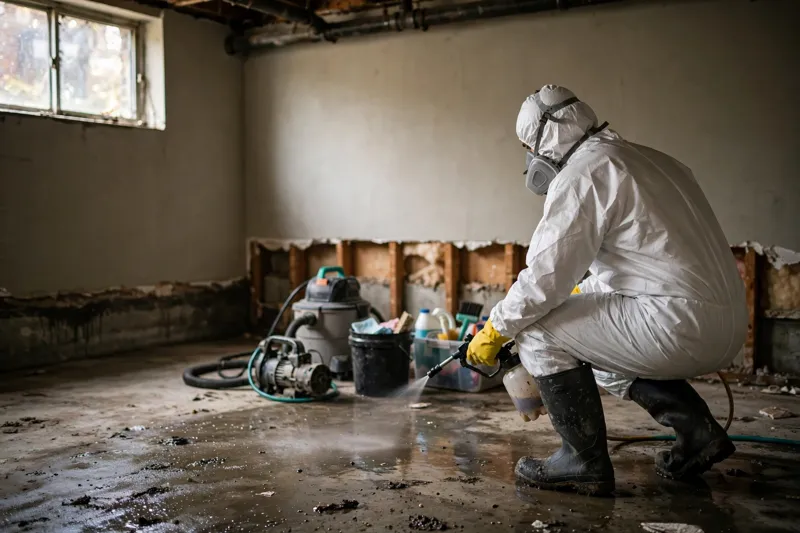
Black water comes from a sewer backup or a flood that has passed over the ground. It carries sewage and bacteria, and it is the one kind of water a homeowner should not touch. Black water means the wet drywall comes out to twelve inches above the water mark, the floor comes out, and the room is cleaned and sanitized before anything goes back.
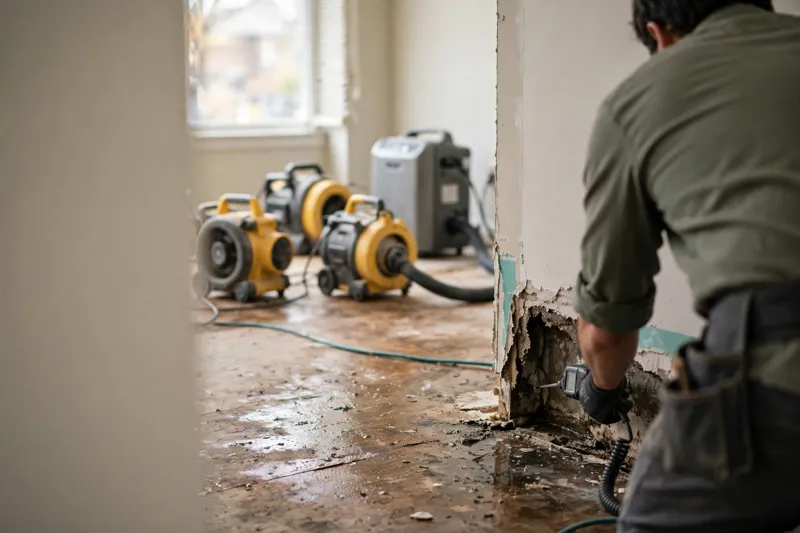
The wet drywall comes out to twelve inches above the water mark. The room is cleaned and sanitized, and the drying runs until the meter says dry. That is the process, and it is the process this page follows.
The verified cases, and what they prove
There are five verified Uptown cases, and not one of them is a named resident's home basement flooding. That is the honest record, and this page prints it as it is. No case with an Uptown home and a street address exists on any platform the battery checked, and this page invents none.
Case one: the Glenwood Avenue water-line break, 4900 block of North Glenwood
On January 31 and February 1, 2023, a water line broke on the 4900 block of North Glenwood Avenue, and the entire block flooded with several inches of water in the street. CBS Chicago filmed it, a fifteen-second clip, watched in full for this page, and the narration was plain: cold weather may be to blame for a water line breaking uptown, the whole block is flooded, and some of the water is already starting to freeze. The Department of Water Management crews were on the street repairing the break.
ABC7 reported the same break on February 1, 2023, and named the resident who lived with it: Jessika Cutts, on the 4900 block of North Glenwood, who watched the water rise in the street outside her building. The ABC7 report is explicit about what did not happen: "It does not appear the water has made it into the ground floor units." That sentence is the reason this case is a street case, not a basement case, and this page prints it as a street case. A water-line break in the street is not a flooded basement, and a page that prints it as one misleads a homeowner.
Case two: Argyle Avenue, June 15, 2015, street flooding
On June 15, 2015, Argyle Avenue west of Broadway flooded in the street, and DNAinfo named the resident who lived with it: Josh Atterberry, who watched the water rise on Argyle and wrote, in a message that still reads like a warning, that if it rained any more you would have to swim across Argyle. That is a report, not a question, and it is a street flood, not a basement flood. It is the second named Uptown resident in the whole sweep, and both of them describe water in the street, not water in a home.
Case three: the Uptown Theatre basement, the only verified flooded basement
The Uptown Theatre, at 4816 North Broadway, is the only verified flooded basement in the whole sweep, and it belongs to a theatre, not a home. The theatre closed in 1981, and its basement flooded after the closure. CBS reported it on October 18, 2026, and the report is the only one in the battery that puts water in a basement in Uptown with a named building and a named address. A theatre basement is not a home basement, and this page does not pretend otherwise.
No home basement in Uptown has a verified case on any platform the battery checked.
Case four: Clarendon Park Field House, April 2015
In April 2015, the Clarendon Park Field House, at 4501 North Clarendon Avenue, suffered severe water damage, and DNAinfo reported it. It is a case about a public building, and this page prints it as one.
Case five: Agudas Achim North Shore Synagogue, June 2016
In June 2016, the Agudas Achim North Shore Synagogue, at 5029 North Kenmore Avenue, suffered extensive water damage, and DNAinfo reported it. The synagogue is a non-residential building, and the damage was to a place of worship, not to a home. It is a case about a non-residential building, and this page prints it as one.
The storm of September 11, 2022, the neighbourhood case
The storm of September 11, 2022, is the one storm that names Uptown, and it names Uptown as a neighbourhood, not as a house. Block Club Chicago, quoted verbatim by thinc.blog in a direct read for this page, named Uptown among the flooded North Side neighbourhoods, with up to six inches of water in basements. The Block Club article itself was not opened in the text-fetch leg, and this page cites it only as quoted by thinc.blog.
The Johns Hopkins thesis by Claire Hoy, from May 2023, names Uptown among the neighbourhoods afflicted in the same storm. NatureWorldNews, on September 13, 2022, reported a water burst near the Heritage Outpost Coffee Shop in Uptown Chicago, at 1020 West Lawrence Avenue, Suite 1, 60640, soaring several feet into the air. That was a street water burst, not a resident's basement flood, and this page prints it as a street burst.
A vendor report from 2025 says basement flooding complaints in Uptown spiked in April, and it gives no per-item sourcing, so this page prints it as a vendor claim, not as a verified case. The SeeClickFix record for Uptown, one thousand nine hundred and seventy-three issues, carries street-flooding reports from 2012 to 2014, a sewer drain that could not handle a lot of rain, standing water on curbs, a sewer cover at Irving Park Road and North Pine Grove Avenue, alley grading and sinkholes, and none of them is a named resident basement case.
The storm of November 16 and 17, 2026, pooled rain on the streets of Rogers Park and West Ridge, and Uptown was not named. The record rain of January 8 and 9, 2026, at North Ashland and West Wilson, brought two hundred and nine "water in basement" complaints and five hundred and eighteen "water on street" complaints across the city, with one point nine two inches of rain at O'Hare, and those are citywide figures, with no Uptown resident or basement named.
Water removal in Uptown
Water damage restoration Uptown removes the water first. A pump takes the standing water, a wet vacuum takes the rest, and the crew lifts the rugs, the boxes and the furniture before the water soaks through them. The water is out in hours, and the drying starts the same day. The longer the water sits, the more it soaks: drywall wicks it up, flooring buckles, and the framing behind the wall stays wet for days. A basement that is pumped the same day dries in days. A basement that sits for a week needs the drywall out and the floor up.
Water removal is the part of the job that looks simple and is not. The water hides behind the baseboards, under the flooring and inside the wall cavity, and a pump on the floor does not reach it. The crew pulls the baseboards, drills the wall if it has to, and reads the moisture with a meter. The meter is the difference between a job that is dry and a job that looks dry: a wall can look dry and still hold water behind the paint, and a wall that holds water grows mold. The drying log, below, is the record of those readings, and it is the record the insurer asks for.
Flood cleanup in Uptown
Water damage restoration Uptown cleans a flood the same day. Flood cleanup is not water removal with a mop, it is extraction, then cleaning, then sanitizing, then drying, in that order. The water that comes up through a floor drain is black water, and black water carries sewage. The crew wears boots and gloves, the wet material comes out, the surfaces are cleaned and sanitized, and the room dries before anything goes back. A flood that is cleaned the same day is a flood that does not grow mold. A flood that sits for a week is a mold job.
The wet drywall comes out to twelve inches above the water mark. The room is cleaned and sanitized, and the drying runs until the meter says dry. That is the process, and it is the process this page follows. One vendor page prints "two point five inches" of rain for the September 11, 2022 storm in another neighbourhood.
That figure conflicts with the National Weather Service figure for the storm, and this page prints no rainfall figure for Uptown from a vendor page at all, only the Block Club figure of up to six inches in basements, as quoted by thinc.blog.
Stories that are not Uptown, and why they are not here
A page that prints a case from the wrong neighbourhood is a page that misleads a homeowner, and this page does not do it. The stories below are the ones the battery found and rejected, and they are listed here so that no reader mistakes them for Uptown cases.
Thorndale and Kenmore is Edgewater, not Uptown. John Carruthers is Ravenswood. Soliz Rodriguez is Albany Park. Camila Pechous is Portage Park, she is the named resident in the WBEZ article about stormwater pooling at Argyle and Winchester, and the pooling is Uptown but the resident is not. Carina Hoyer is Albany Park. The DIY Playbook basement flood, from September 11, 2022, names no neighbourhood, and its location is unconfirmed. The Skokie water-main break at East Prairie and Emerson, in February 2025, is Skokie. The Robbins break on 119th Street is on the far South Side.
Park Ridge has its own "Uptown", and it is a different place. The veteran's home is on the West Side and in Lawndale. The 1992 Loop flood is downtown. The two thousand five hundred basement-flooding reports figure names Portage Park, Edgewater, Rogers Park, West Ridge and Albany Park, Uptown is not in that list, and this page does not put it there. The Kenmore and Winthrop water-main break of November 26, 2008, is contested, and this page does not print it as settled.
The November 12, 2026 Sun-Times panel and the November 16, 2026 Sun-Times video are the West Side and Lawndale. None of them is printed here as an Uptown case, and none of them is given an Uptown street address.
Landlords, renters and garden flats
An Uptown garden flat is the lowest home in the building, and a sewer surcharge reaches it first. The landlord owns the building and its pipes, so the landlord pays for the building repair. A renter pays when the renter caused the damage, such as an overflowing tub left running. Read the lease and tell the landlord the day the water appears, because a renter who waits a week has a mold job, not a drying job.
The landlord should call for extraction the same day, and the renter should photograph the water line and every damaged item before anything is moved. A landlord who owns a two-flat or a three-flat on Broadway, Lawrence, Argyle or Winthrop should know where the backwater valve is, whether the building has one, and when the sewer lateral was last televised with a camera.
A renter in a garden flat should know where the floor drain is, what the first signs of a backup look like, and who to call at night, and the answer to all three is in the FAQ below.
Through the year in Uptown
Water damage restoration Uptown changes with the season, and the season decides what fails. In spring, the thaw and the rain come together, and the sump pump runs the most. In summer, the storms come fast and hard, and the combined sewer surcharges, the September 11, 2022 storm was a summer storm, and it put up to six inches of water in Uptown basements. In fall, the leaves block the gutters and the discharge line, and the first freeze catches the pipes that were never drained.
In winter, the pipes freeze and split, the discharge line freezes solid, and the sump pump runs and the water comes back into the pit. The November 16, 2026 storm was a late-fall storm, and it pooled on the streets because the ground was frozen and the runoff could not absorb, and Uptown was not named in it, which is the honest record. The job is the same in every season, extract, dry to a number, clean, repair, but the entry point changes, and the entry point is what this page is built to find.
What a job costs, and why this site prints no prices
Water damage restoration Uptown has no price on this page, and it has no price for a reason: a price on a page is a price for a job the page has never seen. The cost of a water-damage job depends on how much water there is, what kind of water it is, how many rooms got wet, how long the water sat, and what material it soaked. A clean-water loss in one room costs less than a sewage loss in a whole basement.
A job that starts the same day costs less than a job that starts a week later, because a week of wet drywall is a mold job. We inspect first, then give you a written scope of work with the cost in it before any repair starts. The scope says what comes out, what stays, what is cleaned, what is dried, and what is repaired, and it says it in writing so the insurer can read it. No page can give you a number for your home, and this page does not try.
The search for the cost of the job in Uptown lands here, and the answer is the same: no price on this page, a written scope after an inspection, and no figure that can mislead you.
Insurance, what is covered, what is not, and what to do first
Water damage restoration Uptown is usually covered by homeowners insurance when it was sudden and accidental, such as a burst pipe or an appliance failure. A sewer backup is usually covered only if you hold the endorsement for it, ask your insurer whether your policy carries water backup coverage, and ask before the next storm, not after it. Flooding from outside needs separate flood insurance, because a standard homeowners policy does not cover it at all.
A standard policy covers the drying and the repair, less your deductible, and it does not pay for the pipe that failed. A pipe that leaked slowly for months may be classed as wear and tear, so report a burst the day you find it. A leak from a pipe is covered when the pipe failed suddenly; a leak that ran for months is a different question, and the insurer will ask when it started.
Call the insurer the same day the water appears, and do not wait for the adjuster to start the drying. The drying is mitigation, and mitigation is the homeowner's job, the insurer expects the water out and the drying started, and a job that waits for the adjuster grows mold while it waits. Photograph the water line and every damaged item before you move it, keep every receipt, and keep a written list of what was lost, what was moved and what was thrown away.
The drying log is the record the adjuster reads, and it is the record that settles the claim. The question of whether basement flooding is covered by homeowners insurance has the same answer as the question of whether water damage is covered: sudden and accidental, yes; flooding from outside, no, not without a flood policy; sewer backup, only with the endorsement.
City programmes, what exists, what does not, and what Uptown cannot
Water damage restoration Uptown is a job the city does not do for you, but the city runs programmes that help a homeowner after a flood, and it also runs programmes that do not exist, and this page tells the two apart. The Private Sewer Drain Program exists, and it is described in full below. The Disaster Relief Assistance Program exists, and it is described below, but no Uptown ZIP is a priority ZIP for it.
The Flood Assistance Repair Program exists, and it is described below, but it is west-side only, and Uptown, on the North Side, is not eligible. A programme that cannot be found on the city site is not a programme this page will promise you.
The Private Sewer Drain Program
The Private Sewer Drain Program is the city's programme for a broken private drain, and it works like this: the city may repair sewer drain tiles from private residences of up to four units when the break is under the public way, and it repairs them at no cost to the owner. The owner first hires a licensed sewer contractor to rod and video-inspect the drain, and if the break is in the public way the city repairs it. Start the process through CHI 311.
The 311 article from December 12, 2018, "Private drains program overview", lays out the steps, the homeowner calls 311, a Department of Water Management crew is dispatched, the homeowner hires a city-licensed sewer contractor, the contractor calls the Permit Section, then calls Inspections, and the city repairs the break if it is in the public way, and it carries a homeowner-cost figure of five thousand to ten thousand dollars for a repair the owner pays for himself. That figure and the January 1, 2002 effective date were verified fresh in the live runs.
The department's two-page flyer says the programme can save on average between ten thousand and twenty thousand dollars, and that figure conflicts with the 311 article's figure, so this page cites neither as settled.
Disaster Relief Assistance Program
The Disaster Relief Assistance Program is the Department of Family and Support Services programme for households hit by the three federal disaster declarations, and it pays up to fifteen thousand dollars per household. It covers rent, mortgage and utilities only, not repair, and it runs from January 21, 2025 to January 21, 2027, for households at or below eighty percent of area median income. Its priority ZIP codes are 60644, 60651, 60639, 60641 and 60624. No Uptown ZIP, 60640 or 60613, is a priority ZIP.
Uptown is not eligible for priority under this programme, and this page does not claim otherwise. The three declarations are DR-4728-IL, for June 29 to July 2, 2023; DR-4749-IL, for September 17 to 18, 2023; and DR-4819-IL, for July 13 to 16, 2024. The programme partner is the Northwest Center, 5233 West Diversey Avenue, 773-283-3888. The Department of Family and Support Services sits at 1615 West Chicago Avenue, fifth floor, 312.743.0300.
Flood Assistance Repair Program, west side only
The Flood Assistance Repair Program pays up to twenty-five thousand dollars for basement damage from floods, for owner-occupied homes on the west side of Chicago. It covers damage from the 2023 or 2024 floods, for households at or below one hundred percent of area median income. Registration for 2026 opens at nine in the morning on Monday, November 30, 2026, and closes at four in the afternoon on Friday, December 11, 2026, online or through 311, with a lottery in 2027. The administrator is the Westside Health Authority, healthauthority.org/farp, 312-449-7870,.
Uptown is on the North Side, and Uptown is not eligible. Never confuse this programme with the subsidy, and never confuse it with the Disaster Relief Assistance Program, the three programmes are three different programmes, with three different rules, and only one of them, the Private Sewer Drain Program, is open to an Uptown homeowner.
Street water, 311 and the flood record
When the water comes up through a floor drain, when the street fills, or when several houses on the block flood at once, call 311. A 311 report is how the city learns a sewer surcharged, and the report goes into the planning record for your block. The 311 Call Center Operations page says the center is staffed twenty-four hours a day, seven days a week. The call volume is given two different ways on the city's own pages, and this page cites neither figure as settled.
The number 312.744.5000 appears in the CHI311 site footer only, in dotted form, it does not appear on the Call Tips page. File a "Water in Basement Complaint" through 311 or through the 311 site, and keep the report number. That is how an Uptown basement flood becomes a record, and it is how the next flood gets counted. The Metropolitan Water Reclamation District's Overflow Action Alert, in effect during the November 16, 2026 storm, is the district's warning that the system is full and the water has nowhere to go.
The current water issues in Chicago, as of the battery date, are the ones the storm brought: rain pooling on the streets of Rogers Park and West Ridge, frozen ground that could not absorb the runoff, and an overflow action day from the Metropolitan Water Reclamation District. Uptown was not named in that storm, and this page does not name it.
The backwater valve and the overhead sewer
The backwater valve is the defence that stops a sewer surcharge from coming up through the floor drain. It sits on the building drain, and it closes when the sewer below it surcharges, so the water cannot come back into the house. The overhead sewer is the stronger defence: it lifts the plumbing above the surcharge line, so a backup is impossible.
A backwater valve is fitted by a licensed sewer contractor, and any work on the sewer lateral in the public way needs a permit, and only a licensed drainlayer may do it. Ask the contractor to televise the lateral with a camera before the next storm, and to clear the roots and tell you whether the line needs repair or replacement. Clay tile and cast iron laterals crack, shift and let tree roots in, and the roots block the line until sewage backs up into the basement, and the camera is how you know.
How long the job takes
Drying takes three to five days on a clean-water loss in one room, and repairs take one to two weeks after that. Four things decide the time: how much damage there is, what kind of water it is, what materials got wet, and whether mold is growing. A sewage loss takes longer, because the wet material comes out and the room is cleaned and sanitized before the drying starts. A loss that sat for a week takes longer, because the drywall is wet through and the framing is wet behind it.
A loss with mold takes longer, because the mold is removed and the space is dried before the repair starts. The crew does not close the walls until the meter says they are dry, and it does not put the flooring back until the floor reads dry. A job that is rushed is a job that grows mold behind the paint, and the mold comes back in weeks.
Structural drying takes the longest of all, because the framing behind the wall holds water for days after the surface looks dry, and the drying log is the record that says when it is done.
The 50 percent rule, the only one that counts
Water damage restoration Uptown has one 50 percent rule, and it is a FEMA rule for homes in a floodplain. If repairs cost half or more of what the home is worth, the home must be brought up to flood standards.
No other 50 percent rule exists, and no engine or page should invent one. No Illinois or Chicago law was cited by any engine for the renters question, and this page invents none.
Pipe bursting, two different things
Water damage restoration Uptown has to untangle pipe bursting, because the phrase means two different things, and pages that mix them up mislead you. A burst pipe is a supply pipe that split open, usually from freezing, and it leaks when it thaws. This site prints no prices for either job.
A trenchless replacement needs a licensed drainlayer and a permit for the work in the public way. A burst pipe needs the water off, the pipe cut out, and the wall dried before it is closed.
Sewer permits and the drainlayer licence
Only a licensed drainlayer may work on a sewer in Chicago, and the licence has been a courtesy licence from the Department of Buildings since January 1, 2022. Work of twenty feet or less, done in kind, is the exception. The Sewer Permits page carries no fee amounts at all, and this page prints none from it. The calendar year 2026 licence fee is one hundred and fifty dollars, confirmed live in the January 2, 2026 "Drainlayer License Changes for 2026" notice, effective January 6, 2026, and the classes are not in that notice.
The 2020 form carries a fee of one hundred and twenty-five dollars, classes A, B1, B2 and C, a fifty thousand dollar bond, and a three hundred thousand dollar insurance minimum, and it is mailed to the Department of Buildings at 121 North LaSalle Street, Room 906. Print the calendar year 2026 fee as current, and never merge the two years. The fifty thousand dollar bond is not on the Sewer Permits page, it is in the 2020 form only.
The stormwater regulations set an amendment fee of five hundred dollars per submission under section 11-18-080(c), verified live on page sixty-three of the 2026 Stormwater Regulations. The unpermitted-work fine of five thousand dollars or more, recorded in one earlier run on the Sewer Permits page, was not found in the North Center run's full body read of the same page, so it is contested, and this page does not print it as settled.
Tap water and the Department of Water Management
The Department of Water Management's live home page is at chicago.gov/city/en/depts/water.html, and the old home address is dead. The home page states no headquarters address and no street address at all, and it names no commissioner, so this page prints no headquarters address and no commissioner from the home page. The commissioner is Randy Conner, named on the Leadership page and on the title page of the 2026 Regulations.
The What We Do page says the city maintains about four thousand six hundred miles of sewer mains and about four thousand three hundred miles of water mains, eighty thousand drainage structures, twelve pumping stations, one hundred and fifty thousand manholes, about seven hundred and fifty million gallons of water a day, and about four hundred thousand lead service lines, and it supplies drinking water to Chicago and about one hundred and twenty suburban communities.
The Jardine plant is ranked first among the world's largest conventional water treatment plants, and the Sawyer plant is ranked eighth, and this page prints the ranking, never the bare phrase "the world's largest". The What We Do page carries no combined capacity figure and no hydrant count, and this page prints neither. The Our Structure page says the department has about two thousand one hundred personnel and a budget of about one billion dollars, and that the Administrative Offices sit at the James W.
Jardine Water Purification Plant, 1000 East Ohio Street, Chicago, IL 60611, by appointment only. The Leadership page disagrees with both figures, saying over four thousand four hundred and fifty miles of sewer mains and a budget of one point four billion dollars, and an older figure of four thousand four hundred miles of sewer mains also circulates, so this page prints no single figure for the sewer mains and no single figure for the budget as settled. The home page itself prints no mileage at all.
The city has a combined sewer system, and one pipe carries both sewage and stormwater. That is the fact that explains why an Uptown basement floods when it is barely raining: in a hard storm the combined sewer surcharges, and the water comes back up through the lowest opening in the building. A lead service line is the pipe that brings water from the street main into the house, and only a test can say how much lead it carries. Ask a licensed plumber to test the water and the line.
Rainblocker, what the page actually says
Rainblocker is the city's programme of inlet restrictor valves, and the figure everyone quotes for it, close to two hundred thousand valves, is text burned into an image file on the city's Rainblocker page, not body text and not alt text. This page prints it as the caption's figure, and it prints it that way because that is what it is. The live body text dates the FEMA-funded pilot to 1998, and the nineteen ninety-nine date that circulates is a prior-run reading only, so this page does not print it as settled.
The valve dimensions that circulate, a horizontal six-inch diameter stainless steel pipe, eleven inches long, are a prior reading only, and they were not re-verified legibly in the live runs, so this page does not print them as verified. The valves slow the flow of stormwater into the combined sewer, and that is the whole of the programme this page can state from the live page.
Mold and the Illinois registration
The Illinois Department of Public Health's Part 835 registration is operational, effective September 23, 2026, with a grace period to September 30, 2027. This site claims no registration itself. The guidance on this page is consumer guidance only: ask a company for its Illinois Part 835 registration if mold work is involved, and ask to see it. Mold grows where the water sat and the wall stayed wet, and it cannot be remediated until the water source is fixed first.
Remediation means removing the mold growth and the wet material it sits on, cleaning what stays, and drying the space so it cannot grow back. A company that offers to remediate mold without fixing the leak is a company that will be back in weeks.
Lookalike places, Uptown, San Francisco and Uptown, Dallas are not
The name is ambiguous, and the page hammers "Uptown, Chicago" throughout so that no reader and no engine mistakes it for another town. Google's autocomplete for the head phrase offers San Diego, Dallas, San Diego again, Charlotte and Denver, no Chicago completion at all.
Park Ridge has its own "Uptown", and it is a different place. This page is for Uptown, Chicago, Community Area 03, between Foster Avenue and Irving Park Road, from Ravenswood Avenue to Lake Michigan, and it answers the cost question for Uptown: this site prints no prices, and no figure on this page can mislead you.
The two wards
Uptown is served by two wards, and the ward is the office that answers when a basement floods. The 46th Ward is Alderman Angela Clay, in office since May 15, 2023, and the ward office sits at 4544 North Broadway, Chicago, IL 60640, phone (773) 878-4646, with a City Hall office at (312) 744-6831, Room 200. The 46th Ward covers Uptown, Buena Park and Lakeview East, from Ainslie south to just past Addison, from Lake Michigan west to Clark Street.
The 48th Ward is Alderman Leni Manaa-Hoppenworth, in office since May 15, 2023, and the ward office sits at 1129 West Bryn Mawr Avenue, Chicago, IL 60660, phone (773) 784-5277. The 48th Ward office sits in Edgewater, north of Foster Avenue, and this page does not print it as inside Uptown. The 48th Ward covers Edgewater, Andersonville and the northern edge of Uptown. Ask the ward office for the 311 record, ask it for the assessment, and ask it what the city plans for your block.
The ward office is not a restoration company, and it does not dry a basement, but it is the office that turns one flooded basement into a record, and a record into a plan.
The parks, the beach and the water
The parks and the beach of Uptown are where the rain goes when it cannot go into the sewer, and they are part of the water story. Montrose Beach, at 4400 North Lake Shore Drive, 60640, is Chicago's largest beach, and the Chicago Park District calls it "near the Uptown neighborhood", this page calls it near Uptown, and it sits at the 4400 North line, on the southern edge of the community area. Montrose Harbor sits on the lakefront beside it, inside the eastern edge.
Clarendon Park, at 4501 North Clarendon Avenue, 60640, has a field house built in 1916 by C.W. Kallal, renovated for thirteen million dollars and reopened in June 2025, and it is the park whose field house suffered severe water damage in April 2015. Graceland Cemetery, at 4001 North Clark Street, 60613, was established in 1860, and its grounds lie north of Irving Park Road, inside the Uptown community area by the stepped bounds.
The lake is the reason for the humidity: Uptown sits on the lakefront, and the lakefront humidity feeds condensation on cold walls and windows, and a lakefront wall stays wet longer than a dry one. The pond holds water, the lawns take rain, and the trees slow the runoff, and when the rain comes faster than the ground can take it, the water runs to the street, and the street runs to the sewer, and the sewer surcharges. The parks do not cause the flooding, and they do not stop it. They are where the water starts, and the basement is where it ends.
Storefronts on Broadway and Lawrence
Water damage restoration Uptown serves the Broadway and Lawrence storefronts too. The shops, restaurants, grocers and services on Broadway sit in buildings whose basements are the first to flood when the combined sewer surcharges, and a flooded shop basement is a flooded stockroom, a flooded kitchen and a closed shop. Argyle Street, the Little Saigon, runs east from Broadway, and its shops and restaurants sit in the same old buildings, with the same basements and the same floor drains.
A storefront job is a water-damage job with a clock on it: the water comes out, the drying runs, and the shop opens again. The same seven steps apply, and the same drying log applies, and the same written scope applies. A shop that waits a week has a mold job and a closed shop, and a shop that starts the same day has a drying job and an open shop.
Apartment buildings and two-flats
An Uptown two-flat or three-flat floods the same way a single-family home floods, and the garden flat floods first. The landlord owns the building and its pipes, so the landlord pays for the building repair, and the renter pays when the renter caused the damage. The first job is the same: extract the water, dry to a number, clean, repair. The second job is the building's job: find the entry point, fit a backwater valve if the building has none, and televise the lateral with a camera before the next storm.
A building with eight units and one flooded first floor is a building with eight tenants who need an answer the same day, and the answer is the seven steps above, done in order, with the drying log to prove it.
By building type
Water damage restoration Uptown changes with the building, and the building decides what comes out and what stays. The vintage brick flats are the oldest homes in Uptown, and they are the homes that flood the most. The two-family and three-family buildings are the next type, and they flood through the floor drain first. A garden unit sits below grade, so a sewer surcharge reaches it first, and it needs extraction the same day.
The condos in the shared-wall buildings are the third type, and they flood through a wall from the flat next door, a riser leaks behind the plaster, and the water shows up two rooms away from where it started. The storefronts on Broadway and Argyle are the fourth type, and they flood through the basement first. The brick is the same in all four, the mortar is the same, and the combined sewer is the same, and the job is the same in all four: extract, dry to a number, clean, repair.
The landmarks are not homes, and this page does not treat them as homes. The Uptown Theatre, the Aragon Ballroom, the Riviera Theatre and the Green Mill are entertainment buildings, and their water stories are the theatre basement, the ballroom floor and the lounge cellar, not a family's basement. Truman College, at 1145 West Wilson Avenue, is a college, and its water story is a campus story. Clarendon Park Field House is a public building, and its water story is the April 2015 damage. A home is a home, and a landmark is a landmark, and this page keeps them apart.
Choosing a company, and talking to the adjuster
Ask for three things before you hire anyone: a drying log with moisture readings, a written scope of work, and proof of Illinois Part 835 registration if mold work is involved. A good company answers 24/7, arrives fast, photographs everything, and talks to your adjuster. Avoid any company that asks you to sign on the spot. The drying log is the record that settles the claim, and the written scope is the record that says what comes out, what stays, what is cleaned, what is dried, and what is repaired.
The adjuster will ask for both, and the adjuster will ask for the photographs and the receipts as well. Call the insurer the same day the water appears, and do not wait for the adjuster to start the drying, the drying is mitigation, and mitigation is the homeowner's job. A company that will not show you the log is a company that is not drying to a number.
Your Uptown checklist, before, during and after
The job starts with a checklist, and the checklist is the same for a homeowner, a renter and a landlord. Before the next storm: test the sump pump, clear the discharge line, check the outlet, look at the gutters and the downspouts, and ask a licensed sewer contractor to televise the lateral with a camera.
During the flood: call us first, stop the water at the source if you can do it safely, stay out of the water while the power is on, do not touch the water with bare hands, lift what you can save, and photograph everything before you move it. After the flood: keep the drying running until the meter says dry, keep the drying log, keep every receipt, call the insurer the same day, and call 311 if the sewer or the street flooded.
A checklist is not a job, but it is the difference between a job that starts the same day and a job that starts a week later.
After the job, what to check before you call it done
Before you call the job done, check four things. First, the drying log: every wall and floor should read the same as a dry wall in the same house, and the reading should hold for two days. Second, the smell: a room that still smells damp is a room that is still wet somewhere. Third, the walls: the baseboards should be back on, the paint should be dry, and there should be no stain coming back through.
Fourth, the entry point: the backwater valve should be fitted if the building needs one, the sump pump should be tested, and the discharge line should be clear. A job that passes all four is a job that is done. A job that fails one of them is a job that will be done twice.
Winter in Uptown, the frozen-pipe season
Winter in Uptown is a frozen-pipe job. A supply pipe splits when the water inside it freezes and expands, and the split is usually in an outside wall, a crawl space or an unheated room. The pipe does not leak while it is frozen, it leaks when it thaws, and by then the water has been running for hours. Keep the heat on in every room, even the rooms you do not use. Let the taps drip on the coldest nights.
Open the cabinet doors under the sinks on an outside wall, so the warm air reaches the pipes. Drain the outside taps before the first hard freeze. And check the sump pump's discharge line after the first freeze, because the line freezes solid, the pump runs, and the water comes back into the pit. A burst pipe is usually covered by insurance when it burst suddenly, report it the day you find it.
Prepare for the next storm, the Uptown list
The next storm is not a question of if, it is a question of when, and the list below is the preparation. Fit a backwater valve on the building drain if the building has none, and ask a licensed sewer contractor about an overhead sewer if the basement has flooded twice. Test the sump pump every spring and fall, and keep a battery backup on it. Clear the discharge line and keep the outlet above the ground. Televise the sewer lateral with a camera, and clear the tree roots before they block the line.
Look at the gutters and the downspouts, and look at the lakefront humidity on the cold walls. Ask your insurer whether your policy carries water backup coverage, and ask before the next storm. Keep the number for 311, keep the number for the ward office, and keep our number, (773) 570-9869, on the fridge. A home that is prepared is a home that floods less, and a home that floods less is a home that costs less to repair.
Street by street, where we work in Uptown
The work runs street by street, and the streets below are the streets this page serves. Broadway, from Foster Avenue south to Irving Park Road, is the main thoroughfare, and it is where the Uptown Theatre, the Green Mill and the 46th Ward office stand. Lawrence Avenue, 4800 North, runs east and west through the middle of the area, past the Aragon Ballroom at 1106 West Lawrence Avenue, and it is where the Red Line Lawrence station sits at 1120 West Lawrence Avenue.
Argyle Street runs east from Broadway through Little Saigon, and it is where the Red Line Argyle station sits at 1118 West Argyle Street. Wilson Avenue runs east from Broadway, and it is where the Red Line Wilson station sits at 4620 North Broadway. Clark Street runs north and south through Andersonville and Buena Park, past Graceland Cemetery at 4001 North Clark Street. Sheridan Road runs north and south along the lakefront, past Margate Park.
Winthrop Avenue and Kenmore Avenue run north and south through the middle of the area, past the synagogue at 5029 North Kenmore Avenue and the Clarendon Park Field House at 4501 North Clarendon Avenue. Foster Avenue, 5200 North, is the northern edge, where Uptown meets Edgewater. Irving Park Road, 3600 North, is the southern edge. Montrose Avenue, 4400 North, is the southern edge east of Clark Street. Ravenswood Avenue, 1800 West, is the western edge. The GPS anchor for this page is Broadway and Lawrence Avenue, 60640.
Call now, a crew is on the way
Call now and a crew is on the way. Flooded basement, burst pipe, sewer backup, storm water, call (773) 570-9869 any time, day or night, and tell us where the water is, how deep it looks, and whether it smells of sewage. We answer 24/7, and we talk you through the first hour while a crew is on the way to your Uptown home. The water comes out the same day, the drying runs until the meter says dry, and the room goes back the way it was. That is the job, and it is the job this page is built to do.
When the job is done right
A finished job should leave the walls and the floors dry to the meter, not just dry to the touch. Good water damage restoration uptown work means the crew shows you the readings, walks you through what was fixed, and deals with the cause so the same room does not flood again. If a company will not show its readings or put the plan in writing, keep looking.
Frequently asked questions
What is water damage restoration in Uptown?
Water damage restoration in Uptown means the full job of getting a home dry and rebuilt after water gets in. It starts with extraction, then drying to moisture readings, then cleaning, then removing what cannot be saved, then repair. We do it for homes across Uptown, Chicago, IL 60640, day and night.
How long does water damage restoration take in Uptown?
Water damage restoration in Uptown takes a few days to several weeks. Drying takes three to five days on a clean-water loss in one room, and repairs take one to two weeks after that. Four things decide the time: how much damage there is, what kind of water it is, what materials got wet, and whether mold is growing.
What does water damage restoration include in Uptown?
Water damage restoration in Uptown usually includes five parts, done in order. First, inspection: we find the source and measure how far the water spread. Second, extraction: standing water is removed with pumps and vacuums. Third, drying: air movers and dehumidifiers dry the walls, floors and framing. Fourth, cleaning and sanitizing. Fifth, restoration and repairs.
What should I do first when my basement floods in Uptown?
Call us first at (773) 570-9869, then stop the water at the source if you can do it safely. Stay out of a flooded basement while the power is on, and do not touch the water with bare hands. Lift what you can save to higher ground, and photograph the water line and every damaged item before you move it.
How much does a plumber charge to fix a burst pipe?
This site prints no prices, so no figure here can mislead you. The charge depends on where the pipe is, how hard it is to reach, whether the wall or ceiling must be opened, and whether the call is an emergency at night. We inspect first, then give you a written scope of work with the cost in it.
How do I know if my walls are dry after water damage?
Walls are dry when a moisture meter reads the same as a dry wall in the same house, and the reading holds for two days. A wall can look dry and still hold water behind the paint, so we do not call a wall dry from how it looks. We write the readings into a drying log you can see.
Will my basement flood again?
It can, unless the entry point is found and closed. Uptown basements flood through the same few openings: a floor drain during a sewer surcharge, a failed sump pump, a frozen discharge line, or a supply line that split after the first hard freeze. We find the entry point and tell you what will stop the next flood.
What is the 50/50 rule for water damage?
The 50 percent rule is a FEMA rule for homes in a floodplain, and it is the only 50 percent rule that counts. If repairs cost half or more of what the home is worth, the home must be brought up to flood standards. No other 50 percent rule exists, and no engine or page should invent one.
How much does water damage restoration cost in Uptown?
This site prints no prices, so no figure here can mislead you. The cost depends on how much water there is, what kind of water it is, how many rooms got wet, and how long the water sat. We inspect first, then give you a written scope of work with the cost in it before any repair starts.
Does homeowners insurance cover water damage restoration in Uptown?
It usually does if the damage was sudden and accidental, such as a burst pipe or an appliance failure. A sewer backup is usually covered only if you hold the endorsement for it. Flooding from outside needs separate flood insurance, because a standard homeowners policy does not cover it at all.
How much does insurance pay for water damage?
No page can give you a number, because the payment depends on your policy, your deductible, the cause of the loss, and the limits you bought. The insurer pays the cost of the drying and the repair, less your deductible, and it does not pay for the pipe that failed. Keep every receipt and photograph.
Does homeowners insurance cover burst pipes?
It usually does when the pipe burst suddenly, such as a pipe that froze and split in a cold snap. The insurer pays for the water damage the burst caused, not for the pipe itself. A pipe that leaked slowly for months may be classed as wear and tear, so report a burst the day you find it.
What is pipe bursting, and how much does it cost?
Pipe bursting means two different things, and pages that mix them up mislead you. Trenchless pipe bursting replaces a broken sewer line by pulling a new pipe through the old one, with no open trench. A burst pipe is a supply pipe that split open, usually from freezing. This site prints no prices for either job.
Are renters responsible for water damage in Uptown?
It depends on who caused the water and what the lease says. The landlord usually owns the building and its pipes, so the landlord pays for the building repair. A renter pays when the renter caused the damage, such as an overflowing tub left running. Read your lease and tell your landlord the day the water appears.
Can mold be fully remediated?
Yes, when the water source is fixed first and the drying is finished to moisture readings. Remediation means removing the mold growth and the wet material it sits on, cleaning what stays, and drying the space so it cannot grow back. It cannot work if the leak keeps feeding the wall, so the source comes first.
How much does mold remediation cost in Uptown?
This site prints no prices, so no figure here can mislead you. The cost depends on how much mold there is, how far it spread, what material it sits on, and whether the water source is fixed. We inspect first, then give you a written scope of work with the cost in it before any repair starts.
What should I do if my basement in Uptown floods?
Call us first at (773) 570-9869, then stay out of the water while the power is on, and do not touch the water with bare hands. Lift what you can save to higher ground, and photograph the water line and every damaged item before you move it. If the water came up through a floor drain, call 311 as well.
Who is the best water restoration company?
The best company is the one that shows you a drying log with moisture readings, a written scope of work, and proof of Illinois Part 835 registration if mold work is involved. It answers 24/7, arrives fast, photographs everything, and talks to your adjuster. Avoid any company that asks you to sign on the spot.
Is basement flooding covered by homeowners insurance?
It is covered when the flooding was sudden and accidental, such as a burst pipe or an appliance failure. It is not covered when the water came from outside flooding, which needs separate flood insurance, or from a sewer backup without the endorsement. A slow leak may be classed as wear and tear, so report it fast.
Can you live in a house with a flooded basement?
Not in the flooded rooms, and not until the water is out and the power is safe. Flood water can carry sewage and bacteria, and water near a panel or a socket carries current. Stay out of the basement, keep children and pets clear, and let a crew extract the water and read the walls before anyone sleeps there.
What is the most common reason for a basement to flood?
In Uptown it is the sewer surcharge. Chicago has a combined sewer system, and one pipe carries both sewage and stormwater, so in a hard storm the sewer surcharges and the water comes back up through the lowest opening, usually the floor drain. A failed sump pump and a frozen discharge line are the next two reasons.
How urgent is a burst pipe?
It is urgent the same hour you find it. A burst pipe leaks when it thaws, and by then the water has been running for hours, soaking the floor and the wall behind it. Turn off the main water valve, call us at (773) 570-9869, and do not wait, a pipe that waits a night is a mold job.
Do you call a plumber for a burst pipe?
Yes, call a plumber first to stop the water, then call us to dry the damage. The plumber cuts out the split pipe and puts in a new section. We extract the water, dry the walls and floors to a number, clean what stays, and repair what is left. One call without the other leaves half the job undone.
What happened in 1992 in Chicago?
In 1992 a freight tunnel under the Loop flooded and the water poured into the basements of downtown office buildings, closing the Loop for days. It was a downtown flood, not an Uptown flood, and it is not a case for this page. It is the reason Chicago keeps flood history close, and why the 311 record matters.
How do I choose a water damage restoration company in Uptown?
Ask for three things before you hire anyone: a drying log with moisture readings, a written scope of work, and proof of Illinois Part 835 registration if mold work is involved. A good company answers 24/7, arrives fast, photographs everything, and talks to your adjuster. Avoid any company that asks you to sign on the spot.
Sources
- ABC7 Chicago, February 1, 2023, the Glenwood Avenue water-line break, 4900 block of North Glenwood, and Jessika Cutts: "It does not appear the water has made it into the ground floor units".
- CBS Chicago, "Water line break leaves Glenwood Avenue flooded in Uptown", YouTube, February 1, 2023, watched in full for this page (0:16, 312 views). https://www.youtube.com/watch?v=UM8bbZkM4Zs
- DNAinfo, June 15, 2015, Josh Atterberry, Argyle Avenue west of Broadway, street flooding.
- CBS Chicago, October 18, 2026, the Uptown Theatre basement flooded after the theatre closed in 1981.
- DNAinfo, April 2015, Clarendon Park Field House, 4501 North Clarendon Avenue, severe water damage.
- DNAinfo, June 2016, Agudas Achim North Shore Synagogue, 5029 North Kenmore Avenue, extensive water damage.
- Block Club Chicago, September 11, 2022 storm coverage, quoted verbatim by thinc.blog (direct read November 17, 2026), Uptown named among flooded North Side neighbourhoods, up to six inches of water in basements. The Block Club article itself was not opened in the research leg.
- NatureWorldNews, September 13, 2022, water burst near the Heritage Outpost Coffee Shop, 1020 West Lawrence Avenue, Suite 1, 60640, soaring several feet into the air.
- Claire Hoy, Johns Hopkins MA thesis, May 2023, Uptown named among neighbourhoods afflicted in the September 11, 2022 storm.
- SeeClickFix, Uptown, Chicago (1,973 issues), street-flooding reports 2012-2014.
- WBEZ, January 8-9, 2026, record rain at North Ashland and West Wilson, 209 "water in basement" and 518 "water on street" 311 complaints on January 8, 1.92 inches of rain at O'Hare; citywide figures.
- Chicago Sun-Times and WBEZ, "Why flooding is getting worse in Chicago", panel discussion, November 12, 2026 (full transcript searched, 13 chapters), no mention of Uptown; named residents Lauri Johnson and Pat Quinn, West Side and Lawndale. https://www.youtube.com/watch?v=45Vwf0L5dKM
- City of Chicago, Department of Water Management home page, What We Do page, Our Structure page and Leadership page, chicago.gov, November 17, 2026.
- City of Chicago, Sewer Permits page and "Drainlayer License Changes for 2026" notice, January 2, 2026, chicago.gov, November 17, 2026.
- City of Chicago, Stormwater Management Regulations, March 2026 (eighty pages, Mayor Brandon Johnson, Commissioner Randy Conner), page sixty-three, plan-review fees, variance, amendment fee and fine.
- City of Chicago, Private Drain Repair programme page and Department of Water Management flyer, chicago.gov, November 17, 2026.
- CHI 311, "Private drains program overview", December 12, 2018, 311.chicago.gov, the five thousand to ten thousand dollar homeowner-cost figure and the January 1, 2002 effective date. https://311.chicago.gov/s/article/Private-drains-program-overview
- City of Chicago, 311 Call Center Operations page, chicago.gov, November 17, 2026, staffing and call volume.
- City of Chicago, Rainblocker page, chicago.gov, November 17, 2026, the caption figure and the 1998 FEMA pilot date.
- City of Chicago, Flood Assistance Repair Program page and Disaster Relief Assistance Program page, chicago.gov, November 17, 2026, eligibility, priority ZIP codes and registration dates.
- Illinois Department of Public Health, Part 835 mold remediation registration, dph.illinois.gov, November 13, 2026, effective September 23, 2026, grace period to September 30, 2027.
- Chicago Metropolitan Agency for Planning, Uptown Community Data Snapshot, June 2026 Release (American Community Survey 2020-2024), population fifty-six thousand three hundred and forty-four, thirty-two thousand eight hundred and ninety-five households, median household income seventy thousand and sixty-seven dollars, foreign-born twenty-three point eight percent, renter-occupied seventy point seven percent.
- Wikipedia, "Uptown, Chicago", Community Area 03, bounds, ZIP codes, population, landmarks, wards and transit.
- Chicago Park District, Clarendon Park and Montrose Beach pages.
- National Register of Historic Places, Graceland Cemetery (January 18, 2001); City of Chicago Landmark, Uptown Theatre (October 2, 1991).
- Chicago Transit Authority, bus routes 36 Broadway, 81 Lawrence and 151 Sheridan; Red Line stations Lawrence, Wilson and Argyle.
- Metra, Ravenswood UP-N station and Peterson and Ridge station, opened May 20, 2024.
- United States Environmental Protection Agency, mold cleanup guidance.
Water damage restoration near Uptown
We serve every Uptown street and every neighbourhood around it, day and night.
More Restoration Services Near Uptown
Every service below is one tap away. Pick the one that matches your problem.

Water Damage Restoration
Fast water extraction, structural drying, and full repair after burst pipes, leaks, and floods.
Learn more →
Water Mitigation
Emergency water removal, structural drying, and mold prevention to stop the damage fast, 24/7.
Learn more →
Mold Remediation
Safe, contained mold remediation that removes contamination and fixes the moisture source.
Learn more →
Sewage Cleanup
Safe removal and disinfection of dangerous sewage backups and black water.
Learn more →
Flood Cleanup
Water pumped out, structure dried, and debris cleared fast after storms and flooding.
Learn more →
Hardwood Floors Water Damage
Cupped, buckled or stained hardwood after a leak? How we dry it, when sanding saves it, and when the boards have to go.
Learn more →