Trusted by Ravenswood homeowners, landlords and small businesses, day and night.
Request water damage help in Ravenswood
Tell us where the water is and we will call you back. We answer 24/7, and a crew is on the way while we talk.
24/7Live answer, day and night
12Restoration services, one team
6Step documented process
Every jobPhotos and readings logged
Water damage restoration in Ravenswood, in one paragraph
Water damage restoration Ravenswood means the full job of getting a Ravenswood home dry and rebuilt after water gets in, and it starts the moment you call. We find the source, we pull the standing water out with pumps and vacuums, we dry the walls, floors and framing with air movers and dehumidifiers, we clean what the water touched, we remove what cannot be saved, and we rebuild what was lost. Every step is measured: moisture readings go into a drying log, and the drying runs until the readings hold for two days.
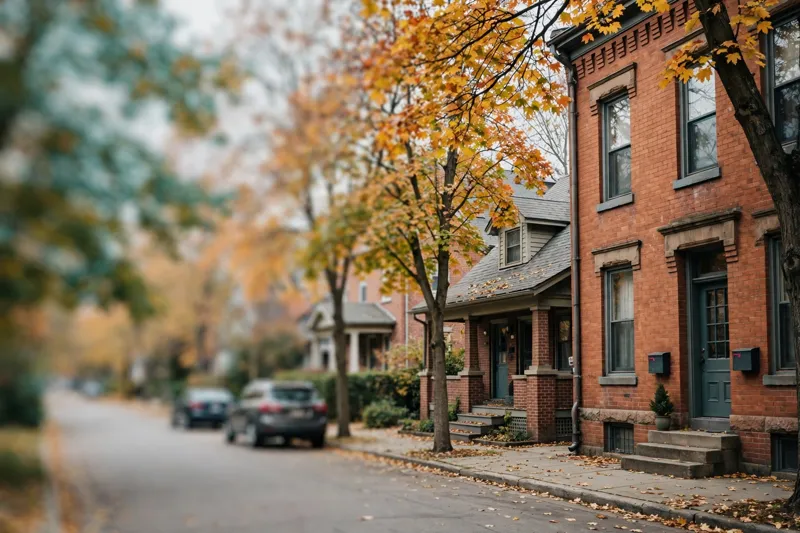
We do this work across Ravenswood, Chicago, IL 60640, day and night, for the brick two-flats and three-flats along Lincoln Avenue, for the garden units that sit below grade, for the vintage walk-ups and single-family frame houses, for the shops and small businesses on the Ravenswood Avenue corridor and for the homes around Winnemac Park. If the water came from the street or a sewer backup, call 311 as well, so the city knows the sewer backed up on your street. And if you are a renter, tell your landlord the day the water appears, because the landlord owns the building and its pipes.
The first hour: what to do right now
Call us first. Call (773) 570-9869 any time, day or night. Tell us where the water is, how deep it looks, and whether it smells of sewage. We answer 24/7 and talk you through the first hour while a crew is on the way to your Ravenswood home.
Stop the water at the source. Shut off the main if a supply pipe burst, and stop the appliance if a washer hose or a toilet line let go. Do not enter a flooded room to reach a valve if the power is on.
Stay out of the water while the power is on. Water and live power together can injure you. If the panel is out of reach, call an electrician and wait for the power to be cut at the panel or the pole.
Do not touch the water with bare hands. Keep children and pets out of it. Water that came through a floor drain may carry sewage, and water from a supply pipe may still hide broken glass, sharp debris and live wiring under the surface.
Lift what you can save. Move rugs, boxes and small furniture to higher ground. Do not move a water heater, a furnace or any appliance that is sitting in water.
Photograph everything. Take a wide shot of the room first, then close-ups of the water line, the damage and the serial plates. Your adjuster needs the pictures, and the pictures are your proof.
Call 311 if the sewer or street flooded. The city logs the report, and the crew can tell a main break from a private drain break. Reporting it helps your street, and it helps the next storm too.
Ravenswood: a neighbourhood, not a community area
Ravenswood is not one of Chicago's 77 community areas, and that fact matters, because a page that assigns it to one community area gets the map wrong. The portion east of Ravenswood Avenue and the Union Pacific North railroad tracks sits in the Uptown community area, and the portion west of them sits in the Lincoln Square community area.
The List of Neighborhoods in Chicago puts "Ravenswood | Lincoln Square", and the City Colleges guide lists Ravenswood under Lincoln Square, but the ground truth is the split, and this page describes the split, never a single community area. Ravenswood was founded in 1868 as a commuter suburb by the Ravenswood Land Company, on 194 acres of farmland and woods, eight miles north of Chicago.
The original subdivision plats, filed between 1868 and the 15th of July 1889, ran from Damen Avenue on the west to Clark Street on the east, from Berteau Avenue on the south to Ainslie Avenue on the north. The modern bounds run from Clark Street on the east to Kedzie Avenue, 3200 West, on the west, and from Montrose Avenue, 4400 North, on the south to Foster Avenue, 5200 North, on the north. The neighbourhood centre sits at 41.96556 degrees north, 87.66667 degrees west. The flood news from Indianapolis, Indiana, about a Ravenswood neighbourhood there, is not a Chicago case, and this page never prints it as one.
Three ZIP codes touch Ravenswood, and none of them belongs to Ravenswood alone. The main ZIP is 60640, which covers the Lincoln Avenue and Winnemac Park core and the ground east of Ravenswood Avenue. Part of 60613 touches the eastern side, and part of 60625 touches the western side, toward Lincoln Square and Budlong Woods. The page badge and the service address use 60640, and the other two are named here because a homeowner on the western side or the eastern edge should know the crew still comes.
Do not print any one of the three as the Ravenswood ZIP, because none of them is exclusive. There is no official Ravenswood population figure, because the Chicago Metropolitan Agency for Planning publishes snapshots for the 77 community areas only, and Ravenswood is not one of them. This page prints no population number for Ravenswood. An older plumbing page claims a population of over fifteen thousand residents, but the figure is unsourced vendor copy, and this page does not repeat it.
For context only, the Lincoln Square community area counted 40,494 people in the 2020 Census. The figure 11,003 for "West Ravenswood" is a sub-area count, not a Ravenswood count, and this page does not print it as the neighbourhood population.
The neighbourhood is governed, in the main, by the 47th Ward, under Alderman Matthew J. Martin, in office since May 2019 and re-elected in 2023. The ward office sits at 4243 North Lincoln Avenue, Chicago, Illinois 60618, which is in North Center, not in Ravenswood, so this page does not use it as a Ravenswood address. The 40th Ward, under Alderman Andre Vasquez, in office since 2019, covers the neighbouring Lincoln Square, Budlong Woods and Bowmanville ground to the west.
The civic groups that speak for the neighbourhood include the 47th Ward Green Council, Ravenswood Neighbors and the 40th Ward Green Council, all of them speakers at the "Building Resilient Neighborhoods" event at Sulzer Regional Library on the 2nd of September 2026. The transit that serves Ravenswood is the Metra Union Pacific North line, which stops at the Ravenswood station on the Ravenswood Avenue corridor, inside the neighbourhood.
The Brown Line stops at Damen and Western are nearby in Lincoln Square, and the Red Line stops at Berwyn and Bryn Mawr are nearby in Edgewater, but neither line has a station inside Ravenswood, and this page does not claim one.
The landmarks that mark the neighbourhood are Lillstreet Art Center, Thresholds, the Chicago Glass Collective, the Ravenswood ArtWalk, Malt Row, the craft brewing district along Ravenswood Avenue, the Ravenswood Sculpture Garden, Winnemac Park, the Lincoln Avenue corridor, the Ravenswood Avenue corridor, Ravenswood Elementary School, founded in 1873 as the Sulzer Street School, on the street later renamed Montrose Avenue, James B. McPherson Elementary, the German International School Chicago, Amundsen High School west of Ashland, Senn High School, and Sulzer Regional Library, on Lincoln Avenue and Foster, on the Ravenswood and Lincoln Square edge.
Do not confuse Ravenswood with Ravenswood Manor. Ravenswood Manor is a distinct neighbourhood in the Albany Park community area, west of Ravenswood Avenue, and every Ravenswood Manor fact belongs to Albany Park, not to Ravenswood. The Rosenstein backflow case, the double backflow device and pump installed in 2009, belongs to Ravenswood Manor. The four point three two inches of rain in three hours on the 11th of September 2022 belongs to Ravenswood Manor.
The CBS 2 investigation from January 2019, about sewage flushing directly into the North Branch of the Chicago River, belongs to Ravenswood Manor. This page names those stories only to keep them separate from Ravenswood, and it never presents them as Ravenswood cases. A page that merges the two neighbourhoods misleads the homeowner who reads it, and the adjuster who reads it will not trust it.
The housing here is what makes Ravenswood water damage different from a suburb job. The neighbourhood is full of brick two-flats and three-flats, vintage walk-ups with old supply lines, single-family frame houses from the commuter-suburb era, and garden units that sit below grade, where a sewer surcharge reaches them first. The garden unit is the Ravenswood home that floods worst, because it sits below the street and below the sewer line, and the water that comes in has nowhere to go.
The older stock carries old clay sewer laterals, and a clay lateral lets tree roots in over decades, until the lateral blocks and the water comes back up through the lowest fixture. The Metra tracks run down the middle of the neighbourhood on an embankment, and the streets pass under them through viaducts, and the viaducts are low points where rain collects. The shops and small businesses on Lincoln Avenue and Ravenswood Avenue, including the Malt Row breweries, need the drying to start the same day, because the water stops the trading day.
And the lake is close enough that the weather comes off it, with wind-driven rain that finds the weak window and the weak flashing on a building that faces the weather.
What this page covers, and what it does not claim
This page is written for a homeowner in Ravenswood who has water in the house right now, or who is trying to stop the next flood before it starts. It covers what to do in the first hour, how water gets into a Ravenswood building, what the drying looks like, what the insurance picture is, what the city programmes do and do not cover, and what the local evidence actually shows.
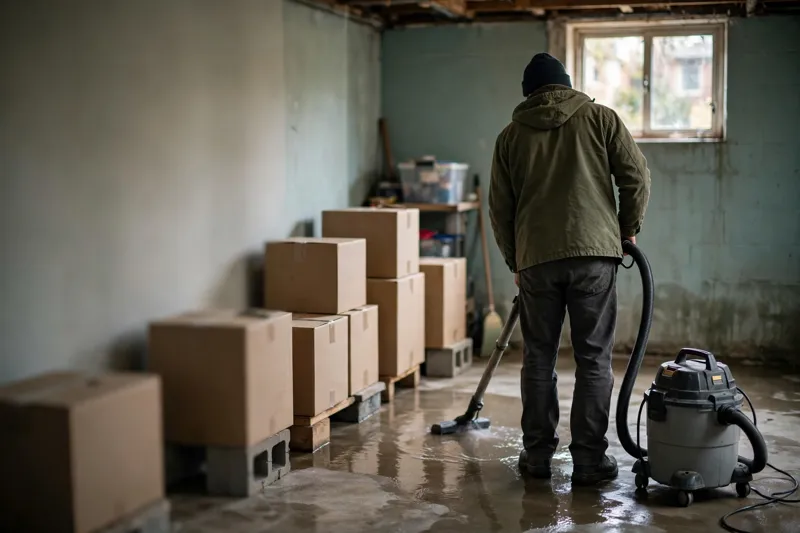
It does not invent a case, it does not print a price, and it does not claim a city fact the city's own site does not carry. Five events are verified, and all five are printed with their limits. On the 11th of September 2022, a supercell storm brought two to five inches of rain to the North Side, and one named Ravenswood resident vacuumed about one inch of water from the unfinished east side of his basement.
On the same day, a car was stuck in flood waters on the 4800 block of Ravenswood Avenue, and a woman and two children were rescued, and firefighters stood by at the Ravenswood Avenue and Foster Avenue viaduct, helping drivers out of stalled cars. In August 2018, Irving Park Avenue flooded out at the Ravenswood Metra tracks, with water at least a foot deep in the underpass. In June 2015, a friend's photograph showed the underpass at Ravenswood and Lincoln Park with the water knee deep, and a woman walking through it.
The last two are street and underpass flooding, and this page does not call them basement floods, because they are not. No verified Ravenswood case carries a house-number address, and this page does not print one.
How water removal works in Ravenswood: seven steps
The seven steps below are the job, in order. Print them out if you like, and ask any company you hire to walk them with you. A company that cannot explain the order is a company that does not follow it.
1
Call us first.
Call (773) 570-9869 any time, day or night. Tell us where the water is, how deep it looks, and whether it smells of sewage. We answer 24/7 and talk you through the first hour while a crew is on the way to your Ravenswood home.
2
Stop the water at the source.
Stop the water at the source if you can do it safely. Shut off the main if a supply pipe burst, and stop the appliance if a washer hose or a toilet line let go. Do not enter a flooded room to reach a valve if the power is on.
3
Stay out of the water while the power is on.
Stay out of a flooded basement while the power is on, and do not touch the water with bare hands. Water and live power together can injure you. If the panel is out of reach, call an electrician and wait for the power to be cut at the panel or the pole.
4
Do not touch the water with bare hands.
Do not touch the water with bare hands, and keep children and pets out of it. Water that came through a floor drain may carry sewage, and water from a supply pipe may still hide broken glass, sharp debris and live wiring under the surface.
5
Lift what you can save and photograph everything.
Lift what you can save to higher ground, and photograph the water line and every damaged item before you move it. Take a wide shot of the room first, then close-ups of the water line, the damage and the serial plates. Your adjuster needs the pictures.
6
Call 311 if the sewer or street flooded.
Call 311 if the sewer or street flooded. The city logs the report, and the crew can tell a main break from a private drain break. Reporting it helps your street, and it helps the next storm too. From outside Chicago, the CHI311 site footer lists 312-744-5000.
7
Let the drying run until the readings say dry.
Let the drying run until the readings say dry. A wall can look dry and still hold water behind the paint, and a floor can feel dry and still feed mold underneath. We keep a drying log with moisture readings, and we stop only when the readings hold for two days.
Six ways water gets into a Ravenswood building
Water damage restoration Ravenswood starts with the entry point. Most Ravenswood floods come through the same few openings, and knowing which one it was is the difference between a repair that holds and a flood that comes back.
1. Sewer surcharge through the floor drain
The most common Ravenswood entry point. In a hard storm the combined sewer surcharges, and the water comes back up through the lowest opening in the building, which is usually the floor drain in the basement or the garden unit. A garden unit sits below grade, so the surcharge reaches it first, and the water has nowhere to go. A backwater valve on the building drain stops it, and an overhead sewer makes it impossible, because the fixtures drain above the sewer line.
2. Sump pump failure
The usual causes are a power cut, a frozen or blocked discharge line, a stuck float switch, and a pump that is too small for the water coming in. A pump that runs constantly is close to failing, and a pump that never runs may be stuck. Test it every spring and fall, and keep a battery backup ready, because a storm that floods a basement is the same storm that cuts the power.
3. Frozen discharge line
The sump pump can be working perfectly and the water still has nowhere to go, because the discharge line froze where it leaves the house. The pump runs, the line is blocked, and the water comes back into the basement. The fix is a discharge line that runs downhill, stays buried below the frost line, and ends far enough from the foundation that the water does not run straight back in.
4. Burst supply line
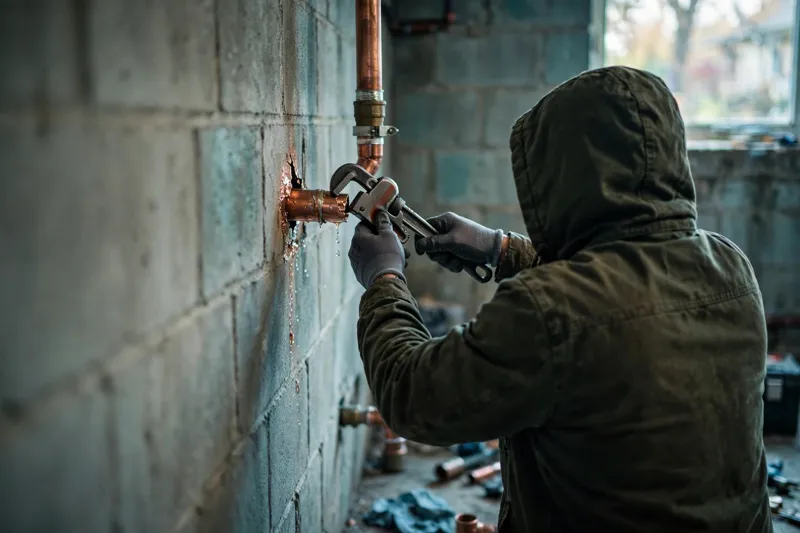
Supply lines in the older Ravenswood stock fail after the first hard freeze. A line that froze and split can pour water into a wall, a ceiling and a floor before anyone notices, because the split is hidden inside the building. The insurer pays for the water damage the burst caused, not for the pipe itself, so report a burst the day you find it. No verified Ravenswood burst-pipe case carries an address, and this page does not invent one.
5. Street and underpass water running toward the foundation
Ravenswood is a neighbourhood of viaducts, and the viaducts are low points where rain collects. When the street floods, the water runs toward the lowest ground, and the lowest ground is the foundation of the building beside it. The city deliberately lets streets flood as temporary reservoirs, so a flooded street is not a failure of the system, it is the system working as designed. The water that pools on the street finds the foundation crack, the window well and the stairwell, and the building that sits beside a flooded underpass needs the grading, the gutters and the sump pump to hold.
6. Cracked foundation and old clay lateral
A foundation crack lets groundwater in during a long rain, and an old clay sewer lateral lets tree roots in over decades, until the lateral blocks and the water comes back up through the lowest fixture. Ask a licensed sewer contractor to televise an old clay lateral before the next storm, because a camera finds the root, the break and the belly before the water does.
Streets, blocks and buildings: where the water goes
Lincoln Avenue is the diagonal spine of Ravenswood, running northwest from the Loop side of the neighbourhood up through the Lincoln Avenue corridor, past Winnemac Park, past Sulzer Regional Library at Lincoln and Foster, and on toward the northern edge. Ravenswood Avenue is the north-to-south corridor that gives the neighbourhood its name, carrying the Metra Union Pacific North line and the Malt Row breweries, with the Ravenswood station on it and the viaducts under it.
Foster Avenue, 5200 North, is the northern bound, where the Ravenswood Avenue and Foster Avenue viaduct flooded on the 11th of September 2022. Montrose Avenue, 4400 North, is the southern bound, once called Sulzer Street, where Ravenswood Elementary School was founded in 1873 as the Sulzer Street School. Clark Street, 1600 West, is the eastern bound. Damen Avenue, 2000 West, and Kedzie Avenue, 3200 West, mark the western side, with the Lincoln Square ground beyond them. Berteau Avenue, 4200 North, and Ainslie Avenue, 5300 North, are the original southern and northern plat lines from 1868.
Winnemac Avenue, 5100 North, carries Winnemac Park, and Lawrence Avenue, 4800 North, Wilson Avenue, 4600 North, Sunnyside Avenue, 4500 North, and Argyle Avenue, 5000 North, run east to west across the neighbourhood. Irving Park Road, 4000 North, crosses the Metra tracks at the spot that flooded out in August 2018. A building on any of these streets can flood, and the crew comes to all of them, from the shops on Lincoln Avenue to the garden units beside the tracks, day and night.
Sump pumps in Ravenswood: what to check before the next storm
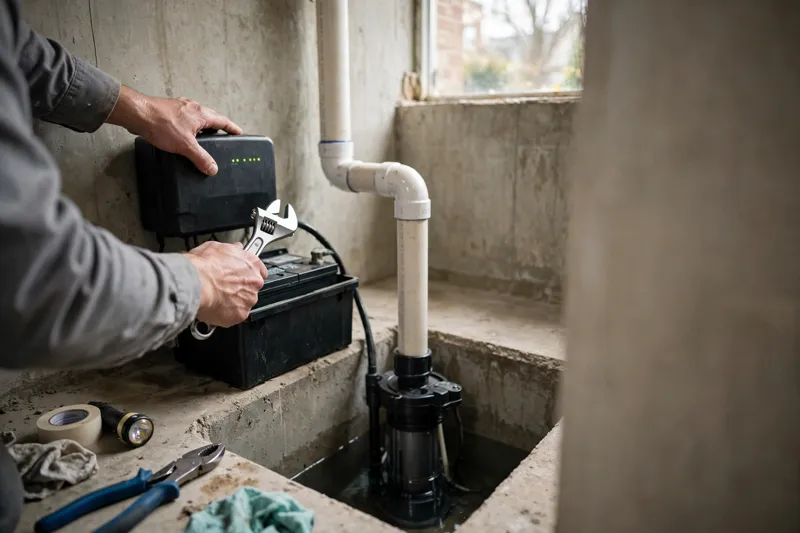
The sump pump is the one piece of equipment that decides whether a Ravenswood basement stays dry in a hard storm, and it fails in the same four ways every time. First, the power goes out, and the pump stops with it, so keep a battery backup ready and test it. Second, the discharge line freezes where it leaves the house, so the pump runs and the water has nowhere to go. Third, the float switch sticks, so the pump never starts, or it starts and never stops.
Fourth, the pump is too small for the water coming in, so it runs constantly and burns out in the middle of the storm. Test the pump every spring and fall by pouring water into the pit and watching it start, run and stop. Listen for a pump that runs constantly, because that is a pump close to failing. Check the discharge line for a blockage and for a downhill run that ends far from the foundation.
And if the pump is more than ten years old, ask whether it is sized for the water your building takes in, because a garden unit below grade takes in more water than a house on high ground, and a building beside a flooded underpass takes in more than either.
The three kinds of water, and why the kind decides the job
Water damage restoration Ravenswood asks one question first: what kind of water is it. Clean water comes from a supply pipe, a broken washer hose or a rain leak through a window, and it is the simplest loss to dry. Grey water comes from a dishwasher, a washing machine or a shower drain, and it carries enough contamination that the wet material has to be cleaned, not just dried.
Black water comes from a sewer backup or a flood that picked up soil, chemicals and sewage on its way in, and it is the loss that must be handled with the most care. Black water means the wet material comes out, the surfaces are cleaned and sanitised, and no one tries to dry it themselves. The kind of water decides the extraction, the cleaning, the drying time and the repair, which is why the first visit always starts with finding the source and naming the kind.
Combined sewers, and what that means for your basement
The City of Chicago has a combined sewer system, which means one pipe carries both sewage and stormwater. In a hard storm the combined sewer can surcharge, and the water comes back up through the lowest opening in the building, which is usually the floor drain. That is why a Ravenswood basement can flood on a day when no pipe broke and no appliance failed: the sewer itself pushed the water back in.
The city serves about three point seven million people through its combined sewers, and it deliberately lets streets flood as temporary reservoirs, so a flooded street beside your building is the system holding water where it can do the least harm. The city installed restrictor valves in the inlets of catch basins in areas that have experienced flooding, to slow the flow into the main sewer.
The valve, called the Rainblocker, is a horizontal six-inch diameter stainless steel pipe, eleven inches long, fitted into the inlet of a catch basin, as the city's drawing shows it. The caption on the city's image says close to two hundred thousand inlet restrictor valves were installed, at a rate of ninety to one hundred and twenty per day, and the programme is finished, under budget and a year ahead of schedule.
The figure is text burned into the image file, not body text and not alt text, and this page prints it as the caption's figure. The programme began in 1999. A backwater valve on the building drain does the same job for one building, and an overhead sewer does it better, because the fixtures drain above the sewer line and the water cannot come back up through them.
What the record actually shows about Ravenswood flooding
This page is longer than both, because it carries the city layer, the insurance layer, the renter layer and the evidence layer that neither of them carries. The evidence layer is short, and it stays short, because only five events are verified, and all five are printed with their limits.
The September 2022 supercell
On the 11th of September 2022, a supercell storm brought two to five inches of rain to the North Side, and the water came into basements, underpasses and streets across Ravenswood. One named Ravenswood resident, John Carruthers, spent much of his Sunday morning vacuuming about one inch of water from the unfinished east side of his basement, while the other side, where the family watches television, stayed dry, and he hoped the moisture would not soak through the flooring.
The case was first reported by NatureWorldNews, citing NBC Chicago, and it was re-confirmed in the Chicago Sun-Times on the 12th of September 2022, in the report by Mohammad Samra and Emmanuel Camarillo. The same storm left a car stuck in flood waters on the 4800 block of Ravenswood Avenue, and a woman and two children were rescued from it, according to the National Weather Service Storm Data for September 2022. The 4800 block is the Lawrence Avenue crossing, inside Ravenswood.
The same storm flooded the underpasses at the 1800 block of West Foster Avenue and at Foster Avenue and North Ravenswood Avenue, and firefighters stood by at the Ravenswood Avenue and Foster Avenue viaduct, helping drivers out of stalled cars, according to Fox Weather on the 12th of September 2022 and the Chicago Fire Department in the Sun-Times. The storm was the heaviest rain in more than two years. Citywide, seven viaducts flooded, and one thousand five hundred and seventy-eight reports of water in basements and three hundred and twenty-seven in streets came in.
Those counts are citywide totals, not Ravenswood counts, and this page does not print them as Ravenswood counts. The National Weather Service recorded about two thousand basements flooded in the north-side swath, and Borderless Magazine recorded about two thousand five hundred basement-flood reports across five neighbourhoods together: Portage Park, Edgewater, Rogers Park, West Ridge and Albany Park. Ravenswood is not in the Borderless five, so the two thousand five hundred figure does not cover Ravenswood, and this page does not print it as a Ravenswood count.
The 11th of September 2022 falls in no Disaster Relief Assistance Program window, so no DRAP help applies to it. What the storm proves is that a Ravenswood basement can flood in hours, that a Ravenswood underpass can fill in minutes, and that the flood does not respect a neighbourhood line.
The underpass floods: 2018 and 2015
Two more verified Ravenswood floods come from residents, not from the news, and both are street and underpass flooding, not basement flooding. One commenter wrote that the water was at least a foot deep in the underpass, and another wrote that there was also a stall on Berteau, meaning the Berteau Avenue underpass.
On the 16th of June 2015, another resident posted flood pictures in the city, and a friend had posted a picture of the underpass at Ravenswood and Lincoln Park where the water was knee deep, and she walked through it. Both posts are real, both are Ravenswood, and both are about the street, not the basement. This page prints them as what they are: proof that the Ravenswood underpasses flood, and proof that a driver who enters a flooded underpass is driving into water deeper than it looks.
The July 2011 record storm, as the vendor tells it
The storm is a verified Chicago record: six point eight six inches of rain fell on Saturday the 23rd of July 2011 at O'Hare, the all-time daily record, and July 2011 brought eleven point one five inches in total, the wettest July on record, according to the National Weather Service. But no Ravenswood-specific news source was found for the July 2011 flooding, so this page prints the July 2011 flooding as the vendor's account of the record storm, never as a verified named Ravenswood case. A page that prints a vendor's account as a verified case misleads the homeowner who reads it.
What residents ask, in their own words
Residents across the North Side ask the same questions after a flood, and the questions found in this battery are real user questions, not invented ones. How to clean a flooded basement. Cleaning out a flooded basement. What to do with a flooded car. How much it costs to drain a flooded basement. Tips to prepare for flooding. The 2015 Ravenswood flood-pictures question is the only one that names Ravenswood, and it asks for a picture of the underpass flood, not for a basement answer.
The questions are the work: this page answers them with the drying, the extraction, the insurance and the city layer that the questions are really asking for.
What the record does not show
No verified Ravenswood case carries a house-number address. No verified Ravenswood case names a burst pipe at an address. No verified Ravenswood case names a resident who fixed a backflow with a named contractor at a named address. No video names a Ravenswood street address, cross-streets or resident for a basement flood or a burst pipe.
A page that prints an unverified case as a fact is worse than a page that says nothing, because the homeowner who reads it cannot check it, and the adjuster who reads it will not trust it.
Water removal: how the water comes out
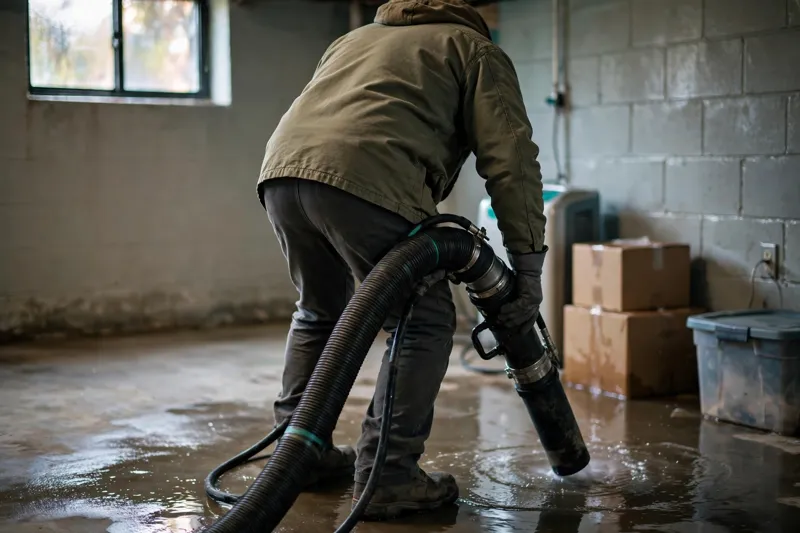
Water damage restoration Ravenswood starts with the source. We find where the water came from, and we stop it if it can be stopped, because a pump that runs while the water keeps coming in is a pump that never finishes. Then the standing water comes out with pumps and vacuums, from the lowest point first, because the lowest point is where the water collects. Then the wet material comes out: the carpet pad that cannot be saved, the drywall that wicked the water up, the insulation that soaked it through.
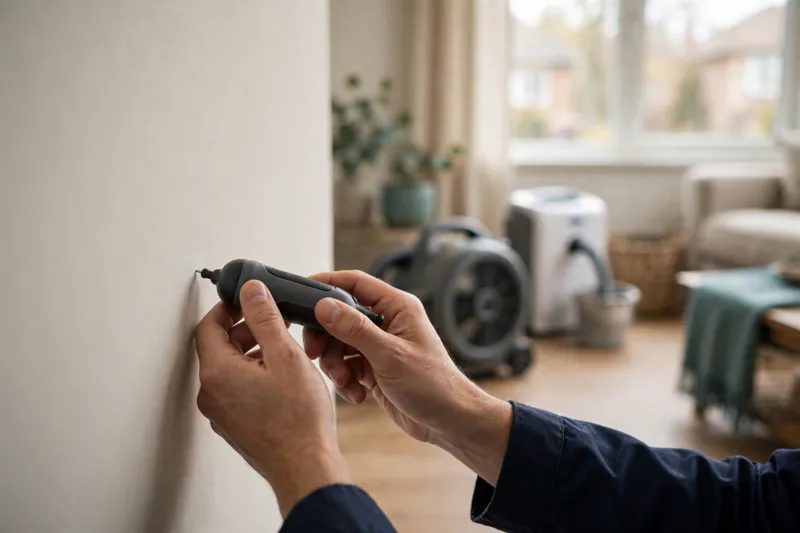
Then the drying equipment goes in: air movers to push dry air across the wet surfaces, and dehumidifiers to pull the moisture out of the air. The drying runs until the moisture readings hold for two days, and the readings go into a drying log you can see. The whole job is measured, because a job that is not measured is a job that is guessed at.
Flood cleanup: what happens after the water is out
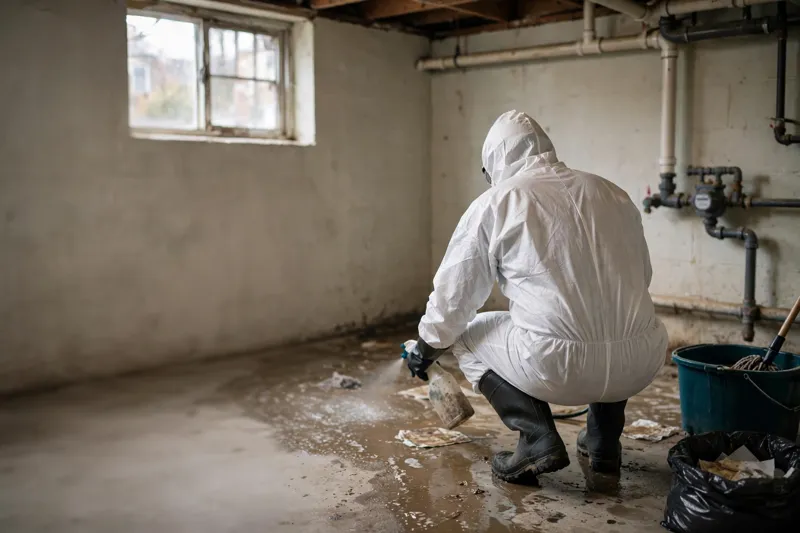
Water damage restoration Ravenswood continues after the standing water is gone, and it is the work that decides whether the house smells, stains or grows mold. The wet material that cannot be saved comes out first, because wet drywall, wet insulation and wet carpet pad do not dry back to clean. The surfaces that stay are cleaned and sanitised, and the cleaning depends on the kind of water: clean water needs a clean, grey water needs a clean and a sanitise, and black water needs a full clean and sanitise with the wet material removed.
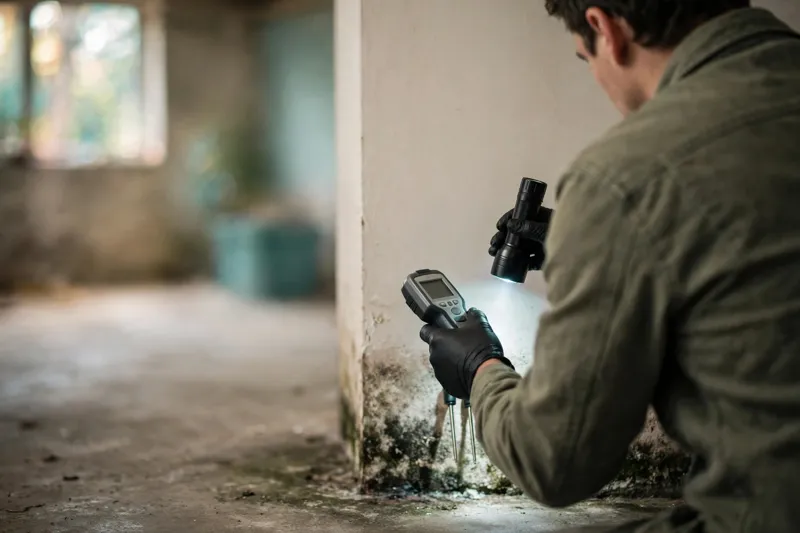
The air is dried with dehumidifiers, and the drying is checked with moisture meters, not with a hand on the wall. A wall can look dry and still hold water behind the paint, and a floor can feel dry and still feed mold underneath. The cleanup is finished when the readings say dry, and the readings are written down.
Structural drying: how a Ravenswood building dries
Water damage restoration Ravenswood drying is the slow part of the job, and it is the part that cannot be rushed. Air movers push dry air across the wet walls, floors and framing, and dehumidifiers pull the moisture out of the air and send it down the drain. The drying takes three to five days on a clean-water loss in one room, and longer on a loss that covers several rooms, on a loss that sat for days, or on a loss that soaked the framing.
The moisture is measured with a meter, and the readings are written into a drying log, and the drying runs until the readings hold for two days. Air conditioning helps the drying, because it pulls moisture out of the air; heat does not, because heat without dehumidification just moves the moisture around. Do not turn the heat up and close the windows, because that is how a wet wall grows mold. Ventilate, run the dehumidifier, and let the readings decide when the drying is done.
The first 24 hours: what happens on day one
In water damage restoration Ravenswood, the first 24 hours after a flood are the hours that decide the repair. In the first hour, stop the water if you can do it safely, call us, stay out of the water while the power is on, lift what you can save, and photograph everything. The call you make in the first hour decides whether you are drying a room or rebuilding it.
In the next few hours, the crew arrives, finds the source, measures how far the water spread with a moisture meter in the walls and floors, and starts the extraction. The standing water comes out first, from the lowest point, because the lowest point is where the water collects, and the wet material that cannot be saved comes out with it. By the end of the first day, the air movers and the dehumidifiers are running, the moisture readings are written down, and the drying log is started.
The first night is the hardest, because the equipment runs all night and the house is loud, but the equipment must run, because drying that stops at night is drying that lets mold start. On the second day, the readings are checked again, and the drying is adjusted: an air mover moved to a wet corner, a dehumidifier emptied, a wall opened if the meter says the water went behind it. By the third day, the readings should be falling, and the repair can be planned.
Call your insurer in the first 24 hours too, because the insurer needs to know the loss happened, and the adjuster needs to see the damage before the repair starts. Call 311 in the first 24 hours if the sewer or the street flooded, because the city logs the report and the crew can tell a main break from a private drain break. A loss found in an hour dries in days. A loss found in a week takes weeks, because the water had time to wick up the drywall and soak the framing.
Call in the first hour, and the first 24 hours work for you. Wait a week, and the first 24 hours work against you. That is the shape of a water damage restoration Ravenswood job done right: fast extraction, logged drying, and no repair started before the readings say dry.
The drying log, explained
The drying log is the one document that proves the job was done, and it is the document you should ask to see. It is a written record of the moisture readings, taken with a meter in the walls, the floors and the framing, on every visit, from the first day to the last. The first reading is the wettest, because the water has just come in, and the readings after that should fall, day by day, as the air movers and the dehumidifiers do their work.
A wall is dry when a moisture meter reads the same as a dry wall in the same house, and the reading holds for two days. A wall can look dry and still hold water behind the paint, so the log is read from the meter, not from the eye. The log also records the equipment: how many air movers, how many dehumidifiers, where they were placed, and when they were moved. It records the temperature and the humidity in the room, because warm dry air dries a wall and cold damp air does not.
It records what came out: the carpet pad, the drywall, the insulation, and why each piece came out. The adjuster reads the log, because the log is the proof that the drying ran until the readings said dry, and the insurer pays on the proof. A company that does not keep a log is a company that is guessing, and a company that guesses will close up a wet wall.
Ask to see the log on the first visit, ask to see it on every visit after that, and keep a copy of it with your photographs and your receipts. The log is your record, and the record is what gets the claim paid.
What the city says about rain readiness
The Metropolitan Water Reclamation District held a Rainstorm Ready Workshop at Roosevelt High School in the summer of 2026, and the message from the workshop is the message this page carries: standard insurance almost never covers rising water or sewer backups, and a rider is needed. The district serves about three point seven million people through combined sewers, and it has distributed about one hundred and seventy-five thousand rain barrels in a decade.
The city deliberately lets streets flood as temporary reservoirs, so a flooded street beside your building is the system holding water where it can do the least harm. Do not drive through a flooded street, because the water pushes a wave toward the garden apartments beside it, and a garden unit beside a flooded street takes the wave first.
The workshop is the city's own voice, and it agrees with the vendor voice in this field: the back-check valve, the sump pump and the battery backup are the fixes that hold, and the insurance rider is the paper that pays.
The North Branch, and the story that is not Ravenswood
The North Branch of the Chicago River runs along the western side of Ravenswood, and it carries a story that looks like a Ravenswood story and is not one. In January 2019, CBS 2 reported that sewage from some Ravenswood Manor properties was flushing directly into the North Branch, and a business owner named Mark Aistrope had bought a building he hoped to revitalise, only to learn from his plumbing contractor that the toilets were connected straight to a drain into the river.
The station tested it with non-toxic food dye, and after several flushes the dye came running out of the drain into the river.
The report said the practice had been going on for about a century, that the Metropolitan Water Reclamation District and the Chicago Department of Water Management had known about the issue since the 1980s and had corrected most properties, but that a few residential buildings and at least this business were left out, and that the property owner would be liable for the cost of the fix, which he said he had not planned for and did not have reserves to pay.
That story is real, and it is a serious story, but it is a Ravenswood Manor story, in the Albany Park community area, not a Ravenswood story. This page names it only to keep it separate. A page that prints it as a Ravenswood case misleads the homeowner who reads it, and the search engine that reads it will not trust the page that does.
What to do, by the kind of water
Kind of water
What it is
What you do
What we do
Clean water
Supply pipe, broken washer hose, rain leak through a window
Stop the source, lift what you can save, photograph everything
Extract, dry to readings, clean, repair
Grey water
Dishwasher, washing machine, shower drain
Stay out of it, do not run the appliance again
Extract, clean and sanitise, dry to readings, remove what cannot be saved
Black water
Sewer backup, flood that picked up soil and sewage
Stay out of it, call us, call 311, do not try to mop it yourself
Extract with care, remove wet material, clean and sanitise, dry to readings
Who pays, by who you are
Who you are
What you own
Who pays for the building
What to do first
Homeowner
The building and its pipes
You, through your policy and your deductible
Call us, photograph everything, call your insurer
Renter
Your belongings, not the building
The landlord, for the building and its pipes
Tell your landlord the day the water appears, photograph your belongings
Condo owner
Your unit, not the common areas
The association, for the common areas and the shared drain
Call us, call the association, photograph the shared areas
Landlord
The building and its pipes
You, through your policy and your deductible
Call us, tell your tenant, photograph everything
City programmes, side by side
Programme
What it does
Does it cover Ravenswood?
Private Sewer Drain Program
City repairs a sewer drain tile broken under the public way, at no cost to the owner
Yes, if the break is under the public way and the conditions are met
Flood Assistance Repair Program
Repairs for basement damage from the 2023 or 2024 floods, on the west side
No - Ravenswood is on the North Side, outside the stated area
Disaster Relief Assistance Program
Rent, mortgage and utility help for three declared disasters, not repair
Not a priority ZIP - the priority ZIPs are 60644, 60651, 60639, 60641 and 60624, and 60640, 60613 and 60625 are not among them
Landlords, tenants and condos: who does what
It depends on who caused the water and what the lease says, and the answer is different for a renter, a condo owner and a landlord. The landlord usually owns the building and its pipes, so the landlord pays for the building repair. A renter pays when the renter caused the damage, such as an overflowing tub left running.
A condo owner owns the unit, and the association owns the common areas, the shared basement and the shared drain, so a flood that starts in the shared laundry is the association's job, and a flood that starts inside one unit is the unit owner's job. The Residential Landlord and Tenant Ordinance is the Chicago law that governs the landlord and tenant relationship, and this page gives general information about it, not legal advice. Read your lease, tell your landlord the day the water appears, and photograph everything.
A renter who reports the water the day it appears has a record; a renter who waits a week has a problem. A landlord who sends a crew the day the water appears has a dry building; a landlord who waits has a mold claim. A garden unit tenant should tell the landlord the day the water appears, because the landlord owns the building and its pipes, and the tenant owns only the belongings.
Through the year in Ravenswood
Spring brings the thaw and the first heavy rain, and the sump pump gets its first real test. Test it before the rain, not during it. Summer brings the supercell, the storm that drops two to five inches in hours, and the combined sewer surcharges. Autumn brings the leaves that block the gutters and the downspouts, and the gutters that are not cleaned in autumn are the gutters that overflow in winter. Winter brings the first hard freeze, and the supply line that splits, and the discharge line that freezes where it leaves the house.
Keep the gutters clean twice a year and run the downspouts at least five feet from the foundation. Grade the soil so it falls away from the house, and keep plants a foot from the foundation. Test the sump pump every spring and fall, and ask a licensed sewer contractor to televise an old clay lateral before the next storm. The year in Ravenswood is a year of water, and the building that is prepared in spring is the building that stays dry in summer.
January is the freeze, and the supply line that splits, and the discharge line that freezes where it leaves the house. March is the thaw, and the ground that was frozen cannot absorb the meltwater, so the water runs toward the foundation and through the cracks. May is the first heavy rain, and the sump pump gets its first real test of the year. July is the supercell, the storm that drops two to five inches in hours, and the combined sewer surcharges, and the floor drain backs up.
September is the storm that comes after the summer, when the ground is dry and hard and the rain runs off instead of soaking in, as it did on the 11th of September 2022. November is the second freeze, and the rain that pools on the streets because the frozen ground cannot absorb it. December is the ice, and the gutters that fill with it, and the ice dams that push the meltwater under the flashing.
Test the sump pump every spring and fall, clean the gutters twice a year, grade the soil so it falls away from the house, and ask a licensed sewer contractor to televise an old clay lateral before the next storm. The year in Ravenswood is a year of water, and the building that is prepared in spring is the building that stays dry in summer.
What water damage restoration costs in Ravenswood
This site prints no prices, so no figure here can mislead you. The cost depends on how much water there is, what kind of water it is, how many rooms got wet, and how long the water sat. A clean-water loss in one room costs less than a black-water loss across a garden unit, and a loss found in an hour costs less than a loss found in a week. We inspect first, then give you a written scope of work with the cost in it before any repair starts.
No page can give you a number, because the payment depends on your policy, your deductible, the cause of the loss, and the limits you bought. The insurer pays the cost of the drying and the repair, less your deductible, and it does not pay for the pipe that failed. Keep every receipt and photograph, because the receipt is your proof and the photograph is your record.
Insurance: what is covered, and what is not
Water damage restoration Ravenswood is usually covered when the damage was sudden and accidental, such as a burst pipe or an appliance failure. A sewer backup is usually covered only if you hold the endorsement for it, so check your policy for the endorsement before the storm, not after it. Flooding from outside needs separate flood insurance, because a standard homeowners policy does not cover flooding from outside at all. A pipe that leaked slowly for months may be classed as wear and tear, so report a burst the day you find it.
The adjuster needs the photographs, the drying log and the receipts, and the adjuster needs them before the repair starts, because a repair that is finished before the adjuster sees it is a repair that cannot be proven. We photograph everything for your claim, we keep the drying log, and we talk to your adjuster. The insurer pays the cost of the drying and the repair, less your deductible, and it does not pay for the pipe that failed.
How to read your policy
Read your policy before the storm, not after it, because the policy you read after the flood is the policy that surprises you. The declarations page is the first page, and it lists what is covered, what the limits are, and what the deductible is. The deductible is the part you pay, and the insurer pays the rest, up to the limit.
The endorsements are the extra cover you bought, and the sewer backup endorsement is the one that matters in Ravenswood, because a sewer backup is usually covered only if you hold the endorsement for it. The exclusions are the part that says what is not covered, and flooding from outside is the exclusion that surprises most homeowners, because a standard homeowners policy does not cover flooding from outside at all, and flooding from outside needs separate flood insurance.
The conditions are the part that says what you must do: report the loss promptly, protect the property from further damage, keep the receipts, and let the adjuster see the damage before the repair starts. Call your agent and ask three questions: does my policy cover a sewer backup, what is my deductible, and what is my limit for water damage. Write the answers down, and keep them with the policy. Photograph the policy, the declarations page and the endorsements, so you have them on your phone when the water comes in.
A policy you have read is a policy you can use, and a policy you have never read is a policy that will surprise you on the worst day of the year.
The Private Sewer Drain Program: the city programme that can help
The Private Sewer Drain Program is the one city programme that can help a Ravenswood homeowner, and it works like this. The city may repair sewer drain tiles from private residences of up to four units, when the tile is broken under the public way, and the city repairs it at no cost to the owner. The owner first hires a licensed sewer contractor to rod and video-inspect the drain, to locate the break. If the break is in the public way, the city repairs it, and the work starts through CHI 311.
The CHI 311 article says that a homeowner could typically expect to pay between five thousand and ten thousand dollars for the repair if the city did not do it, and that the programme took effect on the 1st of January 2002. Both figures were verified in the article in an earlier run on the same day, the 17th of November 2026; the article could not be re-located in the Ravenswood run, so this page prints them as the article's figures, not as a fresh read.
Two things the live city pages do not state are the year the programme is said to apply from, and a seven-to-ten business day contact window, so this page does not print either of them. The maintenance, the televising and the rodding stay the homeowner's, and the programme is for private residences, not for commercial properties.
Backwater valve and overhead sewer: the two fixes that hold
In water damage restoration Ravenswood, the backwater valve and the overhead sewer are the two fixes that hold, and they are the two fixes the vendor voice names again and again. A backwater valve is a one-way valve fitted on the building drain, and it lets the water flow out and stops it from flowing back in. When the combined sewer surcharges, the valve closes, and the water that would have come up through the floor drain stays in the sewer.
The valve is the cheaper fix, and it is the fix that fits a building that cannot be re-plumbed. It needs checking and cleaning, because a valve that is stuck open is a valve that does nothing, and a valve that is stuck closed is a valve that backs the building up. An overhead sewer is the better fix, and it is the fix that makes a backup impossible.
The fixtures drain above the sewer line, into a pit, and a pump lifts the water up and out, so the water cannot come back up through a floor drain, because the fixtures sit above the line it would come back through. The overhead sewer costs more, because the plumbing is re-run and a pump is fitted, and it needs a pump that works when the power is out, so a battery backup goes with it.
The choice between the two depends on the building: a garden unit that floods through the floor drain needs the valve, and a building that floods through the foundation needs the pump, and a building that floods through both needs both.
The vendor voice on the strongest Ravenswood pages names the backwater valve, the standpipe and the overhead sewer as the fix for the garden unit and the basement, and the Metropolitan Water Reclamation District names the back-check valve at its own workshop, and the resident voice agrees, because the street that floods all the time needs a fix that holds.
A flood-control system is not a sump pump, and a sump pump is not a flood-control system: the pump takes the groundwater out, and the valve stops the sewer from coming back in, and a building that floods through the floor drain needs the valve. Ask a licensed sewer contractor to look at the building drain before the next storm, because the contractor can tell you whether the drain will take a valve, whether the building will take an overhead sewer, and what the work will need. The work on the sewer lateral in the public way needs a permit, and only a licensed drainlayer may do it.
311: what to report, and what happens next
Call 311 if the sewer or street flooded. The city logs the report, and the crew can tell a main break from a private drain break. The 311 service operates twenty-four hours a day, seven days a week, three hundred and sixty-five days a year. Report a water-in-basement complaint with the address, whether the water is dirty or clean, where it came from, how many inches there are, and whether it is in a basement, a crawl space or at ground level. The service does not take reports for water coming through windows or doors. From outside Chicago, the CHI 311 site footer lists 312-744-5000. The call volume the city prints differs between its own pages, so this page does not print a call count as settled.
How long the job takes
Water damage restoration Ravenswood takes a few days to several weeks. Drying takes three to five days on a clean-water loss in one room, and repairs take one to two weeks after that. Four things decide the time: how much damage there is, what kind of water it is, what materials got wet, and whether mold is growing. A loss that sat for days takes longer than a loss found in an hour, because the water had time to wick up the drywall and soak the framing.
A black-water loss takes longer than a clean-water loss, because the wet material comes out and the surfaces are cleaned and sanitised. A garden unit takes longer than a house on high ground, because the water sits on the floor and soaks the walls. The drying log is the clock: the drying runs until the readings hold for two days, and the repair starts only when the drying log says dry.
A page that promises a forty-eight hour finish is optimistic, because drying takes several days to two weeks, and a wall that is closed up wet is a wall that grows mold.
Mold: when it grows, and when to call a professional
Mold grows where the water sat, and it grows fast. A wall that stayed wet for days will grow mold behind the paint, and a floor that stayed wet will grow mold underneath. Remediation means removing the mold growth and the wet material it sits on, cleaning what stays, and drying the space so it cannot grow back. It cannot work if the leak keeps feeding the wall, so the source comes first.
Do not try to clean mold yourself when the area is large, when the water was black water, or when anyone in the house has breathing trouble. The Illinois Department of Public Health runs a mold remediation registration under Part 835, and it is operational, with a grace period to the 30th of September 2027. Ask a company for its Illinois Part 835 registration if mold work is involved, and treat a company that says Illinois has no registration as a company that has not read the rule.
This site claims no registration itself, and this page gives consumer guidance only. No page in the Ravenswood field mentions the Illinois registration at all, and that silence is the gap this page fills.
What to do if you find mold
If you find mold, stop and think before you clean it, because the wrong clean makes it worse. Mold grows where the water sat, and it grows behind the paint and under the floor, where you cannot see it. Do not try to clean it yourself when the area is large, when the water was black water, or when anyone in the house has breathing trouble, because the cleaning spreads the spores and the spores spread the growth.
The rule the guidance uses is ten square feet: a patch smaller than ten square feet can be cleaned by a homeowner with gloves, a mask and a damp cloth, and a patch larger than ten square feet needs a professional. Fix the water source first, because remediation cannot work if the leak keeps feeding the wall, and a wall that is cleaned while the leak runs will grow mold again in weeks.
Remediation means removing the mold growth and the wet material it sits on, cleaning what stays, and drying the space so it cannot grow back, and the drying is finished to moisture readings, not to the eye. Ask a company for its Illinois Part 835 registration if mold work is involved, because the Illinois Department of Public Health runs a mold remediation registration under Part 835, and it is operational, with a grace period to the 30th of September 2027.
Treat a company that says Illinois has no registration as a company that has not read the rule. This site claims no registration itself, and this page gives consumer guidance only. If the mold is in a garden unit, tell the landlord as well as us, because the landlord owns the building and its pipes, and the tenant owns only the belongings.
The 50 percent rule, stated correctly
The 50 percent rule is a FEMA rule for homes in a floodplain, and it is the only 50 percent rule that counts. If repairs cost half or more of what the home is worth, the home must be brought up to flood standards. That is the rule, and it is the rule two of the three engines in this battery gave correctly. No other 50 percent rule exists. There is no fifty-fifty insurance split, there is no fifty percent saturation threshold, and there is no fifty percent replacement cost rule from an adjuster.
Two engines in this battery invented rules, and this page does not copy them: one invented a property-insurance fifty-fifty rule, and the other invented a fifty-percent-affected-material threshold, and both are wrong. A page that invents a rule misleads the homeowner who reads it, and the adjuster who reads it will not trust it. If your home is in a floodplain, ask your insurer and the city whether the rule applies to your repair, and get the answer in writing.
Pipe bursting: two different things, one confusing name
Pipe bursting means two different things, and pages that mix them up mislead you. Trenchless pipe bursting replaces a broken sewer line by pulling a new pipe through the old one, with no open trench, and it is the answer the AI engines gave for a broken sewer lateral. A burst pipe is a supply pipe that split open, usually from freezing, and it is the loss that pours water into a wall, a ceiling and a floor before anyone notices.
The two jobs are different, the two costs are different, and the two contractors are often different. This site prints no prices for either job. If your sewer lateral is broken, ask about trenchless replacement. If your supply pipe burst, stop the water, call us, and report it the day you find it.
Sewer permits and drainlayer licences: what the city requires
In water damage restoration Ravenswood, only a licensed drainlayer may work on a sewer in Chicago. A repair in kind that extends no more than twenty feet needs no new-sewer compliance, but a repair that extends more than twenty feet must comply with the new-sewer requirements. The Sewer Permits page prints no fee amounts, only that the owner pays the applicable permit fee within thirty days. The Department of Buildings can be reached at 312-744-3155, and sewer permits at.
Inspections are at 312-744-5503 for lines up to six inches, and 312-744-5502 for lines eight inches and over. The drainlayer licence fee for calendar year 2026 is one hundred and fifty dollars, confirmed in the city's notice of the 2nd of January 2026, effective the 6th of January 2026, and the notice does not list the licence classes, so this page does not print them from the 2026 notice.
The 2020 form, the older form, lists a fee of one hundred and twenty-five dollars, a renewal late fee of seventy-five dollars, classes A, B1, B2 and C, a fifty thousand dollar bond and a three hundred thousand dollar insurance minimum, and it is mailed to the Department of Buildings, 121 North LaSalle Street, Room 906, attention Silvia Martinez. The two years are never merged on this page. The performance bond is not on the Sewer Permits page; it is in the 2020 form only.
The drainlayer page itself lists a fee of one hundred and twenty-five dollars, and the 2026 application form is still unlinked plain text, so it cannot be downloaded.
Stormwater rules: the fees the city actually charges
The city's stormwater rules, chapter 11-18 of the Municipal Code, set the fees a plan must pay. The plan-review fees are one thousand dollars for a plan under fifty thousand square feet, and three thousand dollars for a plan of fifty thousand square feet or more, with a variance adding fifty percent. The amendment fee is five hundred dollars per submission, under section 11-18-080(c), verified on page 63 of the 2026 Stormwater Regulations.
The fine for failing to notify a change of ownership within sixty days is five hundred dollars, under section 11-18-070(b), and it is a separate five hundred dollars from the amendment fee. A three hundred and fifty dollar amendment fee does not appear in the city's documents, and this page does not print it as a city fee.
Tap water: where Ravenswood water comes from
The water that comes out of a Ravenswood tap starts in Lake Michigan. The Department of Water Management purifies it at the James W. Jardine Water Purification Plant, near Navy Pier, ranked first among the world's largest conventional water treatment plants, and at the South Water Purification Plant, on Rainbow Beach in South Chicago. The department's Administrative Offices are at the Jardine plant, 1000 East Ohio Street, Chicago, Illinois 60611, by appointment only, and the department does not print a headquarters street address on its home page, so this page does not print one either.
All water-service requests are handled through 311. If your tap water smells, looks cloudy or runs brown after a main break, run the cold tap for a few minutes and call 311 if it does not clear.
The flood record, and what it does not prove
The record shows five things about Ravenswood and water. It shows that a supercell storm on the 11th of September 2022 brought two to five inches of rain in hours, and one named Ravenswood resident vacuumed about one inch of water from his basement, and a car was stuck in flood waters on the 4800 block of Ravenswood Avenue, and firefighters stood by at the Ravenswood Avenue and Foster Avenue viaduct.
It shows that in August 2018, Irving Park Avenue flooded out at the Ravenswood Metra tracks, with water at least a foot deep in the underpass. It shows that in June 2015, a friend's photograph showed the underpass at Ravenswood and Lincoln Park with the water knee deep, and a woman walking through it. It shows that a plumbing page says record rainfall flooded basements across Ravenswood in July 2011, when six point eight six inches fell in one day at O'Hare, but no Ravenswood-specific news source was found for it.
And it shows that no November 2026 storm produced a Ravenswood-specific flood report. What it does not show is a Ravenswood case with a house-number address, a Ravenswood burst pipe at a named address, or a Ravenswood resident who fixed a backflow with a named contractor at a named address.
Storefronts and small businesses on Lincoln Avenue and Ravenswood
Water damage restoration Ravenswood for a storefront on Lincoln Avenue or Ravenswood Avenue is a different job from a flooded basement, because the water stops the trading day. The shop floor is wet, the stock is wet, the till is wet, and every hour the shop stays closed is an hour of lost trade. The job is the same order: stop the water, extract it, dry the floor and the walls to moisture readings, clean what can be cleaned, and repair what cannot be saved.
The difference is the clock: a shop needs the drying to start the same day, and the drying log to be ready for the insurer the same week. We photograph the stock, the fixtures and the water line, because the insurer needs the photographs before the repair starts, and a repair that is finished before the adjuster sees it is a repair that cannot be proven.
Malt Row, the craft brewing district along Ravenswood Avenue, carries the same risk, and the same order applies to it, and to the shops on Foster Avenue, Montrose Avenue and Damen Avenue.
Small apartment buildings: the shared-drain problem
Water damage restoration Ravenswood meets its hardest job in the small apartment building, because one drain serves every unit in it, and one flood wets them all. The floor drain in the basement backs up before the storage areas do, and one surcharge can wet every unit that shares the drain. The fix takes the building, not one unit: a backwater valve on the building drain, an overhead sewer if the building can take one, and a sump pump sized for the water the whole building takes in.
The Private Sewer Drain Program covers private residences of up to four units, so a small building of two, three or four units can qualify if the break is under the public way. A larger building cannot use the programme, and the association has to fund the fix itself. Call us and call the association, because a flood in a shared basement is a building job, and a building job needs the building's decision makers in the room.
Ravenswood by building type
The brick two-flat is the Ravenswood building that floods through the floor drain, and it floods through the floor drain because the basement sits low and the combined sewer surcharges in a hard storm. The owner lives in one unit and rents the other, or rents both, and the flood is a shared problem with a shared answer. The owner owns the building and its pipes, so the owner pays for the building repair, and the tenant owns the belongings, so the tenant claims the belongings.
The Private Sewer Drain Program covers private residences of up to four units, so a two-flat, a three-flat and a four-flat can qualify if the break is under the public way. A two-flat that floods through the floor drain needs the backwater valve, and a two-flat that floods through the foundation needs the sump pump, and both need the lateral televised before the next storm. The owner should call us, tell the tenant, and photograph everything, because the photographs are the record and the record is what gets the claim paid.
The garden unit sits below grade, and it sits lowest, so a sewer surcharge reaches it first. The windows are small and high, the light is low, and the water that comes in has nowhere to go, because the unit sits below the street and below the sewer line. A garden unit that floods needs the extraction to start the same day, because the water sits on the floor and soaks the walls, and a garden unit that stays wet for days grows mold behind the paint.
The fixes that hold are the backwater valve, the sump pump, and the grading that falls away from the house, because the water that runs toward the foundation is the water that comes through it. A garden unit tenant should tell the landlord the day the water appears, because the landlord owns the building and its pipes, and the tenant owns only the belongings.
The Metropolitan Water Reclamation District names the garden apartment in its own guidance, because the water that is pushed through a flooded street moves like a wave toward the garden apartments beside it.
The vintage walk-up is the Ravenswood building with the oldest pipes, and the oldest pipes are the ones that fail. Supply lines in the older stock fail after the first hard freeze, pouring water into a wall, a ceiling and a floor before anyone notices. Cast-iron drains corrode from the inside, and old clay sewer laterals let tree roots in over decades, until the lateral blocks and the water comes back up through the lowest fixture.
A vintage walk-up that has never had its lateral televised should have it televised before the next storm, because a camera finds the root, the break and the belly before the water does. The plaster walls in a vintage walk-up hold water longer than drywall, and the hardwood floors cup and buckle when they stay wet, so the drying takes longer and the readings matter more.
The single-family frame house is the Ravenswood building with the simplest answer, because one owner owns the building and its pipes, and one owner decides the fix. The house that floods through the floor drain needs the backwater valve, and the house that floods through the foundation needs the sump pump, and the house that floods through both needs both. The owner should call us, photograph everything, and call the insurer in the first 24 hours, because the insurer needs to know the loss happened, and the adjuster needs to see the damage before the repair starts. The Private Sewer Drain Program covers a single-family house if the break is under the public way, and the city repairs it at no cost to the owner.
The small apartment building along Lincoln Avenue or Ravenswood Avenue is the Ravenswood building where the shop below and the flats above share one drain, one basement and one flood. The shop needs the drying to start the same day, because the water stops the trading day, and the flats need the drying to run until the readings say dry, because the water that sits in the basement soaks the walls of every unit above it. The owner should call us, tell every tenant, and photograph the shop, the basement and every unit, because the photographs are the record and the record is what gets the claim paid. The fix takes the building, not one unit, and the building's decision makers need to be in the room.
How to choose a company
Ask for three things before you hire anyone, and hire no one who cannot give you all three. First, a drying log with moisture readings, because the log is the proof that the drying ran until the readings said dry, and a company that does not keep a log is a company that is guessing.
Second, a written scope of work, because the scope lists the extraction, the drying, the cleaning and the repair, in order, and it lists what comes out and what stays, and a company that will not write the scope down is a company that will change the price later. Third, proof of Illinois Part 835 registration if mold work is involved, because the Illinois Department of Public Health runs a mold remediation registration under Part 835, and a company that says Illinois has no registration has not read the rule.
A good company answers 24/7, arrives fast, photographs everything, and talks to your adjuster. A good company finds the source before it starts the drying, because a crew that dries the room without finding the source will be back after the next storm. Avoid any company that asks you to sign on the spot, because a signature taken in the first hour is a signature taken under pressure, and a company that needs the signature today is a company that does not trust its own work to speak for it.
Avoid any company that quotes a price before the inspection, because no page and no company can give you a number before the inspection, and a number given before the inspection is a number made up. Ask the company how many Ravenswood jobs it has done, and ask for the drying log from the last one, because the log is the proof and the proof is what matters.
The adjuster: what they need, and when they need it
The adjuster needs three things, and they need them before the repair starts. First, the photographs: a wide shot of the room, close-ups of the water line, the damage and the serial plates, taken before anything is moved. Second, the drying log: the moisture readings, written down, showing the drying ran until the readings held for two days. Third, the receipts: every receipt for the extraction, the drying, the cleaning and the repair.
A repair that is finished before the adjuster sees it is a repair that cannot be proven, and an insurer that cannot see the damage will not pay for it. We photograph everything for your claim, we keep the drying log, and we talk to your adjuster. The insurer pays the cost of the drying and the repair, less your deductible, and it does not pay for the pipe that failed. Report a burst the day you find it, because a pipe that leaked slowly for months may be classed as wear and tear.
How a quote works
A quote starts with an inspection, not with a number. We find the water source, measure how far the water spread, take moisture readings in the walls and floors, and photograph everything. Then we give you a written scope of work, with the cost in it, before any repair starts. The scope lists the extraction, the drying, the cleaning and the repair, in order, and it lists what comes out and what stays.
No page can give you a number before the inspection, because the cost depends on how much water there is, what kind of water it is, how many rooms got wet, and how long the water sat. This site prints no prices, so no figure here can mislead you. Ask for three things before you hire anyone: a drying log with moisture readings, a written scope of work, and proof of Illinois Part 835 registration if mold work is involved. Avoid any company that asks you to sign on the spot.
Repair checklist: what comes out, what stays, what goes back
Water damage restoration Ravenswood repair starts only when the drying log says dry, and it runs in order. First, the wet material that cannot be saved comes out: the carpet pad that soaked through, the drywall that wicked the water up, the insulation that held it. Second, the surfaces that stay are cleaned and sanitised, and the cleaning depends on the kind of water. Third, the framing dries to the readings, and the readings are written down. Fourth, the drywall, flooring and trim go back, and the rooms return to how they were.
Fifth, the source is fixed, so the next storm does not undo the repair: the backwater valve, the overhead sewer, the sump pump, the discharge line, the lateral that was televised and repaired. A crew that starts repairs before the drying log says dry is a crew that will be back in six months, cutting out the same wall again. A crew that skips the source and dries the room is a crew that will be back after the next storm. Ask any company you hire to walk the checklist with you, and ask to see the drying log before the repair starts.
Winter: frozen discharge lines, burst pipes and ice dams
In water damage restoration Ravenswood, winter is the season that breaks pipes. The first hard freeze splits a supply line inside a wall, and the water pours into the ceiling and the floor before anyone notices. The sump pump discharge line freezes where it leaves the house, and the pump runs while the water has nowhere to go, so the water comes back into the basement. The gutters fill with ice, the ice dams the roof, and the meltwater finds the weak flashing and the weak joint.
Keep the heat on in every room, even the rooms you do not use, and open the cabinet doors under the sinks on the coldest nights, so the warm air reaches the pipes. Keep the discharge line running downhill, buried below the frost line, and ending far enough from the foundation that the water does not run straight back in. Clean the gutters before the first freeze, because a gutter full of leaves is a gutter full of ice.
And if a pipe bursts, shut off the main, call us, and report it the day you find it, because the insurer pays for the water damage the burst caused, not for the pipe itself.
How to prepare before the next storm
Prepare before the next storm, because the fixes that hold are the fixes that are done before the water comes in. Clean the gutters twice a year, and run the downspouts at least five feet from the foundation, because a gutter that overflows is a gutter that pours water against the wall. Grade the soil so it falls away from the house, and keep plants a foot from the foundation, because the water that runs toward the foundation is the water that comes through it.
Test the sump pump every spring and fall by pouring water into the pit and watching it start, run and stop, and keep a battery backup ready, because a storm that floods a basement is the same storm that cuts the power. Ask a licensed sewer contractor to televise an old clay lateral before the next storm, because a camera finds the root, the break and the belly before the water does.
Ask the same contractor whether the building drain will take a backwater valve, because the valve stops the sewer from coming back up through the floor drain, and whether the building will take an overhead sewer, because the overhead sewer makes a backup impossible. Photograph the basement before the storm, so the adjuster can see what was there before the water came in, and read your policy before the storm, so you know whether the sewer backup endorsement is on it.
Save the 311 number in your phone, and save our number too, because the call you make in the first hour decides whether you are drying a room or rebuilding it. A building that is prepared in spring is a building that stays dry in summer, and a building that is prepared in autumn is a building that stays dry in winter.
Street by street: we come to every street in Ravenswood
The crew comes to every street in Ravenswood, and the call works the same way from any of them. A homeowner on Lincoln Avenue, on Ravenswood Avenue, on Foster Avenue at the northern edge or on Montrose Avenue, 4400 North, at the southern edge, calls the same number, and the crew comes with the same kit.
The streets run east to west across the neighbourhood, Lawrence Avenue, 4800 North, Wilson Avenue, 4600 North, Sunnyside Avenue, 4500 North, Argyle Avenue, 5000 North, and Winnemac Avenue, 5100 North, and the crew knows which of them flood first, because the underpasses under the Metra tracks fill before the side streets do. Damen Avenue, 2000 West, and Kedzie Avenue, 3200 West, mark the western side, and Clark Street, 1600 West, marks the eastern side, and the crew crosses both without a second thought.
Berteau Avenue, 4200 North, and Ainslie Avenue, 5300 North, are the old plat lines, and Irving Park Road, 4000 North, crosses the tracks at the spot that flooded out in August 2018. A building on any of these streets can flood, and the crew comes to all of them, from the shops on Lincoln Avenue to the garden units beside the tracks, day and night.
Call now, and the crew is on the way
Water damage restoration Ravenswood is the full job of getting a Ravenswood home dry and rebuilt after water gets in, and it starts the moment you call. Call (773) 570-9869 any time, day or night, and tell us where the water is. We answer 24/7 and talk you through the first hour while a crew is on the way to your Ravenswood home.
We find the source, we pull the standing water out, we dry the walls, floors and framing to moisture readings, we clean what the water touched, we remove what cannot be saved, and we rebuild what was lost. The drying log is the proof, the photographs are the record, and the written scope is the promise. If the water came from the street or a sewer backup, call 311 as well, so the city knows the sewer backed up on your street.
And if you are a renter, tell your landlord the day the water appears, because the landlord owns the building and its pipes. The next storm is coming, and the building that is prepared in spring is the building that stays dry in summer.
Frequently asked questions about water damage restoration in
What is water damage restoration in Ravenswood?
Water damage restoration work in Ravenswood is the full job of getting a home dry and rebuilt after water gets in. It starts with extraction, then drying to moisture readings, then cleaning, then removing what cannot be saved, then repair. We do it for homes across Ravenswood, Chicago, IL 60640, day and night.
How long does water damage restoration take in Ravenswood?
Water damage restoration in Ravenswood takes a few days to several weeks. Drying takes three to five days on a clean-water loss in one room, and repairs take one to two weeks after that. Four things decide the time: how much damage there is, what kind of water it is, what materials got wet, and whether mold is growing.
What does water damage restoration include in Ravenswood?
Water damage restoration in Ravenswood usually includes five parts, done in order. First, inspection: we find the source and measure how far the water spread. Second, extraction: standing water is removed with pumps and vacuums. Third, drying: air movers and dehumidifiers dry the walls, floors and framing. Fourth, cleaning and sanitizing. Fifth, restoration and repairs.
What should I do first when my basement floods in Ravenswood?
Call us first at (773) 570-9869, then stop the water at the source if you can do it safely. Stay out of a flooded basement while the power is on, and do not touch the water with bare hands. Lift what you can save to higher ground, and photograph the water line and every damaged item before you move it.
Can I stay in my home during water damage restoration?
It depends on how much water there is and where it went. You can usually stay upstairs while we dry a basement, but you should leave if sewage is in the water, if the power is off, or if the damage covers the rooms you sleep and cook in. We tell you on the first visit whether staying is safe.
How do I know if my walls are dry after water damage?
Walls are dry when a moisture meter reads the same as a dry wall in the same house, and the reading holds for two days. A wall can look dry and still hold water behind the paint, so we do not call a wall dry from how it looks. We write the readings into a drying log you can see.
Will my basement flood again?
It can, unless the entry point is found and closed. Ravenswood basements flood through the same few openings: a floor drain during a sewer surcharge, a failed sump pump, a frozen discharge line, or a supply line that split after the first hard freeze. We find the entry point and tell you what will stop the next flood.
What is the 50/50 rule for water damage?
The 50 percent rule is a FEMA rule for homes in a floodplain, and it is the only 50 percent rule that counts. If repairs cost half or more of what the home is worth, the home must be brought up to flood standards. No other 50 percent rule exists, and no engine or page should invent one.
How much does water damage restoration cost in Ravenswood?
This site prints no prices, so no figure here can mislead you. The cost depends on how much water there is, what kind of water it is, how many rooms got wet, and how long the water sat. We inspect first, then give you a written scope of work with the cost in it before any repair starts.
Does homeowners insurance cover water damage restoration in Ravenswood?
It usually does if the damage was sudden and accidental, such as a burst pipe or an appliance failure. A sewer backup is usually covered only if you hold the endorsement for it. Flooding from outside needs separate flood insurance, because a standard homeowners policy does not cover it at all.
How much does insurance pay for water damage?
No page can give you a number, because the payment depends on your policy, your deductible, the cause of the loss, and the limits you bought. The insurer pays the cost of the drying and the repair, less your deductible, and it does not pay for the pipe that failed. Keep every receipt and photograph.
Does homeowners insurance cover burst pipes?
It usually does when the pipe burst suddenly, such as a pipe that froze and split in a cold snap. The insurer pays for the water damage the burst caused, not for the pipe itself. A pipe that leaked slowly for months may be classed as wear and tear, so report a burst the day you find it.
What is pipe bursting, and how much does it cost?
Pipe bursting means two different things, and pages that mix them up mislead you. Trenchless pipe bursting replaces a broken sewer line by pulling a new pipe through the old one, with no open trench. A burst pipe is a supply pipe that split open, usually from freezing. This site prints no prices for either job.
Are renters responsible for water damage in Ravenswood?
It depends on who caused the water and what the lease says. The landlord usually owns the building and its pipes, so the landlord pays for the building repair. A renter pays when the renter caused the damage, such as an overflowing tub left running. Read your lease and tell your landlord the day the water appears.
Can mold be fully remediated?
Yes, when the water source is fixed first and the drying is finished to moisture readings. Remediation means removing the mold growth and the wet material it sits on, cleaning what stays, and drying the space so it cannot grow back. It cannot work if the leak keeps feeding the wall, so the source comes first.
How do I choose a water damage restoration company in Ravenswood?
Ask for three things before you hire anyone: a drying log with moisture readings, a written scope of work, and proof of Illinois Part 835 registration if mold work is involved. A good company answers 24/7, arrives fast, photographs everything, and talks to your adjuster. Avoid any company that asks you to sign on the spot.
What is the difference between water mitigation and water damage restoration?
Mitigation is the emergency response: stop the water, remove it, and dry the building so the damage stops growing. Restoration is the rebuild that follows: replace the drywall, flooring and trim that could not be saved, and return the rooms to how they were. Mitigation comes first, and restoration starts only when the drying log says dry.
Do I need a permit for water damage repair in Ravenswood?
It depends on what is being repaired. Drying and cleaning need no permit. Replacing drywall, flooring and trim usually needs no permit either, but any work on the sewer lateral in the public way needs a permit, and only a licensed drainlayer may do it. We tell you on the first visit whether your repair needs one.
What should I do if sewage backs up into my basement?
Stay out of the water and call us, because sewage carries bacteria that can make you sick. Do not run water in the house, do not flush toilets, and do not try to mop it up yourself. Call 311 too, so the city knows the sewer backed up on your street. We extract it, clean it, and dry the space.
How do I dry a flooded basement myself?
Shut off the power first, and call an electrician if the panel is out of reach. Wait until the water outside is lower than the water in the basement, then pump at the same rate it falls, because pumping too fast can damage the walls. Move items out, ventilate for two days, and run a dehumidifier.
What causes a sump pump to fail?
The usual causes are a power cut, a frozen or blocked discharge line, a stuck float switch, and a pump that is too small for the water coming in. A pump that runs constantly is close to failing, and a pump that never runs may be stuck. Test it every spring and fall, and keep a battery backup ready.
How can I prevent basement flooding in Ravenswood?
Keep the gutters clean twice a year and run the downspouts at least five feet from the foundation. Grade the soil so it falls away from the house, and keep plants a foot from the foundation. Test the sump pump every spring and fall, and ask a licensed sewer contractor to televise an old clay lateral before the next storm.
What happens during the first visit?
We find the water source, measure how far the water spread, and take moisture readings in the walls and floors. We photograph everything for your claim, then we start extraction and set up the drying equipment. Before we leave, we give you a written scope of work and the drying log we will keep.
Do Ravenswood garden units flood differently?
Yes, in one way that matters. A garden unit sits below grade, so a sewer surcharge reaches it first, and the water has nowhere to go, because the unit sits below the street and below the sewer line. A garden unit that floods needs extraction the same day, because standing water soaks the walls and grows mold.
Why does the Ravenswood Avenue viaduct flood when it rains?
The viaduct is a low point under the Metra tracks, and rain runs down to it from the streets around it. In the September 2022 storm, firefighters stood by at the Ravenswood Avenue and Foster Avenue viaduct, helping drivers out of stalled cars. Do not drive through a flooded underpass, because the water is deeper than it looks.
How do I get help now?
Call (773) 570-9869 any time, day or night, and tell us where the water is. We answer 24/7 and talk you through the first hour while a crew is on the way. If the water came from the street or a sewer backup, call 311 as well, so the city knows the sewer backed up on your street.
Sources
City of Chicago, Department of Water Management, home page and What We Do page, read live on chicago.gov, 17 November 2026.
City of Chicago, Department of Water Management, Our Structure page, read live on chicago.gov, 17 November 2026.
City of Chicago, Sewer Permits page and Drainlayer License Changes for 2026 notice, read live on chicago.gov, 17 November 2026.
City of Chicago, Stormwater Management Regulations, March 2026, read live on chicago.gov, 17 November 2026.
City of Chicago, Private Drain Repair programme page, read live on chicago.gov, 17 November 2026.
CHI 311, Private Drain Repair article, 12 December 2018, read live on chicago.gov in an earlier run on 17 November 2026; the article could not be re-located in the Ravenswood run.
City of Chicago, 311 Call Tips page, read live on chicago.gov, 17 November 2026.
City of Chicago, Rainblocker page, read live on chicago.gov, 17 November 2026.
City of Chicago, Flood Assistance Repair Program page, read live on chicago.gov, 17 November 2026.
City of Chicago, Disaster RELIEF Assistance Program page, read live on chicago.gov, 17 November 2026.
Illinois Department of Public Health, Part 835 mold remediation registration, verified live on dph.illinois.gov, 13 November 2026.
Metropolitan Water Reclamation District of Greater Chicago, flood preparedness guidance and back-check valve workshop, read live, 2026.
NatureWorldNews, report on the September 2022 North Side flooding, 13 September 2022, citing NBC Chicago.
Chicago Sun-Times, report on the September 2022 flooding, 12 September 2022, by Samra and Camarillo.
National Weather Service, Storm Data, September 2022, Ravenswood Avenue rescue.
Fox Weather, report on the September 2022 viaduct flooding, 12 September 2022.
Borderless Magazine, report on the September 2022 North Side flooding, 20 December 2022.
CBS Chicago, report on the January 2019 Ravenswood Manor sewage story, 19 January 2019; Ravenswood Manor is in Albany Park, not Ravenswood.
Chicago Transit Authority, Brown Line, Damen and Western stations; Red Line, Berwyn and Bryn Mawr stations; Metra, Union Pacific North, Ravenswood station.
Chicago Public Library, Sulzer Regional Library, Lincoln Avenue and Foster Avenue.
United States Environmental Protection Agency, mold cleanup guidance.