Chicago Water Damage Service, Park Ridge, IL 60068
Fast Water Damage Restoration Park Ridge IL
A flooded basement, a burst pipe, a sump pump that quit in the middle of a storm: call (773) 570-9869 now and a crew comes out the same day. We pull the water out, dry the structure to verified moisture readings, and document everything for your insurance claim.
Call (773) 570-9869What to do first
- We answer 24/7
- Local Chicago team
- Insurance documentation help
- Straight answers, no pressure
Get a Free Park Ridge Water Damage Assessment
Tell us where the water is and where it came from if you know. We will call you back, ask the right questions, and document the loss properly from the first visit.
The short answer
Water damage restoration Park Ridge crews answer 24/7. Call (773) 570-9869 and a crew extracts the water the same day, removes what cannot be saved, dries the structure with air movers and dehumidifiers, and proves the drying with pin moisture readings taken every day until the walls and the floor are back to dry. Sewage water is handled as a health risk, not a cleaning job. Every step is photographed and written down for your insurer. If the flooding came from the street or a city main, call the Sewer and Water Supervisor at (847) 318-5326 during the day, or the after-hours emergency line at (847) 318-5252, so the cause is on the City record.
Your first hour in a flooded Park Ridge home
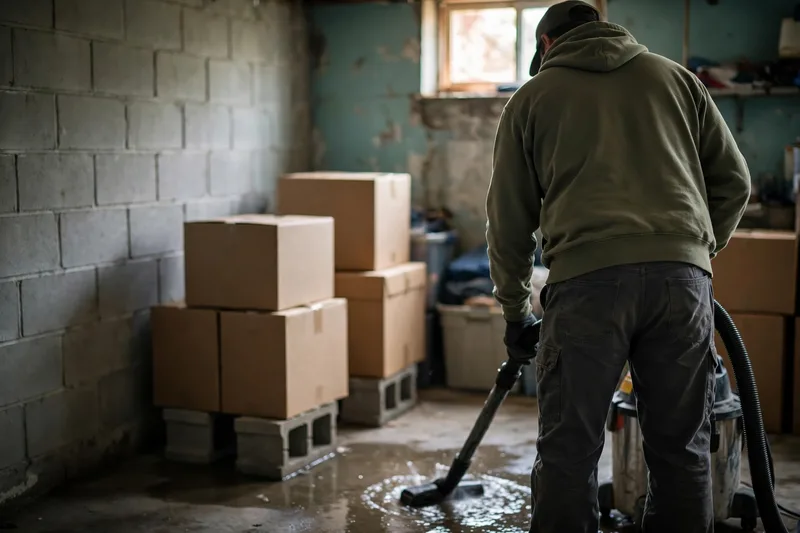
Water damage restoration Park Ridge homes need most often begins in the basement, and it begins late. A pipe bursts overnight. A sump pump fails while the house sleeps. A family comes home from vacation to a finished basement under two inches of water. The water does not wait for morning, and neither should you. The first hour is when the source gets stopped, the photos get taken, and the extraction starts. Every hour after that, the water wicks higher up the drywall, soaks deeper into the insulation, and reaches another room.
Start with the source. If a pipe burst or a fixture is leaking, shut the main water valve. If an appliance supply line failed, turn the appliance off. If water is coming up through a floor drain, stop using water in the house: every flush and every shower adds to the backup. Then make the area safe. Stay out of water you cannot see through, keep everyone away from wet outlets and the breaker panel while standing in water, and leave the house and call the gas utility if you smell gas.
Take photos and a short video before you move anything. Photograph every wet room, every damaged item, and the source of the water, and write down the time you found it. Lift what you can save: boxes, rugs, furniture legs and electronics up off the floor. Do not throw anything away yet, because the adjuster needs to see it first. Then call (773) 570-9869. A crew is sent the same day, and the call itself costs nothing: describe what you see, where the water is, and whether it smells like sewage, and the crew will tell you what to do while you wait.
If the flooding came from the street, report it too. Call the Sewer and Water Supervisor at (847) 318-5326 during the day, or the after-hours emergency line at (847) 318-5252. The City needs to know about main breaks and street flooding, and the report puts the cause on the record, which matters for your claim and for the next storm. The City's Public Works divisions work out of the Public Works Service Center at 400 Busse Highway, and the Engineering Division sits at City Hall, 505 Butler Place.
What water damage restoration includes in Park Ridge, IL
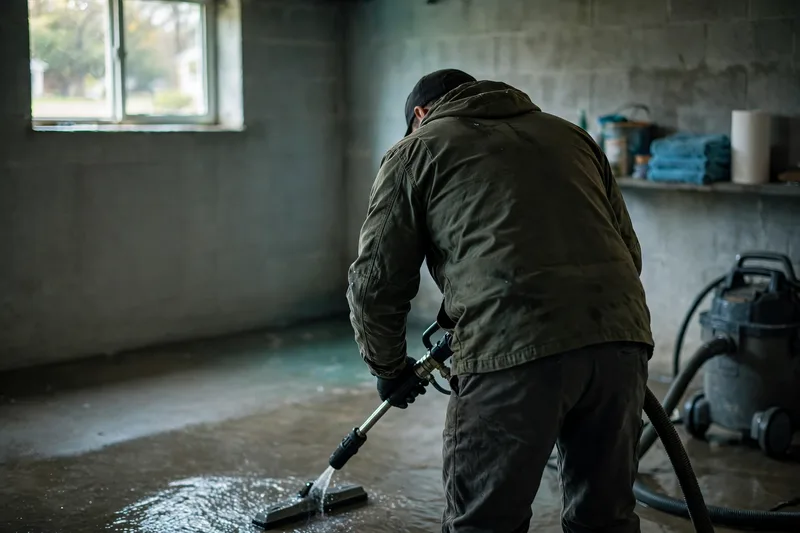
Water damage restoration Park Ridge IL homeowners get from us covers the whole loss, not just the water on the floor. It starts with finding and stopping the source, then extracting the standing water with pumps and wet vacuums. Next comes removing what cannot be saved: wet carpet pad, soaked insulation, swollen drywall and damaged flooring. Then the structure is dried with air movers and dehumidifiers until pin moisture readings show the walls, the floor and the framing are dry. What stays is cleaned and disinfected, and sewage losses get full disinfection. The work is documented at every step, and the home is left dry, clean and ready for rebuild.
The record matters as much as the drying. Every job is photographed, moisture readings are taken daily and written down, and a list is kept of what was removed and why. That record is what your insurer needs to pay the claim, and it is what the next buyer will want to see if you sell the home. A dry basement with no record is a basement the next owner will ask about. A dry basement with a full record, readings and photos, is a basement that was handled properly.
The work follows the IICRC S500 standard for professional water damage restoration, the industry standard that sets how water losses are classified and dried. Clean water from a burst pipe is one job. Gray water from a washing machine or a dishwasher is another. Sewage water, called Category 3, is a third, and it is handled as a health risk: protective gear, removal of everything it touched, and disinfection. The category decides what comes out and what can stay, and it decides how the crew works in your home.
Most of the water damage Park Ridge, IL homes face comes from a short list of causes, and each one leaves a different mark. A burst pipe soaks a ceiling and a floor above it. A sump pump failure floods from below. A sewer backup comes up through a floor drain and smells like sewage. Seepage through a wall leaves a damp line that climbs after a heavy rain. Knowing which one you have is the first step, because the fix for a burst pipe is not the fix for a backup.
What to do when your Park Ridge, IL basement floods
Seven steps, in order. Print this page or save the number: (773) 570-9869.
Stop the water at its source.
Shut the main water valve if a pipe burst or a fixture is leaking. Turn off the appliance if a supply line failed. If water is coming up through a floor drain, stop using water in the house and call the City: the Sewer and Water Supervisor at (847) 318-5326 during the day, or the after-hours emergency line at (847) 318-5252.
Make the home safe before you go in.
Stay out of water you cannot see through, keep everyone away from wet outlets and the breaker panel while standing in water, and leave the house and call the gas utility if you smell gas. Do not switch on lights or equipment in a flooded room.
Take photos and a short video before you move anything.
Photograph every wet room, every damaged item and the source of the water, and write down the time you found it. This record is what your adjuster needs, and it is hard to rebuild after the cleanup starts.
Call for help at (773) 570-9869.
Call as soon as you find the water, day or night. A crew is sent the same day, and the call itself costs nothing: describe what you see, where the water is, and whether it smells like sewage, and the crew will tell you what to do while you wait.
Lift and protect what can be saved.
Move boxes, rugs, furniture and electronics up off the floor and into a dry room. Put furniture legs on blocks. Do not throw anything away yet: the adjuster needs to see it first.
Pull the water out and start the drying.
The crew extracts the standing water, removes what cannot be saved, and sets air movers and dehumidifiers to dry the structure. Walls that took on water may need a flood cut so the inside of the wall can dry.
Read the moisture, then rebuild.
Pin moisture readings are taken every day until the walls, the floor and the framing are back to dry. Only then does the rebuild start: drywall, flooring, trim and paint, with the full record of readings and photos handed over for your insurance claim.
Water damage in Park Ridge: where the water comes from
Water damage restoration Park Ridge calls come through six doors, and each one needs a different fix. Knowing which door the water used tells you what to stop, what to remove, and what to watch for next time.
Sewer backups
Water comes up through a floor drain, a toilet or a shower, and it smells like sewage. The combined sewer filled up, often in a heavy storm, and the water pushed back into the lowest home on the line. Stop using water in the house and call for help right away: sewage water is a health risk, and everything it touched should come out.
Sump pump failures
Water rises from below, first around the pit, then across the floor. The pump lost power in the storm, the float switch stuck, the discharge line froze or clogged, or the pump wore out. A battery backup keeps the pump running through a short outage. After a failure, the water is extracted, the pit and the discharge line are checked, and the pump is tested under load before it is trusted again.
Frozen and burst pipes
Water falls from above, through a ceiling and down a wall, or sprays from a split pipe. A pipe freezes in a cold snap, cracks, and bursts when it thaws, often overnight while the house sleeps. On Christmas Day 2022, burst pipes in the flat above Mel's Craft BBQ in Park Ridge sent water pouring through the ceiling and closed the restaurant. Shut the main valve first.
Seepage through walls and floors
Water comes in at the joint where the wall meets the floor, through a crack in the foundation, or through a window well that filled up. Heavy rain fills the ground around the foundation faster than it can drain, and the water finds the lowest opening. The fix starts outside: gutters, downspouts and grading, then the crack itself.
Appliance and fixture leaks
A supply line to a washing machine, a dishwasher or a refrigerator ice maker splits, or a toilet supply line fails, and the water runs for hours before anyone notices. These leaks often run across two floors, because the water follows the path of least resistance down through the ceiling. The first sign is a stain on the ceiling below, or a floor that feels soft underfoot.
Roof and upstairs leaks
Water enters through a roof leak or failed flashing and travels inside the walls, showing up far from where it got in. A stain on a ceiling two rooms away from the leak is common. The roof has to be fixed before the inside can be dried, or the water will come back with the next rain.
Two of these doors are the ones Park Ridge, IL homeowners call about most: sump pump failures and sewer backups. Both strike during storms, both flood from below, and both are worse when the power goes out at the same time. A home with a battery backup on the sump pump and a backwater valve on the lateral is a home that can ride out most storms. A home without either is a home that floods when the storm and the outage arrive together.
Basement flooding in Park Ridge: why it keeps happening
Park Ridge, IL sits in Cook County, about fifteen miles northwest of downtown Chicago, on flat ground that drains from east to west toward the Des Plaines River. Basement flooding Park Ridge homes see most often comes from the combined sewer, not the river, and the flat ground is why the water has nowhere else to go. The city covers 7.1 square miles and is home to 39,656 people, counted in the 2020 Census. The ground is flat, the water table runs high, and the clay soil holds water against foundations after a storm. That is the setting. The sewers are the reason the setting turns into a flooded basement.
The City is majority combined sewer, in the words of its own Stormwater Master Plan, dated December 2017 and presented to the City Council on February 12, 2018.
One system carries both wastewater and rainwater, and the plan says it plainly: "With the City being majority combined sewer system in addition to having older residential structures with no flood control, sewer backups are an issue." When a hard storm fills the combined sewer, the water level in the pipe rises above the basement floor of a home with a gravity flow connection, and the water pushes back through floor drains into the basement.
The plan states the mechanism in one sentence: "A sewer backup will occur and impact residential structures once the water level in the combined sewer exceeds the basement elevation of an adjacent home with a gravity flow sewer connection."
Overland flooding is the second half of the same problem. The plan says: "Given the lack of sewer capacity and poor overland drainage of the City, overland flooding is a common issue for a variety of storm events. Overland flooding occurs when the sewer capacity is exceeded and surcharges the structure. After surcharging, surface runoff flows by gravity towards the lowest ground elevations and inundates depressional areas, usually beginning with the streets." The plan names two well known locations of historical overland flooding: the area west of the Park Ridge Country Club, and the area east of Northwest Park. The Northwest Park problem streets named in the plan include De Cook Avenue, Manor Lane and Birch Street.
The County hazard plan, written from the same record, calls flooding an increasing problem in the community, with five significant events in 2018 alone, and ranks flood as the fourth hazard of seven, with vulnerability rising. A City flood survey counted 465 responses: 210 homes with a sewer backup, 200 with overland flooding, and 257 that already had a flood control system. The numbers say what the plan says: the sewers cannot take every storm, and the homes with no flood control are the ones that flood first.
Your part of the system is the lateral, the pipe from your house up to and including the connection to the City main. In Park Ridge, IL that lateral is the homeowner's responsibility, under Municipal Code Article 11, Chapter 1, Section 11-1-6. The City owns and maintains only the main sewer in the street. The water service pipe is also yours, from the buffalo box to the house, while the City maintains the water meter.
Tree roots do not invade a pipe that is structurally sound, but an older lateral with cracks and bad joints lets groundwater in and lets sewage out, and a blocked lateral backs the house up. Have the lateral inspected with a camera if your home is older: a cracked lateral is your repair, not the City's, and finding it before the next storm is cheaper than finding it during one.
When the sump pump stops, the basement fills from below
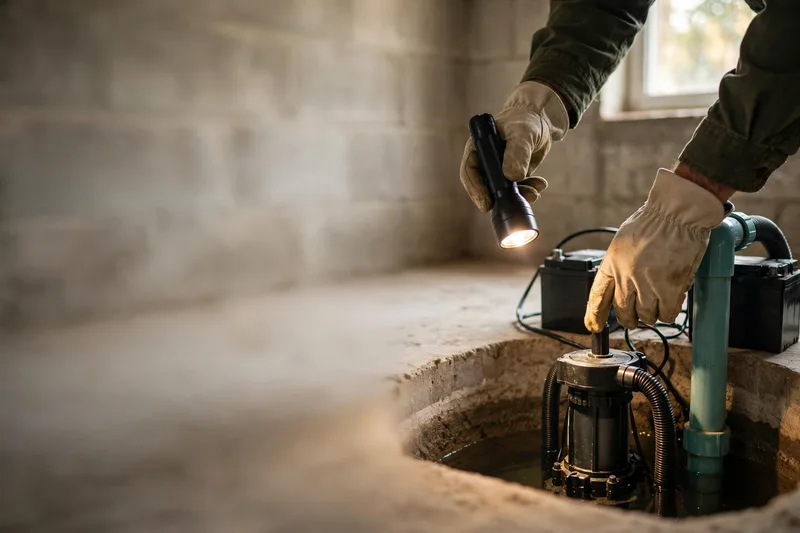
When a sump pump stops in Park Ridge, the story is the same every time. The pump is the one thing moving groundwater away from the basement, and when it stops the water rises from below: first the floor gets wet around the pit, then it spreads across the room, then it soaks the bottom of the drywall and anything stored low. A finished basement with carpet and furniture goes under fast, and the water reaches the furnace, the water heater and the washer before anyone notices.
Pumps fail for a few common reasons, and each one has a fix. The power goes out in the storm: a battery backup keeps the pump running through a short outage, and a water powered backup works as long as the city water is on. The float switch sticks: a tethered float can catch on the side of the pit, and a vertical float is less likely to hang up.
The discharge line freezes or clogs: the line should slope away from the house and discharge well clear of the foundation, not into a spot where the water runs straight back. The pump wears out: a pump that runs constantly in a wet spring is a pump that should be tested under load every year, not just switched on and listened to.
| What failed | What you see | What fixes it |
|---|---|---|
| Power outage in the storm | Pump silent, water rising around the pit | Battery backup, or a water powered backup pump |
| Float switch stuck | Pit full, pump not running | Free the float, or replace it with a vertical float |
| Discharge line frozen or clogged | Pump runs but the water stays, or the pit overflows | Clear the line, slope it away from the house |
| Pump worn out | Pump hums, runs constantly, or moves little water | Test under load, replace before the next storm |
| Check valve failed | Water runs back into the pit after each cycle | Replace the check valve on the discharge line |
After a failure, the water has to be extracted, the pit and the discharge line have to be checked, and the pump has to be tested before it is trusted again. A pump that failed once will fail again if the cause is not fixed, and the next storm is never far away in a city where the ground stays wet through spring.
Water has three categories, and the category decides the job
Not all water is the same, and the category decides what comes out, what can stay, and how the crew works in your home. The IICRC S500 standard, the industry standard for professional water damage restoration, sets three categories.
| Category | Where it comes from | What happens |
|---|---|---|
| Category 1: clean water | Burst pipe, supply line, rainwater through a roof | Extract, dry, and test. Drywall and flooring can often be saved if the drying starts fast. |
| Category 2: gray water | Washing machine, dishwasher, shower drain | Extract, remove soaked porous materials, clean and disinfect. Drywall that soaked through usually comes out. |
| Category 3: black water | Sewage backup, flooding from outside, toilet overflow with waste | Protective gear, full removal of everything it touched, disinfection. Nothing soaked by sewage water stays. |
Water can change category while it sits. Clean water from a burst pipe that soaks into a wall and stays there for days becomes gray water as it picks up dirt and microbes, and gray water left long enough becomes black. That is one more reason the first hours matter: the category, and the cost, both climb with time.
The line for do it yourself is the category. A small clean water spill you caught at once is a job you can handle with a mop and a fan. Sewage water is never a do it yourself job: it needs protective gear, proper removal, and disinfection, and it should be left to a crew. Water that soaked drywall, insulation or a finished floor needs extraction equipment and moisture readings, because the damage you cannot see is the damage that grows mold. If you cannot tell where the water came from, or if the water touched more than the surface, call (773) 570-9869 and let a crew look.
Flooded basement cleanup in Park Ridge
A flooded basement in Park Ridge, IL is usually a finished basement, and that changes the job. Flooded basement cleanup Park Ridge crews do after a storm follows the same order on every job, because the order is what saves the most: extract first, remove what cannot be saved second, dry third, and rebuild only when the readings say dry. The water is not sitting on bare concrete. It is sitting on carpet and pad, under furniture, against finished walls with insulation behind them, and around a furnace, a water heater and a washer.
Extraction comes first because standing water keeps soaking while it sits. Pumps and wet vacuums pull the water out fast, before it can wick higher up the drywall or reach the next room. A wet vacuum and a pump move water fast enough to matter: buckets do not. If the water is coming up through a floor drain, stop using water in the house first, because every flush and every shower adds to the backup. If a pipe is the source, shut the main valve first, because the extraction cannot keep up with a pipe that is still running.
Next comes removal. Wet carpet pad almost always comes out: it holds water like a sponge and will not dry clean. Soaked insulation comes out. Drywall that soaked through gets a flood cut, a clean horizontal cut a foot or two above the floor line, so the wet bottom of the wall is removed and the inside of the wall can dry. Swollen flooring and damaged trim come out. What stays is cleaned and disinfected, and sewage losses get full disinfection. Nothing soaked by sewage water stays, whatever it is.
The last step of the cleanup is the one homeowners miss: the water you cannot see. Water wicks up drywall, soaks insulation, and runs under flooring into the next room. A basement that looks dry on the surface can still be wet inside the walls, under the floor, and behind the baseboards. That is why the cleanup ends with moisture readings, not with a look around. The readings decide what else comes out and when the drying can start.
Water removal in Park Ridge
Water removal Park Ridge crews do first is the extraction: pumps and wet vacuums pull the standing water out fast, before it can soak deeper. Submersible pumps handle deep water. Truck mount extractors pull water out of carpet and pad. Wet vacuums pick up what the pumps leave behind. The equipment is chosen by the depth of the water and what it soaked, and the crew should explain the setup before they leave.
How the water is removed matters as much as how fast. Pumping a basement out too fast, while the ground outside is still saturated, can push the walls in or lift the floor: the water outside presses in while the water inside is gone. A crew that knows basements pumps in stages and watches the walls. The same care applies to the contents: boxes, rugs, furniture and electronics are lifted out of the water and into a dry room before the extraction starts, not after, because every minute in the water is damage.
Water removal Park Ridge homes need after a sewer backup is different from removal after a burst pipe. Sewage water is removed with protective gear, and everything it touched is treated as contaminated. Clean water from a burst pipe is removed fast and the drying starts at once. The category decides the equipment, the gear, and what comes out with the water.
Water damage cleanup in Park Ridge
Cleanup is the part of the job between extraction and drying, and it is where most of the decisions get made. Water damage cleanup Park Ridge crews do between extraction and drying decides what comes out, what stays, and what gets cleaned: the answers come from the water category and the moisture readings, not from a guess. Clean water that is dried fast can leave drywall and flooring sound. Gray water from a washing machine or a dishwasher means soaked porous materials come out. Sewage water means everything it touched comes out, and what stays is disinfected.
Contents get the same treatment. Furniture legs go on blocks. Rugs are lifted and dried separately. Boxes are opened and checked: paper and cardboard that soaked through are usually lost, while plastic bins and sealed containers often survive. Electronics that sat in water should not be switched on until they are checked. Clothing and soft goods from a clean water loss can often be washed. Clothing from a sewage loss should be treated as contaminated.
The cleanup is documented at every step, because the record is what your insurer needs. Photos of the damage, a list of what was removed and why, and the moisture readings taken each day. A clean basement with no record is a basement the next owner will ask about. A clean basement with a full record is a basement that was handled properly.
Drying is proven by readings, not by touch
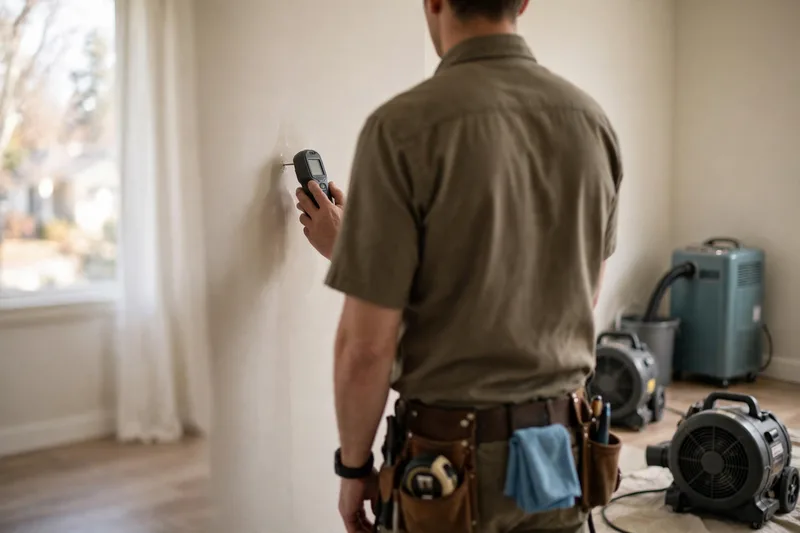
Water damage restoration Park Ridge drying work is proven by readings, not by touch. A wall can feel dry on the surface and still be wet inside, and a floor can look dry while the subfloor underneath is soaked. The crew proves the drying with a pin moisture meter, pressed into the drywall, the wood trim and the floor, and the numbers are written down every day. The equipment stays running until the readings hold steady at dry, and only then does the rebuild start.
The equipment is simple and it works. Air movers push dry air across wet surfaces so the moisture lifts out of the material. Dehumidifiers pull that moisture out of the air so it does not settle back into the walls. The two work together: movers without dehumidifiers just push wet air around the room, and dehumidifiers without movers leave the moisture locked in the walls. The number of machines depends on the size of the loss and what is wet, and the crew should explain the setup before they leave.
Stopping early is the most common mistake after a flood in Park Ridge, IL. The surface feels dry, the equipment goes home, and the moisture left inside the wall feeds mold a few weeks later. Then the drywall comes down anyway, and the job costs more than it would have if the drying had run to the readings. Ask for the readings every day, keep the numbers, and do not let the equipment leave until the numbers say dry.
Water removal Park Ridge crews do first is the extraction: pumps and wet vacuums pull the standing water out fast, before it can soak deeper. Water mitigation Park Ridge homes need after that is the drying and the removal: air movers, dehumidifiers, flood cuts where the wall is soaked, and daily readings until the structure is dry. The two steps are different jobs, and both have to be done right.
Water mitigation in Park Ridge
Water mitigation Park Ridge homes need is the emergency phase of the job: stop the source, extract the standing water, remove what cannot be saved, and dry the structure until moisture readings show it is dry. Mitigation stops the damage from getting worse. It is the part of the job that happens in the first days, and it is the part that decides whether the loss stays small or grows.
Restoration is everything after mitigation: the rebuild, drywall, flooring, trim and paint, plus the paperwork for your claim. Mitigation and restoration are often billed separately on an insurance claim, so ask for a written scope that shows each part. A scope that mixes the two together is a scope that is hard to check against the work.
The mitigation itself follows the same steps on every job. Find and stop the source. Extract the standing water. Remove what cannot be saved. Set air movers and dehumidifiers. Take pin readings every day. Keep the equipment running until the readings hold steady at dry. No step is skipped because the loss looked small: the losses that grow are the ones where a step was skipped.
Water damage repair in Park Ridge
Water damage repair Park Ridge homeowners file most often is the rebuild after the drying: drywall, flooring, trim and paint. The rebuild starts only when the readings say dry, because building over wet framing traps the moisture inside the wall, and the mold that grows there will not show until the paint bubbles or the smell arrives.
Drywall is the most common repair. A flood cut removes the wet bottom of the wall, the inside of the wall dries, and the cut line is patched and finished. Flooring is next: carpet pad is replaced, wood floors are checked for cupping and swelling, and tile is checked for loose grout and wet subfloor. Trim and baseboards that swelled are replaced. Paint goes on last, after the wall reads dry, with a stain blocking primer on any water mark that bled through.
Some repairs need a plumber first. A burst pipe is a plumber's fix, and a blocked lateral is a plumber's fix, and the restoration crew should say so plainly instead of pretending to do both jobs. The same goes for electrical work: a panel or an outlet that sat in water needs an electrician, not a drying crew. Ask who does each part before the work starts, and get it in the written scope.
Sewage cleanup in Park Ridge
Sewage cleanup Park Ridge homes need starts with the same warning every time: sewage water is Category 3 water, the most dangerous kind, and it is a health risk, not a cleaning job. Keep everyone, including pets, out of it. Do not mop it up with household tools. Do not run a shop vacuum on it. Call for help right away at (773) 570-9869, and report the backup to the City so the cause is on the record.
The cleanup itself is done in protective gear. The standing sewage water is extracted, everything it touched is removed, and what stays is disinfected. Drywall, carpet pad, insulation and flooring that soaked up sewage water come out: they cannot be cleaned well enough to leave in a wall or under a floor. The air movers and dehumidifiers run the same as any drying job, but the disinfection step is what makes a sewage job different from a clean water job.
Then comes the cause. A sewage backup in Park Ridge, IL usually means one of three things: a blocked lateral on your side of the main, a full combined sewer main in the street, or tree roots in an older pipe. The City's Sewer Division flushes and root cuts the mains, cleans inlets every year, and repairs manholes, but your lateral is yours. A camera inspection after the cleanup shows whether the pipe is cracked, bellied, or full of roots, and whether a backwater valve would keep the next backup out of your basement. Report the backup either way: the Sewer and Water Supervisor at (847) 318-5326 during the day, or the after-hours emergency line at (847) 318-5252.
Emergency water damage restoration in Park Ridge
Emergency water damage restoration Park Ridge homeowners call for most often is the call made at night, and the answer matters more than the ad. A crew that answers at night and comes out the same day is a crew that can still save the drywall, the flooring and the contents. A crew that calls back in the morning is a crew that arrives after the water has had the night to work.
When you call (773) 570-9869, the crew asks a few quick questions: where the water is, where it came from if you know, whether it smells like sewage, and whether the power is safe. Then they tell you what to do while you wait: shut the main valve, stay out of the water near electricity, take photos, lift what you can save. On site, they inspect the damage and give you a straight answer on scope before work starts, with a written scope that shows what is being removed, what is being dried, and what is being cleaned.
The first visit is also when the record starts: photos of the damage, moisture readings taken on arrival, and a list of what was removed and why. That record is what your insurer needs, and it is what the next buyer will want to see. A crew that documents from the first visit is a crew that has done this before.
Water damage restoration cost in Park Ridge
Water damage restoration cost Park Ridge homeowners ask about first has no honest answer before someone sees the job, and any number given over the phone is a guess. No page on this site prints a price, and no real local restorer publishes a Park Ridge price list either: every figure floating around online is a national average, an aggregator estimate, or a claim from another city, and the figures disagree with each other. The only honest way to get a number is an on site inspection with moisture readings and a written scope.
What sets the cost is the size of the loss and what the water touched. How many rooms are wet, and how much water there is. Whether the water is clean, gray or sewage: sewage water means more removal and more disinfection. How far it soaked into drywall, flooring and insulation. How many days of drying the readings require. Whether contents need cleaning or moving. A small clean water spill in one room costs far less than a finished basement full of sewage water, and a loss found at once costs far less than a loss found after a week away.
Your deductible matters too. A small loss that costs little more than your deductible is often better paid out of pocket, because a claim goes on your insurance record and can affect your premium and your future cover. A large loss, a finished basement, sewage water, or damage that runs across two floors, is usually worth claiming, because the drying and rebuild cost far more than the deductible. Keep every photo, every receipt and every moisture reading either way, because the record matters if you claim later.
Insurance: what is covered, what is not, and how to claim
Water damage restoration Park Ridge insurance claims succeed or fail on one question: where did the water come from. A standard homeowners policy covers sudden and accidental water losses inside the home, like a burst pipe, a failed supply line or an appliance leak. It does not cover water that comes in from outside, like river flooding or street flooding: that needs separate flood insurance. A sewer backup or a sump pump failure is usually not covered either, unless you bought a sewer backup or sump pump endorsement. Damage from wear and tear, a slow leak you knew about, or poor maintenance is normally excluded.
| Source of the water | Usually covered | What to check |
|---|---|---|
| Burst or frozen pipe | Yes, sudden and accidental | Heat was on, pipe was not known to be bad |
| Appliance or fixture leak | Yes, sudden and accidental | Leak was sudden, not a slow drip over months |
| Roof leak from a storm | Yes, if the roof was maintained | Storm damage, not wear and tear on an old roof |
| River or street flooding | No, needs flood insurance | Separate flood policy, and the map zone matters |
| Sewer backup | No, unless endorsed | Sewer backup endorsement on the policy |
| Sump pump failure | No, unless endorsed | Sump pump endorsement, and the cause of the failure |
Park Ridge, IL has no published Community Rating System class for flood insurance, so no discount class can be claimed for the city, and the City publishes no flood insurance guidance of its own. That matters if your home is low lying, near Northwest Park, west of the Country Club, or in Mayfield Estates, because the City's own plan names those as known flooding areas. Ask your agent whether your home needs flood cover, and ask about the sewer backup and sump pump endorsements at the same time: they cost little next to the loss they cover.
To claim well, document everything. Take photos and a short video before you move anything, keep a list of what was damaged with ages and rough values, and keep every receipt for emergency work. Call your insurer promptly and open a claim, and ask for the claim number in writing. Do not throw away damaged items before the adjuster has seen them. Do not call the loss a flood unless the water came from outside flooding, because the word can trigger a denial on a standard policy. If the adjuster and your agent disagree about the cover, the Illinois Department of Insurance can answer policy questions, and its website explains the claim process step by step.
Water damage repair Park Ridge homeowners file most often is the burst pipe claim, and it is usually the simplest: the cause is clear, the loss is sudden, and the record is easy to keep. The hardest claims are the ones where the cause is unclear, like a basement that flooded in a storm with no visible source. That is why the City report matters: a report to the Sewer and Water Supervisor puts the cause on the record, and the record is what the adjuster reads.
How long the job takes, and what decides it
The drying runs until the readings say dry, and the timeline follows the size of the loss. A small clean water loss in one room can be dry in a few days. A finished basement with soaked drywall and flooring takes longer, often a week or more of drying before any rebuild starts. Sewage water adds cleaning and removal time, and a loss that ran across two floors adds more. The rebuild comes after the drying: drywall, flooring, trim and paint, and the time that takes depends on the materials and the trades.
| What sets the time | Shorter | Longer |
|---|---|---|
| Size of the loss | One room, clean water | Finished basement, two floors |
| Water category | Clean water, fast start | Sewage water, full removal |
| What it soaked | Concrete floor, bare walls | Insulation, drywall, wood floors |
| How fast it was found | Found at once, dried at once | Found late, after a vacation |
| Weather | Dry week, low humidity | Wet week, high humidity |
Ask for a written timeline at the inspection, and expect it to change if the readings show more wet material than the first look found. The crew should take pin readings every day and show you the numbers going down. If the numbers stall, the equipment setup changes: more air movers, a bigger dehumidifier, or a flood cut in a wall that is not drying. The timeline is a plan, not a promise, and the readings are what decide it.
The mold clock starts in 24 to 48 hours
Mold can start growing in 24 to 48 hours when materials stay wet, which is why the first two days after a flood matter most. It does not need a flood to grow: a damp wall cavity, a wet carpet pad or insulation that stayed damp behind drywall is enough. The signs are a musty smell, dark spots on drywall or trim, and paint or wallpaper that bubbles or peels. Fast extraction and verified drying stop it before it starts.
If mold is already growing, the work changes. The area is contained so the spores do not spread, the growth is removed safely, and the area is cleaned. Our mold remediation in Park Ridge page covers the full process, from inspection and containment to verified drying and Illinois registration rules. Illinois law now requires mold remediators to register with the Illinois Department of Public Health under the Mold Remediation Registration Code, effective September 23, 2026.
The law covers the registration of mold remediation providers, and individuals may continue without third party certification until September 30, 2027 if they submit a registration form. Providers that only assess mold do not register. Our site claims no registration for itself, so any mold work beyond the drying of the loss should go to a registered provider, and the City of Park Ridge publishes no resident mold guidance of its own.
The losses that grow mold are the slow ones: water that sat for days before anyone found it, a leak inside a wall that no one saw, a basement that was dried by feel instead of by readings, or a sump pump failure during a vacation. That is why the discovered late losses in Park Ridge, IL are the ones to worry about. Dry it fast, dry it by the numbers, and mold usually never gets the chance.
Park Ridge flood history: the record so far
Park Ridge, IL has a flood record, and it is written down in the County hazard plan, the City's own Stormwater Master Plan, a federal court opinion, and the local press. The table below lists the dated events the official record supports. Nothing in it is invented, and nothing is borrowed from another town: every row names its source.
| When | What happened | Source |
|---|---|---|
| September to October 1986 | Des Plaines River flood; the mayor called it the town's most serious disaster; federal disaster DR-776 | Daily Herald letter, October 27, 1986; federal disaster declaration |
| September 13 to 14, 2008 | Record rainfall, 8.13 inches at the Public Works rain gauge; eight people rescued from vehicles; six named flooding locations; Flood Control Task Force established | Cook County hazard plan annex; Flood Control Task Force report, April 2010 |
| July 23 to 24, 2010 | Park Ridge Presbyterian Church basement flooded with more than 100,000 gallons of water; cause disputed in court | U.S. District Court opinion, September 17, 2014, Case No. 11 C 5321 |
| July 23, 2011 | Nearly 500 basements flooded, with numerous streets flooded | Cook County hazard plan annex |
| April 2013 | Federally declared flood, DR-4116; Park Ridge named among the affected communities | Federal disaster declaration; Cook County hazard plan annex |
| 2018, five events | Five significant flooding events in one year, including May 21, June 9, June 22, August 7 and the Labor Day weekend | Cook County hazard plan annex; National Weather Service storm data |
| May 15, 2020 | Park Ridge neighborhood underwater; residents drying out basements; about 18 inches of water on North Lincoln Avenue | ABC7 Chicago, May 15, 2020 |
September 2008 is the flood Park Ridge, IL still measures storms against. The rain fell for two days, and the Public Works rain gauge read 8.13 inches. The Flood Control Task Force report called the rain extraordinary in scope and severity, and said more than nine inches fell in the town within 48 hours. At least eight people had to be rescued from vehicles stuck in flood water, and dozens of vehicles were abandoned. Six locations were named in the record: St. James Place, Northwest Park, the Country Club, Overhill Avenue, Burton Lane and Mayfield Drive. The storm led the mayor to establish the Park Ridge Flood Control Task Force, which reported to the City Council in April 2010. Federal disaster DR-1800 followed in October 2008.
July 2011 is the number the County plan puts first when it counts basements: nearly 500 basements flooded on July 23, 2011, along with numerous streets. The same plan records the May 2018 cluster, five significant events in a single year, and its own assessment says flooding is an increasing problem in the community. The City's flood survey, taken for the Stormwater Master Plan, counted 210 sewer backups and 200 cases of overland flooding among 465 homes. The record does not need heightening: the numbers are already serious, and they are attributed and dated.
Two more recent cases show the two kinds of loss Park Ridge, IL sees most. On Christmas Day 2022, burst pipes in the flat above Mel's Craft BBQ sent water pouring through the ceiling and closed the restaurant, with water standing an inch to an inch and a half deep in places. In January 2025, burst pipes at Maine South High School damaged classrooms and cancelled classes. One is a commercial loss, one is a school, and both are the same pattern: a pipe that froze in bitter cold, cracked, and burst when it thawed, found hours later with the water already through the floor and the ceiling.
Found late: the losses that cost the most
Many Park Ridge, IL water losses are found late, and the late ones cost the most. A pipe bursts while the owners are away on vacation, and the water runs for days. A sump pump fails during a heavy rain a few weeks back, and the owners wake up to a couple of inches in the finished basement at six in the morning. A dishwasher line breaks overnight and soaks the kitchen and the room below it. The pattern is the same every time: the water ran while no one was watching, and the damage is bigger than the leak.
The court record holds the clearest found late loss in Park Ridge, IL. On the morning of July 24, 2010, members of Park Ridge Presbyterian Church arrived to find water in the light well walkways and stairs, and the basement flooded with more than 100,000 gallons of water. A massive storm had struck with a power outage the day before, and the water was found the next morning.
The church sued its insurer after coverage was denied, and the case turned on causation: the insurer's experts said rainwater had come in through the foundation, while the church said the pump had failed when the power went out and water had come up through the shower drains. The court opinion records the flood itself. It does not settle the cause, and neither does this page.
The words homeowners use tell the story. They say they responded quickly, that the crew explained what was happening, that the crew coordinated directly with the adjuster, and that the crew did not try to upsell. They say that once the crew arrived the panic stopped, because the crew dealt with the water first and the talking afterwards. They say they arrived home after a week's vacation to discover the recently finished basement had flooded. Those are the words to listen for when you choose a company: fast, clear, and honest about what the loss is and what it will take.
Water damage restoration Park Ridge homeowners call for most often is the repair after a loss found late, and the repair is bigger because the water had time to work. The fix is not just the drying: it is the habit of checking. Check the basement before a trip and the moment you return. Check it first thing after a hard freeze or a heavy storm. Check the sump pump in the spring and the pipes in the fall. A loss found at six in the morning is a loss that can be dried. A loss found after a week away is a loss that takes the house apart.
Park Ridge City numbers: who to call and when
Water damage restoration Park Ridge homeowners need starts with the right phone call, and the City of Park Ridge publishes the numbers on its own site. Keep them on the fridge: the cause of the water decides who pays, who fixes it, and whether the claim succeeds.
| Who | Number | When to call |
|---|---|---|
| City Hall, main number | (847) 318-5200 | General City questions, Monday to Friday 8:00 am to 5:00 pm, 505 Butler Place |
| Sewer and Water Supervisor | (847) 318-5326 | Sewer backups, main sewer problems, water service questions |
| After-hours emergency | (847) 318-5252 | Flooding reports outside Public Works hours |
| Water bill questions | (847) 318-5223 | Billing, meter and water service questions |
| Engineering Manager | (847) 318-5210 | Drainage, grading and sewer project questions |
| Public Works Director Sarah Mitchell | (847) 318-5227 | Public Works matters, including sewer and storm drainage |
City Hall is at 505 Butler Place, Park Ridge, IL 60068, open Monday to Friday from 8:00 am to 5:00 pm. The Public Works divisions work out of the Public Works Service Center at 400 Busse Highway, open Monday to Friday from 7:00 am to 3:00 pm. The Engineering Division sits at City Hall. The City publishes no general Public Works main number: the numbers in the table above are the division numbers the City itself lists, and the City Hall number is the City Hall main number, not a Public Works number.
During flooding the City asks residents to restrict plumbing use, so the system is not pushed further while it is already full. The Sewer Division repairs and maintains the main sewers, flushes and root cuts them, cleans inlets every year and catch basins every four years, and maintains the manholes. The City runs a sewer lining programme and a watermain replacement programme, and it funds capital flood work itself, including the Mayfield Estates pump station and the Marvin Parkway detention vault.
The lateral is yours. The pipe from your house up to and including the connection to the City main is the homeowner's responsibility, under Municipal Code Article 11, Chapter 1, Section 11-1-6. The water service pipe is also yours, from the buffalo box to the house, while the City maintains the water meter.
The City runs no resident flood control cost share or rebate programme, and no programme that pays for an overhead sewer conversion or a backwater valve: the only cost share programme the City publishes is for tree planting, which is a different programme for a different thing. A stormwater utility fee was proposed in a 2015 study and recommended in the 2018 Master Plan presentation, but the City has not confirmed that it was ever adopted, and no stormwater fee appears on the current water and sewer rates page.
The City's flood work is easy to follow. The Stormwater Master Plan, dated December 2017 and presented to the City Council on February 12, 2018, ranks the Mayfield Estates Flood Control Project first: a new storm sewer network, a pump station at 1730 Elliot Avenue, and a new Dempster Street storm sewer, with the pump station funded through sewer fees. The Marvin Parkway Flood Control Project, an underground detention vault under the Marvin Parkway median between Seminary and Wilkinson, started construction in the week of July 19, 2021 and was estimated complete in December 2021. Mayfield Estates is a depressional area where stormwater cannot flow by gravity out of the area and must be pumped up into the sewer, and the area still floods during major rainfall events.
How to keep it from happening again
Water damage Park Ridge homes face most often comes back to the same few fixes, and most of them cost little. Start with the sump pump: test it under load, make sure the float switch moves freely, clear the discharge line, and add a battery backup so a storm outage does not stop it. Then look outside: clean the gutters, make sure downspouts throw water well away from the foundation, and grade the soil so it slopes away from the house. Keep window wells clear and check the joint where the wall meets the floor after a heavy rain.
Have the sewer lateral inspected, especially in an older home, and consider a backwater valve so a full main cannot push water back through your floor drain. An overhead sewer conversion is the strongest fix, but there is no City programme that pays for one. Keep the City numbers on the fridge: City Hall (847) 318-5200, Sewer and Water Supervisor (847) 318-5326, and after hours (847) 318-5252. And check the basement before a trip and the moment you return, first thing after a hard freeze or a heavy storm, and every spring before the rain season starts.
Choosing who to call in Park Ridge, IL
Homeowners in Park Ridge, IL choose a company on four things: speed, readings, paperwork and honesty. Speed, because the first hours decide what survives. Readings, because pin moisture readings taken every day are the only proof the drying worked. Paperwork, because photos, daily readings and a written scope are what your insurer needs to pay the claim. Honesty, because a crew that explains what is happening, coordinates directly with your adjuster, and does not try to upsell you while your basement is under water is a crew you can trust with your home.
Ask for a written scope before the work starts, with what is being removed, what is being dried, and what is being cleaned. Ask whether the company documents the loss for insurance. Ask for local references and check them. Be wary of anyone who quotes a price before seeing the job, anyone who pressures you to sign on the spot, and anyone who promises to handle your claim for you. The right company answers at night, sends a crew the same day, and tells you plainly what the loss is and what it will take.
Park Ridge, IL and nearby areas we serve
We serve Park Ridge, IL 60068 and the suburbs around it, including Des Plaines, Niles, Rosemont, Elk Grove Village, Glenview and Skokie, from the same number: (773) 570-9869. If you are in Chicago itself, see water damage restoration in Chicago. Nearby suburb pages: water damage restoration in Highland Park, water damage restoration in Deerfield, and water damage restoration in Northbrook. Each suburb has its own sewers, its own flood record, and its own page, because the fix for a Park Ridge combined sewer backup is not the fix for a Deerfield sanitary backup.
Water Damage Restoration Park Ridge FAQs
My basement just flooded. What should I do?
Safety first, then stop the source. Stay out of water near electricity and do not touch the breaker panel while you stand in water. Shut the main water valve if a pipe is the source, or stop using water if it is coming up through a floor drain. Take photos and a short video before you move anything, lift valuables off the floor, then call for extraction at (773) 570-9869. The first hours decide what can be saved.
How can I tell if it is groundwater, condensation, or a plumbing leak?
Look at when and where the water appears. Groundwater and seepage rise after heavy rain, usually at the joint where the wall meets the floor, and the floor feels damp even when no fixture is running. Condensation forms as small beads on cold pipes and walls in humid weather and dries when the air dries. A plumbing leak runs steady whether it rains or not, often near a fixture, and the water meter keeps turning when every tap is off.
Why did my basement flood?
The usual reasons in Park Ridge, IL are a sump pump that stopped, a combined sewer that filled up and pushed water back through a floor drain, a burst or frozen pipe, or rainwater that soaked the ground and came in through the wall or the floor joint. The City's own Stormwater Master Plan, dated December 2017, says the city is majority combined sewer and that overland flooding is a common issue, because the sewers cannot take every storm. Which reason you have decides the fix.
Is basement flooding common in Park Ridge?
Yes, and the official record says so plainly. The City's Stormwater Master Plan says overland flooding is a common issue for a variety of storm events, and the County hazard plan says flooding is an increasing problem, with five significant events in 2018 alone. The County record lists nearly 500 basements flooded on July 23, 2011, and a flood survey counted 210 sewer backups and 200 cases of overland flooding among 465 homes. It is a known local problem, not a rare one.
What should I do first when a pipe bursts?
Shut the main water valve at once, then cut the power to the wet area only if the breaker panel is dry and you can reach it without standing in water. Open the lowest faucet to drain what is left in the pipes. Move rugs, boxes and electronics off the floor, take photos before you move anything, and call for extraction at (773) 570-9869. A burst pipe can pour out water for hours while no one is home, so speed matters more than anything else.
Does insurance cover a burst pipe?
A sudden burst pipe is usually covered by a standard homeowners policy, because it is a sudden and accidental loss inside the home. What is often not covered is the pipe repair itself, and a slow leak that ran for weeks is usually excluded as wear and tear or poor maintenance. Take photos before anything is moved, keep every receipt, and call your agent promptly. Do not call the loss a flood unless the water came from outside flooding, because the word can trigger a denial.
How long does a wall take to dry after a burst pipe?
It depends on how much water got in and what the wall is made of. A bare wall with clean water can dry in a few days, while a finished wall with insulation behind the drywall takes longer, often a week or more. The drying is done only when pin moisture readings show the wall is back to dry, not when the surface feels dry to the touch. A wall that looks dry and still reads wet will grow mold inside, so ask for the readings every day.
How much does water damage restoration cost in Park Ridge?
No honest price exists before someone sees the job, and any number given over the phone is a guess. What sets the cost is the size of the loss and what the water touched: how many rooms are wet, how much water there is, whether the water is clean, gray or sewage, how far it soaked into drywall, flooring and insulation, how many days of drying the readings require, and whether contents need cleaning or moving. The right way to get a number is an on site inspection with moisture readings and a written scope. Call (773) 570-9869 and ask for an inspection.
How long does water damage restoration take in Park Ridge?
A small clean water loss in one room can be dry in a few days. A finished basement with soaked drywall and flooring takes longer, often a week or more of drying before any rebuild starts. Sewage water adds cleaning and removal time, and a loss that ran across two floors adds more. The drying itself runs until pin moisture readings show the walls, the floor and the framing are back to dry. Ask for a written timeline at the inspection, and expect it to change if the readings show more wet material than the first look found.
Will my insurance cover water damage in Park Ridge?
It depends on where the water came from. A sudden and accidental loss inside the home, like a burst pipe, a failed supply line or an appliance leak, is usually covered by a standard homeowners policy. Water that comes in from outside, like river flooding or street flooding, is not covered by a standard policy: that needs separate flood insurance. A sewer backup or a sump pump failure is usually not covered either unless you bought a sewer backup or sump pump endorsement. Read your policy and call your agent before you assume anything.
Does homeowners insurance cover flood damage?
A standard homeowners policy does not cover flood damage from water that comes in from outside, like river flooding, street flooding or overland flow. That needs a separate flood insurance policy. What the standard policy does cover is sudden water damage inside the home, like a burst pipe or an appliance leak. In Park Ridge, IL that line matters, because the City's own plan says overland flooding is a common issue here. If your home sits low or near a known flooding spot, ask your agent whether you need flood cover.
What is the difference between storm damage and flood damage?
Storm damage is damage caused by the storm itself, like wind tearing off shingles or a tree falling on the roof, and the rain that comes in through the opening it made. Flood damage is water that rises from outside and comes in at ground level, like river water, street flooding or overland flow. Insurers treat them as different losses with different cover. A roof leak from a storm is usually covered by a standard policy, while water that rose up from the street is not, and needs separate flood insurance.
Will my homeowners insurance go up if I file a water damage claim?
A claim can affect your premium and your future cover, but no one can promise how much or whether it will happen at all. Insurers look at the size of the claim, how many claims you have filed, and whether the loss was sudden or the result of a known problem. One sudden loss, like a burst pipe, is treated differently from repeated claims for the same basement. That is why the decision to claim should be weighed against the deductible and the size of the loss before you file. Ask your agent directly what a claim would mean for your policy.
What should I not say to the insurance adjuster?
Stick to what you saw and when you saw it, and do not guess at the cause. Do not call it a flood unless the water came from outside flooding, because the word flood can trigger a denial on a standard policy: a burst pipe and a sewer backup are different losses with different cover. Do not say the damage was there for weeks, do not say you knew about a leak and left it, and do not throw away damaged items before the adjuster has seen them. Take photos first and keep a list of what was damaged.
Who do I call for water damage?
It depends on what you see. If water is coming up through a floor drain or the street is flooding, call the City: the Sewer and Water Supervisor at (847) 318-5326 during the day, or the after-hours emergency line at (847) 318-5252. If a pipe burst or a fixture is leaking, call a plumber first to stop the water, then call for extraction. If the water is already in your basement, call (773) 570-9869 for extraction and drying, and call your insurer to open a claim. If you smell gas, leave the house and call the gas utility.
Can I handle minor water damage myself in Park Ridge, IL?
A small clean water spill, like a tipped bucket or a short leak you caught at once, is a job you can handle: mop it up, dry the floor, and watch it for a day. Anything bigger is a different job. Sewage water should never be handled without protective gear and proper disinfection. Water that soaked drywall, insulation or a finished floor needs extraction equipment and moisture readings, because the damage you cannot see is the damage that grows mold. If you cannot tell where the water came from, call (773) 570-9869 and let a crew look.
Is sewage backup dangerous?
Yes. Sewage water is Category 3 water, the most dangerous kind, and it carries bacteria and viruses that can make people sick. Keep everyone, including pets, out of it, and do not let children play near it. Do not try to mop it up with household tools, and do not run a shop vacuum on it. The water also carries a smell that stays in anything porous it touched, which is why everything soaked by sewage water should come out. Call for help right away at (773) 570-9869, and report the backup to the City so the cause is on the record.
Can I clean up sewage myself?
No, not safely. Sewage water needs protective gear, proper removal of everything it touched, and disinfection with the right products, and household cleaning will not make soaked drywall, carpet pad or insulation safe to keep. The work also needs to find the cause: a blocked lateral, a full main, or tree roots in the pipe. A crew in protective gear removes the contaminated material, disinfects what stays, and dries the structure to verified readings. If the backup came from the street or the main, report it to the City at (847) 318-5326 during the day.
My sump pump failed. How fast do I need to act?
At once. A sump pump is the one thing moving groundwater away from your Park Ridge, IL basement, so when it stops the water rises from below: first the floor gets wet around the pit, then it spreads across the room, then it soaks the bottom of the drywall and anything stored low. The longer the water sits, the more it soaks, and mold can start in 24 to 48 hours when materials stay wet. Call (773) 570-9869 now, and while you wait, check whether the power is out, the float switch is stuck, or the discharge line is clogged.
What is the difference between water mitigation and water restoration?
Mitigation is the emergency phase: stop the source, extract the standing water, remove what cannot be saved, and dry the structure until moisture readings show it is dry. Restoration is everything after that: the rebuild, drywall, flooring, trim and paint, plus the paperwork for your claim. Mitigation stops the damage from getting worse. Restoration puts the home back to how it was. Most jobs need both, and the two are often billed separately on an insurance claim, so ask for a written scope that shows each part.
What is the IICRC S500 standard?
The IICRC S500 is the industry standard for professional water damage restoration. It sets how water losses are classified into three categories, clean water, gray water and sewage water, and how each one should be extracted, dried and cleaned. It also sets the dry standard: the job is done when moisture readings show the materials are back to dry, not when they feel dry to the touch. We follow its principles on every job, and the readings we take each day are the proof that the drying met the standard.
How do I choose a water damage company in Park Ridge?
Start with speed: the company should answer at night and send a crew the same day, because the first hours decide what survives. Then ask how they dry: they should take pin moisture readings, write them down, and show you the numbers going down, not just tell you it feels dry. Ask for a written scope before the work starts, with what is being removed, what is being dried, and what is being cleaned, and ask whether they document the loss for insurance. Ask for local references and check them. Be wary of anyone who quotes a price before seeing the job or pressures you to sign on the spot.
What is the stormwater utility fee on my bill?
There is no stormwater fee on the City's current water and sewer rates page. A stormwater utility fee was proposed in a 2015 feasibility study and recommended in the Stormwater Master Plan presented in February 2018, but the City has not confirmed that it was ever adopted, and no stormwater fee appears on the rates residents actually pay. Do not confuse it with the City's tree planting cost share programme, which is a different programme for a different thing. If a fee ever appears on your bill, the City Hall number is (847) 318-5200.
Do I need to replace water damaged drywall?
Not always. Clean water that is dried fast can leave drywall sound, and a crew will test it with a pin moisture meter before deciding. Gray water or sewage water is a different matter: anything soaked by it should come out, because it cannot be cleaned well enough to leave in a wall. Drywall that stayed wet long enough to swell, crumble or grow mold also comes out. The usual fix is a flood cut: a clean horizontal cut a foot or two above the floor line, so the wet bottom of the wall is removed and the inside of the wall can dry.
Who owns the sewer lateral in Park Ridge?
You do. The sewer lateral, the pipe that runs from your house up to and including the connection to the City main in the street, is the homeowner's responsibility in Park Ridge, IL, under Municipal Code Article 11, Chapter 1, Section 11-1-6. The City owns and maintains only the main sewer in the street. The water service pipe is also yours, from the buffalo box to the house, while the City maintains the water meter. That is why a camera inspection of the lateral is worth doing in an older home: a cracked lateral is your repair, not the City's.
How fast does mold start after water damage?
Mold can start growing in 24 to 48 hours when materials stay wet, which is why the first two days after a flood matter most. It does not need a flood to grow: a damp wall cavity, a wet carpet pad or insulation that stayed damp behind drywall is enough. The signs are a musty smell, dark spots on drywall or trim, and paint or wallpaper that bubbles or peels. Fast extraction and verified drying stop it before it starts. If mold is already growing, the work changes: containment, safe removal, and cleaning under the Illinois mold rules.
Water in the basement, a sump that failed in the night, or a stain that keeps growing: water damage restoration Park Ridge starts with one call, (773) 570-9869, while the evidence is fresh.
Sources and standards referenced
- IICRC S500, Standard for Professional Water Damage Restoration: water categories, extraction and structural drying principles and dry standard practice.
- US EPA mold guidance: mold growth timelines on wet materials and cleanup safety. EPA, A Brief Guide to Mold, Moisture and Your Home.
- Illinois Department of Public Health, Mold Remediation Registration Code, 77 Ill. Adm. Code Part 835, under the Mold Remediation Registration Act, 410 ILCS 105. IDPH mold FAQs.
- Illinois Department of Insurance: consumer guidance on homeowners claims and the complaint process.
- City of Park Ridge Public Works, Sewer and Water Divisions: sewer backup reporting, the sewer lateral rule, the after-hours emergency number, and the Public Works Service Center. City of Park Ridge Public Works.
- City of Park Ridge Stormwater Master Plan, dated December 2017 and presented to the City Council on February 12, 2018: majority combined sewer system, the sewer backup mechanism, overland flooding, historical flooding locations, and the flood survey. City of Park Ridge stormwater.
- City of Park Ridge Mayfield Pump Station: the Mayfield Estates depressional area, the pump station at 1730 Elliot Avenue, and the Dempster Street storm sewer. Mayfield Pump Station.
- Cook County Multi-Jurisdictional Hazard Mitigation Plan, Park Ridge annex: the dated flood event table, the 2011 basement count, the 2008 record, and the repetitive loss properties.
- National Weather Service Chicago, May 17, 2020 significant flash flooding event: Park Ridge rainfall record. NWS May 17, 2020 event.
- U.S. District Court, N.D. Illinois, Park Ridge Presbyterian Church v. American States Insurance Company, Opinion and Order, September 17, 2014, Case No. 11 C 5321.
More Restoration Services Near Park Ridge
Every service below is one tap away. Pick the one that matches your problem.

Water Damage Restoration
Fast water extraction, structural drying, and full repair after burst pipes, leaks, and floods.
Learn more →
Water Mitigation
Emergency water removal, structural drying, and mold prevention to stop the damage fast, 24/7.
Learn more →
Mold Remediation
Safe, contained mold remediation that removes contamination and fixes the moisture source.
Learn more →
Sewage Cleanup
Safe removal and disinfection of dangerous sewage backups and black water.
Learn more →
Flood Cleanup
Water pumped out, structure dried, and debris cleared fast after storms and flooding.
Learn more →
Hardwood Floors Water Damage
Cupped, buckled or stained hardwood after a leak? How we dry it, when sanding saves it, and when the boards have to go.
Learn more →