Chicago Water Damage Service, Oak Brook, IL 60523
Water Damage Restoration Oak Brook IL
Flooded basement in Oak Brook? We answer 24/7, arrive fast, extract the water, dry the structure, and help you file the claim.
Call (773) 570-9869What to do first
- We answer 24/7
- Local Chicago team
- Insurance documentation help
- Straight answers, no pressure
Request water damage help in Oak Brook
If your basement is wet now, call (773) 570-9869 first. If you can wait for a call back, send the form below and we will call you. Tell us where the water is, how deep it is, and when it started.
Short answer
Water damage restoration oak brook crews answer 24/7. Call (773) 570-9869 now and tell us where the water is. We talk you through the first hour while a crew is on the way, and we dry the house to readings you can see.
Your first hour in Oak Brook: what to do now
Water damage restoration oak brook jobs are won or lost in the first hour. Water soaks into drywall and flooring in minutes, and mold can start to grow within 24 to 48 hours. The work you do before we arrive decides how much of your house survives.
- Call us first at (773) 570-9869. We answer 24/7 and talk you through the first hour while a crew is on the way.
- Stop the water at the source. If a pipe burst, shut off the main water valve. If you suspect a water main break, call the Village of Oak Brook Public Works Department at 630-368-5270.
- Stay out of a flooded basement while the power is on. Water and electricity together can kill. If the water is near the electrical panel, call us and stay out until we tell you it is safe.
- Do not touch the water with bare hands. Assume all floodwater is contaminated, especially water that came from a sewer. Wear rubber boots and gloves if you must walk through it.
- Lift what you can save and photograph everything. Move dry boxes, papers and electronics to higher ground. Photograph the water line on the walls and each damaged item before you move it. These photos are the start of your insurance claim.
Oak Brook is a village in DuPage County, Illinois, ZIP 60523. Salt Creek and Ginger Creek run through it, and the Village's own flood page says residents have experienced flooding from Salt Creek, Ginger Creek, and sewer backups in the past. The Village also says DuPage County drains poorly, with flat topography and low-permeability soils, and that most flood damage to structures has occurred adjacent to streams in the floodplain and floodway. That is the flood picture we work in.
Your basement may be dry for years, then one storm pushes Salt Creek over its banks, or one sump pump fails in a power cut, and the water is in before you know it. We work in Oak Brook every week, and we know the houses, the creeks and the sewers.
If the water came from the street or a sewer backup, call the Village of Oak Brook Public Works Department at 630-368-5270 as well, so the Village knows the sewer backed up on your street. If the backup is sanitary, call the Flagg Creek Water Reclamation District or the Downers Grove Sanitary District, whichever serves your property. Then call your insurer and start the claim. For any emergency, call 911. The Village publishes no separate non-emergency police number and no after-hours water emergency number, so after hours call us first and we will tell you what to do.
What water damage restoration in Oak Brook IL includes
Water damage restoration oak brook IL homeowners hire is one job with five parts. We extract the water, we dry the structure to readings you can see, we clean and disinfect, we remove what cannot be saved, and we rebuild what was removed. No step is skipped, and no step is started before the one before it is done.
| Step | What happens | What you get |
|---|---|---|
| 1. Water extraction | We pump and vacuum the standing water out of the basement, rooms and floors. | The water is out of the house, usually the same day. |
| 2. Structural drying | We set air movers and a dehumidifier and take moisture readings every day. | A drying log with readings that show when the house is dry. |
| 3. Cleaning and disinfection | We clean and disinfect the hard surfaces and remove anything the water ruined. | A clean, safe space ready for repair. |
| 4. Damage removal | We cut out wet drywall and remove ruined carpet pad, flooring and insulation. | A list of what was removed, photographed for your claim. |
| 5. Repair and rebuild | We replace the drywall, flooring and trim that was removed, and repaint. | Your rooms back the way they were, dry to the readings. |
Every step is photographed and written into a log. Your insurer will ask for the photos, the drying log and the scope of work, and we give you all three. That is what water damage restoration means on this page: the water out, the house dry to readings, the damage documented, and the rooms rebuilt.
How water removal works in Oak Brook: seven steps
Water removal in Oak Brook follows the same seven steps on every job, whether the water came from a burst pipe or a flooded basement. Do them in order, and do not skip one.
Call us first.
Call (773) 570-9869. We answer 24/7. Tell us what happened, where the water is and how deep it is. We talk you through the first hour while a crew is on the way.
Stop the water at the source.
If a pipe burst, shut off the main water valve. If an appliance failed, turn off the water to that appliance. If you suspect a water main break, call the Village of Oak Brook Public Works Department at 630-368-5270. If the water came from the sewer or the street, do not try to stop it yourself.
Stay out of the water while the power is on.
Do not enter a flooded basement while the power is on. Water and electricity together can kill. If the water is near the electrical panel, call us and stay out until we tell you it is safe.
Do not touch the water with bare hands.
Assume all floodwater is contaminated, especially water that came from a sewer. Wear rubber boots and gloves if you must walk through it, and wash your hands and any skin that touched the water.
Lift what you can save and photograph everything.
Move dry boxes, papers and electronics to higher ground. Photograph the water line on the walls, the wet floor and each damaged item before you move it. These photos are the start of your insurance claim.
Call the Village if the sewer or street flooded.
If the water came from the street or a sewer backup, call the Village of Oak Brook Public Works Department at 630-368-5270. If the backup is sanitary, call the Flagg Creek Water Reclamation District or the Downers Grove Sanitary District, whichever serves your property. Then call your insurer and start the claim.
Let the drying run until the readings say dry.
We extract the water, set air movers and a dehumidifier, and take moisture readings every day. We stop the drying only when the readings are back to dry, and we show you the numbers. Do not switch the equipment off early, because the walls will stay wet inside.
Six ways water gets into an Oak Brook home
Water damage restoration oak brook crews see the same six entry points again and again. Find which one let the water in, because the fix depends on it. Drying a basement without fixing the entry point is a repair that will be needed again in the next storm.
Burst pipe
A pipe that froze in a cold snap, or an old pipe that split at a joint. The water is clean, but there is a lot of it, and it fills a basement fast. Shut off the main water valve and call us.
Sewer backup
Heavy rain fills the sanitary sewer and the water comes back through a floor drain or a toilet. The water is contaminated. Do not touch it with bare hands, and call the sanitary district that serves your property as well as us.
Sump pump failure
The pump stopped, the float switch stuck, or the power went out in the storm. The pit overflows and the basement floods from the floor up. A battery backup would have kept it running.
Roof leak
Wind-driven rain or ice dams push water under the shingles and down through the ceiling. The stain on the ceiling is usually far from the leak, so we trace it with a moisture meter before we repair anything.
Appliance leak
A washing machine hose, a dishwasher supply line or a water heater that split. The water is clean to start with, but a slow leak behind a wall can soak a floor for weeks before anyone notices.
Storm flooding
Salt Creek or Ginger Creek rises, or street water runs to the lowest point and finds your basement window or door. The Village's own flood page says residents have experienced flooding from Salt Creek, Ginger Creek, and sewer backups in the past.
Water damage oak brook: a separate sewer system
Oak Brook's sewers are separate. The Village operates a Municipal Separate Storm Sewer System, called an MS4, under a general permit from the Illinois Environmental Protection Agency, NPDES Permit ILR40. The storm sewers carry rainwater only. The sanitary sewers are separate too, and they are maintained by the Flagg Creek Water Reclamation District or the Downers Grove Sanitary District, not by the Village. When a basement floods in Oak Brook, the water can come from the storm side, the sanitary side, or the sump pump in between, and each one needs a different fix.
The Village's stormwater ordinance says Oak Brook is drained by six watershed divisions: Salt Creek, the East Branch DuPage River, the West Branch DuPage River, Sawmill Creek, the Des Plaines River Tributaries, and the Fox River Tributaries. The Code's findings say DuPage County drains poorly, with flat topography and low-permeability soils, and that most flood damage to structures has occurred adjacent to streams in the floodplain and floodway. Salt Creek is the water that matters most for Oak Brook. The Elmhurst Quarry Flood Control Facility on Salt Creek is a stormwater detention facility that helps hold back flood water, and the Village's flood information page points residents to it.
The flood rules are in the Village Code, Title 9, Stormwater and Floodplain Ordinance. Floodplain development requires a permit. A substantial improvement or substantial damage is a repair, reconstruction or improvement whose cost equals or exceeds 50 percent of the market value of the structure. The flood protection elevation is the base flood elevation plus one foot of freeboard. In plain words, if you rebuild a home in the floodplain, the Village wants the lowest floor one foot above the base flood elevation, and if the work costs half the value of the house or more, the whole building has to meet the current flood rules.
Do not mix up the sewer rules with the water rules. The Village Code's water rules are for WATER service lines only, and they say: a water service connection, from the water main to and including the shutoff valve or curb stop, is the property of the Village, while a water service extension, from the curb stop to the water meter, is the property of the owner, under Code section 8-2A-4. That rule says nothing about sewer laterals. We searched the Village Code for a sewer lateral ownership rule and found none, so this page does not state one. If the backup is sanitary, call the Flagg Creek Water Reclamation District or the Downers Grove Sanitary District, whichever serves your property.
The Village's water comes from Lake Michigan through the DuPage Water Commission. Residential bills arrive every two months and commercial bills every month, and they are due 21 days after the billing date. A ten percent late charge applies. Water Billing can be reached at 630-368-5090 for e-billing questions. None of that changes a flooded basement, but it is useful to know when the water question is about your bill instead of your floor.
Sump pumps in Oak Brook: the one machine that has to work
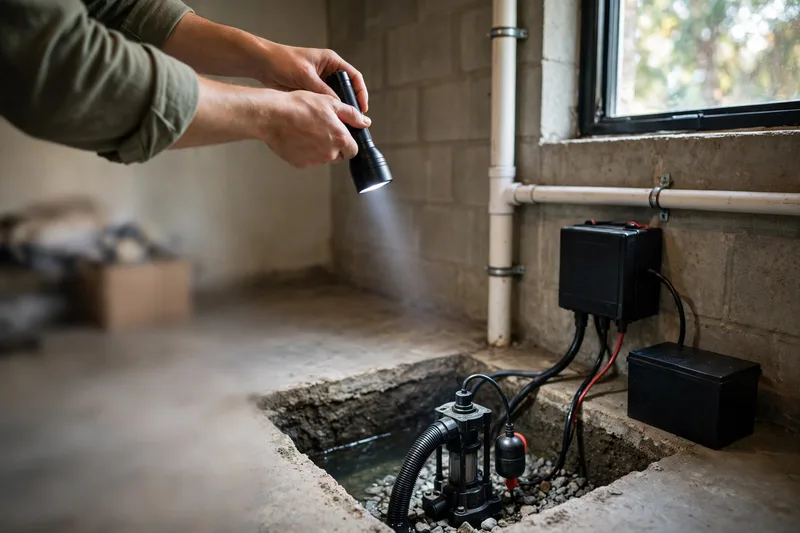
Most Oak Brook basements have a sump pump, and most Oak Brook basement floods start with a sump pump that stopped. The pump is a simple machine, and it fails in simple ways: the float switch sticks, the discharge line freezes, the check valve wears out, or the power goes out in the very storm that fills the pit. A pump that has not been tested in a year is a pump you do not know about.
Test the pump every few months. Pour a bucket of water into the pit and watch the pump run. If it does not run, call us before the next storm, not after it. A battery backup is the cheapest insurance a basement has. It keeps the pump running through a power cut, and it is the one upgrade we recommend to every Oak Brook homeowner we meet. A second pump in the same pit is the next step up, and it covers the day the first pump dies.
The Village's permit rules are simple for sump pumps: a sump-pump replacement using plug and cord requires no permit. Installing a flood-control system, including a backwater valve and/or overhead sewer, requires a plumbing permit. That is the only permit rule the Village publishes for this work, and it is the only one printed on this page.
Three kinds of water, three kinds of cleanup
Not all water is the same. Clean water from a burst pipe is safe to touch. Grey water from a washing machine or a dishwasher is dirty but not sewage. Black water from a sewer is contaminated and dangerous. The kind of water decides what we clean, what we throw out, and how we protect your family.
| Category | Where it comes from | What it means for your home |
|---|---|---|
| Category 1: clean water | A burst pipe, a supply line, a water main break, rain through a roof leak. | Safe to touch. Dry fast and most materials can be saved. |
| Category 2: grey water | A washing machine, a dishwasher, a toilet overflow without solids, a sump pump overflow. | Dirty, and it can carry bacteria. Carpet pad and soft goods usually have to go. |
| Category 3: black water | A sewer backup, a toilet backup with solids, flood water from a creek or the street. | Contaminated. Do not touch it with bare hands. Porous materials usually have to go. |
The category can change while the water sits. Clean water left for two days becomes grey water, because bacteria grow in it. Grey water left for two days becomes black water. That is why the first day matters so much, and why we extract fast and dry fast on every job.
Flooded basement in Oak Brook? Why it floods here

A flooded basement in Oak Brook usually has one of four causes, and each one needs a different fix. First, the sump pump failed, the float switch stuck, or the power went out in the storm. Second, the sanitary sewer backed up through a floor drain or a toilet. Third, Salt Creek or Ginger Creek rose and the water found the basement windows, the door, or a crack in the wall. Fourth, a burst pipe or a failed appliance filled the basement from the inside.
The Village's own flood page says residents have experienced flooding from Salt Creek, Ginger Creek, and sewer backups in the past, and the Village Code says most flood damage to structures has occurred adjacent to streams in the floodplain and floodway. The record backs that up.
In April 2013, a resident filmed flood water across Oak Brook over two days, and the clips name the places: Meyer Road, 31st Street and Meyer Road, 35th Street, Ginger Creek, Regent Drive, the McDonald's Corporation grounds, the Oak Brook Park District, Clearwater and 22nd Street, the golf course on 22nd Street, Brook Forest, Roslyn Road, and Meyer Road and Butterfield Road. In September 2008, a video filmed behind the hotel at Spring Road and Harger shows the golf course under water. The creeks and the sewers are the story of Oak Brook flooding, not the rain alone.
If your basement is wet now, call us at (773) 570-9869. Do not wait to see if it dries on its own, because a wet basement does not dry on its own. The water soaks into the drywall, the flooring and the framing, and the moisture left inside is what grows mold. We extract the water the same day, set the drying equipment, and take moisture readings every day until the house is dry.
Water removal in Oak Brook: fast, complete and documented
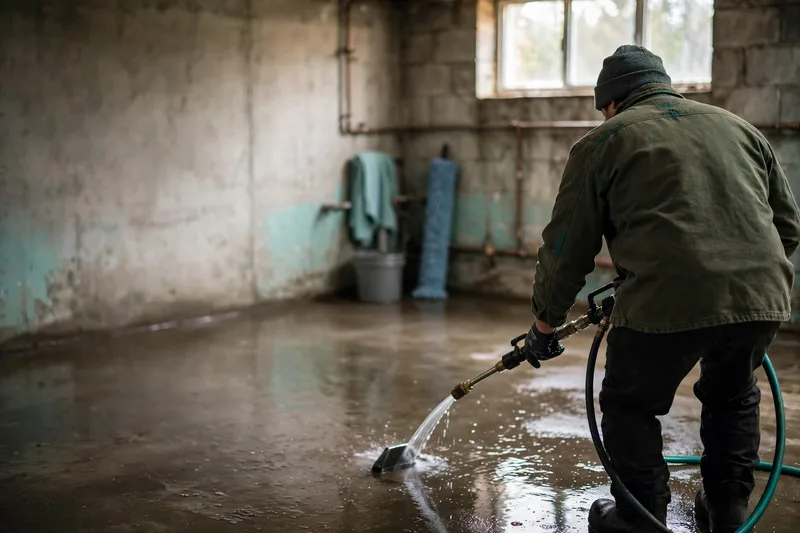
Water removal is the first step, and it is the step that decides how much of your house survives. We pump the standing water out with a truck-mounted extractor, then we vacuum the floors and pull the water out of the carpet and the pad. On a sewer backup we use sealed equipment, because the water is contaminated and we do not want it in the air of your house.
We photograph the water line on the walls, the wet floor and each damaged item before we move it. These photos are the start of your insurance claim, and they are the proof your adjuster will ask for. We also write down what we found, where the water came from, and how deep it was. The written record is part of the job, not an extra.
Do not try to remove a deep flood yourself with a household wet vacuum. A household vacuum cannot move the volume of water in a flooded basement, and it cannot lift the water out of the carpet pad or the subfloor. Call us, and let the truck-mounted equipment do the work.
Flood cleanup in Oak Brook: what we clean, and what we throw out
Flood cleanup starts with the water out, and then it splits into two lists: what we clean and what we throw out. Hard surfaces can usually be cleaned and disinfected. Porous materials usually cannot, once the water was sewage or sat for more than a day or two.
We clean and disinfect the floors, the lower walls, and any hard surface the water touched. We remove the carpet pad, the insulation, and any drywall that stayed wet. We bag the waste and take it out of the house, so it does not sit in your garage and grow mold. We do not throw anything away before we photograph it, because your insurer needs the photos and you need the list.
If the water came from the sewer, the cleanup is different. We extract with sealed equipment, wash the hard surfaces with a disinfectant, and remove anything porous the water touched. Call the Village of Oak Brook Public Works Department at 630-368-5270 as well, so the Village knows the sewer backed up on your street, and call the Flagg Creek Water Reclamation District or the Downers Grove Sanitary District, whichever serves your property, because the sanitary sewers are theirs.
Drying by readings: how we know the house is dry
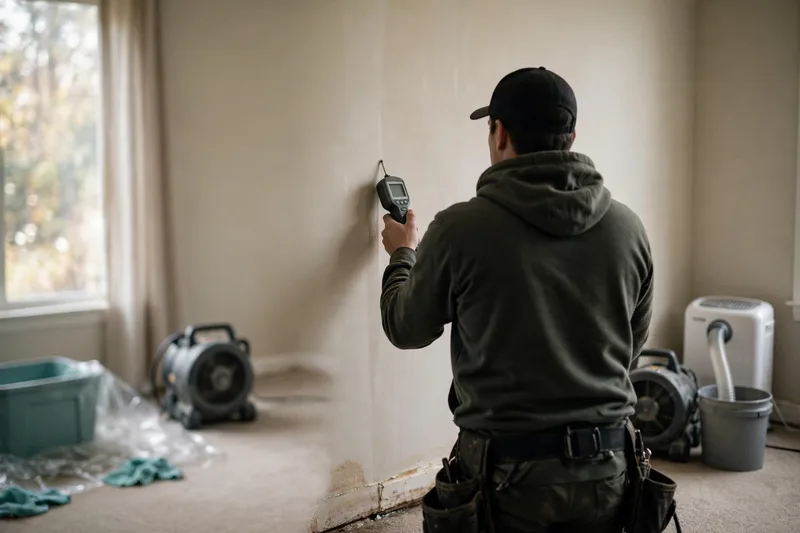
Water damage restoration oak brook drying is done by readings, not by feeling. We set air movers to push dry air across the wet surfaces, and a dehumidifier to pull the moisture out of the air. Then we take moisture readings every day with a meter, and we write the numbers into a drying log. We stop the drying only when the readings are back to dry, and we show you the numbers.
As a general guide, most homes dry in three to five days once the water is out and the equipment is running. A deep soak into hardwood, plaster or a finished basement can take a week or more. Plaster walls need the same care as drywall: plaster can feel dry on the face while the lath behind it is still wet, so the meter decides, not your hand. Do not switch the equipment off early, because the walls look dry long before they are dry inside, and the moisture left inside is what grows mold.
| Material | Typical drying time | What decides it |
|---|---|---|
| Carpet and pad, clean water | Two to three days | How much water the pad held, and whether the pad can be saved. |
| Drywall, clean water | Three to five days | How far the water wicked up the wall, and whether the wall cavity is open to air. |
| Hardwood floors | Five to ten days | How deep the water soaked, and whether the boards cupped. |
| Plaster walls | Five to ten days | The lath behind the plaster holds water long after the face feels dry. |
| Concrete and framing | Three to seven days | How much water the concrete and the wood absorbed. |
| Finished basement, sewer backup | Seven days or more | What was removed, what was disinfected, and how far the water spread. |
These are general guides, not promises. The meter decides on your house, and the drying log is the proof. Your insurer will ask for the log, and we give you a copy.
Water mitigation in Oak Brook: stop the damage from spreading
Water mitigation means stopping the damage from spreading while the drying runs. We stop the water at the source, we extract the water, we move the wet materials out of the way, and we set the drying equipment. The goal is simple: nothing that is dry now should be wet tomorrow.
Mitigation starts in the first hour. We shut off the main water valve if a pipe burst. We lift the furniture, the boxes and the electronics to dry ground. We pull the wet carpet pad and the wet insulation out of the house, so they do not feed mold. We set the air movers and the dehumidifier, and we take the first moisture readings, so the drying log starts on day one.
Mitigation is not the repair. The repair comes after the drying, when the readings say dry. A repair started on wet walls will fail, and the paint will peel, the flooring will buckle, and the mold will come back. We do not start the repair until the meter says the house is dry.
Water damage repair in Oak Brook: what gets fixed
Water damage repair starts only when the drying is done. We replace the drywall that was cut out, we replace the flooring that could not be saved, we replace the trim and the baseboards, and we repaint. The rooms go back the way they were, dry to the readings.
Some materials can be saved, and some cannot. Drywall that stayed wet for more than a day or two usually has to be cut out above the water line. Carpet that was wet with clean water can often be dried in place, but carpet pad that was wet with sewage usually has to go. Hardwood floors that cupped may need sanding and refinishing, or they may need to be replaced. We test with a moisture meter before we cut anything, and we show you the readings so you can see why.
Every repair is photographed and written into the log. Your insurer will want the photos, the drying log and the scope of work, and we give you all three. If the repair needs a permit, we tell you before the work starts. The only permit rule the Village publishes for this work is that installing a flood-control system, including a backwater valve and/or overhead sewer, requires a plumbing permit, while a sump-pump replacement using plug and cord requires no permit.
Burst pipe in Oak Brook: what to do in the first hour
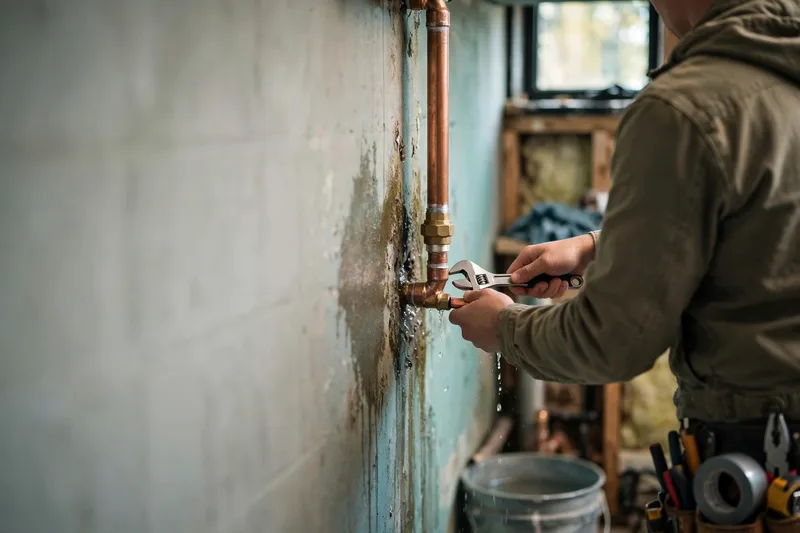
A burst pipe can fill a basement in an hour. Shut off the main water valve first, then turn off the power to any room with standing water. Call us at (773) 570-9869. Move what you can save to dry ground and photograph everything before you move it. Do not wait for the water to stop on its own.
One Oak Brook restoration page says frozen pipes are the leading cause in its own Oak Brook files, with sump failure second, and July and January its busiest months. That is that page's claim, not ours, and we print it as such.
Prevent the next one. In a hard freeze, leave the taps on a slow drip and keep the heat on, even in rooms you do not use. Open the cabinet doors under the sinks on outside walls so warm air can reach the pipes. Insulate the exposed pipes in the basement and the crawl space. If you leave the house empty in winter, shut off the main and drain the pipes, or have someone check the house.
Sewage cleanup in Oak Brook: the separate sewer problem
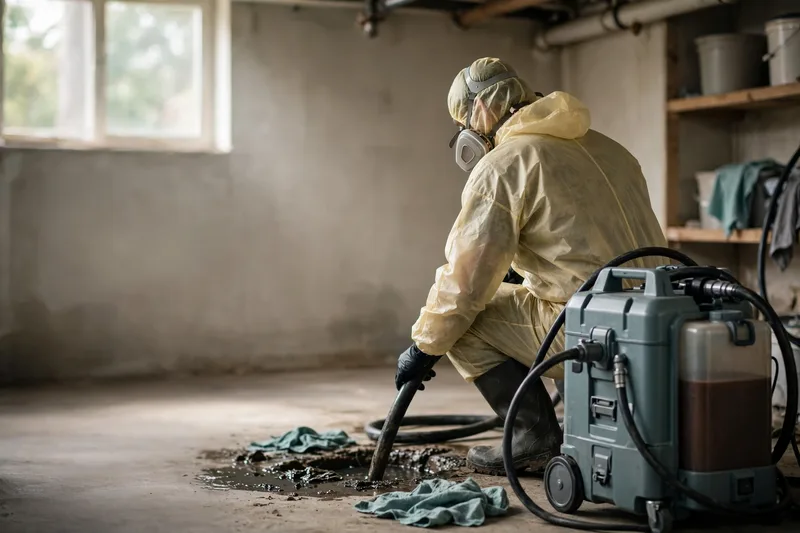
Oak Brook's sewers are separate, so a sewer backup in Oak Brook is a sanitary sewer backup, not a storm sewer backup. The sanitary sewers are maintained by the Flagg Creek Water Reclamation District or the Downers Grove Sanitary District, not by the Village, so call whichever district serves your property, and call the Village of Oak Brook Public Works Department at 630-368-5270 as well, so the Village knows the sewer backed up on your street.
Sewage water is contaminated. Do not touch it with bare hands. We extract it with sealed equipment, wash the hard surfaces with a disinfectant, and remove anything porous the water touched, including the carpet pad and any drywall it soaked. We bag the waste and take it out of the house. We dry the space with the same readings we use on every job, and we do not stop until the readings say dry.
If your basement backs up in heavy rain, the long-term fix is usually a backflow prevention valve with a bypass pump, or an overhead sewer. Installing a flood-control system, including a backwater valve and/or overhead sewer, requires a plumbing permit from the Village. There is no Village programme that pays toward any of this, so plan the cost yourself and ask us for a prevention visit.
Emergency water damage in Oak Brook: your first hour
Emergency water damage in Oak Brook does not wait for office hours, and neither do we. We answer 24/7 at (773) 570-9869. Call us first, and we will talk you through the first hour while a crew is on the way.
There is no after-hours water emergency number published by the Village, so after hours call us first. If the water came from the street or a water main, call the Village of Oak Brook Public Works Department at 630-368-5270 in office hours. For any emergency, call 911. The Village says to dial 911 for any type of police response, including non-emergency calls, and it publishes no separate non-emergency police number.
While you wait for us, stay out of a flooded basement while the power is on, do not touch the water with bare hands, lift what you can save to dry ground, and photograph everything before you move it. If a pipe burst, shut off the main water valve. If the water came from the sewer or the street, do not try to stop it yourself.
What water damage restoration costs in Oak Brook: the factors
The cost of water damage restoration in Oak Brook depends on how much water there is, what kind of water it is, how far it spread and how long it sat. A small clean-water leak in one room costs far less to fix than a sewer backup across a finished basement. A loss found the same day costs far less than a loss found a week later, because the water has had less time to soak in and the mold has had less time to start.
We never quote a price before we see the loss, and we never print prices on this site. After the first visit you get a written scope of the work and a drying plan, and we work with your insurer on the claim. The scope lists what will be extracted, what will be dried, what will be removed and what will be repaired, so you can see the whole job before it starts.
If a company quotes you a price over the phone before it has seen the water, be careful. That company is guessing, and the guess will change when it arrives. A written scope after a first visit is the honest way to price this work.
Insurance after water damage in Oak Brook: what usually pays
Water damage restoration oak brook claims usually start with three calls: call us, call the Village if the sewer or street flooded, and call your insurer. Call your insurer in the first hour, not the first week, because the claim runs on its own clock and the adjuster will want the photos, the drying log and the scope of work.
Most homeowners policies cover sudden and accidental water damage, such as a burst pipe or a failed appliance hose. Most policies do not cover flooding from outside the house, such as creek water or street flooding, unless you hold separate flood insurance. Sewer backup is often a separate add-on with its own limit. Waterproofing and flood proofing are usually seen as maintenance, and most policies do not pay for them.
Flood insurance is separate from homeowners insurance. The National Flood Insurance Program has a 30-day waiting period before a new policy takes effect, so you cannot buy flood insurance the day the creek rises and expect it to pay. The Village's flood information page gives the NFIP number, 1.800.638.6620, and says the same thing: the 30-day waiting period is real, and the time to buy flood insurance is before the storm, not during it.
We document the loss the way adjusters ask for it, with photos, moisture readings and a drying log, and we give you a copy you can hand to your adjuster. We do not give insurance advice, and we do not tell you what your policy covers. Read your policy, and call your insurer if you are unsure.
How long does water damage restoration take in Oak Brook?
Water damage restoration oak brook jobs follow the same order on every loss: extract, dry, clean, remove, repair. A small clean-water loss in one room can be extracted and dried in three to five days. A finished basement with a sewer backup can take a week or more to dry, and the repair after the drying can take another week or two. The drying is the part that cannot be rushed, and the repair starts only when the moisture readings say dry.
The claim runs on its own clock too. Your insurer will want the photos, the drying log and the scope of work, and we give you all three. Call your insurer in the first hour, not the first week, because the adjuster will want to see the loss before the repair starts.
Do not let anyone start the repair before the drying is done. A repair started on wet walls will fail, and the paint will peel, the flooring will buckle, and the mold will come back. The meter decides when the drying is done, and the drying log is the proof.
Mold remediation in Oak Brook: the 24 to 48 hour rule
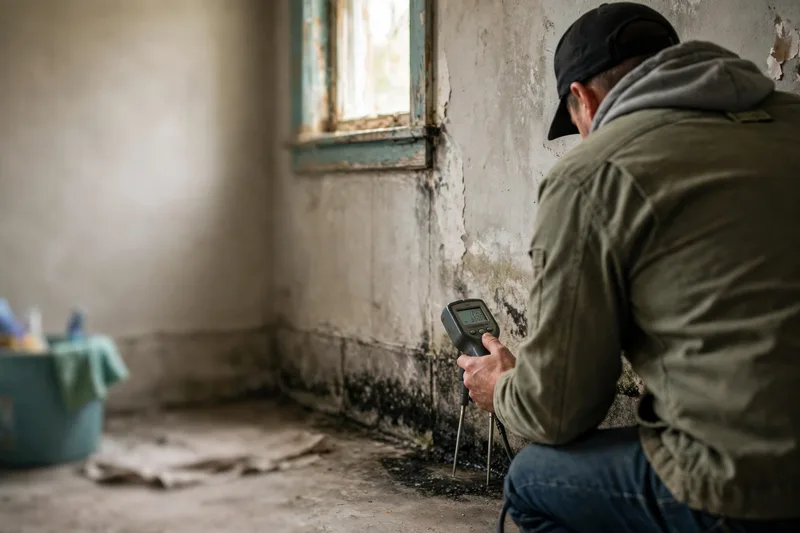
As a general guide, mold can start to grow within 24 to 48 hours on a wet surface, and it can become visible within 48 to 72 hours. The US EPA guidance is to dry water-damaged materials within 24 to 48 hours. The Village's own storm guidance says the same thing: mold can begin to grow within 24 to 48 hours. That is why the first day matters more than any other, and why we extract fast and dry fast on every job.
If the water sat for more than 48 hours, or if you can see or smell mold, we look for mold during the drying and tell you what we find. Mold behind drywall or under flooring is the mold you cannot see, and a moisture meter finds it. If you see mold, do not scrub it dry and do not bleach it and call it done. Bleach does not kill mold in drywall, and scrubbing dry mold puts the spores in the air.
In Illinois, mold remediators register with the Illinois Department of Public Health under Part 835, and you can ask any company for its registration before you hire it. The Village of Oak Brook has no mold reference on its own site. The Village's Storm Event Information page links to the EPA and CDC and DuPage County Health Department mold guidance and to the EPA Mold Guide, and that is the Village's whole mold offering: guidance, not a local rule. We do not claim a registration for ourselves. Ask us and we will tell you plainly.
Flood damage in Oak Brook: the record
The Village's own flood page says only that residents have experienced flooding from Salt Creek, Ginger Creek, and sewer backups in the past. There are no named flood events, dates or streets on the official Village site.
| When | Where | What the record shows |
|---|---|---|
| 17 to 18 April 2013 | Meyer Road, 31st Street and Meyer Road, 35th Street, Ginger Creek, Regent Drive, McDonald's Corporation grounds, Oak Brook Park District, Clearwater and 22nd Street, golf course on 22nd Street, Brook Forest, Roslyn Road, Meyer Road and Butterfield Road | Resident flood footage on YouTube, a series of 25 short clips filmed over two days, showing flood water across Oak Brook. No restoration job is shown. |
| 14 September 2008 | Hotel at Spring Road and Harger, Oak Brook golf course | Video filmed behind the hotel shows the golf course under water, in the uploader's own words. The uploader guessed at the name Timber Trails, so we do not print that name as a place. |
| 7 April 2019 | Oak Brook, no street named | Storm timelapse with street flooding, 850 views. No street is named in the video. |
There is no named Oak Brook homeowner case in the record, because no homeowner has published a flood case with a street address and a date that we could verify, so this page names none. If you are a homeowner in Oak Brook and your basement flooded, call us at (773) 570-9869 and we will add your loss to the drying log, not to this page.
Found it late? What to do when the water sat for days
Water damage restoration oak brook jobs found late are harder than jobs found the same day, but they are not lost. The water has soaked deeper, the mold has had time to start, and the drywall and the flooring have had time to fail. The steps are the same, but the order matters more.
Call us first at (773) 570-9869. Do not start the cleanup yourself, and do not bleach the mold and call it done. We extract the water, we test the walls and the floors with a moisture meter, and we tell you what can be dried and what has to go. If the water sat for more than 48 hours, we look for mold during the drying and tell you what we find.
Photograph everything before you move it, even if the loss is days old. Your insurer will still want the photos, the drying log and the scope of work, and we give you all three. Do not throw anything away before we photograph it, because the photos are the proof your adjuster will ask for.
Oak Brook, IL 60523: who to call, and when
Water damage restoration oak brook calls to the Village start with the right number, so here are the numbers the Village publishes on oak-brook.org. All of them come from the Village's own site, and the hours are the hours the Village publishes.
| Who | Number | When to call |
|---|---|---|
| Village Hall | 630-368-5000 | General Village questions, Monday through Friday 8:00 a.m. to 4:30 p.m. Village Hall is at 1200 Oak Brook Road. |
| Public Works Department | 630-368-5270 | Water main break, water service-line questions, sewer or street flooding, Monday through Friday 7:00 a.m. to 3:30 p.m. on the department page. The Village's Hours and Directions page says Public Works offices are open Monday through Friday 7 AM to 3 PM. |
| Public Works Director Tim O'Malley | 630-368-5276 | Public Works questions that need the director. |
| Water Billing | 630-368-5090 | Water billing and e-billing questions. The water comes from Lake Michigan through the DuPage Water Commission, and residential bills arrive every two months. |
| Development Services | 630-368-5101 | Flood map information. |
| Village Engineering Consultant | 630-368-5144 | Illegal floodplain development. |
| CRS Coordinator | 630-368-5104 | Questions about the Community Rating System. The Village publishes no CRS class number, so this page prints none. |
| Illicit Discharge Hotline | 630-407-6896 | An illicit discharge to the storm sewer. |
| Flagg Creek Water Reclamation District | 630-323-3299 | A sanitary sewer backup, if Flagg Creek serves your property. |
| National Flood Insurance Program | 1.800.638.6620 | Flood insurance questions. A new policy has a 30-day waiting period before it takes effect. |
For any emergency, call 911. The Village says to dial 911 for any type of police response, including non-emergency calls, and it publishes no separate non-emergency police number, so this page prints none. The Village also publishes no after-hours water emergency number, so after hours call us first at (773) 570-9869 and we will tell you what to do.
No Village flood proofing programme in Oak Brook: what the Village
There is no Village programme that helps pay for flood proofing in Oak Brook. No rebate, no grant, no cost-share programme for flood proofing, overhead sewers, backflow valves or sump pumps exists. We searched the Village site and the Village Code for one, and there is none.
What the Village does publish is the permit rule: installing a flood-control system, including a backwater valve and/or overhead sewer, requires a plumbing permit, while a sump-pump replacement using plug and cord requires no permit. Storm-related permit fee waivers are subject to verification and approval, and limited to existing functional components damaged by the storm. That is a fee waiver, not a rebate, and it is the only money the Village offers toward this work.
The Code's Title 9, Chapter 13 Fee in Lieu Programs are developer fees paid to the Village or the county for off-site storage, best management practice or wetland work, not homeowner rebates. If a company tells you the Village will pay toward your overhead sewer or backflow valve, ask it to show you where the Village says so. It cannot, because the Village says no such thing.
What the Village does offer is information. The flood information page, the storm event information page and the stormwater management page are all on oak-brook.org, and the Oak Brook Public Library at 600 Oak Brook Road holds flood maps. The Village's flood information page gives the NFIP number, 1.800.638.6620, and the 30-day waiting period. The Village also publishes the flood rules in the Code, Title 9, Stormwater and Floodplain Ordinance, including the 50 percent substantial improvement rule and the flood protection elevation of base flood elevation plus one foot of freeboard.
Basement flooding in Oak Brook: stop the next one

Stop the next flood by fixing the entry point that let the last one in. If the water came back through the sewer, a backflow prevention valve with a bypass pump or an overhead sewer is the strongest fix, and installing one requires a plumbing permit from the Village. If the sump pump failed, a battery backup and a second pump cover the power cut. If the water came through the walls, grade the soil away from the house and keep the gutters clean. There is no Village programme that pays toward any of this, so plan the cost yourself and ask us for a prevention visit.
Frozen pipes are the winter entry point. In a hard freeze, leave the taps on a slow drip and keep the heat on, even in rooms you do not use. Open the cabinet doors under the sinks on outside walls so warm air can reach the pipes. Insulate the exposed pipes in the basement and the crawl space. If you leave the house empty in winter, shut off the main and drain the pipes, or have someone check the house.
| How often | What to do |
|---|---|
| Every few months | Pour a bucket of water into the pit and watch the pump run. If it does not run, call us before the next storm, not after it. |
| Every few months | Test the battery backup the same way. A battery that has not been tested is a battery you do not know about. |
| Once a year | Clean the pit, check the discharge line for clogs, and check that the discharge points away from the house. |
| Before winter | Check that the discharge line is not frozen and that it drains to a place where the water will not freeze and back up. |
| When the pump is old | A sump pump does not last forever. If yours is more than ten years old, have it checked before the next storm season. |
We check the entry points, the pump, the discharge and the grading on a prevention visit, and we write down what we find, in order of what matters most. Call us at (773) 570-9869 and ask for a prevention visit.
Oak Brook's older homes: plaster, lead paint and asbestos
That is that page's figure, not ours, and we print it as such. What it means in practice is that many Oak Brook homes are old enough to need care when the walls come open. Plaster walls can feel dry on the face while the lath behind them is still wet, so the moisture meter decides, not your hand.
Many Oak Brook homes were built before 1978, and federal law, the EPA Renovation, Repair and Painting Rule, requires lead-safe work practices when paint is disturbed in a home built before 1978. If your home was built before 1978 and the repair disturbs painted surfaces, ask the contractor how it will work lead-safe.
Homes built before the 1980s may contain asbestos in floor tiles, pipe insulation or roofing. Do not disturb material you suspect contains asbestos, and have it tested before the repair. A water damage repair that opens a wall or a floor in an older home is a repair that should start with a check for lead paint and asbestos, not with a hammer.
How to choose a water damage company in Oak Brook
Water damage restoration oak brook companies are not all the same, so here is how to choose one. The right company answers the phone at 2 a.m. arrives the same day, dries the house to readings you can see, and gives you the photos and the drying log your insurer asks for. The wrong company quotes a price over the phone before it has seen the water, starts the repair before the drying is done, and cannot show you a single reading.
Ask these questions before you hire anyone. Do you answer 24/7, and will you come today? Do you take moisture readings every day, and will I see the numbers? Will you photograph everything before you move it? Will you give me a written scope of the work and a drying plan after the first visit? If the job involves mold, can you show me your Illinois Department of Public Health registration under Part 835? We do not claim a registration for ourselves, and we will tell you plainly if you ask. If a company says it is registered and cannot show you the registration, do not hire it for mold work.
Illinois law, the Home Repair and Remodeling Act, requires a written contract for most home repair work over one thousand dollars. Ask for the contract in writing before the work starts, and read it before you sign it. A company that will not put the scope and the price in writing is a company to avoid.
Finally, ask what the company will not do. We will not quote a price before we see the loss. We will not start the repair before the drying is done. We will not throw anything away before we photograph it. And we will not tell you the Village will pay for your overhead sewer or backflow valve, because the Village has no programme that does.
We also serve the suburbs around Oak Brook
We serve Oak Brook, IL 60523 in DuPage County and the suburbs around it, from the same number, (773) 570-9869. We answer 24/7.
- Water damage restoration in Hinsdale, the next village east, with its own flood story on Salt Creek.
- Water damage restoration in Downers Grove, south of Oak Brook on the East Branch DuPage River.
- Water damage restoration in Westmont, south of Oak Brook, where the sanitary sewers are the Downers Grove Sanitary District's too.
- Water damage restoration in Lombard, north of Oak Brook on the East Branch DuPage River.
- Water damage restoration in Elmhurst, north of Oak Brook, home of the Elmhurst Quarry Flood Control Facility on Salt Creek.
- Water damage restoration in La Grange, east of Oak Brook in Cook County.
What Oak Brook homeowners ask
How to tell if water damage is permanent?
Water damage is permanent when the material has failed. Drywall that stayed wet for more than 48 hours often has to be cut out. Hardwood that cupped may not come back flat. Plaster that crumbled cannot be dried back to sound. A moisture meter tells you what can be dried and what has to go, and the drying log is the record of what was saved and what was removed.
What qualifies as water damage?
Any unwanted water in the home qualifies: a burst pipe, an appliance leak, a sewer backup, a roof leak, or flood water from a creek or the street. The cause decides what your insurance covers, and the category of the water decides how we clean it. Clean water, grey water and black water need different cleanup, so we find the cause and the category before we start.
How to tell if a house has water damage?
Look for water stains on the ceiling and the walls, peeling paint, a musty smell, warped floors, and drywall that feels soft. A moisture meter finds water you cannot see, such as water behind drywall or under flooring. If you are buying a house in Oak Brook and a past loss was repaired, ask for the drying log and the scope of work. A repair with a drying log is a repair you can trust.
Do realtors have to disclose water damage?
In Illinois, sellers must disclose known material defects, including water damage, on the Residential Real Property Disclosure Report. If the seller repaired a past loss, ask for the drying log and the scope of work. If the seller cannot show you the log, assume the repair was not documented and have the house checked before you buy.
What not to say to an insurance adjuster after water damage?
Do not guess the cause, and do not say the damage was old if you do not know. Do not throw anything away before you photograph it. Stick to what you saw and when you saw it, and give the adjuster the photos and the drying log. The photos and the log speak for themselves, and guessing only gives the adjuster a reason to doubt the claim.
Will my homeowners insurance go up if I file a water damage claim?
A claim can affect your premium or your renewal, and it depends on your policy, your insurer and your claims history. Ask your insurer before you file. A small loss you can pay yourself may be cheaper than a claim. We do not give insurance advice, and we do not tell you whether to file. Read your policy, and call your insurer if you are unsure.
What is the difference between water remediation and restoration?
Remediation is the cleanup and the drying. Restoration is the repair and the rebuild after the drying. Remediation comes first: extract the water, dry the structure to readings, clean and disinfect, and remove what cannot be saved. Restoration comes second: replace the drywall, the flooring and the trim, and repaint. A repair started before the drying is done will fail.
What are the four classes of water damage?
Class 1 is the least water, in low-porosity materials such as concrete and tile. Class 2 is more water, in carpet and cushions. Class 3 is the greatest amount of water, with ceilings and walls saturated. Class 4 is specialty drying, in hardwood, plaster and concrete, where the water is deep in the material. The class decides how much equipment the job needs and how long the drying takes, and the moisture meter decides when the drying is done.
Do you have to replace drywall after water damage?
Not always. Drywall that was wet with clean water and caught fast can often be dried in place. Drywall that stayed wet for more than a day or two, or that was wet with sewage, usually has to be cut out above the water line. We test with a moisture meter before we cut anything, and we show you the readings so you can see why.
How long does it take for a floor to rot from water damage?
Rot takes weeks to months of wetness, not days. The first days are about mold, not rot. Mold can start to grow within 24 to 48 hours on a wet surface, and that is why the first day matters so much. Dry the floor fast and the floor survives. Leave it wet for weeks and the wood will rot, the subfloor will fail, and the repair will cost far more than the drying would have.
Can you sell a house with a wet basement?
Yes, but in Illinois you must disclose known water damage on the Residential Real Property Disclosure Report. A dried, documented repair with a drying log sells better than a wet basement, and a buyer who sees the log will trust the repair. Fix it first if you can, and keep the drying log and the scope of work to show the buyer.
Will a flooded basement dry on its own?
No. A wet basement does not dry on its own. The water soaks into the drywall, the flooring and the framing, and the moisture left inside is what grows mold. Dry it with air movers and a dehumidifier, take moisture readings every day, and stop only when the readings say dry. Do not switch the equipment off early, because the walls look dry long before they are dry inside.
Is a burst pipe considered an emergency?
Yes. A burst pipe can fill a basement in an hour, so shut off the main water valve and call us at (773) 570-9869. If the water is near the electrical panel, turn off the power to that room and stay out until we tell you it is safe. For any emergency, call 911.
Oak Brook water damage: questions and answers
What should I do first when I find water damage in my basement in Oak Brook?
Water damage restoration oak brook starts with one call, and the call comes before anything else. Call us first at (773) 570-9869. We answer 24/7 and talk you through the first hour while a crew is on the way. If a pipe burst, shut off the main water valve. If the water came from the sewer or the street, do not try to stop it yourself. Stay out of a flooded basement while the power is on. Do not touch the water with bare hands. Lift what you can save to dry ground, photograph everything before you move it, and then call the Village if the sewer or street flooded: the Public Works Department at 630-368-5270. Then call your insurer and start the claim.
Does homeowners insurance cover water damage in Illinois?
It usually covers sudden and accidental water damage, such as a burst pipe or a failed appliance hose. It usually does not cover flooding from outside the house, such as creek water or street flooding, unless you hold separate flood insurance. Sewer backup is often a separate add-on with its own limit. Waterproofing and flood proofing are usually seen as maintenance, and most policies do not pay for them. Read your policy, call your insurer early, and keep every photo and receipt. We document the loss the way adjusters ask for it, with photos, moisture readings and a drying log.
How long does water damage restoration take in Oak Brook IL?
A small clean-water loss in one room can be extracted and dried in three to five days. A finished basement with a sewer backup can take a week or more to dry, and the repair after the drying can take another week or two. The drying is the part that cannot be rushed. The repair starts only when the moisture readings say dry, and a repair started on wet walls will fail. The claim runs on its own clock too. Your insurer will want the photos, the drying log and the scope of work, and we give you all three. Call your insurer in the first hour, not the first week.
Who should I call first for water damage in Oak Brook IL?
Call us first at (773) 570-9869. We answer 24/7 and talk you through the first hour while a crew is on the way. Second, if the water came from the street or a water main, call the Village of Oak Brook Public Works Department at 630-368-5270. Water service-line questions go to Public Works too. For water billing questions, call Water Billing at 630-368-5090. Third, call your insurer and start the claim. For any emergency, call 911. The Village publishes no separate non-emergency police number and no after-hours water emergency number, so after hours call us first and we will tell you what to do.
How fast does mold grow after water damage in a basement?
As a general guide, mold can start to grow within 24 to 48 hours on a wet surface, and it can become visible within 48 to 72 hours. That is why the first day matters more than any other. The US EPA guidance is to dry water-damaged materials within 24 to 48 hours. If the water sat for more than two days, or if the room smells musty, we look for mold during the drying and tell you what we find.
If you see mold, do not scrub it dry and do not bleach it and call it done. In Illinois, mold remediators register with the Illinois Department of Public Health under Part 835, and you can ask any company for its registration before you hire it. We do not claim a registration for ourselves. Ask us and we will tell you plainly.
Why does my basement keep flooding in Oak Brook?
Salt Creek and Ginger Creek run through Oak Brook, and the Village's own flood page says residents have experienced flooding from Salt Creek, Ginger Creek, and sewer backups in the past. The Village Code says DuPage County drains poorly, with flat topography and low-permeability soils, and that most flood damage to structures has occurred adjacent to streams in the floodplain and floodway. Add a sump pump that fails in a power cut, a frozen discharge line in January, and a sanitary backup on the wrong night, and the same basements flood in the same storms. The fix depends on which of these let the water in, so we find the entry point first and then dry the basement.
What does water damage restoration cost in Oak Brook?
It depends on how much water there is, what kind of water it is, how far it spread and how long it sat. A small clean-water leak in one room costs far less to fix than a sewer backup across a finished basement. We never quote a price before we see the loss, and we never print prices on this site. After the first visit you get a written scope of the work and a drying plan, and we work with your insurer on the claim. If a company quotes you a price over the phone before it has seen the water, be careful. That company is guessing, and the guess will change when it arrives.
How long does it take to dry a house after water damage?
As a general guide, most homes dry in three to five days once the water is out and the equipment is running. A deep soak into hardwood, plaster or a finished basement can take a week or more. We do not guess. We take moisture readings every day and we stop the drying only when the readings are back to dry. You see the numbers, so you know when the job is done. Do not switch the equipment off early, because the walls look dry long before they are dry inside, and the moisture left inside is what grows mold.
Can I stay in my house while the drying runs?
In most clean-water jobs, yes. The air movers and dehumidifiers are loud, but the house is safe to live in while they run. If the water was sewage, or if mold is growing, or if the power is off, we will tell you to stay out until the space is safe. If you have asthma, allergies or a weak immune system, talk to your doctor first and tell us what they said. The drying equipment is loud at night, so call us if the noise bothers you and we will talk about it. Do not solve it by unplugging the dehumidifier.
Do I need to throw out wet carpet and drywall?
It depends on the water and how long it sat. Clean water caught fast can often be dried in place. Sewage water means the carpet pad and any drywall it touched usually have to go. Drywall that stayed wet for more than a day or two often has to be cut out above the water line. We test with a moisture meter before we cut anything, and we show you the readings so you can see why. We do not throw anything away without showing you first, and we do not throw anything away before we photograph it, because your insurer needs the photos and you need the list.
How do you dry the walls without tearing them all out?
We drill small holes near the base of the wall and push dry air into the wall cavity, or we pull the baseboard and dry from the bottom up. A moisture meter tells us where the water is and when the wall is dry. We cut drywall only when the meter says the wall will not dry on its own, or when the water was sewage. Every cut is marked, photographed and written into the drying log. Plaster walls need the same care: plaster can feel dry on the face while the lath behind it is still wet, so the meter decides, not your hand.
What if the water came from the sewer?
Treat it as contaminated and do not touch it with bare hands. Sewer water carries bacteria, and anything porous it touched usually has to be thrown out. We extract it with sealed equipment, wash the hard surfaces with a disinfectant, and dry the space with the same readings we use on every job. Call the Village of Oak Brook Public Works Department at 630-368-5270 as well, so the Village knows the sewer backed up on your street. If the backup is sanitary, call the Flagg Creek Water Reclamation District or the Downers Grove Sanitary District, whichever serves your property, because the sanitary sewers are theirs, not the Village's.
How do I know if my sump pump failed?
Look in the sump pit. If the water is high and the pump is silent, the pump has failed, the float switch is stuck, or the power is out. If the pump runs but the water does not drop, the discharge line may be frozen, clogged or disconnected. If the pump runs constantly in dry weather, the check valve may be bad. Test the pump every few months by pouring a bucket of water into the pit and watching it run. If it does not run, call us before the next storm, not after it. A working sump pump with a battery backup is the cheapest insurance a basement has.
What should I do if a pipe bursts in Oak Brook?
Shut off the main water valve first, then turn off the power to any room with standing water. Call us at (773) 570-9869. Move what you can save to dry ground and photograph everything before you move it. Do not wait for the water to stop on its own, because a burst pipe can fill a basement in an hour. In a hard freeze, leave the taps on a slow drip and keep the heat on, even in rooms you do not use.
Open the cabinet doors under the sinks on outside walls so warm air can reach the pipes. If you leave the house empty in winter, shut off the main and drain the pipes, or have someone check the house. One Oak Brook restoration page says frozen pipes are the leading cause in its own Oak Brook files, with sump failure second, and July and January its busiest months. That is that page's claim, not ours, and we print it as such.
Can you call the fire department for a burst pipe?
For a standard burst pipe, no. Call a plumber or call us at (773) 570-9869 first. Shut off the main water valve, turn off the power to any room with standing water, and get the drying started. You can call the fire department if the water is a safety risk, for example if it is near the electrical panel or if the ceiling is sagging with water. Fire crews can shut off the water and help make the house safe, but they do not dry the house or repair the pipe. Call us as well, because the drying and repair still have to be done, and the first hours matter most. For any emergency, call 911.
Do I need a mold inspection after water damage?
If the water sat for more than 48 hours, or if you can see or smell mold, yes. A mold inspection finds growth you cannot see, such as mold behind drywall or under flooring. In Illinois, mold remediators register with the Illinois Department of Public Health under Part 835, and you can ask any company for its registration before you hire it. We do not claim a registration for ourselves. Ask us and we will tell you plainly. If a company says it is registered and cannot show you the registration, do not hire it for mold work.
Is there a Village programme that helps pay for flood proofing in Oak Brook?
No. The Village of Oak Brook has no rebate, grant or cost-share programme for flood proofing, overhead sewers, backflow valves or sump pumps. We searched the Village site and the Village Code for one, and there is none. What the Village does publish instead is the permit rule: installing a flood-control system, including a backwater valve and/or overhead sewer, requires a plumbing permit, while a sump-pump replacement using plug and cord requires no permit. Storm-related permit fee waivers are subject to verification and approval, and limited to existing functional components damaged by the storm.
That is a fee waiver, not a rebate. The Code's Title 9, Chapter 13 Fee in Lieu Programs are developer fees paid to the Village or the county for off-site storage, best management practice or wetland work, not homeowner rebates. If a company tells you the Village will pay toward your overhead sewer or backflow valve, ask it to show you where the Village says so. It cannot, because the Village says no such thing.
Who do I call at the Village of Oak Brook for water and sewer flooding?
For a water main break or a water service-line question, call the Public Works Department at 630-368-5270, Monday through Friday 7:00 a.m. to 3:30 p.m. on the department page. The Village's Hours and Directions page says Public Works offices are open Monday through Friday 7 AM to 3 PM, so use the department page hours as the more specific source. For water billing and e-billing, call Water Billing at 630-368-5090. For flood map information, call Development Services at 630-368-5101. For illegal floodplain development, call the Village Engineering Consultant at 630-368-5144.
For a sanitary sewer backup, call the Flagg Creek Water Reclamation District or the Downers Grove Sanitary District, whichever serves your property. For an illicit discharge to the storm sewer, call the hotline at 630-407-6896. For general Village questions, call Village Hall at 630-368-5000, Monday through Friday 8:00 a.m. to 4:30 p.m. For any emergency, call 911. The Village says to dial 911 for any type of police response, including non-emergency calls. All of these numbers come from the Village's own site, oak-brook.org.
Who owns the sewer lateral in Oak Brook?
We could not find a published Village rule that says who owns the sewer lateral, so this page does not state it. Do not assume. The Village Code search returned nothing for lateral, and the Code's Title 8 on Public Works contains no sewer chapter.
The closest Code rule is for WATER service lines, not sewer laterals, and the two must not be mixed up: under Code section 8-2A-4, a water service connection, from the water main to and including the shutoff valve or curb stop, is the property of the Village, while a water service extension, from the curb stop to the water meter, is the property of the owner.
Sanitary sewers that serve homes or businesses are maintained by the Flagg Creek Water Reclamation District or the Downers Grove Sanitary District, so for a sanitary backup call whichever district serves your property.
Has Oak Brook flooded before?
Yes, and the record is on video. In April 2013, a resident filmed flood water across Oak Brook over two days, 17 and 18 April 2013, in a series of 25 short clips. The clips name the places: Meyer Road, 31st Street and Meyer Road, 35th Street, Ginger Creek, Regent Drive, the McDonald's Corporation grounds, the Oak Brook Park District, Clearwater and 22nd Street, the golf course on 22nd Street, Brook Forest, Roslyn Road, and Meyer Road and Butterfield Road.
In September 2008, a video filmed behind the hotel at Spring Road and Harger on 14 September 2008 shows the golf course under water, in the uploader's own words. In April 2019, a storm timelapse shows street flooding in Oak Brook, with no street named. The Village itself says only that residents have experienced flooding from Salt Creek, Ginger Creek, and sewer backups in the past.
There is no named Oak Brook homeowner case in the record, because no homeowner has published a flood case with a street address and a date that we could verify, so this page names none.
What is a separate sewer system, and does Oak Brook have one?
A separate sewer system carries storm water and sewage in different pipes. A combined sewer carries both in the same pipes. Oak Brook is separate. The Village operates a Municipal Separate Storm Sewer System, called an MS4, under a general permit from the Illinois Environmental Protection Agency, NPDES Permit ILR40. The storm sewers carry rainwater only. The sanitary sewers are separate too, and they are maintained by the Flagg Creek Water Reclamation District or the Downers Grove Sanitary District, not by the Village. Separate does not mean safe. A basement can still flood from a sanitary backup, a sump failure or a burst pipe, and the Village's own flood page says residents have experienced flooding from Salt Creek, Ginger Creek, and sewer backups in the past.
How do I prevent my basement from flooding again?
Start with the entry point. If the water came back through the sewer, a backflow prevention valve with a bypass pump or an overhead sewer is the strongest fix, and installing one requires a plumbing permit from the Village. If the sump pump failed, a battery backup and a second pump cover the power cut. If the water came through the walls, grade the soil away from the house and keep the gutters clean. Test the sump pump every few months. There is no Village programme that pays toward any of this, so plan the cost yourself and ask us for a prevention visit. We check the entry points, the pump, the discharge and the grading, and we write down what we find, in order of what matters most.
Will my insurance pay for basement waterproofing?
Usually not. Waterproofing and flood proofing are seen as maintenance, and most policies do not pay for them. What insurance usually pays for is the damage from a sudden event, such as a burst pipe or a sewer backup if you hold that cover. The Village has no programme that pays toward prevention either, so the cost of waterproofing is yours. Read your policy before you spend, and call your insurer if you are unsure. We can give you the scope of work and the receipts your insurer or your tax professional asks for, but we do not give tax or insurance advice.
What should I not do after a basement flood?
Do not enter a flooded basement while the power is on. Do not touch floodwater with bare hands, and assume it is contaminated, especially if it came from a sewer. Do not run a wet vacuum on sewage water and then use it in the house. Do not bleach mold and call it fixed. Do not throw anything away before you photograph it for the claim. Do not paint over a water stain and call it fixed, and do not lay new flooring over a wet subfloor. And do not wait.
The first day is when the drying works best and mold has the least time to start. The Village's own storm guidance says the same three things: do not enter a flooded basement if the power is on, assume all floodwater is contaminated, and mold can begin to grow within 24 to 48 hours.
How do I document water damage for an insurance claim?
Photograph everything before you move it, including the water line on the walls, the wet floor, and each damaged item. Keep a list of what was damaged, with the brand and age if you know it. Save every receipt for the cleanup, the drying and the repairs. Keep a short log of who you called and when. We photograph the loss, write a drying log with moisture readings, and give you a copy you can hand to your adjuster. The log is the proof that the drying was done properly, and it is the document adjusters ask for first.
Do you serve Oak Brook, IL 60523?
Yes. We serve Oak Brook, IL 60523 in DuPage County and the suburbs around it, including Hinsdale, Downers Grove, Westmont, Lombard, Elmhurst and La Grange, from the same number, (773) 570-9869. We answer 24/7. If you are in Oak Brook and your basement is wet, call us first and we will talk you through the first hour while a crew is on the way.
Sources
- Flood Information, Village of Oak Brook
- Storm Event Information, Village of Oak Brook
- Stormwater Management, Village of Oak Brook
- Public Works, Village of Oak Brook
- Public Works Services, Village of Oak Brook
- Water Billing, Village of Oak Brook
- Water Quality, Village of Oak Brook
- Hours and Directions, Village of Oak Brook
- Police Department, Village of Oak Brook
- Village of Oak Brook Code of Ordinances
- ThaliaJRT, Flood of 2013 video series, filmed 17 to 18 April 2013, YouTube
- Soggy Oak Brook Illinois 9/14/08, YouTube, 15 September 2008
- Live Storms Media, 4-7-19 Oak Brook, IL, Storm Timelapse and Street Flooding, YouTube, 7 April 2019
- Mold, US Environmental Protection Agency
- Renovation, Repair and Painting Program, US Environmental Protection Agency
- Illinois Department of Public Health, Part 835, Mold Remediation Registration
- National Flood Insurance Program, FEMA
More Restoration Services Near Oak Brook
Every service below is one tap away. Pick the one that matches your problem.

Water Damage Restoration
Fast water extraction, structural drying, and full repair after burst pipes, leaks, and floods.
Learn more →
Water Mitigation
Emergency water removal, structural drying, and mold prevention to stop the damage fast, 24/7.
Learn more →
Mold Remediation
Safe, contained mold remediation that removes contamination and fixes the moisture source.
Learn more →
Sewage Cleanup
Safe removal and disinfection of dangerous sewage backups and black water.
Learn more →
Flood Cleanup
Water pumped out, structure dried, and debris cleared fast after storms and flooding.
Learn more →
Hardwood Floors Water Damage
Cupped, buckled or stained hardwood after a leak? How we dry it, when sanding saves it, and when the boards have to go.
Learn more →