Lombard, IL 60148 · DuPage County · 24/7 emergency
Water Damage Restoration Lombard
Your basement floods at midnight. You need water damage restoration lombard il crews who answer the phone, show up with pumps, and tell you the truth about what is wet. That is what we do.
We pull the water out, dry the building to meter readings, and put back what the water ruined. No call centre, no sales script, no price quoted before we have seen the job. One crew, one file, one number to call.
- Crews answer 24/7, nights, weekends, holidays
- Water extraction, structural drying and rebuild
- Moisture readings written into a drying log you can see
- Insurance file: photographs, receipts, drying log
Serving Lombard and the villages around it, Villa Park, Addison, Glen Ellyn, Oakbrook Terrace and Downers Grove. One phone number: (773) 570-9869.
- We answer 24/7
- Local Chicago team
- Insurance documentation help
- Straight answers, no pressure
Request water damage help in Lombard
Tell us where the water is and what it looks like. We answer 24/7 and call you back within the hour.
Water damage restoration in Lombard, the short answer
Water damage restoration in Lombard means three things in order: get the water out, dry the building to meter readings, and repair what the water ruined. The first two are the emergency. The third is the rebuild. A company that skips the drying and goes straight to the rebuild is building over wet wood, and wet wood rots, smells and grows mold.
Two words on this page need separating, because companies use them as if they meant the same thing and they do not. Mitigation is the emergency work: stop the source, extract the water and dry the building. Restoration is the whole job: mitigation first, then the repair that puts the home back to how it was. Water damage restoration lombard work means both halves, in that order. A company that sells you mitigation and calls it restoration has sold you half a job, and the other half is the part that shows up later, as a smell, as mold, or as a floor that buckles six months after the crew left.
When you call, we ask four questions: where is the water, what kind of water is it, is it still coming in, and is anyone in danger. Clean water from a supply pipe is one job. Dirty water from a sewer backup is another, because it carries germs and needs cleaning before drying. Flood water from outside is a third. The answer decides what gear comes off the truck.
Drying takes three to seven days with professional equipment, and the full job takes one to four weeks. A minor job in one room can dry in a day or two. The drying runs until the moisture readings say dry, and the readings go into a log you can see. Dry is a number on the meter, not a look.
Before anything is moved, photograph the water line and every wet room. Keep a written list of what was wet, what you moved and what was thrown away. The insurer reads the photographs, the receipts and the drying log. A job with no drying log is a job with no proof, and a claim with no proof is a slow claim.
One thing this page will not do: it will not invent a Lombard case. The one real court record we found is named below, with the honest caveat that its opinion gives no exact date for the flood. Everything else on this page is a Village fact, a dated regional flood, or a range the sources agree on. If a page shows you a named Lombard family with a street address and a date, ask for the source, we could not find one.
If the water is coming in now, skip the reading. Call (773) 570-9869. We answer 24/7. The rest of this page is here for the morning after, when the water is out and the decisions start.
Where Lombard is, and why its water behaves the way it does
Lombard is a village in DuPage County, Illinois, west of Chicago. The 2020 census put its population at forty-four thousand four hundred seventy-six people. Its one ZIP code is 60148. The neighbouring ZIP 60181 belongs mostly to Villa Park, about seven in ten of its addresses sit in Villa Park and almost none in Lombard, so if a page lists 60181 as a Lombard ZIP, the page is wrong.
Lombard sits on a watershed divide. Most of the village drains to the East Branch of the DuPage River, a twenty-four-mile river with an eighty-two-square-mile watershed. Through Ginger Creek, parts of the village drain the other way, to Salt Creek. Glencrest Creek, an East Branch tributary, runs through Lombard itself. A sign at the Village municipal complex on Wilson Avenue marks the divide. Which side of the divide your house sits on decides which river your street drains to, and which river backs up when the rain is heavy.
About one third of Lombard still has combined sewers. A combined sewer carries sanitary waste and rainfall runoff in the same pipe. In a big rain the pipe fills past capacity, and the water overflows to ground level and comes back into homes through floor drains. The Village says a check valve or an overhead sewer, required in all new construction, may prevent a backup. The water and sewer fund is collected separately through a five dollar monthly capital fee paid by water customers, funding the gradual replacement of combined sewers. Replacing all of them at once would cost more than one hundred million dollars, so the work goes street by street, year by year.
The Village has spent real money on the other end of the problem. Pond modifications at Terrace View, Vista, Morris and Finley/Charles Lane gained twenty-six acre-feet of flood-water storage. Backup generators sit at all of the village's fourteen sanitary pumping stations, so the pumps keep running when the power goes out. The Crescent Avenue pump station at the East Branch, a forty-year-old station, was replaced, and its pumping rate rose from fifty to one hundred seventy cubic feet per second until the river reaches its ten-year flood stage. The Westwood Creek Channelization Project re-establishes drainage impeded by silt and sediment and reduces flooding south of North Avenue.
The villages around Lombard share the same creeks and the same weather. Ginger Creek runs through Downers Grove, Lombard, Oak Brook, Oakbrook Terrace and Westmont, and the East Branch watershed takes in Bloomingdale, Glendale Heights, Glen Ellyn, Downers Grove, Lisle, Westmont, Woodridge and Naperville. A storm that floods Lombard floods the villages on the same creek, and a crew that works the whole watershed knows the pattern.
The same three firms show up on the live search for all of them, and the same Village programmes, the Residential Drainage Program, the Overhead Sewer Grant, the Clear Water Disconnect Grant, exist only in Lombard, because each village runs its own grants and its own rules. A homeowner in Villa Park, across the line in the 60181 ZIP, does not qualify for Lombard's programmes, and a homeowner in Lombard does not qualify for Villa Park's. The line matters, and the ZIP on your address decides which side of it you sit on.
Our crews work from the downtown crossing of St Charles Road and Park Avenue, in the 60148 ZIP. North Lombard runs up toward Lilacia Park and the Lilac Time festival grounds. South Lombard runs down toward Yorktown Center and Four Seasons Park. The downtown district sits between them, with the Helen Plum Library and Lombard Common water park on the crew's route. The villages around Lombard, Villa Park, Addison, Glen Ellyn, Oakbrook Terrace, Downers Grove, Westmont and Oak Brook, share the same creeks and the same weather, and we serve them too.
Three dated floods explain why Lombard homeowners know the word "basement" as a verb. In July 1996, rain fell at sixteen point nine four inches in twenty-four hours near Aurora, still the Illinois statewide record, and more than thirty-five thousand homes flooded. In September 2008, rain fell across the region for fifty-one hours, and the National Centers for Environmental Information recorded major street and parking-lot flooding around Route 53 and North Avenue in Lombard itself, with Route 53 closed south of Butterfield as the East Branch overflowed.
In April 2013, the East Branch at Bolingbrook crested at twenty-five point eight five feet, and the Village newsletter put the number of flooded Lombard basements at about three thousand. Those three floods are the reason the Village's grant programmes exist, and the reason this page exists. They are dated regional events, not a named household's story.
How we get the water out of a Lombard home
Emergency water damage restoration lombard il follows the same seven steps every time, whatever the source of the water. The order matters: extraction before drying, drying before repair, and the file before the claim. Skip a step and the job comes back, as a smell, as mold, or as a floor that buckles six months later.
Call us first.
Call (773) 570-9869 any time, day or night. Tell us where the water is, what it looks like, and whether it is still coming in. We answer 24/7 and talk you through the first hour while a crew is on the way to your Lombard home.
Make it safe and stop the source.
Turn off the main water valve if the water is coming from a pipe, and turn off the water heater as well. Never step into water that may touch outlets, appliances or cords, and never try to turn off power at the breaker box while standing in water. Call 911 if there is an electrical or gas hazard.
Document before anything moves.
Photograph the water line and every wet room before anything is moved, and keep a written list of what was wet, what you moved and what was thrown away. The insurer reads the photographs, the receipts and the drying log, and the drying log is the record that settles the claim.
Call the Village if the water came from the street or the sewer.
If the water came up through a floor drain, or the street is flooding too, call the Village of Lombard Public Works at (630) 620-5740. After four in the afternoon or at weekends, dial 911. For flooding on your own property, the Community Development Private Development Engineer takes the call at (630) 620-5972. The Village owns the public main; you own the private service line.
Extract the standing water.
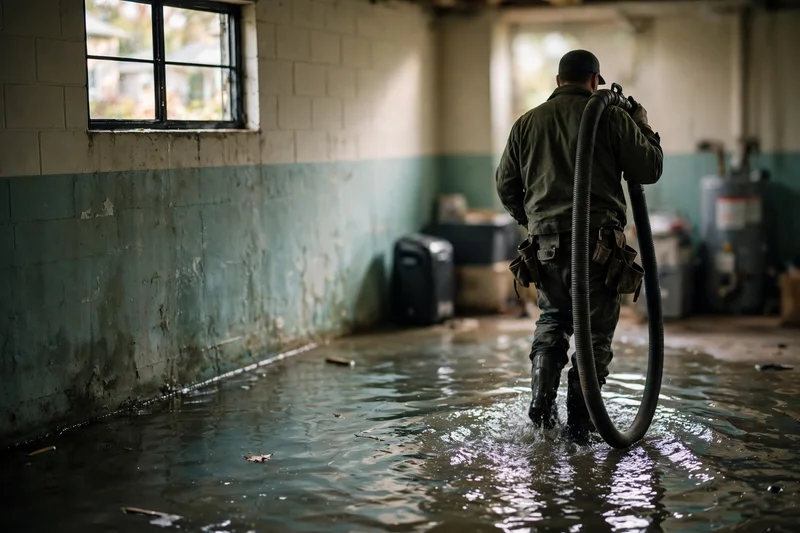
The standing water comes out first, with pumps and wet vacuums, before anything is dried. A wet vacuum handles a few inches; a pump handles a flooded basement. If flood water is still outside, wait until the outside level is lower than the basement level before pumping, because pumping too fast can damage the walls.
Remove what cannot be saved and set the drying.
Wet drywall comes out to above the high-water mark, and porous material, carpeting, ceiling tiles and soaked insulation, is discarded, not cleaned. Air movers and dehumidifiers are set, and every wall and floor is mapped with a moisture meter. Dry is a number on the meter, not a look.
Monitor daily and hand over the file.
We read every wall and floor each day and write the readings into a drying log you can see. The walls do not close until the readings say dry. When the drying is finished, you get the file: the drying log, the photographs and the receipts, ready for the insurer.
Seven ways water gets into a Lombard home
Most Lombard water jobs come from one of seven sources. Each one has its own first move, its own risk and its own insurance answer. If you know which one you have, you know what to do in the first hour.
1. Basement flooding from heavy rain
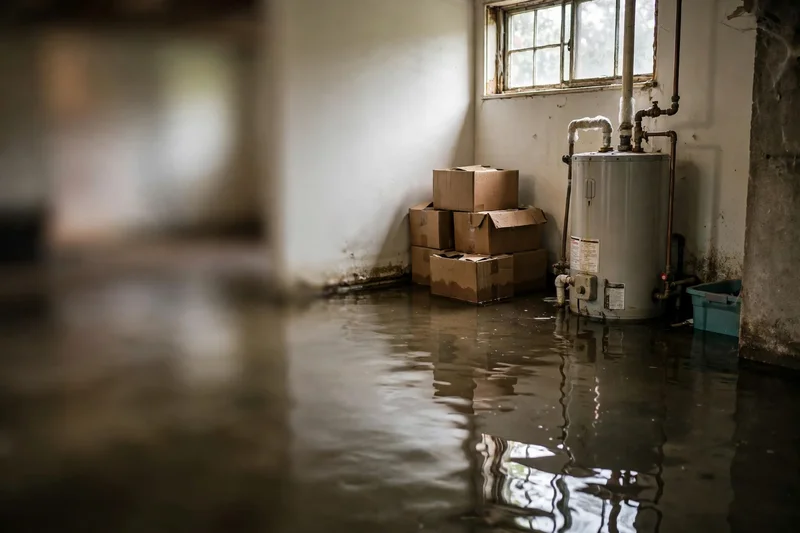
Basement flooding lombard il is the most common call we take, and the April 2013 flood is the reason why. Rain falls faster than the sewers can carry it away, the ground saturates, and the water finds the lowest point in the house. In a combined-sewer street it can also come up through a floor drain. The first move is the same whatever the route in: stay out of the water, turn off the power at the breaker if you can do it safely, and photograph the water line before anything moves.
If flood water is still outside, do not pump yet. Wait until the outside level is lower than the basement level, because pumping too fast against outside pressure can damage the walls. A wet vacuum handles a few inches; a pump handles a flooded basement. Carpeting, ceiling tiles and soaked insulation come out, they are discarded, not cleaned. Drywall comes out to above the high-water mark. The drying runs three to seven days with professional equipment, and the moisture readings go into a log you can see.
Flood damage restoration lombard il is the work that follows a basement flood: extraction, drying, cleaning and repair, in that order. Flood water from outside is not covered by a standard homeowners policy, it needs flood insurance, so the file matters even more. Keep the photographs, the receipts and the drying log, and keep the list of what was thrown away. A claim with no proof is a slow claim.
2. Sump pump failure
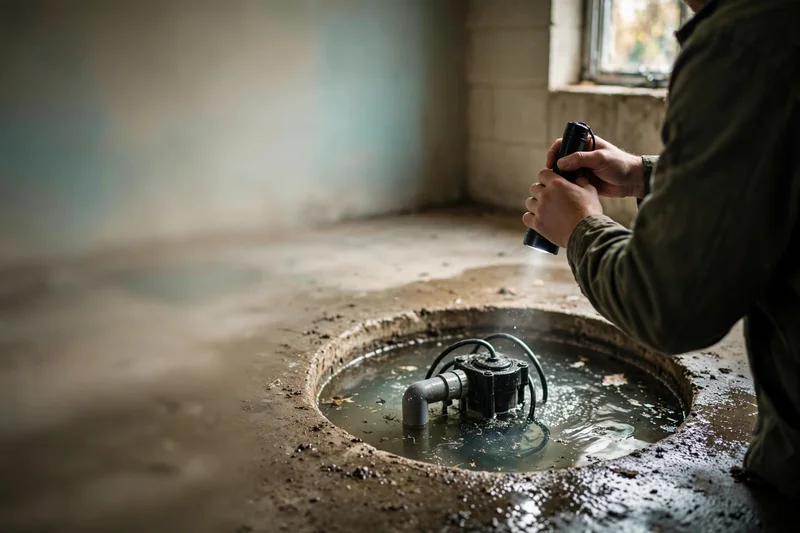
Sump pump failure basement flooding lombard il is the call we take most in the spring, when the thaw and the rain arrive together. A sump pump usually lasts about seven to ten years, depending on how often it runs. A pump that runs constantly in a wet spring wears out faster than one that runs a few times a year. The pump fails quietly, a float switch sticks, a discharge line freezes, a power cut stops the motor, and the first sign is water on the floor.
Test the pump before the spring thaw: pour a bucket of water into the pit and watch it switch on and off. Keep the discharge line clear of ice in winter, and keep the outlet clear of leaves in the autumn. A battery backup keeps the pump running through a power cut, and a water-powered backup keeps it running when the battery dies. Replace a pump that hesitates, groans or runs and runs without lowering the water. A pump that hesitates in March will fail in April.
When the pump has failed and the basement is wet, the job is the same as any basement flood: extract, dry, log the readings, repair. A sump pump failure is usually a covered event on a homeowners policy when the failure was sudden, but the pump itself is usually not covered. The drying is the covered part, and the drying log is the proof.
3. Burst pipe
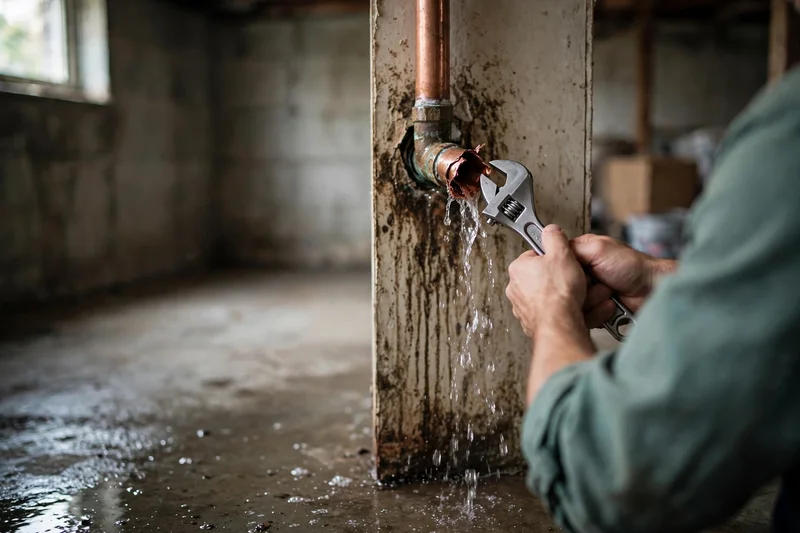
Burst pipe water damage lombard il is the winter call. A pipe freezes, the ice expands, the pipe splits, and the water runs until someone turns the main valve off. The worst bursts are the ones nobody sees, a pipe in a wall cavity, a pipe over a garage, a pipe in a crawl space, because the water runs for hours before anyone notices. The first move is the main valve. Turn it off, then turn the water heater off as well, then call.
Photograph the split before the plumber cuts it out, because the photograph is the proof the insurer reads. A burst pipe is usually a covered event when the burst was sudden, such as a pipe that froze and split in a cold snap. The insurer pays for the water damage the burst caused, not for the pipe itself. A pipe that leaked slowly for months may be classed as wear and tear, so report a burst the day you find it.
The drying after a burst pipe is a room-by-room job. Water runs down inside walls, so a wall that looks dry on the outside can be wet inside. We map every wall with a moisture meter, open what reads wet, and dry what stays. Dry is a number on the meter, not a look. A wall closed while it is still wet grows mold behind the paint, and the mold shows up months later.
4. Sewer backup
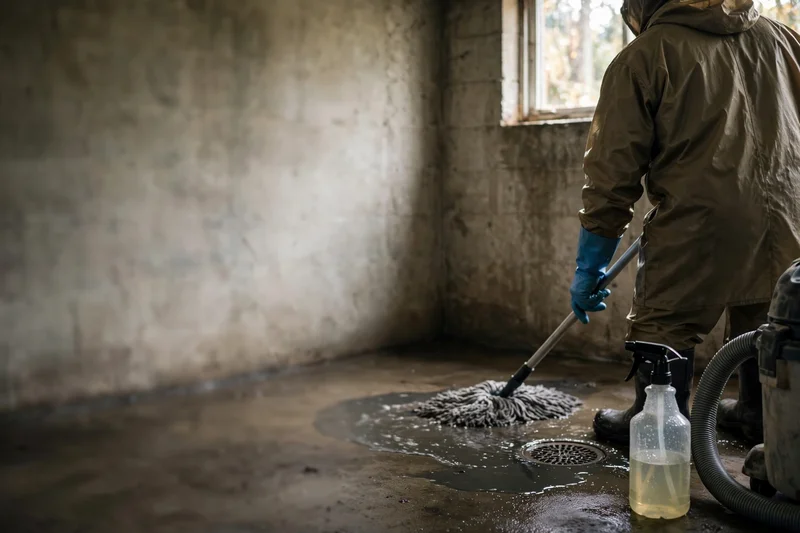
Sewage backup cleanup lombard il is the job nobody wants and the one that needs a crew the most. About one third of Lombard still has combined sewers, which carry sanitary waste and rainfall runoff in the same pipe. In a big rain the pipe fills past capacity, and the water overflows to ground level and comes back into homes through floor drains. The water that comes back is not rain water. It carries germs, and it needs cleaning before drying.
Stay out of the water. Call the Village of Lombard Public Works at (630) 620-5740 if the water came up through a floor drain, the Village owns the public main, and it needs to know the main is backing up. After four in the afternoon or at weekends, dial 911. Do not run a shop vacuum on sewage, and do not wash it down the drain. Porous material that touched sewage is discarded, not cleaned. Hard surfaces are cleaned and sanitised before any drying starts.
A sewer backup is not covered by a standard homeowners policy. It needs a sewer backup endorsement, and many Lombard policies do not carry one. That is worth checking before the rain, not after it. The Village's Overhead Sewer Grant has assisted nearly four hundred residents, and a check valve or an overhead sewer, required in all new construction, may prevent the next backup. The Residential Drainage Program, the Clear Water Disconnect Grant and the Backyard Drainage Grant are described in the Village programmes section below.
5. Roof leak and ceiling stain
A roof leak shows up as a stain on a ceiling, and the stain is usually a long way from the leak. Water runs along the rafters and the joists before it drops, so the wet patch on the ceiling is rarely under the hole in the roof. A stain that keeps coming back after painting means the water is still coming in. Paint does not stop water; it hides it for a season.
The first move is a bucket under the drip and a tarp over the roof if the rain is still falling. Then the roof gets fixed, and only then does the inside get dried. Drying a ceiling before the roof is fixed is drying a leak, and the leak wins. Wet drywall comes out, wet insulation comes out, and the drying runs until the readings say dry. A ceiling that reads wet after a week of drying needs opening, because the water is trapped above it.
A roof leak from a storm is usually a covered event. A roof leak from a roof that has not been maintained for years may not be. The age of the roof and the maintenance record decide it, and the adjuster will ask. Keep the receipts for the roof repair, because the repair is part of the file. A stain that appears after every heavy rain, in the same place, is a leak that has been there for a while, and the longer a leak runs, the more of the ceiling and the framing it soaks. The drying after a roof leak is a ceiling job, and the ceiling stays open until the readings say dry.
6. Appliance failure
A washing machine hose, a dishwasher line, a water heater and a refrigerator ice-maker line all fail the same way: a slow drip that nobody sees, then a sudden break. A water heater fails at the bottom, where the tank rusts first, and the first sign is a puddle at the base. A washing machine hose fails at the fitting, and the first sign is a wet floor behind the machine. Pull the machine out twice a year and look at the hoses. If a hose is bulging, cracked or stiff, replace it before it breaks.
Turn off the water to the appliance first, then the main valve if the shut-off does not hold. Mop up what you can, and get the air moving. A small appliance leak dried within a day or two is a small job. The same leak left for a week is a subfloor job, because the water has run under the flooring and into the joists. The drying log is the proof either way, and the insurer reads it.
Emergency water extraction lombard il is the first half of any appliance job: the standing water comes out with pumps and wet vacuums before anything is dried. A wet vacuum handles a few inches; a pump handles a flooded basement. The extraction is the part that cannot wait, because water that sits for a day starts to smell, and water that sits for two days starts to grow mold.
7. Groundwater and foundation seepage
Groundwater seeps through foundation cracks, through the joint where the wall meets the floor, and through window wells that fill in a storm. The seepage is slow, and slow water does more damage than fast water, because nobody notices it for months. The signs are a white crust on the wall, a damp smell that does not leave, paint that bubbles at the base of the wall, and a carpet that feels damp after rain.
The fix is outside the house as much as inside it. Gutters and downspouts need to carry the water away from the foundation, and the ground needs to slope away from the wall. A window well needs a drain, and a drain needs clearing. Inside, the drying runs until the readings say dry, and the cracks get sealed after the wall is dry, not before. Sealing a wet wall traps the water inside it.
Groundwater seepage is usually not a covered event, because it is classed as maintenance, not as a sudden accident. The Village's Backyard Drainage Grant, for flooding that remains for seventy-two hours or more and affects at least two contiguous properties, and the Residential Drainage Program are the two programmes that may help, and both are described below.
A water damage restoration lombard job that starts with one of those causes is a job that ends with the cause fixed, or the water comes back.
What the video hunt found
We searched YouTube six ways and watched three videos in full. The first, from 2010, walks through a gutted Lombard basement two days after a flood, no name, no address, no date beyond the year. The second, from 22 June 2020, shows street flooding in Lombard, water in the street, no home, no homeowner, no address. The third is a fifty-nine-second advertisement naming the top three water damage restoration companies in Lombard, with no case in it at all. Searches for a burst pipe, a sump pump failure and a sewage backup in Lombard returned no Lombard-specific result. A short clip from Chicagoland Water Medics in Lombard runs forty-two seconds and shows no job.
That is the whole video record: a basement with no name, a street with no home, and an advertisement. If a page shows you a Lombard homeowner on video with a street address and a date, ask for the link, we searched six ways and did not find one. The searches for a burst pipe, a sump pump failure and a sewage backup in Lombard returned no Lombard-specific result at all, which is its own finding: the town's water jobs are not on video, and the companies that work them do not film them.
The one company clip we found, from Chicagoland Water Medics in Lombard, runs forty-two seconds and shows no job. The 2010 walk-through is the only video that shows the inside of a flooded Lombard home, and it gives a year and nothing else, no name, no street, no date, no company.
Insurance: what is covered
Does homeowners insurance cover water damage in Lombard IL? It covers only part of it, and the part depends on the cause. A sudden and accidental event, such as a burst pipe, is usually covered, less your deductible. The repair of the pipe itself, a slow leak, flooding from outside and a sewer backup are usually not covered unless your policy carries the endorsement that covers them. The Village's own Water Damage Insurance Claim Tips page ranks on the live search for this question, and it is worth reading before you call your insurer.
Three endorsements decide most Lombard claims. The first is sewer backup cover, which the standard policy does not carry, and about one third of Lombard still has combined sewers, so the risk is real. The second is flood insurance, which the standard policy never carries, because flooding from outside is a separate policy. The third is the mold sub-limit, which caps what the insurer pays for mold work after a covered event.
How much does homeowners insurance pay for water damage? No page can give you a number, because the payment depends on your policy, your deductible, the cause of the water and the limits you bought. The insurer pays the approved cost of the drying and the repair, less your deductible. One of them is arithmetically wrong. This page prints neither figure. The formula is the approved cost minus the deductible, and the formula is the only honest number we can print.
Does renters insurance cover water damage? It covers your belongings when the water came from a sudden and accidental internal event, such as a burst pipe or an appliance overflow, plus loss of use and liability. It does not cover the building itself, which is the landlord's policy, and it does not cover flooding, gradual damage or negligence. Tell your landlord the day the water appears, and photograph everything before you move it.
Does homeowners insurance cover a burst pipe? It usually does when the pipe burst suddenly, such as a pipe that froze and split in a cold snap. The insurer pays for the water damage the burst caused, not for the pipe itself. A pipe that leaked slowly for months may be classed as wear and tear. Report a burst the day you find it, and photograph the split before the plumber cuts it out.
Does homeowners insurance cover mold? It covers mold only when the mold follows a sudden covered event, such as a burst pipe that soaked a wall. Mold from a slow leak, poor maintenance or flooding from outside is usually excluded. Ask your agent for your number, in writing, before the rain.
Flood insurance is the one cover this page has to explain separately, because it is the one most Lombard homeowners think they have and do not. A standard homeowners policy never covers flooding from outside, rain that comes in through the door, a creek that overflows, a street that floods. That needs a flood insurance policy, and the flood policy is a separate policy with its own limits, its own waiting period and its own rules about what is covered in a basement. Water damage restoration lombard work after a flood is the same work, extraction, drying, repair, but the payer is different, and the file matters even more, because the flood claim is judged on the photographs and the drying log alone.
The claim file is the drying log, the photographs and the receipts. Photograph the water line before anything moves. Keep a written list of what was wet, what you moved and what was thrown away. Keep every receipt. The adjuster reads the file, and a file with a daily drying log settles faster than a file without one. Call your insurer the day the water appears, not the day the drying finishes.
What drives the cost, and why this page prints no prices
How much does water damage restoration cost in Lombard IL? This site prints no prices, and this page is no exception. A number printed here would be a guess, and a guess that misleads a homeowner at midnight is worse than no number at all. What this page can do honestly is tell you what drives the cost, so you know what to ask when a crew gives you a written scope of work.
The cost depends on how much water there is, what kind of water it is, how many rooms got wet and what material it soaked. Clean water from a supply pipe is the cheapest job. Grey water from an appliance is dearer, because it needs cleaning. Black water from a sewer backup is the dearest, because it needs cleaning, sanitising and the disposal of everything porous it touched. A single room with a wet carpet is one job. A basement with soaked framing, wet drywall and a ruined floor is another.
Time drives the cost too. Water that is extracted in the first hours dries in days. Water that sits for a week soaks into the framing, and the framing has to be opened and dried from the inside. Mold that has had a week to grow adds a removal job to a drying job. The cheapest call you can make is the early one.
We inspect first, then give you a written scope of work with the cost in it before any repair starts. A phone quote before an inspection is a guess. Ask for the scope in writing, ask what the drying log will show, and ask what happens if the readings say the wall is still wet on day five. The answers to those three questions tell you more about a company than any price on a website.
The scope should list the rooms, the materials that come out, the materials that stay, the equipment that runs, and the number of drying days the crew expects. It should say what the rebuild covers and what it does not, and it should say who pays if the drying runs longer than expected. A scope that lists none of that is a scope that hides the cost, and a cost that is hidden on day one is a cost that appears on day ten.
Village programmes that do apply
Lombard homeowners have five Village programmes that may help with water. They are real, they are published by the Village, and they are worth knowing about before the rain. They are also limited, and this page prints their limits plainly.
The Residential Drainage Program is the big one. The Village Board approved it in 2023, and it takes a concierge approach: field and data assessments, technical guidance, and then a reimbursement of fifty percent, up to fifteen thousand dollars, for qualified improvements that address standing water lasting more than seventy-two hours on multiple properties. It covers two or more contiguous properties, and the eligible costs include surveying, engineering, permits and construction, including the connection to the public storm sewer. The reimbursement comes after completion, after a final inspection, and after a paid-in-full receipt. The policy dates to 20 January 2000 and was updated on 2 March 2023.
The Overhead Sewer Grant Program has assisted nearly four hundred residents, according to the Village's own FAQ. Its terms from a 2013 newsletter were seventy-five percent up to five thousand dollars, but those are 2013 terms, and this page does not print them as current. Check the current terms on the Village's Grants page before you plan around them. The Clear Water Disconnect Grant has contributed to dozens of homes removing sump pumps and downspouts from sanitary sewers.
The Backyard Drainage Grant covers flooding that remains for seventy-two hours or more and affects at least two contiguous properties. The Flood Susceptible Homes Redevelopment Program, adopted by the Board in 2022, incentivises the replacement of single-family detached homes with severe or chronic flooding, but basement flooding caused solely by a sanitary sewer backup is not eligible for it. The Rain Barrel Grant Program has put hundreds of rain barrels in residents' hands since 2009.
Now the correction that matters most. The DuPage County Cost-Share Drainage Assistance Program pays fifty percent, up to five thousand dollars per project, with a two-hundred-dollar nonrefundable application fee, and applications for the 2026-2027 season were due on 1 March 2027, with the county expecting about fifty thousand dollars a year in total. It is strictly for unincorporated DuPage County properties. Homes inside an incorporated village such as Lombard do not qualify. It is not one, and this page will not repeat the mistake. If a page tells you the county programme will pay for your Lombard drainage work, the page is wrong.
The Village's Grants page sits at villageoflombard.org/299/Grants. The Private Development Engineer in the Department of Community Development, (630) 620-5972, takes calls about flooding on private property. Village Public Works, (630) 620-5740, takes calls about flooding in a public right-of-way and about sewer backups. Village Hall sits at 255 E Wilson Avenue, Lombard, IL 60148-3926, and the main phone is (630) 620-5700.
Mold after water damage in Lombard
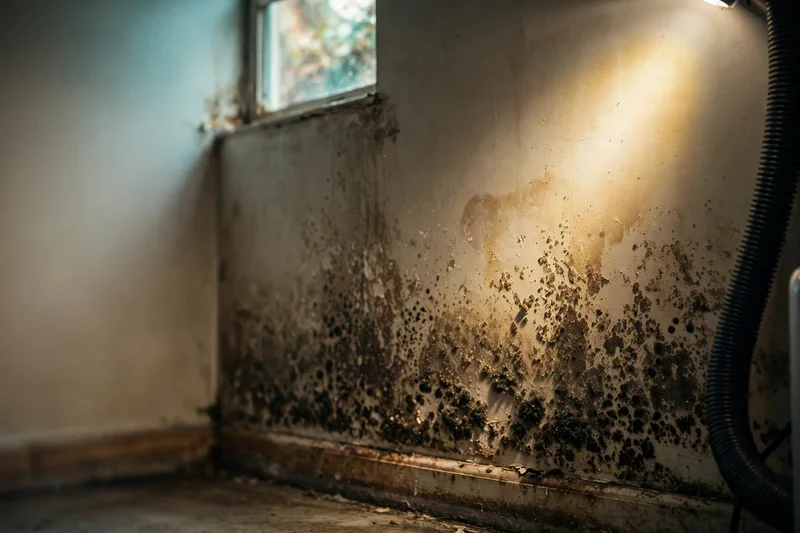
It spreads over one to four weeks. Lombard basements run damp, which makes it faster. Dry the space within two days, and the growth has nothing to feed on.
Fix the moisture source first, because mold without water stops growing. Wear an N95 mask and gloves, and dry the area within twenty-four to forty-eight hours. A small patch under ten square feet on a hard surface can be cleaned by the homeowner. A larger area, sewage, a heating system or a rental needs a professional. The DuPage County Health Department gives the same guidance: under ten square feet a homeowner can clean with protective gear, over one hundred square feet use an experienced professional, and the department does not accredit, certify or recommend contractors, and does not recommend testing as a first step.
What does mold testing do? It confirms whether mold is present and how far it spread, which decides whether the work is a clean or a removal. What matters is the order: dry first, then test if the spread is unclear, then clean or remove. Testing a wet wall tells you the wall is wet, and you already know that.
Who to call for water damage in Lombard IL
Who to call for water damage in Lombard IL depends on what is happening right now. The order is safety first, then the source, then the water, then the claim. Get the order wrong and the job costs more.
Call 911 if there is danger, live power in the water, a gas smell, a ceiling that may fall. Call Village Public Works at (630) 620-5740 if the water came up through a floor drain, or if the street is flooding too. After four in the afternoon or at weekends, dial 911 for a blocked or flooded roadway or a water main break. Call a licensed plumber to stop an active leak. Call a twenty-four-hour restoration company for the extraction and the drying. Then call your insurer, with the photographs already taken.
For flooding on your own property, a yard that will not drain, a neighbour's water running onto your lot, the call goes to the Department of Community Development, to the Private Development Engineer, at (630) 620-5972 or. The department's main number, for building inspections, is (630) 620-5750. Village Hall sits at 255 E Wilson Avenue, Lombard, IL 60148-3926, and the main phone is (630) 620-5700. Walk-in hours are Monday to Thursday, eight thirty in the morning to four in the afternoon, and the phones are answered Monday to Friday, eight in the morning to four thirty in the afternoon.
Our number is (773) 570-9869, and we answer 24/7. Tell us where the water is, what it looks like, and whether it is still coming in. We talk you through the first hour while a crew is on the way. No call centre, no sales script, no price quoted before we have seen the job.
The fifteen questions Lombard homeowners ask the Village
These are the fifteen questions on the Village of Lombard's own Drainage and Flooding Information page, in the Village's own words, and the answers below come from the Village's own pages. A water damage restoration lombard job starts where the Village's answers stop, inside your house. The Village owns the public main and the street. You own the private service line and everything inside the walls.
"My street is flooded during a rainstorm. Why is this happening?" Because the sewers filled past capacity. About one third of Lombard still has combined sewers, which carry sanitary waste and rainfall runoff in the same pipe, and in a big rain the pipe fills and the water overflows to ground level. Call Village Public Works at (630) 620-5740 if the street is flooding, and 911 after four in the afternoon or at weekends.
"I had a sewer backup into my home. Why did this happen and what can be done about this?" The same capacity problem, inside the house. When the combined sewer fills, the water comes back through the floor drains. A check valve or an overhead sewer, required in all new construction, may prevent the next backup, and the Village's Overhead Sewer Grant has assisted nearly four hundred residents with that work.
"If my sewer backs up, who do I call?" Village Public Works at (630) 620-5740, and 911 after four in the afternoon or at weekends. Then call a water damage restoration lombard crew for the extraction and the drying, because the water that came back through a floor drain is sewage, and sewage needs cleaning before drying.
"Why doesn't the Village replace all of its old combined sewers?" Because replacing all of them at once would cost more than one hundred million dollars. The water and sewer fund is collected separately through a five dollar monthly capital fee paid by water customers, and the replacement goes street by street, year by year.
"I pay property taxes. Why don't you use this money to prevent flooding?" Because the Village receives less than eight cents of each property-tax dollar. The rest goes to the schools, the county, the park district and the other taxing bodies. The Village's flood work is paid for out of the water and sewer fund and the stormwater budget, not out of the property-tax dollar.
"I have standing water in my backyard. Why is it there and how can I fix this?" Standing water means the ground is saturated or the drainage is blocked, and the fix starts with the ground: gutters and downspouts that carry the water away from the foundation, and ground that slopes away from the wall. If the water stands for more than seventy-two hours, the Backyard Drainage Grant and the Residential Drainage Program may help.
"What is the Village going to do about standing water in my back yard?" The Village's Residential Drainage Program takes a concierge approach: field and data assessments, technical guidance throughout, and then a reimbursement of fifty percent, up to fifteen thousand dollars, for qualified improvements on two or more contiguous properties where the water stands for more than seventy-two hours.
"Does the Village have any programs or assistance that can help me improve my property?" Five of them: the Residential Drainage Program, the Overhead Sewer Grant, the Clear Water Disconnect Grant, the Backyard Drainage Grant and the Flood Susceptible Homes Redevelopment Program, plus the Rain Barrel Grant. They pay for prevention. The grants do not pay for the drying and the repair after a flood, that is the homeowner's job, or the insurer's.
"What types of building restrictions are in place to help protect my property?" An overhead sewer is required in all new construction, and a check valve may be required where the risk is high. The Flood Susceptible Homes Redevelopment Program, adopted in 2022, incentivises the replacement of single-family detached homes with severe or chronic flooding, and it waived Village permit fees for demolition.
"Can stormwater from my roof gutter be directed to anywhere on my property?" and "Can I block stormwater runoff coming from my neighbor's property?" The Village's full answers to both sit on its own FAQ page, because both turn on the Village's stormwater rules rather than on a restoration crew. The short version is that roof water and runoff are the owner's responsibility to keep on the owner's own property, and the Village's Private Development Engineer, (630) 620-5972, is the person to ask before you change a gutter or build a barrier.
"Why does the Village allow for new construction on properties that have held water in the past?" New construction on a property that has held water must meet the current rules, including the overhead sewer requirement. The Flood Susceptible Homes Redevelopment Program exists for the properties where the flooding is severe and chronic, and where the answer is replacement rather than repair.
"What action has the Village taken to help provide more space for stormwater?" Pond modifications at Terrace View, Vista, Morris and Finley/Charles Lane gained twenty-six acre-feet of flood-water storage, and backup generators sit at all fourteen sanitary pumping stations. The Crescent Avenue pump station at the East Branch was replaced, and its pumping rate rose from fifty to one hundred seventy cubic feet per second.
"What plans does the Village have Village planning to help with ongoing stormwater challenges?" The Westwood Creek Channelization Project re-establishes drainage impeded by silt and sediment and reduces flooding south of North Avenue. The Village's capital plan runs to 2035, and the pond work, the pump-station work and the grant programmes run inside it.
"Why does my basement flood during rainstorms?" and "Who is responsible for basement flooding?" The basement floods because the ground saturates and the sewers fill, and because about one third of the village still has combined sewers. The Village owns the public main and the street. You own the private service line and the house. Knowing which side of that line the problem sits on decides who pays for the fix.
Drying by material: what dries fast, what does not
Water damage restoration lombard drying is not one job. It is a different job for every material the water touched, because every material holds water differently and releases it at a different speed. The search pages give these ranges: carpet one to three days, drywall and framing two to five, plaster five to ten, hardwood seven to fourteen, and concrete seven to fourteen days or more. The ranges disagree with each other at the edges, so treat them as ranges, not as promises. The drying runs until the moisture readings say dry, whatever the material.
Carpet dries fastest, but the pad underneath it does not. A carpet that feels dry on top can sit on a pad that is still soaked, and the pad grows mold from underneath. In most basement jobs the pad comes out and the carpet is dried on its own, or replaced. Drywall is the opposite: it looks fine until you meter it, and a wall that reads wet after a week of drying needs opening, because the water is trapped behind the paint.
Plaster dries slowly because it is dense, and it holds water in the lath behind it. Hardwood cups when it is wet and flattens as it dries, and a floor that is cupped on day three may be flat on day ten, which is why a hardwood floor is never sanded until the readings say dry. Concrete is the slowest of all, because it drinks the water deep and gives it back slowly. A concrete slab that was under water for a day can take two weeks to read dry, and the flooring that goes back on top of it must wait for the reading.
Insulation is the one material that almost never dries in place. Wet fibreglass insulation loses its shape and its value, and it holds water against the framing. It comes out. The framing behind it is metered, dried and treated, and the insulation goes back only when the framing reads dry. A wall closed with wet insulation inside it is a wall that grows mold in the dark.
Furniture dries by the piece. A solid wood table dries and survives. A particle-board cabinet swells and does not come back. Upholstery that sat in clean water can be cleaned. Upholstery that sat in sewage is discarded. Photograph every piece before you move it, because the insurer reads the photographs. The dehumidifiers do the slow work, and the cold air of a Lombard November makes it slower, because cold air holds less moisture than warm air.
A drying that runs in a heated house finishes faster than a drying that runs in a cold one, which is why the crew keeps the heat on and the windows shut while the equipment runs. Opening a window to let the damp out lets the cold in, and the cold slows the drying more than the damp ever did.
Renters, landlords and shared walls
Water damage restoration lombard work in a rental is two jobs at once: the drying, and the argument about who pays for it. The rule is simple, and it is worth knowing before the water comes in. The landlord owns the building. The tenant owns the belongings. The landlord's policy covers the building. The tenant's policy covers the belongings. The tenant tells the landlord the day the water appears, in writing, and the landlord calls the plumber and the crew.
A tenant who finds water should do three things at once: tell the landlord, photograph everything, and move the belongings to dry ground. Do not wait for the landlord to visit before photographing the water line, because the water line is the evidence and it drops as the water is extracted. Do not throw anything away before the landlord and the insurer have seen it, or before it is photographed and listed.
A landlord who gets the call should do the same three things: stop the source, call the crew, and tell the insurer. The drying runs the same three to seven days, and the drying log is the same file. The difference is the tenant's belongings, which the landlord's policy does not cover. A tenant with renters insurance is covered for the belongings, for loss of use and for liability. A tenant without it is not, and the loss is the tenant's.
Shared walls make it harder. Water does not respect a property line, and a leak in one unit runs into the next. The source unit's owner pays for the source, and each unit's owner pays for the damage inside their own unit. The drying log, the photographs and the receipts settle the argument, which is why the file matters more in a shared building than anywhere else.
The drying log: the file that settles the claim
The drying log is the most important document in a water damage restoration lombard job, and it is the one most homeowners never see. It is a daily record of the moisture readings in every wall and floor, taken with a meter, written down, and dated. It is the proof that the drying happened, and the proof that the building is dry.
Here is how it works. On the first day, every wet wall and floor is mapped with a moisture meter, and the readings are written down. Each day after that, the same walls and floors are metered again, and the new readings are written next to the old ones. The numbers fall day by day, and the drying is finished when the numbers reach the dry standard for that material. The walls do not close until the readings say dry, because a wall closed while it is still wet grows mold behind the paint.
The log settles the claim because it is a record the adjuster can read. A claim with a daily drying log, photographs of the water line and receipts for every expense settles faster than a claim without them. A claim with no log is a claim with no proof, and the adjuster has to guess. Ask for the log in writing, ask to see it each day, and keep a copy when the job is finished. If the mold shows up in a year, the log proves the drying was done and the readings said dry.
Ask the company three questions before the drying starts: what will the drying log show, can I see it each day, and what happens if the readings say the wall is still wet on day five. The answers to those three questions tell you more about a company than any price on a website.
Commercial water damage in Lombard
Water damage restoration lombard work is not only houses. Lombard's commercial buildings, the offices and shops along St Charles Road, the stores at Yorktown Center, the restaurants and small businesses downtown, flood the same way houses do, and the stakes are higher, because a closed shop loses a day's trade for every day it stays wet.
A commercial job starts the same way: stop the source, extract the water, document everything. The difference is the scale and the paperwork. A shop with a wet floor needs the floor dry before the customers come back, and the insurer needs the same file a homeowner needs, photographs, receipts and a drying log, plus the record of the trade lost while the shop was closed. A restaurant with a sewer backup needs cleaning and sanitising before it can open, and the health department's word matters more than the drying log.
The offices and shops along St Charles Road, the stores at Yorktown Center and the restaurants and small businesses downtown all flood the same way houses do, and the difference is only that a closed shop loses a day of trade for every day it stays wet, and a restaurant that reopens before the cleaning is finished risks the health inspection.
The drying runs the same three to seven days with professional equipment, and the full job runs one to four weeks. The difference is that a commercial drying runs around the clock, with more air movers and more dehumidifiers, because a day saved is a day of trade. The moisture readings go into the same log, and the walls do not close until the readings say dry. A water damage restoration lombard shop that stays closed for a week loses a week of trade, and a shop that reopens wet loses the stock, the customers and the health inspection. The drying log is the record that proves the shop was dry when it reopened.
If your business has flooded, call (773) 570-9869. We answer 24/7, and we talk you through the first hour while a crew is on the way. The first question is the same as for a house: where is the water, what kind of water is it, and is it still coming in.
If your business has flooded, call (773) 570-9869. We answer 24/7, and we talk you through the first hour while a crew is on the way. The first question is the same as for a house: where is the water, what kind of water is it, and is it still coming in.
Choosing a water damage company in Lombard
Three questions tell you more about a company than any price on a website. First, what will the drying log show, and can I see it each day. Second, what is the written scope of work, and what happens if the readings say the wall is still wet on day five. Third, who is on the crew, and are they the people who will do the drying or the people who will sell the rebuild.
A company that quotes a price before an inspection is guessing. A company that promises a drying time before it has metered the walls is guessing. A company that shows you a named Lombard case with a street address and a date should be asked for the source, because we searched every platform we could reach and found no verified named Lombard case. A company that shows you a case from Coral Springs, Florida, is showing you a case from Coral Springs, Florida. A company that cannot show you a drying log is a company that does not keep one, and a company that does not keep one cannot prove the building is dry.
Ask for the drying log in writing, ask for the scope in writing, and ask what the company does when the readings say the wall is still wet. Ask whether the crew carries moisture meters and dehumidifiers, or only wet vacuums. Ask how the company documents the job for the insurer. The answers to those questions are the company. Everything else is a website. Ask, too, whether the crew that answers the phone is the crew that does the drying, or whether the job is passed to a subcontractor after the first visit. The crew that meters the walls on day one should be the crew that reads them on day five, because the log is only as good as the hands that kept it.
Ask for the drying log in writing, ask for the scope in writing, and ask what the company does when the readings say the wall is still wet. Ask whether the crew carries moisture meters and dehumidifiers, or only wet vacuums. Ask how the company documents the job for the insurer. The answers to those questions are the company. Everything else is a website.
We give you the drying log each day, the scope in writing before any repair starts, and the file, the drying log, the photographs and the receipts, when the drying is finished. Call (773) 570-9869 any time, day or night.
Your first hour: what to do, in order
Water damage restoration in Lombard starts with the first hour, and the first hour is the cheapest hour of the whole job. Water that is extracted in the first hours dries in days. Water that sits for a week soaks into the framing, and the framing has to be opened and dried from the inside. The first hour is also the hour that decides the claim, because the photographs taken in the first hour are the evidence the adjuster reads, and the water line drops as the water is extracted. A photograph taken at midnight shows the water at its highest. A photograph taken the next morning shows a damp floor. Take the photograph at midnight.
- Stay out of the water. Never step into water that may touch outlets, appliances or cords. Turn off the power at the breaker if you can do it safely, from dry ground. Call 911 if there is an electrical or gas hazard.
- Stop the source. Turn off the main water valve if the water is coming from a pipe, and turn off the water heater as well. If the water is coming up through a floor drain, call Village Public Works at (630) 620-5740.
- Photograph everything. Photograph the water line and every wet room before anything is moved. Keep a written list of what was wet, what you moved and what was thrown away.
- Move what can be saved. Lift furniture onto blocks, roll up rugs, and move boxes and papers to dry ground. Do not move anything heavy through standing water.
- Call a plumber, then a restoration crew, then your insurer. The plumber stops the leak. The crew extracts the water and starts the drying. The insurer opens the claim, and the photographs and the drying log are the file.
- Do not pump against outside water. If flood water is still outside, wait until the outside level is lower than the basement level before pumping, because pumping too fast can damage the walls.
- Do not clean sewage yourself. Porous material that touched sewage is discarded, not cleaned. Hard surfaces are cleaned and sanitised by the crew before any drying starts.
After the job: drying, the log and the rebuild
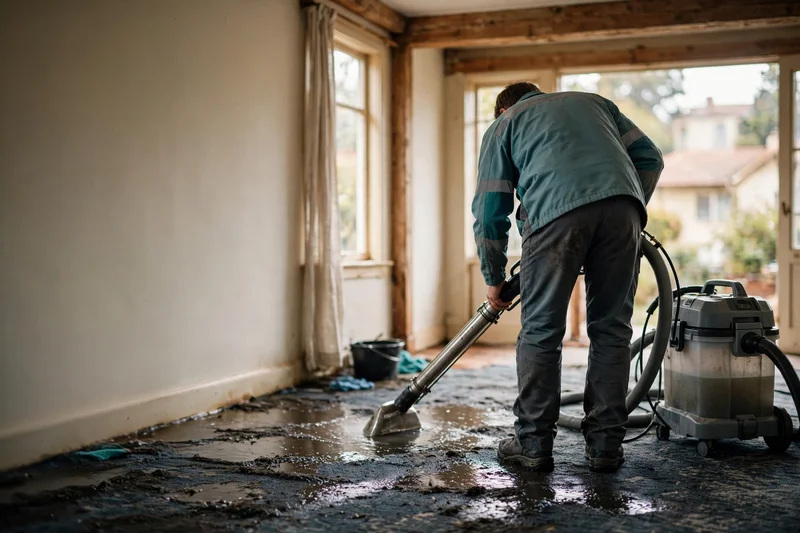
How long does it take to dry out water damage in Lombard? About three to five days with professional equipment, for a standard Lombard basement job. A minor job can dry in a day or two, and a saturated basement with soaked framing and flooring can take seven to fourteen days or more. Carpet dries in one to three days, drywall in two to five, and hardwood, plaster and concrete in a week or more. Cooler November air slows evaporation, so a winter job dries slower than a summer one.
The drying runs on air movers and dehumidifiers, and the readings are taken every day. Each wall and floor is mapped with a moisture meter, and the readings go into a drying log you can see. The walls do not close until the readings say dry. A wall closed while it is still wet grows mold behind the paint, and the mold shows up months later, when the repair is finished and the claim is closed.
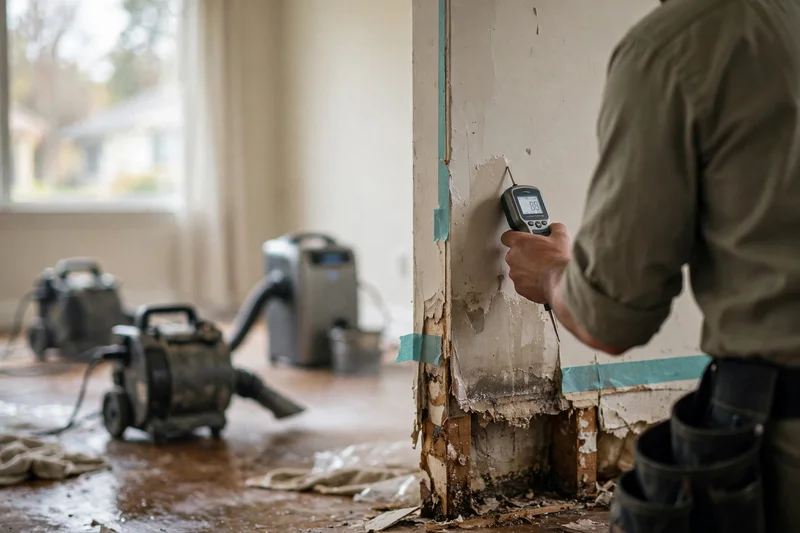
Water damage repair lombard il 60148 is the rebuild that follows the drying: the drywall that came out goes back, the flooring that could not be saved is replaced, and the finishes are put back to how they were before the loss. The repair starts only after the drying is finished and the readings say dry. A rebuild over wet wood is a rebuild that rots, smells and grows mold.
The rebuild that follows the drying is a matching job. The drywall that came out goes back to the same height, the flooring that could not be saved is replaced with a match for the floor that stayed, and the baseboards, the paint and the trim are put back to how they were before the loss. A rebuild that matches is a rebuild the insurer accepts, and a rebuild that does not match is a rebuild the homeowner notices every day.
The paint goes on last, and only on a wall that reads dry, because paint on a wet wall bubbles and peels, and the peeling starts the argument about whether the drying was ever finished. The drying log answers that argument, which is why the log is kept and handed over with the file.
When the drying is finished, you get the file: the drying log, the photographs and the receipts, ready for the insurer. Keep the file. If the adjuster asks a question in six months, the file answers it. If the mold shows up in a year, the file proves the drying was done and the readings said dry. Check the house yourself six months after the job: smell the rooms that were wet, look at the paint at the base of the walls, and walk the floors that were cupped.
A smell that comes back, paint that bubbles, or a floor that cups again means water is still in the wall, and the wall needs opening. A dry house stays dry, and a house that stays dry is a house the drying log can prove.
What the drying looks like, day by day
A water damage restoration lombard drying does not happen in one day, and the homeowner who knows what each day looks like worries less. The first day is the loudest and the wettest. The crew extracts the standing water, removes what cannot be saved, and sets the air movers and the dehumidifiers. The readings are taken and written down, and the log starts. The house is noisy, the air is damp, and the dehumidifiers run all night.
On the second and third days, the readings start to fall. The air movers are moved to the walls that read wettest, and the dehumidifiers are emptied or drained. The crew meters every wall and floor again, and the new readings go into the log next to the old ones, with the date and the time written beside each one. A wall that was wet on day one and drier on day three is a wall that is drying. A wall that reads the same on day three as it did on day one is a wall with water trapped behind it, and the crew opens it.
On the fourth and fifth days, most of the drying is done. The carpet is dry, the drywall is dry, and the framing is nearly dry. The hardwood is still cupped, and the concrete is still giving back water. The crew keeps the equipment running, because stopping early is the mistake that costs the most. A floor sanded before it is dry cups again, and a wall closed before it is dry grows mold behind the paint.
On the sixth and seventh days, the readings reach the dry standard for each material, and the equipment comes out. The crew walks the house with you, meter in hand, and shows you the readings on every wall and every floor. The file is handed over: the drying log, the photographs and the receipts. The rebuild starts after that, and only after that. A drying that runs long is not a drying that failed. It is a drying that found hidden water, and hidden water is the water that would have come back as mold in six months.
What delays a drying? Cold air, because cold air holds less moisture and the dehumidifiers work slower. Concrete, because it drinks the water deep and gives it back slowly. Hidden water, because a wall that looks dry on the outside can be wet inside, and the crew has to open it to dry it. And a second leak, because a drying that starts before the source is fixed is a drying that never finishes. The source is fixed first, always.
Before you call: the five things to have ready
You do not need to have anything ready to call us, we answer 24/7 and talk you through the first hour. But five things make the call faster, and the job faster after it. The first is your address, with the ZIP, so the crew knows which side of the divide your street sits on. The second is where the water is, and how deep it is. The third is what kind of water it is, clean, dirty or sewage, because the answer decides what gear comes off the truck.
The fourth is whether the water is still coming in, and whether you have turned the main valve off. The fifth is whether you have called the Village, because a sewer backup is a Village call first and a crew call second.
Photograph the water line before anything moves, and keep the photographs on your phone, not only in your head. Keep a written list of what was wet, what you moved and what was thrown away. Keep the policy number for your homeowners insurance, and the name of your agent. The crew will ask for none of this on the first call, but the insurer will ask for all of it, and the file you build in the first hour is the file the claim is judged on. Write the list on paper if the phone is wet, and photograph the paper too, because a list written in the first hour is a list the adjuster trusts, and a list written a week later is a list the adjuster questions.
A water damage restoration lombard call at midnight is a call from a homeowner standing in water. We know that, and the first thing we do is talk you through the first hour: stay out of the water, turn off the power if you can do it safely, turn off the main valve, photograph the water line, and call the Village if the water came up through a floor drain. The crew is on the way while you do it.
Getting ready for a Lombard winter
A Lombard winter is a burst pipe season, and the preparation is cheap. Insulate the pipes in unheated spaces, the garage, the crawl space, the wall cavity over the garage. Let the taps drip on the coldest nights, and keep the heat on in every room, even the ones you do not use. A pipe in a cold room is a pipe waiting to split.
Test the sump pump before the spring thaw, and keep the discharge line clear of ice in winter. A discharge line that freezes backs the water up into the pit, and the pit overflows onto the floor. Clear the gutters and the downspouts in the autumn, and make sure the downspouts carry the water away from the foundation. A downspout that drops the water at the wall is a foundation leak waiting to happen. A water damage restoration lombard call in February is usually a frozen discharge line or a frozen pipe, and both are cheaper to prevent in October than to repair in February.
Know where the main valve is before the water comes in, and show everyone in the house where it is. A valve nobody can find is a valve that does not exist. Keep the number for Village Public Works, (630) 620-5740, on the fridge, next to the number for the plumber and the number for us: (773) 570-9869. Tape the list to the inside of the basement door, where you will see it when the water is already on the floor.
Street by street: where Lombard floods, and what we see there
Water damage restoration in Lombard is a street-by-street job, because the village is a watershed divide and the water behaves differently on each side of it. The East Branch side drains one way, the Salt Creek side drains the other, and the combined-sewer streets back up when the separate-sewer streets stay dry.
St Charles Road runs east to west through downtown Lombard, past the crossing with Park Avenue at the centre of the village. Park Avenue runs north to south at about the same longitude, and the two roads meet in the 60148 ZIP. North Lombard runs up from St Charles Road toward Lilacia Park and the Lilac Time festival grounds, and the homes there sit on the higher ground. South Lombard runs down toward Yorktown Center and Four Seasons Park, and the homes there sit closer to the creeks.
Route 53 and North Avenue is the corner the National Centers for Environmental Information named in the September 2008 flood, when major street and parking-lot flooding closed Route 53 south of Butterfield as the East Branch overflowed. Butterfield Road runs along the river's edge, and the East Branch at Bolingbrook, downstream of Lombard, crested at twenty-five point eight five feet in April 2013, the highest on record. When the river crests, the streets beside it flood first.
Wilson Avenue carries Village Hall at 255 E Wilson Avenue, and the sign at the Village municipal complex on Wilson Avenue marks the watershed divide itself. Main Street, for the record, does not meet St Charles Road, it sits in north Lombard, far from the downtown crossing, and any page that puts the two together is wrong.
Glencrest Creek runs through Lombard itself, as an East Branch tributary, and Ginger Creek carries the Salt Creek side of the village through Downers Grove, Oak Brook, Oakbrook Terrace and Westmont. The Westwood Creek Channelization Project re-establishes drainage impeded by silt and sediment and reduces flooding south of North Avenue, and the Terrace View Pond gained thirteen acre-feet of flood-water storage in the pond programme. A water damage restoration lombard job on the East Branch side of the divide is a river job. A job on the Salt Creek side is a creek job. The water behaves differently on each side, and the crew that knows which side your street sits on knows what the water will do next.
Wherever your street sits, the first hour is the same: stay out of the water, stop the source, photograph the water line, and call. The number is (773) 570-9869, and we answer 24/7.
Call now, we answer 24/7
Water damage does not wait for office hours, and neither do we. Call (773) 570-9869 now, a real person answers, talks you through the first hour, and sends a crew to your Lombard home. Water extraction, structural drying and rebuild, with a drying log you can see and a file your insurer can read.
Frequently asked questions
The last six are the questions Lombard homeowners ask most on the live search.
What is water damage restoration in Lombard?
Water damage restoration in Lombard is the job of getting the water out of a home, drying the building to moisture readings, and putting back what the water ruined. It starts with stopping the source and extracting the standing water, then drying with air movers and dehumidifiers, then repairing the walls, floors and finishes that could not be saved.
Does homeowners insurance cover water damage restoration
It covers only part of it, and the part depends on the cause. A sudden and accidental event, such as a burst pipe, is usually covered, less your deductible. The repair of the pipe itself, a slow leak, flooding from outside and a sewer backup are usually not covered unless your policy carries the endorsement that covers them.
How long does water damage restoration take?
Drying takes three to seven days with professional equipment, and the full job takes one to four weeks. A minor job in one room can dry in a day or two, and a severe job with soaked framing and flooring can take weeks to months.
What is water damage restoration called?
It is called water damage restoration, and mitigation is only the first half of it. Mitigation is the emergency work: stop the source, extract the water and dry the building. Restoration is the whole job: mitigation first, then the repair that puts the home back to how it was. Drying alone is mitigation, not restoration.
Does insurance cover water damage restoration?
It usually does when the water came from a sudden and accidental covered event, such as a burst pipe or an appliance failure. The insurer pays for the drying and the repair, less your deductible. It does not cover flooding from outside, a slow leak or a sewer backup unless you hold the endorsement that covers them.
What is the water damage restoration process?
The process runs in order: stop the source, extract the standing water, document everything, remove what cannot be saved, set the drying and monitor the moisture readings each day. The drying runs until the readings say dry, and the repair starts only after that. The file you hand the insurer is the drying log, the photographs and the receipts.
Does homeowners insurance cover mold?
It covers mold only when the mold follows a sudden covered event, such as a burst pipe that soaked a wall. Mold from a slow leak, poor maintenance or flooding from outside is usually excluded.
What should I do when I find mold?
Fix the moisture source first, because mold without water stops growing. Wear an N95 mask and gloves, and dry the area within twenty-four to forty-eight hours. A small patch under ten square feet on a hard surface can be cleaned by the homeowner. A larger area, sewage, a heating system or a rental needs a professional.
How much does homeowners insurance pay for water damage?
No page can give you a number, because the payment depends on your policy, your deductible, the cause of the water and the limits you bought. The insurer pays the approved cost of the drying and the repair, less your deductible. Keep every receipt and photograph, and keep the drying log, because the log settles the claim.
Does renters insurance cover water damage?
It covers your belongings when the water came from a sudden and accidental internal event, such as a burst pipe or an appliance overflow, plus loss of use and liability. It does not cover the building itself, which is the landlord's policy, and it does not cover flooding, gradual damage or negligence. Tell your landlord the day the water appears.
How much does mold testing cost?
This site prints no prices, so no figure here can mislead you. What testing does is confirm whether mold is present and how far it spread, which decides whether the work is a clean or a removal.
Does homeowners insurance cover a burst pipe?
It usually does when the pipe burst suddenly, such as a pipe that froze and split in a cold snap. The insurer pays for the water damage the burst caused, not for the pipe itself. A pipe that leaked slowly for months may be classed as wear and tear, so report a burst the day you find it.
How much does trenchless sewer repair cost?
Trenchless sewer repair replaces a broken sewer line by pulling a new pipe through the old one, with no open trench across the yard. A burst pipe is a different job: a supply pipe that split open, usually from freezing.
How much does water damage restoration cost?
This site prints no prices, so no figure here can mislead you. The cost depends on how much water there is, what kind of water it is, how many rooms got wet and what material it soaked. We inspect first, then give you a written scope of work with the cost in it before any repair starts.
What does it mean for water damage to be fully remediated?
It means the source is stopped, all the moisture is removed and meter-verified dry, contaminated materials are cleaned or removed, mold is addressed, and the structure is repaired to how it was before the loss. The home is safe to occupy, and the work is documented. Fully remediated means the readings say dry and the file proves it.
How long does it take to dry out water damage in Lombard?
About three to five days with professional equipment, for a standard Lombard basement job. A minor job can dry in a day or two, and a dense or severe job can take seven to fourteen days or more. Carpet dries in one to three days, drywall in two to five, and hardwood, plaster and concrete in a week or more.
What should I do first if my basement floods in Lombard?
Stay out of standing water, and turn off the power at the breaker if you can do it safely. Stop the source if you can, then photograph the water line before anything moves. Call Village Public Works at (630) 620-5740 if the water came up through a floor drain, then call a plumber and a restoration crew, then your insurer.
How fast does mold grow after water damage in Lombard?
It spreads over one to four weeks. Lombard basements run damp, which makes it faster. Dry the space within two days, and the growth has nothing to feed on.
What is DuPage County's cost-share drainage program for Lombard
It is not for Lombard homeowners. The DuPage County Cost-Share Drainage Assistance Program pays fifty percent up to five thousand dollars per project, but it is strictly for unincorporated DuPage County properties, and most Lombard homes do not qualify. The Village of Lombard Residential Drainage Program pays fifty percent up to fifteen thousand dollars for standing water over seventy-two hours.
Who should I call for water damage in Lombard?
Call 911 if there is danger, such as live power in the water. Call Village Public Works at (630) 620-5740 if the water came up through a floor drain or the street is flooding. Call a licensed plumber to stop an active leak, a twenty-four-hour restoration company for the extraction and drying, and then your insurer.
What does water damage restoration include?
It includes stopping the source, extracting the standing water, removing what cannot be saved, drying the building with air movers and dehumidifiers, cleaning and sanitising what stays, and repairing the walls, floors and finishes that were ruined. It also includes the file: the drying log, the photographs and the receipts for your insurer.
How to tell if water damage is permanent?
Look for stains that keep coming back after painting, paint that bubbles or peels, drywall that feels soft, floors that buckle or cup, a musty smell that does not leave, and mold behind the baseboards. A moisture meter settles it: dry is a number, not a look. A wall that reads wet after a week of drying needs opening.
Can you live in a house with water damage?
It depends on the water. Clean water from a supply pipe is one thing, and sewage or flood water is another, because it carries germs. Stay out of any room where water may touch outlets or cords, and call 911 for an electrical or gas hazard. If the water is sewage, stay out and wait for the crew.
How long does it take for a flooded basement to dry out?
About three to five days with professional equipment, for a standard flooded basement. A minor job can dry in a day or two, and a saturated basement with soaked framing and flooring can take seven to fourteen days or more. The drying runs until the moisture readings say dry, and the readings are written into a log you can see.
Why does my sewer back up when it rains?
About one third of Lombard still has combined sewers, which carry sanitary waste and rainfall runoff in the same pipe. In a big rain the pipe fills past capacity, and the water overflows to ground level and comes back into homes through floor drains. A check valve or an overhead sewer, required in all new construction, may prevent it.
How long should a basement sump pump last?
A sump pump usually lasts about seven to ten years, depending on how often it runs. A pump that runs constantly in a wet spring wears out faster than one that runs a few times a year. Test it before the spring thaw, keep the discharge line clear of ice in winter, and replace a pump that hesitates.
Sources
Every fact on this page comes from one of the sources below. If a fact has no source here, it is not on this page.
- Village of Lombard, Stormwater and Flooding FAQs, villageoflombard.org/454/Storm-Flooding-FAQs, the fifteen questions on the Village's own page, verbatim: "My street is flooded during a rainstorm. Why is this happening?", "I had a sewer backup into my home. Why did this happen and what can be done about this?", "If my sewer backs up, who do I call?", "Why doesn't the Village replace all of its old combined sewers?", "I pay property taxes. Why don't you use this money to prevent flooding?", "I have standing water in my backyard. Why is it there and how can I fix this?", "What is the Village going to do about standing water in my back yard?", "Does the Village have any programs or assistance that can help me improve my property?", "What types of building restrictions are in place to help protect my property?", "Can stormwater from my roof gutter be directed to anywhere on my property?", "Why does the Village allow for new construction on properties that have held water in the past?", "Can I block stormwater runoff coming from my neighbor's property?", "What action has the Village taken to help provide more space for stormwater?", "What plans does the Village have Village planning to help with ongoing stormwater challenges?" [sic, as published], and on the landing page: "Why does my basement flood during rainstorms?" and "Who is responsible for basement flooding?"
- Village of Lombard, Grants page, villageoflombard.org/299/Grants, Residential Drainage Program, Overhead Sewer Grant, Clear Water Disconnect Grant, Backyard Drainage Grant, Rain Barrel Grant.
- Village of Lombard, Water Damage Insurance Claim Tips, villageoflombard.org (ranks on the live search for term 13).
- Village of Lombard, June/July 2013 newsletter, about three thousand Lombard basements flooded in April 2013; emergency declared at 4:58 a.m. on April 18, 2013.
- U.S. Census Bureau, QuickFacts, Village of Lombard, population 44,476 at the 2020 census.
- National Weather Service and U.S. Geological Survey, July 1996 flood, 16.94 inches in 24 hours near Aurora, Illinois statewide record, still standing as of 2022; more than 35,000 homes flooded.
- U.S. Geological Survey and National Centers for Environmental Information, September 2008 flood, 2.39-10.51 inches over 51 hours, Sept 12-14, 2008; major street and parking-lot flooding around Route 53 and North Avenue in Lombard; Route 53 closed south of Butterfield.
- National Weather Service, April 2013 flood, East Branch DuPage River at Bolingbrook crested 25.85 feet on April 18, 2013 (previous record 24.04 on September 14, 2008).
- Kasang v. Beata Grzesik & Mom the Builder, Inc. 2018 IL App (1st) 163100-U, decided 30 March 2018, Eric and Christina Kasang, 44 W. Berkshire Avenue, Lombard; verified live on CaseMine. The opinion gives no calendar date for the flood; 30 March 2018 is the decision date.
- DuPage County Health Department, mold guidance, dupagehealth.org/294/Mold, under ten square feet a homeowner can clean with protective gear; over one hundred square feet use an experienced professional.
- YouTube, November 19, 2026, "2010 Flash Flood House Damage Lombard, IL" (TheKaraPierreShow, 3:47); "Lombard, Illinois, Flooding, June 22nd, 2020" (SVLMedia, 0:51); "Top 3 Water Damage Restoration in Lombard, IL" (0:59).
More Restoration Services Near Lombard
Every service below is one tap away. Pick the one that matches your problem.

Water Damage Restoration
Fast water extraction, structural drying, and full repair after burst pipes, leaks, and floods.
Learn more →
Water Mitigation
Emergency water removal, structural drying, and mold prevention to stop the damage fast, 24/7.
Learn more →
Mold Remediation
Safe, contained mold remediation that removes contamination and fixes the moisture source.
Learn more →
Sewage Cleanup
Safe removal and disinfection of dangerous sewage backups and black water.
Learn more →
Flood Cleanup
Water pumped out, structure dried, and debris cleared fast after storms and flooding.
Learn more →
Hardwood Floors Water Damage
Cupped, buckled or stained hardwood after a leak? How we dry it, when sanding saves it, and when the boards have to go.
Learn more →