Trusted by Lincoln Square homeowners, landlords and small businesses, day and night.
Request water damage help in Lincoln Square
Tell us where the water is and we will call you back. We answer 24/7, and a crew is on the way while we talk.
24/7Live answer, day and night
12Restoration services, one team
6Step documented process
Every jobPhotos and readings logged
Water damage restoration in Lincoln Square, in one paragraph
Water damage restoration Lincoln Square means the full job of getting a Lincoln Square home dry and rebuilt after water gets in, and it starts the moment you call. We find the source, we pull the standing water out with pumps and vacuums, we dry the walls, floors and framing with air movers and dehumidifiers, we clean what the water touched, we remove what cannot be saved, and we rebuild what was lost. Every step is measured: moisture readings go into a drying log, and the drying runs until the readings hold for two days.
We do this work across Lincoln Square, Chicago, IL 60625, day and night, for the brick two-flats and three-flats around Lawrence Avenue and Western Avenue, for the garden units that sit below grade, for the vintage walk-ups and single-family frame houses, for the shops and small businesses at the Lawrence, Western and Lincoln intersection and for the homes around Winnemac Park and Welles Park. If the water came from the street or a sewer backup, call 311 as well, so the city knows the sewer backed up on your street.
And if you are a renter, tell your landlord the day the water appears, because the landlord owns the building and its pipes. That is the job water damage restoration lincoln square crews do on every call, in that order, with the readings to prove it.
The first hour: what to do right now
Call us first. Call (773) 570-9869 any time, day or night. Tell us where the water is, how deep it looks, and whether it smells of sewage. We answer 24/7 and talk you through the first hour while a crew is on the way to your Lincoln Square home.
Stop the water at the source. Shut off the main if a supply pipe burst, and stop the appliance if a washer hose or a toilet line let go. Do not enter a flooded room to reach a valve if the power is on.
Stay out of the water while the power is on. Water and live power together can injure you. If the panel is out of reach, call an electrician and wait for the power to be cut at the panel or the pole.
Do not touch the water with bare hands. Keep children and pets out of it. Water that came through a floor drain may carry sewage, and water from a supply pipe may still hide broken glass, sharp debris and live wiring under the surface.
Lift what you can save. Move rugs, boxes and small furniture to higher ground. Do not move a water heater, a furnace or any appliance that is sitting in water.
Photograph everything. Take a wide shot of the room first, then close-ups of the water line, the damage and the serial plates. Your adjuster needs the pictures, and the pictures are your proof.
Call 311 if the sewer or street flooded. The city logs the report, and the crew can tell a main break from a private drain break. Reporting it helps your street, and it helps the next storm too.
Lincoln Square: a neighbourhood inside a community area
Lincoln Square is one of Chicago's 77 community areas, and it is also a neighbourhood, and the two are not the same thing, which is the first fact a page about Lincoln Square has to get right. The community area, Community Area 04, covers two point five seven square miles, and it contains the neighbourhoods of Lincoln Square, Ravenswood in its western part, Ravenswood Gardens, Bowmanville and Budlong Woods.
The neighbourhood proper is narrower: from Ashland Avenue, 1600 West, on the east to Kedzie Avenue, 3200 West, on the west, and from Irving Park Road, 4000 North, on the north to Foster Avenue, 5200 North, on the south, with the commercial heart at the intersection of Lawrence, Western and Lincoln Avenues.
The community area extends further north to Bryn Mawr Avenue, 5600 North, and Peterson Avenue, further south to Montrose Avenue, 4400 North, further east to Ravenswood Avenue, 1800 West, and further west to the Chicago River and the North Branch, which is the North Shore Channel. This page is written for the neighbourhood, and it uses the neighbourhood bounds for Lincoln Square, and the community-area bounds only as community-area context, never merged. The neighbourhood centre sits at 41.97 degrees north, 87.69 degrees west.
The area was named for Abraham Lincoln by the Chicago City Council in 1925, and the statue of Lincoln at the Western, Lawrence and Lincoln corner was erected in 1956. Farming began in the 1840s by English and German Americans, and Lyman and Joseph Budlong arrived in 1857, running a commercial pickling business near Lincoln Avenue and Berwyn and growing flowers for Rosehill Cemetery.
The German history runs through the neighbourhood still: Merz Apothecary, Lutz Cafe and Bakery, the DANK Haus German American Cultural Center and the Niedersachsen Club, and Thai shops now stand beside them. The festivals mark the year: the Square Roots Festival at the Old Town School of Folk Music, the Lincoln Square Fall Apple Fest, May Fest, the German-American Fest, the Ravenswood Run 5K and the Christmas Tree Lighting.
Two ZIP codes touch Lincoln Square, and neither of them belongs to Lincoln Square alone. The main ZIP is 60625, which covers the Lincoln Avenue, Lawrence Avenue and Western Avenue core and the ground toward Budlong Woods and Albany Park. Part of 60640 touches the eastern side, toward Ravenswood and Edgewater and Uptown. The page badge and the service address use 60625, and the other ZIP is named here because a homeowner on the eastern side should know the crew still comes.
Do not print either one as the Lincoln Square ZIP, because neither of them is exclusive. There is no official Lincoln Square neighbourhood population figure, because the Chicago Metropolitan Agency for Planning publishes snapshots for the 77 community areas only, and the neighbourhood is smaller than the community area. This page prints no population number for the neighbourhood.
For context only, the Lincoln Square community area counted 41,651 people in the 2024 estimate, from the CMAP Community Data Snapshot and the American Community Survey 2020 to 2024 five-year estimates, and 40,494 people in the 2020 Census. The figure about 41,000 people living in the neighbourhood is an unsourced round figure from Wikipedia, and this page does not print it as settled.
The neighbourhood is governed by two wards, the 40th Ward under Alderman Andre Vasquez and the 47th Ward under Alderman Matt Martin, both first elected in the 2019 election. The 47th Ward's water page is the local voice that matters after a flood, because it tells a homeowner to report a basement backup to Water Management for an inspection, and says an inspector will typically arrive within 48 hours, and that the "Water in Basement" complaints are used to plan larger infrastructure projects.
The transit that serves Lincoln Square is the Brown Line, with stations inside the area at Western, Damen and Rockwell. The Metra Union Pacific North Ravenswood station is in Ravenswood, not in Lincoln Square, and this page does not claim it as a Lincoln Square station. The Red Line stops at Berwyn and Bryn Mawr are nearby in Edgewater, but neither of them is inside Lincoln Square, and this page does not claim one.
The landmarks that mark the neighbourhood are the Conrad Sulzer Regional Library on Lincoln Avenue and Foster, on the Lincoln Square and Ravenswood edge, the Old Town School of Folk Music, the DANK Haus German American Cultural Center, the Cambodian Association of Illinois, Rosehill Cemetery, Winnemac Park, more than forty acres at Damen and Foster with Amundsen High School, Chappell Elementary and Jorndt Field, Welles Park, fifteen acres at Lincoln and Montrose across from Sulzer Library, River Park on the Chicago River south of Foster and west of Francisco, where the North Shore Channel Trail starts, Jacob Park at Virginia and Leland, Gross Park at Lawrence and Washtenaw, Sunken Gardens Park at Virginia and Sunnyside, and Vogle Playlot at Lawrence and Hoyne.
The public art marks the corners: the Chicago Lincoln statue at Western, Lawrence and Lincoln from 1956, the Lombard Lamp at Giddings Square from 1979, the Giddings Square Fountain from 1999, the Maypole at Leland and Lincoln from 1999, and the Berlin Wall Monument at the Western Avenue Brown Line station from 2008. The schools are Budlong, Chappell, Jamieson, McPherson and Waters Elementary, Amundsen High School, the designated CPS high school for most of the community area, and Mather High School. The hospitals are Kindred Hospital Chicago North and Endeavor Swedish Hospital.
Do not confuse Lincoln Square with Ravenswood. Ravenswood is a distinct neighbourhood, and the Lincoln Square community area contains only its western part; the eastern part of Ravenswood sits in the Uptown community area, east of Ravenswood Avenue and the Union Pacific North railroad tracks. The FINAL117 Ravenswood page and this page are separate pages for separate neighbourhoods, and a page that merges them misleads the homeowner who reads it. The bordering community areas are Uptown, Edgewater, North Park, Albany Park, North Center and West Ridge.
The housing here is what makes Lincoln Square water damage different from a suburb job. The neighbourhood is full of brick two-flats and three-flats, vintage walk-ups with old supply lines, single-family frame houses from the farming and commuter era, and garden units that sit below grade, where a sewer surcharge reaches them first.
The older stock carries old clay sewer laterals, and a clay lateral lets tree roots in over decades, until the lateral blocks and the water comes back up through the lowest fixture.
The lake is close enough that the weather comes off it, with wind-driven rain that finds the weak window and the weak flashing on a building that faces the weather. And the North Branch of the Chicago River runs along the western side, with a pumping station on Lawrence Avenue, on the border of Albany Park and Lincoln Square, that released nearly two billion gallons of untreated wastewater into the North Branch this year, according to the Arizona Tribune on the 6th of November 2026.
The same report says Chicago's sewer system can manage only about two inches of rain before flooding becomes likely, whereas recent storms have delivered more than eight and a half inches in 24 hours.
The place name itself is a hazard.
The AMC Lincoln Square 13 theatre in New York City dominates the flooded-basement results, with a roof-pipe burst on Broadway and West 68th Street in Manhattan on the 15th of July 2025, reported by PIX11, and that is the only street-level incident address in the 45 Google results, and it is in New York, never a Chicago case.
This page hammers "Lincoln Square, Chicago" on every section, because a page that does not say Chicago in every paragraph will be read as a page about Lincoln, Nebraska, and the homeowner in Chicago will never see it.
What this page covers, and what it does not claim
This page is written for a homeowner in Lincoln Square who has water in the house right now, or who is trying to stop the next flood before it starts. It covers what to do in the first hour, how water gets into a Lincoln Square building, what the drying looks like, what the insurance picture is, what the city programmes do and do not cover, and what the local evidence actually shows.
It does not invent a case, it does not print a price, and it does not claim a city fact the city's own site does not carry. Five events are verified, and all five are printed with their limits.
On the 11th of September 2022, a supercell storm overwhelmed the North Side sewers, and one named resident near Irving Park Road and Western Avenue had about six inches of water in her basement, and a sewer geyser burst out of the ground at Argyle Street and Wolcott Avenue, and a flooded-basement video from a Lincoln Square renter drew a hundred and forty-eight upvotes and fifty-seven comments. On the 26th of June 2021, water shot thirty to forty feet out of the sanitary sewers at Lawrence Avenue and Washtenaw Avenue.
On the 8th of December 2025, an eight-inch cast-iron water main broke on the north side of Lawrence Avenue, and Western to Rockwell was shut down, and only eight buildings were impacted. The last one is a water-main break case, not a basement-flooding case, and this page does not call it one. No verified Lincoln Square case carries a house-number address, and this page does not print one.
How water removal works in Lincoln Square: seven steps
The seven steps below are the job, in order. Print them out if you like, and ask any company you hire to walk them with you. A company that cannot explain the order is a company that does not follow it.
1
Call us first.
Call (773) 570-9869 any time, day or night. Tell us where the water is, how deep it looks, and whether it smells of sewage. We answer 24/7 and talk you through the first hour while a crew is on the way to your Lincoln Square home.
2
Stop the water at the source.
Stop the water at the source if you can do it safely. Shut off the main if a supply pipe burst, and stop the appliance if a washer hose or a toilet line let go. Do not enter a flooded room to reach a valve if the power is on.
3
Stay out of the water while the power is on.
Stay out of a flooded basement while the power is on, and do not touch the water with bare hands. Water and live power together can injure you. If the panel is out of reach, call an electrician and wait for the power to be cut at the panel or the pole.
4
Do not touch the water with bare hands.
Do not touch the water with bare hands, and keep children and pets out of it. Water that came through a floor drain may carry sewage, and water from a supply pipe may still hide broken glass, sharp debris and live wiring under the surface.
5
Lift what you can save and photograph everything.
Lift what you can save to higher ground, and photograph the water line and every damaged item before you move it. Take a wide shot of the room first, then close-ups of the water line, the damage and the serial plates. Your adjuster needs the pictures.
6
Call 311 if the sewer or street flooded.
Call 311 if the sewer or street flooded. The city logs the report, and the crew can tell a main break from a private drain break. Reporting it helps your street, and it helps the next storm too. From outside Chicago, the CHI311 site footer lists 312-744-5000.
7
Let the drying run until the readings say dry.
Let the drying run until the readings say dry. A wall can look dry and still hold water behind the paint, and a floor can feel dry and still feed mold underneath. We keep a drying log with moisture readings, and we stop only when the readings hold for two days.
Six ways water gets into a Lincoln Square building
Water damage restoration Lincoln Square starts with the entry point. Most Lincoln Square floods come through the same few openings, and knowing which one it was is the difference between a repair that holds and a flood that comes back.
1. Sewer surcharge through the floor drain
The most common Lincoln Square entry point. In a hard storm the combined sewer surcharges, and the water comes back up through the lowest opening in the building, which is usually the floor drain in the basement or the garden unit. A garden unit sits below grade, so the surcharge reaches it first, and the water has nowhere to go. A backwater valve on the building drain stops it, and an overhead sewer makes it impossible, because the fixtures drain above the sewer line.
2. Sump pump failure
The usual causes are a power cut, a frozen or blocked discharge line, a stuck float switch, and a pump that is too small for the water coming in. A pump that runs constantly is close to failing, and a pump that never runs may be stuck. Test it every spring and fall, and keep a battery backup ready, because a storm that floods a basement is the same storm that cuts the power.
3. Frozen discharge line
The sump pump can be working perfectly and the water still has nowhere to go, because the discharge line froze where it leaves the house. The pump runs, the line is blocked, and the water comes back into the basement. The fix is a discharge line that runs downhill, stays buried below the frost line, and ends far enough from the foundation that the water does not run straight back in.
4. Burst supply line
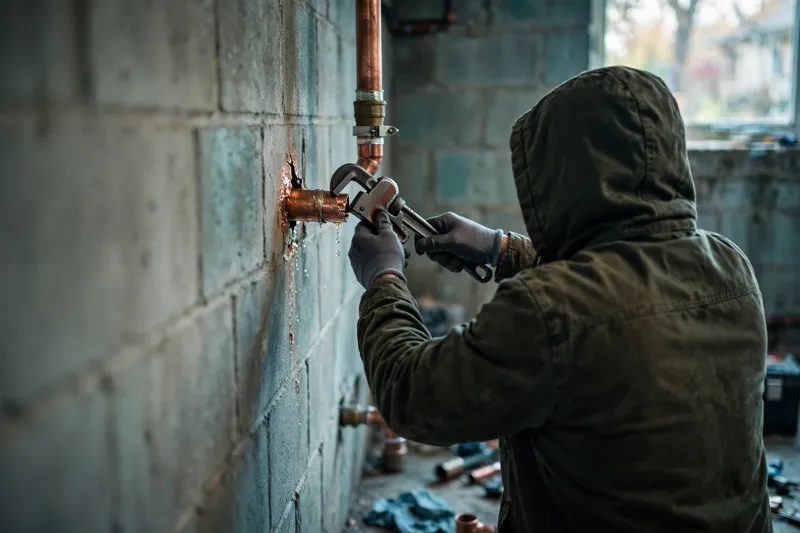
Supply lines in the older Lincoln Square stock fail after the first hard freeze. A line that froze and split can pour water into a wall, a ceiling and a floor before anyone notices, because the split is hidden inside the building. The insurer pays for the water damage the burst caused, not for the pipe itself, so report a burst the day you find it. No verified Lincoln Square burst-pipe case carries an address, and this page does not invent one.
5. Street water running toward the foundation
Lincoln Square is a neighbourhood of low streets and shared laterals, and when the street floods, the water runs toward the lowest ground, and the lowest ground is the foundation of the building beside it. The water that pools on the street finds the foundation crack, the window well and the stairwell, and the building that sits beside a flooded street needs the grading, the gutters and the sump pump to hold.
6. Cracked foundation and old clay lateral
A foundation crack lets groundwater in during a long rain, and an old clay sewer lateral lets tree roots in over decades, until the lateral blocks and the water comes back up through the lowest fixture. The vendor voice in this field names the shared sewer lateral as the Lincoln Square problem: one lateral serves several units, and one surcharge wets them all. Ask a licensed sewer contractor to televise an old clay lateral before the next storm, because a camera finds the root, the break and the belly before the water does.
Streets, blocks and buildings: where the water goes
Lincoln Avenue is the diagonal spine of Lincoln Square, running northwest from the Loop side of the neighbourhood up through Giddings Plaza at Lawrence Avenue, past Welles Park and Sulzer Regional Library at Lincoln and Foster, and on toward the northern edge. Lawrence Avenue, 4800 North, is the east-to-west spine, carrying the shops, the Lincoln statue corner at Western Avenue, and the water main that broke on the 8th of December 2025 between Western and Rockwell.
Western Avenue, 2400 West, is the north-to-south spine, carrying the Brown Line station, the Berlin Wall Monument and the Maypole corner at Leland Avenue. Foster Avenue, 5200 North, is the northern bound, where Sulzer Regional Library sits on the Lincoln Square and Ravenswood edge. Montrose Avenue, 4400 North, is the southern bound, where Welles Park sits across from Sulzer Library. Irving Park Road, 4000 North, is the northern edge of the neighbourhood proper.
Ashland Avenue, 1600 West, and Kedzie Avenue, 3200 West, mark the eastern and western bounds of the neighbourhood proper, and Damen Avenue, 2000 West, runs through the middle, past Winnemac Park. Ravenswood Avenue, 1800 West, marks the eastern edge of the community area, with the Metra tracks beside it. Argyle Avenue, 5000 North, and Wolcott Avenue cross at the spot where a sewer geyser burst out of the ground on the 11th of September 2022.
Lawrence Avenue and Washtenaw Avenue cross at the spot where water shot thirty to forty feet out of the sanitary sewers on the 26th of June 2021. Irving Park Road and Western Avenue cross at the spot where Emily Friend had about six inches of water in her basement on the 11th of September 2022. A building on any of these streets can flood, and the crew comes to all of them, from the shops at Lawrence and Western to the garden units beside the river, day and night.
Sump pumps in Lincoln Square: what to check before the next storm
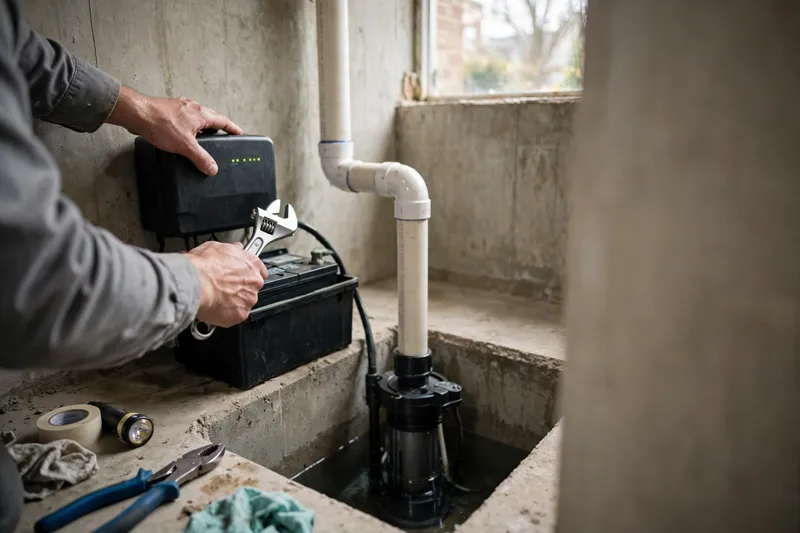
The sump pump is the one piece of equipment that decides whether a Lincoln Square basement stays dry in a hard storm, and it fails in the same four ways every time. First, the power goes out, and the pump stops with it, so keep a battery backup ready and test it. Second, the discharge line freezes where it leaves the house, so the pump runs and the water has nowhere to go. Third, the float switch sticks, so the pump never starts, or it starts and never stops.
Fourth, the pump is too small for the water coming in, so it runs constantly and burns out in the middle of the storm. Test the pump every spring and fall by pouring water into the pit and watching it start, run and stop. Listen for a pump that runs constantly, because that is a pump close to failing. Check the discharge line for a blockage and for a downhill run that ends far from the foundation.
And if the pump is more than ten years old, ask whether it is sized for the water your building takes in, because a garden unit below grade takes in more water than a house on high ground, and a building beside a flooded street takes in more than either.
The three kinds of water, and why the kind decides the job
Water damage restoration Lincoln Square asks one question first: what kind of water is it. Clean water comes from a supply pipe, a broken washer hose or a rain leak through a window, and it is the simplest loss to dry. Grey water comes from a dishwasher, a washing machine or a shower drain, and it carries enough contamination that the wet material has to be cleaned, not just dried.
Black water comes from a sewer backup or a flood that picked up soil, chemicals and sewage on its way in, and it is the loss that must be handled with the most care. Black water means the wet material comes out, the surfaces are cleaned and sanitised, and no one tries to dry it themselves. The kind of water decides the extraction, the cleaning, the drying time and the repair, which is why the first visit always starts with finding the source and naming the kind.
Combined sewers, and what that means for your basement
The City of Chicago has a combined sewer system, which means one pipe carries both sewage and stormwater. In a hard storm the combined sewer can surcharge, and the water comes back up through the lowest opening in the building, which is usually the floor drain. That is why a Lincoln Square basement can flood on a day when no pipe broke and no appliance failed: the sewer itself pushed the water back in. The city serves about three point seven million people through its combined sewers.
The city installed restrictor valves in the inlets of catch basins in areas that have experienced flooding, to slow the flow into the main sewer. The valve, called the Rainblocker, is a horizontal six-inch diameter stainless steel pipe, eleven inches long, fitted into the inlet of a catch basin, as the city's drawing shows it.
The caption on the city's image says close to two hundred thousand inlet restrictor valves were installed, at a rate of ninety to one hundred and twenty per day, and the programme is finished, under budget and a year ahead of schedule. The figure is text burned into the image file, not body text and not alt text, and this page prints it as the caption's figure. The body text on the same page says the purchase and installation cost seventy-five million dollars.
A backwater valve on the building drain does the same job for one building, and an overhead sewer does it better, because the fixtures drain above the sewer line and the water cannot come back up through them.
What the record actually shows about Lincoln Square flooding
This page is longer than both, because it carries the city layer, the insurance layer, the renter layer and the evidence layer that neither of them carries. The evidence layer is short, and it stays short, because only five events are verified, and all five are printed with their limits.
The September 2022 supercell
On the 11th of September 2022, a supercell storm swept across the North Side and overwhelmed the city sewers, and the water came into basements, underpasses and streets across Lincoln Square. Block Club Chicago, in the report by Noah Asimow on the 13th of September 2022, wrote that nearly two thousand North Side residents reported flooding in their basements after the storm overwhelmed city sewers and created flash floods, and that more than one thousand nine hundred service requests were filed related to the storm by Monday afternoon.
Both figures are North Side aggregates, and this page does not print them as Lincoln Square counts. The article's only literal Lincoln Square wording is the photo caption: "Flooding across Lincoln Square on after a 'supercell' storm swept across the North Side on Sept. 11, 2022." One named resident is quoted in the article: "Emily Friend, who lives near Irving Park Road and Western Avenue, said she had about 6 inches of flooding.
The water came up from her basement sewer drain and covered her home's baseboards, she said." The six inches attaches to Emily Friend, near Irving Park Road and Western Avenue, on the north-east edge of Lincoln Square, and this page uses it only with that exact attribution, never as a Lincoln Square total.
The storm brought two and a half to four and a half inches of rain to the city, and one thousand four hundred and eighty-five service requests came in by ten in the morning on Monday, with about one thousand two hundred flooded basements and about three hundred streets underwater across the city, according to the Office of Emergency Management and Communications, and those counts are citywide totals, not Lincoln Square counts. The 11th of September 2022 falls in no Disaster Relief Assistance Program window, so no DRAP help applies to it.
What the storm proves is that a Lincoln Square basement can flood in hours, that a Lincoln Square sewer can surcharge in minutes, and that the flood does not respect a neighbourhood line.
The geysers: two in Lincoln Square, one that is not
Two sewer geysers are verified in Lincoln Square, and a third, the one everyone saw on video, is not. The poster pinned the location himself: driving west on Lawrence, at the intersection of Washtenaw and Lawrence, which is inside Lincoln Square.
The post is a poster claim, not an independently verified incident, and this page prints it as one. On the 11th of September 2022, the same day as the supercell, water spouts burst out of the ground at Argyle Street and Wolcott Avenue, according to the Block Club geyser article by Noah Asimow on the 13th of September 2022, and Argyle and Wolcott is inside Lincoln Square.
Other geysers that day, at Montrose and Harding avenues, are in Old Irving Park, not in Lincoln Square, and this page does not print them as Lincoln Square geysers. The third geyser, the viral Facebook video of sewage erupting from a manhole with the covers blown off and the street inundated, is the one that was reported as a Lincoln Square video, and it is not one.
The Indian Express, which opened the story live, wrote that the clip, first posted online by Facebook user Rashida TreiMama, was reportedly taken at the Lawrence and Pulaski area, and Lawrence Avenue and Pulaski Road, 4000 West and 4800 North, is Albany Park ground, because the Lincoln Square neighbourhood ends at Kedzie Avenue, 3200 West. The Times Now attribution, that the clip was reportedly recorded in Lincoln Square, could not be re-verified from the article itself, because the Times Now page could not be opened live. The video itself is not reachable without signing in.
The Department of Water Management spokesperson, Megan Vidis, said in the geyser article that water mains do not explode, and she is right: a geyser is a sewer surcharge, not a main break. This page prints the Lawrence and Pulaski clip as an Albany Park clip, and it prints the Argyle and Wolcott geyser and the Lawrence and Washtenaw geyser as the Lincoln Square geysers, because the evidence says so.
The flooded-basement video, and what the neighbours said
The poster wrote that he had been there since late 2019 and that this was the first time the drain had backed up, and that luckily it was just rain water, with no sewage, thank God. The neighbours answered in the comments.
One wrote that she was also in Lincoln Square, renting the first floor of a two-flat, and that her basement had flooded too. Another wrote that she had flooded that morning, and that she was renting the garden unit, so the damage was pretty minimal. The posts are poster claims, not independently verified incidents, and this page prints them as what they are: real Lincoln Square residents, on the day of the storm, saying their basements flooded. No house-number address is given in any of them, and this page does not print one.
The video is the closest thing the record has to a named Lincoln Square basement flood with a face on it, and it is still a poster claim, which is why this page keeps the word "claim" attached to it.
The December 2025 water-main break
On the 8th of December 2025, an eight-inch cast-iron water main broke on the north side of Lawrence Avenue in Lincoln Square, and the Department of Water Management shut Western to Rockwell down. The main only serves the north side of the street, and only eight buildings were impacted, the department's spokesperson said, and a twelve-foot section of pipe would be installed and the break should be repaired by Tuesday morning, and it is unclear what led to the break.
That is the whole case, as CBS Chicago reported it on the 8th of December 2025, in the report by Jeramie Bizzle, updated at eight thirty-four in the evening Central Standard Time, and it was upgraded in this battery from an engine-only claim to a live-verified case, because the article was opened and read live. No basement flooding is claimed in the article, and this page does not call it a basement-flooding case.
It is a water-main break case, and it matters for a different reason: it is the only verified Lincoln Square water incident with a street, a pipe size, a building count and a repair time, and it shows that a Lincoln Square water main can break on a winter night and close a street. A WGN News video from the 9th of December 2025, twenty seconds long, shows crews working to fix the same break, and it corroborates the case as a main-break video, not as a basement case.
What residents ask, in their own words
Residents across Chicago ask the same questions after a flood, and the questions found in this battery are real user questions, not invented ones. Why does my basement keep flooding. Should I be concerned about this basement water damage. How much damage do I need to worry about. Has anyone experienced basement flooding in heavy rain, and how do you prevent it. Can this be fixed and what should I expect cost wise. What do you think this is, water damage in basement. Any advice on how to clean up standing water in basement.
Anyone else dealing with basement flooding. Basement water mitigation companies, recommendations. Burst pipe in the middle of the night, any recommendations. Basement flooded with sewage two weeks ago. Water leaking through cinder block wall. One Lincoln Square question asks whether anyone has had this happen and whether they have a contractor to recommend, and it was posted in March 2024.
The Facebook community asked the same questions in Lincoln Square words: what are the property flooding fixes in Lincoln Square, Chicago, Illinois, and the top answer said the new bump outs installed throughout the ward are impeding the water flow in the curb and gutters; whether there are flooding issues on the west side of Lincoln Square; and whether a family considering a move to the neighbourhood, west of Western, should be weary of what they have heard about flooding issues in the area.
The questions are the work: this page answers them with the drying, the extraction, the insurance and the city layer that the questions are really asking for.
What the record does not show
No verified Lincoln Square case carries a house-number address. No verified Lincoln Square case names a burst pipe at an address. No verified Lincoln Square case names a resident who fixed a backflow with a named contractor at a named address. No video names a Lincoln Square street address, cross-streets or resident for a basement flood or a burst pipe, and no video found in six live YouTube searches shows a Lincoln Square basement flood, a burst pipe or a water-damage job.
The one Lincoln Square video that exists is a generic promotional service video, titled for one company and describing another in its text, and it shows no specific job, address or incident, so this page does not print it as a case.
No fresh report ties Lincoln Square to the November 2026 storm, and no November 2026 storm produced a Lincoln Square-specific flood report in any live leg. A page that prints an unverified case as a fact is worse than a page that says nothing, because the homeowner who reads it cannot check it, and the adjuster who reads it will not trust it.
Water removal: how the water comes out
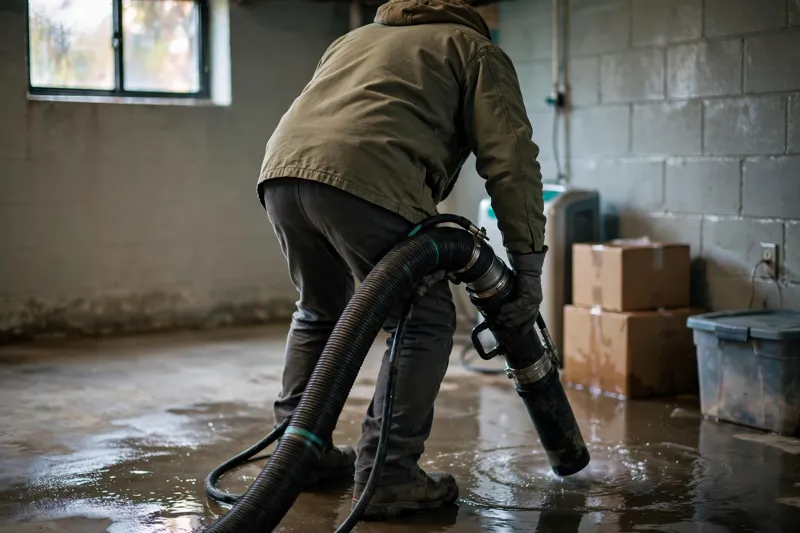
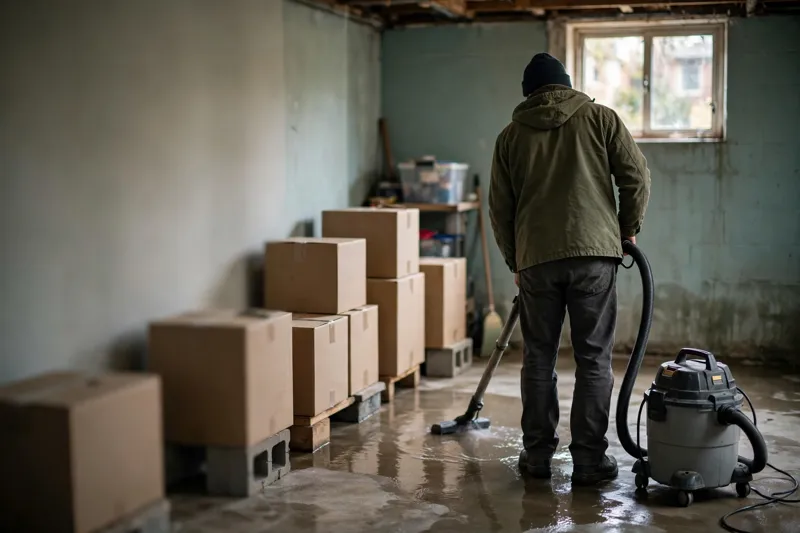
Water damage restoration Lincoln Square starts with the source. We find where the water came from, and we stop it if it can be stopped, because a pump that runs while the water keeps coming in is a pump that never finishes. Then the standing water comes out with pumps and vacuums, from the lowest point first, because the lowest point is where the water collects. Then the wet material comes out: the carpet pad that cannot be saved, the drywall that wicked the water up, the insulation that soaked it through.
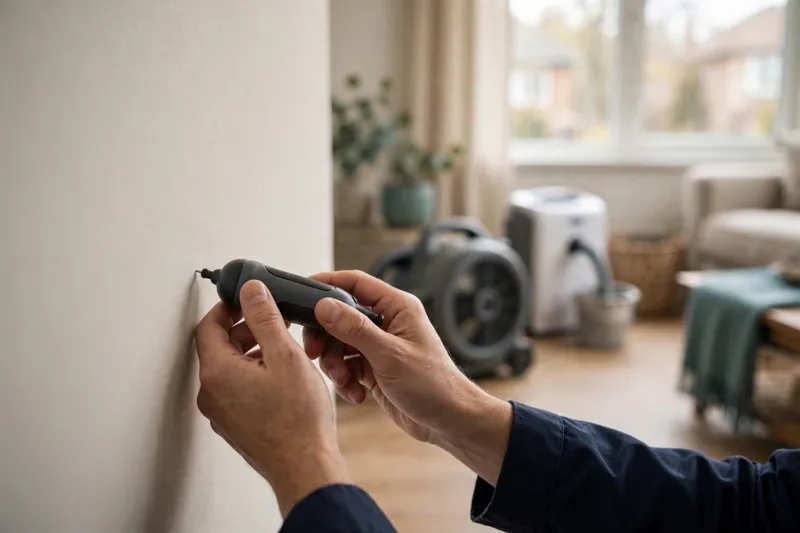
Then the drying equipment goes in: air movers to push dry air across the wet surfaces, and dehumidifiers to pull the moisture out of the air. The drying runs until the moisture readings hold for two days, and the readings go into a drying log you can see. The whole job is measured, because a job that is not measured is a job that is guessed at.
Flood cleanup: what happens after the water is out
The work in Lincoln Square continues after the standing water is gone, and it is the work that decides whether the house smells, stains or grows mold. The wet material that cannot be saved comes out first, because wet drywall, wet insulation and wet carpet pad do not dry back to clean.
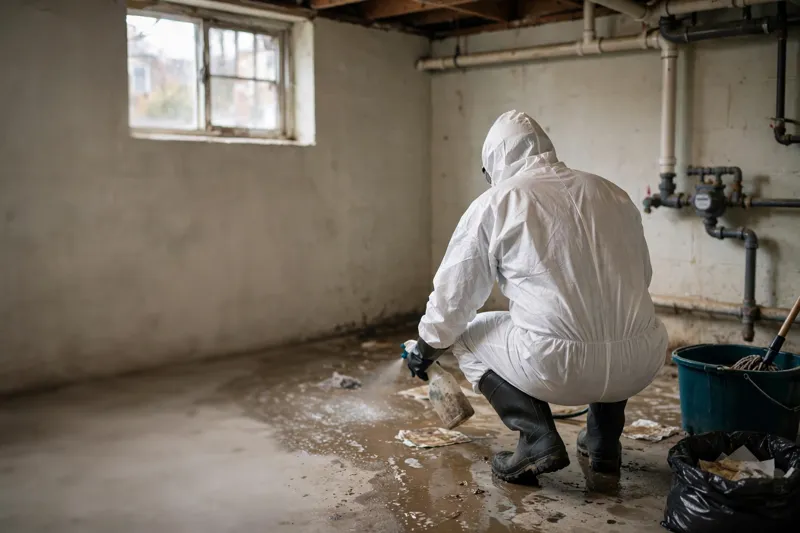
The surfaces that stay are cleaned and sanitised, and the cleaning depends on the kind of water: clean water needs a clean, grey water needs a clean and a sanitise, and black water needs a full clean and sanitise with the wet material removed. The air is dried with dehumidifiers, and the drying is checked with moisture meters, not with a hand on the wall. A wall can look dry and still hold water behind the paint, and a floor can feel dry and still feed mold underneath. The cleanup is finished when the readings say dry, and the readings are written down.
Structural drying: how a Lincoln Square building dries
Drying in Lincoln Square is the slow part of the job, and it is the part that cannot be rushed. Air movers push dry air across the wet walls, floors and framing, and dehumidifiers pull the moisture out of the air and send it down the drain. The drying takes three to five days on a clean-water loss in one room, and longer on a loss that covers several rooms, on a loss that sat for days, or on a loss that soaked the framing.
The moisture is measured with a meter, and the readings are written into a drying log, and the drying runs until the readings hold for two days. Air conditioning helps the drying, because it pulls moisture out of the air; heat does not, because heat without dehumidification just moves the moisture around. Do not turn the heat up and close the windows, because that is how a wet wall grows mold. Ventilate, run the dehumidifier, and let the readings decide when the drying is done.
The first 24 hours: what happens on day one
In Lincoln Square, the first 24 hours after a flood are the hours that decide the repair. In the first hour, stop the water if you can do it safely, call us, stay out of the water while the power is on, lift what you can save, and photograph everything. The call you make in the first hour decides whether you are drying a room or rebuilding it.
In the next few hours, the crew arrives, finds the source, measures how far the water spread with a moisture meter in the walls and floors, and starts the extraction. The standing water comes out first, from the lowest point, because the lowest point is where the water collects, and the wet material that cannot be saved comes out with it. By the end of the first day, the air movers and the dehumidifiers are running, the moisture readings are written down, and the drying log is started.
The first night is the hardest, because the equipment runs all night and the house is loud, but the equipment must run, because drying that stops at night is drying that lets mold start. On the second day, the readings are checked again, and the drying is adjusted: an air mover moved to a wet corner, a dehumidifier emptied, a wall opened if the meter says the water went behind it. By the third day, the readings should be falling, and the repair can be planned.
Call your insurer in the first 24 hours too, because the insurer needs to know the loss happened, and the adjuster needs to see the damage before the repair starts. Call 311 in the first 24 hours if the sewer or the street flooded, because the city logs the report and the crew can tell a main break from a private drain break. A loss found in an hour dries in days. A loss found in a week takes weeks, because the water had time to wick up the drywall and soak the framing. Call in the first hour, and the first 24 hours work for you. Wait a week, and the first 24 hours work against you.
The drying log, explained
The drying log is the one document that proves the job was done, and it is the document you should ask to see. It is a written record of the moisture readings, taken with a meter in the walls, the floors and the framing, on every visit, from the first day to the last. The first reading is the wettest, because the water has just come in, and the readings after that should fall, day by day, as the air movers and the dehumidifiers do their work.
A wall is dry when a moisture meter reads the same as a dry wall in the same house, and the reading holds for two days. A wall can look dry and still hold water behind the paint, so the log is read from the meter, not from the eye. The log also records the equipment: how many air movers, how many dehumidifiers, where they were placed, and when they were moved. It records the temperature and the humidity in the room, because warm dry air dries a wall and cold damp air does not.
It records what came out: the carpet pad, the drywall, the insulation, and why each piece came out. The adjuster reads the log, because the log is the proof that the drying ran until the readings said dry, and the insurer pays on the proof. A company that does not keep a log is a company that is guessing, and a company that guesses will close up a wet wall.
Ask to see the log on the first visit, ask to see it on every visit after that, and keep a copy of it with your photographs and your receipts. The log is your record, and the record is what gets the claim paid.
What the city says about rain readiness
The Metropolitan Water Reclamation District held a Rainstorm Ready Workshop at Roosevelt High School in Albany Park, and its newsletter piece, "Flooding Puts Rain Readiness in Spotlight", opens with the line that despite street flooding, basement backups and even manhole geysers in Chicago this year, the work goes on.
The piece says the year has seen fifteen overflow alerts, tying 2022 for the most in a year, and that more than three point seven million people in the Chicago area are served by combined sewers, and that the South and West sides of Chicago get hit probably five times harder.
The same piece quotes a homeowner whose basement no longer floods, not since backflow prevention and a pump were installed in 2009, and that homeowner is the Rosenstein case in Ravenswood Manor, Albany Park, not a Lincoln Square case, and this page names it as one.
The piece also names a "Building Resilient Neighborhoods in a Changing Climate" event on the 2nd of September at Sulzer Regional Library, with speakers from the 47th Ward Green Council, Ravenswood Neighbors, the 40th Ward Green Council and Indivisible Lincoln Square, and an Albany Park Flooding Community Meeting on the same day at Movement on Montrose, 2951 West Montrose Avenue.
The workshop is the city's own voice, and its message is the same as the vendor voice in this field: the backwater valve and the pump are the fixes that hold, and the preparation is the same in every season.
The North Branch, and the stories that are not Lincoln Square
The North Branch of the Chicago River runs along the western side of Lincoln Square, and it carries stories that look like Lincoln Square stories and are not ones. In January 2019, CBS 2 reported that sewage from some Ravenswood Manor properties was flushing directly into the North Branch, and a business owner named Mark Aistrope had bought a building he hoped to revitalise, only to learn from his plumbing contractor that the toilets were connected straight to a drain into the river.
The station tested it with non-toxic food dye, and after several flushes the dye came running out of the drain into the river.
The report said the practice had been going on for about a century, that the Metropolitan Water Reclamation District and the Chicago Department of Water Management had known about the issue since the 1980s and had corrected most properties, but that a few residential buildings and at least this business were left out, and that the property owner would be liable for the cost of the fix, which he said he had not planned for and did not have reserves to pay.
That story is real, and it is a serious story, but it is a Ravenswood Manor story, in the Albany Park community area, not a Lincoln Square story. The same is true of the Rosenstein case, the couple in Ravenswood Manor who had recurring sewage-contaminated basement flooding and fixed it in 2009 with a double backflow device and a pump. Both stories are quoted again in the district's newsletter, and both belong to Ravenswood Manor. This page names them only to keep them separate.
A page that prints them as Lincoln Square cases misleads the homeowner who reads it, and the search engine that reads it will not trust the page that does.
Landlords, tenants and condo owners: who pays, who fixes, who calls
A Lincoln Square basement flood is rarely a one-person loss, because the buildings here are two-flats and three-flats, garden units and vintage walk-ups, and the person who lives in the water is often not the person who owns the pipes. The landlord owns the building and its pipes, and the landlord fixes the building and its pipes. The tenant owns the tenant's belongings, and the tenant's renter's insurance, if the tenant has it, covers the tenant's belongings.
If you are a renter, tell your landlord the day the water appears, in writing, with photographs, because the landlord cannot fix a leak the landlord does not know about, and the landlord's insurer will ask when the landlord was told. If you are a landlord, send a crew the day you are told, because a landlord who waits a week pays for a week of water damage.
If the building is a condo, read the declaration: the association owns the common elements, which are usually the roof, the foundation, the shared sewer lateral and the common plumbing, and the unit owner owns the unit, which is usually the walls, the floors and the fixtures inside the unit. The shared sewer lateral is the Lincoln Square problem, because one lateral serves several units, and one surcharge wets them all. The association's policy covers the common elements, and the unit owner's policy covers the unit.
The tenant in a condo reports to the unit owner, and the unit owner reports to the association, and the association calls the crew. The garden unit is the hardest case, because it sits below grade, and the water reaches it first, and the garden unit tenant is the one who finds the water, and the garden unit tenant is the one who has the least power to fix it.
A garden unit tenant who finds water should call the landlord the same day, photograph everything, and move the belongings to higher ground, because the landlord's crew is the one that stops the water.
Through the year in Lincoln Square: when the water comes
Lincoln Square floods in every season, and each season brings a different kind of water. In the spring, the rain comes hard and the sewers surcharge, and the floor drain is the entry point. In the summer, the supercell storms come, and the street floods, and the water runs toward the foundation, and the sump pump is the only thing between the water and the basement. In the fall, the leaves block the gutters and the downspouts, and the water runs down the wall and into the foundation.
In the winter, the supply lines freeze and split, and the water pours into the wall, the ceiling and the floor before anyone notices, because the split is hidden inside the building. The December 2025 water-main break on Lawrence Avenue is a winter case, and the September 2022 supercell is a summer case, and the June 2021 geyser is a summer case, and the three cases together say the same thing: the water comes in every season, and the preparation is the same in every season. Test the sump pump every spring and fall.
Clean the gutters every fall. Insulate the supply lines before the first freeze. Keep the battery backup ready. And know where the main shutoff is, because the shutoff is the one thing that stops a burst pipe, and a burst pipe that runs all night is a burst pipe that floods a floor.
What a job costs, and why this page prints no price
This page prints no price, and the reason is simple: no two engines, no two companies and no two jobs agree on a number, and a number printed here would be a guess. The cost of a job depends on the kind of water, the size of the wet area, how long the water sat, how far it wicked up the walls, whether the material can be dried or must come out, and whether the job needs a permit. A clean-water loss in one room costs less than a black-water loss across a basement.
A loss found in an hour costs less than a loss found in a week. A loss in a garden unit costs more than a loss in a house on high ground, because the garden unit sits below grade and the water reaches it first.
What this page does print is the table below, which is the list of the factors that decide the cost, so you can ask a company for a written estimate that names them.
Factor
What it decides
Kind of water
Clean water dries. Grey water cleans and dries. Black water removes, cleans, sanitises and dries.
Size of the wet area
One room dries in days. A whole basement dries in a week or more.
How long the water sat
An hour of water dries. A week of water wicks up the walls and soaks the framing.
What the water touched
Carpet pad, drywall and insulation come out. Hardwood, tile and framing can dry.
Whether a permit is needed
A sewer repair in the public way needs a permit, and a drainlayer licence, and an inspection.
Whether mold grew
Mold that grew while the water sat needs a separate cleanup before the repair.
Insurance: what the policy pays, and what it does not
Water damage restoration Lincoln Square is a job the insurer pays for, if the policy covers it, and the policy does not cover everything. The insurer pays for the water damage a burst pipe caused, not for the pipe itself. The insurer pays for the drying, the cleaning and the repair of the damage, not for the maintenance that would have prevented it.
The insurer does not pay for rising water or for a sewer backup unless the policy carries a rider, and a standard policy almost never covers either one, as the Metropolitan Water Reclamation District's Rainstorm Ready Workshop said in the summer of 2026. Call your insurer in the first 24 hours, because the insurer needs to know the loss happened, and the adjuster needs to see the damage before the repair starts. Photograph everything before the crew moves it, and keep the photographs with the receipts, because the photographs are the proof.
The adjuster reads the drying log, because the log is the proof that the drying ran until the readings said dry. If the adjuster asks for a second opinion, give it, because a second opinion is a second set of eyes on the same water, and the insurer pays on the proof, not on the argument.
The city programmes, and what they do not cover in Lincoln Square
Three city programmes sound like they help a Lincoln Square homeowner after a flood, and none of the three covers a Lincoln Square loss in the way a homeowner hopes. The table below is the honest picture.
Programme
What it does
Lincoln Square
Private Sewer Drain Program
The city repairs a sewer drain tile broken under the public way, at no cost to the owner, for a private residence of up to four units.
Available citywide, including Lincoln Square. Start via CHI 311. The owner first hires a licensed sewer contractor to rod and video-inspect to locate the break.
Flood Assistance Repair Program
Up to twenty-five thousand dollars in repairs for basement damage from the 2023 or 2024 floods, for owner-occupied single-family or two-unit homes.
NOT eligible. West side of Chicago only. Registration opens the 30th of November 2026 and closes the 11th of December 2026.
Disaster Relief Assistance Program
Up to fifteen thousand dollars per household for rent, mortgage and utilities after three federal disaster declarations, for households at or below eighty percent of area median income.
Citywide, but NO Lincoln Square ZIP is a priority ZIP. The priority ZIPs are 60644, 60651, 60639, 60641 and 60624.
The Private Sewer Drain Program, step by step
The Private Sewer Drain Program is the one city programme that does help a Lincoln Square homeowner, and it is the one that is most often misunderstood. The city may repair a sewer drain tile from a private residence of up to four units, if the tile is broken under the public way, from the sidewalk to the centre of the street. The owner first hires a licensed sewer contractor to rod and video-inspect the drain, to locate the break.
If the break is in the public way, the city repairs it at no cost, and the Department of Water Management oversees the repair. If the break is on the private side, the owner pays for it. The programme starts with a call to CHI 311.
The CHI 311 knowledge-base article, dated the 12th of December 2018, lays out the steps: the homeowner calls 311, a Department of Water Management crew is dispatched, the crew determines whether the problem is the main or the private drain, the homeowner hires a city-licensed sewer contractor, the contractor calls the Permit Section at 312-744-3155 for a permit to rod and videotape, and the contractor calls Inspections at 312-744-5503 to schedule a house drain inspector to be present.
The article says a homeowner typically pays five thousand to ten thousand dollars for a private drain repair, which is the figure the article carries, and the article's effective date is the 1st of January 2002. The 2023 flyer, which was not located in this battery, says the city pays the entire cost of a public-way repair, with no lien, and that the repair saves on average ten thousand to twenty thousand dollars.
This page does not print a time for the city to contact the owner, because the live page does not carry one, and it does not print a year for the programme's start, because the live page does not carry one either.
Backwater valve and overhead sewer: the two fixes that hold
Water damage restoration Lincoln Square is a job that repeats unless the building is fixed, and two fixes hold. The backwater valve sits on the building drain, and it lets water flow out and stops it flowing back in. When the combined sewer surcharges, the valve closes, and the water that would have come up through the floor drain stays in the sewer.
The valve needs a permit, it needs a licensed drainlayer to install it, and it needs to be checked every year, because a valve that sticks open is a valve that does not work. The overhead sewer is the stronger fix. The fixtures drain above the sewer line, through a pump that lifts the waste up and out, so the water cannot come back up through the fixtures at all, because the fixtures sit above the sewer.
The overhead sewer costs more than a backwater valve, and it needs a pump, and the pump needs power, and the power needs a battery backup, because a storm that floods a basement is the same storm that cuts the power. The vendor voice in this field names the backwater valve and the overhead sewer as the Lincoln Square fix, and the vendor voice is right, because the shared sewer lateral is the Lincoln Square problem, and one lateral serves several units, and one surcharge wets them all.
A landlord who installs a backwater valve protects the garden unit. A condo association that installs an overhead sewer protects the whole building. Either fix is cheaper than the second flood, and both fixes are cheaper than the third.
How long the job takes
Water damage restoration Lincoln Square takes as long as the drying takes, and the drying takes as long as the water says it takes. A clean-water loss in one room takes three to five days of drying, and the repair after that takes a few days more. A loss that covers a whole basement takes a week or more of drying, and the repair after that takes longer.
A loss that sat for days takes longer than a loss found in an hour, because the water had time to wick up the drywall and soak the framing. A black-water loss takes longer than a clean-water loss, because the wet material comes out, the surfaces are cleaned and sanitised, and the drying starts after the cleaning. A loss that grew mold takes longer still, because the mold cleanup comes before the repair.
The drying runs until the moisture readings hold for two days, and the readings are written into a drying log, and the job is finished when the readings say dry, not when the calendar says so. A company that promises a fixed number of days before it has measured the water is a company that is guessing, and a company that guesses will close up a wet wall.
311: what to report, and what the city does with it
Call 311 when the sewer or the street floods, because the city logs the report, and the crew can tell a main break from a private drain break, and the report helps your street and the next storm too. The 311 Call Tips page says the service operates twenty-four hours a day, seven days a week, three hundred and sixty-five days a year.
The city does not publish one settled call volume, because the Call Tips page says approximately three point one million calls and the Call Center Operations page says approximately two point eight million, and this page cites neither figure as settled. The number 312-744-5000 does not appear on the Call Tips page, and it appears only in the CHI 311 site footer, so this page does not print it as a 311 number.
Report a "Water in Basement" complaint through 311 or CHI 311, with the address, whether the water is dirty or clean, where the water is coming from, how many inches there are, and whether it is a basement, a crawl space or a ground floor. Do not report water coming through a window or a door as a water-in-basement complaint, because the city routes that differently.
The 47th Ward's water page says a homeowner should report a basement backup to Water Management for an inspection, and that an inspector will typically arrive within forty-eight hours, and that the "Water in Basement" complaints are used to plan larger infrastructure projects. The report is not a repair, and it is not a claim, but it is the record, and the record is what the city builds from.
Who to call
Number or address
What for
CHI 311
311
Water in basement, sewer backup, street flooding, private drain programme.
Department of Water Management, Inspections, six inches and under
312-744-5503
Schedule a house drain inspector.
Department of Water Management, Inspections, eight inches and over
312-744-5502
Schedule a house drain inspector.
Department of Water Management, Engineering
312-744-3133
Engineering questions on a sewer repair.
Westside Health Authority, Flood Assistance Repair Program
312-449-7870,
Flood Assistance Repair Program registration, west side only.
Mold: what grows after the water, and what to do about it
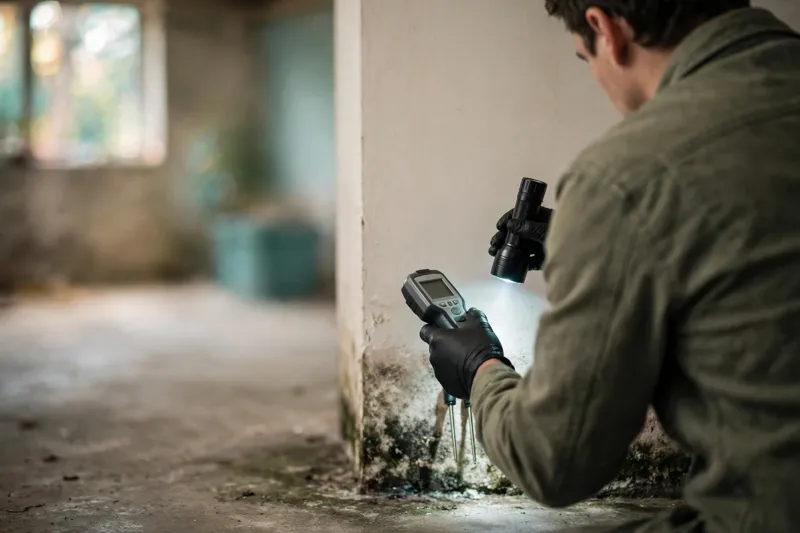
Mold grows after the water, and it grows fast. A wet wall that stays wet for two days can grow mold, and a wet wall that stays wet for a week will grow mold, and the mold that grows behind the paint is the mold you cannot see. The drying is the mold prevention: air movers and dehumidifiers, moisture readings written into a drying log, and drying that runs until the readings hold for two days.
If the mold has already grown, the mold cleanup comes before the repair, because a repair that closes up a moldy wall is a repair that hides the mold. The State of Illinois registers mold remediation companies under Part 835 of the Illinois Administrative Code, effective the 23rd of September 2026, with a grace period to the 30th of September 2027. Ask a company for its Illinois Department of Public Health registration, and ask to see it, because the registration is the proof that the company is registered with the state.
This site claims no registration of its own, and this page prints the registration only as consumer guidance. The registration is operational, and the grace period runs to the 30th of September 2027.
The fifty-percent rule, in plain words
The fifty-percent rule is the one rule that decides whether a repair is a repair or a rebuild. If the cost of repairs exceeds fifty percent of the building's market value, the building must be brought up to current floodplain standards, and that is the FEMA fifty-percent rule.
The rule matters in Lincoln Square because the older stock is valuable and the repairs are expensive, and a loss that looks small can cross the fifty-percent line when the water wicked up the walls and soaked the framing. If your loss is close to the line, ask your adjuster to run the numbers before the repair starts, because a repair that crosses the line is a rebuild, and a rebuild needs a permit, and a permit needs a plan, and a plan needs time.
Pipe bursting: the trenchless fix, and the repair it is not
A new pipe is pulled through the old one, breaking the old pipe apart as it goes, and the new pipe takes its place, without digging a trench across the yard.
The fix matters in Lincoln Square because the old clay laterals are the problem, and a clay lateral that lets tree roots in over decades will block again, and a pipe bursting job replaces the lateral without digging up the yard. The job needs a permit, it needs a licensed drainlayer, and it needs an inspection, because a sewer repair in the public way is a city job, and the city inspects it.
Ask a licensed sewer contractor to televise the lateral first, because a camera finds the root, the break and the belly before the water does, and a camera costs less than a second flood.
Sewer permits: who can do the work, and what it takes
Water damage restoration Lincoln Square is a job that sometimes needs a permit, and the permit rules are the city's rules, not ours. Only a licensed drainlayer can do sewer work in Chicago, and the drainlayer licence has been a courtesy licence from the Department of Buildings since the 1st of January 2022. A repair that extends more than twenty feet must comply with new-sewer requirements, and a repair of twenty feet or less, in kind, with the same pipe material, is the exception.
Unpermitted work risks a fine of five thousand dollars or more, according to the Sewer Permits page. The Sewer Permits page carries no fee amounts, and this page prints none. The drainlayer licence fee for calendar year 2026 is one hundred and fifty dollars, confirmed live in the notice dated the 2nd of January 2026, effective the 6th of January 2026, and the classes of licence are not in that notice, so this page does not print them from it.
The 2020 form, which is still the form on record, carries a fee of one hundred and twenty-five dollars, a late fee of seventy-five dollars, a bond of fifty thousand dollars and insurance of at least three hundred thousand dollars, and it lists classes A, B1, B2 and C. The 2026 application form is still unlinked plain text on the city's page, and the 2024, 2023 and 2022 forms did not appear on either page in this battery.
The 2026 Regulations, eighty pages, March 2026, carry the stormwater rules: a plan is needed when fifteen thousand square feet or more is disturbed, or seven thousand five hundred square feet or more of impervious surface is created, or the discharge goes to waters or a separate sewer; the hundred-year control is eight point five seven inches in twenty-four hours; the release rate is zero point one five cubic feet per second for a three-inch vortex, and zero point two five cubic feet per second for a four-inch vortex; the volume control is half an inch of runoff; and the amendment fee is five hundred dollars per submission, under section 11-18-080(c), on page sixty-three.
The five-hundred-dollar fine for a change-of-ownership notice violation, under section 11-18-070(b), is a separate five hundred dollars.
Tap water in Lincoln Square: where it comes from
The water that comes out of a Lincoln Square tap comes from Lake Michigan, through the Jardine Water Purification Plant at 1000 East Ohio Street, Chicago, Illinois 60611, and the Sawyer Water Purification Plant at Rainbow Beach. The Department of Water Management's "What We Do" page ranks Jardine first among the world's largest conventional plants, and Sawyer eighth, and this page prints the ranking as the page gives it, never as the bare phrase "the world's largest".
The same page says the system carries about four thousand six hundred miles of sewer mains and about four thousand three hundred miles of water mains, about eighty thousand drainage structures, twelve pumping stations, about one hundred and fifty thousand manholes, about seven hundred and fifty million gallons of water a day, and about four hundred thousand lead service lines, and it serves Chicago and about one hundred and twenty suburban communities.
The home page of the department carries no mileage at all, and no headquarters address, and no street address, so this page does not print one from it. The department's "Our Structure" page says about two thousand one hundred people work there, and the budget is about one billion dollars, and the Administrative Offices are at the Jardine plant, 1000 East Ohio Street, Chicago, Illinois 60611, by appointment only. The department's live home is at chicago.gov/city/en/depts/water.html, and the old home address is dead. All water-service requests go through 311.
The flood record: what to keep, and why
Keep the record, because the record is what gets the claim paid. Photograph everything before the crew moves it: a wide shot of the room first, then close-ups of the water line, the damage and the serial plates. Keep the drying log, because the log is the proof that the drying ran until the readings said dry. Keep the receipts, because the receipts are the proof of what the job cost. Keep the 311 report number, because the report is the record that the sewer or the street flooded.
Keep the adjuster's name and the claim number, because the claim is the paper that pays. Keep the contractor's licence number, because the licence is the proof that the work was done by a licensed drainlayer. And keep the photographs after the repair, because the photographs are the proof that the repair was done, and the next flood, if it comes, will need a record of its own.
Storefronts on Lawrence, Western and Lincoln: when the shop floods
Water damage restoration Lincoln Square is a job that closes a shop, and a shop that is closed loses money every hour it stays closed. The shops at the Lawrence, Western and Lincoln intersection sit on the ground floor, and the water that comes into a shop comes through the front door, the back door, the floor drain and the wall, and it soaks the stock, the fixtures and the floor.
A shop that floods needs the water out fast, the floor dried fast, and the stock moved before the water reaches it, because the stock is the shop's money. A shop that sells food needs the health department's word before it reopens, and a shop that sells clothes needs the wet stock out before the mold starts.
The landlord owns the building and its pipes, and the shop owner owns the stock and the fixtures, and the two of them need to call the same day, because the landlord's crew stops the water and the shop owner's crew saves the stock.
A shop that floods on a Saturday loses the Saturday, and a shop that floods on a Saturday and stays closed on a Sunday loses the weekend, so call in the first hour, and call the insurer in the first 24 hours, and keep the photographs, because the photographs are the proof of what the water took.
Small apartment buildings: when one flood wets several homes
Water damage restoration Lincoln Square is a job that wets several homes at once, because the buildings here are two-flats and three-flats, and one sewer surcharge wets them all. The garden unit takes the water first, because it sits below grade, and the first floor takes it next, because the water wicks up the walls, and the second floor takes it last, because the water runs down the stairs.
The landlord owns the building and its pipes, and the landlord fixes the building and its pipes, and the tenants own their belongings, and the tenants' renter's insurance covers their belongings, if they have it. The landlord should call the day the water appears, and the tenants should tell the landlord the day the water appears, in writing, with photographs, because the landlord cannot fix a leak the landlord does not know about.
The shared sewer lateral is the Lincoln Square problem, because one lateral serves several units, and one surcharge wets them all, and the fix is a backwater valve or an overhead sewer, and the fix protects the whole building, not just one unit. A landlord who installs a backwater valve protects the garden unit. A condo association that installs an overhead sewer protects the whole building. Either fix is cheaper than the second flood, and both fixes are cheaper than the third.
By building type: what floods, and what to watch
Every building type in Lincoln Square floods differently, and the fix is different for each one. A brick two-flat floods through the floor drain, because the combined sewer surcharges and the water comes back up through the lowest opening. A brick three-flat floods the same way, and the garden unit takes the water first. A vintage walk-up floods through the supply lines, because the old lines freeze and split in the first hard freeze.
A single-family frame house floods through the foundation, because the water runs toward the lowest ground and the lowest ground is the foundation of the house beside a flooded street. A garden unit floods through the floor drain and the window well, because it sits below grade and the water reaches it first. A shop floods through the front door, the back door, the floor drain and the wall, because it sits on the ground floor and the water comes in from every side.
A building beside the river floods through the foundation, because the North Branch runs along the western side of Lincoln Square. A building on a low street floods through the street, because the water that pools on the street finds the foundation crack, the window well and the stairwell. The fix is the same for all of them: stop the water at the source, get the standing water out, dry the structure until the readings say dry, and fix the entry point so the next storm does not do it again.
How to choose a company, in five questions
Ask a company five questions before you hire it, and hire the one that answers all five. First, are you licensed, and will you show me the licence. Second, are you registered with the Illinois Department of Public Health for mold remediation, and will you show me the registration. Third, do you keep a drying log, and will you show it to me on every visit. Fourth, will you give me a written estimate that names the factors that decide the cost. Fifth, will you talk to my adjuster for me.
A company that answers all five is a company that does the job properly. A company that cannot answer the first two is a company that is not licensed or not registered, and a company that cannot answer the third is a company that is guessing. A company that will not give a written estimate is a company that does not want its price in writing, and a company that will not talk to the adjuster is a company that leaves you to argue with the insurer alone. Ask the five questions, and hire the company that answers them.
The adjuster: what they need, and what they pay on
The adjuster needs three things: the photographs, the drying log and the receipts. The photographs are the proof of what the water took, and they should be taken before the crew moves anything, with a wide shot of the room first and close-ups of the water line, the damage and the serial plates after that. The drying log is the proof that the drying ran until the readings said dry, and it should be kept on every visit, with the moisture readings written down in the walls, the floors and the framing.
The receipts are the proof of what the job cost, and they should be kept with the photographs and the log. The insurer pays for the water damage a burst pipe caused, not for the pipe itself, and it pays for the drying, the cleaning and the repair of the damage, not for the maintenance that would have prevented it. The insurer does not pay for rising water or for a sewer backup unless the policy carries a rider, and a standard policy almost never covers either one.
If the adjuster asks for a second opinion, give it, because a second opinion is a second set of eyes on the same water, and the insurer pays on the proof, not on the argument. Keep the claim number, keep the adjuster's name, and keep the record, because the record is what gets the claim paid.
The quote: what a written estimate should name
A written estimate should name the factors that decide the cost, so you can compare one estimate with another. It should name the kind of water, because clean water dries and black water removes, cleans, sanitises and dries. It should name the size of the wet area, because one room dries in days and a whole basement dries in a week or more. It should name how long the water sat, because an hour of water dries and a week of water wicks up the walls and soaks the framing.
It should name what the water touched, because carpet pad, drywall and insulation come out and hardwood, tile and framing can dry. It should name whether a permit is needed, because a sewer repair in the public way needs a permit, a drainlayer licence and an inspection. And it should name whether mold grew, because mold that grew while the water sat needs a separate cleanup before the repair. An estimate that names all six is an estimate you can trust. An estimate that names none of them is an estimate that is guessing, and a company that guesses will close up a wet wall.
The repair checklist: what to check before the crew leaves
Water damage restoration Lincoln Square is finished when the readings say dry, not when the calendar says so, and the checklist below is what to check before the crew leaves. Check the moisture readings, because the readings should hold for two days. Check the drying log, because the log should be written on every visit, with the readings in the walls, the floors and the framing. Check the wet material, because the carpet pad, the drywall and the insulation that could not be saved should be out.
Check the surfaces, because the surfaces that stayed should be cleaned and sanitised. Check the sump pump, because the pump should be tested, and the discharge line should be clear, and the battery backup should be ready. Check the backwater valve, because the valve should close when the sewer surcharges, and it should be checked every year. Check the gutters and the downspouts, because the gutters should be clear and the downspouts should carry the water away from the foundation. Check the grading, because the ground should slope away from the foundation, not toward it.
Check the photographs, because the photographs should be taken before the crew moves anything and after the repair is done. And check the receipts, because the receipts should be kept with the photographs and the log. A job that passes the checklist is a job that is done. A job that fails the checklist is a job that is not done yet.
Winter in Lincoln Square: the freeze, the split and the flood
Water damage restoration Lincoln Square is a winter job as often as it is a summer job, because the supply lines in the older Lincoln Square stock fail after the first hard freeze. A line that froze and split can pour water into a wall, a ceiling and a floor before anyone notices, because the split is hidden inside the building. The insurer pays for the water damage the burst caused, not for the pipe itself, so report a burst the day you find it.
Insulate the supply lines before the first freeze, and keep the heat on in every room, even the rooms you do not use, because a room that is cold is a room where a line can freeze. Know where the main shutoff is, because the shutoff is the one thing that stops a burst pipe, and a burst pipe that runs all night is a burst pipe that floods a floor.
The December 2025 water-main break on Lawrence Avenue is a winter case, and it shows that a Lincoln Square water main can break on a winter night and close a street. The sump pump discharge line can freeze too, and a pump that runs while the line is frozen is a pump that never finishes, so check the discharge line for a downhill run that ends far from the foundation, and keep it buried below the frost line.
Winter is the season when the water comes from inside the building, and the preparation is the same as in every season: test the pump, clean the gutters, insulate the lines, keep the battery backup ready, and know where the shutoff is.
Prepare before the next storm: a checklist for Lincoln Square
The next storm is coming, and the preparation is the same in every season. Test the sump pump every spring and fall, by pouring water into the pit and watching it start, run and stop. Listen for a pump that runs constantly, because that is a pump close to failing. Check the discharge line for a blockage and for a downhill run that ends far from the foundation. Keep a battery backup ready, because a storm that floods a basement is the same storm that cuts the power.
Clean the gutters every fall, because the leaves block the gutters and the downspouts, and the water runs down the wall and into the foundation. Insulate the supply lines before the first freeze, and keep the heat on in every room. Know where the main shutoff is, and teach everyone in the house where it is, because the shutoff is the one thing that stops a burst pipe.
Ask a licensed sewer contractor to televise an old clay lateral before the next storm, because a camera finds the root, the break and the belly before the water does. Ask about a backwater valve, because the valve stops the water coming back up through the floor drain, and ask about an overhead sewer, because the overhead sewer makes it impossible. And check the insurance, because a standard policy almost never covers rising water or a sewer backup, and a rider is needed.
The preparation takes a day, and the flood takes an hour, and the day you spend preparing is the day that saves the week you would spend drying.
Street by street: where we come, in Lincoln Square
We come to every street in Lincoln Square, Chicago, IL 60625, day and night. We come to Lawrence Avenue, 4800 North, from the shops at Western Avenue to the water main that broke in December 2025, and to Lincoln Avenue, the diagonal spine, from Giddings Plaza at Lawrence to Welles Park and Sulzer Regional Library at Foster. We come to Western Avenue, 2400 West, from the Brown Line station to the Maypole corner at Leland Avenue.
We come to Foster Avenue, 5200 North, where Sulzer Regional Library sits on the Lincoln Square and Ravenswood edge, and to Montrose Avenue, 4400 North, where Welles Park sits across from Sulzer Library. We come to Irving Park Road, 4000 North, the northern edge of the neighbourhood proper, and to Ashland Avenue, 1600 West, and Kedzie Avenue, 3200 West, the eastern and western bounds. We come to Damen Avenue, 2000 West, past Winnemac Park, and to Ravenswood Avenue, 1800 West, the eastern edge of the community area.
We come to Argyle Avenue and Wolcott Avenue, where the sewer geyser burst out of the ground in September 2022, and to Lawrence Avenue and Washtenaw Avenue, where the water shot thirty to forty feet out of the sanitary sewers in June 2021. We come to Irving Park Road and Western Avenue, where Emily Friend had about six inches of water in her basement in September 2022.
We come to the shops at the Lawrence, Western and Lincoln intersection, and to the garden units that sit below grade, and to the brick two-flats and three-flats, the vintage walk-ups and the single-family frame houses, and to the homes around Winnemac Park and Welles Park, River Park and Gross Park. We come to all of them, day and night, because the water comes to all of them, day and night.
Call now: the first hour decides the repair
Water damage restoration Lincoln Square starts with a call, and the call should come in the first hour. Call (773) 570-9869 any time, day or night, and tell us where the water is, how deep it looks, and whether it smells of sewage. We answer 24/7, and we talk you through the first hour while a crew is on the way to your Lincoln Square home.
We find the source, we stop it if it can be stopped, we pull the standing water out, we dry the structure until the readings say dry, we clean what the water touched, we remove what cannot be saved, and we rebuild what was lost. We keep a drying log on every visit, and we talk to your adjuster for you, and we help you file the claim. Call 311 as well if the sewer or the street flooded, so the city knows the sewer backed up on your street.
And if you are a renter, tell your landlord the day the water appears, because the landlord owns the building and its pipes. The first hour decides the repair. Call in the first hour, and the first 24 hours work for you.
Frequently asked questions about water damage restoration in
What is water damage restoration in Lincoln Square?
Water damage restoration work in Lincoln Square is the full job of getting a home dry and rebuilt after water gets in. It starts with extraction, then drying to moisture readings, then cleaning, then removing what cannot be saved, then repair. We do it for homes across Lincoln Square, Chicago, IL 60625, day and night.
How long does water damage restoration take in Lincoln Square?
Water damage restoration in Lincoln Square takes a few days to several weeks. Drying takes three to five days on a clean-water loss in one room, and repairs take one to two weeks after that. Four things decide the time: how much damage there is, what kind of water it is, what materials got wet, and whether mold is growing.
What does water damage restoration include in Lincoln Square?
Water damage restoration in Lincoln Square usually includes five parts, done in order. First, inspection: we find the source and measure how far the water spread. Second, extraction: standing water is removed with pumps and vacuums. Third, drying: air movers and dehumidifiers dry the walls, floors and framing. Fourth, cleaning and sanitizing. Fifth, restoration and repairs.
What should I do first when my basement floods in Lincoln Square?
Call us first at (773) 570-9869, then stop the water at the source if you can do it safely. Stay out of a flooded basement while the power is on, and do not touch the water with bare hands. Lift what you can save to higher ground, and photograph the water line and every damaged item before you move it.
Can I stay in my home during water damage restoration?
It depends on how much water there is and where it went. You can usually stay upstairs while we dry a basement, but you should leave if sewage is in the water, if the power is off, or if the damage covers the rooms you sleep and cook in. We tell you on the first visit whether staying is safe.
How do I know if my walls are dry after water damage?
Walls are dry when a moisture meter reads the same as a dry wall in the same house, and the reading holds for two days. A wall can look dry and still hold water behind the paint, so we do not call a wall dry from how it looks. We write the readings into a drying log you can see.
Will my basement flood again?
It can, unless the entry point is found and closed. Lincoln Square basements flood through the same few openings: a floor drain during a sewer surcharge, a failed sump pump, a frozen discharge line, or a supply line that split after the first hard freeze. We find the entry point and tell you what will stop the next flood.
What is the 50/50 rule for water damage?
The 50 percent rule is a FEMA rule for homes in a floodplain, and it is the only 50 percent rule that counts. If repairs cost half or more of what the home is worth, the home must be brought up to flood standards. No other 50 percent rule exists, and no engine or page should invent one.
How much does water damage restoration cost in Lincoln Square?
This site prints no prices, so no figure here can mislead you. The cost depends on how much water there is, what kind of water it is, how many rooms got wet, and how long the water sat. We inspect first, then give you a written scope of work with the cost in it before any repair starts.
Does homeowners insurance cover water damage restoration in Lincoln Square?
It usually does if the damage was sudden and accidental, such as a burst pipe or an appliance failure. A sewer backup is usually covered only if you hold the endorsement for it. Flooding from outside needs separate flood insurance, because a standard homeowners policy does not cover it at all.
How much does insurance pay for water damage?
No page can give you a number, because the payment depends on your policy, your deductible, the cause of the loss, and the limits you bought. The insurer pays the cost of the drying and the repair, less your deductible, and it does not pay for the pipe that failed. Keep every receipt and photograph.
Does homeowners insurance cover burst pipes?
It usually does when the pipe burst suddenly, such as a pipe that froze and split in a cold snap. The insurer pays for the water damage the burst caused, not for the pipe itself. A pipe that leaked slowly for months may be classed as wear and tear, so report a burst the day you find it.
What is pipe bursting, and how much does it cost?
Pipe bursting means two different things, and pages that mix them up mislead you. Trenchless pipe bursting replaces a broken sewer line by pulling a new pipe through the old one, with no open trench. A burst pipe is a supply pipe that split open, usually from freezing. This site prints no prices for either job.
Are renters responsible for water damage in Lincoln Square?
It depends on who caused the water and what the lease says. The landlord usually owns the building and its pipes, so the landlord pays for the building repair. A renter pays when the renter caused the damage, such as an overflowing tub left running. Read your lease and tell your landlord the day the water appears.
Can mold be fully remediated?
Yes, when the water source is fixed first and the drying is finished to moisture readings. Remediation means removing the mold growth and the wet material it sits on, cleaning what stays, and drying the space so it cannot grow back. It cannot work if the leak keeps feeding the wall, so the source comes first.
How do I choose a water damage restoration company in Lincoln Square?
Ask for three things before you hire anyone: a drying log with moisture readings, a written scope of work, and proof of Illinois Part 835 registration if mold work is involved. A good company answers 24/7, arrives fast, photographs everything, and talks to your adjuster. Avoid any company that asks you to sign on the spot.
What is the difference between water mitigation and water damage restoration?
Mitigation is the emergency response: stop the water, remove it, and dry the building so the damage stops growing. Restoration is the rebuild that follows: replace the drywall, flooring and trim that could not be saved, and return the rooms to how they were. Mitigation comes first, and restoration starts only when the drying log says dry.
Do I need a permit for water damage repair in Lincoln Square?
It depends on what is being repaired. Drying and cleaning need no permit. Replacing drywall, flooring and trim usually needs no permit either, but any work on the sewer lateral in the public way needs a permit, and only a licensed drainlayer may do it. We tell you on the first visit whether your repair needs one.
What should I do if sewage backs up into my basement?
Stay out of the water and call us, because sewage carries bacteria that can make you sick. Do not run water in the house, do not flush toilets, and do not try to mop it up yourself. Call 311 too, so the city knows the sewer backed up on your street. We extract it, clean it, and dry the space.
How do I dry a flooded basement myself?
Shut off the power first, and call an electrician if the panel is out of reach. Wait until the water outside is lower than the water in the basement, then pump at the same rate it falls, because pumping too fast can damage the walls. Move items out, ventilate for two days, and run a dehumidifier.
What causes a sump pump to fail?
The usual causes are a power cut, a frozen or blocked discharge line, a stuck float switch, and a pump that is too small for the water coming in. A pump that runs constantly is close to failing, and a pump that never runs may be stuck. Test it every spring and fall, and keep a battery backup ready.
How can I prevent basement flooding in Lincoln Square?
Keep the gutters clean twice a year and run the downspouts at least five feet from the foundation. Grade the soil so it falls away from the house, and keep plants a foot from the foundation. Test the sump pump every spring and fall, and ask a licensed sewer contractor to televise an old clay lateral before the next storm.
What happens during the first visit?
We find the water source, measure how far the water spread, and take moisture readings in the walls and floors. We photograph everything for your claim, then we start extraction and set up the drying equipment. Before we leave, we give you a written scope of work and the drying log we will keep.
Do Lincoln Square garden units flood differently?
Yes, in one way that matters. A garden unit sits below grade, so a sewer surcharge reaches it first, and the water has nowhere to go, because the unit sits below the street and below the sewer line. A garden unit that floods needs extraction the same day, because standing water soaks the walls and grows mold.
Why does water come up through my floor drain when it rains?
Because the city has a combined sewer system, and one pipe carries both sewage and stormwater. In a hard storm the combined sewer surcharges, and the water comes back up through the lowest opening in the building, which is usually the floor drain. A backwater valve on the building drain stops it, and an overhead sewer makes it impossible.
How do I get help now?
Call (773) 570-9869 any time, day or night, and tell us where the water is. We answer 24/7 and talk you through the first hour while a crew is on the way. If the water came from the street or a sewer backup, call 311 as well, so the city knows the sewer backed up on your street.
Sources
Block Club Chicago, report on the September 2022 North Side flooding, by Noah Asimow, 13 September 2022, read live, 17 November 2026.
Block Club Chicago, report on the September 2022 sewer geysers, by Noah Asimow, 13 September 2022, read live, 17 November 2026.
CBS Chicago, report on the December 2025 Lawrence Avenue water-main break, by Jeramie Bizzle, 8 December 2025, read live, 17 November 2026.
WGN News, video of crews working to fix the December 2025 Lawrence Avenue water-main break, 9 December 2025.
Indian Express, report on the Rashida TreiMama manhole-geyser clip, Lawrence and Pulaski area, Albany Park, read live, 17 November 2026.
Windy City Word, report on the September 2022 flooding, citing the Office of Emergency Management and Communications, 12 September 2022.
City of Chicago, Department of Water Management, home page and What We Do page, read live on chicago.gov, 17 November 2026.
City of Chicago, Department of Water Management, Our Structure page, read live on chicago.gov, 17 November 2026.
City of Chicago, Sewer Permits page and Drainlayer License Changes for 2026 notice, read live on chicago.gov, 17 November 2026.
City of Chicago, Stormwater Management Regulations, March 2026, read live on chicago.gov, 17 November 2026.
City of Chicago, Private Drain Repair programme page, read live on chicago.gov, 17 November 2026.
CHI 311, Private Drain Repair article, 12 December 2018, re-located and read live on 311.chicago.gov, 17 November 2026.
City of Chicago, 311 Call Tips page, read live on chicago.gov, 17 November 2026.
City of Chicago, Rainblocker page, read live on chicago.gov, 17 November 2026.
City of Chicago, Flood Assistance Repair Program page, read live on chicago.gov, 17 November 2026.
City of Chicago, Disaster RELIEF Assistance Program page, read live on chicago.gov, 17 November 2026.
Illinois Department of Public Health, Part 835 mold remediation registration, verified live on dph.illinois.gov, 13 November 2026.
Metropolitan Water Reclamation District of Greater Chicago, Rainstorm Ready Workshop, Roosevelt High School, summer 2026, and district newsletter, 17 November 2026.
Arizona Tribune, report on the North Branch pumping station on Lawrence Avenue, 6 November 2026.
Chicago Metropolitan Agency for Planning, Lincoln Square Community Data Snapshot, American Community Survey 2020 to 2024 five-year estimates.
Chicago Transit Authority, Brown Line, Western, Damen and Rockwell stations.
Chicago Public Library, Conrad Sulzer Regional Library, Lincoln Avenue and Foster Avenue.
United States Environmental Protection Agency, mold cleanup guidance.
Ravenswood sits east of Lincoln Square, across Ravenswood Avenue and the Metra tracks, with the same North Side combined sewers and the same September 2022 storm history.