Chicago Water Damage Service, Highland Park, IL 60035
Fast Water Damage Restoration Highland Park IL
A flooded basement, a burst pipe, a sump pump that quit in the middle of a storm: call (773) 570-9869 now and a crew comes out the same day. We pull the water out, dry the structure to verified moisture readings, and document everything for your insurance claim.
Call (773) 570-9869What to do first
- We answer 24/7
- Local Chicago team
- Insurance documentation help
- Straight answers, no pressure
Get a Free Highland Park Water Damage Assessment
Tell us where the water is and where it came from if you know. We will call you back, ask the right questions, and document the loss properly from the first visit.
The short answer
Water damage restoration Highland Park crews answer 24/7. Call (773) 570-9869 and a crew extracts the water the same day, removes what cannot be saved, dries the structure with air movers and dehumidifiers, and proves the drying with pin moisture readings taken every day until the walls and the floor are back to dry. Sewage water is handled as a health risk, not a cleaning job. Every step is photographed and written down for your insurer. If the flooding came from the street or a city main, call Highland Park Public Works at (847) 432-0807 during the day, or the Police non-emergency line at (847) 432-7730 after hours, so the cause is on the City record.
Your first hour in a flooded Highland Park home
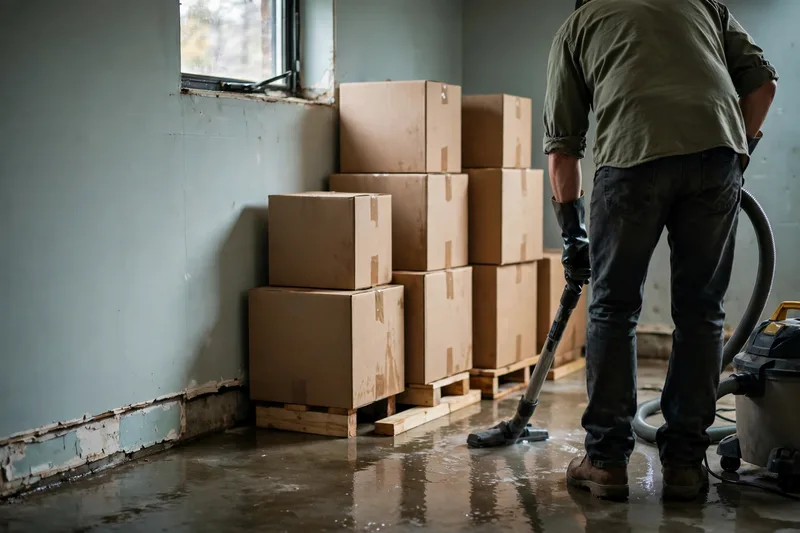
Water damage restoration Highland Park homes need most often begins in the basement, and it begins late. A pipe bursts overnight. A sump pump fails while the house sleeps. A family comes home from vacation to a finished basement under two inches of water. The water does not wait for morning, and neither should you. The first hour is when the source gets stopped, the photos get taken, and the extraction starts. Every hour after that, the water wicks higher up the drywall, soaks deeper into the insulation, and reaches another room.
Start with the source. If a pipe burst or a fixture is leaking, shut the main water valve. If an appliance supply line failed, turn the appliance off. If water is coming up through a floor drain, stop using water in the house: every flush and every shower adds to the backup. Then make the area safe. Stay out of water you cannot see through, keep everyone away from wet outlets and the breaker panel while standing in water, and leave the house and call the gas utility if you smell gas.
Take photos and a short video before you move anything. Photograph every wet room, every damaged item, and the source of the water, and write down the time you found it. Lift what you can save: boxes, rugs, furniture legs and electronics up off the floor. Do not throw anything away yet, because the adjuster needs to see it first. Then call (773) 570-9869. A crew is sent the same day, and the call itself costs nothing: describe what you see, where the water is, and whether it smells like sewage, and the crew will tell you what to do while you wait.
If the flooding came from the street, report it too. Call Highland Park Public Works at (847) 432-0807 during the day, or the Police non-emergency line at (847) 432-7730 after hours. The City needs to know about main breaks and street flooding, and the report puts the cause on the record, which matters for your claim and for the next storm. Sandbags are available to fill at the Public Works facility at 1150 Half Day Road, and during flooding the City asks residents to restrict plumbing use so the system is not pushed further.
What water damage restoration includes in Highland Park, IL
Water damage restoration Highland Park IL homeowners get from us covers the whole loss, not just the water on the floor. It starts with finding and stopping the source, then extracting the standing water with pumps and wet vacuums. Next comes removing what cannot be saved: wet carpet pad, soaked insulation, swollen drywall and damaged flooring. Then the structure is dried with air movers and dehumidifiers until pin moisture readings show the walls, the floor and the framing are dry. What stays is cleaned and disinfected, and sewage losses get full disinfection. The work is documented at every step, and the home is left dry, clean and ready for rebuild.
The record matters as much as the drying. Every job is photographed, moisture readings are taken daily and written down, and a list is kept of what was removed and why. That record is what your insurer needs to pay the claim, and it is what the next buyer will want to see if you sell the home. A dry basement with no record is a basement the next owner will ask about. A dry basement with a full record, readings and photos, is a basement that was handled properly.
The work follows the IICRC S500 standard for professional water damage restoration, the industry standard that sets how water losses are classified and dried. Clean water from a burst pipe is one job. Gray water from a washing machine or a dishwasher is another. Sewage water, called Category 3, is a third, and it is handled as a health risk: protective gear, removal of everything it touched, and disinfection. The category decides what comes out and what can stay, and it decides how the crew works in your home.
Most of the water damage Highland Park, IL homes face comes from a short list of causes, and each one leaves a different mark. A burst pipe soaks a ceiling and a floor above it. A sump pump failure floods from below. A sewer backup comes up through a floor drain and smells like sewage. Seepage through a wall leaves a damp line that climbs after a heavy rain. Knowing which one you have is the first step, because the fix for a burst pipe is not the fix for a backup.
What to do when your Highland Park, IL basement floods
Seven steps, in order. Print this page or save the number: (773) 570-9869.
Call for help at (773) 570-9869.
Call as soon as you find the water, day or night. A crew is sent the same day, and the call itself costs nothing: describe what you see, where the water is, and whether it smells like sewage, and the crew will tell you what to do while you wait.
Stop the water at its source.
Shut the main water valve if a pipe burst or a fixture is leaking. Turn off the appliance if a supply line failed. If water is coming up through a floor drain, stop using water in the house and call Highland Park Public Works at (847) 432-0807, or the Police non-emergency line at (847) 432-7730 after hours.
Make the home safe before you go in.
Stay out of water you cannot see through, keep everyone away from wet outlets and the breaker panel while standing in water, and leave the house and call the gas utility if you smell gas. Do not switch on lights or equipment in a flooded room.
Take photos and a short video before you move anything.
Photograph every wet room, every damaged item and the source of the water, and write down the time you found it. This record is what your adjuster needs, and it is hard to rebuild after the cleanup starts.
Lift and protect what can be saved.
Move boxes, rugs, furniture and electronics up off the floor and into a dry room. Put furniture legs on blocks. Do not throw anything away yet: the adjuster needs to see it first.
Pull the water out and start the drying.
The crew extracts the standing water, removes what cannot be saved, and sets air movers and dehumidifiers to dry the structure. Walls that took on water may need a flood cut so the inside of the wall can dry.
Read the moisture, then rebuild.
Pin moisture readings are taken every day until the walls, the floor and the framing are back to dry. Only then does the rebuild start: drywall, flooring, trim and paint, with the full record of readings and photos handed over for your insurance claim.
Where Highland Park water damage starts: six doors
Water damage restoration Highland Park calls come through six doors, and each one needs a different fix. Knowing which door the water used tells you what to stop, what to remove, and what to watch for next time.
Sewer backups
Water comes up through a floor drain, a toilet or a shower, and it smells like sewage. The sanitary sewer filled up, often because rainwater got in through cracked pipes and bad connections, and the water pushed back into the lowest home on the line. Stop using water in the house and call for help right away: sewage water is a health risk, and everything it touched should come out.
Sump pump failures
Water rises from below, first around the pit, then across the floor. The pump lost power in the storm, the float switch stuck, the discharge line froze or clogged, or the pump wore out. A battery backup keeps the pump running through a short outage. After a failure, the water is extracted, the pit and the discharge line are checked, and the pump is tested under load before it is trusted again.
Frozen and burst pipes
Water falls from above, through a ceiling and down a wall, or sprays from a split pipe. A pipe freezes in a cold snap, cracks, and bursts when it thaws, often overnight while the house sleeps. The January 2025 burst at a Highland Park restaurant is the pattern: the pipe burst overnight, the floor was covered in water by morning, and water came through the parking garage ceiling onto cars. Shut the main valve first.
Seepage through walls and floors
Water comes in at the joint where the wall meets the floor, through a crack in the foundation, or through a window well that filled up. Heavy rain fills the ground around the foundation faster than it can drain, and the water finds the lowest opening. The fix starts outside: gutters, downspouts and grading, then the crack itself.
Appliance and fixture leaks
A supply line to a washing machine, a dishwasher or a refrigerator ice maker splits, or a toilet supply line fails, and the water runs for hours before anyone notices. These leaks often run across two floors, because the water follows the path of least resistance down through the ceiling. The first sign is a stain on the ceiling below, or a floor that feels soft underfoot.
Roof and upstairs leaks
Water enters through a roof leak or a failed flashing and travels inside the walls, showing up far from where it got in. A stain on a ceiling two rooms away from the leak is common. The roof has to be fixed before the inside can be dried, or the water will come back with the next rain.
Two of these doors are the ones Highland Park, IL homeowners call about most: sump pump failures and sewer backups. Both strike during storms, both flood from below, and both are worse when the power goes out at the same time. A home with a battery backup on the sump pump and a backwater valve on the lateral is a home that can ride out most storms. A home without either is a home that floods when the storm and the outage arrive together.
Separate sewers, and why basements still flood
Water damage restoration Highland Park sewer backups confuse homeowners, because the sewers here are separate. Highland Park has a sanitary sewer system for wastewater and a separate storm sewer system for rainwater. The wastewater flows to the North Shore Water Reclamation District plant on Clavey Road, and the stormwater runs to the Middle Fork and the East Fork of the North Branch Chicago River and to Lake Michigan. Separate should mean the rain cannot push sewage into your basement. It does not, because rainwater still gets into the sanitary system.
The City calls it inflow and infiltration. Inflow is rainwater that gets in through downspouts connected to the sanitary sewer, through basement stairwells, and through open cleanouts. Infiltration is groundwater that seeps in through cracked pipes and bad joints. Highland Park sits at the downstream end of the system, so when a heavy storm fills the sanitary sewers, the water has nowhere to go but back up through floor drains into basements. The City says it plainly in its own flooding guidance: once the sanitary sewer system reaches capacity, water may back up and potentially flood basements.
The City works on the problem every year. Sanitary sewers are cleaned on a five year cycle, and the City runs a programme to find and fix the places where rainwater gets in. But no programme can make a separate system proof against a storm that drops more rain than the system was built for. The storm sewers themselves are designed for a ten year storm, so a heavier storm leaves water standing in the street and the yard, and that water finds the foundation.
Your part of the system is the lateral, the pipe from your house to the City main. In Highland Park, IL that lateral is the homeowner's responsibility, and there are about ten thousand private laterals in the city, most of them four or six inches across. A cracked lateral lets groundwater in and lets sewage out, and a blocked lateral backs the house up. The City offers a Voluntary Sewer Lateral Cost Share programme that can pay part of a replacement, and the details are in the City numbers section below. Have the lateral inspected if your home is older: a camera inspection shows cracks, roots and bellies before they become a flood.
When the sump pump stops, the basement fills from below
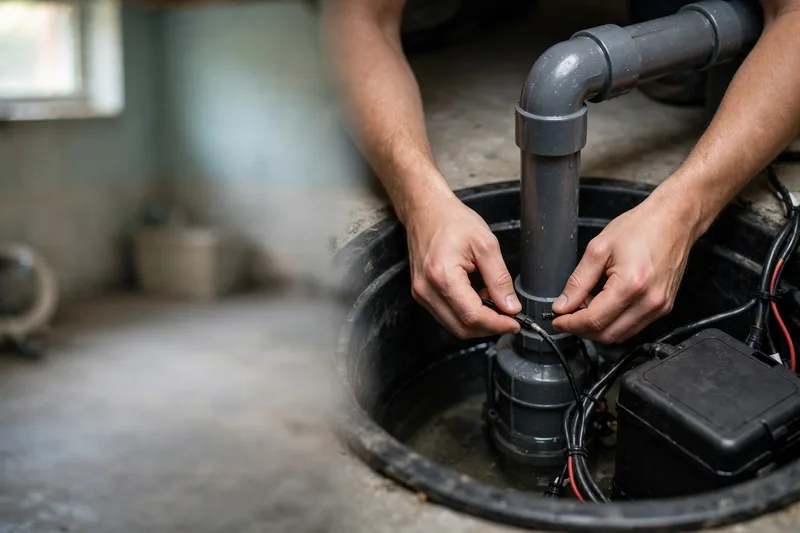
When a sump pump stops in Highland Park, the story is the same every time. The pump is the one thing moving groundwater away from the basement, and when it stops the water rises from below: first the floor gets wet around the pit, then it spreads across the room, then it soaks the bottom of the drywall and anything stored low. A finished basement with carpet and furniture goes under fast, and the water reaches the furnace, the water heater and the washer before anyone notices.
Pumps fail for a few common reasons, and each one has a fix. The power goes out in the storm: a battery backup keeps the pump running through a short outage, and a water powered backup works as long as the city water is on. The float switch sticks: a tethered float can catch on the side of the pit, and a vertical float is less likely to hang up.
The discharge line freezes or clogs: the line should slope away from the house and discharge well clear of the foundation, not into a spot where the water runs straight back. The pump wears out: a pump that runs constantly in a wet spring is a pump that should be tested under load every year, not just switched on and listened to.
| What failed | What you see | What fixes it |
|---|---|---|
| Power outage in the storm | Pump silent, water rising around the pit | Battery backup, or a water powered backup pump |
| Float switch stuck | Pit full, pump not running | Free the float, or replace it with a vertical float |
| Discharge line frozen or clogged | Pump runs but the water stays, or the pit overflows | Clear the line, slope it away from the house |
| Pump worn out | Pump hums, runs constantly, or moves little water | Test under load, replace before the next storm |
| Check valve failed | Water runs back into the pit after each cycle | Replace the check valve on the discharge line |
After a failure, the water has to be extracted, the pit and the discharge line have to be checked, and the pump has to be tested before it is trusted again. A pump that failed once will fail again if the cause is not fixed, and the next storm is never far away in a city where the ground stays wet through spring.
Water has three categories, and the category decides the job
Not all water is the same, and the category decides what comes out, what can stay, and how the crew works in your home. The IICRC S500 standard, the industry standard for professional water damage restoration, sets three categories.
| Category | Where it comes from | What happens |
|---|---|---|
| Category 1: clean water | Burst pipe, supply line, rainwater through a roof | Extract, dry, and test. Drywall and flooring can often be saved if the drying starts fast. |
| Category 2: gray water | Washing machine, dishwasher, shower drain | Extract, remove soaked porous materials, clean and disinfect. Drywall that soaked through usually comes out. |
| Category 3: black water | Sewage backup, flooding from outside, toilet overflow with waste | Protective gear, full removal of everything it touched, disinfection. Nothing soaked by sewage water stays. |
Water can change category while it sits. Clean water from a burst pipe that soaks into a wall and stays there for days becomes gray water as it picks up dirt and microbes, and gray water left long enough becomes black. That is one more reason the first hours matter: the category, and the cost, both climb with time.
The line for do it yourself is the category. A small clean water spill you caught at once is a job you can handle with a mop and a fan. Sewage water is never a do it yourself job: it needs protective gear, proper removal, and disinfection, and it should be left to a crew. Water that soaked drywall, insulation or a finished floor needs extraction equipment and moisture readings, because the damage you cannot see is the damage that grows mold. If you cannot tell where the water came from, or if the water touched more than the surface, call (773) 570-9869 and let a crew look.
Drying is proven by readings, not by touch
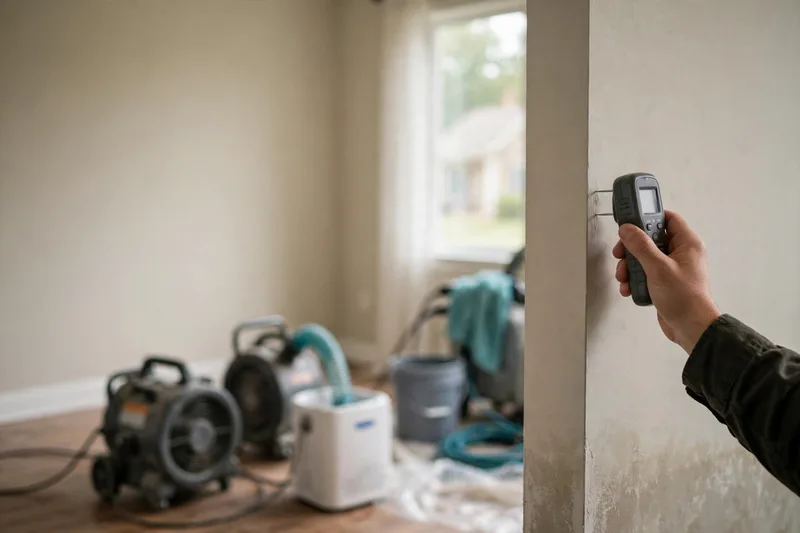
Water damage restoration Highland Park drying work is proven by readings, not by touch. A wall can feel dry on the surface and still be wet inside, and a floor can look dry while the subfloor underneath is soaked. The crew proves the drying with a pin moisture meter, pressed into the drywall, the wood trim and the floor, and the numbers are written down every day. The equipment stays running until the readings hold steady at dry, and only then does the rebuild start.
The equipment is simple and it works. Air movers push dry air across wet surfaces so the moisture lifts out of the material. Dehumidifiers pull that moisture out of the air so it does not settle back into the walls. The two work together: movers without dehumidifiers just push wet air around the room, and dehumidifiers without movers leave the moisture locked in the walls. The number of machines depends on the size of the loss and what is wet, and the crew should explain the setup before they leave.
Stopping early is the most common mistake after a flood in Highland Park, IL. The surface feels dry, the equipment goes home, and the moisture left inside the wall feeds mold a few weeks later. Then the drywall comes down anyway, and the job costs more than it would have if the drying had run to the readings. Ask for the readings every day, keep the numbers, and do not let the equipment leave until the numbers say dry.
Water removal Highland Park crews do first is the extraction: pumps and wet vacuums pull the standing water out fast, before it can soak deeper. Water mitigation Highland Park homes need after that is the drying and the removal: air movers, dehumidifiers, flood cuts where the wall is soaked, and daily readings until the structure is dry. The two steps are different jobs, and both have to be done right.
Why Highland Park homes flood the way they do
Water damage restoration Highland Park homes need starts with the ground they sit on. Highland Park, IL sits on a bluff about a hundred feet above Lake Michigan, along six miles of shoreline, and the land falls steeply from the west to the lake. Ravines cut up to a mile inland from the shore, and the stormwater runs through them to the Middle Fork and the East Fork of the North Branch Chicago River and to the lake. The city is about twenty five miles north of downtown Chicago, and the homes near the ravines, the river forks and the lakefront face a different kind of flooding from the homes on the flat ground to the west.
The flooding here comes in three forms. Flash flooding arrives fast, when a hard storm drops more rain than the ground and the storm sewers can take, and the water runs over the surface and into the lowest opening. River flooding arrives slower, when the Middle Fork or the Skokie River rises after days of rain and pushes water back toward the homes near the banks. Urban flooding arrives when the storm sewers are full and the water has nowhere to go but the street and the yard. A single storm can bring all three at once, and the July 2017 flood did exactly that.
July 2017 is the flood Highland Park, IL still measures storms against. The rain began on Tuesday, July 11, and five to eight inches fell on Wednesday afternoon. The Skokie River overflowed, more than forty streets were impassable, and the mayor said thirty five square miles of storm water were flowing south through the community. Lake County declared a state of emergency, and the City used reserve funds for flood refuse pickups and gas line certification. Homes on Tanglewood Court and near the river were among the hardest hit, and the flood is the reason the City's flood work, from sewer cleaning to the lateral cost share programme, exists in the form it does today.
The housing stock adds to the risk. The median home in Highland Park, IL was built in 1963, and fifty nine percent of homes were built before 1970. Forty five and a half percent were built before 1960, and nearly a quarter date to 1939 or earlier. Older homes mean older pipes: cast iron and clay laterals that crack with age, galvanized supply lines that corrode, and sump pits that were never fitted with a battery backup. A home built in the nineteen thirties has had ninety years of ground movement, tree roots and freeze thaw cycles working on its pipes, and the first sign is often a basement full of water.
The people who live in these homes are mostly owners, not renters: eighty three point eight percent of homes are owner occupied, the median home value is six hundred seven thousand three hundred dollars, and the median household income is one hundred sixty eight thousand ninety four dollars. That matters for the work, because an owner occupied home with a finished basement is a home where the loss is large, the contents are valuable, and the insurance claim has to be documented well.
The population is thirty thousand seven hundred sixty seven, and the city is a commuter town: four Metra stations, Braeside, Ravinia Park, Ravinia and Highland Park, on the Union Pacific North Line, and about twenty miles to O'Hare. Many losses are found late because the owners are at work or away, and that is why the discovered late pattern runs through this page.
When the basement floods and no drain is involved
Not every flooded basement in Highland Park, IL comes from a drain. Some of the worst losses come from water that never touched a pipe: rain that runs off the roof and the yard, soaks the ground against the foundation, and comes in through the wall or the floor. The fix for that water is outside the house, and it starts with the ground.
Gutters and downspouts are the first check. A clogged gutter overflows and drops the water right against the foundation. A downspout that ends at the wall throws the roof water into the ground next to the house. Downspouts should throw water well away from the foundation, and the soil should slope away from the house for at least a few feet, so the water runs off instead of pooling against the wall. Window wells are the next check: a well that fills up in a storm pushes water straight through the window, and a well drain that is clogged does the same.
Inside, the weak points are the joint where the wall meets the floor, called the cove joint, and any crack in the foundation wall. Water under pressure from saturated soil finds both. A crack can be sealed from the inside, but the lasting fix is to keep the water away from the wall in the first place: gutters, grading and a sump pump that works. A yard drain or a dry well can help where the yard itself holds water, and a sump pump with a battery backup is the last line of defence when the storm and the outage arrive together.
If your basement floods and no drain is involved, the questions to ask are simple: where did the water come in, what was the storm like, and has it happened before. A basement that floods in every heavy rain has a grading or a gutter problem. A basement that flooded once, in the biggest storm in years, may have no fix beyond a sump pump and a battery backup. Either way, the drying is the same, and the readings are what prove it.
Insurance: what is covered, what is not, and how to claim
Water damage restoration Highland Park insurance claims succeed or fail on one question: where did the water come from. A standard homeowners policy covers sudden and accidental water losses inside the home, like a burst pipe, a failed supply line or an appliance leak. It does not cover water that comes in from outside, like river flooding or street flooding: that needs separate flood insurance, usually through the National Flood Insurance Program. A sewer backup or a sump pump failure is usually not covered either, unless you bought a sewer backup or sump pump endorsement. Damage from wear and tear, a slow leak you knew about, or poor maintenance is normally excluded.
| Source of the water | Usually covered | What to check |
|---|---|---|
| Burst or frozen pipe | Yes, sudden and accidental | Heat was on, pipe was not known to be bad |
| Appliance or fixture leak | Yes, sudden and accidental | Leak was sudden, not a slow drip over months |
| Roof leak from a storm | Yes, if the roof was maintained | Storm damage, not wear and tear on an old roof |
| River or street flooding | No, needs flood insurance | Separate flood policy, and the map zone matters |
| Sewer backup | No, unless endorsed | Sewer backup endorsement on the policy |
| Sump pump failure | No, unless endorsed | Sump pump endorsement, and the cause of the failure |
Highland Park, IL is a Class 8 community in the National Flood Insurance Program Community Rating System, which means an additional ten percent discount on flood insurance that is already subsidized. That matters if your home is near the river forks, a ravine or the lakefront, because the City's floodplain map uses a higher threshold than the federal map, and homes outside the federal floodplain can still flood. Ask your agent whether your home needs flood cover, and ask about the sewer backup and sump pump endorsements at the same time: they cost little next to the loss they cover.
To claim well, document everything. Take photos and a short video before you move anything, keep a list of what was damaged with ages and rough values, and keep every receipt for emergency work. Call your insurer promptly and open a claim, and ask for the claim number in writing. Do not throw away damaged items before the adjuster has seen them. Do not call the loss a flood unless the water came from outside flooding, because the word can trigger a denial on a standard policy. If the adjuster and your agent disagree about the cover, the Illinois Department of Insurance can answer policy questions, and its website explains the claim process step by step.
Water damage repair Highland Park homeowners file most often is the burst pipe claim, and it is usually the simplest: the cause is clear, the loss is sudden, and the record is easy to keep. The hardest claims are the ones where the cause is unclear, like a basement that flooded in a storm with no visible source. That is why the City report matters: a report to Public Works puts the cause on the record, and the record is what the adjuster reads.
How long the job takes, and what decides it
The drying runs until the readings say dry, and the timeline follows the size of the loss. A small clean water loss in one room can be dry in a few days. A finished basement with soaked drywall and flooring takes longer, often a week or more of drying before any rebuild starts. Sewage water adds cleaning and removal time, and a loss that ran across two floors adds more. The rebuild comes after the drying: drywall, flooring, trim and paint, and the time that takes depends on the materials and the trades.
| What sets the time | Shorter | Longer |
|---|---|---|
| Size of the loss | One room, clean water | Finished basement, two floors |
| Water category | Clean water, fast start | Sewage water, full removal |
| What it soaked | Concrete floor, bare walls | Insulation, drywall, wood floors |
| How fast it was found | Found at once, dried at once | Found late, after a vacation |
| Weather | Dry week, low humidity | Wet week, high humidity |
Ask for a written timeline at the inspection, and expect it to change if the readings show more wet material than the first look found. The crew should take pin readings every day and show you the numbers going down. If the numbers stall, the equipment setup changes: more air movers, a bigger dehumidifier, or a flood cut in a wall that is not drying. The timeline is a plan, not a promise, and the readings are what decide it.
The mold clock starts in 24 to 48 hours
Mold can start growing in 24 to 48 hours when materials stay wet, which is why the first two days after a flood matter most. It does not need a flood to grow: a damp wall cavity, a wet carpet pad or insulation that stayed damp behind drywall is enough. The signs are a musty smell, dark spots on drywall or trim, and paint or wallpaper that bubbles or peels. Fast extraction and verified drying stop it before it starts.
If mold is already growing, the work changes. The area is contained so the spores do not spread, the growth is removed safely, and the area is cleaned. What that work looks like, step by step, is on our mold remediation in Highland Park page. Illinois law now requires mold remediators to register with the Illinois Department of Public Health under the Mold Remediation Registration Code, effective September 23, 2026.
The law covers the registration of mold remediation providers, and individuals may continue without third party certification until September 30, 2027 if they submit a registration form. Providers that only assess mold do not register. Our site claims no registration for itself, so any mold work beyond the drying of the loss should go to a registered provider, and the City of Highland Park publishes no resident mold guidance of its own.
The losses that grow mold are the slow ones: water that sat for days before anyone found it, a leak inside a wall that no one saw, a basement that was dried by feel instead of by readings, or a sump pump failure during a vacation. That is why the discovered late losses in Highland Park, IL are the ones to worry about. Dry it fast, dry it by the numbers, and mold usually never gets the chance.
A pipe bursts overnight: the January 2025 restaurant flood
In January 2025 a pipe burst overnight at a Highland Park restaurant, and the loss was found in the morning. The floor inside was covered in water, water came through the parking garage ceiling onto several cars, and water spilled out into the street and froze. A crew was already on scene cleaning when the news arrived, and the owners hoped to be back up and running that afternoon. The restaurant was new, the building was closed overnight, and the pipe froze, cracked and leaked in bitter conditions.
The story matters because it is the pattern Highland Park, IL homeowners know well: a pipe that bursts while no one is there, found hours later, with the water already through the floor and the ceiling. A home that sits empty overnight, or over a holiday, is a home where a burst pipe can run for hours before anyone sees it. One commenter on the news report claimed the building should have kept its internal temperature at least seventy degrees instead of putting it down to sixty two and lower at night, but that is a commenter's claim about the cause, not a verified fact, and it is not the owners' account.
The lesson is simple and it applies to a house as much as a restaurant: check the basement first thing in the morning after a hard freeze, and check it before you leave for a trip and the moment you get back. A burst pipe that is found at six in the morning is a loss that can be dried. A burst pipe that runs all weekend is a loss that takes the drywall, the flooring and the contents with it.
Found late: the losses that cost the most
Many Highland Park, IL water losses are found late, and the late ones cost the most. A pipe bursts while the owners are away on vacation, and the water runs for days. A sump pump fails during a heavy rain a few weeks back, and the owners wake up to a couple of inches in the finished basement at six in the morning. A dishwasher line breaks overnight and soaks the kitchen and the room below it. The pattern is the same every time: the water ran while no one was watching, and the damage is bigger than the leak.
The words homeowners use tell the story. They say they responded quickly, that the crew explained what was happening, that the crew coordinated directly with the adjuster, and that the crew did not try to upsell. They say that once the crew arrived the panic stopped, because the crew dealt with the water first and the talking afterwards. They say they arrived home after a week's vacation to discover the recently finished basement had flooded. Those are the words to listen for when you choose a company: fast, clear, and honest about what the loss is and what it will take.
The City has tried to close the gap. Its My Water Use leak alert programme, launched after approval in 2018, watches for unusual water use and alerts the homeowner. One council member found a running toilet and a broken sprinkler head through the programme, and part of a twelve hundred dollar bill was forgiven. Her brother's burst pipe poured forty five thousand gallons into his living room over eighteen hours while he was away over Christmas, and the programme was built for losses like that. Most residents have opted in, and the programme costs the City about thirteen thousand dollars a year to run. If you are away often, sign up: an alert the day a pipe breaks beats a basement full of water found a week later.
Water damage repair Highland Park homeowners call for most often is the repair after a loss found late, and the repair is bigger because the water had time to work. The fix is not just the drying: it is the habit of checking. Check the basement before a trip and the moment you return. Check it first thing after a hard freeze or a heavy storm. Check the sump pump in the spring and the pipes in the fall. A loss found at six in the morning is a loss that can be dried. A loss found after a week away is a loss that takes the house apart.
Highland Park City numbers: who to call and when
Water damage restoration Highland Park homeowners need starts with the right phone call, and the City of Highland Park publishes the numbers on its own site. Keep them on the fridge: the cause of the water decides who pays, who fixes it, and whether the claim succeeds.
| Who | Number | When to call |
|---|---|---|
| Public Works | (847) 432-0807 | Street flooding, main breaks, sewer problems, sandbags at 1150 Half Day Road |
| Sewer Section | (847) 926-1150 | Sewer backups, lateral questions, the cost share programme |
| Water Distribution | (847) 926-1151 | Water main issues, service line questions, the My Water Use leak alerts |
| Police non-emergency, after hours | (847) 432-7730 | Flooding reports outside Public Works hours |
| Building Division | (847) 432-0808 | Rental registration, permits for drainage and sewer work |
City Hall is at 1707 St Johns Avenue, Highland Park, IL 60035. The City publishes two different phone numbers for City Hall in different places on its own site, so no City Hall phone number is printed here: use the numbers in the table above, which are consistent across the City site. Public Works is at 1150 Half Day Road, open Tuesday to Friday from half past seven in the morning to half past four in the afternoon, with Monday by appointment. The Sewer Section and Water Distribution are open Monday to Friday from half past seven in the morning to half past three in the afternoon.
During flooding the City asks residents to restrict plumbing use, so the system is not pushed further while it is already full. Sandbags are available to fill at the Public Works facility at 1150 Half Day Road. The City cleans its sanitary sewers on a five year cycle, and its storm sewers are designed for a ten year storm, which is why a heavier storm leaves water standing in the street and the yard.
The lateral is yours. The pipe from your house to the City main is the homeowner's responsibility, and there are about ten thousand private laterals in Highland Park, IL, most of them four or six inches across. The City's Voluntary Sewer Lateral Cost Share programme can pay up to twenty percent of the project cost or one thousand two hundred sixty dollars, whichever is less, toward replacing a sanitary lateral, for single family homes, starting with a free cross connection inspection.
The programme details on the City site are old, with the only linked source document dated May 26, 2015, so confirm the current terms with Public Works at (847) 432-0807 before you plan a project around it. The City also recommends an overhead sewer conversion to keep a basement from flooding again, but there is no City programme that pays for one: that is a recommendation only.
Renters have a different route. Highland Park, IL runs a rental registration programme: thirty dollars per unit per year, renewed by April 1, through the Building Division at (847) 432-0808. The City states no routine inspection as part of the programme. If you rent and your basement floods, tell your landlord in writing at once, keep a copy, and call the Building Division if the landlord does not act.
How to keep it from happening again
Water damage Highland Park homes face most often comes back to the same few fixes, and most of them cost little. Start with the sump pump: test it under load, make sure the float switch moves freely, clear the discharge line, and add a battery backup so a storm outage does not stop it. Then look outside: clean the gutters, make sure downspouts throw water well away from the foundation, and grade the soil so it slopes away from the house. Keep window wells clear and check the joint where the wall meets the floor after a heavy rain.
Have the sewer lateral inspected, especially in an older home, and consider a backwater valve so a full main cannot push water back through your floor drain. An overhead sewer conversion is the strongest fix the City recommends, but there is no City programme that pays for one. Keep the City numbers on the fridge: Public Works (847) 432-0807 and after hours Police non-emergency (847) 432-7730. And check the basement before a trip and the moment you return, first thing after a hard freeze or a heavy storm, and every spring before the rain season starts.
Choosing who to call in Highland Park, IL
Homeowners in Highland Park, IL choose a company on four things: speed, readings, paperwork and honesty. Speed, because the first hours decide what survives. Readings, because pin moisture readings taken every day are the only proof the drying worked. Paperwork, because photos, daily readings and a written scope are what your insurer needs to pay the claim. Honesty, because a crew that explains what is happening, coordinates directly with your adjuster, and does not try to upsell you while your basement is under water is a crew you can trust with your home.
Ask for a written scope before the work starts, with what is being removed, what is being dried, and what is being cleaned. Ask whether the company documents the loss for insurance. Ask for local references and check them. Be wary of anyone who quotes a price before seeing the job, anyone who pressures you to sign on the spot, and anyone who promises to handle your claim for you. The right company answers at night, sends a crew the same day, and tells you plainly what the loss is and what it will take.
Water Damage Restoration Highland Park FAQs
My basement just flooded. What should I do?
Stay out of the water if you cannot see the floor or if it smells like sewage, and do not touch electrical outlets or the breaker panel while you stand in water. If a pipe is the source, shut the main water valve. If water is coming up through a floor drain, stop using water in the house and call Highland Park Public Works at (847) 432-0807 during the day, or the Police non-emergency line at (847) 432-7730 after hours, so the City can check the main. Take photos and a short video before you move anything, lift valuables and boxes off the floor, then call for extraction at (773) 570-9869. The first hours decide what can be saved.
Why is my basement flooded after heavy rain?
Heavy rain fills the ground around your foundation faster than it can drain away, and water finds the lowest opening: a floor drain, a crack in the wall, the joint where the wall meets the floor, a window well, or a sump pit that stopped pumping. In Highland Park, IL the storm sewers are designed for a ten year storm, so a heavier storm can leave water standing in the street and the yard.
The sanitary sewers are separate, but they can still fill up when rainwater gets in through cracked pipes and bad connections, a problem the City calls inflow and infiltration. Once a sanitary sewer reaches capacity, water can back up through floor drains and into basements. A sump pump that loses power in the same storm makes it worse, because the pump is the one thing moving that water out.
How do I dry out a flooded basement?
Start by getting the standing water out with extraction equipment, not buckets, because a wet vacuum and a pump move water fast enough to matter. Then remove anything soaked that cannot be cleaned: wet carpet pad, soaked insulation, swollen drywall and damaged flooring. Walls that took on water often need a flood cut, a clean cut a foot or two up the wall, so the inside of the wall can dry. After that comes drying equipment: air movers that push dry air across wet surfaces and dehumidifiers that pull the moisture out of the air.
The job is done only when pin moisture readings show the walls and the floor are back to dry, not when they feel dry to the touch. A fan in the corner and an open window will not do that in a Highland Park, IL basement.
What should I do immediately after water damage?
First, stop the water at its source if you can do it safely: shut the main valve for a burst pipe, turn off the appliance for a supply line leak, or stop running water if a drain is backing up. Second, make the area safe: keep everyone out of sewage water and away from wet outlets, and do not switch on lights or equipment in a flooded room. Third, take photos and a short video of everything before you move it, because the adjuster will want to see the damage as it was.
Fourth, call for help at (773) 570-9869 and call your insurer to open a claim. Fifth, lift what you can save: boxes, rugs, furniture legs and electronics up off the floor. Do not wait until morning if it is night: water keeps moving while you sleep, and mold can start in 24 to 48 hours when materials stay wet.
How much does water damage restoration cost in Highland Park?
No honest price exists before someone sees the job, and any number given over the phone is a guess. What sets the cost is the size of the loss and what the water touched: how many rooms are wet, how much water there is, whether the water is clean, gray or sewage, how far it soaked into drywall, flooring and insulation, how many days of drying the readings require, and whether contents need cleaning or moving. A small clean water spill in one room costs far less than a finished basement full of sewage water.
The right way to get a number is an on site inspection with moisture readings and a written scope, so you can see exactly what is being removed, what is being dried, and what is being cleaned. Call (773) 570-9869 and ask for an inspection.
Does homeowners insurance cover water damage in Highland Park?
It depends on where the water came from. A sudden and accidental loss inside the home, like a burst pipe, a failed supply line or an appliance leak, is usually covered by a standard homeowners policy. Water that comes in from outside, like river flooding or street flooding, is not covered by a standard policy: that needs separate flood insurance. A sewer backup or a sump pump failure is usually not covered either unless you bought a sewer backup or sump pump endorsement. Damage from wear and tear, a slow leak you knew about, or poor maintenance is normally excluded. Read your policy, check the endorsements, and call your agent before you assume anything. The Illinois Department of Insurance can answer policy questions if your insurer and your agent disagree.
Should I use homeowners insurance for water damage?
Weigh the size of the loss against your deductible and your claim history. A small loss that costs little more than your deductible is often better paid out of pocket, because a claim goes on your insurance record and can affect your premium and your future cover. A large loss, a finished basement, sewage water, or damage that runs across two floors, is usually worth claiming, because the drying and rebuild cost far more than the deductible.
Keep every photo, every receipt and every moisture reading either way, because the record matters if you claim later. If you are unsure, ask your agent what a claim would mean for your policy before you file, and get a written scope of the work first so you know what the loss really is.
What should I not say to the insurance adjuster?
Stick to what you saw and when you saw it, and do not guess at the cause. Do not call it a flood unless the water came from outside flooding, because the word flood can trigger a denial on a standard policy: a burst pipe and a sewer backup are different losses with different cover. Do not say the damage was there for weeks, do not say you knew about a leak and left it, and do not throw away damaged items before the adjuster has seen them.
Take photos first, keep a list of what was damaged with ages and rough values, and keep every receipt for emergency work. If the adjuster asks you to sign anything on the spot, take time to read it. A short written account, made the day it happened, beats a long story told from memory a month later.
Will my homeowners insurance go up if I file a water damage claim?
A claim can affect your premium and your future cover, but no one can promise how much or whether it will happen at all. Insurers look at the size of the claim, how many claims you have filed, and whether the loss was sudden or the result of a known problem. One sudden loss, like a burst pipe, is treated differently from repeated claims for the same basement. That is why the decision to claim should be weighed against the deductible and the size of the loss before you file. Ask your agent directly what a claim would mean for your policy, and keep the documentation of the loss either way, because a clear record helps you if the claim is questioned.
Can you live in a house with a flooded basement?
Often yes, if the water is only in the basement and the power and the heating are safe. Keep everyone out of the basement itself until the water is out and the floor is dry, and do not run the furnace or the water heater if either one sat in water. The answer changes if the water is sewage, because sewage water carries bacteria and should be treated as a health risk, not a nuisance.
It also changes if the water reached the electrical panel or if the smell of gas is present: then leave the house and call the utility. If anyone in the home has breathing trouble or a weak immune system, be extra careful, because damp air and mold growth after a flood are harder on them. When in doubt, ask the crew on site and follow what they say.
My sump pump failed during a storm. What happens now?
A sump pump is the one thing moving groundwater away from your Highland Park, IL basement, so when it stops the water rises from below: first the floor gets wet around the pit, then it spreads across the room, then it soaks the bottom of the drywall and anything stored low. Pumps fail for a few common reasons: the power goes out in the storm, the float switch sticks, the discharge line freezes or clogs, or the pump simply wears out.
A battery backup keeps the pump running through a short outage, and a water powered backup works as long as the city water is on. After a failure, the water has to be extracted, the pit and the discharge line have to be checked, and the pump has to be tested before it is trusted again. If your pump is old, ask the crew to test it under load rather than just switching it on.
Can I do water restoration myself?
A small clean water spill, like a tipped bucket or a short leak you caught at once, is a job you can handle: mop it up, dry the floor, and watch it for a day. Anything bigger is a different job. Sewage water should never be handled without protective gear and proper disinfection. Water that soaked drywall, insulation or a finished floor needs extraction equipment and moisture readings, because the damage you cannot see is the damage that grows mold.
A leak you cannot find, a basement that keeps flooding, or water that ran through a ceiling needs a crew that can trace the source and dry the structure. The rule is simple: if the water touched more than the surface, or if you cannot tell where it came from, call (773) 570-9869 and let a crew look.
Do you have to replace drywall after water damage?
Not always. Clean water that is dried fast can leave drywall sound, and a crew will test it with a pin moisture meter before deciding. Gray water or sewage water is a different matter: anything soaked by it should come out, because it cannot be cleaned well enough to leave in a wall. Drywall that stayed wet long enough to swell, crumble or grow mold also comes out.
The usual fix is a flood cut: a clean horizontal cut a foot or two above the floor line, so the wet bottom of the wall is removed and the inside of the wall can dry. The cut line is patched and finished once the readings show the studs and the plates are dry. What matters is the reading, not the look: drywall can look fine and still be wet inside.
How long does water damage restoration take in Highland Park?
A small clean water loss in one room can be dry in a few days. A finished basement with soaked drywall and flooring takes longer, often a week or more of drying before any rebuild starts. Sewage water adds cleaning and removal time, and a loss that ran across two floors adds more. The drying itself runs until pin moisture readings show the walls, the floor and the framing are back to dry, and no one should stop the equipment early just because the surface feels dry: the inside of a wall dries last. After drying comes the rebuild: drywall, flooring, trim and paint. Ask for a written timeline at the inspection, and expect it to change if the readings show more wet material than the first look found.
How long will it take for my house to dry out after water damage?
Until the moisture readings say it is dry, and no sooner. Drying time depends on how much water got in, what it soaked, the weather, and how many air movers and dehumidifiers are running. A concrete floor dries faster than a soaked wall cavity. A finished basement with insulation behind the drywall dries slower than an unfinished one. The crew should take pin readings every day and show you the numbers going down, and the equipment should stay running until the readings hold steady at dry. Stopping early is the most common mistake after a flood in Highland Park, IL: the surface feels dry, the equipment goes home, and the moisture left inside the wall feeds mold a few weeks later.
What is water damage restoration?
Water damage restoration is the full job of putting a home back after water gets in: find and stop the source, extract the standing water, remove what cannot be saved, dry the structure with air movers and dehumidifiers until moisture readings show it is dry, clean and disinfect what stayed, and leave the home ready for rebuild. It is not just mopping up. A proper job is documented at every step: photos of the damage, moisture readings taken daily, a list of what was removed and why, and a written scope.
That record matters for two reasons: it proves the drying was done right, and it is what your insurer needs to pay the claim. In Highland Park, IL that record should also note which City numbers were called, so the cause is on the record.
How fast does mold start after water damage?
Mold can start growing in 24 to 48 hours when materials stay wet, which is why the first two days after a flood matter most. It does not need a flood to grow: a damp wall cavity, a wet carpet pad or insulation that stayed damp behind drywall is enough. The signs are a musty smell, dark spots on drywall or trim, and paint or wallpaper that bubbles or peels. Fast extraction and verified drying stop it before it starts.
If mold is already growing, the work changes: containment, safe removal, and cleaning under the Illinois mold rules. Illinois law now requires mold remediators to register with the Illinois Department of Public Health under the Mold Remediation Registration Code, effective September 23, 2026, and our site claims no registration for itself: any mold work beyond the drying of the loss should go to a registered provider.
Do you always get mold after water damage?
No. Mold needs moisture, time and something to grow on, and fast extraction plus verified drying takes the moisture and the time away. A clean water loss dried within a day or two, with readings to prove it, rarely grows mold. The losses that grow mold are the slow ones: water that sat for days before anyone found it, a leak inside a wall that no one saw, a basement that was dried by feel instead of by readings, or a sump pump failure during a vacation.
That is why the discovered late losses in Highland Park, IL are the ones to worry about: a pipe that burst while the owners were away, or a basement that flooded overnight and was found at six in the morning. Dry it fast, dry it by the numbers, and mold usually never gets the chance.
Who do I call to check for water damage in Highland Park?
It depends on what you see. If water is coming up through a floor drain or the street is flooding, call Highland Park Public Works at (847) 432-0807 during the day, or the Police non-emergency line at (847) 432-7730 after hours, because the City needs to know about main breaks and street flooding. If a pipe burst or a fixture is leaking, call a plumber first to stop the water, then call for extraction.
If the water is already in your basement, call (773) 570-9869 for extraction and drying, and call your insurer to open a claim. If you smell gas, leave the house and call the gas utility. If the water is sewage, keep everyone out of it and call for help right away, because sewage water is a health risk, not a cleaning job.
Who is responsible when my basement floods, me or the City?
The line is the sewer lateral, the pipe that runs from your house to the City main in the street. In Highland Park, IL that lateral is the homeowner's responsibility, and there are about ten thousand private laterals in the city. The City owns and maintains the main in the street and the storm sewers. If the cause is a break in the City main or a blocked main, the City takes the report and sends a crew.
If the cause is your lateral, a failed sump pump, or water coming in through your foundation, the fix is yours. The City does offer a Voluntary Sewer Lateral Cost Share programme for single family homes, which can pay part of the cost of replacing a sanitary lateral, but you should confirm the current terms before you plan on it. Report any flooding to Public Works either way, so the cause is on the record.
What should I do if it happens overnight while we are asleep?
Check the basement first thing in the morning, especially after a hard freeze or a heavy storm, because most Highland Park, IL water losses are found late: a pipe that burst overnight, a sump pump that failed while the house slept, or a basement that flooded while the owners were away on vacation. If you find water, do not wade in if you cannot see the floor, and do not touch wet outlets. Shut the main water valve if a pipe is the source, take photos before you move anything, and call (773) 570-9869.
A frozen pipe that bursts overnight is a real pattern here: in January 2025 a pipe burst overnight at a Highland Park restaurant, the floor was covered in water by morning, water came through the parking garage ceiling onto cars, and a crew was already cleaning when the news arrived. One commenter blamed a low overnight thermostat setting, but that is a commenter's claim, not a verified cause.
Does Highland Park help pay to fix a sewer lateral?
The City runs a Voluntary Sewer Lateral Cost Share programme for single family homes. It can pay up to twenty percent of the project cost or one thousand two hundred sixty dollars, whichever is less, toward replacing a sanitary lateral, and it starts with a free cross connection inspection. The programme covers sanitary laterals only, and it is for single family homes. The City also recommends an overhead sewer conversion to keep a basement from flooding again, but there is no City programme that pays for one: that is a recommendation only.
The programme details on the City site are old, with the only linked source document dated May 26, 2015, so confirm the current terms with Public Works at (847) 432-0807 before you plan a project around it. Keep the paperwork either way, because a new lateral is worth recording for the next buyer.
How do I choose a water damage restoration company in Highland Park?
Start with speed: the company should answer at night and send a crew the same day, because the first hours decide what survives. Then ask how they dry: they should take pin moisture readings, write them down, and show you the numbers going down, not just tell you it feels dry. Ask for a written scope before the work starts, with what is being removed, what is being dried, and what is being cleaned, and ask whether they document the loss for insurance. Ask for local references and check them.
Be wary of anyone who quotes a price before seeing the job, anyone who pressures you to sign on the spot, and anyone who promises to handle your claim for you. The right company explains what is happening at each step, coordinates directly with your adjuster, and does not try to upsell you while your basement is under water.
When should I call a water damage restoration company?
Right away, as soon as you find the water. The first hours decide whether drywall and flooring can be saved, whether the wall cavity can be dried without a flood cut, and whether mold gets a start. Water keeps moving while you wait: it wicks up drywall, soaks insulation, swells wood floors and reaches the next room. A call at six in the morning after an overnight break beats a call at noon, and a call the day it happens beats a call the day after. Even if the water looks small, call and describe it: a crew can tell you over the phone whether it needs extraction or whether you can handle it yourself. Call (773) 570-9869 at any hour.
What does water damage restoration include?
A full restoration covers the whole loss, not just the water on the floor. It starts with finding and stopping the source, then extracting the standing water with pumps and wet vacuums. Next comes removing what cannot be saved: wet carpet pad, soaked insulation, swollen drywall and damaged flooring. Then the structure is dried with air movers and dehumidifiers until pin moisture readings show the walls, the floor and the framing are dry. What stays is cleaned and disinfected, and sewage losses get full disinfection. The work is documented at every step: photos, daily readings, a list of what was removed and why, and a written scope. The home is left dry, clean and ready for rebuild, with the record your insurer needs to pay the claim.
How do I keep my Highland Park basement from flooding again?
Start with the sump pump: test it under load, make sure the float switch moves freely, clear the discharge line, and add a battery backup so a storm outage does not stop it. Then look outside: clean the gutters, make sure downspouts throw water well away from the foundation, and grade the soil so it slopes away from the house. Keep window wells clear and check the joint where the wall meets the floor after a heavy rain.
Have the sewer lateral inspected, especially in an older home, and consider a backwater valve so a full main cannot push water back through your floor drain. An overhead sewer conversion is the strongest fix the City recommends, but there is no City programme that pays for one. Finally, keep the City numbers on the fridge: Public Works (847) 432-0807 and after hours Police non-emergency (847) 432-7730.
Water in the basement, a sump that failed in the night, or a stain that keeps growing: water damage restoration Highland Park starts with one call, (773) 570-9869, while the evidence is fresh.
Sources and standards referenced
- IICRC S500, Standard for Professional Water Damage Restoration: water categories, extraction and structural drying principles and dry standard practice.
- US EPA mold guidance: mold growth timelines on wet materials and cleanup safety.
- Illinois Department of Insurance: consumer guidance on homeowners claims and the complaint process.
- City of Highland Park Public Works, Engineering and Sewer Division: sewer backup reporting, separate storm and sanitary systems, inflow and infiltration, the Voluntary Sewer Lateral Cost Share programme, the flood plain and Community Rating System Class 8 standing, and the rental registration programme.
- Illinois Department of Public Health, Mold Remediation Registration Code, 77 Ill. Adm. Code Part 835, under the Mold Remediation Registration Act, 410 ILCS 105.
More Restoration Services Near Highland Park
Every service below is one tap away. Pick the one that matches your problem.

Water Damage Restoration
Fast water extraction, structural drying, and full repair after burst pipes, leaks, and floods.
Learn more →
Water Mitigation
Emergency water removal, structural drying, and mold prevention to stop the damage fast, 24/7.
Learn more →
Mold Remediation
Safe, contained mold remediation that removes contamination and fixes the moisture source.
Learn more →
Sewage Cleanup
Safe removal and disinfection of dangerous sewage backups and black water.
Learn more →
Flood Cleanup
Water pumped out, structure dried, and debris cleared fast after storms and flooding.
Learn more →
Hardwood Floors Water Damage
Cupped, buckled or stained hardwood after a leak? How we dry it, when sanding saves it, and when the boards have to go.
Learn more →