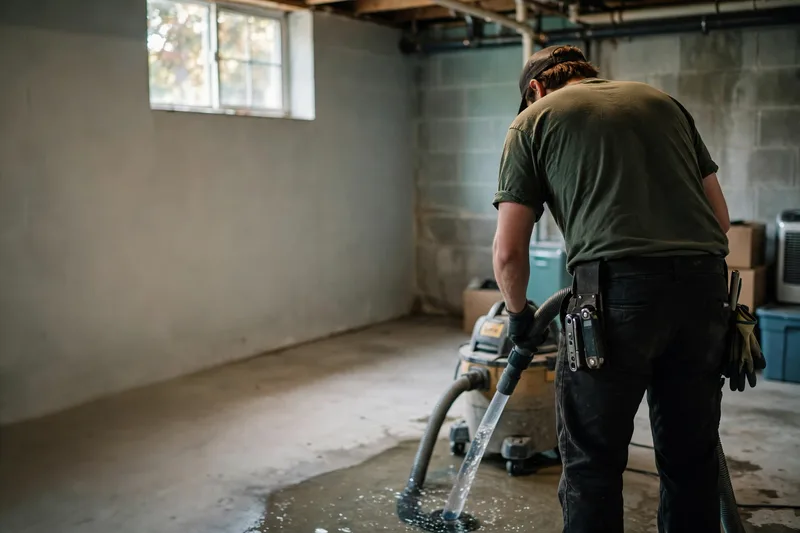
Chicago Water Damage Service, Forest Park, IL 60130
Water Damage Restoration Forest Park IL
A flooded basement, a burst pipe, a sump pump that quit in the middle of a storm, or water rising toward your door in Forest Park, IL 60130: call (773) 570-9869 now and a crew comes out the same day. We pull the water out, dry the structure to verified moisture readings, and document everything for your insurance claim.
Call (773) 570-9869What to do first
- We answer 24/7
- Local Chicago team
- Insurance documentation help
- Straight answers, no pressure
Get a Free Forest Park Water Damage Assessment
Tell us where the water is and where it came from if you know. We will call you back, ask the right questions, and document the loss properly from the first visit.
The short answer
Water damage restoration forest park crews answer 24/7. Call (773) 570-9869 and a crew extracts the water the same day, removes what cannot be saved, dries the structure with air movers and dehumidifiers, and proves the drying with pin moisture readings taken every day until the walls and the floor are back to dry. Sewage water is handled as a health risk, not a cleaning job. Every step is photographed and written down for your insurer. If the flooding came from the street or a city main, call Public Works at (708) 366-4876, so the cause is on the Village record.
Your first hour in a flooded Forest Park home
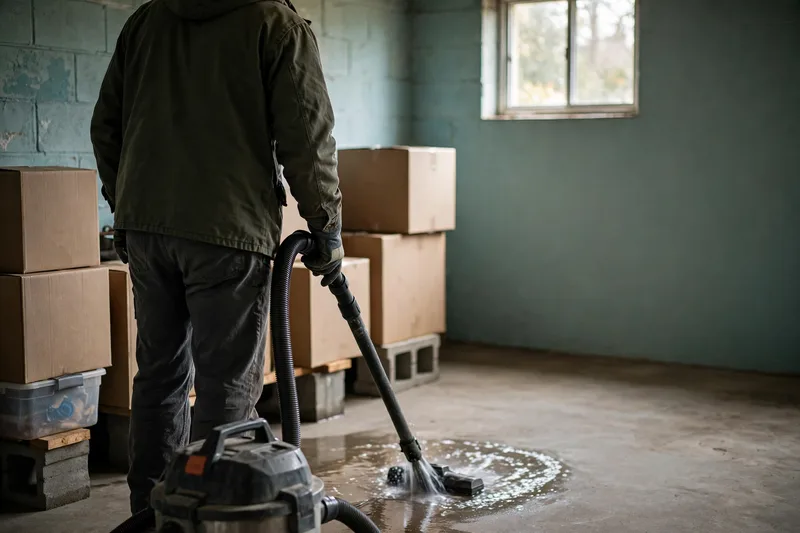
In July 2010, the rain fell for two days and every single block in Forest Park flooded. Village Administrator Tim Gillian told ABC7 that every single block in the village was adversely affected by the flood. Mayor Anthony Calderone said separating the combined sewers would cost tens of millions of dollars. Senator Durbin toured the damage, and the combined damage across four towns ran to about four hundred million dollars. That is how fast a Forest Park basement floods, and why the first hour matters: the storm does not ask whether you are ready.
Residents are still asking the same question in 2026. On the Forest Park Town Hall page, a post asked whether basement flooding is a common issue in Forest Park, and more than sixty residents answered. One long-time owner wrote that flooding is an issue across the whole area, Oak Park, Forest Park, River Forest and Brookfield, and advised anyone buying a home here to look for water damage on door jambs and staining on walls.
The same owner wrote that he had drain tile and a sump installed in his last Forest Park home and stayed dry after that. Another resident said his own home has never flooded, so it is not every house. Both can be true at once: the sewers are combined across almost the whole village, and whether your basement floods depends on your street, your lateral and your pump. These are residents' own accounts, not the Village's record.
Water damage restoration forest park homes need most often begins in the basement, and it begins late. A pipe bursts overnight. A sump pump fails while the house sleeps. A family comes home from vacation to a finished basement under two inches of water. The water does not wait for morning, and neither should you. The first hour is when the source gets stopped, the photos get taken, and the extraction starts. Every hour after that, the water wicks higher up the drywall, soaks deeper into the insulation, and reaches another room.
Start with the source. If a pipe burst or a fixture is leaking, shut the main water valve. If an appliance supply line failed, turn the appliance off. If water is coming up through a floor drain, stop using water in the house: every flush and every shower adds to the backup. Then make the area safe. Stay out of water you cannot see through, keep everyone away from wet outlets and the breaker panel while standing in water, and leave the house and call the gas utility if you smell gas.
Take photos and a short video before you move anything. Photograph every wet room, every damaged item, and the source of the water, and write down the time you found it. Lift what you can save: boxes, rugs, furniture legs and electronics up off the floor. Do not throw anything away yet, because the adjuster needs to see it first. Then call (773) 570-9869. A crew is sent the same day, and the call itself costs nothing: describe what you see, where the water is, and whether it smells like sewage, and the crew will tell you what to do while you wait.
If the flooding came from the street, report it too. Call Public Works at (708) 366-4876. The Village needs to know about main breaks and street flooding, and the report puts the cause on the record, which matters for your claim and for the next storm. The Village Hall is at 517 Des Plaines Avenue, Forest Park, IL 60130, and the Public Works facility is at 7343 West 15th Street.
What water damage restoration includes in Forest Park, IL
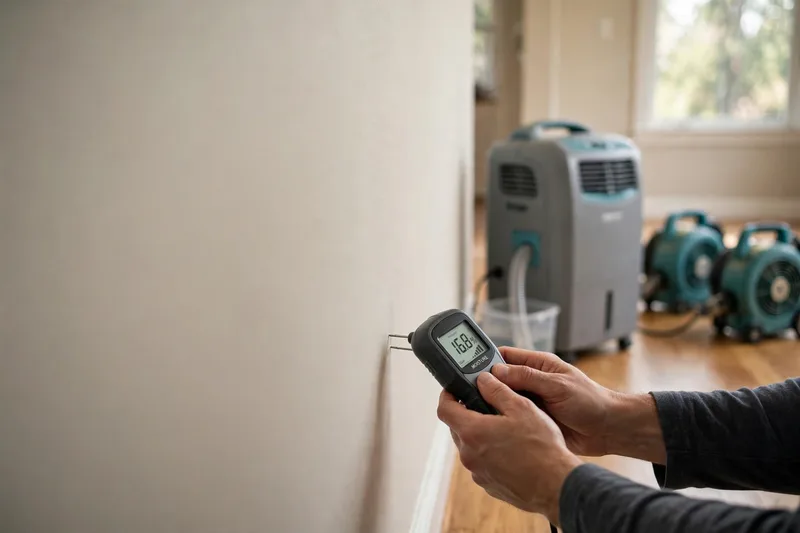
Water damage restoration forest park IL homeowners get from us covers the whole loss, not just the water on the floor. It starts with finding and stopping the source, then extracting the standing water with pumps and wet vacuums. Next comes removing what cannot be saved: wet carpet pad, soaked insulation, swollen drywall and damaged flooring. Then the structure is dried with air movers and dehumidifiers until pin moisture readings show the walls, the floor and the framing are dry. What stays is cleaned and disinfected, and sewage losses get full disinfection. The work is documented at every step, and the home is left dry, clean and ready for rebuild.
The record matters as much as the drying. Every job is photographed, moisture readings are taken daily and written down, and a list is kept of what was removed and why. That record is what your insurer needs to pay the claim, and it is what the next buyer will want to see if you sell the home. A dry basement with no record is a basement the next owner will ask about. A dry basement with a full record, readings and photos, is a basement that was handled properly.
The work follows the IICRC S500 standard for professional water damage restoration, the industry standard that sets how water losses are classified and dried. Clean water from a burst pipe is one job. Gray water from a washing machine or a dishwasher is another. Sewage water, called Category 3, is a third, and it is handled as a health risk: protective gear, removal of everything it touched, and disinfection. The category decides what comes out and what can stay, and it decides how the crew works in your home.
Most of the water damage Forest Park, IL homes face comes from a short list of causes, and each one leaves a different mark. A burst pipe soaks a ceiling and a floor above it. A sump pump failure floods from below. A sewer backup comes up through a floor drain and smells like sewage. Seepage through a wall leaves a damp line that climbs after a heavy rain. River water comes in at ground level and fills the lowest rooms first. Knowing which one you have is the first step, because the fix for a burst pipe is not the fix for a backup, and the fix for a backup is not the fix for a river.
What to do when your Forest Park, IL basement floods
Seven steps, in order. Print this page or save the number: (773) 570-9869.
Stop the water at its source.
Shut the main water valve if a pipe burst or a fixture is leaking. Turn off the appliance if a supply line failed. If water is coming up through a floor drain, stop using water in the house and call Forest Park Public Works at (708) 366-4876, so the main can be checked before anything else is done.
Make the home safe before you go in.
Stay out of water you cannot see through, keep everyone away from wet outlets and the breaker panel while standing in water, and leave the house and call the gas utility if you smell gas. Do not switch on lights or equipment in a flooded room.
Take photos and a short video before you move anything.
Photograph every wet room, every damaged item and the source of the water, and write down the time you found it. This record is what your adjuster needs, and it is hard to rebuild after the cleanup starts.
Call for help at (773) 570-9869.
Call as soon as you find the water, day or night. A crew is sent the same day, and the call itself costs nothing: describe what you see, where the water is, and whether it smells like sewage, and the crew will tell you what to do while you wait.
Lift and protect what can be saved.
Move boxes, rugs, furniture and electronics up off the floor and into a dry room. Put furniture legs on blocks. Do not throw anything away yet: the adjuster needs to see it first.
Pull the water out and start the drying.
The crew extracts the standing water, removes what cannot be saved, and sets air movers and dehumidifiers to dry the structure. Walls that took on water may need a flood cut so the inside of the wall can dry.
Read the moisture, then rebuild.
Pin moisture readings are taken every day until the walls, the floor and the framing are back to dry. Only then does the rebuild start: drywall, flooring, trim and paint, with the full record of readings and photos handed over for your insurance claim.
Water damage in Forest Park: where the water comes from
Water damage restoration forest park calls come through six doors, and each one needs a different fix. Knowing which door the water used tells you what to stop, what to remove, and what to watch for next time.
Sewer backups
Water comes up through a floor drain, a toilet or a shower, and it smells like sewage. The combined sewer filled up, often in a heavy storm, and the water pushed back into the lowest home on the line. Stop using water in the house and call for help right away: sewage water is a health risk, and everything it touched should come out. Report the backup to Public Works at (708) 366-4876 so the main can be checked.
Sump pump failures
Water rises from below, first around the pit, then across the floor. The pump lost power in the storm, the float switch stuck, the discharge line froze or clogged, or the pump wore out. A battery backup keeps the pump running through a short outage. After a failure, the water is extracted, the pit and the discharge line are checked, and the pump is tested under load before it is trusted again.
Frozen and burst pipes
Water falls from above, through a ceiling and down a wall, or sprays from a split pipe. A pipe freezes in a cold snap, cracks, and bursts when it thaws, often overnight while the house sleeps. No Forest Park burst pipe case is on the public record, so this page tells no street story about one: the pattern is the same in every town, and the first job is always the same. Shut the main valve first, then call for extraction.
Seepage through walls and floors
Water comes in at the joint where the wall meets the floor, through a crack in the foundation, or through a window well that filled up. Heavy rain fills the ground around the foundation faster than it can drain, and the water finds the lowest opening. Forest Park sits on flat ground, so water pushed up through the floor by pressure from below is common here, and the fix starts outside: gutters, downspouts and grading, then the crack itself.
Appliance and fixture leaks
A supply line to a washing machine, a dishwasher or a refrigerator ice maker splits, or a toilet supply line fails, and the water runs for hours before anyone notices. These leaks often run across two floors, because the water follows the path of least resistance down through the ceiling. The first sign is a stain on the ceiling below, or a floor that feels soft underfoot.
River and stormwater flooding
Water rises from outside and comes in at ground level, through the door, the window well, or the wall joint, when the Des Plaines River leaves its banks or a hard storm fills the streets faster than the sewers can take it. This is the one cause a standard homeowners policy does not cover: it needs separate flood insurance. The river covered Forest Home Cemetery and Concordia Cemetery in October 1986, and the village flooded block by block in July 2010.
Two of these doors are the ones Forest Park, IL homeowners call about most: sump pump failures and sewer backups. Both strike during storms, both flood from below, and both are worse when the power goes out at the same time. A home with a battery backup on the sump pump and a backwater valve on the lateral is a home that can ride out most storms. A home without either is a home that floods when the storm and the outage arrive together. The Village publishes a Flood Assistance Grant Program that reimburses part of the cost of both fixes, although its funding is suspended through April 30, 2027 and applications are queued.
Why Forest Park basements flood: the combined sewers and the ground
Forest Park, IL sits in Cook County, west of downtown Chicago, on flat ground near the Des Plaines River. Basement flooding Forest Park homes see most often comes from three things at once: a river that leaves its banks, sewers that cannot take every storm, and ground that holds water against foundations. The village covers 2.4 square miles, the ground is flat, and the clay soil holds water against foundations after a storm. That is the setting. The river and the sewers are the reason the setting turns into a flooded basement.
The sewers are the first half of the problem. The Village's own 2020 Notice of Intent to the Illinois EPA says Forest Park runs on sewers that are ninety-eight percent combined and two percent separate. Where the system is combined, one pipe carries both wastewater and rainwater, and a hard storm can fill it faster than it can drain. When the water level in a combined sewer rises above the basement floor of a home with a gravity flow connection, the water pushes back through floor drains into the basement.
Overland flooding is the same problem from above: when the sewer capacity is exceeded, surface runoff flows by gravity toward the lowest ground and floods the low spots, usually beginning with the streets. That is the system behind most water damage restoration forest park calls: one pipe, one storm, and a basement floor below the water line.
The receiving waters for the village system are Addison Creek, the Des Plaines River, Golf Course Tributary, Salt Creek on its lower reach, and Silver Creek. The Village stormwater system carries the state number ILR400338, and the 2010 census counted 14,167 people in the village. The Village's Three-Year Infrastructure Plan for 2024 to 2026, written by Christopher B. Burke Engineering and dated February 23, 2026, includes a sewer assessment, and the only flood-related street location the Village site names is a completed capital project: the 15th Street Storm Sewer Installation, between Circle and Marengo.
Your part of the system is the lateral, the pipe from your house to the City main. The Village site does not publish a lateral ownership rule, so this page does not state one: do not take an ownership rule from this page. Call Public Works at (708) 366-4876 and ask about your own pipe before you plan any lateral work, and have the lateral inspected with a camera if your home is older. A cracked lateral is a repair, not a guess, and finding it before the next storm is cheaper than finding it during one.
The river is the second half. The Des Plaines River runs along the village, and it has left its banks more than once. In October 1986 the river covered Forest Home Cemetery at 863 South Des Plaines Road and Concordia Cemetery at 7900 West Madison Street, both completely flooded. In July 2010 the rain fell for two days and every single block in the village was adversely affected. The Forest Park Review reported flooded basements again in April 2013 and August 2014, and the CTA Blue Line Forest Park branch was suspended in the August 2014 flash flooding. The river does not need to reach your door to flood your basement: the sewers and the ground do that work on their own.
When the sump pump stops, the basement fills from below
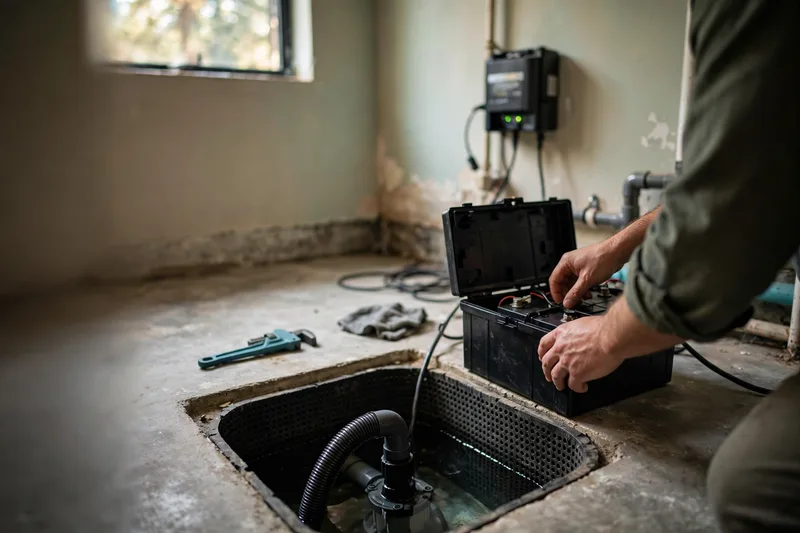
When a sump pump stops in Forest Park, the story is the same every time. The pump is the one thing moving groundwater away from the basement, and when it stops the water rises from below: first the floor gets wet around the pit, then it spreads across the room, then it soaks the bottom of the drywall and anything stored low. A finished basement with carpet and furniture goes under fast, and the water reaches the furnace, the water heater and the washer before anyone notices. In a village where the sewers are ninety-eight percent combined, the pump is not a convenience: it is the line between a dry basement and a flooded one.
Pumps fail for a few common reasons, and each one has a fix. The power goes out in the storm: a battery backup keeps the pump running through a short outage, and a water powered backup works as long as the city water is on. The float switch sticks: a tethered float can catch on the side of the pit, and a vertical float is less likely to hang up.
The discharge line freezes or clogs: the line should slope away from the house and discharge well clear of the foundation, not into a spot where the water runs straight back. The pump wears out: a pump that runs constantly in a wet spring is a pump that should be tested under load every year, not just switched on and listened to.
| What failed | What you see | What fixes it |
|---|---|---|
| Power outage in the storm | Pump silent, water rising around the pit | Battery backup, or a water powered backup pump |
| Float switch stuck | Pit full, pump not running | Free the float, or replace it with a vertical float |
| Discharge line frozen or clogged | Pump runs but the water stays, or the pit overflows | Clear the line, slope it away from the house |
| Pump worn out | Pump hums, runs constantly, or moves little water | Test under load, replace before the next storm |
| Check valve failed | Water runs back into the pit after each cycle | Replace the check valve on the discharge line |
After a failure, the water has to be extracted, the pit and the discharge line have to be checked, and the pump has to be tested before it is trusted again. A pump that failed once will fail again if the cause is not fixed, and the next storm is never far away in a village where the ground stays wet through spring. The Village Flood Assistance Grant Program covers a battery backup as one of its three options, so a battery backup is one of the cheapest ways to keep the next outage from flooding the basement, when the programme is funded.
Water has three categories, and the category decides the job
Not all water is the same, and the category decides what comes out, what can stay, and how the crew works in your home. The IICRC S500 standard, the industry standard for professional water damage restoration, sets three categories.
| Category | Where it comes from | What happens |
|---|---|---|
| Category 1: clean water | Burst pipe, supply line, rainwater through a roof | Extract, dry, and test. Drywall and flooring can often be saved if the drying starts fast. |
| Category 2: gray water | Washing machine, dishwasher, shower drain | Extract, remove soaked porous materials, clean and disinfect. Drywall that soaked through usually comes out. |
| Category 3: black water | Sewage backup, flooding from outside, toilet overflow with waste | Protective gear, full removal of everything it touched, disinfection. Nothing soaked by sewage water stays. |
Water can change category while it sits. Clean water from a burst pipe that soaks into a wall and stays there for days becomes gray water as it picks up dirt and microbes, and gray water left long enough becomes black. That is one more reason the first hours matter: the category, and the cost, both climb with time.
The line for do it yourself is the category. A small clean water spill you caught at once is a job you can handle with a mop and a fan. Sewage water is never a do it yourself job: it needs protective gear, proper removal, and disinfection, and it should be left to a crew. Water that soaked drywall, insulation or a finished floor needs extraction equipment and moisture readings, because the damage you cannot see is the damage that grows mold. If you cannot tell where the water came from, or if the water touched more than the surface, call (773) 570-9869 and let a crew look.
Flooded basement cleanup in Forest Park
A flooded basement in Forest Park, IL is usually a finished basement, and that changes the job. Flooded basement cleanup forest park crews do after a storm follows the same order on every job, because the order is what saves the most: extract first, remove what cannot be saved second, dry third, and rebuild only when the readings say dry. The water is not sitting on bare concrete. It is sitting on carpet and pad, under furniture, against finished walls with insulation behind them, and around a furnace, a water heater and a washer.
Extraction comes first because standing water keeps soaking while it sits. Pumps and wet vacuums pull the water out fast, before it can wick higher up the drywall or reach the next room. A wet vacuum and a pump move water fast enough to matter: buckets do not. If the water is coming up through a floor drain, stop using water in the house first, because every flush and every shower adds to the backup. If a pipe is the source, shut the main valve first, because the extraction cannot keep up with a pipe that is still running.
Next comes removal. Wet carpet pad almost always comes out: it holds water like a sponge and will not dry clean. Soaked insulation comes out. Drywall that soaked through gets a flood cut, a clean horizontal cut a foot or two above the floor line, so the wet bottom of the wall is removed and the inside of the wall can dry. Swollen flooring and damaged trim come out. What stays is cleaned and disinfected, and sewage losses get full disinfection. Nothing soaked by sewage water stays, whatever it is.
The last step of the cleanup is the one homeowners miss: the water you cannot see. Water wicks up drywall, soaks insulation, and runs under flooring into the next room. A basement that looks dry on the surface can still be wet inside the walls, under the floor, and behind the baseboards. That is why the cleanup ends with moisture readings, not with a look around. The readings decide what else comes out and when the drying can start.
Sump pump failure and sewer backup
When the basement floods from below, the first question is whether the water is groundwater or sewage. Groundwater from a failed sump pump is usually clean at first: it smells like damp earth, and it rises around the pit and spreads across the floor. Sewage water from a backup smells like sewage, comes up through a floor drain, and carries waste with it. The two look alike at a glance, and the smell and the source tell them apart. If it smells like sewage, treat it as Category 3 water, keep everyone out, and call for help right away.
River and stormwater flooding
When the water comes in from outside, the job starts with the door and the window wells, not the pump. River water and street flooding enter at ground level, and the first job is to stop more water coming in: sandbags at the door, the window well cleared, and the sump pump running at full capacity. The extraction then follows the same order as any flood, but the drying takes longer, because the water soaked everything it touched on the way in, and the silt it leaves behind has to be cleaned out before the drying can start.
What not to do
Do not walk into water you cannot see through, and do not touch the breaker panel while standing in water. Do not run a household vacuum on standing water, and do not run a shop vacuum on sewage water. Do not throw away damaged items before the adjuster has seen them, and do not start the rebuild before the readings say dry. Do not assume the water is clean because it looks clear: river water and backup water carry what they picked up on the way in.
Water removal in Forest Park
Water removal forest park crews do first is the extraction: pumps and wet vacuums pull the standing water out fast, before it can soak deeper. Submersible pumps handle deep water. Truck mount extractors pull water out of carpet and pad. Wet vacuums pick up what the pumps leave behind. The equipment is chosen by the depth of the water and what it soaked, and the crew should explain the setup before they leave.
How the water is removed matters as much as how fast. Pumping a basement out too fast, while the ground outside is still saturated, can push the walls in or lift the floor: the water outside presses in while the water inside is gone. A crew that knows basements pumps in stages and watches the walls. The same care applies to the contents: boxes, rugs, furniture and electronics are lifted out of the water and into a dry room before the extraction starts, not after, because every minute in the water is damage.
Water removal forest park homes need after a sewer backup is different from removal after a burst pipe. Sewage water is removed with protective gear, and everything it touched is treated as contaminated. Clean water from a burst pipe is removed fast and the drying starts at once. The category decides the equipment, the gear, and what comes out with the water.
Water damage cleanup in Forest Park
Cleanup is the part of the job between extraction and drying, and it is where most of the decisions get made. Water damage cleanup forest park crews do between extraction and drying decides what comes out, what stays, and what gets cleaned: the answers come from the water category and the moisture readings, not from a guess. Clean water that is dried fast can leave drywall and flooring sound. Gray water from a washing machine or a dishwasher means soaked porous materials come out. Sewage water means everything it touched comes out, and what stays is disinfected.
Contents get the same treatment. Furniture legs go on blocks. Rugs are lifted and dried separately. Boxes are opened and checked: paper and cardboard that soaked through are usually lost, while plastic bins and sealed containers often survive. Electronics that sat in water should not be switched on until they are checked. Clothing and soft goods from a clean water loss can often be washed. Clothing from a sewage loss should be treated as contaminated.
The cleanup is documented at every step, because the record is what your insurer needs. Photos of the damage, a list of what was removed and why, and the moisture readings taken each day. A clean basement with no record is a basement the next owner will ask about. A clean basement with a full record is a basement that was handled properly.
Drying is proven by readings, not by touch
Water damage restoration forest park drying work is proven by readings, not by touch. A wall can feel dry on the surface and still be wet inside, and a floor can look dry while the subfloor underneath is soaked. The crew proves the drying with a pin moisture meter, pressed into the drywall, the wood trim and the floor, and the numbers are written down every day. The equipment stays running until the readings hold steady at dry, and only then does the rebuild start.
The equipment is simple and it works. Air movers push dry air across wet surfaces so the moisture lifts out of the material. Dehumidifiers pull that moisture out of the air so it does not settle back into the walls. The two work together: movers without dehumidifiers just push wet air around the room, and dehumidifiers without movers leave the moisture locked in the walls. The number of machines depends on the size of the loss and what is wet, and the crew should explain the setup before they leave.
Stopping early is the most common mistake after a flood in Forest Park, IL. The surface feels dry, the equipment goes home, and the moisture left inside the wall feeds mold a few weeks later. Then the drywall comes down anyway, and the job costs more than it would have if the drying had run to the readings. Ask for the readings every day, keep the numbers, and do not let the equipment leave until the numbers say dry.
Water removal forest park crews do first is the extraction: pumps and wet vacuums pull the standing water out fast, before it can soak deeper. Water mitigation forest park homes need after that is the drying and the removal: air movers, dehumidifiers, flood cuts where the wall is soaked, and daily readings until the structure is dry. The two steps are different jobs, and both have to be done right.
Water mitigation in Forest Park
Water mitigation forest park homes need is the emergency phase of the job: stop the source, extract the standing water, remove what cannot be saved, and dry the structure until moisture readings show it is dry. Mitigation stops the damage from getting worse. It is the part of the job that happens in the first days, and it is the part that decides whether the loss stays small or grows.
Restoration is everything after mitigation: the rebuild, drywall, flooring, trim and paint, plus the paperwork for your claim. Mitigation and restoration are often billed separately on an insurance claim, so ask for a written scope that shows each part. A scope that mixes the two together is a scope that is hard to check against the work.
The mitigation itself follows the same steps on every job. Find and stop the source. Extract the standing water. Remove what cannot be saved. Set air movers and dehumidifiers. Take pin readings every day. Keep the equipment running until the readings hold steady at dry. No step is skipped because the loss looked small: the losses that grow are the ones where a step was skipped.
Water damage repair in Forest Park
Water damage repair forest park homeowners file most often is the rebuild after the drying: drywall, flooring, trim and paint. The rebuild starts only when the readings say dry, because building over wet framing traps the moisture inside the wall, and the mold that grows there will not show until the paint bubbles or the smell arrives.
Drywall is the most common repair. A flood cut removes the wet bottom of the wall, the inside of the wall dries, and the cut line is patched and finished. Flooring is next: carpet pad is replaced, wood floors are checked for cupping and swelling, and tile is checked for loose grout and wet subfloor. Trim and baseboards that swelled are replaced. Paint goes on last, after the wall reads dry, with a stain blocking primer on any water mark that bled through.
Some repairs need a plumber first. A burst pipe is a plumber's fix, and a blocked lateral is a plumber's fix, and the restoration crew should say so plainly instead of pretending to do both jobs. The same goes for electrical work: a panel or an outlet that sat in water needs an electrician, not a drying crew. Ask who does each part before the work starts, and get it in the written scope.
Burst pipe water damage in Forest Park
Burst pipe water damage forest park homes face most often starts in a cold snap, when a pipe freezes, cracks, and bursts as it thaws, usually overnight while the house sleeps. The water falls from above, through a ceiling and down a wall, or sprays from a split pipe, and it can run for hours before anyone notices. The first job is always the same: shut the main water valve, then call for extraction at (773) 570-9869.
There is no Forest Park burst pipe case on the public record, so this page tells no street story about one. The pattern is the same in every town: a pipe freezes in a cold snap, cracks as it thaws, and runs while no one is watching. The water soaks the floors, the walls and everything stored low, and the loss is found in the morning, not in the night. That is why the valve matters more than the story: find it before winter, and make sure everyone in the house knows where it is.
To keep a pipe from bursting, keep the heat on through a cold snap, even in a room you do not use, and let a faucet drip on the coldest nights so the water keeps moving. Open the cabinet doors under sinks on outside walls so warm air reaches the pipes. Find the main water valve before winter, and make sure everyone in the house knows where it is: the valve is what stops the water, and the minutes before you find it are the minutes that do the damage.
Sewage cleanup in Forest Park
Sewage cleanup forest park homes need starts with the same warning every time: sewage water is Category 3 water, the most dangerous kind, and it is a health risk, not a cleaning job. Keep everyone, including pets, out of it. Do not mop it up with household tools. Do not run a shop vacuum on it. Call for help right away at (773) 570-9869, and report the backup to Public Works at (708) 366-4876 so the cause is on the record.
The cleanup itself is done in protective gear. The standing sewage water is extracted, everything it touched is removed, and what stays is disinfected. Drywall, carpet pad, insulation and flooring that soaked up sewage water come out: they cannot be cleaned well enough to leave in a wall or under a floor. The air movers and dehumidifiers run the same as any drying job, but the disinfection step is what makes a sewage job different from a clean water job.
Then comes the cause. A sewage backup in Forest Park, IL usually means one of three things: a blocked lateral on your side of the main, a full combined sewer main in the street, or tree roots in an older pipe. The Village maintains the mains in the street, and the Village site does not publish who owns the lateral, so do not take an ownership rule from this page: call Public Works at (708) 366-4876 and ask about your own pipe.
A camera inspection after the cleanup shows whether the pipe is cracked, bellied, or full of roots, and whether a backwater valve would keep the next backup out of your basement. Report the backup either way: the report puts the cause on the record, and the record is what the adjuster reads.
Emergency water damage restoration in Forest Park
Emergency water damage forest park homeowners call for most often is the call made at night, and the answer matters more than the ad. A crew that answers at night and comes out the same day is a crew that can still save the drywall, the flooring and the contents. A crew that calls back in the morning is a crew that arrives after the water has had the night to work.
When you call (773) 570-9869, the crew asks a few quick questions: where the water is, where it came from if you know, whether it smells like sewage, and whether the power is safe. Then they tell you what to do while you wait: shut the main valve, stay out of the water near electricity, take photos, lift what you can save. On site, they inspect the damage and give you a straight answer on scope before work starts, with a written scope that shows what is being removed, what is being dried, and what is being cleaned.
The first visit is also when the record starts: photos of the damage, moisture readings taken on arrival, and a list of what was removed and why. That record is what your insurer needs, and it is what the next buyer will want to see. A crew that documents from the first visit is a crew that has done this before.
Water damage restoration cost in Forest Park
Water damage restoration cost in Forest Park homeowners ask about first has no honest answer before someone sees the job, and any number given over the phone is a guess. No page on this site prints a price, and no real local restorer publishes a Forest Park price list either: every figure floating around online is a national average, an aggregator estimate, or a claim from another city, and the figures disagree with each other. The only honest way to get a number is an on site inspection with moisture readings and a written scope.
What sets the cost is the size of the loss and what the water touched. How many rooms are wet, and how much water there is. Whether the water is clean, gray or sewage: sewage water means more removal and more disinfection. How far it soaked into drywall, flooring and insulation. How many days of drying the readings require. Whether contents need cleaning or moving. A small clean water spill in one room costs far less than a finished basement full of sewage water, and a loss found at once costs far less than a loss found after a week away.
Your deductible matters too. A small loss that costs little more than your deductible is often better paid out of pocket, because a claim goes on your insurance record and can affect your premium and your future cover. A large loss, a finished basement, sewage water, or damage that runs across two floors, is usually worth claiming, because the drying and rebuild cost far more than the deductible. Keep every photo, every receipt and every moisture reading either way, because the record matters if you claim later.
Insurance: what is covered, what is not, and how to claim
Water damage restoration forest park insurance claims succeed or fail on one question: where did the water come from. A standard homeowners policy covers sudden and accidental water losses inside the home, like a burst pipe, a failed supply line or an appliance leak. It does not cover water that comes in from outside, like river flooding or street flooding: that needs separate flood insurance. A sewer backup or a sump pump failure is usually not covered either, unless you bought a sewer backup or sump pump endorsement. Damage from wear and tear, a slow leak you knew about, or poor maintenance is normally excluded.
| Source of the water | Usually covered | What to check |
|---|---|---|
| Burst or frozen pipe | Yes, sudden and accidental | Heat was on, pipe was not known to be bad |
| Appliance or fixture leak | Yes, sudden and accidental | Leak was sudden, not a slow drip over months |
| Roof leak from a storm | Yes, if the roof was maintained | Storm damage, not wear and tear on an old roof |
| River or street flooding | No, needs flood insurance | Separate flood policy, and the map zone matters |
| Sewer backup | No, unless endorsed | Sewer backup endorsement on the policy |
| Sump pump failure | No, unless endorsed | Sump pump endorsement, and the cause of the failure |
Forest Park is a FEMA National Flood Insurance Program participant, and the Village posts its flood programme and forms on its own site. That matters if your home is low lying, near the Des Plaines River, or in one of the streets that flooded in July 2010. Ask your agent whether your home needs flood cover, and ask about the sewer backup and sump pump endorsements at the same time: they cost little next to the loss they cover.
To claim well, document everything. Take photos and a short video before you move anything, keep a list of what was damaged with ages and rough values, and keep every receipt for emergency work. Call your insurer promptly and open a claim, and ask for the claim number in writing. Do not throw away damaged items before the adjuster has seen them. Do not call the loss a flood unless the water came from outside flooding, because the word can trigger a denial on a standard policy. If the adjuster and your agent disagree about the cover, the Illinois Department of Insurance can answer policy questions, and its website explains the claim process step by step.
Water damage repair in Forest Park homeowners file most often is the burst pipe claim, and it is usually the simplest: the cause is clear, the loss is sudden, and the record is easy to keep. The hardest claims are the ones where the cause is unclear, like a basement that flooded in a storm with no visible source. That is why the Village report matters: a report to Public Works puts the cause on the record, and the record is what the adjuster reads.
How long the job takes, and what decides it
The drying runs until the readings say dry, and the timeline follows the size of the loss. A small clean water loss in one room can be dry in a few days. A finished basement with soaked drywall and flooring takes longer, often a week or more of drying before any rebuild starts. Sewage water adds cleaning and removal time, and a loss that ran across two floors adds more. The rebuild comes after the drying: drywall, flooring, trim and paint, and the time that takes depends on the materials and the trades.
| What sets the time | Shorter | Longer |
|---|---|---|
| Size of the loss | One room, clean water | Finished basement, two floors |
| Water category | Clean water, fast start | Sewage water, full removal |
| What it soaked | Concrete floor, bare walls | Insulation, drywall, wood floors |
| How fast it was found | Found at once, dried at once | Found late, after a vacation |
| Weather | Dry week, low humidity | Wet week, high humidity |
Ask for a written timeline at the inspection, and expect it to change if the readings show more wet material than the first look found. The crew should take pin readings every day and show you the numbers going down. If the numbers stall, the equipment setup changes: more air movers, a bigger dehumidifier, or a flood cut in a wall that is not drying. The timeline is a plan, not a promise, and the readings are what decide it.
The mold clock starts in 24 to 48 hours
Mold can start growing in 24 to 48 hours when materials stay wet, which is why the first two days after a flood matter most. It does not need a flood to grow: a damp wall cavity, a wet carpet pad or insulation that stayed damp behind drywall is enough. The signs are a musty smell, dark spots on drywall or trim, and paint or wallpaper that bubbles or peels. Fast extraction and verified drying stop it before it starts.
If mold is already growing, the work changes. The area is contained so the spores do not spread, the growth is removed safely, and the area is cleaned. Our mold remediation in Chicago page covers the full process, from inspection and containment to verified drying and Illinois registration rules. Illinois law now requires mold remediators to register with the Illinois Department of Public Health under the Mold Remediation Registration Code, effective September 23, 2026.
The law covers the registration of mold remediation providers, and individuals may continue without third party certification until September 30, 2027 if they submit a registration form. Providers that only assess mold do not register. Our site claims no registration for itself, so any mold work beyond the drying of the loss should go to a registered provider.
The losses that grow mold are the slow ones: water that sat for days before anyone found it, a leak inside a wall that no one saw, a basement that was dried by feel instead of by readings, or a sump pump failure during a vacation. That is why the discovered late losses in Forest Park, IL are the ones to worry about. Dry it fast, dry it by the numbers, and mold usually never gets the chance.
Flood damage in Forest Park: river flooding and your home
Forest Park, IL has a flood record, and it is written down in the local press, the Village's own stormwater filings, and the national weather record. The table below lists the dated events the record supports. Nothing in it is invented, and nothing is borrowed from another town: every row names its source. One warning before you read it: the village has no named homeowner flood case on the public record, so this page tells no homeowner story. The events below are village-wide, and they are the reason the sewers and the river matter here.
| When | What happened | Source |
|---|---|---|
| October 1986 | Des Plaines River flood. Forest Home Cemetery, 863 South Des Plaines Road, and Concordia Cemetery, 7900 West Madison Street, were completely flooded | Chicago Tribune, October 3, 1986 |
| July 23 to 24, 2010 | Village-wide flooding. Every single block in Forest Park was adversely affected, in the words of Village Administrator Tim Gillian to ABC7. Senator Durbin toured the damage | ABC7 Chicago, August 2010 |
| April 30, 2013 | Forest Park continues to clear out flooded basements after the spring storm | Forest Park Review, April 30, 2013 |
| August 22, 2014 | Flash flooding named Forest Park among the flooded suburbs, and residents reported flooding and sewage backups. The CTA Blue Line Forest Park branch was suspended the same day | Forest Park Review, August 22, 2014; CBS Chicago |
| July 2, 2023 | I-290 shut down near Forest Park and Blue Line service between Harlem and Forest Park suspended in heavy rain | Local news reports, July 2, 2023 |
July 2010 is the flood Forest Park, IL still measures storms against. The rain fell for two days, and every single block in the village was adversely affected. The Village Administrator said so on the record to ABC7, and the Mayor said separating the combined sewers would cost tens of millions of dollars. The flood is also the reason the Village's own stormwater filings matter: the 2020 Notice of Intent to the Illinois EPA says the village runs on sewers that are ninety-eight percent combined, and that is the mechanism behind the flooding, not a mystery.
October 1986 is the benchmark for the river itself. The Des Plaines River left its banks and covered Forest Home Cemetery and Concordia Cemetery, both completely flooded. No homeowner was named in the report, and this page names none: the cemeteries sit on the river, and the river is what flooded them. The two cemeteries are the clearest proof on the record that the river reaches into Forest Park when it rises.
Three recent events show the pattern is not history. In April 2013 the Forest Park Review reported the village clearing out flooded basements. In August 2014 the same paper reported flooding and sewage backups frustrating residents, and the Blue Line stopped running to Forest Park the same day. In July 2023 the highway shut down near the village and the Blue Line stopped again. The storms change, and the village floods the same way each time: the sewers fill, the ground fills, and the water finds the lowest basement.
Found late: the losses that cost the most
Many Forest Park, IL water losses are found late, and the late ones cost the most. A pipe bursts while the owners are away on vacation, and the water runs for days. A sump pump fails during a heavy rain, and the owners wake up to a couple of inches in the finished basement at six in the morning. A dishwasher line breaks overnight and soaks the kitchen and the room below it. The pattern is the same every time: the water ran while no one was watching, and the damage is bigger than the leak.
July 2010 shows the pattern at village scale. The rain fell for two days, the sewers filled, and every single block in the village was adversely affected. No single homeowner was named in the public record of that flood, and this page names none: the point is that the whole village flooded at once, not that one house did. The homes that flooded were the homes where the water found its way in first, and the homes that stayed dry were the homes where the pump kept running and the drains stayed clear.
Water damage restoration forest park homeowners call for most often is the repair after a loss found late, and the repair is bigger because the water had time to work. The fix is not just the drying: it is the habit of checking. Check the basement before a trip and the moment you return. Check it first thing after a hard freeze or a heavy storm. Check the sump pump in the spring and the pipes in the fall. A loss found at six in the morning is a loss that can be dried. A loss found after a week away is a loss that takes the house apart.
Forest Park Village numbers: who to call and when
Water damage restoration forest park homeowners need starts with the right phone call, and the Village of Forest Park publishes the numbers on its own site. Keep them on the fridge: the cause of the water decides who pays, who fixes it, and whether the claim succeeds.
| Who | Number | When to call |
|---|---|---|
| Village Hall, main number | (708) 366-2323 | General Village questions, 517 Des Plaines Avenue, Forest Park, IL 60130, Monday to Friday 8am to 5pm |
| Public Works | (708) 366-4876 | Sewer backups, street flooding, main sewer problems, and the Flood Assistance Grant Program: call first, before any flood prevention work |
| Police | (708) 366-2425 | Police matters, published on the Village site as a phone number only |
| Water Department, water billing | (708) 615-6268 | Water billing questions, water service, bills every two months |
| Fire Department | (708) 366-1234 | Fire and rescue, published on the Village site as a phone number only |
| Emergencies | 911 | Life safety, fire, gas smell, water near live electricity you cannot get away from |
Village Hall is at 517 Des Plaines Avenue, Forest Park, IL 60130, open Monday to Friday from 8am to 5pm and closed on weekends. The Public Works facility is at 7343 West 15th Street. The Village site publishes no after-hours Public Works or water emergency number, so this page prints none: if the water is a safety emergency, call 911, and if it is a burst pipe, shut the main valve and call for extraction at (773) 570-9869.
During flooding the Village asks residents to report sewer backups and street flooding to Public Works, so the main can be checked and the cause is on the record. The Public Works Department runs the sewers and the water system, and the Village's stormwater filings with the Illinois EPA set out how the system works: ninety-eight percent combined sewers, two percent separate, with the water going to Addison Creek, the Des Plaines River, Golf Course Tributary, Salt Creek on its lower reach, and Silver Creek.
The lateral is your pipe to check, not a rule to take from this page. The Village site does not publish who owns the sewer lateral, so this page does not state it. Call Public Works at (708) 366-4876 and ask about your own pipe before you plan any lateral work, and have it inspected with a camera if your home is older: a cracked lateral is your repair to plan for, and finding it before the next storm is cheaper than finding it during one.
Village of Forest Park Flood Assistance Grant Program: what the
Forest Park, IL runs one programme that pays homeowners back for flood protection work, and it is published on the Village site. It is a real programme with real terms, and this page prints only what the Village itself publishes, with the funding warning in front.
The programme is the Village's published programme, with funding suspended through April 30, 2027 and applications still accepted. The Village continues to accept completed applications, and distributions are processed in the order received, assuming a future appropriation. Do not read this page as saying the programme is open and paying: it is suspended, and the Village posts the notice on its Forms page.
When funded, the programme reimburses fifty percent of the installation cost of an approved flood prevention system, up to one thousand five hundred dollars, or up to two thousand dollars for low-income households. Three options are covered: an overhead sewer, a backflow prevention valve with a bypass pump on the house lateral, or a lift station. Only owner-occupied single family homes and two-flats in the Village are eligible. Applications are accepted from January 1 to February 15 each year, the programme year begins May 1, and it runs first come first served, subject to the money available.
The rule that matters most is the order: no work may start until building permits are issued, with approvals from the Building Department, the Plumbing Inspector, Public Works and the Village Administrator. The Village encourages homeowners to get quotes from more than one licensed contractor, but it sets no fixed number. Reimbursement needs proof of payment and approved code compliance, plus a waiver of lien and a paid receipt. The application form is dated September 29, 2022, and the Village posts the funding notice on its Forms page, so check the current terms before you apply.
How to keep it from happening again
Water damage Forest Park homes face most often comes back to the same few fixes, and most of them cost little. Start with the sump pump: test it under load, make sure the float switch moves freely, clear the discharge line, and add a battery backup so a storm outage does not stop it. The Village Flood Assistance Grant Program covers a battery backup as one of its three options, so the backup is one of the cheapest fixes on the list when the programme is funded.
Then look outside: clean the gutters, make sure downspouts throw water well away from the foundation, and grade the soil so it slopes away from the house. Keep window wells clear and check the joint where the wall meets the floor after a heavy rain. A water damage restoration forest park visit that ends with the sump tested, the gutters clear and the valve fitted is the visit that keeps the next storm outside.
Have the sewer lateral inspected, especially in an older home, and consider a backwater valve so a full main cannot push water back through your floor drain. The Flood Assistance Grant Program covers backwater valves and lift stations as well as overhead sewers, when funded. Keep the Village numbers on the fridge: Village Hall (708) 366-2323, Public Works (708) 366-4876, Police (708) 366-2425, and Water Department (708) 615-6268. And check the basement before a trip and the moment you return, first thing after a hard freeze or a heavy storm, and every spring before the rain season starts.
Choosing who to call in Forest Park, IL
Homeowners in Forest Park, IL choose a company on four things: speed, readings, paperwork and honesty. Speed, because the first hours decide what survives. Readings, because pin moisture readings taken every day are the only proof the drying worked. Paperwork, because photos, daily readings and a written scope are what your insurer needs to pay the claim. Honesty, because a crew that explains what is happening, coordinates directly with your adjuster, and does not try to upsell you while your basement is under water is a crew you can trust with your home.
Ask for a written scope before the work starts, with what is being removed, what is being dried, and what is being cleaned. Ask whether the company documents the loss for insurance. Ask for local references and check them. Be wary of anyone who quotes a price before seeing the job, anyone who pressures you to sign on the spot, and anyone who promises to handle your claim for you. The right company answers at night, sends a crew the same day, and tells you plainly what the loss is and what it will take. A water damage restoration forest park crew that answers at night, scopes in writing and dries to readings is the one to hire.
Forest Park, IL and nearby areas we serve
We serve Forest Park, IL 60130 and the suburbs around it, including Elmwood Park, Des Plaines and Oak Park, from the same number: (773) 570-9869. If you are in Chicago itself, see water damage restoration in Chicago. Our Des Plaines page covers the town up the river, which shares the Des Plaines River flood problem with Forest Park, and our Oak Park page covers the village next door, which shares the combined sewers.
Chicago itself is a different market: the term water damage restoration chicago is fought over by the big national firms, and our Chicago page is built for it. Each suburb has its own sewers, its own flood record, and its own page, because the fix for a Forest Park combined sewer backup is not the fix for a Des Plaines river flood.
What Forest Park homeowners ask
These are the questions homeowners ask most after a flood, a burst pipe or a failed sump pump in Forest Park, IL. None of them has a one line answer, because the answer depends on where the water came from. Read the one that matches your home, then call (773) 570-9869 if you need a crew.
Do I have to replace a ceiling after water damage?
Not always. A ceiling that got wet from clean water and was dried fast can often be saved, with a stain blocking primer over the water mark. A ceiling that sagged, crumbled or stayed wet long enough to grow mold comes down. A ceiling soaked by sewage water comes down too. The test is the moisture reading and the feel of the material: if the drywall is soft, swollen or sagging, it is not coming back.
How much does water damage devalue a home?
A loss that was dried properly, documented with readings and photos, and rebuilt well usually leaves little trace on value, because the record shows the work was done right. A loss that was dried by feel, never documented, or left damp inside the walls is a different story: a buyer, an inspector or an appraiser will find the stain, the smell or the soft drywall, and the price will reflect the risk. Keep the record: photos, daily readings, the written scope and the receipts. The record is what turns a flood into a fixed problem.
What is considered minor water damage, and how do I tell if it is serious?
Minor damage is a small clean water spill you caught at once, on a hard floor, with nothing soaked through. Serious damage is water that soaked drywall, insulation or flooring, water that ran across two floors, water that smells like sewage, or water you cannot find the source of. The test is simple: if you can see where the water came from, mop it up and watch it for a day. If the water soaked into the wall or the floor, if the ceiling below is stained, or if the smell stays after the water is gone, the loss is serious, and it needs extraction and readings.
Can water damaged furniture be restored?
Sometimes. Solid wood furniture that sat in clean water for a short time can often be dried, cleaned and refinished. Upholstered furniture that soaked through is harder: the foam and the fabric hold water and grow mold, and the piece usually has to go. Anything soaked by sewage water should be treated as contaminated and removed. Lift furniture legs onto blocks as soon as you find the water, and do not switch on electronics that sat in water until they are checked.
Does insurance pay for water restoration?
It pays for the losses your policy covers, after your deductible, and only with documentation. The insurer pays the restoration company or reimburses you, depending on the policy, and the payment follows the adjuster's inspection and the written scope. What decides the payment is the cause of the water, the cover you bought, and the record: photos, daily readings, receipts and a list of what was removed and why. Call your insurer promptly and open a claim, and ask for the claim number in writing.
When should I call a water restoration company?
Call as soon as the water is more than a spill you can mop up. Call at once if the water is sewage, if it soaked drywall or flooring, if it ran across two floors, if you cannot find the source, or if the power is out and the sump pump has stopped. The first hours decide what can be saved, and the call itself costs nothing. If the loss is a tipped bucket on a tile floor, mop it up and watch it for a day: that is not a job for a crew.
Is there anything specific to Forest Park homes I should know?
Yes, and it comes down to three things. First, the sewers: ninety-eight percent of the village system is combined, so a hard storm can push water back through a floor drain, and the Village site does not publish who owns the lateral, so ask Public Works about your own pipe. Second, the flood record: the village flooded block by block in July 2010, and the river covered two cemeteries in October 1986. Third, the programme: the Village reimburses fifty percent of approved flood protection work, up to one thousand five hundred dollars, through its Flood Assistance Grant Program, although its funding is suspended through April 30, 2027 and applications are queued.
How do I keep my sump pump from failing?
Test it under load every spring, and check the float switch moves freely: a tethered float can catch on the side of the pit, and a vertical float is less likely to hang up. Clear the discharge line so it slopes away from the house and does not freeze or clog. Add a battery backup so a storm outage does not stop the pump, and keep a spare pump on the shelf if the basement is finished. The Village Flood Assistance Grant Program covers a battery backup as one of its three options, so the backup is one of the cheapest fixes on the list when the programme is funded.
How do I stop my pipes from freezing, and keep a sewer backup out?
Keep the heat on through a cold snap, even in a room you do not use, and let a faucet drip on the coldest nights so the water keeps moving. Open the cabinet doors under sinks on outside walls so warm air reaches the pipes, and find the main water valve before winter so everyone in the house knows where it is. For backups, have the lateral inspected with a camera if the home is older, and consider a backwater valve so a full main cannot push water back through your floor drain. The Flood Assistance Grant Program covers backwater valves when funded, and the Village site is the place to check the current terms.
How do I dry and clean after gutting to stop mold?
After the wet drywall, carpet pad and insulation are out, the structure has to dry before anything is rebuilt: air movers and dehumidifiers run until pin moisture readings show the framing and the floor are dry. Hard surfaces that stay are cleaned and disinfected. Do not use bleach on porous materials: its water feeds the mold, and the chlorine cannot reach into the material. Keep the room ventilated and the dehumidifier running while it dries, and do not close the wall up until the readings say dry. If mold is already growing across a wide area, the work needs containment and a registered provider under the Illinois mold rules.
What do I do while I wait for the crew?
Stay out of water near electricity, and do not touch the breaker panel while you stand in water. Take photos and a short video before you move anything. Lift boxes, rugs and electronics off the floor and into a dry room, and put furniture legs on blocks. If a pipe is the source, shut the main valve. If water is coming up through a floor drain, stop using water in the house. Do not throw anything away, and do not start the rebuild. The crew will tell you more on the call: describe what you see, where the water is, and whether it smells like sewage.
How do I clean up after a burst pipe?
Shut the main water valve first, then cut the power to the wet area only if the panel is dry and you can reach it without standing in water. Open the lowest faucet to drain what is left in the pipes. Move rugs, boxes and electronics off the floor, and take photos before you move anything. Then call for extraction at (773) 570-9869: the crew pulls the standing water out, removes what cannot be saved, and sets the drying equipment. A burst pipe can pour out water for hours while no one is home, so the cleanup starts with stopping the water, not with mopping.
Who pays for a burst water pipe?
It depends on where the pipe is. A pipe inside your home, or the line from your home to the street, is the homeowner's responsibility: the repair and the water damage it caused are yours to fix, and your homeowners policy is the usual route for the damage. A burst water main in the street is the Village's: report it to Public Works at (708) 366-4876 at once, and the Village handles the main. If you rent, tell your landlord at once and in writing: the pipe and the repair are usually the landlord's, and the tenant's job is to report it fast and protect what can be saved.
Water Damage Restoration Forest Park FAQs
My basement just flooded. What should I do?
Safety first, then stop the source. Stay out of water near electricity and do not touch the breaker panel while you stand in water. Shut the main water valve if a pipe is the source, or stop using water if it is coming up through a floor drain. Take photos and a short video before you move anything, lift valuables off the floor, then call for extraction at (773) 570-9869. If the flooding came from the street or a city main, call Forest Park Public Works at (708) 366-4876 so the cause is on the Village record. The first hours decide what can be saved.
Is basement flooding common in Forest Park?
Yes, and the record says so plainly. Forest Park runs on sewers that are ninety-eight percent combined, so one pipe carries both wastewater and rainwater, and a hard storm can fill it faster than it can drain. In July 2010, Village Administrator Tim Gillian told ABC7 that every single block in the village was adversely affected by the flood. The Forest Park Review reported flooded basements again in April 2013 and August 2014, and residents were still asking about it on the Forest Park Town Hall page in 2026. It is a known local problem, not a rare one.
Why did my basement flood?
The usual reasons in Forest Park, IL are a sump pump that stopped, a combined sewer that filled up and pushed water back through a floor drain, a burst or frozen pipe, rainwater that soaked the ground and came in through the wall or the floor joint, or river and overland flooding from a heavy storm. Forest Park sits on flat ground in Cook County, and its sewers are ninety-eight percent combined, so the system has less room for a hard storm than a separated system does. Which reason you have decides the fix, so the first job is to find the source, not to guess at it.
How can I tell if it is groundwater, condensation, or a plumbing leak?
Look at when and where the water appears. Groundwater and seepage rise after heavy rain, usually at the joint where the wall meets the floor, and the floor feels damp even when no fixture is running. Condensation forms as small beads on cold pipes and walls in humid weather and dries when the air dries. A plumbing leak runs steady whether it rains or not, often near a fixture, and the water meter keeps turning when every tap is off. In Forest Park, IL, where the sewers are almost all combined, a backup that comes up through a floor drain after a storm points to the sewer, not to a leak inside the house.
Where did the water come into my basement?
Start at the sump pit. If the pit is full and overflowing, the pump failed or the discharge line is blocked, and the water came up from below. If the water is coming up through a floor drain, the sewer backed up: stop using water in the house and call Public Works at (708) 366-4876. If the damp line climbs the wall after rain, the water came through the wall or the floor joint, usually after the ground filled up. If the water is near a window, check the window well: a well full of leaves and rain will spill over the sill. The entry point decides the fix, so find it before you start drying.
What should I do first when a pipe bursts?
Shut the main water valve at once, then cut the power to the wet area only if the breaker panel is dry and you can reach it without standing in water. Open the lowest faucet to drain what is left in the pipes. Move rugs, boxes and electronics off the floor, take photos before you move anything, and call for extraction at (773) 570-9869. A burst pipe can pour out water for hours while no one is home, so speed matters more than anything else. Find the main valve before winter, and make sure everyone in the house knows where it is: the minutes before you find it are the minutes that do the damage.
Can I call the fire department for a burst pipe?
The fire department is for life safety, not for water extraction. Call them on 911 only if someone is in danger, if the water is near live electricity and you cannot get out safely, or if there is a fire or a gas smell. For the water itself, call a plumber first to stop a burst pipe, then call for extraction at (773) 570-9869. If water is coming up through a floor drain or the street is flooding, call Forest Park Public Works at (708) 366-4876 so the main can be checked.
Does insurance cover a burst pipe?
A sudden burst pipe is usually covered by a standard homeowners policy, because it is a sudden and accidental loss inside the home. What is often not covered is the pipe repair itself, and a slow leak that ran for weeks is usually excluded as wear and tear or poor maintenance. Take photos before anything is moved, keep every receipt, and call your agent promptly. Do not call the loss a flood unless the water came from outside flooding, because the word can trigger a denial.
Will insurance pay for basement waterproofing?
Usually no. Waterproofing is treated as maintenance and prevention, and a standard homeowners policy pays for sudden damage, not for work that stops damage happening. Flood insurance pays for flood damage after it happens, not for the waterproofing that would have stopped it. The route for prevention money in Forest Park is the Village Flood Assistance Grant Program, which reimburses part of the cost of an overhead sewer, a backflow valve with a bypass pump, or a lift station, although its funding is suspended through April 30, 2027 and applications are queued. Ask your agent what your policy covers before you spend anything.
Will my insurance cover water damage in Forest Park?
It depends on where the water came from. A sudden and accidental loss inside the home, like a burst pipe, a failed supply line or an appliance leak, is usually covered by a standard homeowners policy. Water that comes in from outside, like river flooding or street flooding, is not covered by a standard policy: that needs separate flood insurance. A sewer backup or a sump pump failure is usually not covered either unless you bought a sewer backup or sump pump endorsement. Read your policy and call your agent before you assume anything.
Does homeowners insurance cover flood damage?
A standard homeowners policy does not cover flood damage from water that comes in from outside, like river flooding, street flooding or overland flow. That needs a separate flood insurance policy. What the standard policy does cover is sudden water damage inside the home, like a burst pipe or an appliance leak. In Forest Park, IL that line matters, because the village flooded block by block in July 2010 and the Des Plaines River covered two of its cemeteries in October 1986. If your home sits low or near the river, ask your agent whether you need flood cover.
What type of water damage is not covered by insurance?
A standard homeowners policy does not cover water that comes in from outside, like river flooding or street flooding: that needs separate flood insurance. It does not cover a sewer backup or a sump pump failure unless you bought the endorsement for it. It does not cover damage from wear and tear, a slow leak that ran for weeks, or poor maintenance. It does not cover groundwater seeping up through the floor on its own. And it does not cover mold that grew because a damp problem was left alone. The covered losses are the sudden ones inside the home: a burst pipe, a failed supply line, or an appliance leak found at once.
If it is not a flood, what do I tell my insurance company?
Tell them what you saw, using the words for the actual cause. A burst pipe is a burst pipe. An appliance leak is an appliance leak. A sewer backup is a sewer backup. The word flood means water that came in from outside, like river water or street flooding, and using it for a pipe burst can trigger a denial, because a standard policy does not cover flooding from outside. Take photos before anything is moved, write down the time you found the water, and call your agent promptly. If you are not sure what caused it, say so: do not guess at the cause.
What should I not say to the insurance adjuster?
Stick to what you saw and when you saw it, and do not guess at the cause. Do not call it a flood unless the water came from outside flooding, because the word flood can trigger a denial on a standard policy: a burst pipe and a sewer backup are different losses with different cover. Do not say the damage was there for weeks, do not say you knew about a leak and left it, and do not throw away damaged items before the adjuster has seen them. Take photos first and keep a list of what was damaged.
How long does it take for a flooded basement to dry out?
It depends on what got wet and how much water there is. A bare concrete floor with clean water can dry in a few days. A finished basement with soaked drywall, insulation and flooring takes longer, often a week or more, and hardwood and plaster take longer still because the water soaks deep into them. The drying is done only when pin moisture readings show the walls, the floor and the framing are back to dry, not when the surface feels dry. As general guidance, drying often takes three to five days for a small loss and one to two weeks or more for a severe one, but the readings decide it, not the calendar.
Can I write off mold remediation on my taxes?
For a home you live in yourself, mold remediation is usually not deductible: the tax rules treat it as a personal home repair, not a deductible expense. The picture can be different for a rental property or a home office, where the work may count as a repair or an improvement on that part of the property. This page gives no tax advice, and the rules change: ask a tax professional about your own home before you claim anything.
Why is my basement floor wet but no leak?
A basement floor can be wet with no visible leak for a few common reasons. Groundwater can push up through the floor joint after heavy rain, especially in a home on combined sewers, and the water appears as a damp patch that grows after a storm. Condensation can form on a cold concrete floor in humid weather and look like a leak. A sump pit that is full and overflowing wets the floor around it without any pipe breaking. Or a slow leak inside a wall can run down behind the drywall and appear at the floor with no stain above it. The test is the timing: rain-driven damp points to the ground, steady damp points to a leak, and a full sump pit points to the pump.
How long does it take for a floor to rot from water damage?
Wood starts to change fast when it stays wet, but rot is a slow process that takes weeks to months of damp, not days. A hardwood floor soaked for a day will cup and swell, and it may flatten again as it dries if the drying starts at once. A floor that stays wet for weeks will cup, buckle and start to rot at the joints, and the subfloor underneath will go soft. The clock that matters in the first days is the mold clock, 24 to 48 hours, not the rot clock. Dry it fast and the floor usually survives.
What are the four classes of water damage?
The four classes describe how much water got in and how much the materials absorbed. Class 1 is the smallest: a small area, low absorption materials, little water. Class 2 is a larger area with water that wicked up the walls, usually less than two feet. Class 3 is the worst: water that came from above and soaked the ceiling, the walls and the insulation. Class 4 is for materials that hold water deep, like hardwood, plaster and concrete, which need longer drying and special equipment. The classes are different from the three categories of water, clean, gray and sewage, which describe how dirty the water is. Restoration pages in Forest Park explain the three categories but none of them gives the four classes.
What are the signs you are sick from black mold?
Health guidance lists the usual signs as a stuffy nose, sore throat, coughing, wheezing, eye irritation, skin irritation and shortness of breath, and people with asthma or a weak immune system can react more strongly. The signs look like a cold or an allergy, which is why they are easy to miss. This page gives no medical advice: if you feel ill after water damage, see a doctor and tell them about the exposure. The job for a crew is to dry the home and remove the growth, not to diagnose anyone.
Can you live in a house with water damage?
It depends on how bad the loss is and what the water was. A small clean water spill in one room, dried fast, is no reason to leave. A finished basement full of sewage water, a loss that ran across two floors, or a home with no power or no running water is a different matter: stay out until the water is out and the structure is dry and disinfected. Keep children and pets away from standing water, and do not sleep in a room that smells of sewage or shows mold growth. If you are unsure, ask the crew on site: they will tell you plainly whether the home is safe to stay in.
How long does water damage restoration take in Forest Park?
A small clean water loss in one room can be dry in a few days. A finished basement with soaked drywall and flooring takes longer, often a week or more of drying before any rebuild starts. Sewage water adds cleaning and removal time, and a loss that ran across two floors adds more. The drying itself runs until pin moisture readings show the walls, the floor and the framing are back to dry. Ask for a written timeline at the inspection, and expect it to change if the readings show more wet material than the first look found.
How much does water damage restoration cost in Forest Park?
No honest price exists before someone sees the job, and any number given over the phone is a guess. What sets the cost is the size of the loss and what the water touched: how many rooms are wet, how much water there is, whether the water is clean, gray or sewage, how far it soaked into drywall, flooring and insulation, how many days of drying the readings require, and whether contents need cleaning or moving. The right way to get a number is an on site inspection with moisture readings and a written scope. Call (773) 570-9869 and ask for an inspection.
How fast does mold start after water damage?
Mold can start growing in 24 to 48 hours when materials stay wet, which is why the first two days after a flood matter most. It does not need a flood to grow: a damp wall cavity, a wet carpet pad or insulation that stayed damp behind drywall is enough. The signs are a musty smell, dark spots on drywall or trim, and paint or wallpaper that bubbles or peels. Fast extraction and verified drying stop it before it starts. If mold is already growing, the work changes: containment, safe removal, and cleaning under the Illinois mold rules.
What is the difference between water mitigation and water restoration?
Mitigation is the emergency phase: stop the source, extract the standing water, remove what cannot be saved, and dry the structure until moisture readings show it is dry. Restoration is everything after that: the rebuild, drywall, flooring, trim and paint, plus the paperwork for your claim. Mitigation stops the damage from getting worse. Restoration puts the home back to how it was. Most jobs need both, and the two are often billed separately on an insurance claim, so ask for a written scope that shows each part.
What is the Village of Forest Park Flood Assistance Grant Program?
It is the Village's published programme, with funding suspended through April 30, 2027 and applications still accepted. The programme reimburses fifty percent of the installation cost of an approved flood prevention system, up to one thousand five hundred dollars, or up to two thousand dollars for low-income households. Three options are covered: an overhead sewer, a backflow prevention valve with a bypass pump on the house lateral, or a lift station. Applications are accepted from January 1 to February 15 each year, the programme year begins May 1, and no work may start until building permits are issued. The form is dated September 29, 2022, and the Village posts the funding notice on its Forms page, so check the current terms before you apply.
Water in the basement, a sump that failed in the night, or a stain that keeps growing: water damage restoration forest park starts with one call, (773) 570-9869, while the evidence is fresh.
Sources and standards referenced
- IICRC S500, Standard for Professional Water Damage Restoration: water categories, extraction and structural drying principles and dry standard practice.
- US EPA mold guidance: mold growth timelines on wet materials and cleanup safety. EPA, A Brief Guide to Mold, Moisture and Your Home.
- Illinois Department of Public Health, Mold Remediation Registration Code, 77 Ill. Adm. Code Part 835, under the Mold Remediation Registration Act, 410 ILCS 105. IDPH mold FAQs.
- Illinois Department of Insurance: consumer guidance on homeowners claims and the complaint process.
- Village of Forest Park Public Works: the sewers, the water system, and the Flood Assistance Grant Program. Village of Forest Park Public Works.
- Village of Forest Park Water Department: water billing and the Water Department number. Village of Forest Park Water Department.
- Village of Forest Park, 2020 MS4 Notice of Intent to the Illinois EPA: the ninety-eight percent combined sewer figure, the receiving waters, and the MS4 number. 2020 MS4 Notice of Intent, Forest Park.
- Village of Forest Park Flood Assistance Grant Program application, September 29, 2022: the programme terms and the funding notice. Flood Assistance Grant Program application.
- Village of Forest Park Forms page: the funding suspension notice through April 30, 2027. Village of Forest Park Forms.
- Village of Forest Park Three-Year Infrastructure Plan 2024 to 2026, February 23, 2026, Christopher B. Burke Engineering. Three-Year Infrastructure Plan 2024-2026.
- Village of Forest Park Police Department FAQ. Village of Forest Park Police Department FAQ.
- ABC7 Chicago, August 2010: "Durbin surveys west suburban flood damage", the July 2010 village-wide flooding in Forest Park.
- Chicago Tribune, October 3, 1986: "FLOODWATERS CONTINUE PUSH SOUTH", the Des Plaines River flood that covered Forest Home Cemetery and Concordia Cemetery.
- Forest Park Review, April 30, 2013: "Forest Park continues to clear out flooded basements"; August 22, 2014: "Flooding, sewage backups cause frustration in Forest Park".
- CBS Chicago, August 22, 2014: CTA Blue Line Forest Park branch suspended in the flash flooding.
- Forest Park Town Hall, 2026: "Is basement flooding a common issue in Forest Park?" (residents' own accounts).
More Restoration Services Near Forest Park
Every service below is one tap away. Pick the one that matches your problem.

Water Damage Restoration
Fast water extraction, structural drying, and full repair after burst pipes, leaks, and floods.
Learn more →
Water Mitigation
Emergency water removal, structural drying, and mold prevention to stop the damage fast, 24/7.
Learn more →
Mold Remediation
Safe, contained mold remediation that removes contamination and fixes the moisture source.
Learn more →
Sewage Cleanup
Safe removal and disinfection of dangerous sewage backups and black water.
Learn more →
Flood Cleanup
Water pumped out, structure dried, and debris cleared fast after storms and flooding.
Learn more →
Hardwood Floors Water Damage
Cupped, buckled or stained hardwood after a leak? How we dry it, when sanding saves it, and when the boards have to go.
Learn more →