Chicago Water Damage Service, Edgewater, Chicago, IL 60660
Water Damage Restoration Edgewater Chicago IL
Flooded basement in Edgewater, Chicago? We answer 24/7, arrive fast, extract the water, dry the structure, and help you file the claim.
Call (773) 570-9869What to do first
- We answer 24/7
- Local Chicago team
- Insurance documentation help
- Straight answers, no pressure
Request water damage help in Edgewater
Tell us what happened and where. We call back fast, 24/7.
Home › Service Areas › Water Damage Restoration Edgewater Chicago IL | 24/7 Help
Short answer
Water damage restoration edgewater crews answer 24/7. Call (773) 570-9869 now and tell us where the water is. We talk you through the first hour while a crew is on the way, and we dry the house to readings you can see.
Your first hour in Edgewater: what to do now
Water damage restoration edgewater jobs are won or lost in the first hour. Water soaks into drywall and flooring in minutes, and mold can start to grow within 24 to 48 hours. The work you do before we arrive decides how much of your home survives.
- Call us first at (773) 570-9869. We answer 24/7 and talk you through the first hour while a crew is on the way.
- Stop the water at the source. If a pipe burst, shut off the main water valve. If you suspect a water main break, call 311.
- Stay out of a flooded basement while the power is on. Water and electricity together can kill. If the water is near the electrical panel, call us and stay out until we tell you it is safe.
- Do not touch the water with bare hands. Assume all floodwater is contaminated, especially water that came from a sewer. Wear rubber boots and gloves if you must walk through it.
- Lift what you can save and photograph everything. Move dry boxes, papers and electronics to higher ground. Photograph the water line on the walls and each damaged item before you move it. These photos are the start of your insurance claim.
Edgewater is a neighbourhood on the Far North Side of Chicago, Illinois, one of the city's 77 community areas, on the lakefront between Foster Avenue to the south and Devon Avenue to the north, with Lake Michigan to the east. Its main ZIP code is 60660, and 60640 covers the southern part of the neighbourhood near Foster Avenue. The main streets are Sheridan Road along the lake, Broadway, Clark Street, Ashland Avenue, Ravenswood Avenue, Foster Avenue, Devon Avenue, Bryn Mawr Avenue, Thorndale Avenue, Granville Avenue, Ardmore Avenue, Kenmore Avenue, Winthrop Avenue and Glenwood Avenue.
Senn Park sits at 5887 North Ridge Avenue, Berger Park sits at 6205 North Sheridan Road, and the Edgewater Beach Apartments, built in 1928, stand at 5555 North Sheridan Road. Loyola University sits on Sheridan Road at the north end of the neighbourhood. Edgewater borders Rogers Park to the north across Devon Avenue, Andersonville to the southwest, and Uptown to the south across Foster Avenue.
The homes here are mostly brick courtyard apartment buildings from the 1920s, high-rise condos along Sheridan Road and the lakefront, brick two-flats, and single-family homes in Lakewood-Balmoral, with brick masonry, poured concrete basements and flat roofs, and the streets run on the grid of Sheridan, Broadway, Clark and Ashland.
That mix is why Edgewater basements flood the way they do: the water table sits high this close to the lake, a heavy rain falls faster than the drains can take it, a sump pump fails in a power cut, a frozen discharge line backs up in January, or a sewer surcharge pushes water up through a basement floor drain. Your basement may be dry for years, then one storm pushes too much rain through the neighbourhood at once, or one sump pump fails, and the water is in before you know it. We work in Edgewater every week, and we know the homes, the sewers and the streets.
One thing to get straight before anything else: this page is about Edgewater, Chicago, IL, not Edgewater, Maryland, not Edgewater, Florida, not Edgewater, New Jersey, and not Edgewater, Colorado. The names sound alike and search engines mix them up constantly. Google does not even autocomplete Chicago Edgewater: type the name and the top completion is "edgewater nj".
The page that ranks first for Edgewater is a dead franchise page that returns a 404, and the deepest restoration page in the area is written for Chicago as a whole, not for Edgewater. This page is for Edgewater, Chicago, IL 60660, on the Far North Side lakefront, between Foster Avenue and Devon Avenue, and every fact on it is about that Edgewater.
The one dated Edgewater evidence we could verify is honest and small: residents of Edgewater reported basement flooding near Ashland Avenue and Pratt Boulevard on 11 September 2022, with one report putting the rain at four and three quarter inches in half an hour. No company and no street address were named, so it is not printed here as a verified job.
If the water came from the street or a sewer backup, call 311 as well, or file a report at 311.Chicago.gov, so the City of Chicago Department of Water Management knows the sewer backed up on your street. If you are outside Chicago, call 312-744-5000 instead of 311. Then call your insurer and start the claim. For any emergency, call 911. The City publishes no separate after-hours water or sewer emergency number, and this page prints no hours for 311, because this run could not find the hours on the City's own pages. After hours, call us first and we will tell you what to do.
What water damage restoration in Edgewater IL includes
Water damage restoration edgewater work is one job with five parts. We extract the water, we dry the structure to readings you can see, we clean and disinfect, we remove what cannot be saved, and we rebuild what was removed. No step is skipped, and no step is started before the one before it is done. A crew doing water damage restoration Edgewater work starts with the moisture map, because the map decides what comes out and what can stay.
| Step | What happens | What you get |
|---|---|---|
| 1. Water extraction | We pump and vacuum the standing water out of the basement, rooms and floors. | The water is out of the house, usually the same day. |
| 2. Structural drying | We set air movers and a dehumidifier and take moisture readings every day. | A drying log with readings that show when the house is dry. |
| 3. Cleaning and disinfection | We clean and disinfect the hard surfaces and remove anything the water ruined. | A clean, safe space ready for repair. |
| 4. Damage removal | We cut out wet drywall and remove ruined carpet pad, flooring and insulation. | A list of what was removed, photographed for your claim. |
| 5. Repair and rebuild | We replace the drywall, flooring and trim that was removed, and repaint. | Your rooms back the way they were, dry to the readings. |
Every step is photographed and written into a log. Your insurer will ask for the photos, the drying log and the scope of work, and we give you all three. That is what water damage restoration means on this page: the water out, the house dry to readings, the damage documented, and the rooms rebuilt.
How water removal works in Edgewater: seven steps
Water damage restoration edgewater work follows the same seven steps on every job, whether the water came from a burst pipe or a flooded basement. Do them in order, and do not skip one.
Call us first.
Call (773) 570-9869. We answer 24/7. Tell us what happened, where the water is and how deep it is. We talk you through the first hour while a crew is on the way.
Stop the water at the source.
If a pipe burst, shut off the main water valve. If an appliance failed, turn off the water to that appliance. If you suspect a water main break, call 311. If the water came from the sewer or the street, do not try to stop it yourself.
Stay out of the water while the power is on.
Do not enter a flooded basement while the power is on. Water and electricity together can kill. If the water is near the electrical panel, call us and stay out until we tell you it is safe.
Do not touch the water with bare hands.
Assume all floodwater is contaminated, especially water that came from a sewer. Wear rubber boots and gloves if you must walk through it, and wash your hands and any skin that touched the water.
Lift what you can save and photograph everything.
Move dry boxes, papers and electronics to higher ground. Photograph the water line on the walls, the wet floor and each damaged item before you move it. These photos are the start of your insurance claim.
Call 311 if the sewer or street flooded.
If the water came from the street or a sewer backup, call 311, or file a report at 311.Chicago.gov, so the City of Chicago Department of Water Management knows the sewer backed up on your street. If you are outside Chicago, call 312-744-5000 instead of 311. Then call your insurer and start the claim.
Let the drying run until the readings say dry.
We extract the water, set air movers and a dehumidifier, and take moisture readings every day. We stop the drying only when the readings are back to dry, and we show you the numbers. Do not switch the equipment off early, because the walls will stay wet inside.
Six ways water gets into an Edgewater home
Water damage restoration edgewater crews see the same six entry points again and again. Find which one let the water in, because the fix depends on it. Drying a basement without fixing the entry point is a repair that will be needed again in the next storm.
Burst pipe
A pipe that froze in a cold snap, or an old pipe that split at a joint. The water is clean, but there is a lot of it, and it fills a basement fast. Shut off the main water valve and call us.
Sewer backup
Heavy rain fills the sewer and the water comes back through a floor drain or a toilet. The water is contaminated. Do not touch it with bare hands, and call 311 as well as us, so the City of Chicago Department of Water Management knows the sewer backed up on your street.
Sump pump failure
The pump stopped, the float switch stuck, or the power went out in the storm. The pit overflows and the basement floods from the floor up. A battery backup would have kept it running. The water table sits high this close to the lake, so the pump works harder here than it does further inland.
Roof leak
Wind-driven rain or ice dams push water under the shingles and down through the ceiling. The stain on the ceiling is usually far from the leak, so we trace it with a moisture meter before we repair anything. Flat roofs, common on Edgewater two-flats and courtyard buildings, pond water where the drain is blocked, and the leak shows up far from the blockage. Lakefront wind drives the rain harder against the east-facing walls.
Appliance leak
A washing machine hose, a dishwasher supply line or a water heater that split. The water is clean to start with, but a slow leak behind a wall can soak a floor for weeks before anyone notices. In a high-rise condo, an appliance leak on an upper floor can soak the units below it.
Storm flooding
Heavy rain falls faster than the ground and the drains can take it, and the water runs to the lowest point and finds your basement window or door. A heavy rain in Edgewater can flood a basement even when nothing in the house is broken, because the City's combined sewer surcharges and the water pushes back through a basement floor drain. The homes on the low streets take water first, and the garden units take it before anyone else.
Edgewater streets and buildings: where the risk sits
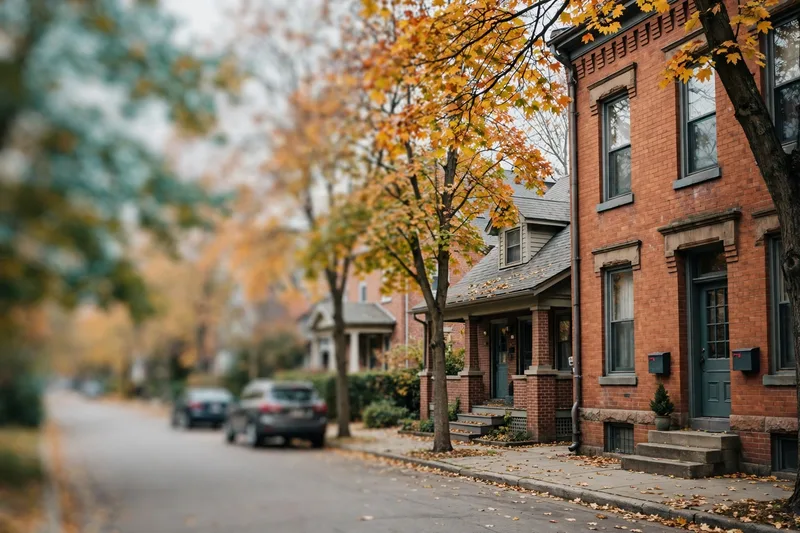
Water damage risk in Edgewater is not the same on every block. Edgewater runs between Foster Avenue to the south and Devon Avenue to the north, with Lake Michigan to the east and Ravenswood Avenue to the west. The streets off the grid, Sheridan Road, Broadway, Clark Street, Ashland Avenue, Bryn Mawr Avenue, Thorndale Avenue, Granville Avenue, Ardmore Avenue, Kenmore Avenue, Winthrop Avenue and Glenwood Avenue, are where the homes sit.
Senn Park sits at 5887 North Ridge Avenue, Berger Park sits at 6205 North Sheridan Road, and the Edgewater Beach Apartments, built in 1928, stand at 5555 North Sheridan Road. The neighbourhood borders Rogers Park to the north, Andersonville to the southwest, and Uptown to the south, and Sheridan Road runs the whole lakefront edge, with its high-rise condos and courtyard buildings facing the lake.
The homes here are mostly brick courtyard apartment buildings from the 1920s, high-rise condos along Sheridan Road and the lakefront, brick two-flats, and single-family homes in Lakewood-Balmoral, with brick masonry, poured concrete basements and flat roofs, and newer brick and frame buildings from later decades. The courtyard buildings are the neighbourhood's signature: two and three storey brick buildings around a shared courtyard, built in the 1920s, with shared walls, shared plumbing risers and shared drains.
A burst riser in a courtyard building can soak several units at once, because the water runs down the riser and through the floors. Brick two-flats have the same shared-wall problem on a smaller scale: a burst pipe on the second floor can soak the first floor and the garden unit below it.
The high-rise condos along Sheridan Road add one more problem: a leak on an upper floor can run down through many units before anyone sees it, and the building, the association and the unit owners will need to agree on who pays for what. Bungalows and single-family homes in Lakewood-Balmoral have full basements under a single storey, and the basement is where the water goes first. Flat roofs pond water where the drain is blocked, and the leak shows up far from the blockage.
The older homes sit on brick and rubble footings, with vitrified clay laterals, cast iron stacks and copper supply lines, and solid oak and maple hardwood floors. Old clay sewer laterals crack and shift, and tree roots find the cracks. If your lateral is old clay, ask a licensed sewer contractor to televise it before the next storm, not after it.
Garden units are the first to take water, because they sit below street level and their windows are at grade. A heavy rain fills the window wells, and the water comes through the window or the wall. Poured concrete full basements are the next most exposed, because the water finds the joint where the wall meets the floor. The water table sits high this close to Lake Michigan, so the ground stays wet longer here than it does further inland, and the sump pump works harder.
Condo and HOA buildings add one more problem: the water may come from a common element, such as a roof, a riser or a shared drain, and the association and the unit owner will need to agree on who pays for what. That is why the landlord, tenant and condo section on this page matters, and why we document the source of the water in writing.
The streets matter too. A basement on a low side street will take water before a basement on a higher street. If your street has flooded before, it will flood again, and the fix is to find the entry point and close it, not to hope the next storm is smaller. The main ZIP code for Edgewater is 60660, and 60640 covers the southern part of the neighbourhood near Foster Avenue. If your address is in either ZIP code, we serve you from the same number, (773) 570-9869. We answer 24/7.
Sump pumps in Edgewater: the one machine that has to work
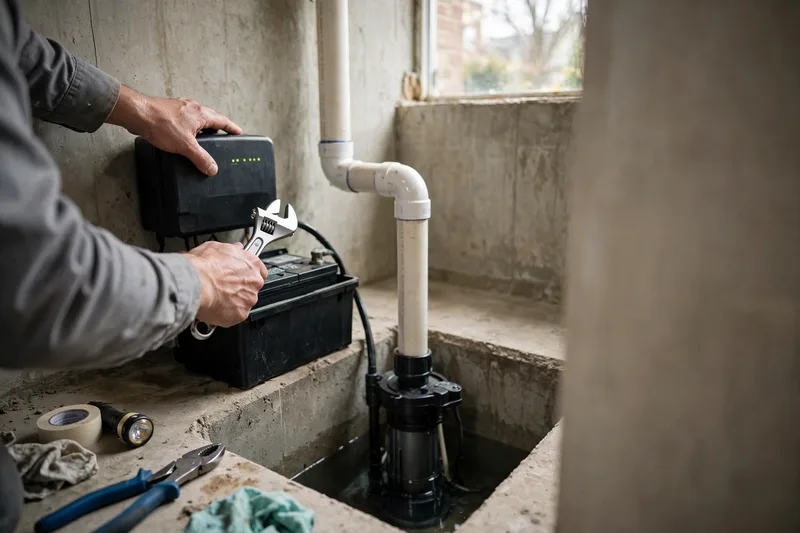
Most Edgewater basements have a sump pump, and most Edgewater basement floods start with a sump pump that stopped. The pump is a simple machine, and it fails in simple ways: the float switch sticks, the discharge line freezes, the check valve wears out, or the power goes out in the very storm that fills the pit. A pump that has not been tested in a year is a pump you do not know about. The water table sits high this close to the lake, so an Edgewater pump runs more often than a pump further inland, and it wears out sooner.
Test the pump every few months. Pour a bucket of water into the pit and watch the pump run. If it does not run, call us before the next storm, not after it. A battery backup is the cheapest insurance a basement has. It keeps the pump running through a power cut, and it is the one upgrade we recommend to every Edgewater homeowner we meet. A second pump in the same pit is the next step up, and it covers the day the first pump dies.
Watch the discharge line in winter. A discharge line that freezes shut will back the water into the pit and flood the basement, even with a working pump. Make sure the line drains to a place where the water will not freeze and run back. If the pump runs constantly in dry weather, the check valve may be bad, and the water is running back into the pit as fast as the pump pushes it out. Garden units are the most exposed, because the pump is the only thing between the garden unit and the street water, so a garden unit without a working pump and a battery backup is a flood waiting for a storm.
Three kinds of water, three kinds of cleanup
Not all water is the same. Clean water from a burst pipe is safe to touch. Grey water from a washing machine or a dishwasher is dirty but not sewage. Black water from a sewer is contaminated and dangerous. The kind of water decides what we clean, what we throw out, and how we protect your family.
| Category | Where it comes from | What it means for your home |
|---|---|---|
| Category 1: clean water | A burst pipe, a supply line, a water main break, rain through a roof leak. | Safe to touch. Dry fast and most materials can be saved. |
| Category 2: grey water | A washing machine, a dishwasher, a toilet overflow without solids, a sump pump overflow. | Dirty, and it can carry bacteria. Carpet pad and soft goods usually have to go. |
| Category 3: black water | A sewer backup, a toilet backup with solids, flood water from the street. | Contaminated. Do not touch it with bare hands. Porous materials usually have to go. |
The category can change while the water sits. Clean water left for two days becomes grey water, because bacteria grow in it. Grey water left for two days becomes black water. That is why the first day matters so much, and why we extract fast and dry fast on every job.
Flooded basement in Edgewater? Why it floods here
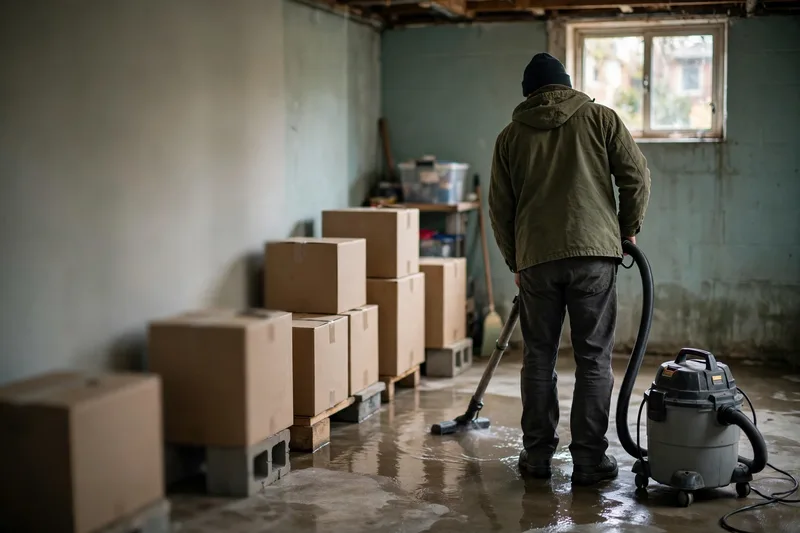
Water damage restoration edgewater calls about flooded basements usually have one of four causes, and each one needs a different fix. First, the sump pump failed, the float switch stuck, or the power went out in the storm. Second, the sewer backed up through a floor drain or a toilet. Third, heavy rain fell faster than the ground and the drains could take it, and the water found the basement windows, the door, or a crack in the wall. Fourth, a burst pipe or a failed appliance filled the basement from the inside.
There is no named Edgewater flood event with a date, street or damage figure on the City of Chicago's own site, so this page names none from the City. What the record does show is that Edgewater basements flood the same way the rest of the Far North Side floods: a heavy rain falls faster than the drains can take it, the combined sewer surcharges, and the water comes back through a basement floor drain, or the sump pump stops in the power cut that comes with the storm.
The water table sits high this close to Lake Michigan, so the ground stays wet longer here, and the sump pump works harder. On 11 September 2022, residents of Edgewater reported basement flooding near Ashland Avenue and Pratt Boulevard, with one report putting the rain at four and three quarter inches in half an hour.
No company and no street address were named, so it is not printed here as a verified job, but the homes are the same age and the same build as the homes across the Far North Side, the sewers are the same combined system, and the storm sat over the whole North Side, so the same risk sits here. In the next neighbourhood north, Rogers Park, a garden-unit apartment flooded with about three to four feet of water that same morning, with the water bursting open the front door, according to a resident's post.
That is Rogers Park, not Edgewater, and it is labelled as such. If your basement is wet now, call us at (773) 570-9869. Do not wait to see if it dries on its own, because a wet basement does not dry on its own. The water soaks into the drywall, the flooring and the framing, and the moisture left inside is what grows mold. We extract the water the same day, set the drying equipment, and take moisture readings every day until the house is dry.
One more thing to know about a flooded basement in Edgewater: the water that came from the sewer is not the same as the water that came from a burst pipe. Sewer water is contaminated, and anything porous it touched usually has to be thrown out. Clean water caught fast can often be dried in place. If you are not sure which kind of water you are standing in, stay out of it and call us. We test before we touch, and we tell you what we find before we start.
Water removal in Edgewater: fast, complete and documented
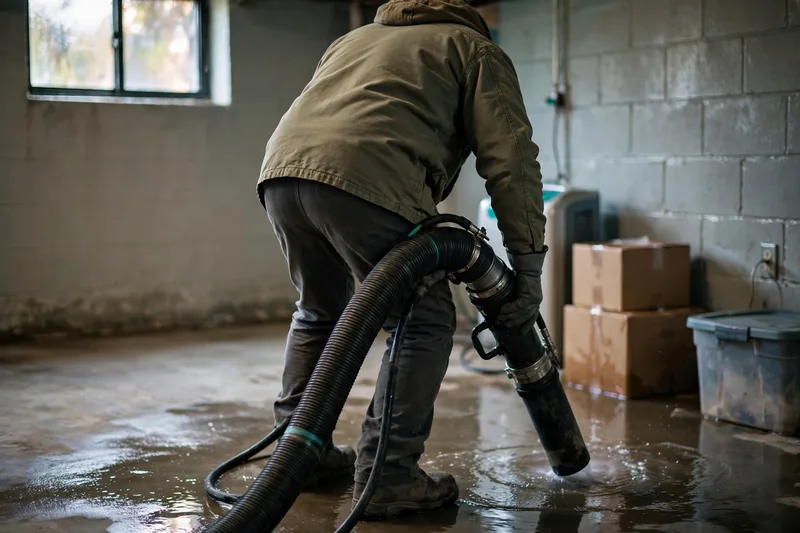
Water damage restoration edgewater removal is the first step, and it is the step that decides how much of your home survives. We pump the standing water out with a truck-mounted extractor, then we vacuum the floors and pull the water out of the carpet and the pad. On a sewer backup we use sealed equipment, because the water is contaminated and we do not want it in the air of your house.
We photograph the water line on the walls, the wet floor and each damaged item before we move it. These photos are the start of your insurance claim, and they are the proof your adjuster will ask for. We also write down what we found, where the water came from, and how deep it was. The written record is part of the job, not an extra.
Do not try to remove a deep flood yourself with a household wet vacuum. A household vacuum cannot move the volume of water in a flooded basement, and it cannot lift the water out of the carpet pad or the subfloor. Call us, and let the truck-mounted equipment do the work. If the basement is still taking on water, do not wait for it to stop: call us while the water is still coming in, and we will tell you what to shut off and what to stay away from.
Flood cleanup in Edgewater: what we clean, and what we throw out
Flood cleanup starts with the water out, and then it splits into two lists: what we clean and what we throw out. Hard surfaces can usually be cleaned and disinfected. Porous materials usually cannot, once the water was sewage or sat for more than a day or two.
We clean and disinfect the floors, the lower walls, and any hard surface the water touched. We remove the carpet pad, the insulation, and any drywall that stayed wet. We bag the waste and take it out of the house, so it does not sit in your garage and grow mold. We do not throw anything away before we photograph it, because your insurer needs the photos and you need the list.
If the water came from the sewer, the cleanup is different. We extract with sealed equipment, wash the hard surfaces with a disinfectant, and remove anything porous the water touched. Call 311 as well, or file a report at 311.Chicago.gov, so the City of Chicago Department of Water Management knows the sewer backed up on your street. The City is the right call for a sewer backup, because the Department of Water Management handles all water service requests through the 311 system, including flooding, broken pipes outside your home and water on the street.
Drying by readings: how we know the house is dry
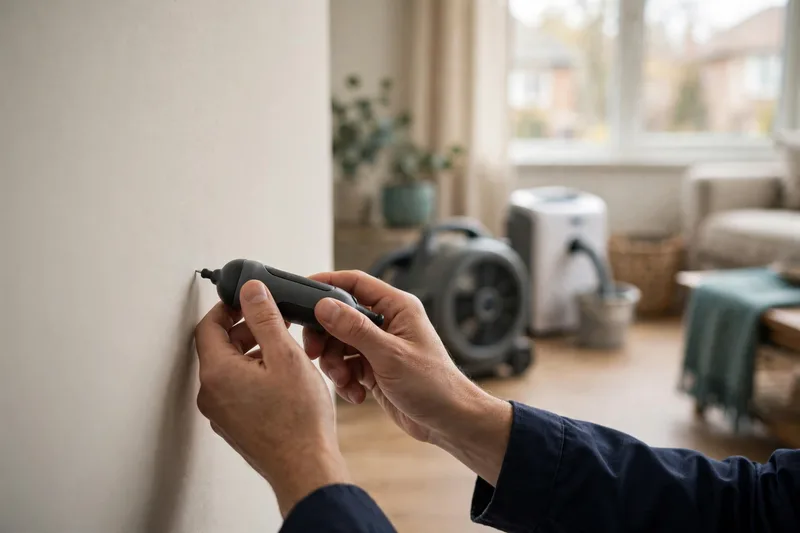
Water damage restoration edgewater drying is done by readings, not by feeling. We set air movers to push dry air across the wet surfaces, and a dehumidifier to pull the moisture out of the air. Then we take moisture readings every day with a meter, and we write the numbers into a drying log. We stop the drying only when the readings are back to dry, and we show you the numbers.
As a general guide, most homes dry in three to seven days once the water is out and the equipment is running. A deep soak into hardwood, plaster or a finished basement can take a week or more. Plaster walls need the same care as drywall: plaster can feel dry on the face while the lath behind it is still wet, so the meter decides, not your hand. Brick two-flats, courtyard buildings and old bungalows have plaster and lath walls, and the plaster holds water longer than new drywall, so the drying takes longer and the readings matter more. Do not switch the equipment off early, because the walls look dry long before they are dry inside, and the moisture left inside is what grows mold.
| Material | General guide | What the meter tells us |
|---|---|---|
| Carpet and pad, clean water | Two to four days | The pad is dry through, not just the carpet face. |
| Drywall, clean water | Three to five days | The wall cavity is dry, not just the surface. |
| Plaster and lath, clean water | Five to seven days | The lath behind the plaster is dry. |
| Hardwood floor, clean water | Five to ten days | The boards are flat again and the subfloor is dry. |
| Finished basement, any water | One week or more | Every wall and floor is dry to the readings. |
| Sewage water, any material | Longer, and the porous material is removed first | The hard surfaces are clean and the readings are dry. |
These are general guides, not promises. The meter decides on your house, and the drying log is the proof. Your insurer will ask for the log, and we give you a copy.
Water mitigation in Edgewater: stop the damage from spreading
Water mitigation means stopping the damage from spreading while the drying runs. We stop the water at the source, we extract the water, we move the wet materials out of the way, and we set the drying equipment. The goal is simple: nothing that is dry now should be wet tomorrow.
Mitigation starts in the first hour. We shut off the main water valve if a pipe burst. We lift the furniture, the boxes and the electronics to dry ground. We pull the wet carpet pad and the wet insulation out of the house, so they do not feed mold. We set the air movers and the dehumidifier, and we take the first moisture readings, so the drying log starts on day one.
Mitigation is not the repair. The repair comes after the drying, when the readings say dry. A repair started on wet walls will fail, and the paint will peel, the flooring will buckle, and the mold will come back. We do not start the repair until the meter says the house is dry.
Water damage repair in Edgewater: what gets fixed
Water damage repair starts only when the drying is done. We replace the drywall that was cut out, we replace the flooring that could not be saved, we replace the trim and the baseboards, and we repaint. The rooms go back the way they were, dry to the readings.
Some materials can be saved, and some cannot. Drywall that stayed wet for more than a day or two usually has to be cut out above the water line. Carpet that was wet with clean water can often be dried in place, but carpet pad that was wet with sewage usually has to go. Hardwood floors that cupped may need sanding and refinishing, or they may need to be replaced. We test with a moisture meter before we cut anything, and we show you the readings so you can see why.
Every repair is photographed and written into the log. Your insurer will want the photos, the drying log and the scope of work, and we give you all three. If the repair needs a permit, we tell you before the work starts. Sewer work in Chicago needs a permit, and the permit is only issued to a licensed drainlayer licensed with the Department of Buildings. Plumbing contractors may obtain a courtesy drainlayer licence, in force since the first of January 2022. All of the work is inspected by the Department of Water Management, and you can ask the Department of Buildings about the permit before the work starts, at 312-744-3449.
Burst pipe in Edgewater: what to do in the first hour

A burst pipe can fill a basement in an hour. Shut off the main water valve first, then turn off the power to any room with standing water. Call us at (773) 570-9869. Move what you can save to dry ground and photograph everything before you move it. Do not wait for the water to stop on its own.
When do pipes burst in Edgewater? In a hard freeze, when the cold lasts for days and the pipes sit in an unheated wall, a cold basement or a crawl space. Old cast iron and galvanized pipes split at the joints first, and the joints are the first place to check in a freeze. You can tell a pipe burst by the sound of running water when no tap is open, by water coming through a ceiling or a wall, by a sudden drop in water pressure, or by a puddle where there was none.
A pipe that froze once will freeze again in the next cold snap unless the pipe is insulated or the cold air is stopped. Pipes can freeze in three to eight hours of sub-freezing temperatures, and they can burst within hours of freezing, or later, when the ice thaws and the pressure spikes. In a courtyard building or a high-rise condo, a burst riser can soak several units at once, because the water runs down the riser and through the floors before anyone sees it.
No named Edgewater burst pipe video, thread or job with a street address and a company could be verified on any platform, so this page names no other burst pipe case. The one burst pipe case we could verify anywhere near Edgewater is the one CBS News reported on 29 December 2022, when a burst pipe at 2415 West Peterson Avenue sent water pouring out of a window on the North Side. That is West Rogers Park, not Edgewater, and it is labelled as such.
Prevent the next one. In a hard freeze, leave the taps on a slow drip and keep the heat on, even in rooms you do not use. Open the cabinet doors under the sinks on outside walls so warm air can reach the pipes. Insulate the exposed pipes in the basement and the crawl space. If you leave the house empty in winter, shut off the main and drain the pipes, or have someone check the house.
Do you call a plumber for a burst pipe? A plumber can fix the pipe, and we can dry the house and repair the damage. Call us first if the water is already in the house, because the drying has to start in the first hours, and the pipe fix alone will not dry the walls. A plumber fixes the pipe and charges for the pipe repair; we dry the house and repair the damage, and we work with your insurer on the claim. If the water is near the electrical panel, turn off the power to that room and stay out until we tell you it is safe. For any emergency, call 911.
Sewage cleanup in Edgewater: the City, the 311 call and the cleanup
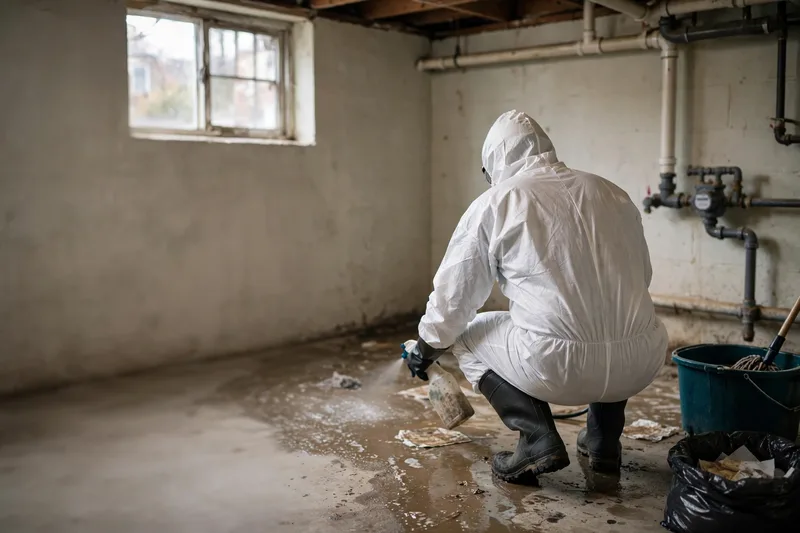
A sewer backup in Edgewater is sewage water, and sewage water is contaminated. Do not touch it with bare hands. Call us at (773) 570-9869, and call 311 as well, or file a report at 311.Chicago.gov, so the City of Chicago Department of Water Management knows the sewer backed up on your street. The Department handles all water service requests through the 311 system, including flooding, broken pipes outside your home and water on the street.
We extract the sewage with sealed equipment, wash the hard surfaces with a disinfectant, and remove anything porous the water touched, including the carpet pad and any drywall it soaked. We bag the waste and take it out of the house. We dry the space with the same readings we use on every job, and we do not stop until the readings say dry.
If the water is in your basement when it rains, or your toilets back up, the City runs a Private Sewer Drain Program that can repair a break in the public way if the guidelines are met. The route starts with a Water in Basement service request through 311 or 311.Chicago.gov, which goes to the Department of Water Management.
When you file it, the City asks for the address, whether the water is dirty or clean, the source of the water, how many inches there are, and whether it is the basement, the crawl space or the ground floor. Do not use that service request if the water came in through a window, a wall, a doorway, a roof or another opening that is not a sewer or drain backup. A City crew checks the street main first.
If the main is fine, the homeowner hires a licensed sewer contractor to rod and televise the line, with a Department of Water Management inspector present. If the break is on private property, the homeowner pays a licensed contractor, including the full restoration. If the break is in the public way and the guidelines are met, the Department of Water Management schedules and pays for the repair. The programme is for private residences with up to four units, and the City oversees it through the Department of Water Management. Ask the City for the current terms before you start work.
Emergency water damage in Edgewater: your first hour
Water damage restoration edgewater jobs start the same way, day or night: you call, we talk you through the first hour, and a crew comes to you. The first hour is when the water is shallowest, the walls are driest, and the most can be saved. The second hour is already harder, and the third day is when the mold starts. Call us first at (773) 570-9869, any hour of the day or night, and tell us where the water is and how deep it is.
If a pipe burst, shut off the main water valve. If the water came from the street or a sewer backup, call 311 as well, or file a report at 311.Chicago.gov, so the City of Chicago Department of Water Management knows the sewer backed up on your street. If you are outside Chicago, call 312-744-5000 instead of 311. If the water is near the electrical panel, turn off the power to that room and stay out until we tell you it is safe. For any emergency, call 911. There is no separate after-hours water or sewer emergency number published by the City, so after hours call us first and we will tell you what to do.
We answer 24/7. When you call at night, you get a person, not a machine, and the person you get will talk you through the first hour while a crew is on the way. We do not ask you to wait until morning, because the water does not wait until morning either. We do not promise an arrival time in minutes on this page, because no honest company can promise one before it knows where the crew is and what the streets are like. What we promise is that we answer, we talk you through the first hour, and we send a crew.
Every service we provide in Edgewater
One number covers every water problem in Edgewater: (773) 570-9869. The table below lists each service we provide in the neighbourhood, and what it covers.
| Service | What it covers |
|---|---|
| Water damage edgewater | Emergency help for any water loss in an Edgewater home, day or night. |
| Flooded basement edgewater | Water extraction, drying and cleanup for a flooded basement or garden unit. |
| Burst pipe edgewater | Water extraction and drying after a burst or frozen pipe, and repair of the damage. |
| Mold remediation edgewater | Inspection, containment, removal and drying after mold follows water damage. |
| Sewage cleanup edgewater | Sealed extraction, disinfection and removal after a sewer backup. |
| Water removal edgewater | Truck-mounted extraction of standing water from basements, rooms and floors. |
| Flood damage edgewater | Cleanup, drying and repair after storm flooding or a sewer surcharge. |
| Water damage company edgewater | A local crew that answers 24/7, dries by readings, and documents for insurance. |
| Water damage repair edgewater | Drywall, flooring, trim and paint after the drying is done and the readings say dry. |
| Emergency water damage edgewater | The first-hour response: the call, the shutoff advice, and the crew on the way. |
| Basement flooding edgewater | The cause found first, then the water out, then the drying, then the fix. |
| Flood cleanup edgewater | What we clean, what we throw out, and the photos and log for your claim. |
What caused it? A decision tree for Edgewater water damage
Four causes bring water into an Edgewater home, and each one needs a different first call. Work through the questions in order, and you will know who to call first, who pays, and what to do differently.
| What you see | Likely cause | Who to call first | Who usually pays |
|---|---|---|---|
| Water coming up through a floor drain or a toilet, with a bad smell, when it rains | Sewer backup, from the combined sewer surcharging in wet weather | Us at (773) 570-9869, and 311 for the City record | Your insurer if you hold sewer backup cover; the City only if the break is in the public way and the programme guidelines are met |
| Water on the street and in the basement after a heavy rain, no smell | Storm flooding, rain falling faster than the drains can take it | Us at (773) 570-9869, and 311 if the street flooded | Usually you, unless you hold separate flood insurance; standard homeowners insurance does not cover flooding from outside the house |
| A sudden flood of clean water, a hissing pipe, water through a ceiling | Burst pipe or split supply line | Us at (773) 570-9869, after you shut off the main water valve | Your homeowners insurance, if the burst was sudden and accidental |
| A slow damp patch, a stain growing over weeks, a musty smell | Appliance leak or slow pipe leak behind a wall | Us at (773) 570-9869, for the drying and the moisture readings | Your insurer may pay for the damage but not for the worn hose or pipe itself; gradual damage is usually not covered |
If you are not sure which cause it is, call us and describe what you see. We test with a moisture meter before we open a wall, and we tell you what we find before we start. Do not guess the cause and start the wrong fix. A backflow valve will not fix a burst pipe, and a new sump pump will not fix a sewer backup.
Landlord, tenant or condo: who pays in Edgewater
Edgewater has two-flats, three-flats, six-flats, courtyard buildings and high-rise condos along Sheridan Road, and in a multi-unit building the water may cross the line between one home and another. Who pays depends on who owns the pipe and who caused the damage.
If you are a landlord, you are responsible for fixing the physical pipe and the structural damage. If a pipe bursts because of age, rust or normal wear, the property owner must cover the repair. If a tenant turned off the heat in a freeze, or left the windows open in a cold snap, the tenant can be held liable. Landlords are not responsible for replacing a renter's damaged personal property, such as furniture, electronics or clothing.
If you are a tenant, your landlord must fix the building, and your renters insurance is what covers your belongings and any temporary living costs. If you rent in Edgewater and a pipe bursts, call your landlord at once, photograph the damage, and call us at (773) 570-9869 for the drying. We document the loss, and we give the drying log to whoever needs it, landlord or tenant.
Renters insurance usually does not cover flooding from outside the house: that needs separate water backup cover, and it does not cover water that came in from outside through a wall, a window or a door. Under the Chicago Residential Landlord and Tenant Ordinance, a tenant who suffers a burst pipe should document everything, put demands in writing, call 311, and ask about being moved or about a hotel, and a tenant may be able to withhold rent or cancel the lease in some cases, but the facts decide, so get advice before you act. Ask your insurer what your policy covers before the next storm, not after it.
If you own a condo, the policy form matters. An HO-3 policy covers a house and its contents, while an HO-6 policy covers a condo unit, and in a condo the split is usually this: pipes that serve only one unit and sit inside the walls are usually the responsibility of that unit owner, while pipes that serve more than one unit, such as vertical risers and horizontal mains, are usually common elements that the association maintains. The exact split depends on the association's declarations and bylaws, so read them before you argue about it.
We document the source of the water in writing, so the association and the insurer can see where the water came from and what it damaged. If the leak came from an upstairs flat, liability depends on what caused the leak and who owns and controls the source: a careless upstairs tenant or owner is liable for a leak caused by carelessness, while a building fault is usually the association's or the landlord's problem.
In a high-rise condo, a riser leak can soak many units, and the building's own shutoff and the association's emergency number are the first calls after ours.
Winter in Edgewater: the freeze and burst pipe calendar
Most Edgewater burst pipes happen in the cold months, and most of them could have been prevented in the autumn. Work through this calendar before the first hard freeze, and again in the spring.
October: before the cold
Insulate the exposed pipes in the basement and the crawl space. Check the sump pump discharge line and make sure it drains to a place where the water will not freeze and run back. Test the sump pump by pouring a bucket of water into the pit and watching it run. Drain the outdoor taps and put the hoses away.
November to December: the first freeze
Keep the heat on in every room, even rooms you do not use. Open the cabinet doors under the sinks on outside walls so warm air can reach the pipes. Leave the taps on a slow drip on the coldest nights. Check the basement windows and the window wells, and keep the wells clear. The pipes in Edgewater are the same age and the same build as the pipes in the rest of the Far North Side, so the same risk sits here: old cast iron and galvanized pipes, split at the joints in a cold snap, and clay laterals that crack and shift.
January to February: the hard freeze
This is when pipes burst in Edgewater. Pipes can freeze in three to eight hours of sub-freezing temperatures, and they can burst within hours of freezing, or later, when the ice thaws and the pressure spikes. If you leave the house empty in winter, shut off the main and drain the pipes, or have someone check the house. If a pipe freezes, do not try to thaw it with an open flame. Call us at (773) 570-9869 and we will tell you what to do.
March to April: the thaw
Thawing is when the burst shows up. A pipe that froze in January may not leak until the ice melts in March. Walk the basement, the kitchen and the bathrooms after the first warm week, and look for a damp patch, a stain, or a musty smell. Test the sump pump again, because the spring rain is coming, and the pump has to work.
What water damage restoration costs in Edgewater: the factors
We never quote a price before we see the loss, and we never print prices on this site. The price of a job depends on four things: how much water there is, what kind of water it is, how far it spread, and how long it sat. A small clean-water leak in one room costs far less to fix than a sewer backup across a finished basement. A loss caught in the first hour costs far less than the same loss found three days later, because the drying is shorter and less material has to be removed.
After the first visit you get a written scope of the work and a drying plan, and we work with your insurer on the claim. If a company quotes you a price over the phone before it has seen the water, be careful. That company is guessing, and the guess will change when it arrives. The scope of work is the document that matters: it says what will be extracted, what will be dried, what will be removed and what will be rebuilt, and it is the document your adjuster will ask for.
There is no City rebate, grant or cost-share for water damage restoration, flood proofing, backflow valves or sump pumps in Edgewater that we could find on the City's own site, and this page prints none. The City of Chicago Private Sewer Drain Program is a repair programme, not a rebate or a grant, and it only pays for a break in the public way that meets the programme guidelines. We could not find any such programme on chicago.gov, so this page does not print it as a City fact. Ask the City through 311 for the current terms before you start work.
Insurance after water damage in Edgewater: what usually pays
Water damage restoration edgewater claims usually start with three calls: to us, to 311 if the sewer or street flooded, and to your insurer. Call your insurer in the first hour, not the first week, because the claim needs the photos, the drying log and the scope of work, and all three are made in the first days.
Sudden and accidental water damage, such as a burst pipe or a failed appliance hose, is usually covered. Flooding from outside the house, such as street flooding or heavy rain, usually needs separate flood insurance. Sewer backup is often a separate add-on with its own limit, and that limit is usually far below the cost of a bad backup, so read your policy and know the number before the next storm. Waterproofing and flood proofing are usually seen as maintenance, and most policies do not pay for them.
Read your policy, call your insurer early, and keep every photo and receipt. We document the loss the way adjusters ask for it, with photos, moisture readings and a drying log, and we give you a copy you can hand to your adjuster.
One limit catches Edgewater homeowners by surprise: flood insurance under the National Flood Insurance Program treats basements differently from the rooms above ground. Coverage for a basement is narrow, and many basement items, such as finished walls, floors and personal property stored below ground, are not covered the way they are upstairs. If you hold flood insurance, read the basement terms before the next storm, not after it. If you own a condo, the form matters too: an HO-3 policy is written for a house, while an HO-6 policy is written for a condo unit, and the two forms cover different things, so check which form you hold and what it says about water, sewers and common elements.
If your insurer asks for a second opinion, or if the claim is disputed, the drying log is the document that settles it. The log shows the readings day by day, and it shows when the house was dry. A claim without a drying log is a claim without proof, and a claim with a drying log is a claim with a record. We write the log on every job, and we give you a copy.
How long does water damage restoration take in Edgewater?
Water damage restoration edgewater jobs follow the same order on every loss: extract, dry, document, then repair. As a general guide, most homes dry in three to seven days once the water is out and the equipment is running. A deep soak into hardwood, plaster or a finished basement can take a week or more. Brick two-flats, courtyard buildings and old bungalows have plaster and lath walls, and the plaster holds water longer than new drywall, so the drying takes longer and the readings matter more. The repair starts only when the moisture readings say dry, and a repair started on wet walls will fail.
The claim runs on its own clock too. Your insurer will want the photos, the drying log and the scope of work, and we give you all three. The repair can take one to four weeks after the drying, depending on how much material was removed and how much has to be rebuilt. A small job in one room can be repaired in a few days. A finished basement with a sewer backup can take a month or more from the first call to the last coat of paint. Call your insurer in the first hour, not the first week, because the claim starts when the loss starts.
Mold remediation in Edgewater: the 24 to 48 hour rule
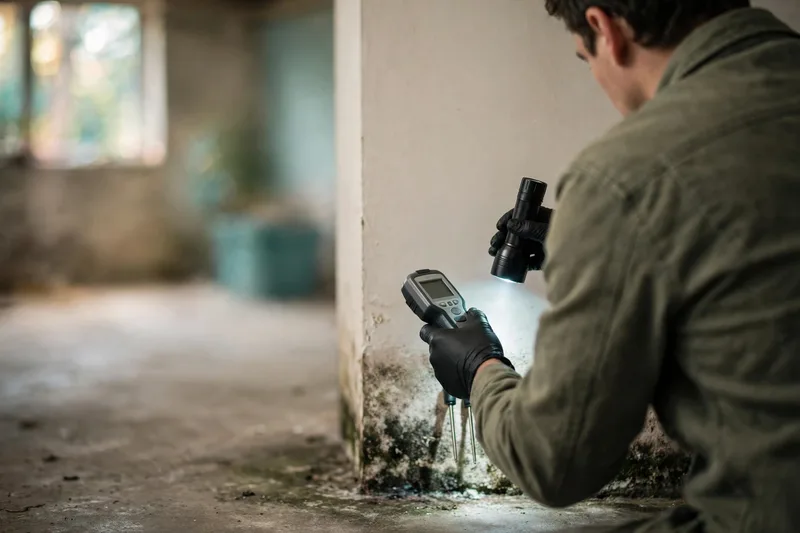
As a general guide, mold can start to grow within 24 to 48 hours on a wet surface, and it can become visible within 48 to 72 hours. That is why the first day matters more than any other. The US EPA guidance is to dry water-damaged materials within 24 to 48 hours. If the water sat for more than two days, or if the room smells musty, we look for mold during the drying and tell you what we find.
If you see mold, do not scrub it dry and do not bleach it and call it done. Bleach does not fix mold in drywall or wood, and dry scrubbing spreads the spores through the house. Mold hides behind drywall, wallpaper and panelling, on top of ceiling tiles, beneath carpet and padding, around water pipes, on walls behind furniture, in ductwork condensation, and in roofing from leaks or poor insulation. Removing wallpaper can release a massive amount of spores.
Even dead mold may cause allergic reactions, and it is not enough to kill mold: it must be removed. The S520 standard for professional mold remediation says the same: removal, not killing, is the job. In Illinois, mold remediators register with the Illinois Department of Public Health under Part 835, in force since 23 September 2026, with a grace period to 30 September 2027, and you can ask any company for its registration before you hire it. We do not claim a registration for ourselves. Ask us and we will tell you plainly. The City of Chicago publishes no mold guidance page that we could verify on its own site, so this page prints none.
Mold after water damage is usually found in the same places the water went: behind the baseboards, under the flooring, in the wall cavity, and in the insulation. We test with a moisture meter before we open a wall, and we show you the readings so you can see why. If mold is found, the affected material is removed, the area is cleaned, and the drying continues until the readings say dry. The mold job and the water job are one job, and they are done together, not one after the other.
Edgewater flood record: what we could verify, and what we could not
Water damage restoration edgewater pages should name the floods they can prove, and say plainly where the record stops. This is what the record shows, and what it does not show. There is no named Edgewater flood event with a date, street or damage figure on the City of Chicago's own site, so this page names none from the City. None of those was verified on the City's own site in our own checks, so they are not printed here as City facts.
| Date | What happened | What was verified |
|---|---|---|
| 11 September 2022 | Heavy rain, basement flooding near Ashland Avenue and Pratt Boulevard | Residents reported the flooding on a public forum. One report put the rain at four and three quarter inches in half an hour. No company and no street address were named, so it is not printed here as a verified job. |
That is the whole verified record. One event, one date, one street corner, no company, no address. If your home flooded on a day not listed here, that does not mean it did not happen. It means the record we could check did not name it. If you have a flooded basement now, call us at (773) 570-9869 and we will write your loss into the record properly, with photos, readings and a drying log.
Found it late? What to do when the water has been sitting
A leak found late is still a job we can do, but it is a different job. If the water has been sitting for days, the mold has started, the drywall is wet through, and the flooring may not come back. The steps are the same, in the same order: call us, stop the water, extract, dry, document, then repair. The difference is the drying takes longer, more material has to be removed, and the mold has to be handled as part of the job.
Do not try to dry a late find with a fan and a hope. A household fan will dry the surface and leave the wall cavity wet, and the mold will grow where you cannot see it. We test with a moisture meter before we open a wall, and we show you the readings so you can see why. If the water sat for more than two days, or if the room smells musty, we look for mold during the drying and tell you what we find.
If you see mold, do not scrub it dry and do not bleach it and call it done. Bleach does not fix mold in drywall or wood, and dry scrubbing spreads the spores through the house. Even dead mold may cause allergic reactions, and it is not enough to kill mold: it must be removed. A general guide is that mold can start to grow within 24 to 48 hours on a wet surface, and it can become visible within 48 to 72 hours.
The US EPA guidance is to dry water-damaged materials within 24 to 48 hours, and that is why the first day matters more than any other.
How do you know if a wall is wet inside? The wall feels cool to the touch, the paint bubbles or peels, the baseboard swells, or the room smells musty. A moisture meter settles it. We use the meter on every job, and we show you the numbers. If the wall is wet inside, we cut out the wet drywall above the water line, remove the wet insulation, and dry the cavity before we rebuild. If you suspect a pipe is leaking behind a wall, call us before you open it. We find the leak with a meter and a camera, and we tell you what we find before we cut.
Five habits that keep an Edgewater home dry
The cheapest water damage job is the one that never happens. Five habits, done every year, keep most Edgewater homes dry. None of them needs a contractor, and all of them cost less than one flood.
- Test the sump pump. Pour a bucket of water into the pit every few months and watch the pump run. If it does not run, call us before the next storm. Fit a battery backup, because the pump has to work in the power cut that comes with the storm.
- Clear the drains and the gutters. Keep the gutters, the downspouts and the window wells clear, and make sure the downspouts drain away from the house. A blocked downspout sends the water straight to the foundation.
- Check the pipes before the freeze. Insulate the exposed pipes in the basement and the crawl space, and keep the heat on in every room through the winter. Open the cabinet doors under the sinks on outside walls so warm air can reach the pipes.
- Look at the basement in the spring. Walk the basement after the first warm week and look for a damp patch, a stain, or a musty smell. A stain that grows over weeks is a leak behind a wall, and it is cheaper to fix in the spring than in the summer.
- Know your policy. Read your insurance policy before the next storm, not after it. Know whether you hold sewer backup cover, what the limit is, and whether you hold separate flood insurance. If you are not sure, call your insurer and ask.
How to choose a water damage company in Edgewater
Three questions tell you whether a company is worth hiring. First, does it answer the phone at night? A company that does not answer at 2 a.m. is a company that will not be there when the water is in. Second, does it dry by readings? A company that dries by feeling will leave the walls wet inside, and the mold will come back. Third, does it document the loss? A company that does not photograph the damage and write a drying log is a company that will leave you to argue with your insurer on your own.
Ask the company these questions before you hire it: Do you answer 24/7? Do you take moisture readings every day, and will I see the numbers? Will you photograph the damage and give me a drying log? Are you licensed and insured? Can I ask you for your Illinois Department of Public Health mold registration? If the company cannot answer those questions plainly, find another company. In Illinois, mold remediators register with the Illinois Department of Public Health under Part 835, in force since 23 September 2026, with a grace period to 30 September 2027, and you can ask any company for its registration before you hire it. We do not claim a registration for ourselves. Ask us and we will tell you plainly.
Do not hire on price alone. A company that quotes a price over the phone before it has seen the water is guessing, and the guess will change when it arrives. The scope of work is the document that matters: it says what will be extracted, what will be dried, what will be removed and what will be rebuilt, and it is the document your adjuster will ask for. We give you a written scope after the first visit, and we work with your insurer on the claim.
Why Edgewater homeowners call us
We answer 24/7. We talk you through the first hour while a crew is on the way. We dry by readings, and we show you the numbers. We photograph everything, and we give you a drying log your adjuster will accept. We work in Edgewater every week, and we know the homes, the sewers and the streets. We do not promise an arrival time in minutes on this page, because no honest company can promise one before it knows where the crew is and what the streets are like. What we promise is that we answer, we talk you through the first hour, and we send a crew.
Call (773) 570-9869 now. Tell us where the water is, how deep it is, and whether it smells like sewage. We will tell you what to shut off, what to stay away from, and what to photograph. If the sewer backed up, we will tell you to call 311 as well. If the water is near the electrical panel, we will tell you to stay out until we tell you it is safe. That is the first hour, and it starts with your call.
The City of Chicago playbook: who does what when water floods
When water floods in Edgewater, three bodies do three different jobs. The City of Chicago Department of Water Management owns the water and sewer mains, and it handles all water service requests through the 311 system, including flooding, broken pipes outside your home and water on the street. The Department of Buildings issues the permits for sewer work, and it licenses the drainlayers who do the work. Your insurer pays for the damage to your home, if your policy covers the cause.
The Department of Water Management is led by Commissioner Randy Conner, and its office sits at 1000 East Ohio Street, Chicago, IL 60611, at the Jardine Water Purification Plant, by appointment only. The Department runs the water system that serves more than 42 percent of Illinois residents every day, with more than 4,300 miles of water mains and more than 4,450 miles of sewer mains. The Department of Buildings can be reached at 312-744-3449, at 121 North LaSalle Street, Room 900, Chicago, IL 60612, and it is led by Commissioner Marlene Hopkins.
Sewer Permitting can be reached at 312-744-3155, or by email at. Sewer Inspections for pipes up to six inches can be reached at 312-744-5503, and for pipes of eight inches or more at 312-744-5502. The 311 office sits at 2111 West Lexington Street, Chicago, IL 60612, and it is led by Director Dionne A. Tate. Call 311 toll free, or 312-744-5000 if you are outside Chicago, or TTY 311, or fax 312-744-4149.
Sewer work in Chicago needs a permit, and the permit is only issued to a licensed drainlayer licensed with the Department of Buildings. A drainlayer licence has three classes: Class A for any sewer work, Class B for private-drain repair only, and Class C for videotaping, cleaning, lining, sealing and pumping basements. The licence fee is one hundred and fifty dollars for 2026, with a fifty thousand dollar bond.
The exceptions are small: an in-kind replacement of up to twenty feet, or rodding the line, can be done without a permit if you call 312-744-3155 first and pay the fee within thirty days. Stormwater rules sit under Chapter 11-18 of the Municipal Code of Chicago. A development that disturbs fifteen thousand square feet or more, or creates seven thousand five hundred square feet or more of at-grade impervious surface, or discharges into waters of the state or a separate sewer, needs a stormwater management plan.
Residential developments are exempt from the plan requirement, and the control standard is the hundred-year storm, with one tenth of a foot of freeboard above the hundred-year water surface elevation. The plan review fee is one thousand dollars for a development under fifty thousand square feet, and three thousand dollars or more for a larger one. A variance adds fifty percent, and an amendment within one year costs three hundred and fifty dollars. That three hundred and fifty dollar figure is the stormwater plan amendment fee only.
It is not a six-inch sewer permit fee, and this page does not print it as one. The Lakeview page on this site prints three hundred and fifty dollars as a six-inch sewer permit fee, and that line is a flagged error, not a City fact.
The City's sewers are combined, in the City's own words, and the City has about fifty major diversion points. A combined sewer carries stormwater and wastewater in the same pipe, and in a heavy rain it can surcharge and push water back through a basement floor drain. That is why the City asks for the source of the water when you file a Water in Basement service request: the source decides whether the fix is a City repair, a private repair, or an insurance claim. Do not use a Water in Basement service request if the water came in through a window, a wall, a doorway, a roof or another opening that is not a sewer or drain backup. For any emergency, call 911.
Water damage restoration in Edgewater, by the numbers
Water damage restoration edgewater work is measured in readings, not in promises. This section lists the numbers we can stand behind, and it says where each one comes from.
- 24/7: we answer the phone at any hour, day or night. That is our own service, and it is printed here as our own promise.
- 24 to 48 hours: the time in which mold can start to grow on a wet surface, and the time in which the US EPA guidance says to dry water-damaged materials. A general guide, from the EPA.
- 48 to 72 hours: the time in which mold can become visible on a wet surface. A general guide.
- Three to seven days: the general guide for how long most homes take to dry once the water is out and the equipment is running. A deep soak into hardwood, plaster or a finished basement can take a week or more.
- Three to eight hours: the time in which pipes can freeze in sub-freezing temperatures, and burst within hours of freezing, or later, when the ice thaws and the pressure spikes. A general guide.
- Up to four units: the size of a private residence the City of Chicago Private Sewer Drain Program covers, when the guidelines are met. From the City's own programme page.
- About fifty: the number of major diversion points on the City's combined sewer system, in the City's own words.
- More than 42 percent: the share of Illinois residents the Department of Water Management serves every day, from the Department's own leadership page.
- More than 4,300 miles: the length of the City's water mains, from the Department's own leadership page.
- More than 4,450 miles: the length of the City's sewer mains, from the Department's own leadership page.
Every other number on this page is labelled with its source, or it is a general guide and it says so. No number on this page is invented, and no number is printed as a City fact unless the City's own site says it.
Sheridan Road and the lakefront: the east edge of Edgewater
Sheridan Road runs the whole lakefront edge of Edgewater, from Foster Avenue in the south to Devon Avenue in the north. The high-rise condos and the courtyard buildings face the lake, and the wind off the lake drives the rain harder against the east-facing walls. A roof leak on Sheridan Road is often a wind-driven leak: the rain is pushed under the shingles or through a flashing gap, and the stain on the ceiling is usually far from the leak, so we trace it with a moisture meter before we repair anything.
The lakefront is also where the water table sits highest. The ground stays wet longer here than it does further inland, and the sump pump works harder. The Edgewater Beach Apartments, built in 1928, stand at 5555 North Sheridan Road, and they are the neighbourhood's landmark. The building sits on the lakefront, and its basement takes the same lakefront water as every other building on Sheridan Road. Berger Park sits at 6205 North Sheridan Road, and Senn Park sits at 5887 North Ridge Avenue. Both parks sit on ground that floods in a heavy rain, and the streets around them take water first. If your home sits on Sheridan Road, Broadway or Winthrop Avenue, the water table is the first thing to check, and the sump pump is the second.
The lake level matters too. A high lake pushes the water table up, and a high water table pushes water into a basement faster. If your basement flooded in a high-lake year and stayed dry in a low-lake year, the lake level is part of the cause, and the fix is a working sump pump, a battery backup, and a discharge line that drains away from the house.
Courtyard buildings and condos: water damage in a shared building
Edgewater is a neighbourhood of shared buildings. Courtyard apartment buildings from the 1920s, brick two-flats and three-flats, six-flats, and high-rise condos along Sheridan Road all share walls, plumbing risers and drains. A burst riser in a courtyard building can soak several units at once, because the water runs down the riser and through the floors before anyone sees it. A burst pipe on the second floor of a two-flat can soak the first floor and the garden unit below it. A leak on an upper floor of a high-rise condo can run down through many units before anyone sees it.
If you live in a shared building, the first call after ours is to the building manager or the association. The building's own shutoff is the fastest way to stop the water, and the association's emergency number is the number to call at night. We document the source of the water in writing, so the association and the insurer can see where the water came from and what it damaged. If the leak came from a common element, such as a roof, a riser or a shared drain, the association is usually responsible.
If the leak came from a pipe that serves only one unit and sits inside that unit's walls, that unit owner is usually responsible. The exact split depends on the association's declarations and bylaws, so read them before you argue about it.
Garden units are the most exposed in a shared building. A garden unit sits below street level, its windows are at grade, and a heavy rain fills the window wells and pushes water through the window or the wall. A garden unit without a working sump pump and a battery backup is a flood waiting for a storm. If you own or rent a garden unit, test the sump pump every few months, fit a battery backup, and keep the window wells clear. If the unit flooded once, it will flood again, and the fix is to find the entry point and close it, not to hope the next storm is smaller.
Your adjuster visit in Edgewater: how to prepare
Your adjuster will visit after you file the claim, and the visit goes better if you are ready. Photograph the water line on the walls, the wet floor and each damaged item before you move it. Keep a list of what was damaged, with the age and the purchase price if you know it. Do not throw anything away before the adjuster sees it, or before you have photographed it. Keep every receipt for the emergency work, the drying and the repair.
We give you the three documents the adjuster will ask for: the photos, the drying log with the moisture readings day by day, and the scope of work that says what will be extracted, what will be dried, what will be removed and what will be rebuilt. We are there when the adjuster visits, if you want us to be, and we walk the adjuster through the loss the same way we walked you through it. The drying log is the document that settles a dispute. It shows the readings day by day, and it shows when the house was dry. A claim without a drying log is a claim without proof, and a claim with a drying log is a claim with a record.
Call your insurer in the first hour, not the first week, because the claim needs the photos, the drying log and the scope of work, and all three are made in the first days. Read your policy before the adjuster visits, and know whether you hold sewer backup cover, what the limit is, and whether you hold separate flood insurance. If the adjuster asks for a second opinion, or if the claim is disputed, the drying log is the document that settles it.
Repair checklist: what to check before you sign off
Water damage restoration edgewater repair work is signed off against this checklist, not against a feeling. Before you sign off on a water damage repair in Edgewater, walk the job with us and check each item on this list. If any item is not done, we do not close the job.
- The moisture readings are dry. We show you the drying log, with the readings day by day, and the last reading is dry.
- The wet drywall is cut out. Any drywall that stayed wet for more than a day or two has been cut out above the water line, and the wet insulation has been removed.
- The wall cavity is dry. The meter reads dry inside the wall, not just on the surface.
- The flooring is flat and dry. The hardwood boards are flat again, and the subfloor reads dry. If the boards are still cupped, the drying is not done.
- The mold is gone. If mold was found, the affected material has been removed, the area has been cleaned, and the drying continued until the readings said dry.
- The source is fixed. The burst pipe is repaired, the sump pump is tested and running, the discharge line drains away from the house, and the sewer backup has been reported to 311.
- The photos and the log are in your hands. You have the photos, the drying log and the scope of work, and you have a copy for your insurer.
- The rooms are back the way they were. The drywall, the flooring, the trim and the paint are finished, and the rooms look the way they did before the water.
If any item on this list is not done, the job is not done. A repair started on wet walls will fail, and the paint will peel, the flooring will buckle, and the mold will come back. We do not close a job until the meter says dry and the checklist is complete.
Frozen discharge lines and ice dams: the winter problems
Two winter problems flood Edgewater basements even when the pipes do not burst. The first is a frozen sump pump discharge line. A discharge line that freezes shut will back the water into the pit and flood the basement, even with a working pump. Make sure the line drains to a place where the water will not freeze and run back. If the pump runs constantly in dry weather, the check valve may be bad, and the water is running back into the pit as fast as the pump pushes it out. In a hard freeze, the line can freeze in hours, and the basement floods while the pump runs and runs.
The second is an ice dam on the roof. An ice dam forms when snow melts on a warm roof and refreezes at the eaves, and the water backs up under the shingles and down through the ceiling. The stain on the ceiling is usually far from the dam, so we trace it with a moisture meter before we repair anything. Flat roofs, common on Edgewater two-flats and courtyard buildings, pond water where the drain is blocked, and the leak shows up far from the blockage.
Clear the gutters and the downspouts in the autumn, keep the attic cold, and call us if the ceiling stains. A roof leak in winter is a job for a roofer and a restoration crew, and we work with both. If you see water coming through a ceiling in winter, call us at (773) 570-9869, and we will tell you what to shut off and what to stay away from.
Edgewater street by street: Sheridan
Water damage in Edgewater looks different on each street, because the homes, the ground and the water are different on each street. This section walks the neighbourhood street by street, so you can find your block and see what the risk is there.
Sheridan Road
Sheridan Road runs the whole lakefront edge, from Foster Avenue in the south to Devon Avenue in the north. The high-rise condos and the courtyard buildings face the lake, and the wind off the lake drives the rain harder against the east-facing walls. A roof leak on Sheridan Road is often a wind-driven leak, and the stain on the ceiling is usually far from the leak. The water table sits highest here, the ground stays wet longer, and the sump pump works harder.
The Edgewater Beach Apartments, built in 1928, stand at 5555 North Sheridan Road, and Berger Park sits at 6205 North Sheridan Road. If your home sits on Sheridan Road, the water table is the first thing to check, and the sump pump is the second. A burst pipe in a high-rise condo can soak many units, because the water runs down the riser and through the floors before anyone sees it, and the building, the association and the unit owners will need to agree on who pays for what.
Broadway
Broadway runs north and south through the middle of Edgewater, past the shops, the restaurants and the apartment buildings. The buildings on Broadway are mostly brick two-flats, three-flats and courtyard buildings from the 1920s, with shared walls, shared plumbing risers and shared drains. A burst riser on Broadway can soak several units at once, and a sewer backup on Broadway will push water up through a basement floor drain. The shops on Broadway have basements too, and a flooded shop basement can ruin stock in an hour. If your home or shop sits on Broadway, call us at (773) 570-9869 and we will talk you through the first hour while a crew is on the way.
Clark Street
Clark Street runs north and south on the west side of Edgewater, past the two-flats and the courtyard buildings, and it is the street where the Andersonville border sits to the southwest. The homes on Clark Street are the same brick two-flats and courtyard buildings as the rest of the neighbourhood, with the same shared-wall problem: a burst pipe on the second floor can soak the first floor and the garden unit below it.
Clark Street sits a little higher than the lakefront, but the basements still flood when the rain falls faster than the drains can take it, and the garden units take the water first. A burst pipe on Clark Street is the same job as a burst pipe anywhere else in Edgewater: shut off the main water valve, call us, and let the drying start in the first hours.
Ashland Avenue
Ashland Avenue runs north and south on the west side of the neighbourhood, past the homes in Lakewood-Balmoral and the streets off the grid. On 11 September 2022, residents of Edgewater reported basement flooding near Ashland Avenue and Pratt Boulevard, with one report putting the rain at four and three quarter inches in half an hour.
No company and no street address were named, so it is not printed here as a verified job, but the homes are the same age and the same build as the homes across the Far North Side, the sewers are the same combined system, and the storm sat over the whole North Side. If your home sits on Ashland Avenue, the sump pump is the machine that has to work, and a battery backup is the cheapest insurance a basement has.
Ravenswood Avenue and the avenues
Ravenswood Avenue runs north and south on the west side of Edgewater, past the homes and the small streets, and it is the street where the Metra tracks run. The avenues off the grid, Bryn Mawr Avenue, Thorndale Avenue, Granville Avenue, Ardmore Avenue, Kenmore Avenue, Winthrop Avenue and Glenwood Avenue, run east and west between Sheridan Road and Clark Street, and they are where the homes sit.
A basement on a low side street will take water before a basement on a higher street, and the garden units on the avenues take the water first, because they sit below street level and their windows are at grade. A heavy rain fills the window wells, and the water comes through the window or the wall. If your street has flooded before, it will flood again, and the fix is to find the entry point and close it, not to hope the next storm is smaller.
A sewage cleanup on one of the avenues starts the same way as a sewage cleanup anywhere else in Edgewater: do not touch the water with bare hands, call us at (773) 570-9869, and call 311 as well, so the City of Chicago Department of Water Management knows the sewer backed up on your street.
Mold follows water in the same way on every street: if the water sat for more than two days, or if the room smells musty, we look for mold during the drying and tell you what we find, and the mold job and the water job are done together, not one after the other.
Foster Avenue and Devon Avenue
Foster Avenue is the southern edge of Edgewater, and Devon Avenue is the northern edge. Foster Avenue runs east and west, past the homes and the shops, and it is the street where the 60640 ZIP code covers the southern part of the neighbourhood. Devon Avenue runs east and west, past the homes and the shops, and it is the street where Edgewater meets Rogers Park to the north. Water damage restoration edgewater crews answer from the same number on every street in the neighbourhood: (773) 570-9869.
When the job is done right
The job is done when the meter says dry, not when the room looks dry. Good water damage restoration edgewater work means the crew shows you the readings, fixes the damage, and deals with the cause so the same basement does not flood in the next storm. If a company will not show its readings or put the plan in writing, keep looking.
Frequently asked questions about water damage restoration in Edgewater
How long does water damage restoration take in Edgewater?
Restoration in Edgewater takes a few days to several weeks. Drying takes three to five days on a clean-water loss in one room, and repairs take one to two weeks after that. Four things decide the time: how much damage there is, what kind of water it is, what materials got wet, and whether mold is growing.
What does water damage restoration include in Edgewater?
Water damage restoration in Edgewater usually includes five parts, done in order. First, inspection: we find the source and measure how far the water spread. Second, extraction: standing water is removed with pumps and vacuums. Third, drying: air movers and dehumidifiers dry the walls, floors and framing. Fourth, cleaning and sanitizing. Fifth, restoration and repairs.
When should I call a water restoration company?
Call as soon as you see the water, not after you have tried to fix it yourself. Call at once if a pipe burst, if sewage is in the water, if the water is near the electrical panel, or if the basement is filling fast. Call in the first hour even for a small leak, because the drying starts then.
What is water damage restoration called?
It is called water damage restoration, and the first part of the job is often called water mitigation. Mitigation is the emergency response: stop the water, extract it, and dry the house. Remediation is the longer work after that: cleaning, sanitizing, removing ruined material, and rebuilding. On an Edgewater job we do both, in that order.
How expensive is water damage?
It depends on how much water there is, what kind of water it is, how far it spread and how long it sat. A small clean-water leak in one room costs far less to fix than a sewer backup across a basement. We never quote a price before we see the loss, and we never print prices on this site.
Can I file a claim if my basement is flooded in Edgewater?
Yes, you can file a claim if your basement is flooded, but whether your insurance will cover the damage depends on the cause and your policy. Sudden and accidental damage, such as a burst pipe or an appliance failure, is usually covered. Flooding from outside the house is usually not covered by a standard homeowners policy.
What is the most common reason for a basement to flood?
The most common reason is a sump pump failure, followed by sewer backups and heavy rain. In Edgewater the combined sewer can surcharge in wet weather and push water back through a basement floor drain. A frozen discharge line in January and a burst pipe in a cold snap are close behind.
Who do I contact if my basement is flooded?
If someone is hurt, or if live electricity is touching the water, call 911 at once. Otherwise, call us first at (773) 570-9869. We answer 24/7 and talk you through the first hour while a crew is on the way. If the water came from the street or a sewer backup, call 311 as well.
Is Chicago tap water safe to drink in 2026?
The City of Chicago treats and delivers drinking water through the Department of Water Management, and tap water in a normal home is drinking water. After a flood, do not drink water that may be contaminated, and do not drink from a tap in a flooded basement. If your water looks, smells or tastes wrong, call 311.
Why did the water just turn off?
Usually a water main break on your street, planned repair work, or a frozen pipe in a cold snap. First, ask a neighbour if their water is off too. If the whole street is off, call 311 so the Department of Water Management knows. If only your home is off, check the main shutoff valve.
What is the average price for mold remediation?
There is no single average price that means anything for your home, because the price depends on how much mold there is, where it is, and what has to be removed. We never quote a price before we inspect the loss, and we never print prices on this site. After the first visit you get a scope of the work.
How much does it cost to have mold remediated?
It depends on the size of the affected area, the kind of mold, and how much material has to be removed and rebuilt. A small patch behind a baseboard costs far less than mold through a whole finished basement. We never quote a price over the phone before we have seen the mold.
What is the difference between mold removal and mold remediation?
Mold removal means taking the mold out. Mold remediation is the full job: find the moisture that fed the mold, contain the area so spores do not spread, remove the mold and the ruined material, clean and dry the space, and fix the moisture so it does not come back. Ask the company for its Illinois registration.
What is considered Stage 4 mold contamination?
Stage 4 is the highest level in the four-stage scale many assessors use, and it means extensive mold across a large area or several rooms, often with structural material damaged. It needs professional containment, removal and drying, not a household cleaner. Assessors use different scales, so ask yours which scale they use.
Does insurance pay for water damage in Edgewater?
Yes, homeowners insurance usually pays for water damage restoration if the damage was sudden and accidental, such as a burst pipe or a broken appliance hose. Gradual damage, such as a slow leak or poor maintenance over months, is usually not covered. Flooding from outside the house is not covered by a standard homeowners policy.
What is the 50/50 rule for water damage?
The 50 percent rule is the FEMA rule for substantial damage. If repairing a home in a floodplain costs half or more of the home's market value, the home must be brought up to current floodplain rules before it can be rebuilt. The rule counts the cost of repairs against the value of the structure, not the land.
Are renters responsible if pipes burst?
Usually not for the pipe itself, but it depends on what caused the burst. If a pipe burst because of age, rust or normal wear, the landlord must fix it. If a tenant turned off the heat in a freeze or left windows open in a cold snap, the tenant can be held liable. Your renters insurance covers your belongings.
How much does a plumber charge for a burst pipe?
It depends on where the pipe is, how much damage the water did, and whether the call is at night or on a holiday. A plumber fixes the pipe and charges for the pipe repair. We dry the house and repair the damage, and we work with your insurer. Call us first if the water is in the house.
Does homeowners insurance cover if a pipe bursts?
Yes, in most cases, if the burst was sudden and accidental. A pipe that burst in a hard freeze, or a supply line that split without warning, is usually covered. A pipe that leaked slowly for months is usually not covered, because standard policies exclude gradual damage and poor maintenance. Call your insurer in the first hour.
What does pipe bursting cost?
Pipe bursting can mean two different jobs. A burst water pipe means a pipe split open and flooded the house, and the work is extraction, drying and repair. Trenchless pipe bursting means replacing an old sewer line by pulling a new pipe through it, and the work is done by a licensed sewer contractor.
Can black mold really be remediated?
Yes, black mold can be remediated, but it cannot be wiped away and called done. Remediation means finding the moisture that fed the mold, containing the area, removing the mold and the ruined material, and drying the space so it does not come back. The US EPA guidance and the S520 standard both say removal, not killing, is the job.
My basement just flooded. What should I do?
First, stay safe: turn off the electricity if water is near outlets, and do not walk in standing water. Second, stop the water at the source: shut off the main water supply. Third, call us at (773) 570-9869 and we will extract it fast. Fourth, document the damage with photos.
How much will insurance pay for a flooded basement?
It depends on the cause and your policy. A burst pipe is usually covered, and your insurer pays the cost of the drying and the repair, less your deductible. A sewer backup is usually covered only if you hold a sewer backup endorsement, which often has its own limit. Flooding from outside needs separate flood insurance.
What not to say to an insurance adjuster about water damage?
Do not guess or speculate, and do not use words that imply long-term or neglected maintenance. Standard policies often exclude gradual damage and wear and tear, so stick to verified facts. Avoid phrases such as the leak has been going on for a while, because words like gradual can cause an adjuster to classify the loss as wear and tear.
How to find a good restoration company in Edgewater?
Look for verified credentials, proper insurance and a local physical address. Check that the company is insured, ask for its Illinois Department of Public Health registration under Part 835 if mold work is needed, and ask for the drying log. A good company answers the phone 24/7, dries the house to readings you can see, and photographs everything.
Where is Edgewater, Chicago?
Edgewater is a neighbourhood on the Far North Side of Chicago, Illinois, one of the city's 77 community areas. Its main ZIP code is 60660, and 60640 covers the southern part of the neighbourhood. It sits between Foster Avenue to the south and Devon Avenue to the north, with Lake Michigan to the east.
Sources
- City of Chicago, Department of Water Management, Leadership, Our Structure, What We Do, and Water in Basement service request pages, chicago.gov (verified 16 November 2026).
- City of Chicago, 311, service request pages, 311.Chicago.gov (verified 16 November 2026).
- City of Chicago, Department of Buildings, Sewer Permits and Drainlayer License pages, chicago.gov (verified 16 November 2026).
- City of Chicago, Municipal Code, Chapter 11-18, Stormwater Management, chicago.gov (verified 16 November 2026).
- City of Chicago, Department of Water Management, Private Sewer Drain Program page, chicago.gov (verified 16 November 2026).
- City of Chicago, Department of Water Management, Rainblocker pages, chicago.gov (verified 16 November 2026).
- Illinois Department of Public Health, Part 835, Mold Remediation Registration, dph.illinois.gov (verified 13 November 2026).
- US Environmental Protection Agency, Mold, Moisture and Your Home, epa.gov.
- WikiHow, "Fast and Effective Ways to Dry a Basement After a Flood", updated 7 November 2026; "How to Defrost Frozen Water Pipes", updated 8 December 2025; "How to Turn Off the Water Supply to Your Home and Fixtures", updated 22 May 2026.
More Restoration Services Near Edgewater
Every service below is one tap away. Pick the one that matches your problem.

Water Damage Restoration
Fast water extraction, structural drying, and full repair after burst pipes, leaks, and floods.
Learn more →
Water Mitigation
Emergency water removal, structural drying, and mold prevention to stop the damage fast, 24/7.
Learn more →
Mold Remediation
Safe, contained mold remediation that removes contamination and fixes the moisture source.
Learn more →
Sewage Cleanup
Safe removal and disinfection of dangerous sewage backups and black water.
Learn more →
Flood Cleanup
Water pumped out, structure dried, and debris cleared fast after storms and flooding.
Learn more →
Hardwood Floors Water Damage
Cupped, buckled or stained hardwood after a leak? How we dry it, when sanding saves it, and when the boards have to go.
Learn more →