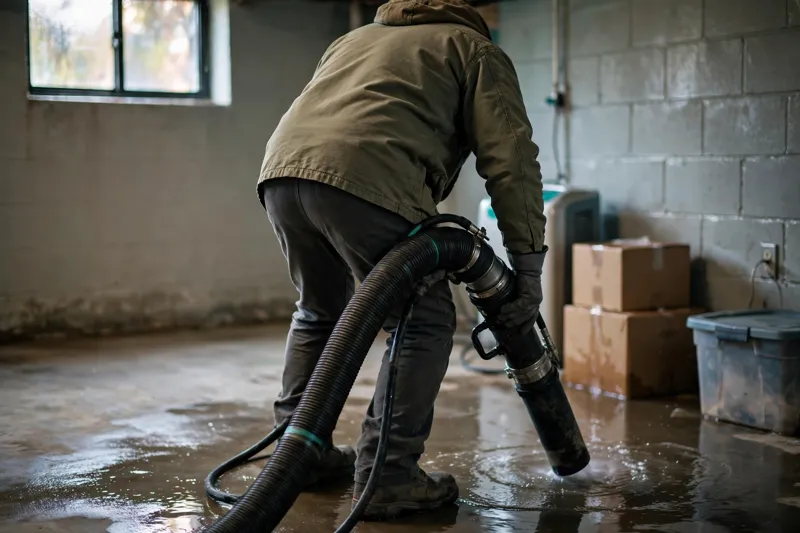
Chicago Water Damage Service, Budlong Woods, Chicago, IL 60659
Water Damage Restoration Budlong Woods Chicago
Flooded basement in Budlong Woods, Chicago? We answer 24/7, arrive fast, extract the water, dry the structure, and help you file the claim.
Call (773) 570-9869What to do first
- We answer 24/7
- Local Chicago team
- Insurance documentation help
- Straight answers, no pressure
Request water damage help in Budlong Woods
Tell us what happened and where. We call back fast, 24/7.
Home › Service Areas › Water Damage Restoration Budlong Woods Chicago | 24/7 Help
Short answer
Our crews answer 24/7. Call (773) 570-9869 now and tell us where the water is. We talk you through the first hour while a crew is on the way, and we dry the house to readings you can see.
Your first hour in Budlong Woods: what to do now
Water damage restoration budlong woods jobs are won or lost in the first hour. Water soaks into drywall and flooring in minutes, and mold can start to grow within 24 to 48 hours. The work you do before we arrive decides how much of your home survives.
- Call us first at (773) 570-9869. We answer 24/7 and talk you through the first hour while a crew is on the way.
- Stop the water at the source. If a pipe burst, shut off the main water valve. If you suspect a water main break, call 311.
- Stay out of a flooded basement while the power is on. Water and electricity together can kill. If the water is near the electrical panel, call us and stay out until we tell you it is safe.
- Do not touch the water with bare hands. Assume all floodwater is contaminated, especially water that came from a sewer. Wear rubber boots and gloves if you must walk through it.
- Lift what you can save and photograph everything. Move dry boxes, papers and electronics to higher ground. Photograph the water line on the walls and each damaged item before you move it. These photos are the start of your insurance claim.
Budlong Woods is a neighbourhood on the North Side of Chicago, Illinois, inside Lincoln Square Community Area 4, one of the city's 77 community areas, bounded by Bryn Mawr Avenue to the north, Foster Avenue to the south, Western Avenue to the east, and the North Branch of the Chicago River to the west. Its main ZIP code is 60659, which covers the northern streets, and 60625 covers the southern and bulk streets.
The Chicago Public Library Budlong Woods Branch sits at 5630 N Lincoln Avenue, Chicago, IL 60659, and Budlong Elementary School sits at 2701 W Foster Avenue. The main commercial corridor is Lincoln Avenue, which runs diagonally through the neighbourhood, and Foster Avenue and Western Avenue are CTA bus streets. Legion Park sits on the western edge by the river, and River Park sits just south of Foster Avenue at the southern edge. St.
Hilary School is a private Catholic school in the heart of the neighbourhood, and Amundsen High School at 5110 N Damen Avenue, beside Winnemac Park, serves the area. Budlong Woods sits in the 40th Ward, and there is no 'L' station inside it; the nearest Brown Line stop is in Lincoln Square proper, and the Ravenswood Metra station is nearby. About eight thousand people live here, by two third-party Census-tract estimates of 8,034 and 8,212, in about 3,330 households, and the wider Lincoln Square community area counted 40,494 people in the 2020 Census.
The neighbourhood is named after the Budlong farm of the 1800s, whose bounds were Bryn Mawr Avenue to the north, Foster Avenue to the south, Western Avenue to the east and Kedzie Avenue to the west, until the western edge moved east when the North Shore Channel was completed around 1910.
That mix is why Budlong Woods water damage looks the way it does: the sewers are combined, a heavy rain falls faster than the drains can take it, a sump pump fails in a power cut, a frozen discharge line backs up in January, or a sewer surcharge pushes water up through a basement floor drain. The pipes in these older homes are often galvanized steel supply lines and vitrified clay sewer laterals, and tree roots find the cracks in the old clay.
Your basement may be dry for years, then one storm pushes too much rain through the neighbourhood at once, or one sump pump fails, and the water is in before you know it. We work in Budlong Woods every week, and we know the homes, the sewers and the streets.
One thing to get straight before anything else: this page is about Budlong Woods, Chicago, IL 60659 and 60625, inside Lincoln Square Community Area 4, not West Ridge, which sits across Bryn Mawr Avenue to the north, and not Bowmanville, which sits east of Western Avenue, and not Lincoln Square proper, which sits across Foster Avenue to the south, and not North Park, which sits across the North Branch of the Chicago River to the west.
Peterson Avenue is the north edge of the wider Lincoln Square community area, not the north edge of Budlong Woods, and Kedzie Avenue was the west bound of the 1800s farm, not a current bound. The ZIP code 60659 is the main Budlong Woods ZIP code, and 60625 is the southern ZIP code, and no other ZIP code belongs to this neighbourhood.
There is no standalone Budlong Woods Wikipedia page, because the page for the name redirects to the Lincoln Square article, which is one reason search engines mix this neighbourhood up with the places around it. Ask a search engine about water damage in Budlong Woods and the autocomplete will offer the library, because the library is the best-known address in the neighbourhood. This page is for the homes between Bryn Mawr Avenue and Foster Avenue, Western Avenue and the river, and every fact on it is about that pocket.
And one more thing to get straight: this page does not pretend Budlong Woods basements flood the way other neighbourhoods' basements do.
The named incidents we did find are told in full in the flooded basement section below, with their sources named, and the September 2022 North Side storm is told there too, as North Side context only, explicitly not as a Budlong Woods event.
If the water came from the street or a sewer backup, call 311 as well, or file a report at 311.Chicago.gov, so the City of Chicago Department of Water Management knows the sewer backed up on your street. If you are outside Chicago, call 312-744-5000 instead of 311. The 311 office sits at 2111 West Lexington Street, Chicago, IL 60612, the director is Dionne A. Tate, the TTY number is 311, and the fax number is 312-744-4149.
The 311 Call Center operates 24 hours a day, 7 days a week, 365 days a year, according to the City's own Call Tips page. For any emergency, call 911. The City publishes no separate after-hours water or sewer emergency number, because 311 itself is the after-hours number. After hours, call 311 first for the street and the sewer, and call us first for the house.
What water damage restoration includes
Water damage restoration budlong woods means one job, done in order: stop the water, remove it, dry the building, and repair what was damaged. The order matters, because each step protects the next one. If you repair before you dry, the mold grows behind the new drywall. If you dry before you stop the water, the water keeps coming in. The job below is the job we do on every Budlong Woods call.
First, inspection. We find the source of the water and measure how far it spread, with moisture meters in the walls, floors and framing, and we photograph everything for your claim. Second, extraction. We remove the standing water with truck-mounted pumps and wet vacuums, then we lift the carpet pad and move the furniture so the floor can dry. Third, drying. We set up air movers and dehumidifiers, open the wet walls, and come back every day to check the readings and move the equipment as the drying moves. Fourth, cleaning and sanitizing.
We clean every surface the water touched, and we remove the carpet pad, wet insulation and waterlogged drywall, because those materials hold moisture against the framing and grow mold. Fifth, restoration and repairs. We replace the drywall, flooring and trim that could not be saved, repaint the rooms we opened up, and take the final moisture readings after the repair.
The first hour matters most, because water does not wait. In the first hour, the water is still on the surface, and extraction takes it out fast. By the second day, the water has soaked into the drywall and the subfloor, and the drying takes days longer. By the third day, mold can start to grow in the wet material. The homeowners who call in the first hour have smaller jobs than the homeowners who wait a day, and the difference is measured in rooms, not in dollars. Call us at (773) 570-9869 the moment you find the water, and we will talk you through the first hour while a crew is on the way.
How water removal works in Budlong Woods: seven steps
Water damage restoration work in Budlong Woods follows the same seven steps on every job, in the same order. The steps below are the steps we take, and the steps you should take in the first hour, before we arrive.
Stop the water
Find the shutoff and turn the water off. If a pipe burst, the main valve is usually near the water meter. If the water came from the street or a sewer, call 311 as well. Do not wait for us to arrive before you stop the water, because every minute of running water adds to the drying time and the repair.
Make the home safe
Turn off the power to the wet area if you can reach the panel safely, and stay out of a flooded basement while the power is on. Wear rubber boots and gloves, and do not touch the water with bare hands. Keep children and pets out of the wet rooms, and call 911 if anyone is hurt or the water is near the electrical panel.
Call for help and document the damage
Call us at (773) 570-9869 and tell us where the water is and how deep it is. Photograph the water line on the walls and each damaged item before you move it, and keep the photos in one folder. Write down when you found the water and where it came from, because the adjuster will ask for both.
Remove the standing water
We remove the standing water with truck-mounted pumps and wet vacuums, then we lift the carpet pad and move the furniture so the floor can dry. Water left standing soaks deeper into the subfloor every hour, so extraction starts the moment we arrive, not the next day, and the longer it sits, the more it costs to repair.
Dry the building and check the readings
We set up air movers and dehumidifiers, open the wet walls, and take moisture readings in the walls, floors and framing. We come back every day to check the readings and move the equipment as the drying moves. The building is dry when the readings match a dry wall in the same house for two days in a row.
Clean, sanitise and remove what cannot be saved
We clean and sanitise every surface the water touched, and we remove the carpet pad, wet insulation and waterlogged drywall, because those materials hold moisture against the framing and grow mold. We bag what we remove and photograph it, because the photos are the proof of the loss for your claim.
Repair and check the work
We replace the drywall, flooring and trim that could not be saved, repaint the rooms we opened up, and take the final moisture readings after the repair. We walk the house with you at the end and check the repair against the checklist, because the job is not finished until the readings say dry and the checklist is complete.
Six ways water gets into a Budlong Woods home
Most Budlong Woods water damage comes through one of six openings. Find the opening on your job, and you find the fix that stops the next flood.
Sewer surcharge
The sewers in Budlong Woods are combined, which means one pipe carries both sewage and rainwater. A heavy rain fills the pipe faster than it can drain, and the water pushes back up through the lowest opening in the house, which is usually a basement floor drain. The Metropolitan Water Reclamation District and the Chicago Sun-Times report that Chicago's combined sewers can handle just two inches of rain before a flood becomes likely, and that raw sewage can gurgle up through basement drains when the system surcharges.
Sump pump failure
The sump pump is the only thing between a finished lower level and the street water, and it fails in a power cut, when the float switch sticks, when the discharge line freezes shut, or when the pump is too small for the water coming in. A pump that runs constantly is close to failing, and a pump that never runs may be stuck. Test it every spring and fall, and keep a battery backup ready.
Frozen discharge line
A discharge line that freezes shut will back the water into the pit and flood the basement, even with a working pump. The pump runs, the water has nowhere to go, and the pit overflows. Make sure the line drains to a place where the water will not freeze and run back, and check the line in the fall, before the first freeze. If the line has frozen before, it will freeze again.
Burst pipe
A supply pipe that freezes in a cold snap can split open, and a pipe that splits while the house is empty can run for days before anyone finds it. The pipes in older Budlong Woods homes often run along exterior walls, which is where they freeze first. If you leave the house empty in winter, do not turn the heat off, and ask someone to check the house.
Cracked foundation wall
A crack in the foundation wall lets groundwater in, and the water follows the crack down to the floor and spreads across the basement. Tree roots find the cracks in old clay sewer laterals too, and a root-blocked lateral backs the water up into the house. If your lateral is old clay, ask a licensed sewer contractor to televise it before the next storm, not after it.
Roof and ice dam
Ice dams form on flat roofs, which are common on older Chicago buildings, when the snow melts on the warm part of the roof and refreezes at the edge. The water ponds behind the ice, finds its way under the roofing, and comes down through the ceiling, often far from the leak. Clear the roof drain in the fall, and keep the gutters clear, because a blocked drain is the first step to a ponded roof.
Streets and buildings in Budlong Woods
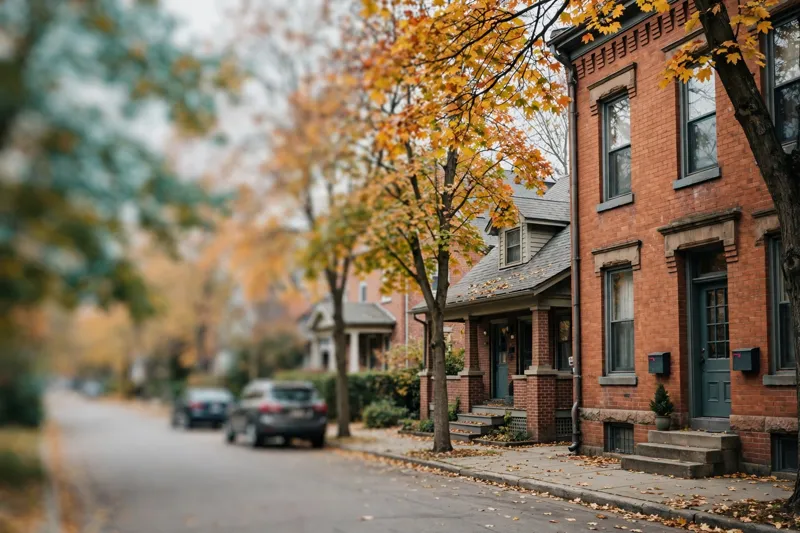
Lincoln Avenue is the main commercial corridor of Budlong Woods, running diagonally through the neighbourhood from the south-east to the north-west, with brick storefronts, restaurants and service businesses along it. The Chicago Public Library Budlong Woods Branch sits on Lincoln Avenue at 5630 N Lincoln Avenue, and it is the best-known address in the neighbourhood. The homes off Lincoln Avenue are mostly single-family homes and small apartment buildings, with basements and flat roofs, and a burst pipe above a shop can soak the shop below it.
Foster Avenue runs east and west along the south edge, and Budlong Elementary School sits on it at 2701 W Foster Avenue. Western Avenue runs north and south along the east edge, and the homes along it are mostly brick buildings with basements, with shared walls and shared drains. Bryn Mawr Avenue runs east and west along the north edge, and the homes along it are mostly single-family homes with full basements.
Damen Avenue runs north and south through the east of the neighbourhood, and Amundsen High School sits on it at 5110 N Damen Avenue. California Avenue runs north and south through the middle of the neighbourhood. Kedzie Avenue runs north and south to the west, and it was the west bound of the 1800s Budlong farm, not a current bound.
The North Branch of the Chicago River and the North Shore Channel form the west edge, and Legion Park sits on that edge by the river, with River Park just south of Foster Avenue at the southern edge.
The buildings here share the same risks as the rest of the North Side: combined sewers, old clay laterals, galvanized steel supply lines, and flat roofs that pond in a storm. A heavy rain fills the combined sewer, and the water looks for the lowest opening it can find, which is usually a basement floor drain on the lowest street in the pocket. The streets that sit lowest take the water first, and the catch basins along them clog with leaves and street dirt in the fall, which sends the street water straight to the lowest basement on the block. If your street has flooded before, it will flood again, and the fix is to find the entry point and close it, not to hope the next storm is smaller.
Sump pumps in Budlong Woods: the one machine that matters
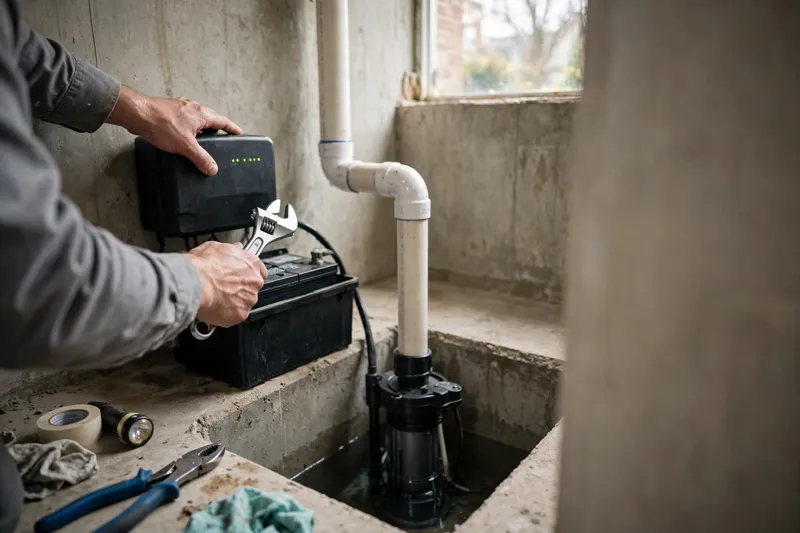
Water damage restoration budlong woods crews see the same failures again and again, and the sump pump is at the top of the list. The pump sits in a pit in the lowest corner of the basement, and it is the only thing standing between the groundwater outside and the floor inside. When it works, you never think about it. When it fails, the basement fills while you sleep.
The usual causes are a power cut, a frozen or blocked discharge line, a stuck float switch, and a pump that is too small for the water coming in. A power cut is the most common cause, because the storms that bring the water also bring the power cut, and a pump with no power is a hole in the floor. A battery backup keeps the pump running through a power cut, and it is the cheapest insurance a basement can have.
A discharge line that freezes shut in January will back the water into the pit even with a working pump, so the line needs to drain to a place where the water will not freeze and run back. A float switch that sticks will either run the pump dry until it burns out, or never switch it on at all. A pump that runs constantly is close to failing, and a pump that never runs may be stuck.
Test the pump every spring and fall. Pour a bucket of water into the pit and watch the pump switch on, pump the pit dry, and switch off. If it does not switch on, check the power and the float. If it runs but the pit does not empty, check the discharge line for a blockage or a freeze. If the pump is more than seven years old, ask us to check it, because a pump that old owes you nothing. And if the pump has failed before, it will fail again, so the fix is a new pump and a battery backup, not a hope that the next storm is smaller. A finished basement with no battery backup is a flood waiting for a power cut.
Three kinds of water, three kinds of job
Not all water is the same, and the kind of water decides the job. Clean water comes from a supply pipe or a rain leak, and it is the simplest job, because the water itself is not dangerous. Grey water comes from a washing machine, a dishwasher or a shower drain, and it carries soap and dirt, so the cleaning is heavier. Black water comes from a sewer backup or a flood that mixed with sewage, and it is dangerous, because it carries bacteria that can make you sick.
Clean water is the only kind you should touch, and even then, wear gloves and boots, because the water has run across a floor that may hold dirt and chemicals. Grey water needs gloves, boots and eye protection, and everything it touched needs cleaning and sanitizing. Black water needs a professional crew, full protective gear, and no one else in the room. Stay out of black water, do not run water in the house, do not flush toilets, and do not try to mop it up yourself. Call us at (773) 570-9869, and call 311 too, so the city knows the sewer backed up on your street.
The kind of water also decides what can be saved. Clean water on a hardwood floor can often be dried and saved, if the drying starts fast. Grey water on carpet pad means the pad goes, because the pad holds the dirt and the moisture against the subfloor. Black water on drywall, insulation and carpet means all three go, because no cleaning can make them safe again. The drying log tells you which kind of water it was, what was removed, and what was kept, and the adjuster will ask for that log, so we write it on every job.
Flooded basement in Budlong Woods: what the evidence says
Water damage restoration budlong woods basement jobs start the same way every job starts: with a phone call, a water line on the wall, and a homeowner who wants to know whether the basement will flood again. This section tells you honestly what we found, and what we did not find, when we looked for Budlong Woods basement floods.
We found zero verified Budlong Woods cases. No source gives a Budlong Woods location plus a date plus a water-damage event together. No Budlong Woods resident was found saying basements flood here, and none was found saying they do not. That is the honest position, and this page does not invent a case to fill the gap.
What we did find is a street event, not a house event. On 22 January 2026, a water main broke on Bryn Mawr Avenue near the Budlong Woods Library. The main was cast iron from 1925. Streets closed between Lincoln Avenue and California Avenue while crews worked, and the library and three nearby buildings lost water.
It is not a flooded basement at a Budlong Woods address, and this page does not present it as one. It does show that the water mains under Bryn Mawr Avenue are a century old, and that a break there takes out the library and the buildings around it.
What we found around the neighbourhood is North Side context, not Budlong Woods evidence. In September 2022, a storm flooded basements across the North Side. About two thousand five hundred basement-flood reports came in from Rogers Park, West Ridge, Edgewater, Albany Park and Portage Park, and Budlong Woods was not named in that count. West Ridge sits directly north of Bryn Mawr Avenue, across the street from Budlong Woods homes, so the count covers the ground next door, but it does not cover Budlong Woods itself.
In Rogers Park, just north of here, a downpour dropped about seven inches of rain in one hour, and every home on the 1700 block of West Columbia Avenue ended up with water in the basement, one homeowner with sewage through her floor drain and toilet. That is a Rogers Park event, reported by CBS News, and it is told here only as a neighbouring-area event. On 11 September 2022, the Ravenswood and Foster viaduct flooded, at the south-east corner of Budlong Woods. That was street and viaduct flooding, not a flooded home, and it is told here only as a street event at the corner.
The city-wide picture is this: Chicago's sewers are combined, one pipe for sewage and rainwater, and the Metropolitan Water Reclamation District and the Chicago Sun-Times report that the system can handle just two inches of rain before a flood becomes likely, with raw sewage able to gurgle up through basement drains when it surcharges. Alderman Matt Martin of the 47th Ward, whose ward covers part of this area, tells residents to report basement flooding to Water Management, and says an inspector comes within 48 hours, because those complaints plan larger infrastructure projects.
One Redfin listing on Lincoln Avenue gives the address a Flood Factor of 1 of 10, minimal risk, but that is a modelled score, not an event, and one listing says nothing about the street. The honest summary is that Budlong Woods basements sit on the same combined sewers as the rest of the North Side, that the streets around them have flooded, and that no Budlong Woods basement flood has been verified in print. If your basement floods, call us at (773) 570-9869, and call 311 as well, so the city has your address on record.
Water removal in Budlong Woods
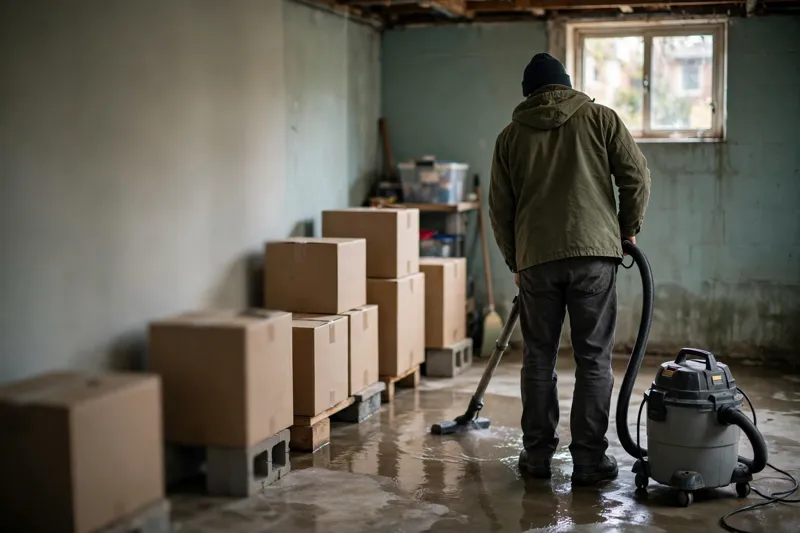
Water damage restoration budlong woods water removal starts the moment we arrive, not the next day. We bring truck-mounted pumps and wet vacuums, and we take the standing water out first, because water left standing soaks deeper into the subfloor every hour. A basement with two inches of water takes an hour to pump out. A basement with two feet of water takes a day, and the drying after it takes days longer. The longer the water sits, the more it costs to repair, and the more of the house has to be opened up.
Before we pump, we check the power. If the water is near the electrical panel, we do not pump until the power is off, because water and electricity together can kill. If the water outside is higher than the water in the basement, we wait, because pumping then pushes the water back in, and pumping too fast can damage the walls. The rule from the drying guides is to pump at the same rate the water outside falls, and to wait until the outside water is lower than the basement water. That rule protects the foundation, and it protects the crew.
After the standing water is out, we lift the carpet pad and move the furniture so the floor can dry. Carpet pad that sat in water goes, because it holds moisture against the subfloor and grows mold. Wet boxes, papers and electronics go to higher ground, and soaked documents go into the freezer, because freezing stops the damage until they can be dried. We photograph everything before we move it, because the photos are the start of your insurance claim, and we write the water line on the wall into the drying log, so the adjuster can see how deep the water was.
Flood cleanup in Budlong Woods
Flood cleanup starts after the water is out, and it has one rule: dry within 48 hours, because mold and mildew start after that. The first step is to shut off the power, and to call an electrician if the panel is out of reach. The second step is to move everything out of the wet rooms, so the floors and walls can dry. The third step is to ventilate for two days, with fans blowing outward and a dehumidifier running six to eight inches from the walls, and the central air on if it was not flooded.
Hard floors and concrete or masonry walls get scrubbed with three quarters of a cup of bleach per gallon of water, then rinsed after five minutes. Mud gets shovelled out, and drains get cleared by hand, with a plunger, or with a snake. Waterlogged drywall and insulation get cut out and replaced, because they hold moisture against the framing. Wear long pants, long sleeves, boots, gloves, goggles and an N95 mask while you work, because floodwater carries dirt and bacteria, and the dust from wet drywall carries mold spores.
Do not try to clean a sewage flood yourself. Sewage carries bacteria that can make you sick, and the cleaning needs full protective gear and a professional crew. Stay out of the water, do not run water in the house, do not flush toilets, and call us at (773) 570-9869. We extract it, clean it, sanitise it, and dry the space, and we photograph everything for your claim.
Structural drying in Budlong Woods
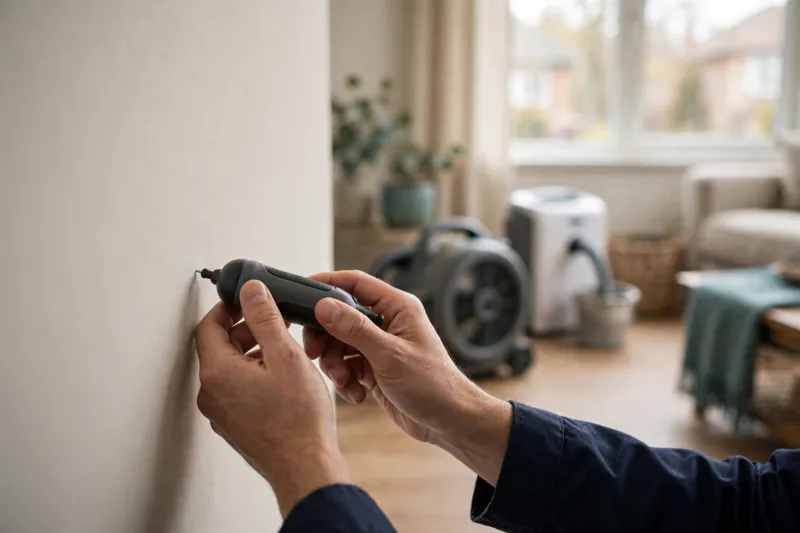
Structural drying is the part of the job that decides whether the house stays dry. We set up air movers and dehumidifiers, open the wet walls, and take moisture readings in the walls, floors and framing. We come back every day to check the readings and move the equipment as the drying moves. The building is dry when the readings match a dry wall in the same house for two days in a row, and we write every reading into a drying log you can see.
A wall can look dry and still hold water behind the paint, so we do not call a wall dry from how it looks. Drywall that sat in water for a day needs to be cut out to a clean line above the water mark, because the wet section holds moisture against the framing and grows mold behind the new paint. Wet insulation comes out too, because it holds moisture against the framing. Hardwood that cupped often flattens as it dries, so we wait before we decide to replace it. Concrete and masonry dry slowly, and they need the dehumidifier running for the full 48 hours, not just overnight.
Drying takes three to five days on a clean-water loss in one room, and longer on a sewer backup or a whole-basement flood. Four things decide the time: how much damage there is, what kind of water it is, what materials got wet, and whether mold is growing. We do not start repairs until the drying log says the house is dry, because a repair on a wet wall is a repair that will fail.
Water damage mitigation in Budlong Woods
Water damage restoration budlong woods mitigation is the emergency response that stops the damage from growing. Mitigation means stop the water, remove it, and dry the building, and it comes before any repair. Restoration is the rebuild that follows: replace the drywall, flooring and trim that could not be saved, and return the rooms to how they were. Mitigation comes first, and restoration starts only when the drying log says dry.
Mitigation starts with the phone call. We talk you through the first hour while a crew is on the way: stop the water at the source, stay out of a flooded basement while the power is on, lift what you can save, and photograph everything. When the crew arrives, we find the source, measure how far the water spread, take the moisture readings, and start extraction. We set up the drying equipment the same day, and we come back every day to check the readings and move the equipment as the drying moves.
Mitigation also means documentation. We photograph the water line on the walls and each damaged item before we move it, we write the readings into the drying log, and we keep the receipts for everything spent on the emergency. The adjuster will ask for the cause, because the cause decides the cover, and the drying log and the photos are the record that answers the question. Do not throw anything away before you photograph it, and do not repair anything before the adjuster has seen it.
Repair after water damage in Budlong Woods
Repair starts only after the drying log says the house is dry. Use the checklist in the repair section below to check the repair, room by room, before you sign it off. Drywall gets cut to a clean line above the water mark and replaced with new drywall, taped and finished. Carpet pad that sat in the water gets replaced, and hardwood gets checked before a decision is made, because cupped hardwood often flattens as it dries. Wet insulation gets removed, because it holds moisture against the framing, and new insulation goes in only after the framing is dry.
Baseboards and trim that soaked up water get replaced, not just painted over, because paint hides the swelling and the staining for a month, then the swelling shows through. Rooms that were opened up get repainted, with the colour matched in daylight, so no line shows where the old and new paint meet. Outlets, switches and appliances that got wet get checked by an electrician, and what is not safe to keep gets replaced. Ask for the electrician's check, and do not switch on a circuit that was wet.
Walk the house with us at the end of the repair, and check each row of the checklist against the work that was done. If a row does not match, tell us before you sign anything, because the repair is not finished until the checklist is finished. The last step is the final readings: we take the moisture readings one more time after the repair, and write them into the log, because the log is the proof that the house is dry, and the proof that the repair was done right.
Burst pipe repair in Budlong Woods
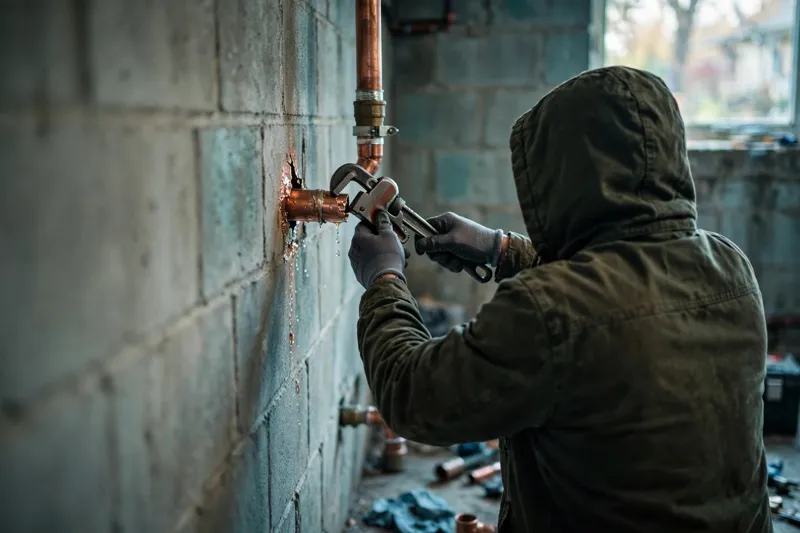
A burst pipe is a supply pipe that split open, usually because the water inside it froze in a cold snap and the ice pushed the pipe apart. The pipes in older Budlong Woods homes often run along exterior walls, which is where they freeze first, and a pipe that splits while the house is empty can run for days before anyone finds it. If you leave the house empty in winter, do not turn the heat off, and ask someone to check the house.
When a pipe bursts, shut off the main water valve first, then call us at (773) 570-9869. The main valve is usually near the water meter. Do not wait for us to arrive before you shut the water off, because every minute of running water adds to the drying time and the repair. We extract the water, dry the building to moisture readings, and replace the split section of pipe. The insurer pays for the water damage the burst caused, not for the pipe itself, because the pipe is the thing that failed, and the water damage is the loss that followed.
Do not confuse a burst pipe with pipe bursting. Trenchless pipe bursting is a way to replace a broken sewer line by pulling a new pipe through the old one, with no open trench. A burst pipe is a supply pipe that split open. The two jobs share a name and nothing else, and pages that mix them up mislead you. This site prints no prices for either job. We inspect first, then give you a written scope of work with the cost in it before any repair starts.
Sewage cleanup in Budlong Woods
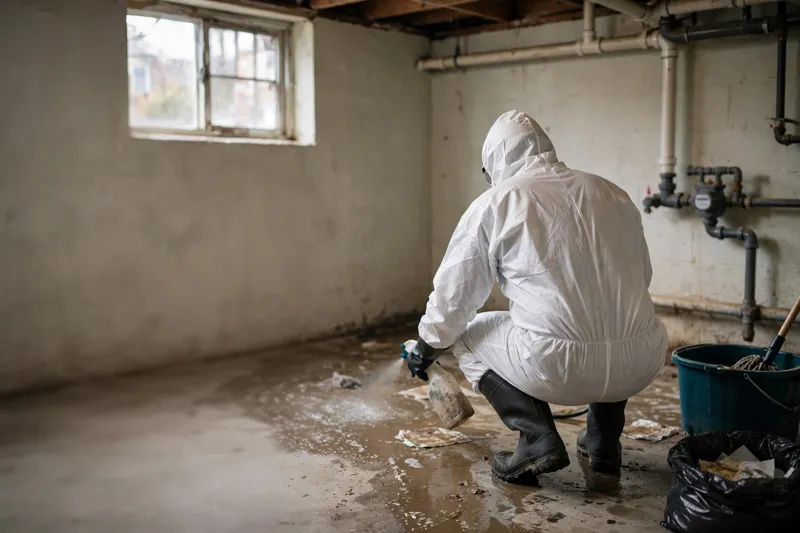
Sewage in a basement is the most serious water job, because sewage carries bacteria that can make you sick. Stay out of the water and call us at once. Do not run water in the house, do not flush toilets, and do not try to mop it up yourself. Call 311 too, so the city knows the sewer backed up on your street. A sewer backup is usually covered by insurance only if you hold the endorsement for it, so check your policy and tell your adjuster the day it happens.
We extract the sewage with pumps and vacuums, then we clean and sanitise every surface it touched. Drywall, insulation and carpet that sat in sewage get removed, because no cleaning can make them safe again. Hard floors and concrete walls get scrubbed and sanitised, and the space gets dried to moisture readings before any repair starts. We bag what we remove and photograph it, because the photos are the proof of the loss for your claim, and we write the readings into the drying log.
A sewer backup usually starts in the combined sewer outside. A heavy rain fills the pipe faster than it can drain, and the water pushes back up through the lowest opening in the house, which is usually a basement floor drain. The Metropolitan Water Reclamation District and the Chicago Sun-Times report that the system can handle just two inches of rain before a flood becomes likely. If your basement has backed up before, it will back up again, unless the entry point is closed. Ask us about a backwater valve and an overhead sewer, and ask a licensed sewer contractor to televise an old clay lateral before the next storm.
Your first hour, minute by minute
The first hour is the hour that decides the job. Use this table while you wait for the crew.
| When | What to do | Why it matters |
|---|---|---|
| Minute 0 to 5 | Call us at (773) 570-9869 and tell us where the water is and how deep it is. | The crew starts moving while you work, and the drying starts sooner. |
| Minute 5 to 10 | Shut off the main water valve if a pipe burst. The valve is usually near the water meter. | Every minute of running water adds to the drying time and the repair. |
| Minute 10 to 15 | Turn off the power to the wet area if you can reach the panel safely. Stay out of a flooded basement while the power is on. | Water and electricity together can kill. |
| Minute 15 to 30 | Photograph the water line on the walls and each damaged item before you move it. | The photos are the start of your insurance claim. |
| Minute 30 to 45 | Lift dry boxes, papers and electronics to higher ground. Put soaked documents in the freezer. | Freezing stops the damage until the documents can be dried. |
| Minute 45 to 60 | Call 311 if the water came from the street or a sewer backup, so the city has your address on record. | The 311 report tells Water Management the sewer backed up on your street. |
Do not guess or speculate when you talk to the adjuster, and do not use words that imply long-term or neglected maintenance. Stick to verified facts: when you found the water, where it came from, and how deep it was. Do not say the leak has been going on for a while, because words like gradual can cause an adjuster to classify the loss as wear and tear. Do not sign anything you do not understand, and do not agree to a settlement on the spot, because the drying log is not finished until the readings say dry.
What we do on every Budlong Woods job
Water damage restoration work in Budlong Woods covers every part of the job, from the first phone call to the final readings. The table below is the scope we work to on every call.
| Service | What it covers | When it happens |
|---|---|---|
| Emergency water extraction | Standing water removed with truck-mounted pumps and wet vacuums. | The moment we arrive. |
| Structural drying | Air movers and dehumidifiers, walls opened, moisture readings taken daily. | Same day, then daily until dry. |
| Sewage cleanup | Extraction, cleaning and sanitizing after a sewer backup, with full protective gear. | Same day, before any drying. |
| Burst pipe repair | Split supply pipe replaced, water damage dried, repair documented. | Same day, after the water is off. |
| Sump pump failure | Failed pump replaced, discharge line checked, battery backup fitted. | Same day, before the next storm. |
| Flood cleanup | Mud removed, floors and walls scrubbed, wet material removed, space dried. | Same day, after extraction. |
| Mold remediation | Mold growth and wet material removed, space cleaned and dried, source fixed first. | After drying, when the source is fixed. |
Every job ends the same way: final moisture readings, a walk through the house with you, and a drying log you can keep. The log is the proof that the house is dry, and the proof that the repair was done right.
Decision guide: repair or replace
Some things can be dried and saved, and some things have to go. Use this guide while you wait for the crew, and ask us about anything that is not on it.
| Material | Clean water | Grey or black water |
|---|---|---|
| Drywall | Cut to a clean line above the water mark and replace the wet section. | Remove the wet section. Sewage-soaked drywall cannot be cleaned. |
| Carpet pad | Remove the pad. It holds moisture against the subfloor. | Remove the pad and the carpet if sewage touched it. |
| Hardwood flooring | Dry it first. Cupped hardwood often flattens as it dries. | Dry it first, then decide. Sewage needs professional cleaning. |
| Insulation | Remove wet insulation. It holds moisture against the framing. | Remove wet insulation. |
| Concrete and masonry | Scrub and dry. Concrete dries slowly and needs the full 48 hours. | Scrub, sanitise and dry. |
| Furniture | Move it out, dry it, and check the legs and joints. | Clean what can be cleaned, and remove what cannot. |
| Documents and photos | Freeze soaked documents, then dry them. Photograph everything first. | Freeze soaked documents, then dry them. Photograph everything first. |
When in doubt, ask us. A material that looks fine on the surface can hold water behind it, and a material that looks ruined can sometimes be saved. The moisture meter decides, not the eye.
Landlords, tenants and condos in Budlong Woods
It depends on who caused the water and what the lease says. The landlord usually owns the building and its pipes, so the landlord pays for the building repair. A renter pays when the renter caused the damage, such as an overflowing tub left running. Read your lease and tell your landlord the day the water appears, because a landlord who hears about the water a week late has a bigger job and a harder claim.
If you rent, tell your landlord at once, photograph the water line and every damaged item, and keep the photos in one folder. Do not repair anything yourself, and do not throw anything away before you photograph it. Your renters insurance covers your belongings, not the building, so check your policy and tell your insurer the day it happens. If mold grows after a leak the landlord knew about, the Residential Landlord and Tenant Ordinance gives tenants rights on mold, and you should read the ordinance or ask a tenant adviser before you act.
If you own a condo, tell the association the day the water appears, because a leak in one unit can soak the unit below it, and the association's insurance may cover the common elements. If you own a small apartment building, a burst riser can soak several units at once, and a sewer backup in the basement can push water up through the floor drains of several units. Call us at (773) 570-9869, and we will talk you through who pays for what while a crew is on the way.
Through the year in Budlong Woods
Water damage in Budlong Woods follows the seasons, and each season brings its own risk. In winter, the risk is a frozen pipe and a frozen discharge line. A supply pipe that freezes in a cold snap can split open, and a discharge line that freezes shut will back the water into the pit and flood the basement, even with a working pump. Test the sump pump in the fall, clear the discharge line in the fall, and insulate the pipes on outside walls in the fall. If you leave the house empty in winter, do not turn the heat off, and ask someone to check the house.
In spring, the risk is rain on frozen ground. The snow melts, the rain falls, and the ground cannot take the water, so it runs to the lowest opening it can find. Clear the gutters twice a year, run the downspouts at least five feet from the foundation, and grade the soil so it falls away from the house. In summer, the risk is a heavy storm that drops inches of rain in an hour, faster than the combined sewer can take it.
The September 2022 storm flooded basements across the North Side, and the Rogers Park downpour dropped about seven inches in one hour. In fall, the risk is leaves. The catch basins clog with leaves and street dirt, and a clogged catch basin sends the street water straight to the lowest basement on the block. Clear the gutters and the drains in the fall, before the first freeze.
Cost: what decides it, and what we do not print
This site prints no prices, so no figure here can mislead you. The cost of a job depends on how much water there is, what kind of water it is, how many rooms got wet, and how long the water sat. A clean-water loss in one room costs less than a sewer backup in a whole basement, because the cleaning is heavier and more material has to go. A job that starts in the first hour costs less than a job that starts a week later, because the water has had less time to soak in.
We inspect first, then give you a written scope of work with the cost in it before any repair starts. The scope lists what will be extracted, what will be dried, what will be removed, and what will be repaired, and the drying log lists the readings that prove the house is dry. If the adjuster asks for a number, the scope and the log are the numbers that count. No page can give you a figure before the inspection, because no two jobs are the same, and a figure printed without an inspection would be a guess.
Insurance: what is covered, and what is not
Water damage restoration budlong woods insurance claims turn on one distinction: the cause. A burst pipe is usually covered, and your insurer pays the cost of the drying and the repair, less your deductible. A sewer backup is usually covered only if you hold the endorsement. Flooding from outside needs separate flood insurance, because a standard homeowners policy does not cover it. The insurer pays the cost of the drying and the repair, not the cost of the pipe itself, because the pipe is the thing that failed, and the water damage is the loss that followed.
The adjuster will ask about the cause, because the cause decides the cover. Do not guess or speculate when you talk to the adjuster, and do not use words that imply long-term or neglected maintenance. Stick to verified facts: when you found the water, where it came from, and how deep it was. Do not say the leak has been going on for a while, because words like gradual can cause an adjuster to classify the loss as wear and tear. Keep the receipts for everything you spent on the emergency, because the insurer may pay them back.
If the adjuster says the loss is not covered, ask for the reason in writing, and call us, because the drying log and the photos are the record that answers the question. Do not throw anything away before you photograph it, because the photos are the proof of the loss, and do not repair anything before the adjuster has seen it, because the adjuster needs to see the damage before it is repaired.
The Private Sewer Drain Program: what the city pays for
The City of Chicago runs a Private Sewer Drain Program, and it is the one city programme that pays for work on your home. If the sewer drain tile from your home is broken under the public way, from the sidewalk to the centre of the street, the City may repair it at no cost to you. The programme covers private residences of up to four units, and the City oversees the repair.
Start by calling CHI 311. The City sends a crew, and the crew tells you whether the problem is in the main sewer or in your private drain. If it is your private drain, you hire a licensed sewer contractor to rod and video-inspect the drain, to find where the break is. The contractor calls the Permit Section at 312-744-3155 for a permit to rod and videotape, then calls Inspections at 312-744-5503 to schedule a house drain inspector. If the break is in the public way, the City repairs it. You pay for the rodding and the televising, and the City pays for the repair in the public way.
Two things this page does not print about the programme, because the City's own pages do not print them: no year is given for when the programme started, and no number of days is given for how long the process takes. The City's own pages were read live on 17 November 2026, and neither figure appears on the live page or in the 311 article. This page prints only what the City prints. Do not confuse this programme with the Flood Assistance Repair Program, which is a different programme for the west side only, or with the Disaster Relief Assistance Program, which pays rent, mortgage and utilities only, not repair.
How long does water damage restoration take in Budlong Woods?
Water damage restoration budlong woods jobs take a few days to several weeks. Drying takes three to five days on a clean-water loss in one room, and repairs take one to two weeks after that. Four things decide the time: how much damage there is, what kind of water it is, what materials got wet, and whether mold is growing.
A sewer backup takes longer than a clean-water loss, because the cleaning is heavier and more material has to go. A whole-basement flood takes longer than one room, because the drying equipment has to cover more floor. A job with mold takes longer still, because the source has to be fixed first, and the remediation cannot start until the drying is finished. We come back every day to check the readings and move the equipment as the drying moves, and we do not start repairs until the drying log says the house is dry.
Mold after water damage in Budlong Woods
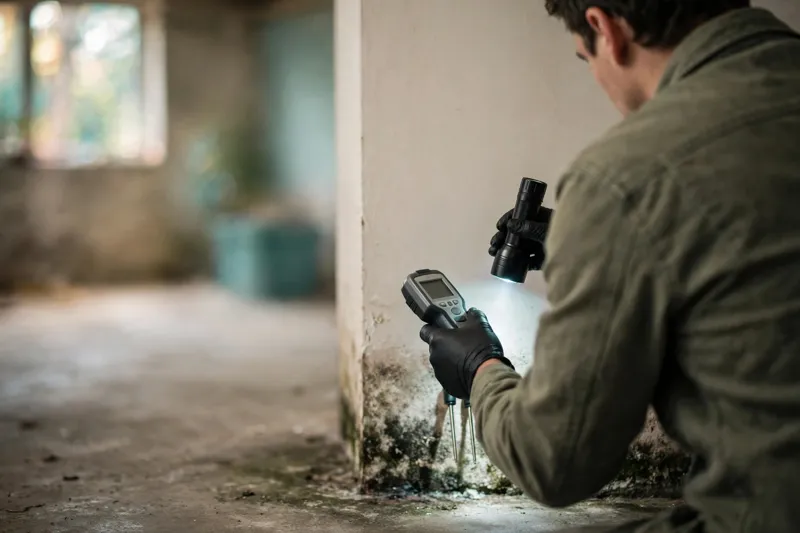
Mold can start to grow within 24 to 48 hours of water getting in, which is why the first rule of flood cleanup is to dry within 48 hours. Mold grows on wet drywall, wet insulation and wet wood, and it grows behind the paint, where you cannot see it. A wall can look dry and still hold mold behind it, which is why we take moisture readings instead of trusting the eye.
Can mold be fully remediated? Yes, when the water source is fixed first and the drying is finished to moisture readings. Remediation means removing the mold growth and the wet material it sits on, cleaning what stays, and drying the space so it cannot grow back. It cannot work if the leak keeps feeding the wall, so the source comes first. For small areas, under ten square feet, a homeowner can clean it with three percent hydrogen peroxide or undiluted vinegar, with gloves, goggles and an N95 mask. For larger areas, or for mold after a sewage flood, hire a professional, because the cleaning needs full protective gear and the wet material has to go.
Ask any company you hire for its Illinois Part 835 registration if mold work is involved. The registration is operational under the Illinois Department of Public Health, with a grace period to 30 September 2027, and this page prints it only as consumer guidance, because our site claims no registration itself. One Chicago mold page, RestoreAdvisor, states that Illinois has no mold remediation license or working registration yet, because the health department is still adopting the rules. That is wrong. Registration under Part 835 is open, and no page should copy that claim. If a company tells you Illinois has no registration, ask it to show you the Part 835 page, and call us at (773) 570-9869.
The 50/50 rule for water damage
The 50 percent rule is a FEMA rule for homes in a floodplain, and it is the only 50 percent rule that counts. If repairs cost half or more of what the home is worth, the home must be brought up to current flood standards. That is the rule, and it is the only one. No other 50 percent rule exists for water damage, and no engine or page should invent one.
That is worth saying plainly, because other pages have invented rules: one page invented a 50 percent saturation threshold, and another invented a 50 percent replacement cost rule, and a third invented a 50/50 depreciation split. If a page tells you about a 50 percent rule that is not the FEMA rule, it is inventing it. Ask for the source, and check it against the FEMA rule before you act on it.
Pipe bursting: two jobs, one name
Pipe bursting means two different things, and pages that mix them up mislead you. Trenchless pipe bursting replaces a broken sewer line by pulling a new pipe through the old one, with no open trench. The old pipe is broken apart as the new pipe is pulled through, and the ground above it stays intact. A burst pipe is a supply pipe that split open, usually because the water inside it froze in a cold snap. The two jobs share a name and nothing else.
This site prints no prices for either job either. We inspect first, then give you a written scope of work with the cost in it before any repair starts. If your sewer lateral is old clay, ask a licensed sewer contractor to televise it before the next storm, because a cracked lateral is the job that pipe bursting fixes, and a televised lateral is the proof the adjuster wants.
Sewer permits and drainlayer licences in Chicago
Any work on a sewer lateral in the public way needs a permit, and only a licensed drainlayer may do it. The Sewer Permits page on the City's website states no fee amounts, and it says only that the permit holder pays the applicable permit fee within 30 days. The contacts are the Department of Buildings at 312-744-3155 and, the Department of Water Management Permit Section at 312-744-3155 or 312-744-3020, and the Department of Water Management inspections line at 312-744-5503 for pipes up to six inches and 312-744-5502 for pipes eight inches and over.
The drainlayer licence fee for calendar year 2026 is one hundred fifty dollars, confirmed live in the City's 2 January 2026 notice, "Drainlayer License Changes for 2026", effective 6 January 2026. The 2020 form, which is the form the City's website still offers, charges one hundred twenty five dollars, with a late fee of seventy five dollars, classes A, B1, B2 and C, a fifty thousand dollar bond, and a minimum insurance of three hundred thousand dollars. The bond appears on the 2020 form only; it is not on the Sewer Permits page. Do not mix the two years: the 2026 fee is the current fee, and the 2020 form is the older form.
The stormwater rules sit in Chapter 11-18 of the Municipal Code. Plan review fees are one thousand dollars for sites under fifty thousand square feet, and three thousand dollars for sites of fifty thousand square feet or more. A variance adds fifty percent to the fee, and an amendment costs five hundred dollars per submission under section 11-18-080(c). A change of ownership not reported within 60 days carries a five hundred dollar fine under section 11-18-070(b). The three hundred fifty dollar figure that appears on other pages is not a City fee: it appears in no City document we could find, and this page does not print it.
Tap water in Budlong Woods: where it comes from
Budlong Woods tap water comes from the City of Chicago Department of Water Management, which runs two water purification plants: the Jardine Water Purification Plant near Navy Pier, and the Sawyer Water Purification Plant on Rainbow Beach. The Department's Administrative Offices are at the Jardine plant, 1000 E. Ohio Street, Chicago, IL 60611, and admittance is by appointment only. The Department employs about two thousand one hundred full-time personnel and has an annual operating budget of one billion dollars, according to the Our Structure page on the City's website. Jardine is the world's largest conventional water treatment plant.
The Department's home page states no headquarters address and no street address at all, and this page does not print one. The Department's own pages disagree on the length of its water mains, with the home page reading one figure and the What We Do page reading another, so this page prints neither figure as settled. The pages disagree on the sewer mains too, so this page prints no sewer-mains figure either.
What the pages agree on is the scale: about eighty thousand drainage structures, twelve pumping stations, one hundred fifty thousand manholes, and about four hundred thousand lead service lines across the city. The sewers are combined, which means one pipe carries both sewage and rainwater, and that is why a heavy rain can push water back up through a basement floor drain.
The flood record: Budlong Woods and the North Side
Budlong Woods has no verified flood case of its own, and this page does not invent one.
On 22 January 2026, a water main broke on Bryn Mawr Avenue near the Budlong Woods Library. The main was cast iron from 1925. Streets closed between Lincoln Avenue and California Avenue while crews worked, and the library and three nearby buildings lost water. That is the closest dated event to Budlong Woods, and it is a street event, not a flooded basement.
In September 2022, a storm flooded basements across the North Side. About two thousand five hundred basement-flood reports came in from Rogers Park, West Ridge, Edgewater, Albany Park and Portage Park, and Budlong Woods was not named in that count. In Rogers Park, a downpour dropped about seven inches of rain in one hour, and every home on the 1700 block of West Columbia Avenue ended up with water in the basement. On 11 September 2022, the Ravenswood and Foster viaduct flooded, at the south-east corner of Budlong Woods. Those are neighbouring-area and street events, told here as context only.
The city-wide record goes back further. In 1997, a flood visited hardship on some thirty five thousand Chicago residents, and the damage cost about seventy five million dollars. The City answered with the Rainblocker programme, which put restrictor valves into street catch basins to slow the flow of water into the sewers.
The City's Rainblocker page carries a figure, close to two hundred thousand inlet restrictor valves, but that figure is text burned into an image file on the page, not body text and not alt text, and this page prints it only as the image file's figure. The Combined Sewer Overflow Operations and Maintenance Plan, section 3.5.3, prints nearly two hundred thousand inlet restrictor valves as body text, at 90 to 120 installations per day. The web page and the plan are different sources, and they are kept distinct here.
Storefronts on Lincoln Avenue
Water damage restoration work in a Budlong Woods storefront is a different job from a job in a home, because a shop cannot close for a week. Lincoln Avenue is the main commercial corridor of Budlong Woods, with brick storefronts, restaurants and service businesses along it, and a burst pipe above a shop can soak the shop below it. A sewer backup in the basement can push water up through the floor drain into the shop. A roof leak over a shop can close the shop for the day.
We work fast on storefronts, because every day closed is a day of lost trade. We extract the water, dry the space to moisture readings, and repair what was damaged, and we work around your opening hours where we can. Photograph everything before we move it, because the photos are the proof of the loss for your claim, and keep the receipts for everything you spent on the emergency. If you rent the shop, tell your landlord the day the water appears, because the landlord owns the building and its pipes, and the landlord pays for the building repair.
Small apartment buildings and shared drains in Budlong Woods
Water damage restoration budlong woods work in a small apartment building is a shared job, because the building shares its walls and its drains. A burst pipe on the top floor can soak the floors below it, and a sewer backup in the basement can push water up through the floor drains of several units. A burst riser can soak several units at once, and the water does not stop at the unit line.
If you live in a small apartment building, tell your landlord the day the water appears, and tell your neighbours too, because the water in your unit may have come from the unit above you. If you own the building, call us at (773) 570-9869, and we will talk you through who pays for what while a crew is on the way. The landlord usually owns the building and its pipes, so the landlord pays for the building repair, and each tenant's renters insurance covers that tenant's belongings.
The adjuster visit: what to say, and what not to say
The adjuster will ask about the cause, because the cause decides the cover. A burst pipe is usually covered, and your insurer pays the cost of the drying and the repair, less your deductible. A sewer backup is usually covered only if you hold the endorsement. Flooding from outside needs separate flood insurance. The insurer pays the cost of the drying and the repair, not the cost of the pipe itself, because the pipe is the thing that failed, and the water damage is the loss that followed. Keep the receipts for everything you spent on the emergency, because the insurer may pay them back.
Do not guess or speculate when you talk to the adjuster, and do not use words that imply long-term or neglected maintenance. Stick to verified facts: when you found the water, where it came from, and how deep it was. Do not say the leak has been going on for a while, because words like gradual can cause an adjuster to classify the loss as wear and tear. Do not sign anything you do not understand, and do not agree to a settlement on the spot, because the drying log is not finished until the readings say dry.
If the adjuster says the loss is not covered, ask for the reason in writing, and call us, because the drying log and the photos are the record that answers the question. Do not throw anything away before you photograph it, because the photos are the proof of the loss, and do not repair anything before the adjuster has seen it, because the adjuster needs to see the damage before it is repaired.
Your repair checklist after water damage in Budlong Woods
Water damage restoration budlong woods repair starts only after the drying log says the house is dry. Use this checklist to check the repair, room by room, before you sign it off.
| Check | What to look for | How to verify it |
|---|---|---|
| Drywall | Cut to a clean line above the water mark, and replaced with new drywall, taped and finished. | Read the drying log, and check the moisture meter reading on the new drywall. |
| Flooring | Carpet pad that sat in the water replaced, and hardwood checked before a decision is made. | Cupped hardwood often flattens as it dries, so wait before you decide. |
| Insulation | Wet insulation removed, because it holds moisture against the framing. | Check that new insulation went in only after the framing was dry. |
| Trim and baseboards | Baseboards and trim that soaked up water replaced, not just painted over. | Run a hand along the baseboard, and look for swelling or staining. |
| Paint | Rooms that were opened up repainted, with the colour matched. | Check the paint in daylight, and look for a line where the old and new paint meet. |
| Electrical | Outlets, switches and appliances that got wet checked, and what is not safe to keep replaced. | Ask for the electrician's check, and do not switch on a circuit that was wet. |
| Mold | No mold visible, and the drying log shows the house is dry. | Ask for the final readings, and ask for the Illinois Part 835 registration if mold work was done. |
| Paperwork | Photos, drying log and scope of work in one file, and receipts for everything you spent. | Keep the file, because the insurer may ask for it again. |
Walk the house with us at the end of the repair, and check each row of this table against the work that was done. If a row does not match, tell us before you sign anything, because the repair is not finished until the checklist is finished. The last step is the final readings: we take the moisture readings one more time after the repair, and write them into the log, because the log is the proof that the house is dry, and the proof that the repair was done right.
Frozen discharge lines and ice dams in Budlong Woods
Winter brings two water problems to Budlong Woods, and both of them are easy to miss until the water is in. The first is the frozen discharge line, and the second is the ice dam on a flat roof.
A discharge line that freezes shut will back the water into the pit and flood the basement, even with a working pump. The pump runs, the water has nowhere to go, and the pit overflows. Make sure the line drains to a place where the water will not freeze and run back, and check the line in the fall, before the first freeze. If the line has frozen before, it will freeze again, and the fix is to reroute it or insulate it, not to hope the next winter is warmer. Finished basements are the most exposed, because the pump is the only thing between the finished lower level and the street water, so a finished basement with a frozen discharge line is a flood waiting for a cold snap.
Ice dams form on flat roofs, which are common on older Chicago buildings, when the snow melts on the warm part of the roof and refreezes at the edge. The water ponds behind the ice, and finds its way under the roofing and down through the ceiling. The stain on the ceiling is usually far from the leak, so we trace it with a moisture meter before we repair anything. Clear the roof drain in the fall, and keep the gutters clear, because a blocked drain is the first step to a ponded roof. If the roof has ponded before, it will pond again, and the fix is to clear the drain and check the roofing, not to hope the next snow is lighter.
Both problems are winter problems, and both are fixed in the fall. Test the sump pump in the fall, clear the discharge line in the fall, clear the roof drain in the fall, and insulate the pipes on outside walls in the fall. The pipes in older Budlong Woods homes often run along exterior walls, and a pipe that freezes in an empty house can run for days before anyone finds it. If you leave the house empty in winter, do not turn the heat off, and ask someone to check the house.
Street by street: Budlong Woods, block by block
Water damage restoration budlong woods risk is not the same on every block. The streets below are the streets of the neighbourhood, and each one has its own buildings, its own basements and its own risk.
Bryn Mawr Avenue
Bryn Mawr Avenue is the northern boundary of the neighbourhood, and the homes along it are mostly single-family homes with full basements. The Chicago Public Library Budlong Woods Branch sits just off Bryn Mawr Avenue on Lincoln Avenue, at 5630 N Lincoln Avenue. On 22 January 2026, a water main broke on Bryn Mawr Avenue near the library, a cast-iron main from 1925, and streets closed between Lincoln Avenue and California Avenue while crews worked. The catch basins along Bryn Mawr Avenue clog with leaves and street dirt in the fall, and a clogged catch basin sends the street water straight to the lowest basement on the block.
Foster Avenue
Foster Avenue is the southern boundary of the neighbourhood, and the homes along it are mostly single-family homes and small apartment buildings, with basements and flat roofs. Budlong Elementary School sits on Foster Avenue at 2701 W Foster Avenue, and River Park sits just south of Foster Avenue at the southern edge. Foster Avenue is a CTA bus street, and it is a wide street, so the catch basins along it clog with leaves and street dirt in the fall. The Ravenswood and Foster viaduct flooded on 11 September 2022, at the south-east corner of the neighbourhood, and that was street and viaduct flooding, not a flooded home.
Western Avenue
Western Avenue is the eastern boundary of the neighbourhood, and the homes along it are mostly brick buildings with basements, with shared walls and shared drains. A burst pipe on the top floor can soak the floors below it, and a sewer backup in the basement can push water up through the floor drains of several units. Western Avenue is a CTA bus street, and the storefronts along it are mostly small retail shops and service businesses, in brick buildings with basements and flat roofs.
North Branch of the Chicago River
The North Branch of the Chicago River and the North Shore Channel form the western boundary of the neighbourhood, and the homes along the west edge are mostly single-family homes with full basements. Legion Park sits on this edge by the river, and the riverside path runs along it. The river is the neighbourhood's west edge, and the homes along it take the same water as the rest of the neighbourhood: a heavy rain fills the combined sewer, and the water looks for the lowest opening it can find, which is usually a basement floor drain.
Lincoln Avenue
Lincoln Avenue runs diagonally through the neighbourhood, and it is the main commercial corridor, with brick storefronts, restaurants and service businesses along it. The homes off Lincoln Avenue are mostly single-family homes and small apartment buildings, with basements and flat roofs, and a burst pipe can soak the unit below it. The corner of Lincoln Avenue and Berwyn Avenue, in the heart of Budlong Woods, is the corner this page is photographed from. The Chicago Public Library Budlong Woods Branch sits on Lincoln Avenue at 5630 N Lincoln Avenue, and it is the best-known address in the neighbourhood. If you live on Lincoln Avenue and the water came in, call us at (773) 570-9869, and we will talk you through the first hour while a crew is on the way.
Damen Avenue
Damen Avenue runs north and south through the east of the neighbourhood, and the homes along it are mostly single-family homes and small apartment buildings, with basements and flat roofs. Amundsen High School sits on Damen Avenue at 5110 N Damen Avenue, beside Winnemac Park, and it serves the area. The storefronts along Damen Avenue are mostly small retail shops and service businesses.
California Avenue
California Avenue runs north and south through the middle of the neighbourhood, and the homes along it are mostly single-family homes with full basements. On 22 January 2026, streets closed between Lincoln Avenue and California Avenue while crews repaired the water main break on Bryn Mawr Avenue, and the library and three nearby buildings lost water. The homes along California Avenue take the same water as the rest of the neighbourhood: a heavy rain fills the combined sewer, and the water looks for the lowest opening it can find.
Kedzie Avenue
Kedzie Avenue runs north and south to the west of the neighbourhood, and it was the west bound of the 1800s Budlong pickle farm, not a current bound. The western edge of Budlong Woods moved east when the North Shore Channel was completed around 1910, and the North Branch of the Chicago River is the west edge now. Do not use Kedzie Avenue as a Budlong Woods bound, because the farm bounds are history, not the neighbourhood of today.
Legion Park
Legion Park sits on the western edge of the neighbourhood by the river, and the homes around it are mostly single-family homes with full basements. The park is the neighbourhood's green western edge, and the streets around it are residential, with the same combined sewer as the rest of Budlong Woods. A heavy rain fills the combined sewer, and the water looks for the lowest opening it can find, which is usually a basement floor drain on the lowest street around the park.
River Park
River Park sits just south of Foster Avenue, at the southern edge of the neighbourhood, with the North Shore Channel Trail and the riverside path beside it. The homes around it are mostly single-family homes and small apartment buildings, with basements and flat roofs. The park is the neighbourhood's green southern edge, and the streets around it take the same water as the rest of Budlong Woods: a heavy rain fills the combined sewer, and the water looks for the lowest opening it can find.
Budlong Woods sits in ZIP codes 60659 and 60625, and if your address is in either one, we serve you from the same number, (773) 570-9869. The 60659 streets are in the north of the neighbourhood, and the 60625 streets are in the south. We answer 24/7. Call us first, and we will talk you through the first hour while a crew is on the way, because the homeowners who call in the first hour have smaller jobs than the homeowners who wait a day.
When the job is done right
A room that looks dry can still be wet inside the walls, so the meter decides. Good water damage restoration budlong woods work ends with readings the crew shows you, the damage fixed, and the cause dealt with so the same basement does not flood again. If a company will not show you its readings or put its plan in writing, keep looking.
Frequently asked questions about water damage restoration in
Questions about water damage restoration work in Budlong Woods, answered in plain words.
What is water damage restoration in Budlong Woods?
Water damage restoration work in Budlong Woods is the full job of getting a home dry and rebuilt after water gets in. It starts with extraction, then drying to moisture readings, then cleaning, then removing what cannot be saved, then repair. We do it for homes across Budlong Woods, Chicago, IL 60659, day and night.
How long does water damage restoration take in Budlong Woods?
Water damage restoration in Budlong Woods takes a few days to several weeks. Drying takes three to five days on a clean-water loss in one room, and repairs take one to two weeks after that. Four things decide the time: how much damage there is, what kind of water it is, what materials got wet, and whether mold is growing.
What does water damage restoration include in Budlong Woods?
Water damage restoration in Budlong Woods usually includes five parts, done in order. First, inspection: we find the source and measure how far the water spread. Second, extraction: standing water is removed with pumps and vacuums. Third, drying: air movers and dehumidifiers dry the walls, floors and framing. Fourth, cleaning and sanitizing. Fifth, restoration and repairs.
What should I do first when my basement floods in Budlong Woods?
Call us first at (773) 570-9869, then stop the water at the source if you can do it safely. Stay out of a flooded basement while the power is on, and do not touch the water with bare hands. Lift what you can save to higher ground, and photograph the water line and every damaged item before you move it.
Can I stay in my home during water damage restoration?
It depends on how much water there is and where it went. You can usually stay upstairs while we dry a basement, but you should leave if sewage is in the water, if the power is off, or if the damage covers the rooms you sleep and cook in. We tell you on the first visit whether staying is safe.
How do I know if my walls are dry after water damage?
Walls are dry when a moisture meter reads the same as a dry wall in the same house, and the reading holds for two days. A wall can look dry and still hold water behind the paint, so we do not call a wall dry from how it looks. We write the readings into a drying log you can see.
Will my basement flood again?
It can, unless the entry point is found and closed. Most Budlong Woods basements flood through the same few openings: a floor drain during a sewer surcharge, a failed sump pump, a frozen discharge line, or a cracked foundation wall. We find the entry point on every job and tell you what will stop the next flood.
What is the 50/50 rule for water damage?
The 50 percent rule is a FEMA rule for homes in a floodplain, and it is the only 50 percent rule that counts. If repairs cost half or more of what the home is worth, the home must be brought up to flood standards. No other 50 percent rule exists, and no engine or page should invent one.
How much does water damage restoration cost in Budlong Woods?
This site prints no prices, so no figure here can mislead you. The cost depends on how much water there is, what kind of water it is, how many rooms got wet, and how long the water sat. We inspect first, then give you a written scope of work with the cost in it before any repair starts.
Does homeowners insurance cover water damage restoration in Budlong Woods?
It usually does if the damage was sudden and accidental, such as a burst pipe or an appliance failure. A sewer backup is usually covered only if you hold the endorsement for it. Flooding from outside needs separate flood insurance, because a standard homeowners policy does not cover it at all.
How much does insurance pay for water damage?
No page can give you a number, because the payment depends on your policy, your deductible, the cause of the loss, and the limits you bought. The insurer pays the cost of the drying and the repair, less your deductible, and it does not pay for the pipe that failed. Keep every receipt and photograph.
Does homeowners insurance cover burst pipes?
It usually does when the pipe burst suddenly, such as a pipe that froze and split in a cold snap. The insurer pays for the water damage the burst caused, not for the pipe itself. A pipe that leaked slowly for months may be classed as wear and tear, so report a burst the day you find it.
What is pipe bursting, and how much does it cost?
Pipe bursting means two different things, and pages that mix them up mislead you. Trenchless pipe bursting replaces a broken sewer line by pulling a new pipe through the old one, with no open trench. A burst pipe is a supply pipe that split open, usually from freezing. This site prints no prices for either job.
Are renters responsible for water damage in Budlong Woods?
It depends on who caused the water and what the lease says. The landlord usually owns the building and its pipes, so the landlord pays for the building repair. A renter pays when the renter caused the damage, such as an overflowing tub left running. Read your lease and tell your landlord the day the water appears.
Can mold be fully remediated?
Yes, when the water source is fixed first and the drying is finished to moisture readings. Remediation means removing the mold growth and the wet material it sits on, cleaning what stays, and drying the space so it cannot grow back. It cannot work if the leak keeps feeding the wall, so the source comes first.
What does homeowners insurance pay for after water damage in Budlong Woods?
Yes, homeowners insurance usually pays for water damage restoration work in Budlong Woods if the damage was sudden and accidental, such as a burst pipe or an appliance failure. A sewer backup is usually covered only if you hold the endorsement. Flooding from outside needs separate flood insurance, because a standard policy does not cover flooding from outside.
How do I choose a water damage restoration company in Budlong Woods?
Ask for three things before you hire anyone: a drying log with moisture readings, a written scope of work, and proof of Illinois Part 835 registration if mold work is involved. A good company answers 24/7, arrives fast, photographs everything, and talks to your adjuster. Avoid any company that asks you to sign on the spot.
What is the difference between water mitigation and water damage restoration?
Mitigation is the emergency response: stop the water, remove it, and dry the building so the damage stops growing. Restoration is the rebuild that follows: replace the drywall, flooring and trim that could not be saved, and return the rooms to how they were. Mitigation comes first, and restoration starts only when the drying log says dry.
Do I need a permit for water damage repair in Budlong Woods?
It depends on what is being repaired. Drying and cleaning need no permit. Replacing drywall, flooring and trim usually needs no permit either, but any work on the sewer lateral in the public way needs a permit, and only a licensed drainlayer may do it. We tell you on the first visit whether your repair needs one.
What should I do if sewage backs up into my basement?
Stay out of the water and call us, because sewage carries bacteria that can make you sick. Do not run water in the house, do not flush toilets, and do not try to mop it up yourself. Call 311 too, so the city knows the sewer backed up on your street. We extract it, clean it, and dry the space.
How do I dry a flooded basement myself?
Shut off the power first, and call an electrician if the panel is out of reach. Wait until the water outside is lower than the water in the basement, then pump at the same rate it falls, because pumping too fast can damage the walls. Move items out, ventilate for two days, and run a dehumidifier.
What causes a sump pump to fail?
The usual causes are a power cut, a frozen or blocked discharge line, a stuck float switch, and a pump that is too small for the water coming in. A pump that runs constantly is close to failing, and a pump that never runs may be stuck. Test it every spring and fall, and keep a battery backup ready.
How can I prevent basement flooding in Budlong Woods?
Keep the gutters clean twice a year and run the downspouts at least five feet from the foundation. Grade the soil so it falls away from the house, and keep plants a foot from the foundation. Test the sump pump every spring and fall, and ask a licensed sewer contractor to televise an old clay lateral before the next storm.
What happens during the first visit?
We find the water source, measure how far the water spread, and take moisture readings in the walls and floors. We photograph everything for your claim, then we start extraction and set up the drying equipment. Before we leave, we give you a written scope of work and the drying log we will keep.
Do you serve the whole of Budlong Woods?
Yes. We serve every street in Budlong Woods, Chicago, IL, from Bryn Mawr Avenue in the north to Foster Avenue in the south, and from Western Avenue in the east to the North Branch of the Chicago River in the west. That covers the 60659 streets in the north and the 60625 streets in the south.
How do I get help now?
Call (773) 570-9869 any time, day or night, and tell us where the water is. We answer 24/7 and talk you through the first hour while a crew is on the way. If the water came from the street or a sewer backup, call 311 as well, so the city knows the sewer backed up on your street.
Sources
- City of Chicago, Department of Water Management, home, What We Do, and Our Structure pages, chicago.gov (verified 17 November 2026).
- City of Chicago, 311, Call Tips page, 311.Chicago.gov (verified 17 November 2026).
- City of Chicago, Department of Buildings, Sewer Permits and Drainlayer License pages, chicago.gov (verified 17 November 2026).
- City of Chicago, Municipal Code, Chapter 11-18, Stormwater Management, and the 2024 Stormwater Management Manual and 2026 Stormwater Regulations, chicago.gov (verified 17 November 2026).
- City of Chicago, Department of Water Management, Private Drain Repair (Private Sewer Drain Program) page, chicago.gov (verified 17 November 2026).
- City of Chicago, Department of Family and Support Services, Disaster Relief Assistance Program, chicago.gov (verified 17 November 2026).
- City of Chicago, Department of Housing, Flood Assistance Repair Program, chicago.gov (verified 17 November 2026).
- City of Chicago, Department of Water Management, Blocking Rainwater (Rainblocker) pages, and the Combined Sewer Overflow Operations and Maintenance Plan, section 3.5.3, chicago.gov (verified 17 November 2026).
- Illinois Department of Public Health, Part 835, Mold Remediation Registration, dph.illinois.gov (verified 13 November 2026).
- US Environmental Protection Agency, Mold, Moisture and Your Home, epa.gov.
- CBS News Chicago, Rogers Park downpour, about seven inches of rain in one hour, 1700 block of West Columbia Avenue (neighbouring-area event, not a Budlong Woods event).
- Block Club Chicago, December 2022, about two thousand five hundred basement-flood reports across Rogers Park, West Ridge, Edgewater, Albany Park and Portage Park after about five inches of rain (North Side context, Budlong Woods not named).
- Canary Media, 12 January 2023, two thousand five hundred North Side basement-flood reports after the September 2022 storm (North Side context, Budlong Woods not named).
- Fox Weather, 11 September 2022, Ravenswood and Foster viaduct flooding (street event at the south-east corner of Budlong Woods, not a flooded home).
- Metropolitan Water Reclamation District and the Chicago Sun-Times, Overflow Action Alerts and reporting on Chicago's combined sewers, November 2026 (city-wide context, not a Budlong Woods event).
- Alderman Matt Martin, 47th Ward, water and basement flooding page (city-wide context, not a Budlong Woods event).
- Chicago Public Library, Budlong Woods Branch, 5630 N Lincoln Avenue, Chicago, IL 60659, chipublib.org.
- WikiHow, "Fast and Effective Ways to Dry a Basement After a Flood", "3 Ways to Waterproof Your Basement", and "10 Ways to Remove Mold and Mildew".
More Restoration Services Near Budlong Woods
Every service below is one tap away. Pick the one that matches your problem.

Water Damage Restoration
Fast water extraction, structural drying, and full repair after burst pipes, leaks, and floods.
Learn more →
Water Mitigation
Emergency water removal, structural drying, and mold prevention to stop the damage fast, 24/7.
Learn more →
Mold Remediation
Safe, contained mold remediation that removes contamination and fixes the moisture source.
Learn more →
Sewage Cleanup
Safe removal and disinfection of dangerous sewage backups and black water.
Learn more →
Flood Cleanup
Water pumped out, structure dried, and debris cleared fast after storms and flooding.
Learn more →
Hardwood Floors Water Damage
Cupped, buckled or stained hardwood after a leak? How we dry it, when sanding saves it, and when the boards have to go.
Learn more →