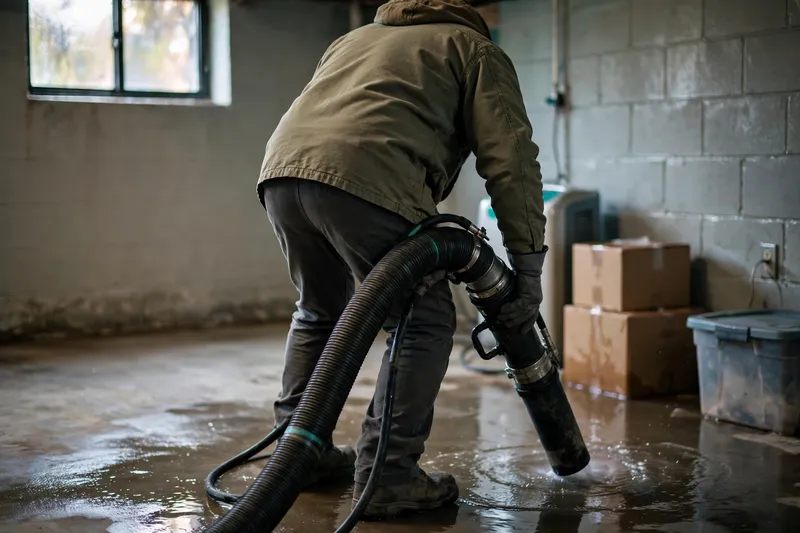
Chicago Water Damage Service, Bucktown, Chicago, IL 60647
Water Damage Restoration Bucktown Chicago
Flooded basement in Bucktown, Chicago? We answer 24/7, arrive fast, extract the water, dry the structure, and help you file the claim.
Call (773) 570-9869What to do first
- We answer 24/7
- Local Chicago team
- Insurance documentation help
- Straight answers, no pressure
Request water damage help in Bucktown
Tell us what happened and where. We call back fast, 24/7.
Home › Service Areas › Water Damage Restoration Bucktown Chicago | 24/7 Help
Short answer
Our crews answer 24/7. Call (773) 570-9869 now and tell us where the water is. We talk you through the first hour while a crew is on the way, and we dry the house to readings you can see.
Your first hour in Bucktown: what to do now
Water damage restoration bucktown jobs are won or lost in the first hour. Water soaks into drywall and flooring in minutes, and mold can start to grow within 24 to 48 hours. The work you do before we arrive decides how much of your home survives.
- Call us first at (773) 570-9869. We answer 24/7 and talk you through the first hour while a crew is on the way.
- Stop the water at the source. If a pipe burst, shut off the main water valve. If you suspect a water main break, call 311.
- Stay out of a flooded basement while the power is on. Water and electricity together can kill. If the water is near the electrical panel, call us and stay out until we tell you it is safe.
- Do not touch the water with bare hands. Assume all floodwater is contaminated, especially water that came from a sewer. Wear rubber boots and gloves if you must walk through it.
- Lift what you can save and photograph everything. Move dry boxes, papers and electronics to higher ground. Photograph the water line on the walls and each damaged item before you move it. These photos are the start of your insurance claim.
Bucktown is a neighbourhood on the Northwest Side of Chicago, Illinois, in the eastern portion of Logan Square Community Area 22, one of the city's 77 community areas, bounded by Fullerton Avenue to the north, Bloomingdale Avenue and the 606 trail to the south, Western Avenue to the west, and the Kennedy Expressway and the North Branch of the Chicago River to the east. Its main ZIP code is 60647, and the ZIP codes 60614, 60622 and 60642 touch its edges.
The 606 trail, the old Bloomingdale rail line turned into a trail above street level, runs along the neighbourhood's south edge, and Holstein Park sits in the middle of it, with the Damen Avenue shopping corridor running north and south through it. The main streets are Damen Avenue, Milwaukee Avenue, Armitage Avenue, North Avenue, Western Avenue and Fullerton Avenue, and the North, Damen and Milwaukee six-point intersection is the neighbourhood's best-known crossing, with the Blue Line Damen stop beside it.
The homes here are mostly rehabbed two-flats with finished basements, vintage workers' cottages, and brick buildings, with brick masonry, poured concrete basements and flat roofs. That mix is why Bucktown water damage looks the way it does: the sewers are combined, a heavy rain falls faster than the drains can take it, a sump pump fails in a power cut, a frozen discharge line backs up in January, or a sewer surcharge pushes water up through a basement floor drain.
The pipes in these older homes are often galvanized steel supply lines and vitrified clay sewer laterals, and tree roots find the cracks in the old clay. Your basement may be dry for years, then one storm pushes too much rain through the neighbourhood at once, or one sump pump fails, and the water is in before you know it. We work in Bucktown every week, and we know the homes, the sewers and the streets.
One thing to get straight before anything else: this page is about Bucktown, Chicago, IL 60647, not Bucktown, Maryland, and not Bucktown, Metairie, Louisiana. The names sound alike and search engines mix them up constantly. Ask a search engine about water damage restoration in Bucktown and the autocomplete will offer chicago, il, illinois, md and chicago il, and the Maryland Bucktown sits in that list. Ask an AI engine and none of them names a Bucktown, Chicago company.
This page is for Bucktown, Chicago, IL, between Fullerton Avenue and the 606 trail, and every fact on it is about that Bucktown. It is also not Wicker Park, which sits directly south across the 606 trail, and it is not the Logan Square neighbourhood, which sits to the west. Bucktown is the eastern portion of Logan Square Community Area 22, and Wicker Park and Logan Square are its neighbours, not itself. And one more thing to get straight: this page does not pretend Bucktown basements flood the way other neighbourhoods' basements do.
The named incidents we did find are told in full in the flooded basement section below, with their sources named, and the July 2023 city-wide floods are told there too, as city-wide context only, explicitly not as Bucktown events.
If the water came from the street or a sewer backup, call 311 as well, or file a report at 311.Chicago.gov, so the City of Chicago Department of Water Management knows the sewer backed up on your street. If you are outside Chicago, call 312-744-5000 instead of 311. The 311 office sits at 2111 West Lexington Street, Chicago, IL 60612, the director is Dionne A. Tate, the TTY number is 311, and the fax number is 312-744-4149.
The 311 Call Center operates 24 hours a day, 7 days a week, 365 days a year, according to the City's own Call Tips page, which also says the Call Center received approximately 3.1 million calls last year. For any emergency, call 911. The City publishes no separate after-hours water or sewer emergency number, because 311 itself is the after-hours number. After hours, call 311 first for the street and the sewer, and call us first for the house.
What water damage restoration in Bucktown IL includes
Water damage restoration bucktown work is one job with five parts. We extract the water, we dry the structure to readings you can see, we clean and disinfect, we remove what cannot be saved, and we rebuild what was removed. No step is skipped, and no step is started before the one before it is done.
| Step | What happens | What you get |
|---|---|---|
| 1. Water extraction | We pump and vacuum the standing water out of the basement, rooms and floors. | The water is out of the house, usually the same day. |
| 2. Structural drying | We set air movers and a dehumidifier and take moisture readings every day. | A drying log with readings that show when the house is dry. |
| 3. Cleaning and disinfection | We clean and disinfect the hard surfaces and remove anything the water ruined. | A clean, safe space ready for repair. |
| 4. Damage removal | We cut out wet drywall and remove ruined carpet pad, flooring and insulation. | A list of what was removed, photographed for your claim. |
| 5. Repair and rebuild | We replace the drywall, flooring and trim that was removed, and repaint. | Your rooms back the way they were, dry to the readings. |
Every step is photographed and written into a log. Your insurer will ask for the photos, the drying log and the scope of work, and we give you all three. That is what water damage restoration means on this page: the water out, the house dry to readings, the damage documented, and the rooms rebuilt.
How water removal works in Bucktown: seven steps
Water damage restoration bucktown work follows the same seven steps on every job, whether the water came from a burst pipe or a flooded basement. Do them in order, and do not skip one.
Call us first.
Call (773) 570-9869. We answer 24/7. Tell us what happened, where the water is and how deep it is. We talk you through the first hour while a crew is on the way.
Stop the water at the source.
If a pipe burst, shut off the main water valve. If an appliance failed, turn off the water to that appliance. If you suspect a water main break, call 311. If the water came from the sewer or the street, do not try to stop it yourself.
Stay out of the water while the power is on.
Do not enter a flooded basement while the power is on. Water and electricity together can kill. If the water is near the electrical panel, call us and stay out until we tell you it is safe.
Do not touch the water with bare hands.
Assume all floodwater is contaminated, especially water that came from a sewer. Wear rubber boots and gloves if you must walk through it, and wash your hands and any skin that touched the water.
Lift what you can save and photograph everything.
Move dry boxes, papers and electronics to higher ground. Photograph the water line on the walls, the wet floor and each damaged item before you move it. These photos are the start of your insurance claim.
Call 311 if the sewer or street flooded.
If the water came from the street or a sewer backup, call 311, or file a report at 311.Chicago.gov, so the City of Chicago Department of Water Management knows the sewer backed up on your street. If you are outside Chicago, call 312-744-5000 instead of 311. Then call your insurer and start the claim.
Let the drying run until the readings say dry.
We extract the water, set air movers and a dehumidifier, and take moisture readings every day. We stop the drying only when the readings are back to dry, and we show you the numbers. Do not switch the equipment off early, because the walls will stay wet inside.
Six ways water gets into a Bucktown home
Our Bucktown crews see the same six entry points again and again. Find which one let the water in, because the fix depends on it. Drying a home without fixing the entry point is a repair that will be needed again in the next storm.
Burst pipe
A pipe that froze in a cold snap, or an old pipe that split at a joint. The water is clean, but there is a lot of it, and it fills a basement fast. Shut off the main water valve and call us. Vintage workers' cottages with exterior-wall supply lines are the homes most at risk when the cold comes.
Sewer backup
Heavy rain fills the sewer and the water comes back through a floor drain or a toilet. The water is contaminated. Do not touch it with bare hands, and call 311 as well as us, so the City of Chicago Department of Water Management knows the sewer backed up on your street.
Sump pump failure
The pump stopped, the float switch stuck, or the power went out in the storm. The pit overflows and the basement floods from the floor up. A battery backup would have kept it running. A Bucktown basement can flood in one storm, when the rain falls faster than the drains can take it and the pump stops in the power cut that comes with the storm.
Roof leak
Wind-driven rain or ice dams push water under the roofing and down through the ceiling. The stain on the ceiling is usually far from the leak, so we trace it with a moisture meter before we repair anything. Flat roofs, common on older Bucktown buildings, pond water where the drain is blocked, and the leak shows up far from the blockage.
Appliance leak
A washing machine hose, a dishwasher supply line or a water heater that split. The water is clean to start with, but a slow leak behind a wall can soak a floor for weeks before anyone notices. In a two-flat, an appliance leak on an upper floor can soak the unit below it. A washing machine that runs mid-cycle and a refrigerator supply line that comes loose are two of the most common appliance leaks we see.
Storm flooding
Heavy rain falls faster than the ground and the drains can take it, and the water runs to the lowest point. Chicago's combined sewers can handle just about two inches of rain in 24 hours before a flood becomes likely, according to the Metropolitan Water Reclamation District and the Chicago Sun-Times, and that is a city-wide figure, not a Bucktown measurement. A heavy rain can still push water through a basement window or door, and the homes on the low streets take water first, and the finished basements take it before anyone else.
Bucktown streets and buildings: where the risk sits
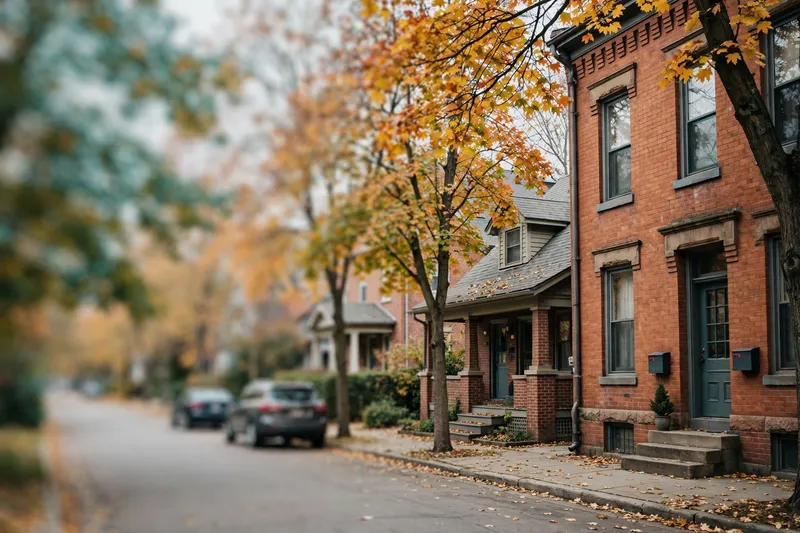
Water damage risk in Bucktown is not the same on every block. Bucktown runs between Fullerton Avenue to the north and Bloomingdale Avenue and the 606 trail to the south, with Western Avenue on the west side and the Kennedy Expressway and the North Branch of the Chicago River on the east side, and Damen Avenue, Milwaukee Avenue, Armitage Avenue and North Avenue as its main streets. The 606 trail runs along the south edge, Holstein Park sits in the middle of the neighbourhood, and the North, Damen and Milwaukee six-point intersection is the best-known crossing. The neighbourhood sits in ZIP code 60647.
The homes here are mostly rehabbed two-flats with finished basements, vintage workers' cottages, and brick buildings, with brick masonry, poured concrete basements and flat roofs, and newer brick and frame buildings from later decades. A burst pipe in a two-flat can soak the basement in an hour, because the water runs straight down, and a burst pipe on the top floor can soak the unit below it.
The vintage workers' cottages have exterior-wall supply lines, and those are the pipes most at risk when the cold comes, because the supply runs along a cold outside wall. The older homes sit on brick and rubble footings, with vitrified clay laterals, cast iron stacks and galvanized steel supply lines. Old clay sewer laterals crack and shift, and tree roots find the cracks. If your lateral is old clay, ask a licensed sewer contractor to televise it before the next storm, not after it.
The catch basins are another weak point: they clog with leaves and street dirt, and a clogged catch basin sends the street water straight to the lowest basement on the block.
Finished basements are the most exposed rooms in the neighbourhood, because the finished lower level is where the water goes first, and the finished walls and floors hide the water until the damage is done. A rehabbed two-flat with a finished basement is the home we are called to most, according to the service copy of the one company with a dedicated Bucktown page, and that is vendor service copy, not a verified incident count, so this page prints it as what that company says it sees, not as a measured fact.
A basement that is finished all the way to the floor takes longer to dry than an unfinished basement, because the drywall, the flooring and the insulation all have to come out before the framing can dry. Condo and HOA buildings add one more problem: the water may come from a common element, such as a roof, a riser or a shared drain, and the association and the unit owner will need to agree on who pays for what. That is why the landlord, tenant and condo section on this page matters, and why we document the source of the water in writing.
The streets matter too. A basement on a low side street will take water before a basement on a higher street. If your street has flooded before, it will flood again, and the fix is to find the entry point and close it, not to hope the next storm is smaller. Bucktown sits in ZIP code 60647. If your address is in 60647, we serve you from the same number, (773) 570-9869. We answer 24/7.
Sump pumps in Bucktown: the one machine that has to work
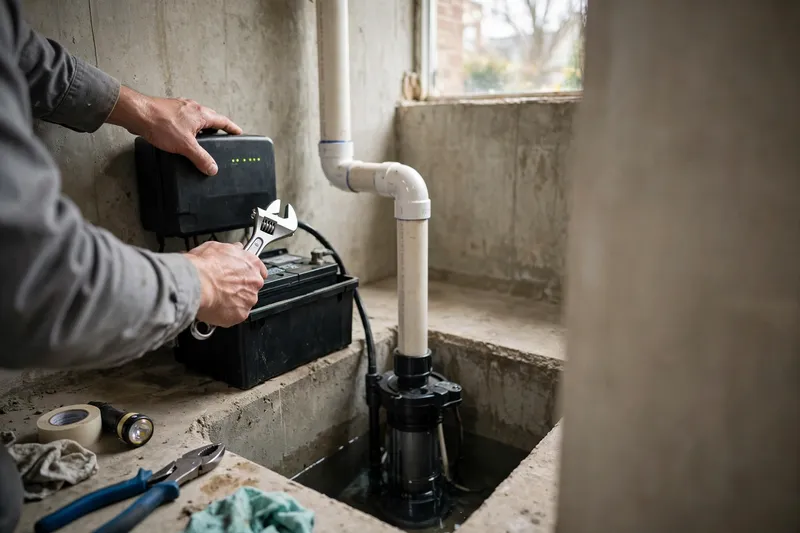
Most Bucktown basements have a sump pump, and most Bucktown basement floods start with a sump pump that stopped. Water damage restoration bucktown crews see the same failures again and again: the float switch sticks, the discharge line freezes, the check valve wears out, or the power goes out in the very storm that fills the pit. A pump that has not been tested in a year is a pump you do not know about.
Test the pump every few months. Pour a bucket of water into the pit and watch the pump run. If it does not run, call us before the next storm, not after it. A battery backup is the cheapest insurance a basement has. It keeps the pump running through a power cut, and it is the one upgrade we recommend to every Bucktown homeowner we meet. A second pump in the same pit is the next step up, and it covers the day the first pump dies.
Watch the discharge line in winter. A discharge line that freezes shut will back the water into the pit and flood the basement, even with a working pump. Make sure the line drains to a place where the water will not freeze and run back. If the pump runs constantly in dry weather, the check valve may be bad, and the water is running back into the pit as fast as the pump pushes it out. A finished basement is the most exposed room in the house, because the pump is the only thing between the finished lower level and the street water, so a finished basement without a working pump and a battery backup is a flood waiting for a storm.
| When | What to check | How to check it |
|---|---|---|
| Every month | The pump runs when the pit fills. | Pour a bucket of water into the pit and watch the pump run. |
| Every three months | The float switch moves freely. | Lift the float by hand and listen for the pump to start. |
| Every spring | The discharge line is clear. | Check the outlet outside, and clear leaves and dirt from it. |
| Every fall | The discharge line will not freeze. | Check the line drains to a place where the water will not freeze and run back. |
| Every year | The battery backup holds a charge. | Unplug the pump and check the backup runs it, then replace a battery that does not hold. |
| Every year | The check valve holds. | Listen for water running back into the pit after the pump stops. |
A pump that has not been tested in a year is a pump you do not know about, and a battery backup that has not been tested is a backup you do not know about. Test both before the next storm, not after it, because the storm is the day the pump has to work.
Three kinds of water, three kinds of cleanup
Not all water is the same. Clean water from a burst pipe is safe to touch. Grey water from a washing machine or a dishwasher is dirty but not sewage. Black water from a sewer is contaminated and dangerous. The kind of water decides what we clean, what we throw out, and how we protect your family.
| Category | Where it comes from | What it means for your home |
|---|---|---|
| 1. Clean water | A burst supply pipe, a broken appliance hose, rain through a roof leak. | Safe to touch. Dry it fast and the damage is usually limited to the wet material. |
| 2. Grey water | A washing machine, a dishwasher, a shower drain, a sump pit overflow. | Dirty, not sewage. Clean and disinfect every surface it touched, and remove what cannot be cleaned. |
| 3. Black water | A sewer backup, a flooded toilet, water from the street after a storm. | Contaminated. Do not touch it with bare hands. We wear protective gear, and we remove what it soaked. |
The category can change while the water sits. Clean water that sits for two days becomes grey water, and grey water that sits becomes black water, because the bacteria grow in it. That is why the first hour matters so much, and why we extract the water the same day we are called. If you do not know what kind of water it is, assume it is black water and call us, because that is the safe way to treat it.
| Material | Clean water | Grey water | Black water |
|---|---|---|---|
| Carpet pad | Can often be dried and saved. | Usually removed, because it cannot be cleaned. | Removed, because it is contaminated. |
| Carpet | Can often be cleaned and dried. | Cleaned and disinfected, if the backing is sound. | Removed, because it cannot be disinfected. |
| Drywall | Cut above the water line only where it is wet. | Cut above the water line, and the rest disinfected. | Cut above the water line, and all wet drywall removed. |
| Insulation | Removed where it is wet. | Removed where it is wet. | Removed where it is wet. |
| Hardwood | Dried first, then decide. | Dried first, then decide. | Dried first, then decide, and disinfected. |
| Furniture | Cleaned and dried. | Cleaned and disinfected. | Upholstered pieces usually removed. |
The rule behind the table is simple: clean water lets you save more, and black water lets you save less, because the water is contaminated and dangerous. Insulation is removed in every case, because wet insulation holds moisture against the framing and grows mold where you cannot see it. Hardwood is dried first in every case, because cupped hardwood often flattens as it dries, and the decision is made after the drying, not before it.
Flooded basement in Bucktown? What the evidence actually shows
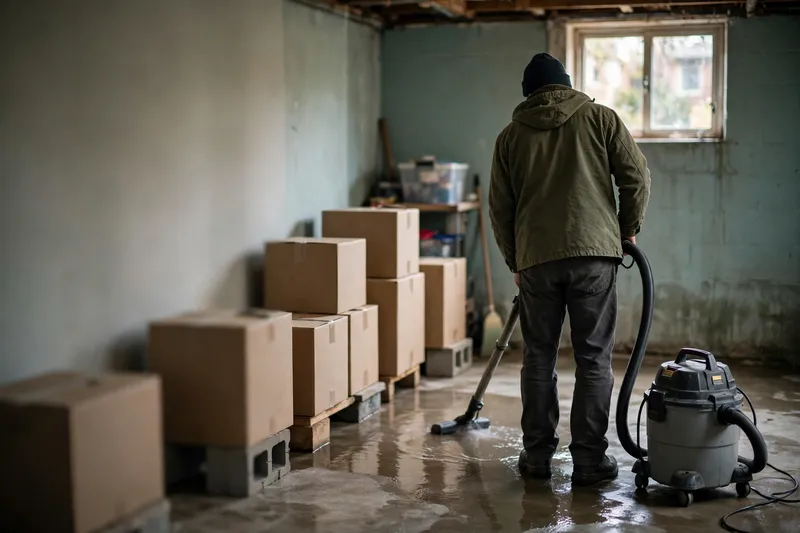
Water damage restoration bucktown basement jobs start the same way: the water is in, the floor is covered, and the homeowner wants to know why it happened here. The answer is usually one of four things. The combined sewer surcharged in a heavy rain and pushed water back through a basement floor drain. The sump pump stopped in the power cut that came with the storm. A frozen discharge line backed the water into the pit in January. Or a burst pipe filled the basement from the inside while nobody was home.
Bucktown basements flood because the neighbourhood sits on a combined sewer system, and the City of Chicago's combined sewer system collects both stormwater and wastewater in the same pipes. In wet weather the flow is diverted into the deep tunnels of the Tunnel and Reservoir Plan, and when the tunnel capacity is reached, combined sewage can discharge into local waterways through combined sewer overflows. On your street that means the sewer fills faster than it can drain, and the water looks for the lowest opening it can find, which is usually a basement floor drain.
The homes on the low streets take water first, and the finished basements take it before anyone else. Chicago's combined sewers can handle just about two inches of rain in 24 hours before a flood becomes likely, according to the Metropolitan Water Reclamation District and the Chicago Sun-Times, and when the rain passes that line, the water has nowhere to go but up through the drains.
No Bucktown resident was found saying basements flood here, and none was found saying they do not. So this page does not present basement flooding as a verified Bucktown resident theme, because the evidence does not support it. What the evidence supports is a city-wide combined-sewer risk that applies to Bucktown homes, plus three named incidents without a street address, told below.
The first incident is the Bucktown basement flooding of 24 August 2014, reported by NBC 5. Basements in Bucktown took two to three feet of water, and the report raised the possibility that work on the 606 trail may have disrupted the sewer. That is a Bucktown basement flood with a date and a depth, but no street address and no house number, and this page prints it as one. The second incident is a water main break in Bucktown on 9 January 2017, reported by ABC7, with no street address given.
The third is a pipe burst at the Green Dolphin nightclub on 1 February 2022, reported by CBS, a commercial burst pipe, not a home, and again with no street address given.
That is a Bucktown case, but it is a ceiling mold case, not a flood, and it names no street, no date of job and no homeowner, so this page prints it as an unnamed neighbourhood case only.
The July 2023 city-wide floods are the context, not a Bucktown event, and this page is careful about that. On 2 July 2023, two to nine inches of rain fell across the metro area, with the peak near Berwyn and Cicero, and at least seventy thousand basements flooded, with damage of at least five hundred million dollars, under the federal disaster declaration DR-4728-IL, followed by the 17 September 2023 storms under DR-4749-IL.
The nearest rainfall gauge cited in that summary, one mile west-northwest of Lincoln Park at 7.89 inches, is Lincoln Park, not Bucktown.
So the July 2023 floods are told here as the city-wide event they were, and this page does not print them as a Bucktown case.
Backflow and flood control are not a Bucktown resident theme in the sources we checked. They are a city-wide theme. The Metropolitan Water Reclamation District and the Chicago Sun-Times reported Overflow Action Alerts in November 2026, asking all Chicagoans to delay showers and laundry because combined sewers overflow into streets and basements, and the Sun-Times noted that some homes get raw sewage gurgling up through basement drains.
The Chicago Fed found in 2020 that the overwhelming majority of flood damage claims in Chicago are related to basement flooding, which often occurs when heavy rainfalls overwhelm sewer systems that then back up and send raw sewage into peoples' homes. Trade explainers describe backwater valves, overhead sewers and standpipes as Chicago-wide solutions for combined-sewer backups. None of those pages is Bucktown-specific except one service-area mention.
If a company tells you backflow valves are a Bucktown resident issue, ask them for the Bucktown source, because the sources we checked put that theme across the whole city, not in Bucktown. One more thing to get straight: a video about Bucktown flooding in Metairie, Louisiana, next to Lake Pontchartrain, is the wrong Bucktown, and it is not printed here as a Chicago case.
No house-number address was verified in any of these incidents, and this page invents none. No named Bucktown flood event exists on the City of Chicago's own site. If your basement is flooded now, call us first at (773) 570-9869. We answer 24/7 and talk you through the first hour while a crew is on the way. If the water came from the street or a sewer backup, call 311 as well, or file a report at 311.Chicago.gov, so the City of Chicago Department of Water Management knows the sewer backed up on your street. Do not walk in the water while the power is on, and do not touch the water with bare hands.
Water removal in Bucktown: fast, complete and documented
Water damage restoration bucktown water removal starts the moment we arrive. We pump the standing water out with a truck-mounted pump, then we vacuum what is left with a wet and dry vacuum, then we lift the carpet pad and the wet flooring so the water underneath can dry. The water is usually out of the house the same day, and the drying starts the same day too.
Every job is documented from the first minute. We photograph the water line on the walls, the wet floor and each damaged item before we move it, and we write the moisture readings into a log every day until the house is dry. Your insurer will ask for the photos, the drying log and the scope of work, and we give you all three. That record is also the proof that the drying was done right, because the readings show the moisture falling day by day, and the day the house was dry.
Water removal is not the same as drying. Removing the standing water takes hours, and drying the structure takes days, because the water has soaked into the drywall, the framing and the subfloor, and those materials give the water back slowly. We set air movers and a dehumidifier, and we take moisture readings every day. We stop the drying only when the readings are back to dry, and we show you the numbers. Do not switch the equipment off early, because the walls will stay wet inside, and wet walls grow mold where you cannot see it.
Flood cleanup in Bucktown: what happens after the water is out
Flood cleanup starts when the water is out, and it has three parts: cleaning, removing what cannot be saved, and drying what can be saved. We clean and disinfect the hard surfaces, we cut out the wet drywall to a clean line above the water mark, we remove the ruined carpet pad, flooring and insulation, and we dry the framing to readings you can see. The rooms are then ready for repair.
The cleanup is different for each kind of water. Clean water from a burst pipe needs drying and little else, because the water was safe to touch. Grey water from a washing machine or a dishwasher needs cleaning and disinfection on every surface it touched. Black water from a sewer needs protective gear, and we remove what it soaked, because black water is contaminated and dangerous. If you do not know what kind of water it is, assume it is black water and call us, because that is the safe way to treat it.
The homeowner steps below come from the WikiHow articles we read in full for this page, "Fast and Effective Ways to Dry a Basement After a Flood" and "3 Ways to Waterproof Your Basement". Shut off the basement power first, before you step into the water. Wait until the outside water is lower than the basement water before you pump, because pumping too fast can damage the walls. Use towels and a mop for less than two inches of water, and a wet vacuum or a sump pump for deeper water.
Move items out to ventilate for 48 hours, and discard what is still wet after 48 hours. Open the doors and windows for 48 hours, run fans, and run a dehumidifier six to eight inches from the walls for 48 hours, because mold and mildew start to form after 48 hours. Wear long sleeves, boots, rubber gloves, eyewear and a respirator.
Shovel out the mud, tear out the carpet at once, scrub hard floors and concrete walls with three quarters of a cup of bleach per gallon of water and rinse after five minutes, and cut out and replace waterlogged drywall and insulation. Those are the steps the guide gives, and they are the steps we follow on the job.
After the cleanup, we walk the house with you and show you the readings, the photos and the list of what was removed. That walkthrough is the start of the repair, and it is also the record your insurer needs. Keep the receipts for everything you spent on the emergency, because the insurer may pay them back. Do not throw anything away before you photograph it, because the photos are the proof of the loss.
Drying by readings, not by guesswork
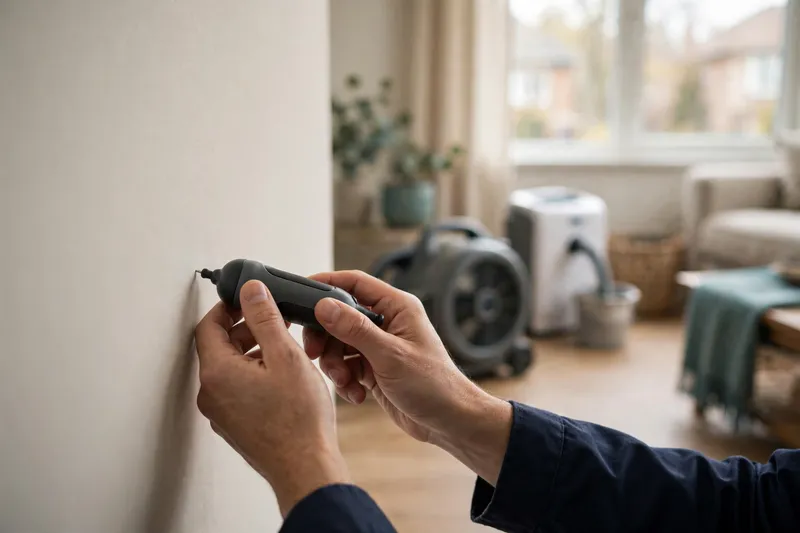
Drying is the part of the job that most homeowners never see, and it is the part that decides whether the house stays dry. We dry by readings, not by guesswork, which means we take moisture readings with a meter every day, we write them into a log, and we stop the drying only when the readings are back to dry. The log is the proof that the house is dry, and the proof that the repair was done right.
| Loss | Typical drying time | What decides it |
|---|---|---|
| Clean water, one room | Three to five days | How much water, and what the floor is made of. |
| Clean water, whole basement | Five to seven days | How deep the water was, and how much drywall got wet. |
| Grey water, one room | Five to seven days | Cleaning time, and how much material must be removed. |
| Black water, whole basement | Seven to ten days | Removal of soaked material, and disinfection of what stays. |
| Hardwood floors, soaked | One to two weeks | Cupped hardwood often flattens as it dries, so we wait before we decide. |
Those times are typical, not promised, because every house is different. Four things decide the time: how much damage there is, what kind of water it is, what materials got wet, and whether mold is growing. A brick two-flat with a poured concrete basement dries faster than a building with shared walls and shared drains, because the water has fewer places to hide. A finished basement dries slower than a room above ground, because the walls are below grade and the air does not move as well. We show you the readings every day, so you can see the moisture falling, and you will know when the house is dry, because the numbers will say so.
Water mitigation in Bucktown: stop the damage from spreading
Water damage restoration bucktown mitigation is the emergency response, and it starts in the first hour. Mitigation means stop the water, extract it, and dry the house, so the damage does not spread while the repair is being planned. The first part of water damage restoration is often called water mitigation, and the longer work after that is called remediation: cleaning, sanitizing, removing ruined material, and rebuilding. On a Bucktown job we do both, in that order.
Mitigation has four moves, and they happen in order. First, stop the water at the source: shut off the main water valve if a pipe burst, turn off the water to the appliance if it failed, and call 311 if the water came from the street or the sewer. Second, extract the standing water with pumps and vacuums. Third, set the air movers and the dehumidifier, and take the first moisture readings. Fourth, lift what can be saved and photograph everything, because the photos are the start of the insurance claim.
The point of mitigation is to keep a small loss small. Water soaks into drywall and flooring in minutes, and mold can start to grow within 24 to 48 hours, so the drying has to start the same day. A homeowner who waits a day to call has a bigger job than a homeowner who calls in the first hour, because the water has had a day to soak in. Call us first at (773) 570-9869, and we will talk you through the first hour while a crew is on the way.
Repair and rebuild after water damage in Bucktown
Repair starts only after the drying log says the house is dry. We cut out the wet drywall to a clean line above the water mark, and replace it with new drywall, taped and finished. We replace the carpet pad that sat in the water. We check the hardwood with the moisture meter before we decide whether to refinish or replace it, because cupped hardwood often flattens as it dries. We replace the baseboards and the trim that soaked up water, and repaint the rooms that were opened up.
We remove the wet insulation, because wet insulation holds moisture against the framing and grows mold where you cannot see it, and replace it with new insulation after the framing is dry. We check the outlets, the switches and the appliances that got wet, and replace what is not safe to keep.
The repair is done to match what was there before, not to upgrade it, because the insurance claim is for the damage, not for a remodel. If you want an upgrade while the wall is open, tell us before the work starts, and we will price it apart from the claim. Every repair is photographed before, during and after, and the photos go into the same file as the drying log. The last step is the final readings: we take the moisture readings one more time after the repair, and write them into the log, because the log is the proof that the house is dry, and the proof that the repair was done right.
Burst pipe in Bucktown: what to do in the first minutes
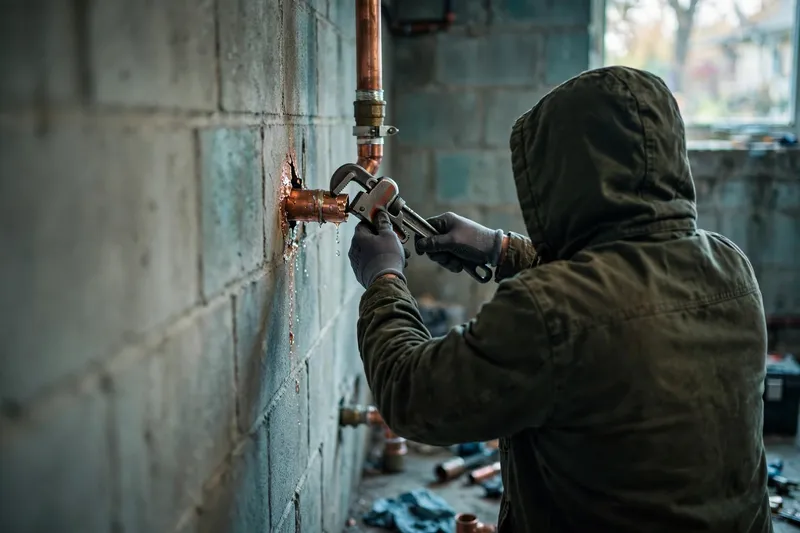
A burst pipe fills a basement fast, and the first minutes decide how much of the house survives. Shut off the main water valve first, before you do anything else. The main valve is usually near the water meter, where the water line enters the house, and every adult in the house should know where it is. If you cannot find it, call us at (773) 570-9869 and we will talk you through it while a crew is on the way.
Winter is the season that bursts the most pipes in Bucktown, and the pipes that burst are usually the ones on outside walls, in unheated spaces, or in rooms where the heat was turned off. The vintage workers' cottages are the homes most at risk, because their supply lines run along exterior walls, and a cold snap freezes those lines first. Keep the heat on in every room in a freeze, even in rooms you do not use. Open the cabinet doors under sinks on outside walls, so the warm air reaches the pipes.
Let a tap drip on the coldest nights, so the water keeps moving. Insulate the pipes on outside walls and in unheated spaces. If a pipe has frozen before, it will freeze again, and the fix is insulation or heat tape, not hope. If you leave the house empty in winter, do not turn the heat off, and ask someone to check the house.
A plumber fixes the pipe, and we dry the house and repair the damage. The plumber charges for the pipe repair, and we work with your insurer on the drying and the repair. If the water is in the house, call us first, because the drying starts the same day, and the drying is what keeps the loss small. A pipe that burst in a hard freeze, or a supply line that split without warning, is usually covered by homeowners insurance, because the burst was sudden and accidental. A pipe that leaked slowly for months is usually not covered, because standard policies exclude gradual damage and poor maintenance. Call your insurer in the first hour.
No verified Bucktown burst-pipe case in a home was found on any platform we checked. The only named burst-pipe incident in Bucktown is the Green Dolphin nightclub pipe burst of 1 February 2022, reported by CBS, a commercial building, with no street address given, and this page prints it as one.
A plumber's blog calls a pipe freezing and bursting on a cold night in Bucktown or Logan Square a prime example of a covered event, but that is a hypothetical example, not a real incident, and this page does not print it as a case. Burst pipes still happen in Bucktown homes, and the advice on this page still applies, but the verified Bucktown incidents are the basement flooding of 2014, the water main break of 2017 and the nightclub pipe burst of 2022, not a burst pipe in a home.
Sewage cleanup in Bucktown: contaminated water needs a different job
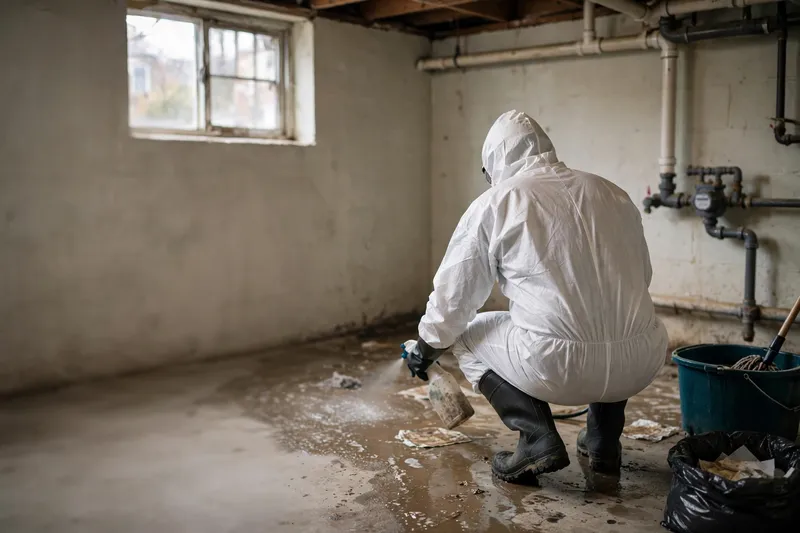
Sewage cleanup is a different job from clean water cleanup, because the water is contaminated and dangerous. Do not touch it with bare hands, and do not walk in it without rubber boots and gloves. We wear protective gear, we extract the water, we remove what it soaked, and we clean and disinfect every surface it touched. The water that came from a sewer is black water, and black water means removal, not just drying.
If the water came from the street or a sewer backup, call 311 as well as us, or file a report at 311.Chicago.gov, so the City of Chicago Department of Water Management knows the sewer backed up on your street. The City's "Water in Basement" service is for reporting a backup in a building's sewer system, and it asks for the address, whether the water is dirty or clean, where the water is coming from, how many inches have backed up, and whether it is a basement, crawl space or ground level.
It is not for reporting water that has entered a basement through a window or door. If the water came through a window or a door, that is storm flooding, and the cleanup is the same, but the report goes to us, not to 311.
Backflow prevention is a real service, and if your basement has backed up before, ask a licensed sewer contractor about it, and ask us about drying and cleanup, because the two jobs go together. But backflow as a resident theme belongs to the whole city in the sources we checked, not to Bucktown. The city-wide reporting describes raw sewage gurgling up through basement drains when heavy rain overwhelms the combined sewers, and the trade explainers describe backwater valves, overhead sewers and standpipes as Chicago-wide solutions.
Flood control is not a City programme, and this page does not present it as one. If your basement has backed up more than once, ask a licensed sewer contractor to televise the lateral, and report the problem to 311, because the drain may have failed, and the City may pay to fix it under the Private Sewer Drain Program, told in full below.
The emergency first hour: a minute-by-minute guide
The first hour after you find the water is the hour that decides the size of the job. Here is what to do, minute by minute, while the crew is on the way.
- Minutes 0 to 5: call us. Call (773) 570-9869. Tell us what happened, where the water is and how deep it is. We answer 24/7 and talk you through the first hour while a crew is on the way.
- Minutes 5 to 10: stop the water. Shut off the main water valve if a pipe burst. Turn off the water to the appliance if it failed. If the water came from the street or the sewer, do not try to stop it yourself, and call 311 as well.
- Minutes 10 to 15: stay safe. Do not enter a flooded basement while the power is on. If the water is near the electrical panel, stay out until we tell you it is safe. If someone is hurt, or if live electricity is touching the water, call 911 at once.
- Minutes 15 to 25: lift and photograph. Move dry boxes, papers and electronics to higher ground. Photograph the water line on the walls, the wet floor and each damaged item before you move it. These photos are the start of your insurance claim.
- Minutes 25 to 40: call 311 and your insurer. If the water came from the street or a sewer backup, call 311, or file a report at 311.Chicago.gov. Then call your insurer and start the claim, and tell them the crew is on the way.
- Minutes 40 to 60: wait for the crew. Do not mop the water yourself, and do not switch on a fan in a flooded room. When the crew arrives, we extract the water, take the first moisture readings, and set the drying equipment the same day.
That is the whole first hour, and it is the same on every job, whether the water came from a burst pipe, a flooded basement or a sewer backup. The homeowners who call in the first hour have smaller jobs than the homeowners who wait a day, because the water has had less time to soak in, and the drying starts the same day.
Every service we do in Bucktown
Water damage restoration bucktown work covers every part of the job, from the first call to the last coat of paint. Here is the full list, in the order we do it.
| Service | What it covers | When you need it |
|---|---|---|
| Emergency water extraction | Pumps and vacuums remove the standing water the same day. | Any flooded basement, room or floor. |
| Structural drying | Air movers and a dehumidifier, with a moisture log every day. | Every job, until the readings say dry. |
| Sewage cleanup | Protective gear, extraction, removal and disinfection. | Any sewer backup or black water. |
| Burst pipe repair | The pipe is fixed, the water is extracted, and the damage is dried. | Any burst or split pipe, in any season. |
| Sump pump failure | The pit is pumped out, the pump is checked, and a battery backup is fitted. | Any basement flood that started with a pump that stopped. |
| Mold remediation | Containment, removal, cleaning, drying, and fixing the moisture that fed it. | Any mold after water damage, at any stage. |
| Flood cleanup | Cleaning, removal of ruined material, and drying of what can be saved. | Any flood, from any source. |
| Repair and rebuild | Drywall, flooring, trim, paint and insulation, to match what was there. | After the drying log says the house is dry. |
| Insurance documentation | Photos, drying log and scope of work, in one file. | Every job, for every claim. |
Every service is done by the same crew, from the same number, (773) 570-9869, and every service is documented in the same file as the drying log. That is what one company for the whole job means: the water out, the house dry to readings, the damage documented, and the rooms rebuilt.
If this happened, do that: a decision guide
Use this table to decide what to do first. The left column is what happened, the right column is the first move.
| If this happened | Do that first | Then |
|---|---|---|
| A pipe burst | Shut off the main water valve. | Call us at (773) 570-9869. |
| The basement is filling fast | Call us first, then stay out of the water. | Call 911 if someone is hurt or the power is in the water. |
| The water came from the sewer | Do not touch it with bare hands. | Call us and call 311. |
| The water came through a window | Move what you can save to higher ground. | Call us, and photograph everything. |
| The sump pump stopped | Pour a bucket of water in the pit to test it. | Call us, and ask about a battery backup. |
| The ceiling is stained | Put a bucket under the drip and move what is below it. | Call us, because the stain is usually far from the leak. |
| You smell mold | Do not wipe it and call it done. | Call us, and ask about the Illinois Part 835 registration. |
| The water is near the panel | Stay out of the basement. | Call us and stay out until we tell you it is safe. |
If none of these rows fits what happened, call us anyway at (773) 570-9869. We answer 24/7, and we will tell you what to do first while a crew is on the way. The worst first move is no move at all, because the water keeps soaking in while you wait.
Landlords, tenants and condos in Bucktown
Bucktown is a neighbourhood of rehabbed two-flats, vintage workers' cottages, brick buildings and small condo buildings, and water damage in one of those buildings is rarely one home's problem. A burst riser in a small condo building can soak several units at once, because the water runs down the riser and through the floors. A burst pipe on the top floor of a two-flat can soak the unit below it. A sewer backup in the basement can push water up through the floor drains of several units. The water does not stop at the unit line, and the claim does not stop there either.
If the water came from a common element, such as a roof, a riser or a shared drain, the association and the unit owner will need to agree on who pays for what. Document the source in writing, with photos and a moisture meter reading, before anyone repairs anything, because the source decides the claim. Tell the association at once, in writing, and tell your own insurer the same day. The association's insurance and your own insurance may both be involved, and the two insurers will need the same record: where the water came from, where it went, and what it damaged. We write that record for you, with photos and readings, so both insurers get the same facts.
If a pipe burst because of age, rust or normal wear, the landlord must fix it, because the pipe belongs to the building.
If a tenant turned off the heat in a freeze or left windows open in a cold snap, the tenant can be held liable for the damage that followed. Your renters insurance covers your belongings, not the building, and the landlord's insurance covers the building, not your belongings. If you rent in Bucktown and the water came from the building, tell the landlord at once, in writing, and photograph the damage before you move anything.
Check your lease, because the lease sets out what you and the landlord each owe, and keep the photos and the drying log, because the record is what decides the claim.
Finished basements deserve a word of their own, because they are the most exposed rooms in the neighbourhood. A finished basement sits below street level, its walls are finished all the way to the floor, and a heavy rain fills the window wells and brings the water through the window or the wall. A finished basement without a working sump pump and a battery backup is a flood waiting for a storm.
If you live over a finished basement, test the pump every few months, keep the window wells clear, and keep the discharge line from freezing in winter. If you own a two-flat with a finished basement and rent one unit out, the same landlord rules apply as in any rented home, and the lease sets out what you must do when the home becomes uninhabitable.
Bucktown through the year: when the water comes
Water damage in Bucktown follows the seasons, and each season brings its own kind of water. Know the season, and you will know what to watch for.
| Season | What happens | What to watch |
|---|---|---|
| Winter | Pipes freeze and burst, discharge lines freeze shut, ice dams form on flat roofs. | Keep the heat on, drip a tap on the coldest nights, clear the roof drain in the fall. |
| Spring | Heavy rain fills the combined sewer, and the ground is still frozen, so the water has nowhere to go. | Test the sump pump, clear the catch basin, and watch the window wells. |
| Summer | Thunderstorms drop inches of rain in an hour, and the sewer surcharges. | Keep the discharge line clear, and call 311 if the street floods. |
| Fall | Leaves clog the catch basins and the roof drains, and the first freeze catches the pipes. | Clear the leaves, test the pump, and insulate the pipes on outside walls. |
Winter in Bucktown is not only about frozen pipes. The January 2017 water main break showed what a winter break can do here, and the August 2014 basement flooding showed what a summer storm can do, with two to three feet of water in Bucktown basements. The lesson of both is that the water comes with the storms and the cold, and the fix is the same: find the entry point and close it, not hope the next storm is smaller.
What drives the cost of water damage restoration in Bucktown
The cost of water damage restoration in Bucktown depends on four things, and no two jobs cost the same. First, how much water there is, and how far it spread. A small clean-water leak in one room costs far less to fix than a sewer backup across a basement. Second, what kind of water it is. Clean water needs drying, and black water needs removal and disinfection, which takes longer. Third, what materials got wet.
Drywall, carpet pad and insulation that sat in water must be removed, and hardwood that cupped must be dried before anyone decides whether to refinish or replace it. Fourth, how long the water sat. A loss found in the first hour costs far less than a loss found a week later, because the water has had a week to soak in, and mold has had a week to grow.
We never quote a price before we see the loss, and we never print prices on this site. After the first visit you get a scope of the work, with the photos, the drying log and the list of what was removed, and your insurer gets the same file. That is the honest way to price a job: see the loss, write the scope, and show the readings. A company that quotes a price over the phone before it has seen the loss is guessing, and a guess is not a scope.
One more thing drives the cost, and it is the one you control: the first hour. Call us first at (773) 570-9869, and we will talk you through the first hour while a crew is on the way. The homeowners who call in the first hour have smaller jobs than the homeowners who wait a day, because the water has had less time to soak in, and the drying starts the same day.
Insurance in Bucktown: sudden versus gradual
Water damage restoration bucktown insurance claims turn on one distinction, sudden versus gradual, and it is the distinction the adjuster will ask about first. Homeowners insurance usually pays for water damage restoration in Bucktown if the damage was sudden and accidental, such as a burst pipe or a broken appliance hose. Gradual damage, such as a slow leak or poor maintenance over months, is usually not covered, because standard policies exclude gradual damage and wear and tear.
Flooding from outside the house is usually not covered by a standard homeowners policy. A standard policy covers water that came from inside the house, such as a burst pipe or an appliance failure, and it does not cover water that came from outside, such as a river, a street or a storm surge. Flooding from outside needs separate flood insurance, and the National Flood Insurance Program is the federal programme that sells it. A sewer backup is usually covered only if you hold a sewer backup endorsement, which often has its own limit, and the endorsement is the part of the policy that pays for water that came back through a floor drain or a toilet.
What the insurer pays depends on the cause and your policy. A burst pipe is usually covered, and your insurer pays the cost of the drying and the repair, less your deductible. A sewer backup is usually covered only if you hold the endorsement. Flooding from outside needs separate flood insurance. The insurer pays the cost of the drying and the repair, not the cost of the pipe itself, because the pipe is the thing that failed, and the water damage is the loss that followed.
Keep the receipts for everything you spent on the emergency, because the insurer may pay them back, and keep the photos, the drying log and the scope of work, because the adjuster will ask for all three.
Do not guess or speculate when you talk to the adjuster, and do not use words that imply long-term or neglected maintenance. Stick to verified facts: when you found the water, where it came from, and how deep it was. Do not say the leak has been going on for a while, because words like gradual can cause an adjuster to classify the loss as wear and tear. Do not sign anything you do not understand, and do not agree to a settlement on the spot, because the drying log is not finished until the readings say dry.
The City of Chicago Private Sewer Drain Program: what Bucktown
If the sewer drain under your home has failed, the City of Chicago may pay to fix it. The Private Sewer Drain Program is a City programme that covers the repair or replacement of a private sewer drain, and the City pays the entire cost. There is no repayment, no assessment and no lien on the property, and the City pays the contractor directly. The programme is for a single-family home or a two-to-four-unit building, whether the owner lives in it or rents it out.
The live programme page is titled "Private Drain Repair", and it says the City may repair sewer drain tiles coming from private residences, of up to four units, that are broken under the public way, which is the area from the city sidewalk to the center of the street. Tiles proven to be broken under the public way will be repaired by the City at no cost to the property owner when two conditions are met: a licensed sewer contractor must be hired to rod and/or make a video inspection of the drain line, and the contractor must schedule a review by a sewer inspector. The Department of Water Management oversees the programme.
The process is simple, and it starts with a report. First, report the problem to 311, or file a report at 311.Chicago.gov, so the City of Chicago Department of Water Management knows the drain has failed. A Department crew is dispatched to determine whether the failure is in the main sewer or in the private drain, and a licensed sewer contractor then rods and videotapes the line, with a permit from 312-744-3155 and an inspector from 312-744-5503. If the drain is broken in the public way, the City repairs it. The homeowner does not pay the contractor, and the homeowner does not arrange the contractor.
One thing the City's programme page does not say is a year-of-construction condition. No year-of-construction condition appears on the City's programme page, so this page does not print one. A text search of the live programme page found no year, and the 311 article on the programme found none either. If a company tells you the programme only covers homes built before a certain year, ask them for the City page, because the live programme page carries no such condition.
The 2023 flyer for the programme was not located in this run, so the savings figure and the phone number that appear on that flyer are not printed here. What is printed here is the live programme page, and the live programme page is the one that matters. No waiting time is printed here either, because the live programme page and the 311 article in this run state no number of days for the representative to call.
The Private Sewer Drain Program is not the same as a sewer backup claim, and it is not the same as a flood claim. It is a programme for a failed drain, and it is the City's way of fixing a drain that has broken under a home. If your basement has backed up more than once, and the water came through a floor drain, ask a licensed sewer contractor to televise the lateral, and report the problem to 311, because the drain may have failed, and the City may pay to fix it.
How long does water damage restoration take in Bucktown
Water damage restoration bucktown jobs take a few days to several weeks. Drying takes three to five days on a clean-water loss in one room, and repairs take one to two weeks after that. Four things decide the time: how much damage there is, what kind of water it is, what materials got wet, and whether mold is growing.
A clean-water loss in one room is the fastest job: three to five days of drying, then one to two weeks of repair. A whole basement is slower: five to seven days of drying, then two to three weeks of repair, because the drywall, the flooring and the insulation all need to be removed and replaced. A sewer backup is slower still: seven to ten days of drying and disinfection, then two to four weeks of repair, because the soaked material must be removed and the surfaces must be disinfected. A hardwood floor that cupped adds one to two weeks, because cupped hardwood often flattens as it dries, and we wait before we decide whether to refinish or replace it.
The timeline is typical, not promised, because every house is different. A brick two-flat with a poured concrete basement dries faster than a building with shared walls and shared drains, because the water has fewer places to hide. A finished basement dries slower than a room above ground, because the walls are below grade and the air does not move as well. We show you the readings every day, so you can see the moisture falling, and you will know when the house is dry, because the numbers will say so.
Mold after water damage in Bucktown: the 24 to 48 hour rule
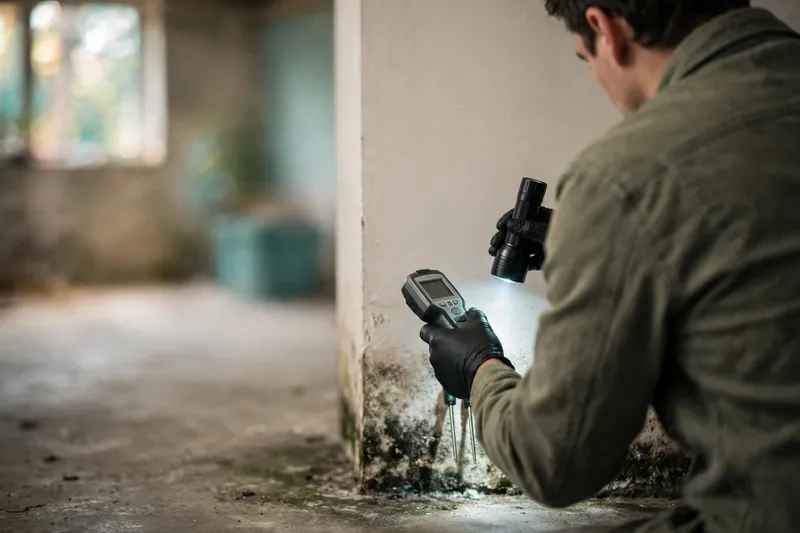
Mold can start to grow within 24 to 48 hours of water damage, and that is the first rule to know. Dry the house in the first two days, and the mold never gets a start. Wait a week, and the mold is growing where you cannot see it, behind the drywall and under the floor. That is why the drying starts the same day we are called, and why we take moisture readings every day until the house is dry.
The second rule is the ten square foot line. A patch of mold smaller than ten square feet can often be cleaned by the homeowner, with gloves, goggles and a mask, and with the area ventilated. A patch larger than ten square feet needs a professional, with containment, removal and drying, because the spores spread when the mold is disturbed, and the moisture that fed it must be fixed or it will come back.
If you do not know how big the patch is, call us, because we measure it with a moisture meter before we decide. The WikiHow guide "How to Kill Black Mold", by Mike Kapur, a certified mold assessor and home inspector with more than fifteen years of experience, gives the same line: call a professional if the area is larger than ten square feet, if the mold is in the heating and cooling system, if anyone has health concerns, or if the mold was caused by contaminated water or sewage. It also says never to mix cleaners, and never to mix ammonia and bleach.
Stage 4 is the highest level in the four-stage scale many assessors use, and it means extensive mold across a large area or several rooms, often with structural material damaged. It needs professional containment, removal and drying, not a household cleaner. Assessors use different scales, so ask yours which scale they use. Mold remediation is the full job: find the moisture that fed the mold, contain the area so spores do not spread, remove the mold and the ruined material, clean and dry the space, and fix the moisture so it does not come back.
Ask the company for its Illinois Department of Public Health registration under Part 835 if mold work is needed, because the registration is operational, with a grace period to 30 September 2027, and it is the consumer guidance the state gives. The site claims no registration of its own.
Can black mold really be remediated? Yes, but it cannot be wiped away and called done. Remediation means finding the moisture that fed the mold, containing the area, removing the mold and the ruined material, and drying the space so it does not come back. The US EPA guidance and the S520 standard both say removal, not killing, is the job. A company that sprays a cleaner and calls it done has not remediated the mold, because the moisture is still there, and the mold will come back.
Ask for the drying log, and ask for the readings, because the numbers are the proof that the space is dry.
The 50/50 rule for water damage: the FEMA rule
The 50 percent rule is the FEMA rule for substantial damage, and it is the meaning that matters most. If repairing a home in a floodplain costs half or more of the home's market value, not counting the land, the home must be brought up to current floodplain rules before it can be rebuilt. That is the rule, and it is a federal rule under the National Flood Insurance Program, for buildings in a Special Flood Hazard Area. It is not a rule about splitting the bill with the insurer.
That is worth saying plainly, because in an earlier neighbourhood run one engine did invent a different rule, a "50 percent restoration rule" for deciding whether to dry or replace damaged materials, with no mention of FEMA, no floodplain and no substantial damage. That framing is invented, and this page does not use it. In the Bucktown run, all three engines that ran fully gave the FEMA rule correctly, and none of them offered an invented rule instead.
There is no such insurance-industry dry-or-replace rule in the sources we checked.
The third meaning is the one homeowners actually mean when they ask the question: how much of the house is ruined, and how much can be saved. There is no rule for that, because every house is different. A drywall sheet that sat in water for a day can often be saved above the water line, and a carpet pad that sat in water cannot be saved at all. The drying log decides what is saved and what is removed, because the readings show what is wet and what is dry. Ask us for the readings, and we will show you the numbers.
Pipe bursting: two different jobs with the same name
A burst water pipe means a pipe split open and flooded the house, and the work is extraction, drying and repair. Trenchless pipe bursting means replacing an old sewer line by pulling a new pipe through it, and the work is done by a licensed sewer contractor. A page that covers only one meaning loses half the question, and this page covers both.
A burst water pipe is the emergency. Shut off the main water valve first, before you do anything else, then call us at (773) 570-9869. We extract the water, dry the house to readings you can see, and repair the damage. A pipe that burst in a hard freeze, or a supply line that split without warning, is usually covered by homeowners insurance, because the burst was sudden and accidental. A pipe that leaked slowly for months is usually not covered, because standard policies exclude gradual damage and poor maintenance.
Trenchless pipe bursting is the planned job. An old clay sewer lateral cracks and shifts, tree roots find the cracks, and the line backs up again and again. A licensed sewer contractor cameras the line, then pulls a new pipe through the old one, without digging up the yard. The work needs a sewer permit from the Department of Buildings, and sewer permits are issued only to licensed drain layer contractors, through the Department's ePlan system, with the fee paid within 30 days of the fee being posted.
No fee amount is printed on the Sewer Permits page, and this page prints none. If your lateral is old clay, ask a licensed sewer contractor to televise it before the next storm, not after it.
Sewer permits and drainlayer licences in Bucktown: what a homeowner
Any work on a sewer lateral in Bucktown needs a sewer permit, and sewer permits are issued only to licensed drain layer contractors. A homeowner cannot take out a sewer permit, and a general contractor cannot take one out either. The permit goes through the Department of Buildings ePlan system, and the fee must be paid within thirty days of the fee being posted. No fee amount is printed on the Sewer Permits page, and this page prints none.
The drainlayer licence is a City licence, and the current figures are on the Department of Buildings licence page for the current calendar year. The licence costs one hundred fifty dollars, the renewal costs one hundred fifty dollars, and the licence covers classes A, B and C. An older form from 2020 shows a lower fee and different classes, and it lists a fifty thousand dollar bond, and this page does not print the older figures as current, because the current page is the one that matters. The bond is not on the Sewer Permits page at all, and this page does not present it as a current Sewer Permits fact.
If you need work on a sewer lateral, ask the contractor for the licence before the work starts, and ask for the permit number once the permit is issued. The Department of Water Management contacts for sewer permits are the preconstruction and field inspections line at 312-744-3155, the as-built drawings line at 312-744-3255, and. Those are the numbers and the address the City prints, and they are the ones to use. A licensed drainlayer may replace in kind up to twenty feet of existing private sewer without a permit, with a phone call to 312-744-3155 and the fee paid within thirty days. The Department of Water Management inspects sewer work up to six inches at 312-744-5503, and eight inches and above at 312-744-5502.
Why does this matter for water damage? Because a failed lateral is the cause behind many Bucktown basement floods, and a lateral that has not been televised is a lateral you do not know about. Old clay laterals crack and shift, tree roots find the cracks, and the line backs up again and again. If your basement has backed up more than once, ask a licensed sewer contractor to televise the lateral before the next storm, not after it, and ask about the Private Sewer Drain Program, because the City may pay to fix a failed drain.
Is Chicago tap water safe to drink after a flood
The City of Chicago treats and delivers drinking water through the Department of Water Management, and tap water in a normal home is drinking water. The Department is led by Commissioner Randy Conner. The Department's Administrative Offices are located at the James W. Jardine Water Purification Plant at 1000 East Ohio Street, Chicago, IL 60611, and admittance is by appointment only. The Department's home page states no street address for the Department, and its "What We Do" page states no street address either, so this page prints no headquarters address. The Department publishes no main phone number, because all requests for water services, including flooding, broken pipes outside the home, water on the street, poor water quality and meter issues, go through 311.
After a flood, do not drink water that may be contaminated, and do not drink from a tap in a flooded room. If your water looks, smells or tastes wrong, call 311. If the water came from the street or a sewer backup, do not use the taps in the flooded rooms until the house is dry and the water is clear. The City's "Water in Basement" service is for reporting a backup in a building's sewer system, and it asks for the address, whether the water is dirty or clean, where the water is coming from, how many inches have backed up, and whether it is a basement, crawl space or ground level. It is not for reporting water that has entered a basement through a window or door.
The Department of Water Management's pages say the City's sewers are combined, which means the same pipes carry both stormwater and wastewater, and in wet weather the flow is diverted into the deep tunnels of the Tunnel and Reservoir Plan. When the tunnel capacity is reached, combined sewage can discharge into local waterways through combined sewer overflows. That is why a heavy rain can push water back through a basement floor drain, and why the fix for the next storm is to find the entry point and close it, not to hope the next storm is smaller.
Bucktown flood record: what the City record shows
The City record shows a lot about Chicago flooding, and nothing about a named Bucktown flood event. A search of chicago.gov for Bucktown flooding returned restoration-company pages and a flood-risk table, with no Bucktown flood event in either one. The only named flood and storm events on the City's site are the citywide ones: the 1997 flood, and the severe storms of 2023 and 2024. The City's Basement Flooding page says the City places restrictors, known as Rain Blockers, in catch basins, and that the Department of Water Management maintains the sewers.
| Event | What the City record shows | What it does not show |
|---|---|---|
| 1997 flood | Hardship visited some thirty five thousand residents, and the City answered with inlet restrictor valves and downspout disconnection. | No Bucktown street or address. |
| Storms of 29 June to 2 July 2023 | A federal disaster declaration, DR-4728-IL, and a City relief programme for residents who faced hardship. | No Bucktown street or address. |
| Storms of 17 to 18 September 2023 | A federal disaster declaration, DR-4749-IL, and the same City relief programme. | No Bucktown street or address. |
| Storms of 13 to 16 July 2024 | A federal disaster declaration, DR-4819-IL, and the same City relief programme. | No Bucktown street or address. |
| Bucktown basement flooding, 24 August 2014; water main break, 9 January 2017; Green Dolphin pipe burst, 1 February 2022; ceiling mold case, July 2025 | Nothing on the City record. The incidents are news reports and a company blog, told in full in the flooded basement section above. | No house-number address in any case. |
The City's relief programme is the Disaster Relief Assistance Program, run by the Department of Family and Support Services, and it provides financial relief for residents who faced hardship during the severe storms of 2023 and 2024.
The programme pays up to fifteen thousand dollars as a one-time award, covering up to six consecutive months of eligible expenses such as rent, mortgage and utility payments, for the eligible period of 21 January 2025 to 21 January 2027, for Chicago residents with a household income at or below eighty percent of the Area Median Income, with documented hardship directly related to a qualifying storm, and with unmet need not covered by federal aid, the Small Business Administration, insurance or other assistance.
The income limits for 2026 run from sixty-eight thousand fifty dollars for a one-person household to one hundred twenty-eight thousand three hundred fifty dollars for an eight-person household. Applications are rolling until funds are exhausted, and there is no cost to apply. The programme is funded by Community Development Block Grant Disaster Recovery funding from the United States Department of Housing and Urban Development, and the City's total is fifteen million dollars.
The priority ZIP codes are 60644, 60651, 60639, 60641 and 60624, and Bucktown's 60647 is not among them, so this page claims no priority-ZIP status for Bucktown. The eligible expenses are rent, mortgage and utilities only, not water damage repair itself. The primary assistance partner is Northwest Center, 5233 W Diversey Avenue, 773-283-3888, and the Department of Family and Support Services sits at 1615 W Chicago Avenue, 5th Floor, 312.743.0300.
The 1997 flood is the oldest named flood event on the City's record, and it is the reason the City's Rainblocker programme exists. The flood visited hardship on some thirty five thousand residents, and the City answered with inlet restrictor valves and downspout disconnection, so the rainwater would stay out of the combined sewer for longer. The programme was paid for in part by a federal hazard mitigation grant of seven million eight hundred thousand dollars in 1998, and the pilot ran in three areas of the city.
The figure of close to two hundred thousand inlet restrictor valves is text burned into the image file on the City's Blocking Rainwater page, not body text and not alt text, and this page prints it as the image file's figure. Separately, the City's Combined Sewer Overflow Operations and Maintenance Plan, section 3.5.3, states in its own body text that the City installed nearly two hundred thousand inlet restrictor valves into street catch basins, at a rate of 90 to 120 installations per day.
The web page and the plan are different sources, and this page keeps them distinct. The valves slow the flow of water into the sewers by 80 percent. No Bucktown street or address is named for the 1997 flood, so this page prints none.
The Basement Flooding Protection Subsidy Program is not in the City record at all. The city layer searched chicago.gov for it fourteen times in a row, and it was not found in any of the fourteen runs. This page does not print it as a City fact, and it never will until the City publishes it. If a company or an AI engine tells you the City will pay half the cost of a flood protection system, ask them for the City page, because the City has no such page that we could find.
The Flood Assistance Repair Program is a different, real programme, and it is not the subsidy: it offers up to twenty five thousand dollars in repairs for owner-occupied single-family and two-unit homes on the west side of Chicago, for basements damaged by the 2023 or 2024 floods, for households with income up to one hundred percent of Area Median Income, with registration from 30 November to 11 December 2026, run by the Westside Health Authority.
Bucktown is on the Northwest Side, not the west side, so this page claims no Bucktown eligibility for it, and the two programmes must never be confused.
The stormwater rules are in the City record, and they are printed here in words. A Regulated Development is a project that disturbs fifteen thousand square feet or more, or creates seven thousand five hundred square feet or more of at-grade impervious surface, or discharges into any waters or a separate sewer system. All Regulated Developments must control the one hundred year storm event.
The maximum release rate is fifteen hundredths of a cubic foot per second for sites of seven thousand five hundred to twenty one thousand seven hundred eighty square feet, with a standard three-inch vortex restrictor, and twenty five hundredths of a cubic foot per second for sites of forty three thousand five hundred sixty to seventy six thousand two hundred thirty square feet, with a custom four-inch vortex restrictor.
Plan review fees are one thousand dollars for developments under fifty thousand square feet and three thousand dollars for developments of fifty thousand square feet or more, a variance request costs fifty percent more, and the amendment fee is five hundred dollars per submission under 11-18-080(c). The three hundred fifty dollar figure is not printed anywhere on this page, because the Bucktown run could not run a whole-document Find in the PDF viewer, so this is corroboration, not a fifth full-document count.
Storefronts on Damen Avenue, Milwaukee Avenue and Armitage Avenue
Water damage restoration bucktown work in a storefront is the same job with a different priority. The storefronts on Damen Avenue, Milwaukee Avenue and Armitage Avenue are the commercial face of Bucktown, and water damage hits them differently from a home. A storefront that cannot open loses money every day it is closed, and a storefront that opens with wet floors loses customers. The work is the same, extraction, drying to readings and repair, but the priority is to get the doors open again, and the drying runs while the shop trades.
Bucktown's main commercial streets are Damen Avenue, Milwaukee Avenue, Armitage Avenue, North Avenue, Western Avenue and Fullerton Avenue, with the North, Damen and Milwaukee six-point intersection at the centre of the shopping district, and the storefronts along them are mostly small retail shops, restaurants and service businesses, in brick buildings with basements and flat roofs. The shops sit on the same combined sewer as the homes around them.
A burst pipe above a shop can soak the shop below it, and a sewer backup in the basement can push water up through the floor drain into the shop. A flat roof that ponds water will leak through the ceiling, and the leak will show up far from the blockage, so we trace it with a moisture meter before we repair anything.
Commercial losses have their own insurance rules, and the business interruption cover is the part that pays for the days the shop cannot trade. Keep the receipts for everything you spent on the emergency, because the insurer may pay them back, and keep the photos, the drying log and the scope of work, because the adjuster will ask for all three. Do not sign anything you do not understand, and do not agree to a settlement on the spot, because the drying log is not finished until the readings say dry. If the shop is in a building with other businesses, tell the landlord and the other tenants at once, in writing, because the water may have spread further than you can see.
The 606 trail is part of the commercial picture too. The trail runs along the neighbourhood's south edge, and the shops on Damen Avenue and Milwaukee Avenue sit a short walk from it. The same storms that flooded Bucktown basements in August 2014 can flood a shop basement on the low streets. If you are a shop owner on Damen Avenue, Milwaukee Avenue or Armitage Avenue and the water came in, call us at (773) 570-9869, and we will talk you through the first hour while a crew is on the way.
Two-flats and condos in Bucktown
Water damage restoration bucktown work in a two-flat is a multi-unit job, and it starts with the source. A burst pipe on the top floor can soak the unit below it, because the water runs down through the floors, and a sewer backup in the basement can push water up through the floor drains of several units. The water does not stop at the unit line, and the claim does not stop there either.
Two-flats in Bucktown are mostly rehabbed brick buildings from the early twentieth century, with shared walls, shared plumbing risers and shared drains, and the older ones sit on brick and rubble footings, with vitrified clay laterals, cast iron stacks and galvanized steel supply lines. The shared riser is the weak point: a burst riser soaks the units below it, and the association and the unit owner will need to agree on who pays for what. Document the source in writing, with photos and a moisture meter reading, before anyone repairs anything, because the source decides the claim.
If the water came from a common element, such as a roof, a riser or a shared drain, tell the association at once, in writing, and tell your own insurer the same day. The association's insurance and your own insurance may both be involved, and the two insurers will need the same record: where the water came from, where it went, and what it damaged. We write that record for you, with photos and readings, so both insurers get the same facts. The repair is done to match what was there before, not to upgrade it, because the insurance claim is for the damage, not for a remodel.
Condo owners should know their own policy, because the association's insurance covers the common elements, and your own policy covers your unit and your belongings. If you rent a condo, your renters insurance covers your belongings, not the building, and the landlord's insurance covers the building, not your belongings. Check your lease, because the lease sets out what you and the landlord each owe, and keep the photos and the drying log, because the record is what decides the claim.
The adjuster visit: what happens, and what to have ready
The adjuster visit is the part of the claim that most homeowners worry about, and it is simpler than it looks. The adjuster comes to see the damage, to read the drying log, and to write the scope of the repair. Have three things ready: the photos of the water line, the wet floor and each damaged item, the drying log with the moisture readings, and the scope of work we wrote after the first visit. The adjuster will ask for all three, and we give you all three in one file.
Do not guess or speculate when you talk to the adjuster, and do not use words that imply long-term or neglected maintenance. Stick to verified facts: when you found the water, where it came from, and how deep it was. Do not say the leak has been going on for a while, because words like gradual can cause an adjuster to classify the loss as wear and tear. Do not sign anything you do not understand, and do not agree to a settlement on the spot, because the drying log is not finished until the readings say dry.
The adjuster will ask about the cause, because the cause decides the cover. A burst pipe is usually covered, and your insurer pays the cost of the drying and the repair, less your deductible. A sewer backup is usually covered only if you hold the endorsement. Flooding from outside needs separate flood insurance. The insurer pays the cost of the drying and the repair, not the cost of the pipe itself, because the pipe is the thing that failed, and the water damage is the loss that followed. Keep the receipts for everything you spent on the emergency, because the insurer may pay them back.
If the adjuster says the loss is not covered, ask for the reason in writing, and call us, because the drying log and the photos are the record that answers the question. Do not throw anything away before you photograph it, because the photos are the proof of the loss, and do not repair anything before the adjuster has seen it, because the adjuster needs to see the damage before it is repaired.
Your repair checklist after water damage in Bucktown
Water damage restoration bucktown repair starts only after the drying log says the house is dry. Use this checklist to check the repair, room by room, before you sign it off.
| Check | What to look for | How to verify it |
|---|---|---|
| Drywall | Cut to a clean line above the water mark, and replaced with new drywall, taped and finished. | Read the drying log, and check the moisture meter reading on the new drywall. |
| Flooring | Carpet pad that sat in the water replaced, and hardwood checked before a decision is made. | Cupped hardwood often flattens as it dries, so wait before you decide. |
| Insulation | Wet insulation removed, because it holds moisture against the framing. | Check that new insulation went in only after the framing was dry. |
| Trim and baseboards | Baseboards and trim that soaked up water replaced, not just painted over. | Run a hand along the baseboard, and look for swelling or staining. |
| Paint | Rooms that were opened up repainted, with the colour matched. | Check the paint in daylight, and look for a line where the old and new paint meet. |
| Electrical | Outlets, switches and appliances that got wet checked, and what is not safe to keep replaced. | Ask for the electrician's check, and do not switch on a circuit that was wet. |
| Mold | No mold visible, and the drying log shows the house is dry. | Ask for the final readings, and ask for the Illinois Part 835 registration if mold work was done. |
| Paperwork | Photos, drying log and scope of work in one file, and receipts for everything you spent. | Keep the file, because the insurer may ask for it again. |
Walk the house with us at the end of the repair, and check each row of this table against the work that was done. If a row does not match, tell us before you sign anything, because the repair is not finished until the checklist is finished. The last step is the final readings: we take the moisture readings one more time after the repair, and write them into the log, because the log is the proof that the house is dry, and the proof that the repair was done right.
Frozen discharge lines and ice dams in Bucktown
Winter brings two water problems to Bucktown, and both of them are easy to miss until the water is in. The first is the frozen discharge line, and the second is the ice dam on a flat roof.
A discharge line that freezes shut will back the water into the pit and flood the basement, even with a working pump. The pump runs, the water has nowhere to go, and the pit overflows. Make sure the line drains to a place where the water will not freeze and run back, and check the line in the fall, before the first freeze. If the line has frozen before, it will freeze again, and the fix is to reroute it or insulate it, not to hope the next winter is warmer. Finished basements are the most exposed, because the pump is the only thing between the finished lower level and the street water, so a finished basement with a frozen discharge line is a flood waiting for a cold snap.
Ice dams form on flat roofs, which are common on older Bucktown buildings, when the snow melts on the warm part of the roof and refreezes at the edge. The water ponds behind the ice, and finds its way under the roofing and down through the ceiling. The stain on the ceiling is usually far from the leak, so we trace it with a moisture meter before we repair anything. Clear the roof drain in the fall, and keep the gutters clear, because a blocked drain is the first step to a ponded roof. If the roof has ponded before, it will pond again, and the fix is to clear the drain and check the roofing, not to hope the next snow is lighter.
Both problems are winter problems, and both are fixed in the fall. Test the sump pump in the fall, clear the discharge line in the fall, clear the roof drain in the fall, and insulate the pipes on outside walls in the fall. The vintage workers' cottages need the most care, because their supply lines run along exterior walls, and a pipe that freezes in an empty house can run for days before anyone finds it. If you leave the house empty in winter, do not turn the heat off, and ask someone to check the house.
Street by street: Bucktown, block by block
Water damage restoration bucktown risk is not the same on every block. The streets below are the streets of the neighbourhood, and each one has its own buildings, its own basements and its own risk.
Fullerton Avenue
Fullerton Avenue is the northern boundary of the neighbourhood, and the homes along it are mostly rehabbed two-flats and brick buildings, with full basements and flat roofs. Fullerton Avenue is a wide street, and the catch basins along it clog with leaves and street dirt in the fall, and a clogged catch basin sends the street water straight to the lowest basement on the block. The older homes sit on brick and rubble footings, with vitrified clay laterals, cast iron stacks and galvanized steel supply lines, and if your lateral is old clay, ask a licensed sewer contractor to televise it before the next storm, not after it.
Bloomingdale Avenue and the 606 trail
Bloomingdale Avenue and the 606 trail form the southern boundary of the neighbourhood, and the trail is the old Bloomingdale rail line turned into a trail above street level. The homes along the south edge are mostly rehabbed two-flats and brick buildings, with poured concrete basements and flat roofs. The August 2014 basement flooding raised the possibility that work on the 606 trail may have disrupted the sewer, and that is the one Bucktown incident tied to the trail, with no street address given. If your street has flooded before, it will flood again, and the fix is to find the entry point and close it, not to hope the next storm is smaller.
Western Avenue
Western Avenue is the western boundary of the neighbourhood, and the homes along it are mostly brick two-flats and small apartment buildings, with shared walls and shared drains. A burst pipe on the top floor can soak the floors below it, and a sewer backup in the basement can push water up through the floor drains of several units. The storefronts along Western Avenue are mostly small retail shops and service businesses, in brick buildings with basements and flat roofs.
Kennedy Expressway and the North Branch
The Kennedy Expressway and the North Branch of the Chicago River form the eastern boundary of the neighbourhood, and the homes along the east edge are mostly brick two-flats, small apartment buildings and single-family homes, with full basements and flat roofs. The river is the neighbourhood's east edge, and the homes along it take the same water as the rest of the neighbourhood: a heavy rain fills the combined sewer, and the water looks for the lowest opening it can find, which is usually a basement floor drain.
Damen Avenue
Damen Avenue runs north and south through the neighbourhood, and it is the main shopping corridor, with storefronts, restaurants and service businesses along it. The homes off Damen Avenue are mostly rehabbed two-flats and brick buildings, with finished basements and flat roofs, and a burst pipe can soak the unit below it. The corner of Armitage Avenue and Damen Avenue, at 2003 North Damen Avenue, is the corner this page is photographed from, in the heart of Bucktown. If you live on Damen Avenue and the water came in, call us at (773) 570-9869, and we will talk you through the first hour while a crew is on the way.
Milwaukee Avenue
Milwaukee Avenue runs diagonally through the neighbourhood, and it is a main commercial street, with storefronts, restaurants and service businesses along it. The homes off Milwaukee Avenue are mostly rehabbed two-flats and brick buildings, with shared walls and shared drains, and a burst riser can soak several units at once. Milwaukee Avenue meets Damen Avenue and North Avenue at the six-point intersection, the best-known crossing in the neighbourhood.
Armitage Avenue
Armitage Avenue runs east and west through the neighbourhood, and it is one of the main commercial streets, with storefronts, restaurants and service businesses along it. The homes off Armitage Avenue are mostly rehabbed two-flats and vintage workers' cottages, with poured concrete basements and flat roofs. A burst pipe above a shop can soak the shop below it, and a sewer backup in the basement can push water up through the floor drain into the shop. Redefined Restoration, a different business from ours, has its dispatch on Armitage Avenue in Bucktown, which is why this page names it as the one rival that actually holds a Bucktown address.
North Avenue
North Avenue runs east and west through the south of the neighbourhood, and the homes along it are mostly brick two-flats and small apartment buildings, with full basements and flat roofs. North Avenue is a busy street, and the catch basins along it clog with leaves and street dirt in the fall, and a clogged catch basin sends the street water straight to the lowest basement on the block. The storefronts along North Avenue are mostly small retail shops and service businesses. Older definitions of Bucktown use North Avenue as the south boundary, where newer ones use Bloomingdale Avenue and the 606 trail.
Holstein Park
Holstein Park sits in the middle of the neighbourhood, and the homes around it are mostly rehabbed two-flats and brick buildings, with finished basements and flat roofs. The park is the neighbourhood's green centre, and the streets around it are residential, with the same combined sewer as the rest of Bucktown. A heavy rain fills the combined sewer, and the water looks for the lowest opening it can find, which is usually a basement floor drain on the lowest street around the park.
The 606 trail
The 606 trail runs along the south edge of the neighbourhood on the old Bloomingdale rail line, and it is the neighbourhood's best-known landmark. The homes along the trail are mostly rehabbed two-flats and brick buildings, with poured concrete basements and flat roofs. The trail is the neighbourhood's south edge, and the August 2014 basement flooding raised the possibility that work on the trail may have disrupted the sewer. The trail is also the line that separates Bucktown from Wicker Park, which sits directly south across it.
Bucktown sits in ZIP code 60647, and if your address is in 60647, we serve you from the same number, (773) 570-9869. We answer 24/7. Call us first, and we will talk you through the first hour while a crew is on the way, because the homeowners who call in the first hour have smaller jobs than the homeowners who wait a day.
When the job is done right
Dry to the meter is the only dry that counts. Good water damage restoration bucktown work ends with readings the crew shows you, rooms put back the way they were, and the cause of the water dealt with, not just mopped up. If a company will not show you its readings or put its plan in writing, keep looking.
Frequently asked questions about water damage restoration in Bucktown
Questions about water damage restoration bucktown work, answered in plain words.
What is water damage restoration Bucktown?
Water damage restoration bucktown work is the full job of getting a home dry and rebuilt after water gets in. It starts with extraction, then drying to moisture readings, then cleaning, then removing what cannot be saved, then repair. We do it for homes across Bucktown, Chicago, IL 60647, day and night.
How long does water damage restoration take in Bucktown?
Water damage restoration in Bucktown takes a few days to several weeks. Drying takes three to five days on a clean-water loss in one room, and repairs take one to two weeks after that. Four things decide the time: how much damage there is, what kind of water it is, what materials got wet, and whether mold is growing.
What does water damage restoration include in Bucktown?
Water damage restoration in Bucktown usually includes five parts, done in order. First, inspection: we find the source and measure how far the water spread. Second, extraction: standing water is removed with pumps and vacuums. Third, drying: air movers and dehumidifiers dry the walls, floors and framing. Fourth, cleaning and sanitizing. Fifth, restoration and repairs.
When should I call a water restoration company?
Call as soon as you see the water, not after you have tried to fix it yourself. Call at once if a pipe burst, if sewage is in the water, if the water is near the electrical panel, or if the basement is filling fast. Call in the first hour even for a small leak, because the drying starts then.
What is water damage restoration called?
It is called water damage restoration, and the first part of the job is often called water mitigation. Mitigation is the emergency response: stop the water, extract it, and dry the house. Remediation is the longer work after that: cleaning, sanitizing, removing ruined material, and rebuilding. On a Bucktown job we do both, in that order.
How expensive is water damage?
It depends on how much water there is, what kind of water it is, how far it spread and how long it sat. A small clean-water leak in one room costs far less to fix than a sewer backup across a basement. We never quote a price before we see the loss, and we never print prices on this site.
Can I file a claim if my basement is flooded in Bucktown?
Yes, you can file a claim if your basement is flooded, but whether your insurance will cover the damage depends on the cause and your policy. Sudden and accidental damage, such as a burst pipe or an appliance failure, is usually covered. Flooding from outside the house is usually not covered by a standard homeowners policy.
What is the most common reason for a basement to flood?
The most common reason is a sump pump failure, followed by sewer backups and heavy rain. In Bucktown the combined sewer can surcharge in wet weather and push water back through a basement floor drain. A frozen discharge line in January and a burst pipe in a cold snap are close behind.
Who do I contact if my basement is flooded?
If someone is hurt, or if live electricity is touching the water, call 911 at once. Otherwise, call us first at (773) 570-9869. We answer 24/7 and talk you through the first hour while a crew is on the way. If the water came from the street or a sewer backup, call 311 as well.
Is Chicago tap water safe to drink after a flood?
The City of Chicago treats and delivers drinking water through the Department of Water Management, and tap water in a normal home is drinking water. After a flood, do not drink water that may be contaminated, and do not drink from a tap in a flooded room. If your water looks, smells or tastes wrong, call 311.
Why did the water just turn off?
Usually a water main break on your street, planned repair work, or a frozen pipe in a cold snap. First, ask a neighbour if their water is off too. If the whole street is off, call 311 so the Department of Water Management knows. If only your home is off, check the main shutoff valve.
What is the average price for mold remediation?
There is no single average price that means anything for your home, because the price depends on how much mold there is, where it is, and what has to be removed. We never quote a price before we inspect the loss, and we never print prices on this site. After the first visit you get a scope of the work.
How much does it cost to have mold remediated?
It depends on the size of the affected area, the kind of mold, and how much material has to be removed and rebuilt. A small patch behind a baseboard costs far less than mold through a whole finished basement. We never quote a price over the phone before we have seen the mold.
What is the difference between mold removal and mold remediation?
Mold removal means taking the mold out. Mold remediation is the full job: find the moisture that fed the mold, contain the area so spores do not spread, remove the mold and the ruined material, clean and dry the space, and fix the moisture so it does not come back. Ask the company for its Illinois Part 835 registration.
What is considered Stage 4 mold contamination?
Stage 4 is the highest level in the four-stage scale many assessors use, and it means extensive mold across a large area or several rooms, often with structural material damaged. It needs professional containment, removal and drying, not a household cleaner. Assessors use different scales, so ask yours which scale they use.
Does homeowners insurance cover water damage restoration in Bucktown?
Yes, homeowners insurance usually pays for water damage restoration bucktown work if the damage was sudden and accidental, such as a burst pipe or a broken appliance hose. Gradual damage, such as a slow leak or poor maintenance over months, is usually not covered. Flooding from outside the house is not covered by a standard homeowners policy.
What is the 50/50 rule for water damage?
The 50 percent rule is the FEMA rule for substantial damage. If repairing a home in a floodplain costs half or more of the home's market value, not counting the land, the home must be brought up to current floodplain rules before it can be rebuilt. It is not a rule about splitting the bill with the insurer.
Are renters responsible if pipes burst?
Usually not for the pipe itself, but it depends on what caused the burst. If a pipe burst because of age, rust or normal wear, the landlord must fix it. If a tenant turned off the heat in a freeze or left windows open in a cold snap, the tenant can be held liable. Your renters insurance covers your belongings.
How much does a plumber charge for a burst pipe?
It depends on where the pipe is, how much damage the water did, and whether the call is at night or on a holiday. A plumber fixes the pipe and charges for the pipe repair. We dry the house and repair the damage, and we work with your insurer. Call us first if the water is in the house.
Does homeowners insurance cover if a pipe bursts?
Yes, in most cases, if the burst was sudden and accidental. A pipe that burst in a hard freeze, or a supply line that split without warning, is usually covered. A pipe that leaked slowly for months is usually not covered, because standard policies exclude gradual damage and poor maintenance. Call your insurer in the first hour.
What does pipe bursting cost?
Pipe bursting can mean two different jobs. A burst water pipe means a pipe split open and flooded the house, and the work is extraction, drying and repair. Trenchless pipe bursting means replacing an old sewer line by pulling a new pipe through it, and the work is done by a licensed sewer contractor.
Can black mold really be remediated?
Yes, black mold can be remediated, but it cannot be wiped away and called done. Remediation means finding the moisture that fed the mold, containing the area, removing the mold and the ruined material, and drying the space so it does not come back. The US EPA guidance and the S520 standard both say removal, not killing, is the job.
My basement just flooded. What should I do?
First, stay safe: turn off the electricity if water is near outlets, and do not walk in standing water. Second, stop the water at the source: shut off the main water supply. Third, call us at (773) 570-9869 and we will extract it fast. Fourth, document the damage with photos.
How much will insurance pay for a flooded basement?
It depends on the cause and your policy. A burst pipe is usually covered, and your insurer pays the cost of the drying and the repair, less your deductible. A sewer backup is usually covered only if you hold a sewer backup endorsement, which often has its own limit. Flooding from outside needs separate flood insurance.
What not to say to an insurance adjuster about water damage?
Do not guess or speculate, and do not use words that imply long-term or neglected maintenance. Standard policies often exclude gradual damage and wear and tear, so stick to verified facts. Avoid phrases such as the leak has been going on for a while, because words like gradual can cause an adjuster to classify the loss as wear and tear.
How to find a good restoration company in Bucktown?
Look for verified credentials, proper insurance and a local physical address. Check that the company is insured, ask for its Illinois Department of Public Health registration under Part 835 if mold work is needed, and ask for the drying log. A good company answers the phone 24/7, dries the house to readings you can see, and photographs everything.
Sources
- City of Chicago, Department of Water Management, home, What We Do, and Our Structure pages, chicago.gov (verified 17 November 2026).
- City of Chicago, 311, Call Tips page, 311.Chicago.gov (verified 17 November 2026).
- City of Chicago, Department of Buildings, Sewer Permits and Drainlayer License pages, chicago.gov (verified 17 November 2026).
- City of Chicago, Municipal Code, Chapter 11-18, Stormwater Management, and the 2024 Stormwater Management Manual and 2026 Stormwater Regulations, chicago.gov (verified 17 November 2026).
- City of Chicago, Department of Water Management, Private Drain Repair (Private Sewer Drain Program) page, chicago.gov (verified 17 November 2026).
- City of Chicago, Department of Family and Support Services, Disaster Relief Assistance Program, chicago.gov (verified 17 November 2026).
- City of Chicago, Department of Water Management, Blocking Rainwater (Rainblocker) pages, and the Combined Sewer Overflow Operations and Maintenance Plan, section 3.5.3, chicago.gov (verified 17 November 2026).
- Illinois Department of Public Health, Part 835, Mold Remediation Registration, dph.illinois.gov (verified 13 November 2026).
- US Environmental Protection Agency, Mold, Moisture and Your Home, epa.gov.
- NBC 5 Chicago, Bucktown basement flooding, 24 August 2014; ABC7 Chicago, water main break in Bucktown, 9 January 2017; CBS Chicago, Green Dolphin nightclub pipe burst, 1 February 2022.
- Metropolitan Water Reclamation District and the Chicago Sun-Times, Overflow Action Alerts and reporting on Chicago's combined sewers, November 2026 (city-wide context, not a Bucktown event).
- Chicago Fed, flood damage claims and basement flooding in Chicago, 2020 (city-wide context, not a Bucktown event).
- National Weather Service, July 2023 Chicago flooding summary (city-wide context, explicitly not a Bucktown event).
- WikiHow, "Fast and Effective Ways to Dry a Basement After a Flood", "3 Ways to Waterproof Your Basement", and "How to Kill Black Mold" by Mike Kapur.
More Restoration Services Near Bucktown
Every service below is one tap away. Pick the one that matches your problem.

Water Damage Restoration
Fast water extraction, structural drying, and full repair after burst pipes, leaks, and floods.
Learn more →
Water Mitigation
Emergency water removal, structural drying, and mold prevention to stop the damage fast, 24/7.
Learn more →
Mold Remediation
Safe, contained mold remediation that removes contamination and fixes the moisture source.
Learn more →
Sewage Cleanup
Safe removal and disinfection of dangerous sewage backups and black water.
Learn more →
Flood Cleanup
Water pumped out, structure dried, and debris cleared fast after storms and flooding.
Learn more →
Hardwood Floors Water Damage
Cupped, buckled or stained hardwood after a leak? How we dry it, when sanding saves it, and when the boards have to go.
Learn more →