Chicago Water Damage Service, Barrington, IL 60010
Water Damage Restoration Barrington IL
Flooded basement in Barrington? We answer 24/7, arrive fast, extract the water, dry the structure, and help you file the claim.
Call (773) 570-9869What to do first
- We answer 24/7
- Local Chicago team
- Insurance documentation help
- Straight answers, no pressure
Request water damage help in Barrington
If your basement is wet now, call (773) 570-9869 first. If you can wait for a call back, send the form below and we will call you. Tell us where the water is, how deep it is, and when it started.
Short answer
Water damage restoration barrington crews answer 24/7. Call (773) 570-9869 now and tell us where the water is. We talk you through the first hour while a crew is on the way, and we dry the house to readings you can see.
Your first hour in Barrington: what to do now
Water damage restoration barrington jobs are won or lost in the first hour. Water soaks into drywall and flooring in minutes, and mold can start to grow within 24 to 48 hours. The work you do before we arrive decides how much of your house survives. A water damage restoration Barrington crew does the same work in that first hour: readings, extraction, and a drying plan written down before the repair is even discussed.
- Call us first at (773) 570-9869. We answer 24/7 and talk you through the first hour while a crew is on the way.
- Stop the water at the source. If a pipe burst, shut off the main water valve. If you suspect a water main break, call the Village of Barrington Public Works Department at 847-381-7903.
- Stay out of a flooded basement while the power is on. Water and electricity together can kill. If the water is near the electrical panel, call us and stay out until we tell you it is safe.
- Do not touch the water with bare hands. Assume all floodwater is contaminated, especially water that came from a sewer. Wear rubber boots and gloves if you must walk through it.
- Lift what you can save and photograph everything. Move dry boxes, papers and electronics to higher ground. Photograph the water line on the walls and each damaged item before you move it. These photos are the start of your insurance claim.
Barrington is a village in Illinois, ZIP 60010, split between Cook County and Lake County. The Village's own safety page says Barrington sometimes experiences localized flooding due to excessive rainfall, and that this is sometimes worsened by spring snow melt situations. That is the whole flood record the Village publishes: no named flood event, no named street, no named date. Your basement may be dry for years, then one storm pushes too much rain through the village at once, or one sump pump fails in a power cut, and the water is in before you know it. We work in Barrington every week, and we know the houses, the wells, the sewers and the streets.
If the water came from the street or a sewer backup, call the Village of Barrington Public Works Department at 847-381-7903 as well, so the Village knows the sewer backed up on your street. After hours, call 847-590-3491, which is the Village's general Public Works after-hours emergency number. Then call your insurer and start the claim. For any emergency, call 911. The Village publishes no separate non-emergency police number and no separate after-hours water emergency number, so after hours call us first and we will tell you what to do.
What water damage restoration in Barrington IL includes
Water damage restoration barrington work is one job with five parts. We extract the water, we dry the structure to readings you can see, we clean and disinfect, we remove what cannot be saved, and we rebuild what was removed. No step is skipped, and no step is started before the one before it is done.
| Step | What happens | What you get |
|---|---|---|
| 1. Water extraction | We pump and vacuum the standing water out of the basement, rooms and floors. | The water is out of the house, usually the same day. |
| 2. Structural drying | We set air movers and a dehumidifier and take moisture readings every day. | A drying log with readings that show when the house is dry. |
| 3. Cleaning and disinfection | We clean and disinfect the hard surfaces and remove anything the water ruined. | A clean, safe space ready for repair. |
| 4. Damage removal | We cut out wet drywall and remove ruined carpet pad, flooring and insulation. | A list of what was removed, photographed for your claim. |
| 5. Repair and rebuild | We replace the drywall, flooring and trim that was removed, and repaint. | Your rooms back the way they were, dry to the readings. |
Every step is photographed and written into a log. Your insurer will ask for the photos, the drying log and the scope of work, and we give you all three. That is what water damage restoration means on this page: the water out, the house dry to readings, the damage documented, and the rooms rebuilt.
How water removal works in Barrington: seven steps
Water removal in Barrington follows the same seven steps on every job, whether the water came from a burst pipe or a flooded basement. Do them in order, and do not skip one.
Call us first.
Call (773) 570-9869. We answer 24/7. Tell us what happened, where the water is and how deep it is. We talk you through the first hour while a crew is on the way.
Stop the water at the source.
If a pipe burst, shut off the main water valve. If an appliance failed, turn off the water to that appliance. If you suspect a water main break, call the Village of Barrington Public Works Department at 847-381-7903. If the water came from the sewer or the street, do not try to stop it yourself.
Stay out of the water while the power is on.
Do not enter a flooded basement while the power is on. Water and electricity together can kill. If the water is near the electrical panel, call us and stay out until we tell you it is safe.
Do not touch the water with bare hands.
Assume all floodwater is contaminated, especially water that came from a sewer. Wear rubber boots and gloves if you must walk through it, and wash your hands and any skin that touched the water.
Lift what you can save and photograph everything.
Move dry boxes, papers and electronics to higher ground. Photograph the water line on the walls, the wet floor and each damaged item before you move it. These photos are the start of your insurance claim.
Call the Village if the sewer or street flooded.
If the water came from the street or a sewer backup, call the Village of Barrington Public Works Department at 847-381-7903, or after hours at 847-590-3491. The Village itself provides the sewer service and runs the wastewater treatment plant, so the Village is the right call. Then call your insurer and start the claim.
Let the drying run until the readings say dry.
We extract the water, set air movers and a dehumidifier, and take moisture readings every day. We stop the drying only when the readings are back to dry, and we show you the numbers. Do not switch the equipment off early, because the walls will stay wet inside.
Six ways water gets into a Barrington home
Water damage restoration barrington crews see the same six entry points again and again. Find which one let the water in, because the fix depends on it. Drying a basement without fixing the entry point is a repair that will be needed again in the next storm.
Burst pipe
A pipe that froze in a cold snap, or an old pipe that split at a joint. The water is clean, but there is a lot of it, and it fills a basement fast. Shut off the main water valve and call us.
Sewer backup
Heavy rain fills the sanitary sewer and the water comes back through a floor drain or a toilet. The water is contaminated. Do not touch it with bare hands, and call the Village Public Works Department as well as us, at 847-381-7903, or after hours at 847-590-3491.
Sump pump failure
The pump stopped, the float switch stuck, or the power went out in the storm. The pit overflows and the basement floods from the floor up. A battery backup would have kept it running.
Roof leak
Wind-driven rain or ice dams push water under the shingles and down through the ceiling. The stain on the ceiling is usually far from the leak, so we trace it with a moisture meter before we repair anything.
Appliance leak
A washing machine hose, a dishwasher supply line or a water heater that split. The water is clean to start with, but a slow leak behind a wall can soak a floor for weeks before anyone notices.
Storm flooding
Heavy rain falls faster than the ground and the drains can take it, and the water runs to the lowest point and finds your basement window or door. The Village's own safety page says Barrington sometimes experiences localized flooding due to excessive rainfall.
Barrington's separate sewer system, Flint Creek and the aquifer
Water damage restoration barrington work starts with the sewers, because the sewers decide what kind of water you are dealing with. Barrington's sewers are separate, not combined. The Village is regulated under the Municipal Separate Storm Sewer Systems program, called MS4. The storm sewers carry rainwater only. The sanitary sewers are separate too, and they are owned and run by the Village itself, not by a separate sewer district.
The sewage is collected through the Village-owned system of sewer mains and lines and treated at the Village's own wastewater treatment plant, with the treated water meeting Illinois Environmental Protection Agency requirements and discharged into the Flint Creek Tributary. When a basement floods in Barrington, the water can come from the storm side, the sanitary side, or the sump pump in between, and each one needs a different fix. If the backup is sanitary, call the Village of Barrington Public Works Department at 847-381-7903, or after hours at 847-590-3491, so the Village knows the sewer backed up on your street.
Do not mix up the sewer rules with the water rules. The Village's own answers page says the Village is responsible for the sanitary sewer main and the service connection at the main, which is typically located in the street or parkway, and that property owners are responsible for the lateral service line, from the service connection at the main to the building. That is the Village FAQ's wording, not a rule from the Village Code. We could not open the Village Code to check it, because the Code is hosted on a site that blocks automated checks, so this page does not state the lateral rule as a Code provision. If you are unsure who owns your lateral, call the Public Works Department at 847-381-7903 and ask.
The Village's water comes from the ground, not from Lake Michigan. The water is produced from an underground aquifer by pumping and purifying aquifer water at four water wells located throughout the Village, and it is distributed through the Village-owned system, which also serves portions of Inverness and Barrington Hills. The shallow sand and gravel aquifer sits 250 to 300 feet down, and there is a deeper limestone aquifer below it. Lake Michigan water was investigated, but the Village says the costs are high, the Village does not meet the State eligibility requirements for Lake Michigan water, and it is not feasible. For water billing questions, call Water and Utility Billing at 847-304-3430.
The flood rules are different from the sewer rules. The Village has adopted the Lake County Watershed Development Ordinance and enforces those regulations throughout the entire Village, so any development within the Village of Barrington corporate limits must meet those requirements. FEMA regulates the floodplain, and the flood maps can be viewed, printed or purchased from the FEMA website. We searched the Village site for a named Village floodplain development permit, a substantial improvement or substantial damage rule, a flood insurance waiting period, and a Community Rating System class, and found none of them, so this page prints none of them. Do not take a flood rule from another village and apply it to Barrington.
Sump pumps in Barrington: the one machine that has to work
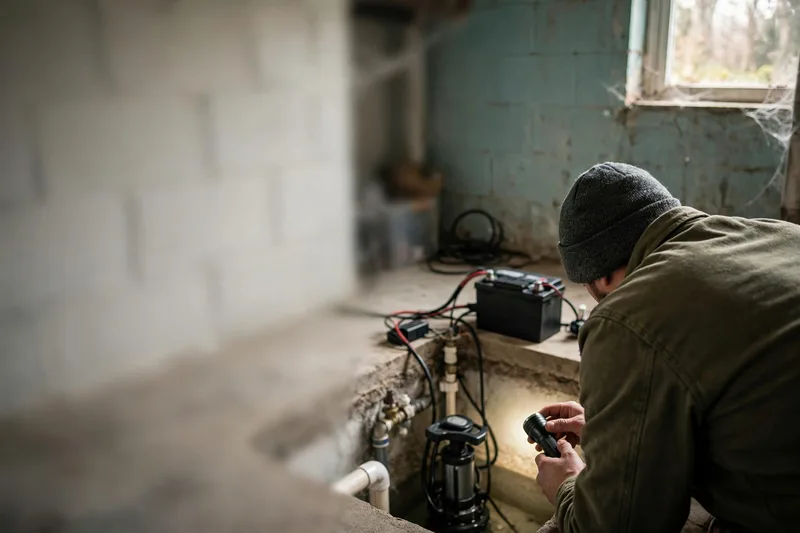
Most Barrington basements have a sump pump, and most Barrington basement floods start with a sump pump that stopped. The pump is a simple machine, and it fails in simple ways: the float switch sticks, the discharge line freezes, the check valve wears out, or the power goes out in the very storm that fills the pit. A pump that has not been tested in a year is a pump you do not know about.
Test the pump every few months. Pour a bucket of water into the pit and watch the pump run. If it does not run, call us before the next storm, not after it. A battery backup is the cheapest insurance a basement has. It keeps the pump running through a power cut, and it is the one upgrade we recommend to every Barrington homeowner we meet. A second pump in the same pit is the next step up, and it covers the day the first pump dies.
Watch the discharge line in winter. A discharge line that freezes shut will back the water into the pit and flood the basement, even with a working pump. Make sure the line drains to a place where the water will not freeze and run back. If the pump runs constantly in dry weather, the check valve may be bad, and the water is running back into the pit as fast as the pump pushes it out.
Three kinds of water, three kinds of cleanup
Not all water is the same. Clean water from a burst pipe is safe to touch. Grey water from a washing machine or a dishwasher is dirty but not sewage. Black water from a sewer is contaminated and dangerous. The kind of water decides what we clean, what we throw out, and how we protect your family.
| Category | Where it comes from | What it means for your home |
|---|---|---|
| Category 1: clean water | A burst pipe, a supply line, a water main break, rain through a roof leak. | Safe to touch. Dry fast and most materials can be saved. |
| Category 2: grey water | A washing machine, a dishwasher, a toilet overflow without solids, a sump pump overflow. | Dirty, and it can carry bacteria. Carpet pad and soft goods usually have to go. |
| Category 3: black water | A sewer backup, a toilet backup with solids, flood water from the street. | Contaminated. Do not touch it with bare hands. Porous materials usually have to go. |
The category can change while the water sits. Clean water left for two days becomes grey water, because bacteria grow in it. Grey water left for two days becomes black water. That is why the first day matters so much, and why we extract fast and dry fast on every job.
Flooded basement in Barrington? Why it floods here
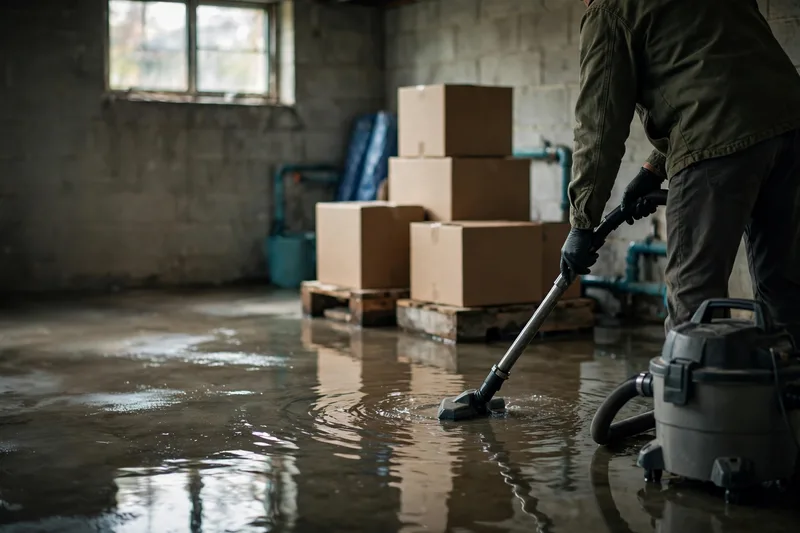
A flooded basement in Barrington usually has one of four causes, and each one needs a different fix. First, the sump pump failed, the float switch stuck, or the power went out in the storm. Second, the sanitary sewer backed up through a floor drain or a toilet. Third, heavy rain fell faster than the ground and the drains could take it, and the water found the basement windows, the door, or a crack in the wall. Fourth, a burst pipe or a failed appliance filled the basement from the inside.
The Village's own safety page says Barrington sometimes experiences localized flooding due to excessive rainfall, and that this is sometimes worsened by spring snow melt situations. That is the whole flood record the Village publishes, and it is the only flood fact about Barrington this page prints as the Village's own words. There is no named flood event, no named street and no named date on the official Village site, so this page names none. If your basement is wet now, call us at (773) 570-9869.
Do not wait to see if it dries on its own, because a wet basement does not dry on its own. The water soaks into the drywall, the flooring and the framing, and the moisture left inside is what grows mold. We extract the water the same day, set the drying equipment, and take moisture readings every day until the house is dry.
One more thing to know about a flooded basement in Barrington: the water that came from the sewer is not the same as the water that came from a burst pipe. Sewer water is contaminated, and anything porous it touched usually has to be thrown out. Clean water caught fast can often be dried in place. If you are not sure which kind of water you are standing in, stay out of it and call us. We test before we touch, and we tell you what we find before we start.
Water removal in Barrington: fast, complete and documented
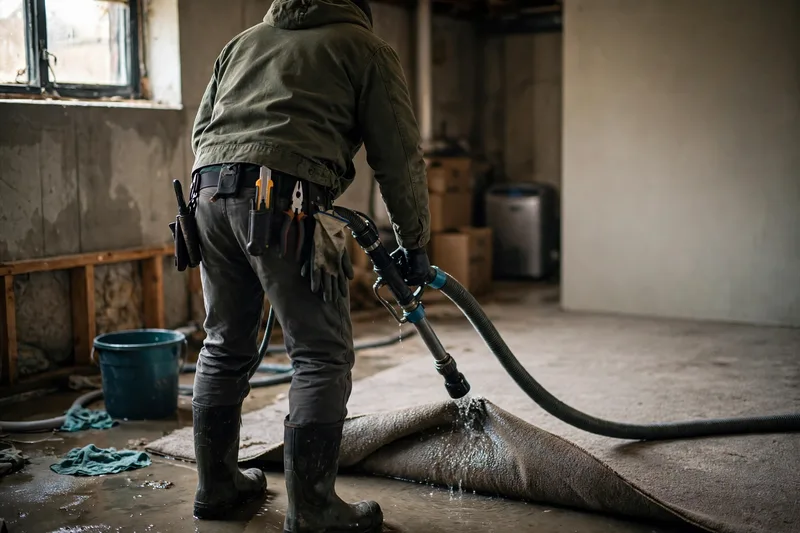
Water removal is the first step, and it is the step that decides how much of your house survives. We pump the standing water out with a truck-mounted extractor, then we vacuum the floors and pull the water out of the carpet and the pad. On a sewer backup we use sealed equipment, because the water is contaminated and we do not want it in the air of your house.
We photograph the water line on the walls, the wet floor and each damaged item before we move it. These photos are the start of your insurance claim, and they are the proof your adjuster will ask for. We also write down what we found, where the water came from, and how deep it was. The written record is part of the job, not an extra.
Do not try to remove a deep flood yourself with a household wet vacuum. A household vacuum cannot move the volume of water in a flooded basement, and it cannot lift the water out of the carpet pad or the subfloor. Call us, and let the truck-mounted equipment do the work. If the basement is still taking on water, do not wait for it to stop: call us while the water is still coming in, and we will tell you what to shut off and what to stay away from.
Flood cleanup in Barrington: what we clean, and what we throw out
Flood cleanup starts with the water out, and then it splits into two lists: what we clean and what we throw out. Hard surfaces can usually be cleaned and disinfected. Porous materials usually cannot, once the water was sewage or sat for more than a day or two.
We clean and disinfect the floors, the lower walls, and any hard surface the water touched. We remove the carpet pad, the insulation, and any drywall that stayed wet. We bag the waste and take it out of the house, so it does not sit in your garage and grow mold. We do not throw anything away before we photograph it, because your insurer needs the photos and you need the list.
If the water came from the sewer, the cleanup is different. We extract with sealed equipment, wash the hard surfaces with a disinfectant, and remove anything porous the water touched. Call the Village of Barrington Public Works Department at 847-381-7903 as well, so the Village knows the sewer backed up on your street, or after hours at 847-590-3491. The Village itself provides the sewer service and runs the wastewater treatment plant, so the Village is the right call for a sewer backup, not a separate sewer district.
Drying by readings: how we know the house is dry
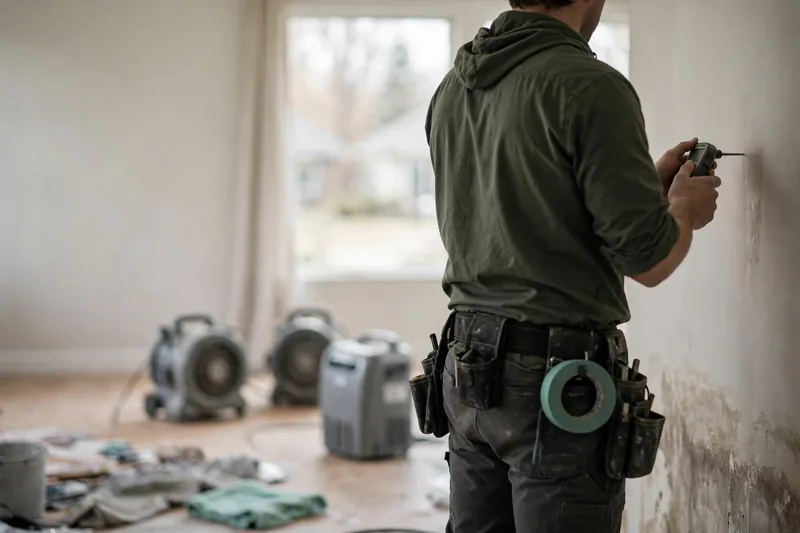
Water damage restoration barrington drying is done by readings, not by feeling. We set air movers to push dry air across the wet surfaces, and a dehumidifier to pull the moisture out of the air. Then we take moisture readings every day with a meter, and we write the numbers into a drying log. We stop the drying only when the readings are back to dry, and we show you the numbers.
As a general guide, most homes dry in three to seven days once the water is out and the equipment is running. A deep soak into hardwood, plaster or a finished basement can take a week or more. Plaster walls need the same care as drywall: plaster can feel dry on the face while the lath behind it is still wet, so the meter decides, not your hand. Do not switch the equipment off early, because the walls look dry long before they are dry inside, and the moisture left inside is what grows mold.
| Material | Typical drying time | What decides it |
|---|---|---|
| Carpet and pad, clean water | Two to three days | How much water the pad held, and whether the pad can be saved. |
| Drywall, clean water | Three to seven days | How far the water wicked up the wall, and whether the wall cavity is open to air. |
| Hardwood floors | Five to ten days | How deep the water soaked, and whether the boards cupped. |
| Plaster walls | Five to ten days | The lath behind the plaster holds water long after the face feels dry. |
| Concrete and framing | Three to seven days | How much water the concrete and the wood absorbed. |
| Finished basement, sewer backup | Seven days or more | What was removed, what was disinfected, and how far the water spread. |
These are general guides, not promises. The meter decides on your house, and the drying log is the proof. Your insurer will ask for the log, and we give you a copy.
Water mitigation in Barrington: stop the damage from spreading
Water mitigation means stopping the damage from spreading while the drying runs. We stop the water at the source, we extract the water, we move the wet materials out of the way, and we set the drying equipment. The goal is simple: nothing that is dry now should be wet tomorrow.
Mitigation starts in the first hour. We shut off the main water valve if a pipe burst. We lift the furniture, the boxes and the electronics to dry ground. We pull the wet carpet pad and the wet insulation out of the house, so they do not feed mold. We set the air movers and the dehumidifier, and we take the first moisture readings, so the drying log starts on day one.
Mitigation is not the repair. The repair comes after the drying, when the readings say dry. A repair started on wet walls will fail, and the paint will peel, the flooring will buckle, and the mold will come back. We do not start the repair until the meter says the house is dry.
Water damage repair in Barrington: what gets fixed
Water damage repair starts only when the drying is done. We replace the drywall that was cut out, we replace the flooring that could not be saved, we replace the trim and the baseboards, and we repaint. The rooms go back the way they were, dry to the readings.
Some materials can be saved, and some cannot. Drywall that stayed wet for more than a day or two usually has to be cut out above the water line. Carpet that was wet with clean water can often be dried in place, but carpet pad that was wet with sewage usually has to go. Hardwood floors that cupped may need sanding and refinishing, or they may need to be replaced. We test with a moisture meter before we cut anything, and we show you the readings so you can see why.
Every repair is photographed and written into the log. Your insurer will want the photos, the drying log and the scope of work, and we give you all three. If the repair needs a permit, we tell you before the work starts. The only permit rule the Village publishes for this work that we could verify is the overhead sewer rule: the Overhead Sewer Reimbursement Program asks for written approval from the Village Plumbing Inspector and Public Works before the work goes in, and the work must be done by a licensed plumbing contractor.
Burst pipe in Barrington: what to do in the first hour
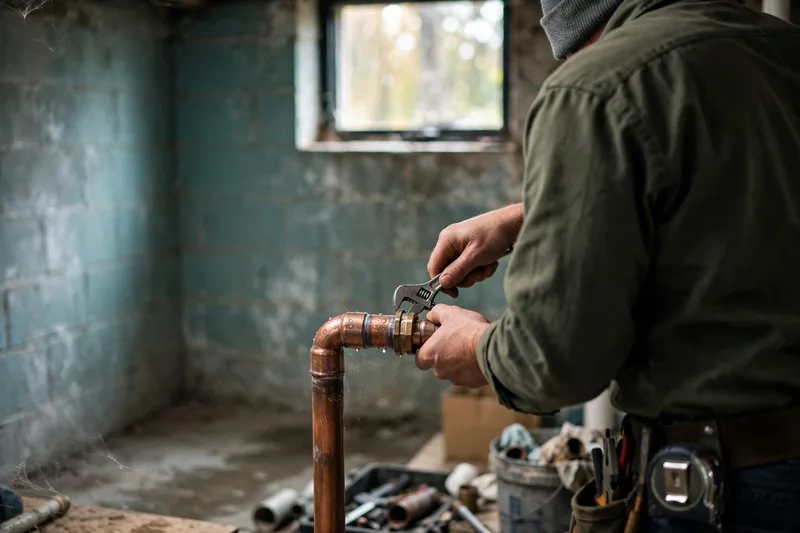
A burst pipe can fill a basement in an hour. Shut off the main water valve first, then turn off the power to any room with standing water. Call us at (773) 570-9869. Move what you can save to dry ground and photograph everything before you move it. Do not wait for the water to stop on its own.
Prevent the next one. In a hard freeze, leave the taps on a slow drip and keep the heat on, even in rooms you do not use. Open the cabinet doors under the sinks on outside walls so warm air can reach the pipes. Insulate the exposed pipes in the basement and the crawl space. If you leave the house empty in winter, shut off the main and drain the pipes, or have someone check the house. A pipe that freezes once will freeze again in the next cold snap unless the pipe is insulated or the cold air is stopped.
Do you call a plumber for a burst pipe? A plumber can fix the pipe, and we can dry the house and repair the damage. Call us first if the water is already in the house, because the drying has to start in the first hours, and the pipe fix alone will not dry the walls. If the water is near the electrical panel, turn off the power to that room and stay out until we tell you it is safe. For any emergency, call 911.
Sewage cleanup in Barrington: the separate sewer problem
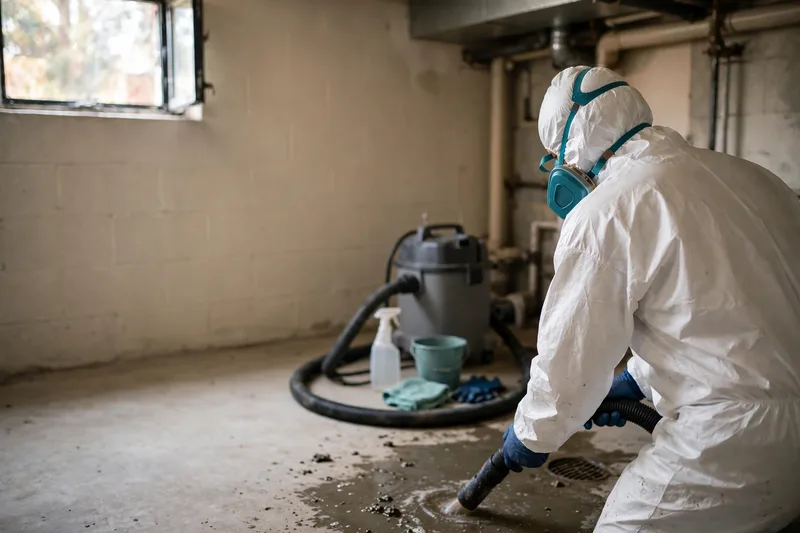
Barrington's sewers are separate, so a sewer backup in Barrington is a sanitary sewer backup, not a storm sewer backup. The sanitary sewers are owned and run by the Village itself, and the sewage is treated at the Village's own wastewater treatment plant, so call the Village of Barrington Public Works Department at 847-381-7903 as well as us, or after hours at 847-590-3491, so the Village knows the sewer backed up on your street.
Sewage water is contaminated. Do not touch it with bare hands. We extract it with sealed equipment, wash the hard surfaces with a disinfectant, and remove anything porous the water touched, including the carpet pad and any drywall it soaked. We bag the waste and take it out of the house. We dry the space with the same readings we use on every job, and we do not stop until the readings say dry.
If your basement backs up in heavy rain, the long-term fix is usually an overhead sewer. The Village's Overhead Sewer Reimbursement Program can help pay for one if you meet the conditions, including a documented sanitary sewage back-up from the Village sanitary sewer system during heavy rains in 2013 or after, a licensed plumbing contractor, and written approval from the Village Plumbing Inspector and Public Works before the work goes in. Sump pumps and other prohibited connections must be disconnected at your own expense before the overhead sewer goes in. There is no Village rebate for a backflow valve or a sump pump, so plan the cost yourself and ask us for a prevention visit.
Emergency water damage in Barrington: your first hour
Emergency water damage in Barrington does not wait for office hours, and neither do we. We answer 24/7 at (773) 570-9869. Call us first, and we will talk you through the first hour while a crew is on the way.
There is no separate after-hours water emergency number published by the Village, so after hours call us first. The only after-hours number the Village publishes is the general Public Works after-hours emergency number, 847-590-3491, which the Village's water and sewer page also gives for a sanitary sewer backup after hours. In office hours, call the Public Works Department at 847-381-7903, Monday through Friday 6:30 a.m. to 3:00 p.m. For any emergency, call 911. The Village says to dial 911 for all emergencies, and it publishes no separate non-emergency police number, so this page prints none.
While you wait for us, stay out of a flooded basement while the power is on, do not touch the water with bare hands, lift what you can save to dry ground, and photograph everything before you move it. If a pipe burst, shut off the main water valve. If the water came from the sewer or the street, do not try to stop it yourself.
What water damage restoration costs in Barrington: the factors
The cost of water damage restoration in Barrington depends on how much water there is, what kind of water it is, how far it spread and how long it sat. A small clean-water leak in one room costs far less to fix than a sewer backup across a finished basement. A loss found the same day costs far less than a loss found a week later, because the water has had less time to soak in and the mold has had less time to start.
We never quote a price before we see the loss, and we never print prices on this site. After the first visit you get a written scope of the work and a drying plan, and we work with your insurer on the claim. The scope lists what will be extracted, what will be dried, what will be removed and what will be repaired, so you can see the whole job before it starts.
If a company quotes you a price over the phone before it has seen the water, be careful. That company is guessing, and the guess will change when it arrives. A written scope after a first visit is the honest way to price this work. The Village's Overhead Sewer Reimbursement Program is the only Village money toward this kind of work, and it is for overhead sewers only, with conditions, not for the restoration itself.
Insurance after water damage in Barrington: what usually pays
Water damage restoration barrington claims usually start with three calls: call us, call the Village if the sewer or street flooded, and call your insurer. Call your insurer in the first hour, not the first week, because the claim runs on its own clock and the adjuster will want the photos, the drying log and the scope of work.
Most homeowners policies cover sudden and accidental water damage, such as a burst pipe or a failed appliance hose. Most policies do not cover flooding from outside the house, such as creek water or street flooding, unless you hold separate flood insurance. Sewer backup is often a separate add-on with its own limit. Waterproofing and flood proofing are usually seen as maintenance, and most policies do not pay for them.
Flood insurance is separate from homeowners insurance, and the Village's floodplain page says FEMA regulates the floodplain and the flood maps can be viewed, printed or purchased from the FEMA website. The time to buy flood insurance is before the storm, not during it. We document the loss the way adjusters ask for it, with photos, moisture readings and a drying log, and we give you a copy you can hand to your adjuster. We do not give insurance advice, and we do not tell you what your policy covers. Read your policy, and call your insurer if you are unsure.
What not to say to an insurance adjuster after water damage: do not guess the cause, and do not say the damage was old if you do not know. Do not throw anything away before you photograph it. Stick to what you saw and when you saw it, and give the adjuster the photos and the drying log. The photos and the log speak for themselves, and guessing only gives the adjuster a reason to doubt the claim.
How long does water damage restoration take in Barrington?
Water damage restoration barrington jobs follow the same order on every loss: extract, dry, clean, remove, repair. A small clean-water loss in one room can be extracted and dried in three to seven days. A finished basement with a sewer backup can take a week or more to dry, and the repair after the drying can take another one to four weeks. The drying is the part that cannot be rushed, and the repair starts only when the moisture readings say dry.
The claim runs on its own clock too. Your insurer will want the photos, the drying log and the scope of work, and we give you all three. Call your insurer in the first hour, not the first week, because the adjuster will want to see the loss before the repair starts.
Do not let anyone start the repair before the drying is done. A repair started on wet walls will fail, and the paint will peel, the flooring will buckle, and the mold will come back. The meter decides when the drying is done, and the drying log is the proof.
Mold remediation in Barrington: the 24 to 48 hour rule
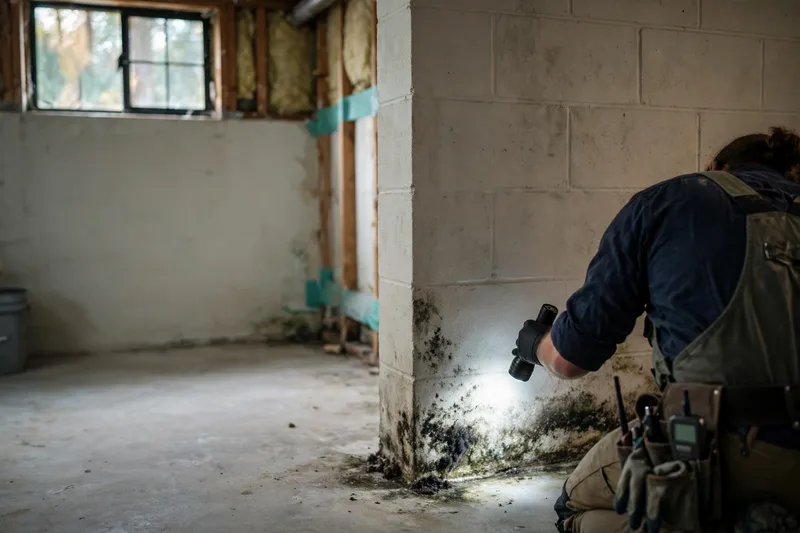
As a general guide, mold can start to grow within 24 to 48 hours on a wet surface, and it can become visible within 48 to 72 hours. The US EPA guidance is to dry water-damaged materials within 24 to 48 hours. That is why the first day matters so much, and why we extract fast and dry fast on every job.
If the water sat for more than 48 hours, or if you can see or smell mold, we look for mold during the drying and tell you what we find. Mold behind drywall or under flooring is the mold you cannot see, and a moisture meter finds it. If you see mold, do not scrub it dry and do not bleach it and call it done. Bleach does not kill mold in drywall, and scrubbing dry mold puts the spores in the air.
In Illinois, mold remediators register with the Illinois Department of Public Health under Part 835, and you can ask any company for its registration before you hire it. The Village of Barrington has no mold guidance page and no Illinois Department of Public Health reference on its own site, so the Village cannot tell you which companies are registered. We do not claim a registration for ourselves. Ask us and we will tell you plainly. If a company says it is registered and cannot show you the registration, do not hire it for mold work.
How long does mold remediation usually take? It depends on how far the mold spread and how much material has to be removed. A small colony in one room can be contained and removed in a day or two, once the drying is done. A colony behind the walls of a finished basement takes longer, because the drywall has to come out before the mold can be reached. The drying comes first, the mold work comes second, and the repair comes last, when the readings say dry.
Flood damage in Barrington: the record
The Village's own safety page says only that Barrington sometimes experiences localized flooding due to excessive rainfall, and that this is sometimes worsened by spring snow melt situations. There are no named flood events, dates or streets on the official Village site. The record below is honest about that: each row says where it came from, and what it does not show.
There is no named Barrington homeowner case in the record, because no homeowner has published a flood case with a street address and a date that we could verify, so this page names none. If you are a homeowner in Barrington and your basement flooded, call us at (773) 570-9869 and we will add your loss to the drying log, not to this page.
Found it late? What to do when the water sat for days
Water damage restoration barrington jobs found late are harder than jobs found the same day, but they are not lost. The water has soaked deeper, the mold has had time to start, and the drywall and the flooring have had time to fail. The steps are the same, but the order matters more.
Call us first at (773) 570-9869. Do not start the cleanup yourself, and do not bleach the mold and call it done. We extract the water, we test the walls and the floors with a moisture meter, and we tell you what can be dried and what has to go. If the water sat for more than 48 hours, we look for mold during the drying and tell you what we find.
Photograph everything before you move it, even if the loss is days old. Your insurer will still want the photos, the drying log and the scope of work, and we give you all three. Do not throw anything away before we photograph it, because the photos are the proof your adjuster will ask for.
Who to call in Barrington: Village contacts
Water damage restoration barrington jobs start with the right phone number, so keep this table on your fridge. The Village numbers below are the numbers the Village itself publishes on barrington-il.gov, and the after-hours number is the only after-hours number the Village publishes. There is no separate after-hours water emergency number, and there is no separate non-emergency police number, so do not go looking for one.
| Who | Number | When and where |
|---|---|---|
| Village Hall | 847-304-3400 | Monday to Friday, 8:00 a.m. to 4:30 p.m. 200 S. Hough Street, Barrington, IL 60010. |
| Public Works Department | 847-381-7903 | Monday to Friday, 6:30 a.m. to 3:00 p.m. 300 North Raymond Avenue. Call for a water main break, a sewer backup or a flooded street. |
| Public Works after hours | 847-590-3491 | After hours and weekends. This is the Village's general Public Works after-hours emergency number, and the Village's water and sewer page gives the same number for a sanitary sewer backup after hours. |
| Water and Utility Billing | 847-304-3430 | Water billing questions. Email:. |
| Police Department | 847-304-3300 | General number only, office hours Monday to Friday 7:00 a.m. to 4:30 p.m. patrol 24 hours. The Village says to dial 911 for all emergencies and publishes no number labelled non-emergency, so do not present this number as a non-emergency line. |
| Emergency | 911 | Any emergency, any hour. |
When you call the Village about a sewer backup, tell them the street, the time you first saw the water, and whether the water came through a floor drain, a toilet or a sink. The Village needs that to find the cause, and your insurer will want the same facts. Call us too, at (773) 570-9869, because the Village does not dry your house.
The Overhead Sewer Reimbursement Program: what the Village pays toward
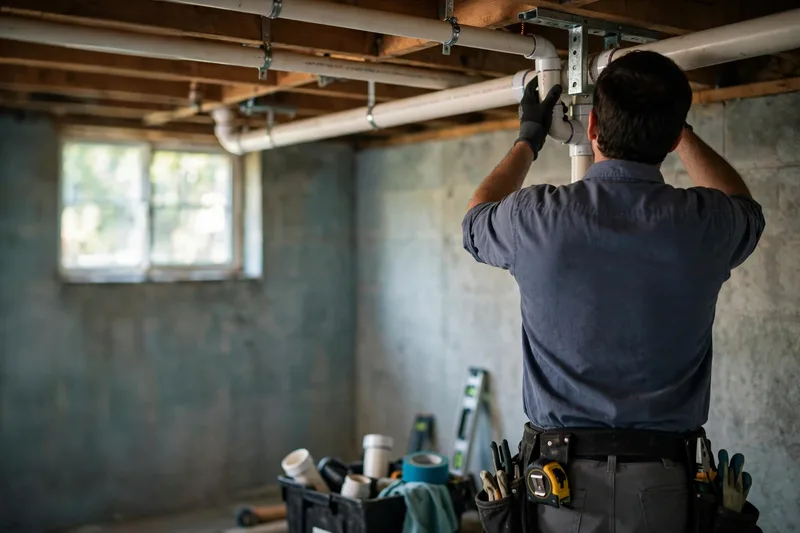
An overhead sewer lifts your home's sewer line above the street main, so that when the street sewer fills in heavy rain, the water cannot flow back into your basement. The Village of Barrington runs a programme that reimburses part of the cost, and it is the only Village money toward this kind of work that we could verify on the official Village site. The Village Board approved it on 25 November 2013, and it is still the programme the Village publishes.
The reimbursement is a one-time payment per home. In the initial year of the programme, the maximum was ten thousand dollars per home. After the initial year, the programme offers either a one-time payment of seven thousand five hundred dollars, or five thousand dollars plus an interest-free loan of five thousand dollars repayable over sixty months. That is the choice the Village publishes, and the amounts are written out here in words, because this site never prints prices or dollar figures.
There are conditions, and they are strict. The work must be done by a licensed plumbing contractor. Sump pumps and other prohibited connections must be disconnected at your own expense before the overhead sewer goes in. The proposal and the application must be approved in writing by the Village Plumbing Inspector and Public Works before the work starts. You must show a documented sanitary sewage back-up from the Village sanitary sewer system during heavy rains in 2013 or after. The programme runs first come, first served until the budgeted funds run out, and approved applicants who miss the funding are carried to the following fiscal year at the same level.
Some costs are not covered, and the Village says so plainly: the cost of disconnecting the sump pump and other prohibited connections, incidental costs, permit fees, architectural fees, and rodding and televising the sewer line are not covered. There is no separate Village rebate for a backflow valve, a flood control system or a sump pump, so plan the cost yourself and ask us for a prevention visit. The Village also has a Rain Barrel Rebate, but that is a water conservation programme, not a flood or sewer programme, so it does not belong in this section.
If your basement backs up in heavy rain, call us at (773) 570-9869 and we will tell you whether an overhead sewer would help your house, and what the programme asks for. We do not run the programme and we do not approve applications. The Village does, and the Village Public Works Department at 847-381-7903 is the number to call with programme questions.
Preventing the next flood in Barrington
Prevention is cheaper than restoration, and most of it is simple work you can do in a weekend. Do the easy things first, and do them before the next storm, not after it.
- Test the sump pump every few months. Pour a bucket of water into the pit and watch the pump run. If it does not run, fix it before the next storm.
- Fit a battery backup for the sump pump. It keeps the pump running through a power cut, and it is the one upgrade we recommend to every homeowner we meet in Barrington.
- Fit a backflow valve on the sewer line. It lets water out and stops it coming back in. There is no Village rebate for it, but it is the cheapest defence against a sewer backup after an overhead sewer.
- Disconnect prohibited connections. Sump pumps and other prohibited connections must be disconnected before an overhead sewer goes in under the Village programme, and they should be disconnected anyway, because they push storm water into the sanitary sewer and make backups worse for the whole street.
- Know where the main water valve is. Every adult in the house should know where it is and how to turn it off. A burst pipe fills a basement in an hour, and the valve is the fastest way to stop it.
- Insulate the exposed pipes. Pipes in the basement, the crawl space and on outside walls are the ones that freeze. Insulate them before winter, and leave the taps on a slow drip in a hard freeze.
- Keep the gutters and the downspouts clear. A blocked gutter dumps water at the foundation, and a downspout that ends at the wall sends the water straight into the basement. Send the downspouts at least a few feet away from the house.
- Grade the soil away from the house. The ground should slope away from the foundation, so rain runs away from the walls instead of pooling against them.
- Keep records and photographs. Photograph the basement when it is dry, keep the receipts for the pump and the valve, and keep the drying log from any restoration job. Your insurer and the Village programme both ask for records.
Older homes in Barrington: what to watch
If your home is older, the water damage risks are different, and the drying is different too. Plaster walls hold water behind the face long after the surface feels dry, so the moisture meter decides, not your hand. Old supply pipes and old drain pipes fail at the joints, and a slow leak behind a wall can soak a floor for weeks before anyone notices. Finished basements hide water behind the drywall and under the flooring, so a wet carpet in one corner can mean a wet wall three feet away.
Homes with detached structures need the same drying approach as the main house. A detached garage, a workshop or a pool house with water damage needs the same extraction, the same drying readings and the same documentation, and the same rule applies: do not start the repair until the meter says dry. If your property has a well, a septic system or a private drain, tell us before we start, because the water source changes what we test and what we clean.
The age of the house does not change the first hour. Call us at (773) 570-9869, shut off the main water valve if a pipe burst, stay out of a flooded basement while the power is on, and photograph everything before you move it. What changes with an older home is the drying time and the repair, and we will tell you both after the first visit, with the readings to back it up.
Room by room: where water hides in a Barrington home
Water does not stay where it started. It runs to the lowest point, it wicks up the walls, and it soaks into the materials it touches. Here is where we look on every job, room by room, and what we find there.
The basement
The basement is where most Barrington water damage happens, because it is the lowest point in the house. We check the floor drain, the sump pump pit, the base of every wall, and the carpet and the pad. Water wicks up drywall, so we measure the moisture at the base of the wall and again a foot higher, and we cut the drywall above the water line if it stayed wet.
The kitchen
The kitchen hides water under the sink, behind the dishwasher and under the refrigerator. A slow supply line leak can soak the subfloor for weeks before the floor feels soft. We pull the kick plates and check the subfloor with a meter, because a floor that looks fine can be wet underneath.
The bathroom
The bathroom hides water around the toilet base, under the tub and behind the shower wall. A toilet that rocks on the floor has a failed wax ring, and the water goes straight into the subfloor. We check the ceiling below the bathroom too, because a leak upstairs shows up as a stain downstairs.
The laundry room
The laundry room hides water at the washing machine hoses and the drain. A burst hose can fill a room in minutes, and a slow drain leak can soak the wall behind the machine for months. Replace rubber hoses with braided steel hoses, and shut off the water to the machine when you leave the house for a long trip.
The attic
The attic hides water at the roof penetrations, the chimney flashing and the valleys. Wind-driven rain and ice dams push water under the shingles, and the leak shows up as a stain on the ceiling far from the hole. We trace it with a moisture meter before we repair anything, because the stain is usually not where the water came in.
The garage and the crawl space
The garage and the crawl space hide water at the foundation wall and the floor. A crawl space with standing water needs the same extraction and drying as a basement, and a garage with a wet slab needs the same readings. Do not store boxes on a garage floor that has flooded before. Put them on shelves, and keep the papers and the photos higher up.
How to choose a water damage company in Barrington
Water damage restoration barrington companies all say the same thing on their websites. Here is how to tell the good ones from the ones that will cost you twice.
The check that matters most is the drying log: water damage restoration barrington work done properly leaves you with moisture readings you can read yourself, a written scope, and photos of every step, so you are never asked to take dryness on trust.
- Do they answer 24/7? Water damage does not wait for office hours. Call (773) 570-9869 and see who answers. We answer 24/7.
- Do they give you a written scope after the first visit? A company that quotes a price over the phone before it has seen the water is guessing. Ask for a written scope that lists what will be extracted, what will be dried, what will be removed and what will be repaired.
- Do they dry by readings? Ask to see the moisture meter and the drying log. A company that dries by feeling will stop too early, and the mold will come back.
- Do they photograph everything? Your insurer will want the photos, the drying log and the scope of work. A company that does not photograph the loss is not helping your claim.
- For mold work, ask for the registration. In Illinois, mold remediators register with the Illinois Department of Public Health under Part 835, and you can ask any company for its registration before you hire it. If a company says it is registered and cannot show you the registration, do not hire it for mold work.
- Do they know Barrington? Ask whether the company knows the Village's separate sewer system, the overhead sewer programme and the Public Works numbers. A company that knows the Village will call the right numbers and file the right paperwork.
- Do they pressure you? A good company gives you the scope, the readings and the time to call your insurer. A company that pressures you to sign on the spot is selling, not restoring.
We also serve these Chicago-area suburbs
We work across the Chicago area, and the same crew, the same readings and the same documentation follow us to every suburb. If you live near Barrington, we probably already work on your street.
That same crew is the one that answers water damage restoration barrington calls day and night, and the readings and the paperwork travel with them, so a job in Barrington is documented the same way as a job anywhere else we work.
- Water damage restoration in Northbrook
- Water damage restoration in Deerfield
- Water damage restoration in Highland Park
- Water damage restoration in Park Ridge
- Water damage restoration in Elmwood Park
- Water damage restoration in Des Plaines
- Water damage restoration in Forest Park
- Water damage restoration in Hinsdale
- Water damage restoration in Oak Brook
- Water damage restoration in Lake Forest
- Water damage restoration in Skokie
- Water damage restoration in Evanston
- Water damage restoration in Glenview
- Water damage restoration in Wilmette
- Water damage restoration in Naperville
- Water damage restoration in Oak Park
The first week after water damage in Barrington: a day-by-day
The first week after water damage is the week that decides how much of your house survives. Here is what happens day by day, so you know what to expect and what to do at each step.
Day 1: stop the water and call for help
Call us at (773) 570-9869 first. Shut off the main water valve if a pipe burst. Stay out of a flooded basement while the power is on. Photograph the water line on the walls, the wet floor and each damaged item before you move anything. If the water came from the sewer or the street, call the Village of Barrington Public Works Department at 847-381-7903, or after hours at 847-590-3491, so the Village knows the sewer backed up on your street. Then call your insurer and start the claim. Move dry boxes, papers and electronics to higher ground. Do not touch the water with bare hands, and wear rubber boots and gloves if you must walk through it.
Days 2 to 3: extraction done, drying running
By day two the standing water is out and the drying equipment is running. We set air movers to push dry air across the wet surfaces and a dehumidifier to pull the moisture out of the air, and we take the first moisture readings and write them into the drying log. Your adjuster will usually visit in these first days, so keep the photos, the drying log and the scope of work together in one folder. Start a list of everything the water damaged, room by room, and keep every receipt for anything you buy because of the loss, from the boots to the buckets. Do not switch the equipment off, even if the room feels dry, because the walls are still wet inside.
Days 4 to 7: readings every day, damage out of the house
We take moisture readings every day and write them into the drying log, and we show you the numbers. In these days the wet carpet pad comes out, the wet insulation comes out, and any drywall that stayed wet gets cut out above the water line. Everything we remove is photographed first and listed, so your insurer can see what was removed and why. Watch for a musty smell, because that is often the first sign of mold behind a wall. If you smell it, tell us and we will look for it with the meter. Do not start the repair yet. A repair started on wet walls will fail, and the paint will peel, the flooring will buckle, and the mold will come back.
That is the week when water damage restoration barrington homeowners most often ask whether the job is nearly done, and the honest answer is the readings: the repair starts when the meter says dry, not when the room feels dry.
Week 2: dry to the readings, then rebuild
When the moisture readings are back to dry, we show you the numbers and the drying stops. Then the repair starts: the drywall goes back, the flooring goes back, the trim goes back, and the rooms are repainted. Before we finish, we walk through the house with you and the meter, room by room, so you can see the readings for yourself. Keep the drying log, the photos and the scope of work in one folder when we are done, because your insurer may ask for them months later, and the Village programme asks for records too if you apply for an overhead sewer. A job that ends with a dry reading and a full record is a job done right.
What to photograph for your insurance claim in Barrington
Your insurance claim runs on photographs. The adjuster was not there when the water came in, so the photos are the proof. Take them before you move anything, and take more than you think you need. A photo you did not take cannot be taken later.
Those photos are also the record of the water damage restoration barrington work itself: the extraction, the equipment in place, the meter readings and the drying log, all photographed as the job runs, so the adjuster sees the loss and the fix together.
The water line on every wall
Photograph the water line on every wall the water touched, in every room. The water line shows how deep the water was, and it is the single most useful photo in a claim. Put a ruler or a tape measure next to the line in at least one photo per room, so the depth is clear. Photograph the line before we cut the drywall, because the line is gone once the wall is cut.
Every room, wide and close
Photograph every room twice: once wide, standing in the doorway, so the whole room is in the frame, and once close, so the damage is clear. Do the wide shots first, before anything is moved, and do the close shots of the wet floor, the wet wall and the wet furniture. If the water spread to a room that looks dry, photograph that room too, because the moisture meter may find water there later.
Every damaged item, with its label
Photograph each damaged item on its own, with its label, its model number or its serial number in the frame where you can. A photograph of a ruined box is not enough. Open the box and photograph what is inside. Photograph the furniture, the rugs, the books, the electronics and the clothes, and write down what each item is and when you bought it. Keep the receipts if you have them, and keep the damaged items until the adjuster has seen them, or until the adjuster tells you to throw them out.
The cause, and the work
Photograph the cause if you can do it safely: the burst pipe, the failed pump, the floor drain the water came through, the appliance hose that split. Then photograph the work: the extraction, the air movers and the dehumidifier in place, the moisture meter readings, and the drying log. We photograph the work too and give you a copy, but your own photos are your own proof, and they are worth taking. If you called the Village, keep the time and the number you called, because the Village record of the sewer backup is part of the claim.
What Barrington homeowners ask
Who do I call first when my basement floods in Barrington?
Call us first at (773) 570-9869. We answer 24/7 and talk you through the first hour while a crew is on the way. If the water came from the sewer or the street, call the Village of Barrington Public Works Department at 847-381-7903 as well, or after hours at 847-590-3491, so the Village knows the sewer backed up on your street. Then call your insurer and start the claim. For any emergency, call 911.
Will my insurance pay for water damage in Barrington?
Most homeowners policies cover sudden and accidental water damage, such as a burst pipe or a failed appliance hose. Most policies do not cover flooding from outside the house unless you hold separate flood insurance, and sewer backup is often a separate add-on with its own limit. Read your policy and call your insurer in the first hour. We document the loss the way adjusters ask for it, with photos, moisture readings and a drying log.
How long does it take to dry a house in Barrington?
As a general guide, most homes dry in three to seven days once the water is out and the equipment is running. A deep soak into hardwood, plaster or a finished basement can take a week or more. The moisture meter decides on your house, and the drying log is the proof. Do not switch the equipment off early, because the walls look dry long before they are dry inside.
Can I stay in the house while it dries?
Usually yes, if the power is safe and the water was clean. If the water came from a sewer, or if there is heavy mold, stay out of the affected rooms until we tell you it is safe. We will tell you plainly after the first visit, and we will not ask you to stay in a house that is not safe.
Do I need a plumber or a restoration company?
A plumber can fix the pipe, and we can dry the house and repair the damage. Call us first if the water is already in the house, because the drying has to start in the first hours, and the pipe fix alone will not dry the walls. If the water is near the electrical panel, turn off the power to that room and stay out until we tell you it is safe.
Is the water safe to touch?
Clean water from a burst pipe is safe to touch. Grey water from a washing machine or a dishwasher is dirty, and black water from a sewer is contaminated and dangerous. If you are not sure which kind of water you are standing in, stay out of it and call us. We test before we touch, and we tell you what we find before we start.
What is an overhead sewer, and does the Village help pay for one?
An overhead sewer lifts your home's sewer line above the street main, so that when the street sewer fills in heavy rain, the water cannot flow back into your basement. The Village of Barrington runs the Overhead Sewer Reimbursement Program, approved by the Village Board on 25 November 2013, which reimburses part of the cost if you meet the conditions, including a licensed plumbing contractor, written approval before the work starts, and a documented sanitary sewage back-up during heavy rains in 2013 or after.
Who owns my sewer lateral in Barrington?
The Village's own answers page says the Village is responsible for the sanitary sewer main and the service connection at the main, which is typically located in the street or parkway, and that property owners are responsible for the lateral service line, from the service connection at the main to the building. That is the Village FAQ's wording, not a rule from the Village Code, because we could not open the Village Code to check it. If you are unsure who owns your lateral, call the Public Works Department at 847-381-7903 and ask.
Where does Barrington's drinking water come from?
Barrington's water comes from the ground, not from Lake Michigan. The water is produced from an underground aquifer by pumping and purifying aquifer water at four water wells located throughout the Village, and it is distributed through the Village-owned system, which also serves portions of Inverness and Barrington Hills. Lake Michigan water was investigated, but the Village says the costs are high, the Village does not meet the State eligibility requirements, and it is not feasible.
What number do I call after hours in Barrington?
Call us first at (773) 570-9869, because we answer 24/7. The only after-hours number the Village publishes is the general Public Works after-hours emergency number, 847-590-3491. There is no separate after-hours water emergency number, and the Village publishes no separate non-emergency police number. For any emergency, call 911.
How do I stop mold after water damage in Barrington?
Dry the house within 24 to 48 hours, and let the moisture meter decide when it is dry. Do not scrub dry mold and do not bleach it and call it done, because bleach does not kill mold in drywall and scrubbing dry mold puts the spores in the air. If you see mold, or if the water sat for more than 48 hours, call us and we will look for it during the drying and tell you what we find.
Will the Village pay for my water damage in Barrington?
No. The Village does not pay for water damage to a home. The only Village money toward this kind of work is the Overhead Sewer Reimbursement Program, and that pays toward an overhead sewer only, with conditions, not toward the restoration itself. Your homeowners policy, and separate flood insurance if you hold it, are the routes that pay for the restoration.
What if I found the water days later in Barrington?
Call us at (773) 570-9869. Do not start the cleanup yourself, and do not bleach the mold and call it done. We extract the water, test the walls and the floors with a moisture meter, and tell you what can be dried and what has to go. Photograph everything before you move it, because your insurer will still want the photos, the drying log and the scope of work.
Barrington water damage: questions and answers
What should I do first when I find water damage in my basement in Barrington?
Call us first at (773) 570-9869. We answer 24/7 and talk you through the first hour while a crew is on the way. If a pipe burst, shut off the main water valve. If the water came from the sewer or the street, do not try to stop it yourself. Stay out of a flooded basement while the power is on. Do not touch the water with bare hands. Lift what you can save to dry ground, photograph everything before you move it, and then call the Village if the sewer or street flooded: the Public Works Department at 847-381-7903, or after hours at 847-590-3491. Then call your insurer and start the claim.
Does homeowners insurance cover water damage in Illinois?
It usually covers sudden and accidental water damage, such as a burst pipe or a failed appliance hose. It usually does not cover flooding from outside the house, such as creek water or street flooding, unless you hold separate flood insurance. Sewer backup is often a separate add-on with its own limit. Waterproofing and flood proofing are usually seen as maintenance, and most policies do not pay for them. Read your policy, call your insurer early, and keep every photo and receipt. We document the loss the way adjusters ask for it, with photos, moisture readings and a drying log.
How long does water damage restoration take in Barrington IL?
A small clean-water loss in one room can be extracted and dried in three to seven days. A finished basement with a sewer backup can take a week or more to dry, and the repair after the drying can take another one to four weeks. The drying is the part that cannot be rushed. The repair starts only when the moisture readings say dry, and a repair started on wet walls will fail. The claim runs on its own clock too. Your insurer will want the photos, the drying log and the scope of work, and we give you all three. Call your insurer in the first hour, not the first week.
Who should I call first for water damage in Barrington IL?
Call us first at (773) 570-9869. We answer 24/7 and talk you through the first hour while a crew is on the way. Second, if the water came from the street or a water main, call the Village of Barrington Public Works Department at 847-381-7903, Monday through Friday 6:30 a.m. to 3:00 p.m. or after hours at 847-590-3491. For water billing questions, call Water and Utility Billing at 847-304-3430. Third, call your insurer and start the claim. For any emergency, call 911. The Village publishes no separate non-emergency police number, so do not look for one: the Police Department page says to dial 911 for all emergencies.
How fast does mold grow after water damage in a basement?
As a general guide, mold can start to grow within 24 to 48 hours on a wet surface, and it can become visible within 48 to 72 hours. That is why the first day matters more than any other. The US EPA guidance is to dry water-damaged materials within 24 to 48 hours. If the water sat for more than two days, or if the room smells musty, we look for mold during the drying and tell you what we find.
If you see mold, do not scrub it dry and do not bleach it and call it done. In Illinois, mold remediators register with the Illinois Department of Public Health under Part 835, and you can ask any company for its registration before you hire it. We do not claim a registration for ourselves. Ask us and we will tell you plainly.
Why does my basement keep flooding in Barrington?
The Village's own safety page says Barrington sometimes experiences localized flooding due to excessive rainfall, and that this is sometimes worsened by spring snow melt situations. Add a sump pump that fails in a power cut, a frozen discharge line in January, and a sanitary backup on the wrong night, and the same basements flood in the same storms. Barrington's sewers are separate, not combined, so a backup is a sanitary sewer backup, and the Village treats its own sewage at its own plant. The fix depends on which of these let the water in, so we find the entry point first and then dry the basement.
What does water damage restoration cost in Barrington?
It depends on how much water there is, what kind of water it is, how far it spread and how long it sat. A small clean-water leak in one room costs far less to fix than a sewer backup across a finished basement. We never quote a price before we see the loss, and we never print prices on this site. After the first visit you get a written scope of the work and a drying plan, and we work with your insurer on the claim. If a company quotes you a price over the phone before it has seen the water, be careful. That company is guessing, and the guess will change when it arrives.
How long does it take to dry a house after water damage?
As a general guide, most homes dry in three to seven days once the water is out and the equipment is running. A deep soak into hardwood, plaster or a finished basement can take a week or more. We do not guess. We take moisture readings every day and we stop the drying only when the readings are back to dry. You see the numbers, so you know when the job is done. Do not switch the equipment off early, because the walls look dry long before they are dry inside, and the moisture left inside is what grows mold.
Can I stay in my house while the drying runs?
In most clean-water jobs, yes. The air movers and dehumidifiers are loud, but the house is safe to live in while they run. If the water was sewage, or if mold is growing, or if the power is off, we will tell you to stay out until the space is safe. If you have asthma, allergies or a weak immune system, talk to your doctor first and tell us what they said. The drying equipment is loud at night, so call us if the noise bothers you and we will talk about it. Do not solve it by unplugging the dehumidifier.
Do I need to throw out wet carpet and drywall?
It depends on the water and how long it sat. Clean water caught fast can often be dried in place. Sewage water means the carpet pad and any drywall it touched usually have to go. Drywall that stayed wet for more than a day or two often has to be cut out above the water line. We test with a moisture meter before we cut anything, and we show you the readings so you can see why. We do not throw anything away without showing you first, and we do not throw anything away before we photograph it, because your insurer needs the photos and you need the list.
How do you dry the walls without tearing them all out?
We drill small holes near the base of the wall and push dry air into the wall cavity, or we pull the baseboard and dry from the bottom up. A moisture meter tells us where the water is and when the wall is dry. We cut drywall only when the meter says the wall will not dry on its own, or when the water was sewage. Every cut is marked, photographed and written into the drying log. Plaster walls need the same care: plaster can feel dry on the face while the lath behind it is still wet, so the meter decides, not your hand.
What if the water came from the sewer?
Treat it as contaminated and do not touch it with bare hands. Sewer water carries bacteria, and anything porous it touched usually has to be thrown out. We extract it with sealed equipment, wash the hard surfaces with a disinfectant, and dry the space with the same readings we use on every job. Call the Village of Barrington Public Works Department at 847-381-7903 as well, so the Village knows the sewer backed up on your street, or after hours at 847-590-3491. The Village itself provides the sewer service and runs the wastewater treatment plant, so the Village is the right call for a sewer backup, not a separate sewer district.
How do I know if my sump pump failed?
Look in the sump pit. If the water is high and the pump is silent, the pump has failed, the float switch is stuck, or the power is out. If the pump runs but the water does not drop, the discharge line may be frozen, clogged or disconnected. If the pump runs constantly in dry weather, the check valve may be bad. Test the pump every few months by pouring a bucket of water into the pit and watching it run. If it does not run, call us before the next storm, not after it. A working sump pump with a battery backup is the cheapest insurance a basement has.
What should I do if a pipe bursts in Barrington?
Shut off the main water valve first, then turn off the power to any room with standing water. Call us at (773) 570-9869. Move what you can save to dry ground and photograph everything before you move it. Do not wait for the water to stop on its own, because a burst pipe can fill a basement in an hour. In a hard freeze, leave the taps on a slow drip and keep the heat on, even in rooms you do not use. Open the cabinet doors under the sinks on outside walls so warm air can reach the pipes. If you leave the house empty in winter, shut off the main and drain the pipes, or have someone check the house.
Do I need a mold inspection after water damage?
If the water sat for more than 48 hours, or if you can see or smell mold, yes. A mold inspection finds growth you cannot see, such as mold behind drywall or under flooring. In Illinois, mold remediators register with the Illinois Department of Public Health under Part 835, and you can ask any company for its registration before you hire it. We do not claim a registration for ourselves. Ask us and we will tell you plainly. If a company says it is registered and cannot show you the registration, do not hire it for mold work.
Is there a Village programme that helps pay for flood proofing in Barrington?
Yes, one programme exists, and it is for overhead sewers only. The Village of Barrington Overhead Sewer Reimbursement Program was approved by the Village Board on 25 November 2013. In the first year of the programme, the maximum one-time reimbursement is ten thousand dollars per home. After the first year, it is either a one-time payment of seven thousand five hundred dollars per home, or a one-time payment of five thousand dollars per home together with an interest-free loan of five thousand dollars, repayable over sixty months.
The work must be done by a licensed plumbing contractor, and sump pumps and other prohibited connections must be disconnected at your own expense before the overhead sewer goes in. You must send a proposal with the application and get written approval from the Village Plumbing Inspector and Public Works, and you must have had a documented sanitary sewage back-up from the Village sanitary sewer system during heavy rains in 2013 or after. Applications are handled in the order received until the budgeted funds run out.
There is no separate Village rebate for flood proofing, backflow valves or sump pumps. Ask the Village for the current application and the current terms before you start work.
Who do I call at the Village of Barrington for water and sewer flooding?
For a water main break, a water service question, or a sewer or street flooding, call the Public Works Department at 847-381-7903, Monday through Friday 6:30 a.m. to 3:00 p.m. or after hours at 847-590-3491. The Public Works Department is at 300 North Raymond Avenue. For water billing questions, call Water and Utility Billing at 847-304-3430. For general Village questions, call Village Hall at 847-304-3400, Monday through Friday 8:00 a.m. to 4:30 p.m. Village Hall is at 200 S. Hough Street. For any emergency, call 911. The Village publishes no separate non-emergency police number, and its Police Department page says to dial 911 for all emergencies. All of these numbers come from the Village's own site, barrington-il.gov.
Who owns the sewer lateral in Barrington?
The Village's own answers page says the Village is responsible for the sanitary sewer main and the service connection at the main, which is typically located in the street or parkway, and that property owners are responsible for the lateral service line, from the service connection at the main to the building. That is the Village FAQ's wording, not a rule from the Village Code: we could not open the Village Code to check it, because the Code is hosted on a site that blocks automated checks, so this page does not state the lateral rule as a Code provision. If you are unsure who owns your lateral, call the Public Works Department at 847-381-7903 and ask.
Has Barrington flooded before?
The Village's own safety page says only that Barrington sometimes experiences localized flooding due to excessive rainfall, and that this is sometimes worsened by spring snow melt situations. No named flood event, date or street is published on the official Village site, so this page names none. The only dated flood reference on the Village site is the Overhead Sewer Reimbursement Program, which asks applicants to show a documented sanitary sewage back-up from the Village sanitary sewer system during heavy rains in 2013 or after, with no street named. There is no named Barrington homeowner flood case in the public record that we could verify, so this page names none.
Where does Barrington, IL get its water?
From the ground, not from Lake Michigan. The Village's own answers say the water is produced from an underground aquifer by pumping and purifying aquifer water at four water wells located throughout the Village, and it is distributed through the Village-owned system, which also serves portions of Inverness and Barrington Hills. The shallow sand and gravel aquifer sits 250 to 300 feet down, and there is a deeper limestone aquifer below it. Lake Michigan water was investigated, but the Village says the costs are high, the Village does not meet the State eligibility requirements for Lake Michigan water, and it is not feasible.
What is a separate sewer system, and does Barrington have one?
A separate sewer system carries storm water and sewage in different pipes. A combined sewer carries both in the same pipes. Barrington is separate. The Village is regulated under the Municipal Separate Storm Sewer Systems program, called MS4. The sewage is collected through the Village-owned system of sewer mains and lines and treated at the Village's own wastewater treatment plant, with the treated water meeting Illinois Environmental Protection Agency requirements and discharged into the Flint Creek Tributary. There is no separate sewer district for Barrington: the Village itself provides the sewer service. Separate does not mean safe. A basement can still flood from a sanitary backup, a sump failure or a burst pipe.
How do I prevent my basement from flooding again?
Start with the entry point. If the water came back through the sewer, an overhead sewer is the strongest fix, and the Village's Overhead Sewer Reimbursement Program can help pay for it if you meet the conditions, including a documented sanitary sewage back-up during heavy rains in 2013 or after. If the sump pump failed, a battery backup and a second pump cover the power cut. If the water came through the walls, grade the soil away from the house and keep the gutters clean. Test the sump pump every few months.
A backflow prevention valve with a bypass pump is another option, but there is no Village rebate for it, so plan the cost yourself and ask us for a prevention visit. We check the entry points, the pump, the discharge and the grading, and we write down what we find, in order of what matters most.
Will my insurance pay for basement waterproofing?
Usually not. Waterproofing and flood proofing are seen as maintenance, and most policies do not pay for them. What insurance usually pays for is the damage from a sudden event, such as a burst pipe or a sewer backup if you hold that cover. The Village has a reimbursement programme for overhead sewers, with conditions, but it is not a waterproofing rebate, and it does not pay for sump pumps or backflow valves. Read your policy before you spend, and call your insurer if you are unsure. We can give you the scope of work and the receipts your insurer or your tax professional asks for, but we do not give tax or insurance advice.
What should I not do after a basement flood?
Do not enter a flooded basement while the power is on. Do not touch floodwater with bare hands, and assume it is contaminated, especially if it came from a sewer. Do not run a household wet vacuum on sewage water and then use it in the house. Do not bleach mold and call it fixed. Do not throw anything away before you photograph it for the claim. Do not paint over a water stain and call it fixed, and do not lay new flooring over a wet subfloor. And do not wait. The first day is when the drying works best and mold has the least time to start, so call us in the first hour, not the first week.
How do I document water damage for an insurance claim?
Photograph everything before you move it, including the water line on the walls, the wet floor, and each damaged item. Keep a list of what was damaged, with the brand and age if you know it. Save every receipt for the cleanup, the drying and the repairs. Keep a short log of who you called and when. We photograph the loss, write a drying log with moisture readings, and give you a copy you can hand to your adjuster. The log is the proof that the drying was done properly, and it is the document adjusters ask for first.
Do you serve Barrington, IL 60010?
Yes. We serve Barrington, IL 60010, in Cook County and Lake County, and the suburbs around it, including Inverness, Barrington Hills, South Barrington, Lake Barrington, Palatine, Hoffman Estates, Schaumburg, Cary and Lake Zurich, from the same number, (773) 570-9869. We answer 24/7. If you are in Barrington and your basement is wet, call us first and we will talk you through the first hour while a crew is on the way.
Sources
- Village of Barrington, Illinois, official site
- Village of Barrington, water and sewer services and emergency contacts, barrington-il.gov
- Village of Barrington, Overhead Sewer Reimbursement Program, approved by the Village Board 25 November 2013, barrington-il.gov
- Village of Barrington, floodplain information and Lake County Watershed Development Ordinance, barrington-il.gov
- Village of Barrington, flood safety information, barrington-il.gov
- Forever Restorations animation, YouTube, 10 January 2017
- Tri State Flood promos, YouTube, 13 July 2017
- Mold, US Environmental Protection Agency
- Illinois Department of Public Health, Part 835, Mold Remediation Registration
- National Flood Insurance Program, FEMA
More Restoration Services Near Barrington
Every service below is one tap away. Pick the one that matches your problem.

Water Damage Restoration
Fast water extraction, structural drying, and full repair after burst pipes, leaks, and floods.
Learn more →
Water Mitigation
Emergency water removal, structural drying, and mold prevention to stop the damage fast, 24/7.
Learn more →
Mold Remediation
Safe, contained mold remediation that removes contamination and fixes the moisture source.
Learn more →
Sewage Cleanup
Safe removal and disinfection of dangerous sewage backups and black water.
Learn more →
Flood Cleanup
Water pumped out, structure dried, and debris cleared fast after storms and flooding.
Learn more →
Hardwood Floors Water Damage
Cupped, buckled or stained hardwood after a leak? How we dry it, when sanding saves it, and when the boards have to go.
Learn more →