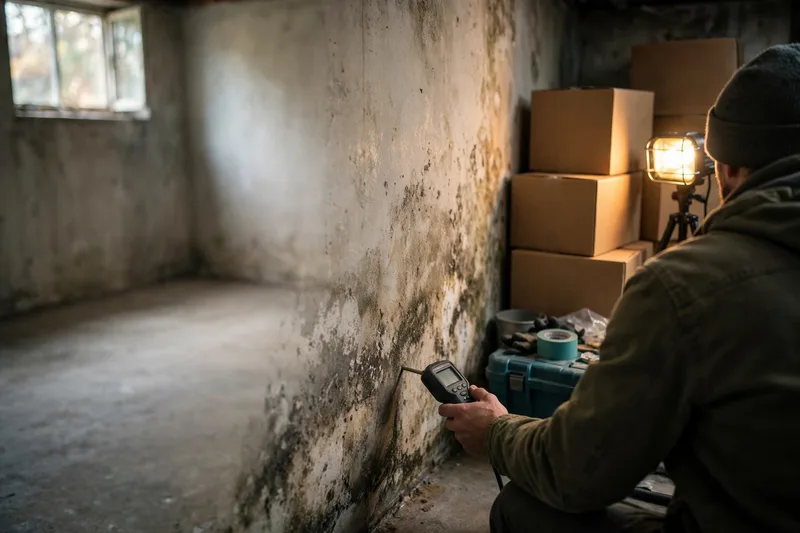
The short answer: mold remediation park ridge work means finding the moisture that is feeding the growth, sealing the area under containment, removing the mold and the material it ruined, cleaning and drying the structure, and proving the result, not spraying a surface and hoping. Small patches under about 10 square feet on hard surfaces can be a careful do-it-yourself job once the water source is fixed; anything larger, inside walls or ducts, across attic decking, in a crawl space, or fed by a sewer backup or a flooded lower level is professional work. A job succeeds or fails on the moisture fix: remove the growth and leave the water, and the mold returns on schedule. Everything below is that answer in full.

Found mold in your Park Ridge home: the first steps
The first hour with mold is calmer than the first hour with a flood, and the mistakes are quieter too. Most of the damage done in week one is done by kindness: someone scrubs the patch with bleach, or paints it before the weekend guests arrive, or tears out a section of wall with no containment and spreads spores through the house on the dust. Work this short list instead. This is the same list we work from when a mold remediation park ridge call comes in.
- Do not disturb a large area. Scraping, sanding or ripping out moldy material without containment is how a one room problem becomes a whole house problem. A small surface patch is fine to wipe; a wall section is not a cleaning project.
- Do not paint over it. Paint hides the stain and leaves the colony alive underneath, still fed by the wall's moisture. It also hides the evidence from the next person who needs to diagnose the problem, including you, and it is the one move a buyer's inspector is trained to notice.
- Find the water. Every colony has a supply line: a leak, condensation, a failed sump, an ice dam, a bathroom fan venting where it should not, or a sewer that sent water up through the floor drain in the last big storm. Look for the source and stop what you safely can. Until the water stops, every other step is temporary.
- Photograph before you clean. Date stamped photos of the growth, the room, and anything it has damaged. If insurance or a home sale ever touches this, and in Park Ridge a home sale touches it often, that record is what the conversation stands on.
- Keep vulnerable people out of the room. Until you know the size of it, children, anyone asthmatic and anyone with a weakened immune system should not be sleeping next to an active colony.
- Then get it assessed. Call (773) 570-9869 and describe where it is, how big it looks, and what water event you connect it with. That decides whether this is a cleaning weekend or a containment job, and it is the same first step behind every mold removal park ridge call we take: the assessment itself costs nothing but the conversation.
Do it yourself or call a professional? The honest line
This is the question under almost every mold search, and it deserves a straighter answer than most companies give, since the straight answer sometimes sends you to a hardware store instead of to us. The US EPA's guidance draws the line by size, and every serious source in this trade works from the same bands. What the bands assume is that the water source is already fixed; no size of mold job is a do-it-yourself job while its water is still running.
| Affected area | Honest answer | Conditions that change it |
|---|---|---|
| Under 10 square feet (about a 3 by 3 foot patch) | Reasonable to clean yourself on hard surfaces: detergent and water, gloves, ventilation, dry it fully | Call instead if it is on plaster, drywall or wood that stayed wet, or anyone in the home is asthmatic or immune compromised |
| 10 to 30 square feet | Get a professional assessment before you decide; this is the band where surface cleaning most often hides a wall cavity problem | Any sign the growth is inside the wall, or a water source you cannot find, moves it to professional |
| 30 to 100 square feet | Professional work, strongly recommended: containment and air scrubbing are what keep the cleanup from spreading it | HVAC ducts involved at any size means professional, because the system distributes spores house wide |
| Over 100 square feet | Professional, no honest exception | Growth fed by sewage or flood water is professional at any size, on health grounds alone |
Read the table from the other direction and it also tells you when a company is overselling: a two square foot patch of mildew on bathroom tile does not need a crew in protective suits, and a company that says otherwise is telling you something about itself. An assessment that ends with "clean it yourself, here is how" is a real outcome of calling us, and it happens.
Mold removal or mold remediation: the difference that matters
Homeowners searching mold removal park ridge are usually asking for the same help as those searching remediation, but the two words promise different things, and one of the promises cannot be kept. Removal, taken literally, means a home with no mold in it. That home does not exist: mold spores are a normal part of the air in every house, and any company guaranteeing their total removal is guaranteeing the impossible.
That is worth remembering when a mold removal company advertises total elimination: the promise itself is the tell. Remediation is the discipline that actually exists. It means bringing a mold problem back to a normal condition: the moisture found and fixed, the growth and the material it ruined removed under containment, the remaining structure cleaned and dried, and the result verified. The goal is not a sterile house; it is a dry house with no active colony and no food left for the next one.
When you compare companies, ask which of the two they are selling. The ones selling remediation will show you a scope. The ones selling removal will show you a slogan. That scope, written and measurable, is what a mold remediation park ridge quote should be judged against.
That is also why a black mold removal park ridge search and a mold removal park ridge search land on the same answer: whatever the color, and whatever the word on the search box, the work is remediation, and the quote that matters is the one written from the moisture map.
What professional mold remediation includes
Remediation services near me searches return every shape of offer in this trade, but when a job is past the do-it-yourself line, a proper one follows a sequence, and the order matters: each stage exists because skipping it is how remediation fails and mold returns.
- Inspection and moisture mapping. The visible growth is the symptom; the map finds the disease. Meters trace moisture through walls, floors, ceilings, the attic and the crawl space, and the affected area is almost always larger than the stain that led you to it.
- A written scope. What will be contained, what material comes out and why, how cleaning and drying will run, and how the finish will be checked. Signed before demolition, it is the document your insurer or your buyer will later ask for.
- Containment and negative air. Plastic barriers, a zipper door, and a HEPA air scrubber holding the work area under negative pressure, so the spores the work raises are captured instead of toured through your home.
- Removal of what cannot be cleaned. Porous material that grew mold through, soaked insulation, ruined plaster and drywall, swollen board, is cut out and bagged inside the containment. Judgment, not enthusiasm: what can be cleaned and verified, stays.
- HEPA cleaning and treatment. Remaining surfaces are HEPA vacuumed and cleaned; structural material gets an antimicrobial treatment where it earns its place. The scrubber keeps running through this stage, not only during the demolition.
- Drying to a standard. The structure is dried and checked against moisture readings, because a remediated room left damp is a room scheduled to regrow.
- The documentation file. Photos before, during and after, the moisture map, the readings, and the scope. For insurance claims and for home sales, this file is half the value of the job.
Mold is also where our two Park Ridge pages join up: most colonies here trace back to water that was never dried, or to a backup whose cleanup stopped at the visible water, which is why the drying standard on our water damage restoration in Park Ridge page is written the way it is. A mold remediation park ridge job that ends with the sump, the leak or the venting unfixed is a job half done, and we will say so at the assessment.

How the work runs, first call to verified dry
Seven stages, in order. The two that separate remediation from enthusiastic cleaning are the containment that goes up before anything is disturbed, and the readings that prove the finish.
Call and describe the mold
Where you found it, how large the area looks, any smell, and any water event you connect it with: a lower level that took sewer water, a leak, an ice dam, a home inspection finding. That description decides what the inspection carries.
Inspection and moisture mapping
The crew finds where the moisture is, beyond where the growth shows. Meters and a moisture map of walls, floors, attic, crawl space and cavities show the true size of the affected area, because visible mold is usually the smaller half.
Written scope before work
What will be contained, what material comes out and why, how cleaning and drying will run, and how the end will be verified. A firm written scope, signed before demolition, is your protection and ours.
Containment and negative air
The work area is sealed with plastic barriers and zipper access, and a HEPA air scrubber holds it under negative pressure. Spores raised by the work stay in the work area. This step is what separates remediation from enthusiastic cleaning.
Removal of affected material
Moldy drywall, plaster, insulation and other porous material that cannot be cleaned are cut out and bagged inside the containment. What stays is what can be cleaned and verified; what goes is what would regrow.
HEPA cleaning and treatment
Surfaces are HEPA vacuumed and cleaned, structural material is treated with an antimicrobial where it helps, and the air scrubber keeps running through the cleaning stage so what was raised is captured, not resettled.
Drying, clearance and prevention
The structure is dried to a measured standard, the area is checked against that standard, and you get the prevention handover: the source fixed, humidity targets, the city prevention options where a sewer backup started the problem, and the readings and photos file for your records, your insurer or your buyer.
Mold inspection and testing in Park Ridge: what helps, what is theater
Park Ridge is served by dedicated inspection companies that test only and do not sell cleanup. That is the healthy shape of this market, and it makes the honest version of this section easier to give. The honest answer is: sometimes you need a test, and sometimes a test is a product being sold to you. Here is the version we give our own families.
What an inspection is. A mold inspection park ridge visit that earns its name is mostly not about the mold you can see. It is a moisture investigation: meters in walls and floors, a look at the attic, the lower level, the crawl space, the bathrooms and the usual supply lines, and a map of what is wet and why.
In this city the map has a local habit: it starts at the basement floor drain and works outward, because a colony fed by a sewer backup and a colony fed by a dripping sink are scoped, priced and prevented completely differently. The growth you found is the clue; the inspection's job is the cause and the true affected area. That map is what a mold remediation park ridge scope should be built from, whoever writes it.
Two checks you can run yourself first. A small hygrometer left in the lower level for a few days tells you whether the air alone is feeding growth: sustained readings above 60 percent are a moisture problem even with no leak in sight. And a square of plastic sheeting taped tight to a foundation wall or floor for a day or two separates the two commonest sources: moisture on the room side points to condensation, while moisture behind the plastic points to water coming through the wall. White chalky staining at the base of a wall, efflorescence, is the mineral trail of that through wall water.
Where hidden mold lives. The colonies that surprise people are rarely on the wall they were staring at. In Park Ridge they hide behind the finished walls of lower levels that were extracted after a backup but never verified dry, inside plaster wall cavities that hold moisture longer than drywall does, on the underside of attic decking above the insulation, and across the joists of crawl spaces that wick damp air every humid summer.
A mold testing park ridge search often starts with a smell and no visible patch, and that is exactly the case where the moisture map earns its keep: the meter finds the wet cavity first, and the growth is usually keeping the same address as the water. Homeowners who meet mold for the first time during a remodel learn the same lesson from the other side: the colony was there before the wall came down, and the remodel is simply when the house showed its work.
When testing helps. Homeowners searching mold testing park ridge usually need it for one of four reasons. A home purchase that needs documentation. A medical conversation that needs the species identified. A dispute, with an insurer, a landlord or a seller, that needs a lab record. And after remediation, a clearance test, which is how an independent check confirms the work. In those cases the sample should go to an accredited laboratory, and the person testing should have no financial interest in the remediation that follows.
This city makes that easy to arrange: testing only companies are a normal call here, and using one is not an insult to whoever remediates. That is the honest shape of a mold inspection park ridge engagement: the tester measures and reports, the remediator works from the map, and the clearance check is done by a third hand.
When testing is theater. The Illinois Department of Public Health's own guidance is blunt: if you can see mold, you usually do not need to test to know what to do next, because every mold is handled the same way, find the water, remove the growth, dry the structure. There are no state or federal standards that declare a spore count safe or unsafe, so a report full of counts, without a moisture diagnosis, is paper.
Be equally wary of the free test offered by a company that then bids the cleanup: the test that always finds an emergency is a sales tool, not a measurement. Homeowners also meet the language of contamination levels and stages in inspection reports; it sounds more official than it is, because no state or federal scale grades a house that way. What sets a scope is the extent, measured in square feet and materials, not a stage.
Our own position is on the table: we remediate, and where a job needs independent testing, for a sale, a dispute or a clearance check, we will tell you to hire it independently rather than mark our own homework. That is the arrangement the honest end of this trade recommends, and the one we would want in our own houses.

How long mold remediation takes
Two clocks again: the remediation itself, measured in days, and the putting back, plaster, drywall, flooring, paint, measured in scheduling. The bands below follow the size of the affected area, because size, more than any product choice, is what sets the duration of a mold remediation park ridge job.
| Affected area | Typical remediation time | What sets it |
|---|---|---|
| Small: under 10 sq ft | 1 to 2 days | Surface cleaning and drying; often no containment needed beyond the immediate area |
| Moderate: 10 to 100 sq ft | 3 to 7 days | Containment setup, material removal, HEPA cleaning stages and verified drying |
| Large: over 100 sq ft, whole rooms or HVAC | 1 to 3 weeks or more | Demolition scope, duct cleaning, multiple rooms in sequence, clearance checks |
| Repairs after remediation | Days to weeks beyond the above | Plaster, drywall, flooring and paint scheduling; the remediation clock ends at verified dry, the rebuild runs on its own |
The fastest lever is the same one as in water damage: how soon the problem is found and its water stopped. A colony assessed in its first month is usually a moderate job. The same colony found at a home inspection, a year into its leak or a full storm season after its backup, is how the third row of that table happens. Park Ridge lower level colonies are found that way more often than any other kind, because a backup gets cleaned, the smell fades, and the wall cavity quietly keeps the secret until the next sale.
Insurance and mold: the separate limit nobody mentions
Mold has its own corner of the homeowners policy, and it surprises people at claim time because it works differently from the water that caused it. The water event and the mold are often treated as two different things by the same policy.
The mold limit. Many policies cap mold remediation at a separate, smaller amount, commonly a few thousand dollars, whatever the size of the loss. Homeowners who assumed their full policy stood behind a large mold job learn about the cap from the denial letter. Read yours now, while nothing is growing: the mold or fungi limit is usually in the endorsements, in plain figures.
The backup endorsement. In Park Ridge this is the clause that decides most lower level claims. Mold that followed water up through a floor drain is a sewer backup claim, and most policies only consider it when the water backup endorsement is on the policy. The city's sewers are majority combined, which changes nothing about the clause: the water still rose, and the endorsement is still what covers it. If your policy lacks it, that gap is worth closing before the next storm season, and it is usually a small endorsement rather than a new policy.
Sudden versus slow. The pattern adjusters work from is consistent: mold that follows a sudden, accidental event, a burst pipe, a failed water heater, a storm backup handled promptly, has a real chance. Mold that follows a slow leak left running, a roof left leaking, or humidity left unmanaged is treated as maintenance, and maintenance is the standard denial. Time is evidence: a colony reported and documented in the week it was found reads as an event; the same colony reported after a season of smell reads as neglect, whatever the truth was.
What documentation does. Photographs with dates, the moisture map, the written scope, the readings at the finish: that file is the difference between a claim conversation and a claim argument. It is also why the sequence matters, assess and document before anything is cleaned or torn out. Once the material is in a dumpster, the evidence is in it too.
| Situation | Usually covered? | Why |
|---|---|---|
| Mold after a burst pipe or appliance failure, reported promptly | Often yes, up to the policy's mold limit | The cause was sudden and accidental; the mold is a consequence of a covered event |
| Mold after a sewer backup through the floor drain | Only with the water backup endorsement, and the mold limit still applies | The underlying water needs its own endorsement before its consequences are considered; in Park Ridge this is the row that decides most lower level claims |
| Mold after sump failure during a storm | Usually only with the water backup endorsement | Sump water is treated like other water that rises or backs up, not like a burst pipe |
| Mold from a slow leak over months | Usually no | Gradual damage is treated as maintenance, not an accident |
| Mold from chronic humidity or poor ventilation | Usually no | A housekeeping condition, not an insured event |
| Testing and remediation beyond the mold cap | The excess is the homeowner's | The cap is a hard ceiling in most policy wordings |
We are a restoration crew, not adjusters, and the policy's own words govern your claim. What we can do is build the file an adjuster can actually work from, and tell you plainly at the assessment which of the patterns above your situation matches, before you spend anything.
Mold and your health: the calm, honest version
Health is where this trade does its worst talking, in both directions: panic marketed as urgency, and dismissal marketed as reassurance. The public health version is steadier than either. Health agencies describe the common pattern of household mold exposure as allergy like symptoms, congestion, coughing, itchy eyes and skin, worse for people with asthma, allergies or weakened immune systems, and they do not publish a table that ranks household molds into safe and dangerous kinds a homeowner can act on. Color does not settle it either: the dark growth people call black mold is a description, not a species, and the famous species behind the name needs a great deal of water over a long time, which is why finding it usually means finding a serious moisture history first.
The practical conclusions are the ones this page keeps returning to. Any active colony in a living space deserves to be removed under control, whatever its color. People with asthma or immune problems should stay out of the affected room until it is done. Symptoms that persist deserve a doctor, and a doctor who asks about the home deserves the documentation file, not a guess. And nobody needs a species name to act: the water stopped, the growth removed under containment, the structure dried to a reading is the whole prescription, for every mold a Park Ridge house grows.
Black mold in Park Ridge: the search every homeowner makes
Black mold is the phrase that starts the most frightened searches in this city, and it deserves its own section, because the fear is real even when the name is not a diagnosis. A black mold removal park ridge search lands on the same companies and the same pages as every other mold search, and the reason is simple: black mold is a color, not a species, and the work is the same work. The dark growth on a basement wall, an attic deck or a bathroom ceiling is handled exactly like every other mold in this guide: find the water, contain the area, remove the growth and the material it ruined, dry the structure, prove the result.
Two facts calm the search without dismissing it. First, the species most people have in mind, Stachybotrys, needs a great deal of water over a long time. That is why finding a dark colony usually means finding a serious moisture history first, in Park Ridge most often a lower level that took sewer water and was never dried to a reading, or an attic fed by a fan venting into the space for years.
Second, many molds are dark, and color alone cannot tell anyone what is growing on a wall, which is why a test that names the species is a purchase decision, not a safety decision: the remediation does not change with the name. What changes with the color is nothing about the method and everything about the urgency a homeowner feels, and urgency is a fair reason to call.
If the growth is dark, spreading, and fed by water you cannot name, call (773) 570-9869 and describe it; the assessment is the same whether the colony is black, green or grey, and the answer will name the water first.
One more honest note, because this page is written to be the one a Park Ridge homeowner can trust: the search results for black mold in this city are thin, and the pages that rank for it carry little about the city itself. Most are referral templates that name no Park Ridge street, park or school, and none carries the city's own numbers. That gap is why this page exists, and why the black mold section sits next to the city section rather than next to a sales pitch.
Attic mold: the colony Park Ridge roofs keep quiet
Ask where Park Ridge mold hides longest and the honest answer is over your head. The city's older homes carry attics that are hard to enter and easy to ignore, and an attic colony can run for years before anyone climbs up and sees the darkened decking. Attic mold removal park ridge searches spike every spring for a reason: winter is when these colonies are fed, and spring is when the melt shows the stains.
How it feeds. Three supply lines do most of it. A bathroom fan venting into the attic instead of through the roof pumps years of shower steam onto cold decking. Soffit vents blocked by insulation starve the attic of the airflow that would dry it. And the winter itself. Warm house air leaking upward frosts the underside of the decking in a hard freeze, then melts into the same boards on the first warm day. Ice dams at the eaves push meltwater under the shingles at exactly the coldest, wettest corner of the roof. Any one of them will grow a colony on the north facing slope first, where the sun never helps.
What the work looks like. The source is fixed as part of the job, the fan ducted out, the vents cleared, the leak found, because cleaning decking under a live steam supply is a subscription. Then the growth is cleaned and treated on the wood in place where the wood is sound, which attic material usually is: decking and rafters are cleaned, not demolished, unless rot has taken them. The attic is dried and the readings recorded.
Homeowners sometimes meet a cheaper offer built on fogging the attic with a spray and leaving; ask what physically comes off the wood in that offer, because the colony lives in the surface it grew on, and a spray that never touches it is a smell treatment, not a remediation. Every mold remediation park ridge attic scope we write names the supply line it closes, in writing.

Basement mold, crawl spaces and black mold: where Park Ridge
The lower level is the city's other mold address, and it splits by water route rather than by street. A home whose sewer backed up through the floor drain in the last hard rain carries the classic pattern: the combined system surcharges and water finds the lowest opening in the house. A lower level that is extracted and mopped but never dried to a reading keeps its wall cavities wet for months, and the colony that follows is the deferred bill. The quieter routes run alongside it: a lateral that cracks and seeps, a sump that fails during the storm itself, a cleanout cap left loose or missing, groundwater at the foundation after a wet spring.
Crawl spaces are the third address, and the least visited. Many older Park Ridge homes sit partly over crawl space, bare earth breathing moisture upward all year, condensing on cool joists in humid summers, dripping from a slow plumbing leak nobody hears. The colony there announces itself upstairs, as a musty smell at floor level and cupping hardwood, long before anyone opens the access panel.
And black mold, the phrase that starts the most frightened searches, is handled here the way it is handled everywhere on this page: color is a description, not a diagnosis, the water history is the diagnosis, and colonies fed by sewage or by months of hidden damp are professional work whatever shade they grow. A black mold removal park ridge call gets that same answer: color is a description, the water history is the diagnosis.
What ties the three addresses together is the first day or two. Our Park Ridge water damage page is built around drying a lower level to a verified reading inside that window for exactly this reason: a basement dried on the meter is a mold job that never happens, and a basement dried by feel is how this page gets its phone calls a season later. Most basement mold work in the city begins exactly there, a season after the water.
Water damage and mold in Park Ridge: one problem, two pages
Homeowners searching water damage park ridge land on our other Park Ridge page, and the two pages belong together, because the two problems are one problem at different ages. Water damage is the event; mold is what the event becomes when the drying stops too soon. The water damage park ridge page carries the full story of the city's water routes, the sewer backup calls to the City, the sump pump, the flood history from 1986 to the five events of 2018, and the drying standard that keeps a wet lower level from becoming a colony. This page carries the second half: what to do when the colony has already arrived.
The practical link is the first day or two. If the water is still wet, start on the water page and call now, because extraction and drying in that window is the cheapest mold remediation that exists: it is the job that never happens. If the water is long gone and the smell or the staining has arrived, you are on the right page, and the work is the containment, removal, cleaning and verified drying described above. Either way, the same crew answers every mold remediation park ridge call at (773) 570-9869, and the same documentation file, scope, photos, readings, serves the insurer and the buyer for both halves of the story.
What a mold remediation figure is built from
Homeowners ask what a mold remediation park ridge figure is built from, and the honest answer is a short list of facts, all of them measurable at the assessment. This page prints no prices anywhere, because a figure without a moisture map is a guess, and a guess printed on a website is still a guess. What it can print is the list itself, so you can read any quote against it.
| Factor | How it moves the job |
|---|---|
| Size of the affected area | Measured in square feet by the moisture map, not by the stain; the map almost always finds more than the eye did |
| Where it is growing | Attic decking, crawl space joists and a finished lower level are three different shapes of work at the same square footage |
| What fed it | A colony from a bathroom fan and a colony from a sewer backup are different jobs; the second carries sewage protocols from the first square foot |
| The material involved | What can be cleaned in place versus what comes out: insulation, plaster, drywall and pad are removal items; framing and hard surfaces are cleaning items |
| Containment and air control | Follows the size and the home's layout, including whether the HVAC system is involved |
| The water fix | The leak, the sump, the venting or the backup protection; a scope that excludes it is a partial scope |
| Testing and documentation | Where a sale, a dispute or a clearance check calls for them |
And the checklist worth keeping for any quote, ours included: it names the rooms and materials, says what comes out and why, states the containment and drying method and how the finish is verified, separates remediation from rebuilding, and is firm before the main work starts. A single round number with no scope is not a quote; it is an opening position.
How bad is it? Size bands, stages and spread in walls
Three questions arrive together in almost every Park Ridge mold search, and they are best answered together, because each one corrects a misunderstanding the others leave standing. How big is the problem, what stage is it, and how fast does it spread inside a wall.
Size bands. The trade talks in square feet, and the bands are the working shorthand for how much containment a job needs. Under ten square feet is the do-it-yourself band on hard surfaces. Ten to thirty is the assessment band, where a surface patch most often hides a wall cavity problem. Thirty to one hundred is professional containment work. Over one hundred is professional work with no honest exception, and it is the band where whole rooms, entire attics and crawl space networks live. The bands are a working guide, not a legal scale, and they assume the water source is already fixed.
| Band | What it usually means | What the job looks like |
|---|---|---|
| Under 10 sq ft | A patch on a hard surface, water source fixed | Careful home cleaning can be reasonable; gloves, ventilation, dry it fully |
| 10 to 30 sq ft | The band where surface cleaning most often hides a wall cavity problem | Professional assessment first; the meter decides the true size |
| 30 to 100 sq ft | A real colony, often across a room or a wall system | Containment, material removal, HEPA cleaning, verified drying |
| Over 100 sq ft | Whole rooms, an entire attic, a crawl space network, or HVAC involvement | Full professional remediation, often with a clearance check at the end |
Stages. Homeowners meet numbered stages in inspection reports and online, and the language reads like an official scale. It is not one. No Illinois or federal standard grades a house by stages of mold contamination, and no government table turns a stage into a required response. What sets a scope is the extent in square feet, the materials, the water source and whether the HVAC system is involved. If a report gives you a stage, ask for those four facts underneath it. The largest band, over one hundred square feet, is the one people usually mean when they say the worst stage, and it is the band where containment, removal and clearance all become part of the job.
Spread in walls. Growth can start within 24 to 48 hours on wet material, which is the clock this whole page is built around. What a homeowner sees, a stain or a smell, usually arrives later: days to a couple of weeks for visible growth on a wet surface, longer inside a wall cavity where nobody is looking.
A colony inside a wall does not stay a wall problem: it feeds on the paper facing of drywall and the wood behind it, it rides the air through gaps and the HVAC system, and it keeps growing as long as the moisture keeps coming. That is why the first day or two after any water event matters more than any product choice, and why a wall that was wet and never dried to a reading is the most common origin story on this page.
Selling a house with mold in Park Ridge: disclosure, honestly
Park Ridge sales are high value, closely inspected and lawyered on both sides, which makes this city the worst place in the area to improvise a mold secret. Illinois law requires sellers to complete a disclosure report covering known material defects, and known mold, dampness and flooding history sit squarely inside it, including the flooding history the city's own records carry, from the 1986 river flood to the five events of 2018. A colony discovered by the buyer's inspector, undisclosed, converts a maintenance item into a trust collapse: the deal re-prices at the pessimistic end, or dies, or closes and returns as a dispute.
The documented path costs less in every version of that story. Remediate properly before listing, or disclose and credit from a real written scope; keep the scope, the photographs, the moisture readings and any independent clearance result in one file, and hand the file over with the disclosure. Buyers in this market read a remediated, documented past problem as maintenance history, the same way they read a replaced roof. What they cannot price is an unknown, and unknowns get priced as worst cases. If you are the buyer reading this page from the other side of the table, the same file is what to ask for, and its absence is its own answer.
| Situation | What usually happens | What decides it |
|---|---|---|
| Known mold, disclosed, remediated with documentation | The sale proceeds; the file becomes part of the transfer paperwork | Scope, photos, readings and any clearance result the buyer can read |
| Known mold, disclosed, sold as a credit | The buyer prices the fix into the offer, usually at the pessimistic end | Whether the size was measured by an assessment or guessed from a stain |
| Mold found by the buyer's inspector, undisclosed | Renegotiation, delay, or a collapsed deal | Trust: the buyer now wonders what else was not mentioned |
| Mold concealed under paint or flooring | The worst outcome of the four: post closing disputes and legal exposure | Concealment is the one pattern the disclosure law is written against |
Renting in Park Ridge and finding mold: what the city does and does
Renters meet mold under a different set of rules from owners, and Park Ridge's version of those rules is unusually plain. The city's own site states the limit by saying nothing at all: it publishes no resident mold guidance, and no city page refers a tenant to a mold rule. That is the whole of it, and it shapes everything else in this section.
There is no city mold programme to call on. Park Ridge runs no mold guidance, no mold inspection service and no rental registration scheme for general rentals. The city's Environmental Health Division, part of the Department of Community Preservation and Development, enforces property maintenance and nuisance rules with two state licensed health practitioners, and the city takes general health complaints at (847) 318-5281, but neither of those is a mold service, and the word mold does not appear on the city's health, permit or housing pages at all. No city flood or sewer page publishes mold guidance either.
What the city does offer is a complaint route. Tenants who suspect a landlord is violating a property standard can report it as a health complaint to the city at (847) 318-5281. That is the working pattern for a Park Ridge renter: document the mold and the moisture with dated photos, notify the landlord in writing and keep a copy, and if nothing happens, report it to the city and speak to a tenants' rights adviser about the tenancy law that governs your lease. We are a restoration crew, not lawyers, and the law's own text governs the tenancy. For a landlord reading this page from the other side, the same file, scope, photos and readings, is what turns a dispute into a maintenance record.
Mold damage repair in Park Ridge: what happens after the remediation
Homeowners searching mold damage repair park ridge il are usually asking about the second half of the job, and it deserves its own section, because remediation and repair are two different trades with two different clocks. Remediation ends when the structure is verified dry: the growth removed, the material it ruined taken out, the remaining structure cleaned and dried. Repair is everything that puts the room back: plaster and drywall, flooring, paint, trim, and any framing that rot took with it.
The order matters, and it is the order a good scope follows. Nothing is rebuilt over a wall that has not been dried to a reading, because a rebuilt wall over a wet cavity is a colony with a fresh coat of paint. The repair scope is written from the same moisture map as the remediation scope, so the two match: the rooms named, the materials listed, the rebuild separated from the remediation in the quote, so a homeowner can see which part is the cleanup and which part is the putting back.
In Park Ridge that putting back often means the lower level of an older home, where the finished walls that came out were added decades after the house was built. It is also the moment to fix the water: the sump, the lateral, the cleanout caps, the venting, and the drainage the city's routes support. A mold damage repair park ridge il job that rebuilds the room and leaves the supply line is a job that buys its own sequel.
When you compare mold damage repair park ridge il quotes, compare the two halves separately: the remediation half, judged on containment, removal and verified drying, and the repair half, judged on the finishes and the water fix. A quote that blends them into one round number hides both.
One more distinction worth keeping: a repair quote and a remediation quote are priced from different facts. The remediation figure follows the affected area in square feet and the containment the job needs. The repair figure follows the finishes, plaster or drywall, flooring, paint, and how much of the room was opened. A single round number covering both, given before any meter touched a wall, is not a quote for either.
The scam guard: what an honest mold quote contains
This trade's bad stories rhyme so reliably that the warning signs fit in one short list, and homeowners searching is mold remediation a rip off are usually holding one of them already. A round number given from a photograph or a doorway, before any meter touched a wall. A free test that found an emergency in every room it entered. Fogging or spraying offered as the entire fix, with no physical removal of growth or material. A scope that says nothing about the water, as if the colony were the disease instead of the symptom. Pressure to sign before a second opinion can be had. And at the other end, a quote so padded with stage language and contamination levels that the square footage underneath it never appears.
The honest document looks different, and it is boring in the right ways: rooms and materials named, what comes out and why, containment and drying method stated, the verification at the end described, remediation separated from rebuilding, and a firm figure before the main work starts. It can be compared line by line against a second quote, which is precisely the property the bad ones are built to avoid. Ask for that document from every company you consider, ours included, and let whoever refuses identify themselves. That document is what a mold remediation park ridge quote should look like before anyone signs it.
Preventing mold in Park Ridge: five checks, none of them clever
Prevention in this city is unglamorous and it works, which is why it is the shortest section on the page. None of the five checks needs a product, a gadget or a professional.
- Keep indoor humidity between 30 and 50 percent. The US EPA's band, and the cheapest sensor in this trade is a ten dollar hygrometer in the lower level.
- Keep the water out, then keep it dry. Gutters clear and discharging away from the foundation, grading that falls away from the house, and the window wells checked after every hard rain, which is when the city of Park Ridge itself sees its worst flooding.
- Use the bathroom fan properly. Run it through the shower and for thirty minutes after, and make sure it vents outside the house. The venting question is the most common supply line in the city's attics, and it is fixed with a duct, not a chemical.
- Dry any water within 24 to 48 hours. The mold clock is the one number on this page that never changes, and it is the whole of mold prevention.
- Check the sump pump before the storm, not during it. Lift the float and hear it run, check the discharge line is clear, and keep the battery backup charged, because a sump that fails during the storm is a flood, and a flood is a mold job.
If a Park Ridge home is already carrying a colony, prevention waits until the remediation is done: the same checks after the drying are what keep it from coming back.
Why Park Ridge homes grow mold: the city's water in one page
Park Ridge is not a mold city by climate. It is a mold city by water history, and the water history is a matter of public record. The city sits 15 miles northwest of Chicago on about seven square miles of Cook County, home to 39,656 people counted in 2020. Its sewers are, in the words of its own Stormwater Master Plan, majority combined, and the plan's assessment is plain: "With the City being majority combined sewer system in addition to having older residential structures with no flood control, sewer backups are an issue." The plan also says overland flooding is a common issue here for a variety of storm events, and that the city typically drains from east to west towards the Des Plaines River.
The record that follows is the city's own. In September and October 1986, the Des Plaines River flood hit Park Ridge in what the mayor of the day called the city's most serious disaster. In September 2008, record rainfall, more than eight inches at the Public Works gauge in two days, and eight people were rescued from their vehicles. In July 2011, nearly 500 basements flooded. In April 2013 the city was federally declared, and in 2018 it had five significant flooding events in a single year.
The city's own flood survey, 465 responses, recorded 210 residents reporting sewer backup and 200 reporting overland flooding, while 257 reported having a flood control system, which is the city's own arithmetic for how many did not. The worst hit neighborhoods carry names the Master Plan prints: Northwest Park, the Country Club area, Mayfield Estates, Marvin Parkway. A survey of the city's own records found only two confirmed mold cases in the city, both public buildings, but the water record behind them is the reason this page exists.
That water record is the honest context for any Park Ridge mold assessment. A home that took sewer water through its floor drain is not a housekeeping failure; it is a house on a combined sewer system that surcharged in a storm. A lower level that was extracted after a backup but never dried to a reading is not a neglected house; it is a house whose cleanup stopped at the visible water. The assessment that starts from that map finds the supply line faster than one that starts from the stain.
The city's part: who to call, and what Park Ridge does not pay for
The City of Park Ridge publishes no mold guidance anywhere on its site, and no city page refers a resident to a mold rule. That is the whole of it, and it shapes this section: the city cannot tell you what to do about mold, but it is the first call for the water that feeds it. What the city does offer is a water and sewer department, an after hours emergency line, and a set of flood control projects whose names matter, because a homeowner who knows them can speak to the city in its own language.
First, the calls. If water is coming up through a floor drain or a fixture during or after a storm, call the City's sewer division. If the water is running or the meter is involved, call the water division. After hours, the City's emergency line at (847) 318-5252 is the number printed under both the Sewer and Water divisions. City Hall's main number is (847) 318-5200. The water bill questions line is (847) 318-5223, and the Public Works director's office is (847) 318-5227. The city publishes no general Public Works main number; those are the division numbers it does publish.
| Contact | Number | Notes |
|---|---|---|
| City Hall main | (847) 318-5200 | 505 Butler Place, Park Ridge, IL 60068; Mon-Fri 8:00 am to 5:00 pm |
| Sewer Supervisor | (847) 318-5326 | The sewer division contact for backups through a floor drain |
| Water Supervisor | (847) 318-5326 | Same number as the sewer supervisor, as the city prints it |
| After-hours emergency | (847) 318-5252 | Printed under both the Sewer and Water divisions; also the Police non-emergency number |
| Water bill questions | (847) 318-5223 | Billing, not field response |
| Public Works Director | (847) 318-5227 | Public Works Service Center, 400 Busse Highway |
| Permits | (847) 318-5291 | The permits line, for work that needs one |
| Health complaints | (847) 318-5281 | General health complaints only, not a mold service; see the renting section |
Second, the responsibility line, which the city's Municipal Code draws without ambiguity: the city is responsible for the main sewers only, and the sewer lateral from the main to your house is yours. The same line holds on the water side: the service from the buffalo box to the house is the homeowner's, while the meters are maintained by the City. That is the line behind the city's own advice to residents, and it is the line that decides who pays for a lateral repair and who maintains a backwater valve.
Third, the projects. The city has not left the water record unanswered. The Mayfield Estates Flood Control Project is building a new storm sewer on the west side, a pump station at 1730 Elliot Avenue and a new storm sewer on Dempster Street, as a regional project with the Metropolitan Water Reclamation District, estimated for completion sometime in 2027. The Marvin Parkway Flood Control Project began construction in the week of July 19, 2021, building an underground detention vault under the Marvin Parkway median between Seminary and Wilkinson.
The Northwest Park area sewer replacement is carried in the county hazard mitigation annex at about 16.6 million dollars, while the city's 2017 Master Plan carried it at about 15.7 million dollars: two different figures from two different documents and two different years, and neither one is a promise that your street is next. Homeowners who live near those project areas should know their names, because they are the city's own language for the water that reaches your lower level.
Fourth, what the city does not pay for, stated as plainly as the numbers are. There is no resident flood control cost share programme, no rebate for overhead sewers or backwater valves, and no stormwater utility fee in force. The city's 2018 Master Plan presentation recommended a stormwater utility at 11 dollars a month per equivalent residential unit and a 106 million dollar programme of projects, but the recommendation was never adopted as a fee, and the current water and sewer rates page lists no stormwater charge.
A 2019 resident suggestion asked the city to help residents cost share in flood control systems; that was a resident's idea, not a programme. No flood insurance class is published by the city either. If a page or an engine tells you the city runs an overhead sewer cost sharing programme or a flood control rebate programme, that page is inventing a programme, and this page says so because the city's own site is the authority and the city's own site has no such programme.
Choosing a mold remediation company in Park Ridge: Illinois law now
The question a Park Ridge homeowner asks a company is no longer only "are you good". Since September 23, 2026 it is also "are you registered", and the answer is verifiable on a state page in under a minute. Run that check before you book mold remediation park ridge work, and ask the same question of every company that quotes you, us included.
Illinois law, the Mold Remediation Registration Act and the Mold Remediation Registration Code adopted under it, 77 Illinois Administrative Code Part 835, requires mold remediators in Illinois to register with the Illinois Department of Public Health. The registration programme is operational: the registration and renewal form exists, an application is incomplete without proof of insurance and third party certification, every document is verified before approval, and a company cannot be included in the public listing without a certified mold remediator on staff. The Department's own guidance adds a protection for people already doing this work: individuals actively performing remediation may continue without an active third party certification until September 30, 2027 if they submit a registration form. Assessment only providers do not register.
What that means for a homeowner is a single practical step: ask any company you consider for its IDPH registration and for the name of its certified mold remediator on staff, then check the public listing on the Department's registration page. A company that can answer both is a company that has done the paperwork; a company that cannot answer either has not. We make no claim on this page about our own registration, and any registration claim we make in the future will be made in our own words, on our own pages, where it can be checked. The honest shape of this section is the guidance itself: ask, check, and hire on the answer.
Three more honest checks worth keeping for any company, ours included: the moisture map, the containment, and the verification. A scope built from a meter rather than from a stain. A containment and air scrubber named before anything is disturbed. And a finish proven by readings, not by a spray and a promise. A company that will not show you all three is a company that has not done the work.
Service area: mold remediation across Park Ridge, IL
Most mold remediation park ridge searches start in the middle of a worrying week, the smell after a wet spring, the stain found during a remodel, the inspector's note at the end of a home sale, and they end the same way: a call, an assessment, a written scope, a dry reading. We serve the whole of Park Ridge, IL 60068, and the nearby areas below.
Homeowners searching mold remediation park ridge il or mold removal park ridge il are asking for the same help, and the same call reaches it: (773) 570-9869.
Mold Remediation Park Ridge FAQs
Does mold remediation in Park Ridge cost a lot?
It depends on facts nobody can price from a photograph: how large the affected area is, what material the mold is growing on, whether it is on a surface or through a wall, and what water has been feeding it and for how long. A small patch traced to a bathroom fan venting into the attic is a short job. A colony across the lower level of a Park Ridge home that took sewer water in a backup and stayed damp behind finished walls for a season is a much bigger one.
What you should expect is a written scope with a firm figure once the moisture has been mapped, before the main work starts, never a number invented over the phone. The factors that move the figure are listed in their own table further down this page.
Will homeowners insurance cover mold remediation?
Sometimes, and the pattern is consistent. Mold that follows a sudden, covered water event, a burst pipe handled promptly, has its best chance, and even then most policies cap mold at a separate, smaller limit, whatever the size of the loss. Mold that follows sump or sewer water usually needs the water backup endorsement on the policy before its consequences are considered. Mold from a slow leak, chronic humidity or a problem left growing is treated as maintenance and is the standard denial. Document before you clean, and read your policy's mold limit now, while nothing is growing.
Is mold covered after a sewer backup?
Only if the policy carries the water backup endorsement. Park Ridge runs a majority combined sewer system, and the city's own Stormwater Master Plan says sewer backups are an issue here, so this is the clause that decides most lower level claims in this city. Without the endorsement, the standard answer to everything that water did, including the mold that followed it, is no. With it, the claim still stops at the policy's separate mold limit. Photograph the drain, the water line and the growth before anything is cleaned, keep the date of the storm with the file, and the claim conversation starts from evidence instead of argument.
What is the difference between mold removal and mold remediation?
Removal promises something nobody can deliver: a home with zero mold. Mold spores are part of normal indoor air everywhere, and no honest company can or should promise to remove them all. Remediation is the real discipline: find the moisture, contain the area so spores do not spread, remove the growth and the material too damaged to clean, clean and treat what remains, dry the structure, and bring the home back to a normal condition, verified at the end. When you compare quotes, this difference matters: a removal promise is marketing; a remediation scope you can read is a plan. Homeowners searching mold removal park ridge are usually asking for the same help as those searching remediation, and the work they get should be the second of the two.
Can I remove black mold myself?
It depends on the size, and the color changes nothing about the method. The US EPA's line is about ten square feet, roughly a three by three foot patch: below that, on a hard surface, with the water source fixed, a careful homeowner can clean with detergent and water, gloves, eye protection and ventilation. Above that line, or wherever the growth is inside a wall, across attic decking, in HVAC ducts or a crawl space, or fed by sewage or flood water, disturbing it without containment spreads more spores than it removes.
Black mold is a description, not a species, and it is handled exactly like every other mold: the water stopped, the growth removed under control, the structure dried. That is the whole answer to a black mold removal park ridge search too: the color names the fear, the water names the job.
How much mold can a homeowner clean alone?
The EPA bands are the honest guide. Under about ten square feet on a hard surface, tile, glass, sealed counter tops, careful home cleaning is reasonable once the moisture source is fixed. Between ten and thirty square feet, get a professional assessment first, because that is the band where a surface patch most often hides a wall cavity problem. From thirty to one hundred square feet, professional containment work is strongly recommended. Over one hundred square feet, it is professional work with no honest exception. Two conditions override the size at any band: growth inside HVAC ducts, and growth fed by sewage or flood water. Both are professional from the first square foot.
Do I need a mold test before remediation?
Usually not, and the Illinois Department of Public Health's own guidance is the reason: if you can see the mold or smell it, you generally already know what has to happen, because every mold is handled the same way, find the water, remove the growth under containment, dry the structure. There are no state or federal standards that declare a spore count safe or unsafe, so a report full of counts, without a moisture diagnosis, is paper. Testing earns its cost in specific cases: a home purchase that needs documentation, a medical conversation that needs the species named, a dispute with an insurer or a seller, and a clearance check after remediation. In those cases hire the tester independently, which is the next answer.
Should the company that tests also do the remediation?
No, and homeowners who follow one rule in this trade avoid most of its bad outcomes by following this one. A tester who profits from the cleanup has a financial interest in finding an emergency; a remediation company that marks its own clearance test has an interest in passing it. Park Ridge is served by testing companies that test and do not remediate, and that independence is what their reports are worth.
The clean pattern is three separate hands where the stakes justify it: an independent assessment, the remediation itself, and an independent clearance check at the end. For an ordinary colony in your own home, a remediation company that inspects with moisture meters and writes its scope from the map is normal practice. What should end the conversation is a free test from a company that then bids the cleanup it just diagnosed.
What do mold contamination levels or stages mean?
Less than they sound like they do. Homeowners meet this language in inspection reports and online, stages or levels of contamination, sometimes numbered, and it reads like an official scale. It is not one: no Illinois or federal standard grades a house by stages of mold contamination, and no government table turns a level into a required response.
What actually sets the scope of a job is measurable and plain: the extent of the growth in square feet, the materials it is growing through, where the water is coming from, and whether the HVAC system is involved. If a report gives you a stage, ask for those four facts underneath it. A company that can state them does not need the stage; a company that leads with the stage may not have the facts.
The rough size bands the trade talks about, under ten, ten to thirty, thirty to one hundred, over one hundred square feet, are a working shorthand for how much containment a job needs, not a legal scale.
How long does mold remediation take?
Size sets the clock more than any other factor. A small job under ten square feet usually runs one to two days. A moderate job, ten to one hundred square feet, with containment, material removal, HEPA cleaning and verified drying, typically runs three to seven days. A large job, whole rooms, an entire attic, a crawl space network or growth inside the HVAC system, can run one to three weeks. Two honest additions: a clearance check at the end adds a few days when an independent test is part of the job, and the putting back, plaster and drywall, flooring and paint, runs on its own schedule after the remediation clock ends at verified dry.
Can I stay in my house during remediation?
In most cases, yes. Professional work is done inside sealed containment, plastic barriers, zipper access, and air scrubbers holding negative pressure, specifically so spores raised by the work do not travel to the rest of the home. You keep out of the contained area; you live normally outside it. The exceptions are the honest ones: very large jobs, contamination in the HVAC system that serves the whole home, heavy demolition dust, or a family member whose doctor has advised distance. If your job is one of those, we will tell you at the assessment, before the work starts, not after the plastic is up.
How fast does mold grow after water damage?
Within 24 to 48 hours on wet material, which is the clock this whole page is built around. It does not need a flood to grow: a damp wall cavity, a wet carpet pad or insulation that stayed damp behind drywall is enough. Park Ridge has given this clock plenty of chances to run: the September 2008 rain put over nine inches of water on the city in two days, and the July 2011 storm flooded nearly five hundred basements. The signs are a musty smell, dark spots on drywall or trim, and paint or wallpaper that bubbles or peels. Fast extraction and verified drying stop it before it starts. If mold is already growing, the work changes: containment, safe removal, and cleaning under the Illinois mold rules.
Can mold come back after remediation?
Yes, if the water comes back. Remediation removes the growth and the material it ruined; it cannot repeal the laws of moisture. A colony returns when its food and water return: the unrepaired leak, the bathroom fan venting into the attic, and the lower level that sits at high humidity all summer. In Park Ridge, add the sewer that backed up once and will back up again in the next hard rain, because nothing about the home's side of the line changed.
That is why a proper job ends with the source fixed and the structure verified dry, and why the city's prevention routes, covered in their own answers below, matter to a mold page. If a company promises the mold can never return without asking a single question about your water, it is selling you a slogan, not a result.
What should I throw away after remediation?
The dividing line is whether the item can actually be cleaned. Porous material the mold grew through, soaked insulation, ruined drywall and plaster, swollen particle board, moldy carpet padding, usually cannot be verified clean and goes out, bagged inside the containment. Hard and semi porous items, framing, sealed wood, metal, glass, most furniture surfaces, can be HEPA vacuumed, cleaned and kept.
Paper and sentimental items sit in between: photographs and documents can often be frozen and cleaned by a specialist if they matter enough, and in Park Ridge that question usually arrives with the lower level of an older home, decades of family storage in exactly the room the water wants. Decide before the demolition day, not during it. When in doubt, photograph everything before it goes; for insurance, the photo of a discarded item is worth more than the item.
Is black mold always toxic?
No, and the calm version serves you better than either panic or dismissal. Black describes a color, not a species: many molds are dark, and color alone cannot tell anyone what is growing on a wall. The famous one, Stachybotrys, is real but needs a great deal of water over a long time, which is why finding it usually means finding a serious moisture history, in Park Ridge most often a lower level that took sewer water and was never dried to a reading.
Health agencies describe the common pattern of mold exposure as allergy like symptoms, worse for people with asthma or weakened immune systems, and they do not rank household molds into a danger table a homeowner can act on. Every mold in a home gets the same practical answer regardless of color: stop the water, remove it under containment, dry the structure.
What are the signs of mold in a house?
Your nose usually knows first: a musty, earthy smell in a room, a closet, the lower level or the attic that airing out does not clear. Then the visible signs: dark or fuzzy patches on walls, ceilings, grout or window frames; paint that bubbles or peels without a plumbing event above it; water stains that keep growing; condensation that sits on windows and cold pipes; floors or baseboards that feel soft or look warped.
In Park Ridge, add three local ones: a lower level that smells musty every time a hard rain works the sewers; dark staining low on the basement wall of an older home, behind finishes that were added over plaster decades ago; and a sweet, damp smell from a crawl space vent on a humid summer evening. The quietest sign is a room where allergy symptoms reliably worsen. None of these needs panic, and all of them deserve a moisture meter rather than another coat of paint.
Why does mold keep growing in my attic?
Because an attic colony is almost never about the attic. The usual causes are a bathroom fan venting into the attic instead of outside, pumping years of shower steam onto cold roof decking; soffit vents blocked by insulation, starving the attic of the airflow that dries it; and winter ice and condensation, frost forming on the underside of the decking in a hard freeze and melting into the same boards on the first warm day.
Park Ridge attics add their own shape: older homes with attics that are hard to enter and easy to ignore, where a fan venting into the space can run for a decade before anyone climbs up. Cleaning the growth without fixing which of those is feeding it is a subscription, not a solution: the colony returns on the next cold season's schedule. A proper attic job fixes the venting or the leak as part of the work, then cleans, treats and dries the wood, and proves it with readings.
Two quieter causes ride with all three: baffles installed wrong or crushed flat, choking the airflow at the eaves where it matters most, and warm house air leaking up through ceiling gaps, can lights and the attic hatch, carrying moisture into the cold space all winter long. Sealing those leaks from the living side belongs to the same fix.
What about mold in a crawl space?
It is one of the commonest Park Ridge findings, and one of the easiest to miss, because nobody spends time in a crawl space. Bare earth under an older home gives up moisture all year; add a plumbing drip, a dryer venting where it should not, or humid summer air condensing on cool joists, and the underside of the first floor becomes a colony with a direct air route into the rooms above. The signs arrive indirectly: a musty smell strongest at floor level, cupping hardwood, a floor that feels soft near a bathroom.
The work is the same discipline in a tighter space: the moisture source fixed, the growth removed or cleaned under control, the wood dried to a reading, and a ground cover and ventilation plan that keeps the space dry afterward. A crawl space colony ignored does not stay a crawl space problem.
Should moldy crawl space insulation come out, and does new insulation have to go back in?
Moldy batts between the joists usually come out. The growth lives in the paper facing and the damp insulation itself, and cleaning around hanging batts leaves the reservoir in place above the crew's heads. Whether new insulation goes back depends on the fix that follows. A crawl space that gets encapsulated, sealed ground cover, closed vents and a dehumidifier, holds its temperature from the house and often needs no joist insulation at all. A vented space that stays cold is insulated again once it is clean and dry. Which pattern fits your house is an inspection question, answered from the moisture map before anything is priced.
Do I have to disclose mold when selling a house in Illinois?
General information only, because we are a restoration crew, not lawyers, and your attorney or broker owns this answer for your sale. Illinois law requires sellers of residential property to complete a disclosure report covering known material defects, and known mold, dampness and flooding history sit squarely in that territory: a colony you know about and stay silent on is the fact pattern behind the lawsuits and rescinded sales homeowners ask us about.
It is also what an undisclosed, unremediated problem does to value: buyers price the unknown, and they price it at the pessimistic end. In a market like Park Ridge, where inspections are thorough and buyers are advised well, the practical pattern that protects sellers is the documented one: remediate properly, keep the scope, photos and readings, disclose the history and hand over the file. A remediated, documented problem reads as maintenance history. A concealed one reads as a defect with a story attached.
I rent in Park Ridge and found mold. What are my rights?
Start with the honest limit, because the City of Park Ridge publishes no resident mold guidance of its own, and no city page refers a tenant to a mold rule. The city's health office takes general health complaints at (847) 318-5281, and its Environmental Health Division enforces property maintenance and nuisance rules, but neither is a mold programme, and there is no Park Ridge rental registration scheme to call on.
So the practical pattern for a Park Ridge renter is: document the mold and the moisture with dated photos, notify the landlord in writing and keep a copy, and if the landlord does nothing, report it as a health complaint to the city at (847) 318-5281 and speak to a tenants' rights adviser about the tenancy law that governs your lease. We are a restoration crew, not lawyers, and the law's own text governs your tenancy.
How do I know a mold quote is honest?
Read what it is built from. An honest quote names the rooms and the materials, says what comes out and why, states the containment and drying method, says how the finish will be verified, separates remediation from rebuilding, and is firm before the main work starts. The warning signs rhyme across every bad story homeowners tell.
The list is short: a round number given from a photograph or a doorway, a free test that found an emergency in every room, fogging or spraying offered as the whole fix with no physical removal, pressure to sign before a second opinion, and a scope that says nothing about fixing the water. Homeowners in the Chicago suburbs describe paying thousands for remediation a second opinion later called unnecessary; the scope is what protects you from being that story. A company that expects these questions will answer them in writing. One that will not has answered the most important one.
What kills mold, bleach or vinegar?
On a small area of hard, non porous surface, both can kill surface growth, and ordinary detergent and water does the same job with less risk. The argument homeowners have at the hardware store misses the real point: neither reaches a colony living through drywall, plaster, wood or insulation, bleach mostly wets a porous surface and can carry moisture deeper, and no spray of any kind does anything about the water that will grow the next colony. Never mix bleach with vinegar or with ammonia, because the gases that mixing makes can seriously harm you.
Two well read guides disagree on the bleach ratio for walls, so no single ratio is presented here as settled. For the small bathroom patch, scrub it, rinse it, dry it fully, and fix the ventilation. For anything past the EPA's ten square foot line, the question is not which bottle; it is containment.
How do I stop mold coming back?
Hold the house dry and the mold has nothing to work with. Keep indoor humidity between 30 and 50 percent, measured with an inexpensive gauge in the lower level and the bathrooms, and dehumidify through the humid months. Vent bathrooms and kitchens outside, never into the attic, and run the fans long enough after showers to clear the steam. Fix leaks on the day's schedule, not the season's. Dry any water event, spill, leak or flood, within the first day or two, because growth can start within 24 to 48 hours on wet material. And in this city, treat the lower level's water routes as mold prevention, because they are: a tested sump system, a sound lateral, tight cleanout caps, and the city's flood prevention work the next answers cover.
Who do I call first when a sewer backup starts a mold problem in Park Ridge?
Two calls, in this order. If water is actively coming up or the street is flooding, call the City first. The Sewer Division at (847) 318-5326 during the day, and the after hours emergency number, (847) 318-5252, after hours, because an active backup is partly a public system event and the City tracks every one of them.
The lateral from your house to the main is yours, which the City states plainly in its Municipal Code, so the second call is the cleanup: photograph the drain and the water line, keep anything the water touched out of the washing machine and the vacuum, and call (773) 570-9869 for the extraction, the drying to a reading, and the mold prevention that has to happen inside the first day or two, before a wet lower level becomes next season's colony.
What are the Illinois rules for mold remediation companies?
Illinois put this trade under a registration system in 2026. The state's Mold Remediation Registration Code took effect on September 23, 2026, under the Mold Remediation Registration Act: companies that perform mold remediation must register with the Illinois Department of Public Health, unless an exemption applies. The registration page is live and operating: a company files a Registration and Renewal Form with proof of insurance and third party certification, the documents are verified before approval, and the company cannot appear in the public listing without a certified mold remediator on staff.
People already working in the trade may continue without third party certification until September 30, 2027, as long as they submit a registration form. Providers who only assess and test do not register as remediators. We state this as consumer guidance, the way the state's own pages state it, and we claim no registration for ourselves on this page.
What it gives you is a check that did not exist before: ask any company you are considering for its IDPH registration before you sign, and ask what its scope, containment and verification look like while you are at it. Note that some search engines still repeat the older shorthand that Illinois requires no state mold license; the verified rule is registration, and registration is what to ask for.
Fill in the form below and we will get back to you as soon as possible. We use the details you share only to arrange your assessment and to contact you about it, never for marketing, and never shared with anyone else. For urgent help call (773) 570-9869. If water is actively coming into your home, call the City's after-hours emergency line at (847) 318-5252 first.
Sources and further reading
- Illinois Department of Public Health: Mold Remediation Registration, registration requirements, the registration and renewal form, and the public listing of registered remediators.
- US EPA: A Brief Guide to Mold, Moisture, and Your Home, the 10 square foot guidance, the 30 to 50 percent humidity band, and the 24 to 48 hour drying window.
- Centers for Disease Control and Prevention: Mold and Your Health, symptom language and who is most affected.
- City of Park Ridge, the city's own site, the source of every city fact on this page, including the December 2017 Stormwater Master Plan presented to the City Council on February 12, 2018.
- Federal Emergency Management Agency, federal disaster declarations cited in the flood history on this page.
- Institute of Inspection, Cleaning and Restoration Certification, the ANSI/IICRC S500 and S520 standards referenced as trade guidance, not as a credential held by this site.
Every fact on this page is drawn from the sources above or from the public record cited in the text. The city of Park Ridge publishes no mold guidance, and no mold guidance is attributed to it here. No prices are printed anywhere on this site.





