Mold Remediation Downers Grove IL
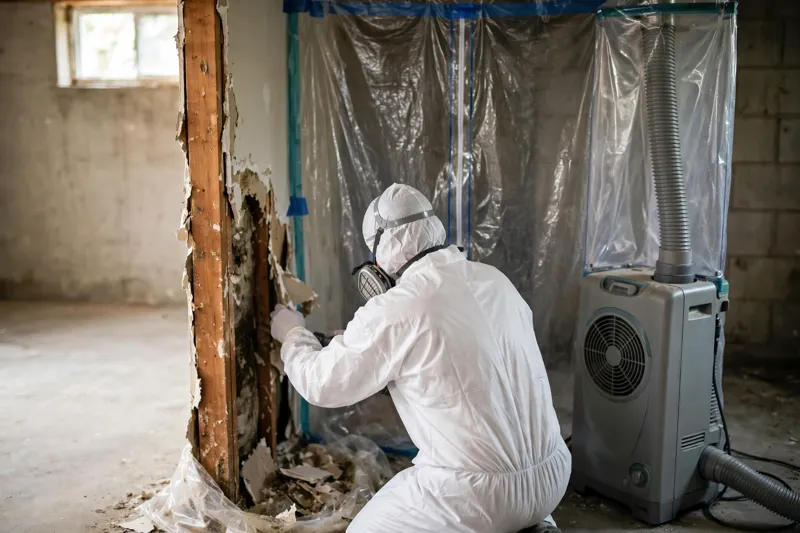
Mold in your Downers Grove home? We answer 24/7. We find the water that feeds it, seal the area off, remove the mold and the wet material, clean what stays, and dry the space so it cannot grow back. Call now and a crew is on the way.
- 24/7 emergency response, day and night
- Mold inspection, testing, removal and remediation
- Black mold, basement mold, attic mold and mold in walls
- Written scope of work before any repair starts
Serving Downers Grove, Illinois, downtown Main Street, Grove Street, Ogden Avenue, Butterfield Road, Belmont Road and every block from the BNSF Railway corridor to St. Joseph Creek.
- We answer 24/7
- Local Chicago team
- Insurance documentation help
- Straight answers, no pressure
Request mold remediation help in Downers Grove
Tell us where the mold is and we will call you back. We answer 24/7.
Mold remediation Downers Grove, the short answer
Mold remediation Downers Grove starts with the water, not with the mold. Mold grows where a wall stayed wet: a floor drain that backed up, a sump pump that stopped, a pipe that split in a freeze, a roof that leaked for a month, a basement that flooded in a storm. We find the water first, because a job that does not find the water will be done twice.
Then we seal the area off, remove the mold growth and the wet material it sits on, clean and sanitize what stays, and dry the space to moisture readings. That is the whole job, and it is the same job whether the mold is black mold on a basement wall off Main Street, attic mold found before a home goes on the market, or mold inside a wall after a burst pipe on Ogden Avenue.
When you search for mold removal Downers Grove at two in the morning, you want one thing: a crew that answers. We answer 24/7, and we talk you through the first hour while a crew is on the way to your home. Mold starts within 24 to 48 hours of the water sitting, and that is the window the whole job runs against, a wall that is dried the same day is a wall that does not grow mold, and a wall that sits wet for a week is a mold job.
Do not scrub the patch, do not spray it, and do not cut the wall open to look behind it. Disturbing mold sends spores into the air, and spores in the air spread the mold to the next room. If the mold followed a sewer backup, call the Downers Grove Sanitary District first, at (630) 969-0664, the District runs the public sanitary sewer mains, and it will tell you whether the blockage is in the public main or in your private service line. That call matters, because the answer decides who pays for what, and it decides whether the District's programmes can help you at all.
Downers Grove is a village in DuPage County, about twenty-two miles west of Chicago, with a historic, walkable downtown and two ZIP codes, 60515 and 60516. It is not a Chicago neighbourhood, and this page does not treat it as one.
No ranking page uses the Illinois registration, no ranking page uses the Sanitary District's programmes, and no ranking page answers the four Downers Grove mold questions this page answers.
This page answers them all, and it does it with real Downers Grove facts: the Illinois Part 835 registration, the Sanitary District's backup programmes, the DuPage County Health Department's mold guidance, the 2006 and 2009 floods in the Village's own minutes, and the two Guardian videos of unnamed Downers Grove homes from 2014.
Where Downers Grove is, and where it is not
Downers Grove sits in DuPage County, Illinois, about twenty-two miles west of Chicago, on the BNSF Railway corridor, between Lisle to the west, Woodridge to the south, Westmont to the east and Lombard and Oak Brook to the north. The Village's Civic Center stands at 850 Curtiss Street, Downers Grove, IL 60515, and the Village's main phone is (630) 434-5500, answered Monday to Friday, 7:30 in the morning to 4:30 in the afternoon. The Public Works Facility stands at 5101 Walnut Avenue.
The two ZIP codes are 60515 and 60516, and both belong to Downers Grove, the 60515 ZIP covers downtown and the older streets around it, and the 60516 ZIP covers the ground to the south and west. No number on this page uses any other ZIP as a Downers Grove ZIP, and no number on this page uses a Chicago ZIP for a Downers Grove home.
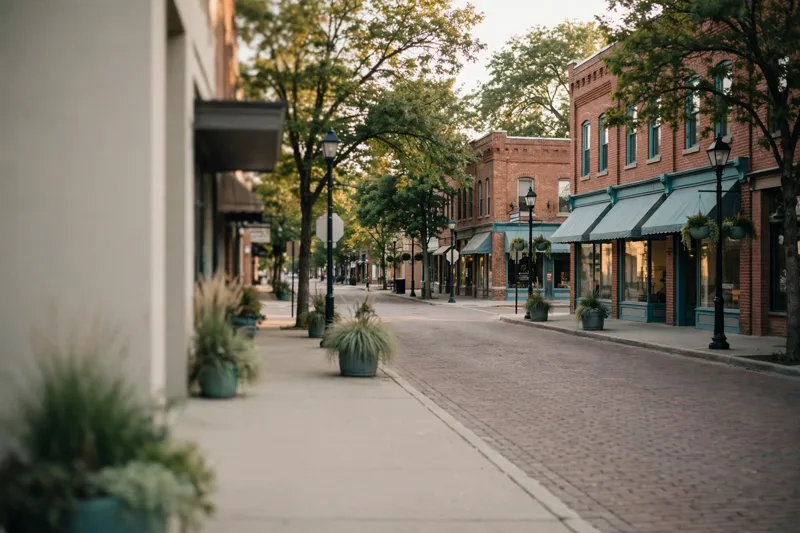
The GPS anchor for mold remediation Downers Grove is Main Street and Grove Street, downtown, at 41.792323 North, 88.010158 West, reverse-geocoded to Main Street, Downers Grove, DuPage County, Illinois, 60516. It sits about a block south of the water page's anchor at Main Street and Curtiss Street, and it is a different corner on purpose: the mold page has its own anchor, and the two pages do not share one.
Advocate Good Samaritan Hospital stands on Highland Avenue, between 31st Street and the hospital grounds that a resident photographed under water in the April 2013 flood.
Washington Park, the Village's first major stormwater improvement project under the Watershed Infrastructure Improvement Plan, sits on the ground the plan was written to protect.
The mold in Downers Grove grows in three kinds of water, and the kinds are the reason the Village floods where it floods. St. Joseph Creek runs through downtown in a large concrete pipe nearly a mile long, installed in the 1960s, and the Village is cleaning, repairing and lining that pipe now, in the Downtown Stormwater Improvements project, known as SW-90. Lacey Creek runs through the northern part of the Village, and a resident near Lacey Creek reported flooding issues for twenty years in the minutes of the October 2006 storm.
The East Branch of the DuPage River runs along the eastern side, and the Sanitary District discharges its treated water to the East Branch and to St.
The creeks are the high ground and the low ground of the Village: the homes near them flood first, and the homes on the high ground flood last, and the water that stays in a wall after any of those floods is the water that grows mold.
A homeowner who calls it is calling a Wheaton office.
Downers Grove is not Naperville either, and it is not Lisle, Woodridge, Westmont or Oak Brook, although the Sanitary District serves parts of all of them, the District's service area is bigger than the Village, and the Village's boundary is smaller than the District's.
This page keeps them apart, and it never merges a video company with a headquarters company.
What to do in the first hour after you find mold in Downers Grove
Mold remediation Downers Grove starts in the first hour. What you do in that hour decides how far the mold spreads, and the seven steps below are the whole of it.
When to call a mold company? Call the day you find the mold, before it spreads through the wall.
Who do I call if I find mold? Call us first, then the Sanitary District if the mold followed a sewer backup, then your insurer the same day. What is emergency mold remediation? It is the first phase of the job, containment and removal, done the same day, before anything is rebuilt. How to treat mold in your home? Find the water first, seal the area off, remove the mold, clean, dry, and test, the seven steps below are the treatment, in order.
Call us first.
Call (773) 570-9869 any time, day or night. Tell us where the mold is, how big the patch looks, and whether it smells of sewage. We answer 24/7 and talk you through the first hour while a crew is on the way to your Downers Grove home.
Do not disturb the mold.
Do not scrub it, do not spray it, and do not cut the wall open to look behind it. Disturbing mold sends spores into the air, and spores in the air spread the mold to the next room. Leave the patch alone until a crew can seal the area off.
Stop the water at the source.
Find the leak and stop it: turn off the main water valve if a pipe split, turn off the appliance if a hose failed, and call a plumber if you cannot see the source. Mold cannot be remediated until the water stops feeding it, and a job that skips this step will be done twice.
Do not paint over it and do not bleach a big patch.
Paint over mold hides it for a month and grows it behind the paint. Bleach on a small hard surface can clean the surface, but it does not reach the mold inside drywall or wood, and it should never be mixed with ammonia. A patch bigger than ten square feet is a professional job.
Photograph the mold and the water.
Photograph the patch, the water line and every damaged item before anything is moved, and keep a written list of what was lost, what was moved and what was thrown away. The photographs and the list are what the insurer reads, and they are what the crew uses to plan the containment.
Call the Sanitary District if the sewer backed up.
Call the Downers Grove Sanitary District at (630) 969-0664 when the mold followed a sewer backup. The District runs the public sanitary sewer mains, and it will tell you whether the blockage is in the public main or in your private service line. Call the Village Public Works line at (630) 434-5460 for non-emergency flooding, and dial 9-1-1 for an emergency.
Let the drying run until the readings say dry.
Keep the air movers and dehumidifiers running, and do not close the walls until a moisture meter says they are dry. We read every wall and floor each day and write the readings into a drying log you can see. Dry is a number, not a look, and mold cannot grow back in a wall that is dry.
Seven places mold grows in a Downers Grove home
A Downers Grove home is usually a mid-twentieth-century house with a basement, a finished basement that the family lives in, or a newer home on clay-heavy soil with a sump pump that runs every spring. Each of them has its own damp place. A crew doing mold remediation Downers Grove work starts with containment, because opening a wall without it spreads spores through the house.
One: the basement
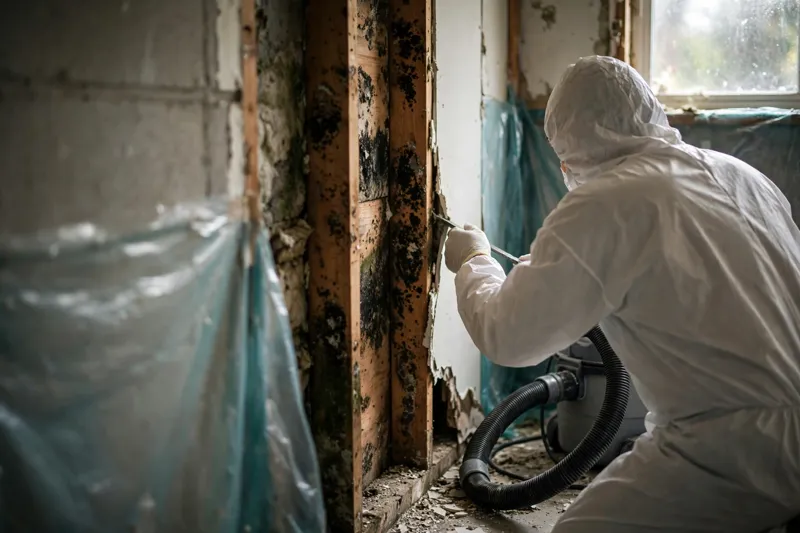
Basement mold removal Downers Grove starts with the lowest room in the house, and the lowest room is the room that floods first. The basement floods through one of four openings: a floor drain during a sewer surcharge, a failed sump pump, a frozen discharge line, or a supply pipe that split after the first hard freeze. The water sits on the floor, wicks up the drywall, and soaks the baseboards and the framing behind the wall.
Mold starts within 24 to 48 hours of the water sitting, and it starts on the drywall first, because drywall is paper and paper is food. The DuPage County Health Department's own mold page names the four indoor factors that encourage growth, dampness, high humidity levels, poor ventilation, temperature, and a Downers Grove basement in summer has all four at once. The defence is the same as for any basement water: find the entry point, stop the water, extract what is standing, dry to moisture readings, and remove the wet drywall.
How much does it cost to get rid of mold in your basement? No page can give you a number, because the cost depends on how much mold there is, how far it spread, what material it sits on, and whether the water source is fixed. Is it possible to get rid of mold in a basement? Yes, when the water source is fixed first and the drying is finished to moisture readings. Will homeowners insurance cover mold in the basement?
It usually does when the mold came from a sudden and accidental covered event, such as a burst pipe, and not when it grew from a leak that ran for months.
Two: the attic
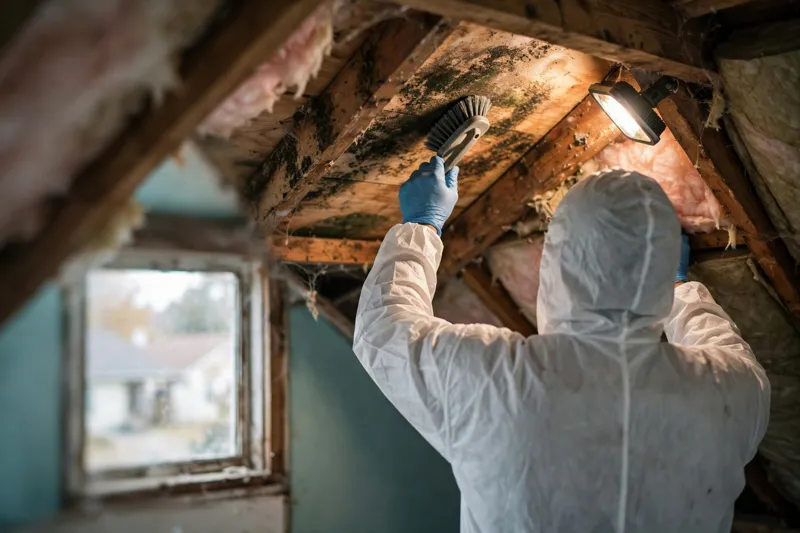
Attic mold removal Downers Grove starts with a room nobody looks at. The attic grows mold when warm, damp air from the house rises into a cold attic and condenses on the roof deck, and the condensation feeds mold on the wood.
The two Guardian videos from 2014 show the two ways it happens: in the first, a home on the main level grew mold because the exterior walls had too little insulation; in the second, the owners found attic mold when they put the home on the market, and an inspector would have found it. The attic is the room a home inspector reads first, and it is the room a seller discovers last.
The fix is not a spray: it is ventilation, insulation and air sealing, so the warm air stays in the house and the cold air stays out. How much does it cost to clean mold out of an attic? No page can give you a number, because the cost depends on how much mold there is, how far it spread, and whether the insulation must come out. Will insurance pay for mold in the attic?
It usually does when the mold came from a sudden covered event, and not when it grew from years of poor ventilation. How serious is black mold in the attic? It is as serious as any mold in a damp, unventilated space, the colour does not make it a different danger, and the state health department treats all molds the same way.
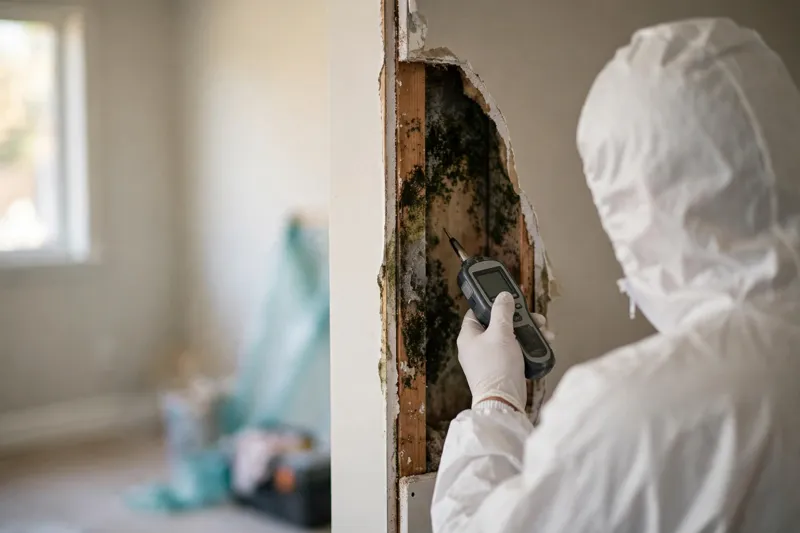
Three: inside the walls
Mold in walls Downers Grove is the mold you cannot see, and it is the mold that does the most damage before anyone finds it. The wall grows mold when water gets inside it, a pipe that leaked slowly, a roof that leaked for a month, a window that was never sealed, and the drywall holds the water behind the paint. What do I do if I find mold in my walls? Do not cut the wall open yourself, and do not spray it with bleach.
A crew will test the wall, open it under containment if needed, remove the wet material, and dry the framing before the wall is closed again. How to tell if your house has toxic mold? No colour and no smell tells you that, the only way to know what is growing is a test, and the only way to know how far it spread is a moisture meter and a camera.
The WikiHow guide the battery read live says the same thing in different words: check the basement first after heavy rain, look at the baseboards, look at the walls where they meet the ceiling, and look behind and under appliances, and use a borescope for inside-wall checks, because the eye cannot see inside a wall. A wall that is soft or warped comes out, with a margin around the affected area, and the framing behind it dries before the new drywall goes in.
Four: black mold
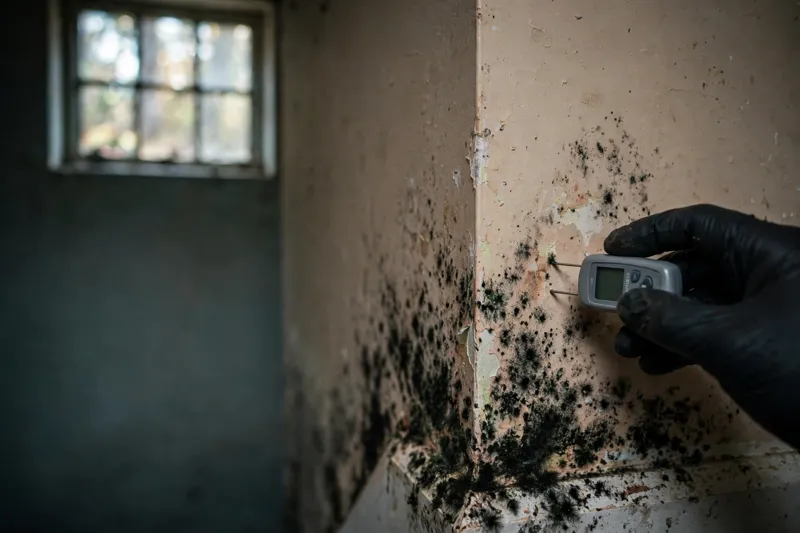
Black mold removal Downers Grove starts with a colour, and the colour misleads people. The dark mold in a damp home is usually Stachybotrys, which needs long, heavy wetness on wood or drywall to grow, and it can make toxins. Not every black patch is Stachybotrys, and not every Stachybotrys patch is black, the colour does not tell you the species, and the species does not tell you the danger.
What is the average cost of black mold removal? No page can give you a number, because the cost depends on how much mold there is, how far it spread, and whether the water source is fixed. Is it costly to remove black mold?
It costs more than a small surface patch, because black mold means the water sat for a long time, and a long time means the material behind the patch is wet too. Can black mold be completely removed? Yes, when the water source is fixed first and the drying is finished to moisture readings, and no, never permanently eliminated, because spores are everywhere, and remediation returns the home to normal background levels. Will insurance pay for black mold removal?
It usually does when the mold came from a sudden covered event, and not when it grew from a leak that ran for months. Can black mold really be remediated? Yes, black mold is remediated the same way as any mold: find the water, seal the area off, remove the mold, clean, dry, and test the air before the walls go back.
Five: mold after water damage
Mold remediation Downers Grove after water damage starts with the water, and the water decides the job. Mold after water damage Downers Grove grows when the water sat: a basement that flooded in a storm, a pipe that burst and ran for hours, a sewer backup that came up through the floor drain. How long does it take mold to settle in after water damage? Mold starts within 24 to 48 hours of the water sitting, and visible growth follows in three to twelve days. Do you always get mold after water damage?
No, a flood that is cleaned the same day is a flood that does not grow mold, and a flood that sits for a week is a mold job. Does homeowners insurance cover mold caused by water damage? It usually does when the mold came from a sudden and accidental covered event, such as a burst pipe, and not when it grew from a leak that ran for months. What does mold look like after water damage?
It looks like dark patches on the drywall, like a stain that comes back after you clean it, and like a musty smell that does not go away when the room dries. The water comes out first, then the mold, then the drying, and the drying runs until a moisture meter says the walls are dry, because a wall that looks dry and still holds water grows mold behind the paint.
Six: the bathroom, the kitchen and the laundry
The bathroom, the kitchen and the laundry grow mold the same way the basement does: water that stays. A shower that was never vented, a dishwasher hose that split, a washing machine that overflowed, a toilet that leaked at the base, each of them puts water on a floor that nobody looks under. The bathroom grows mold behind the tiles and under the tub, where the grout cracked and the water got in. The kitchen grows mold under the sink and behind the dishwasher, where a slow drip ran for months.
The laundry grows mold behind the washing machine, where the drain hose leaked and the wall stayed damp. The fix is the same in all three rooms: find the leak, stop the water, remove the wet material, clean what stays, and dry the space. A small patch on a hard surface can be cleaned with undiluted white vinegar or a bleach solution of one cup per gallon of water, and the WikiHow guide the battery read live says bleach will not reach deeper mold, so it should not be used on walls.
A patch bigger than ten square feet is a professional job, and a patch that came back after you cleaned it is a patch with a leak behind it.
Seven: the shop and the office
Commercial mold remediation Downers Grove starts with the same seven steps as a home job, and it adds a clock: a flooded shop basement is a flooded stockroom, a flooded kitchen and a closed shop. The shops, restaurants, grocers and services on Ogden Avenue and Main Street sit in buildings whose basements are the first to flood when the sewer surcharges, and a shop that waits a week has a mold job and a closed shop, while a shop that starts the same day has a drying job and an open shop.
What is the best commercial mold remover? No page can rank companies that way, and this site does not try. How much is commercial mold remediation?
No page can give you a number, because the cost depends on how much mold there is, how many rooms got wet, and whether the business can stay open while the work runs. The same drying log applies, and the same written scope applies.
A shop on the Ogden Avenue corridor, a restaurant in downtown Main Street, and an office off Butterfield Road all grow mold the same way a home grows it, through the floor drain, through the sump pump, through a split pipe, and they all dry the same way: find the water, seal the area off, remove the mold, clean what stays, and dry to a number.
Three kinds of water, and why the kind decides the mold
Mold in Downers Grove sorts the water into three kinds, and the kind decides what the crew does, what comes out, and what stays. Clean water comes from a supply pipe, a water heater or rain through a roof. It is the simplest job, and it dries in three to five days in one room. Grey water comes from a washing machine, a dishwasher or a shower drain. It carries soap and dirt, and it needs cleaning as well as drying.
Black water comes from a sewer backup or a flood that has passed over the ground. It carries sewage and bacteria, and it is the one kind of water a homeowner should not touch. Black water means the wet drywall comes out to twelve inches above the water mark, the floor comes out, and the room is cleaned and sanitized before anything goes back.
Mold starts within 24 to 48 hours of the water sitting, and that is the window the whole job runs against, a flood that is cleaned the same day is a flood that does not grow mold, and a flood that sits for a week is a mold job.
Sewage mold is the job the District's own pages point to, and it is the job this page describes in full. The wet drywall comes out to twelve inches above the water mark. The room is cleaned and sanitized, and the drying runs until the meter says dry. That is the process, and it is the process this page follows.
The first call is the District's, at (630) 969-0664, because the District will tell you whether the blockage is in the public main or in your private service line, and the answer decides whether the District's Backup Reimbursement Program can help with the cleanup at all. A backup caused by a blockage in the public sanitary sewer main can be helped; a backup from precipitation-related high flow in the public sewer, or from a blockage in the building sanitary service, cannot.
The verified record, and what it does not show
There is no verified named Downers Grove mold case with a real source, and that is the honest record. No case with a named Downers Grove homeowner, a street address and a mold company exists on any platform the battery checked, and this page invents none. The closest evidence is town-level only, and this page prints it as town-level evidence, not as a case.
The two Guardian videos from 2014
The only Downers Grove mold videos the live sweep found are two Guardian Mold Prevent videos from 2014, and neither of them names a home. The first, "Black Mold Remediation (Mold Removal) Downers Grove, IL", from Dan Redden of Guardian Mold Prevent, runs three minutes and eleven seconds, has forty-four views, and was uploaded on May 30, 2014.
Its transcript, read live, says: "This home, located in Downers Grove, Illinois, has a significant mold problem on the main level… caused by insulation deficiencies." The home is unnamed, the street is unnamed, and the job date is unnamed, the video is a walk-through of a home whose exterior walls had too little insulation, and the mold grew on the main level because the walls stayed cold and damp.
The second, "Black Attic Mold Stain Removal Downers Grove, IL", runs two minutes and forty-one seconds, has about one thousand one hundred views, and was uploaded about twelve years ago. Its owners found mold in the attic when they put the home on the market, and an inspector would have found it. Again the home is unnamed, the street is unnamed, and the job date is unnamed. A third video, a ZeroMold Chicago short called "Ozone Shock Treatment for Downers grove home today", has six likes and no date and no address shown.
A fourth, Everdry's "Basement Waterproofing Downers Grove and Mold", has five hundred and ninety-two views and is nine years old, and its script is generic, with no named job. A fifth, a generic lead video with a phone number in the title, has no views and is nine years old. The sixth query, mold after flooding in Downers Grove, returned no Downers Grove mold video at all. The closest video was a WGN flooding rescue, three months old, with three thousand seven hundred views, flooding, not mold. No keywords or tags are shown on the Downers Grove video pages, and this page invents none.
What the other platforms gave back
The real user questions the sweep found are out-of-area questions, and this page prints them as out-of-area questions, not as Downers Grove jobs: "I'm getting random mold spots in my basement but the drywall is not super wet - who do I call her / any recs?" from Long Island, June 4, 2026; "Black mold growing on basement walls what do I do?" from Indianapolis, December 11, 2025; "Mold was found in the basement of the new house I am renting.
What do I do?" from a northern Illinois renter, June 10, 2024; and "Basement smells moldy - any recommendation for mold inspection" from the Chicago suburbs, March 25, 2026.
WikiHow returned its mold guide, read live: the EPA rule that an area under ten square feet is generally a do-it-yourself clean-up, and a larger area should be handled by a professional; safety gear of goggles, an N-95 mask and rubber gloves; vinegar, bleach at one cup per gallon, ammonia at fifty-fifty, three percent hydrogen peroxide left for ten minutes, and a baking-soda solution; never mix ammonia with bleach, because it makes toxic fumes; and soft or warped drywall comes out and is replaced, with a margin around the affected area.
Medium is blocked by a Cloudflare check, recorded as blocked, not as "nothing found".
Mold inspection and mold testing in Downers Grove
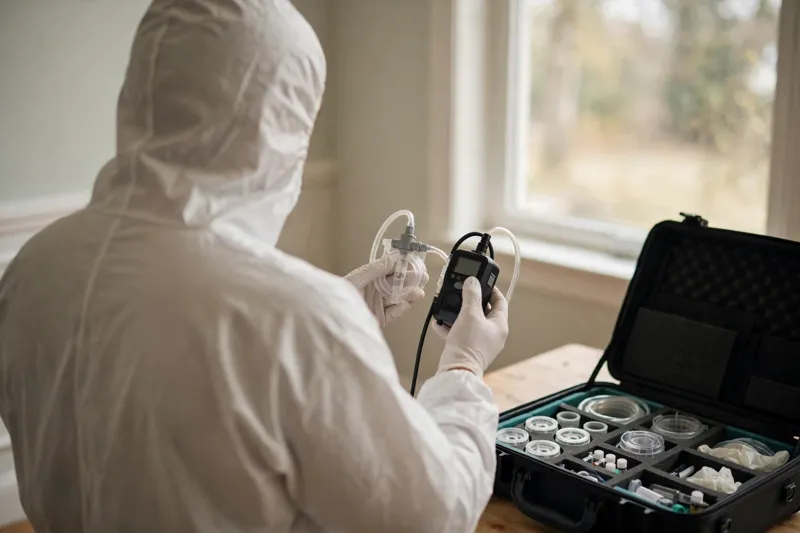
Mold remediation Downers Grove needs a test before it needs a crew, when the mold is hidden. Mold inspection Downers Grove is the first step, and mold testing Downers Grove is the second step, the inspection finds the mold, and the testing tells you what it is and how much of it is in the air. What is the average cost of a mold test? The test is priced by the number of samples, and the lab report is the record the insurer reads.
How much does it cost to have someone test for black mold? The same as any mold test, the test is priced by the samples, not by the colour of the mold. Testing means finding the mold, finding the water, and finding how far the mold spread, and it means doing it with instruments a homeowner does not own. A mold inspection looks at the home, reads the moisture with a meter, and takes air and surface samples. A mold test sends the samples to an independent lab, and the lab counts the spores.
The lab compares the inside air with the outside air, because spores are everywhere, and the question is not whether spores exist, it is whether the inside count is higher than the outside count, and whether the species inside the home match the species outside it.
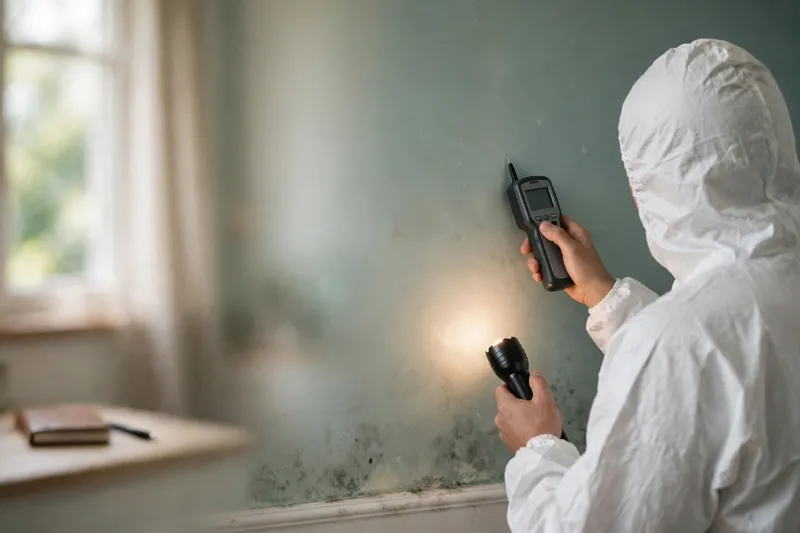
Mold Inspection and Testing, the test-only company that ranks first for the inspection and testing terms in Downers Grove, does not do remediation, no conflict of interest. Its process is the process this page recommends: schedule, appointment, inspection, samples collected, independent lab, report with findings. The lab report tells you what is growing, how much of it there is, and where it sits.
A company that tests its own removal work is a company that grades its own homework, and this page does not recommend it. The third-party lab verification is the step that closes the job: after the removal, after the cleaning, after the drying, the air is tested again, and the walls are not sealed until the spore counts are within the normal range.
How much does it usually cost for a mold inspection? No page can give you a number, because the cost depends on how large the home is, whether samples go to a lab, and whether the mold is hidden inside a wall. Is it worth doing a mold inspection? Yes, when the mold is hidden, when the smell is there and the patch is not, and when the insurer asks for a report before it pays. Who can test for mold for free?
Can a house with mold be saved? Yes, when the water source is fixed first and the drying is finished to moisture readings. Do mold testers really work? A tester with a moisture meter, a camera and an independent lab works. A tester with a spray bottle and a promise does not. What time of year is worst for mold?
Summer, when the humidity is highest and the storms come fast, and the DuPage County Health Department's own page names the same four factors: dampness, high humidity, poor ventilation and temperature.
Mold removal vs mold remediation, the difference
Mold removal in Downers Grove and mold remediation in Downers Grove are two different jobs, and pages that mix them up mislead you. Removal means taking the mold out. Remediation means the full job: finding the water source, containing the area, removing the mold and the wet material, cleaning what stays, and drying the space so it cannot grow back. A company that only removes the mold without fixing the leak will be back in weeks, and a company that only sprays the mold without removing the wet drywall will be back in days.
This page sells the process, because the process is the job. Is there a difference between mold removal and mold remediation? Yes, removal is one step, and remediation is the whole job. Is professional mold removal worth it?
Yes, when the patch is bigger than ten square feet, when the mold is inside a wall, when the mold followed a sewer backup, and when the insurer asks for a report. A small patch on a hard surface can be cleaned at home. A patch inside a wall cannot.
Stories that are not Downers Grove, and why they are not here
A page that prints a case from the wrong town is a page that misleads a homeowner, and this page does not do it. The stories below are the ones the battery found and rejected, and they are listed here so that no reader mistakes them for Downers Grove cases.
The Long Island basement, with random mold spots and drywall that is not super wet, is Long Island, not Downers Grove. The Indianapolis basement, with black mold growing on the walls, is Indianapolis. The northern Illinois rental, with mold found in the basement of a new rented house, is northern Illinois, not Downers Grove. The Chicago suburbs basement, with a moldy smell and a request for an inspection, is the Chicago suburbs, not Downers Grove. The Buffalo Grove burst pipe is Buffalo Grove. The Lincolnshire sump-pump failure is Lincolnshire.
The Bartlett basement flood, with about three feet of water, is Bartlett, the poster said so himself. The July 2026 storm-sewer emergency on Curtiss Street is a municipal storm-sewer incident, not a residential mold case, and one worker died, this page prints it as stormwater context on the water page, and it does not print it here as a mold case at all. The water-main break at Ogden Avenue and Main Street on August 31, 2018, and the April 2013 St.
Joseph Creek watershed flooding, are claims from a language model only, with no source page opened, and this page does not print them as verified. The contractor name and the pipe size for the July 2026 storm-sewer emergency are language-model claims only, and this page prints neither. No verified named Downers Grove mold case exists on any platform the battery checked, and this page says so plainly instead of inventing one.
Homeowners, renters and finished basements
A finished basement is the room a Downers Grove family lives in, and it is the room that floods first. The homeowner owns the building and its pipes, so the homeowner pays for the building repair. A renter pays when the renter caused the damage, such as an overflowing tub left running. Read the lease and tell the landlord the day the mold appears, because a renter who waits a week has a mold job, not a drying job.
The landlord should call for extraction the same day, and the renter should photograph the mold and every damaged item before anything is moved. Who is responsible for mold from upstairs? The owner of the flat above, if the water came from their flat, a leaking appliance, an overflowing tub, a split supply line, and the building owner, if the water came from the building's pipes or roof.
A leak from upstairs travels through the ceiling and shows up two rooms away from where it started, and the first job is to find the source, not to blame the stain. Should you call apartment maintenance for mold in a ceiling? Yes, if you rent, maintenance is the landlord's first call, and the landlord owns the building and its pipes.
A homeowner in a two-flat or a three-flat on Ogden Avenue, Main Street or Belmont Road should know where the backwater valve is, whether the building has one, and when the sewer lateral was last televised with a camera.
The northern Illinois renter's question from the live sweep, "Mold was found in the basement of the new house I am renting. What do I do?", has the same answer: tell the landlord the day you find it, photograph it, and do not clean it yourself until the landlord has seen it.
Through the year in Downers Grove
Mold in Downers Grove changes with the season, and the season decides what grows. In spring, the thaw and the rain come together, and the sump pump runs the most. In summer, the storms come fast and hard, and the sewers surcharge, the July 27, 2026 storm-sewer emergency was a summer storm, and the October 2006 storm was an early-fall storm that put about four inches of rain on the village, most of it in one hour.
In fall, the leaves block the gutters and the discharge line, and the first freeze catches the pipes that were never drained. In winter, the pipes freeze and split, the discharge line freezes solid, and the sump pump runs and the water comes back into the pit, and the February 2009 storm fell on frozen ground with blocked inlets, with two hundred and seventy calls in two hours.
The DuPage County Health Department's own mold page names the four indoor factors that encourage growth, dampness, high humidity levels, poor ventilation, temperature, and every season in Downers Grove supplies at least two of them. The job is the same in every season, find the water, seal the area off, remove the mold, clean, dry, but the entry point changes, and the entry point is what this page is built to find.
What a job costs, and why this site prints no prices
Mold remediation Downers Grove has no price on this page, and it has no price for a reason: a price on a page is a price for a job the page has never seen. What is the average cost of mold remediation? No page can give you a number, because the cost depends on how much mold there is, how far it spread, what material it sits on, and whether the water source is fixed. How much does it cost to get mold removed?
The same answer: the drivers are the size of the affected area, the type of materials, whether the mold is accessible or hidden, and whether testing and rebuild are part of the job. How much does it usually cost for a mold inspection? The drivers are how large the home is, whether samples go to a lab, and whether the mold is hidden inside a wall. How much does it cost to clean mold out of an attic?
The drivers are how much mold there is, how far it spread, and whether the insulation must come out. How much does it cost to get rid of mold in your basement? The drivers are the depth of the water that fed it, the size of the basement, and whether the drywall and the floor must come out. How much is a full mold remediation? The drivers are the same, plus the testing and the rebuild. How much is commercial mold remediation?
The drivers are how much mold there is, how many rooms got wet, and whether the business can stay open while the work runs. Mold remediation cost Downers Grove is the question every homeowner asks first, and the answer is the drivers above. How much should mold remediation cost? A small job costs less than a large job, and a job with sewage costs more than a job with clean water. What is the average cost to have mold removed?
There is no average that means anything for your home, the cost is the size of the affected area, the materials that come out, and the drying time. How much does professional mold removal cost, and how much does a professional mold remover cost? The same answer: the size of the affected area, the materials that come out, and the drying time. Is mold remediation worth it? Yes, when the mold grew from water damage, a small patch left alone becomes a large job. Can I write off mold remediation on my taxes?
Ask a tax professional, the answer depends on your home, your policy and the tax year. We inspect first, then give you a written scope of work with the cost in it before any work starts. The scope says what comes out, what stays, what is cleaned, what is dried, and what is repaired, and it says it in writing so the insurer can read it. No page can give you a number for your home, and this page does not try.
The cost figures that circulate online, from estimator sites, from aggregator sites, from a Chicago mold company, are third-party claims only, and this page prints none of them as facts.
Insurance, what is covered, what is not, and what to do first
Mold remediation Downers Grove is usually covered by homeowners insurance when the mold came from a sudden and accidental covered event, such as a burst pipe or an appliance failure. Does homeowners insurance cover mold remediation in Downers Grove? Yes, usually, when the mold came from a covered event and the source is fixed. A sewer backup is usually covered only if you hold the endorsement for it, ask your insurer whether your policy carries water backup coverage, and ask before the next storm, not after it. Is sewer back up coverage worth it?
If your basement has flooded once, yes, a backup without the endorsement is a bill you pay yourself, and a backup with it is a claim. Flooding from outside needs separate flood insurance, because a standard homeowners policy does not cover it at all. A standard policy covers the drying and the repair, less your deductible, and it does not pay for the pipe that failed. A pipe that leaked slowly for months may be classed as wear and tear, so report a burst the day you find it. Does homeowners insurance cover mold remediation?
It usually does when the mold came from a covered event and the source is fixed. Will insurance pay for mold in the attic? It usually does when the mold came from a sudden covered event, and not when it grew from years of poor ventilation. Will homeowners insurance cover mold in the basement? The same answer: sudden and accidental, yes; gradual leak, no. Should I use homeowners insurance for mold remediation?
Yes, when the mold came from a covered event, call the insurer the same day you find it, and do not wait for the adjuster to start the drying. How to get insurance to pay for mold remediation? Call the same day, photograph the mold and the water, keep every receipt, and keep the drying log, the adjuster reads the photographs, the receipts and the log, and the log is the record that settles the claim. What to do if you can't afford mold remediation?
Call the insurer first, because a covered event is a claim, and a claim is paid less your deductible, and call us, because the inspection and the written scope cost nothing until you agree to the work.
Call the insurer the same day the mold appears, and do not wait for the adjuster to start the drying. The drying is mitigation, and mitigation is the homeowner's job, the insurer expects the water out and the drying started, and a job that waits for the adjuster grows mold while it waits. Photograph the mold and every damaged item before you move it, keep every receipt, and keep a written list of what was lost, what was moved and what was thrown away. What not to say to the insurance adjuster about water damage?
Do not guess when it started, do not say the leak was there for months if you do not know, and do not throw anything away before you photograph it, the adjuster reads the photographs, the receipts and the drying log, and the drying log is the record that settles the claim. The question of whether mold caused by water damage is covered has the same answer as the question of whether water damage is covered: sudden and accidental, yes; flooding from outside, no, not without a flood policy; sewer backup, only with the endorsement.
The Illinois registration, what to ask before you hire
The Illinois Department of Public Health's Part 835 registration is operational, effective September 23, 2026, with a grace period to September 30, 2027. This site claims no registration itself. The guidance on this page is consumer guidance only: ask a company for its Illinois Part 835 registration if mold work is involved, and ask to see it.
The registration page says it plainly: all mold remediators must register with the health department, unless they qualify for an exemption, and a company cannot be included in the public listing without having a certified mold remediator on staff who meets the requirements of the code. The application is incomplete without proof of insurance and third-party certification. Professionals that only provide mold assessment services do not need to register, only professionals that provide mold remediation services need to register.
The health department runs a public search tool, so a homeowner can check the listing before hiring. If you have a question about a form field, the health department's mold email is, and public enquiries go to or (217) 782-5830. The basis is the Mold Remediation Registration Act, 410 Illinois Compiled Statutes 105.
Mold Inspection and Testing's Illinois directory page says the registration requirements are still pending, with no active statewide listing to look up. That page was written before the rules were adopted, and the live health department page contradicts it: the registration system is live, the search tool is live, and the code has been effective since September 23, 2026.
Two county health department pages say the same stale thing in different words, that the state health department does not regulate mold, and both of them pre-date Part 835. The health department does not test for mold, and that part is still true. The "does not regulate" line is not. A third-party marketing page claims the certification comes from a health-department-approved training course, and that is wrong too: the health department registers, and the certification comes from a third-party certifier.
Ask for three things before you hire anyone: the Part 835 registration, the certified mold remediator on staff, and proof of insurance. A company that cannot show you the registration for mold work is a company that should not be doing mold work.
Village and District programmes
Mold in Downers Grove is a job the Village does not do for you, but the Village and the Sanitary District run programmes that help a homeowner after a flood, and they also run programmes that do not exist, and this page tells the two apart. The Sanitary District's backup programmes exist, and they are described in full below. The Village's Stormwater Cost Share Program exists, and it is described below. There is no Village-run mold cleanup or remediation rebate for homeowners, and this page does not invent one.
There is no Village sewer-backup phone line, sewer backups go to the Sanitary District, not the Village. There is no Downers Grove-specific "flooded basement, who to call" page on the Village site; the Stormwater FAQs page is the closest official page. No Village-published permit fee or drainlayer rule was found for Downers Grove in the research, and this page prints none. A programme that cannot be found on the official site is not a programme this page will promise you.
The Sanitary District's three backup programmes
The Backup Reimbursement Program can help cover some cleanup and repair costs when a backup into the house was caused by a blockage in the public sanitary sewer main. It does not cover backups from precipitation-related high flow in the public sewer, and it does not cover any blockage in the building sanitary service.
The Cost Reimbursement Program for Overhead Sewers or Backflow Prevention Devices reimburses up to three thousand dollars or fifty percent of the cost, whichever is less, for installing a District-approved overhead sewer system or backflow prevention device. It applies to buildings connected to the District's system and constructed before July 17, 1996, and to installations on or after July 17, 1996. The owner must obtain a no-charge District sewer permit, and the owner must obtain a minimum of two contractor proposals, with three recommended.
The programme was approved in August 1997 and revised in October 2001 and April 2005. The Building Sanitary Service Repair Assistance Program covers repairs to a building sanitary service in some cases. All three programme pages were confirmed live on the District's site.
The first call for a sewer backup is the District's, at (630) 969-0664, because the District will tell you whether the blockage is in the public main or in your private service line, and the answer decides whether the Backup Reimbursement Program can help with the cleanup at all.
The Stormwater Cost Share Program
The Stormwater Cost Share Program is the Village's public and private partnership to help mitigate drainage issues adversely affecting private property. The policy was adopted in 1998, revised in 2009, and revised again on April 21, 2026, in Resolution Number 2026-37, raising the reimbursement amount and simplifying the process. The fiscal year 2026 budget for the programme is ninety thousand dollars, in the Stormwater Fund.
The reimbursement will not exceed half the cost, with a maximum of three thousand dollars per property owner, and the maximum total Village reimbursement for work on private property for a single cost-share project shall not exceed twenty thousand dollars. The Village is responsible for all work in the Village right-of-way, and Village staff meet with the property owner to determine eligibility. The priorities run first-come, first-served. The first priority is flooding circumstances, including surface water entering basements as a qualifying circumstance.
The fifth priority is a single private developable lot with a drainage area of at least one and a half acres. Eligibility includes a wet or soggy and unusable yard lasting at least seventy-two hours after a storm. Improvements built on private property remain private, and they are the owner's maintenance responsibility up to the connection with the Village storm sewer or ditch; the Village maintains the improvements in the right-of-way. This is drainage work, pipes, ditches, grading, not cleanup of a flooded basement and not a rebate for mold remediation. Never present it as the Village paying for mold work, because that is not what it is.
What Downers Grove cannot use
DuPage County runs a Residential Drainage Assistance Program for unincorporated areas, for flooding of a primary structure, roadway ponding over six inches, and septic failure, and it is a county programme, not a Village programme, and it does not apply inside the Village of Downers Grove. The Village participates in FEMA's Community Rating System, which is a flood-insurance discount programme, not a repair programme. There is no Village cleanup rebate, no Village mold fund, and no Village payment for mold damage to a basement. The Village does not pump out basements. The Village may pump out flooded yards on a case-by-case basis, depending on availability of staff and equipment. That is the line the Village's own Stormwater FAQs draw, and this page prints it as the Village wrote it.
Lookalike places, Downers Grove is one place, and the searches know it
The name is simple, and the page hammers "Downers Grove, Illinois" throughout so that no reader and no engine mistakes it for another town. There is one Downers Grove in Illinois, and it is the village in DuPage County. The Google searches in the battery carried a location footer that read "San Francisco, California, Based on your past activity", and four terms returned San Francisco pages in their results. The answer-engine searches carried a location that read "San Francisco, California" in the footers, even though the search was set to the United States.
A Chicago-based re-run is required before any ranking claim is made from either leg, and this page makes none. This page is for Downers Grove, Illinois, 60515 and 60516, between Lisle and Westmont, on the BNSF Railway corridor, and it answers the cost question for Downers Grove: this site prints no prices, and no figure on this page can mislead you.
The Village and the District, two governments, one town
Downers Grove has two governments that a homeowner with mold must tell apart, and this page tells them apart. The Village of Downers Grove runs the stormwater, the streets and the right-of-way. Its Civic Center stands at 850 Curtiss Street, Downers Grove, IL 60515, and its main phone is (630) 434-5500, answered Monday to Friday, 7:30 in the morning to 4:30 in the afternoon.
Its Public Works Facility stands at 5101 Walnut Avenue, and its Public Works line for non-emergency flooding is (630) 434-5460, Monday to Friday, 7:30 in the morning to 4:30 in the afternoon. The Village does not pump out basements. The Village may pump out flooded yards on a case-by-case basis, depending on availability of staff and equipment. The Downers Grove Sanitary District runs the sanitary sewers, and it is a separate unit of local government, not part of the Village.
Its office sits at 2710 Curtiss Street, Downers Grove, IL 60515, open Monday to Friday, eight in the morning to four-thirty in the afternoon, and a sewer backup can be reported at (630) 969-0664 at any time, with personnel on call at all hours. Its Wastewater Treatment Center stands at 5003 Walnut Avenue. Call the District for a sewer backup. Call the Village for a flooded street. Call us for the mold in your home.
The creeks and the stormwater
The creeks are the water story of Downers Grove, and the Village's stormwater work is the story of the creeks. St. Joseph Creek runs through downtown in a large concrete pipe nearly a mile long, installed in the 1960s, and the Village is cleaning, repairing and lining that pipe now, in the Downtown Stormwater Improvements project, known as SW-90, running from spring 2025 to fall 2027. The latest update, from October 16, 2026, says the cleaning and lining operations are complete for the year, and the work restarts in spring and summer 2027.
The project manager is Julie Lomax, Stormwater Administrator, at 630.493.8821. The Storm Sewer Replacement programme, known as SW-80, is the Village's annual programme to replace or fix issues with existing storm sewers and to maintain existing ditches. The 2026 work is complete: a manhole added to the storm sewer along the lot line between Candlewood Drive and 39th Street, and a new storm sewer at Lincoln Street and Middaugh Avenue. The project manager is Nicholas Vukosavljevich, at 630.493.8835.
Lacey Creek runs through the northern part of the Village, and a resident near Lacey Creek reported flooding issues for twenty years in the minutes of the October 2006 storm. The East Branch of the DuPage River runs along the eastern side, and the Sanitary District discharges its treated water to the East Branch and to St. Joseph Creek. The Watershed Infrastructure Improvement Plan, adopted after the 2006 storm, named sixteen high-priority areas and was funded within a twenty-five million dollar bond issuance. Mold follows standing water, and the creeks are where the standing water starts.
By building type
Mold in Downers Grove changes with the building, and the building decides what comes out and what stays. The mid-twentieth-century homes are the oldest homes in the Village, and they are the homes that grow the most mold, aging plumbing, clay soil against the foundation, and a sump pump that has been running for decades. The finished basements are the next type, and they grow mold through the floor drain first, because the finished room is the lowest room in the house.
A newer home on clay-heavy soil is the third type, and it grows mold from the wall, not from the drain, because the clay holds the water against the foundation. The two-flats and the small apartment buildings are the fourth type, and they grow mold through the floor drain first, with the lowest flat taking the water. The shops and offices on Ogden Avenue, Main Street and Butterfield Road are the fifth type, and they grow mold through the basement first.
The brick is the same in all five, the clay is the same, and the sewer is the same, and the job is the same in all five: find the water, seal the area off, remove the mold, clean, dry. The Village's own flood record says the same thing in different words: the October 2006 storm put water in the centre of town near St. Joseph Creek, and the February 2009 storm put water on Belmont Avenue at Curtiss, and both storms put water in the low ground first.
The landmarks are not homes, and this page does not treat them as homes. The Village Hall and the police station, less than a hundred yards from the July 2026 storm-sewer emergency, are public buildings, and their water story is the storm-sewer story, not a family's basement. Advocate Good Samaritan Hospital, on Highland Avenue, is a hospital, and its water story is a hospital story. Washington Park is a park, and its water story is the stormwater story. A home is a home, and a landmark is a landmark, and this page keeps them apart.
Choosing a company, and talking to the adjuster
Mold remediation Downers Grove starts with three questions before you hire anyone: a registration check, a written scope, and independent testing. A good company answers 24/7, arrives fast, photographs everything, and talks to your adjuster. Avoid any company that asks you to sign on the spot. The registration check is the Illinois Part 835 registration: ask the company whether it is registered, who its certified mold remediator is, and whether you can see the listing.
The written scope is the record that says what comes out, what stays, what is cleaned, what is dried, and what is repaired. The independent testing is the lab report from a company other than the one doing the removal, the air is tested again after the work, and the walls are not sealed until the spore counts are within the normal range. The adjuster will ask for all three, and the adjuster will ask for the photographs and the receipts as well.
Call the insurer the same day the mold appears, and do not wait for the adjuster to start the drying, the drying is mitigation, and mitigation is the homeowner's job. A company that will not show you the registration is a company that should not be doing mold work. A company that will not give you a written scope is a company that will not tell you the cost before the work starts. A company that tests its own removal work is a company that grades its own homework.
Your Downers Grove checklist, before, during and after
Mold remediation Downers Grove starts with a checklist, and the checklist is the same for a homeowner, a renter and a landlord. Before the next storm: test the sump pump, clear the discharge line, check the outlet, look at the gutters and the downspouts, and ask a licensed sewer contractor to televise the lateral with a camera.
During the flood: call us first, stop the water at the source if you can do it safely, stay out of the water while the power is on, do not touch the water with bare hands, lift what you can save, and photograph everything before you move it.
After the flood: keep the drying running until the meter says dry, keep the drying log, keep every receipt, call the insurer the same day, and call the Sanitary District at (630) 969-0664 if the sewer backed up, or the Village Public Works line at (630) 434-5460 if the street flooded. A checklist is not a job, but it is the difference between a job that starts the same day and a job that starts a week later.
After the job, what to check before you call it done
Before you call the job done, check four things. First, the clearance test: the air should be tested again after the work, and the spore counts should be within the normal range before the walls are sealed. Second, the drying log: every wall and floor should read the same as a dry wall in the same house, and the reading should hold for two days. Third, the smell: a room that still smells damp is a room that is still wet somewhere.
Fourth, the entry point: the leak should be fixed, the backwater valve should be fitted if the building needs one, the sump pump should be tested, and the discharge line should be clear. A job that passes all four is a job that is done. A job that fails one of them is a job that will be done twice. How long does mold remediation take in Downers Grove?
A small job takes one to two days, and a large job takes up to two weeks, the drying decides the clock, and the clearance test decides when the walls go back. Can mold be fully remediated in Downers Grove? Yes, remediation returns a home to safe, normal background levels, and the clearance test proves it. Can mold grow back after remediation? Yes, if the water comes back, remediation removes the mold, and fixing the leak keeps it from coming back. Is it possible to fully get rid of mold?
No, spores are everywhere, and remediation returns a home to safe, normal background levels, not to zero spores. How long after mold remediation do you feel better? That is a question for a doctor, not for a remediation company, symptoms vary from person to person. Is it safe to buy a home that has been remediated for mold? Ask for the clearance test and the drying log before you buy, a home with a written record is a home you can judge.
The clearance test is the paper that settles the job, and it is worth a paragraph of its own. The test is done by a company other than the one that did the removal, and it compares the inside air with the outside air, because spores are everywhere. The test records the spore counts, the species found, and the moisture readings of every wall, floor and ceiling that got wet, on the day the crew arrived and on every day after, until the readings match a dry wall in the same house.
It records the equipment that ran, the hours it ran, and the day it was switched off. It records the photographs of the mold, the photographs of the damaged items, and the list of what was moved and what was thrown away. The insurer reads the test, the adjuster reads the test, and the homeowner should keep a copy of it. Ask the crew to show you the meter, ask them to tell you the reading in plain words, and ask them for the test in writing when the job is done.
A company that dries to a number can show you the number. A company that dries to a look cannot show you anything, and the look is not a record.
Winter in Downers Grove, the frozen-pipe season
Winter in Downers Grove is a frozen-pipe job, and a frozen-pipe job is a mold job in the spring. A supply pipe splits when the water inside it freezes and expands, and the split is usually in an outside wall, a crawl space or an unheated room. The pipe does not leak while it is frozen, it leaks when it thaws, and by then the water has been running for hours. Keep the heat on in every room, even the rooms you do not use. Let the taps drip on the coldest nights.
Open the cabinet doors under the sinks on an outside wall, so the warm air reaches the pipes. Drain the outside taps before the first hard freeze. And check the sump pump's discharge line after the first freeze, because the line freezes solid, the pump runs, and the water comes back into the pit.
A burst pipe is usually covered by insurance when it burst suddenly, report it the day you find it, and dry the wall the same day, because a wall that sits wet for a week is a mold job.
Prepare for the next storm, the Downers Grove list
The next storm is not a question of if, it is a question of when, and the list below is the preparation. Fit a backwater valve on the building drain if the building has none, and ask the District about an overhead sewer if the basement has flooded twice, the District reimburses up to three thousand dollars or half the cost for buildings connected before July 17, 1996. Test the sump pump every spring and fall, and keep a battery backup on it. Clear the discharge line and keep the outlet above the ground.
Televise the sewer lateral with a camera, and clear the tree roots before they block the line. Look at the gutters and the downspouts, and look at the grading so the water runs away from the house, not toward it. Ask your insurer whether your policy carries water backup coverage, and ask before the next storm. Keep the number for the Sanitary District, keep the number for Village Public Works, and keep our number, (773) 570-9869, on the fridge. A home that is prepared is a home that floods less, and a home that floods less is a home that grows less mold.
Street by street, where we work in Downers Grove
The work runs street by street, and the streets below are the streets mold remediation Downers Grove serves. Main Street, the downtown spine, runs north and south through the heart of the Village, past the Civic Center at 850 Curtiss Street and the First Congregational Church at the corner of Main and Curtiss. Grove Street runs east and west through downtown, one block south of Curtiss Street, and it is where the GPS anchor for this page sits, at Main Street and Grove Street, 60516.
Curtiss Street runs east and west through downtown, past Village Hall and the police station, and it is where the July 2026 storm-sewer emergency happened, on the 800 block. Butterfield Road runs east and west along the northern edge, past the offices and the hotels.
Belmont Road runs north and south, and it flooded at Curtiss in the February 2009 storm. Highland Avenue runs north and south past Advocate Good Samaritan Hospital, between 31st Street and the hospital grounds. 31st Street runs east and west through the northern part of the Village. Washington Street runs east and west through the centre of town, past Washington Park. I-355 runs north and south along the eastern side. The GPS anchor for this page is Main Street and Grove Street, 60516.
The side streets matter too, because the side streets are where the Village's stormwater work happened. Candlewood Drive and 39th Street are where the Village added a manhole to the storm sewer in 2026, and Lincoln Street and Middaugh Avenue are where it laid a new storm sewer the same year. Walnut Avenue is where the Sanitary District's Wastewater Treatment Center stands at number 5003, and where the Village's Public Works Facility stands at number 5101.
These are the streets the crews drive every day, and the streets the water reaches first when the sewers surcharge.
Call now, a crew is on the way
Call now and a crew is on the way. Mold remediation Downers Grove answers 24/7: black mold, basement mold, attic mold, mold in walls, mold after a flood, mold after a sewer backup, call (773) 570-9869 any time, day or night, and tell us where the mold is, how big the patch looks, and whether it smells of sewage. We answer 24/7, and we talk you through the first hour while a crew is on the way to your Downers Grove home. The water comes out the same day, the mold comes out, the drying runs until the meter says dry, and the room goes back the way it was. That is the job, and it is the job this page is built to do.
Mold in your Downers Grove home?
We answer 24/7. Call now and a crew is on the way.
Call (773) 570-9869Frequently asked questions
mold remediation downers grove
Mold remediation Downers Grove covers the full job: removing mold growth and the wet material it sits on, cleaning what stays, and drying the space so it cannot grow back. It starts with finding the water source, then containment, removal, cleaning and drying, for homes across Downers Grove, IL 60515 and 60516, day and night.
What is the 50/50 rule for water damage?
The 50 percent rule is a FEMA rule for homes in a floodplain, and it is the only 50 percent rule that counts. If repairs cost half or more of what the home is worth, the home must be brought up to flood standards. No other 50 percent rule exists, and no page should invent one.
How long does water damage restoration take?
Water damage restoration takes a few days to several weeks. Drying takes three to five days on a clean-water loss in one room, and repairs take one to two weeks after that. Four things decide the time: how much damage there is, what kind of water it is, what materials got wet, and whether mold is growing.
What is water damage restoration called?
It is also called water remediation, water damage mitigation, or water cleanup and extraction. Mitigation is the immediate emergency phase, and restoration is the final phase that puts the room back. The two words describe two parts of one job, and a company that uses only one of them is still doing the same work.
Does homeowners insurance cover water damage restoration?
It usually does if the damage was sudden and accidental, such as a burst pipe or an appliance failure. A sewer backup is usually covered only if you hold the endorsement for it. Flooding from outside needs separate flood insurance, because a standard homeowners policy does not cover it at all.
What is the process of water damage restoration?
The process has five parts, done in order. First, inspection: we find the source and measure how far the water spread. Second, extraction: standing water is removed with pumps and vacuums. Third, drying: air movers and dehumidifiers dry the walls, floors and framing. Fourth, cleaning and sanitizing. Fifth, restoration and repairs.
Does homeowners insurance cover water damage?
Yes, only if the damage was sudden and accidental, such as a burst pipe, a failed appliance, or storm damage to the roof. It does not cover flooding from outside, which needs separate flood insurance, or gradual wear and neglect, or a sewer backup without the endorsement. Report the damage the day you find it.
What to do when your house floods with water?
Call us first at (773) 570-9869, then stop the water at the source if you can do it safely. Stay out of a flooded basement while the power is on, and do not touch the water with bare hands. Lift what you can save to higher ground, and photograph the water line and every damaged item before you move it.
How much does insurance pay for water damage?
No page can give you a number, because the payment depends on your policy, your deductible, the cause of the loss, and the limits you bought. The insurer pays the cost of the drying and the repair, less your deductible, and it does not pay for the pipe that failed. Keep every receipt and photograph.
Are renters responsible for water damage?
It depends on who caused the water and what the lease says. The landlord usually owns the building and its pipes, so the landlord pays for the building repair. A renter pays when the renter caused the damage, such as an overflowing tub left running. Read your lease and tell your landlord the day the water appears.
How much does a plumber charge to fix a burst pipe?
This site prints no prices, so no figure here can mislead you. The charge depends on where the pipe is, how hard it is to reach, whether the wall or ceiling must be opened, and whether the call is an emergency at night. We inspect first, then give you a written scope of work with the cost in it.
Does homeowners insurance cover burst pipes?
It usually does when the pipe burst suddenly, such as a pipe that froze and split in a cold snap. The insurer pays for the water damage the burst caused, not for the pipe itself. A pipe that leaked slowly for months may be classed as wear and tear, so report a burst the day you find it.
How much does pipe bursting cost?
Pipe bursting means two different things, and pages that mix them up mislead you. Trenchless pipe bursting replaces a broken sewer line by pulling a new pipe through the old one, with no open trench. A burst pipe is a supply pipe that split open, usually from freezing. This site prints no prices for either job.
How much does mold remediation cost?
This site prints no prices, so no figure here can mislead you. The cost depends on how much mold there is, how far it spread, what material it sits on, and whether the water source is fixed. We inspect first, then give you a written scope of work with the cost in it before any work starts.
Can mold be fully remediated?
Yes, when the water source is fixed first and the drying is finished to moisture readings. Remediation means removing the mold growth and the wet material it sits on, cleaning what stays, and drying the space so it cannot grow back. It cannot work if the leak keeps feeding the wall, so the source comes first.
Mold after a sewer backup in Downers Grove, who do I call first, the Sanitary District or a mold company?
Call the Downers Grove Sanitary District first, at (630) 969-0664, any time, day or night. The District runs the public sanitary sewer mains, and it will tell you whether the blockage is in the public main or in your private service line. If the fault is private, call a plumber, then call us to clean up and dry the damage.
What should I ask a Downers Grove mold company about Illinois IDPH registration?
Ask three things before you hire a mold company in Downers Grove. First, are you registered with the Illinois Department of Public Health under Part 835, and who is your certified mold remediator? Second, can I see the listing? Third, is the testing done by someone other than the company doing the removal?
Mold after basement flooding in Downers Grove, who do I call first, and how fast should it be handled?
Call a mold and water-damage company first, the same day you find the mold, and call the Sanitary District at (630) 969-0664 if a sewer backup is involved. Mold starts within 24 to 48 hours of the water sitting, so the water comes out first, then the mold, then the drying. Do not wait a week.
Black mold in Downers Grove, what is actually different?
Black mold is not a different kind of danger from other mold. The dark mold in a damp home is usually Stachybotrys, which needs long, heavy wetness on wood or drywall to grow, and it can make toxins. The state health department treats all molds the same way: find the water, remove the growth, and dry the space.
What is the average cost of mold remediation?
No page can give you a number for your home, because the cost depends on how much mold there is, how far it spread, what material it sits on, and whether the water source is fixed. Small jobs cost less than whole-house jobs. We inspect first, then give you a written scope with the cost in it.
What is the difference between mold removal and mold remediation?
Removal means taking the mold out. Remediation means the full job: finding the water source, containing the area, removing the mold and the wet material, cleaning what stays, and drying the space so it cannot grow back. A company that only removes the mold without fixing the leak will be back in weeks.
How much does a mold inspection cost?
This site prints no prices, so no figure here can mislead you. An inspection costs more when the home is large, when samples go to a lab, and when the mold is hidden inside a wall. A simple look at a small visible patch costs less than a full-home inspection with air samples.
How long does typical mold remediation take?
Most home mold jobs take one to seven days for containment, removal and treatment, and longer when the mold is large or hidden. Small jobs take a day or two. Large jobs take a week or more, plus testing time and rebuild time. The drying must finish before the walls are closed.
Can I stay in my house during mold remediation?
It depends on how much mold there is and where it sits. Small jobs in one room are safe to stay for, with the room sealed off and the rest of the home open. Large jobs, sewage mold and whole-house jobs mean staying elsewhere until the clearance test passes. Ask the crew before the work starts.
How likely is mold to come back after remediation?
Mold comes back when the water source was never fixed. A job that removes the mold, cleans the space and dries it to moisture readings will not grow mold again in the same place. A job that paints over the mold, or dries nothing, will grow mold again within weeks. Fix the leak first.
What do I do if I find mold in my walls?
Do not cut the wall open yourself, and do not spray it with bleach. Call us first, and tell us where the mold is and how big the patch looks. A crew will test the wall, open it under containment if needed, remove the wet material, and dry the framing before the wall is closed again.
Sources
- Illinois Department of Public Health, Part 835 mold remediation registration, dph.illinois.gov, November 18, 2026, effective September 23, 2026, grace period to September 30, 2027; "Welcome to our new online mold remediation registration system!"; all mold remediators must register unless exempt; a company cannot be listed without a certified mold remediator on staff; proof of insurance and third-party certification required; assessment-only professionals do not need to register; contact; basis Mold Remediation Registration Act, 410 Illinois Compiled Statutes 105.
- DuPage County Health Department, dupagehealth.org/294/Mold, last reviewed August 18, 2023, "Mold is a microscopic fungus that lives on plant or animal matter and produces large amounts of spores"; indoor factors that encourage growth: dampness, high humidity levels, poor ventilation, temperature; contact 111 North County Farm Road, Wheaton, IL 60187, phone 630-682-7400. No mold page found on dupagecounty.gov.
- Downers Grove Sanitary District, dgsd.org, "a separate unit of local government" from the Village; over two hundred and fifty miles of sanitary sewers, nine wastewater pumping stations, Wastewater Treatment Center at 5003 Walnut Avenue; more than twenty thousand customers and more than sixty thousand people; Backup Reimbursement Program, Cost Reimbursement Program for Overhead Sewers or Backflow Prevention Devices (up to three thousand dollars or fifty percent, buildings connected before July 17, 1996), Building Sanitary Service Repair Assistance Program; report a backup (630) 969-0664 at any time; office 2710 Curtiss Street, Downers Grove, IL 60515.
- Village of Downers Grove, downers.us, Stormwater FAQs page: emergency dial 9-1-1; non-emergency flooding Public Works (630) 434-5460, Monday to Friday, 7:30 in the morning to 4:30 in the afternoon; "The Village does not pump out basements. The Village may pump out flooded yards on a case-by-case basis, depending on availability of staff and equipment. (See Resolution 2009-91)"
- Village of Downers Grove, downers.us, Stormwater Cost Share Program policy and Resolution Number 2026-37, revised April 21, 2026; fiscal year 2026 budget ninety thousand dollars; reimbursement maximum half the cost, three thousand dollars per property owner, twenty thousand dollars per project; first priority flooding circumstances, fifth priority single private developable lot of at least one and a half acres. Drainage work on private property only, not mold cleanup.
- Village of Downers Grove, downers.us, Downtown Stormwater Improvements project SW-90, St. Joseph Creek pipe, 1960s, nearly a mile, cleaning and lining complete for 2026, restart spring and summer 2027; project manager Julie Lomax, Stormwater Administrator, 630.493.8821. Storm Sewer Replacement project SW-80, 2026 work complete at Candlewood Drive and 39th Street and Lincoln Street and Middaugh Avenue; project manager Nicholas Vukosavljevich, 630.493.8835.
- Village of Downers Grove, downers.us, Village Council minutes, October 2006 storm (about four inches, most in one hour, St. Joseph Creek centre of town, one resident pumped one hundred and eighteen thousand gallons) and February 2009 storm (two point four five inches, two hundred and seventy calls in two hours, Belmont Avenue flooded at Curtiss); Watershed Infrastructure Improvement Plan (sixteen high-priority areas, twenty-five million dollar bond, Washington Park first project).
- Guardian Mold Prevent, YouTube, May 30, 2014, "Black Mold Remediation (Mold Removal) Downers Grove, IL", Dan Redden, three minutes eleven seconds, forty-four views: "This home, located in Downers Grove, Illinois, has a significant mold problem on the main level… caused by insulation deficiencies." And "Black Attic Mold Stain Removal Downers Grove, IL", two minutes forty-one seconds, about one thousand one hundred views, owners found attic mold before listing the home. Both videos watched live for this page; both homes unnamed, no address, no job date.
- ZeroMold Chicago, YouTube Short, "Ozone Shock Treatment for Downers grove home today", six likes, no date or address shown. Everdry Waterproofing Chicago, YouTube, nine years ago, "Basement Waterproofing Downers Grove and Mold", five hundred and ninety-two views, generic script, no named job.
- WikiHow, "How to Get Rid of Mold and Mildew", read live for this page, EPA rule: an area under ten square feet is generally a do-it-yourself clean-up, larger areas should be handled by a professional; safety gear goggles, N-95 mask and rubber gloves; never mix ammonia with bleach; soft or warped drywall comes out and is replaced, with a margin around the affected area.
- FEMA, substantial damage and substantial improvement, the 50 percent rule: repairs or improvements costing half or more of the building's market value, excluding land, in a Special Flood Hazard Area.
Mold remediation near Downers Grove
We serve every Downers Grove street and every suburb around it, day and night.
More Restoration Services Near Downers Grove
Every service below is one tap away. Pick the one that matches your problem.

Water Damage Restoration
Fast water extraction, structural drying, and full repair after burst pipes, leaks, and floods.
Learn more →
Water Mitigation
Emergency water removal, structural drying, and mold prevention to stop the damage fast, 24/7.
Learn more →
Mold Remediation
Safe, contained mold remediation that removes contamination and fixes the moisture source.
Learn more →
Sewage Cleanup
Safe removal and disinfection of dangerous sewage backups and black water.
Learn more →
Flood Cleanup
Water pumped out, structure dried, and debris cleared fast after storms and flooding.
Learn more →
Hardwood Floors Water Damage
Cupped, buckled or stained hardwood after a leak? How we dry it, when sanding saves it, and when the boards have to go.
Learn more →