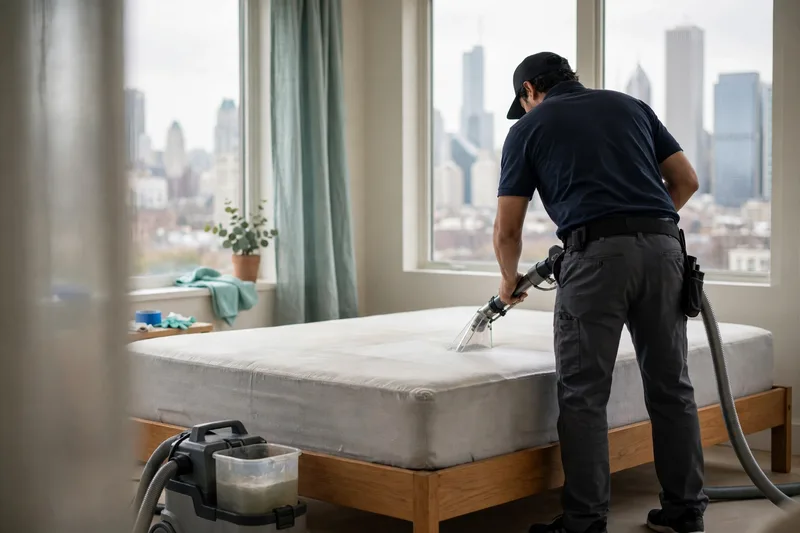
The short answer: professional mattress cleaning means the material is identified first, every surface is HEPA vacuumed, stains and odor areas are pre-treated with enzymes where urine is involved, and the mattress is cleaned by the method its material allows: hot water extraction for innerspring and hybrid mattresses, low-moisture cleaning for memory foam and latex, which are never soaked. The surface is sanitized, and the mattress is dried with air movers, usually in 4 to 8 hours, and checked before the bed is made. The quote depends on the size, the material and the condition, and it comes in writing before work starts.

What mattress cleaning includes
A mattress cleaning service sounds simple, and the good version is a sequence where each step protects the next one. Here is what a complete professional visit covers, and what you should expect whoever you book. A mattress cleaning Chicago visit covers inspection, vacuuming, treatment and drying, in that order, so nothing is skipped when the bed looks clean on top.
- Inspection by material. Innerspring, memory foam, latex and hybrid mattresses are built differently and take water differently. The material is identified and the surface mapped for stains, odor and wear before any method is chosen.
- HEPA vacuuming of every surface. Top, sides, seams and piping are vacuumed with a HEPA machine. This removes the dust, skin cells and debris that feed dust mites, and it has to happen before any moisture, or the debris turns to mud in the surface.
- Pre-treatment of stains and odor. Sweat and body-oil areas, drink spills, blood and urine each get a matched treatment. Urine always gets an enzyme treatment with real dwell time, because urine salts must be broken down chemically.
- Cleaning by the material-safe method. Hot water extraction or low-moisture cleaning, compared in the table below. This is where mattresses are won and lost: the wrong method on foam is a soaked mattress that stays damp for days.
- Sanitizing. An antimicrobial treatment on the sleep surface reduces bacteria and the allergen load. It is a stage of the clean, not a scented spray at the end.
- Drying, verified. Air movers run across the mattress, which is propped so air reaches the most surface possible. The mattress is checked before bedding goes back on. A mattress put back together damp is a mold problem scheduled for next month.
What it does not include, said plainly: repairs, re-covering, and miracles on a mattress whose support has failed. Cleaning refreshes the sleep surface. It cannot rebuild springs or foam that have given up, and the honest section near the end of this page covers when a mattress is not worth cleaning at all. The furniture side of the same bedroom is covered on our upholstery cleaning page.
What the quote depends on
Three things set the scope of a mattress job, and a quote given without asking about them is a guess dressed as a number. That is why a mattress cleaning service should always ask about the size, the material and the condition before naming a figure. The honest way to judge a mattress cleaning Chicago quote is by what it includes, not by how low the first number sounds.
- The size. A crib mattress, a twin and a California king are different amounts of surface, seams and drying time. Size sets the base of the job.
- The material. Innerspring takes the deepest, fastest method. Memory foam takes the slowest and gentlest, because it cannot be soaked and dries slowly. That difference in method is a difference in time on site.
- The condition. A well-kept mattress on a regular interval is a maintenance clean. Urine worked into foam, years of sweat staining, or a mattress recovering from a leak each add stages: enzyme dwell, extra passes, longer drying.
One smaller factor rides along: access. A king on the third floor of a walk-up takes more handling than the same mattress in a ranch home. What you get from us is a firm written price once size, material and condition are known, before cleaning starts. If the mattress turns out to be in the not-worth-cleaning group when we see it, we say so, and the visit becomes advice instead of a bill.
The methods compared: steam, low-moisture and dry cleaning
Three methods do nearly all professional mattress work, and the right one is chosen by the material, not by the machine a company happens to own. Mattress steam cleaning is the phrase most people search for, and it is also the most misunderstood: it means hot water extraction, not blasting the bed with live steam. Steam is the usual choice for a mattress cleaning Chicago booking when the mattress can take heat and the drying is planned into the visit.
| Method | How it works | Best for | Watch out for |
|---|---|---|---|
| Hot water extraction | Hot solution is sprayed in and pulled straight back out by vacuum, taking soil with it | Innerspring and hybrid mattresses; the deepest clean, and heat works against dust mites | Too much water for foam; never use heat on urine before enzyme treatment |
| Low-moisture cleaning | A small amount of solution is worked into the surface and extracted quickly, so the mattress barely gets wet | Memory foam and latex, which must never be soaked; fast drying | Less flushing power on very heavy soil; may need repeat passes |
| Dry compound and UV | Dry absorbent compound is brushed in, left to pick up soil, then vacuumed out; UV light used as a sanitizing extra on some visits | Delicate surfaces, light maintenance cleans, between-visit freshening | Surface-level only; it does not reach urine that has soaked into padding |
The material rules in one paragraph: innerspring and most hybrids take hot water extraction well and dry in the normal window. Memory foam is cleaned low-moisture only, because its cells drink water deep and give it back over days, not hours. Latex is also kept low-moisture and away from harsh products, which can break the foam down. Pillow-top mattresses get extraction with controlled moisture, because the top layer holds water against the layers below. When a cleaner describes one method for every mattress, they are describing their equipment, not your bed.
What professional mattress cleaning means, and what it is not
The word professional gets used loosely in this trade, so here is what it should actually stand for. A professional mattress cleaning service identifies the material before choosing a method, owns both extraction and low-moisture equipment so the method can follow the mattress, uses enzyme chemistry correctly and in the right order, sanitizes as a stage rather than a spray, and dries the mattress with air movers and a moisture check instead of a promise. That is the standard a mattress cleaning chicago booking should be held to.
What it is not: a carpet machine run over a bed. Carpet equipment is built to flood and extract a floor covering over a pad, and on a mattress it drives water deep into padding and foam that then dry on their own slow schedule. It is also not a scented deodorizer pass, which perfumes the surface while the sweat, allergens and urine salts stay exactly where they were. When you compare a professional mattress cleaning offer against a cheaper one, the difference you are pricing is almost always those two things: the right method for the material, and verified drying.
How the cleaning runs, first look to remade bed
Seven stages, in the only order that works. The order matters most around urine and foam: heat before enzymes, or water before vacuuming, both do damage that later steps cannot undo. A crew doing mattress cleaning Chicago work extracts with low moisture first, because a soaked mattress takes days to dry and can grow musty in the meantime.
Strip the bed and inspect the mattress
Bedding comes off and the material is identified: innerspring, memory foam, latex or hybrid. The method follows the material, and any stains, odor areas and damage are mapped before water is discussed.
HEPA vacuum every surface
Top, sides, seams and piping are vacuumed with a HEPA machine. This pulls out the dust, skin cells and debris that feed dust mites, and shows the true state of the surface before cleaning starts.
Pre-treat stains and odors, enzyme first
Urine, sweat and body-oil areas get matched treatment, with enzyme products breaking down urine salts during a real dwell. Heat never touches urine before this step, because heat sets the odor in.
Clean by the material-safe method
Hot water extraction for innerspring and hybrid mattresses, low-moisture cleaning for memory foam and latex, which are never soaked. The surface is worked in sections so no area is left wetter than it should be.
Sanitize the sleep surface
An antimicrobial treatment follows the clean, reducing bacteria and allergens in the surface you sleep on. It is applied evenly and given its contact time, not sprayed and wiped in one motion.
Dry it fully and check the moisture
Air movers run across the mattress, which is propped so air reaches as much surface as possible. Drying is verified before bedding returns: most mattresses are dry in 4 to 8 hours, foam slower.
Remake the bed and set the care plan
The clean mattress is remade with your washed bedding, and you get the simple care plan: protector use, rotation where the type allows it, and the cleaning interval that fits your household.
Sizes and scope: what a clean covers, size by size
Every size gets the same sequence: inspection, HEPA vacuum, pre-treatment, method cleaning, sanitizing and verified drying. What changes with size is surface area, handling and drying time. Depths vary by brand, so the dimensions below are the standard lengths and widths the sizes are sold at. Whatever the size, a mattress cleaning Chicago clean treats the whole mattress, not just the stain you can see.
| Size | Dimensions (inches) | Scope notes |
|---|---|---|
| Crib | 28 x 52 | Cleaned gently and dried fully; usually part of a nursery clean before a new baby or after illness |
| Twin | 38 x 75 | Kids' beds and guest rooms; urine treatment is the common reason for the visit |
| Twin XL | 38 x 80 | Dorm and split-king halves; cleaned one half or both in the same visit |
| Full | 54 x 75 | Single sleepers and guest rooms; often a maintenance clean on the regular interval |
| Queen | 60 x 80 | The most common size we clean; two sleepers means two body-oil and sweat patterns to treat |
| King | 76 x 80 | The largest standard job: more surface, more drying time, handled in sections |
| California king | 72 x 84 | Longer and narrower than a king; same scope, with care around the extra length when propping to dry |
Both sides are covered where it makes sense: the sleep surface always gets the full treatment, the sides and seams are vacuumed and cleaned on every visit, and the underside is cleaned when a flippable mattress is being turned or when the underside has its own staining. Most modern mattresses are single-sided and are rotated, never flipped.

Urine, odor and stains: the protocol, in the right order
Urine is the number one reason mattresses get cleaned, and it is the job most often done wrong, including by professionals. The mistake is order. Urine dries into salts that sit in the padding and foam. Heat on those salts sets the odor and the stain into the fibers. Strong bleach and ammonia products can fix the color mark and damage the ticking. So the protocol runs the other way: blot, treat with enzymes, wait, then clean.
- Blot and assess. Fresh urine is blotted, never rubbed, and old areas are mapped, because urine spreads wider inside the mattress than the surface mark shows.
- Enzyme treatment with dwell time. Enzymes break the urine salts down chemically. This is the step that actually removes the source of the smell, and it cannot be rushed: the product needs its dwell time in the material.
- Clean and extract. Only after the enzyme stage does the area get cleaned and extracted, pulling the broken-down residue out of the padding.
- Dry fully. A urine area left damp keeps smelling and risks mold in the foam. Air movers finish the job.
The home version of the same logic, for the accident that happens at 2 a.m.: blot with towels, apply an enzyme cleaner made for urine, let it work, then cover the area with baking soda for 8 to 12 hours and vacuum it up. Never steam a urine spot first, and keep bleach away from it entirely. Sweat and body-oil yellowing follow a milder version of the same treatment, and blood follows the cold rule: cold water only, because heat cooks blood proteins into the fabric permanently.

Dust mites, allergens and sanitizing
A mattress is a warm, sheltered habitat, and what lives in it is mostly a question of housekeeping physics. Dust mites feed on shed skin cells, which collect in the top layers and seams of the mattress. The mites themselves are not the main problem for most people; their droppings are a common allergen, and they accumulate where you breathe all night. Add sweat moisture, pollen tracked in on clothing and pet dander, and an uncleaned mattress becomes the largest allergen reservoir in the bedroom.
Cleaning attacks the reservoir, not the idea of it. HEPA vacuuming removes debris, mites and droppings from the surface and seams. Hot water extraction on the mattresses that take it kills mites with heat and flushes more of the load out. Sanitizing then reduces bacteria on the sleep surface. No honest cleaner promises a sterile or mite-proof bed, because you restock the food supply nightly; what a deep clean does is empty the reservoir, and a washable protector, washed monthly, keeps it from refilling at the same rate. Allergy and asthma households feel the difference most, which is why they sit on the 3 to 6 month interval in the frequency section below.
Drying done right: the step that decides whether the clean counts
More mattress cleans fail at drying than at cleaning. A mattress holds water unevenly: the surface can feel dry while the layers under it are still wet, and moisture trapped in foam grows mold that you will smell long before you see it. Sleeping on a damp mattress makes it worse, compressing wet foam and sealing moisture in under bedding and body heat. Drying is therefore part of the job, with air movers, propping, and a check before the bed is remade. Drying is the step that decides whether a mattress cleaning Chicago job holds up, because a mattress put back damp undoes the whole clean.
| Clean type | Typical dry time | Notes |
|---|---|---|
| Low-moisture clean | 1 to 3 hours | The fast option; used on memory foam and latex |
| Hot water extraction, innerspring or hybrid | 4 to 8 hours | Air movers across the surface; book in the morning and the bed is ready at night |
| Memory foam, any method | Up to 12 hours or more | Foam gives water back slowly; never rush it back under bedding |
Chicago seasons pull in opposite directions. Winter heating dries indoor air and shortens drying. A humid summer week lengthens it, and a dehumidifier in the bedroom earns its place. If a mattress in your home has been wet for days rather than hours, from a leak rather than a clean, that is no longer a cleaning question: wet building materials and furnishings follow the drying rules on our mold remediation page, because the mold clock runs in days.

How to clean a mattress at home, and where DIY honestly ends
The most-searched version of this topic is the home version, so here it is straight. Strip the bed and vacuum the whole surface with an upholstery tool, seams included. Sprinkle baking soda across the surface, leave it for several hours or overnight to absorb odor and moisture, and vacuum it up thoroughly. Spot-treat stains by type: enzyme cleaner for urine, cold water methods only for blood, and blot rather than scrub anything. Finish by airing the mattress near an open window or fan, and put a washable protector on before the bedding goes back.
That routine is good maintenance, and on a schedule it stretches the time between professional cleans. Its limits are depth and drying. Home products work on the surface; they do not extract what has soaked into padding and foam, and home machines that do wet a mattress tend to leave it wetter than professional extraction, which is how a DIY clean turns into a musty mattress. The line we would draw for our own family: home care for freshness and fresh accidents, professional cleaning for urine that has soaked in, for allergy loads, for foam mattresses, and for the twice-a-year deep clean.
How often should a mattress be cleaned?
Every 6 to 12 months suits most homes. Every 3 to 6 months is right where allergies or asthma are in the house, pets sleep on the bed, or small children and their accidents are part of life. The logic is accumulation: sweat, skin cells and allergens build steadily in the sleep surface, and a clean that happens on schedule is a maintenance job, while a clean that waits for the mattress to look or smell dirty is a rescue job with more stages and a longer dry. That rhythm is what a mattress cleaning Chicago schedule is really for: staying ahead of the buildup instead of rescuing a mattress after it.
Two habits stretch every interval. A washable mattress protector, washed monthly, keeps the worst of the sweat and spills out of the mattress entirely. And rotating the mattress head to foot on the maker's schedule spreads wear and soil evenly, on single-sided mattresses that should never be flipped. In Chicago homes, one more rhythm is worth knowing: spring cleaning season is real in this city because a winter of closed windows, forced-air dust and tracked-in salt leaves the whole bedroom carrying a load that a deep clean clears at once.
Mattress types, and the honest limits of cleaning
Each mattress type has its own handling, and its own point where cleaning stops being the answer.
- Innerspring. The easiest to clean well: takes hot water extraction, dries in the normal window. Watch for rust marks from springs on very old mattresses, which are a sign the bed is near its end.
- Memory foam. Low-moisture only, never soaked, the slowest to dry. Foam with a permanent body impression or foam that has gone soft and crumbly is worn out, not dirty.
- Latex. Low-moisture and gentle products only. Natural latex lasts a long time and rewards careful cleaning; latex that has gone brittle and powders at the edges is aged out.
- Hybrid. Treated as its top layer dictates: a foam comfort layer over coils gets the foam rules on top and extraction care below.
And the honest limits, in one place: cleaning cannot fix sagging, lumps or failed support; it cannot reach mold growing through deep foam; and it cannot always reverse odor in foam soaked repeatedly over years. A mattress past about eight years of nightly use with any of those problems is a replacement conversation, and we will have it honestly rather than sell you a clean that disappoints. When cleaning is the answer, it usually adds a year or two of good life to a sound mattress, which is the real value of the service.
A mattress soaked by a leak or a flood
Some mattresses get wet the fast way: a burst pipe, a failed supply line, a roof leak over the bed. That is a different clock from cleaning. Foam and padding left wet grow mold inside the mattress within days, and a mattress dried in the first 24 to 48 hours can often be saved, extracted, treated and dried with air movement as part of the larger drying job, while one left a week usually cannot. Our water mitigation crews handle soaked mattresses as part of that work rather than an afterthought.
Sewage water is the hard exception: a mattress soaked in it is removed, not cleaned, on health grounds. If the water came from a sudden covered event, photograph the bed before anything is moved and keep the documentation for the claim.
Mattress cleaning across Chicago
We clean mattresses across the city, from high-rise condos where the king comes up in a service elevator and dries against a wall of windows, to greystones and two-flats with guest rooms that have hosted a decade of family, to bungalows where one good mattress has to serve for years and is worth maintaining properly. Mattress cleaning chicago wide means handling all of it: foam and innerspring, crib mattresses in nurseries, dorm-style twin XLs, and the split kings whose halves are cleaned one at a time so the bed is never fully out of service. People searching for a mattress cleaning service near me are usually really asking whether the crew will treat their specific mattress the right way; the material check at the start of every visit is the answer.





