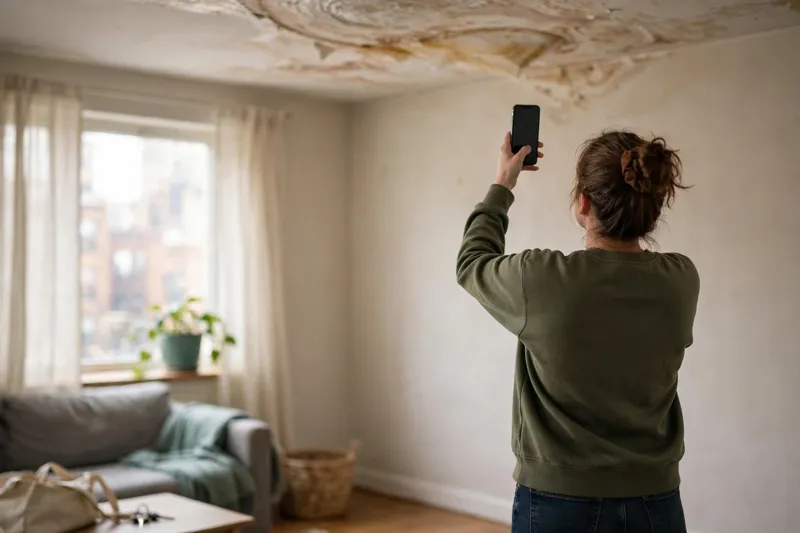
Chicago, IL · A responsibility guide for renters and condo owners
Who Is Responsible for Water Damage in an Apartment
The water came through your ceiling, or up through your floor, or out of a pipe in the wall, and the first question is not how to dry it. The first question is who pays for the drying, who repairs the building, and who covers what you lost. This guide answers it the Chicago way: the ordinance, the building, the condo split, and the cases.
- The Chicago ordinance, in plain words, the fourteen-day rule and the repair-and-deduct limit
- Three living situations: renter, condo owner, and renter in a condo
- The neighbor case: water from the unit above, and who pays first
- Two verified Chicago court cases, printed with their limits
Written for Chicago renters and condo owners, the two-flats, the courtyards, and the high-rises.
- We answer 24/7
- Local Chicago team
- Insurance documentation help
- Straight answers, no pressure
Have a question? Call us any time
Water damage in your apartment, and a landlord or an association that has not acted: send the form and we will call you back. Fast response, no obligation.
The short answer: the source decides, not the room
The rule that decides who pays is the source of the water, not the room it ended up in. A pipe in the wall that served the building is the landlord's. A tub the neighbor left running is the neighbor's. A radiator the building owns is the building's. A leak the tenant never reported is the tenant's, at least in part. The rest of this page is the close calls: the shared riser, the garden unit, the condo above, and the declaration that decides them.
None of the fourteen answers named our site, and none of them mentioned Chicago, the location on the results was San Francisco, not Chicago, so the Chicago angle in this guide is not something the search results handed us.
The most questions on any page is twelve, on two national guides. This page carries twenty-eight questions and seven steps, and it is the first Chicago version written from the restoration side: what happens to the unit, who orders the drying, who pays the restoration bill, and what the tenant should demand before the walls are closed.
| Source | Who repairs the building | Who pays for your belongings |
|---|---|---|
| Pipe in the wall / shared riser | Landlord / association | Your renters or owners policy |
| Upstairs tub overflow | Neighbor | Your policy first, then theirs |
| Own appliance | You | Your policy |
| Roof / exterior leak | Landlord / association | Your policy |
| Outside floodwater | Nobody's policy covers it without flood cover | Your flood policy, if you have one |
The table is the whole page in one place. The sections that follow explain each row: the ordinance that backs it, the building type that changes it, the condo split, and the cases that show what happens when the parties disagree.
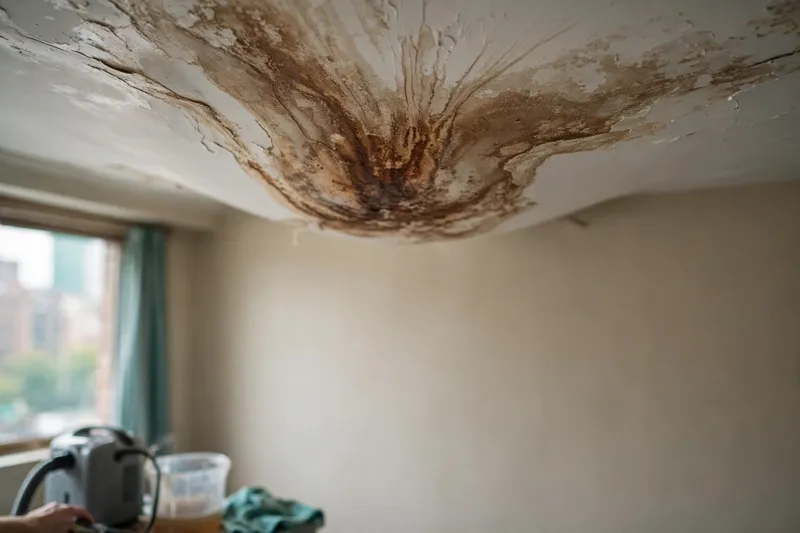
Three living situations, one question
A renter in a landlord's building lives under the Chicago ordinance. The landlord repairs the building, the walls, the floors, the ceilings, the pipes and the fixtures, and keeps them in good repair. The renter's belongings are the renter's, and the renter's insurance is the policy that covers them. The renter's job is to report a leak the day it appears, in writing, and to keep the file. A leak the renter never reported can shift part of the bill to the renter, and a leak the landlord ignored after written notice can shift the renter's losses to the landlord.
A condo unit owner lives under the declaration, not the ordinance. The association repairs the common elements, the roof, the exterior, the shared pipes and the main lines, and the unit owner repairs what sits inside the unit. The master policy covers the structure and the common elements, and the owner's policy covers the inside of the unit and the belongings. The declaration is the document that decides the close calls, and no two buildings write it the same way.
A renter in a condo unit has two landlords, in practice: the unit owner who signed the lease, and the association that runs the building. The renter's first call is the unit owner, not the association, the owner is the one who owes the renter a habitable unit, and the owner is the one who deals with the board. The renter's belongings are still the renter's, and the renter's insurance still covers them. The association steps in only when the source is a common element, and the owner is the one who makes that call.
The three policies, stated once, plainly: the renter's policy (HO-4) covers belongings and the cost of living elsewhere while the unit is unlivable. The owner's policy (HO-6) covers the inside of the unit and the belongings. The master policy covers the structure and the common elements. The landlord's policy covers the building, never the tenant's belongings, even when building plumbing caused the loss.
Who is responsible for water damage in an apartment under the
The Chicago Residential Landlord and Tenant Ordinance, the RLTO, chapter 5-12 of the Municipal Code, is the law that decides the renter's half of this page. This is general information, not legal advice, the ordinance is long, and a tenant with a live dispute should talk to a lawyer.
The duty starts with section 5-12-070: the landlord must maintain the plumbing facilities, the piping, the fixtures and the appliances in good operating condition and repair, must prevent the accumulation of stagnant water, and must keep the floors, the interior walls and the ceilings in sound condition and good repair, and the foundation, the exterior walls and the exterior roof substantially watertight. The stagnant-water duty and the plumbing duty are the direct hook for the landlord's responsibility for water damage, a leak from building plumbing is a failure of the duty, not an accident of the weather.
Section 5-12-110(a) is the termination remedy. The tenant delivers written notice that names the failure and says the lease will end on a date not less than fourteen days after the landlord receives it, unless the failure is fixed in that time. If it is not fixed, the lease ends, and the tenant moves out within thirty days. The landlord returns the prepaid rent and the security deposit.
Where the reasonable cost of the repair does not exceed the greater of five hundred dollars or one-half of one month's rent, the tenant may notify the landlord in writing and have the work done at the landlord's expense, provided the cost does not exceed one month's rent.
If the landlord fails to correct the failure within fourteen days after written notice, the tenant may have the work done in a workmanlike manner, submit the paid bill, and deduct the amount. One Chicago restoration page prints the limit as five hundred dollars only, and leaves out the half-month's-rent alternative entirely. The ordinance says the greater of the two, with a one-month's-rent ceiling, and the tenant may not repair a common element in a condo building except as the declaration and bylaws allow.
Section 5-12-110(d) is the rent-withholding remedy. The tenant notifies the landlord in writing of an intention to withhold from the monthly rent an amount that reflects the reduced value of the unit. If the landlord fails to correct the failure within fourteen days after written notice, the tenant may deduct that amount while the failure continues. The withholding is the reduced value of the unit, not the cost of the repair, the two remedies are different, and one Chicago page conflates them. The day-fifteen figure comes from the City's RLTO Summary, the summary the City requires attached to every lease, which says withholding begins from the fifteenth day. The ordinance text itself states no start day.
Section 5-12-110(e) gives the tenant damages and an injunction, a court order forcing the repair, and money for the loss. The tenant may bring the claim or raise it as a defense, and the landlord who ignores a reported leak for weeks can become liable for the tenant's ruined furniture.
Section 5-12-110(f) covers the failure to provide essential services, heat, running water, hot water, electricity, gas, or plumbing, and a failure that is an immediate danger to health or safety. After written notice the tenant may buy a reasonable substitute service and deduct the cost, recover damages based on the reduction in fair rental value, move to substitute housing and stop paying rent for the period, withhold rent reflecting the reduced value if the landlord fails to correct the failure within twenty-four hours, or end the lease by written notice if the failure persists for more than seventy-two hours. A tenant who proceeds under this section may not also proceed under the repair-and-deduct or withholding remedies.
Section 5-12-110(g) covers fire or casualty damage. The tenant may vacate at once and notify the landlord in writing within fourteen days that the lease ends as of the date of the casualty, or stay in the usable part with the rent reduced in proportion to the reduction in fair rental value. None of these remedies apply when the tenant caused the condition.
The label to watch for is the wrong one. Three Chicago pages, Zaba, HydroForce, and an Illinois law firm, call the governing law the Illinois Residential Landlord and Tenant Act, the RLTA. There is no single Illinois statute by that name. Outside Chicago and Cook County, the governing framework is the implied warranty of habitability, built from case law, not a single statute. Chicago units are governed by the RLTO, chapter 5-12 of the Municipal Code. The Cook County ordinance, the CCRTLO, is a separate ordinance for the county outside the city, and its text was not verified for this page, a Chicago unit is an RLTO unit, not a CCRTLO unit.

The Chicago building-stock matrix: what your building type decides
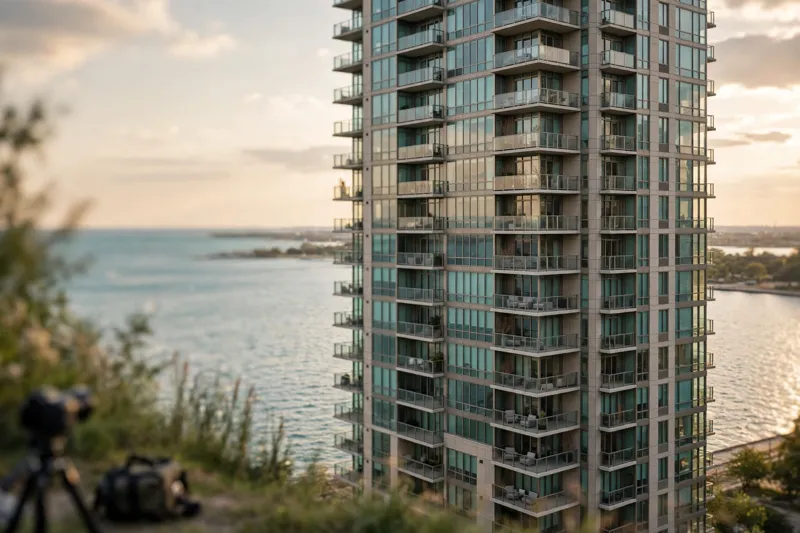
A two-flat with no association has no board to call. A courtyard building has shared risers running through a dozen units. A garden unit floods from the same storm twice. A high-rise stack means one riser failure hits every unit below it.
| Building type | Common source | Who repairs | Whose insurance pays first |
|---|---|---|---|
| Two-flat / three-flat, no association | Shared riser, galvanized supply line | Landlord | Landlord's building policy, then the renter's policy for belongings |
| Courtyard building | Riser, roof, gutter | Landlord | Landlord's building policy |
| Garden / basement unit | Outside water, sewer backup | Landlord for the building | Renter's policy for belongings; flood cover for outside water |
| High-rise condo stack | Riser, drain stack, roof | Association | Master policy, then the owner's policy |
| Older walk-up, radiator heat | Radiator leak | Building for the radiator; owner for the floor | Owner's policy for the floor |
The radiator row deserves a note of its own. In the older walk-ups the radiators are building property, and the building replaces a leaking radiator at its own expense, but the floor damage underneath is the owner's, and the owner files a homeowner's claim. That split comes from an unnamed Chicagoland condo question, signed from Will County, not Chicago, where the board wrote exactly that: the radiator was replaced at building expense, and the board told the owner the floor repair was the owner's responsibility and to file a homeowner's claim. The managing agent agreed with the owner and could not get a board response.
The galvanized line is the Chicago detail the national guides never mention. The shared risers in the courtyard buildings and the two-flats are aging galvanized supply lines, and when one fails it does not fail in one unit, it fails in the stack. The landlord's policy covers the structure, the renter's policy covers the belongings, and the tenant's job is the same in every building type: report it the day it appears, in writing, and keep the file.
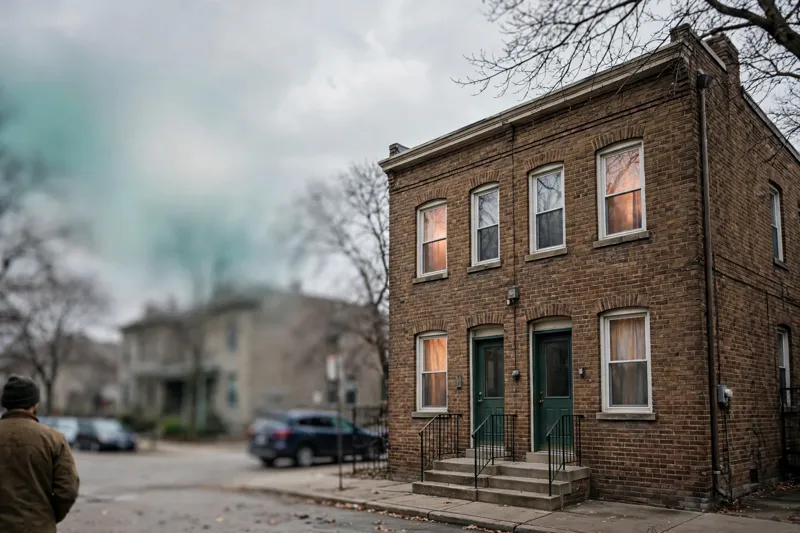
Water from the unit above: notify first
The most common Chicago apartment loss is the one from above: a tub that overflowed, a water heater that burst, a toilet that ran. The first step is not the claim, it is the knock. Tell the neighbor above, tell the building office, and tell your insurer, in that order, the same day. The neighbor may not know anything is leaking, and the building may not know the riser is involved. A leak reported late is a leak that grows, and a leak that grows is a leak the tenant can be blamed for.
Who pays for water damage in an apartment when the water came from above depends on the source. A tenant responsible for water damage from a tub left running pays for the damage in both apartments, their own and the one below. A plumbing failure between the floors is the building's, and the building's management is liable for the repair. That chain has a name, subrogation, and it is why the tenant's file matters: the insurer that pays first is the one that needs the photos and the readings.
The Chicago version of the question is an unnamed condo question from Woodlawn, on the South Side: a leak in the full bathroom since the unit owners above moved in, their son running a bath for up to two hours at full force, recurrent leaks in the bathroom ceiling, and an extensive plumbing job two years earlier that replaced broken pipes, and still another leak. The attorney who answered, Peter Jagel of Naperville, drew the line the declaration draws: pipes serving more than one unit are common elements, and the association is responsible; pipes serving only one unit belong to that unit's owner. The board must get involved when the pipes are common elements, and the Illinois Condominium Property Act gives the board authority to act where more than one owner is involved.
The bath itself is not the board's business. The attorney's answer says so plainly: little can be done about the length of a bath, because the use of a unit is personal unless a rule or a law is violated. The board's business is the pipes, and the tenant's business is the notice. A tenant who documents the leak, the dates, and the notices has a file; a tenant who only complains has a story.
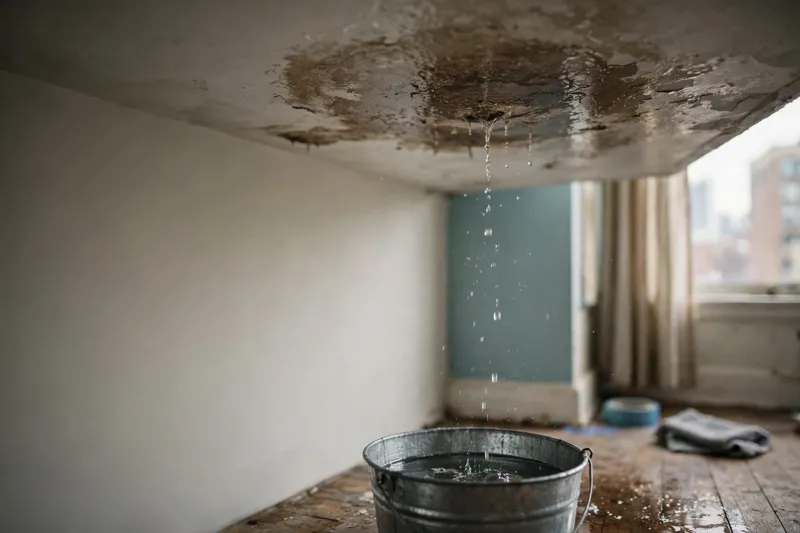
The condo split: association
The condo split follows the source and the boundary, and the declaration is the document that decides. The association repairs the common elements, the roof, the exterior, the shared pipes and the main lines, and the unit owner repairs what sits inside the unit: the fixtures, the appliances, the finishes, and the improvements. The master policy covers the structure and the common elements, and the owner's policy covers the inside of the unit and the belongings.
Three kinds of master policy decide how far the association's cover reaches. A bare-walls policy covers the structure only, the walls, the floors and the ceilings, bare. A single-entity policy covers the structure plus the standard finishes the builder installed. An all-in policy covers the structure plus the finishes and the improvements. The owner's policy fills the gap the master policy leaves, and the gap is different in every building, which is why the first question after a condo leak is not who pays, but what kind of master policy the building carries.
Two charges catch condo owners by surprise. The first is the master deductible, which the board can pay as a common expense, charge to the owner where the damage started after notice and a hearing, or ask the affected owners to pay. The second is the special assessment that follows a big loss, and the loss-assessment cover on the owner's policy is the thing that pays it. The declaration decides both, and the owner who has never read the declaration finds out about them after the leak, not before it.
A renter in a condo unit does not deal with the association. The renter's first call is the unit owner, not the board, the owner is the one who owes the renter a habitable unit, and the owner is the one who deals with the board. The habitability obligation does not change because the building is a condo, and the renter's belongings are still the renter's, covered by the renter's policy.
Who pays for what: the coverage map
The rule that decides who is responsible for water damage in an apartment is the source of the water. Who pays for water damage in an apartment depends on the source, the policy, and the lease, in that order. The map below puts the two together: the source, who repairs the building, who pays for the belongings, whose insurance responds first, and what flips the answer.
| Source | Who repairs the building | Who pays for belongings | Whose insurance responds first | What flips it |
|---|---|---|---|---|
| Burst pipe in the wall | Landlord / association | Your policy | Landlord's / master policy | Tenant negligence |
| Roof or exterior leak | Landlord / association | Your policy | Landlord's / master policy | Unreported for months |
| Upstairs tub overflow | Neighbor | Your policy first | Neighbor's liability, after yours | Deliberate act |
| Plumbing failure between floors | Building management | Your policy | Building policy | , |
| Own appliance | You | Your policy | Your policy | , |
| Sewer backup | Landlord for the building | Your policy, with the endorsement | Your policy | No endorsement |
| Outside floodwater | , | Flood policy, if you have one | Flood policy | No flood cover |
The renter's policy covers the belongings and the cost of living elsewhere while the unit is unlivable. Each insurer pays its own policyholder first, and then the insurers sort the fault between themselves. A landlord who ignores a reported leak for about three weeks can become liable for the tenant's ruined furniture, one national guide's example, and the reason the written notice matters.
While the unit is unusable, the money splits three ways. The rent is reduced in proportion to the loss of use, a prorated reduction, not a paid hotel stay, unless the landlord was negligent, the lease promises it, or the ordinance requires it. Under the ordinance's essential-services remedy, the tenant may move to substitute housing and stop paying rent for the period, and recover the reasonable value of that housing up to the monthly rent. And the deposit: the landlord may deduct water damage from the deposit only when the tenant's own negligence caused it, never for a maintenance failure, and never for plumbing that served the building.
What actually happened in Chicago: two court cases, two news disputes
The List case and the Pratt case are the two verified named Chicago cases on this page's angle, and they are printed here with their limits. The rest of this section is what the strict test leaves out: a historic case from 1907, a near-miss from Woodlawn, and two news disputes that are not court cases at all.
The two verified cases
Board of Directors of 1212 Lake Shore Drive Condominium Association v. List, 2025 IL App (1st) 240638-U, is a Gold Coast condo case. David J. List and Leslie M. List bought the penthouse on the thirty-fourth floor of 1212 North Lake Shore Drive in July 2014, below the building's swimming pool on the thirty-fifth floor. Water came out of a bathroom wall outlet that autumn, from a source never identified. On 15 June 2015 a large section of the bedroom ceiling collapsed from water above, the opinion calls it a catastrophic event.
The association's master policy paid a little over twenty-seven thousand dollars, and the Lists' own homeowners policy paid about two hundred eighteen thousand dollars for property damage, about twenty thousand dollars for loss of use after the June 2015 collapse, and about sixteen thousand dollars for loss of use after the earlier leak. The ceiling was not replaced for over six years, leaks continued into 2019, mold was found in June 2019, and the association agreed to remediate it at its own expense.
The association sued in October 2019, the Lists counterclaimed for breach of the declaration, breach of fiduciary duty, and constructive fraud. On 27 January 2025 the Appellate Court reversed the trial court's summary judgment and sent the case back.
The limits: the order is a Rule 23 order, not precedent except in the limited circumstances the rule allows; it is an association-against-owner condo dispute, not a landlord-tenant case; the ruling is procedural, with no final finding that the association must pay; and the four-hundred-thousand-dollar repair estimate and the claim that the unit has been uninhabitable since 2015 are the Lists' claims, not the court's findings.
1324 W. Pratt Condominium Association v. Platt Construction Group, Inc. No. 1-10-0159, decided 28 September 2010, is the second verified case. The association sued the builder of an eight-unit residential building at 1324 W. Pratt Boulevard, Chicago, after the owners found water leaks around the windows, doors, ceilings and vents, water seeping into the walls, mold growing through the building, and owners reporting worsening asthma and flu-like symptoms, all made worse by the severe rainstorms of September 2008. The limits: the association sued the builder for faulty construction, not a tenant suing a landlord, and the water-damage facts are allegations in the opinion's background, not findings. The decision concerned whether the claims against the construction company could proceed.
The 1907 rule
Chicago Telephone Co. v. Commercial Union Assurance Co. 131 Ill. App. 248 (1907), is the oldest case on this page, and the one that states the rule in a single sentence. The telephone company's cables on the seventh floor of the Manhattan Building, Chicago, were damaged by an overflow from a washroom on the ninth floor, room 927, on 9 January 1903, between one and half past one in the afternoon. The stipulated damages were eight hundred dollars, the jury found for the defendant, and the Appellate Court reversed and sent the case back.
The rule: responsibility for overflows of water depends on control, and rests with the landlord or the tenant according to who is in control of the source, and where an overflow is established, the presumption is that it resulted from the fault of the party in control. The limits: a commercial tenancy and an insurer's subrogation claim about telephone cables, not a residential apartment case.
The near-miss and the news disputes
The nearest miss after the two cases is a Woodlawn housing dispute, not a who-pays ruling. Named landlords Ariel and Raphael Lowenstein own a thirty-five-unit building at 6610 S. Kenwood Ave, Woodlawn, Chicago, where a burst water pipe dripped for several days, flooded the lower level, left the building without heat, and dripped close to an electrical panel. Inspectors declared a dangerous and hazardous condition, the city filed suit over dozens of building-code violations, and the tenants withheld rent. The limits: the affected family is unnamed, the dispute is habitability and code enforcement, not a ruling on who pays for water damage, and the burst pipe is one item among many, rats, roaches, holes, and brown water.
Two named Chicago disputes come from the news, not the courts. In Edgewater, the Edison Apartments' tenants organized as the Edison Tenants Association with the Metropolitan Tenants Organization, after pipes burst in December and the owner, Tri-Gil, which had taken over the building the previous September, promised new repairs.
In the second, tenant Tina Jackson, a mother of three, found her new townhome leaking two weeks after she signed the lease, water through the kitchen cabinets, wet boxes, a crumbling wall, mold in the basement, and her landlord, Cliff Billingsley, told her to fix the recurring issues herself, pointing to the lease's bold first line, which said the tenant is responsible for all repairs and maintenance. A tenants' advocate said the clause is likely backwards, and that a sound roof is a basic renter's right in Chicago. Neither dispute names a building address or a court case, and neither is printed here as one.
Two more Chicago questions come from the condo press, and neither is a case. The Woodlawn question above is an unnamed condo owner, no street address, no date. The radiator question, hardwood floors damaged by a leaking radiator, the bylaws making radiators building property, the board paying for the radiator and telling the owner to file a homeowner's claim for the floor, is signed from Will County, not Chicago, and is cited here only as an unnamed Chicagoland question. The language models offered three more names for this page, and none of the three could be confirmed on any live source page, so none of them is printed here.
What to do in the first forty-eight hours
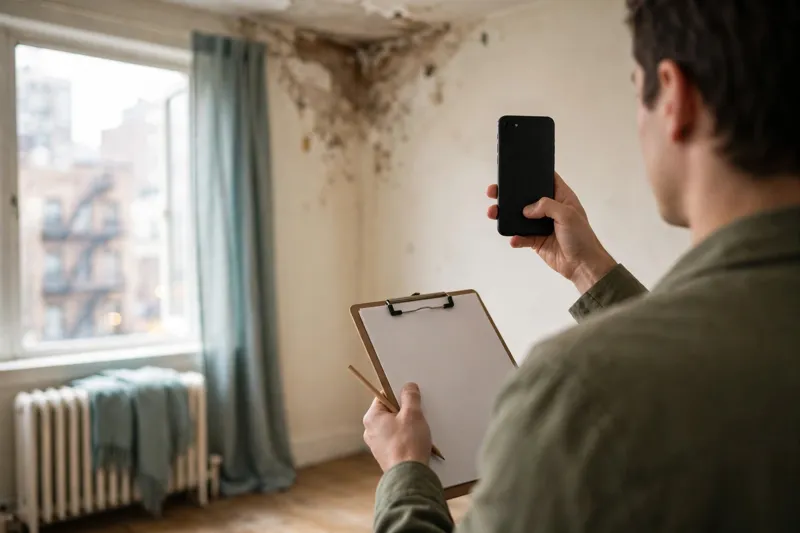
Seven steps, in order. The first three protect the unit, the next two build the file, and the last two protect the claim. Every step is one a tenant can do tonight, with no tool but a phone camera and a moisture meter.
Make it safe first
Shut off the power to any room with standing water, from a dry location, never walk through water to reach the panel. If the water may be sewage, or the ceiling sags, leave the unit and call for help. Keep people and pets away from a sagging ceiling, and do not poke it to see what comes out. Safety comes before the buckets.
Tell the landlord in writing, right now
Send the notice the same day, in writing, by email so the time is stamped, and by certified mail with a return receipt for a serious loss. Say what happened, when it started, where the water is, and what you need fixed. Keep a copy of everything you send, and a note of every call, with the date and the name of the person you spoke to. The ordinance clock runs from the written notice, not from the first leak.
Knock upstairs and downstairs
Knock on the unit above and ask whether anything is leaking, and knock on the unit below to see whether the water has reached them. The neighbor above may not know their tub overflowed or their water heater burst, and the unit below may already be wet. Tell the building office what you found, so the source is found from both sides at once, and the repair does not wait on one tenant's word.
Photograph and measure before anything moves
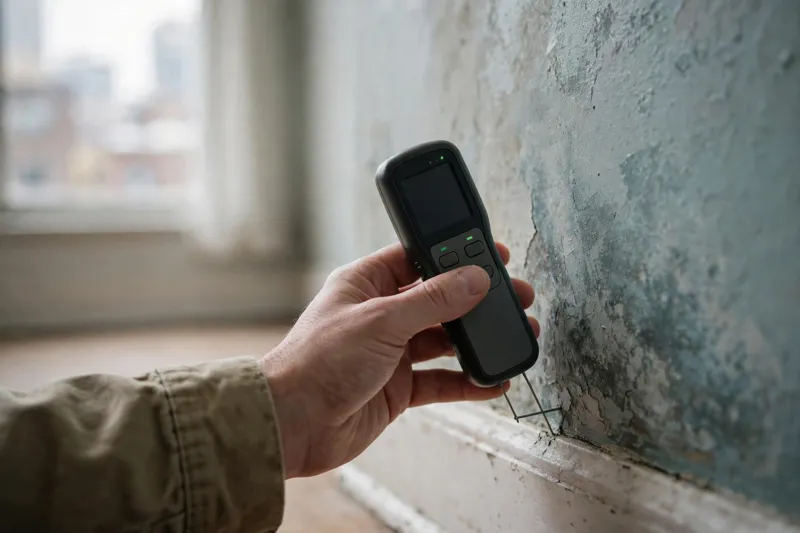
Photograph the water, the stains, the walls, the ceiling, and the source, and write down when it started. Take pin-meter readings in the wet area and in a dry room that never got wet, and keep both sets of numbers with the dates. The claim runs on the file you build in the first hour, and a unit with readings is a different home from one with paint over a wet wall.
Get the water out and the drying started
Remove the standing water with a wet vacuum or a pump, and mop up what is left. Move your belongings out of the water, and clear the wet drywall so the wall can be reached. Run air movers and a dehumidifier with the windows shut, and check the pin-meter readings every day in the same spots, against the dry room. The drying stops when the numbers match and stay steady.
Keep the paper trail
Keep every reading with its date, every receipt, every estimate, and every message from the landlord, the association, and the insurer, in one folder. Write down the claim number when the insurer gives it, and the name of every adjuster who visits. The deposit dispute, the insurance claim, and the ordinance remedies all run on the same file, and a file built late is a file built on trust.
Do not close the walls until the readings are steady
Do not let anyone close the walls, paint over the stain, or lay new flooring until the readings are steady. The dry standard is the moisture reading of unaffected material of the same type in the same building, and the readings are repeated daily until that standard is hit. Water that ran under the floor stays there long after the top looks dry, and mold starts within a day or two when the moisture stays.
The tenant's checklist
- Make it safe first, power off from a dry location, never walk through standing water
- Written notice the same day, email for the timestamp, certified mail for a serious loss
- Knock upstairs and downstairs, the neighbor may not know, and the unit below may already be wet
- Photographs and moisture readings before anything moves, with the dates
- Readings checked every day against a dry room, drying stops when the numbers match and stay steady
- Walls stay open until the readings are steady, no paint, no new flooring, no closing up
- Every reading, receipt, estimate and message kept in one folder, with the claim number
- Insurer called the same day, claim number written down, receipts kept
- Lease and declaration read before the argument, not after it, the close calls live there
- Two professionals called the same day, the restoration company for the drying, the landlord or the association for the repair
Call now, we answer 24/7
If you are still asking who pays after running the checks, call (773) 570-9869. We will ask what you saw, tell you what to check tonight, and send a crew with a meter when the job needs one.
Frequently asked questions
Who is responsible for water damage in an apartment?
It depends on the source of the water, not on where the water ends up. The landlord repairs the building and the systems that serve it, the tenant pays for damage they caused or failed to report, and a neighbor pays when the leak started in their unit. The lease and the declaration decide the close calls.
Does homeowners insurance cover water damage restoration, or only part of it?
It covers only part of it. The policy pays for the drying and the repair when the cause was sudden and accidental, up to your limits, minus your deductible. It does not pay for the pipe or the appliance that failed, or for flooding from outside. A sewer backup needs its own endorsement.
How long does water damage restoration take?
Drying takes three to five days on most losses, and the job with repairs usually takes one to three weeks. The reading, not the calendar, decides when the drying is done.
What is water damage restoration called?
The full job, stopping the water, drying the structure, cleaning, and rebuilding, is called water damage restoration. The emergency half, stopping the water and drying, is also called mitigation. Removing mold growth is a separate job, called remediation, and it follows the drying, never the other way around.
Does insurance cover water damage restoration?
Yes, when the damage was sudden and accidental, a burst pipe, a failed water heater, an appliance hose that gave way. The claim runs in order: call the insurer, photograph everything, start the drying, and keep the receipts. The adjuster works from the readings and the photos, so the file you build in the first day decides the claim.
What is the water damage restoration process?
The process runs in order: inspection first, to find the source and how far the water spread; then extraction, with pumps and vacuums; then drying, with air movers and dehumidifiers; then cleaning and sanitizing; then the repairs. Dry the floors, walls and framing fast to stop mold, and document everything.
Does homeowners insurance cover water damage?
It covers water damage when the cause was sudden and accidental, a burst pipe, a failed appliance, a supply line that gave way. It does not cover a slow leak that ran for months, groundwater seepage, flooding from outside, or wear and tear. Read the declarations page before the storm, not after it.
What should I do when my house floods?
Stop the water and make it safe first. Shut off the main valve, cut the power to any room with standing water, and do not walk through water that may be sewage. Call 311 to report a flooded basement, photograph everything before anything moves, and start the drying within the first day.
How much does homeowners insurance pay for water damage?
No page can give you a number, because the payment depends on your policy, your deductible, the cause, and the limits you bought. The insurer pays the drying and the repair, less your deductible, and it does not pay for the pipe that failed.
Are renters responsible for water damage?
Renters are liable only for damage they caused or failed to report, negligence, misuse, or a leak they never told the landlord about. The building itself, the walls, floors, and pipes, is the landlord's, and so is the plumbing that serves the unit. Renters insurance covers the renter's belongings when the cause was sudden and accidental.
How much does a plumber charge for a burst pipe?
This site prints no prices, so no figure here can mislead you. The charge depends on where the pipe sits, how hard it is to reach, whether the wall or the floor must come out, and whether the call is an emergency at night. The water damage the burst caused is usually the bigger part of the bill.
Does insurance cover burst pipes?
Yes, when the pipe burst suddenly, a freeze split, a joint that failed without warning, a line that gave way all at once. The insurer pays for the water damage the burst caused, not for the pipe itself. A slow leak that ran for months may be classed as wear and tear, and the claim may fail.
How much does it cost to fix a burst pipe?
This site prints no prices, so no figure here can mislead you. The cost depends on the pipe's location, the access, the material, and the water damage the burst caused, the drying and the rebuild are usually the bigger part. A camera or a moisture reading comes first, then a written scope.
How much does mold remediation cost?
This site prints no prices, so no figure here can mislead you. The cost depends on how much mold there is, where it sits, whether the wall must come out, and whether the moisture source is fixed first. Illinois now registers mold remediation work, with a grace period for existing workers, this site gives consumer guidance only.
Can mold be fully remediated?
Mold can be remediated to safe, normal levels, but no job removes every spore, spores are everywhere, indoors and out. Fully remediated means the moisture source is fixed, the growth is removed, the area is cleaned and dried to the readings, and the humidity stays in the normal range. A job that skips the source is not finished.
Is a landlord responsible for water damage in an apartment?
Yes, for the building and the systems that serve it, the walls, floors, ceilings, pipes and fixtures, and for keeping them in good repair under the Chicago ordinance. The landlord is not responsible for the tenant's belongings, or for damage the tenant caused. A leak the tenant never reported can shift part of the bill to the tenant.
What should a tenant do when their apartment floods?
Make it safe first, then tell the landlord in writing the same day, with photos and the time the water started. Knock on the unit above and the unit below, and move your belongings out of the water. Start the drying within the first day, keep every receipt, and do not close the walls until the readings are steady.
Who pays for water damage from the apartment above?
Your own policy usually pays first, then your insurer goes after the party at fault. An overflowing tub upstairs means the neighbor pays for the damage in both apartments, while a plumbing failure between the floors is the building's. The rule is the source, and the declaration decides the close calls in a condo.
Can a tenant break a lease because of water damage?
Yes, when the unit is uninhabitable and the landlord fails to repair it after proper written notice. Under the Chicago ordinance the tenant gives written notice, the lease ends in fourteen days if the damage is not fixed, and the tenant moves out within thirty days. A tenant who leaves without notice can owe the rent.
Who is responsible for water damage in a condo?
It follows the source and the boundary. The association repairs the common elements, the roof, the exterior, the shared pipes and the main lines, and the unit owner repairs what sits inside the unit. The declaration decides the close calls, and the master policy and the owner's policy split the bill along the same line.
Can I sue my apartment for water damage?
You cannot sue the apartment, you sue the landlord, the association, or the neighbor whose leak caused the damage. The claim needs the file: written notice, photos, readings, and receipts. Small claims court is the usual route for a tenant's belongings, and the ordinance gives the tenant damages and an injunction as well.
How long does a landlord have to fix something in Chicago?
Fourteen days after written notice, under the Chicago ordinance, the clock runs from the written notice, not from the first leak. If the failure is an immediate danger to health or safety, the tenant may end the lease if it is not fixed within seventy-two hours. The notice must be written, and the days count from receipt.
Can I sue my landlord for mold in Illinois?
Yes, when the mold followed a leak the landlord knew about and failed to fix, and the tenant can show the damage. The claim runs on the file: written notice, photos, readings, and a doctor's note if health is at issue. A tenant who never reported the leak, or caused it, has a weaker claim.
Does renters insurance usually cover water damage?
Yes, when the cause was sudden and accidental, a burst pipe, an appliance hose, a water heater that gave way. It covers the renter's belongings and the cost of living elsewhere while the unit is unlivable, not the building itself. Flooding from outside and a slow leak that ran for months are not covered.
Is HOA responsible for water damage?
The association is responsible for the common elements, the roof, the exterior, the shared pipes and the main lines, and for damage those elements cause. It is not responsible for what sits inside a unit, or for a leak that started in a unit. The declaration decides the close calls, and the master policy follows the same line.
Who to call when your apartment is flooding?
Call the building first, the super, the management office, or the landlord, then the neighbor above if the water comes from there. Call 311 to report a flooded unit, and call your insurer the same day. If the water may be sewage, or the ceiling sags, leave the unit and call for help.
Do you have to replace drywall after water damage?
Yes, when the drywall stayed wet, swelled, or grew mold, drying alone does not restore it. Drywall that dried within a day or two, with no swelling and no smell, can sometimes stay. The reading decides: cut a small opening, check the cavity and the insulation behind it, and replace what reads wet.
Can my landlord charge me for water damage from my security deposit?
Only when the tenant's own negligence caused the damage, a tub left running, a leak never reported, a fixture misused. The landlord cannot deduct the cost of maintenance failures, or of plumbing that served the building. Keep the move-in photos and the repair notices, because the deposit dispute runs on the file.
Sources
- Municipal Code of Chicago, chapter 5-12, section 5-12-110, Tenant remedies, and section 5-12-070, the City's published code, codelibrary.amlegal.com, the ordinance text this page follows, with the day-fifteen figure attributed to the City's RLTO Summary.
- Dry Bros, "Does Renters Insurance Cover Water Damage? What Chicago Renters Need to Know" (drybros.com, updated October 2026), the renter's and condo insurance split, and the two-flat and courtyard building details.
- RestoreAdvisor, "Water Damage in a Rental: Tenant Rights & Who Pays" (published 28 August 2026), twelve visible questions and five marked-up steps, and the state remedy table this page does not import.
- RestoreAdvisor, "Water Damage in a Condo: Who Pays, HOA or You?" (published 29 August 2026), twelve visible questions and five marked-up steps, and the declaration-boundary section.
- Advanced DRI, "Apartment Water Damage or Leak? Who Pays & What to Do" (published 14 November 2025), seven visible questions, and the drying-evidence angle: readings before equipment, the dry standard, and the category-against-class distinction.
- Six Corners Insurance, "Condo Insurance (HO-6) in Chicago: Matched to Your Building's Master Policy" (sixcornersinsurance.com, 2 November 2026), six visible questions, and the bare-walls, single-entity and all-in master-policy split.
- Board of Directors of 1212 Lake Shore Drive Condominium Association v. List, 2025 IL App (1st) 240638-U, official Illinois Appellate Court order, 27 January 2025.
- 1324 W. Pratt Condominium Association v. Platt Construction Group, Inc. No. 1-10-0159 (Ill. App. Ct. 28 September 2010), official Illinois Courts opinion.
- Chicago Telephone Co. v. Commercial Union Assurance Co. 131 Ill. App. 248 (1907), Reports of Cases Determined in the Appellate Courts of Illinois, volume 131, pages 248 to 250.
- CooperatorNews Chicagoland, "Q&A: Neighbor Resposible for Leak?", the Woodlawn condo question, and the common-element pipe rule from attorney Peter Jagel.
- CooperatorNews Chicagoland, "Q&A: Water, Water Everywhere?", the Will County radiator question, cited as a Chicagoland question, not a Chicago one.
- Twin Home Experts, "Water Leak In A Condo: Who is Responsible - HOA or Homeowner?" (YouTube, 4:48, twenty-four thousand views), the video watched in full for this page.
- The Claim Squad, "Water Damage from Condo Above Me [Who is responsible for what?]" (YouTube, 7:57, seven thousand views), the video watched in full for this page, Florida law only.
- CBS Chicago, "Tenants unite to Edgewater building owner to clean water damage, make repairs" (YouTube, 2:23) and "Leaky Roof, Crumbling Walls; Landlord Says Tenant Must Pay For Repairs" (YouTube, 2:34), the news disputes watched in full for this page.
- City of Chicago, CHI311, the 311 line, twenty-four hours a day, seven days a week, three hundred and sixty-five days a year.
- People Also Ask questions quoted in this page, with the search record given in the text.
More Restoration Services in Chicago
Every service below is one tap away. Pick the one that matches your problem.

Water Damage Restoration
Fast water extraction, structural drying, and full repair after burst pipes, leaks, and floods.
Learn more →
Water Mitigation
Emergency water removal, structural drying, and mold prevention to stop the damage fast, 24/7.
Learn more →
Mold Remediation
Safe, contained mold remediation that removes contamination and fixes the moisture source.
Learn more →
Sewage Cleanup
Safe removal and disinfection of dangerous sewage backups and black water.
Learn more →
Flood Cleanup
Water pumped out, structure dried, and debris cleared fast after storms and flooding.
Learn more →
Hardwood Floors Water Damage
Cupped, buckled or stained hardwood after a leak? How we dry it, when sanding saves it, and when the boards have to go.
Learn more →