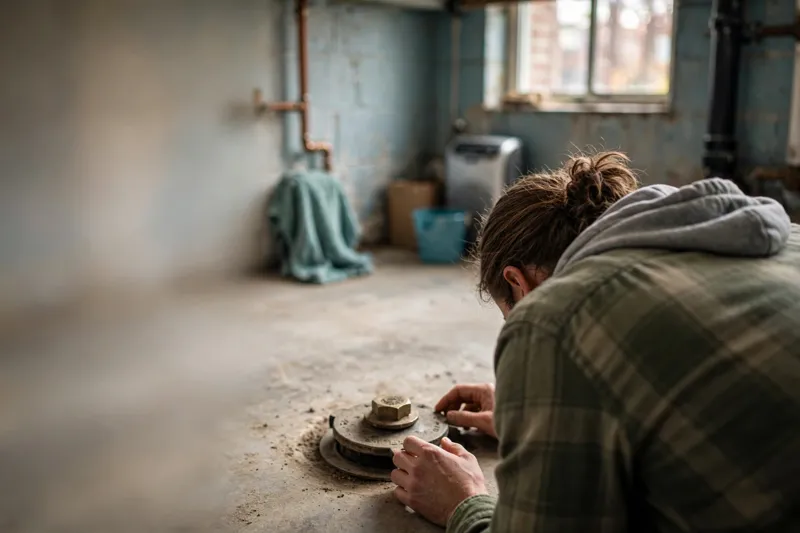
Chicago, IL · A plain guide for homeowners
Sewer Cleanout Chicago: What It Is and When You Need It
A sewer cleanout is a capped pipe that opens into the main sewer line of your home. When the line clogs, the plumber runs the auger or camera through the cap, clearing the blockage without pulling a toilet or digging up the yard. This guide explains what it is, where yours hides, and when to call a plumber.
- What a cleanout is, and the three types you will find in a Chicago home
- How to find yours, basement first, then the yard, then a buried cap
- The cap: what it looks like, how to open it, and when never to open it
- The Chicago code, in plain words, spacing by pipe size, not one flat number
Written for Chicago homeowners, the bungalows, the two-flats, and the brick basements with a cap on the floor.
- We answer 24/7
- Local Chicago team
- Insurance documentation help
- Straight answers, no pressure
Have a question? Call us any time
A slow drain, a cap you cannot find, or a sewer that has backed up: send the form and we will call you back. Fast response, no obligation.
The short answer: a capped door into the main sewer line
A sewer cleanout is a capped access pipe into the home's main sewer line. It exists for four jobs: clearing a blockage with an auger, running a camera to see what is wrong, routine maintenance on the line, and emergency access when the line backs up. Without one, the plumber reaches the line through a toilet or the roof, or by digging, slower, messier, and harder on the house. With one, the plumber opens a cap and works through the pipe that was built for the job.
Searches for sewer cleanout chicago return Angi, The Spruce and Maplewood, and no Chicago page at all. Louis plumber's guide of about two thousand words with six questions. The most questions on any page is six.
The cleanout is not a drain, and it is not a valve. A floor drain collects surface water from the basement floor and sends it to the sewer. A cleanout is a sealed entry into the main line, and it stays shut until a plumber opens it. A backup is wastewater flowing back into the home, and a cleanout does not stop one, it only gives the plumber the door to clear the cause. That distinction is the whole page, and the decision table later in this guide makes it plain.
| Part | What it is | What it does |
|---|---|---|
| The cleanout pipe | A capped pipe, three, four or six inches across | Gives access to the main sewer line |
| The cap | A threaded plug with a square nut | Seals the line and keeps sewer gas out |
| The main line | The sewer line from the house to the city main | Carries wastewater out of the home |
| The two-way fitting | A fitting with access in both directions | Lets the plumber work toward the street and back toward the house |
The table is the whole page in one place. The sections that follow explain each row: the types, the finding, the cap, the code, and the private-versus-city line that decides who pays for the work under the street.
What a sewer cleanout is, and the three types in a Chicago home
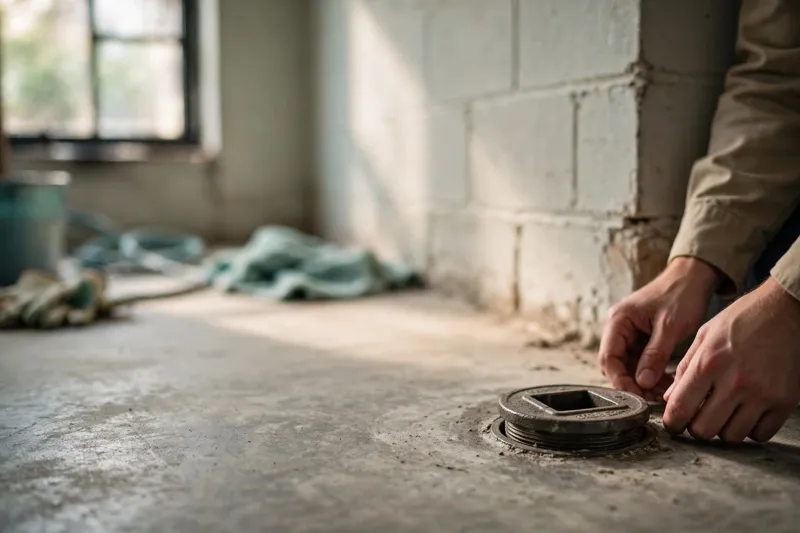
A sewer cleanout is the access point the plumber uses to reach the main sewer line. The line runs from the house to the city main under the street, and the cleanout is the capped pipe that opens into it, usually in the basement, sometimes outside near a bathroom wall. The two-way cleanout is the sewer cleanout Chicago plumbers install today. It has two pipes in one fitting: one reaches toward the street, the other reaches back toward the house, so the plumber can clear a blockage in either direction from a single cap.
Most homes have one sewer cleanout Chicago plumbers can reach from the basement floor. It is a three, four or six-inch pipe, white or black PVC or ABS plastic in newer homes, cast iron with a brass plug in older ones. The cap is a threaded plug with a square or hex nut on top, sometimes with a raised square extension, sometimes labelled with an S, C.O. or the words clean out. On a T- or Y-fitting indoors, the cleanout sits on the drain stack itself, and in a slab home it may be the only access point in the house.
The three types, stated plainly. A one-way cleanout gives access in one direction only, usually toward the street, and it is the older style, it clears a blockage downstream but cannot reach back toward the house. A two-way cleanout gives access in both directions, and it is the modern standard, the fitting the code allows at the junction of the building drain and the building sewer. An indoor cleanout, also called a test tee, is a capped fitting on an interior drain stack, common in basements and slab homes, and it serves the line inside the house rather than the line under the yard.
One New York plumber's page describes the main cleanout on most drain systems as a house trap. That is New York framing, and it does not describe a Chicago basement. In a Chicago home the main cleanout sits on the basement floor near the foundation wall, a capped pipe in the open, not a trap in a pit. The distinction matters because a homeowner who looks for a trap will look in the wrong place, and a homeowner who looks for a capped pipe on the floor will find it in the first minute.
The four jobs a cleanout does, in the order a homeowner meets them. First, clearing clogs: the auger goes through the cap and bores through the blockage, and the line is flushed clean. Second, camera inspections: the camera goes through the cap and shows the plumber the roots, the belly, or the collapsed section without a dig. Third, routine maintenance: the line is cleaned on a schedule, before the slow drain becomes a backup. Fourth, emergency access: when the line backs up, the cap is the door the plumber opens first, and it is the reason the job takes hours instead of days.
The materials tell the age of the house. Newer cleanouts are plastic, white PVC or black ABS, light in the hand, with a cap that turns easily and threads that rarely seize. Older cleanouts are cast iron with a brass plug, heavy in the hand and slow to turn after decades in place, and the plug may need penetrating lubricant and a longer wrench handle before it moves at all.
The diameter tells the plumber what will fit through it: three inches on a small line, four inches on the main line of most homes, six inches on a larger line or a line that serves more than one stack. Measure across the cap to find the size, or read the stamp on the fitting if it is still legible, and buy the replacement cap for the same diameter and the same threading, because a cap that is close is not a cap that seals.
The indoor cleanout is the third type, and the one slab homes rely on. It is a capped fitting on an interior drain stack, usually in a basement or a utility room, and it serves the line inside the house rather than the line under the yard. In a slab home it may be the only access point in the house, because there is no basement floor to put a cap in and no yard line to reach from outside.
The test tee looks like a short branch off the stack with a cap on the end, and it opens the same way, a wrench on the square nut, standing to the side, a quarter turn at a time. A homeowner who cannot find a floor cap should look at the stack first, because the test tee is often the cleanout the house actually has.
A sewer line cleanout is the same fitting under its other name. The search engines treat the two phrases as one intent, and the plumbers use them interchangeably, the cleanout is the access pipe, the sewer line is the pipe it opens into, and the fitting is the same capped pipe either way. This page uses the cleanout wording throughout, because it is the wording homeowners type, and it answers the line wording wherever the two meet. A reader who typed the line wording has found the same page, the same fitting, and the same seven steps, the name changes, and nothing else does.
The house type decides how many caps there are, and the bungalow is the simplest case. A Chicago bungalow has one main line, one soil stack, and one cleanout on the basement floor near the foundation wall, one cap, one fitting, and the whole line behind it. A two-flat has two stacks and often two cleanouts, one for each stack, and the plumber asks about both, because a blockage on the upper flat's line and a blockage on the lower flat's line are two different jobs through two different caps.
A slab home has no basement floor to put a cap in, so the test tee on the stack is the access point, and a larger home with three bathrooms may have three cleanouts, one for each soil stack, each with its own cap. The rule for the homeowner is the same in every case: find every cap the house has, test every one of them, and write down where each one sits, because the plumber will ask about all of them and the one you forgot is the one the job needs.
How to find your sewer cleanout
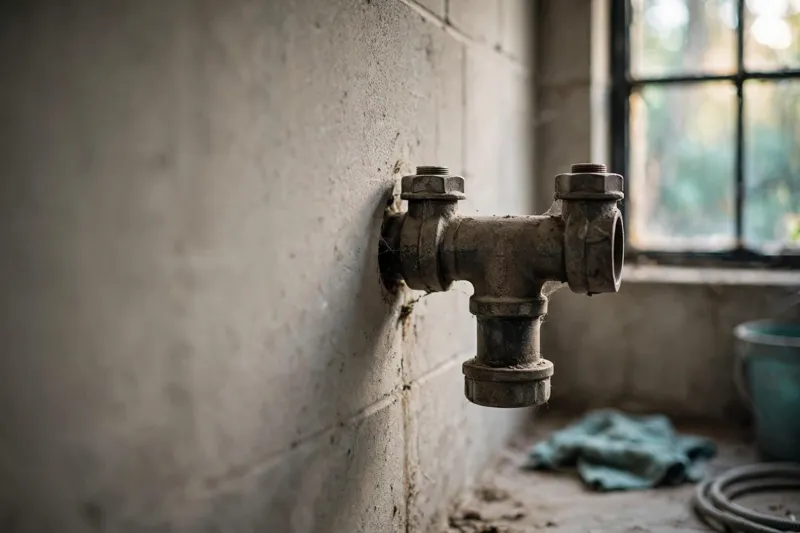
This section answers how to find sewer cleanout in a Chicago home, step by step, and it is the longest section on the page because finding the cap is the question homeowners ask most. The sewer cleanout chicago finding guide below starts in the basement and works outward. Sewer cleanout location is the first thing a plumber asks about on the phone, and a homeowner who knows where the cap sits saves the plumber the search and saves the job an hour.
Start in the basement, near a wall, that is where the sewer cleanout Chicago homeowners look for first sits, on the floor by the foundation wall. Follow the soil stack down from the bathroom above to the basement floor, then look for a capped pipe near the wall where the drain leaves the house. The cap is round, three, four or six inches across, with a square nut on top, and it sits on the floor in the open, not behind the furnace, not under the stairs, but on the floor where a plumber can reach it with a wrench.
If the basement has no cleanout, go outside. Look near a bathroom wall, along the line from the street manhole back to the house, and check the sidewalk for a stamped S, which marks the sewer line. The outdoor cap sits at ground level a few feet from the foundation, black or white plastic in newer homes, cast iron with a brass plug in older ones. The white pipe sticking up in the front yard is the cleanout riser.
The Chicago code sets no distance from the house for a cleanout: it requires the cleanout near the junction of the building drain and the building sewer, inside or outside the building wall. Larger homes may have two or three cleanouts, one for each soil stack, so check every bathroom wall before deciding there is none.
Searches for sewer cleanout chicago il return drain-cleaning pages, not cleanout explainers, Google corrects the Chicago terms to "sewer cleaning chicago" on two terms in the set, and the cleanout intent is served by drain-cleaning pages. This explainer owns the definition, the finding, the cap and the code instead of chasing the cleaning wording, and the finding section is the part no drain-cleaning page writes in full.
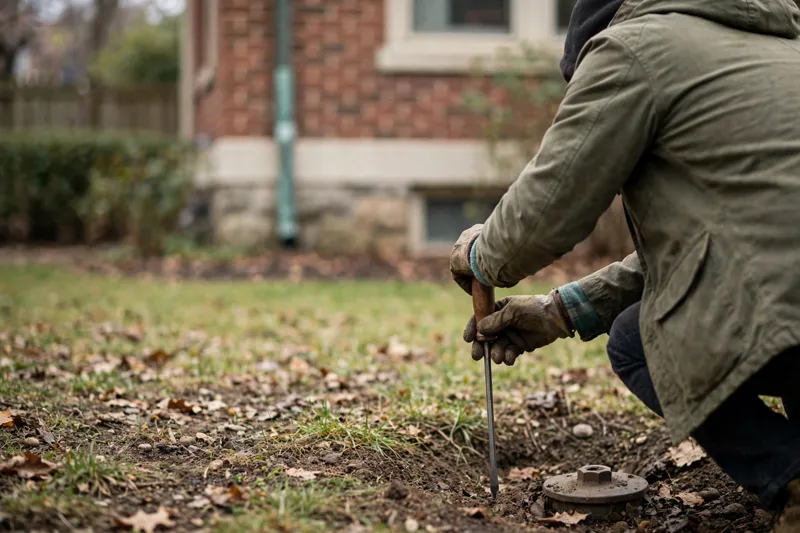
A buried cap is the sewer cleanout Chicago homeowners lose most often. The cap sits under a few inches of soil or grass, and the yard gives no sign of it. Mow the grass short first, move the lawn decorations out of the way, and work a grid over the likely line with a long screwdriver pushed about an inch into the ground. When the screwdriver hits something solid and round, mark the spot with a flagged stake before you dig, and keep the stake in place once the cap is found, the next plumber will thank you for it.
Two more routes find a cap that stays hidden. The plot plan for the house, held by the county records office, shows the line from the house to the street, and the line on the plan points at the cap. A camera inspection finds it from the inside: the plumber runs the camera down the stack and reads the distance to the cleanout from the footage counter. If neither route finds one, the house may have none at all, older homes built before the rule often have no cleanout, and the plumber reaches the line through a toilet or the roof instead.
The finished-basement warning belongs here, because a renovation can hide the cleanout behind flooring and leave the homeowner with no access at all. A cap covered over by new flooring is a cap the plumber cannot open in an emergency, and the fix is to cut an access panel, not to dig a new cleanout. Never cover a cleanout over during a renovation, and never let a contractor talk you into it, the cap must stay reachable, and the code requires it to stay accessible.
A buried cap sits only a few inches down, and the dig to reach it is a hand dig, not a machine dig. Work the screwdriver grid until the cap is marked, then cut the sod in a square around the stake and lift it in one piece, so the lawn goes back the way it was.
Dig with a hand trowel, not a spade, and stop the moment the trowel touches something hard, a spade can crack a plastic cap or chip a brass plug, and a cracked cap is a repair before the plumber even arrives. Clear the soil from the top of the cap, wipe the threads clean, and leave the cap exposed until the plumber has been, because a cap that is found and then buried again is a cap that has to be found twice.
The yard line runs straight, and the straight line is the finding tool. The sewer line runs from the house to the street manhole in a straight run unless the code's direction-change rule put a cleanout at a bend, so the line from the manhole back to the house is the line to search. The stamped S on the sidewalk marks where the line crosses, and the cap sits on that line, a few feet from the foundation or further out where the line turns. A line that turns twice in forty feet needs a cleanout for the turns, and the turns are where the caps hide, so a yard search that follows the straight line and checks the bends finds the cap faster than a yard search that wanders.
The soil stack is the map, and it hangs in the open. The stack is the vertical pipe that carries the bathroom waste down to the basement floor, and the cleanout sits where the stack meets the floor, at the point where the vertical pipe turns horizontal and leaves the house.
Stand in the bathroom above, find the stack behind the wall, and follow it down through the floor to the basement, the cap is at the bottom of that line, on the floor, near the wall, and the stack above it is the sign that the cap below it is the main one.
A stack that runs down an interior wall puts the cap in the middle of the basement floor, and a stack that runs down an exterior wall puts the cap against the foundation, either way, the stack points at the cap, and the cap is the first thing the plumber looks for when they walk in.
Mark the cap for the next owner, because the next owner starts the search from nothing. A flagged stake in the yard, an access panel labelled in the basement, and a note in the house file that says where the cap sits and when it was last tested, those three are the whole of the marking, and they cost nothing. The stake tells the plumber where to dig, the panel tells the plumber where to look, and the note tells the plumber what the last visit found. A house that changes hands with an unmarked cap changes hands with a hidden fitting, and the first backup in the new owner's home is the moment they learn the cap was there all along and nobody told them.
The cap: what it looks like, how to open it, and when never to open it
The cap is the part of the sewer cleanout Chicago homeowners touch, and the only part most of them ever will. It is a round threaded plug, three, four or six inches across, with a square or hex nut on top. Newer caps are black ABS or white PVC plastic. Older ones are brass or cast iron, and in a Chicago home built before the plastic era the cap is usually cast iron with a brass plug, heavy in the hand and slow to turn after decades in place.
A sewer cleanout Chicago plumber opens with a pipe wrench, standing to the side. The homeowner does the same: a pipe wrench or large channel locks on the square nut, turning counter-clockwise, standing to the side of the opening and never in front of it. Loosen the plug a quarter turn at a time, so any pressure can escape without a spray, and step back if water or sewage shows at the threads. If the line is backed up, do not open the cap at all, tighten it back and call a plumber, because an open cap on a backed-up line is an open door for sewage into the basement.
The stuck cap is the question the forums ask most, and the answer is patience, not force. Start with penetrating lubricant on the threads and wait five minutes. Tap the cap with a hammer to break the seal, then try the wrench again. If the handle will not move, slip a length of one-inch steel pipe over the wrench handle for extra turning force, the longer handle does the work, and the cap turns without a snapped fitting. Test the plug every year or two so it never seizes in the first place, and clean the threads and re-seal them with Teflon tape or pipe joint compound when they are worn.
Heat is the last resort for a sewer cleanout Chicago cast-iron cap, and never after lubricant. A propane torch on cast iron can free a seized plug, but heat on plastic melts it, and heat after lubricant can catch fire, because the lubricant is flammable. On plastic, a hair dryer at most, and only to warm the threads. If the cap still will not move after lubricant, tapping, and a longer handle, stop, the fitting is telling you it needs a plumber, and a snapped fitting in the floor is a bigger job than a stuck cap.
Three rules close the cap section, and they are the ones that keep a homeowner safe. First, never open a cap while anyone is running water in the house, the water has to go somewhere, and an open cap is the nearest exit. Second, never open a cap if the line is backed up, or if sewage is already showing at the lowest drain, the pressure behind the cap is the backup itself. Third, do not over-tighten a cap when it goes back on, tight enough to seal, never so tight it cracks the pipe or strips the threads, and always with clean threads and fresh tape or compound.
Buying the right cap starts with the old one in your hand. Take the old cap to the store, or measure across the opening and note the threading, because a cap that is close is not a cap that seals, the diameter and the thread have to match, and the square nut has to fit the wrench you own.
Plastic caps are the common replacement for plastic lines, and brass plugs are the common replacement for cast-iron lines, and the two do not mix, a plastic cap on a cast-iron fitting will not seat, and a brass plug on a plastic fitting will crack it. The square nut size matters too: the wrench that opened the old cap has to grip the new one, and a nut that is too small for the wrench will round off the first time it is turned.
The cap needs replacing when it stops doing its one job, which is sealing the line. A cracked cap weeps at the threads and lets sewer gas into the home. A seized cap that will not move after lubricant, tapping, and a longer handle is a cap that has to come out by force, and a forced cap often takes the fitting with it.
A missing cap is a repair, not a detail to leave: the open pipe lets debris into the line and lets sewer gas into the home, and the fix is a new cap of the right diameter, not a rag stuffed in the opening. A cap with worn threads will not seat straight, and a cap that will not seat straight will not seal, clean the threads, re-seal them with Teflon tape or pipe joint compound, and if the threads are gone, replace the cap and check the fitting behind it.
The wrench is the tool, and the size of the wrench is the detail. A pipe wrench grips the square nut on the cap, and a large pair of channel locks does the same job on a plastic cap where a pipe wrench would bite too hard.
The one-inch steel pipe slipped over the wrench handle is the extra turning force for a seized cap, and it works because the longer handle does the work, but the longer handle also breaks things, so the force goes on a quarter turn at a time, with a pause to feel whether the cap is moving or the fitting is.
Never hit a plastic cap with a hammer, and never hit a brass plug with a steel hammer, the tap that breaks the seal on cast iron cracks the plastic, and the crack is a repair before the plumber even arrives.
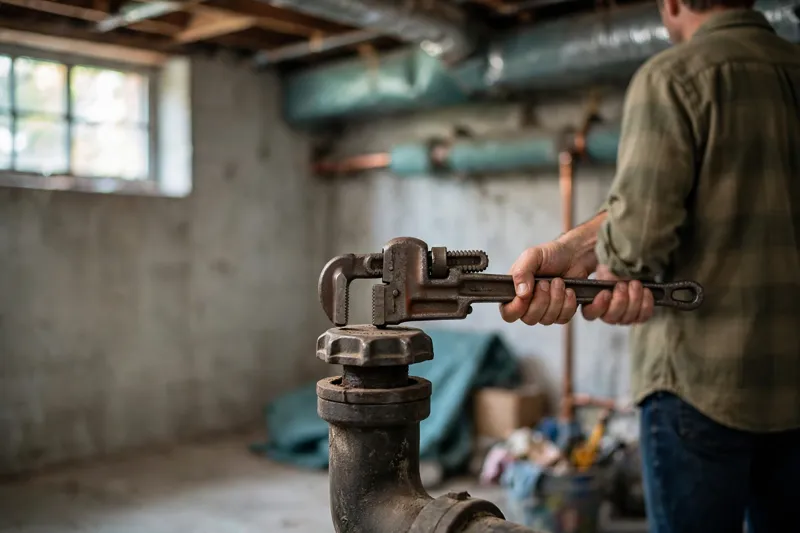
Sewer Cleanout Repair: Cap, Fitting, and Riser
A cracked cap is the most common sewer cleanout Chicago repair, and the cheapest one to put off. The cap is a simple swap for the same diameter and threading, unscrew the old one, clean the threads, seat the new one straight, and snug it with the wrench. A cracked fitting, a seized cap, or a damaged riser is a plumber's job, because the line must be cut and a new fitting set to code, and the cut has to land in the right place on the line.
The signs a cleanout needs repair are the ones a homeowner can see and smell. A cap that weeps at the threads, a fitting that drips, a cap that is missing entirely, debris and stormwater in, sewer gas out, or threads so worn the cap will not seat straight. A missing cap is a repair, not a detail to leave: the open pipe lets debris into the line and lets sewer gas into the home, and the fix is a new cap of the right diameter, not a rag stuffed in the opening.
Sewer cleanout chicago cost depends on the material, the depth, the excavation, the permit, and whether the fitting is one-way or two-way, and this page prints no figure for any of them, because the figure depends on the house. A cap swap is the smallest job on the list. A riser replacement means digging to the line. A full two-way replacement means cutting the line and setting a new fitting to code. The cost drivers are the same in every case: how deep the line sits, how hard the ground is to open, and how much of the line must come out to set the new fitting right.
Using the cleanout is the plumber's job, and the homeowner's part is the check, not the clearing. The auger goes through the sewer cleanout Chicago crews open first, toward the street, and the cutting head bores through the blockage while the cable feeds in. The plumber runs the cable further to confirm the full blockage is clear, retracts it slowly, and flushes the line with a garden hose.
Abandon the do-it-yourself attempt when the signs say the line itself is failing. If the auger cannot be fully inserted, the blockage returns quickly, or sewage backs up through more than one fixture or through the cleanout itself, the cause is not a simple clog, it points to collapse, roots, or a belly in the line, and the fix is a camera and hydro-jetting, not a longer snake. A belly is a low spot in the line where waste settles, and no amount of snaking fixes a belly, the line has to be repaired or replaced.
Hydro-jetting is the step after the auger, and it is the step that clears what the auger only pokes through. A high-pressure water jet goes through the cleanout and scours the inside of the line, cutting roots and washing grease and scale out to the city main. The auger bores a hole through a blockage; the jet cleans the pipe wall, and the difference shows on the camera after, a snaked line still has roots on the wall, and a jetted line runs clear. Roots are the cause the camera finds most, and the jet is the tool that takes them out without digging, but the jet is a plumber's tool, not a homeowner's, because the pressure can cut a hand and the water has to go somewhere.
The camera after the clearing is the part of the job that proves the job is done. The plumber runs the camera through the cap once the line is clear, and the footage shows whether the blockage is gone, whether the line has a belly or a break, and whether roots are already growing back.
A line that looks clear from the cap can still hold a belly further down, and only the footage shows it, so a clearing without a camera is a job half done, and a plumber who skips the camera is a plumber who has to come back. Keep the footage, because it is the record the next plumber reads, the evidence the City asks for on the public-way line, and the proof the line was clear on the day it was cleared.
Sewer cleanout cost is the question the cluster asks most, and the answer is that it depends on the house, the material, the depth, the excavation, the permit, and whether the fitting is one-way or two-way. A sewer cleanout plumber quotes the job by what the line needs, not by a flat figure, and the smallest job on the list is a cap swap while a full two-way replacement means cutting the line and setting a new fitting to code. This page prints no figure for any of them, because a figure that fits one house misleads the next, and the only honest answer is the one a licensed plumber gives after seeing the line.
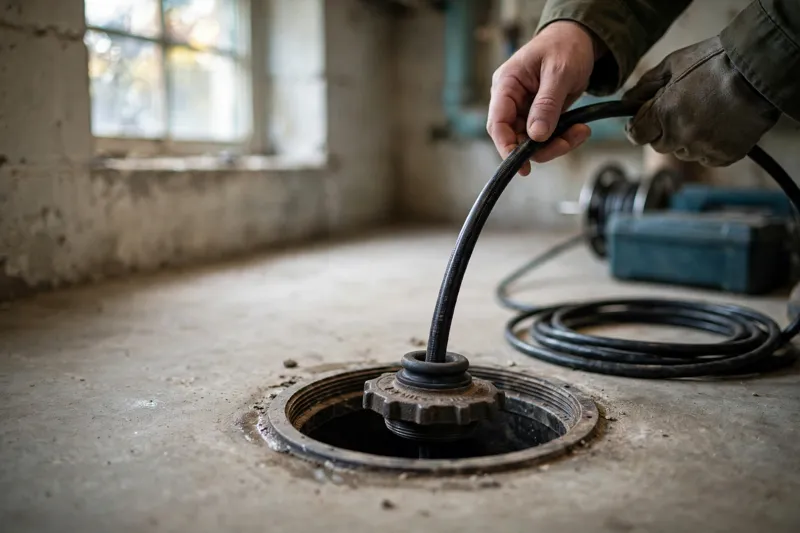
Sewer Cleanout Installation: When a Home Has None
Some Chicago homes have no cleanout at all, and the homeowner only learns it when the plumber asks where the cap sits. Older homes built before the rule often have no access point, and the plumber reaches the line through a toilet or the roof instead, pulling a toilet to run the auger, or going down the vent stack from the roof, both slower and messier than opening a cap. The install gives the house a door it never had, and the first backup is usually the moment the owner decides to have it fitted. The sewer cleanout plumbing rule that decides the fitting is section 708.3.5 of the Chicago code, and it is the section the plumber follows when the new fitting goes in.
The new fitting goes where the code says the junction cleanout goes: near the junction of the building drain and the building sewer, inside or outside the wall, brought up to finished ground level or basement floor level. A two-way fitting is allowed at the junction, and it is the fitting the plumber installs, because it reaches toward the street and back toward the house from a single cap. The cleanout is not required at the junction if a three-inch or larger soil-stack cleanout sits within ten feet of developed length of the connection, the stack cleanout can stand in for the junction cleanout when it is close enough, and the plumber checks that distance before cutting anything.
What the install involves, in order: the plumber digs to the line, cuts the line in the right place, sets the new fitting level, and backfills and restores the floor or the yard. The cut has to land where the fitting will sit level and where the cap will clear the floor, and the fitting has to be set so the cap stays reachable and the rodding clearance stays open, eighteen inches on pipes six inches and smaller, thirty-six inches on pipes eight inches and larger.
A fitting set too low fills with soil, a fitting set too high trips the foot, and a fitting set against a wall with no clearance is a fitting the code would not pass. The dig is the slow part, the set is the careful part, and the backfill is the part that decides whether the floor or the yard looks right after.
The permit is the plumber's job, not the homeowner's, and the rule is that sewer work permits are for licensed drainlayers only. The short in-kind exception covers runs of twenty feet or less, where a like-for-like replacement needs no permit, but a new cleanout cut into a live line is not a like-for-like replacement, it is new work, and new work goes through the permit. This page prints no fee amounts, because the fee schedule is the City's and it changes, and a homeowner who wants the figure asks the drainlayer before the work starts. The permit is the record that the fitting was set to code, and the record is what the next owner reads.
The basement placement is the one most Chicago homes need. The sewer cleanout basement fitting sits on the floor near the foundation wall, where the drain leaves the house, and the cap stays in the open where a plumber can reach it with a wrench.
A fitting buried under new flooring is a fitting that cannot be opened in an emergency, and the fix is an access panel, not a new dig, so the install and the renovation have to be planned together, with the cap marked on the plan and the panel cut before the floor goes down. A homeowner who finishes a basement over a new cleanout has hidden the very door the install was meant to give them, and the next backup is the moment they learn it.
The right time to install is the moment the house shows it needs one. Buying a home with no cleanout is the first, the inspection finds it, and the install is the first job after the keys change hands. A backup that needed the toilet pulled is the second, the plumber who pulled the toilet is the plumber who should have had a cap to open, and the owner who paid for the pull pays for the install once and never pays for the pull again.
Finishing a basement is the third, the floor is open, the line is exposed, and the fitting goes in before the floor goes down, when the dig is a day and not a week. And a camera that shows the line needs regular access is the fourth, roots, a belly, or a line that clogs twice a year all say the same thing, which is that the house needs a door into its own sewer line.
What the install does not do is worth saying plainly, because a new fitting is not a new line. A cleanout does not stop a backup, it does not fix a belly, and it does not take the roots out of the line, it gives the plumber the door to do those jobs, and the jobs still have to be done. A homeowner who installs a cleanout and expects the backups to stop has bought a door and expected it to be a wall.
The value of the install is the access: the auger goes in, the camera goes in, the jet goes in, and the line gets cleared and checked without a toilet pulled, a roof climbed, or a yard dug. That access is the whole point, and the first time the line backs up after the install, the owner will know what it was worth.
Sewer Cleanout vs Sewer Backup: The Decision Table
The decision table below is the first, and it is the signature section of this guide.
A sewer cleanout Chicago homeowners ask about does not stop a backup, it gives the plumber the door. The cleanout is a fitting, a capped pipe in the floor or the yard. A backup is an event, wastewater flowing back into the home through the lowest drain. The cleanout does not prevent the event, and it cannot stop water that is already pushing back from the city main. What it does is give the plumber access to clear the cause, and that access is the difference between a job that takes hours and a job that takes days.
| Question | Cleanout | Backup |
|---|---|---|
| What is it? | A capped access pipe into the main sewer line | Wastewater flowing back into the home |
| Is it a thing or an event? | A thing, a fitting, always there | An event, it happens, then it is over |
| Can you see it? | Yes, a round cap on the floor or in the yard | Yes, water or sewage at the lowest drain |
| Does one cause the other? | No, a cleanout never causes a backup | A backup needs a cause: roots, a clog, a collapsed line, or a city main under pressure |
| Does a cleanout prevent a backup? | No, it is an access point, not a valve | What prevents one is a backwater valve or an overhead sewer |
| What fixes it? | A new cap, a new fitting, or a new riser | Clearing the cause through the cleanout, then the cleanup |
| Who do you call? | A licensed plumber, for the fitting | A plumber first for the line, then a restoration crew for the cleanup |
The answer is no, and the reason is the physics, a cleanout is an opening in the line, and an opening cannot hold back water that is already pushing in from the city main. What holds it back is a backwater valve, which closes when the flow reverses, or an overhead sewer, which lifts the line above the street main so the water cannot run back down into the basement. Both are installed by a licensed plumber, and a cleanout is what lets the plumber reach the line to fit one.
The cleanup side of a backup belongs to another page, and this guide does not re-answer it. When sewage has already come into the home, the job is the cleanup: the water out, the contaminated material out, the drying, and the sanitizing, and the guide for that job is the sewage backup cleanup page on this site, with the sewage-cleanup service page behind it. This page owns the fitting. That page owns the cleanup. The cleanout is the door between them, and the plumber is the one who walks through it.
The two fixes that stop a backup are not the cleanout, and they belong in this section because the table above names them. A backwater valve sits on the line and closes when the flow reverses, holding the city main's water back from the basement, it is a valve, and it needs maintenance, because a valve that never moves seizes shut or open at the wrong moment.
An overhead sewer lifts the line above the street main, so the water cannot run back down into the basement at all, it is the bigger job, a re-plumb of the line, and it is the fix for a home that backs up every time the street floods. Both are installed by a licensed plumber, both need the cleanout as the access for the install, and neither is a do-it-yourself job.
The cleanout is the door the plumber uses to fit them, and the valve or the overhead line is the wall that holds the water back.
Sewer Cleanout Chicago Code: Chicago Municipal Code §18-29-708
The Chicago rule on cleanouts sits in the Chicago Municipal Code, section 18-29-708, titled "Cleanouts". It is the Chicago Plumbing Code's version of the rule, and it is the section a plumber cites when a cleanout is missing, too far apart, or buried where it cannot be reached. The section is written in code language, so this part of the guide translates it into plain words, and it prints the rule by pipe size, never as one flat number, because the code itself gives different numbers for different sizes.
The spacing rule is section 708.3.1, and it has three numbers, not one. The general rule is a cleanout every one hundred feet on horizontal drains. For drains four inches or less the spacing is fifty feet. For drains ten inches or larger the spacing is one hundred and fifty feet. The language models that answer "every fifty feet" are quoting the four-inch rule and presenting it as the general rule, it is not. The general rule is one hundred feet, and the fifty-foot figure belongs only to the smallest pipes.
Building sewers get their own rule in section 708.3.2. A sewer cleanout Chicago code requires on a building sewer sits one hundred feet apart from the upstream entrance, unless adequately spaced manholes take its place. The manhole is the alternative the code allows: where the line has manholes spaced well enough for access, the cleanout can be further apart. The section also requires cleanouts at the junction of the building drain and the building sewer, which is the next rule.
Changes of direction get their own rule in section 708.3.3. A cleanout is required at each change of direction greater than forty-five degrees, and where multiple changes occur, one cleanout per forty feet of developed length. Developed length is the length of the pipe measured along its bends, not the straight-line distance between two points. A line that turns twice in forty feet needs a cleanout for the turns, and a line that runs straight for a hundred feet needs one for the distance, the two rules work together, and neither replaces the other.
The junction rule is section 708.3.5, and it is the one that decides where the main cleanout sits in a Chicago home. A sewer cleanout Chicago code requires near the junction of the building drain and the building sewer, inside or outside the wall, brought up to finished ground level or basement floor level. A two-way cleanout is allowed at the junction, and it is the fitting the code names there. The cleanout is not required at the junction if a three-inch or larger soil-stack cleanout sits within ten feet of developed length of the connection, the stack cleanout can stand in for the junction cleanout when it is close enough.
Clearances close the section, in 708.9. A cleanout needs eighteen inches of rodding clearance on pipes six inches and smaller, and thirty-six inches on pipes eight inches and larger. Rodding clearance is the space in front of the cleanout for the auger and the plumber, a cap behind a water heater, under a stair, or against a wall with no room to work is a cap the code would not pass, and a renovation that blocks the clearance blocks the cleanout. The cap must stay reachable, the clearance must stay open, and the code says so in inches, not in general terms.
| Rule | Section | The number |
|---|---|---|
| Horizontal drain spacing, general | §708.3.1 | 100 ft |
| Horizontal drain spacing, 4 in or less | §708.3.1 | 50 ft |
| Horizontal drain spacing, 10 in or larger | §708.3.1 | 150 ft |
| Building sewer spacing | §708.3.2 | 100 ft from the upstream entrance |
| Changes of direction | §708.3.3 | Cleanout at each change over 45°; one per 40 ft developed length |
| Junction cleanout | §708.3.5 | Near the drain-sewer junction, to ground or floor level |
| Rodding clearance, 6 in and smaller | §708.9 | 18 in |
| Rodding clearance, 8 in and larger | §708.9 | 36 in |
The table is the whole code section in one place, and the numbers in it are the code's own numbers. Both are engine answers, not code text, and this page prints the code text.
Reading the code section is a skill, and it is a short one to learn. The section is written by pipe size, not by the house, so the first question is always the size of the pipe, four inches or less, the general run, or ten inches or larger, and the number follows from the size. The table above is the way to read it: find the size, find the rule, and the number is the one the code gives for that size and no other.
The permit side of the code is short, and it belongs to the drainlayer. Sewer work permits are for licensed drainlayers only, and the short in-kind exception covers runs of twenty feet or less, where a like-for-like replacement needs no permit. A cap swap needs no permit, because nothing is cut and nothing is set, the cap comes off and the same cap goes back on. A new fitting cut into a live line is new work, and new work goes through the permit, and the permit is the drainlayer's to pull, not the homeowner's. This page prints no fee amounts for any of it, because the fee schedule is the City's and it changes, and the figure that matters is the one the drainlayer quotes before the work starts.
A missing cleanout shows on the inspection report, and the sale is where it matters most. The home inspector walks the basement, looks for the cap on the floor, and writes it down when there is none, and the buyer reads the report and asks for the install, because a house with no cleanout is a house the plumber cannot reach without pulling a toilet. The install becomes a condition of the sale, the drainlayer pulls the permit, and the fitting goes in before the keys change hands, when the floor is still open and the dig is a day. The code is the standard the inspector cites, the section is the one this page prints, and the buyer who knows the section knows what to ask for and why.
The Chicago Private Drain Program: Who Pays When the Line Breaks
The Private Drain Program is the strongest Chicago-specific angle on this page, and it is the one the national guides never mention. The City repairs breaks under the public way at no cost to the owner, but only after the owner hires a licensed sewer contractor to rod and video-inspect the line, and only for the part of the line that runs under the public way. The sewer cleanout Chicago homeowners keep asking about is the access point that makes the inspection possible: the camera goes through the cap, the footage shows where the break sits, and the footage decides who pays.
The line is split in two, and the split decides the bill. The private line runs from the house to the property line, and it belongs to the owner, the owner pays for its repair. The public way runs from the property line to the city main under the street, and a break there is the City's repair at no cost to the owner, once the inspection proves the break sits under the public way. The sewer cleanout chicago inspection starts at the cap, and the footage decides who pays.
A homeowner who does not know where the split falls can spend a repair on the City's side, or wait for the City to fix a break that belongs to the house. The camera footage settles it, and the cleanout is where the camera goes in.
The steps, in order. First, call CHI 311 and report the problem, the program starts with the City's call centre, and the call is the record that the problem exists. Second, hire a licensed sewer contractor to rod and video-inspect the line through the cleanout. Third, the contractor's footage shows where the break sits: private line, or under the public way. Fourth, if the break is under the public way, the City repairs it at no cost to the owner. The owner pays only for the inspection and for any work on the private side, the public-way repair is the City's.
CBS Chicago covered one Bronzeville resident, Jenny Strickland, whose sewer backed up and who turned to the programme, the segment is about the programme, not about a cleanout, and this page keeps it that way. Her story is a programme example: a resident with a backed-up sewer, a City programme that covers the public-way repair, and a call to CHI 311 that starts it. It is not a cleanout case, and it is not presented as one. The distinction matters, because a programme example and a cleanout case are two different kinds of evidence, and this page does not mix them.
Two warnings belong with the programme, because both are easy to get wrong. First, the timeline the forums quote, a week to ten business days, is unconfirmed, and this page does not print it. The City has not published a timeline for the programme in a form this page could verify, and a homeowner who plans around an unverified number plans around a guess. Second, the cost figures the call centre quotes and the figures the water department's flyer quotes do not agree with each other, and neither is settled, so this page prints neither, and the homeowner should ask the contractor for the inspection figure and the City for the programme terms before any work starts.
The cleanout's role in the programme is the reason this section sits in a cleanout guide at all. Without a cleanout, the contractor reaches the line through a toilet or the roof, or by digging, slower, messier, and harder on the house, and the footage takes longer to get. With a cleanout, the camera goes in through the cap, the footage comes back in the hour, and the City has what it needs to decide. A homeowner who knows where the cap sits saves the contractor the search, saves the programme the wait, and saves the job an hour, and the finding section of this guide is the part that tells them where to look.
What the camera shows is the whole case, and the footage is the evidence the City decides on. Roots wrapped around the pipe, a belly holding water, a collapsed section letting soil in, or a clean break with the two ends out of line, the camera shows each one, and the footage counter reads the distance from the cap to the break, so the break's place on the line is a number, not a guess.
A break under the public way looks the same as a break on the private line until the distance is read against the property line, and the reading is what splits the bill. The footage is the record the contractor keeps, the evidence the City asks for, and the proof the break sits where the contractor says it sits.
What the City needs from the homeowner is short, and it is all on the inspection. The contractor's report, the footage, and the break's location against the property line, those three are the file, and the file is what the City decides on. The homeowner's part is the call to CHI 311 that starts the programme, the licensed contractor who does the rod and the video, and the patience to let the inspection run before any digging starts. A homeowner who digs first and inspects after has spent the repair before the City has seen the break, and the programme cannot pay for work it never approved. Inspect first, dig after, and let the footage decide who pays.
The programme's limits are worth stating, because the programme is a line repair and not a cleanup. The owner pays for the inspection and for any work on the private side of the line, and the City pays only for the repair under the public way, the split is the property line, and the footage is what proves which side the break sits on.
The programme does not cover the cleanup inside the home: the water out, the contaminated material out, the drying, and the sanitizing are the owner's restoration job, and the guide for that job is the sewage backup cleanup page on this site. A homeowner who expects the programme to pay for the cleanup has mistaken a line repair for a restoration, and the distinction matters because the cleanup is the larger bill and the programme never claimed it.
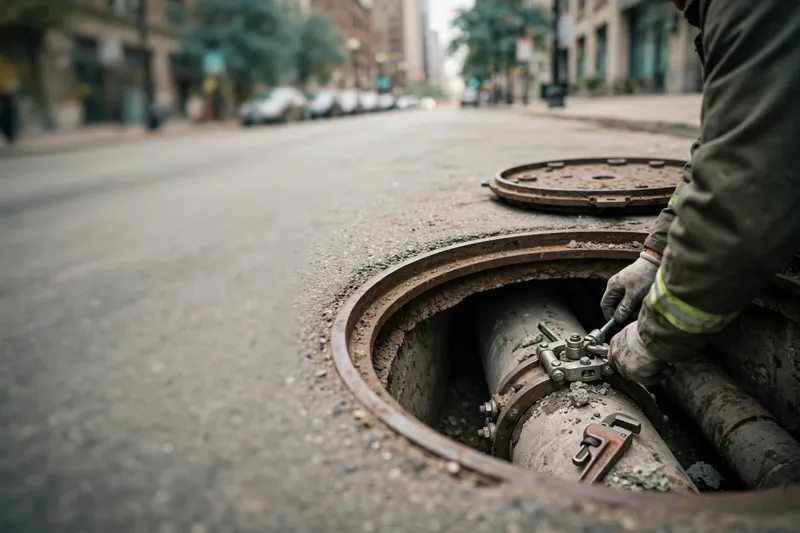
The Honest Case Note: No Named Chicago Cleanout Case Passed the Test
This page carries no named Chicago cleanout case, and it says so plainly. No verified named Chicago cleanout case came out of it. A case needs three things: a named person, a Chicago address, and a live source page that confirms both. Nothing in the sweep met all three, so nothing is printed as a case.
The language models offered several more names, and none of them could be confirmed as a cleanout case on any live source page, so none of them appear here. That is the standard this site holds for every page, and it is the reason the flood-insurance page on this site carries a verified case, Edmund Lapa, a bookstore at 5747 W. Irving Park Road, a court decision with a number, while this page carries none. The insurance case is an insurance case, not a cleanout case, and it does not belong here. A name without a live source is a rumour, and a rumour is not evidence.
What the sweep did find, and what this page does print, is the programme example in the section above: a Bronzeville resident, a backed-up sewer, and a City programme that covers the public-way repair. It is printed as a programme example, with the source named and the limit stated, because a programme example is what it is. The page does not stretch it into a cleanout case, and it does not borrow a case from another topic to fill the gap. The gap stays visible, and the page is honest about it.
The strict test is the reason the page can be trusted where it does make a claim. Where the sources disagree, the cost figures, the timeline, the engine spacing claims, the page says so, and prints neither side as settled. A page that invents a case would invent a cost next, and this page invents neither.
The standard is the same one this site held on the earlier pages that carried no case, and it is worth stating once more so the reader knows it is a rule and not an accident. The do-it-yourself page and the hardwood-floors page both said plainly that no named Chicago case passed the test, and both were built anyway, because a page that answers the question well does not need a borrowed case to be useful.
A name without a live source is a rumour, and a rumour is not evidence, and a page that prints a rumour as a case has told its reader the rest of the page can be doubted too. The case note is the page's way of saying the rest of it can be checked, and the sources section at the end is where the checking starts.
The standard is the same one this site held on the earlier pages that carried no case. The do-it-yourself page and the hardwood-floors page both said plainly that no named Chicago case passed the test, and both were built anyway, because a page that answers the question well does not need a borrowed case to be useful. This page answers the question, what a cleanout is, where it hides, how the cap opens, what the code says, and whether it stops a backup, and it does so without a single invented name. The case note is the last section before the engine pack, and the engine pack is where the page shows its work.
What the Search Engines Say, and What They Get Wrong
The Chicago pack for sewer cleanout chicago is topped by Angi's guide and The Spruce's finding article, and neither one is a Chicago page. Angi's guide runs about seven hundred words with three questions. All of them are good guides, and all of them are national, none of them mentions the Chicago code, the Private Drain Program, or a Chicago address, and that is the gap this page fills.
A Chicago line's depth depends on the frost line, the house, and the street, and no engine answer gives a Chicago depth from a Chicago source, so this page prints none. The same rule holds for the "135 rule" that one answer page repeats: it is an engine answer, not a code rule, and it is answered in the questions below as exactly that, an engine answer, not Chicago code.
The cluster around sewer cleanout chicago is small, and the head is the strongest term in it. The morning figures put the head at about three and a half thousand searches a month with a difficulty in the mid-twenties, interim figures from the morning leg, and the fresh leg is still owed before the build, so the density on this page must be re-checked against it.
The pack lists the plumbers; the explainer tells the homeowner what the plumber will do when they arrive, and the two together are the whole answer. A homeowner who types the near-me wording wants a truck, and a homeowner who types the definition wording wants to know what the truck will do, and this page is written for the second one, because the first one already has the pack.
The maintenance schedule is the last table on the page, and it is the one that keeps the fitting working. A cleanout that is never checked is a cleanout that seizes when it is needed, and the schedule below is the whole of the upkeep, four tasks, each with a time, each with a reason, and none of them a plumber's job until the line itself fails.
| Task | When | Why |
|---|---|---|
| Test the cap | Once a year | So it turns when the plumber needs it |
| Camera the line | Every few years, or after a backup | Roots and bellies show on footage, not from the cap |
| Clean the line | Before the slow drain becomes a backup | A scheduled cleaning costs less than an emergency call |
| Mark the cap | Before any renovation | So the floor never covers the door the plumber needs |
Maintenance closes the page's practical part, because a cleanout that is never checked is a cleanout that seizes when it is needed. Test the plug every year or two so it turns when the plumber needs it. Keep the yard line clear of tree roots, and schedule a cleaning before the slow drain becomes a backup, roots are the cause the camera finds most, and the cleanout is the door the camera goes through.
Keep the flagged stake in place once a buried cap is found, and keep the access panel clear in a finished basement. A cleanout is a small fitting, and the whole job of this page is to make sure a homeowner can find it, open it, and know when to step back and call a plumber. That is the sewer cleanout chicago guide this site set out to write, and the rest of the site holds the cleanup and the insurance behind it.
Every engine says the cap sits in the basement first and the yard second, every engine says to stand to the side when the cap comes off, every engine says the clearing is a plumber's job, and every engine that answers the backup question says the cleanout does not prevent one.
A reader who takes the agreement and the code together has the whole picture: the finding, the cap, the code, and the table, and the rest of the site behind it for the cleanup and the insurance.
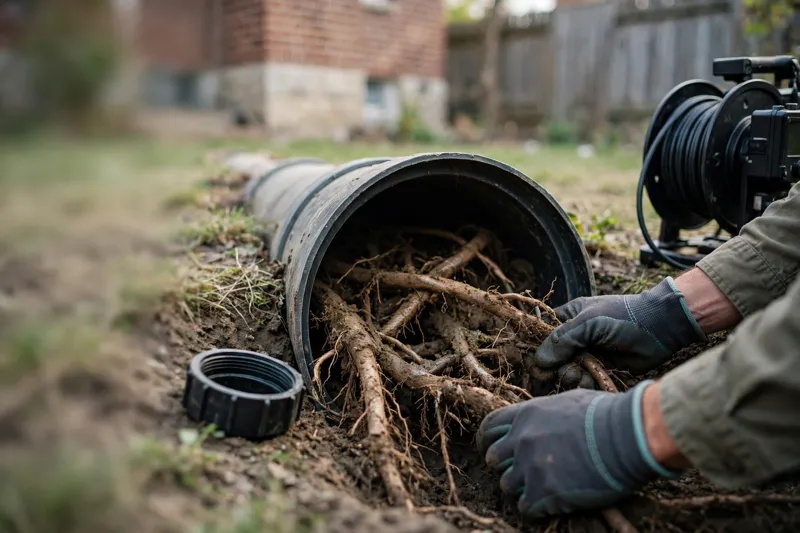
How to find and open a sewer cleanout safely
Every step is one a homeowner can do tonight, with no tool but a pipe wrench, a pair of gloves, and a light.
Find the basement wall first
Start in the basement, on the floor near a foundation wall, close to the bathroom above, that is where the main cleanout sits in most Chicago homes. Look for a round capped pipe coming out of the floor, three, four or six inches across, with a square nut on top. If the basement is finished, look for an access panel or a patch in the flooring where a cap was covered over.
Read the curb and the yard
If the basement has no cleanout, go outside and look near a bathroom wall, along the line from the street manhole back to the house. Check the sidewalk for a stamped S, which marks the sewer line, and look for a round cap at ground level a few feet from the foundation. Larger homes may have two or three cleanouts, one for each soil stack, so check every bathroom wall.
Probe for a buried cap
A cap that sits under soil or grass is still there, and a long screwdriver pushed about an inch into the ground will find it. Work a grid over the likely line, mow the grass short first, and move lawn decorations out of the way. When the screwdriver hits something solid and round, mark the spot with a flagged stake before you dig, and keep the stake in place once the cap is found.
Gear up before you touch the cap
Put on heavy-duty gloves and safety glasses, and lay plastic sheeting on the floor around the cap with a bucket and a wet vacuum close by. Have a pipe wrench or large channel locks ready, and keep a garden hose nearby for flushing. Never open a cap with bare hands, and never open one while anyone is running water in the house.
Loosen the cap slowly, standing to the side
Turn the plug counter-clockwise a quarter turn at a time, standing to the side of the opening and never in front of it. Loosening slowly lets any pressure escape without a spray, and a cap that hisses or weeps is telling you the line is holding pressure. If water or sewage shows at the threads, tighten the cap back at once and call a plumber, the line is backed up.
Let it drain, then check for standing water
Once the cap is off, step away and let any backed-up waste drain out on its own, away from the house and away from people. Shine a light down the pipe: standing water at the bottom means the blockage is downstream, and a dry pipe means the problem is upstream or the line has already drained. Write down what you see, because the plumber will ask.
Tighten it back and call a plumber
Thread the cap back on by hand first, so it seats straight, then snug it with the wrench, tight enough to seal, never so tight it cracks the pipe or strips the threads. Clean the threads and re-seal them with Teflon tape or pipe joint compound if they are worn. If the cap would not move, the blockage came back, or sewage rose through more than one fixture, stop and call a licensed plumber.
Before you call the plumber
- Know where your cleanout cap sits, basement floor first, then the yard
- Test the cap once a year so it turns when the plumber needs it
- Keep the flagged stake in place once a buried cap is found
- Never open the cap while anyone is running water in the house
- Never open the cap if the line is backed up or sewage shows at the lowest drain
- Photograph the cap and the line before the plumber arrives, and write down what you saw
- Call CHI 311 first if the break may sit under the public way
- Call a licensed plumber the moment the blockage comes back or sewage rises through more than one fixture
Call now, we answer 24/7
If the cap will not move, the blockage came back, or sewage is rising through more than one fixture, call (773) 570-9869. We will ask what you saw, tell you what to check tonight, and send a crew when the job needs one.
What to ask the plumber
Six questions, asked before the work starts, and each one saves a second visit. A plumber who answers them plainly is a plumber who has done the job before, and a plumber who will not answer them is a plumber to think twice about.
- Where is my cleanout, and is it one-way or two-way?, the answer decides whether the plumber can reach the line in both directions, and whether the house needs a second fitting.
- What did the camera show?, roots, a belly, a break, or a clear line, and the footage to prove it. A clearing without a camera is a job half done.
- Is the blockage on my side or under the public way?, the answer decides who pays, and the footage counter reads the break's place on the line.
- Would a backwater valve help, or does the house need an overhead sewer?, the two fixes that stop a backup, and the cleanout is what lets the plumber fit either one.
- How often should this line be cleaned?, roots grow back, and a line that clogs twice a year needs a schedule, not a rescue.
- What will the inspection cost, and what does it cover?, the rod, the video, and the report, in words, before the work starts, so the bill holds no surprise.
The bottom line
A sewer cleanout is a capped door into the main sewer line, and the whole page comes down to four things: find the cap, test it once a year, never open it on a backed-up line, and call a licensed plumber when the blockage comes back or the sewage rises through more than one fixture. The code gives the spacing by pipe size, never as one flat number. The Private Drain Program repairs the break under the public way at no cost, once the inspection proves the break sits there.
And the cleanout does not stop a backup, it gives the plumber the door to clear the cause, and the backwater valve or the overhead sewer is what holds the water back. Find the cap before you need it, because the night the line backs up is the wrong night to start looking.
Frequently asked questions
What is a sewer cleanout?
A sewer cleanout is a capped pipe that gives access to the main sewer line of a home. A plumber opens it to clear a blockage, run a camera, or check the line, without pulling a toilet or digging up the yard. Most homes have one in the basement or outside near a bathroom wall, marked by a round cap.
How much does a sewer cleanout cost?
This site prints no prices, because the cost depends on the job. Clearing a line through an existing cleanout costs less than installing a new one. Depth, excavation, pipe material, access, and whether the fitting is one-way or two-way all move the price. A buried cap that must be found first adds to the work.
What is the difference between a sewer cleanout and a sewer backup?
A sewer cleanout is an access point, a capped pipe that lets a plumber reach the main sewer line. A sewer backup is wastewater flowing back into the home through drains, tubs, or toilets. The cleanout is a fitting in the plumbing. The backup is the event the fitting helps fix, and a cleanout cannot stop one.
Do I need a sewer cleanout?
Most homes should have one, and older Chicago homes without an exterior cleanout are the ones that need it most. If the line clogs often, or the plumber has to pull a toilet to reach the line, a cleanout saves time and mess on every later visit. A basement cleanout already in place may satisfy the code.
What are the different types of sewer cleanout caps?
There are three types. A threaded plug screws into the fitting and carries the square nut most homeowners see. A test plug expands inside the pipe to seal it for a pressure test, then comes out again. Older caps are brass or cast iron, and some sit flush in the floor with a recessed slot instead of a raised nut.
How do you clean out a main sewer line?
A plumber opens the cleanout cap and runs a motorized drain auger through it toward the street, cutting through roots and built-up waste. For grease or heavy scale, the plumber may use hydro-jetting, a high-pressure water stream that scours the pipe walls. A camera inspection after the clearing shows whether the line is truly open.
What happens if you don't have a sewer cleanout?
Without one, the plumber must reach the line another way, usually by pulling a toilet or going through the roof vent. Both are slower and messier than opening a cap, and digging up the yard is the last resort. A camera cannot enter the line either, so finding the blockage takes longer and the repair costs more.
How much does it cost to replace a sewer cleanout?
This site prints no prices, because the job varies. Swapping a cracked cap alone is the smallest job. Replacing a riser or a damaged fitting means cutting the line and setting a new fitting to code, which takes longer. Depth, excavation, pipe material, and any permit all shape the final scope, so a plumber should see it first.
Who installs a sewer cleanout in Chicago?
A licensed plumber installs one in Chicago; ask about a DWM permit before digging starts. If the break sits under the public way, call CHI 311 first: the city's Private Drain Program may cover the repair once a licensed sewer contractor rods and video-inspects the line.
What can I pour down my sewer drain to unclog it?
For a slow drain, start with hot water and a little dish soap, which can loosen grease. Baking soda followed by vinegar may help a mild clog, and enzyme cleaners eat organic matter over hours. Never pour chemical drain cleaner down a sewer drain: it can damage pipes, give off fumes, and splash back on skin and eyes.
Is a clogged toilet considered a sewer backup?
Not on its own. One clogged toilet means a local blockage in that toilet or its branch line. It counts as a sewer backup when wastewater comes back through more than one fixture at once, such as the toilet and the tub, or when sewage rises in the lowest drain in the house. That pattern points to the main line.
How much does it normally cost to unblock a drain?
This site prints no prices, because the cost depends on the blockage. A simple clog near the drain costs less than a deep main-line blockage. Access, the length of the line, whether the plumber uses an auger or hydro-jetting, and whether a camera inspection follows all shape the scope. An emergency night call adds to the work.
What is the difference between a one-way and a two-way sewer cleanout?
A one-way cleanout opens in one direction only, toward the street, so the plumber can work downstream but not back toward the house. A two-way cleanout has a fitting that opens in both directions, toward the street and back toward the house. Plumbers installing a new cleanout in Chicago today usually fit the two-way type.
How do I know if my main sewer line is clogged?
Watch for several fixtures slowing at once, which points to the main line rather than one drain. Gurgling from a toilet or tub, a sewage smell near a drain, water rising in the lowest tub when the washer runs, and a toilet that bubbles when another fixture drains are warning signs. One slow drain alone is local.
Can I remove the cleanout cap and run a drain snake through it?
Yes, that is what the cleanout is for, but take care first. Wear gloves and safety glasses, stand to the side, and loosen the cap slowly so pressure can escape. If sewage shows, tighten it back and call a plumber. A hand snake may not reach a main-line blockage, and a powered auger can hurt you or damage the pipe.
Where is my sewer cleanout?
Start in the basement, on the floor near a foundation wall, close to the bathroom above. If it is not there, look outside near a bathroom wall, along the line from the street manhole back to the house. Older homes may have none at all, and a buried cap can sit under a few inches of soil or grass.
How do I find my sewer cleanout?
Follow the soil stack down to the basement floor, then look for a capped pipe near the wall where the drain leaves the house. Outside, check near a bathroom wall and along the line from the street manhole. A screwdriver pushed an inch into the soil can find a buried cap, and a plumber can find one that stays hidden.
How deep is a sewer cleanout?
The cap itself usually sits at floor level in a basement or at ground level outside, so there is nothing to dig for. The pipe below it drops to the main sewer line, which runs deep enough to stay below the frost line. The depth that matters is the depth of the line, and only a camera tells you that.
How do you open a sewer cleanout cap?
Turn the plug counter-clockwise with a pipe wrench or large channel locks, standing to the side and never in front of the opening. Loosen it slowly so any pressure can escape, and step back if water or sewage shows. If the line is backed up, do not open it at all, tighten it back and call a plumber.
Should a sewer cleanout be capped?
Yes, always. An open cleanout lets debris and stormwater into the line and lets sewer gas into the home. The cap keeps the line sealed and the house safe, and it is the part that makes the cleanout usable when a plumber needs it. A missing cap is a repair, not a detail to leave.
What does a sewer cleanout cap look like?
A round threaded plug, three, four or six inches across, with a square or hex nut on top. Newer caps are black ABS or white PVC plastic; older ones are brass or cast iron. Some carry a raised square extension, and some are labelled with an S, C.O. or the words clean out.
Are sewer cleanouts required in Chicago?
Yes, under the Chicago Municipal Code, section 18-29-708. Cleanouts are required near the junction of the building drain and the building sewer, at direction changes over forty-five degrees, and spaced by pipe size, one hundred feet generally, fifty feet for drains four inches or smaller. Older homes built before the rule may have none.
How do you fix a broken sewer cleanout?
A cracked cap is a simple swap for the same diameter and threading. A cracked fitting, a seized cap, or a damaged riser is a plumber's job, because the line must be cut and a new fitting set to code. Never glue a cracked cap, the seal is the whole point, and a patched cap leaks.
Will homeowners insurance cover a broken sewer line?
Usually not. A standard homeowners policy covers sudden and accidental water damage inside the home, not a sewer line that failed with age or roots. A sewer-backup endorsement covers the backup inside the home, not the line itself. Read the declarations page before the line fails, not after it.
How often do you need a cleanout on a sewer line?
The code sets the spacing, not a cleaning schedule, cleanouts are placed by pipe size and direction changes, and a home needs as many as the line requires. As a guideline, a sewer specialist suggests a professional main-line cleaning every eighteen to twenty-four months, especially where large trees stand over the line.
Can I bury my sewer cleanout?
No, never cover it over. A buried cleanout is a cleanout a plumber cannot find in an emergency, and a finished basement that hides one behind flooring creates the same problem. Mark it with a flagged stake, keep the grass cut around it, and keep the cap at ground level where it can be reached.
What is the 135 rule in plumbing?
It is a search question, not a Chicago code term. The Chicago rule that governs cleanouts is section 18-29-708 of the Municipal Code, which sets spacing by pipe size and requires a cleanout at the drain-sewer junction and at direction changes over forty-five degrees. No Chicago code section cited on this page uses a 135 rule.
Would a cleanout stop the city sewer from backing up into my home?
No. A cleanout is an access point, not a valve, it gives a plumber the door into the line, but it cannot stop water pushing back from the city main. What stops a backup is a backwater valve or an overhead sewer, installed by a licensed plumber, and a cleanout lets the plumber reach the line to fit one.
Sources
- Chicago Municipal Code, section 18-29-708, "Cleanouts", the City's published code, codelibrary.amlegal.com, the code text this page follows, printed by pipe size, never as one flat number.
- City of Chicago, CHI311, the 311 line, twenty-four hours a day, seven days a week, three hundred and sixty-five days a year; and the Private Drain Program, chicago.gov.
- Angi, "Sewer Cleanout: What Is It and When Do You Need One?" (angi.com/articles/what-is-sewer-cleanout.htm, published 16 October 2023, updated 6 July 2026), three visible questions.
- The Spruce, "How to Find the Sewer Clean Out" (thespruce.com/how-to-find-the-sewer-clean-out-2718946), three visible questions, and the finding guide.
- WikiHow, "How to Find a Sewer Cleanout" (wikihow.com/Find-a-Sewer-Cleanout, co-authored by David Balkan, updated 22 March 2026), the finding structure this page beats; its FAQ and step counts were unread in the text leg.
- EngineerFix, "How to Use a Sewer Cleanout in Your Basement" (engineerfix.com/how-to-use-a-sewer-cleanout-in-your-basement/), the basement use guide.
- Balkan Plumbing, "Professional Sewer Cleanout Installation" (balkanplumbing.com), the New York house-trap framing this page does not import as a Chicago fact.
- CBS Chicago, the Bronzeville Private Drain Program segment with Jenny Strickland (YouTube transcript, platform leg), a programme example, not a cleanout case.
- People Also Ask questions quoted in this page, with the search record given in the text.
More Restoration Services in Chicago
Every service below is one tap away. Pick the one that matches your problem.

Water Damage Restoration
Fast water extraction, structural drying, and full repair after burst pipes, leaks, and floods.
Learn more →
Water Mitigation
Emergency water removal, structural drying, and mold prevention to stop the damage fast, 24/7.
Learn more →
Mold Remediation
Safe, contained mold remediation that removes contamination and fixes the moisture source.
Learn more →
Sewage Cleanup
Safe removal and disinfection of dangerous sewage backups and black water.
Learn more →
Flood Cleanup
Water pumped out, structure dried, and debris cleared fast after storms and flooding.
Learn more →
Hardwood Floors Water Damage
Cupped, buckled or stained hardwood after a leak? How we dry it, when sanding saves it, and when the boards have to go.
Learn more →