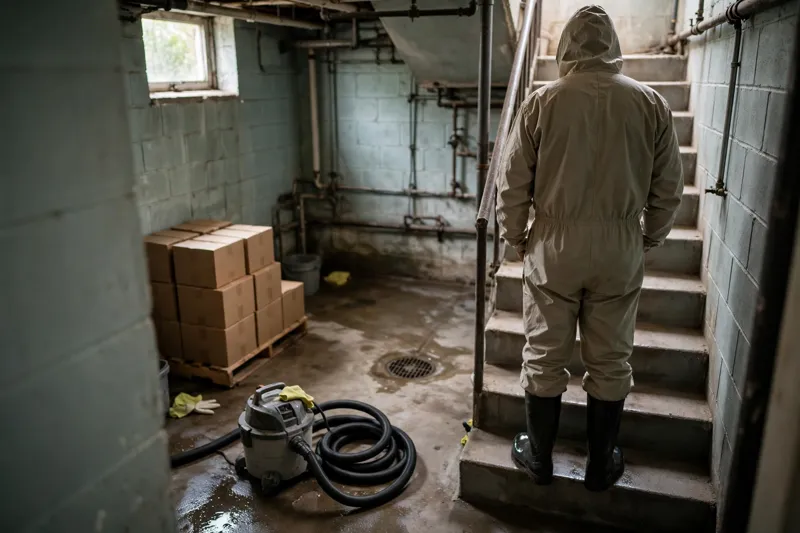
What to Do After a Sewage Backup Cleanup in Chicago?
Sewage backup cleanup is the job nobody wants and every Chicago basement owner should understand before the water comes up: stop the water, stay out of it, and work out whose pipe failed, yours or the city's, before a single mop touches the floor. This guide walks through the first hour, the cleanup itself, and the fix that stops the next one.
- The first hour, step by step, what to do and what never to do
- The city-or-plumber question, answered with the conditional rule
- Three real Chicago cases, with what each one actually proved
- Prevention that works, the backwater valve first
Written for Chicago homeowners, the combined sewer, the heavy rain, and the line between the city's pipe and yours.
- We answer 24/7
- Local Chicago team
- Insurance documentation help
- Straight answers, no pressure
Have a question? Call us any time
Tell us what is coming up through your drains and we will call you back. We answer 24/7.
The short answer: stop the water, stay out of it
Homeowners search sewage backup cleanup chicago after the first wet basement, and the answer is the same every time: the water came up through the lowest drain in the house, and the first question is not how to clean it, it is whose pipe failed. The longer search, sewage backup in basement cleanup chicago, is the same question with the basement spelled out.
The test that matters is the one you run in the first minutes: stop every tap, toilet, shower and appliance, keep everyone out of the room, and look at the pattern. One fixture backing up means a local clog. Several drains slow at once, or the lowest toilet filling when water runs upstairs, means the main drain or the lateral is blocked. Sewage coming up with no water running, and neighbours affected too, means the public main is blocked or surcharging, and that is the city's problem, reported through 311.
| What you see | What it usually means | What to do first |
|---|---|---|
| Water up through the floor drain | The lowest drain is where a backup shows first | Stop the water, stay out of it |
| Several drains slow at once | Main drain or lateral blockage | Call a plumber, then a restoration crew |
| Sewage up with no water running, neighbours affected | Public main blocked or surcharging | Call 311 first |
| One fixture backing up | Local clog in that fixture's line | Stop using that fixture, call a plumber |
| Toilet backing up after heavy rain | Combined sewer surcharging in the storm | Stop the water, call 311, document it |
Read the pattern before you call anyone, because the pattern decides who you call. A plumber clears your line. The city clears the main. A restoration crew cleans the room. Calling the wrong one first costs hours, and the hours are what the water uses to soak into everything it touches.
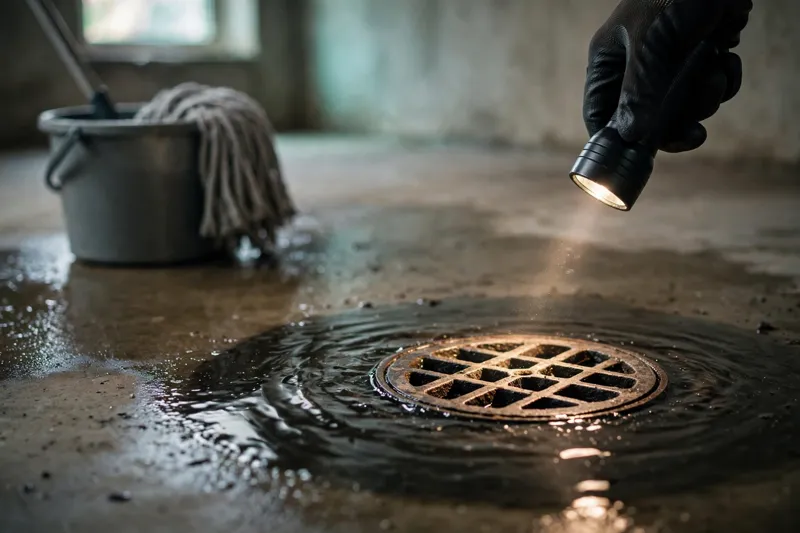
What this job actually is
This page treats sewage backup cleanup as one job with three parts: stop the source, get the water out, and make the room safe again. It is not a mop-and-bucket job, and it is not the same as drying a clean-water leak, the water is Category 3, the most contaminated kind, and everything it touches is handled differently because of that.
Category 3 water, also called black water, is grossly contaminated water that can carry bacteria, viruses and parasites. The sources are raw sewage, a toilet overflowing past the trap, a clogged sewer, a septic backup, or flood water that has mixed with sewage. Water that started clean can degrade to Category 3 after sitting for days, the search answers put the change at about two to three days, so a backup found late is treated the same as one found early: as the dirtiest kind.
Once it is Category 3, it stays Category 3, and the cleanup follows the Category 3 rules all the way through, protective gear, removal of soaked porous materials, disinfection, and drying to moisture readings. A small spill on a hard surface may be a job a homeowner can handle with the right gear; a flooded basement, carpet, drywall or widespread contamination needs a professional crew.
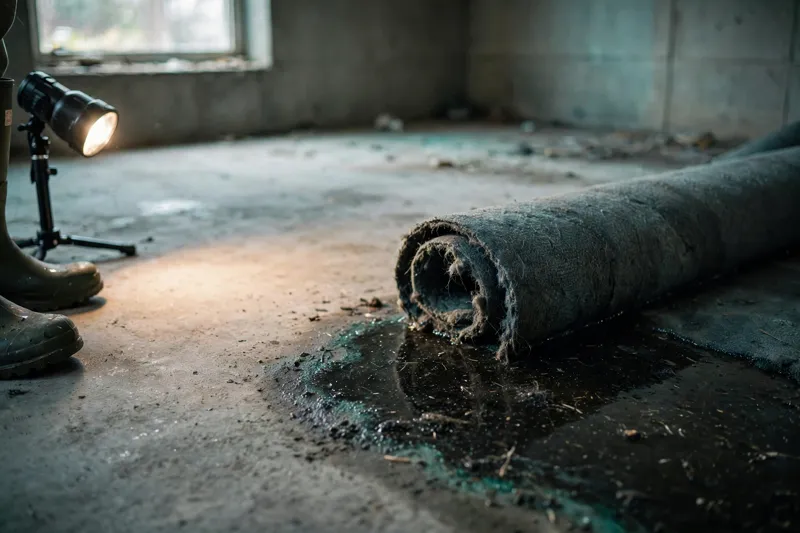
Is it dangerous, and how
One search answer cites a university study saying bacteria can persist for months after a backup, which is why the room is treated as contaminated until it is cleaned, disinfected and dry, not until it looks clean.
A backed-up sewer in your basement can make you sick, and the health risks are not only in the water. The power is the other danger: water near outlets, the panel, the furnace or the water heater can electrocute, and the search answers name electrocution as one of the greatest dangers in a flooded basement. Gas is the third: if you smell gas, turn off the main valve only if you can do it safely, open the windows, leave the house and call from outside. One guide warns about hydrogen sulfide building up in an enclosed basement, a claim from that guide, not a measured fact, and the advice is the same either way: open the windows and get out.
How long it takes to get sick has no fixed number of hours, because it depends on the germs, the amount of contact, and the person. The search answers say stomach illness can follow within days of contact, and they advise seeing a doctor if diarrhoea, vomiting or fever develops within days. Children, older adults and anyone with a weak immune system, asthma or lung disease should be kept right away from the water, and from the room until it is dry.
Is it safe to stay in the house while the sewage is still there? No. The room is a health hazard, the germs can travel through the air, and the furnace can move them through the whole house, one homeowner wrote that he left for a hotel room because his wife would not stay in the house after a backup in the utility closet, worried the furnace would blow bacteria everywhere. Stay out until the room is cleaned, disinfected and dry, and keep children and pets out too.
Safety first: what not to do
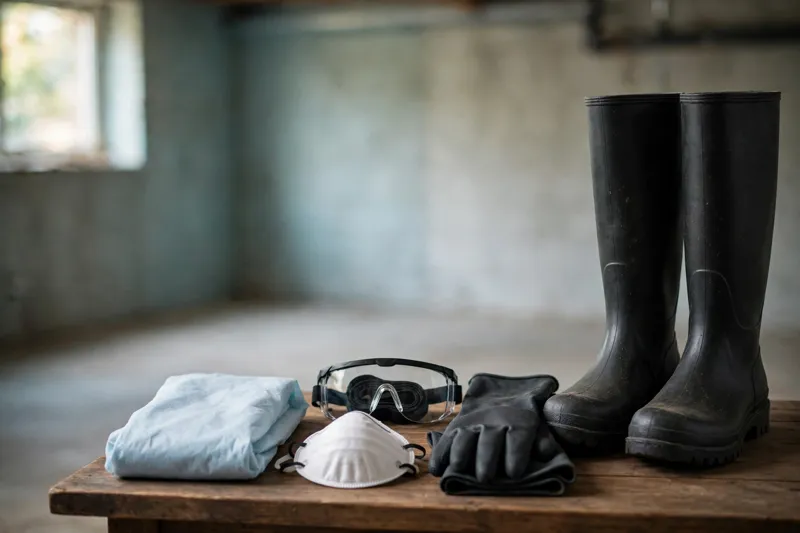
Searches for sewage backup cleanup safety all come back to the same list: stay out of the water, keep children and pets out, wear the gear, and never use a household vacuum on it. The gear is rubber boots, waterproof gloves, eye protection and a respirator rated N95 or P100, with any cuts covered. That is the minimum the public-health guidance gives, and a professional crew wears sealed coveralls on top of it.
The never list is longer than the to-do list, and it is where most of the damage is done. Never use a household or shop vacuum on sewage water unless the vacuum is rated for contaminated water, it spreads the contamination into the air. Never mix bleach with ammonia or any other cleaner; the mixture makes toxic gases. Never run fans, air movers or the furnace before the water is out; moving air moves the germs. Never try to save soaked carpet, padding, drywall or insulation. Never keep flushing to test whether it is fixed. Never wade in to reach the breaker. Never touch sewage with bare skin.
Turn the power off only if you can reach the panel without standing in water. If the panel is wet, or the water has reached the outlets, stay on the stairs and wait for a professional, the public-health guidance is blunt about it: never turn power on or off while standing in water. Open the windows for air, turn off the furnace and the water heater if the water has reached them, and shut the main water valve if a single fixture is the source.
The first hour: what to do first
Searches for sewage backup cleanup what to do first all ask the same question, and the search answers give the same first moves: stop all water, keep everyone out, stay safe around power, and call the right people, in the right order. What to do if your sewer backs up in your basement is not a cleaning question yet. It is a stopping question.
Stop the water first: no flushing, no sinks, no showers, no washing machine, no dishwasher. Every gallon that goes down a drain while the line is blocked is another gallon coming back up through the lowest drain in the house. Then keep people and pets out of the room, and do not touch the water with bare skin. Then the power: turn it off only if you can reach the panel without standing in water, if you cannot, wait for a professional.
Then the calls, in the order the conditional rule gives: 311 first when several homes are affected, the street is involved, or the backup came from the public main; a licensed plumber first when the problem is limited to your own home. A restoration crew at the same time if sewage is already inside, the water does not wait for the line to be cleared. And the insurer the same day, with the photos taken before anything is moved.
What to do with a sewer backup is the same first hour, whatever the cause: stop the water, stay out of it, photograph it, and call. The cleaning starts after the source is stopped and the water is out, not before. A backup that is still flowing is an emergency, and the only job in the first hour is to stop it flowing and keep everyone safe.
Cleaning up the basement: what comes out, what stays
Every sewage backup cleanup in basement guide says the same thing about porous materials: they come out. Carpet and padding, drywall below the water line and the wicking height above it, wet insulation, mattresses, upholstered furniture, pillows, particle board, cardboard, books, and any food, medicine or cosmetics that touched the water, none of it can be disinfected, and all of it is bagged and disposed of under the local health rules.
What stays is what can be washed and disinfected: sealed tile, concrete, metal, glass, and sealed wood. Clothing and washable fabrics are often salvageable with a hot detergent wash. The best way to clean up a sewage backup in a basement is the order: water out first, then the porous materials out, then wash the hard surfaces, then disinfect, then dry. Disinfecting before the water is out and the porous materials are gone is wasted effort, the germs are still sitting in what you have not removed.
The insurer needs the photos and the samples to exist before the cleanup starts, not after the room is already clean. The room is not finished when it looks clean, it is finished when the moisture readings say it is dry.
The process, in order
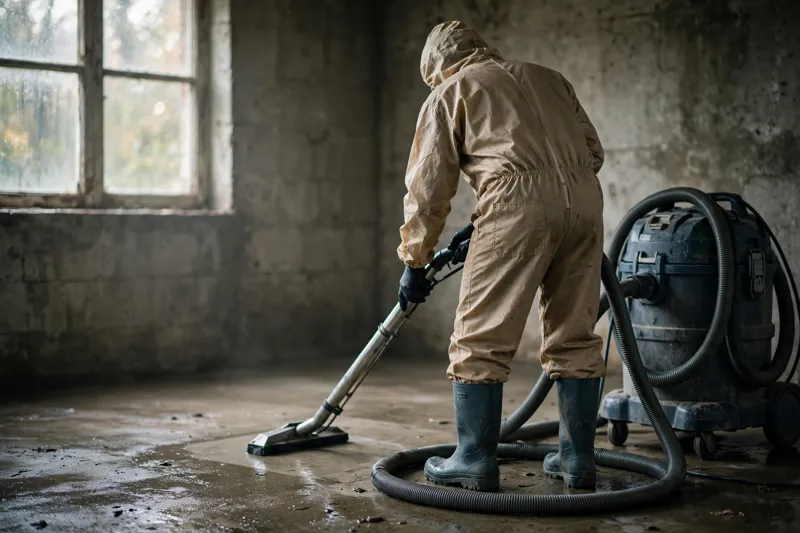
The sewage backup cleanup process runs in order, and the order is the point: safety and containment first, then the source, then extraction, then removal, then disinfection, then drying, then the rebuild, and the rebuild is a separate scope from the cleanup, often billed separately. Skipping a step does not save time; it leaves contamination behind.
It starts with the safety check and containment: plastic barriers and filtered air machines to keep the contamination in the room, and protective gear for everyone who goes in. Then the source: a plumber clears the line, or the city clears the main, and the water stops coming in. Then extraction, with pumps and extractors, and the solids scooped, bagged and disposed of under the local health rules. Then removal of the porous materials, cut out and bagged. Then cleaning and disinfection, detergent first, then disinfectant, left wet for the dwell time on the label. Then drying, with dehumidifiers and air movers, to a drying goal measured with moisture readings, not guessed by looking at the floor.
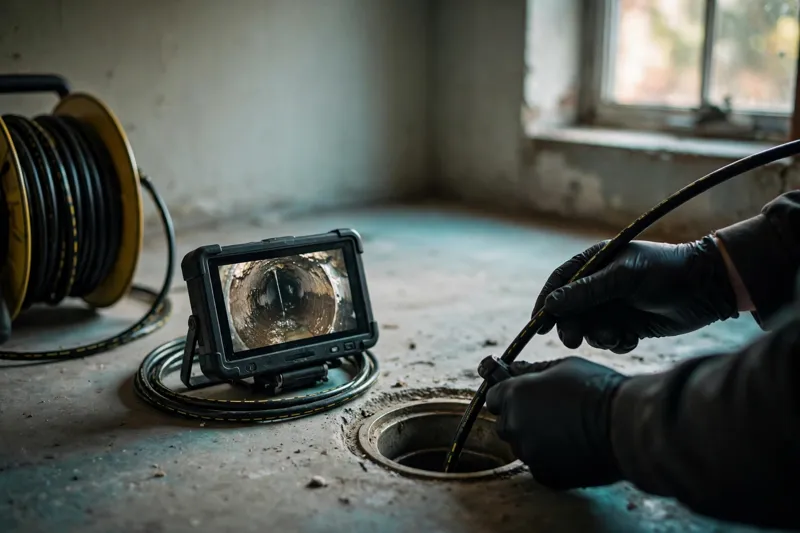
Can the sewer cleanout be in the basement? Yes, many Chicago homes have the cleanout in the basement, and knowing where it is before the backup is what lets the plumber clear the line fast. The cleanout is the access point to your lateral, the pipe from your house to the public main, and the plumber uses it to rod the line or run a camera through it. Find yours before the next storm, not during it.
Disinfection: what to clean floors with
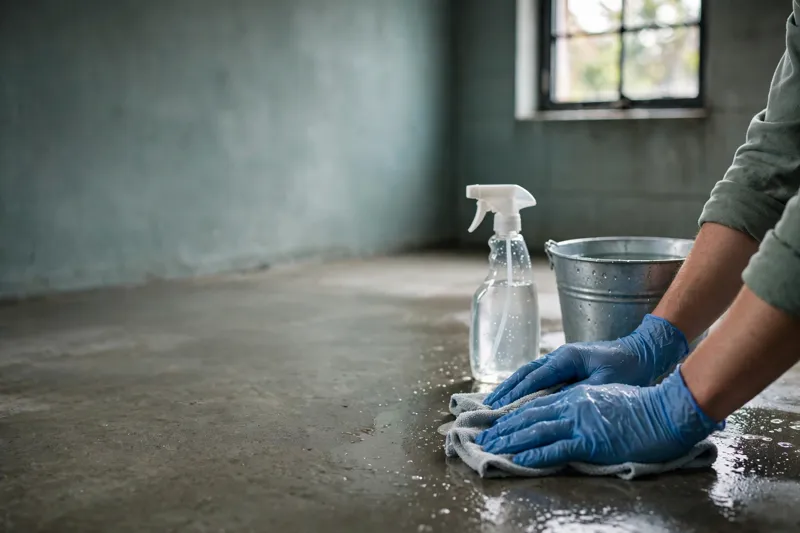
The sewage backup cleanup and disinfection step is where most homeowners go wrong, because they disinfect before they clean, and disinfection does not work on a dirty surface. Wash the hard surfaces first with hot water and a low-suds detergent, rinse, and then disinfect with an EPA-registered product, leaving it wet on the surface for the dwell time on the label. The product only works if it stays wet long enough.
What to clean floors with after a sewer backup depends on the floor. Sealed tile, concrete, linoleum and sealed wood can be washed and disinfected. Unsealed wood, carpet and padding cannot, they come out. What to use to clean up sewage in your basement is hot water, heavy-duty detergent, a disinfectant, and a pump or a vacuum rated for sewage, not a household vacuum, not a mop that spreads the water further, and not a fan before the water is out.
Household bleach mixed with water is the other option the public-health guidance cites, but the sources disagree on the ratio, one cup per gallon in most of the search answers, three-quarters to one cup in another, a quarter to one cup in a third, and a quarter to three-quarters of a cup or a one-to-ten mix in a fourth. This page gives no settled ratio, because there is none: follow the label on the product you use, and never mix bleach with ammonia or any other cleaner.
After heavy rain: why the whole street backs up
Searches for sewage backup cleanup after heavy rain chicago spike after every big storm, and the reason is the combined sewer: one pipe for sewage and stormwater, and in a hard storm the pipe fills and the water has nowhere to go. The main surcharges, and the water comes back up through the lowest drains in the houses on the street, which is why a backup after heavy rain is so often a street problem, not a house problem.
Why is my sewer backed up after heavy rain? Because the public main is full, and the water is looking for the lowest opening, your floor drain, your lowest toilet, your shower. Why is my toilet backing up after heavy rain? The same reason: the toilet is the lowest fixture in many Chicago basements, and it is where the surcharge shows first. When the backup follows a storm and the neighbours have it too, call 311 first, the city main is the source, and the report creates an official record.
How long does it take for septic to drain after heavy rain? A septic system drains when the ground around the drain field dries out, which takes days after a hard storm, and a septic backup is a different job from a city sewer backup, though the cleanup steps are nearly the same.
One suburb example, labelled as a suburb: the search answers note that Cicero runs grant and valve programmes for its residents. That is Cicero's programme, not Chicago's, Chicago's programme is the Private Drain Program, covered in the next section, and it is for a broken drain tile under the public way, not for the cleanup inside the house.
Whose pipe is it, the city or yours?
Searches for sewage backup cleanup chicago il all ask the same question in different words: whose pipe is it, the city or yours? The question who cleans up sewage backup chicago has a short answer: the plumber clears the line, the restoration crew cleans the room, and the city clears the main. The longer answer is the ownership line, and it decides who pays.
You own the lateral, the pipe from your house to the public main. The city owns the main under the street. One fixture backing up means a local clog in your line. The floor drain or the lowest toilet backing up when water runs upstairs means a blockage in the main drain or the lateral. Sewage coming up with no water running, and the neighbours affected too, means the public main is blocked or surcharging, and that is the city's problem.
Who pays follows the same line. Your lateral is yours: you hire the plumber, and you pay, unless the endorsement covers it. The public main is the city's: the city clears it, and payment depends on whether the city is liable, file a claim quickly if you think it is, or on your endorsement. In a rented home, the landlord handles the pipe; the tenant's belongings are covered only with the renter's own endorsement.
The Private Drain Program is the City's programme for a broken sewer drain tile under the public way, for homes of up to four units: the owner first hires a licensed sewer contractor to rod and video-inspect the line, and if the break is in the public way the City repairs it at no cost. Start through 311, staffed twenty-four hours a day, seven days a week; the number in the CHI311 site footer is (312) 744-5000. The programme does not pay for the cleanup inside the house, and it does not cover a backup caused by your own line.
One suburb example, labelled as a suburb: La Grange, in Cook County, runs a sewer backup prevention grant, half the cost of a backflow valve or an overhead sewer, up to three thousand dollars for a valve and five thousand for an overhead sewer, capped at five thousand in total, with applications paused at the time of writing. That is La Grange's programme, not Chicago's.
Chicago: three things that make it worse
The basement sewage backup cleanup chicago searches are full of the same names on every page, and the same three Chicago reasons behind them. None is recommended here; they are named because they rank, and a homeowner who searches these terms will meet them first.
First, the combined sewer: one pipe for sewage and stormwater, and in a hard storm the pipe fills and the water has nowhere to go, so a backup here floods faster than in a city with separate sewers. Second, the old clay lateral lines and the basement-heavy housing: most Chicago homes have a basement below the water table in wet weather, and the laterals are old enough to crack, sag and let roots in.
What actually happened in Chicago: three cases
Three verified named Chicago cases exist for this topic, one with a full street address, two with a neighbourhood and a block. No verified case names a cleanup contractor, and this page invents none. What the three have in common is the question at the centre of this page: whose pipe was it?
The first is a court case. Daryl and Cheryl Wash, of 10960 South Prospect Avenue in Chicago, found their basement damaged when the sewer backed up after a heavy rainstorm on the fourth of September, 2008. They said the City's contractor, Benchmark Construction, hired that summer to replace the water main under their street, had fractured their private drain line. The Appellate Court held that summary judgment for Benchmark was proper, the homeowners had failed to establish a causal connection between the water-main work and the flooding.
The case is a Rule 23 order, which means it may not be cited as precedent except in the limited circumstances the rule allows. It is a cautionary example about proving causation, not a story about a paid claim, and no cleanup company was named in it.
The second is a Bronzeville brownstone. Jenny Strickland's garden unit had raw sewage seeping in for months, toilet paper, sanitary products, and she hired a plumber, replaced pipes with underground digging, at about sixty-five hundred dollars as the broadcast reported. The fault was then found to be on the city side. The Private Drain Program reimburses up to twenty thousand dollars, but the homeowner must first pay a plumber to determine that the backup is city-side, and the city must witness the work, she had already fixed it, so she was ineligible. CBS Chicago reported it on the twenty-eighth of July, 2021.
The third is a South Side home on the 107 block of South Emerald. Chrislin Flanagan bought the house in 2019, and the basement has flooded four times since 2021, in 2021, 2022, 2023 and again, with water and even sewage, and over twenty-six thousand dollars in plumbers and losses as the broadcast reported. The 2021 flood was a blocked drain from the house to the sewer, the 2022 flood a break on the street side, the 2023 flood a blockage inside the home. Two sewers serve the house, the basement has no direct way out to the street, and the city was to dig about ten feet from the curb. FOX 32 Chicago reported it, and the Private Drain Program is the programme in question again.
What homeowners are asking fills in the rest. A Chicago renter in November 2022 found black sewage backing up into the tub, the landlord unresponsive, the office telling her to keep plunging in raw sewage.
A tenant in an illegal basement unit in July 2023 had about an inch and a half of standing sewage water after a storm, a backflow valve that had failed, and a landlord who thought cleaning the vinyl floor was enough. These are homeowner reports, not settled facts, but they are what the next backup looks like from inside the house.
The sweep also found what does not count as a case. A CBS report on Chicago Lawn's repeated basement backflow names Ishmael Rivera and a 311 complaint, but it is storm backflow, sewage is not named, and there is no street address. A CBS report on Northwest Side flooding after six inches of rain is storm flooding, not sewage. A CBS dye test found sewage flushing directly into the Chicago River from a Ravenswood Manor business, with no street address. A plumber's short video shows a basement floor drain full of roots, with no homeowner, address or date. Each one is real, and each one fails the test this page applies.
Insurance: the endorsement question
A standard homeowners policy generally does not cover a sewer backup. Cover needs a water or sewer backup endorsement added to the policy, with its own limit and its own deductible, and the price and the limit vary by insurer and by policy, so no single figure applies. Check your declarations page for the words water backup, sewer backup or sump discharge, and ask your insurer what your policy actually covers before the next storm, not after the basement floods.
The same rule answers the wider questions. A burst pipe is usually covered, because the burst was sudden, but the insurer pays for the water damage, not for the pipe itself. Water from outside is flooding, and it needs the separate flood policy; a flood policy covers a sewer that backed up during a heavy rainstorm, not a backup caused by a clogged pipe, and it does not cover personal property kept in basements, a claim from the flood-insurance guidance, not a promise. Mold is covered only when it follows a sudden, accidental loss the policy already covers, and mold cover has its own sub-limit.
What a sewage job costs depends on how much water there was, how far it spread, what it touched, whether the line needs repair, and whether it is an emergency callout. A small spill on a hard floor is one job; a finished basement with drywall, insulation and flooring is another. This site prints no prices, so no figure here can mislead you, the scope is written first, and the price follows the scope. Our does homeowners insurance cover water damage post covers the rule in full.
Prevention: the backwater valve first
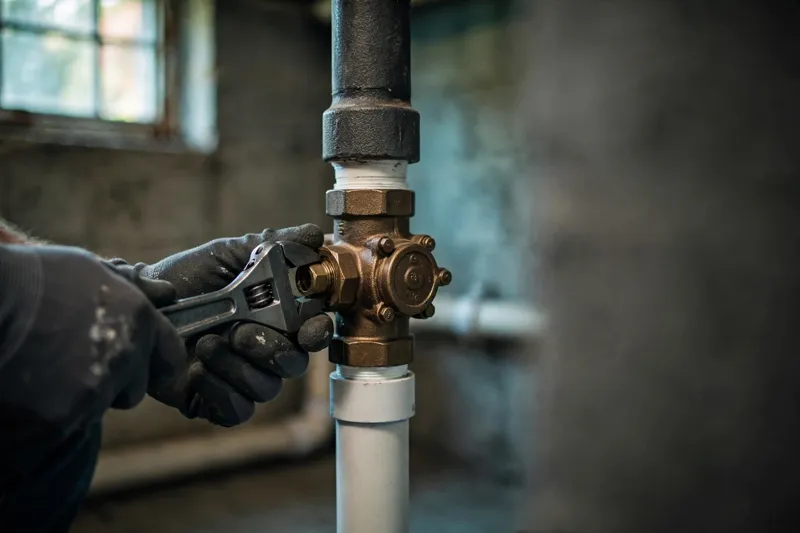
An overhead sewer conversion does the same job more thoroughly, by raising the plumbing above the street sewer level, the bigger fix, and the one the La Grange grant helps with, in La Grange. A home that has lived through one sewage backup cleanup already knows what the next storm can do, the valve, the pump and the endorsement are what decide whether the next one is a story or a second cleanup.
The rest is maintenance and habit. Keep the sump pump working, with a battery backup, and test it every three months. Do not flush wipes, diapers, paper towels or feminine products, and do not pour grease down drains. Have the sewer line camera-inspected every few years, every ten to fifteen years for a municipal lateral, more often where mature trees stand over the line. Disconnect downspouts and the sump from the sanitary sewer where the rules require it, keep gutters and downspouts draining away from the foundation, and add the endorsement to the policy before the next storm, because it cannot be added after a backup to cover that claim.
Seven steps, in order
Homeowners ask how to clean up sewage backup in basement without taking the room apart, and the answer is the seven steps below, in order, and only after the water has stopped coming in. Do them once, then keep the list by the stairs for the next storm.
Stop the water and keep everyone out.
Stop using every tap, toilet, shower and appliance in the house, and keep children, pets and older adults out of the room. Do not touch the water with bare skin, and do not let anyone walk through it to reach something on the other side.
Stay safe around power and gas.
Do not step into water that is near outlets, the panel, the furnace or the water heater. Turn off the power only if you can reach the panel without standing in water, if you cannot, wait for a professional. If you smell gas, open the windows, leave the house and call from outside.
Call the city or a plumber, in the right order.
Call 311 first when several homes are affected, the street is involved, or the backup came from the public sewer main. Call a licensed plumber first when the problem is limited to your own home, such as one fixture or your private sewer line. If sewage is already inside, call a restoration crew at the same time.
Photograph everything before you touch it.
Take wide photos of the room, close photos of the water line on the walls, the drain it came from, and every damaged item, before you move anything, clean anything or throw anything out. The insurer needs the photos, and they need to exist before the cleanup starts.
Get the sewage water out.
A pump or a vacuum rated for sewage moves the standing water out, and the solids are scooped, bagged and disposed of under the local health rules, never pushed down a floor drain, and never pumped into a street storm drain. A household vacuum is the wrong tool for this water.
Remove what cannot be cleaned, then disinfect.
Soaked porous materials, carpet and padding, drywall, insulation, upholstered furniture, mattresses, cardboard and books, come out, because they cannot be disinfected. Hard surfaces are washed with hot water and detergent, then disinfected and left wet for the dwell time on the label.
Dry it, check it, and fix the cause.
Air movers and dehumidifiers run until daily moisture readings say the room is dry, and the line is camera-inspected to find what caused the backup. A backwater valve, a cleared lateral or a repaired pipe is what stops the next one, the drying alone does not.
Your checklist, before the next storm
Write the steps down and keep the list by the stairs: stop the water, stay out of it, call 311 or a plumber by the conditional rule, photograph everything, get the water out, throw out what cannot be cleaned, disinfect, dry to readings, and fix the cause. Before the next storm, find the cleanout, check the backwater valve, test the sump pump and the battery, and keep our number, (773) 570-9869, on the fridge. During the storm, watch the lowest drain. After the storm, check the basement before the water has time to sit, and call the same day if it is wet.
Call now, sewage in the basement
If sewage is coming up through a drain in your basement, the answer is a call today, not a mop tomorrow. The call to make is (773) 570-9869. We answer 24/7 and talk you through the first hour while a crew is on the way.
Sewage in your basement in Chicago?
We answer 24/7. Call now and a crew is on the way.
Call (773) 570-9869Frequently asked questions
What is sewage backup cleanup?
It is the professional removal, cleaning and drying of wastewater that has come up through drains, toilets or a sewer line into a home. The water is Category 3, the most contaminated kind, so the job means extraction, throwing out soaked porous materials, disinfecting hard surfaces, and drying the room to moisture readings before anything is rebuilt.
Does homeowners insurance cover water damage restoration, or only part of it?
It covers only part of it. The policy pays for the drying and the repair when the cause was sudden and accidental, up to the limits you bought, minus your deductible. It does not pay for the pipe or appliance that failed, and it does not pay for flooding from outside. A sewer backup needs the endorsement.
How long does water damage restoration take?
Drying takes three to five days on a small, contained clean-water loss in one room, and the full job, drying plus repairs, usually takes one to four weeks. The time depends on how much water there is, what kind of water it is, what got wet, and whether the insurer has approved the work.
What is water damage restoration called?
The full job, stopping the water, drying the structure, cleaning, and rebuilding, is called water damage restoration. The emergency half, stopping the water and drying, is also called mitigation. Removing mold growth is a separate job, called remediation, and it follows the drying, never the other way around.
Does insurance cover water damage restoration?
It usually does when the damage was sudden and accidental, such as a burst pipe or an appliance failure. It does not cover flooding from outside, which needs separate flood insurance. A sewer backup is usually covered only if you hold the endorsement for it, so ask your insurer before the next storm.
What is the water damage restoration process?
The process runs in order: inspection first, to find the source and measure how far the water spread; then extraction, with pumps and vacuums; then drying, with air movers and dehumidifiers; then cleaning and sanitizing; then the repairs that put the room back. Act fast, the search results say mold can start within a day or two.
Does homeowners insurance cover mold?
It covers mold only when the mold follows a sudden, accidental loss the policy already covers, such as a burst pipe. Mold from a slow leak, from flooding outside, or from a damp basement the owner never fixed is usually not covered. Mold cover also has its own sub-limit, so read the policy before you need it.
What should I do when I find mold?
Fix the moisture source first, or the mold comes back. Wear a respirator rated N95, gloves and goggles, and clean only a small patch yourself, the guidance the search engines cite is ten square feet or less. Anything bigger, or mold that keeps coming back, needs a professional crew with the right equipment.
How much does homeowners insurance pay for water damage?
No page can give you a number, because the payment depends on your policy, your deductible, the cause of the loss, and the limits you bought. The insurer pays the drying and the repair, less your deductible, and it does not pay for the pipe that failed. Ask your insurer what your limits are before the next storm.
Does renters insurance cover water damage?
It covers the renter's belongings when the damage was sudden and accidental, such as a burst pipe or water from an upstairs neighbour's plumbing. It does not cover flooding from outside, which needs separate flood insurance, and it does not cover the building itself, the walls, floors and pipes are the landlord's. A sewer backup needs the endorsement.
How much does mold testing cost?
This site prints no prices, so no figure here can mislead you. The cost depends on how many samples are taken, whether the testing is air or surface, whether a lab is involved, and how big the affected area is. We inspect first, then give you a written scope before any work starts.
Does homeowners insurance cover a burst pipe?
Yes, when the pipe burst suddenly, a freeze split, a joint that failed without warning, a line that gave way all at once. The insurer pays for the water damage the burst caused, not for the pipe itself. A slow leak that ran for months is a different story, and it may be classed as wear and tear.
How much does trenchless sewer repair cost?
This site prints no prices for either job, because trenchless repair and a burst pipe are two different things. Trenchless repair replaces a broken sewer line by pulling a new pipe through the old one. A burst pipe is a supply pipe that split open, usually from freezing, and the fix is a repair, not a replacement.
How much does water damage restoration cost?
This site prints no prices, so no figure here can mislead you. The cost depends on how much water there was, how far it spread, what kind of water it was, and what it touched. A bare concrete floor dries fast. A finished basement with drywall, insulation and flooring costs far more to put back.
What does it mean for water damage to be fully remediated?
It means the water source is fixed, the standing water is gone, the wet materials are dried to moisture readings, the room is cleaned and sanitised, and the repairs are finished. No home is ever one hundred percent free of mold spores, but a remediated home is dry, clean and safe to live in again.
Is sewage backup dangerous?
Yes, very. Sewage is Category 3 water, the most contaminated kind, carrying bacteria, viruses and parasites that cause stomach illness, skin and eye infections, and breathing problems. The search answers also warn about the power: water near outlets and panels can electrocute, so never step into it until the power is off.
Who do I call first, the city or a plumber?
It depends on where the blockage sits. Call the city first, 311 in Chicago, when several homes are affected, the street is involved, or the backup came from the public sewer main. Call a licensed plumber first when the problem is limited to your own home, such as one fixture or your private sewer line.
Does homeowners insurance cover sewage backup?
Usually not. A standard policy excludes sewer backup, and cover needs a water or sewer backup endorsement added to the policy, with its own limit and its own deductible. The endorsement price and limit vary by insurer and by policy, so no single figure applies. Check your declarations page for the words water backup, sewer backup or sump discharge.
How do I prevent sewage backup in my basement?
Fit a backwater valve, every engine that answered this page called it the single most effective step. Keep a sump pump with a battery backup, do not flush wipes or pour grease down drains, and have the sewer line camera-inspected every few years. The valve stops the city's water coming back up your line when the main surcharges.
What is Category 3 water?
It is the most contaminated kind of water, also called black water: raw sewage, toilet overflow past the trap, a clogged sewer, a septic backup, or flood water that has mixed with sewage. It carries bacteria, viruses and parasites, and it needs a professional crew in protective gear, soaked porous materials are thrown out, never cleaned and kept.
How do you clean up after a sewage backup?
Stop the water, keep everyone out, and photograph everything before you touch it. Get the standing water out with a pump or a vacuum rated for sewage, throw out soaked porous materials, wash hard surfaces with hot water and detergent, disinfect them, and dry the room with air movers and a dehumidifier until the readings say dry.
Will plumbers clean up sewage?
A plumber clears the blockage and finds the cause, roots, grease, a broken pipe, or the city main, but the plumber usually does not do the full cleanup. The cleanup itself, extraction, removal, disinfection and drying, is a restoration company's job. Call the plumber first for the line, then the restoration crew for the room.
Where does Chicago dump its sewage?
Chicago does not dump its sewage in one place. The city runs a combined sewer system, so sewage and stormwater share the same pipes, and the water goes to treatment plants run by the Metropolitan Water Reclamation District. In a hard storm the system can overflow, and that overflow is what backs up into basements.
What is a sewer line backup?
It is wastewater coming back up through a drain, a toilet or a floor drain, instead of flowing away to the sewer main. Causes are a blockage in your own line, tree roots, grease, a broken or collapsed pipe, or the city main surcharging in a hard storm. The lowest drain in the house is where it shows up first.
How long does it take to get sick from sewage backup?
There is no fixed number of hours, because it depends on the germs, the amount of contact, and the person. The search answers say stomach illness can follow within days of contact, and they advise seeing a doctor if diarrhoea, vomiting or fever develops within days. Keep children, older adults and anyone with a weak immune system away.
Is it safe to stay in a house with sewage backup?
No, not while the sewage is still there. The water is Category 3, so the room is a health hazard, and the germs can travel through the air. Stay out until the room is cleaned, disinfected and dry, and keep children and pets out too.
What is the best disinfectant to use after a sewage backup?
Use an EPA-registered disinfectant, and follow its dwell time, the product only works if it stays wet on the surface long enough. Household bleach mixed with water is the other option the public-health guidance cites, but the sources disagree on the ratio, so follow the label on the product you use and never mix bleach with ammonia.
Is the city responsible for sewer backup?
It depends on where the blockage sits. The city owns the public sewer main under the street, so the city is responsible when the main is blocked or surcharging, report it through 311, which creates an official record. Your own lateral, the pipe from your house to the main, is yours, and so is the cost of clearing it.
Sources
- HelpByExperts, sewer backup in the basement, October 26, 2026, updated November 12, 2026, city sewer department first, then plumber, then insurer; who-owns-what table; CDC bleach guidance. https://www.helpbyexperts.com/blog/sewer-backup-in-basement-what-to-do
- DisasterServices, sewage hub and basement article, October 19, 2026, seven-step professional cleanup; flood-insurance note; seventeen sources listed. https://disasterservices.com/sewage/sewage-backup-in-basement/
- Vortex Restoration, first-hour sewage guide, October 27, 2026, Camarillo CA, seven professional steps; never list. https://vortexrestoration.net/sewage-backup-cleanup-what-to-do/
- Illinois Department of Public Health, Cleaning Up After Flood and Sewer Overflows.
- Genoa Township, Cleaning Up the Mess After the Floor or Sewage Back-Up.
- Vermont Department of Environmental Conservation, homeowner guidance on cleaning up after residential sewer backups.
- Boston Water and Sewer Commission, Cleanup Procedures After a Sewer Backup.
- NYC311, Sewage or Flood Clean-Up.
- Wash v. Benchmark Construction Co. Inc. 2014 IL App (1st) 132771-U, Illinois Appellate Court, First District, August 8, 2014, illinoiscourts.gov PDF, pages 1-2 read.
- CBS Chicago, Jermont Terry, July 28, 2021, Bronzeville brownstone garden unit. https://www.youtube.com/watch?v=ZITppxSdU9c
- FOX 32 Chicago, South Side home, 107 block of South Emerald. https://www.youtube.com/watch?v=QdKhIIuGJis
- CBS Chicago, Chicago alders want action on basement backflow (Ishmael Rivera, Chicago Lawn). https://www.youtube.com/watch?v=Exl4lrN6D_k
- CBS Chicago, Clean up Monday for Chicago's Northwest Side residents after flooding. https://www.youtube.com/watch?v=oZm_Rv4AnI8
- CBS Chicago, Sewage Flushes Directly Into Chicago River (Ravenswood Manor). https://www.youtube.com/watch?v=ZeXmEzelNuY
- RescuePlumbing, Clearing a Nasty Chicago Basement Sewer Backup (Short). https://www.youtube.com/shorts/vpjS-yeu3Vc
- City of Chicago, Department of Water Management home, What We Do, Our Structure and Leadership pages, chicago.gov, November 17, 2026.
- City of Chicago, 311 Call Center Operations page, chicago.gov, staffing twenty-four hours a day, seven days a week.
- CHI 311, "Private drains program overview", December 12, 2018, 311.chicago.gov. https://311.chicago.gov/s/article/Private-drains-program-overview
More on water damage in Chicago
The service pages and guides behind this diagnostic post, the work itself, after the water gets in.
More Restoration Services in Chicago
Every service below is one tap away. Pick the one that matches your problem.

Water Damage Restoration
Fast water extraction, structural drying, and full repair after burst pipes, leaks, and floods.
Learn more →
Water Mitigation
Emergency water removal, structural drying, and mold prevention to stop the damage fast, 24/7.
Learn more →
Mold Remediation
Safe, contained mold remediation that removes contamination and fixes the moisture source.
Learn more →
Sewage Cleanup
Safe removal and disinfection of dangerous sewage backups and black water.
Learn more →
Flood Cleanup
Water pumped out, structure dried, and debris cleared fast after storms and flooding.
Learn more →
Hardwood Floors Water Damage
Cupped, buckled or stained hardwood after a leak? How we dry it, when sanding saves it, and when the boards have to go.
Learn more →