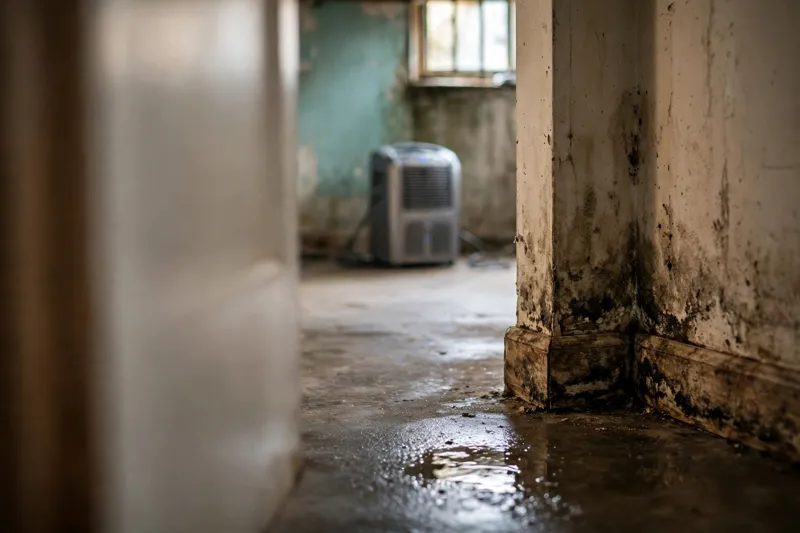
Mold After Water Damage in Chicago
A leak is a warning. Mold is what happens when the warning is ignored. The work that keeps one from becoming the other is short, and it starts the hour the water lands, dry it fast, pull out what stayed wet, and watch the hidden spots. That is the whole job this page explains: what mold does after a leak or a flood in a Chicago home, how fast it moves, and what to do in the first two days.
- The first 48 hours, what happens, hour by hour
- The signs to look for, and the places mold hides
- What to do yourself, and when to call a professional
- Why no named Chicago homeowner case exists yet
Written for Chicago homeowners, the bungalows, the two-flats, and the finished basements.
- We answer 24/7
- Local Chicago team
- Insurance documentation help
- Straight answers, no pressure
Tell us what is happening with the mold and we will call you back. We answer 24/7.
The short answer: the clock starts the moment the water lands
Homeowners search mold after water damage chicago the morning after a leak, usually when the basement carpet is still wet and the air already smells musty. The answer is short: the water has to come out and the room has to dry within a day or two, because the mold that follows a leak starts growing in that window. The longer question, how to stop it, is the same job with the clock running, and the rest of this page covers it step by step.
Three facts frame the whole page, and all three are claims from the search results, never settled facts. Mold can begin to grow within twenty-four to forty-eight hours after water gets into drywall, wood or carpet. What you can see takes longer, some engines say visible colonies in two to three days, others say three to twelve days, and the colonies mature over one to three weeks. The page gives the range because the sources disagree, and no single number is the safe one.
| What you see | What it usually means | What to do first |
|---|---|---|
| A musty smell that stays after the room dries | Mold is growing somewhere you cannot see | Find the source, then open the wall or floor |
| Dark or greenish patches on drywall | Visible colonies on a wet surface | Do not paint over it, clean it or cut it out |
| Stains that keep growing | Water is still getting in | Fix the leak first, or the mold comes back |
| Warped flooring or bubbling paint | Water sat under the surface | Pull up the flooring and dry the subfloor |
| Mushrooms through a wall | A long, hidden leak | Call a professional, the damage is behind the wall |
The wider question, how to keep mold from starting after a leak, has the same answer in Chicago as anywhere damp: stop the source, get the water out, dry the room hard, pull out what stayed wet, and watch the hidden spots for a week. The Chicago twists are where the water comes from, the flooded basements, the hidden pipe and wall leaks, the ice dams and roof leaks, the high indoor humidity off the lake, and the sections below take each one in turn.
Read the pattern before you act, because the pattern decides the move. A musty smell means mold is growing somewhere hidden, and the job is to find the water first. Dark patches mean the colonies are already visible, and the job is to clean or cut them out. Water on the floor means the leak is still running, and the only job left is to stop it at the source. The seven steps below are for the first two days; the prevention habits are for after the room is dry.
Not all water grows mold at the same speed, and the category of the water decides how careful the cleanup has to be. Clean water comes from a supply pipe or a rain leak, it grows mold, but it is the safest water to work in. Grey water comes from a dishwasher, a washing machine or a shower drain, it carries soap and dirt, and the mold that follows it needs gloves and a respirator. Black water comes from a sewer backup or a flood, it carries waste, and the cleanup is a professional job from the start. The category does not change the drying rule, but it changes who does the work and what gear they wear.
What mold is, and why water wakes it up
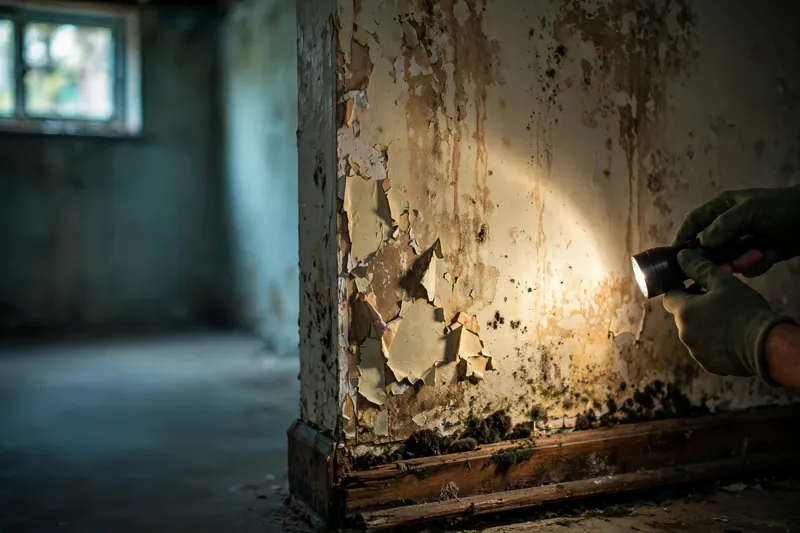
Mold is fungi, and it is already in every Chicago home, the spores float in the air all the time, waiting for water. What wakes them up is moisture on something organic: drywall, wood, carpet, insulation, paper. Give the spores water, warmth and food, and they grow. Take the water away within a day or two, and most of them never get started. That is the whole story, and every step on this page is a version of it.
The common types the search answers name are Aspergillus, Penicillium, Cladosporium and Stachybotrys chartarum, the last one is the dark greenish-black mold people call black mold. They grow in the same places: wall cavities, behind drywall, under flooring, inside ceiling assemblies, and anywhere water sat long enough to soak through. The type matters less than the moisture, stop the water and dry the room, and the type stops mattering too.
Is mold toxic? The search answers say mold is not one thing, and the answer depends on the type, the amount and the person. Some molds make substances that irritate lungs and trigger allergies; others are mostly a smell and a stain. How likely is mold to follow a leak? It depends on how fast the room dries, dry it within a day or two and most clean-water losses never grow mold at all, and leave it wet and mold is close to certain.
Does every leak end in mold? No. The water decides it, and the clock decides it with the water. A small spill wiped up in an hour grows nothing. A leak that soaks drywall and sits for a week grows mold in most rooms, because the material stays wet long enough for the spores to attach and feed. The question is never whether the spores are there, they are, but whether the water stayed long enough for them to grow.
Warmth, humidity above sixty percent, and porous material speed the growth up, and a Chicago basement in summer has all three. A cold room grows mold more slowly, but it still grows it, because the moisture is the real driver. A dry room stops the growth even when it is warm, which is why the drying matters more than the temperature.
The timeline: hour by hour, day by day
Homeowners ask how fast does mold grow after water damage, and the honest answer is two answers at once: the growth starts fast, and what you can see starts slow. They disagree on the second half, some say visible colonies in two to three days, others say three to twelve days. The page prints both, because the sources disagree and no single number is the safe one.
The mold growth after water damage timeline runs in four stages. Hour zero to one day, the spores settle and attach to the wet surface. Day one to two, active growth begins, this is the window the drying has to beat. Day two to three, visible colonies appear on the surface, though some engines put that at three to twelve days. One to three weeks, the colonies mature, darken, and start releasing spores of their own. The clock depends on warmth, on humidity above sixty percent, and on porous material, drywall and wood move fastest.
How long after water damage does mold grow depends on the same three things, and the range is wide enough to matter. A warm, humid room with soaked drywall can show growth in two days. A cool, dry room with a small spill may never show any. A basement that flooded in summer and was left wet for a week is the worst case in the city, because the water, the warmth and the humidity all arrive together. The first two days are the window that matters most, and the drying has to start inside them.
The window is the best target anyone has, and missing it does not mean the room is lost, it means the inspection has to be more careful, and the hidden spots have to be opened up and checked.
Black mold follows the same timeline, only slower to show and harder to miss once it does. It needs a lot of water and a long time, so it rarely appears before the second week, but when it appears, it appears as a dark patch on drywall that stayed wet, and the patch grows fast once it starts. A dark patch that was not there last week and is there this week is the sign to call a professional, not the sign to paint over it.
The timeline is not a deadline that punishes you; it is a map of what you still get to keep. Act inside the first two days and you keep most of the room. Act a week later and the room is rebuilt, not dried.
The basement: the first room to check
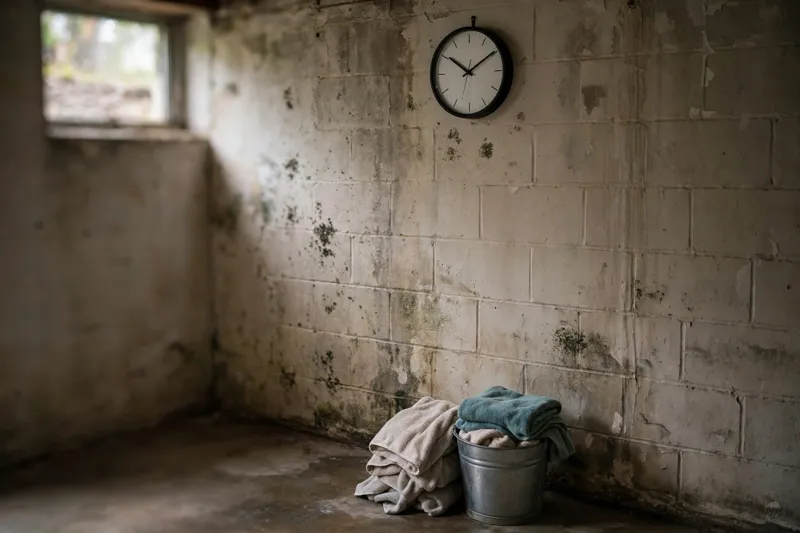
Searches for mold after water damage in basement come from Chicago homeowners whose basement is the room they use least and worry about last, and that is exactly why the mold starts there. The basement is the coldest room in the house, the dampest room in the house, and the room with the most porous material below the water line. A finished basement with drywall, insulation and carpet is a mold room waiting for a leak, and the leak arrives from a sewer backup, a sump pump failure, a foundation crack, or a storm that pushes water through the window wells.
The basement's worst habit is hiding the water. The leak runs behind the finished wall, the carpet feels dry on top while the pad below is soaked, and the musty smell is the first sign anything is wrong. By the time the smell arrives, the mold has usually been growing for days. That is why the basement gets checked first after any water event, and why the check is not a look at the floor, it is a look behind the baseboards, under the carpet, and inside the wall cavities.
The basement also holds the city's most common water source: the sewer. A sewer backup pushes water up through the floor drain, and that water is not clean water, it carries waste, and the mold that follows it is a different job from the mold that follows a burst supply pipe. The cleanup for a sewer backup is a professional job from the start. Do not wade into backup water, and do not run a fan on it, the fan spreads what the water carried.
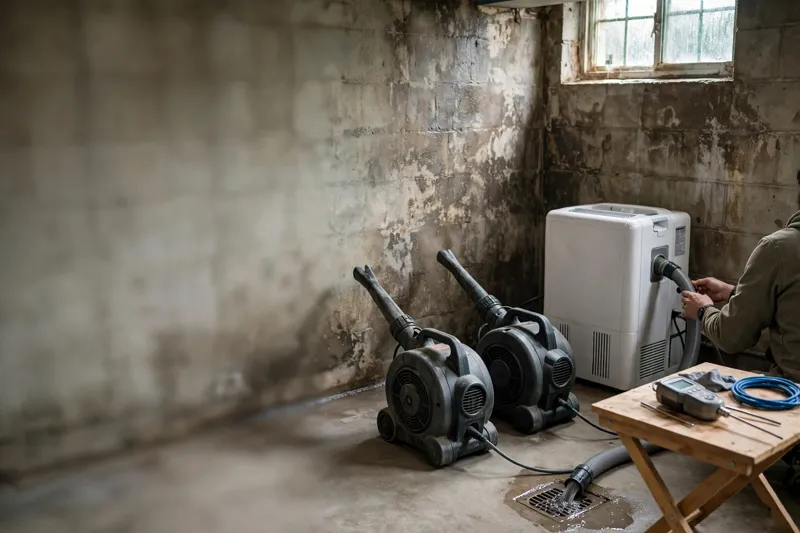
Start the basement dry-out the same hour the water lands. Get the standing water out, pull the carpet pad, cut the drywall a foot above the water line, and run the fans and the dehumidifier until the readings are normal.
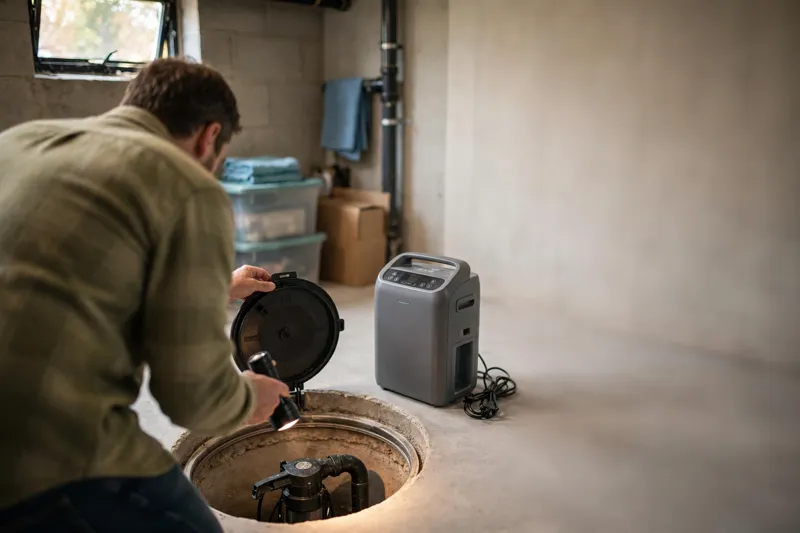
The sump pump is the basement's first line of defence, and it is the first thing to check after any water event. A pump that does not run, a float switch stuck on the pit wall, or a discharge line frozen shut in winter all leave the basement to fill, and a basement that fills in a storm grows mold in every room the water touched. Test the pump by pouring a bucket of water into the pit and watching it run, check the backup battery, and make sure the discharge line runs clear of the house. The page's sump pump guide covers the signs of failure in full, and the signs are worth learning before the rain season, not during it.
Where mold hides in a Chicago home
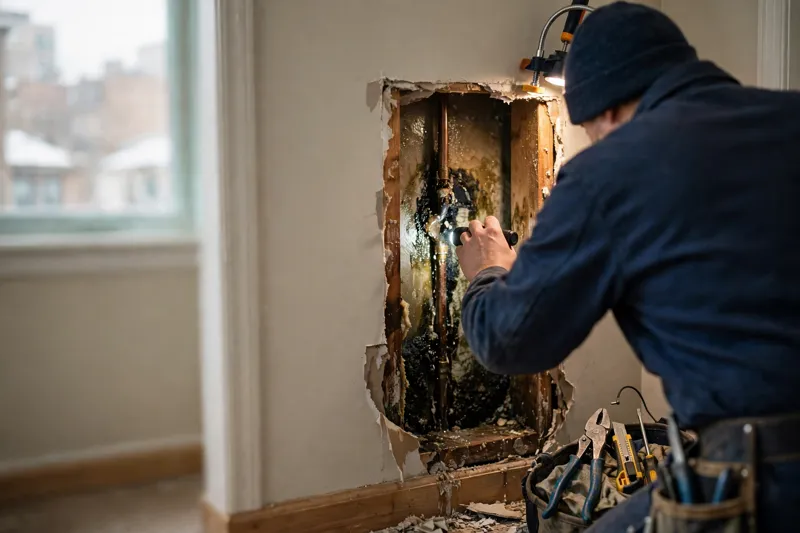
The mold you can see is the easy half. The mold you cannot see is the half that matters, because it grows in the places the drying never reached. The wall cavities behind the drywall are the first hiding place, water wicks up inside the wall, the drywall looks fine from the room, and the mold grows on the back of the board where no one looks. Open the wall and the back of the board tells the truth.
Under the floor is the second hiding place. Water runs under hardwood and laminate, the surface dries and looks fine, and the subfloor below stays wet for weeks. The floor starts to cup and warp, the paint on the baseboard bubbles, and the smell comes back every time the room warms up. Pull the flooring and the subfloor shows the water line. A room that was dried from the top only was never dried at all.
Can mold grow on concrete? Yes, on the dust, the paint and the organic film that sits on the concrete, not on the concrete itself. A bare concrete floor in an unfinished basement grows mold on its surface when the room stays damp, and the mold washes off with detergent and water. The concrete below is not the problem; the humidity above it is. Keep the basement dry and the concrete stays clean.
The third hiding place is the ceiling assembly, the space between the floors where a leak from above runs and pools. A leak from an upstairs bathroom soaks the ceiling below, the ceiling stains, and the mold grows inside the joists where no one can see it.
The ductwork is the hiding place people forget, and it is the one that spreads the mold through the whole house. A leak that soaks the insulation around a duct, or a drain pan that overflows inside the air handler, grows mold inside the system, and the system then blows the spores into every room. A musty smell that comes through the vents when the heat or the air conditioning runs is the sign. Do not run the system while the mold is in it, and do not clean the ducts yourself, the ductwork is a professional job, and the professional job starts with finding the water that got in.
How to tell if you have mold
How do you know if mold is growing? Look for the signs together, not one alone. A musty smell that stays after the room dries is the first sign, and it usually means the mold is inside a wall cavity or under the floor. Dark or greenish patches on drywall and wood are the second sign, and they mean the colonies are already visible. Stains that grow, warped flooring, paint that bubbles and a floor that cups are the third group of signs, and they all mean water sat under the surface for days.
The smell is the sign people trust least and should trust most. A room that smells musty after it dries has mold somewhere, the smell does not come from the water, it comes from the mold growing on wet material. A smell with no visible source means the mold is behind the drywall, under the floor, or inside a ceiling assembly. Open the wall or lift the floor and look, because the smell will not go away on its own and the mold behind it will not stop growing.
Mushrooms through a wall are the sign that the leak has been running for a long time. A Lincoln Park renter reported mushrooms growing through the wall of a split-level fifty days after a leak that no one fixed, the landlord had done nothing in all that time, and the mushrooms were the proof. No address or name is given here, because the forum post carries neither, but the pattern is the one to learn: a leak left for weeks grows more than mold, and the wall it grows through has to come out.
A second Chicago forum report tells the same story from the other side. A renter's bathroom ceiling leaked on 16 May 2026, the landlord said the dark patches were mildew, not mold, and did nothing, no protective gear, no sealing, no remediation. The tenant was told the leak was only condensation. The report carries no name and no address.
Health signs are the last group, and they belong to a doctor, not to this page. Sneezing, a stuffy or runny nose, coughing, itchy eyes and throat, wheezing and asthma flare-ups are the signs the search answers list first, and they show up after time in the damp room and ease away from it. Anyone with asthma, allergies or a weak immune system should see a doctor and stay out of the damp room until it is dry and clean.
Testing is the question every homeowner asks, and the answer is narrower than the testing companies suggest. A test tells you what type of mold is in the air or on a surface, but it does not tell you where the water is, and it does not tell you what to do, the inspection tells you both. The county health department does not recommend testing as a first step, and it does not accredit, certify or recommend contractors. Test after the dry-out, if you need proof the room is clean, not before the inspection, when the water is still running and the answer is already obvious.
Mold and mildew are not the same thing, though landlords and tenants use the words as if they were. Mildew is a surface growth, usually white or grey, that wipes off a shower wall or a window frame. Mold grows deeper, into drywall and wood, and it does not wipe off, it has to be cut out or cleaned with the material removed. A landlord who calls the dark patches on a ceiling mildew and does nothing has not named the problem; the problem is mold, and the mold keeps growing behind the ceiling until the water is fixed.
What to do first
Searches for mold after water damage what to do come from homeowners standing in a wet room, and the answer is a short list in a strict order: stop the water, get the standing water out, pull out what stayed wet, dry the room hard, clean what is left, check the hidden spots, and keep the room dry for a week. The order matters, cleaning mold off a wet wall does nothing, because the water keeps feeding it. The seven steps at the end of this page are the same list with the detail filled in. Homeowners also ask how to stop mold after water damage, and the answer is that same list, in that same order.
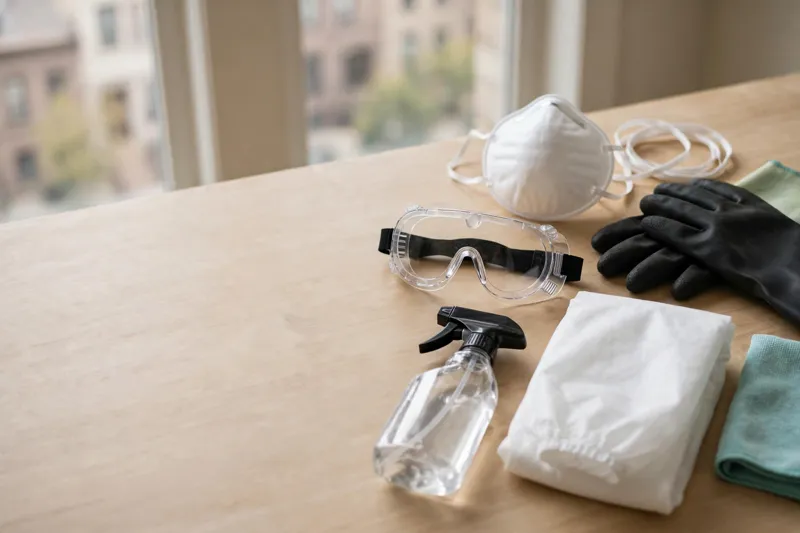
Searches for mold after water damage cleanup chicago come from the same homeowners an hour later, when the room is still wet and the question is who does the work. The line is simple: a small patch, ten square feet or less, on a hard surface, with clean water, is a homeowner job with a respirator rated N95, gloves and goggles. Anything bigger, any sewage water, any mold inside walls or ductwork, and any mold that keeps coming back is a professional job. The professional crew has the meters, the drying equipment and the containment the homeowner does not, and the room is not safe to rebuild until the readings are normal.
How to get rid of mold after a leak is the question behind both searches, and the answer is the same in both: remove the moldy material first, then clean what is left. No spray kills mold inside wet drywall, the drywall has to come out. On hard, non-porous surfaces, wash with detergent and water, then disinfect; the search answers cite a bleach solution of one cup per gallon for hard surfaces. Never mix bleach with ammonia, and never use a fan on visible mold, the fan spreads the spores through the room.
The safest way to deal with mold after a small flood or a small leak is the same rule at a small scale: dry it, pull out what stayed wet, clean the hard surfaces, and watch the room for a week.
What kills mold permanently in the house, naturally or otherwise, is not a product, it is the absence of water: stop the water, dry the room, keep the humidity below fifty percent, and the mold has nothing to grow on. Vinegar, tea tree oil and baking soda all appear in the search answers, and none of them removes mold from inside wet drywall, the drywall has to come out.
What not to do matters as much as what to do, because the wrong move spreads the mold. Do not use a fan on visible mold, the fan blows the spores through the room. Do not paint over a moldy wall, the paint hides the mold, and the mold comes back through the paint. Do not mix bleach with ammonia, the fumes are dangerous. Do not run an ozone generator in a lived-in room, the ozone irritates lungs, and it does not remove mold from inside wet drywall. Do not tear out a wall without a respirator and containment, the tear-out releases more spores than the wall held. The wrong move does not just waste the work; it makes the room worse.
Black mold: the name that worries everyone
Searches for black mold after water damage are the most worried searches in the cluster, and the worry has a reason: black mold is the common name for Stachybotrys chartarum, a dark greenish-black mold that grows on very wet cellulose, drywall, wood, paper. It needs a lot of water and a long time, which is why it shows up after a leak that ran for weeks, not after a spill that was wiped up in an hour. A dark patch on drywall that stayed wet is the classic sign.
The search answers disagree on how dangerous black mold is, and no engine gives a settled toxicity figure. Some answers call it a serious health risk; others say the risk depends on the type, the amount and the person breathing it in. The page prints the disagreement, because printing one side as settled would be a lie.
Signs you are sick from black mold, and whether you can live in a house with it, are the two questions that follow the name, and both belong to a doctor as much as to a contractor. The signs the search answers list are the same as for any mold: sneezing, coughing, itchy eyes, wheezing and asthma flare-ups that show up in the damp room and ease away from it. A house with a large black mold patch is not a house to live in while the patch is there. Leave the room, call a professional, and do not sleep in the room with the mold until it is dry and clean.
One thing black mold is not: a reason to panic about every dark spot. Dark spots on a bathroom ceiling are usually a different mold, and a small patch on a hard surface is a cleaning job, not a crisis. The patch that matters is the large one on a wall that stayed wet, the one that grew because the water ran for weeks. That patch is a professional job, and the professional job starts with finding the leak that fed it.
Mold in the house: room by room
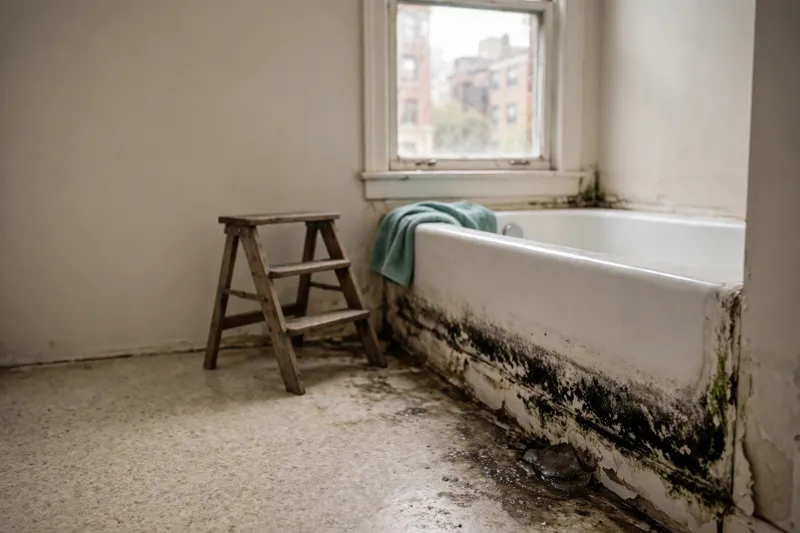
Searches for mold after water damage in house come from homeowners who want to know which rooms to check, and the answer is the rooms the water touched, and the rooms below them. The bathroom is the first room, because the toilet, the shower and the sink all leak into the floor and the wall behind them. A bathroom leak soaks the subfloor, the mold grows under the tile where no one sees it, and the first sign is a soft spot in the floor or a smell that stays after the cleaning.
The kitchen is the second room, because the dishwasher, the sink and the fridge line all leak into the cabinet bases and the floor below. A kitchen leak runs under the cabinets, the cabinet bottoms swell, and the mold grows in the dark space behind the kick plates. Pull the kick plates and look, the mold is usually behind them, on the floor and the wall, where the water pooled and never dried.
The bedrooms and the living rooms are the third group, and they get their mold from above: a roof leak, an ice dam, a window that lets water in. The mold grows in the ceiling assembly and the top of the wall, and the first sign is a stain on the ceiling that keeps growing. A stain that grows means the water is still coming in, and the job is to fix the roof or the window before the ceiling comes down.
The attic is the last room, and it grows mold for a different reason: the roof leaks, or the bathroom fan vents into the attic instead of outside, and the warm moist air condenses on the cold roof deck. The mold grows on the underside of the roof, and the first sign is a dark stain on the deck or a musty smell when the attic hatch opens. Vent the fan outside, fix the roof, and dry the attic, the mold has nothing to grow on once the air moves.
After a flood: the Chicago picture
Searches for mold after flooding chicago come from the homeowners the city floods most, the basements that take water every heavy rain, the first floors that take it in a big storm. The 2023 flood put water in about seventy thousand Chicago homes, according to the Chicago Sun-Times, and the mold that followed it stayed in some of those homes for years. A flood is not one leak, it is water in every room at once.
Searches for mold after water damage chicago il come from the same homeowners a week later, when the water is gone and the mold is starting. The flood timeline is the same as the leak timeline, only wider: growth can begin within twenty-four to forty-eight hours, visible colonies take two to three days by some engines and three to twelve days by others, and the colonies mature over one to three weeks. A flooded house that is not dried inside two days grows mold in every room the water touched, and a flooded house has no room the water did not touch.
What should you do about mold after a flood? The same seven steps as after a leak, at a bigger scale, and with one difference: flood water is not clean water. It carries sewage, chemicals and debris, and everything it touched has to be treated as contaminated. Throw out the soaked porous material, wash the hard surfaces with detergent and water, disinfect them, and do not move back in until the readings are normal and the smell is gone. Mold sets in after a flood on the same range as after a leak, two days to start, three to twelve days to see.
The flood also brings the insurance question, and the answer is the hard one: homeowners policies do not cover flooding from outside. Flood damage is covered through flood insurance, and mold cleanup after a flood can be part of that flood claim, the mold is treated as flood damage, not as a separate job. Keep every photo and every receipt, and file the claim before any cleanup starts. The page's flood and insurance sections cover the details; the short version is that the claim is filed first, and the cleanup starts second.
What actually happened in Chicago: no named case
Before any page prints a case, it has to pass three tests: a named homeowner, an exact Chicago street address, and an incident date. This page found no case that passes all three, on any platform checked live. That is not a gap in the research; it is the finding, and the page says so plainly. No name, no address and no date in this section is invented, and no case is printed as a fact unless a live source page confirms it.
The closest verified incident comes from the Chicago Sun-Times, 14 April 2026, by Brett Chase. Dorothy Rosenthal, in West Garfield Park, had about four feet of water overwhelm her basement in the 2023 flood, and the mold that followed it stayed for almost three years, big black patches that aggravated her asthma. The article gives only the neighbourhood and no street address, so the incident fails the address test. A second person in the same article, Rubye Bailey in Austin, is likewise named with the neighbourhood only and no address. The Sun-Times says about seventy thousand Chicago homes flooded in the 2023 flood, and the mold in those homes is the city's mold story, but a story is not a case, and the page does not pretend otherwise.
Two claims that appear in other places are not printed here, because the sweep could not verify them. The first is a penthouse water-intrusion claim tied to a downtown penthouse address, which a language model offered with a court case attached, the opinion exists, but the PDF would not open, the date given is the purchase date rather than an incident date, and nothing in the record was verified live.
The second is a family in a suburb outside Chicago with a February 2019 date, which a language model offered as a Chicago case, the suburb is not Chicago, and the claim was never verified on a source page. Both stay out of this page. A case that cannot be verified is not a case; it is a rumour with a citation attached.
The page also prints two anonymous Chicago forum reports, with their limits stated, because they are the closest thing to a dated incident the sweep found. A Lincoln Park renter reported a split-level that leaked on 8 July, with mushrooms growing through the wall after fifty days of no action from the landlord, no name, no address. A Chicago renter reported a bathroom ceiling that leaked on 16 May 2026, with a landlord who called the dark patches mildew and did nothing, no name, no address. Both are printed here only as forum reports, never as cases.
Insurance: the sudden-and-accidental rule
The insurance rule is short, and it decides most claims before the adjuster arrives: the policy pays when the damage was sudden and accidental, and it does not pay when the damage was gradual, when it came from flooding outside, or when the owner let it run. A burst pipe is sudden. A slow leak that ran for months is not. A flood from outside is not covered by a homeowners policy at all, that needs separate flood insurance. A sewer backup is usually covered only if you hold the endorsement for it, so ask your insurer before the next storm.
Mold follows the same rule, because the mold is treated as part of the loss that caused it. Mold that follows a burst pipe is usually covered, up to the limits you bought and minus your deductible. Mold that follows a slow leak, a damp basement the owner never fixed, or flooding from outside is usually not covered. Read the policy before you need it, and read the mold sub-limit in particular.
The payment question has no number on this page, because no page can give you one. The payment depends on your policy, your deductible, the cause of the loss, and the limits you bought. The insurer pays the drying and the repair, less your deductible, and it does not pay for the pipe that failed. The cost of the remediation itself depends on how much water there was, how far it spread, what kind of water it was, and what it touched, a bare concrete floor dries fast, and a finished basement with drywall, insulation and flooring costs far more to put back.
Two things to do before the next storm, both free. First, ask your insurer what your mold sub-limit is and whether you hold the sewer backup endorsement. Second, take photos of every room before anything happens.
Flood insurance is the separate policy, and it is the one most Chicago homeowners do not hold. It is bought through the federal program or a private insurer, it covers the building and the contents the flood touched, and mold cleanup after a flood can be part of that flood claim, the mold is treated as flood damage, not as a separate job. A homeowners policy does not cover flooding from outside, and a sewer backup endorsement does not cover it either. Buy the flood policy before the storm season, not after the water arrives, and keep the policy number where the water cannot reach it.
Prevention: keep the next leak from becoming mold
Homeowners ask how to prevent mold after water damage, and the answer is the same job as the drying, done every month instead of in a panic. How likely is mold to come back after remediation? It comes back when the water comes back, and it stays away when the water stays away, so keep the indoor humidity below fifty percent with a dehumidifier in the basement, check the sump pump and the backup battery before the rain season, look at the water heater and the washing machine hoses twice a year, and walk the basement after every heavy rain. A habit that takes five minutes a month saves a rebuild that takes three weeks.
The outside of the house matters as much as the inside. Keep the gutters clean and the downspouts pointed away from the foundation, grade the soil away from the house, and keep the window wells clear. A downspout that dumps water at the foundation wall is a leak waiting for a storm, and a window well full of leaves is a basement flood waiting for the same storm.
Inside the house, the habits are smaller and just as important. Do not store cardboard boxes on the basement floor, cardboard is food for mold, and a wet box is a mold farm. Fix the small leaks the week you find them, not the month after, because the small leak is the one that grows the mold you cannot see.
The state registration is the last piece of the prevention picture, and it is for the homeowner's protection, not for this site. Illinois requires registration for anyone who performs mold remediation, with a grace period running to the end of September 2027. A homeowner hiring a crew should ask whether the crew is registered.
The seasons decide the risk, and each one brings a different leak. Spring brings the thaw and the heavy rain, and the basement takes water through the foundation cracks and the window wells. Summer brings the humidity, and the basement grows mold on the damp air alone. Autumn brings the leaves that block the gutters and the window wells, and the first heavy rain finds them blocked. Winter brings the ice dams and the frozen pipes, and the roof leak runs down inside the wall where no one sees it until the spring. Walk the checklist at the turn of every season, not once a year, the leak that arrives in the season you skipped is the one that grows the mold.
Seven steps, in order
The seven steps below are the whole job, in the order it has to happen. Do them in order, and do not skip ahead, cleaning before drying wastes the cleaning, and rebuilding before the readings are normal wastes the rebuild. You will need a pump or a wet vacuum, fans, a dehumidifier, a respirator rated N95, gloves, goggles, detergent, and bags for what comes out.
Stop the water at the source.
Find where the water is coming from, the burst pipe, the failed appliance, the roof leak, the sewer backup, and stop it. Turn off the main water valve if you cannot find the break, and shut off power to any room with water near outlets. Nothing else works until the source is stopped.
Get the standing water out.
Use a pump, a wet vacuum, or buckets, whatever you have, and move the water out of the room fast. Lift the rugs and the furniture so the water is not trapped under them.
Pull out what stayed wet.
Throw away soaked carpet pad, wet insulation and swollen drywall. Cut the drywall a foot above the visible water line so the wall cavity can dry. Wet porous material that stays in place becomes the mold, no cleaning saves it once it has soaked through.
Dry the room hard.
Run fans and a dehumidifier until the meter readings are normal, not just until the room feels dry. Point the fans at the walls, not at the room. Dry the wall cavities and the subfloor too, the mold you cannot see grows in the places you did not dry.
Clean what is left.
Wash hard, non-porous surfaces with detergent and water, then disinfect them. The search answers cite a bleach solution of one cup per gallon for hard surfaces. Never mix bleach with ammonia, never use a fan on visible mold, and never paint over a moldy wall.
Check the hidden spots.
Look behind the drywall, under the floor, inside the wall cavities and above the ceiling, the mold that follows a leak hides in those places. A musty smell with no visible source means the mold is inside a wall cavity. Open it up and look before you close the room back up.
Keep the room dry for a week.
Watch the room for a week after it dries. Keep the dehumidifier running and the humidity below fifty percent.
Your checklist, before the next storm
Print this list, or save it on your phone, and walk it before the rain season and after every heavy rain. It takes ten minutes, and it is the cheapest mold prevention in the city.
- Run the sump pump and check the backup battery, a pump that does not run is a basement flood waiting to happen.
- Look at the water heater, the washing machine hoses and the dishwasher line, a hose that bulges is a burst waiting to happen.
- Check the basement walls and floor for damp spots, stains and smells, a stain that grows means water is still getting in.
- Clean the gutters and point the downspouts away from the foundation, a downspout at the wall is a leak waiting for a storm.
- Keep the dehumidifier running and the basement humidity below fifty percent, a dry basement grows nothing.
- Move cardboard boxes off the basement floor and onto shelves, cardboard is food for mold, and a wet box is a mold farm.
- Take photos of every room and keep them somewhere the water cannot reach, a claim with photos is a claim that moves.
Call now, mold is growing
If the room is still wet, the clock is running. Call us and we will come out, find the water, dry the room, and tell you honestly what has to come out and what can stay. We answer 24/7.
Frequently asked questions
What is mold after water damage?
It is fungi growing on wet organic material, drywall, wood, carpet, insulation, after a leak or a flood. The spores are always in the air; water wakes them up. Growth can begin within a day or two, which is why the first two days matter more than anything else you do after the water lands.
Does homeowners insurance cover water damage restoration, or only part of it?
It covers only part of it. The policy pays for the drying and the repair when the cause was sudden and accidental, up to the limits you bought, minus your deductible. It does not pay for the pipe or appliance that failed, and it does not pay for flooding from outside. A sewer backup needs the endorsement.
How long does water damage restoration take?
Drying takes three days to two weeks on most losses, and the full job with repairs usually takes one to three weeks. A small loss in one room can dry in one to five days. With mold growth, add the removal and cleaning time after the drying, the job is not done when the room feels dry.
What is water damage restoration called?
The full job, stopping the water, drying the structure, cleaning, and rebuilding, is called water damage restoration. The emergency half, stopping the water and drying, is also called mitigation. Removing mold growth is a separate job, called remediation, and it follows the drying, never the other way around.
Does insurance cover water damage restoration?
It usually does when the damage was sudden and accidental, such as a burst pipe or an appliance failure. It does not cover flooding from outside, which needs separate flood insurance. A sewer backup is usually covered only if you hold the endorsement for it, so ask your insurer before the next storm.
What is the water damage restoration process?
The process runs in order: inspection first, to find the source and measure how far the water spread; then extraction, with pumps and vacuums; then drying, with air movers and dehumidifiers; then cleaning and sanitizing; then the repairs that put the room back. Act fast, the search results say mold can start within a day or two.
Does homeowners insurance cover mold?
It covers mold only when the mold follows a sudden, accidental loss the policy already covers, such as a burst pipe. Mold from a slow leak, from flooding outside, or from a damp basement the owner never fixed is usually not covered. Mold cover also has its own sub-limit, so read the policy before you need it.
What should I do when I find mold?
Fix the moisture source first, or the mold comes back. Wear a respirator rated N95, gloves and goggles, and clean only a small patch yourself, the guidance the search engines cite is ten square feet or less. Anything bigger, or mold that keeps coming back, needs a professional crew with the right equipment.
How much does homeowners insurance pay for water damage?
No page can give you a number, because the payment depends on your policy, your deductible, the cause of the loss, and the limits you bought. The insurer pays the drying and the repair, less your deductible, and it does not pay for the pipe that failed. Ask your insurer what your limits are before the next storm.
Does renters insurance cover water damage?
It covers the renter's belongings when the damage was sudden and accidental, such as a burst pipe or water from an upstairs neighbour's plumbing. It does not cover flooding from outside, which needs separate flood insurance, and it does not cover the building itself, the walls, floors and pipes are the landlord's. A sewer backup needs the endorsement.
How much does mold testing cost?
This site prints no prices, so no figure here can mislead you. The cost depends on how many samples are taken, whether the testing is air or surface, whether a lab is involved, and how big the affected area is. We inspect first, then give you a written scope before any work starts.
Does homeowners insurance cover a burst pipe?
Yes, when the pipe burst suddenly, a freeze split, a joint that failed without warning, a line that gave way all at once. The insurer pays for the water damage the burst caused, not for the pipe itself. A slow leak that ran for months is a different story, and it may be classed as wear and tear.
How much does trenchless sewer repair cost?
This site prints no prices for either job, because trenchless repair and a burst pipe are two different things. Trenchless repair replaces a broken sewer line by pulling a new pipe through the old one. A burst pipe is a supply pipe that split open, usually from freezing, and the fix is a repair, not a replacement.
How much does water damage restoration cost?
This site prints no prices, so no figure here can mislead you. The cost depends on how much water there was, how far it spread, what kind of water it was, and what it touched. A bare concrete floor dries fast. A finished basement with drywall, insulation and flooring costs far more to put back.
What does it mean for water damage to be fully remediated?
It means the water source is fixed, the standing water is gone, the wet materials are dried to moisture readings, the room is cleaned and sanitised, mold and contamination are addressed, and the repairs are finished, with indoor humidity in the forty to sixty percent range. A remediated home is dry, clean and safe to live in again.
How fast does mold grow after water damage?
Growth can begin within a day or two, every engine the sweep asked agrees on that. The colonies then mature over one to three weeks.
How do I prevent mold after water damage?
Dry the room within a day or two, that is the whole job. Stop the source first, get the standing water out, and run fans and a dehumidifier until the readings are normal. Throw out soaked carpet pad and wet insulation, keep indoor humidity below fifty percent, and check the hidden spots behind the drywall.
What should I do if I find mold after water damage?
Stop the water first, then dry the room, cleaning mold off a wet wall does nothing. Wear a respirator rated N95, gloves and goggles, and clean only a small patch yourself, ten square feet or less. Pull out soaked carpet pad and wet insulation, and call a professional for anything bigger, for sewage water, or for mold inside walls.
What is the mold growth timeline after water damage?
Hour zero to one day, the spores settle and attach. Day one to two, active growth begins. Day two to three, visible colonies appear, though some engines say three to twelve days. One to three weeks, the colonies mature and release spores. The clock depends on warmth, humidity above sixty percent, and porous material, drywall and wood move fastest.
How do I stop mold after water damage?
Stop the source and get the water out, that is the first half. Dry the room hard with fans and a dehumidifier, pull out what stayed wet, and clean the hard surfaces with detergent and water. Keep indoor humidity below fifty percent, and do not paint over mold, paint hides it, and it comes back through the paint.
What are the mold laws in Chicago?
Chicago has no mold law, and no engine answer claimed one. What does exist is the state registration for mold work, Illinois requires registration for anyone who performs mold remediation, with a grace period running to the end of September 2027. Tenants should tell the landlord in writing, keep photos, and call 311 if a housing-code inspection is needed.
Is mold from water damage toxic?
Mold is not one thing, so there is no single answer. Some types irritate lungs and trigger allergies; others are mostly a smell and a stain. The search answers say the risk depends on the type, the amount and the person breathing it in. Anyone with asthma or allergies should stay out of the room and call a professional crew.
Will mold go away on its own if it's dry?
No. Drying stops the growth, but it does not remove the mold that already grew. Dead mold stays on the surface, and it can still irritate lungs and trigger allergies. The dry room still needs the mold cleaned off hard surfaces and the moldy porous material pulled out and thrown away.
What kills mold from water damage?
Removing the moldy material is the real fix, no spray kills mold inside wet drywall. On hard, non-porous surfaces, wash with detergent and water, then disinfect; the search answers cite a bleach solution of one cup per gallon for hard surfaces. Never mix bleach with ammonia, and never use a fan on visible mold, it spreads the spores.
What are the first signs of mold sickness?
Sneezing, a stuffy or runny nose, coughing, itchy eyes and throat, wheezing, and asthma flare-ups are the signs the search answers list first. They show up after time in the damp room and ease away from it. Anyone with asthma or allergies should see a doctor and stay out of the room until it is dry and clean.
Is it safe to stay in a house with mold in the basement?
It depends on how much mold there is and who lives there. A small patch, with the room ventilated and a respirator on, is a different job from a basement wall covered in mold. People with asthma or allergies should stay out. If the mold covers more than ten square feet, leave the room and call a professional.
Does FEMA pay for mold remediation?
FEMA does not run a standalone mold program. Flood damage is covered through flood insurance, and mold cleanup after a flood can be part of that flood claim, the mold is treated as flood damage, not as a separate job. Homeowners policies do not cover flooding from outside at all. Keep every photo and receipt before any cleanup starts.
Is black mold from water damage toxic?
Black mold is the common name for Stachybotrys chartarum, a dark greenish-black mold that grows on very wet cellulose, drywall, wood, paper. The search answers disagree on how dangerous it is, and no engine gives a settled toxicity figure. Treat any large dark patch as a professional job: do not disturb it, wear a respirator, and call a crew.
Sources
- Chicago Sun-Times, Brett Chase, 14 April 2026, West Garfield Park basement flooding and mold, 2023 flood.
- US Enzyme, 48-hour mold prevention plan, Scott Resnik, 13 November 2026.
- DisasterServices, flood and hurricane mold plan, Vincent Wallace, updated 19 October 2026.
- WikiHow, "How to Clean Up Water Damage", updated 2 May 2025, Ryan Owsiany.
- US Environmental Protection Agency, "Mold Cleanup in Your Home".
- City of Chicago, Department of Water Management, https://www.chicago.gov/city/en/depts/water.html, and the CHI311 service, https://www.chicago.gov/city/en/depts/311.html.
- Illinois Department of Public Health, Part 835 mold registration, effective 23 September 2026, grace period to 30 September 2027.
More Restoration Services in Chicago
Every service below is one tap away. Pick the one that matches your problem.

Water Damage Restoration
Fast water extraction, structural drying, and full repair after burst pipes, leaks, and floods.
Learn more →
Water Mitigation
Emergency water removal, structural drying, and mold prevention to stop the damage fast, 24/7.
Learn more →
Mold Remediation
Safe, contained mold remediation that removes contamination and fixes the moisture source.
Learn more →
Sewage Cleanup
Safe removal and disinfection of dangerous sewage backups and black water.
Learn more →
Flood Cleanup
Water pumped out, structure dried, and debris cleared fast after storms and flooding.
Learn more →
Hardwood Floors Water Damage
Cupped, buckled or stained hardwood after a leak? How we dry it, when sanding saves it, and when the boards have to go.
Learn more →