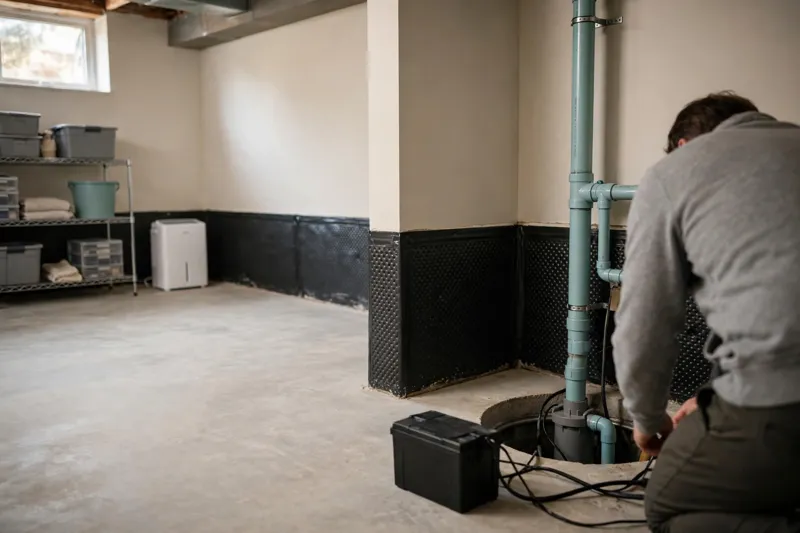
How to Prevent Basement Flooding in Chicago
How to prevent basement flooding is the question every Chicago homeowner asks after the first wet basement, and the honest answer is that most of the work happens outside the house, before the rain starts. A dry basement is not one fix. It is six small ones, done together, and this post walks through all six.
- Keep the water outside first, grading, gutters and downspouts
- A sump pump with a battery backup, tested twice a year
- A backwater valve or an overhead sewer for the backup risk
- Alarms by the sump pit so you hear the water before you see it
Written for Chicago homeowners, the combined sewer, the old housing stock, and the finished basements.
- We answer 24/7
- Local Chicago team
- Insurance documentation help
- Straight answers, no pressure
Have a question? Call us any time
Tell us how your basement floods and we will call you back. We answer 24/7.
The short answer: start outside the house
The rule fits in one sentence: keep the water away from the house, and give the water that does arrive somewhere to go. A basement floods when water reaches the foundation faster than the house can shed it or the pump can move it. Every fix on this page does one of those two things, it keeps water out, or it moves water away.
Homeowners search how to prevent basement flooding in chicago after the first wet basement, and the answer starts outside the house, not in it. The grading, the gutters and the downspouts decide how much water reaches the foundation. The sump pump and the backwater valve decide what happens to the water that gets through. The sealing and the alarms are the last two layers.
| Layer | What it stops | When it matters |
|---|---|---|
| Grading and gutters | Rain running toward the walls | Every storm |
| Downspouts extended | Water pooling at the foundation | Every storm |
| Sump pump + battery backup | Groundwater rising under the floor | Heavy rain, power cuts |
| Backwater valve | Sewer water coming up the drain | Surcharged combined sewer |
| Sealing cracks | Seepage through walls and floor | Slow leaks, wet seasons |
| Water alarms | A flood you do not notice until morning | Night storms, holidays |
The order matters. Outside work first, because it is the cheapest and it stops the most water. The pump second, because it handles what the outside work misses. The valve third, because it stops the one kind of water a pump cannot. Sealing and alarms last, because they catch the slow leaks and the night failures the rest miss. Homeowners who search how to stop basement flooding usually mean the same thing, a system, not a single fix, and the six layers above are that system.
Why Chicago basements flood
Chicago basements flood for a Chicago reason. The city runs a combined sewer system: one pipe carries both sewage and stormwater. In a hard storm the pipe fills, the flow backs up, and the water comes in through the lowest opening in the building, usually the floor drain. The rain does not have to be heavy. The sewer only has to be full.
The housing makes it worse. A large share of Chicago homes were built before 1940, many with stone or block foundations, clay drain tiles and galvanised or cast-iron lines, and many with finished basements, drywall, insulation and flooring that soak up water and hide it. A finished basement floods the same way an unfinished one does. It just costs more to put back.
The scale is in the record. Two thousand five hundred basement-flooding reports across five neighbourhoods were cited by Borderless Magazine on December 20, 2022. On September 11, 2022, seven inches of rain fell in one hour in Rogers Park, and over nine hundred calls to 311 for water in basements and on roads came from six neighbourhoods alone, most from Portage Park and Edgewater.
Three kinds of water get in, and each needs a different fix. Sewer backup comes up through the drain when the combined sewer surcharges. Seepage comes through the floor and the walls when the ground is saturated. Overland water comes in over a window sill or under a door when the yard floods. The rest of this post takes them one at a time.
Grading, gutters and downspouts: the outside work
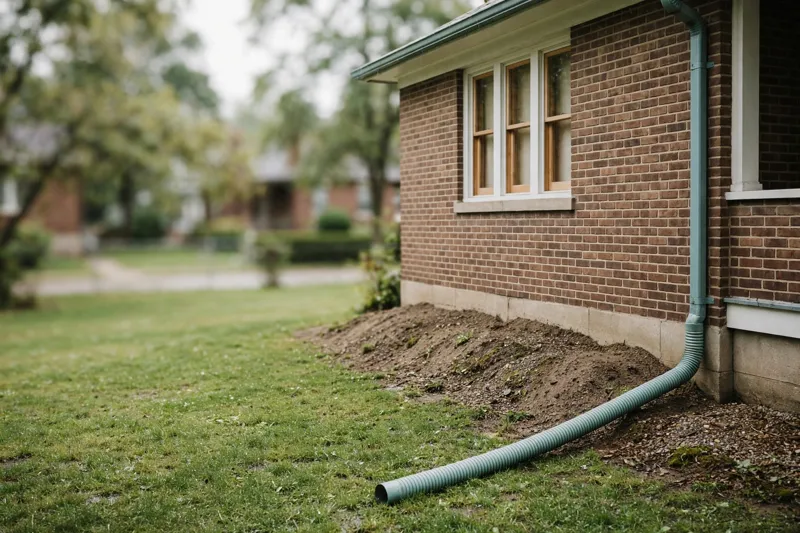
Water runs downhill, and the ground around a house should too. The soil should fall away from the foundation, search results put the figure at six inches of fall over the first ten feet, and the top of the soil should sit at least six inches below the sill plate. Walk the house in the rain and watch where the water goes. If it runs toward the walls, the grading is wrong.
Gutters are the second half of the same job. Clean them twice a year, in spring and in autumn, and check them after every big storm. A clogged gutter pours water over the edge and straight down the wall. Downspouts should run at least six to ten feet away from the house, one Chicago guide puts it at ten feet, and they should end where the water can run away, not where it pools against the foundation.
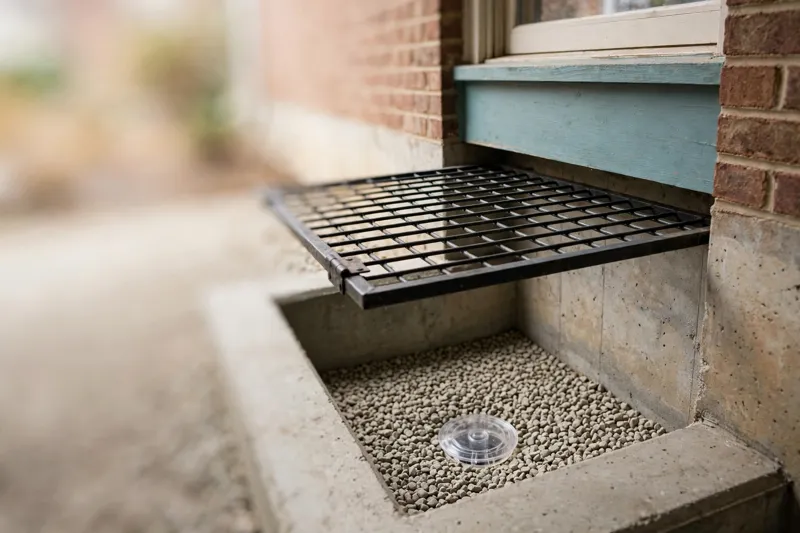
Homeowners ask how to prevent water in basement, and the honest answer is that most of it is outside work. The water that never reaches the wall never needs a pump. Build the soil up, keep the plants at least twelve inches from the foundation, as the most-read waterproofing guide recommends, and keep the window wells clear of leaves and dirt. A yard that sheds water is a basement that stays dry.
Two small jobs pay for themselves. Cover the window wells and keep their drains free of leaves. And check the street drain outside the house, a blocked street drain floods the whole block, and the city clears it when you call 311. The number is staffed twenty-four hours a day, seven days a week, and the number in the site footer is (312) 744-5000.
Heavy rain: what to do before and during the storm
Homeowners ask how to prevent basement flooding during heavy rain, and the answer is the same outside work, done before the storm, plus one rule for the storm itself: use as little water inside the house as you can. No laundry, no long showers, no dishwasher. Every gallon you send down the drain adds to a combined sewer that is already full.
The Chicago version of the same question, how to prevent basement flooding in heavy rain chicago, has two more answers. Keep the roof runoff out of the combined sewer: disconnect the downspouts from the sewer line and extend them onto the yard, or fit a rain barrel. And ask your Alderman about Rainblockers, the inlet restrictor valves the city fits to slow the flow into the sewers.
Rainblockers are worth a sentence of their own. The valves slow the flow into the sewer system by eighty percent, and the programme cost seventy-five million dollars in 1997 dollars. The city fits them on request through your Alderman. They do not stop a flood on their own, they slow the surge so the system can cope, but in a street that floods every year, they are the first thing to ask about.
Homeowners ask how to keep basement from flooding when the forecast is bad, and the checklist is short: gutters clear, downspouts extended, sump pump tested, battery charged, window wells clear, and the floor drain and sump pit watched. Do it the day before the storm, not during it. A basement that is ready before the rain starts is a basement that stays dry.
The sump pump: the one machine that matters most
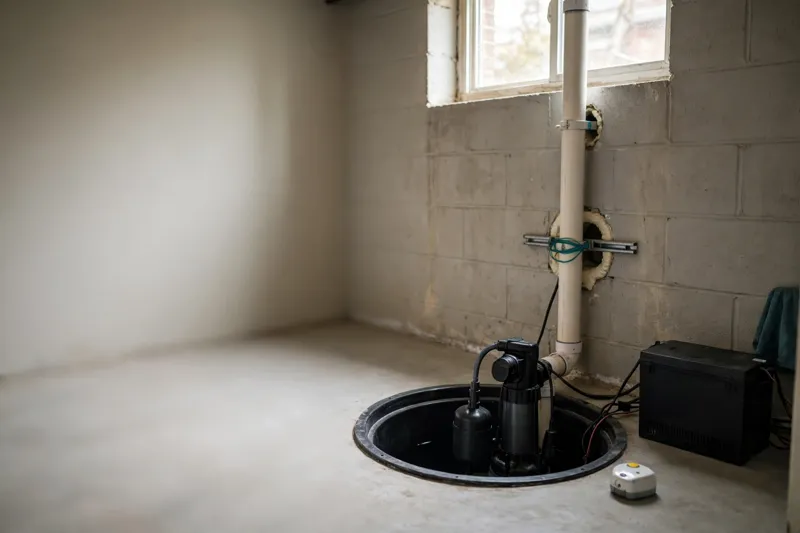
Homeowners ask how to prevent basement flooding with a sump pump, and the answer is that the pump is the most effective defence against groundwater, but it manages water rather than blocking it. It collects the water that gathers under the floor and pumps it out through a discharge line. It does not stop a sewer backup, and it does not stop water coming in over a window sill.
Test it monthly: pour a bucket of water into the pit and watch the float switch lift and the pump run. Listen for grinding or rattling. Check the discharge line outside, search results put it at six to fifteen feet away from the house, and it should not be frozen, clogged or crushed.
The battery backup is the other half of the pump. The storms that flood basements are the same storms that cut the power, and a pump without power is a hole in the floor. A battery backup keeps the pump running through the outage, and an alarm tells you when the battery is low or the pump has failed. Some homeowners fit a water-powered backup as well. Either way, the backup needs the same monthly test as the pump.
When the pump fails, the signs are plain: it runs constantly, it runs and the pit stays full, it makes a new noise, or it does not run at all when you pour water in. A pump that runs constantly may be undersized, or the discharge line may be blocked, or the water table may simply be high. Do not wait for the next storm to find out which one it is.
The backwater valve: one flap between you and the sewer
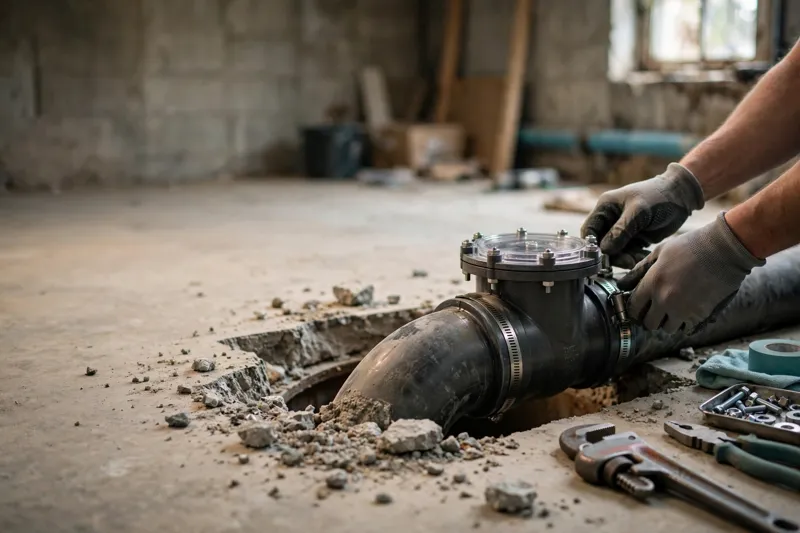
A backwater valve is a one-way valve fitted on the main sewer line where it leaves the house. A flap lets waste water flow out and swings shut when water tries to come back in, so a surcharged city sewer cannot push sewage up through your floor drain. It is the single most effective fix for the backup kind of flood.
There are two kinds: normally-open valves, which stay open until the water reverses, and normally-closed valves, which stay shut until waste water pushes them open. Either kind needs a yearly inspection and a clean, and neither kind works while the fixtures are running, do not use the toilets or the sinks while the valve is closed, or the waste water has nowhere to go.
A backwater valve is not the same as an overhead sewer, and the two are often confused. The valve stops the water coming back. The overhead sewer, covered in its own section below, takes the basement plumbing off the street sewer entirely. A valve is the cheaper fix and the right one for most homes. The overhead sewer is the bigger job, for homes that flood again and again.
Sealing cracks and waterproofing the walls
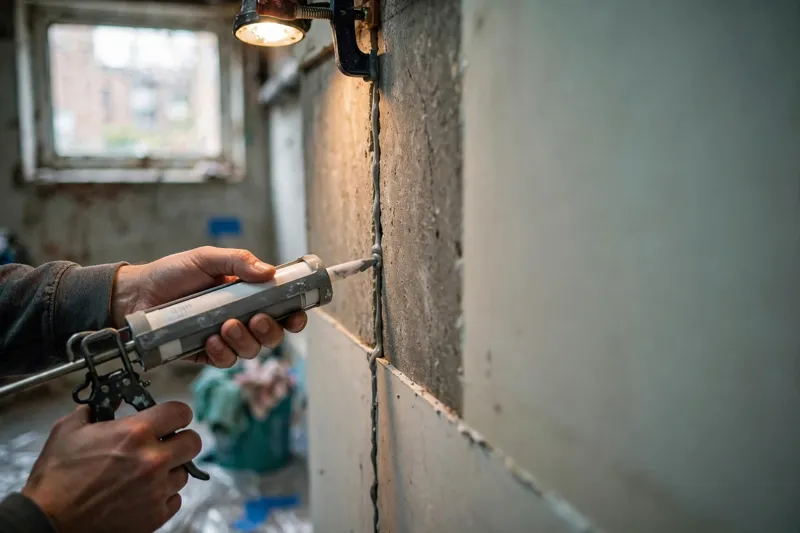
Homeowners ask how to protect basement from flooding, and the sealing is the last layer, not the first. A crack in the wall or the floor is a way in for seepage, and it gets worse every year it is left. Patch even small cracks early, while they are still cheap to fix. A crack that leaks in a storm is a crack that needs a contractor, not a tube of sealant.
The inside work is simple and cheap. Clear the salt and lime deposits off the walls, then apply two thin coats of concrete sealer, then three thin layers of waterproof paint for small intermittent leaks, and let each coat dry for a full day. That is the method in the most-read waterproofing guide on the web, and it works for seepage, not for a sewer backup, and not for water pouring through a wall.
The outside work is the better fix and the dearer one. A curtain drain, a gravel-filled trench that carries groundwater away from the foundation, stops the water before it reaches the wall. So does an exterior drain tile system. Both need a contractor and a digger. If the wall leaks every time it rains, the answer is outside the wall, not on it.
Alarms, sensors and the seasonal checklist
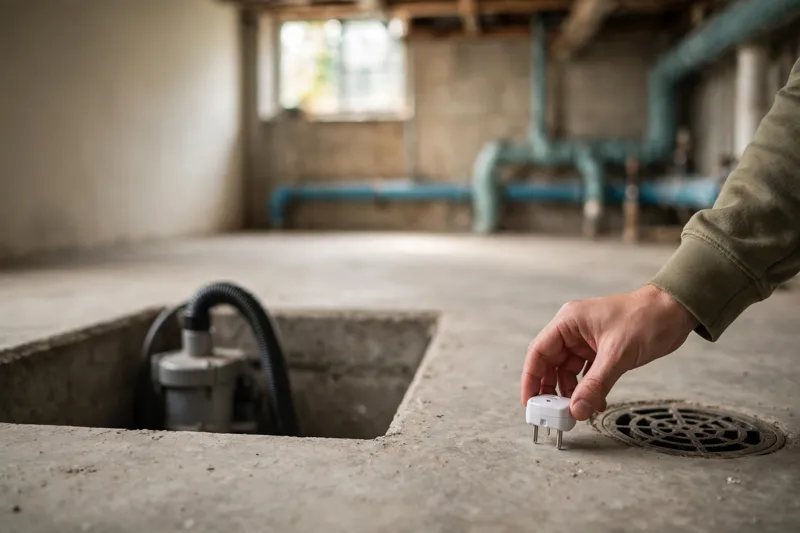
A water alarm costs little and buys the one thing a flood takes away: time. Put one by the sump pit and one by each floor drain, and you hear the water before you see it. A leak sensor under the water heater and the washing machine does the same for the appliances. Raise the utilities, the furnace, the water heater, the electrical panel, above the level the water has reached before, if you can.
Homeowners ask for basement flood prevention tips, and the best ones are the boring ones: test the sump pump every month, clean the gutters twice a year, check the downspouts every spring, walk the basement every month and look behind the furniture and in the corners for damp patches. The monthly walk is the habit that catches the slow leak before it becomes a flood.
The Chicago version, basement flooding prevention tips chicago, adds the combined-sewer habits: know where your floor drain is, know whether you have a backwater valve, and know who to call when the street floods. Keep 311 and our number on the fridge. A basement that is checked monthly is a basement that does not surprise you.
The seasonal checklist, twice a year: spring, gutters, downspouts, grading, sump test, battery test, window wells; autumn, the same again, plus the discharge line before the freeze, and the roof. A roof that leaks in winter puts water in the basement in spring.
Winter brings its own sump failure, and it is the one Chicago homeowners forget: the discharge line freezes. The line runs outside, and in a hard freeze it can freeze solid, so the pump runs, the water has nowhere to go, and the pit fills until the basement floods in January. Keep the line short, sloped and clear of snow, and check it after every freeze. A discharge line that ends in a frozen puddle is a pump that is pumping in a circle.
The overhead sewer: the Chicago answer
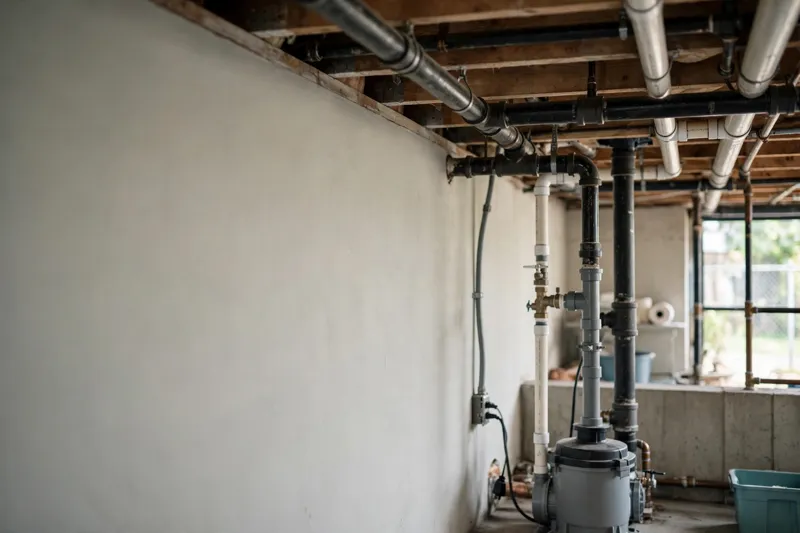
The overhead sewer is the gold standard for a Chicago basement, and both of the search engines that answered the Chicago question said so. It takes the basement plumbing off the street sewer entirely and lifts it above the flood level, so a surcharged combined sewer cannot push water back into the house. A backwater valve stops the water coming back. An overhead sewer removes the path altogether.
Homeowners ask about basement flooding prevention systems chicago, and the answer is a system, not a single device: an overhead sewer or a backwater valve for the sewer risk, a sump pump with a battery backup for the groundwater, interior or exterior drain tile where the water keeps coming, and grading and gutters for the rain. The system that fits your house depends on how the water gets in, and the first step is finding out.
The search term basement flooding prevention chicago brings up the same short list of Chicago companies, and one of them is Xpert Flood Control And Seepage Inc. at 3544 W Montrose Avenue, which shows a four-point-nine star rating from one hundred thirty-three reviews. That is a fact about the search results, not a recommendation, this post recommends no company.
Two suburban programmes show what help can look like, with their limits stated plainly. In La Grange, the Village reimburses half the cost of a backflow valve or an overhead sewer, up to three thousand dollars for a backflow valve and five thousand dollars for an overhead sewer, with a one-time cap of five thousand dollars per home, but applications are not being accepted at this time. In Elmhurst, the city runs four cost-share programmes: an overhead sewer programme, a check valve programme, a private sanitary programme, and a stormwater incentives programme, each with its own cap. Both are suburban examples only, neither is a Chicago-city programme.
Old houses: the pre-1950s basement
Homeowners ask how to prevent basement flooding in an old house, and the answer starts with the house itself. A Chicago bungalow or two-flat from the nineteen-twenties has a stone or block foundation, clay weeping tiles and a floor drain, and none of them behaves like a modern poured-concrete basement. The walls seep, the tiles clog, and the drain is the lowest point in the house.
The fixes are the same layers, with old-house twists. Regrade within ten feet of the walls, search results put the fall at about an inch per foot. Keep the clay weeping tiles and the floor drain clear, a clogged tile is a flooded basement. Seal the masonry, but do not trap the moisture inside the wall: an old stone wall needs to breathe, and a coating that seals it tight can push the water somewhere worse.
A Jefferson Park homeowner put the old-house question plainly in July 2026: five years in a bungalow, tired of stressing about basement flooding in every heavy rain, and asking for interior drain tile contractors and gutter companies other homeowners would recommend. The answer is the same as this post: gutters and grading first, then the drain tile, then the pump. The drain tile is the old-house fix, it gives the water a path to the pump instead of a path through the floor.
What Chicago homeowners are actually asking
No verified named Chicago prevention case exists anywhere in this sweep, no company, no street address, no date, with a live source behind it. The closest things are two videos: a backflow-valve installation in Brookfield, a suburb, not Chicago, and a flood-control installation in Chicago with no address and no date in the video. What exists instead is what homeowners are asking, and the questions are specific.
A three-flat owner in Chicago asked in September 2022 how to stop rainwater overflowing into a basement unit, after water geysered out of the drains outside the doors. The proposal on the table was a cistern and pump system in the front yard, quoted at ten thousand dollars, with no word on whether a second would be needed in the back. The owner wondered about a simpler fix: a few inches of rise at the doors, so the water could pool and drain instead of rushing inside. The honest answer is that a door lip buys time, not dryness, the water still has to go somewhere, and the drain tile and the pump are what move it.
A Chicago homeowner asked in May 2020 whether a flood control system was necessary at all, quoted ten thousand dollars for drain tile and five thousand for rebuilding drywall, cabinets and paint. The answer is the same as this post: the drain tile is the fix that stops the water, and the rebuild is the cost of not having it. A homeowner in the suburbs asked in August 2026 what to do after finding half an inch of water in a carpeted basement, the sump pump failed after a power cut of a day or two. The first twenty-four to forty-eight hours are the drying hours, and the battery backup is the fix that would have kept the pump running.
A homeowner with a nineteen-fifties concrete basement asked in May 2026 what else to do when the sump pump is overwhelmed: the yard slopes away, the gutters are clean, the downspouts discharge away from the house, and the basement still floods. The answer is the layers this post covers: the drain tile, the backwater valve, and the discharge line, because a pump that cannot move the water fast enough is a pump that needs help, not a pump that needs replacing. And a homeowner who lost a whole basement to a failed pump with no battery backup in April 2023 is the reason the backup is not optional.
Insurance: what prevention has to do with cover
Prevention and insurance answer different questions. Prevention stops the water. Insurance pays for the damage when the water got in anyway, and only when the cause was sudden and accidental. A burst pipe is usually covered. A sewer backup needs the endorsement. Flooding from outside needs a separate flood policy. No amount of prevention changes the policy, and no policy replaces the prevention.
Homeowners ask whether insurance covers basement flooding, and the answer depends on where the water came from, the same rule as everywhere else on this site. Clean water from a burst pipe inside the home is usually covered. A sewer backup is covered only with the endorsement. Water that came in from outside is flooding, and it needs the separate flood policy. Our insurance post covers the rule in full, with the one Chicago case that has a name on it.
Two programmes exist, and neither pays for the repair. The Disaster Relief Assistance Program pays up to fifteen thousand dollars per household, but it covers rent, mortgage and utilities only, not repair, and it runs from January 21, 2025 to January 21, 2027, for households at or below eighty percent of area median income, with priority ZIP codes 60644, 60651, 60639, 60641 and 60624.
The Flood Assistance Repair Program pays up to twenty-five thousand dollars for basement damage from the 2023 or 2024 floods, but it is west-side only, for owner-occupied single-family or two-unit homes, with registration from November 30 to December 11, 2026. And the subsidy that search engines name, fifty percent of the cost, up to seven thousand five hundred dollars, for flood protection work, was not found on the city site in twenty consecutive live runs, and this post does not print it as a city fact.
When it floods anyway: the first hour
Prevention fails sometimes, and the first hour decides the bill. Stay safe first: stay out of water near power, and leave the house if the water keeps rising. The advice from the search results is to pump no more than a third of the way down in a day, pumping it dry all at once can lift the floor. Photograph the water line and every damaged item before you move anything. Then call your insurer and a restoration crew the same day.
What soaks up water in a basement? Towels and a wet vacuum handle a small spill, and a pump handles the rest, nothing you lay on the floor stops a flood. How long can a basement stay flooded? The drying starts within twenty-four to forty-eight hours, because wet drywall grows mold in that window, and the flood cuts run twelve to twenty-four inches above the waterline, as the search results put it. Our basement flooding Chicago who to call post covers the emergency half, who to call first, and in what order.
The drying is judged by a moisture meter, not by touch. An unfinished basement dries in three to five days with professional equipment. A finished basement takes seven to fourteen days, because each layer has to dry through before the next one can. Our how long does water damage restoration take post covers the full job, from the first pump to the last coat of paint.
The prevention checklist, step by step
Seven steps, in order, from the grading outside to the alarm by the sump pit. Do them once, then run the seasonal checklist twice a year.
Walk the outside of the house in the rain.
Wait for a hard rain and walk the house. Watch where the water runs, where it pools, and where the gutters overflow. A walk in the rain shows in ten minutes what a dry-day inspection cannot: the grading, the downspouts and the window wells, working or failing, in front of you.
Clean the gutters and extend the downspouts.
Clean the gutters twice a year and check them after every big storm. Extend the downspouts so the water runs at least six to ten feet from the walls, and make sure it ends where it can run away. A clogged gutter pours water straight down the wall it was meant to protect.
Test the sump pump and add a battery backup.
Pour a bucket of water into the pit every month and watch the float switch lift and the pump run. Fit a battery backup and an alarm, and test both with the pump. The storms that flood basements are the same storms that cut the power.
Fit a backwater valve or convert to an overhead sewer.
Ask a licensed sewer contractor to fit a backwater valve on the main line, and have it inspected every year. If the basement floods again and again, ask about an overhead sewer, it takes the basement plumbing off the street sewer entirely.
Seal the cracks and cover the window wells.
Patch even small cracks early, while they are still cheap to fix. Cover the window wells and keep their drains free of leaves and dirt. A crack that leaks in a storm is a crack that needs a contractor, not a tube of sealant.
Put alarms by the sump pit and the floor drains.
A water alarm by the sump pit and by each floor drain hears the water before you see it. Raise the furnace, the water heater and the electrical panel above the level the water has reached before, if you can.
Run the seasonal checklist twice a year.
Spring and autumn: gutters, downspouts, grading, sump test, battery test, window wells, and the discharge line before the freeze. A basement that is checked twice a year is a basement that does not surprise you.
Your checklist, before the next storm
Before the next storm: check the policy for the sewer backup endorsement, test the sump pump and the battery, clean the gutters and extend the downspouts, walk the basement and look behind the furniture, and keep 311 and our number, (773) 570-9869, on the fridge. During the storm: use as little water inside as you can, and watch the floor drain and the sump pit. After the storm: check the basement before the water has time to sit, and call the same day if it is wet.
Call now, a dry basement starts with one call
If your basement floods every time it rains, the answer is a system, not a single device: grading and gutters outside, a sump pump with a battery backup inside, and a backwater valve or an overhead sewer for the backup risk. The call to make is (773) 570-9869. We answer 24/7, and we talk you through the first walk-round while a crew is on the way.
Basement flooding again in Chicago?
We answer 24/7. Call now and a crew is on the way.
Call (773) 570-9869Frequently asked questions
How to prevent basement flooding?
Start outside the house. Keep the ground sloping away from the foundation, keep the gutters clean and the downspouts running well away from the walls, and keep the window wells clear. Inside, a working sump pump with a battery backup and a backwater valve stop the two most common ways water gets in.
Does homeowners insurance cover water damage restoration, or only part of it?
It covers only part of it. The policy pays for the drying and the repair when the cause was sudden and accidental, up to the limits you bought, minus your deductible. It does not pay for the pipe or appliance that failed, and it does not pay for flooding from outside. A sewer backup needs the endorsement.
How long does water damage restoration take?
Drying takes three to five days on a small, contained clean-water loss in one room, and the full job, drying plus repairs, usually takes one to four weeks. The time depends on how much water there is, what kind of water it is, what got wet, and whether the insurer has approved the work.
What is water damage restoration called?
The full job, stopping the water, drying the structure, cleaning, and rebuilding, is called water damage restoration. The emergency half, stopping the water and drying, is also called mitigation. Removing mold growth is a separate job, called remediation, and it follows the drying, never the other way around.
Does insurance cover water damage restoration?
It usually does when the damage was sudden and accidental, such as a burst pipe or an appliance failure. It does not cover flooding from outside, which needs separate flood insurance. A sewer backup is usually covered only if you hold the endorsement for it, so ask your insurer before the next storm.
What is the water damage restoration process?
The process runs in order: inspection first, to find the source and measure how far the water spread; then extraction, with pumps and vacuums; then drying, with air movers and dehumidifiers; then cleaning and sanitizing; then the repairs that put the room back.
Does homeowners insurance cover water damage?
It usually does when the damage was sudden and accidental, such as a burst pipe or an appliance hose that failed without warning. It does not cover flooding from outside, and a sewer backup usually needs the endorsement. A slow leak may be classed as wear and tear, and the insurer may pay nothing for it.
What should I do when my house floods?
Stay safe first: stay out of water near power, and leave the house if the water keeps rising. Shut off the main water valve if you can reach it safely. Photograph the water line and every damaged item before you move anything. Then call your insurer and a restoration crew the same day.
How much does homeowners insurance pay for water damage?
No page can give you a number, because the payment depends on your policy, your deductible, the cause of the loss, and the limits you bought. The insurer pays the drying and the repair, less your deductible, and it does not pay for the pipe that failed. Ask your insurer what your limits are before the next storm.
Are renters responsible for water damage?
It depends on who caused the water and what the lease says. The landlord usually owns the building and its pipes, so the landlord pays for the building repair. A renter pays when the renter caused the damage, such as an overflowing tub left running. Renters insurance covers the renter's own belongings, not the building.
How much does a plumber charge for a burst pipe?
This site prints no prices. The charge depends on where the pipe is, how hard it is to reach, whether the wall or ceiling must be opened, and whether the call is an emergency at night. We inspect first, then give you a written scope before any work starts.
Does insurance cover burst pipes?
Yes, when the pipe burst suddenly, a freeze split, a joint that failed without warning, a line that gave way all at once. The insurer pays for the water damage the burst caused, not for the pipe itself. A slow leak that ran for months is a different story, and it may be classed as wear and tear.
How much does it cost to fix a burst pipe?
This site prints no prices for either job, because pipe bursting means two different things. Trenchless pipe bursting replaces a broken sewer line by pulling a new pipe through the old one. A burst pipe is a supply pipe that split open, usually from freezing, and the fix is a repair, not a replacement.
How much does mold remediation cost?
This site prints no prices, so no figure here can mislead you. The cost depends on how much mold there is, how far it spread, what material it sits on, and whether the water source is fixed. We inspect first, then give you a written scope before any work starts.
Can mold be fully remediated?
Yes, when the water source is fixed first and the drying is finished to moisture readings. Remediation means removing the mold growth, cleaning what stays, and drying the space so it cannot grow back. No home is ever one hundred percent free of mold spores.
What is the best way to prevent basement flooding in Chicago?
The best way is the layered way: keep the water outside first, then stop what gets through. Grade the soil away from the house, extend the downspouts, keep the gutters clear, and test the sump pump with its battery backup. In a combined-sewer city, add a backwater valve or an overhead sewer for the backup risk.
Does a sump pump prevent basement flooding?
It prevents the most common kind: groundwater and seepage that collect under the floor. It does not stop water from a sewer backup, a burst pipe, or water pouring in over a window sill. A pump also fails when the power goes out, which is why the battery backup matters as much as the pump itself.
What is a backwater valve?
It is a one-way valve fitted on the main sewer line where it leaves the house. A flap lets waste water flow out and swings shut when water tries to come back in, so a surcharged city sewer cannot push sewage up through your floor drain. It needs a yearly check, and no fixtures should run while it is closed.
How do I keep my basement dry during heavy rain?
Before the storm, clear the gutters, check the downspouts, and test the sump pump. During the storm, use as little water inside the house as you can, no laundry, no long showers, because every gallon you send down the drain adds to a combined sewer that is already full. Watch the floor drain and the sump pit.
Should I install a battery backup for my sump pump?
Yes, in a Chicago basement. The storms that flood basements are the same storms that cut the power, and a pump without power is a hole in the floor. A battery backup keeps the pump running through the outage, and an alarm tells you when the battery is low or the pump has failed.
What is the most common cause of basement flooding?
In Chicago it is the combined sewer backing up in a hard storm, followed by groundwater seeping through the floor and the walls. A failed sump pump is the third, usually a dead battery or a pump that never got tested. Burst pipes and roof leaks cause damage too, but they are plumbing failures, not flooding from outside.
Why does my basement keep flooding when it rains?
Because the water has a path in and nowhere else to go. The usual paths are a combined sewer that surcharges, a yard that slopes toward the house, gutters that dump water at the foundation, and cracks in the walls or floor. Fix the path first, the drying comes after, and it will not hold without it.
Why is my basement flooding even though I have a sump pump?
A pump only moves the water that reaches its pit. If the power is out, the float switch is stuck, or the discharge pipe is frozen or clogged, the basement floods anyway. A pump also cannot stop a sewer backup, that water comes up through the drain, not through the floor.
What is the cheapest way to waterproof a basement?
The cheapest real fix is outside the house: clean gutters, extended downspouts, and soil graded away from the walls cost little and stop most of the water before it reaches the foundation. Coating the inside walls helps only with small seepage. This site prints no prices, so ask a contractor for a written scope before any work starts.
How much does it cost to fix a basement after a flood?
This site prints no prices, because the cost depends on how much water there was, how far it spread, what it touched, and whether the lower drywall and flooring have to come out. A bare concrete floor dries fast. A finished basement with drywall, insulation and flooring costs far more to put back.
Do flood barriers really work?
They work for the water they are built for: a barrier across a doorway stops shallow water that is moving slowly. They do not stop a sewer backup, which comes up through the drain, and they do not hold against deep or fast water. Think of a barrier as a delay, not a cure.
Is it a red flag if a house has a sump pump?
No, in Chicago it is the opposite. Most basements here sit below the water table in wet weather, and a pump is standard equipment, not a warning sign. What matters is the pump's condition: test it, check the discharge line, and ask when it was last replaced.
What can I put in my basement to soak up water?
Towels and a wet vacuum handle a small spill, and a pump handles the rest. Nothing you lay on the floor stops a flood: sandbags slow shallow water, and absorbent mats soak up only a little. The real answer is to stop the water at its source and pump out what is already there.
Sources
- Xpert Flood Control And Seepage Inc. 3544 W Montrose Ave, Chicago, single-business knowledge panel on Google, four-point-nine stars, one hundred thirty-three reviews.
- Suburban Plumbing, backflow-valve installation video, June 4, 2025 (Brookfield, Illinois), company + town only, not a verified Chicago case. https://www.youtube.com/watch?v=eVIZkROME8s
- Rescue Plumbing, flood-control installation Short, Chicago, Illinois, Chicago in the title only, no address, no date. https://www.youtube.com/shorts/GEEMh3XaJQY
- wikiHow, "How to Waterproof Your Basement" (Grant Wallace, with 57 co-authors, last updated February 24, 2026), seal walls / install a sump pump / divert water. No wikiHow article titled "Prevent Basement Flooding" exists. https://www.wikihow.com/Waterproof-Your-Basement
- Borderless Magazine, December 20, 2022, two thousand five hundred basement-flooding reports across five neighbourhoods.
- CBS Chicago, September 13, 2022, Rogers Park and Portage Park: seven inches of rain in one hour, over nine hundred 311 calls. https://www.youtube.com/watch?v=TIbCmSG5QtU
- CHI 311, "Private drains program overview", December 12, 2018, 311.chicago.gov. https://311.chicago.gov/s/article/Private-drains-program-overview
- City of Chicago, Department of Water Management home, What We Do, Our Structure and Leadership pages, chicago.gov, November 17, 2026.
- City of Chicago, 311 Call Center Operations page, chicago.gov, staffing twenty-four hours a day, seven days a week.
- City of Chicago, Flood Assistance Repair Program and Disaster Relief Assistance Program pages, chicago.gov.
- Village of La Grange, Sewer Backup Prevention Grant page, applications are not being accepted at this time; page updated October 30, 2026.
- City of Elmhurst, cost-share programmes (Overhead Sewer, Check Valve, Private Sanitary, Stormwater Incentives), elmhurst.org.
- Dry Bros, Chicago insurance guide, August 22, 2026 (3918 W 63rd St, Chicago, IL 60629), sudden vs gradual; flood exclusion; sewer backup rider.
More on water damage in Chicago
The service pages and guides behind this prevention post, the work itself, after the water gets in.
More Restoration Services in Chicago
Every service below is one tap away. Pick the one that matches your problem.

Water Damage Restoration
Fast water extraction, structural drying, and full repair after burst pipes, leaks, and floods.
Learn more →
Water Mitigation
Emergency water removal, structural drying, and mold prevention to stop the damage fast, 24/7.
Learn more →
Mold Remediation
Safe, contained mold remediation that removes contamination and fixes the moisture source.
Learn more →
Sewage Cleanup
Safe removal and disinfection of dangerous sewage backups and black water.
Learn more →
Flood Cleanup
Water pumped out, structure dried, and debris cleared fast after storms and flooding.
Learn more →
Hardwood Floors Water Damage
Cupped, buckled or stained hardwood after a leak? How we dry it, when sanding saves it, and when the boards have to go.
Learn more →