How Much Does Water Damage Restoration Cost in Chicago
Every homeowner asks the same question the morning after: what will this cost? This guide gives the honest answer, the drivers that move the estimate, how to read a quote line by line, and what insurance pays. No figures, because no figure fits every house.
- The drivers that move the estimate, in plain words
- How to read a quote line by line, and what it leaves out
- Why two quotes for the same job come back different
- One real Chicago case, and what it teaches
Written for Chicago homeowners, the bungalows, the two-flats, and the brick homes.
- We answer 24/7
- Local Chicago team
- Insurance documentation help
- Straight answers, no pressure
How much does restoration cost? Call us
Tell us what happened. A crew calls back fast, inspects the damage, and gives you a written estimate, line by line, before any work starts.
The short answer: drivers, not a number
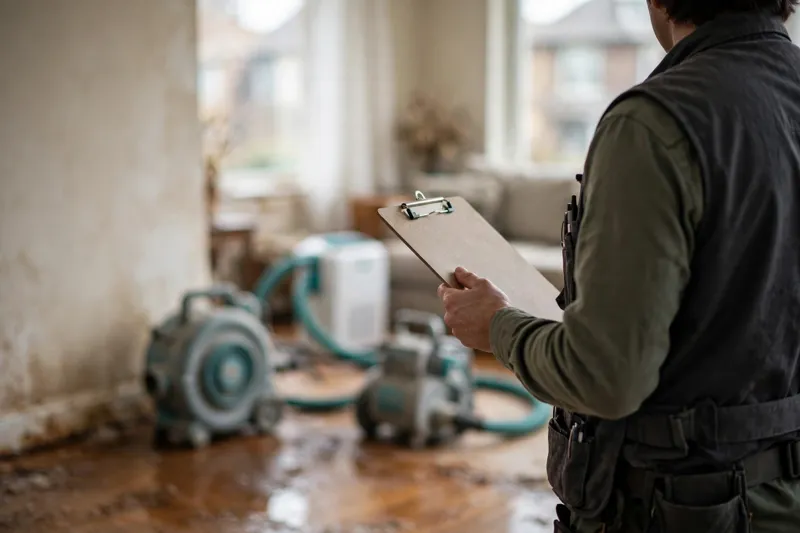
Homeowners search how much does water damage restoration cost in chicago the morning after, standing in a wet room. The short answer is that the question how much does water damage restoration cost has no single answer, because no two jobs are the same. A clean-water leak in one room is a small job. A finished basement full of contaminated water is a big one. The estimate follows the house, not the other way around.
That is why this page prints no prices. One engine even disagrees with itself on the same question asked twice. A page that printed any one of those figures would mislead the next homeowner who read it. So this page gives the drivers instead: the things that move the estimate up or down, and how to check whether a quote is honest.
The drivers are not mysterious. Four of them do most of the work: the water category, the size of the affected area, how fast the crew got in, and what the water touched. The rest, the materials, the drying days, the equipment count, the labour, follow from those four.
| Driver | What it changes | Chicago note |
|---|---|---|
| Water category | Clean, grey, or black water decides the cleaning, the protection, and the disposal | Combined sewers turn rain into black water fast |
| Size and scope | Square footage, room count, and how deep the water stood | A finished basement costs far more to rebuild |
| Response speed | Water that sits degrades, clean water becomes grey, grey becomes black, and mold starts within two days | Freeze and burst winters punish a slow response |
| Materials touched | Hardwood, plaster, cabinets, and insulation cost more to rebuild than bare concrete and drywall | Plaster and lath in older homes hide water |
| Drying days and equipment | Air movers and dehumidifiers are billed per unit per day, and the readings decide when they come out | Sump-pump homes need the drying checked twice |
| Labour and access | Tight access, multiple floors, and emergency call-outs add labour | Two-flats and greystones have shared walls and ducts |
Before the drivers begin, one fact sets the tone: the live site has no blog yet, and no dedicated cost page exists. The cost questions on the site live on the service pages, which give the process and the insurance rules. The service page for the work itself is water damage restoration in Chicago.
What affects the cost: the four drivers, in detail
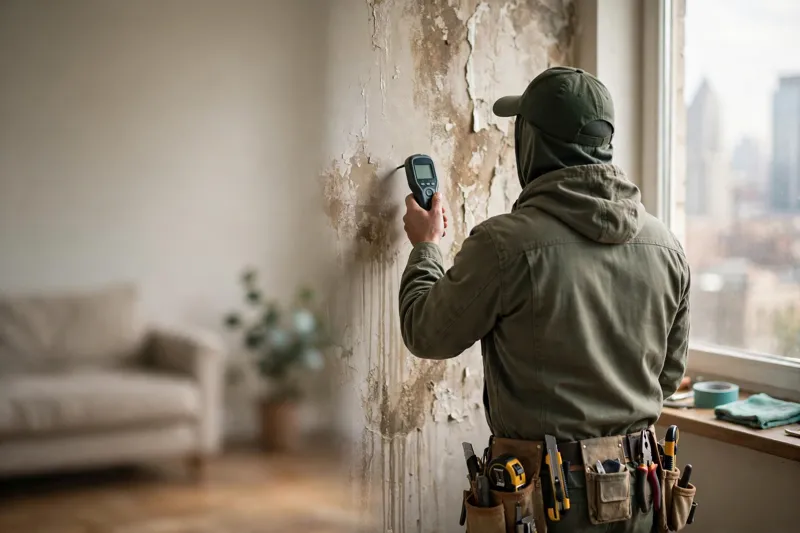
Searches for what affects water damage restoration cost come from homeowners who want the list, not the sales pitch. The short answer is four drivers. The long answer is what each driver actually does to a job, and where Chicago homeowners get surprised.
The first driver is the water category, and it is the one that changes everything else. Clean water comes from a supply line, a burst pipe, a failed water heater, a supply hose. It carries no contamination. Grey water comes from an appliance or a drain, a dishwasher, a washing machine, a sink, and it needs more cleaning. Black water is sewage or flood water, and it is the hardest: containment, protective gear, sanitizing, and disposal rules that clean water never needs. The category is not fixed: water that sits degrades, clean water becomes grey within a day or two, and grey water becomes black.
The second driver is the size and the scope. Water damage restoration cost factors all come back to the same two measurements: how much area the water reached, and how deep it stood. A single room with an inch of clean water is a small job. A whole floor with water in the walls is a big one. The scope also decides the drying days: a small room dries in a few days, a whole floor takes longer, and the readings decide when the equipment comes out. The scope is measured, not guessed.
The third driver is the response speed, and it is the one the homeowner controls most. Water that is extracted in the first hours does the least damage. Water that sits for a day soaks into the drywall, the insulation, and the subfloor. Water that sits for two days starts mold. The 48-hour rule is the strongest cost-control argument on this page: the faster the crew gets in, the smaller the job. A Chicago cost guide puts it as an escalation table: time is the driver that turns a small job into a big one.
The fourth driver is what the water touched. A bare concrete floor dries fast and needs little rebuilding. A finished basement with drywall, insulation, flooring, and cabinets needs demolition, drying, and a rebuild. Hardwood floors are slower to dry than carpet, and plaster walls hide water longer. The materials decide how much has to come out and go back in, and the rebuild is usually the biggest part of the job. That is why two houses with the same amount of water can carry very different estimates.
Behind the four drivers sit the smaller ones. Water damage repair cost drivers include the drying duration and the equipment count: air movers and dehumidifiers are billed per unit per day, and a job that needs ten machines for a week carries a bigger equipment bill than a job that needs three machines for three days. Access matters too: a basement with a narrow stair, a crawl space, or a second-floor bathroom adds labour.
The drivers are the water category, the size, the time the water sat, and the rebuild. The figures change from engine to engine. That is why this page is built on them.
How the water category changes the job
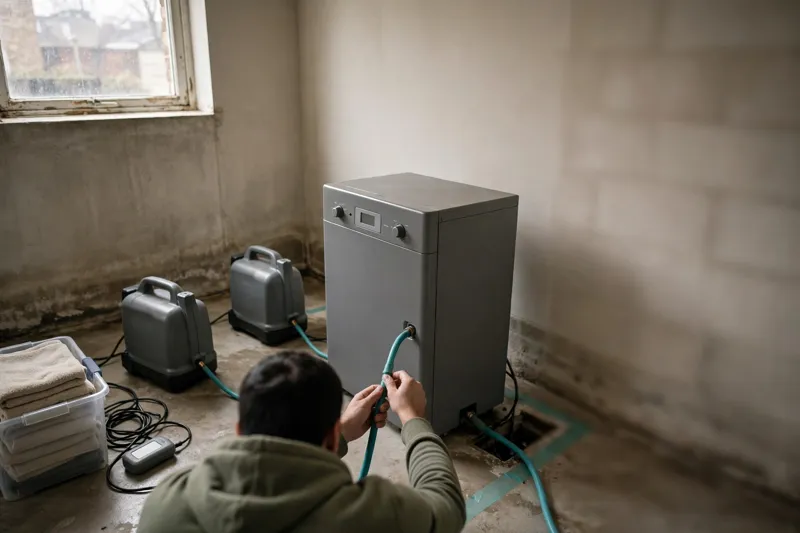
Searches for water damage restoration cost by category chicago come from homeowners who have heard the words clean, grey, and black. The category changes the cleaning, the protection, the disposal, and the drying, and a job that starts as clean water can end as a contaminated job if the water sits.
Clean water is the smallest job: the crew extracts it, dries the structure, and checks the readings. Grey water is a bigger job, it comes from an appliance or a drain, it carries waste, and the crew sanitizes as it dries. Black water is the biggest job: sewage or flood water, containment, protective gear, sanitizing, and disposal rules the other two categories never need. The category also decides what can be saved: porous materials that sat in black water are discarded, not cleaned. A quote that treats black water like clean water will grow, the supplement comes later, when the crew finds the contamination the first scope missed.
The category is also the reason the first hours matter most. Clean water left standing degrades: within a day or two it becomes grey, and grey water left longer becomes black. The category at the time the crew arrives is the category the estimate is written for. A homeowner who calls in the first hours gets a clean-water job. A homeowner who waits a week gets a contaminated job.
That is also why the drying time is part of the category. Clean water dries in days. Contaminated water takes longer, because the sanitizing and the disposal add steps, and it needs more machines, more protection, and more monitoring. The category is the first line of the estimate.
The Chicago version: older houses, combined sewers, and winter
Searches for water damage restoration cost chicago il come from homeowners who know the national guides leave out the Chicago parts. The national guides assume a new house with drywall and a sewer that only carries sewage. A Chicago house is usually older, and the city's sewers carry both rain and sewage in the same pipes.
The housing stock is the first Chicago fact. Bungalows, two-flats, and greystones dominate the neighbourhoods, and most of them carry plaster and lath, not modern drywall. Plaster and lath hold water differently, and they hide it in the walls. An older home can also carry cast-iron drain lines and galvanised supply lines, both of which fail with age. A Chicago cost guide names the neighbourhoods where the older stock concentrates, Logan Square, Bridgeport, Pilsen.
The second Chicago fact is the combined sewer system. In a heavy rain the sewers carry rainwater and sewage together, and when the system is overwhelmed the water comes back into basements. That is why a Chicago basement flood is so often contaminated water: the water that comes up through the floor drain has already mixed with sewage. The category changes, and the estimate follows it. The city's own programmes, the Private Drain Program and the Flood Assistance Repair Program for the 2023 and 2024 floods on the west side, exist because the combined system puts basements at risk.
The third Chicago fact is the winter. Pipes freeze and burst, and a burst pipe on a cold night can run for hours before anyone notices. And the fourth Chicago fact is the sump pump. Many Chicago homes depend on a sump pump, and a pump that fails in a storm, a power cut, a stuck switch, a failed check valve, floods the basement it was meant to protect. A home with a sump pump needs a battery backup.
That is the honest answer to how much does water damage restoration cost in a Chicago bungalow: it depends on the house, not on a chart. The category, the size, the response, and the materials decide it, and the Chicago facts, the plaster, the combined sewers, the winter, the sump, push it in directions a national guide never mentions.
The city itself is part of the job in a smaller way too. CHI 311 is open around the clock, every day of the year. The number (312) 744-5000 appears in the CHI311 site footer. The Illinois Department of Insurance is the regulator to call when a claim stalls.
Mitigation and restoration are two invoices, not one
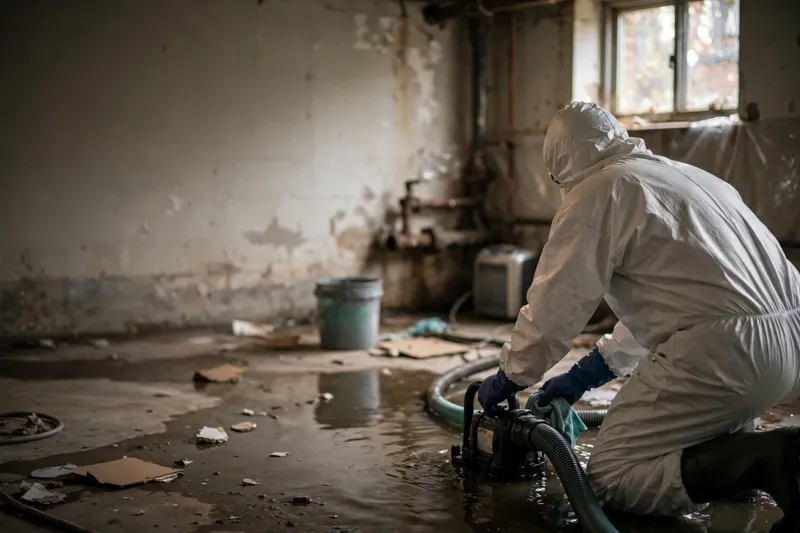
Searches for how much does water damage cleanup cost chicago come from homeowners who have already had one quote and want to know whether the number they were given is the whole job or half of it. The answer is that the job is two invoices, and the first quote often shows only one. The mitigation is the emergency half: stop the water, extract what stands, and dry the structure. The restoration is the rebuild half: the drywall, the flooring, the cabinets, the paint. A quote that shows only the mitigation is incomplete, and the homeowner who signs it finds the second invoice later, when the rebuild starts.
The split matters because the two halves are priced differently. The mitigation is priced by the day: equipment per unit per day, labour per day, monitoring per visit. The restoration is priced by the scope: square footage of drywall and flooring, linear feet of trim, number of cabinets. A homeowner who understands the split can read any estimate and ask the right question: does this number cover the rebuild, or only the drying?
The split also matters for insurance. The insurer pays the mitigation and the repair, less the deductible, up to the limits the homeowner bought, as two parts of one claim, and the mitigation has to start before the claim settles, the drying cannot wait for the adjuster. That is why the documentation matters: the moisture readings, the photos, and the daily logs are what the adjuster works from. The crew that documents daily gives the homeowner a claim that holds up.
How to read an estimate: the line items
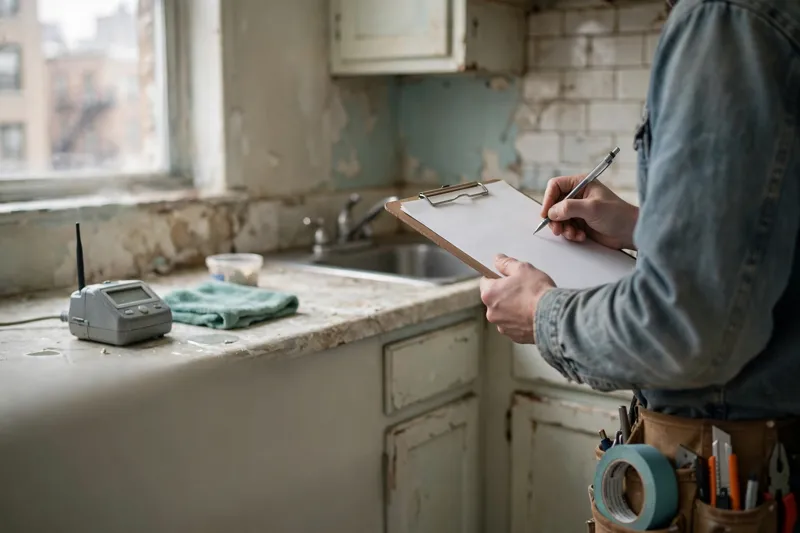
The estimate is the most important document in the whole job, and it is the one most homeowners never learn to read. A good estimate is a list of lines, and every line names a job, a quantity, and a unit. The lines a homeowner should expect to see are the extraction, the equipment per unit per day, the demolition, the cleaning, and the rebuild, with the drying days shown. The line items have names the industry uses everywhere: water extraction, drying with air movers and dehumidifiers, antimicrobial treatment, drywall and flooring removal and replacement. A homeowner who sees them knows the estimate was built from a real scope, not guessed at.
What a quote excludes is as important as what it includes. The exclusions a homeowner should look for are the rebuild, the mold work, the contents, and the permits. A drying quote that excludes the rebuild is not wrong, it is a drying quote, not a full quote, but the homeowner has to know that before signing. The mold work is often a separate job, because it needs its own containment. The contents, the furniture, the clothing, the boxes, are often a separate invoice, because the pack-out happens off site. The permits are often an extra, because the city charges for them. None of these exclusions is a trick. The trick is the estimate that hides them.
Why two quotes differ is the question that brings most homeowners to this page, and the answer is almost never that one company is dishonest. Two quotes differ because they assume different things: different drying days, different equipment counts, different demolition scopes, different rebuild finishes. One quote assumes three drying days and four air movers. The other assumes seven drying days and ten air movers. Both can be honest, but only one of them matches the house. The way to compare them is to compare the lines, not the totals. A quote with more lines is often the more complete one. A quote with fewer lines often grows with supplements later.
The supplements are the part of the job nobody warns the homeowner about. A supplement is a change to the estimate after the work starts, the crew opens a wall and finds wet insulation the first scope missed, or the drying takes longer than the first scope allowed. Supplements are normal, and they are not a sign of dishonesty. What matters is whether the supplement is documented: the crew photographs the new damage and measures it before doing the work. A documented supplement is part of the job. An undocumented one is a dispute waiting to happen. Ask for the supplement in writing, with photos, before the work starts.
Drying out the house: what the dry-out covers
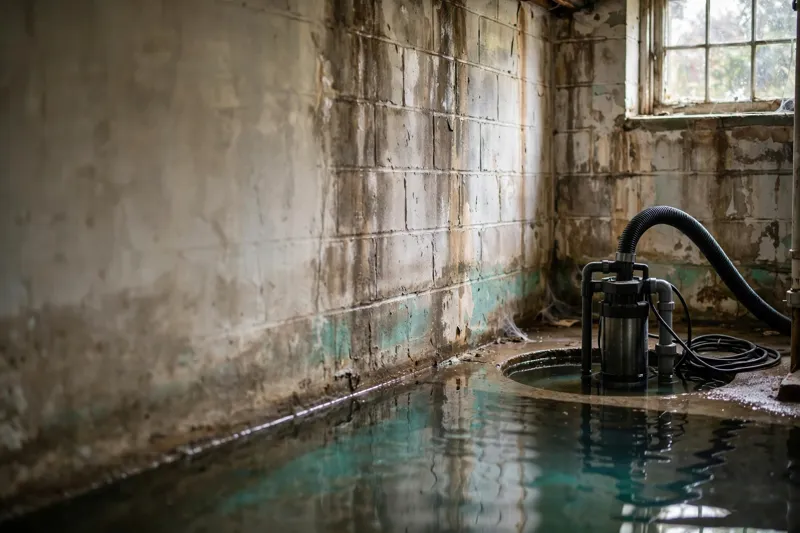
Searches for how much does it cost to dry out a house after water damage come from homeowners who want the drying priced on its own, separate from the rebuild. The dry-out is the mitigation half of the job: the inspection and moisture mapping, the extraction, the air movers and dehumidifiers, and the daily monitoring visits, until the readings say the structure is dry. What it does not cover is the rebuild and the mold work, which is a separate job.
The drying time is the part of the dry-out that surprises most homeowners. A small room dries in a few days. A whole floor takes longer, and hardwood, subfloor, and concrete take longer than drywall and carpet. The readings decide when the equipment comes out, not the calendar, and not the feel of the wall. The equipment is billed per unit per day, so the drying days are the biggest line in the dry-out.
The drying is not done when the room feels dry. It is done when the moisture readings match the dry standard, room by room, and the crew has the logs to prove it.
Do you have to replace drywall after water damage? Sometimes, and the answer depends on how wet it got and for how long. Drywall that sat in water for days is usually cut out and replaced, because it loses its strength and grows mold. Drywall that got wet and dried fast can sometimes be saved. The crew decides by measuring, not by looking: the moisture reading and the time the water sat are what decide it.
The basement: the most common Chicago job
Searches for how much does basement water damage restoration cost come from the most common Chicago job there is. The basement is where the water goes, because water runs downhill. The job depends on three things: whether the basement is finished, what kind of water came in, and how deep it stood.
An unfinished basement with clean water is the smallest basement job: the water is extracted and the floor dried, and little needs rebuilding. A finished basement with clean water is bigger: the drywall, the insulation, the flooring, and the trim all have to be dried or replaced. A finished basement with sewage is the biggest: demolition, sanitizing, and a full rebuild, with the contents packed out and cleaned off site. The sump pump and the drains decide whether it happens again.
How much it costs to fix water damage in a basement is the same question in different words, and the answer is the same: it depends on the finish, the category, and the depth. The basement job is also the one where the Chicago facts matter most: the combined sewers turn a heavy rain into contaminated water, the sump pump is the only thing standing between the basement and the next storm, and a winter freeze can burst a pipe in the basement wall. A basement estimate that does not name the sump, the drains, and the category is an estimate written for a different city.
Flood damage: when the water comes from outside
Searches for how much does flood damage restoration cost come from homeowners whose water came from outside, a storm, a river, a street that turned into a stream. Flood water is black water by definition: it has mixed with sewage and soil. The flood job is the biggest job in this guide, because the contamination changes everything: containment, protective gear, sanitizing, and disposal.
How much flood cleanup costs is the same question, and the answer is the same set of drivers: the category, the size, the response, and the materials. The flood job also carries a second cost the other jobs do not: the contents. A flood that reaches a finished basement or a ground floor soaks the furniture, the clothing, and the boxes, and the contents have to be packed out and cleaned off site, or discarded, when the contamination makes cleaning impossible. Ask whether the estimate includes the contents before signing.
Flood insurance is the part of the flood job that surprises most homeowners. A standard homeowners policy does not cover flooding from outside, that needs separate flood insurance. The water that came in from the street is a different claim, with a different policy. The homeowner who learns that after the flood pays for the job out of pocket.
Per square foot: why a rate is not a price
Searches for how much does water damage restoration cost per square foot come from homeowners who want a rate, a single number they can multiply by the size of the room. The honest answer is that a per-square-foot rate is not a price. It is a way of comparing two estimates, and it only works when both cover the same scope.
The rate moves with the category: clean water carries the lowest rate, grey water a higher one, and black water the highest, because the cleaning, the protection, and the disposal all change. The rate moves with the materials too: a bare concrete floor carries a lower rate than a finished room. And the rate moves with the drying days: a job that needs more machines for longer carries a higher rate than a job that dries fast.
That is why a rate quoted without a scope is meaningless. A rate for the mitigation alone is not a rate for the whole job, and a rate for clean water is not a rate for sewage. The homeowner who asks for a rate should also ask what it includes: the extraction, the equipment, the demolition, the cleaning, and the rebuild. The rate is useful when it is tied to a written scope. Without the scope, it tells the homeowner nothing.
Insurance: what it pays, and what it does not
The question does insurance pay for water damage restoration cost has a short answer and a long one. The short answer is yes, usually, when the damage was sudden and accidental, a burst pipe, a failed water heater, an appliance hose that gave way. The insurer pays the mitigation and the repair, less the deductible, up to the limits the homeowner bought. The long answer is the list of things the insurer does not pay for.
The insurer does not pay for a slow leak, classed as wear and tear, or for poor maintenance, a roof never repaired, a drain never cleared, a sump pump never tested. The insurer does not pay for flooding from outside, which needs separate flood insurance, or for a sewer backup unless the homeowner holds the endorsement. And the insurer does not pay for the pipe or the appliance that failed, it pays for the damage, not for the failed part itself.
The mold rule follows the same logic. The insurer covers mold only when the mold follows a sudden, accidental loss the policy already covers, such as a burst pipe. Mold from a slow leak, from flooding outside, or from a damp basement the owner never fixed is usually not covered. Mold cover has its own sub-limit, so read the policy before you need it.
What not to say to an insurance adjuster is a question the search results carry, and the honest answer is simple: do not say anything that is not true, and do not guess. Photograph everything, keep the receipts, and let the readings speak, the adjuster works from the documentation. How long a claim stays on your insurance has no settled answer, and this page invents none. Document everything, file promptly, and keep the file.
Claim documentation: the discipline that pays
How to maximize insurance claims for water damage is a question the search results carry, and the honest answer is not a trick. It is a discipline: photograph everything before anything moves, keep every receipt, and let the crew measure the moisture and log it daily. The readings prove the drying happened, the photos prove the damage happened, and the receipts prove the spending. A claim built on those three things holds up.
The supplements follow the same discipline. When the crew opens a wall and finds wet insulation the first scope missed, the supplement is photographed, measured, and written down before the work starts. The contractor's estimate and the insurer's will differ, that is normal. A homeowner with the photos and the readings does not have to argue. How to tell if water damage is permanent is the same question in the end: measure it. A wall that reads wet after a week of drying needs replacing, not more time.
What actually happened in Chicago: one verified case
This page names a Chicago case only when three things are verified: a named homeowner, an exact Chicago street address, and an incident date.
Amanda Nadhir owned a condominium unit at 1133 S. Wabash Avenue in Chicago when a fire broke out in the building on 4 July 2020, and the water from firefighting damaged many units, including hers. She signed a Restoration Agreement with Tri-State Restore, LLC on 9 July 2020. The case is Nadhir v. Tri-State Restore, LLC, Illinois Appellate Court, First Division, decided 28 May 2024, case number 1-23-0287. She terminated the contract on 12 November 2020 and demanded a refund of the money her insurer had paid to Tri-State.
Two caveats belong with this case, and neither is small. First, the water damage was secondary to a building fire, firefighting water, not a standalone burst pipe, flood, or sewer incident. Second, the restoration figure in the case is the contractor's estimate, not a final paid bill: the opinion records Tri-State's estimate for the costs of restoration at eighty-eight thousand two hundred fifty-four dollars and fourteen cents, and no final bill was confirmed. The estimate is printed here in words, as a court-documented estimate, never as a bill, and never as a price any homeowner should expect.
One more lead failed the address test. A CBS Chicago report about a Bridgeport homeowner whose house flooded during city water-main work gave no street address. No other verified named Chicago case with all three elements was found on any platform checked live. A standalone burst-pipe, flood, or sewer case with a final paid bill and a street address has still not been found anywhere, that sentence is the honest result of the sweep, not a gap in the research.
The case also carries a correction. Both are wrong, and neither is printed here.
Prevention: what keeps the next job small
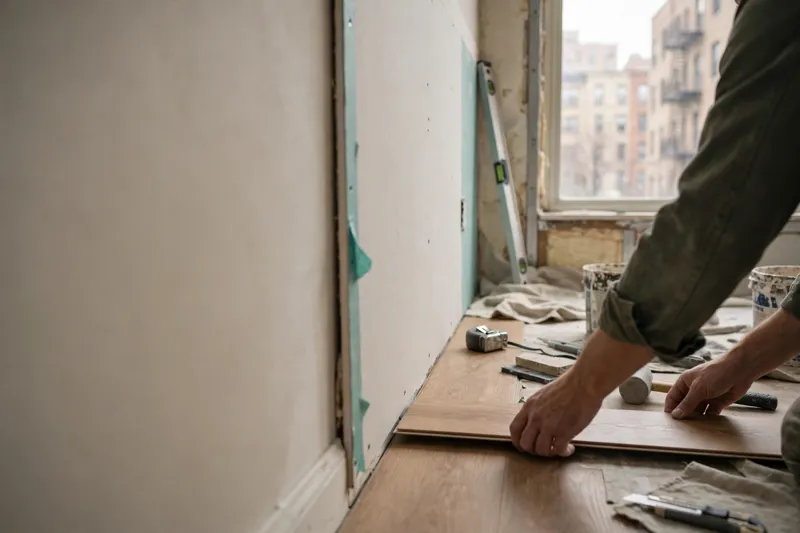
The cost guide ends where the restoration ends, with prevention, because the cheapest job is the one that never happens. Test the sump pump before the storm season, and fit a battery backup. Clear the gutters and the downspouts so the water runs away from the foundation. Replace washing-machine hoses that are more than five years old, and keep the heat on in winter.
Keep the receipts, the photos, the readings, and the claim file, and check the insurer's first scope against the rooms the water reached. A small leak found in a day is a small job, and a small leak found in a month is a big one. The prevention is not a product. It is the same discipline the restoration runs on, find the water fast, dry it properly, and never let a small problem sit.

How to get a water damage restoration estimate in Chicago: the
The stages below are the same order the whole page follows. The estimate is not a number from a website, it is a written scope for your house, built stage by stage.
Inspect and document
Walk every room and photograph everything. Find the source, measure the moisture in the walls and floors, and write the inventory down. The photos and the readings are what the claim and the estimate are built on.
Categorise the water
Sort the water into clean, grey, or black. Clean water comes from a supply line. Grey water comes from an appliance or a drain. Black water is sewage or flood water, and it changes the cleaning, the protection, and the disposal.
Measure the scope
Measure the affected area, count the rooms, and note the materials, drywall, plaster, hardwood, carpet, cabinets. The scope decides the drying days, the equipment count, and the rebuild.
Itemise the estimate
Ask for the estimate line by line: extraction, equipment per day, demolition, cleaning, and rebuild, with the drying days shown. A line-item estimate can be compared. An estimate with no lines cannot, and it should not be signed.
Mitigate first
Stop the water, extract what stands, and start the drying before anything else. The mitigation is the emergency half of the job, and it runs on its own invoice. The rebuild waits until the structure is dry.
Dry and verify
Run the air movers and dehumidifiers until the moisture readings match the dry standard, then verify every room. Drying is verified with meters, not by feel. The equipment comes out when the readings say so, not when the calendar says so.
Rebuild and close out
Rebuild the damaged rooms to their pre-loss condition, then walk through with the adjuster. Keep the receipts, the photos, the readings, and the claim file together. Sign nothing until the work is done.
Before the crew leaves: the checklist
- The water source is stopped, and the standing water is out
- Every room is photographed, and the moisture readings are written down
- The water category is named, clean, grey, or black
- The estimate is line by line, with the drying days shown
- The mitigation and the rebuild are priced separately, and both are in writing
- The drying is verified with meters, not by feel
- The mold work, the contents, and the permits are named in writing
- The receipts, the photos, the readings, and the claim file are kept together
Call now, get the drivers before you sign
The first day decides the whole job. Call now and a crew inspects the damage, measures the moisture, and gives you a written estimate, line by line, before any work starts.
Questions Chicago homeowners ask about restoration cost
How much does water damage restoration cost?
No honest page can give you one number, because the job depends on the water category, how far it spread, how fast the crew got in, and what it touched. A bare concrete floor dries fast. A finished basement with drywall, insulation and flooring takes far longer to put back.
Does homeowners insurance cover water damage restoration, or only part of it?
It covers only part of it. The policy pays for the drying and the repair when the cause was sudden and accidental, up to your limits, minus your deductible. It does not pay for the pipe or appliance that failed, or for flooding from outside. A sewer backup needs the endorsement.
How long does water damage restoration take?
Drying takes three to seven days on most losses, and the full job with repairs usually takes one to three weeks. A small leak in one room can finish in a few days. With contents work and rebuilding, add the repair time after the drying.
What is water damage restoration called?
The full job, stopping the water, drying the structure, cleaning, and rebuilding, is called water damage restoration. The emergency half, stopping the water and drying, is also called mitigation. Removing mold growth is a separate job, called remediation, and it follows the drying, never the other way around.
Does insurance cover water damage restoration?
It usually does when the damage was sudden and accidental, such as a burst pipe or an appliance failure. It does not cover flooding from outside, which needs separate flood insurance. A sewer backup is usually covered only if you hold the endorsement for it.
What is the water damage restoration process?
The process runs in order: inspection first, to find the source and how far the water spread; then extraction, with pumps and vacuums; then drying, with air movers and dehumidifiers; then cleaning and sanitizing; then the repairs. Dry the floors, walls and framing fast to stop mold, and document everything.
Does homeowners insurance cover mold?
It covers mold only when the mold follows a sudden, accidental loss the policy already covers, such as a burst pipe. Mold from a slow leak, flooding outside, or a damp basement the owner never fixed is usually not covered. Mold cover has its own sub-limit, so read the policy before you need it.
What should I do when I find mold?
Fix the moisture source first, or the mold comes back. Wear a respirator rated N95, gloves and goggles, and clean only a small patch yourself, ten square feet or less. Anything bigger, or mold that keeps coming back, needs a professional crew with the right equipment.
How much does homeowners insurance pay for water damage?
No page can give you a number, because the payment depends on your policy, your deductible, the cause, and the limits you bought. The insurer pays the drying and the repair, less your deductible, and it does not pay for the pipe that failed. Ask your insurer what your limits are.
Does renters insurance cover water damage?
It covers the renter's belongings when the damage was sudden and accidental, such as a burst pipe or water from an upstairs neighbour's plumbing. It does not cover flooding from outside, which needs separate flood insurance, and it does not cover the building itself, the walls, floors and pipes are the landlord's.
How much does mold testing cost?
This site prints no prices, so no figure here can mislead you. The cost depends on how many samples are taken, whether the testing is air or surface, whether a lab is involved, and how big the affected area is. We inspect first, then give you a written scope.
Does homeowners insurance cover a burst pipe?
Yes, when the pipe burst suddenly, a freeze split, a joint that failed without warning, a line that gave way all at once. The insurer pays for the water damage the burst caused, not for the pipe itself. A slow leak that ran for months may be classed as wear and tear.
How much does trenchless sewer repair cost?
This site prints no prices, so no figure here can mislead you. The cost depends on the length of the line, how deep it runs, whether the pipe is lined or burst through, and what sits above it, a driveway, a patio, or a street. A camera inspection comes first.
What does it mean for water damage to be fully remediated?
It means the water source is fixed, the standing water is gone, the wet materials are dried to the readings, the room is cleaned and sanitised, mold and contamination are addressed, and the repairs are finished, with indoor humidity at forty to sixty percent. A remediated home is dry, clean and safe again.
What affects water damage restoration cost?
Four things move it most: the water category, the size of the affected area, how fast the crew got in, and what the water touched. Clean water dries fast. Contaminated water, a finished basement, and a slow response all push the job longer. The materials, hardwood, plaster, cabinets, decide how much is rebuilt.
How much does it cost to dry out a house after water damage?
Drying alone is one part of the job, and it depends on the area, the category, and how many days the equipment runs. A small room needs a few air movers and one dehumidifier for a few days. A whole floor needs more machines for longer, and the readings decide when they come out.
What drives water damage restoration cost?
Four drivers: how much water there was, how long it sat, what kind of water it was, and how much has to be rebuilt. Water that sat for days degrades from clean to contaminated. The rebuild, drywall, flooring, cabinets, is usually the biggest part of the job.
How much does basement water damage restoration cost?
A basement job depends on whether the basement is finished, what kind of water came in, and how deep it stood. An unfinished basement with clean water dries fast. A finished basement with sewage needs demolition, sanitizing, and a rebuild, and the sump pump and the drains decide whether it happens again.
Does insurance pay for water damage restoration cost?
Yes, usually, when the damage was sudden and accidental, a burst pipe, a failed water heater, an appliance hose that gave way. The insurer pays the mitigation and the repair, less your deductible, up to the limits you bought. It does not pay for a slow leak, poor maintenance, or flooding from outside.
Why is water restoration so expensive?
Because the job is three jobs at once: the emergency work, the drying, and the rebuild, and each needs different people and machines. The drying runs for days with air movers and dehumidifiers running around the clock. The rebuild, drywall, flooring, cabinets, is skilled work.
How expensive is it to fix water damage?
It depends on the same drivers as the rest of the job: the water category, how far it spread, how fast the crew got in, and what it touched. A small clean-water leak is the smallest job. A finished basement with contaminated water is the biggest, because the demolition and the rebuild take longest.
Why is water remediation so expensive?
Remediation is the cleanup half of the job, the sanitizing, the removal of contaminated materials, and the mold work, and it needs containment, protective gear, and air scrubbers. Contaminated water takes longer to make safe, and the crew cannot rush the drying. The longer the water sat, the more to remove.
How much does water damage devalue a house?
This page gives no figure for the loss in value: no two houses lose the same amount. What buyers and insurers look at is whether the damage was dried properly, whether mold followed, and whether the repairs were done to code. A documented drying protects the value better than a quick cosmetic fix.
How much should water damage restoration cost?
There is no single number that fits every house, so the honest answer is a written estimate for your house, not a figure from a website. The estimate should list every line, extraction, equipment, demolition, cleaning, and rebuild. If an estimate has no lines, get a second one.
How expensive is it to repair water damage?
The repair is the rebuild half of the job, and it depends on what has to come out and go back in: drywall, insulation, flooring, cabinets, and trim. A room with bare concrete and no finishes repairs fast. A finished kitchen or bathroom repairs slowly, because the fixtures come out first.
Can you live in a house with water damage?
Not until the water is out, the structure is dry, and the contamination is cleaned. Wet drywall, soaked insulation, and standing water are not safe to live with, and mold starts within two days. Stay out until the readings are normal and the cleaning is done.
What does water damage restoration include?
It includes the inspection, the water removal, the drying with air movers and dehumidifiers, the cleaning and sanitizing, and the repairs that put the room back. The drying is verified with moisture readings, not by feel. The rebuild is part of the job, and the estimate should show it.
Sources
- Dry Bros (drybros.com), two Chicago cost posts, 18 and 30 September 2026, read end to end. No figures printed here.
- DisasterServices TX (blog.disasterservicestx.com), a cost-estimates post, published 26 October 2026, read end to end. No figures printed here.
- CostToRenovate (costtorenovate.com), a cost-database guide, updated April 2026, read end to end. No figures printed here.
- Emergency-Services24h (emergency-services24h.com), a cost-by-category-and-area page, figures last checked 16 August 2026, read end to end. No figures printed here.
- Dr. Moisture (drmoisture.com), a decision guide about when to call a professional, read end to end. No dedicated cost page on that site.
- FixUpFirst (fixupfirst.com), a cost guide, 14 May 2026, updated 18 May 2026, read end to end. No figures printed here.
- DryNow (drynow.cc), a research publication, report on basement flooding, 9 April 2026, read end to end. No figures printed here.
- PushLeads, a cost pricing guide video, watched in full, just under eleven minutes long. No figures printed here.
- Illinois Courts, Nadhir v. Tri-State Restore, LLC, Illinois Appellate Court, First Division, decided 28 May 2024, case number 1-23-0287, the Amanda Nadhir case, 1133 S. Wabash Avenue, Chicago.
- CBS Chicago, Marie Saavedra, 5 May 2022, a Bridgeport homeowner's water-main flooding claim, read live; no street address given, so not a verified case.
- WikiHow, "How to Clean Up Water Damage: Proper Restoration Procedures", co-authored by Ryan Owsiany, updated 2 May 2025.
- City facts: chicago.gov (Department of Water Management; CHI 311). Illinois Department of Insurance.
More from the blog
- Water damage restoration in Chicago, the service page
- How long does water damage restoration take in Chicago?, the timeline guide
- Does homeowners insurance cover water damage in Chicago?, the insurance guide
- Mold after water damage in Chicago, the forty-eight-hour guide
- Sewage backup cleanup in Chicago, the basement backup guide
More Restoration Services in Chicago
Every service below is one tap away. Pick the one that matches your problem.

Water Damage Restoration
Fast water extraction, structural drying, and full repair after burst pipes, leaks, and floods.
Learn more →
Water Mitigation
Emergency water removal, structural drying, and mold prevention to stop the damage fast, 24/7.
Learn more →
Mold Remediation
Safe, contained mold remediation that removes contamination and fixes the moisture source.
Learn more →
Sewage Cleanup
Safe removal and disinfection of dangerous sewage backups and black water.
Learn more →
Flood Cleanup
Water pumped out, structure dried, and debris cleared fast after storms and flooding.
Learn more →
Hardwood Floors Water Damage
Cupped, buckled or stained hardwood after a leak? How we dry it, when sanding saves it, and when the boards have to go.
Learn more →