Frozen Pipe Burst Prevention in Chicago
A frozen pipe is a warning. A burst pipe is the damage. The work that keeps one from becoming the other is short, cheap in effort, and best done before the first hard freeze, and that is what frozen pipe burst prevention means in a Chicago winter: insulation, steady heat, a dripping faucet, sealed drafts, and hoses put away before the cold arrives.
- The five habits that keep water moving when the cold hits
- The temperature numbers, as claims, never one settled figure
- What to do when a pipe freezes, and what never to do
- Why no named Chicago homeowner case exists yet
Written for Chicago homeowners, the bungalows, the two-flats, and the unheated basements.
- We answer 24/7
- Local Chicago team
- Insurance documentation help
- Straight answers, no pressure
Have a question? Call us any time
Tell us what is happening with your pipes and we will call you back. We answer 24/7.
The short answer: the freeze is the warning, the burst is the damage
Homeowners search frozen pipe burst prevention chicago after the first hard freeze, usually the morning the kitchen tap gives a trickle and then nothing. The answer is the same every winter: the pipe froze overnight, the ice blocked the water, and the pressure behind the ice is what will split the pipe if nothing is done. The longer question, how to prevent pipes from freezing in chicago, is the same question with the city named, and the answer has two Chicago twists, the old housing and the unheated basements, that the rest of this page covers in turn.
Three numbers frame the whole page, and all three are claims from the search results, never settled facts. Water freezes at thirty-two degrees. Pipes in Chicago usually start to freeze when the outdoor temperature drops to twenty degrees or lower, especially in uninsulated or unheated places, a claim from the search answers on the Chicago terms. And the thermostat should stay at least fifty-five degrees day and night, even when you are away, with some local plumbers recommending sixty-eight to seventy degrees during sub-zero snaps. The page gives the range because the sources disagree, and no single number is the safe one.
| What you see | What it usually means | What to do first |
|---|---|---|
| A faucet gives a trickle, then nothing | The pipe feeding it has frozen | Shut off the main water, open the faucet |
| Frost on a pipe, or a pipe that feels cold and hard | Ice has formed inside the pipe | Warm it gently from the faucet end |
| Water on the floor after a cold night | A pipe has burst, often as it thawed | Shut off the main water at once |
| One faucet dead, the rest fine | The frozen run feeds that faucet only | Warm that run, keep the rest dripping |
| Every faucet dead at once | The freeze is near the main, or the heat is off | Check the heat, shut off the water, call a plumber |
The wider question, how to keep pipes from freezing in winter, has the same answer in Chicago as anywhere cold: insulate the exposed pipes, seal the drafts around them, keep the heat steady, open the cabinet doors under sinks on outside walls, and let the vulnerable faucets drip a slow trickle in a hard freeze. The Chicago twists are where the pipes run, through unheated basements, along exterior walls in bungalows and two-flats, and past the rim joists where cold air leaks in, and the sections below take each one in turn.
Read the pattern before you act, because the pattern decides the move. A trickle means a freeze, and the job is to thaw it gently before the pressure builds. No water at all from one faucet means the freeze is on that run. Water on the floor means the pipe has already burst, and the only job left is to stop the water at the main. The five habits below are for before the freeze; the thawing steps are for after it.
What this job actually is
At its simplest, frozen pipe burst prevention is a short list of habits done before the cold arrives: insulate the pipes you can see, seal the drafts that blow on them, keep the heat steady, open the cabinets, drip the vulnerable faucets, and put the hoses away. None of the five habits is hard. What makes the job fail is timing, the insulation goes on in October, not in January, and the shut-off valve is found in autumn, not at two in the morning with water on the floor.
The ice itself does not split the pipe. Water expands by about nine percent when it freezes, a claim from the plumbing guidance the sweep read, and the ice forms a plug inside the pipe. The water trapped between the plug and a closed faucet has nowhere to go, so the pressure builds until the pipe wall gives way, usually at a joint or a weak spot, and usually not at the ice itself. That is why the burst often happens during the thaw, not the freeze: the ice starts to move, the pressure shifts, and the weakened wall lets go.
The job is not the same as drying a leak. A burst pipe is a supply pipe that has split open, and the water coming out of it is clean water under pressure, a single half-inch supply line can release over two hundred gallons an hour, a claim from the search results on the Chicago terms. The first move is always the same: shut off the main water. The drying and the repair come after, and the restoration process, inspection, extraction, drying, cleaning, repairs, is the same process this site's service pages describe.
At what temperature do pipes freeze?
The question what temperature do pipes freeze chicago comes up on every Chicago search, and the search answers agree on the shape of the answer even where they differ on the number. Water freezes at thirty-two degrees, but a pipe does not freeze the moment the air outside hits that number.
And the thermostat number is fifty-five degrees at least, day and night, even when you are away, with the variants fifty-five to sixty, fifty-five to sixty-eight, and sixty-eight to seventy degrees "recommended by many local plumbers" during sub-zero snaps. This page prints the range because the sources disagree, and because the right number depends on the house: a well-sealed house with insulated pipes holds fifty-five degrees; a drafty bungalow with pipes on an exterior wall may need more.
At what temperature do pipes burst from cold? There is no single burst temperature, because the burst is not caused by the cold alone, it is caused by the pressure behind the ice, and by how long the freeze lasts. A pipe can freeze at twenty degrees and hold, or freeze and burst, and nothing on the outside tells you which one it will be. How cold is too cold for pipes to freeze is the same question from the other side: below thirty-two degrees the risk starts, at twenty degrees or lower it is serious, and the longer the cold holds, the worse it gets.
How long does it take PVC pipes to freeze at 32 degrees? The air hitting thirty-two degrees does not freeze a pipe on the spot. The pipe, the water inside it and the wall around it all hold heat, and the freeze takes hours of sustained cold, longer in a heated house, faster in an unheated space, faster still with wind blowing on an exposed run.
Why the pipe bursts, and what it is made of
Searches for frozen pipes prevention chicago winter all come back to the same two facts: the pipe rarely bursts at the ice spot, and the pressure builds downstream. The ice plugs the pipe, the water trapped between the plug and the closed faucet keeps coming from the main, and the pressure rises until the weakest point gives, a soldered joint on copper, a brittle section of CPVC, a corroded length of galvanised steel. The pipe material decides where it fails, not whether it fails.
Galvanised steel is rigid and corrodes from the inside, so it fails at the thinnest, most corroded point. Copper ruptures at the soldered joints, where the metal is already stressed. CPVC turns brittle in the cold, so it cracks rather than stretches. PEX tolerates freezing better than the rest, because it can expand a little as the ice grows, which is why it shows up in the answers to the next two questions.
Is PEX better than PVC for freezing? The guidance says yes, for the reason above: PEX gives a little, CPVC does not, and the give is what keeps the wall intact. Is PEX allowed in Chicago? The sweep found no verified answer in the Chicago plumbing code, and this page does not invent one, whether PEX is allowed in a Chicago home depends on the local plumbing code and the job, so ask a licensed plumber before repiping anything. What the guidance does say, plainly, is that no pipe material is freeze-proof: even PEX fails if the freeze is hard enough and long enough, and the habits on this page matter whatever the pipes are made of.
Does keeping heating on stop pipes from freezing? Yes, in the rooms the heat reaches, steady heat is the main defence, and it is why the thermostat number matters. But pipes in unheated spots can still freeze with the heat on, because the heat never reaches them: the run through the crawl space, the pipe on the far side of an exterior wall, the line in the garage. Heat protects the house; insulation and sealing protect the pipes the heat cannot reach.
If a pipe has already frozen
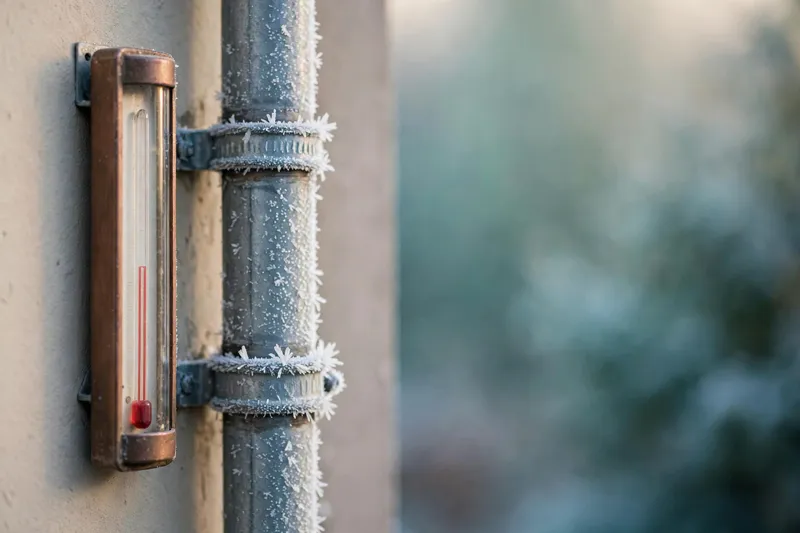
How to know if pipes are frozen is the first question, and the signs are plain: a faucet gives a trickle or nothing at all, the pipe feels cold and hard where you can touch it, frost shows on the outside of the pipe, or the water smells odd and gurgles when you run the tap. Check the faucet farthest from the main first, it is fed by the longest run, and it is usually the first to freeze. One faucet dead means the freeze is on that run; every faucet dead means the freeze is near the main, or the heat is off.
The question how to prevent pipes from bursting in cold weather is really two questions: how to stop the freeze, and what to do once the pipe has frozen. Once it has frozen, the job is to relieve the pressure before the pipe splits. Shut off the main water first, then open the faucet the frozen pipe feeds, so the pressure has somewhere to go.
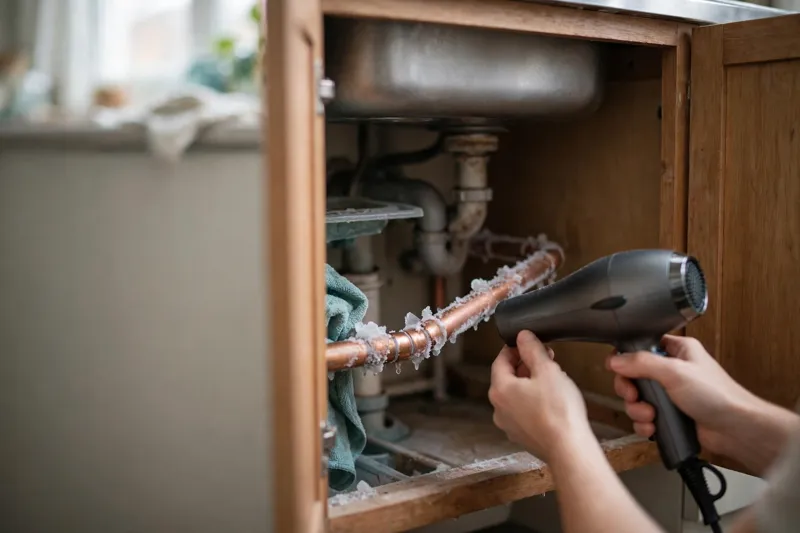
Find the frozen section, it is usually where the pipe runs through an unheated space, and warm it gently from the faucet end, with a hair dryer, a heating pad or warm towels. Never use an open flame, a blowtorch or boiling water, and never pour boiling water down a drain to thaw a pipe: sudden heat can split the pipe, and hot water poured down a drain does nothing for a frozen supply line.
Will frozen pipes defrost on their own? Yes, when the weather warms, but the burst often happens during the thaw, not the freeze, so the thaw is when to watch. Keep the main water shut off while the pipe thaws, open the faucets, and check every joint and run for leaks as the ice melts. Should I shut off water if pipes are frozen? Yes, shutting off the main is the first move, because it takes the pressure out of the line while you thaw it. How to make sure frozen pipes do not burst is the same answer in short: shut off the water, open the faucets, thaw gently, and watch for leaks as it warms.
How to prevent burst pipes in winter chicago is the question the whole page answers, and the frozen-pipe half of it is the shortest: thaw it gently, from the faucet end, with gentle heat, and never with a flame. What can I pour down the drain to unfreeze pipes has one answer, nothing. No chemical, no boiling water, no drain cleaner thaws a frozen supply pipe, and pouring hot water into a frozen drain can crack the fixture.
How to unthaw pipes in a mobile home is the same gentle-heat rule with one extra warning: the pipes in a mobile home often run under the floor, exposed to the cold from below, so they freeze faster and need the same treatment, gentle heat from the faucet end, and a plumber if the run is hidden.
Older Chicago homes: bungalows, two-flats, vintage brick
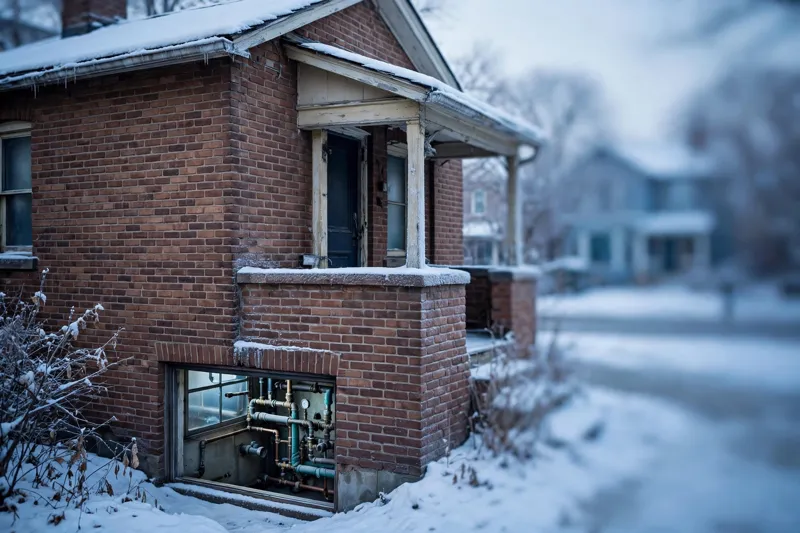
For an older home, frozen pipe burst prevention starts with the drafts, not the pipes. The search answers on the older-homes terms describe the same house again and again: a bungalow, a two-flat, or a vintage brick home with uninsulated masonry walls, a drafty basement, an unheated crawl space, and vintage plumbing running close to the outside wall. The pipes in those houses were put in before insulation was standard, and the walls around them leak cold air straight onto the pipe.
Searches for frozen pipe prevention for older homes chicago all come back to one step the search answers call the single most critical step: seal the air leaks and the foundation penetrations. Drafts through the sill plates, the foundation cracks, the dryer vent and the crawl-space vents bypass pipe insulation unless the gaps are sealed with caulk or spray foam, insulation wrapped around a pipe that cold air is blowing straight onto does very little. Seal first, then insulate, and the insulation can do its job.
The other older-home habits follow the same order. Find the pipes that run along exterior walls and in unheated spaces, and insulate those first, they are the ones that freeze. Open the cabinet doors under sinks on outside walls so the warm air in the room reaches the pipes behind them. Keep the heat steady rather than turning it down at night, because an old house loses heat fast and the pipes feel it first. And if the house will sit empty, shut off the water and drain the pipes, an empty old house with the heat off is the fastest way to a burst pipe in the city.
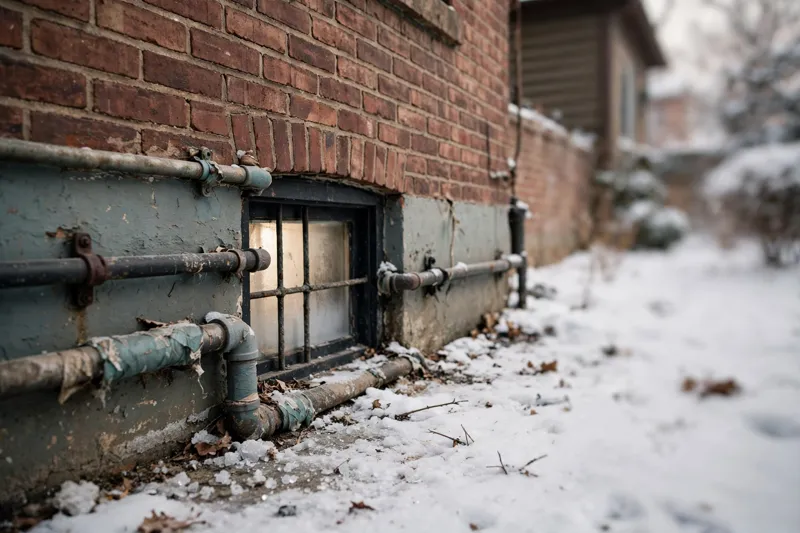
The unheated basement
An unheated basement is where frozen pipe burst prevention is won or lost in a Chicago winter. The basement is the coldest room in most Chicago homes, and it is where the pipes run: along the walls, near the rim joists, past the foundation vents, and under the windows. The question how to prevent pipes freezing in unheated basement is the question this section answers, and the answer starts with the same two steps as the rest of the page, insulate, then seal, done harder, because the basement has more exposed pipe than any other room.
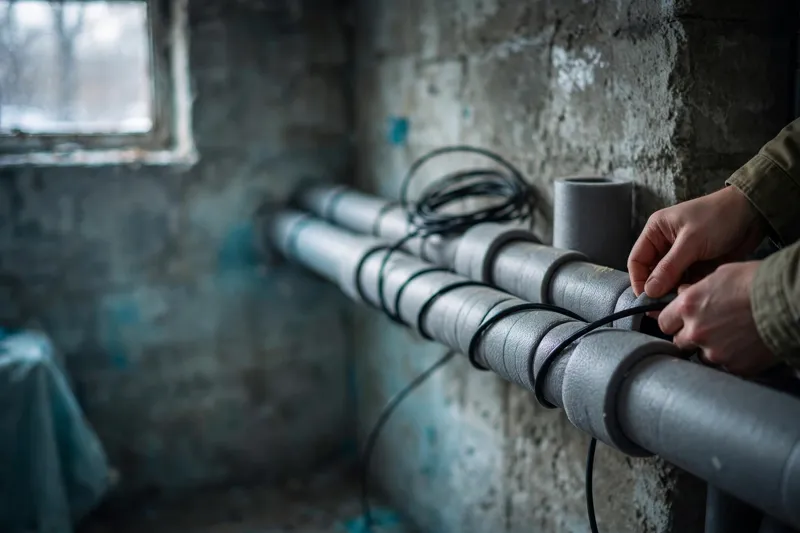
Insulate every exposed hot and cold pipe with foam sleeves, and seal the drafts at the foundation, the windows and the rim joists with caulk or spray foam. Add thermostat-controlled heat cable on the runs that freeze first, and remember that heat cable needs power, it will not work in a power cut, which is when the house is coldest. Open the basement vents and doors a little to let warm air circulate down from the rooms above, and in a severe cold snap let the vulnerable faucets trickle.
Will pipes freeze in an unheated basement? Yes, and sooner than in any heated room, the basement is the first place to check when a faucet goes dead. At what temperature do basement pipes freeze is the same question as the rest of the house, with a colder answer: the basement drops below freezing while the rooms above are still warm, so the pipes there freeze first. How long does it take for pipes to freeze in an unheated house depends on the cold outside and the heat the house holds, but the basement is always the fastest room to freeze, and the first room to check.
What actually happened in Chicago: no named case
No verified named Chicago homeowner frozen-pipe burst case exists. The tests are a named homeowner, an exact Chicago street address, and a burst date. Nothing found meets all three, so this page invents none.
The closest verified incident is a reported news incident, and it is printed here only with all of its limits in the same sentences, never as a homeowner case. In Washington Park, a Chicago Housing Authority tenant's apartment pipes burst on a Sunday night in January 2024, and the family was evacuated at about two in the morning on the Monday.
The two news outlets that reported it give different surnames for the same person and incident, and the address given is only the block, the 5100 block of South Calumet Avenue, with no house number. A tenant in public housing is not a homeowner, and a block is not an address, so the incident fails two of the three tests. It is the nearest thing the sweep found, and it is not a case this page can build on.
The sweep also found what does not count. A running shop in Hinsdale had its pipes burst in January 2026 and was watched in full on video, a Hinsdale business, not a Chicago homeowner. The case studies on one Chicago restoration page name only towns and rooms, a Buffalo Grove apartment, a Skokie home, a Niles basement, a Norwood Park bank, with no names, no addresses and no dates. Each one is real, and each one fails the test this page applies.
Insurance: the burst-pipe question
A burst pipe is usually covered, because the burst was sudden, a freeze split, a joint that failed without warning, a line that gave way all at once. The insurer pays for the water damage the burst caused, not for the pipe itself, and not for a slow leak that ran for months, which may be classed as wear and tear. Frozen pipes where the heat was not maintained are the exclusion to watch: a policy can refuse a claim where the home was left cold, which is why the thermostat number on this page matters twice, once for the pipes, and once for the claim.
The same sudden-and-accidental rule answers the wider questions. Homeowners insurance covers only part of a restoration: it pays the drying and the repair, up to the limits bought, minus the deductible, and it does not pay for flooding from outside, which needs separate flood insurance, or for a sewer backup, which needs the endorsement. Renters insurance covers the renter's belongings when the damage was sudden and accidental, and the building itself is the landlord's. Mold is covered only when it follows a sudden, accidental loss the policy already covers, and mold cover has its own sub-limit, read the policy before you need it, not after the basement floods.
What a burst-pipe job costs depends on how much water there was, how far it spread, what it touched, and whether the line needs repair. This site prints no prices, so no figure here can mislead you, the scope is written first, and the price follows the scope. Our does homeowners insurance cover water damage post covers the rule in full, and our water damage restoration Chicago page covers the service itself.
Prevention: the five habits
Seal the drafts around them. Drip the vulnerable faucets in a hard freeze. Put the hoses away before the cold arrives. Searches for frozen pipe prevention tips chicago all come back to that list, and the rest of this section is the detail behind each habit.
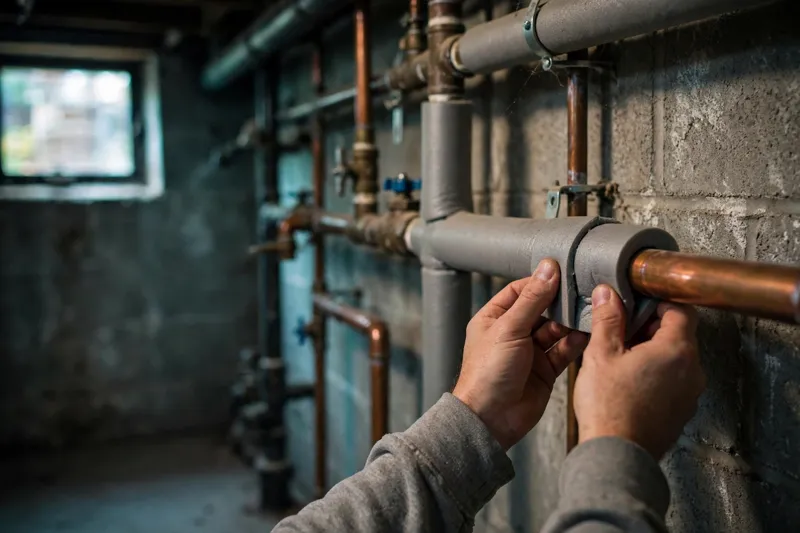
Insulate first, and insulate the right pipes: the exposed runs in the basement, the attic, the garage, the crawl space and along exterior walls, with foam sleeves or fibreglass, and UL-listed heat tape or cable on the runs that freeze first. Seal second: caulk and spray foam at the rim joists, the foundation cracks, the vents and the dryer vent, because cold air blowing straight onto a pipe beats insulation every time.
Keep the heat third: at least fifty-five degrees day and night, even when you are away, with some local plumbers recommending sixty-eight to seventy degrees in sub-zero snaps, a claim, not a settled number. Drip fourth: a slow steady trickle from the faucets on outside walls and in unheated spaces, cold water or both hot and cold. And put the hoses away fifth: disconnect, drain and store every garden hose, shut the interior valve, open the outside spigot and fit an insulated cover.
The question how to prevent frozen pipes in winter is the same five habits, and the question of going away is the sixth. Can you shut water off to prevent frozen pipes? Can your pipes still freeze if your water is turned off?
Yes, if water is left standing in the pipes, turning the water off only helps if the pipes are drained too. What temperature should I leave my heating on overnight to stop pipes freezing is the thermostat number again: at least fifty-five degrees, with the higher range for a drafty house in a sub-zero snap.
Seven steps, in order
Homeowners ask how to keep pipes from freezing in the winter without taking the house apart, and the answer is the seven steps below, in order, and before the first hard freeze. Do them once in autumn, then keep the list by the stairs for the next cold snap.
Insulate the exposed pipes.
Wrap foam sleeves or fibreglass around every water pipe you can see in the basement, the attic, the garage, the crawl space and along exterior walls. On the runs that freeze first, add UL-listed heat tape or cable with a thermostat, so it only heats when the pipe is cold. Insulation slows the freeze; it does not stop it on its own.
Seal the drafts around the pipes.
Caulk and spray foam the gaps, cracks and vents near plumbing, the rim joists, the foundation penetrations, the dryer vent and the crawl-space vents. Cold air blowing straight onto a pipe beats insulation every time, and the search answers call sealing the leaks the single most critical step for older Chicago homes.
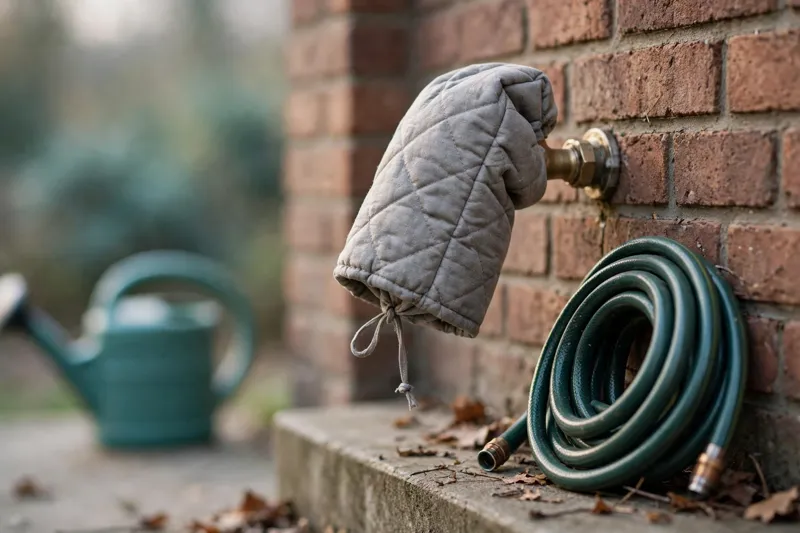
Winterise the outdoor water.
Disconnect every garden hose, drain it and store it inside. Shut the interior valve to each outdoor faucet, open the outside spigot to drain the line, and fit an insulated cover over it.
Keep the heat steady and open the cabinets.
Keep the thermostat at least fifty-five degrees day and night, even when you are away, and keep the garage doors closed. Open the cabinet doors under sinks on outside walls so warm air reaches the pipes. A furnace running steadily in a sub-zero snap is normal, not a fault.
Drip the vulnerable faucets in a hard freeze.
Let a slow steady trickle run from the faucets fed by pipes on outside walls and in unheated spaces, cold water or both hot and cold. The drip relieves the pressure that splits a pipe, and the faucet farthest from the main service line is the one to drip first.
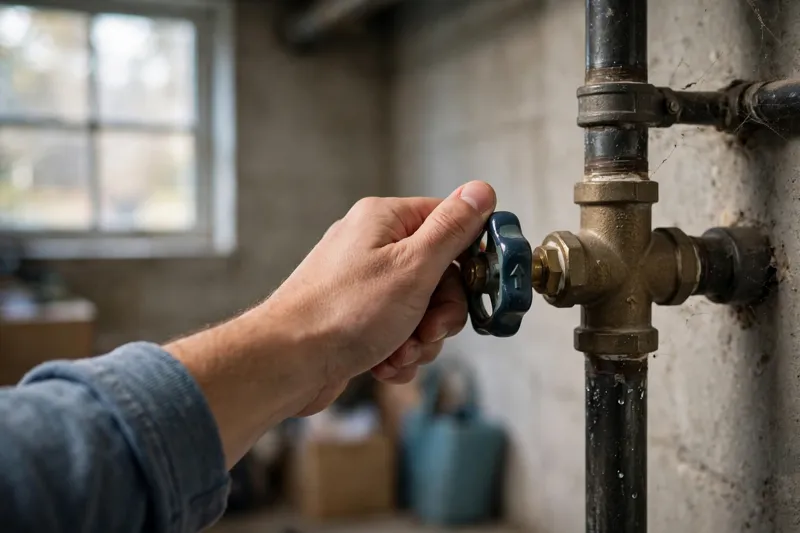
Find the main shut-off before you need it.
Locate the main water shut-off valve, often in the basement near the street, and test it now, while the pipes are fine. Show everyone in the house where it is and how it turns. If a pipe bursts at two in the morning, the shut-off is the difference between a puddle and a flood.
If a pipe freezes, shut off the water and thaw it gently.
Shut off the main water, open the faucet the frozen pipe feeds to let the pressure out, and warm the frozen section from the faucet end with a hair dryer, a heating pad or warm towels. Never use an open flame, a blowtorch or boiling water. Call a plumber if the pipe has burst or is hidden in a wall.
Your checklist, before the next storm
Write this frozen pipe burst prevention checklist down and keep it by the stairs: insulate the exposed pipes, seal the drafts at the rim joists and the foundation, winterise the outdoor water, keep the heat at least fifty-five degrees day and night, open the cabinet doors under sinks on outside walls, drip the vulnerable faucets in a hard freeze, and find the main shut-off before you need it. Before the next cold snap, check the heat cable, test the shut-off, and keep our number, (773) 570-9869, on the fridge. During the snap, watch the faucet farthest from the main. After it, check the basement before the water has time to sit, and call the same day if it is wet.
Call now, a pipe has burst
This page is about frozen pipe burst prevention, and the best time to act is before the first hard freeze, but if a pipe has already burst, the job now is stopping the water. Shut off the main, turn off the power near the water if you can do it safely, and call (773) 570-9869. We answer 24/7 and talk you through the first hour while a crew is on the way.
A pipe has burst in your Chicago home?
We answer 24/7. Call now and a crew is on the way.
Call (773) 570-9869Frequently asked questions
What is frozen pipe burst prevention?
It is the set of steps that stop water inside a pipe from freezing, expanding and bursting the pipe. The ice itself does not split the pipe, the pressure building up behind the ice does. The steps are insulation, steady heat, dripping faucets, sealing drafts and disconnecting hoses.
Does homeowners insurance cover water damage restoration, or only part of it?
It covers only part of it. The policy pays for the drying and the repair when the cause was sudden and accidental, up to the limits you bought, minus your deductible. It does not pay for the pipe or appliance that failed, and it does not pay for flooding from outside. A sewer backup needs the endorsement.
How long does water damage restoration take?
Drying takes three days to two weeks on most losses, and the full job with repairs usually takes one to three weeks. A small loss in one room can dry in one to five days, while a severe loss with rebuilding can take weeks to months.
What is water damage restoration called?
The full job, stopping the water, drying the structure, cleaning, and rebuilding, is called water damage restoration. The emergency half, stopping the water and drying, is also called mitigation. Removing mold growth is a separate job, called remediation, and it follows the drying, never the other way around.
Does insurance cover water damage restoration?
It usually does when the damage was sudden and accidental, such as a burst pipe or an appliance failure. It does not cover flooding from outside, which needs separate flood insurance. A sewer backup is usually covered only if you hold the endorsement for it, so ask your insurer before the next storm.
What is the water damage restoration process?
The process runs in order: inspection first, to find the source and measure how far the water spread; then extraction, with pumps and vacuums; then drying, with air movers and dehumidifiers; then cleaning and sanitizing; then the repairs that put the room back. Act fast, the search results say mold can start within a day or two.
Does homeowners insurance cover mold?
It covers mold only when the mold follows a sudden, accidental loss the policy already covers, such as a burst pipe. Mold from a slow leak, from flooding outside, or from a damp basement the owner never fixed is usually not covered. Mold cover also has its own sub-limit, so read the policy before you need it.
What should I do when I find mold?
Fix the moisture source first, or the mold comes back. Wear a respirator rated N95, gloves and goggles, and clean only a small patch yourself, the guidance the search engines cite is ten square feet or less. Anything bigger, or mold that keeps coming back, needs a professional crew with the right equipment.
How much does homeowners insurance pay for water damage?
No page can give you a number, because the payment depends on your policy, your deductible, the cause of the loss, and the limits you bought. The insurer pays the drying and the repair, less your deductible, and it does not pay for the pipe that failed. Ask your insurer what your limits are before the next storm.
Does renters insurance cover water damage?
It covers the renter's belongings when the damage was sudden and accidental, such as a burst pipe or water from an upstairs neighbour's plumbing. It does not cover flooding from outside, which needs separate flood insurance, and it does not cover the building itself, the walls, floors and pipes are the landlord's. A sewer backup needs the endorsement.
How much does mold testing cost?
This site prints no prices, so no figure here can mislead you. The cost depends on how many samples are taken, whether the testing is air or surface, whether a lab is involved, and how big the affected area is. We inspect first, then give you a written scope before any work starts.
Does homeowners insurance cover a burst pipe?
Yes, when the pipe burst suddenly, a freeze split, a joint that failed without warning, a line that gave way all at once. The insurer pays for the water damage the burst caused, not for the pipe itself. A slow leak that ran for months is a different story, and it may be classed as wear and tear.
How much does trenchless sewer repair cost?
This site prints no prices for either job, because trenchless repair and a burst pipe are two different things. Trenchless repair replaces a broken sewer line by pulling a new pipe through the old one. A burst pipe is a supply pipe that split open, usually from freezing, and the fix is a repair, not a replacement.
How much does water damage restoration cost?
This site prints no prices, so no figure here can mislead you. The cost depends on how much water there was, how far it spread, what kind of water it was, and what it touched. A bare concrete floor dries fast. A finished basement with drywall, insulation and flooring costs far more to put back.
What does it mean for water damage to be fully remediated?
It means the water source is fixed, the standing water is gone, the wet materials are dried to moisture readings, the room is cleaned and sanitised, mold and contamination are addressed, and the repairs are finished, with indoor humidity in the forty to sixty percent range. A remediated home is dry, clean and safe to live in again.
At what temperature do pipes freeze?
Water freezes at thirty-two degrees, but a pipe does not freeze the moment the air outside hits that number. The search answers agree that pipes become seriously at risk when the outdoor temperature drops to twenty degrees or lower and stays there for several hours. Keep the thermostat at least fifty-five degrees.
How do I keep pipes from freezing in winter?
Insulate the exposed pipes with foam sleeves, and seal the air leaks around them with caulk or spray foam. Keep the heat steady day and night, open the cabinet doors under sinks on outside walls, and disconnect the garden hoses before the first hard freeze. Let the vulnerable faucets drip, and know where the main shut-off valve is.
What should I do if a pipe freezes?
Shut off the main water, then open the faucet the frozen pipe feeds, to let the pressure out. Warm the frozen section from the faucet end, with a hair dryer, a heating pad or warm towels. Never use an open flame, a blowtorch or boiling water. Call a plumber if the pipe has burst or is hidden in a wall.
Should I leave faucets dripping during a freeze?
Yes, for the vulnerable faucets, the ones on outside walls and in unheated spaces, during a hard freeze. Drip below thirty-two degrees, and treat it as strongly advised below twenty.
How do I prevent pipes from freezing in an unheated basement?
Insulate exposed hot and cold pipes with foam sleeves, and seal the drafts at the foundation, the windows and the rim joists. In a cold snap, let the vulnerable faucets trickle.
How long can pipes stay frozen without bursting?
There is no fixed number of hours, because it depends on how cold it is, how long the freeze lasts, and the pipe itself. A frozen pipe can sit for hours or days without bursting, and the burst often happens during the thaw, not the freeze. Shut off the water, thaw it gently, and watch for leaks as it warms.
Does a frozen pipe always mean a burst pipe?
No. A frozen pipe is a blockage, ice has formed inside the pipe and stopped the water. A burst happens when the pressure builds up between the ice and a closed faucet until the pipe wall gives way. Many frozen pipes thaw without bursting, but you cannot tell by looking, so shut off the water and thaw it gently.
How likely is a pipe to burst if frozen?
There is no settled number for it, because the risk depends on the temperature, how long the freeze lasts, and the age and material of the pipe. The search answers say the risk is real once a pipe has frozen and the pressure has nowhere to go. Shut off the water, open the faucets, and thaw the pipe gently.
What can I wrap around my pipes so they don't freeze?
Foam sleeves are the first choice for exposed pipes, with fibreglass wrap or self-sealing tape where the pipe bends. UL-listed heat tape or cable goes on the runs that freeze first, with a thermostat so it only heats when the pipe is cold. Cover the outdoor faucets with insulated caps, and wrap the basement, attic, garage and crawl-space pipes first.
Do you let hot or cold water drip to keep pipes from freezing?
Run the drip on the faucets fed by pipes on outside walls and in unheated spaces, and use the faucet farthest from the main. A slow steady trickle is enough; a running tap wastes water.
Will pipes freeze in an unheated basement?
Yes. An unheated basement is one of the highest-risk spots in a Chicago home, because the pipes run exposed along the walls and near the rim joists, where cold air leaks in. Insulate every exposed pipe, seal the drafts at the foundation and the rim joists, and add heat cable on the runs that freeze first.
How long does it take for pipes to freeze in an unheated house?
There is no fixed time, because it depends on the outdoor temperature, the wind, the insulation, and whether the heat is on. The colder it is outside, the faster the pipes freeze.
What do plumbers use to unfreeze pipes?
A hair dryer, a heating pad, warm towels, a heat lamp, or electric heat tape, all gentle heat, applied from the faucet end. A plumber may also use a pipe-thawing machine or steam on a line hidden in a wall. What no plumber uses is an open flame, a blowtorch or boiling water, because heat can split the pipe.
Sources
- City of Chicago, Department of Water Management, "Avoid Frozen Pipes" page and tips sheet on preventing pipes from freezing, chicago.gov, November 18, 2026. https://www.chicago.gov/city/en/depts/water.html
- Chicago Water & Fire Restoration, freeze prevention guide, no date visible on the page. https://chicagowaterandfire.com/how-to-keep-pipes-from-freezing-in-a-chicago-winter/
- Chicago Water & Fire Restoration, burst guide, no date visible on the page. https://chicagowaterandfire.com/what-to-do-when-pipes-burst/
- Suburban Plumbing Experts, article on frozen and burst pipes in Chicago, June 22, 2026, William Koonce. https://suburbanplumbingexperts.com/frozen-and-burst-pipes-in-chicago/
- Redline Plumbing, prevention guide for the northwest suburbs, no date shown on the page. https://www.redlineplumbingil.com/tips/prevent-frozen-pipes-chicago
- WikiHow, "How to Unfreeze Water Pipes: Safe and Fast Solutions", updated December 8, 2025. https://www.wikihow.com/Unfreeze-Water-Pipes
- NBC Chicago, video on a suburban running shop reopening after frozen pipes burst, January 27, 2026, a Hinsdale business, labelled as a suburb. https://www.youtube.com/watch?v=f2UbidXCy8s
- FOX 32 Chicago, Tia Ewing, January 16, 2024, Washington Park apartment, block-level location only. https://www.fox32chicago.com/news/chicago-family-homeless-burst-pipes-flood-apartment
- Chicago Tribune, Kate Armanini, January 17, 2024, read via Yahoo, Washington Park apartment, block-level location only. https://www.yahoo.com/news/family-forced-evacuate-chicago-apartment-165400796.html
- American Red Cross, guidance on preventing and thawing frozen pipes.
More on water damage in Chicago
The service pages and guides behind this prevention post, the work itself, after the water gets in.
More Restoration Services in Chicago
Every service below is one tap away. Pick the one that matches your problem.

Water Damage Restoration
Fast water extraction, structural drying, and full repair after burst pipes, leaks, and floods.
Learn more →
Water Mitigation
Emergency water removal, structural drying, and mold prevention to stop the damage fast, 24/7.
Learn more →
Mold Remediation
Safe, contained mold remediation that removes contamination and fixes the moisture source.
Learn more →
Sewage Cleanup
Safe removal and disinfection of dangerous sewage backups and black water.
Learn more →
Flood Cleanup
Water pumped out, structure dried, and debris cleared fast after storms and flooding.
Learn more →
Hardwood Floors Water Damage
Cupped, buckled or stained hardwood after a leak? How we dry it, when sanding saves it, and when the boards have to go.
Learn more →