Fire Damage Restoration Steps in Chicago
A house fire leaves three jobs at once: the water from the hoses, the soot on every surface, and the structure underneath. This guide walks through all three, in the order a crew works, with the ranges Chicago homeowners actually face.
- The first 24 hours, what to do before anyone cleans anything
- The seven stages, in order, and how long each one takes
- What can be saved, and what has to go
- Two real Chicago cases, and what they teach
Written for Chicago homeowners, the bungalows, the two-flats, and the brick homes.
- We answer 24/7
- Local Chicago team
- Insurance documentation help
- Straight answers, no pressure
Have a question? Call us any time
Tell us what happened. A crew calls back fast and tells you what to do next, before anyone touches the soot.
The short answer: safety first, then the sequence
Homeowners search fire damage restoration steps chicago the morning after, standing in a house that smells of smoke and wondering where to start. The short answer is simple: do not go back in until the fire department clears the house, then the job runs in a fixed order, secure, assess, dry, clean, rebuild. Nothing starts before the clearance. Nobody cleans before the house is safe.
The fire damage restoration steps below are the same order every Chicago crew follows, whether the fire was a kitchen fire or a whole floor. The order matters because each stage protects the next one: the board-up keeps the rain out, the assessment tells the adjuster what the job is, the drying stops mold before it starts, and the soot cleaning has to finish before the rebuilding begins. Skip a stage and the job comes back to haunt you, the smoke smell returns through the paint, the mold grows behind the new drywall, the insurer refuses a second claim.
That is also why this page gives ranges instead of promises. The ranges in the table below are the honest version: they show the spread the search results actually carry.
| Stage | What happens | When |
|---|---|---|
| Emergency response | Fire department clearance, board-up, roof tarp, gas and electric shut off | Hours 0 to 24 |
| Assessment | Inspection, photos, moisture readings, asbestos and lead testing | Day 1 to 7 |
| Water extraction and drying | Pumps, vacuums, air movers, dehumidifiers | 3 to 7 days |
| Debris and demolition | Remove debris, tear out what cannot be saved | 1 to 4 weeks |
| Smoke and soot cleaning | Dry chemical sponges, HEPA vacuum, foggers, hydroxyl | 1 to 3 weeks |
| Contents cleaning | Pack-out, inventory, cleaning in a facility | 1 to 2 weeks |
| Reconstruction | Rebuild to pre-loss condition, final walkthrough | Weeks to months |
Before the stages begin, one fact sets the tone: the live site has no blog yet. The fire content on the site lives on the service page, fire damage restoration in Chicago, which gives five stages, a timeline table, and nineteen questions.
What the process looks like, stage by stage
Searches for fire damage restoration process steps come from homeowners who want the sequence, not the sales pitch. The question what are the steps in fire damage restoration has a short answer and a long one. The short answer is seven stages, in a fixed order. The long answer is what each stage actually involves, and where Chicago homeowners get it wrong.
They differ on how many stages to count, some engines count seven, some count eight, because pack-out and demolition get split or merged, but nobody reorders them. The sequence is the one thing the whole field agrees on.
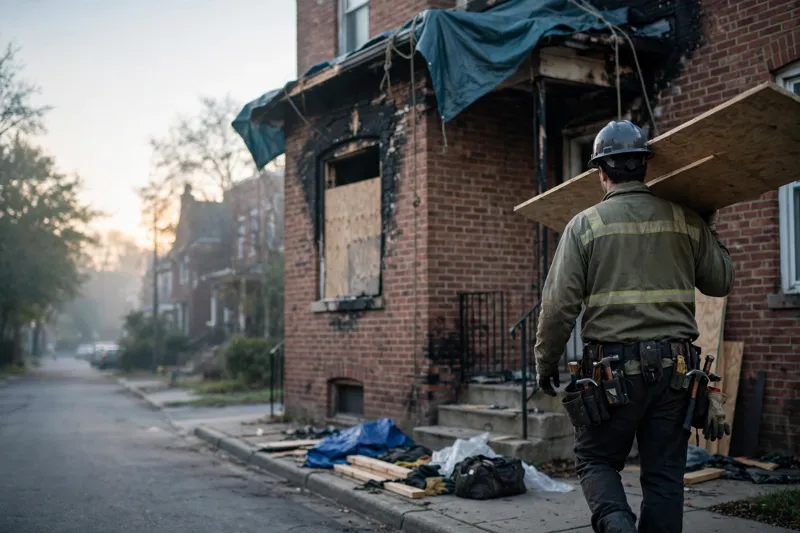
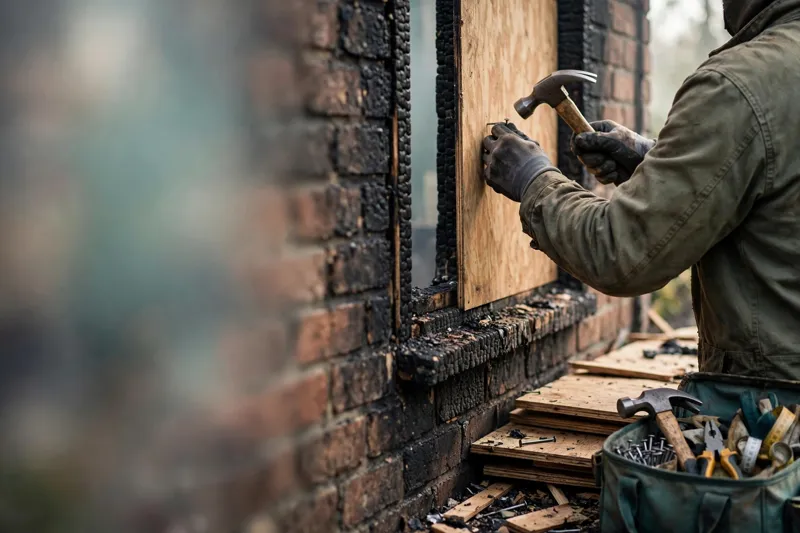
Stage one is the emergency response, and it belongs to the fire department, not to any crew. The house is not entered until the officials say it is safe. A crew then boards up the broken windows and doors, puts a tarp over the roof, and shuts off the gas and electric supply. The board-up is not cosmetic: an open house invites rain, theft, and further damage, and an unsecured house can lose its insurance cover. One restoration guide puts the emergency work in the first twenty-four hours, and the search results agree, the house is secured the same day the fire is out, not the week after.
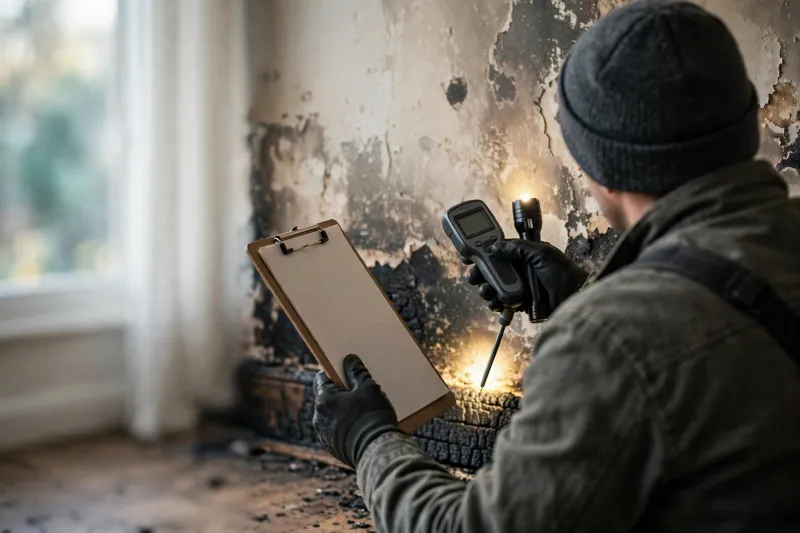
Stage two is the assessment, and it is the stage that decides everything else. The crew inspects every room, photographs everything before it moves, and measures moisture in the walls and floors. In an older Chicago home the crew also tests for asbestos and lead before any tear-out, because the plaster and lath in a two-flat or a greystone can carry both. The assessment feeds the claim: the photos and the inventory are what the adjuster works from, and a thin assessment becomes a thin settlement. One Chicago company puts the assessment in the first day to a week, and the search results agree that the inspection comes before any cleaning.
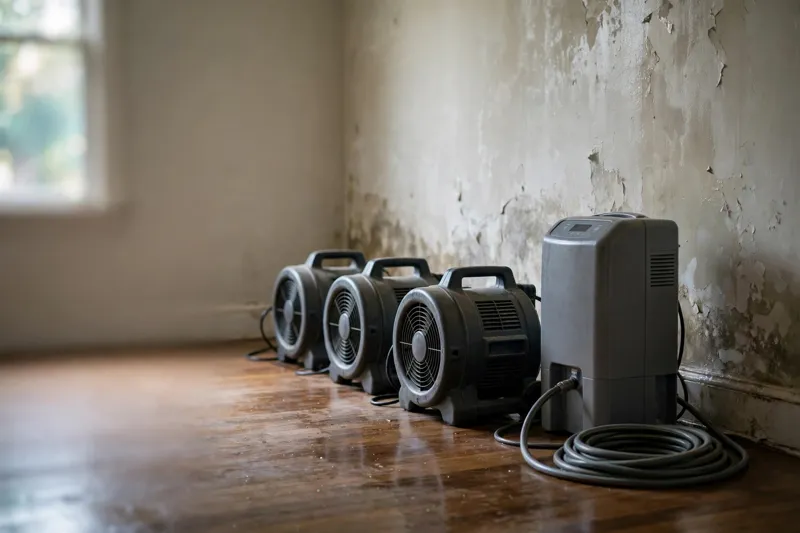
Stage three is the water. A house fire is also a water loss, because the hoses put out the fire with thousands of gallons of water, and the water runs into the floors, the walls, and the basement. The crew removes it with pumps and vacuums, then dries the structure with air movers and dehumidifiers. The floors, walls and framing need to dry within a day or two to stop mold, and the readings are checked daily until they are normal. The drying takes three to seven days on most losses, and the job is not done when the room feels dry, the readings have to say so.
Stage four is debris and demolition. The crew removes the debris and tears out what cannot be saved, charred drywall, soaked insulation, ruined flooring, cutting back to sound material only. A controlled demolition keeps the rest of the house standing. This is also the stage where the contents leave the house, packed out and inventoried, so the cleaning crew can work without tripping over the furniture.
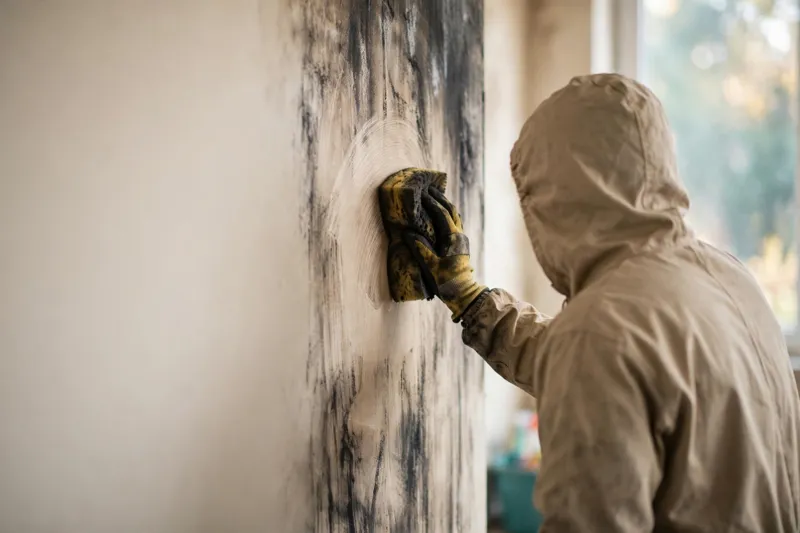
Stage five is the smoke and soot cleaning. Soot is acidic, and it keeps damaging surfaces the longer it sits. The cleaning starts dry: chemical sponges and a vacuum with a HEPA filter take the dry soot off first, working from the ceiling down. Only then are hard surfaces washed. The odour is cleared with thermal foggers or hydroxyl, and the heating and cooling system is cleaned so the smoke does not travel through the return ducts. The smoke and soot work takes one to three weeks on a typical job, and it has to finish before the rebuilding begins, paint over soot and the smell comes back through the paint within weeks.
Stage six is the contents: the pack-out, the inventory, and the cleaning in a climate-controlled facility. Stage seven is the rebuild, and the final walkthrough with the adjuster and the code officials. The fire and smoke damage restoration process is one job, not two, the smoke travels where the fire never reached, so the cleaning covers rooms that look untouched from the street. And the fire damage restoration process chicago searches come from homeowners who want the Chicago version: the permits, the older housing stock, and the winter. The next section gives them that version.
How long it takes: ranges, not promises
Searches for fire damage restoration timeline chicago come from homeowners who need a date, a move-back date, a school date, a work date. The honest answer is that the search results give no single date, and this page does not invent one. The ranges below are the spread the research actually found, and the spread is the point.
The fire damage restoration steps take as long as the damage takes, the clock is set by the size of the fire, not by the calendar. A small job, a contained kitchen fire with light smoke, runs three days to two weeks by some engines and one to three weeks by others. A moderate job, smoke through several rooms with some demolition, runs two to six weeks by some engines and one to three months by others.
A severe job, structural damage across a floor or a whole house, runs three to six months or more, up to over a year. A total loss, rebuilt from the foundation up, runs nine to eighteen months by one Chicago company's account. The phases run in the same order every time: emergency first, then water and contents, then demolition and soot cleaning, then repairs.
| Minor, contained kitchen fire, light smoke | 3 to 7 days, up to 2 to 4 weeks | How far the smoke travelled, how fast the crew got in |
| Moderate, smoke through several rooms, some demolition | 2 to 6 weeks, up to 1 to 3 months | Contents volume, demolition scope, adjuster speed |
| Severe, structural damage, a floor or a whole house | 3 to 6 months, up to over a year | Permits, structural work, insurance scope |
| Total loss, rebuilt from the foundation up | 9 to 18 months | Design, permits, construction, lender draws |
The phase ranges are steadier than the totals. Emergency work runs twenty-four hours to seven days. Water extraction and drying runs three to seven days. Contents cleaning runs one to two weeks. Demolition and soot cleaning runs one to four weeks. Reconstruction runs weeks to months. The phases overlap, but no phase finishes before the one before it, and the rebuild waits for the drying, the cleaning, and the demolition.
Chicago adds its own delays. The Department of Buildings permits and inspections add weeks, and the permit clock runs on the city's schedule, not yours. The insurance adjuster and the scope set the pace: the first scope can miss smoke travel, and a second scope adds weeks. Winter adds a third delay, a house left open after a fire can freeze its pipes, and a burst pipe on top of a fire doubles the job. None of this is a reason to rush the drying or the cleaning. A job that finishes fast because the crew skipped a stage is a job that comes back.
The Chicago version: permits, housing stock, and winter
Searches for fire damage restoration steps chicago il come from homeowners who know the national guides leave out the Chicago parts. The national guides assume a new house with drywall and a permit office that answers the phone. A Chicago house is usually older, and the city is a bigger part of the job than the guides admit.
The housing stock is the first Chicago fact. Two-flats, greystones and bungalows dominate the neighbourhoods, and most of them carry plaster and lath, not modern drywall. Plaster and lath hold soot differently from drywall, and they hide smoke travel in the walls. An older home can also carry asbestos and lead, and the crew tests for both before any tear-out. A Chicago company that works these houses puts it plainly: the plaster, the masonry and the age of the house change the cleaning, and the crew that treats a two-flat like a new build will miss the smoke.
The second Chicago fact is the city itself. The house is not re-entered until the Chicago Fire Department clears it. CHI 311 is open around the clock, every day of the year, and it is the city's front door for a homeowner who does not know which department to call. The number (312) 744-5000 appears in the CHI311 site footer. The Illinois Department of Insurance is the regulator to call when the claim stalls.
The third Chicago fact is the winter. A house left open after a fire can freeze its pipes, and a burst pipe on top of a fire doubles the job, the crew that boards up the house is also protecting the plumbing. Searches for fire damage cleanup steps chicago come from homeowners standing in a house that still smells of smoke, and the Chicago answer starts with the same two moves as the national answer, board up, then assess, but the permits, the plaster, and the winter stay in the job until the end.
The smoke damage restoration steps are the same in a bungalow and a two-flat, but the smoke travels differently through each one. In a bungalow the smoke rises into the attic and settles in the insulation. In a two-flat it travels through the shared walls and the return ducts, and the second unit can carry smoke damage from a fire that started downstairs. The crew checks both units, even when only one of them burned.
The first 24 hours: what to do, in order
The fire damage restoration steps after house fire searches spike in the first hours, when the fire is out and nobody knows what to do next. The order in the first day is the order a restoration crew gives every homeowner, and it is the order the search results agree on: safety, clearance, the insurer, the house, the paperwork.
First, confirm everyone is safe and get medical help. Second, stay out of the house until the fire department clears it for re-entry, the officials decide, not the homeowner. Third, call the insurer within a day and get the claim number. Fourth, secure the property: board up the broken windows and doors, tarp the roof, and call a locksmith if the locks are damaged. Fifth, document everything with photos and video before anything moves, and keep every receipt from the first hour onward.
The question what to do after a house fire chicago restoration has a second half that most homeowners miss: what NOT to do. Do not clean the soot yourself. Do not turn on the heating and cooling system. Do not use bleach on soot. Do not throw away damaged items before the adjuster documents them. Do not use a standard vacuum on soot, it spreads the soot through the room. Do not sign or settle the claim quickly. The steps to restore a house after a fire begin with restraint, not with cleaning, and the restraint is what keeps the claim intact.
The help that exists outside the insurance claim is worth knowing before you need it. The American Red Cross helps with emergency shelter and immediate needs. The Salvation Army helps with shelter and supplies. Dial 211 for local help and referrals. FEMA helps when the loss is part of a declared disaster. The insurer's claim number is the first thing the adjuster asks for, so the call to the insurer comes before the call to the crew.
Smoke and soot: the damage you cannot see from the street
A house can look untouched from the street and still carry smoke damage in every room. The fire never reached the back bedroom, but the smoke did, and the soot settled on the walls, in the ducts, and inside the furniture. The smoke work is the stage that decides whether the house smells right when the family moves back in, and it is the stage where a rushed job shows itself first.
The first thing to know is that soot comes in two kinds. Dry smoke is fine and powdery, and it is harder to remove. Wet smoke is sticky and smeary, and it spreads when it is touched. The cleaning starts dry either way: chemical sponges and a vacuum with a HEPA filter take the dry soot off first, working from the ceiling down. Never use wet cloths on dry soot, the water smears it and drives it deeper, and the stain becomes permanent. Soot is acidic, and it can etch metal, glass and porcelain if it sits too long, so the cleaning starts fast and works room by room.
The odour is cleared after the soot is gone, not before. Thermal foggers and hydroxyl generators clear the smell, and chlorine dioxide is used on the worst jobs. Damaged drywall is cut out and replaced rather than cleaned, and the surfaces that stay are sealed with an odour-blocking sealer before any paint goes on. The heating and cooling system is cleaned too, or the smoke travels through the return ducts and comes back into every room the crew just cleaned. One Chicago company puts it as a rule: clean the HVAC, or the smoke keeps circulating.
The smoke remediation work runs in the same fixed order as the rest of the job: dry the soot off first, then wash the hard surfaces, then clear the odour, then seal the surfaces, then paint. The answers the search engines give for the smoke steps agree on the dry-first rule, and they agree that the ductwork is part of the job, not an extra. A homeowner who paints over smoke damage gets a clean wall for a week and a smell that comes back through the paint, the paint hides the soot, it does not remove it.
What can be saved: the contents triage
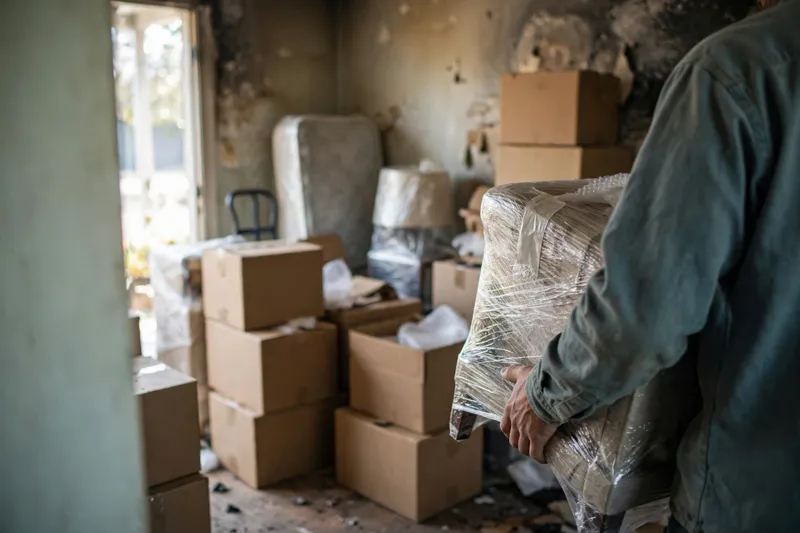
The fire damage restoration steps for contents run alongside the rest of the job, the crew packs out what can be saved while the house is being cleaned, and the contents come back only when the house is ready. The pack-out is not a guess: every item is photographed and barcoded, sorted into what can be saved and what cannot, and cleaned in a climate-controlled facility with ultrasonic cleaning, ozone and HEPA filtration. The inventory is what the claim is built on, and a thin inventory becomes a thin settlement.
What usually survives: clothing, one restoration post claims four out of five clothing items recover, hard furniture, dishes and glassware, jewellery cleaned by ultrasonic, and photos, which can be freeze-dried. Books and documents can be vacuum freeze-dried. What sometimes survives: electronics, if they were off when the fire started; upholstered furniture; rugs; artwork. What rarely survives: food, which the food safety guidance says to discard; cosmetics and medication; mattresses; charred porous items; baby items. The crew sorts everything before anything is cleaned, and nothing is thrown away before the adjuster documents it.
A Chicago video watched in full shows the pack-out in practice: a top-floor condo of more than two thousand five hundred square feet, packed out after a fire, the contents carried down and inventoried room by room. The video runs just over a minute, and it shows the part of the job homeowners never see, the sorting, the wrapping, the labelling. The contents coverage on a policy is fifty to seventy percent of the dwelling limit, by one restoration company's account, and the contents are valued at replacement cost or at actual cash value depending on the policy, the difference between the two is often the difference between a fair settlement and a short one. Sublimits apply to jewellery, art and collections, and the inventory has to name them.
What actually happened in Chicago: two verified cases
This page names a Chicago case only when three things are verified: a named homeowner, an exact Chicago street address, and an incident date. Both are printed with their limits, because both end before the restoration is shown finished.
The first case is a fraud case, and it is printed here as a warning, not as a success story. Ava Goss lived at 9208 South Woodlawn Avenue in Chicago when a fire broke out in her home in the early morning of 27 February 2004. She was insured with Allstate. The morning after the fire she met Terry O'Keefe and Barry Parks of Action Fire Restoration, and she signed a contract for the restoration of the fire damage.
Parks was later convicted of home-repair fraud and insurance fraud on that fire-restoration contract, which the court put at more than ten thousand dollars but not more than one hundred thousand dollars. The case is People v. Parks, Illinois Appellate Court, First Division, decided 16 August 2010, case number 1-08-1876, read live on Justia. The restoration was contracted. It was not shown completed.
The lesson is the one every Chicago homeowner should carry into the first meeting: check the company before you sign, get the scope in writing, and never pay for work that has not been done.
The second case is a house that was expected to come back. James Bowers owned the Seth Warner House at 631 N. Central Avenue in Chicago, in Austin, with his wife and co-owner Cynthia Weaver, when a fire broke out early on Thursday 15 June 2023. Neighbours saw fire coming from the roof at around half past one in the morning. The house carried roof and third-floor water damage and smoke damage, and it was temporarily uninhabitable. The reporting at the time said the house was expected to fully restore.
Restore Construction boarded up the property. His cost figure, around fifty thousand dollars, is his claim, never a fact, and the restoration was planned and expected at the time of the reporting, not shown completed. The case was reported by Block Club Chicago, Trey Arline, on 15 June 2023, and corroborated by Preservation Chicago and by Wednesday Journal and NBC 5 snippets.
Two corrections belong with the second case. That is wrong: the live sources say 15 June 2023. And the Preservation Chicago page is dated 31 May 2023 while quoting the 15 June 2023 coverage, an internal date inconsistency in that page, recorded here so nobody copies the wrong date from it.
No other verified named Chicago case with all three elements was found on any platform checked live. That sentence is the honest result of the sweep, not a gap in the research: the platforms were checked, the leads were followed, and the cases that surfaced failed at least one of the three tests, a missing address, a missing date, or a home outside Chicago. The two cases above are the only ones this page prints.
Insurance: the sudden-and-accidental rule
The insurance rule for a house fire is the same as for water damage: the policy pays when the loss was sudden and accidental. A fire is sudden and accidental. The water from the hoses is part of the same loss. The smoke and soot are part of the same loss. What the policy does not pay for is flooding from outside, which needs separate flood insurance, and a sewer backup, which usually needs its own endorsement. The mold that grows from the firefighting water is covered only when the mold follows a sudden, accidental loss the policy already covers.
File the claim fast, the search results say within a day, and the adjuster usually comes within a day of the claim. Document everything with photos and video before anything moves, and keep every receipt from the first hour onward. Do not throw away damaged items before the adjuster documents them, and do not sign or settle the claim quickly. The insurer's first scope can miss smoke travel, so the scope has to be checked against the rooms the smoke actually reached, not just the rooms that burned.
How long a fire claim takes to settle has no settled answer in the search results, and this page invents none. The settlement waits for the scope, the adjuster, the permits, and the lender draws, which can take five to fifteen business days to release, by one restoration company's account. The additional living expenses the policy pays have a cap and a time limit, and the ordinance and law cover, the part that pays for bringing the rebuild up to current code, runs ten to twenty-five percent of the dwelling limit, by one restoration company's account. The contents are valued at replacement cost or at actual cash value depending on the policy, and the difference between the two is often the difference between a fair settlement and a short one.
What drives the cost up and down is never a number on this page, because the site prints no prices. The drivers are the size of the fire, how far the smoke travelled, whether the structure is damaged, how much contents volume there is, how fast the crew got in, and how long the permits take. A small smoke job with no structural damage and few contents costs less than a whole-house fire with demolition and a rebuild, and a job that starts in the first day costs less than a job that starts after a week of soot sitting on the surfaces. The insurer pays the drying and the repair, less your deductible, and it does not pay for the pipe that failed.
Prevention: what keeps the next fire small
The fire damage restoration steps end with the rebuild, but the prevention starts the day you move back in. The don'ts from the first day stay true for the life of the house: do not wipe soot yourself, do not turn on the heating and cooling system while soot is in the ducts, do not use bleach on soot, and do not throw away damaged items before the adjuster documents them. The winter rule stays true too: a house left open after a fire can freeze its pipes, so the board-up and the tarp are prevention as much as they are repair. Print the fire damage restoration steps and keep them with the insurance policy, because the morning after a fire is the worst time to be searching for them.
Keep the receipts, the photos and the claim file after the job is done. Check the insurer's first scope against the rooms the smoke actually reached, because a scope that misses smoke travel is a claim that comes back. And keep the board-up habit: a broken window or a damaged roof gets sealed the same day, not the week after, because an open house invites rain, theft, and further damage. The prevention is not a product. It is the same discipline the restoration runs on, secure the house, document everything, and never let a small problem sit long enough to become a big one.

What to do after a house fire in Chicago: the seven stages
The stages below are the same order the whole page follows. This page counts seven, with the pack-out inside the contents stage.
Emergency response and site stabilisation
Wait for the fire department to clear the house for re-entry. Do not go back in before the officials say it is safe. A crew boards up windows and doors, puts a tarp on the roof, and shuts off the gas and electric supply until the danger is gone.
Assessment and documentation
Inspect every room and photograph everything before it moves. Record the damage room by room, measure moisture, and test for asbestos and lead in older homes before any tear-out. Keep the inventory for the claim.
Water extraction and structural drying
Remove the water from firefighting with pumps and vacuums, then dry the structure with air movers and dehumidifiers. Dry the floors, walls and framing within a day or two to stop mold. Check the readings daily until they are normal.
Debris removal and demolition
Remove the debris and tear out what cannot be saved, charred drywall, soaked insulation, ruined flooring. Cut back to sound material only. A controlled demolition keeps the rest of the house standing.
Smoke, soot and odour remediation
Clean the soot dry first with chemical sponges and a HEPA vacuum, working from the ceiling down. Wash hard surfaces, clear the odour with thermal foggers or hydroxyl, and clean the heating and cooling system so the smoke does not travel.
Contents cleaning and pack-out
Pack out what can be saved, photograph and barcode every item, and clean it in a climate-controlled facility. Clothing, hard furniture and dishes usually survive. Food, cosmetics, medication and mattresses rarely do. Pack it back only when the house is clean.
Reconstruction and final walkthrough
Rebuild the damaged rooms to their pre-loss condition, then walk through with the adjuster and the code officials. Sign nothing until the work is done and the readings are normal. Keep the receipts, the photos and the claim file.
Before the crew leaves: the checklist
- The house is boarded up and tarped, and the gas and electric are safe
- Every room is photographed, and the inventory is written down
- The water is out, and the readings are normal
- The soot is cleaned dry first, then washed, then the odour is cleared
- The heating and cooling system is cleaned, so the smoke does not travel
- The contents are packed out, inventoried, and cleaned off site
- The rebuild is finished, and the walkthrough is done with the adjuster
- The receipts, the photos and the claim file are kept together
Call now, the house needs securing
The first day decides the whole job. Call now and a crew tells you what to do next, before anyone touches the soot.
Questions Chicago homeowners ask about a house fire
What are fire damage restoration steps?
Seven stages, in a fixed order: wait for the fire department to clear the house, board up and make it safe, assess and document the damage, get the water out and dry the structure, remove debris and tear out what cannot be saved, clean the soot and smoke, clean the contents, then rebuild and walk through with the adjuster.
Does homeowners insurance cover water damage restoration, or only part of it?
It covers only part of it. The policy pays for the drying and the repair when the cause was sudden and accidental, up to the limits you bought, minus your deductible. It does not pay for the pipe or appliance that failed, and it does not pay for flooding from outside. A sewer backup needs the endorsement.
How long does water damage restoration take?
Drying takes three to seven days on most losses, and the full job with repairs usually takes one to three weeks. A small smoke job in one room can finish in a few days. With soot cleaning and contents work, add the cleaning time after the drying, the job is not done when the room feels dry.
What is water damage restoration called?
The full job, stopping the water, drying the structure, cleaning, and rebuilding, is called water damage restoration. The emergency half, stopping the water and drying, is also called mitigation. Removing mold growth is a separate job, called remediation, and it follows the drying, never the other way around.
Does insurance cover water damage restoration?
It usually does when the damage was sudden and accidental, such as a burst pipe or an appliance failure. It does not cover flooding from outside, which needs separate flood insurance. A sewer backup is usually covered only if you hold the endorsement for it, so ask your insurer before the next storm.
What is the water damage restoration process?
The process runs in order: inspection first, to find how far the fire and smoke spread; then extraction, with pumps and vacuums for the firefighting water; then drying, with air movers and dehumidifiers; then soot cleaning and sanitizing; then the repairs that put the room back. Dry the floors, walls and framing within a day or two to stop mold.
Does homeowners insurance cover mold?
It covers mold only when the mold follows a sudden, accidental loss the policy already covers, such as a burst pipe. Mold from a slow leak, from flooding outside, or from a damp basement the owner never fixed is usually not covered. Mold cover also has its own sub-limit, so read the policy before you need it.
What should I do when I find mold?
Fix the moisture source first, or the mold comes back. Wear a respirator rated N95, gloves and goggles, and clean only a small patch yourself, the guidance the search engines cite is ten square feet or less. Anything bigger, or mold that keeps coming back, needs a professional crew with the right equipment.
How much does homeowners insurance pay for water damage?
No page can give you a number, because the payment depends on your policy, your deductible, the cause of the loss, and the limits you bought. The insurer pays the drying and the repair, less your deductible, and it does not pay for the pipe that failed. Ask your insurer what your limits are before the next storm.
Does renters insurance cover water damage?
It covers the renter's belongings when the damage was sudden and accidental, such as a burst pipe or water from an upstairs neighbour's plumbing. It does not cover flooding from outside, which needs separate flood insurance, and it does not cover the building itself, the walls, floors and pipes are the landlord's. A sewer backup needs the endorsement.
How much does mold testing cost?
This site prints no prices, so no figure here can mislead you. The cost depends on how many samples are taken, whether the testing is air or surface, whether a lab is involved, and how big the affected area is. We inspect first, then give you a written scope before any work starts.
Does homeowners insurance cover a burst pipe?
Yes, when the pipe burst suddenly, a freeze split, a joint that failed without warning, a line that gave way all at once. The insurer pays for the water damage the burst caused, not for the pipe itself. A slow leak that ran for months is a different story, and it may be classed as wear and tear.
How much does trenchless sewer repair cost?
This site prints no prices for either job, because trenchless repair and a burst pipe are two different things. Trenchless repair replaces a broken sewer line by pulling a new pipe through the old one. A burst pipe is a supply pipe that split open, usually from freezing, and the fix is a repair, not a replacement.
How much does water damage restoration cost?
This site prints no prices, so no figure here can mislead you. The cost depends on how much water there was, how far it spread, what kind of water it was, and what it touched. A bare concrete floor dries fast. A finished basement with drywall, insulation and flooring costs far more to put back.
What does it mean for water damage to be fully remediated?
It means the water source is fixed, the standing water is gone, the wet materials are dried to moisture readings, the room is cleaned and sanitised, mold and contamination are addressed, and the repairs are finished, with indoor humidity in the forty to sixty percent range. A remediated home is dry, clean and safe to live in again.
What are the steps in fire damage restoration?
Eight stages, in order: emergency response and stabilisation, inspection and assessment with documentation, water extraction and drying, pack-out of the contents, demolition of what cannot be saved, smoke and soot cleaning with odour removal, reconstruction, and a final walkthrough with the adjuster and the code officials.
How long does fire damage restoration take in Chicago?
Minor smoke cleanup runs three days to two weeks by some engines and one to three weeks by others; a moderate job runs two to six weeks by some and one to three months by others; a severe job runs three to six months or more. Chicago permits add weeks, and the insurance scope sets the pace.
What is the fire damage restoration timeline?
A small job runs a few days to two weeks; a moderate job runs ten days to three months, depending on the engine; a severe job runs two to six months, up to a year for a total loss. The phases run in order, emergency first, then water and contents, then demolition and soot cleaning, then repairs.
What should I do first after a house fire?
Confirm everyone is safe and get medical help first, then stay out until the fire department clears the house for re-entry. Call the insurer within a day, secure the property, and document everything with photos before anything moves. Call 911 for the fire itself, the restoration starts only after the officials say the house is safe.
How do I clean up smoke damage after a fire?
Dry soot comes first, never wet it, because water smears it and drives it deeper. Use a dry chemical sponge and a vacuum with a HEPA filter, work from the ceiling down, and wash hard surfaces with mild detergent after the dry cleaning. Turn off the heating and cooling system, and hire a professional for the ductwork.
What is salvageable after a house fire?
Clothing, hard furniture, dishes and glassware, jewellery and photos are usually salvageable, one restoration post claims four out of five clothing items recover. Electronics sometimes survive if they were off. Food, cosmetics, medication, mattresses and charred porous items are rarely saved, and the pack-out crew sorts everything before anything is cleaned.
What not to do after a house fire?
Do not go back in until the fire department clears the house, and do not wipe soot yourself. Do not turn on the heating and cooling system, and do not use bleach on soot. Do not throw away damaged items before the adjuster documents them, and do not sign or settle the claim quickly.
Can a house be rebuilt after a fire?
Yes, in most cases. The house is rebuilt to its pre-loss condition once the structure is sound, the permits are in hand, and the insurance scope is agreed. A total loss is rebuilt from the foundation up, which takes the longest. The rebuild waits for the drying, the cleaning and the demolition, and it starts when the readings are normal.
Can smoke damage be repaired?
Yes. Smoke damage is cleaned, not painted over. Dry chemical sponges and a vacuum with a HEPA filter take the dry soot off first, then hard surfaces are washed, the odour is cleared with foggers or hydroxyl, and damaged drywall is cut out and replaced. The repair is finished when the smell is gone and the readings are normal.
Can you just paint over smoke damage?
No. Paint hides the smell for a week and the smoke comes back through it, because the soot is still on the surface underneath. Clean the soot off first with dry chemical sponges and a vacuum with a HEPA filter, wash the hard surfaces, seal the surface with an odour-blocking sealer, and only then paint. A sealed surface stays clean.
How long do toxins stay in air after fire?
The search answers give no settled number, so this page gives none. Smoke clears once the house is ventilated, the soot is removed, and the odour is cleared, not on a fixed day. Do not re-enter until the fire department clears the house, and do not run the heating and cooling system while soot is in the ducts.
How long do you have to rebuild your house after a fire?
No engine answer gives a settled deadline, and this page invents none. The rebuild is set by the insurance claim, the permits, and the scope the adjuster agrees, not by a fixed number of days. File the claim fast, get the permits in, and keep receipts, because the clock that matters is the one on the claim and the permits.
Who cleans up after a house burns down?
A restoration crew does the cleanup, after the fire department clears the house and the insurer is notified. The crew boards up the house, documents the damage, removes the water, cleans the soot and smoke, packs out the contents, and rebuilds. The homeowner's job is the call, the photos, and the claim. The crew does the rest.
Sources
- Dry Bros (drybros.com), two Chicago fire process posts, 2 September and 6 October 2026, read end to end; a cost post, 15 October 2026; two posts on choosing a company and who to call after a house fire, October 2026. No figures from any of them are printed on this page.
- Independent Restoration Services of Chicago (irs-630.com, redirects to irs-247.com), three fire posts, all 16 August 2026, read end to end: eight phases from board-up to move-in; a rebuild guide with permits and lender draws; a contents guide that sorts what can be saved.
- Block Club Chicago, Trey Arline, 15 June 2023, the Seth Warner House fire, 631 N. Central Avenue, Chicago; corroborated by Preservation Chicago and by Wednesday Journal and NBC 5 snippets.
- Justia, People v. Parks, Illinois Appellate Court, First Division, decided 16 August 2010, case number 1-08-1876, the Ava Goss fire-restoration fraud case, 9208 South Woodlawn Avenue, Chicago.
- City facts: chicago.gov (Department of Water Management; CHI 311, open around the clock, every day of the year). Illinois Department of Insurance.
More from the blog
- Fire damage restoration in Chicago, the service page: five stages, a timeline table, and nineteen questions
- Mold after water damage in Chicago, the forty-eight-hour guide
- Sewage backup cleanup in Chicago, what to do when the basement backs up
- How long does water damage restoration take in Chicago?, the timeline guide
- Water damage restoration in Chicago, the service page
More Restoration Services in Chicago
Every service below is one tap away. Pick the one that matches your problem.

Water Damage Restoration
Fast water extraction, structural drying, and full repair after burst pipes, leaks, and floods.
Learn more →
Water Mitigation
Emergency water removal, structural drying, and mold prevention to stop the damage fast, 24/7.
Learn more →
Mold Remediation
Safe, contained mold remediation that removes contamination and fixes the moisture source.
Learn more →
Sewage Cleanup
Safe removal and disinfection of dangerous sewage backups and black water.
Learn more →
Flood Cleanup
Water pumped out, structure dried, and debris cleared fast after storms and flooding.
Learn more →
Hardwood Floors Water Damage
Cupped, buckled or stained hardwood after a leak? How we dry it, when sanding saves it, and when the boards have to go.
Learn more →