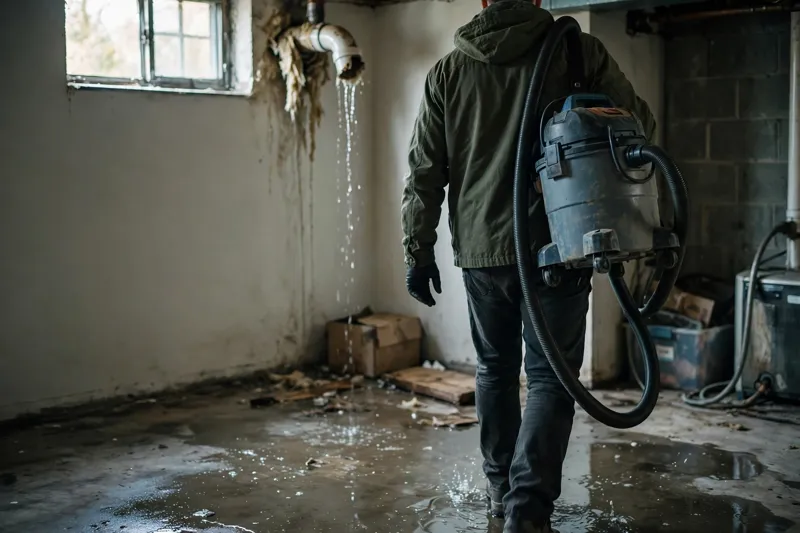
Does Homeowners Insurance Cover Water Damage in Chicago
Your basement is wet, or your kitchen floor is, and the question every flooded homeowner asks first is whether their policy pays for the damage, and the honest answer is that it depends on how the water got in. A burst pipe is usually covered. A flood from the street is not. This post gives you the rule and the paperwork that decides your claim.
- Sudden damage is usually covered, burst pipes, appliance leaks, storm damage to the roof
- Flooding from outside is not covered by a standard policy
- Sewer backup needs an endorsement of its own
- Document everything before you clean anything up
Written for Chicago homeowners, the combined sewer, the old housing stock, the finished basements, and the claim process.
- We answer 24/7
- Local Chicago team
- Insurance documentation help
- Straight answers, no pressure
Have a question? Call us any time
Tell us where the water is and we will call you back. We answer 24/7.
The short answer: sudden damage is usually covered
The rule fits in one sentence: a standard homeowners policy covers water damage that was sudden and accidental, and it does not cover water damage that was gradual, or water that came in from outside. Everything else on this page is the detail of that sentence.
| Usually covered | Not covered | Needs an endorsement or a separate policy |
|---|---|---|
| A burst pipe that failed suddenly | A slow leak that ran for months | Sewer backup |
| A supply line to a fridge, dishwasher or washing machine that failed | Wear and tear on an old roof | Sump pump failure |
| A water heater that cracked onto the basement floor | Neglect, a roof that leaked for years, gutters never cleaned | Flooding from outside (a separate flood policy) |
| A toilet that overflowed suddenly | Groundwater seeping up through the floor | Mold (sometimes, a separate limit, or excluded) |
| Rain that came in through a roof opening made by a storm | Water that sat because nobody fixed the leak | |
| Water from putting out a fire |
Homeowners ask what water damage does homeowners insurance cover, and the answer is the table above: the left column is the policy working as written, the middle column is the policy saying no, and the right column is the cover you have to buy on top. The Chicago version, does homeowners insurance cover water damage in chicago, has the same answer, with Chicago specifics: the old housing stock, the combined sewer, and the finished basements. A significant share of Chicago homes were built before 1940, and many still have galvanised or cast-iron supply and drain lines.
Two things the policy pays for, and one it does not. It pays for the drying and the repair, the water out, the walls dry, the room put back, up to the limits you bought, minus your deductible. It does not pay for the thing that failed: not the pipe, not the appliance, not the worn-out roof. And no page can give you a number for what your claim pays, because the payment depends on your policy, your deductible, the cause of the loss, and the limits you bought.

Burst pipes: the most common Chicago claim
The burst pipe is the claim Chicago homeowners file most, and the one the policy handles best, when the burst was sudden. A pipe that froze and split in a cold snap, a joint that failed without warning, a supply line that gave way all at once: the insurer pays for the water damage the burst caused. The pipe itself is a different matter: the insurer pays for the damage, not for the pipe, and a pipe that leaked slowly for months may be classed as wear and tear.
Homeowners ask does homeowners insurance cover water damage from a broken pipe, and the answer is the same as for a burst pipe, the damage is covered when the break was sudden, and the pipe itself is not. The words matter here, because "broken pipe" and "burst pipe" mean the same thing to a homeowner and two different things to a policy. A burst pipe is a supply pipe that split open, usually from freezing. Pipe bursting is something else entirely: a trenchless method that replaces a broken sewer line by pulling a new pipe through the old one.
Chicago winters are the reason this claim is common here. The city's housing stock skews old, and a frozen burst pipe is common in the older two-flats and greystones, where the pipes run through uninsulated exterior walls. The insurer's question is always the same: did you take reasonable steps to keep the home heated? A pipe that froze because the heat was off is a harder claim than a pipe that froze in a home that was lived in and heated. And a home left empty brings a second problem: most standard policies have a vacancy clause that suspends or limits cover if the home has been unoccupied beyond a set period, commonly thirty to sixty days.
The gradual losses are the mirror image: a slow drip rotting a subfloor for two years; a roof leaking for years; gutters never cleaned; a sump pump never serviced.
The adjuster looks for physical evidence of the timeline, clean water staining and a clear mechanical failure point for a sudden loss, layered staining rings and long-term wood deterioration for a gradual one. That is why the photographs matter: they are the evidence of when the damage happened.
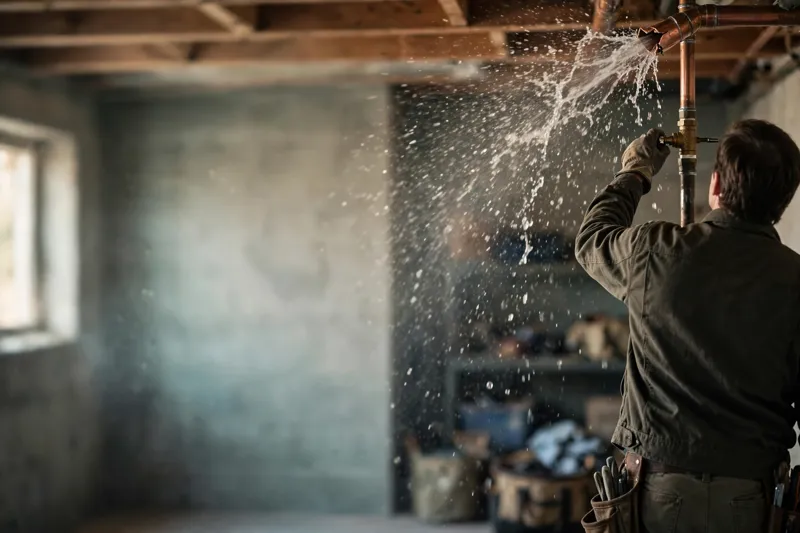
Roof leaks: covered only when the storm caused them
The question does homeowners insurance cover water damage from a leaking roof has one answer: only when the leak followed a sudden, covered peril, wind, hail, lightning, a fallen tree. A roof that leaked because it wore out, or because the gutters were never cleaned, is a maintenance problem, and the insurer does not pay for maintenance. The distinction is the same sudden-versus-gradual rule, applied to the roof.
Two things to keep separate: the roof, and the water damage the roof let in. The insurer pays for the water damage the storm caused, the wet ceiling, the soaked insulation, the stained walls, not for a worn-out roof. When the storm tears a hole in the roof and the rain comes through it, the water damage is covered. When the rain comes through a roof that was already failing, the insurer may pay nothing. That is the answer to the question homeowners ask after every storm: should I call my insurance company if my roof is leaking? Yes, and promptly, most policies ask for timely notice, and a claim filed months after the storm may be denied on the delay alone.
How to get the insurer to cover a leaking roof is mostly documentation: photograph the storm damage, the opening, and the water path before anything is repaired, and keep the roofer's report. A roofer who writes down what the storm did, and when, is worth more than one who only writes down the repair. As for the cost of fixing a leaky roof, this site prints no prices, the charge depends on the size of the roof, how steep it is, what it is made of, and how hard it is to reach. And when the insurer replaces a roof instead of repairing it has no fixed answer: it is the adjuster's call, made when the storm damage makes a repair impossible.
Sewer backup in Chicago: the endorsement that decides it
Homeowners ask does homeowners insurance cover sewer backup, and the answer is no under a standard policy. Sewer backup is excluded, even though the water came through your own pipes. Cover comes from a water backup endorsement, an optional add-on that pays for the cleanup and the damage inside the home when water or sewage backs up through a drain, a toilet or a failed sump pump.
Chicago is the city where this question matters most, because Chicago has a combined sewer system: one pipe carries both sewage and stormwater. In a hard storm the combined sewer surcharges, and the water comes back up through the lowest opening in the building, usually the floor drain. That is why a Chicago basement floods when it is barely raining: the rain does not have to be heavy, the sewer only has to be full.
The first question after a backup is who owns the pipe that failed, because the answer decides who pays. The City's Private Drain Program repairs a broken sewer drain tile under the public way at no cost to the homeowner, but the owner first hires a licensed sewer contractor to rod or video-inspect the line, and the City repairs only when the break is in the public way. If the break is on your side of the line, it is yours.
Call 311 first when the backup came from the street sewer, 311 is staffed twenty-four hours a day, seven days a week, and the number in the site footer is (312) 744-5000. The same city-versus-private line runs through the insurance question: the insurer asks where the water came from, and the answer decides whether the endorsement applies at all.
One suburban example belongs here, with its limits stated plainly. In La Grange, the Village reimburses half the cost of a backflow valve or an overhead sewer, up to three thousand dollars for a backflow valve and five thousand dollars for an overhead sewer, with a one-time cap of five thousand dollars per home, but applications are not being accepted at this time, and the Village's page says so. That is a suburban programme, not a Chicago-city fact, and it is here only to show that help exists in some places, and that it is not always open.
Three more questions homeowners ask about sewer backup. How much does a sewer backup cost to fix? This site prints no prices, the cost depends on how much water there was, how far it spread, what it touched, and whether the lower drywall has to come out. What insurance covers sewage backup? The endorsement, and only the endorsement, the standard policy excludes it. Is sewer backup coverage worth it? In a city of old homes and combined sewers, ask your insurer, the answer depends on your basement, your street, and the endorsement's own cost.
And is a clogged toilet considered a sewer backup? A toilet overflow confined to your own plumbing may be treated differently from a backup that came up through the floor drain, the adjuster will ask where the water came from, and the answer decides the cover.
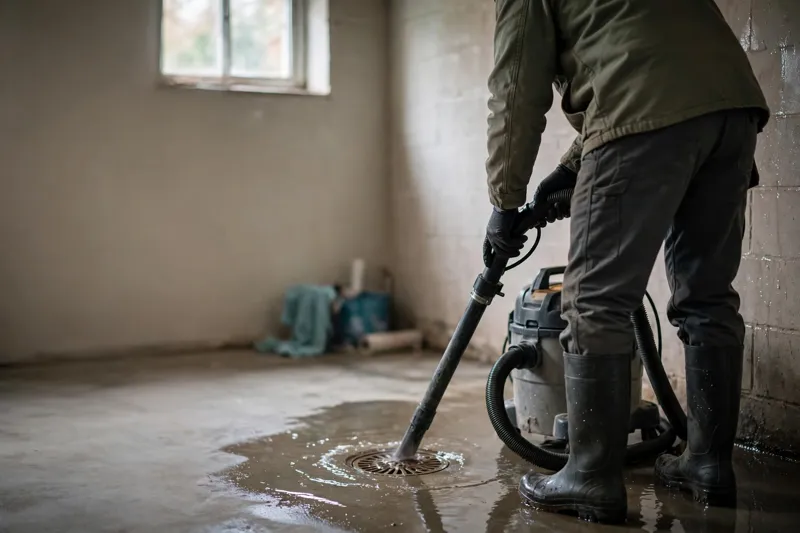
Flooding from heavy rain: the gap every Chicago homeowner should know
Homeowners ask does homeowners insurance cover flood damage, and the answer is no for water that comes in from outside. Rising water, pooling water, water that runs in from the street, that is flooding, and a standard homeowners policy does not cover it. Flood cover is sold separately, through the National Flood Insurance Program (NFIP) or a private carrier, with its own limits and usually a waiting period before it takes effect.
Why does a homeowners policy not cover flood damage at all? Because flood risk is not spread the way other risks are: a flood hits whole streets at once, so no single insurer can carry it inside a standard policy. That is why the cover is separate, with its own limits and its own waiting period. What insurance covers a house damaged in a flood, then, is that separate flood policy, the building and the contents inside it, each under its own limit.
The line between flooding and a covered loss is the line between outside and inside. Rain that comes in through a storm-damaged roof or window is covered, because the storm made the opening. Water that rises from the street and comes in under the door is flooding, and it is not. A Chicago homeowner who bought flood insurance despite not being in a FEMA flood area, and then flooded twice in two years, found the policy covered only some of it, a homeowner's report, not a settled rule. The shape of the gap is the same in every version: the policy covers the water that came from inside, and the flood policy covers the water that came from outside.
Basement flooding: the Chicago question
Homeowners ask does homeowners insurance cover basement flooding, and the answer depends on where the water came from, the same rule as everywhere else on this page, applied to the lowest room in the house. Clean water from a burst pipe inside the home is usually covered. A sewer backup is covered only with the endorsement. Water that came in from outside, heavy rain pooling against the foundation, an overflowing street, groundwater seeping up through the floor, is flooding, and it needs the separate flood policy.
How much will the insurer pay for a flooded basement? No page can give you a number. The payment depends on your policy, your deductible, the cause of the loss, and the limits you bought, and on whether the basement is finished, because a finished basement with drywall, insulation and flooring costs more to put back than an unfinished one with bare block walls.
How to get basement flooding covered is mostly the same answer as the rest of this page: document the source, hold the endorsement for a backup, hold the flood policy for outside water, and file promptly. And how common is it for a basement to flood in Chicago? The scale is in the record: two thousand five hundred basement-flooding reports across five neighbourhoods, cited by Borderless Magazine on December 20, 2022.
On September 11, 2022, seven inches of rain fell in one hour in Rogers Park, and over nine hundred calls to 311 for water in basements and on roads came from six neighbourhoods alone, most from Portage Park and Edgewater.
The drying matters as much as the cover. An unfinished basement dries in three to five days with professional equipment. A finished basement takes seven to fourteen days, because each layer, drywall, insulation, flooring, baseboards, has to dry through before the next one can. The drying is judged by a moisture meter, not by touch: wood framing is dry at twelve to sixteen percent moisture, and the readings are written into a drying log. A basement that still reads wet after two weeks needs a crew, not more fans. Our basement flooding Chicago who to call post covers the emergency half, who to call first, and in what order, and our how long does water damage restoration take post covers the timeline.
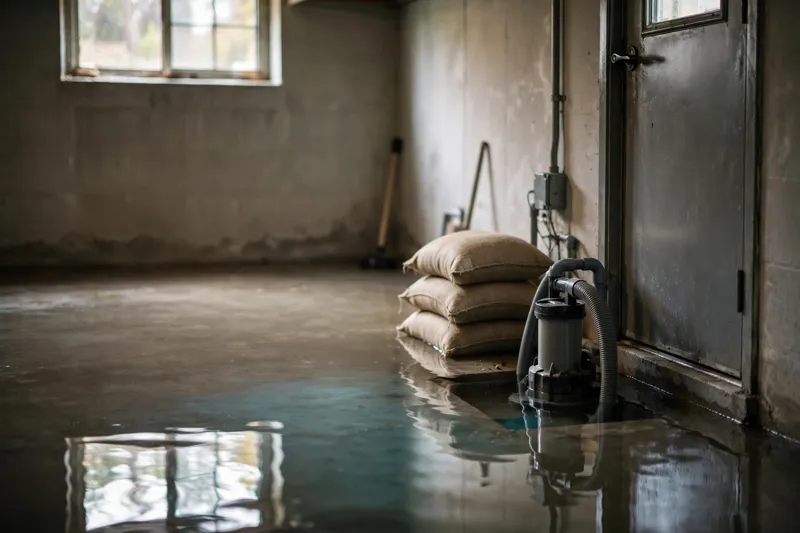
Mold after water damage: covered only when the water was
Homeowners ask does homeowners insurance cover mold damage, and the answer is yes only when the mold followed a sudden, covered event, such as a burst pipe. The insurer pays for the mold that the covered water caused. It does not pay for mold from a long-term leak, from neglect, or from flooding, and many policies cap the mold cover at a separate limit of their own, check your declarations page.
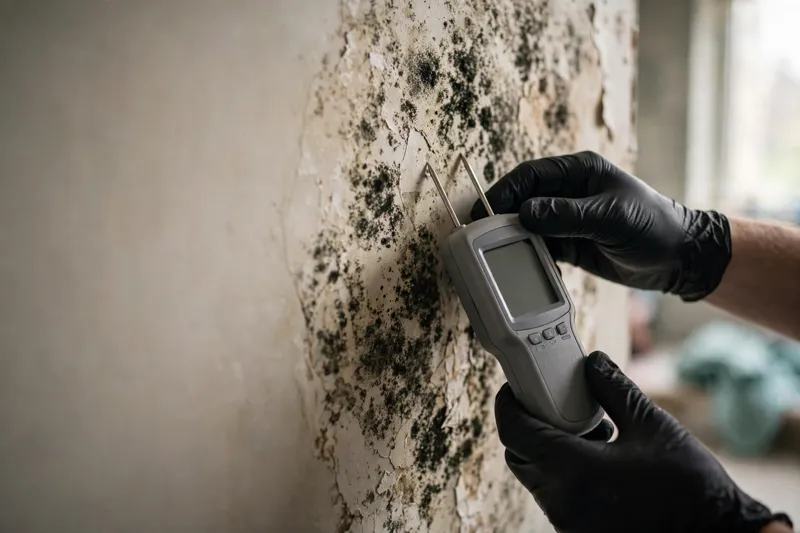
Mold starts fast. Wet drywall and insulation grow mold within twenty-four to forty-eight hours, it is visible within forty-eight to seventy-two hours, and colonies form on drywall in five to ten days. Remediation means removing the mold growth and the wet material it sits on, cleaning what stays, and drying the space so it cannot grow back. It cannot work if the leak keeps feeding the wall, so the source comes first. Can mold be fully remediated? Yes for the active growth, and no for the spores: no home is ever one hundred percent free of mold spores, and remediation returns the levels to a safe, natural baseline.
Illinois has a mold registration, and pages that say it has none are wrong: the Illinois Department of Public Health's Part 835 registration is operational, effective September 23, 2026, with a grace period to September 30, 2027. This site claims no registration itself. That is DuPage County guidance, not a Chicago rule. Our mold remediation Chicago page covers the work itself.
Three more questions homeowners ask about mold. How to get the insurer to pay for mold removal? Document the covered event and the mold as its result, the photographs, the moisture readings, the drying log, because the insurer pays for the mold the covered water caused, not for mold that grew on its own. Should you tell your insurance company about mold? Yes, and promptly, hiding it risks the claim, and a claim filed months after the mold appeared may be denied on the delay alone. How much does mold removal cost?
This site prints no prices, the cost depends on how much mold there is, how far it spread, and whether the source is fixed. And can you sue if you bought a house with mold? That is a question for a lawyer, it depends on what the seller disclosed and what the inspection found.
The one Chicago case with a name on it, and it was denied
One Chicago insurance case has a name, an address and a date, and it is a warning, not a success story. Lilia Villasenor and Julian Villasenor owned a house at 1720 N. Albany Avenue, Chicago, Illinois 60647. On July 16, 2021, they submitted a claim to Milbank Insurance Company for damage caused by rushing water from a burst pipe, a claim for about six hundred eighty-one thousand dollars. The insurer refused to pay. The homeowners sued, and on March 31, 2026, Judge Joan H. Lefkow of the United States District Court for the Northern District of Illinois granted the insurer's motion for summary judgment, denied the homeowners' motion, and terminated the case. The court held the action barred by the policy's limitations period.
The case is Villasenor v. Milbank Insurance Company, Case Number 24 C 6958, and the decision is Document 39 in the court record, verified in the Justia court file and corroborated by CaseMine and PacerMonitor. The homeowners lost on a deadline, not on whether a burst pipe is a covered peril. That is the lesson: file promptly, document everything, and do not wait. A policy's limitations period is a clock, and the court does not stop it because the damage was real. The decision does not establish that every burst-pipe claim must be paid, it establishes that a claim filed too late can be lost even when the loss itself was covered.
What Chicago homeowners learned the hard way
No other verified named Chicago insurance case exists anywhere, the Villasenor case is the only one with a company, a property address and a date. What the verified Chicago flooding cases do teach is why Chicago claims are hard: the water comes back, and the cause is rarely simple. Chrislin Flanagan, on the 107th block of South Emerald, bought her home in 2019, and her basement flooded in 2021, 2022, 2023, and again in 2026, every February to April, including sewage.
She spent more than twenty-six thousand dollars on plumbers, losses, and re-grassing, and the plumbers blamed city-side pipes more than a century old. Who she called, in order: plumbers first, then an extraction company, then the City and the Private Drain Program. A Chicago Lawn homeowner named Ishmael had nearly three feet of water rush into his basement in a weekend storm, the second time in three weeks, and made an official 311 complaint.
Dwayne Baxter, also in Chicago Lawn, had his basement flooded for the second time that summer, when up to five inches of rain overwhelmed the sewers and the water backed up from his drain. Elizabeth Belinga, in Jefferson Park, found her basement flooded with sewage water when her dryer alarm went off, the second time, the first in May 2020. Ginneh Strickland, in Bronzeville, had a sewer backup in 2021.
The Chicago thread asks does home insurance cover water damage chicago, and the homeowner's own answer was that it covered only some of it. A Chicago homeowner posting in July 2023 wrote that they were living through their second basement flood in two years, from different causes, and the insurance covered only some of it, and that they had bought flood insurance despite not being in a FEMA flood area, and still had sewage in the basement.
A first-time homeowner posting in October 2026 found water damage and mold after buying in April, filed a claim with Farmers, and the adjuster said the leak was long-term and not a covered loss. The homeowner had already spent seven hundred sixty dollars on plumbing repairs and four hundred dollars on an inspection, with a four-thousand-dollar deductible. Both are homeowner reports, not settled rules.
Two other programmes exist, and neither pays for the repair. The Disaster Relief Assistance Program (DRAP) pays up to fifteen thousand dollars per household, but it covers rent, mortgage and utilities only, not repair, and it runs from January 21, 2025 to January 21, 2027, for households at or below eighty percent of area median income, with priority ZIP codes 60644, 60651, 60639, 60641 and 60624.
The Flood Assistance Repair Program (FARP) pays up to twenty-five thousand dollars for basement damage from the 2023 or 2024 floods, but it is west-side only, for owner-occupied single-family or two-unit homes, with registration from November 30 to December 11, 2026.
Renters and condo owners: a different policy, a different answer
Renters ask does renters insurance cover water damage chicago, and the answer is yes for their belongings when the water came from a sudden source inside, a burst pipe, a leaking appliance, an overflowing toilet, water from putting out a fire. What renters insurance does not cover is the building itself: the structure, the pipes, the roof, the floors. That is the landlord's policy, and the landlord pays for the building repair. A renter pays only when the renter caused the damage, such as a tub left running, or a leak the renter saw and never reported.
Three things renters insurance typically does not cover: the building structure, flooding from outside, and gradual damage, the same three gaps as a homeowners policy, minus the building. And are renters responsible if pipes burst? Only if their negligence caused it, a tap left running, a toilet left overflowing, a known leak ignored. The landlord is responsible for structural and plumbing wear, old pipes, the roof, and maintenance. Condo owners sit in between: a condo policy covers the unit's interior and the owner's belongings, while the association's policy covers the building. If the water came from a common pipe, the association's policy is the one that matters.
What to document before the adjuster arrives
When Chicago homeowners search does homeowners insurance cover water damage in chicago il, they are asking the same question with the state spelled out, and the answer, and the paperwork, are the same. The paperwork is what decides the claim, and it starts before the cleanup.
Photograph and video everything before you move or clean anything: the source, the water line, and every damaged room and item, wide shots and close-ups. List each item with its brand, model, serial number, age and value, room by room. Keep every receipt, for the emergency mitigation, the repairs, and any temporary stay, and keep a timeline of the loss and a record of every call with the insurer and the contractors. Keep samples of the material that was torn out. Do not throw anything away until the adjuster has inspected it or the insurer has said in writing that you can. A discarded item is a claim with no proof, and a claim with no proof gets denied.

What the policy actually says, and where to look
The policy is three pages, not three hundred, and the answers are in them. The declarations page says what you bought: the limits, the deductible, and the endorsements. Section One, "Perils Insured Against", says what is covered, and the phrase to look for is "sudden and accidental discharge". Section One, "Exclusions", says what is not, flood, earth movement, neglect. The standard form sold across Illinois is the HO-3. A renters policy is the HO-4 form, and a condo owner's policy is the HO-6.
One more record follows you, and it is not in your policy: your claims history. A claim can raise your premium or count against you at renewal, which is why a small claim can cost more over time than paying for the repair yourself. The Illinois Department of Insurance is the state regulator, and it publishes a consumer page on floods, linked in Sources. When in doubt about your own policy, ask your insurer what your limits are, before the next storm, not after it.
The claim process, step by step
The claim process below is the same for a burst pipe, a sewer backup or a storm, a homeowners insurance water damage claim chicago homeowners file follows the same seven steps, from stopping the water to a dry, rebuilt room.
Stop the water at the source.
Turn off the main water valve if the water is coming from a pipe, or shut off the appliance that failed. A crew cannot dry a basement while water is still coming in, so the source comes first.
Stay safe, then photograph everything.
Stay out of water near power, and leave the house if the water keeps rising. Photograph the water line and every damaged item before you move or clean anything, the photographs are the evidence the adjuster will ask for.
Call your insurer the same day.
Call your insurer and file the claim the same day the damage happened. Most policies ask for timely notice, and a late claim can be denied on the delay alone. Write down the claim number and the name of the person you spoke to.
Call a restoration crew and start the drying.
Call (773) 570-9869 any time, day or night. Tell us where the water is and whether it smells of sewage. We answer 24/7 and talk you through the first hour while a crew is on the way, and the drying starts the same day.
Keep a room-by-room inventory and every receipt.
List every damaged item with its brand, model, age and value, room by room. Keep every receipt for the emergency work, the repairs and any temporary stay. Keep samples of the torn-out material.
Meet the adjuster, and do not throw anything away.
Walk the adjuster through the house and show the photographs, the inventory and the receipts. Do not throw anything away until the adjuster has seen it or the insurer has said in writing that you can. A discarded item is a claim with no proof.
Dry first, rebuild after the approval.
The drying runs until the moisture meter says the walls and floors are dry, and the rebuild starts only after that, and after the insurer has approved the scope. A room rebuilt over wet framing grows mold behind the new drywall.
Your checklist, before, during and after
Before the next storm: check your policy for the sewer backup endorsement and the flood cover, write down your deductible, test the sump pump, check the gutters and downspouts, and ask a licensed sewer contractor to televise the lateral. Keep 311's number and ours, (773) 570-9869, on the fridge. During the flood: stop the water at the source if you can do it safely, stay out of the water while the power is on, lift what you can save, and photograph everything before you move it. After the flood: keep the drying running until the meter says dry, keep the log and every receipt, call the insurer the same day, and call 311 if the sewer flooded.

Call now, a crew is on the way
If your basement is wet now, the answer is a rule, not a number. Sudden damage is usually covered, gradual damage is not, flooding from outside needs its own policy, and a sewer backup needs the endorsement. The call to make is (773) 570-9869. We answer 24/7, and we talk you through the first hour while a crew is on the way.
Water damage in your Chicago home?
We answer 24/7. Call now and a crew is on the way.
Call (773) 570-9869Frequently asked questions
Does homeowners insurance cover water damage?
It usually does when the damage was sudden and accidental, such as a burst pipe or an appliance hose that failed without warning. It does not cover flooding from outside, and a sewer backup usually needs the endorsement. A slow leak may be classed as wear and tear, and the insurer may pay nothing for it.
Does insurance cover water damage restoration, or only part of it?
It covers only part of it. The policy pays for the drying and the repair when the cause was sudden and accidental, up to the limits you bought, minus your deductible. It does not pay for the pipe or appliance that failed, and it does not pay for flooding from outside. A sewer backup needs the endorsement.
How long does water damage restoration take?
Drying takes three to five days on a small, contained clean-water loss in one room, and the full job, drying plus repairs, usually takes one to four weeks. The time depends on how much water there is, what kind of water it is, what got wet, and whether the insurer has approved the work.
What is water damage restoration called?
The full job, stopping the water, drying the structure, cleaning, and rebuilding, is called water damage restoration. The emergency half, stopping the water and drying, is also called mitigation. Removing mold growth is a separate job, called remediation, and it follows the drying, never the other way around.
Does insurance cover water damage restoration?
It usually does when the damage was sudden and accidental, such as a burst pipe or an appliance failure. It does not cover flooding from outside, which needs separate flood insurance. A sewer backup is usually covered only if you hold the endorsement for it, so ask your insurer before the next storm.
What is the water damage restoration process?
The process runs in order: inspection first, to find the source and measure how far the water spread; then extraction, with pumps and vacuums; then drying, with air movers and dehumidifiers; then cleaning and sanitizing; then the repairs that put the room back.
Does homeowners insurance cover water damage from a burst pipe?
It usually does when the pipe burst suddenly, such as a pipe that froze and split in a cold snap. The insurer pays for the water damage the burst caused, not for the pipe itself. A pipe that leaked slowly for months may be classed as wear and tear, and the claim may be denied.
What should I do when my house floods?
Stay safe first: stay out of water near power, and leave the house if the water keeps rising. Shut off the main water valve if you can reach it safely. Photograph the water line and every damaged item before you move anything. Then call your insurer and a restoration crew the same day.
How much does homeowners insurance pay for water damage?
No page can give you a number, because the payment depends on your policy, your deductible, the cause of the loss, and the limits you bought. The insurer pays the drying and the repair, less your deductible, and it does not pay for the pipe that failed. Ask your insurer what your limits are before the next storm.
Are renters responsible for water damage?
It depends on who caused the water and what the lease says. The landlord usually owns the building and its pipes, so the landlord pays for the building repair. A renter pays when the renter caused the damage, such as an overflowing tub left running. Renters insurance covers the renter's own belongings, not the building.
How much does a plumber charge for a burst pipe?
This site prints no prices. The charge depends on where the pipe is, how hard it is to reach, whether the wall or ceiling must be opened, and whether the call is an emergency at night. We inspect first, then give you a written scope before any work starts.
Does insurance cover burst pipes?
Yes, when the pipe burst suddenly, a freeze split, a joint that failed without warning, a line that gave way all at once. The insurer pays for the water damage the burst caused, not for the pipe itself. A slow leak that ran for months is a different story, and it may be classed as wear and tear.
How much does it cost to fix a burst pipe?
This site prints no prices for either job, because pipe bursting means two different things. Trenchless pipe bursting replaces a broken sewer line by pulling a new pipe through the old one. A burst pipe is a supply pipe that split open, usually from freezing, and the fix is a repair, not a replacement.
How much does mold remediation cost?
This site prints no prices, so no figure here can mislead you. The cost depends on how much mold there is, how far it spread, what material it sits on, and whether the water source is fixed. We inspect first, then give you a written scope before any work starts.
Can mold be fully remediated?
Yes, when the water source is fixed first and the drying is finished to moisture readings. Remediation means removing the mold growth, cleaning what stays, and drying the space so it cannot grow back. No home is ever one hundred percent free of mold spores.
Does homeowners insurance cover sewer backup in Chicago?
No, not under a standard policy. Sewer backup is excluded, even though the water came through your own pipes. Cover comes from a water backup endorsement, an add-on that pays for the cleanup and the damage inside the home. Chicago's older homes and combined sewers make the endorsement worth asking about.
Does homeowners insurance cover flooding from heavy rain?
No, not when the water rises or pools outside and comes in. That is flooding, and it needs a separate flood policy. Cover applies only when rain gets in through a storm-damaged roof or window, or from a sudden source inside the home, such as a burst pipe.
What is a sewer backup endorsement?
It is an optional add-on to your homeowners policy that pays for cleanup and repair when water or sewage backs up through a drain, a toilet or a failed sump pump. The standard policy excludes it. The endorsement has its own limit, so ask your insurer what it covers before you need it.
Does homeowners insurance cover mold after water damage?
Yes, when the mold followed a sudden, covered event, such as a burst pipe. The insurer pays for the mold that the covered water caused. It does not pay for mold from a long-term leak, from neglect, or from flooding, and many policies cap the mold cover at a separate limit of their own.
What should I document before the adjuster arrives?
Photograph and video everything before you move or clean anything: the source, the water line, and every damaged room and item, wide shots and close-ups. List each item with its brand, age and value. Keep every receipt, keep samples of what was torn out, and do not throw anything away until the adjuster has seen it.
What is the most common damage to your home that insurance does not cover?
Flooding from outside is the most common gap: water that rises, pools or runs in from the street is not covered by a standard policy. Gradual damage is next, a slow leak that ran for months, a roof that leaked for years. Both are excluded, and both surprise homeowners who assumed they were covered.
What are the risks of filing a claim for water damage?
The main risk is the record: a claim stays on your history and can raise your premium or count against you at renewal. A small claim can cost more over time than paying for the repair yourself. A denied claim still leaves a record, so check your cover and your deductible before you file.
Can I claim water damage on insurance?
Yes, when the damage was sudden and accidental and your policy covers the cause. File promptly, most policies ask for timely notice, and document everything before you clean up. The insurer may deny a claim for gradual damage, flooding from outside, or a sewer backup without the endorsement.
How long does a water damage claim stay on your insurance?
A claim usually stays on your record for several years, and it can affect your premium and your renewal for that whole time. The exact length depends on the insurer and the state. Ask your insurer how long a claim stays on your record before you decide whether a small claim is worth filing.
Should I file a home insurance claim for water damage?
File when the damage is large and clearly covered, such as a burst pipe that soaked a room. Think twice when the repair is close to your deductible, or the cause is doubtful, because a claim stays on your record and can raise your premium. When in doubt, ask your insurer what the claim would do to your policy.
Why does homeowners insurance not cover flood damage?
Because flood risk is not spread the way other risks are: a flood hits whole streets at once, so no single insurer can carry it inside a standard policy. Flood cover is sold separately, through the National Flood Insurance Program or a private carrier, with its own limits and its own waiting period.
What insurance covers if your house was damaged in a flood?
A separate flood policy covers it, through the National Flood Insurance Program or a private carrier. Your standard homeowners policy does not. The flood policy covers the building and the contents inside it, each under its own limit, and it does not cover the land or anything outside the building.
Why would insurance deny a water damage claim?
The most common reasons are a gradual cause, flooding from outside, or a sewer backup without the endorsement. Late notice is another: most policies ask you to report promptly, and a claim filed months after the damage may be denied on the delay alone. Missing documents and an unrepaired leak can also sink a claim.
Sources
- Dry Bros, Chicago insurance guide, August 22, 2026 (Amin Mashouf, 3918 W 63rd St, Chicago, IL 60629), sudden vs gradual; flood exclusion; sewer backup rider; mold cap or exclusion; Chicago pre-1940 housing, galvanised and cast-iron lines.
- RestoreMeter, insurance guide, updated August 14, 2026, sudden-and-accidental rule; flood exclusion; backup endorsement; gradual denial.
- QCI Restoration, Massachusetts insurance guide, July 11, 2026, HO-3; ice dam covered but not the dam itself; claims history.
- DISS Restoration, Youngstown insurance guide, July 18, 2026, sudden vs gradual; flood exclusion; sewer backup excluded; twenty-four to forty-eight hour rule.
- Revive Pro Restoration, California insurance page, September 8, 2026.
- ProRestoration, California insurance page, sudden vs gradual; HO-3; flood cover separate; sewer rider; tear-out; claims history.
- Shield Chicago, "What a Chicago water claim actually needs", moisture map, equipment logs, photos; sewer backup endorsement not automatic.
- Villasenor et al. v. Milbank Insurance Company, U.S. District Court, Northern District of Illinois, Eastern Division, Case No. 24 C 6958, decision March 31, 2026 (Document 39). https://law.justia.com/cases/federal/district-courts/illinois/ilndce/1:2024cv06958/462638/39/ and https://cases.justia.com/federal/district-courts/illinois/ilndce/1:2024cv06958/462638/39/0.pdf, corroborated by CaseMine, March 31, 2026, and PacerMonitor, August 7, 2024.
- Illinois Department of Insurance, consumer flood information page. https://idoi.illinois.gov/consumers/consumerinsurance/floods.html
- InsuranceWise, video guide, six months ago (Erin), sudden vs gradual; flood separate; backup endorsement. https://www.youtube.com/watch?v=n700qP8B-fA
- WikiHow, "How to Clean Up Water Damage: Proper Restoration Procedures" (Ryan Owsiany, updated May 2, 2025), the closest live article; no insurance-coverage article exists.
- CBS Chicago, July 28-29, 2021, Ginneh Strickland, Bronzeville sewer backup. https://www.youtube.com/watch?v=ZITppxSdU9c
- FOX 32 Chicago, ~April 2026, Chrislin Flanagan, 107th block of South Emerald: basement flooded 2021, 2022, 2023 and 2026.
- CBS Chicago, August 18, 2025, Dwayne Baxter, Chicago Lawn: second basement flood of the summer. https://www.youtube.com/watch?v=C7C0u2e7ieU
- CBS Chicago, August 19, 2025, Ishmael, Chicago Lawn: nearly three feet of water, second flood in three weeks, official 311 complaint. https://www.youtube.com/watch?v=Exl4lrN6D_k
- CBS Chicago, September 13, 2022, Rogers Park and Portage Park: seven inches of rain in one hour, over nine hundred 311 calls. https://www.youtube.com/watch?v=TIbCmSG5QtU
- CBS Chicago, July 3, 2023, Elizabeth Belinga, Jefferson Park: second sewer backup after May 2020. https://www.youtube.com/watch?v=9GcbByiHG8w
- Borderless Magazine, December 20, 2022, two thousand five hundred basement-flooding reports across five neighbourhoods.
- CHI 311, "Private drains program overview", December 12, 2018, 311.chicago.gov. https://311.chicago.gov/s/article/Private-drains-program-overview
- City of Chicago, Department of Water Management home, What We Do, Our Structure and Leadership pages, chicago.gov, November 17, 2026.
- City of Chicago, Sewer Permits page and 'Drainlayer License Changes for 2026' notice, chicago.gov, November 17, 2026.
- City of Chicago, Stormwater Management Regulations, March 2026, plan-review fees, variance, amendment fee and fine.
- City of Chicago, Private Drain Repair programme page and Department of Water Management flyer, chicago.gov.
- City of Chicago, 311 Call Center Operations page, chicago.gov, staffing twenty-four hours a day, seven days a week.
- City of Chicago, Flood Assistance Repair Program and Disaster Relief Assistance Program pages, chicago.gov.
- Illinois Department of Public Health, Part 835 mold remediation registration, dph.illinois.gov, November 13, 2026.
- Village of La Grange, press release, September 30, 2026, Illinois Supreme Court denies the petition for leave to appeal; 50th Street Relief Storm Sewer, Stone Avenue to East Avenue.
- Village of La Grange, Sewer Backup Prevention Grant page, applications are not being accepted at this time; page updated October 30, 2026.
- Metropolitan Water Reclamation District of Greater Chicago, extreme-rainfall page, mwrd.org.
More on water damage in Chicago
The service pages behind this insurance guide, the work itself, after the claim is filed.
More Restoration Services in Chicago
Every service below is one tap away. Pick the one that matches your problem.

Water Damage Restoration
Fast water extraction, structural drying, and full repair after burst pipes, leaks, and floods.
Learn more →
Water Mitigation
Emergency water removal, structural drying, and mold prevention to stop the damage fast, 24/7.
Learn more →
Mold Remediation
Safe, contained mold remediation that removes contamination and fixes the moisture source.
Learn more →
Sewage Cleanup
Safe removal and disinfection of dangerous sewage backups and black water.
Learn more →
Flood Cleanup
Water pumped out, structure dried, and debris cleared fast after storms and flooding.
Learn more →
Hardwood Floors Water Damage
Cupped, buckled or stained hardwood after a leak? How we dry it, when sanding saves it, and when the boards have to go.
Learn more →