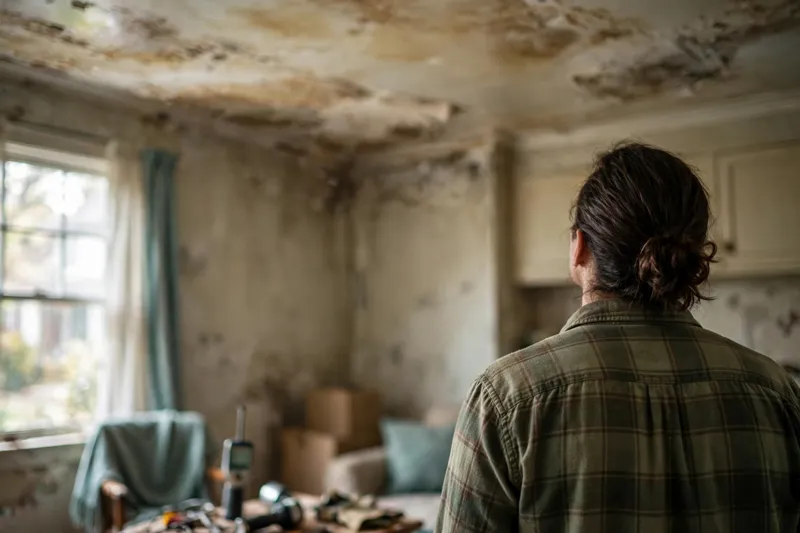
Chicago, IL · A stay-or-leave guide
Can You Live in a House With Water Damage in Chicago
The basement is wet, the walls smell, and the question is not how to fix it, it is whether you can sleep in the house tonight. This guide gives the honest answer: the five hazards that decide it, the Chicago rules that apply, and what real Chicago homeowners actually did. No figures here, because no figure decides whether a house is safe.
- The five hazards that decide the answer, water, structure, power, sewage, and mold
- The stay-or-leave test, step by step, in plain words
- What Chicago’s rules actually say, 311, the health department, and the assistance programs
- What no verified Chicago case could prove, and what real homeowners actually asked
Written for Chicago homeowners, the bungalows, the two-flats, and the brick homes.
- We answer 24/7
- Local Chicago team
- Insurance documentation help
- Straight answers, no pressure
Have a question? Call us any time
Send the form and we will call you back. Fast response, no obligation.
The short answer: it depends on five things
Searches for is it safe to live in a house with water damage spike the morning after a basement floods or a ceiling stains, and the question behind them is can you live in a house with water damage. The honest answer is that it depends on five things, the water, the structure, the power, the sewage, and the mold, and a house can pass four of them and still be unsafe on the fifth.
The short answer to can you live in a house with water damage is that a small, clean-water leak in one room, dried fast, can let you stay, and anything beyond that needs the test in this guide. The rest of this page is that test, in plain words, with the Chicago rules that apply to it and the real questions Chicago homeowners actually asked.
None of them named our site, and none of them gave a single number that settles it. The table below is the same answer, made concrete.
| What you are looking at | Stay | Leave |
|---|---|---|
| Clean water, one room, dried within a day | Yes, in the dry rooms | , |
| Sewage or floodwater from outside, anywhere in the house | , | Yes, until a crew has cleaned it |
| A sagging ceiling, a bowed wall, or a soft floor | , | Yes, that room is not safe to sleep in |
| Outlets or the breaker panel wet, or the power out | , | Yes, until an electrician clears it |
| Mold through the air, or mold in the heating system | , | Yes, until it is contained and removed |
| No heat in January, or no clean water | , | Yes, the house cannot work as a home |
| A stain on the wall, the structure dry underneath | Yes | , |
The table is the whole page in one place. The sections that follow explain why each row is where it is, what Chicago adds to it, and what to do when the answer is not obvious.
The five hazards, one at a time
A house is not one decision. It is five hazards, and each one can make the house unsafe on its own. Run through them in order, and be honest about each one, the answer is the worst of the five, not the average.
1. The water
Clean water comes from a supply line, a water heater, or an appliance hose. Grey water comes from a washing machine, a dishwasher, or a shower drain. Black water is sewage, or floodwater from outside that has picked up whatever the street carries. The category matters more than the amount: a small sewage spill is worse than a large clean-water leak, because the hazard is what the water carries, not how much of it there is.
The water that was safe on the first morning is not the same water on the third day.
2. The structure
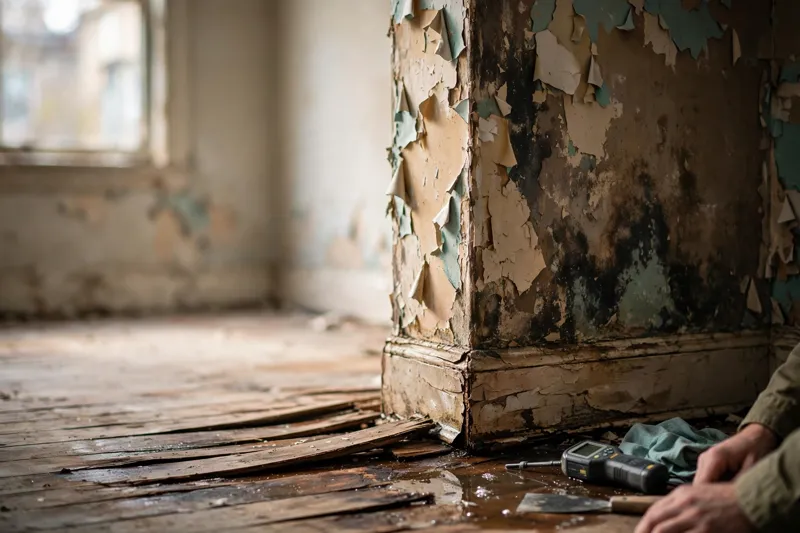
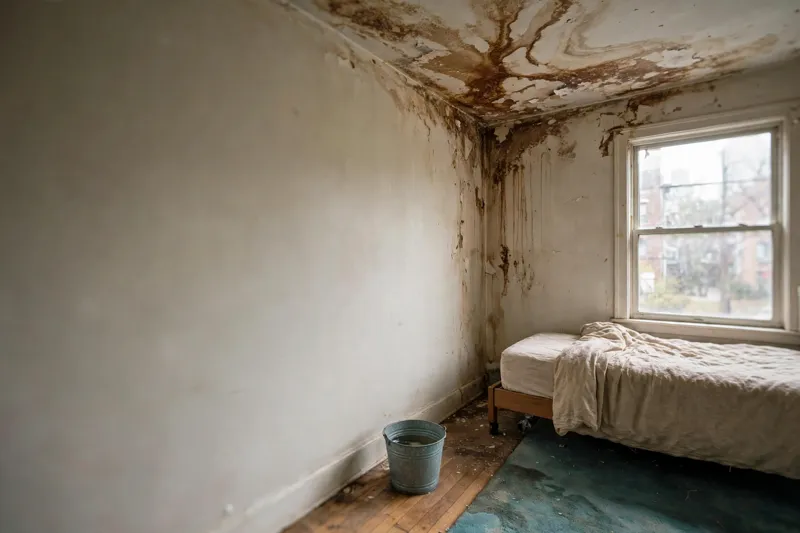
Water weakens what it soaks. A ceiling that sags, a wall that bows, a floor that gives under your foot, a joist that has cracked or rotted, any of these means the room is not safe to sleep in, whatever the rest of the house looks like. A stain on the ceiling is a warning; a ceiling that dips in the middle is a hazard. Do not test it by standing under it.
Structural damage builds slowly and shows late. Wood and drywall swell and weaken in the first days of soaking, and the sagging joists, bowed walls, and soft floors build over weeks. The gap between those two numbers is the gap between damage you can still reverse and damage you cannot.
3. The power and the heat
Water and electricity do not mix, and the rule is simple: if the water reached an outlet, a switch, or the breaker panel, the power in that room stays off until an electrician clears it. Do not walk through standing water in a room where the power is on. The same goes for the furnace and the water heater, a wet furnace is a dead furnace, and a house with no heat in a Chicago January is not livable, whatever the walls look like.
The point is the same on both: keep the house warm enough that the pipes do not freeze again, and do not let the house go cold while it is wet.
4. The sewage
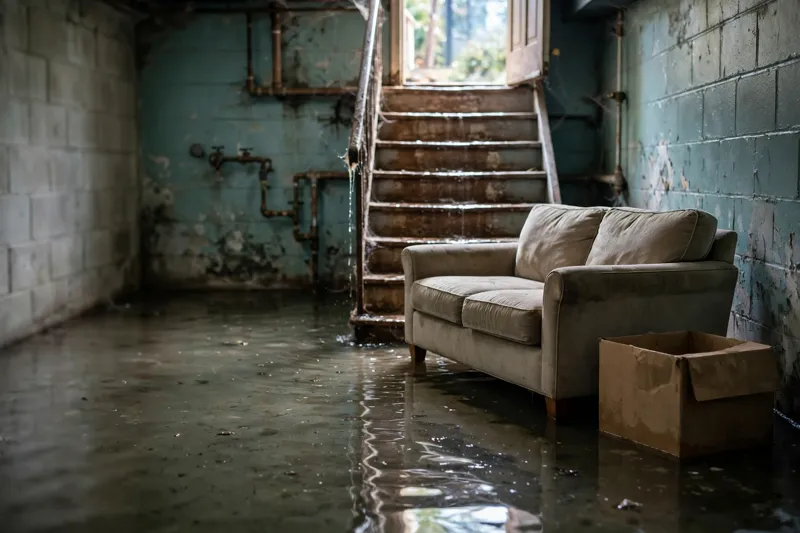
Sewage is the clearest leave signal in this guide. If the water smells of sewage, if the toilet or the floor drain backed up, or if the water came in from the street during a storm, nobody sleeps in the house until a crew has cleaned it. Sewage carries bacteria, and the cleaning is not a mop and a bucket, it is extraction, disinfection, and drying to the readings. A house with sewage in it is not a house with a smell problem. It is a house with a contamination problem.
Chicago’s sewers make this a Chicago question. The city runs a combined system, so rain and sewage travel in the same pipes, and a heavy storm can push the mixture back up through a basement floor drain. The basement that flooded in a storm is not just a wet basement, it may be a sewage basement, and the two need different answers.
5. The mold
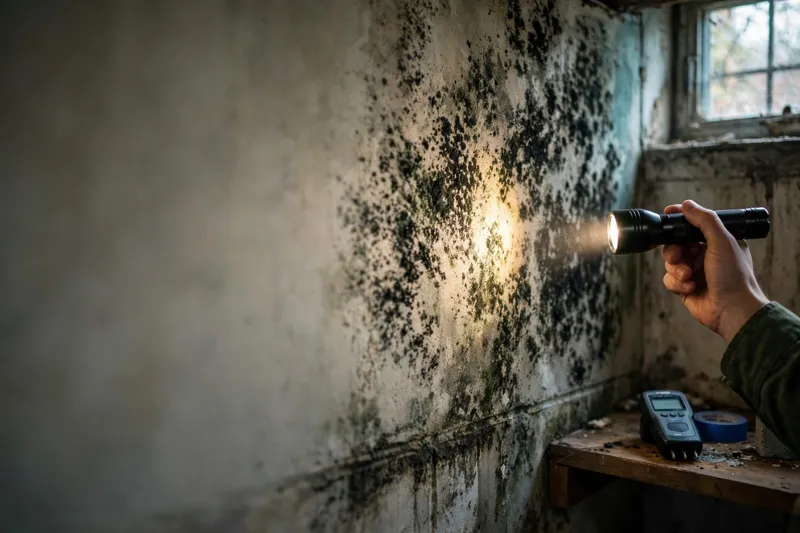
Mold is the hazard that decides the long stay. It starts within one to two days on a wet surface, and it grows in the walls, behind the drywall, and in the heating system, where you cannot see it. The question homeowners type, mold in basement is it safe to live there, is the basement version of the same question, and the answer is the same: a small patch, contained and drying, is a short-term stay for most healthy adults, and widespread mold is not a stay at all.
Searches for can you live in a house with black mold come from homeowners who found dark growth and want to know whether the color is the danger. The color is not the test, the amount, the place, and the people in the house are. Searches for is it safe to stay in a house with mold come from the same place.
Mold is also the hazard that decides whether the house is safe for the people in it. A healthy adult can stay through a small clean-water job; a child, an older person, or anyone with asthma or breathing trouble cannot stay through mold, dust, or drying machines running through the night. The symptoms health agencies list, coughing, sneezing, a runny or stuffy nose, itchy eyes, skin irritation, and wheezing, are guidance, not a diagnosis, and this page gives no diagnosis. If the symptoms start when you are home and ease away from the house, tell a doctor and a mold inspector.
The Chicago version: sewers, 311, and two thresholds that disagree
Water damage is a national question, but the answer in Chicago runs through the city’s own pipes, its own reporting line, and its own health guidance. This section is the Chicago layer, the facts below come from the city’s own pages, and where the city’s pages disagree with each other, this page says so instead of picking a winner.
The combined sewer, and why basements flood
Chicago runs a combined sewer system: rain and sewage travel in the same pipes. In a heavy storm the pipes fill, and the mixture can push back up through a basement floor drain. That is why a Chicago basement flood is often a sewage question as well as a water question, and why the first step after a storm flood is to name the water before you decide whether to stay.
When the basement floods, report it. Call 311, the line runs twenty-four hours a day, seven days a week, three hundred and sixty-five days a year, and report the flooded basement. The city’s own number for the service is (312) 744-5000, printed in the CHI311 site footer. The report does not dry the basement, but it starts the record, and the record is what the claim and the city’s programs run on.
Two mold thresholds that do not agree
Two official sources give two different answers on when mold needs a professional, and this page records the disagreement instead of settling it. The DuPage County Health Department’s guidance says a homeowner can clean a small area under ten square feet with protective gear, and that an area over one hundred square feet needs an experienced professional. The Illinois Department of Public Health’s own questions-and-answers page puts the professional line above ten square feet. The two thresholds disagree, and the disagreement is not settled here, the county health department’s line is the one hundred square feet figure, and the state department’s line is the ten square feet figure.
That is an engine consensus, not a city fact, and it should not be quoted as one. The city’s own guidance is the county health department’s, and the state’s own questions-and-answers page is the other voice. A homeowner who hears ten square feet from a search result and one hundred square feet from a county page is hearing two different sources, and this page does not pretend they are one.
The mold registration, and what this site is
Illinois now registers mold remediation work under Part 835, with a grace period for existing workers running to the end of September 2027, after which no one performs mold remediation without certification. This site gives consumer guidance only, it claims no registration, and it does not perform the remediation. The registration is a fact about the trade, not a claim about this site.
Two assistance programs, and the difference between them
Two programs are often confused, and they pay for different things. The Flood Assistance Repair Program helps owner-occupants of single-family or two-unit homes on the West Side only, for basement damage from the 2023 or 2024 floods, with an income limit, and registration runs from the end of November to the middle of December 2026 through the Westside Health Authority. North Side areas are not eligible.
The Disaster Relief Assistance Program is different: it pays rent, mortgage, or utilities, not repairs, for households affected between January 2025 and January 2027, with an income limit, under three federal disaster declarations, and priority goes to five ZIP codes on the West and Northwest Sides. The two programs are not the same money, and neither of them pays for the drying. A homeowner who applies for one expecting the other will wait for the wrong help.
One program that does not exist is the one homeowners keep asking about: the city’s own site carries no fifty-percent basement flooding subsidy, and twenty consecutive checks of the city’s pages found no such program. Do not plan a stay-or-leave decision around money that is not there.
The stay-or-leave test: seven questions, in order
Searches for water damage house uninhabitable come from homeowners who want a single word for what they are living in, and searches for how long can you live with water damage come from homeowners who have been living with it for weeks and want to know when it turns unsafe. The question is the one homeowners ask after the first night, and the test below is how to answer it room by room.
Work the seven questions in order. The first one that fails decides the room, and the worst room decides the house.
Question one: is the water off and the room safe to enter?
Shut off the main valve, cut the power to any room with standing water, and do not walk through water that may be sewage. If the ceiling sags or the floor gives under your foot, get out of the room. The decision starts with safety, not with the drying.
Question two: what kind of water is it?
Clean water from a supply line is one job; grey water from a washing machine or a dishwasher is another; sewage or floodwater from outside is a third, and the third one means nobody sleeps in the house until a crew has cleaned it. The water decides the answer before the damage does.
Question three: is the structure, the power, and the heat sound?
Look for a sagging ceiling, a bowed wall, a soft floor, and cracked joists, any of them means the room is not safe to sleep in. Check the breaker panel and every outlet the water reached, and check the furnace and the water heater. A house with no heat in a Chicago January is not livable, whatever the walls look like.
Question four: how far did the water go?
A moisture reading in every wall and floor the water touched tells you what the eye cannot: whether the water went behind the drywall, under the floor, and into the framing. A reading in the safe range means the room recovered; a wet reading after days of drying means the water is still working through the house.
Question five: who sleeps in the house?
The answer changes with the people in it. A healthy adult can stay through a small clean-water job; a child, an older person, or anyone with asthma or breathing trouble cannot stay through mold, dust, or drying machines running through the night. If the bedroom is the wet room, the decision is made for you.
Question six: can you sleep, cook, wash, and heat the house?
A house is uninhabitable when the water takes away something a home must have, a sound structure, safe power, clean water, heat, or air you can breathe. Cosmetic staining alone does not make it uninhabitable. The test is practical: can you cook, wash, sleep, and heat the house safely, and does the water keep coming back?
Question seven: does the water keep coming back?
A leak that is fixed is a job; a leak that keeps coming back is a house you cannot live in. Check whether the moisture source was fixed, not just the stain, and watch the readings for a week after the drying. A house with a dry basement and a paper trail is a different home from a house with paint over a wet wall.
There is no single clock on it: contaminated water or a live electrical hazard makes the house unsafe at once, and clean water turns unsafe as mold grows and the structure soaks longer. The longer the water sits, the shorter the safe window, and drying within the first day is what keeps it open.
Insurance: sudden and accidental
The stay-or-leave decision is a safety decision, and the insurance decision is a separate one. The two meet in the file you build on the first day, and they meet again when the mold grows after the drying.
What the policy pays for, and what it does not
A standard homeowners policy covers water damage when the cause was sudden and accidental, a burst pipe, a failed water heater, an appliance hose that gave way. It pays for the drying and the repair, up to your limits, minus your deductible. It does not pay for the pipe or the appliance that failed, and it does not cover flooding from outside, a slow leak that ran for months, groundwater seepage, or wear and tear.
The rule is sudden and accidental, and there is no halfway split: the insurer pays for the damage the event caused, not for the slow failure behind it. A sewer backup needs its own endorsement, and a service-line endorsement is the one that covers the line itself. Read the declarations page before the storm, not after it, and call the insurer the same day the damage is found.
One engine’s average sits near thirteen thousand, another near fifteen thousand, and the web results behind them sit near eleven thousand, three different numbers for the same question, and none of them is yours. The payment depends on your policy, your deductible, the cause, and the limits you bought, and the only number that matters is the one on your own declarations page. Ask your insurer what your limits are, and do not plan a move-out around an average from a search result.
This site prints no prices, so no figure here can mislead you: the charge depends on where the pipe sits, how hard it is to reach, and whether the wall or the floor must come out, and the water damage the burst caused is usually the bigger part of the bill.
The mold that comes after the drying
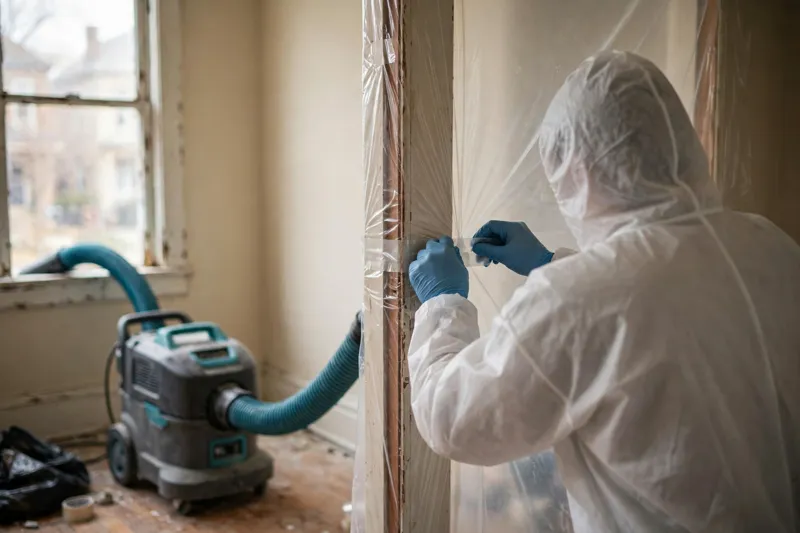
Mold is the second job, and it follows the first. The full job, stopping the water, drying the structure, cleaning, and rebuilding, is called water damage restoration, and the emergency half is called mitigation. Removing mold growth is a separate job, called remediation, and it follows the drying, never the other way around.
Searches for living in a house during mold remediation come from homeowners mid-job, and the answer is the same test as the rest of this page: a small, contained job can let you stay in the dry rooms, and a large job, walls open, containment up, machines running through the night, usually means moving out for the worst days. The mold guide linked at the end of this page runs through what grows after the drying and what remediation actually takes.
Mold can be remediated to safe, normal levels, but no job removes every spore, spores are everywhere, indoors and out. Fully remediated means the moisture source is fixed, the growth is removed, the area is cleaned and dried to the readings, and the humidity stays in the normal range. A job that skips the source is not finished, and a house that was remediated without fixing the source is a house that will grow mold again.
How to decide whether to stay in a house with water damage
Seven steps, in order. The first one that fails decides the room, and the worst room decides the house.
Stop the water and make it safe
Shut off the main valve, cut the power to any room with standing water, and do not walk through water that may be sewage. If the ceiling sags or the floor gives under your foot, get out of the room. Call 311 to report a flooded basement, and photograph everything before anything moves.
Name the water before you decide anything
Clean water from a supply line is one job; grey water from a washing machine or a dishwasher is another; sewage or floodwater from outside is a third, and the third one means nobody sleeps in the house until a crew has cleaned it. The water decides the answer before the damage does.
Check the structure, the power, and the heat
Look for a sagging ceiling, a bowed wall, a soft floor, and cracked joists, any of them means the room is not safe to sleep in. Check the breaker panel and every outlet the water reached, and check the furnace and the water heater. A house with no heat in a Chicago January is not livable, whatever the walls look like.
Measure how far the water went
A moisture reading in every wall and floor the water touched tells you what the eye cannot: whether the water went behind the drywall, under the floor, and into the framing. A reading in the safe range means the room recovered; a wet reading after days of drying means the water is still working through the house.
Ask who sleeps in the house
The answer changes with the people in it. A healthy adult can stay through a small clean-water job; a child, an older person, or anyone with asthma or breathing trouble cannot stay through mold, dust, or drying machines running through the night. If the bedroom is the wet room, the decision is made for you.
Decide room by room, not house by house
A house is not one decision, it is a decision per room. The dry upstairs can stay livable while the wet basement is closed off, and the kitchen can stay open while the bathroom is gutted. Write the stay rooms and the closed rooms down, and keep the closed rooms closed until the readings say they are dry.
Write the file while the damage is still fresh
Photograph every room before anything moves, keep the drying readings, keep every receipt, and call the insurer the same day. The claim runs on the file you build in the first day, and a house with a dry basement and a paper trail is a different buy from a house with paint over a wet wall.
The stay-or-leave checklist
- Water off, power off in the wet rooms, and no walking through water that may be sewage
- Water named: clean, grey, or black, and black water means nobody sleeps in the house
- Ceiling, walls, floors, and joists checked, a sagging ceiling is a leave signal
- Breaker panel, outlets, furnace, and water heater checked by the right trade
- Moisture readings in every wall and floor the water touched
- Bedroom checked first, if the bedroom is the wet room, sleep somewhere else
- Children, older people, and anyone with breathing trouble out of the house while mold, dust, or machines are in it
- 311 called, photographs taken before anything moves, insurer called the same day
- Stay rooms and closed rooms written down, and closed rooms kept closed until the readings say dry
- Readings watched for a week after the drying, the source fixed, not just the stain
Call now, we answer 24/7
If the house is wet and you are not sure whether to stay, call (773) 570-9869. We will ask the five questions, tell you what to check tonight, and send a crew when the answer is leave.
Frequently asked questions
Can you live in a house with water damage?
Sometimes, it depends on the water, the damage, and the people in the house. A small, clean-water leak in one room, dried fast, can let you stay. Sewage, a sagging ceiling, a dead furnace, or mold through the air means leave. The test in this guide, water, structure, power, sewage, mold, decides it room by room.
Does homeowners insurance cover water damage restoration, or only part of it?
It covers only part of it. The policy pays for the drying and the repair when the cause was sudden and accidental, up to your limits, minus your deductible. It does not pay for the pipe or the appliance that failed, or for flooding from outside. A sewer backup needs its own endorsement.
How long does water damage restoration take?
Drying takes three to five days on most losses, one engine puts a minor loss at one to two days, and the job with repairs usually takes one to three weeks.
What is water damage restoration called?
The full job, stopping the water, drying the structure, cleaning, and rebuilding, is called water damage restoration. The emergency half, stopping the water and drying, is also called mitigation. Removing mold growth is a separate job, called remediation, and it follows the drying, never the other way around.
Does insurance cover water damage restoration?
Yes, when the damage was sudden and accidental, a burst pipe, a failed water heater, an appliance hose that gave way. The claim runs in order: call the insurer, photograph everything, start the drying, and keep the receipts. The adjuster works from the readings and the photos, so the file you build in the first day decides the claim.
What is the water damage restoration process?
The process runs in order: inspection first, to find the source and how far the water spread; then extraction, with pumps and vacuums; then drying, with air movers and dehumidifiers; then cleaning and sanitising; then the repairs. Dry the floors, walls and framing fast to stop mold, and document everything.
Does homeowners insurance cover water damage?
It covers water damage when the cause was sudden and accidental, a burst pipe, a failed appliance, a supply line that gave way. It does not cover a slow leak that ran for months, groundwater seepage, flooding from outside, or wear and tear. Read the declarations page before the storm, not after it.
What should I do when my house floods?
Stop the water and make it safe first. Shut off the main valve, cut the power to any room with standing water, and do not walk through water that may be sewage. Call 311 to report a flooded basement, photograph everything before anything moves, and start the drying within the first day.
How much does homeowners insurance pay for water damage?
No page can give you a number, because the payment depends on your policy, your deductible, the cause, and the limits you bought. The insurer pays the drying and the repair, less your deductible, and it does not pay for the pipe that failed.
Are renters responsible for water damage?
Renters are liable only for damage they caused or failed to report, negligence, misuse, or a leak they never told the landlord about. The building itself, the walls, floors, and pipes, is the landlord's, and so is the plumbing that serves the unit. Renters insurance covers the renter's belongings when the cause was sudden and accidental.
How much does a plumber charge for a burst pipe?
This site prints no prices, so no figure here can mislead you. The charge depends on where the pipe sits, how hard it is to reach, whether the wall or the floor must come out, and whether the call is an emergency at night. The water damage the burst caused is usually the bigger part of the bill.
Does insurance cover burst pipes?
Yes, when the pipe burst suddenly, a freeze split, a joint that failed without warning, a line that gave way all at once. The insurer pays for the water damage the burst caused, not for the pipe itself. A slow leak that ran for months may be classed as wear and tear, and the claim may fail.
How much does it cost to fix a burst pipe?
This site prints no prices, so no figure here can mislead you. The cost depends on the pipe's location, the access, the material, and the water damage the burst caused, the drying and the rebuild are usually the bigger part. A camera or a moisture reading comes first, then a written scope.
How much does mold remediation cost?
This site prints no prices, so no figure here can mislead you. The cost depends on how much mold there is, where it sits, whether the wall must come out, and whether the moisture source is fixed first. Illinois now registers mold remediation work, with a grace period for existing workers, this site gives consumer guidance only.
Can mold be fully remediated?
Mold can be remediated to safe, normal levels, but no job removes every spore, spores are everywhere, indoors and out. Fully remediated means the moisture source is fixed, the growth is removed, the area is cleaned and dried to the readings, and the humidity stays in the normal range. A job that skips the source is not finished.
Is it safe to stay in a house with mold in the basement?
It depends on how much mold there is, where it sits, and who lives above it. Widespread mold, mold in the ducts, or breathing trouble means leave.
When is a house uninhabitable because of water damage?
A house is uninhabitable when the water takes away something a home must have, a sound structure, safe power, clean water, heat, or air you can breathe. Cosmetic staining alone does not make it uninhabitable. The test is practical: can you cook, wash, sleep, and heat the house safely, and does the water keep coming back?
Should you move out during water damage restoration?
It depends on the water, the size of the job, and your health. A small clean-water job in one room can let you stay in the rest of the house. Sewage, widespread mold, heavy demolition, or drying machines running through the night mean moving out for those days. Ask the crew what each day will look like before you decide.
Can you sleep in a house with water damage?
Only when the bedroom itself is safe, dry, sound, with power that works and no sewage or mold smell. A minor clean-water leak in another part of the house can leave the bedroom fine. If the damage is in the bedroom, if the air smells of sewage or mold, or if the power is off, sleep somewhere else.
How long can you live in a house with water damage before it becomes unsafe?
There is no single clock. Contaminated water or an electrical hazard makes the house unsafe at once. The longer the water sits, the shorter the window, and drying within a day keeps it open.
How to tell if water damage is permanent?
Permanent damage shows in the structure, not the surface. Stains that keep coming back, floors that stay warped after drying, drywall that stays soft, and wood that stays swollen all point to damage the drying could not undo. A moisture reading settles it: dry readings mean the house recovered, wet readings after weeks mean it did not.
How long does it take for water to cause structural damage?
It starts faster than most homeowners expect. Mold can start within one to two days on a wet surface, and wood and drywall swell and weaken in the same window. Structural damage, sagging joists, a bowed wall, a soft floor, builds over weeks, and one engine puts permanent damage at two to three days of soaking.
Is it a good idea to buy a house with previous water damage?
It can be, if the damage was fixed and the proof exists. Ask for the drying readings, the repair invoices, and the mold clearance, and check whether the moisture source was fixed, not just the stain. A house with a dry basement and a paper trail is a different buy from a house with paint over a wet wall.
What are the symptoms of mold exposure in a house?
Guidance from health agencies lists coughing, sneezing, a runny or stuffy nose, itchy eyes, skin irritation, and wheezing, worse for people with asthma or allergies. The symptoms alone do not prove mold is the cause, and this page gives no diagnosis. If they start at home and ease away from the house, tell a doctor and a mold inspector.
What makes a home uninhabitable for insurance purposes?
For an insurer, a home is uninhabitable when the damage stops the house from working as a home, no safe power, no clean water, no heat, or a structure that cannot be slept in. The insurer's test is narrower than the city's, and the policy pays the extra living costs only while the home cannot be used.
What qualifies for a house to be condemned?
A house is condemned when the city decides it is unsafe to live in, structural damage, sewage or mold through the house, or no power, water, or heat with no way to restore it. The decision comes from a city inspector, not the homeowner or the insurer, and the house stays condemned until the work is done and cleared.
Can you live in a house that has been condemned?
No. A condemned house is one the city has ruled unsafe to live in, and the ruling stands until the work is done and the inspector clears it. Sleeping in one risks fines, and the damage that condemned it does not stop while you are inside. The Beverly couple in this guide lived in the garage, not the house.
What type of water damage is not covered by insurance?
A standard policy does not cover flooding from outside, a slow leak that ran for months, groundwater seepage, or wear and tear. It does not cover the pipe that failed, and a sewer backup needs its own endorsement. The rule is sudden and accidental: the insurer pays for the damage the event caused, not for the slow failure behind it.
Sources
- Chicago Magazine, Dennis Rodkin, 6 February 2013, the Beverly couple, David McClain and Sanaa Hachem, and the city’s do-not-enter sign on their house.
- CBS Chicago, 26 September 2014, “2 Investigators: Couple Says City Won’t Let Them Tear Down Condemned Home”, the Landmarks Commission, the city inspector’s findings, and the family living in the garage.
- ABC7 Chicago, Naomi Ruchin, 30 September 2026, the eight-inch water main break in the 2500-block of South Claremont Avenue, and the evacuation of about a dozen homes in the Heart of Chicago.
- FindLaw, 1324 Pratt Condominium Association v. Platt Construction Group Inc, decided 28 September 2010, the court record for 1324 W. Pratt Boulevard, and the mold that grew through the building.
- DuPage County Health Department, mold guidance, the under-ten-square-feet homeowner guidance and the over-one-hundred-square-feet professional line.
- Illinois Department of Public Health, mold questions and answers, the professional line above ten square feet, and the Part 835 registration with its grace period to the end of September 2027.
- City of Chicago, CHI311, the 311 line, twenty-four hours a day, seven days a week, three hundred and sixty-five days a year, and the (312) 744-5000 number in the site footer.
- City of Chicago, Flood Assistance Repair Program, the West Side only program for basement damage from the 2023 or 2024 floods, with registration from the end of November to the middle of December 2026.
- City of Chicago, Disaster Relief Assistance Program, the rent, mortgage, and utilities program for households affected between January 2025 and January 2027, under three federal disaster declarations.
- WikiHow, “How to Clean Up Water Damage: Proper Restoration Procedures”, co-author Ryan Owsiany, updated 2 May 2025, the restoration procedure read end to end for this page.
- The Root Short, “Navy Vet Faces Home Condemnation After Repeated Chicago Flooding”, the video watched in full for this page, with no name, address, or date given.
- Eco Water Restoration, “Can I Stay in My Home During Water Damage Restoration? | FAQ”, the video watched in full for this page.
More Restoration Services in Chicago
Every service below is one tap away. Pick the one that matches your problem.

Water Damage Restoration
Fast water extraction, structural drying, and full repair after burst pipes, leaks, and floods.
Learn more →
Water Mitigation
Emergency water removal, structural drying, and mold prevention to stop the damage fast, 24/7.
Learn more →
Mold Remediation
Safe, contained mold remediation that removes contamination and fixes the moisture source.
Learn more →
Sewage Cleanup
Safe removal and disinfection of dangerous sewage backups and black water.
Learn more →
Flood Cleanup
Water pumped out, structure dried, and debris cleared fast after storms and flooding.
Learn more →
Hardwood Floors Water Damage
Cupped, buckled or stained hardwood after a leak? How we dry it, when sanding saves it, and when the boards have to go.
Learn more →