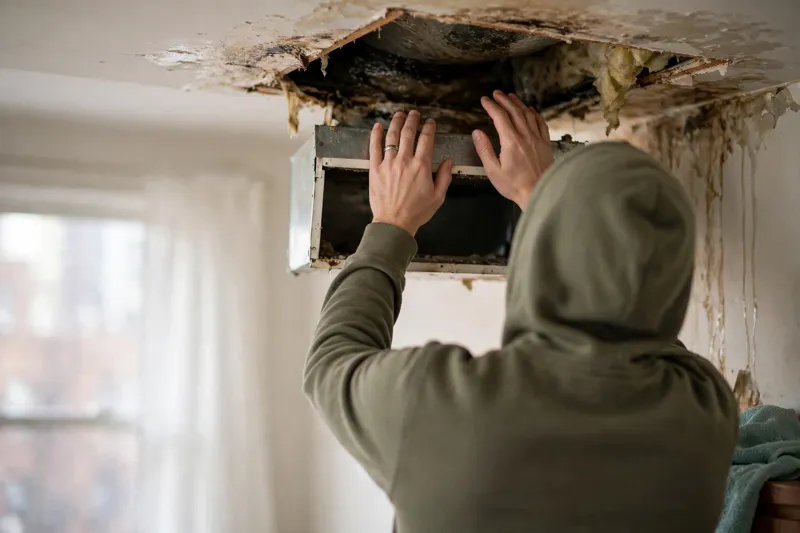
Chicago, IL · Air ducts after water damage and flooding
Air Duct Cleaning Chicago After Water Damage
Most duct cleaning is sold to people who do not need it. This page is about the exception: water in the ducts. If floodwater, a burst pipe, or a sewer backup reached your system, cleaning, or replacement, is genuinely warranted, and the HVAC must stay off until a professional inspects it. Everything below follows from that one fact.
- The honest EPA answer first, routine cleaning is not proven to help
- The first forty-eight hours, in order, what to do before anyone cleans anything
- Clean it or replace it, the decision table for every part of the system
- How to spot a shady company, and what a proper job looks like
Written for Chicago homeowners, the two-flats, the greystones, and the bungalows.
- We answer 24/7
- Local Chicago team
- Insurance documentation help
- Straight answers, no pressure
Have a question? Call us any time
Water in your ducts, and a system that should not run until it is inspected: send the form and we will call you back. Fast response, no obligation.
The short answer: routine cleaning is not proven
Routine duct cleaning is not proven to help. One video watched for this page puts it bluntly, for about ninety-five percent of people, duct cleaning is not something they should consider, kind of useless and a waste of money. A thirty-year duct cleaner interviewed on the same channel says the same thing in stronger words: completely unnecessary, and most HVAC people would agree. This page does not argue with any of that.
The page is worth reading because it is not about routine cleaning. It is about the exception, water in the ducts. If water, sewage, or floodwater entered the system, cleaning is genuinely warranted, and the system must stay off until a professional inspects it.
Air duct cleaning after water damage is one of the few cases where cleaning is genuinely warranted, and the reason is simple: wet ducts grow mold within a day or two, the system spreads it through the whole home when it runs, and the porous parts cannot be dried back to safe. The rest of this page is the exception, in full: when cleaning is warranted, what the first two days look like, what gets cleaned and what gets replaced, and how to hire without getting burned.
Searches for air duct cleaning chicago return the same national cost guides and the same Chicago pack, and none of the fourteen answers named our site. The Chicago terms are small, the head term at forty-seven a month, the other Chicago terms at one to fifty-five, and the weight of the cluster is national: the national head term at about forty-one thousand a month. Homeowners type air duct cleaning near me and get a list of companies with no way to tell them apart, and the forums are full of the same question asked fifteen different ways: did anyone actually notice a difference, is it a scam, and who should I avoid. This page answers those questions with the EPA's answer up front and the water-damage exception in full.
| Situation | Clean the ducts? | What happens instead |
|---|---|---|
| Routine cleaning, healthy system | No, not proven to help | Nothing; the system is fine |
| Visible mold inside the ducts | Yes, with the source fixed first | Removal, then disinfection |
| Pest infestation or heavy debris | Yes | Source removal, then inspection |
| Water or floodwater in the ducts | Yes, or replace the wet parts | HVAC off, dry, clean or replace, verify |
| After major renovation dust | Yes, when the dust is heavy | Whole-system clean, then inspection |
The table is the whole page in one place. The sections that follow explain each row: the four conditions that justify cleaning, the first two days after water reaches the system, how to tell whether water got in at all, what a proper post-flood cleaning involves, the clean-or-replace decision for every part, the mold question, the scam question, the do-it-yourself question, the dryer vent, the insurance question, and the Chicago part, the housing stock, the pack, and the two-foot rule.
This page is written for the homeowner who just found water in a floor vent, the owner whose furnace sat in floodwater, and the renter whose landlord says the ducts are fine. It is written for the two-flat owner with long runs and flexible ductwork, and for the bungalow owner with a short system and a furnace in the basement. It is not written for the homeowner with a healthy system and no problem, that homeowner does not need this page, and the EPA says so. The page assumes the water already happened, or the mold is already visible, or the smell is already there. If none of those is true, the honest advice is to do nothing, and the page says that first, before anything else.
What this page does not do matters as much as what it does. It is not a general duct-cleaning service page, and it does not pretend the water-damage angle is the whole of duct cleaning. It is not a price list, this site prints no prices, and the page discusses cost drivers only. It is not a mold-remediation page: the mold-remediation service page covers the remediation side, and this page points to it. It is not an insurance-coverage page: the flood-insurance blog covers the coverage side, and this page points to it.
It is not a sewer-backup page: the sewage-backup blog covers that side. This page owns the ducts themselves, when to clean them, when to replace them, the twenty-four to forty-eight hour mold window, the HVAC-off rule, the metal-clean versus flex-replace rule, and the verification testing that proves the job worked.
When cleaning is warranted: the EPA's four conditions
The EPA's answer to air duct cleaning chicago is the same as its answer anywhere else, and it is the answer this page is built on. The EPA says routine cleaning is not proven to prevent health problems or lower dust, and it names four conditions under which cleaning is warranted: visible mold growth inside the ducts or on HVAC components; vermin infestation; ducts clogged with excessive dust and debris, with particles blowing out of the supply registers; and major renovation work that generated significant dust. The four conditions are the test.
For air duct cleaning chicago, the four conditions are the test, not the calendar. There is no set interval, and the EPA gives none. A clean system in a dry home may never need cleaning, and a system that has never been cleaned after a renovation may need it badly. The question is never how long it has been since the last cleaning, the question is whether one of the four conditions is present. A homeowner who cleans on a schedule is buying a service the EPA does not recommend; a homeowner who cleans because mold is visible at a register is buying the right service at the right time.
The fifth condition is the page's own, and it is the reason this page exists: water damage or flooding that reached the ducts. The EPA's four conditions do not name it, but the water-damage case fits the first condition, visible mold, and goes further. Floodwater carries silt, bacteria, and sewage, and it soaks the porous parts of the system in a way dry dust never does. The water-damage case is not routine cleaning, and it must never be sold as routine cleaning.
The four conditions, stated once, plainly, with the water-damage case beside them: visible mold growth inside the ducts or on the HVAC components; vermin infestation; ducts clogged with excessive dust and debris; major renovation dust; and water that reached the system. The first four come from the EPA and NADCA, and the fifth comes from the flood guidance the federal agencies publish for contaminated HVAC systems. The rest of this page is the fifth condition, in full, and the scam section explains why the companies that sell routine cleaning as a scheduled service are the ones to avoid.
The EPA's guidance goes further than the four conditions, and the extra guidance is the part the sales scripts leave out. If you decide to have your ducts cleaned, the EPA says to choose a provider that follows the NADCA standard, to ask for the cleaning method in writing, and to verify that the provider cleans the whole system, not just the vents. The EPA also warns about chemical treatments: no chemical biocides or sealants should be used without the homeowner's full understanding of what the chemical is and what it does, and sealants should never be applied to wet or damaged duct board. A company that offers a chemical treatment as the default, without explaining it, is selling a product, not a cleaning.
The NADCA standard is the industry benchmark, and it is the standard the honest companies measure themselves against. Source removal is the method: the system is put under negative pressure with a large vacuum, and the debris is loosened with rotating brushes and air whips while the vacuum pulls it out. The standard covers the whole system, the supply and return ducts, the registers, the trunk lines, the blower, the coil, and the air handler, and it requires before-and-after photos.
A company that cleans only the registers and calls it a whole-system clean has not met the standard, and a company that cannot name the standard has not read it. The standard is also the reason the job takes three to five hours: the whole system takes that long, and a job finished in forty-five minutes was not a whole-system job.
Dust in the ducts is normal, and the system is designed to handle it. The ducts carry air, the air carries dust, and the filter catches most of it, that is the system working as designed, not a system in need of cleaning. The EPA's point is that the dust in a healthy system is not a health problem, and cleaning it out does not make the air healthier.
The problem starts when the dust is not dust, when it is mold growth, or rodent droppings, or silt from floodwater, or the debris from a renovation that filled the system with drywall dust. The four conditions are the line between dust and a problem, and the water-damage case is the clearest problem of all, because the water turns the dust into a growth medium.
Duct sealing is a different job from duct cleaning, and the two are confused because the same companies sell both. Sealing is the repair of leaks, the joints and the seams where conditioned air escapes into the wall cavities and the attic, and the gaps where unconditioned air is drawn in. The EPA's point is that sealing saves energy, because the system stops heating and cooling the spaces nobody lives in, and cleaning does not save energy, because the dust in a healthy system does not block the air.
A new system does not need cleaning, and a new system does not need sealing either, the leaks come with age, with the joints loosening and the sealant drying out. The cleaning question and the sealing question are separate questions, and the answer to one is not the answer to the other.
The first forty-eight hours: what to do before anyone cleans anything
The first rule of air duct cleaning chicago after a flood is that the HVAC stays off. Turn off the thermostat, the air conditioner, and the fan-only setting, and leave the system off until a professional inspects it. Running the system spreads mold spores, bacteria, and odors through the whole home, and it can damage the blower and the electrical parts. Do not use a flood-affected system to dry the house, dry the structure another way, with the windows open and dehumidifiers on the rooms, not through the ducts.
Make the building safe first. Do not enter a flooded basement with live electrical equipment, wait for utility or electrician clearance, because waterlogged electrical components can short-circuit, burn out, or create fire hazards. Close off the unaffected rooms with plastic sheeting, open the windows, and cover the vents in the rooms that stayed dry. Throw away the wet filters, the CDC hurricane HVAC flyer says so, and the reason is simple: a wet filter is a mold farm sitting in the air stream. Start drying the house with a wet and dry vacuum and dehumidifiers on the structure, not through the ducts.
Document before you clean. Take dated photos and video of the equipment, the ducts, the insulation, and the water line, before anything moves. The claim runs on the file you build in the first hour, and a flood-insurance appeal decision shows why: a denial was upheld for vent cleaning and mold where the ducts were above the waterline and the cleaning, done more than two years after the flood, was not documented as required by the flood. Clean promptly, keep written records of the water line, the work performed, and the dates, and keep the photos with the claim file.
Make the building safe first; leave the HVAC system off; close off the unaffected rooms; throw away the wet filters; start drying the house; document before you clean; call a professional to inspect before anyone restarts the equipment. The EPA adds one caution the sequence must carry: wait to run fans and dehumidifiers until visible mold has been gently cleaned, so the airflow does not spread it.
The electrical safety step deserves more than a sentence, because it is the step where a mistake hurts. The main breaker is the first switch, and it is reached from a dry location, never walk through standing water to reach the panel. The furnace disconnect and the air conditioner disconnect are the next two, and both are off until the equipment is inspected. A waterlogged blower motor, a wet control board, and a soaked gas valve are all fire and shock hazards, and the electrician's clearance is the thing that says the building is safe to enter, not the homeowner's judgment. The utility company can cut the power at the meter when the panel itself is wet, and that call is free.
Drying the structure is a separate job from drying the ducts, and the two must not be confused. The dehumidifiers go on the rooms, not in the ducts, the ducts are dried by hand and by air, with the system off, and the structure is dried with dehumidifiers and air movers and the windows open where the weather allows. The temperature matters: a cold basement dries slowly, and a warm room dries faster, but the heat must not come from the flood-affected furnace.
The EPA caution about fans is the detail that decides the order: wait to run fans and dehumidifiers until visible mold has been gently cleaned, because the airflow spreads the spores through the home. The gentle cleaning is a damp wipe, not a blast of air, and it happens before the machines start.
Closing off the unaffected rooms is the step that keeps a wet basement from becoming a wet house. The plastic sheeting goes over the doorways, the tape seals the edges, and the door gaps are stuffed, and the return-air grilles in the affected rooms are covered, because the return air is the path the spores take to the rest of the home.
The reason is the air: the spores and the dust move with the air, and the air moves through the open doorways and the return grilles, and the closed rooms stay clean only when the openings are sealed. The sheeting comes down after the drying is done and the verification is done, and the rooms are opened in the order the drying finishes, not all at once. A room opened too early pulls the damp air back into the clean rooms, and the drying starts again.
How to tell whether water got into the system
The signs that air duct cleaning chicago is needed after water damage are easy to miss, because most of the network is behind walls, under floors, and above ceilings. You often cannot see the water at all.
The signs are the smell and the equipment: a musty or earthy odor when the air moves, or odors that linger after the structure dries; visible water, silt, or staining at the base of the furnace, the air handler, the plenum, or the floor-level registers; wet, discolored, or sagging duct insulation, or lined duct board that feels damp; rust on the cabinet, the blower housing, the drain pan, or the coil; mold spots near the registers, or a flood line on the equipment. Any one of those means an inspection, not a cleaning special.
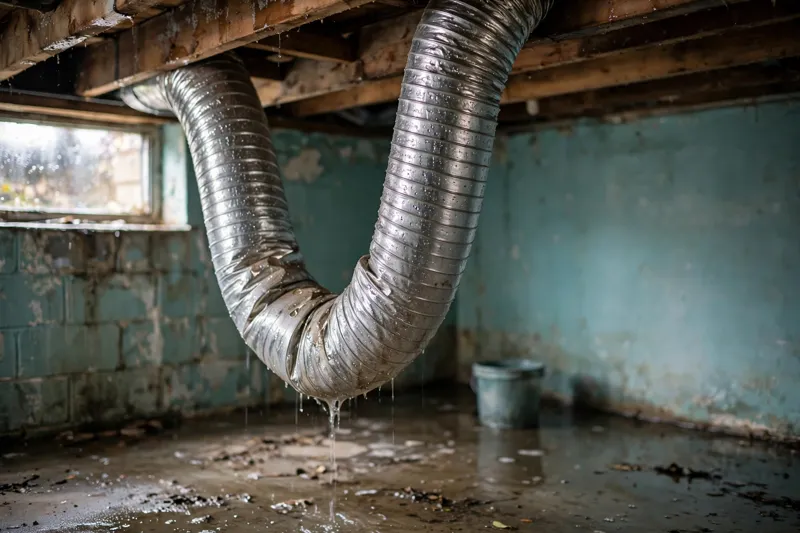
A smell is information, not something to cover with air freshener. The federal flood-HVAC guidance says flood-related odors after cleaning mean the system should be reassessed for missed areas, the odor is telling you something was missed. One forum question in the battery says it plainly: severe condensation on air ducts causing ceiling water damage, and the homeowner asking for advice. Condensation on the ducts is not a duct problem by itself, it is a moisture problem in the home, and the ducts are where it shows. Fix the moisture first, then clean or replace the affected components, depending on how far the problem spread and what the components are made of.
The flooded floor vent has its own procedure, and it belongs here. Shut off the power at the main breaker first, then wet and dry vacuum the standing water from the vent. Shut off the water source if it is an overflowing appliance or a plumbing fixture. Then identify the source, and the water itself is the clue: a clogged air-conditioning condensate line, full of algae and debris; a plumbing leak beneath a bathroom, a kitchen, or a laundry room; groundwater through slab cracks or poor grading. Clear water, cloudy water, and silty water point in different directions, and the source decides the fix, the condensate line is cleared, the plumbing leak is repaired, and the groundwater problem is a grading and drainage problem, not a duct problem.
The small spots and the big spots are different jobs. The ten-square-foot threshold decides the do-it-yourself question: under ten square feet of mold, a homeowner can usually clean it; over ten square feet, or any mold in porous duct material, the job belongs to a professional. The mold section below explains the threshold in full, and the do-it-yourself section explains the ten-foot reach limit that decides what a homeowner can actually clean.
The camera inspection is the part the homeowner never sees, and it is the part that decides the job. The inspector feeds a borescope or a camera into the plenum, the trunk lines, and the take-offs, and looks at the drain pan, the coil, and the inside of the ducts. The camera shows what the eye cannot reach: silt settled in the horizontal runs, mold on the inside of the duct board, rust on the seams, and insulation that fell into the duct and is blocking the air. The inspection comes before the cleaning, and the cleaning follows what the camera found, not the other way around. A company that cleans without looking inside is guessing, and a company that shows the camera footage is showing the work.
The flood line and the rust tell different stories, and the two together tell the story of the water. The flood line is a stain at a height, the height the water reached, on the furnace cabinet, the air handler, and the wall behind the equipment. The rust is a slow process, the cabinet, the blower housing, the drain pan, and the coil rusting over weeks and months after the water dried. The flood line says how high the water got; the rust says how long the water stayed.
The condensate line is the third clue: a line clogged with algae and debris overflows the pan, and the overflow runs into the ducts below. The pan, the secondary drain, and the float switch are the parts that stop the overflow, and all three must be checked after any water event.
What a proper post-flood duct cleaning involves
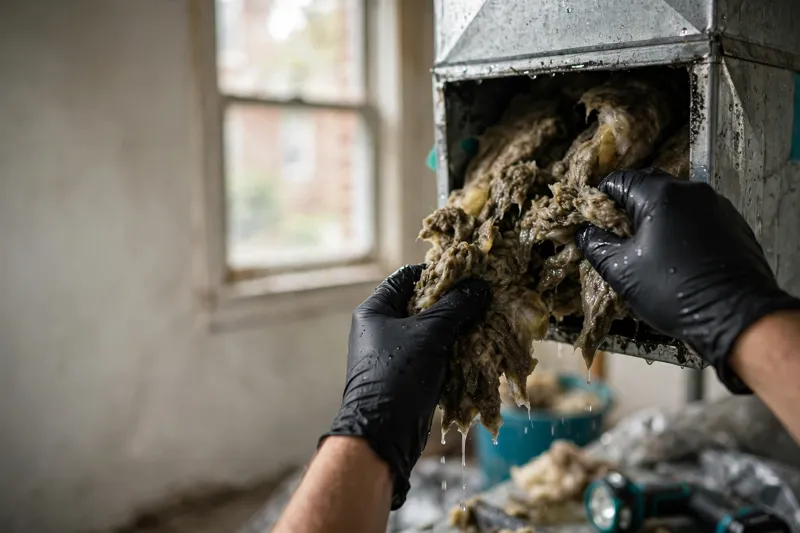
A proper air duct cleaning chicago job after a flood follows the NIOSH procedure, and the procedure is the same shape in every federal guide checked for this page. Remove the contaminated insulation and the filters first, all flood-contaminated insulation around and inside the HVAC components is discarded, not cleaned. HEPA-vacuum the contaminated surfaces: the filter racks, the drain pans, the bends, and the horizontal duct runs where silt settles. Disinfect with the system off, using one cup of household chlorine bleach per gallon of water, then a clean-water rinse, and never mix bleach with ammonia. Service the fan: the blower is removed, cleaned, disinfected, dried, and tested by a qualified professional. Replace what cannot be cleaned. Flush out. Verify.
Air duct cleaning chicago after water damage means the contaminated insulation comes out first, and that order matters more than any other part of the job. A crew that starts by vacuuming the ducts while the wet insulation is still in place is spreading the contamination, not removing it. The insulation around the air handler, the wrap on the plenum, and the liner inside the ducts all come out before the vacuum starts, and the new insulation goes back preferably on the outside of the duct, smooth-surfaced and out of the air stream. The cleaning steps need trained hands and the right gear, respiratory protection, HEPA filtration, and containment, and older housing stock must be checked for asbestos before remediation begins.
The flush-out is the part most crews skip, and it is the part that proves the job worked. Once the system is clean and dry, it runs continuously for forty-eight to seventy-two hours with the outdoor air dampers open as far as temperatures allow, and then the flush-out filters are replaced. The federal guidance sets the benchmark: structural material that cannot dry within forty-eight to seventy-two hours to below twenty percent moisture is removed and replaced, and the EPA homeowner guidance uses fifteen percent or less for finished materials. The verification is a moisture meter, and sometimes a borescope or a camera where the eye cannot reach, and a smell that lingers after the cleaning means the system should be reassessed, not deodorized.
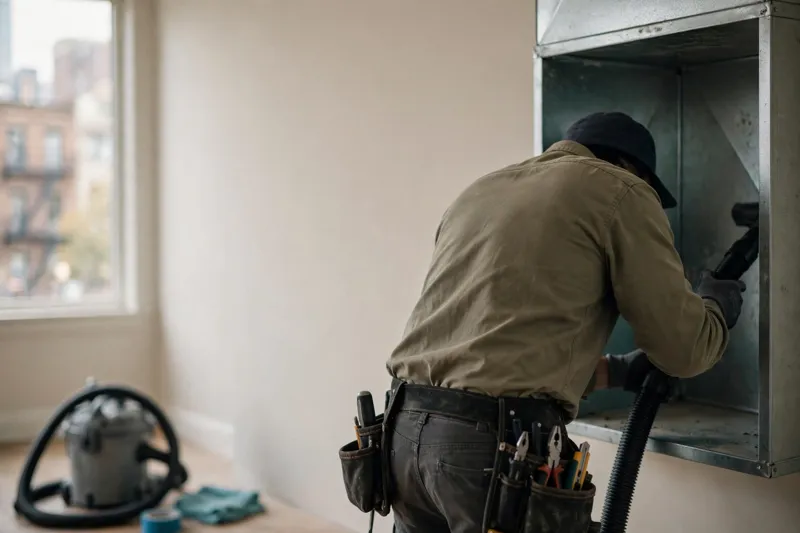
The containment and the gear are the part the homeowner never sees, and they are the reason the job belongs to a professional. The work area is sealed off with plastic sheeting, the system is put under negative pressure so the dust moves toward the vacuum and not into the home, and the crew wears respiratory protection. The HEPA vacuum is the filter that matters: a standard shop vacuum blows the fine dust back into the air, and a HEPA vacuum catches it. The containment is also the reason the job takes three to five hours, the setup, the sealing, and the cleanup take as long as the cleaning itself, and a crew that skips the containment is skipping the protection.
The bleach ratio is the detail that decides whether the disinfection works or damages the system. One cup of household chlorine bleach per gallon of water, then a clean-water rinse, with the system off, and never mix bleach with ammonia, because the mixture makes a toxic gas. The rinse matters as much as the bleach: the bleach kills the growth, and the rinse removes the bleach residue so it does not corrode the metal or irritate the air.
The disinfectant is not a substitute for removal, a surface disinfected without the growth removed will grow again, and a porous surface disinfected without replacement will grow again faster. The blower service is the same shape: the blower is removed, cleaned, disinfected, dried, and tested, and the motor bearings, the capacitor, and the rust on the housing are all checked before the blower goes back in.
The dehumidifier sizing and the moisture readings are the numbers the drying is judged by, and the numbers are simple. The moisture meter reads the material, not the air, and the reading decides whether the material is dry or still wet, the benchmark is below twenty percent for structural material, and fifteen percent or less for finished material, and the reading is taken in the material itself, not in the air above it.
The dehumidifier capacity is the size of the machine against the size of the wet area: a machine too small runs for days and never catches up, and a machine too big dries the air and leaves the material wet. The forty-eight to seventy-two hour rule is the clock: material that cannot dry within that window to below the benchmark is removed and replaced, and the clock starts when the water is gone, not when the drying starts.
Clean it or replace it: the decision table
The clean-or-replace decision is where air duct cleaning chicago earns its keep after a flood, and it is the page's signature section. The rule is the material: smooth and non-porous can be cleaned, porous cannot. Wet duct insulation, wrap or liner, is discarded and replaced, because it cannot dry and it is not salvageable. Filters are discarded. Sheet metal ducts are usually cleaned and disinfected, because the smooth, non-porous surface gives the growth nothing to hold.
Flexible duct and fiberglass duct board that stayed wet are usually replaced, because the porous interior traps moisture and growth. The blower motor and the fan are cleaned, dried, and tested, or replaced. The furnace, the air handler, and the outdoor condenser are evaluated for replacement, because the risk is rust, mold, and premature electrical failure.
| Part | After water damage | Why |
|---|---|---|
| Wet duct insulation (wrap or liner) | Discard and replace | Porous, cannot dry, not salvageable |
| Filters | Discard | Wet filters grow mold in the air stream |
| Sheet metal ducts | Usually cleaned and disinfected | Smooth, non-porous surface |
| Flex duct that stayed wet | Usually replaced | Porous interior traps moisture and growth |
| Fiberglass duct board that stayed wet | Usually replaced | Porous interior traps moisture and growth |
| Blower motor and fan | Cleaned, dried and tested, or replaced | Electrical parts and rust risk |
| Furnace, air handler, condenser | Evaluate for replacement | Rust, mold, premature electrical failure |
The table agrees with every source checked for this page. The flooded-vent guide says the same thing: porous materials, fiberglass-lined sheet metal and fiberboard, that absorbed water cannot be reliably cleaned and dried, so the affected section is replaced, and metal ducts get a professional inspection for internal rust and compromised seams. The New York flood guide's table is the same table, with the same three rows at its center: wet insulation discarded, sheet metal cleaned, flex and fiberglass duct board replaced.
The category of the water matters too: metal duct can be cleaned when the water was clean and the exposure was brief, and sewage water means replacement. The twenty-four to forty-eight hour rule runs through all of it, assume mold if the home stayed wet more than twenty-four to forty-eight hours, and act on that assumption.
The category of the water is the second decision, and it sits beside the material decision. Clean water from a supply line is the easiest case: the metal can be cleaned, the exposure was brief, and the drying starts at once. Gray water from a washing machine or a dishwasher is the middle case: the water carries soap and dirt, the cleaning is longer, and the porous parts are still replaced.
Sewage water from a backup is the hardest case: the water carries bacteria and waste, the porous parts are replaced without question, and the metal is disinfected with the system off before anyone runs it. The category is decided by the source, not by how the water looks, clear water from a sewer backup is still sewage water, and the decision follows the source.
The furnace evaluation is the decision most homeowners miss, because the furnace looks fine from the outside. The heat exchanger, the control board, the gas valve, and the burner are all inside the cabinet, and all four are damaged by water in different ways. The heat exchanger rusts and cracks, and a cracked exchanger leaks combustion gas into the air stream. The control board corrodes, and the corrosion shows up months later as a failure on the coldest night.
The gas valve sticks, and the burner rusts, and the premature electrical failure the federal guidance warns about is the failure of exactly these parts. The evaluation is a professional's job, with the cabinet open and the parts inspected, and the decision is replacement when the damage is inside the parts that cannot be cleaned.
Mold in the ducts: what cleaning can and cannot do
Air duct cleaning chicago for mold means removal first and disinfectant second, and the order is the whole job. Standard cleaning does not reliably remove established mold colonies, because the hyphae embed in porous surfaces, the cleaning removes the surface growth and leaves the roots, and the growth comes back when the moisture returns. The treatment runs in four phases: assessment and containment, removal, disinfection, and prevention. The moisture source is fixed first, the growth is removed physically, the area is disinfected, and the humidity is kept in the normal range. A job that skips the source is not finished, and a job that disinfects without removing is a job that will be done twice.
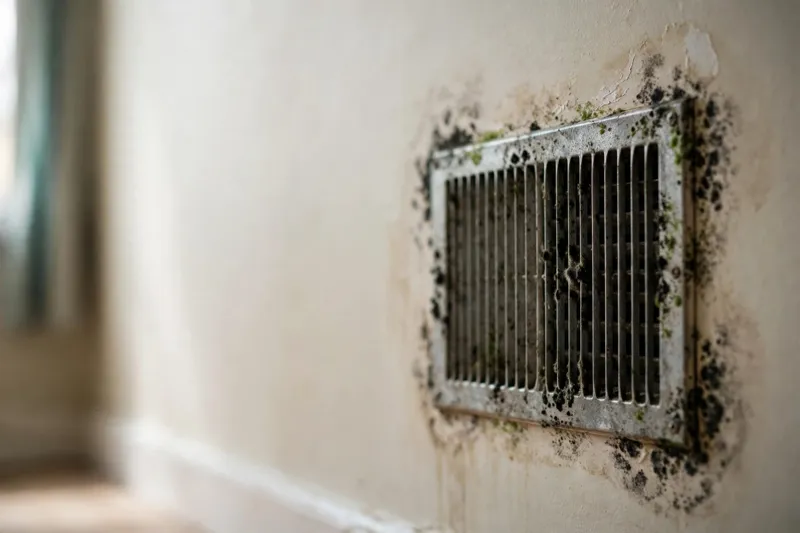
Air duct cleaning mold is the search homeowners type when they see growth at a register, and the answer depends on the material. Small spots of mold on metal vents can sometimes be cleaned by the homeowner. Extensive mold, or mold in porous insulation, needs a professional, and fiberglass duct board and internally insulated ducts almost always need a professional, because the growth is inside the fibers where no brush can reach.
The ten-square-foot threshold decides the do-it-yourself question: under ten square feet, a homeowner can usually clean it; over ten square feet, the job belongs to a professional. The federal guidance adds a point the forums miss: identifying the type of mold is not the priority, sampling is costly, and there are no set standards for different kinds, the best approach is to remove the mold safely and prevent regrowth.
Keep vulnerable people out until the cleanup is complete. If someone in the home has asthma, allergies, or a weakened immune system, they stay out of the work area until the cleaning and the drying are done, and the system stays off until the verification is done. The mold question and the insurance question meet here: standard homeowners policies generally exclude mold from flooding, and separate flood coverage is a different policy, the insurance section below explains the split, and the flood-insurance blog covers the coverage side in full.
The four-phase treatment is the shape of every professional mold job, and the ducts are no exception. Assessment and containment come first: the growth is found, the area is sealed off, and the system is put under negative pressure so the spores move toward the vacuum and not into the home. Removal comes second: the growth is taken out physically, with the porous material it grew in, because the roots sit in the fibers where no brush can reach. Disinfection comes third: the smooth metal is disinfected with the system off, and the rinse follows.
Prevention comes last: the moisture source is fixed, the humidity is kept in the normal range, and the new insulation goes on the outside of the duct, smooth-surfaced and out of the air stream. A job that skips a phase is a job that will be done twice.
The coil and the drain pan are the mold magnets, and they are the parts the homeowner never sees. The coil is cold and wet when the air conditioner runs, and the drain pan holds the water the coil sheds, and when the drain clogs, the pan holds standing water, and the standing water grows mold. The pan must be cleaned, the drain must be cleared, and the float switch must be checked, because the float switch is the part that shuts the system off when the pan fills.
The coil itself must be cleaned with the system off, and the fins must not be bent, because bent fins block the air and the blocked air makes the coil colder and wetter. The mold in the ducts and the mold on the coil are the same problem, and the cleaning covers both.
The sampling question is the one the testing companies want you to ask, and the honest answer is that sampling is useful sometimes and useless most of the time. A sample helps when the question is a dispute, the insurer wants proof, the landlord wants proof, the buyer wants proof, and the sample is the proof. A sample does not help when the mold is visible, because the visible mold is the answer: clean it, do not test it.
The CDC and the EPA agree on the point: sampling is usually unnecessary when mold is visible, and the money is better spent on the removal. The Illinois registration question is the same shape: the state registration of mold-remediation professionals is operational, and the registration is the thing to check when hiring, not the test result. The sample is a tool, not a verdict, and the verdict is the cleaning.
What drives the cost of removing mold from HVAC ducts
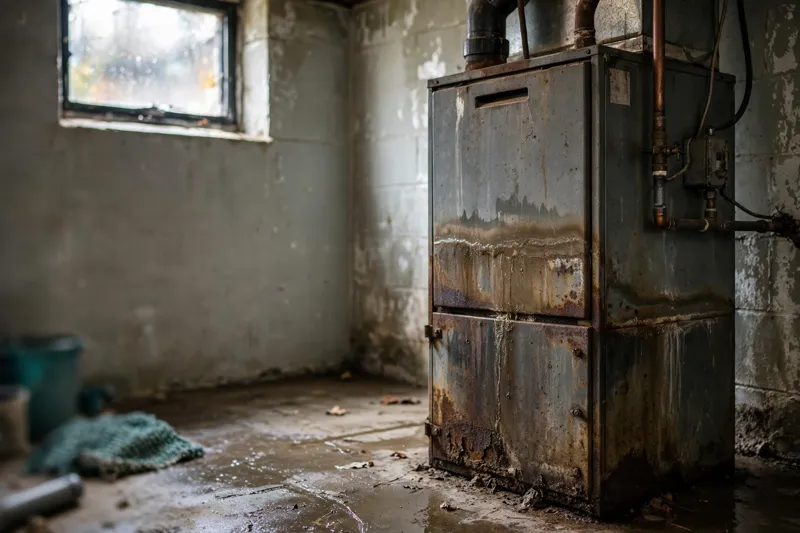
No figure is printed here, because this site prints no prices. What follows is what moves the charge up or down, so you can read a quote and see what you are paying for. The drivers are the spread of the mold, the material it grew in, the access, and the moisture source behind it.
The spread of the mold is the first driver. A small patch at one register is a short job. Mold through the trunk lines, the plenum, and the coil is a long one, with more removal, more disinfection, and more verification. The material is the second driver. Smooth sheet metal is cleaned and disinfected. Flex duct and fiberglass duct board that stayed wet are replaced, and replacement adds new material and the work of fitting it.
Access is the third driver. Long runs, ducts behind walls and ceilings, tight crawl spaces, and tall homes all slow the work down. The moisture source is the fourth: the leak, the plumbing fault, or the drainage problem that fed the mold must be fixed first, and that repair is its own job. A system cleaned without the source fixed will grow mold again.
The kind of water matters too. Clean water from a supply line is the easiest case. Sewage water means more removal, stronger disinfection, and protective gear for the crew. The state of the blower, the coil, and the drain pan matters as well, a blower that can be cleaned costs less than one that must be replaced. Last, verification adds to the job: the camera inspection, the moisture-meter readings, and the follow-up check that proves the system is dry. A quote that lists none of these is a quote that hides them.
The scam question: what a proper job looks like
The bait offer for air duct cleaning chicago is usually a whole-house special, and the forums are full of it. One homeowner was quoted a whole-house total so low it looked like a mistake and asked whether it was a scam. Another was quoted a much higher total for duct cleaning and sanitizing and asked whether it was worth it. A third was asked to pay for a cleaning after a remodel and asked whether it was worth it.
The pattern is the same in every thread: a low advertised price, then a long list of extras once the crew is inside, sanitizing, mold treatment, dryer vent cleaning, each one added on at the door. The whole-house special is the loss leader, and the extras are the profit. Flood cleanup itself is a separate job from duct cleaning, and its cost follows how far the water spread, how long the drying runs, and how much has to come out, the flood cleanup Chicago guide covers that job.
What a proper air duct cleaning chicago job looks like is the NADCA source-removal method, and it is the same in every honest description checked for this page. The system is put under negative pressure with a large vacuum, and rotating brushes and air whips loosen the debris while the vacuum pulls it out. The registers come off, the air handler, the blower, and the coil are cleaned, and before-and-after photos are taken. The job takes three to five hours for a typical home.
The crew shows the photos, the scope is in writing before anyone starts, and the quote covers the whole system, supply and return ducts, registers, trunk lines, blower, not just the vents. A company that cannot describe its method, cannot show photos, and cannot put the scope in writing is a company to avoid.
Homeowners type air duct cleaning near me and get a list of companies with no way to tell them apart, so the questions matter more than the list. Ask five questions before you hire: is the dryer vent included or separate; what does the quote cover; is the company certified to the EPA or NADCA standard; will you show before-and-after photos; and what is the guarantee. Check the reviews, ask for the scope in writing, and beware the whole-house special that costs a fraction of every other quote.
The damage risk is real, and the forums document it: flexible ducts damaged by the cleaning wand, furnaces and air conditioners never the same after cleaning, and one homeowner's gunk plume four days after the cleaning, a job done wrong, with the debris left in the system instead of pulled out.
The trust question has a Chicago angle, and it is a fraud case, not a duct-cleaning case. Pack v. Maslikiewicz, decided in 2019 by the Illinois Appellate Court, First District, is a Chicago water-damage and HVAC fraud case: a couple bought a single-family home on North Moody Avenue, sold as a complete renovation, with the seller denying issues including the basement, the foundation, and the electrical and HVAC systems, and after closing they found water infiltration and other defects. The court found common-law fraud and a Consumer Fraud Act violation. The case is printed here for one reason only: it is why Chicago buyers distrust HVAC claims, and why the questions above matter. It is not a duct-cleaning case, and it is never presented as one.
The forums ask the same question the other way around: why are there so many air duct cleaning posts. One Chicago thread asks whether it is the new mattress stores, or a pyramid scheme, and the answer is simpler than either, duct cleaning is a service with a low barrier to entry, a high-pressure sales script, and a customer who cannot see the work. The customer cannot see inside the ducts, so the photos matter, the scope in writing matters, and the recommendation matters. Chicago demand is recommendation-driven, the forums are full of homeowners asking for a favorite duct cleaning business, for the northwest side, for the north burbs, for Aurora, and a recommendation from a neighbor beats an advertisement every time.
The thirty-year expert video is the clearest statement of what good cleaning looks like, and it is worth more than any advertisement. The host interviews a duct and chimney cleaner of thirty-plus years, and the opening line is the blunt one: cleaning is completely unnecessary for most homes, and most HVAC people would agree.
The expert then explains what good cleaning looks like when it is needed: the system under negative pressure, the rotating brushes and the air whips, the registers removed, the air handler and the blower and the coil cleaned, and the before-and-after photos. The horror stories are the other half of the interview: the companies that vacuum the vents and call it a whole-system clean, the crews that push the debris deeper into the system, and the homeowners who paid for a cleaning and got a mess. The video's lesson is the page's lesson: the method is the product, and the photos prove it.
The bait-and-switch mechanics are the same in every thread, and they are worth naming plainly. The low advertised price gets the crew inside the door, and the extras start at the door: sanitizing, mold treatment, dryer vent cleaning, each one added on at a price the homeowner never saw in the advertisement. The sanitizing upsell is the commonest, and the mold-treatment upsell is the most expensive, and both are sold as necessities, whether the system needs them or not.
The damage stories are the other side of the same coin: the flexible ducts damaged by the cleaning wand, the furnaces and air conditioners never the same after cleaning, and the gunk plume four days after the cleaning, when the debris the crew pushed deeper into the system blew out of the registers. A job done wrong leaves the system worse than it was, and the homeowner pays twice: once for the cleaning, and once for the repair.
The five questions are the test, and each one reveals something different about the company. The first, is the dryer vent included or separate, reveals whether the quote is a whole job or a teaser. The second, does the quote include the trunk lines, the plenum, the blower, and the coil, reveals whether the company cleans the system or only the vents. The third, will there be before-and-after photos of the inside of the ducts, reveals whether the company can prove the work.
The fourth, will anyone look inside the ducts with a camera before cleaning, reveals whether the company diagnoses before it cleans. The fifth, what exactly is the sanitizing chemical, and is it safe for people and pets, reveals whether the company knows what it is selling. A company that answers all five in writing is a company that has nothing to hide, and a company that dodges any one of them is a company to avoid.
Do it yourself or hire a professional
DIY air duct cleaning chicago reaches about ten feet into each vent, and that is the whole of it. The toolkit is a dryer vent brush with an extendable handle, a nylon bristle brush, a power drill, and a shop vacuum with a long hose, and with that kit, a homeowner cleans the registers, the grilles, and the first stretch of each vent. The trunk lines, the plenum, the blower, and the coil are beyond reach, and the homeowner cannot see inside them. Ten feet into each vent is a fraction of the system, and the fraction is smaller in a two-flat with long runs than in a small bungalow with short ones.
The do-it-yourself risks are the reason the professional method exists. The job is messy, the dust gets everywhere, and the exposure is real, mold, rodent droppings, and the volatile compounds in old insulation. Ladder falls are a risk in the taller homes, and introducing moisture invites mold growth. The flex ducts are the fragile part: a brush pushed too hard tears the inner liner, and the forums document exactly that, a homeowner who strongly suspected the cleaning wand had damaged several flexible ducts, and asked how bad the damage was. A torn flex duct leaks conditioned air into the wall cavity, and the repair costs more than the cleaning saved.
The professional method is the source-removal method, in five steps to the NADCA standard: inspect, put the system under negative pressure, clean with brushes and air whips, remove the debris, and verify. What is included in a whole-system clean is the same in both: the supply and return ducts, the registers, the trunk lines, the blower, and an inspection. The extras are usually separate: dryer vent cleaning, sanitizing, and mold treatment are commonly added on, and each one should be priced as its own line.
The toolkit is the limit, and the limit is the reason the professional method exists. The dryer vent brush with an extendable handle, the nylon bristle brush, the power drill, and the shop vacuum with a long hose are the whole of the do-it-yourself kit, and with that kit the homeowner cleans the registers, the grilles, and the first stretch of each vent. The registers come off, the brush goes in, the vacuum follows, and the dust comes out, and then the brush stops, because the vent bends and the brush cannot follow.
The trunk lines, the plenum, the blower, and the coil are beyond the kit, and the homeowner cannot see inside them to know whether they are clean. The kit is honest work for the parts it can reach, and it is not a whole-system clean.
The ladder and the moisture are the two risks the do-it-yourself guides understate. The ladder falls happen in the taller homes, where the registers sit high on the wall and the ductwork runs above the ceiling, and a fall from a ladder in a basement stairwell is a hospital visit, not a bruise. The moisture risk is subtler: a wet vacuum pushed into a duct leaves moisture behind, and the moisture invites mold growth in the dark, warm duct.
The flex-duct tear is the third risk, and the forums document it: a brush pushed too hard tears the inner liner, the torn liner leaks conditioned air into the wall cavity, and the repair costs more than the cleaning saved. The professional's answer to all three risks is the same: the right gear, the right method, and the photos that prove it.
The five-step and seven-step descriptions are the same job counted two ways, and the difference is only how the steps are grouped. The five-step version counts inspection, negative pressure, cleaning, debris removal, and verification, five steps, with the blower and the coil inside the cleaning step and the photos inside the verification step. The seven-step version counts inspection, negative-pressure vacuum, brushes and air whips, debris removal, blower and coil, inspection, and photos, seven steps, with the blower and the coil and the photos as their own steps.
The work is the same either way, and the price should be the same either way, because the steps are the same steps. The number of steps is not the measure of the job, the photos are the measure, and the inspection is the measure, and the negative pressure is the measure.
How to prepare your house for air duct cleaning
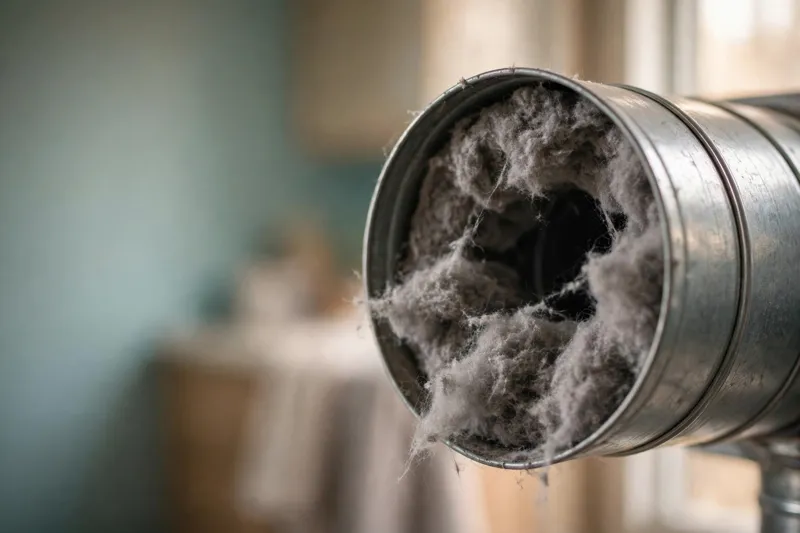
This section is for a cleaning already decided on, because mold is visible, water reached the system, or one of the EPA conditions is present. It is not a reason to book a routine cleaning. The EPA says routine cleaning is not proven to help, and preparation does not change that. It makes a warranted cleaning faster, cleaner, and safer.
Start with the registers. Move furniture, rugs, and anything stored over a supply register or a return grille, so the crew can lift each grille without moving your things. Clear a path through every room with a register, including the rooms upstairs and the rooms you rarely use. The crew carries a large vacuum and long hoses, and a clear path keeps a three-hour job from becoming a five-hour one.
Clear the space around the furnace and the air handler next. The crew needs room to work at the plenum, the blower, and the filter rack, and room to set down the vacuum and the tools. Keep the stairs and the basement path clear, and make sure the work area is lit and the floor is dry. If the furnace sits in a closet, empty the closet floor. If the air handler sits in an attic, make sure the opening is clear and the ladder is in place.
Keep pets and children out of the work rooms. Put pets in a closed room away from the noise and the dust, with water and a door that stays shut. Keep anyone with asthma, allergies, or a weakened immune system away from the dust until the job is done. After a flood, stay out of the work area until the cleaning and the drying are done.
Know what the day looks like before the crew arrives. The system stays off, the registers come off, the crew works room by room, and the job takes three to five hours for a typical home. Expect noise from the vacuum and the brushes, and some dust in the air while the work is under way. Ask for the scope in writing before anyone starts, what is included, whether the dryer vent is separate, and whether sanitizing or mold treatment is an extra. Ask to see the before-and-after photos when the job is done.
Dryer vent cleaning: the fire-safety job
Dryer vent cleaning is not air duct cleaning chicago, but the two are sold together, and the dryer vent is the one that cannot wait. A clogged dryer vent is a fire risk, the U.S. The lint builds up in the run, the air cannot get out, the dryer overheats, and the lint itself is fuel. The run is the risk, and the length of the run is the problem.
Dryer vent cleaning chicago is the search that returns the fire-safety pages, and the Chicago problem in the forums is a real one: a dryer vent about forty feet high, unreachable from the roof or the back staircase, in a taller building, with the homeowner asking for a recommendation for a company that can hang from the roof. A short, straight run the homeowner can reach from inside the home is a do-it-yourself job, with a dryer vent brush and a vacuum.
A long run, a run with sharp bends, or a run that exits forty feet up is a professional job, and a real Chicago problem in the taller buildings. Do not leave a clogged vent because the run is hard to reach, the run is the reason it is clogged.
The charge depends on the length of the run, how hard it is to reach, and how clogged it is, a long run to the roof costs more than a short run to the side wall, and this site prints no prices, so no figure here can mislead you. The dryer vent is usually separate from the air duct quote, and the five questions in the scam section apply to it too: is the dryer vent included or separate, and what does the quote cover. A company that cleans the ducts and skips the dryer vent has cleaned the safe part and left the dangerous part.
The fire mechanism is simple, and that is why it is dangerous. The lint builds up in the run, the air cannot get out, the dryer overheats, and the lint itself is fuel, the dryer keeps heating, the heat has nowhere to go, and the lint catches. The restricted airflow is the cause and the symptom at once: the clothes take longer to dry, the dryer runs hotter, and the homeowner runs the dryer again, and the lint builds up further.
The run is the risk, and the length of the run is the problem, because a long run holds more lint and is harder to clean. The fire-safety job is the annual cleaning, and the annual cleaning is the job that never gets done, because the vent is out of sight and the dryer still works.
The roof-exit problem is the Chicago version of the same risk, and the forums document it. A dryer vent about forty feet high, exiting through the roof, unreachable from the roof or the back staircase, in a taller building, and the homeowner asking for a company that can hang from the roof to reach it. The professional's answer is ropes and a roof anchor, and the homeowner's answer is to hire the company that has them.
The roof cap is the part that fails first: the flap sticks, the lint builds up behind it, and the cap must be cleaned from the outside. A vent that exits through the roof is cleaned from the roof, and a vent that exits through the side wall is cleaned from the side wall, and the run is cleaned from the end the cleaner can reach.
Insurance, and the Chicago part
Insurance does not pay for routine air duct cleaning chicago, but it may pay for the cleaning after a sudden covered loss. A burst pipe, an appliance failure, or a storm that put water in the ducts is a sudden covered peril, and the cleaning is part of repairing the damage, the policy pays for the drying and the repair, not for the pipe that failed. Flooding from outside is not covered by a standard homeowners policy, and mold from flooding is not either, separate flood coverage is a different policy, through the national flood program or a few private insurers. The flood-insurance blog covers the coverage side in full, and this page covers the ducts.
The flood-insurance appeal decision is the lesson in one case: a denial was upheld for vent cleaning and mold where the ducts were above the waterline and the cleaning, done more than two years after the flood, was not documented as required by the flood. Clean promptly, keep written records of the water line, the work performed, and the dates, and keep the photos with the claim file. The adjuster works from the readings and the photos, so the file you build in the first day decides the claim, and a cleaning done two years after the flood, with no record that the flood caused it, is a cleaning the insurer will not pay for.
The Chicago pack for air duct cleaning chicago is topped by EM Duct Cleaning Chicago, with a five-star rating and about two thousand four hundred reviews, then Angel's Duct Cleaning Services Chicago, then Air Duct Maintenance Solutions LLC. Those are live figures, not page claims, they show who owns the Chicago pack, and the pack is a duct specialist's pack, not a restoration company's.
EM Duct Cleaning is a duct specialist, not a restoration company, and the water-damage angle in this page, turn off the HVAC immediately, fix the moisture first, clean or replace by material, is the differentiator no duct specialist owns. HVAC duct cleaning chicago is the search that returns the same pack, and air duct cleaning services chicago is the search that returns the same companies with the same ratings.
Chicago housing stock makes air duct cleaning chicago a recommendation business. The two-flats, the greystones, and the bungalows fill with dust fast in the long heating season, and the older stock has the longest runs and the most flexible ductwork, the fragile part.
The two-foot rule is the Chicago detail the national guides never mention: no supply branch take-off within two feet of the plenum, a transition, the end cap, or another branch, so the air moves evenly through the system instead of starving one branch and overfeeding another. It matters when a run is replaced after water damage, because the replacement must follow the same spacing.
The flood-insurance appeal decision deserves a second look, because the lesson is the file, not the flood. The ducts were above the waterline, the cleaning was done more than two years after the flood, and the cleaning was not documented as required by the flood, and the denial was upheld on exactly those three points. The waterline is the first point: the photos must show the water reached the ducts, and the ducts above the waterline were not flood damage.
The dates are the second point: a cleaning done two years after the flood, with no record tying it to the flood, is a cleaning the insurer will not pay for. The written record is the third point: the work performed, the dates, and the water line, all in writing, all in the claim file. The adjuster works from the readings and the photos, and a file built in the first day is a different file from a file built two years later.
The two-foot rule is a duct-design rule, and it matters most when a run is replaced. The plenum is the box the air leaves, the transition is the change in size, the end cap is the end of the run, and the branch is the take-off to a room, and no branch may sit within two feet of any of the other three. The reason is the air: a branch too close to the plenum steals the air from the rest of the system, and a branch too close to another branch starves its neighbor.
The replacement after water damage must follow the same spacing, because the spacing is the design, and a replacement that ignores the spacing is a replacement that unbalances the system. The other Chicago name in the battery is AirFresh Inc. of 2970 Maria Ave Ste 229 A, Northbrook, IL 60062, in business since 2005, with a 5.0 rating, and a six-step HEPA negative-air source-removal process that cleans the whole system. Its homepage runs about 750 words with 8 FAQs, and its air duct cleaning service page runs about 1,150 words with 8 FAQs.
The flood-insurance appeal process is the last part of the insurance question, and it is the part the homeowner must know before the claim is filed. The National Flood Insurance Program gives the policyholder sixty days from the loss to file the proof of loss, and the appeal runs from there: the insurer's decision can be appealed, and the appeal is decided on the file, the photos, the readings, the work performed, and the dates.
The flood-insurance blog covers the appeal in full, and the lesson from the ducts decision is the same lesson: the file is the claim, and a file built in the first day is a different file from a file built two years later. The proof of loss is the document that lists the damage and the cost, and the proof of loss is the document the adjuster works from, and the proof of loss must be filed within the sixty days or the claim is lost.
How to clean air ducts after a flood in Chicago
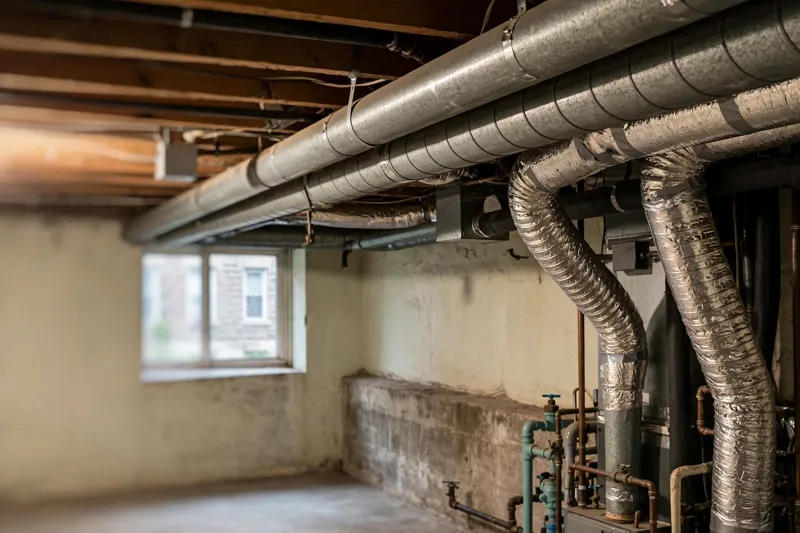
Seven steps, in order. The first two protect the home, the next three do the cleaning, and the last two prove the job worked. Every step is one a professional does with the system off, and the homeowner's job is the first two, the photos, and the questions.
Shut the HVAC off and keep it off
Turn off the thermostat, the air conditioner, and the fan-only setting, and leave the system off until a professional inspects it. Running the system spreads mold spores, bacteria, and odors through the whole home, and it can damage the blower and the electrical parts. Do not use a flood-affected system to dry the house, dry the structure another way, with the windows open and dehumidifiers on the rooms, not through the ducts.
Make the building safe and document the water line
Do not enter a flooded basement with live electrical equipment, wait for utility or electrician clearance, because waterlogged electrical components can short-circuit, burn out, or create fire hazards. Photograph the water line on the furnace, the air handler, the plenum, and the floor-level registers, with the dates, before anything moves. The claim runs on the file you build in the first hour.
Pull the wet filters and the wet insulation
Throw away the wet filters, and discard all flood-contaminated insulation around and inside the HVAC components, wet insulation is never cleaned and reused, because the porous material cannot be dried and holds the growth. Wet duct insulation, wet wrap, and wet liner all come out. Keep a sample of what came out, with the date, so the insurer and the inspector can see what the water did.
HEPA-vacuum and disinfect the metal
HEPA-vacuum the contaminated surfaces, the filter racks, the drain pans, the bends, and the horizontal duct runs where silt settles, with the system off. Disinfect the smooth metal with one cup of household chlorine bleach per gallon of water, then rinse with clean water, and never mix bleach with ammonia. Established mold on porous surfaces is removed physically, not washed away, and fiberglass duct board that stayed wet is replaced.
Dry the system and the structure, not through the ducts
Dry the house with a wet and dry vacuum, dehumidifiers, and air movers on the structure, with the windows open where the weather allows. Wait to run fans and dehumidifiers until visible mold has been gently cleaned, so the airflow does not spread it. Structural material that cannot dry within forty-eight to seventy-two hours to below twenty percent moisture is removed and replaced, the ducts are dried the same way, by hand and by air, not by running the furnace.
Flush the system and replace the filters
Once the system is clean and dry, run it continuously for forty-eight to seventy-two hours with the outdoor air dampers open as far as temperatures allow, then replace the flush-out filters. New insulation goes back preferably on the outside of the duct, smooth-surfaced and out of the air stream, not inside it. The blower is removed, cleaned, disinfected, dried, and tested by a qualified professional before the flush-out starts.
Verify with a moisture meter before anyone restarts it
Check the ducts, the insulation, and the structure with a moisture meter, and use a borescope or a camera where the eye cannot reach. A smell that lingers after the cleaning means the system should be reassessed for missed areas, a smell is information, not something to cover with air freshener. Only when the readings are steady and the smell is gone does anyone restart the equipment, and the readings go into the claim file.
The homeowner's checklist
- HVAC off first, thermostat, air conditioner, and fan-only, until a professional inspects it
- Make the building safe, no flooded basement with live electrical equipment
- Throw away the wet filters, and discard all flood-contaminated insulation
- Photograph the water line on the equipment before anything moves, with the dates
- Fix the moisture source first, then clean or replace by material
- Sheet metal is cleaned; flex duct and fiberglass duct board that stayed wet are replaced
- Flush the system forty-eight to seventy-two hours, then replace the flush-out filters
- Verify with a moisture meter before anyone restarts the equipment
- Ask the five questions before you hire, scope in writing, photos, guarantee
- Keep the readings, the photos, the receipts, and the claim number in one folder
Call now, we answer 24/7
If water reached your ducts and you are still asking whether to clean or replace, call (773) 570-9869. We will ask what you saw, tell you what to check tonight, and send a crew with a meter when the job needs one.
Frequently asked questions
Is air duct cleaning worth it in Chicago?
Usually not. The EPA says routine cleaning is not proven to prevent health problems or lower dust. It becomes worth it when a problem exists, visible mold inside the ducts, a pest infestation, debris blowing from the registers, or water that reached the system. After a flood, cleaning is genuinely warranted, and the system must stay off until inspected.
How much does air duct cleaning cost in Chicago?
This site prints no prices, so no figure here can mislead you. The charge depends on the vent count, the size of the home, the duct material, how hard the runs are to reach, and how dirty the system is. A full-system clean costs more than a register-only pass. Get the scope in writing before anyone starts.
How often should air ducts be cleaned?
There is no set interval, and the EPA gives none. A clean system in a dry home may never need cleaning. Clean them when a specific problem appears, visible mold, a pest infestation, heavy debris, or water that reached the system. After a flood, the inspection comes first, and the cleaning follows it, not the calendar.
How long does air duct cleaning take?
A whole-system clean usually takes three to five hours, depending on the vent count, the size of the home, and how dirty the system is. A small home with easy access can finish faster, and a large home with long runs takes longer. A post-flood job takes longer, because the drying and the inspection come first.
Can I clean my own air ducts?
You can clean the parts you can reach, the registers, the grilles, and the first stretch of each vent, with a brush and a vacuum. You cannot clean the trunk lines, the plenum, the blower, or the coil. This Old House puts the DIY reach at ten feet into each vent. For a post-flood system, call a professional.
What are the signs my air ducts need cleaning?
Dust blowing from the supply registers, a musty smell when the air moves, visible mold at a register, and debris or rodent signs inside a vent. After water damage, the signs are different: a flood line on the equipment, rust on the cabinet, or damp duct insulation. Any of those means an inspection, not a cleaning special.
Does air duct cleaning help with allergies?
It can help when the ducts hold the allergen, dust, pet dander, or mold growth inside the system, and the cleaning removes it. It does not help when the allergen comes from elsewhere in the home. After a flood, the allergen question is secondary: the water and the mold come first.
Can air duct cleaning remove mold?
It can remove surface mold from smooth metal ducts, when the cleaning is done properly and the moisture source is fixed first. It cannot reliably remove established mold from porous surfaces, fiberglass duct board and internally insulated ducts hold the growth in the fibers. Those sections are usually replaced, not cleaned.
Should air ducts be cleaned after water damage?
Yes, when water reached the system, and the inspection comes first. Turn the HVAC off and keep it off until a professional looks inside, because running the system spreads mold spores, bacteria, and odors through the home. Sheet metal is usually cleaned; wet insulation is discarded; flex duct and fiberglass duct board that stayed wet are usually replaced.
How do professionals clean air ducts?
A proper job uses the source-removal method: the system is put under negative pressure with a large vacuum, and rotating brushes and air whips loosen the debris while the vacuum pulls it out. The registers come off, the blower and the coil are cleaned, and before-and-after photos are taken. The whole system is cleaned, not just the vents.
Does homeowners insurance cover air duct cleaning?
Routine cleaning is not covered. The policy may pay for the cleaning when it follows a covered loss, a burst pipe, an appliance failure, a storm that put water in the ducts, because the cleaning is part of repairing the damage. Flooding from outside is not covered by a standard policy. Keep the water-line photos and the dates.
Is air duct cleaning a scam?
Duct cleaning is not a scam in itself, but the whole-house specials are often bait: a low advertised price, then a long list of extras once the crew is inside. A proper job takes three to five hours, uses negative pressure and rotating brushes, and shows before-and-after photos. If the quote is a fraction of every other quote, walk away.
How much does dryer vent cleaning cost in Chicago?
This site prints no prices, so no figure here can mislead you. The charge depends on the length of the run, how hard it is to reach, and how clogged it is. Dryer vent cleaning is a fire-safety job, not a comfort job, and it is done at least once a year, unlike air duct cleaning.
What is included in air duct cleaning?
A whole-system clean covers the supply and return ducts, the registers, the trunk lines, the blower, and an inspection of the system. The coil is usually cleaned too. Extras are usually separate: dryer vent cleaning, sanitizing, and mold treatment are commonly added on. Ask what the quote covers before the crew starts.
Can dirty air ducts make you sick?
Dirty ducts can carry dust, pet dander, and mold spores into the air you breathe, and people with asthma, allergies, or a weakened immune system feel it first. A system with visible mold, a pest infestation, or flood contamination is a different matter. After a flood, keep vulnerable people out until the cleanup is done.
Should I turn off my HVAC if water gets in the ducts?
Yes, immediately, and keep it off until a professional inspects the system. Running the system spreads mold spores, bacteria, and odors through the whole home, and it can damage the blower and the electrical parts. Turn off the thermostat, the air conditioner, and the fan-only setting. Do not use a flood-affected system to dry the house.
How do you clean air ducts after a flood in Chicago?
Keep the HVAC off, make the building safe, and document the water line with dated photos before anything moves. Pull the wet filters and discard all flood-contaminated insulation. HEPA-vacuum the metal surfaces, disinfect with the system off, service the blower, and dry everything before the flush-out. Verify with a moisture meter before anyone restarts the equipment.
What is the "2 foot rule" for ducts?
No supply branch take-off may sit within two feet of the plenum, a transition, the end cap, or another branch. The rule keeps the air moving evenly through the system instead of starving one branch and overfeeding another. It matters when a run is replaced after water damage, the replacement must follow the same spacing.
How do I find a reputable air duct cleaner in Chicago?
Ask five questions before you hire: is the dryer vent included or separate; what does the quote cover; is the company certified to the EPA or NADCA standard; will you show before-and-after photos; and what is the guarantee. Check the reviews, ask for the scope in writing, and beware the whole-house special. Local recommendations carry the most weight.
Does air duct cleaning improve indoor air quality?
It improves the air when the ducts hold the problem, dust, debris, or mold growth inside the system, and the cleaning removes it. It does not improve the air when the problem comes from elsewhere. After a flood, the air improves when the water is out and the system is dry, not from the cleaning alone.
Can you be in the house during duct cleaning?
Yes, most homeowners stay home while the crew works. Keep children and pets out of the rooms being cleaned, and keep anyone with asthma, allergies, or a weakened immune system away from the dust. After a flood, the advice changes: stay out of the work area until the cleaning and the drying are done.
What time of year should I clean air ducts?
There is no best season, because cleaning follows a problem, not a calendar. Spring and fall are the common choices, when the system is not running hard and the windows can open. After a flood, the season does not matter, the cleaning happens as soon as the building is safe, because mold starts within a day or two.
What is involved in air duct cleaning?
The crew removes the registers, puts the system under negative pressure with a large vacuum, and loosens the debris with rotating brushes and air whips while the vacuum pulls it out. The blower and the coil are cleaned, the system is inspected, and before-and-after photos are taken. A post-flood job adds the drying, the insulation removal, and the moisture-meter check.
Does cleaning air ducts really make a difference?
It makes a difference when the ducts hold the problem, visible mold, heavy debris, a pest infestation, or water that reached the system, and the cleaning removes it. Most homeowners who clean a healthy system notice no difference at all. After a flood, the difference is real, because the system was genuinely contaminated.
What are the warning signs my air ducts need cleaning?
Dust blowing from the registers, a musty smell when the air moves, visible mold at a register, and debris or rodent signs inside a vent. After water damage, the signs are different: a flood line on the equipment, rust on the cabinet, damp insulation, or a smell that lingers after the structure dries. Any of those means an inspection first.
Is it a good idea to get air ducts cleaned?
It is a good idea when a problem exists, visible mold inside the ducts, a pest infestation, heavy debris, or water that reached the system. It is not a good idea as routine maintenance, because the EPA says routine cleaning is not proven to help. Spend on the problem, not on the calendar, and get the scope in writing.
Can I clean out my dryer vent myself?
You can clean a short, straight run you can reach, with a dryer vent brush and a vacuum. You cannot clean a long run, a run with sharp bends, or a run that exits forty feet up on the roof. A clogged dryer vent is a fire risk, so do not leave it because the run is hard to reach.
What happens when you get your ducts cleaned?
The crew removes the registers, seals the system under negative pressure, and loosens the debris with brushes and air whips while a large vacuum pulls it out. The blower and the coil are cleaned, the system is inspected, and before-and-after photos are taken. The home gets dusty during the job, and the crew cleans up after itself.
Sources
- U.S. Environmental Protection Agency, "Should You Have the Air Ducts in Your Home Cleaned?", the four conditions under which cleaning is warranted, and the position that routine cleaning is not proven to prevent health problems or lower dust.
- Centers for Disease Control and Prevention and the National Institute for Occupational Safety and Health, "Recommendations for the Cleaning and Remediation of Flood-Contaminated HVAC Systems", the procedure this page follows: discard flood-contaminated insulation, HEPA-vacuum, disinfect with one cup of household chlorine bleach per gallon of water, service the blower, flush out for forty-eight to seventy-two hours, and verify.
- Centers for Disease Control and Prevention, "Safety Guidelines: Reentering Your Flooded Home", the wet-filter rule, the forty-eight-hour drying benchmark, and the asbestos check in older housing stock.
- BestInHood, "5 Best Air Duct Cleaning Services in Chicago (2026)" (Brad Smith, updated August 2026), the review-volume comparison table, the five questions to ask before you hire, and the Chicago pack order.
- This Old House, "How Much Does Air Duct Cleaning Cost? (2026 Pricing)" (published 2022-06-10, updated 2026-04-09), the do-it-yourself toolkit and the ten-foot reach limit.
- NerdWallet, "Air Duct Cleaning Cost: Is It Worth It?" (updated Apr 22, 2026), the do-it-yourself risks and the mold-cleaning question.
- Angi, "How Much Does Air Duct Cleaning Cost? [2026 Data]" (updated Oct 9, 2026), the cost framing and the three visible questions.
- EngineerFix, "What to Do If Water Flooded Into a Floor Vent", the flooded-vent procedure: power off at the main breaker, wet and dry vacuum, shut off the source, and identify it from the water itself.
- Word of Advice TV, "Cleaning Furnace and AC Ducts - Needed or Not?" (YouTube, 8:15, https://www.youtube.com/watch?v=2a86xiLlAHo), the video watched for this page: for about ninety-five percent of people, duct cleaning is not something they should consider.
- Word of Advice TV, "Is HVAC Duct Cleaning a Scam? A 30-Year Expert Speaks Out" (YouTube, 1:13:04, https://www.youtube.com/watch?v=75HJeD70yY8), the video watched for this page: how to spot shady companies, what good duct cleaning looks like, and the proper procedures.
- Pack v. Maslikiewicz, 2019 IL App (1st) 182447, Illinois Appellate Court, First District, decided 26 September 2019, appeal from Circuit Court of Cook County No. 16-L-1501, the Chicago water-damage and HVAC fraud case, printed here as a fraud case only, never as a duct-cleaning case.
- People Also Ask questions quoted in this page, with the search record given in the text.
More Restoration Services in Chicago
Every service below is one tap away. Pick the one that matches your problem.

Water Damage Restoration
Fast water extraction, structural drying, and full repair after burst pipes, leaks, and floods.
Learn more →
Water Mitigation
Emergency water removal, structural drying, and mold prevention to stop the damage fast, 24/7.
Learn more →
Mold Remediation
Safe, contained mold remediation that removes contamination and fixes the moisture source.
Learn more →
Sewage Cleanup
Safe removal and disinfection of dangerous sewage backups and black water.
Learn more →
Flood Cleanup
Water pumped out, structure dried, and debris cleared fast after storms and flooding.
Learn more →
Hardwood Floors Water Damage
Cupped, buckled or stained hardwood after a leak? How we dry it, when sanding saves it, and when the boards have to go.
Learn more →